The Molecular Tango
How Strained Bonds and Computer Power Reveal New Chemistry
Navigation
Forget lab coats and bubbling beakers for a moment. Some of today's most exciting chemical discoveries are happening inside supercomputers. Scientists are using powerful simulations to unravel intricate molecular dances too fast or too small to see directly.
One captivating performance under the digital spotlight? The reaction between surprisingly versatile ring-shaped molecules called 2H-(thio)pyran-2-(thi)ones and high-energy partners known as strained alkynes. Understanding this tango could unlock new ways to build complex molecules for medicine and materials. Let's dive into the world of computational chemistry and see how Density Functional Theory (DFT) is revealing secrets hidden within these reactions.
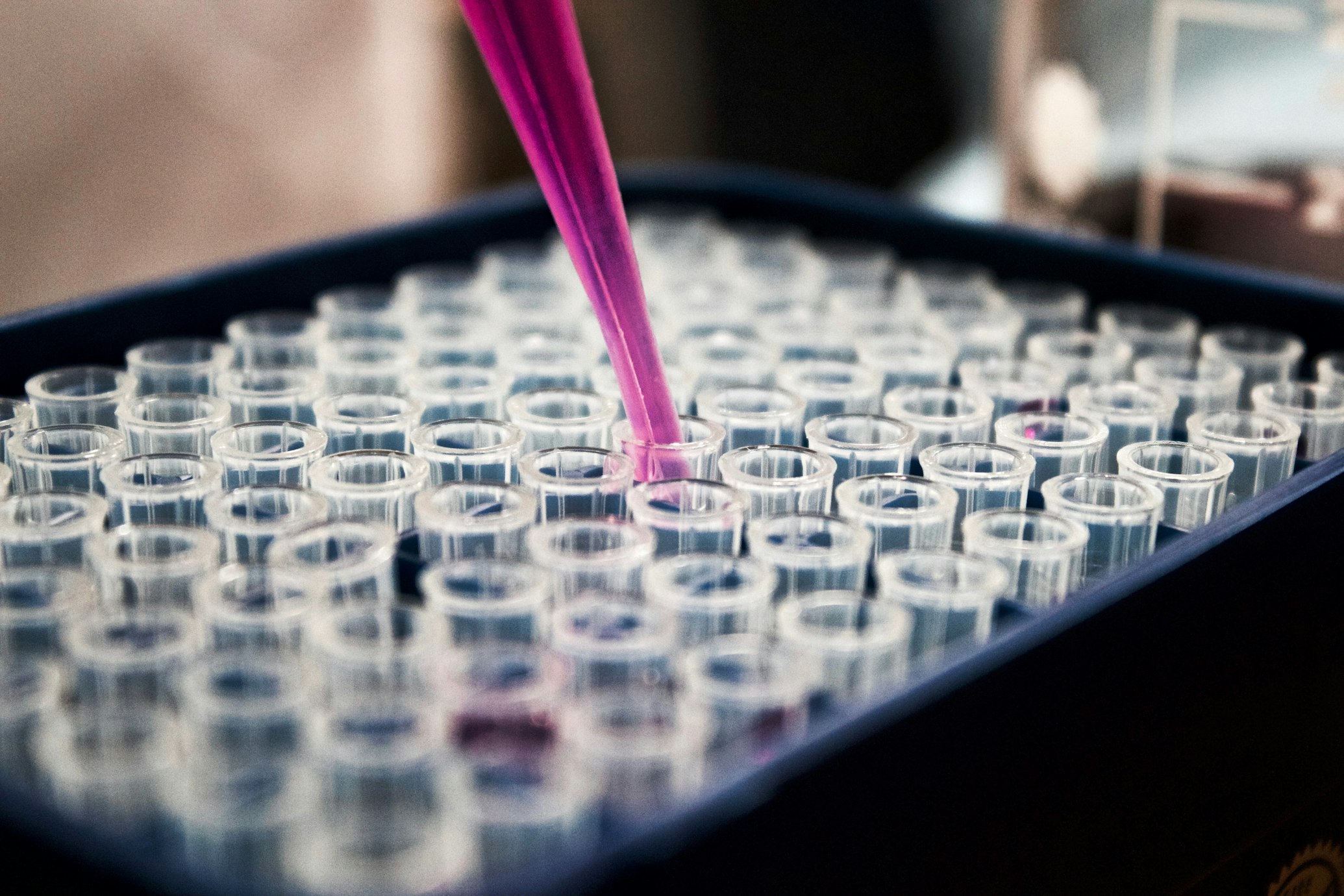
Visualization of molecular structures in computational chemistry
Why This Dance Matters: From Rings to Real-World Applications
Imagine tiny LEGO bricks snapping together. Cycloaddition reactions are the molecular equivalent – two molecules combine to form a new ring structure. They're incredibly powerful tools for synthesizing complex molecules efficiently. Strained alkynes, like the commonly studied cyclooctyne, are like molecular springs under tension. This built-in strain energy makes them incredibly reactive partners, often bypassing the need for harsh reaction conditions or catalysts that can complicate things.
Cycloaddition Reactions
Powerful tools for building complex ring structures efficiently, crucial for pharmaceutical and material science applications.
Strained Alkynes
Highly reactive partners that enable rapid cycloadditions without harsh conditions, valuable for "click" chemistry applications.
Our main dancers, 2H-pyran-2-ones and their sulfur-containing cousins (2H-thiopyran-2-ones, 2H-pyran-2-thiones, etc.), are fascinating because swapping oxygen (O) for sulfur (S) atoms subtly changes their electronic personality. Will a sulfur atom make the molecule a more eager dance partner? How does the strain of the alkyne influence the steps? DFT calculations allow chemists to "see" these reactions unfold atom-by-atom, predicting reactivity, speed, and the final structure of the product – crucial knowledge for designing new reactions.
Zooming In: The DFT Detective Work
So, how do scientists simulate this molecular ballet? It all boils down to Density Functional Theory (DFT). This computational method solves complex equations derived from quantum mechanics to calculate the energy and geometry of molecules and how they interact. Think of it as a virtual reality simulator for atoms and electrons.
DFT Simulation Process
- Build digital models of reactants
- Calculate energy and shape of separate molecules
- Explore possible orientations and pathways
- Identify the transition state (TS)
- Calculate energy and structure of final product
By comparing energies (especially the activation energy – the energy barrier from reactants to TS) and analyzing the electron distribution and bond lengths at each step, DFT reveals the mechanism (the step-by-step dance moves) and predicts how changes (like O to S swaps) affect the reaction.
Case Study: Oxygen vs. Sulfur – Who Dances Faster?
The Burning Question: Does replacing oxygen (O) with sulfur (S) in the ring or at the reactive carbonyl/thione group make these molecules react faster or slower with strained cyclooctyne? And why?
The Computational Experiment:
Researchers selected representative molecules:
- 2H-Pyran-2-one (OO): Oxygen in the ring, oxygen in the carbonyl (C=O)
- 2H-Thiopyran-2-one (SO): Sulfur in the ring, oxygen in the carbonyl (C=O)
- 2H-Pyran-2-thione (OS): Oxygen in the ring, sulfur in the thione (C=S)
- 2H-Thiopyran-2-thione (SS): Sulfur in the ring, sulfur in the thione (C=S)
- Partner: Cyclooctyne (a common strained alkyne)
Using powerful DFT software (like Gaussian, ORCA, or CP2K), they:
- Chose an accurate DFT functional (e.g., ωB97X-D) known for good performance with non-covalent interactions and kinetics
- Selected a suitable basis set (e.g., 6-311+G(d,p)) – essentially the "resolution" for describing electron orbitals
- Defined the solvent environment (e.g., simulating toluene) if relevant
The researchers then performed the computational experiment:
- Choreographed the molecular approach
- Captured the critical transition state
- Mapped the energy landscape
- Analyzed the electronic structure changes
Results and Analysis: The Sulfur Surprise
The DFT simulations yielded clear and significant trends:
Key Findings
- Thiones (C=S) react significantly faster than carbonyls (C=O)
- Ring sulfur slightly increases activation barrier
- C=S is a better electron acceptor than C=O
- More bond formation occurs by the TS for thiones
| Heterocycle | Structure Abbreviation | ΔG‡ (kcal/mol) | Relative Reactivity |
|---|---|---|---|
| 2H-Pyran-2-one | OO | 18.5 | Baseline (Slowest) |
| 2H-Thiopyran-2-one | SO | 19.2 | Slightly Slower |
| 2H-Pyran-2-thione | OS | 12.8 | Significantly Faster |
| 2H-Thiopyran-2-thione | SS | 14.1 | Faster |
| Heterocycle | Bond Forming: Alkyne C1 - Heterocycle C3 | Bond Forming: Alkyne C2 - Heterocycle C6 | Comment |
|---|---|---|---|
| OO | 2.15 Å | 2.25 Å | Bonds still relatively long |
| SO | 2.18 Å | 2.28 Å | Similar to OO, slightly longer |
| OS | 2.05 Å | 2.10 Å | Significantly shorter bonds! |
| SS | 2.08 Å | 2.12 Å | Shorter bonds than OO/SO |
The Scientist's Toolkit: Building Blocks for Discovery
Understanding and designing these reactions requires both conceptual and computational tools. Here's what's in the virtual and real lab:
| Reagent / Tool | Function |
|---|---|
| Density Functional Theory (DFT) | The core computational engine. Calculates molecular energies, structures, and reaction pathways using quantum mechanics principles. |
| Strained Alkynes (e.g., Cyclooctyne) | High-energy reactants. Their ring strain provides the driving force for rapid cycloadditions, often without catalysts ("click" chemistry). |
| 2H-Heterocyclic Cores (Pyran/Thiopyran-2-ones/thiones) | Versatile diene components. Variations in O/S atoms tune their electronic properties and reactivity. |
| Solvation Models (e.g., PCM, SMD) | Simulate the effect of solvent molecules surrounding the reacting molecules, crucial for accuracy. |
| Transition State Optimization Algorithms | Sophisticated computational methods to locate the highest-energy point on the reaction path (the TS), essential for predicting rates. |
| Energy Decomposition Analysis (EDA) | Breaks down interaction energies (e.g., in the TS) into components like electrostatics, orbital interactions, and dispersion. |
| Natural Bond Orbital (NBO) Analysis | Reveals how electrons are distributed in bonds and lone pairs, identifying charge transfer critical for reactivity. |
Computational Tools
DFT software and analysis methods that enable detailed investigation of molecular interactions and reaction pathways.
Reactive Components
Specialized molecules like strained alkynes and heterocyclic compounds that enable efficient cycloaddition reactions.
Analysis Methods
Techniques to interpret computational results and understand the electronic basis of reactivity differences.
Conclusion: Simulating the Path Forward
Thanks to the power of DFT, we can now understand the intricate electronic ballet between 2H-(thio)pyran-2-(thi)ones and strained alkynes in remarkable detail. The key takeaway? That seemingly small swap of oxygen for sulfur at the C=X position isn't small at all – it dramatically reshapes the molecule's reactivity, turning thiones into much more eager participants in these valuable ring-forming reactions.
Key Insight
This knowledge isn't just academic; it provides a predictive blueprint for chemists. By understanding why sulfur speeds things up, researchers can now more intelligently design new heterocyclic systems or tailor existing ones for specific applications, accelerating the discovery of novel pharmaceuticals, advanced materials, and other molecules built through the elegant formation of new rings. The dance of atoms, guided by computational insight, continues to reveal new steps in the chemistry of life and matter.