A Comprehensive Guide to Computational Model Validation: From Foundational Principles to Advanced Applications in Biomedical Research
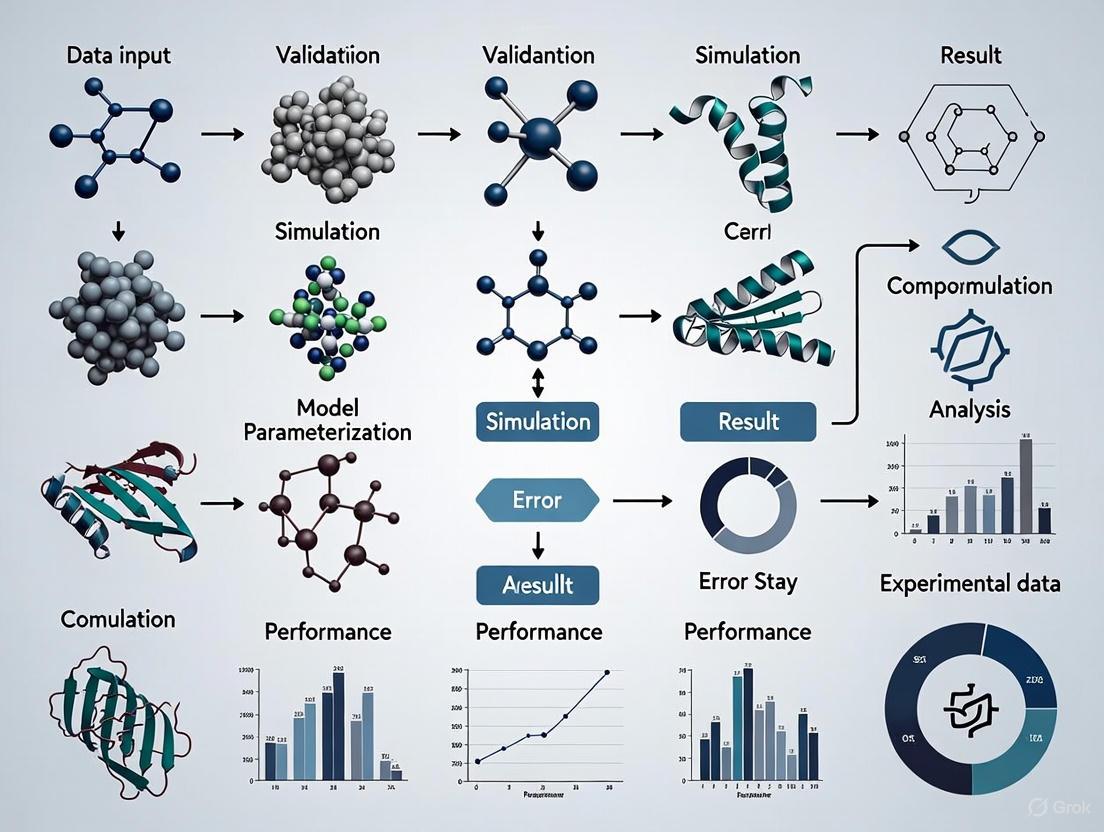
This article provides a comprehensive framework for validating computational models, tailored for researchers, scientists, and drug development professionals.
A Comprehensive Guide to Computational Model Validation: From Foundational Principles to Advanced Applications in Biomedical Research
Abstract
This article provides a comprehensive framework for validating computational models, tailored for researchers, scientists, and drug development professionals. It bridges the gap between theoretical principles and practical application, covering core concepts like generalizability and overfitting, a suite of validation methodologies from goodness-of-fit to cross-validation, advanced optimization techniques including pruning and quantization, and rigorous model comparison and benchmarking. The guide emphasizes the critical role of robust validation in enhancing the credibility, translatability, and decision-making power of computational models in biomedical and clinical settings, aligning with initiatives like the NIH's push for human-based research technologies.
Understanding the Core Principles: What Makes a Computational Model Valid?
Technical Support & FAQs
Frequently Asked Questions
Q1: My computational model performs well on training data but poorly on new, unseen validation data. What is happening and how can I fix it? This indicates a case of overfitting. Your model has learned the noise and specific patterns of the training data rather than the underlying generalizable relationships [1].
- Solution: Implement k-fold cross-validation during model training. This technique involves partitioning your data into 'k' subsets, iteratively training the model on k-1 subsets, and validating on the remaining subset. This provides a more robust estimate of model performance and reduces the risk of overfitting [1].
Q2: What is the critical quantitative difference between a validated model and a non-validated one for a research publication? The difference is quantified through specific performance metrics evaluated on a held-out test dataset. The following table summarizes the minimum thresholds often expected for a validated model in a peer-reviewed context [1]:
| Metric | Minimum Threshold for Validation | Description |
|---|---|---|
| Accuracy | >95% | Proportion of total correct predictions. |
| Precision | >95% | Proportion of positive identifications that are actually correct. |
| Recall | >90% | Proportion of actual positives that were correctly identified. |
| F1 Score | >92% | Harmonic mean of precision and recall. |
| Mean Average Precision (mAP) | >0.9 | Average precision across all recall levels (for object detection). |
Q3: During cross-validation, my model's performance metrics vary widely between folds. What does this signify? High variance between folds suggests that your model is highly sensitive to the specific data it is trained on. This is often a result of having too little data or data that is not representative of the broader population. To address this, ensure your dataset is large and diverse, and consider using stratified cross-validation, which preserves the percentage of samples for each class in each fold, leading to more stable estimates [1].
Q4: How do I know if my validation results are statistically significant and not due to random chance? Statistical significance in model validation is typically established through null hypothesis testing. The process involves:
- Stating the Null Hypothesis (H₀): "The model's performance is no better than a random or baseline model."
- Calculating a p-value: Using appropriate statistical tests (e.g., paired t-test on cross-validation results, McNemar's test) to compute the probability of observing your model's performance if the null hypothesis were true.
- Setting a Significance Level (α): A common threshold is α = 0.05. If the p-value is less than α, you can reject the null hypothesis and conclude that your model's performance is statistically significant [1].
Troubleshooting Guides
Issue: High False Positive Rate During Model Validation
Problem: Your model is incorrectly identifying negative cases as positive (e.g., identifying healthy tissue as diseased), which can undermine trust in your results.
Investigation & Resolution Protocol:
- Confirm the Issue: Check the Confusion Matrix and calculate the False Positive Rate (FPR).
- FPR = False Positives / (False Positives + True Negatives)
- Diagnose the Cause:
- Imbalanced Dataset: If your negative class is underrepresented, the model may be biased. Check the distribution of your classes [1].
- Insufficient Feature Discriminability: The features you are using may not be powerful enough to distinguish between the positive and negative classes.
- Apply Corrective Measures:
- For Imbalanced Data: Use techniques like SMOTE (Synthetic Minority Over-sampling Technique) or adjust class weights in the model's loss function [1].
- Adjust Decision Threshold: By default, the classification threshold is often 0.5. You can raise this threshold to make the model more "conservative" in making a positive prediction, thereby reducing false positives. This will be reflected in a new Precision-Recall curve.
- Feature Re-engineering: Explore new, more discriminative features or perform feature selection to remove noisy, uninformative ones.
Issue: Model Performance Degrades Over Time After Deployment (Model Drift)
Problem: A model that was validated and performed well initially begins to show a drop in accuracy when applied to new data in a live environment.
Investigation & Resolution Protocol:
- Monitor Performance: Continuously monitor the model's key metrics (e.g., accuracy, F1 score) on incoming data and compare them to the validation baseline [1].
- Identify Drift Type:
- Concept Drift: The underlying statistical properties of the target variable you are trying to predict have changed over time.
- Data Drift: The distribution of the input data has changed since the model was trained.
- Implement a Solution:
- Establish a retraining schedule (e.g., quarterly, annually) where the model is retrained on newer, more representative data [1].
- Implement a trigger-based retraining system that automatically initiates when performance metrics fall below a pre-defined threshold.
Experimental Protocols for Validation
Protocol 1: k-Fold Cross-Validation for Robust Performance Estimation
Objective: To obtain an unbiased and reliable estimate of a predictive model's performance by minimizing the variance associated with a single train-test split.
Methodology:
- Data Preparation: Randomly shuffle your dataset and partition it into
kmutually exclusive subsets (folds) of approximately equal size. A typical value forkis 5 or 10 [1]. - Iterative Training & Validation: For each of the
kiterations:- Designate one fold as the validation set.
- Use the remaining
k-1folds as the training set. - Train the model on the training set.
- Evaluate the model on the validation set and record all relevant performance metrics (e.g., accuracy, precision).
- Performance Aggregation: After all
kiterations, calculate the average and standard deviation of each performance metric across all folds. The average is your model's estimated performance.
Visualization of k-Fold Cross-Validation Workflow:
Protocol 2: Holdout Validation for Large-Scale Datasets
Objective: To efficiently validate a model using a single, held-out portion of the data, which is most practical when the dataset is very large.
Methodology:
- Data Splitting: Randomly split the entire dataset into three distinct subsets:
- Training Set (70%): Used to train the model.
- Validation Set (15%): Used to tune hyperparameters and make decisions about the model during development.
- Test Set (15%): Used only once to provide a final, unbiased evaluation of the fully-trained model [1].
- Stratification: For classification problems, ensure that the class distribution is approximately the same in all three splits. This is known as stratified sampling [1].
- Single Final Evaluation: The model is trained on the combined training and validation data after hyperparameter tuning. Its performance is then reported based on a single evaluation on the untouched test set.
Visualization of Holdout Validation Strategy:
Table 1: Model Performance Metrics and Their Interpretation in a Validation Context [1]
| Metric | Formula | Interpretation | Use Case |
|---|---|---|---|
| Accuracy | (TP+TN)/(TP+TN+FP+FN) | Overall correctness of the model. | Best for balanced class distributions. |
| Precision | TP/(TP+FP) | The accuracy of positive predictions. | Critical when the cost of false positives is high (e.g., drug safety). |
| Recall (Sensitivity) | TP/(TP+FN) | The ability to find all positive instances. | Critical when the cost of false negatives is high (e.g., disease screening). |
| F1 Score | 2(PrecisionRecall)/(Precision+Recall) | Harmonic mean of precision and recall. | Single metric to compare models when balance between Precision and Recall is needed. |
| Mean Absolute Error (MAE) | Σ|yᵢ - ŷᵢ| / n | Average magnitude of errors in a set of predictions. | Regression tasks; interpretable in the units of the target variable. |
Table 2: Cross-Validation Methods Comparison [1]
| Method | Description | Pros | Cons | Recommended Scenario |
|---|---|---|---|---|
| k-Fold | Data partitioned into k folds; each fold used once as validation. | Reduces variance, robust performance estimate. | Computationally intensive for large k or complex models. | Standard for medium-sized datasets. |
| Stratified k-Fold | k-Fold preserving the percentage of samples for each class. | Better for imbalanced datasets. | Slightly more complex implementation. | Classification with class imbalance. |
| Holdout | Single split into training and test sets. | Simple and fast. | High variance; estimate depends on a single data split. | Very large datasets (n > 1,000,000). |
| Leave-One-Out (LOO) | k = n; each sample used once as a single test point. | Virtually unbiased; uses all data for training. | Extremely high computational cost; high variance in estimate. | Very small datasets (n < 100). |
The Scientist's Toolkit: Research Reagent Solutions
Table 3: Essential Materials for Computational Model Validation
| Item | Function in Validation | Example/Specification |
|---|---|---|
| Curated Public Dataset | Serves as a benchmark for comparing your model's performance against established state-of-the-art methods. | ImageNet (for image classification), MoleculeNet (for molecular property prediction). |
| Statistical Analysis Software/Library | Used to calculate performance metrics, perform significance testing, and generate visualizations. | Python (with scikit-learn, SciPy), R, MATLAB. |
| High-Performance Computing (HPC) Cluster | Provides the computational power needed for extensive hyperparameter tuning and repeated cross-validation runs. | Cloud-based (AWS, GCP) or on-premise clusters with multiple GPUs. |
| Version Control System | Tracks changes to both code and data, ensuring the reproducibility of every validation experiment. | Git (with GitHub or GitLab), DVC (Data Version Control). |
| Automated Experiment Tracking Platform | Logs parameters, metrics, and results for each model run, facilitating comparison and analysis. | Weights & Biases (W&B), MLflow, TensorBoard. |
Frequently Asked Questions (FAQs)
Q1: My model achieves a high R² on training data but performs poorly on new, unseen validation data. Is this overfitting, and what can I do? Yes, this is a classic sign of overfitting, where your model has become too complex and has learned the noise in the training data rather than the underlying pattern. To address this:
- Simplify the Model: Reduce the number of parameters or features.
- Apply Regularization: Use techniques like L1 (Lasso) or L2 (Ridge) regression that penalize overly complex models.
- Increase Training Data: More data can help the model learn more generalizable patterns.
- Use Cross-Validation: Employ k-fold cross-validation during training to get a better estimate of how the model will perform on unseen data.
Q2: How can I systematically determine if my model is underfit, overfit, or well-balanced? A combination of quantitative metrics and visual inspection can diagnose model fit:
- Review Learning Curves: Plot the model's performance (e.g., error) on both the training and validation sets against the training set size or model complexity. An overfit model will show a large gap between training and validation performance. An underfit model will show both training and validation performance plateauing at an unsatisfying level.
- Compare Performance Metrics: A significant disparity between training accuracy (very high) and testing/validation accuracy (low) indicates overfitting. Consistently low performance on both sets suggests underfitting.
- Validate with a Hold-Out Set: Always evaluate the final model on a completely unseen test set that was not used during the training or validation phases.
Q3: What are the best practices for validating computational models, particularly in a research context like drug development? Robust validation is critical for ensuring model reliability and is a core component of Verification, Validation, and Uncertainty Quantification (VVUQ) [2].
- Verification: Ask, "Have I built the model right?" This process ensures the computational model correctly implements its intended mathematical model and algorithms.
- Validation: Ask, "Have I built the right model?" This process assesses the model's accuracy in representing the real-world system by comparing model predictions with independent experimental data [2].
- Uncertainty Quantification (UQ): Characterize and quantify the uncertainty in model predictions, which can arise from input parameters, experimental data, and the model form itself. This provides a confidence interval for your predictions.
Q4: Can machine learning models be effectively validated for predicting complex properties like ionic liquid viscosity? Yes. Recent research demonstrates that ML models like Random Forest (RF), Gradient Boosting (GB), and XGBoost (XGB) can achieve high predictive accuracy for ionic liquid viscosity when properly validated [3]. Key steps include:
- Using a large, high-quality dataset.
- Optimizing hyper-parameters with techniques like Glowworm Swarm Optimization (GSO).
- Rigorously evaluating performance using metrics like R², RMSE, and MAPE on a held-out test set.
- Reporting all performance metrics transparently, as seen in studies where RF achieved an R² of 0.9971 [3].
Troubleshooting Guides
Problem: High Validation Error (Potential Overfitting)
This guide follows a structured troubleshooting methodology to diagnose and resolve overfitting [4].
| Step | Action | Expected Outcome & Next Steps |
|---|---|---|
| 1. Identify the Problem | Compare training and validation error metrics (e.g., RMSE, MAE). A large gap confirms overfitting. | Problem Confirmed: Training error is significantly lower than validation error. |
| 2. Establish a Theory of Probable Cause | Theory: Model complexity is too high relative to the data. | Potential causes: Too many features, insufficient regularization, insufficient training data, too many model parameters (e.g., tree depth). |
| 3. Test the Theory | Simplify the model. Remove a subset of non-essential features or increase regularization strength. | Theory Correct if validation error decreases and gap closes. Theory Incorrect if error worsens; return to Step 2 and consider if data is noisy or poorly processed. |
| 4. Establish a Plan of Action | Plan to apply a combination of regularization (e.g., L2 norm), feature selection, and if possible, gather more training data. | A documented plan outlining the specific techniques and the order in which they will be applied. |
| 5. Implement the Solution | Re-train the model with the new parameters and/or reduced feature set. | A new, simplified model is generated. |
| 6. Verify System Functionality | Evaluate the new model on a fresh test set. Check that the performance gap has closed and overall predictive power is maintained. | The model now performs consistently on both training and unseen test data. |
| 7. Document Findings | Record the original issue, the changes made, and the resulting performance metrics. | Creates a knowledge base for troubleshooting future models and ensures reproducibility [4]. |
Problem: Consistently High Training and Validation Error (Potential Underfitting)
| Step | Action | Expected Outcome & Next Steps |
|---|---|---|
| 1. Identify the Problem | Observe that both training and validation errors are high and often very similar. | Problem Confirmed: The model is not capturing the underlying data structure. |
| 2. Establish a Theory of Probable Cause | Theory: Model is too simple, or features are not informative enough. | Potential causes: Model is not complex enough (e.g., linear model for non-linear process), key predictive features are missing, model training was stopped too early. |
| 3. Test the Theory | Increase model complexity. Add polynomial features, decrease regularization, or use a more powerful model (e.g., switch to a non-linear ML model). | Theory Correct if training error decreases significantly. Theory Incorrect if error does not change; return to Step 2 and investigate feature engineering. |
| 4. Establish a Plan of Action | Plan to systematically increase model capacity and engineer more relevant features. | A documented plan for iterative model and feature improvement. |
| 5. Implement the Solution | Re-train the model with new features and/or increased complexity. | A new, more powerful model is generated. |
| 6. Verify System Functionality | Evaluate the new model. Training error should have decreased, and validation error should follow, improving overall accuracy. | The model now captures the data's trends more effectively. |
| 7. Document Findings | Document the changes in model complexity/features and the resulting impact on performance. | Guides future model development to avoid underfitting. |
Model Performance Data
The following table summarizes quantitative data from a study predicting ionic liquid viscosity, illustrating the performance of different optimized models [3].
Table 1: Performance Metrics of Machine Learning Models for Viscosity Prediction
| Model | R² Score | RMSE | MAPE | Key Characteristics |
|---|---|---|---|---|
| Random Forest (RF) | 0.9971 | Very Low | Very Low | Ensemble method, robust to overfitting, high accuracy [3]. |
| Gradient Boosting (GB) | 0.9916 | Low | Low | Builds models sequentially to correct errors. |
| XGBoost (XGB) | 0.9911 | Low | Low | Optimized version of GB, fast and efficient. |
Experimental Protocol: Hyper-parameter Optimization with Glowworm Swarm Optimization (GSO)
Objective: To fine-tune the hyper-parameters of a machine learning model (e.g., RF, GB, XGB) to maximize predictive performance and mitigate overfitting.
Methodology:
- Define the Search Space: Identify the key hyper-parameters to optimize (e.g., number of trees, maximum depth, learning rate) and their plausible value ranges.
- Initialize the Swarm: Randomly initialize a population of "glowworms," where each glowworm represents a unique set of hyper-parameters.
- Evaluate Fitness: For each glowworm (hyper-parameter set), train the model and evaluate its performance using a metric like R² via 3-fold cross-validation [3]. This fitness score represents the glowworm's "bioluminescence."
- Update Positions: Glowworms move within the search space based on attraction to brighter neighbors (better solutions) and repulsion to avoid overcrowding, exploring new regions [3].
- Iterate: Repeat the fitness evaluation and position update steps for a set number of iterations or until convergence.
- Final Solution: Select the hyper-parameters of the brightest glowworm as the optimal configuration for the model.
The Scientist's Toolkit: Essential Research Reagents & Materials
Table 2: Key Reagents and Materials for Computational Modeling Research
| Item | Function / Purpose |
|---|---|
| High-Quality Dataset | The foundation of any model; used for training, validation, and testing. Must be accurate, complete, and representative. |
| Machine Learning Framework (e.g., Scikit-learn, TensorFlow) | Software libraries that provide the algorithms and tools to build, train, and evaluate computational models. |
| Computational Resources (CPU/GPU) | Hardware for performing the often intensive calculations required for model training and hyper-parameter optimization. |
| Optimization Algorithm (e.g., GSO, Grid Search) | Tools to automatically and efficiently find the best model hyper-parameters, improving performance and generalizability [3]. |
| Validation Dataset | An independent set of data not used during training, critical for assessing model generalizability and detecting overfitting. |
Workflow and Relationship Diagrams
Model Fit Diagnosis and Remediation
Model Validation and Optimization Workflow
Frequently Asked Questions
1. What is the core objective of model evaluation, and why are these three criteria—Goodness-of-Fit, Complexity, and Generalizability—important? The core objective is to select a model that not only describes your current data but also reliably predicts future, unseen data [5]. These three criteria are interconnected:
- Goodness-of-Fit (GOF) measures how well your model replicates the observed data [6] [5].
- Complexity quantifies the model's flexibility. Overly complex models can fit noise rather than the underlying pattern [5] [7].
- Generalizability is the ultimate goal: it assesses how well the model's predictions will hold for new data samples from the same process. A good model balances fit and complexity to achieve high generalizability [5].
2. My model has an excellent fit on the training data, but performs poorly on new data. What is happening and how can I fix it? This is a classic sign of overfitting, where your model has learned the noise in the training data instead of the underlying signal [7]. To address this:
- Reduce Model Complexity: Simplify your model by reducing the number of parameters or features [7].
- Use Regularization: Implement techniques like Lasso (L1) or Ridge (L2) regression, which add a penalty to the loss function based on model complexity to prevent overfitting [7].
- Apply Cross-Validation: Use methods like k-fold cross-validation to get a more robust estimate of your model's performance on unseen data [8].
3. How do I choose the right metric for my model? The choice of metric depends on your model's task (regression vs. classification) and the specific costs of different types of errors in your application [9] [10].
For Regression Models (predicting continuous values):
For Classification Models (predicting categories):
- Use Accuracy only for balanced datasets where the cost of different errors is similar [9] [10].
- Use Precision when the cost of false positives is high (e.g., in spam detection) [9] [10].
- Use Recall when the cost of false negatives is high (e.g., in disease screening) [9] [10].
- Use the F1-Score to balance Precision and Recall [11] [10].
- Use the AUC-ROC curve to evaluate the model's performance across all classification thresholds [9] [11].
4. What is the bias-variance tradeoff and how does it relate to model evaluation? The bias-variance tradeoff is a fundamental framework for understanding model performance [7].
- Bias is the error from erroneous assumptions in the model. High bias can cause underfitting (the model is too simple to capture patterns) [7].
- Variance is the error from sensitivity to small fluctuations in the training set. High variance can cause overfitting (the model is too complex and fits the noise) [7]. The goal is to find the optimal model complexity that minimizes total error by balancing bias and variance [7].
5. What are AIC and BIC, and how should I use them for model selection? Akaike Information Criterion (AIC) and Bayesian Information Criterion (BIC) are metrics that balance goodness-of-fit with model complexity to help select the model that generalizes best [6] [5].
- AIC is defined as (2k - 2\ln(L)), where (k) is the number of parameters and (L) is the model's likelihood. It is best for predicting future data [6].
- BIC is defined as (k \ln(n) - 2\ln(L)), where (n) is the number of data points. It includes a stronger penalty for complexity and is better for identifying the true model [6]. In both cases, when comparing multiple models, the one with the lowest AIC or BIC is preferred [6].
Troubleshooting Guides
Problem: Model is Overfitting
- Symptoms: Excellent performance (e.g., high accuracy, low error) on training data, but poor performance on validation or test data [7].
- Diagnosis:
- Plot learning curves (training and validation error vs. model complexity or training iterations).
- Compare the model's performance on training vs. validation sets using metrics like AUC-ROC or F1-score [11].
- Solutions:
- Gather More Training Data: This helps the model learn the true data distribution rather than noise.
- Apply Regularization:
- Simplify the Model: Reduce the number of features (feature selection) or, for neural networks, reduce the number of layers or units [7].
- Use Early Stopping: Halt the training process when performance on a validation set starts to degrade.
- Implement Cross-Validation: Use k-fold cross-validation for a more reliable estimate of generalizability and to tune hyperparameters without overfitting the test set [8].
Problem: Model is Underfitting
- Symptoms: Poor performance on both training and validation data [7].
- Diagnosis:
- The model is too simple to capture the underlying trends (high bias).
- Learning curves show high training error.
- Solutions:
- Increase Model Complexity: Add more relevant features, or for neural networks, increase the number of layers or units [7].
- Reduce Regularization: Lower the strength of L1 or L2 regularization penalties [7].
- Train for Longer: For iterative models like gradient boosting or neural networks, increase the number of training epochs.
- Engineer More Informative Features: Create new features that better capture the patterns in the data.
Problem: Unclear Which Model is Best
- Symptoms: Multiple models have similar performance metrics, making it difficult to choose one for final deployment.
- Diagnosis: Relying on a single metric or not properly accounting for model complexity.
- Solutions:
- Use Information Criteria: Calculate AIC or BIC for each model and select the one with the lowest value [6] [5].
- Employ Cross-Validation: Compare models based on their cross-validated performance (e.g., mean cross-validation score) rather than a single train-test split [8].
- Prioritize Generalizability: Designate a hold-out test set that is only used once for a final, unbiased evaluation of the selected model's performance [8].
- Consider Business Context: Choose the model based on the metric that matters most for your specific application (e.g., maximize recall for a medical test) [10].
Table 1: Common Goodness-of-Fit and Performance Metrics
| Metric | Formula | Interpretation | Best For |
|---|---|---|---|
| R-squared (R²) | (1 - \frac{RSS}{TSS}) | Proportion of variance in the dependent variable that is predictable from the independent variables. Closer to 1 is better [6] [9]. | Regression models, assessing explanatory power. |
| Mean Absolute Error (MAE) | (\frac{1}{N}\sum|y-\hat{y}|) | Average magnitude of errors. Easy to interpret [9]. | Regression, when error magnitude is important. |
| Root Mean Squared Error (RMSE) | (\sqrt{\frac{1}{N}\sum(y-\hat{y})^2}) | Average magnitude of errors, but penalizes larger errors more than MAE [9]. | Regression, when large errors are particularly undesirable. |
| Accuracy | (\frac{TP+TN}{TP+TN+FP+FN}) | Proportion of total correct predictions [9] [10]. | Classification, when classes are balanced. |
| Precision | (\frac{TP}{TP+FP}) | Proportion of positive predictions that are actually correct [9] [10]. | When the cost of false positives is high. |
| Recall (Sensitivity) | (\frac{TP}{TP+FN}) | Proportion of actual positives that are correctly identified [9] [10]. | When the cost of false negatives is high (e.g., disease detection). |
| F1-Score | (2 \times \frac{Precision \times Recall}{Precision + Recall}) | Harmonic mean of precision and recall. Balances the two [11] [10]. | Imbalanced datasets, or when a single score balancing FP and FN is needed. |
| Akaike Information Criterion (AIC) | (2k - 2\ln(L)) | Balances model fit and complexity. Lower values indicate a better trade-off [6] [5]. | Model selection with a focus on predictive accuracy. |
| Bayesian Information Criterion (BIC) | (k \ln(n) - 2\ln(L)) | Balances model fit and complexity with a stronger penalty for parameters than AIC. Lower is better [6] [5]. | Model selection with a focus on identifying the true model. |
Table 2: Model Selection Checklist Based on Model Performance
| Symptom | High Training Error, High Validation Error | Low Training Error, High Validation Error | Low Training Error, Low Validation Error |
|---|---|---|---|
| Diagnosis | Underfitting (High Bias) [7] | Overfitting (High Variance) [7] | Good Fit |
| Next Actions | • Increase model complexity• Add more features• Reduce regularization | • Gather more training data• Increase regularization• Reduce model complexity• Apply feature selection | • Proceed to final evaluation on a hold-out test set |
Experimental Protocols for Model Validation
Protocol 1: k-Fold Cross-Validation for Robust Performance Estimation This protocol provides a robust estimate of model generalizability by repeatedly splitting the data [8].
- Data Preparation: Randomly shuffle the dataset and partition it into k equally sized folds (common choices are k=5 or k=10).
- Iterative Training and Validation: For each unique fold:
- Designate the current fold as the validation set.
- Designate the remaining k-1 folds as the training set.
- Train the model on the training set.
- Evaluate the model on the validation set and record the chosen performance metric (e.g., accuracy, F1-score).
- Result Aggregation: Calculate the mean and standard deviation of the k recorded performance metrics. The mean represents the expected model performance.
Protocol 2: Train-Validation-Test Split for Model Development and Assessment This protocol uses separate data splits for tuning model parameters and for a final, unbiased assessment [8].
- Initial Split: Split the available data into a temporary set (e.g., 80%) and a hold-out test set (e.g., 20%).
- Secondary Split: Split the temporary set into a training set (e.g., 70-80% of temporary set) and a validation set (e.g., 20-30% of temporary set).
- Model Tuning: Train multiple model configurations (e.g., with different hyperparameters) on the training set and evaluate their performance on the validation set.
- Final Assessment: Select the best-performing model configuration based on the validation set results. Retrain this model on the entire temporary set (training + validation) and perform a single, final evaluation on the hold-out test set to estimate its real-world performance.
Conceptual Diagrams
Diagram 1: Relationship between core evaluation criteria and model selection. AIC/BIC formalizes the trade-off between Goodness-of-Fit and Complexity to achieve the goal of Generalizability.
Diagram 2: A diagnostic and refinement workflow for addressing overfitting and underfitting during model development.
The Scientist's Toolkit: Research Reagent Solutions
Table 3: Essential Computational Tools for Model Evaluation
| Tool / Reagent | Function in Evaluation | Example Use-Case |
|---|---|---|
| Cross-Validation Engine | Provides robust estimates of model generalizability by systematically partitioning data into training and validation sets [8]. | Using 10-fold cross-validation to reliably compare the mean AUC of three different classifier algorithms. |
| Regularization Methods (L1/L2) | Prevents overfitting by adding a complexity penalty to the model's loss function, discouraging over-reliance on any single feature [7]. | Applying L1 (Lasso) regularization to a logistic regression model to perform feature selection and reduce variance. |
| Information Criteria (AIC/BIC) | Provides a quantitative measure for model selection that balances goodness-of-fit against model complexity [6] [5]. | Selecting the best-performing protein folding model from two candidates by choosing the one with the lower AIC value [5]. |
| Performance Metrics (Precision, Recall, F1, etc.) | Quantifies different aspects of model performance based on the confusion matrix and error types [9] [11] [10]. | Optimizing a medical diagnostic model for high Recall to ensure most true cases of a disease are captured, even at the cost of more false positives. |
| Hold-Out Test Set | Serves as a final, unbiased dataset to assess the model's real-world performance after all model development and tuning is complete [8]. | Reporting the final accuracy of a validated model on a completely unseen test set that was locked away during all previous development stages. |
Troubleshooting Guide: Identifying and Resolving Overfitting
This guide helps researchers and scientists in computational modeling and drug development diagnose and correct overfitting in their machine learning models.
FAQ: How can I tell if my model is overfitting?
Answer: Your model is likely overfitting if you observe a significant performance gap between training and validation data. Key indicators include:
- High accuracy on training data but poor accuracy on test or validation data [12].
- The model learns the noise and random fluctuations in the training data instead of the underlying pattern [12].
FAQ: What is the simplest method to detect overfitting?
Answer: The most straightforward method is Hold-Out Validation [13] [12].
- Methodology: Split your dataset into two parts: a training set (e.g., 80%) and a testing set (e.g., 20%) [13].
- Detection: Train your model on the training set and evaluate its performance on the unseen test set. A high error rate on the test set indicates overfitting [12].
FAQ: My dataset is small. How can I reliably test for overfitting?
Answer: For limited data, use K-Fold Cross-Validation [12].
- Methodology: Split your dataset into K equally sized folds (e.g., K=5 or 10). In each iteration, use K-1 folds for training and the remaining fold for validation. Repeat this process K times, using each fold as the validation set once [12].
- Output: The final model performance is the average of the performance across all K iterations, providing a more robust estimate of how the model generalizes [12].
Key Experiments and Validation Protocols
Experiment: Detecting Overfitting via Performance Discrepancy
This experiment aims to identify overfitting by comparing model performance on training versus validation data.
- Objective: To quantify the generalization error of a computational model.
- Protocol:
- Randomly split the dataset into training (80%) and testing (20%) sets [13].
- Train the model on the training set.
- Calculate key performance metrics (e.g., Accuracy, Precision, Recall, F1-Score) on both the training set and the test set [11].
- A significant drop in performance on the test set is a clear indicator of overfitting [12].
The logical workflow for this validation method is outlined below.
Experiment: Implementing K-Fold Cross-Validation
This protocol provides a robust validation technique for smaller datasets, reducing the variance of a single train-test split.
- Objective: To obtain a reliable estimate of model performance and generalization error.
- Protocol:
- Randomly shuffle the dataset and split it into K consecutive folds of roughly equal size [12].
- For each fold
i(whereiranges from 1 to K):- Use fold
ias the validation set. - Use the remaining K-1 folds as the training set.
- Train the model and evaluate it on the validation set.
- Record the performance score for fold
i.
- Use fold
- Calculate the final performance metric by averaging the scores from the K folds.
The following diagram illustrates the process for 5-fold cross-validation.
Model Evaluation Metrics for Validation
The following table summarizes key quantitative metrics used to evaluate model performance and detect overfitting during validation experiments [11].
| Metric | Formula | Interpretation | Use Case |
|---|---|---|---|
| Accuracy | (TP + TN) / (TP + TN + FP + FN) | Overall correctness of the model. | General performance assessment. |
| Precision | TP / (TP + FP) | Proportion of correct positive predictions. | When the cost of false positives is high (e.g., drug safety). |
| Recall (Sensitivity) | TP / (TP + FN) | Proportion of actual positives correctly identified. | When missing a positive is dangerous (e.g., disease diagnosis). |
| F1 Score | 2 * (Precision * Recall) / (Precision + Recall) | Harmonic mean of precision and recall. | Balanced view when class distribution is uneven. |
| AUC-ROC | Area under the ROC curve | Measures the model's ability to distinguish between classes. | Overall performance across all classification thresholds. |
Abbreviations: TP = True Positive, TN = True Negative, FP = False Positive, FN = False Negative [11].
Solutions and Preventative Measures
The table below details common techniques to prevent and mitigate overfitting, aligning with the experimental protocols.
| Technique | Methodology | Primary Effect |
|---|---|---|
| Data Augmentation [13] [12] | Artificially increase training data size using transformations (e.g., image flipping, rotation). | Increases data diversity, teaches the model to ignore noise. |
| L1 / L2 Regularization [13] | Add a penalty term to the cost function to constrain model complexity. | Shrinks coefficient values, prevents the model from over-reacting to noise. |
| Dropout [13] | Randomly ignore a subset of network units during training. | Reduces interdependent learning among neurons. |
| Early Stopping [13] [12] | Monitor validation loss and stop training when it begins to degrade. | Prevents the model from learning noise in the training data. |
| Simplify Model [13] [12] | Reduce the number of layers or neurons in the network. | Decreases model capacity, forcing it to learn dominant patterns. |
The Scientist's Toolkit: Research Reagent Solutions
This table lists essential computational "reagents" and tools for robust model validation.
| Item | Function | Relevance to Validation |
|---|---|---|
| Training/Test Splits | Provides a held-out dataset to simulate unseen data and test generalization [13] [12]. | Fundamental for detecting overfitting. |
| K-Fold Cross-Validation | A resampling procedure used to evaluate a model on limited data [12]. | Reduces variability in performance estimation. |
| Confusion Matrix | A table used to describe the performance of a classification model [11]. | Allows calculation of precision, recall, F1-score. |
| ROC Curve | A plot that illustrates the diagnostic ability of a binary classifier system [11]. | Visualizes the trade-off between sensitivity and specificity. |
| SHAP/LIME (XAI) | Tools for Explainable AI that help interpret model predictions [14]. | Audits model logic for spurious correlations and bias. |
For researchers in computational science and drug development, a model's performance metrics are only part of the story. Explanatory adequacy and interpretability are critical components of model validation, ensuring that a model's decision-making process is transparent, understandable, and scientifically plausible. Moving beyond a "black box" approach builds trust in your model's outputs, facilitates peer review, and is increasingly required by health technology assessment agencies and regulatory bodies for artificial intelligence-based medical devices [15]. This technical support center provides practical guidance for integrating these principles into your research workflow.
Frequently Asked Questions (FAQs)
1. What is the practical difference between interpretability and explainability in model validation?
- Interpretability is the ability to understand the model's mechanics and the cause-and-effect relationships within it. It refers to how well a human can predict what a model will do [15]. Explainability is the ability to explain the reasons for a specific model decision or prediction in human-understandable terms [15]. In practice, you should aim for interpretability to understand your model's overall logic and use explainability techniques to justify individual predictions in your research papers.
2. Our deep learning model has high accuracy, but reviewers demand an explanation for its predictions. What can we do?
- This is a common challenge. High performance does not equate to understanding. To address this, employ post-hoc explanation techniques (methods applied after the model has made a prediction). These can include:
- Feature Importance: Identifying which input variables most influenced a specific prediction.
- Saliency Maps: For image-based models, generating heatmaps that highlight the pixels most critical to the classification.
- Surrogate Models: Training a simple, interpretable model (like a decision tree) to approximate the predictions of your complex model and explain its behavior.
3. How can we assess the utility of an interpretable model for a specific clinical or research task?
- Model utility goes beyond standard performance metrics. Before development, establish a framework to answer key questions [16]:
- What actionable insight will the model provide?
- Is there a feasible intervention or follow-up action based on the prediction?
- What are the costs and constraints of that action? A model predicting a high risk of a condition is only useful if you have the capacity and means to act on that prediction [16].
4. We are concerned about model generalizability. How does interpretability help?
- Interpretable models can reveal model instability and data bias. If a model relies on a spurious correlation in your training data (e.g., associating a specific hospital's watermark with a disease in X-rays), explanation techniques can surface this flaw. This allows you to fix the dataset and build a more robust model that generalizes to data from new hospitals or populations [16].
Troubleshooting Guides
Problem: Unexplained Model Failure After Deployment
Your model validated perfectly on internal test data but is producing erratic and incorrect predictions in a new clinical setting.
| Troubleshooting Step | Description & Action |
|---|---|
| 1. Understand the Problem | Gather information and context. What does the new data look like? How does the new environment differ from the development one? Reproduce the issue with a small sample of the new data [17]. |
| 2. Isolate the Issue | Simplify the problem. Compare the input data distributions (feature means, variances) between your original validation set and the new data. This helps isolate the issue as a data drift or concept drift problem [17]. |
| 3. Find a Fix or Workaround | Short-term: Use interpretability tools to see if the model is using nonsensical features in the new environment. This can provide an immediate explanation to stakeholders [15].Long-term: Implement continuous monitoring for data drift and plan for model retraining with data from the new environment [16]. |
Problem: Stakeholder Resistance to Adopting a "Black Box" Model
Clinicians or regulatory bodies are hesitant to trust your model's predictions because they cannot understand its logic.
| Troubleshooting Step | Description & Action |
|---|---|
| 1. Understand the Problem | Empathize with the stakeholder. Their resistance is often rooted in a valid need for accountability and safety, especially in drug development [17]. Identify their specific concerns (e.g., "What if it's wrong?"). |
| 2. Isolate the Issue | Determine the core of their hesitation. Is it a lack of trust in the model's accuracy, or a need to reconcile the output with their own expertise? |
| 3. Find a Fix or Workaround | Advocate for the model: Position yourself alongside the stakeholder [17]. Use explanation techniques like Local Interpretable Model-agnostic Explanations (LIME) to generate case-specific reasons for predictions, making the model a "consultant" rather than an oracle.Document and educate: Create clear documentation on the model's intended use, limitations, and how its explanations should be interpreted [18]. |
Quantitative Data on Model Assessment Criteria
The following table summarizes the three main assessment criteria for AI-based models, particularly in a healthcare context, as highlighted by health technology assessment guidelines [15].
Table 1: Key Assessment Criteria for Computational Models
| Criterion | Description | Role in Validation & Explanatory Adequacy |
|---|---|---|
| Performance | Quantitative measures of the model's predictive accuracy (e.g., AUC, F1-score, sensitivity, specificity). | The foundational asset. It answers "Does the model work?" but not "How does it work?" Must be evaluated based on model structure and data availability [15]. |
| Interpretability | The degree to which a human can understand the model's internal mechanics and predict its outcome. | Reinforces confidence. It allows researchers to validate that the model's decision logic aligns with established scientific knowledge and is not based on artifactual correlations [15]. |
| Explainability | The ability to provide understandable reasons for a model's specific decisions or predictions to a human. | Enables accountability. It helps hold stakeholders accountable for decisions made by the model and allows for debugging and improvement of the model itself [15]. |
Experimental Protocol: Validating Model Explanations
This protocol provides a methodology for testing whether your model's explanations are faithful to its actual reasoning process.
Objective: To empirically validate that the features highlighted by a post-hoc explanation method are genuinely important to the model's prediction.
Background: Simply trusting an explanation method's output is insufficient. This protocol tests for explanation faithfulness by systematically perturbing the model's inputs and observing the effect on its output [16].
Workflow Diagram
Materials and Reagents:
Table 2: Research Reagent Solutions for Explanation Validation
| Item | Function in the Experiment |
|---|---|
| Trained Model | The computational model (e.g., a neural network) whose explanations are being validated. |
| Validation Dataset | A held-out set of data, not used in training, for unbiased testing of the model and its explanations. |
| Explanation Framework | Software library (e.g., SHAP, Captum, LIME) used to generate post-hoc explanations for the model's predictions. |
| Perturbation Method | A defined algorithm for modifying input data (e.g., masking image regions, shuffling feature values) to test feature importance. |
Methodology:
- Sample Selection: Select a representative input sample from your validation dataset.
- Baseline Prediction: Run the sample through your model and record both the output prediction and its confidence score.
- Generate Explanation: Use your chosen explanation framework (e.g., LIME) to generate a feature attribution list for this specific prediction. Identify the top K most important features.
- Perturbation: Systematically perturb or remove the top K features identified in the explanation. For an image, this could mean blurring the highlighted region; for tabular data, it could mean replacing the feature values with the mean.
- Secondary Prediction: Pass the perturbed sample through the model and record the new prediction and confidence score.
- Analysis: Compare the new confidence score with the baseline. A significant drop in confidence indicates that the perturbed features were truly important, providing evidence that the explanation is faithful. A minimal change suggests the explanation may not be capturing the model's true reasoning.
A Framework for Developing Interpretable Models
The following diagram outlines a decision process for incorporating explanatory adequacy from the outset of a modeling project, helping to choose the right model type based on data availability and existing knowledge [16].
Model Development Decision Framework
A Practical Toolkit: Essential Validation Methods and Techniques
For researchers developing computational models, a rigorous data splitting strategy is not merely a preliminary step but the foundation of a statistically sound and reproducible experiment. Properly partitioning your data into training, validation, and test sets is crucial for obtaining an unbiased estimate of your model's generalization performance—its ability to make accurate predictions on new, unseen data [19] [20]. This practice directly prevents overfitting, a common pitfall where a model performs well on its training data but fails to generalize [21]. This guide provides troubleshooting advice and detailed protocols to help you correctly implement these strategies within your research workflow.
Troubleshooting Guides and FAQs
FAQ 1: My model performs well during training but poorly on new data. What is the cause?
This is a classic sign of overfitting [21] [22]. Your model has likely memorized noise and specific patterns in the training data instead of learning generalizable rules.
Solution:
- Reassess Your Data Split: Ensure you have a dedicated validation set for hyperparameter tuning and a completely untouched test set for final evaluation [20]. Never use your test set for model tuning, as this leads to information leakage and an overly optimistic performance estimate [21].
- Implement Cross-Validation: For small to medium-sized datasets, use k-fold cross-validation instead of a single validation set. This provides a more robust performance estimate by training and validating the model on different data subsets [23] [24].
- Apply Regularization: Techniques like L1 (Lasso) or L2 (Ridge) regularization can penalize overly complex models and help prevent overfitting.
FAQ 2: How should I split my data if my dataset is very small?
With limited data, a single train-test split can be unreliable due to high variance in the performance estimate [25].
Solution:
- Use k-Fold Cross-Validation: This strategy makes efficient use of limited data. A common choice is 10-fold cross-validation [23]. For very small datasets (e.g., less than 100 samples), you might consider Leave-One-Out Cross-Validation (LOOCV), though it is computationally expensive [23].
- Consider Monte Carlo Cross-Validation: This involves repeatedly performing random splits of the data into training and validation sets, which can provide a more stable estimate [24].
FAQ 3: I am working with time-series data. Can I split my data randomly?
No. Random splitting destroys the temporal order of time-series data, leading to data leakage and grossly inflated performance metrics [26] [25]. For instance, if data from the future is used to predict the past, the model will appear accurate but fail in production.
Solution:
- Use a Chronological Split: Always train your model on earlier data and validate/test on later data [25].
- Training Set: The earliest period of your data.
- Validation Set: The subsequent period (for tuning).
- Test Set: The most recent period (for final evaluation).
- Employ Time Series Split Cross-Validation: Techniques like
TimeSeriesSplitin scikit-learn create multiple folds by expanding the training window while keeping the test set strictly chronologically ahead of the training data [25].
FAQ 4: What should I do if my dataset has a severe class imbalance?
Random splitting on an imbalanced dataset can result in training or validation splits that have very few or even zero examples of the minority class, making it impossible for the model to learn them [22].
Solution:
- Use Stratified Splitting: Ensure that the relative proportion of each class is preserved in the training, validation, and test splits [23] [22]. Most machine learning libraries, like scikit-learn, offer
StratifiedKFoldfor this purpose.
The table below summarizes the core data splitting methods, their ideal use cases, and key considerations for researchers.
| Strategy | Description | Best For | Key Advantages | Key Disadvantages |
|---|---|---|---|---|
| Hold-Out | Single split into training and test sets (e.g., 70-30%) [23]. | Very large datasets, quick preliminary model evaluation [23] [27]. | Simple and fast to compute [23]. | Performance estimate can have high variance; only a portion of data is used for training [23]. |
| Train-Validation-Test | Two splits create three sets: training, validation (for tuning), and a final test set (for evaluation) [19] [22]. | Model hyperparameter tuning and selection while providing a final unbiased test [19] [20]. | Prevents overfitting to the test set by using a separate validation set for tuning [19]. | Results can be sensitive to a particular random split; reduces data available for training [21]. |
| k-Fold Cross-Validation | Data is divided into k folds. Model is trained on k-1 folds and validated on the remaining fold, repeated k times [23] [21]. | Small to medium-sized datasets for obtaining a robust performance estimate [23] [25]. | Lower bias; more reliable performance estimate; all data is used for both training and validation [23]. | Computationally expensive as the model is trained k times [23]. |
| Stratified k-Fold | A variation of k-fold that preserves the class distribution in each fold [23]. | Imbalanced datasets for classification tasks [23] [22]. | Ensures each fold is representative of the overall class balance, leading to more reliable metrics. | Slightly more complex than standard k-fold. |
| Leave-One-Out (LOOCV) | A special case of k-fold where k equals the number of data points. Each sample is used once as a test set [23]. | Very small datasets where maximizing training data is critical [23]. | Very low bias; uses almost all data for training. | Extremely computationally expensive; high variance in the estimate [23]. |
Experimental Protocols for Data Splitting
Protocol 1: Standard Train-Validation-Test Split
This is a foundational protocol for model development.
- Partition the Data: Randomly shuffle the dataset and split it into three parts:
- Train Model: Train your model on the training set.
- Tune and Validate: Evaluate the model on the validation set and adjust hyperparameters iteratively. The best-performing model on the validation set is selected.
- Final Evaluation: Train the final model on the combined training and validation data to maximize learning. Then, evaluate it once on the untouched test set to report the final performance [20].
Python Implementation:
Protocol 2: k-Fold Cross-Validation for Model Evaluation
Use this protocol for a more robust assessment of your model's performance.
- Hold Out Test Set: First, set aside a test set (e.g., 20%) for final evaluation. Do not use this for any tuning [20].
- Configure k-Fold: Choose a value for k (typically 5 or 10) [23]. Split the remaining data (training + validation portion) into k equal-sized folds.
- Iterative Training: For each of the k iterations:
- Use k-1 folds as the training set.
- Use the remaining 1 fold as the validation set.
- Train the model and evaluate its performance.
- Calculate Performance: Average the performance metrics from the k iterations to get a robust estimate of the model's performance [23] [21].
- Final Model: After identifying the best model and hyperparameters through cross-validation, retrain the model on the entire dataset (excluding the held-out test set) and perform a final evaluation on the test set [20].
Python Implementation:
Data Splitting Workflow Diagram
The following diagram illustrates the logical relationship and workflow for selecting and applying the appropriate data splitting strategy.
The Scientist's Toolkit: Essential Research Reagents
The table below details key computational tools and concepts essential for implementing robust data splitting strategies.
| Tool / Concept | Function / Purpose | Example / Note |
|---|---|---|
train_test_split |
A function in scikit-learn to randomly split datasets into training and testing subsets [21]. | Found in sklearn.model_selection. Critical for implementing the hold-out method. |
cross_val_score |
A function that automates the process of performing k-fold cross-validation and returns scores for each fold [21]. | Found in sklearn.model_selection. Simplifies robust model evaluation. |
KFold & StratifiedKFold |
Classes used to split data into k consecutive folds. StratifiedKFold preserves the percentage of samples for each class [23] [21]. |
Essential for implementing cross-validation protocols, especially with imbalanced data. |
TimeSeriesSplit |
A cross-validation iterator that preserves the temporal order of data, ensuring the test set is always after the training set [25]. | Found in sklearn.model_selection. Mandatory for time-series forecasting tasks. |
| Pipeline | A scikit-learn object used to chain together data preprocessing steps and a final estimator [21]. | Prevents data leakage by ensuring preprocessing (like scaling) is fit only on the training fold during cross-validation. |
| Random State / Seed | An integer parameter used to control the randomness of the shuffling and splitting process. | Using a fixed seed (e.g., random_state=42) ensures that your experiments are reproducible [25]. |
For researchers in computational models and drug development, validating a model's performance is a critical step in ensuring its reliability and predictive power. This guide focuses on three fundamental goodness-of-fit measures: Sum of Squared Errors (SSE), Percent Variance Accounted For (often expressed as R-squared), and the Maximum Likelihood Estimation (MLE) method. These metrics help quantify how well your model captures the underlying patterns in your data, which is essential for making credible scientific claims and decisions [28] [29].
This resource provides troubleshooting guides and FAQs to address specific issues you might encounter when applying these measures in your research.
Conceptual Foundations and Formulas
Before troubleshooting, it is crucial to understand what each measure represents and how it is calculated.
Sum of Squared Errors (SSE): Also known as the Residual Sum of Squares (RSS), the SSE measures the total deviation of the observed values from the values predicted by your model. It represents the unexplained variability by the model. A smaller SSE indicates a closer fit to the data [30] [31].
- Formula:
SSE = Σ(y_i - ŷ_i)²Wherey_iis the observed value andŷ_iis the predicted value [30].
- Formula:
Total Sum of Squares (SST): This measures the total variability in your observed data relative to its mean. It is the baseline against which the model's performance is judged [30] [32].
- Formula:
SST = Σ(y_i - ȳ)²Whereȳis the mean of the observed data [30].
- Formula:
Percent Variance Accounted For (R-squared): This statistic, also known as the coefficient of determination, measures the proportion of the total variance in the dependent variable that is explained by your model. It is derived from the SSE and SST [28] [31].
Maximum Likelihood Estimation (MLE): MLE is a method for estimating the parameters of a statistical model. It works by finding the parameter values that maximize the likelihood function, which is the probability of observing the data given the parameters. The point where this probability is highest is called the maximum likelihood estimate [33] [34].
The relationship between these components is foundational: SST = SSR + SSE, where SSR (Sum of Squares due to Regression) is the explained variability [30]. This relationship is visually summarized in the diagram below.
Frequently Asked Questions (FAQs)
1. My SSE value is very large. What does this mean, and how can I improve my model? A large SSE indicates that the overall difference between your observed data and your model's predictions is substantial. This is a sign of poor model fit. To address this:
- Check for Outliers: Investigate your data for anomalies or errors that could be skewing the results.
- Review Model Specification: Ensure you are using the correct model type (e.g., linear vs. nonlinear) for your data's underlying relationship. Your model may be overly simplistic.
- Consider Additional Variables: Your model might be missing key predictor variables that explain the variance in your data.
2. My R-squared value is high (close to 1), but the model's predictions seem inaccurate. Why? A high R-squared indicates that your model explains a large portion of the variance in the training data. However, this can be misleading, especially with small sample sizes or overly complex models [35]. This situation often points to overfitting, where your model has learned the noise in the training data rather than the generalizable pattern.
- Troubleshooting Step: Always validate your model using a holdout external test set that was not used in parameter optimization. Calculate the R-squared or other predictivity measures on this external set to ensure your model generalizes well [35].
3. When should I use Adjusted R-squared instead of R-squared? You should use Adjusted R-squared when comparing models with a different number of predictors (coefficients). The standard R-squared will always increase or stay the same when you add more predictors, even if they are non-informative [31]. The Adjusted R-squared accounts for the number of predictors and will penalize the addition of irrelevant variables, providing a better indicator of true fit quality for nested models [31].
4. What is a key advantage of using Maximum Likelihood Estimation? MLE has a very intuitive and flexible logic—it finds the parameter values that make your observed data "most probable" [33]. It is a dominant method for statistical inference because it provides estimators with desirable properties, such as consistency, meaning that as your sample size increases, the estimate converges to the true parameter value [33].
5. Can I get a negative R-squared, and what does it mean? Yes. While R-squared is typically between 0 and 1, it is possible to get a negative value for equations that do not contain a constant term (intercept). A negative R-squared means that the fit is worse than simply using a horizontal line at the mean of the data. In this case, it cannot be interpreted as the square of a correlation and indicates that a constant term should be added to the model [31].
Troubleshooting Common Experimental Issues
| Issue Encountered | Possible Cause | Diagnostic Steps | Recommended Solution |
|---|---|---|---|
| Deceptively High R² | Overfitting on a small sample size [35]. | Check sample size (n) vs. number of parameters (m). Perform y-scrambling to test for chance correlation [35]. | Use a larger training set. Use Adjusted R-squared for model comparison [31]. Validate with an external test set [35]. |
| SSE Fails to Decrease | Model is stuck in a local optimum or has converged to a poor solution. | Check the optimization algorithm's convergence criteria. Plot residuals to identify patterns. | For MLE, try different starting values for parameters. For complex models like ANNs, adjust learning rates or network architecture [35]. |
| MLE Does Not Converge | Model misspecification or poorly identified parameters (e.g., too many for the data) [33]. | Verify the likelihood function is correctly specified. Check for collinearity among predictors. | Simplify the model. Increase the sample size. Use parameter constraints within the restricted parameter space [33]. |
| Poor Generalization to New Data | Model has high variance and has been overfitted to the training data. | Compare internal (e.g., cross-validation Q²) and external (e.g., Q²F2) validation parameters [35]. | Apply regularization techniques (e.g., Ridge, Lasso). Re-calibrate the model's hyperparameters. Re-define the model's applicability domain [35]. |
The Scientist's Toolkit: Essential Research Reagents & Materials
The following table lists key methodological components and their functions for implementing these goodness-of-fit measures in computational research.
| Item | Function in Validation |
|---|---|
| Training Set | The internal dataset used for optimizing the model's parameters. Used to calculate goodness-of-fit (R²) and robustness (via cross-validation) [35]. |
| External Test Set | A holdout dataset not used during model optimization. It is the gold standard for quantifying the true predictivity of the final model [35]. |
| Cross-Validation Script (LOO/LMO) | A computational procedure (e.g., Leave-One-Out or Leave-Many-Out) that assesses model robustness by iteratively fitting the model to subsets of the training data [35]. |
| Likelihood Function | The core mathematical function in MLE, defining the probability of the observed data as a function of the model's parameters. Its maximization yields the parameter estimates [33] [34]. |
| Optimization Algorithm | A numerical method (e.g., gradient descent) used to find the parameter values that minimize the SSE or maximize the likelihood function [33]. |
Standard Experimental Protocol for Model Validation
To ensure your model is both accurate and predictive, follow this general workflow, which aligns with OECD QSAR validation principles [35]:
- Data Splitting: Randomly split your complete dataset into a training set (typically 70-80%) and an external test set (20-30%). The test set must be set aside and not used in any model building steps.
- Model Training & Goodness-of-Fit Check: Optimize your model's parameters on the training set. Calculate the goodness-of-fit measures (SSE and R-squared) on this same training data.
- Internal Validation (Robustness): Perform cross-validation (e.g., Leave-One-Out or k-fold) on the training set. This involves creating multiple models with reduced training data and predicting the omitted points to obtain a cross-validated R² (Q²).
- External Validation (Predictivity): Use the finalized model, with all parameters fixed, to predict the held-out external test set. Calculate the predictive R² (Q²F2) and error metrics on these external predictions. This is the most critical step for assessing real-world utility [35].
- Final Reporting: Report all three aspects: goodness-of-fit (on training), robustness (internal cross-validation), and predictivity (on external test set) to provide a complete picture of your model's validity.
The following diagram illustrates this validation workflow and the key measures calculated at each stage.
Technical Support Center
Frequently Asked Questions (FAQs)
1. What is the fundamental difference in the goal of AIC versus BIC?
AIC and BIC are derived from different philosophical foundations and are designed to answer different questions. AIC (Akaike Information Criterion) is designed to select the model that best approximates the underlying reality, with the goal of achieving optimal predictive accuracy, without assuming that the true model is among the candidates [36]. In contrast, BIC (Bayesian Information Criterion) is designed to identify the "true" model, assuming that it is present within the set of candidate models being evaluated [36] [37].
2. When should I prefer AIC over BIC, and vice versa?
The choice depends on your research objective and sample size [38] [36] [37].
- Prefer AIC when your goal is prediction accuracy, you have a small sample size, or you believe the true model is overly complex and not among your candidates. AIC is asymptotically efficient, meaning it seeks to minimize prediction error [37].
- Prefer BIC when your goal is explanatory modeling and identifying the data-generating process, you have a large sample size, and you believe the true model might be among your candidates. BIC is consistent, meaning that as the sample size grows, it will select the true model with probability approaching 1 (if the true model is in the candidate set) [36] [37].
3. How do I interpret the numerical differences in AIC or BIC values when comparing models?
The model with the lowest AIC or BIC value is preferred. The relative magnitude of the difference between models is also informative, particularly for AIC. The following table provides common rules of thumb [37]:
| AIC Difference | Strength of Evidence for Lower AIC Model |
|---|---|
| 0 - 2 | Substantial/Weak |
| 2 - 6 | Positive/Moderate |
| 6 - 10 | Strong |
| > 10 | Very Strong |
For BIC, a difference of more than 10 is often considered very strong evidence against the model with the higher value [39].
4. Can AIC and BIC be used for non-nested models?
Yes. A significant advantage of both AIC and BIC over traditional likelihood-ratio tests is that they can be used to compare non-nested models [39] [40]. There is no requirement for one model to be a special case of the other.
5. My AIC and BIC values select different models. What should I do?
This is a common occurrence and reflects their different penalty structures. You should report both results and use your domain knowledge and the context of your research to make a decision [36]. Consider whether your primary goal is prediction (leaning towards AIC's choice) or explanation (leaning towards BIC's choice). It is also good practice to perform further validation, such as cross-validation, on both selected models.
6. Are AIC and BIC suitable for modern, over-parameterized models like large neural networks?
Generally, no. AIC and BIC are built on statistical theories that assume the number of data points (N) is larger than the number of parameters (k) [41]. In over-parameterized models (where k > N), such as many deep learning models, these criteria can fail. Newer metrics, like the Interpolating Information Criterion (IIC), are being developed to address this specific context [41].
Troubleshooting Guides
Problem: Inconsistent model selection during a stepwise procedure.
- Potential Cause: Stepwise algorithms can be sensitive to the order in which variables are added or removed, potentially finding a local optimum rather than the global best model.
- Solution:
- Consider using an exhaustive search if the number of predictors is small [42].
- For a larger number of predictors, use a stochastic search method (e.g., based on Markov Chain Monte Carlo) which is less likely to get stuck in a local optimum and, when combined with BIC, has been shown to have a high correct identification rate [42].
Problem: AIC consistently selects a model that I believe is overly complex.
- Potential Cause: This is expected behavior. AIC's penalty for model complexity (2k) is less strict than BIC's penalty (k * log(n)), especially as sample size (n) increases [38] [36] [40].
- Solution:
Problem: The calculated AIC/BIC value is positive when the formulas seem to have a negative term.
- Potential Cause: This is a common point of confusion. The standard formulas are
AIC = 2k - 2ln(L)andBIC = k*ln(n) - 2ln(L), where L is the likelihood. However, for models with Gaussian errors, the log-likelihood is often expressed in terms of the residual sum of squares (RSS), which can result in a negative log-likelihood. The absolute value of AIC/BIC is not interpretable; only the differences between models matter [38] [39]. - Solution: Focus exclusively on the relative differences in AIC/BIC values between models fitted to the same dataset. The sign of the individual values is not important.
The following tables summarize the core quantitative aspects of AIC and BIC for easy comparison.
Table 1: Core Formulas and Components
| Criterion | Formula | Components |
|---|---|---|
| Akaike Information Criterion (AIC) | AIC = 2k - 2ln(L) [39] [37] |
k: Number of estimated parametersL: Maximized value of the likelihood functionn: Sample size (not in formula) |
| Bayesian Information Criterion (BIC) | BIC = k * ln(n) - 2ln(L) [38] [37] |
k: Number of estimated parametersL: Maximized value of the likelihood functionn: Sample size |
Table 2: Comparative Properties and Performance
| Property | Akaike Information Criterion (AIC) | Bayesian Information Criterion (BIC) |
|---|---|---|
| Primary Goal | Find the best approximating model for prediction [36] | Find the "true" data-generating model [36] |
| Penalty Strength | Weaker, fixed penalty of 2k [40] |
Stronger, penalty of k * ln(n) grows with sample size [38] [40] |
| Asymptotic Behavior | Asymptotically efficient (good for prediction) [37] | Consistent (selects true model if present) [37] |
| Typical Use Case | Predictive modeling, forecasting | Explanatory modeling, theory testing |
Experimental Protocols
Protocol 1: Model Selection Workflow for Linear and Generalized Linear Models (GLMs)
This protocol outlines a standard methodology for using AIC and BIC in variable selection and model comparison for LMs and GLMs, as used in comprehensive simulation studies [42].
- Define the Model Space: Identify the set of potential predictor variables and the model family (e.g., linear regression, logistic regression).
- Specify Search Strategy: Choose a method to explore candidate models.
- Exhaustive Search: Evaluate all possible variable combinations. Feasible only for a small number of predictors (e.g., <15) [42].
- Stochastic Search: Use an algorithm (e.g., Metropolis-Hastings, Genetic Algorithm) to probabilistically explore the model space, which is efficient for high-dimensional spaces [42].
- Fit Candidate Models: For each candidate model defined by the search strategy, compute the maximum likelihood estimates for all parameters.
- Calculate Information Criteria: For each fitted model, compute the log-likelihood and then the AIC and BIC values using the formulas in Table 1.
- Rank and Select Models: Rank all candidate models from lowest to highest AIC (or BIC). The model with the minimum value is preferred.
- Validate Final Model: Perform diagnostic checks on the selected model (e.g., residual analysis, check for multicollinearity) and, if possible, validate its performance on a hold-out test set or via cross-validation.
Protocol 2: Simulating Model Recovery to Understand Criterion Behavior
This methodology is used in research to evaluate the performance of AIC and BIC under controlled conditions [36].
- Data Generation: Specify a "true" model with a fixed set of parameters. Generate multiple synthetic datasets from this model. The true model can be simple or complex.
- Model Fitting: On each generated dataset, fit a set of candidate models. This set should include the true model and several competing models (both simpler and more complex).
- Criterion Calculation: For each candidate model and each dataset, calculate the AIC and BIC.
- Recovery Rate Calculation: For each simulation run, determine which model was selected by AIC and which by BIC. Over many simulation runs, calculate the percentage of times each criterion correctly selects the true model (Correct Identification Rate) or a high-quality approximating model.
- Performance Analysis: Analyze how recovery rates change with factors like sample size, effect size, and correlation among predictors. Studies using this protocol often find that BIC has a higher correct identification rate, especially with larger sample sizes [42].
Workflow and Relationship Visualizations
The Scientist's Toolkit: Essential Research Reagents
The following table details key computational tools and concepts essential for applying information-theoretic criteria in model validation research.
| Tool / Concept | Function / Explanation | Relevance to AIC/BIC |
|---|---|---|
| Maximum Likelihood Estimation (MLE) | A method for estimating the parameters of a statistical model by finding the parameter values that maximize the likelihood function [40]. | Provides the foundational estimates for parameters (k) and the log-likelihood (L) required to compute AIC and BIC. |
| Log-Likelihood (ln(L)) | The natural logarithm of the likelihood function. It measures how well the model explains the observed data [40]. | The core measure of model fit (-2ln(L)) in both AIC and BIC formulas. A higher log-likelihood indicates a better fit. |
| Residual Sum of Squares (RSS) | The sum of the squared differences between observed and predicted values. | For linear models with normally distributed errors, the log-likelihood can be calculated from the RSS, providing a direct link to AIC/BIC. |
| Statistical Software (R/Python) | Programming environments with extensive libraries for statistical modeling. | Packages like statsmodels in Python or the stats package in R automatically calculate AIC and BIC for most fitted models, streamlining the selection process. |
| Cross-Validation | A resampling technique used to assess how a model will generalize to an independent dataset [40]. | Serves as an alternative or complementary method to AIC/BIC for model selection, particularly useful when the goal is pure prediction accuracy. |
In the spectrum of validation methods for computational models, face validity serves as the fundamental, first-pass assessment. It is the degree to which a test, model, or measurement appears to be suitable for its intended purpose at face value [43] [44]. Unlike more rigorous statistical validations, face validity is a subjective judgment, concerned with whether the components of a model or tool seem relevant, appropriate, and logical for what they are intended to assess [43].
This form of validity is considered a weak form of validity on its own because it does not involve systematic testing or statistical analysis and is susceptible to research bias [43]. However, it is a critical first step in the validation pipeline. Establishing good face validity enhances the credibility of your research, encourages cooperation from stakeholders and peers, and can identify obvious flaws before more resource-intensive validation phases begin [44]. In computational drug discovery, where models can screen billions of compounds, this initial sense-check is a vital efficiency filter [45] [46].
Face Validity vs. Content Validity
It is crucial to distinguish face validity from the related concept of content validity. The table below outlines the key differences:
Table 1: Distinguishing Face Validity from Content Validity
| Feature | Face Validity | Content Validity |
|---|---|---|
| Definition | The degree to which a test appears to measure what it claims to [44]. | The extent to which a test adequately samples the entire domain or universe of content it intends to measure [44]. |
| Focus | Superficial appearance and perceptions [44]. | Systematic and comprehensive evaluation of content [44]. |
| Perspective | Test-takers, non-experts, and sometimes experts [43] [44]. | Subject matter experts [44]. |
| Rigor | Subjective, less rigorous [44]. | Objective, more rigorous [44]. |
| Primary Question | "Does this test look like it measures the right thing?" | "Does this test comprehensively cover all key aspects of the construct?" |
Methodologies and Experimental Protocols
Protocol for Assessing Face Validity
A structured approach to face validity assessment ensures consistency and thoroughness. The following workflow can be implemented for computational models, tests, or measurement instruments.
Figure 1: Workflow for a systematic face validity assessment.
Step-by-Step Guide:
- Define the Construct: Clearly articulate the variable, trait, or phenomenon your computational model or tool is designed to measure or predict (e.g., "protein-ligand binding affinity," "drug efficacy") [43].
- Select Reviewers: Decide on the pool of reviewers. There is academic debate on whether to use experts (other researchers with deep methodological knowledge) or laypeople (potential participants or end-users who can provide valuable practical insights). Often, the best approach is to use a variety of people from both groups [43] [44]. Strong agreement between different groups indicates good face validity [43].
- Develop an Assessment Tool: Create a short questionnaire or a structured interview guide to systematically collect feedback. The questions should be designed to gauge the surface-level suitability of the measure [43].
- Solicit Judgments: Present the measurement technique, model inputs/outputs, or test items to the reviewers and ask them to provide their subjective judgments [44]. Key questions to ask include [43]:
- Are the components (e.g., questions, model parameters, data sources) relevant to what is being measured?
- Does the measurement method seem useful for measuring the variable?
- Is the measure seemingly appropriate for capturing the variable?
- Analyze and Revise: Collect the responses and look for consensus on which items are clear, relevant, and appropriate. Use this feedback to identify and revise confusing, irrelevant, or inappropriate elements [43] [44].
Protocol for a Qualitative Expert Review Panel
For a more in-depth qualitative assessment of both face and content validity, a formal expert review panel can be convened, as demonstrated in studies evaluating patient-reported outcomes [47].
Detailed Methodology:
- Recruitment: Recruit a panel of subject matter experts (e.g., computational biologists, clinical researchers, pharmacologists) and/or key stakeholders (e.g., patients, caregivers for health-related models) [47].
- Data Collection: Conduct qualitative focus groups or one-on-one interviews. In these sessions [47]:
- First, explore participants' underlying understanding of the core construct (e.g., "What does 'protein function' mean to you?").
- Then, present the model or measure for review. A mix of different measures can be explored in a single session to allow for comparative feedback.
- Cognitive Debriefing: Actively test the model's components. Ask experts to "think aloud" as they review the model's logic, data inputs, and output interpretations to identify ambiguous, difficult, or confronting elements [47].
- Data Analysis: Audio-record and transcribe all sessions verbatim. Analyze the data thematically to identify recurring themes, such as [47]:
- Ambiguous parameters or logic.
- Overly complex or abstract elements.
- Lack of relevance and comprehensiveness.
- Issues with the presentation format of model outputs.
Troubleshooting Guides and FAQs
Frequently Asked Questions
Q: My computational model is highly complex. Is face validity still relevant?
- A: Yes. Even complex models are built upon fundamental assumptions and input data. Having experts assess whether these building blocks appear relevant and appropriate on the surface is a crucial first step to ensure the model is on the right track and to build confidence among potential users [43] [46].
Q: Who is more important for judging face validity, experts or potential users?
- A: It depends on the model's purpose. If the model is for a highly specialized research field, experts are key. If the model's output must be interpreted by clinicians or patients, then the perspective of these laypeople is critical for ensuring the tool is understandable and appears useful to them. Using both groups is often ideal [43] [44].
Q: A reviewer says my model lacks face validity. What should I do next?
- A: Use this as a learning opportunity. Seek specific, constructive feedback from the reviewer. What exactly seems irrelevant or inappropriate? Use this qualitative feedback to refine your model before proceeding to more complex and costly validation steps like criterion or predictive validity [43].
Q: How is face validity used in computational drug repurposing?
- A: After a computational method predicts a new drug-disease connection, researchers often perform an initial validation by searching existing biomedical literature and clinical trial databases (e.g., ClinicalTrials.gov). Finding prior evidence that supports the predicted connection provides a form of face (or "first-glance") validity, building confidence that the prediction is not absurd before committing to laboratory experiments [45].
Troubleshooting Common Problems
Table 2: Troubleshooting Common Face Validity Issues
| Problem | Potential Cause | Solution |
|---|---|---|
| Reviewers are confused about what is being measured. | The model's inputs, parameters, or purpose are not clearly defined or communicated. | Clarify the construct definition. Provide a brief, plain-language description of the model's goal before presenting the technical details. |
| Reviewers find certain elements irrelevant. | The model may be based on incorrect or outdated assumptions, or may not be suited for the new context. | Revisit the theoretical foundation of your model. If using an existing model in a new population or context, you may need to adapt it [43]. |
| Strong disagreement between expert and layperson reviewers. | Experts and non-experts have different conceptual frameworks and priorities. | This is a common challenge. Analyze the reasons for the disagreement; it may reveal a need to better align technical rigor with practical applicability. |
| The model appears "too simple" to capture a complex phenomenon. | The model's simplification may have gone too far, omitting critical aspects. | Ensure the model has good content validity. A panel of experts can determine if the model adequately covers the key domains of the complex phenomenon [44]. |
The Scientist's Toolkit: Key Reagents for Validation
Table 3: Essential "Reagents" for Qualitative Validation Studies
| Research Reagent | Function / Explanation |
|---|---|
| Expert Panel | A group of subject matter experts who provide deep insights into the relevance and comprehensiveness of the model/content [44] [47]. |
| Stakeholder Group | Representatives from the intended user group (e.g., patients, clinicians) who assess appropriateness, clarity, and acceptability [44]. |
| Semi-Structured Interview Guide | A flexible script of open-ended questions that ensures all key topics are covered while allowing for exploration of novel reviewer insights [47]. |
| Focus Group Protocol | A plan for facilitating group discussions to gather diverse perspectives and observe consensus formation on the validity of the tool [47]. |
| Qualitative Data Analysis Software | Software (e.g., NVivo, Dedoose) used to manage, code, and thematically analyze transcript data from interviews and focus groups [47]. |
| Literature/Legacy Database | Resources like PubMed, ClinicalTrials.gov, or specialized knowledge bases used for retrospective validation of computational predictions [45]. |
Visualization of Expert Judgment Integration
The following diagram illustrates how expert judgment is formally integrated into a broader computational research workflow, particularly in fields like drug discovery, to establish face and content validity at multiple stages.
Figure 2: Integrating expert judgment into a computational research pipeline.
Validation is a cornerstone of credible computational research, ensuring that models accurately represent real-world phenomena and that their results are scientifically sound. In both social sciences and biology, the move toward complex computational models like topic models and agent-based simulations has made robust validation not just a best practice but a necessity for research integrity and, in fields like drug development, regulatory acceptance [48] [49]. This guide provides practical troubleshooting and methodologies to address common validation challenges in these fields.
FAQs and Troubleshooting Guides
Topic Modeling in Social Science
Q1: How do I know if my topic model has identified the "right" topics? A common challenge is the lack of a single "correct" answer. Validation requires a combination of techniques [48].
- Troubleshooting Steps:
- Check Face Validity: Manually inspect the top keywords and representative documents for each topic. Do the topics align with a domain expert's understanding of the text corpus? This is a basic but crucial check for plausibility [48].
- Assess Semantic Coherence: Use quantitative metrics like semantic coherence, which assesses whether high-probability words in a topic frequently co-occur in the same documents. A low score may indicate a "junk" topic.
- Perform Stability Analysis: Run the model multiple times with different random seeds. If the resulting topics are vastly different each time, your model may be unstable, suggesting issues with parameter settings or data preprocessing.
- Conduct External Validation: Correlate your topic proportions with other, known variables not used in the model. For example, if a topic is theorized to represent "economic policy," its prevalence might correlate with a known economic indicator [48].
Q2: My topic model results are inconsistent across runs. What should I do? This indicates a lack of stability, often due to the inherent randomness in the algorithm or model sensitivity.
- Troubleshooting Steps:
- Adjust Hyperparameters: Systematically tune hyperparameters like
alpha(document-topic density) andbeta(topic-word density). A loweralphaencourages documents to contain fewer topics. - Preprocess Data: Re-examine your text preprocessing. Very rare or extremely common words can introduce noise. Consider adjusting your stop-word list or trimming the vocabulary based on term frequency.
- Select a Different K: The number of topics
Kmight be inappropriate for your corpus. Use validation metrics like held-out likelihood or topic coherence scores across a range ofKvalues to find a more stable optimum. - Increase Iterations: Ensure the model inference algorithm has run for a sufficient number of iterations to converge to a stable state.
- Adjust Hyperparameters: Systematically tune hyperparameters like
Q3: How can I validate that my topic model is useful for theory-building? The goal is to move beyond description to explanation [48].
- Troubleshooting Steps:
- Test Predictive Validity: Use the topic model outputs (e.g., topic proportions) to predict a known, held-out outcome. A model with strong predictive validity demonstrates utility beyond the training data.
- Triangulate with Qualitative Methods: Conduct in-depth case studies of documents that score high on a particular topic. This qualitative validation can reveal nuances and confirm that the model captures theoretically meaningful constructs [48].
- Ensure Functional Correspondence: Demonstrate that your use of the topic model aligns with how successful analyses have been conducted in your field, establishing its fitness for purpose [48].
Agent-Based Models in Biological Simulations
Q1: How do I verify that my ABM code is working as intended? Verification ensures the computational model is implemented correctly.
- Troubleshooting Steps:
- Run Debugging/Toy Simulations: Start with a simplified version of your model with a known, predictable outcome (e.g., all agents moving in a straight line). This checks the basic logic.
- Perform Deterministic Verification (Uniqueness Analysis): Run the model multiple times with the same random seed. The results should be identical. Any variation indicates a problem with the code's determinism [49].
- Conduct Time-Step Convergence Analysis: Execute the model with progressively smaller time steps. As the time step decreases, key output measures should converge. A lack of convergence suggests numerical instability [49].
- Implement "Sensitivity" Analysis: Test edge cases, such as zero agents or extreme parameter values, to ensure the model behaves robustly and doesn't crash.
Q2: My ABM is computationally expensive. How can I efficiently test its sensitivity to parameter changes?
- Troubleshooting Steps:
- Use a Screening Design: Before running a full analysis, use a screening method like Morris Elementary Effects to identify which parameters have negligible effects. This allows you to focus computational resources on the important ones.
- Apply Variance-Based Sensitivity Analysis: For the most influential parameters, use a method like Sobol' analysis. This quantifies each parameter's contribution to output variance and is effective for non-linear models [49].
- Leverage High-Performance Computing (HPC): Design your simulation workflow to run hundreds of parameter combinations in parallel on a computing cluster.
Q3: What is the best way to calibrate my ABM to experimental data? Calibration adjusts model parameters so that the output matches observed data.
- Troubleshooting Steps:
- Define a Target and Distance Metric: Clearly define which experimental data you are trying to match (the target) and choose a mathematical metric (e.g., Mean Squared Error) to quantify the difference between simulation output and the target.
- Use Efficient Sampling and Optimization: Instead of a brute-force parameter sweep, use optimization algorithms (e.g., Bayesian Optimization, Genetic Algorithms) to intelligently search the parameter space for the best fit.
- Avoid Over-fitting: Validate the calibrated model on a separate portion of the experimental data not used during the calibration process. If performance drops significantly, the model may be over-fitted.
Q4: How can I build credibility for my ABM to be used in regulatory decision-making? Regulatory acceptance requires a rigorous and transparent credibility assessment [49].
- Troubleshooting Steps:
- Follow a VV&UQ Framework: Adopt a structured framework for Verification, Validation, and Uncertainty Quantification. Standards like ASME VV&UQ provide a roadmap [49].
- Document Uncertainty Quantification: Don't just report a single model prediction. Report the uncertainty in that prediction, arising from parameter estimation, numerical approximation, and model form.
- Create a "Model Credibility Plan": Before starting, define the model's context of use, the required level of credibility, and the specific validation evidence you will need to generate.
Quantitative Data and Validation Metrics
The table below summarizes key quantitative metrics and thresholds used in model validation.
Table 1: Key Validation Metrics for Computational Models
| Model Type | Validation Aspect | Metric / Procedure | Target / Threshold | Purpose |
|---|---|---|---|---|
| Topic Model | Semantic Quality | Semantic Coherence | Higher is better; compare across models. | Measures if top words in a topic are semantically related. |
| Predictive Performance | Held-out Perplexity / Likelihood | Lower perplexity / higher likelihood is better. | Evaluates the model's ability to generalize to unseen data. | |
| Stability | Jaccard Similarity / Topic Stability | > 0.9 for high similarity across runs. | Measures the consistency of topics generated from different random seeds. | |
| Agent-Based Model | Numerical Verification | Time-Step Convergence Analysis [49] | Discretization error < 5% [49]. | Ensures the simulation results are not overly sensitive to the chosen time-step. |
| Parameter Sensitivity | Partial Rank Correlation Coefficient (PRCC) [49] | Identifies influential parameters in stochastic, non-linear models. | ||
| Model Credibility | Comparison to Experimental Data | p-value, Confidence Intervals, R². | Quantifies how well the model output matches real-world observations. |
Experimental Protocols and Workflows
Standard Protocol for Topic Model Validation
This protocol outlines a systematic approach to validating a topic model for a social science research project.
Preprocessing and Corpus Preparation:
- Collect and clean the text corpus (remove HTML tags, punctuation, numbers).
- Tokenize text and remove project-specific stop words.
- Lemmatize or stem tokens to their root forms.
- Construct the document-term matrix.
Model Training and Selection:
- Split data into training and test sets (e.g., 80/20).
- Train multiple models (e.g., LDA, NMF) with a range of topic numbers (K).
- For each model, calculate quantitative metrics (e.g., coherence, perplexity) on the test set.
Qualitative and Intrinsic Validation:
- Select the top 3-5 candidate models based on quantitative metrics.
- For each candidate, manually inspect the top N keywords and a random sample of documents for each topic to assess face validity and interpretability.
- Involve domain experts to review and label the topics.
Extrinsic and Stability Validation:
- Use the topic proportions as features in a downstream prediction task relevant to your research question (e.g., predicting document category or date).
- Run the final selected model multiple times with different random seeds to confirm topic stability.
- Document the entire process, including all parameter settings and rationale for model choice, to ensure transparency [48].
Standard Protocol for Agent-Based Model Verification
This protocol, based on the Model Verification Tools (MVT) framework [49], details the steps for verifying a mechanistic ABM.
Existence and Uniqueness Analysis:
- Purpose: Verify that the model produces an output for all valid inputs and that identical inputs produce identical outputs.
- Method: Run the model across the expected range of input parameters to ensure it doesn't crash. Execute multiple runs with the same random seed and inputs; the outputs must be bit-wise identical [49].
Time-Step Convergence Analysis:
- Purpose: Ensure the model's numerical solution is not overly sensitive to the chosen simulation time-step.
- Method:
- Run the model with a very small time-step (dt) to establish a reference output (q).
- Run the model with progressively larger time-steps (dt).
- Calculate the percentage discretization error: ( e_q = \frac{|q - q^|}{|q^|} \times 100 ).
- Confirm the error is below an acceptable threshold (e.g., <5%) for your time-step of choice [49].
Smoothness Analysis:
- Purpose: Detect numerical instabilities, singularities, or unrealistic discontinuities in the output.
- Method: Calculate the coefficient of variation (D) for the first difference of the output time series using a moving window. A high value of D indicates potential stiffness or instability [49].
Parameter Sweep and Sensitivity Analysis:
- Purpose: Identify critical parameters and ensure the model is not ill-conditioned.
- Method: Use Latin Hypercube Sampling (LHS) to efficiently explore the parameter space. Calculate Partial Rank Correlation Coefficients (PRCC) to rank parameters by their influence on key outputs [49].
Visual Workflows and Signaling Pathways
Topic Model Validation Workflow
The diagram below outlines the key stages and decision points in a comprehensive topic model validation process.
Agent-Based Model Verification Workflow
This diagram illustrates the core verification procedures for a mechanistic Agent-Based Model, as defined by the MVT framework [49].
The Scientist's Toolkit: Research Reagent Solutions
Table 2: Essential Tools and Software for Model Validation
| Tool / Resource Name | Type | Primary Function in Validation | Field of Application |
|---|---|---|---|
| Model Verification Tools (MVT) [49] | Software Toolkit | Provides a suite of automated tools for deterministic verification of ABMs (existence, uniqueness, time-step convergence, smoothness). | Biological ABMs, In Silico Trials |
| Gensim / MALLET | Software Library | Popular libraries for training topic models (e.g., LDA) that include intrinsic metrics like topic coherence for model selection. | Social Science, Text Mining |
| Latin Hypercube Sampling (LHS) | Statistical Method | An efficient sampling technique for exploring high-dimensional parameter spaces, often used in conjunction with PRCC for sensitivity analysis [49]. | Biological ABMs, Computational Biology |
| Sobol' Indices | Statistical Method | A variance-based sensitivity analysis technique to quantify the contribution of each input parameter to the output variance. | Biological ABMs, Engineering |
| ACT Rules (R66) [50] | Accessibility Standard | A rule set for validating enhanced color contrast (WCAG Level AAA) in visualizations, ensuring diagrams are accessible [51] [50]. | All (Data Visualization) |
| USWDS Color Tokens [52] | Design System | Provides a color grade system and "magic numbers" to easily generate accessible color palettes for charts and interfaces. | All (Data Visualization) |
Advanced Strategies for Enhancing Model Performance and Efficiency
Frequently Asked Questions (FAQs)
Q1: My model tuning is taking too long. How can I speed it up without sacrificing too much performance?
A: For high-dimensional parameter spaces or when using slow-to-train models, consider these approaches:
- Switch from Grid to Random Search: Random search often finds good hyperparameters significantly faster than grid search by evaluating a random subset of the grid [53]. One experiment showed random search achieved results similar to grid search while using 83% less computation time [53].
- Use Bayesian Optimization: This method is more efficient than both grid and random search because it uses past evaluation results to select the next set of hyperparameters to test, reducing the number of required iterations [54] [55].
- Leverage Successive Halving: Techniques like
HalvingGridSearchCVandHalvingRandomSearchCV(experimental in scikit-learn) allocate more resources to promising candidates over several iterations, quickly weeding out poor parameters [56].
Q2: How do I choose between Grid Search, Random Search, and Bayesian Optimization?
A: The choice depends on your computational budget, the size of your hyperparameter space, and the complexity of your model. The following table summarizes key differences to guide your decision.
| Method | Key Principle | Best Use Cases | Primary Advantage | Primary Disadvantage |
|---|---|---|---|---|
| Grid Search | Exhaustively searches all combinations in a predefined grid [53]. | Small, well-defined hyperparameter spaces where an exhaustive search is feasible [53]. | Guaranteed to find the best combination within the grid [53]. | Computationally expensive and slow for large spaces [53] [57]. |
| Random Search | Searches a random subset of combinations from the grid [53]. | Larger hyperparameter spaces or when you need a faster, good-enough solution [53] [56]. | Much faster than grid search; good for discovering promising regions [53]. | Does not guarantee finding the absolute best parameters; can miss the optimum [53]. |
| Bayesian Optimization | Builds a probabilistic model (surrogate) to intelligently select the most promising parameters to evaluate next [54] [58]. | Complex models with expensive-to-evaluate objective functions (e.g., deep neural networks) [54] [55]. | Highly sample-efficient; finds good parameters in fewer iterations [54] [55]. | More complex to set up; higher computational overhead per iteration [54]. |
Q3: I'm getting good validation scores, but my model's performance on the final test set is poor. What am I doing wrong?
A: This is a classic sign of overfitting to the validation set, which can occur during hyperparameter tuning. To ensure your results are generalizable:
- Use Nested Cross-Validation: Perform hyperparameter tuning within the training fold of a cross-validation loop. This keeps the test set completely separate from the tuning process and provides a more robust estimate of model performance [56].
- Avoid Tuning on the Final Test Set: Your test set should only be used for the final evaluation of a model that has already been tuned using a separate validation method [59].
Q4: How should I define the search space for my hyperparameters?
A: The search space should be based on the parameter's type and prior knowledge.
- Categorical: Define a list of choices (e.g.,
kernel': ['linear', 'rbf', 'poly']) [57] [56]. - Integer: Define a range (e.g.,
'n_estimators': np.arange(5,100,5)for a Random Forest) [53]. - Continuous: Use a continuous distribution (e.g.,
'C': scipy.stats.expon(scale=100)for a penalty parameter) or a fine-grained discrete list. Using a log-uniform distribution is often appropriate for parameters like learning rates that span orders of magnitude [56].
Experimental Protocols and Methodologies
Protocol 1: Implementing Hyperparameter Tuning with scikit-learn
This protocol outlines the standard workflow for automated hyperparameter tuning using scikit-learn's GridSearchCV and RandomizedSearchCV.
- Define the Estimator and Parameter Grid: Specify the model and the hyperparameter space you wish to search [57].
- Initialize and Configure the Search Object: Choose a search method, scoring metric, and cross-validation strategy [53] [56].
- Execute the Search: Fit the search object to your training data.
- Access the Results: Retrieve the best parameters and score [57].
Protocol 2: Bayesian Optimization using scikit-optimize
This protocol details the use of Bayesian Optimization via the scikit-optimize library, which can be more efficient than the previous methods.
Install and Import the Library:
- Define the Search Space: Specify distributions for each hyperparameter [58].
- Initialize and Run the Bayesian Optimizer:
- Evaluate the Best Model:
Workflow Visualization
Hyperparameter Optimization Workflow
The Scientist's Toolkit: Key Research Reagents
This table lists essential software tools and their functions for conducting hyperparameter optimization research.
| Tool / Library | Primary Function | Key Features & Applicability |
|---|---|---|
| scikit-learn | Provides foundational implementations of Grid Search and Random Search [53] [56]. | GridSearchCV, RandomizedSearchCV; ideal for classical ML models (SVMs, Random Forests); integrates with cross-validation [56]. |
| scikit-optimize | Implements Bayesian Optimization for hyperparameter tuning [58]. | BayesSearchCV; uses surrogate models (e.g., Gaussian Processes) for efficient search; good for expensive models [58]. |
| Hyperopt | A Python library for serial and parallel model-based optimization [54]. | Supports Tree Parzen Estimator (TPE); designed for complex spaces and distributed computation [54]. |
| Successive Halving | An experimental method in scikit-learn to quickly discard poor candidates [56]. | HalvingGridSearchCV, HalvingRandomSearchCV; efficiently allocates computational resources [56]. |
Frequently Asked Questions (FAQs) and Troubleshooting
This section addresses common challenges researchers face when applying pruning and investigating the Lottery Ticket Hypothesis (LTH) in their computational models.
FAQ 1: Why does my "winning ticket" mask fail to train successfully when I use a new random initialization?
- Answer: This is a known issue rooted in the permutation symmetry of neural networks. A mask found for one initialization is coupled to that specific optimization basin in the loss landscape. A new random initialization likely starts in a different, symmetrically equivalent basin, making the original mask misaligned and ineffective [60].
- Solution: Recent research suggests approximating the permutation that aligns the two models. By applying this permutation to the original LTH mask, you can create an aligned mask for the new initialization, significantly improving performance [60].
FAQ 2: How do I choose between unstructured and structured pruning for my model?
- Answer: The choice involves a trade-off between hardware efficiency and flexibility.
- Unstructured Pruning removes individual weights, offering high compression and often preserving accuracy well. However, it creates irregular memory access patterns, which can limit inference speed improvements on standard hardware [61] [62].
- Structured Pruning removes entire structures like channels or filters. It is less flexible but produces models that are natively compatible with existing deep learning libraries and hardware, leading to reliable speed-ups [61] [62].
- Troubleshooting: If your primary goal is to reduce model size for storage and you have specialized hardware/software for sparse models, use unstructured pruning. If you need faster inference on general-purpose hardware (e.g., GPUs, mobile chips), structured pruning is the more practical choice.
- Answer: The choice involves a trade-off between hardware efficiency and flexibility.
FAQ 3: My model's accuracy drops catastrophically after pruning. What went wrong?
- Answer: This can occur if the pruning criteria removed important parameters or if the model was not given a chance to recover.
- Troubleshooting Steps:
- Aggressiveness: You might have pruned too much at once. Implement iterative pruning, where you prune a small percentage of weights (e.g., 10-20%), then fine-tune the model before the next pruning cycle [61] [63].
- Criteria: Re-evaluate your importance metric. Magnitude-based pruning is common, but for your specific model and task, a criterion based on activation or second-order information might be more appropriate [62].
- Fine-tuning: Ensure you are performing adequate fine-tuning after pruning to allow the remaining weights to adapt and recover the lost performance [63].
FAQ 4: Can these compression techniques contribute to more sustainable AI?
- Answer: Yes. Compressed models require fewer floating-point operations (FLOPs) and less memory bandwidth, directly reducing energy consumption during both training and inference. A 2025 study demonstrated that applying pruning and distillation to transformer models like BERT could reduce energy consumption by over 30% while maintaining performance metrics above 95% [64].
Experimental Protocols and Data
Protocol 1: Standard Iterative Magnitude Pruning (IMP) for Finding Winning Tickets
This is the foundational methodology for identifying a "winning ticket" as per the original Lottery Ticket Hypothesis [60] [63].
- Randomly Initialize: Initialize a neural network ( f(\mathbf{x}; \mathbf{w}_0) ).
- Train: Train the network for ( T ) iterations, resulting in parameters ( \mathbf{w}_T ).
- Prune: Remove a fraction of the parameters with the smallest magnitude in ( \mathbf{w}_T ), creating a mask ( \mathbf{m} ).
- Reset: Reset the remaining parameters to their values from the early initialization ( \mathbf{w}0 ). This creates the subnetwork ( f(\mathbf{x}; \mathbf{w}0 \odot \mathbf{m}) ).
- Repeat: Repeat steps 2-4 (training, pruning, and resetting) until a desired sparsity level is reached.
The workflow for this protocol is standardized as follows:
Protocol 2: Aligning Lottery Ticket Masks for New Initializations
This protocol addresses the mask failure problem by aligning the mask to a new initialization basin using weight symmetry [60].
- Train Two Models: Train two models, Model A and Model B, from different random initializations (( \mathbf{w}A^{t=0} ) and ( \mathbf{w}B^{t=0} )) to convergence.
- Get LTH Mask: Apply standard IMP to Model A to obtain a sparse "winning ticket" mask, ( \mathbf{m}_A ).
- Find Permutation: Use an activation matching algorithm (e.g., from Git Re-Basin) to find the permutation ( \pi ) that best aligns the neurons of Model A with Model B.
- Permute the Mask: Apply the permutation ( \pi ) to the mask to get a new, aligned mask for Model B's basin: ( \mathbf{m}B = \pi(\mathbf{m}A) ).
- Train Sparse Model: Initialize a new model with ( \mathbf{w}B^{t=0} ), apply the permuted mask ( \mathbf{m}B ), and train sparsely.
The alignment process is visualized below:
Quantitative Performance of Compression Techniques
The following table summarizes results from a 2025 study on compressing transformer models for sentiment analysis, highlighting the trade-offs between performance and efficiency [64].
Table 1: Performance and Energy Efficiency of Compressed Transformer Models
| Model | Compression Technique | Accuracy (%) | F1-Score (%) | Energy Reduction (%) |
|---|---|---|---|---|
| BERT | Pruning & Distillation | 95.90 | 95.90 | 32.10 |
| DistilBERT | Pruning | 95.87 | 95.87 | 6.71 |
| ELECTRA | Pruning & Distillation | 95.92 | 95.92 | 23.93 |
| ALBERT | Quantization | 65.44 | 63.46 | 7.12 |
Note: ALBERT's significant performance degradation is attributed to sensitivity in its already compressed architecture [64].
Comparative Analysis of Pruning Strategies
This table compares the effects of different pruning strategies on model metrics, based on experimental comparisons from recent literature [65].
Table 2: Comparison of Pruning Strategies on Industrial Tasks
| Pruning Strategy | Key Characteristic | Typical Impact on Inference Speed | Typical Impact on Accuracy | Hardware Compatibility |
|---|---|---|---|---|
| Unstructured | Removes individual weights | Variable (Low without specialized hardware) | Minimal loss if done iteratively | Low |
| Structured | Removes entire channels/filters | Reliable improvement | Slightly higher loss potential | High |
| SET Method | Dynamic sparse training during training | Good improvement | Maintains competitive accuracy | Medium to High |
The Scientist's Toolkit: Research Reagent Solutions
This table details key computational tools and methodological "reagents" essential for experiments in model pruning and the Lottery Ticket Hypothesis.
Table 3: Essential Research Reagents for Pruning and LTH Experiments
| Reagent / Solution | Type | Function in Experiment |
|---|---|---|
| Iterative Magnitude Pruning (IMP) | Algorithm | The standard protocol for identifying "winning tickets" by cyclically pruning and rewinding weights [60] [63]. |
| Activation Matching Algorithm | Algorithm | Used to find the permutation that aligns the loss basins of two models, enabling mask transfer to new initializations [60]. |
| Magnitude-Based Criterion | Pruning Metric | Determines which parameters to prune by assuming weights with smaller absolute values are less important [61] [62]. |
| Scaling Factor (e.g., in BN layers) | Pruning Metric | A learnable parameter that can be used to identify and prune less important channels in structured pruning [62]. |
| CodeCarbon | Software Tool | An open-source library used to track energy consumption and carbon emissions during model training and inference, vital for sustainability claims [64]. |
Frequently Asked Questions (FAQs)
Q1: What is model quantization and what are its primary benefits for computational research? Quantization is a technique that reduces the precision of a model's parameters (weights) and activations from high-precision floating-point formats (e.g., FP32) to lower-precision formats (e.g., INT8, FP16) [66] [67]. This process shrinks the model's memory footprint, improves inference speed, and lowers energy consumption, which is crucial for deploying complex models in resource-constrained environments [66] [68]. For researchers, this translates to the ability to run larger models on existing hardware, faster experimental cycles, and reduced computational costs [67].
Q2: What are the common data types used in quantization, and how do they affect my model? The choice of data type directly influences the trade-off between computational efficiency and model accuracy [66]. Lower bitwidths result in faster computations and smaller model sizes but may reduce precision [69].
Table: Common Data Types in AI and Machine Learning
| Data Type | Precision | Common Use Cases | Key Characteristics |
|---|---|---|---|
| FP32 | 32-bit Floating Point | Full-precision training and inference [68] | High precision, large computational and memory footprint [68] |
| BF16 | 16-bit Brain Floating Point | Training and inference [66] | Broad dynamic range, reduces underflow/overflow risk [68] |
| FP16 | 16-bit Floating Point | Inference [66] | Narrower range than BF16, risk of overflow/underflow [68] |
| INT8 | 8-bit Integer | Post-training quantization of weights and activations [67] | Significantly reduces model size and latency [67] |
Q3: Should I use Post-Training Quantization (PTQ) or Quantization-Aware Training (QAT) for my project? The choice between PTQ and QAT depends on your available resources and accuracy requirements.
- Post-Training Quantization (PTQ) is applied after a model is fully trained. It is faster and easier to implement as it requires no retraining, but may lead to moderate accuracy loss. It is suitable when you have a pre-trained model and limited access to computational resources or labeled data [70] [67]. PTQ can be static (uses unlabeled data for calibration) or dynamic (no data needed, but has higher latency) [67].
- Quantization-Aware Training (QAT) incorporates simulated quantization during the training process. This allows the model to learn to compensate for quantization errors, typically resulting in higher final accuracy than PTQ. However, QAT is more computationally expensive and complex to implement, as it requires access to the training pipeline and labeled data [70] [69].
For research scenarios where retraining is feasible and maximum accuracy is critical, QAT is recommended. For rapid deployment of pre-trained models, PTQ is the preferred starting point [70].
Troubleshooting Guide
Problem 1: Significant Accuracy Drop After Quantization A large drop in accuracy often occurs due to the loss of precision from quantization, especially if the model has sensitive layers or a wide dynamic range in its values [69].
- Solution 1: Adopt Finer-Grained Quantization. Instead of per-tensor quantization (using one set of parameters for an entire tensor), switch to per-channel quantization. This uses different quantization parameters for each output channel, which helps isolate the impact of outlier values and can significantly reduce error [66].
- Solution 2: Use Advanced Quantization Algorithms. Standard AbsMax quantization can be insufficient. Explore modern methods like SmoothQuant, which migrates the quantization difficulty from activations to weights by using a per-channel scaling transformation, effectively handling outlier features in activations [66]. For weight-only quantization, AWQ (Activation-aware Weight Quantization) protects salient weight channels by analyzing activation statistics, leading to more accurate low-bit compression [66].
- Solution 3: Switch to Quantization-Aware Training (QAT). If PTQ continues to yield poor results, consider QAT. By simulating quantization during training with "fake quantization" nodes and using a straight-through estimator (STE), the model can adapt its parameters to maintain accuracy under low-precision constraints [66] [67].
Problem 2: Model Fails to Load or Run on Target Hardware This is typically a compatibility issue where the quantized model format or operations are not supported by the deployment hardware or framework [69].
- Solution 1: Verify Hardware and Software Support. Ensure your deployment environment (e.g., specific GPU, mobile processor, or inference engine) supports the chosen quantization scheme (e.g., INT8 operations). Use frameworks with robust quantization support like TensorFlow Lite, PyTorch, or ONNX Runtime which are designed for broad compatibility [70] [69].
- Solution 2: Inspect the Quantized Model Format. If you are using a highly specific format (e.g., GGUF for CPU deployment), confirm that the corresponding runtime library (e.g.,
llama.cpp) is correctly installed and configured on the target device [68].
Problem 3: Limited or No Access to Original Training Data for Calibration PTQ often requires a small, representative calibration dataset to determine optimal quantization parameters for activations [66] [67].
- Solution 1: Use Dynamic Quantization. This form of PTQ does not require a calibration dataset. Instead, it calculates quantization parameters dynamically at runtime based on the actual input data. While this can mitigate accuracy loss due to distribution shifts, it may introduce higher inference latency [67].
- Solution 2: Employ Data-Free Calibration Methods. Some advanced PTQ techniques can generate synthetic data or use statistical information from the weights themselves to estimate appropriate scales, though their effectiveness can vary by model architecture [66].
Experimental Protocol: Post-Training Quantization for a Neural Network
This protocol provides a step-by-step methodology for applying static post-training quantization to a pre-trained model, using TensorFlow as an example framework [70].
Objective: To reduce the memory footprint and inference latency of a pre-trained neural network model with minimal accuracy loss.
Workflow Overview:
Step-by-Step Methodology:
- Load the Pre-trained Model: Begin with a model that has been fully trained and evaluated in its original precision.
- Prepare a Representative Dataset: Gather a small, unlabeled subset (e.g., 100-500 samples) of the training or validation data that is representative of the overall data distribution. This dataset is used to calibrate the dynamic ranges of activations for static quantization [70] [67].
- Convert and Quantize the Model: Use a framework-specific converter. In TensorFlow, this is done with the TFLiteConverter.
- Validate Quantized Model Accuracy: It is critical to evaluate the performance of the quantized model on a held-out test set.
- Deploy the Quantized Model: Save and deploy the optimized
.tflitemodel to your target environment [70].
The Scientist's Toolkit: Essential Research Reagents & Solutions
Table: Key Tools and Frameworks for Quantization Experiments
| Tool / Framework | Function in Quantization Research |
|---|---|
| TensorFlow Lite [70] [69] | Provides robust APIs for post-training quantization and quantization-aware training, enabling deployment on mobile and edge devices. |
| PyTorch [69] [68] | Offers built-in quantization libraries (torch.quantization) for developing and testing quantized models in a research-friendly environment. |
| bitsandbytes [68] | A Python library that provides accessible INT8 and 4-bit quantization features, often used for compressing Large Language Models (LLMs). |
| ONNX Runtime [69] | Allows for the deployment of quantized models across a wide variety of platforms (CPUs, GPUs, and accelerators), ensuring interoperability. |
| NVIDIA TensorRT [66] | A high-performance deep learning inference SDK that uses quantization (primarily FP8 and INT8) to optimize models for deployment on NVIDIA hardware. |
Decision Guide for Quantization Method Selection
This diagram illustrates the logical process for choosing the appropriate quantization strategy based on your project constraints and goals.
FAQs: Core Concepts and Application Planning
Q1: What is the fundamental difference between transfer learning and fine-tuning in the context of domain adaptation?
Transfer learning involves using a pre-trained model as a fixed feature extractor for a new, related task. You remove the final classification layers and replace them with new layers specific to your task. The weights of the pre-trained layers are frozen and not updated during training. In contrast, fine-tuning, a type of transfer learning, involves making minor adjustments to the internal parameters of the pre-trained model itself. This typically entails unfreezing some of the top layers of the model and jointly training them along with the newly added classifier layers on your new dataset [71] [72].
Q2: When should a researcher in drug development choose fine-tuning over simple feature extraction?
Feature extraction (a transfer learning method) is a good starting point, especially if your new dataset is small or computationally resources are limited. However, you should consider fine-tuning if:
- Your target dataset (e.g., a specific chemical compound library) is structurally similar to the source data but has distinct, finer-grained features.
- You have a sufficient amount of data in your target domain to avoid overfitting.
- The initial performance from feature extraction is good but not meeting the required performance threshold for your validation goals. Fine-tuning can adapt the higher-order feature representations to be more relevant for your specific task, such as predicting molecular properties [72] [73].
Q3: What are the most common failure modes when applying a pre-clinical model to human tumor data, and how can they be addressed?
A primary failure mode is domain shift, where the statistical distribution of the pre-clinical model data (e.g., from cell lines or PDXs) differs significantly from that of human tumors. This can be due to factors like the absence of an immune system or tumor micro-environment in pre-clinical models. A direct transfer of a regression model trained on pre-clinical data often fails on human data. To address this, use domain adaptation strategies like the PRECISE methodology. This approach finds a consensus representation (common factors) shared between pre-clinical models and human tumors. Training a predictor on this shared representation within the pre-clinical domain allows for more reliable application to the human tumor domain, helping to recover known biomarker-drug associations [74].
Q4: How can I select a suitable pre-trained model for my specific domain task in computational biology?
Selecting a pre-trained model involves a structured evaluation [75]:
- Define Your Task: Clearly outline the model's intended task (e.g., classification of drug response, regression of potency values). This determines the necessary data scope and output format.
- Understand Model Architecture: Familiarize yourself with different architectures (e.g., Transformers for SMILES strings, CNNs for image-based data, GNNs for graph-based molecular data). Choose one whose inherent strengths align with your data type and task.
- Assess Strengths and Weaknesses: Evaluate potential models using standardized benchmarks and leaderboards. Consider performance trade-offs like accuracy, processing speed, and memory usage, which are critical for practical deployment.
- Match with Task Requirements: Ensure the model's original training data and learning capabilities are a close match for your use case. For example, a model pre-trained on a large corpus of general chemical compounds (like ZINC) can be a good base for further adaptation to a specific drug discovery problem [73].
Q5: What is Parameter-Efficient Fine-Tuning (PEFT) and why is it important for large language models in research?
Parameter-Efficient Fine-Tuning (PEFT) is a set of techniques that updates only a small subset of a model's parameters during training. Methods like LoRA (Low-Rank Adaptation) can reduce the number of trainable parameters by thousands of times. This is critically important because it drastically reduces the memory and computational requirements for fine-tuning, making it feasible to run on consumer-grade hardware. Furthermore, PEFT helps prevent catastrophic forgetting, a phenomenon where a model loses the broad knowledge acquired during its initial pre-training while learning new, task-specific information [75].
Troubleshooting Guides
Guide 1: Diagnosing and Remedying Poor Model Performance After Transfer
A structured approach is essential for troubleshooting poor performance. The following decision tree outlines a systematic pathway to diagnose and address common issues.
Diagram 1: Troubleshooting model performance.
Key Troubleshooting Steps:
- Overfit a Single Batch: This is a critical first diagnostic step. Take a single, small batch of data and attempt to drive the training loss to zero. Failure to do so often indicates implementation bugs rather than domain adaptation issues [76].
- Error Oscillates or Explodes: Commonly caused by a learning rate that is too high, a flipped sign in the loss function gradient, or numerical instability. Lower the learning rate and inspect the loss calculation [76].
- Error Plateaus: Suggests the model is not learning effectively. Try increasing the learning rate, temporarily removing regularization, and thoroughly inspecting the data pipeline for correctness (e.g., incorrect data normalization, misaligned labels) [76].
- Addressing Domain Shift: If the model overfits a small batch but fails on the validation set—especially when the source (pre-clinical) and target (clinical) domains differ—domain shift is a likely culprit [74].
- Action: Move beyond simple transfer and implement a dedicated domain adaptation strategy. For example, the PRECISE methodology involves creating a domain-invariant representation by capturing the common information shared between the source and target domains. This consensus space allows predictors trained on source data to generalize more effectively to the target domain [74].
- Compare to a Known Baseline: Always benchmark your model's performance against a known result. This could be an official implementation on a similar dataset, a simple baseline (like linear regression), or published results from literature. This comparison helps you understand if your model is performing as expected or if there is a fundamental flaw in your approach [76].
Guide 2: Managing Limited and Complex Data in Drug Discovery
A common challenge in drug development is working with small, specialized datasets. The following workflow, inspired by the ChemLM model, provides a robust protocol for such scenarios.
Diagram 2: Three-stage training for small data.
Methodology Details:
This three-stage process is designed to maximize model performance when labeled experimental data is scarce, a typical situation in drug discovery with compound libraries of a few hundred structures [73].
Self-Supervised Pretraining:
- Objective: Learn a general-purpose "language" of chemistry.
- Protocol: Train a transformer model on a large, unlabeled corpus of chemical structures (e.g., 10 million compounds from ZINC) using Masked Language Modeling (MLM). The model learns to predict randomly masked tokens in SMILES strings, building a robust understanding of chemical syntax and semantics [73].
Domain Adaptation (Self-Supervised):
- Objective: Specialize the model's knowledge towards the specific domain of interest (e.g., a particular class of inhibitors).
- Protocol: Continue training the pre-trained model on unlabeled, domain-specific SMILES data. To counteract data scarcity, employ SMILES enumeration, a data augmentation technique that generates multiple valid string representations of the same molecule. This step refines the model's understanding of task-specific molecular structures without requiring additional labeled data [73].
Supervised Fine-Tuning:
- Objective: Adapt the model to the specific predictive task (e.g., classifying compound potency).
- Protocol: Train the adapted model on the small, labeled dataset. To prevent overfitting, use techniques like L2 regularization and early stopping. Unlike some approaches that freeze the base model, unfreezing and fine-tuning all layers often yields the best performance [73].
Rigorous Evaluation:
- Protocol: Given the small dataset size and potential class imbalance, standard random splits can be unreliable. Instead, use a stratified evaluation. Employ hierarchical clustering on the model's own embeddings to partition the data into folds of chemically similar compounds. This creates a more challenging and realistic validation scenario that prevents information leakage and provides a better estimate of real-world performance [73].
The following tables consolidate key quantitative findings from domain adaptation research, relevant for setting performance expectations and benchmarking.
Table 1: Performance of Domain-Adapted Drug Response Predictors
This table summarizes the outcomes of applying the PRECISE domain adaptation method to transfer drug response predictors from pre-clinical models to human tumors [74].
| Metric / Outcome | Pre-clinical Domain Performance | Human Tumor Domain Performance |
|---|---|---|
| Predictive Performance | Small reduction in performance | Reliable recovery of known, independent biomarker-drug associations (e.g., ERBB2 amplifications & Lapatinib). |
| Key Advantage | Maintains utility on source data. | Creates domain-invariant predictors that generalize to the clinical setting, addressing domain shift. |
Table 2: ChemLM Model Performance on Molecular Property Prediction
This table outlines the performance of the ChemLM model, which uses a three-stage training process involving domain adaptation [73].
| Benchmark / Application | Model Performance | Key Experimental Parameter |
|---|---|---|
| Standard Molecular Property Benchmarks | Matched or surpassed state-of-the-art methods. | Trained on 10M ZINC compounds. |
| Identification of P. aeruginosa Pathoblockers (219 compounds) | Substantially higher accuracy in identifying highly potent (IC50 <500 nM) compounds. | Dataset partitioned via hierarchical clustering on ChemLM embeddings for evaluation. |
The Scientist's Toolkit: Research Reagent Solutions
Table 3: Essential Computational Tools and Methods for Domain Adaptation
A curated list of key software, methods, and datasets that form the essential toolkit for researchers implementing domain adaptation.
| Tool / Method / Dataset | Type | Primary Function in Domain Adaptation |
|---|---|---|
| PRECISE | Method | A domain adaptation methodology that finds a consensus representation between source and target domains (e.g., pre-clinical and clinical data) for robust predictor transfer [74]. |
| ChemLM | Model | A transformer-based language model for chemical compounds that uses a three-stage training process (pretraining, domain adaptation, fine-tuning) for molecular property prediction [73]. |
| SMILES Enumeration | Technique | A data augmentation method for chemical data that generates multiple valid string representations of a single molecule, expanding effective dataset size for domain adaptation [73]. |
| Parameter-Efficient Fine-Tuning (PEFT) | Technique | A set of methods (e.g., LoRA) that fine-tune only a small subset of model parameters, drastically reducing computational cost and mitigating catastrophic forgetting [75]. |
| ZINC Database | Dataset | A large, freely available database of commercial chemical compounds often used for the initial self-supervised pretraining of chemical language models [73]. |
| GDSC1000 / PDXE Datasets | Dataset | Large-scale datasets containing drug response and molecular characterization data for cancer cell lines and patient-derived xenografts, used as source domains for transfer [74]. |
Welcome to the Technical Support Center for Computational Model Validation. This resource provides targeted troubleshooting guides and FAQs to support researchers, scientists, and drug development professionals in applying advanced validation techniques like sloppy parameter analysis to complex cognitive models. Effective model validation is crucial for ensuring that computational findings are robust, reproducible, and scientifically credible [48] [77].
This guide is structured within a broader thesis on validation methods, addressing a common challenge in computational research: optimizing models with many parameters without overfitting to limited data [78] [79].
Frequently Asked Questions (FAQs)
Q1: What is "sloppy parameter analysis" and why is it important for cognitive modeling?
A: Sloppy parameter analysis is a mathematical technique used to quantify how much individual parameters in a complex model influence its overall performance [79]. In the context of the Connectionist Dual-Process (CDP) model of reading aloud, this analysis revealed that many parameters had minimal effects, while a small subset created an "exponential hierarchy of sensitivity" that determined most of the model's quantitative performance [79]. This is critical because it allows researchers to:
- Simplify complex models without sacrificing predictive accuracy.
- Focus validation efforts on the parameters that matter most.
- Avoid overfitting by understanding that a large number of parameters does not necessarily harm generalization if the model's dynamics are constrained by its architecture [78] [79].
Q2: My Bayesian cognitive model fails convergence diagnostics. What are the first steps I should take?
A: Failures in convergence diagnostics (like the R^ statistic) indicate that the Markov Chain Monte Carlo (MCMC) sampling may not have accurately characterized the true posterior distribution, potentially leading to biased inferences [77]. Your troubleshooting protocol should include:
- Verify R^ Values: Modern best practices require that the R^ convergence diagnostic is ≤ 1.01 (a more stringent criterion than the historical 1.1) [77].
- Check for Divergences: In Hamiltonian Monte Carlo (HMC) samplers (e.g., Stan, PyMC3), divergences can reveal regions of the parameter space that the sampler cannot navigate. A high number of divergences suggests an issue with the model's posterior geometry [77].
- Examine Diagnostic Plots: Use trace plots to visually inspect if MCMC chains are mixing well and have stabilized, and use pair plots to identify problematic correlations between parameters [77].
Q3: How can I be confident that my optimized model will generalize and is not overfit to my dataset?
A: Generalization is a cornerstone of model validation [78]. The CDP model case study provides a strong framework:
- Optimize on Small Datasets: CDP was optimized on various datasets, including very small ones. Its performance on held-out data was consistently strong, showing it learned the underlying system rather than the noise in the training data [78].
- Compare to Benchmarks: A model should perform at least as well as a multiple regression equation that includes all known important predictors. CDP consistently outperformed such regression-based benchmarks [78].
- Conduct Parameter Recovery Studies: Simulate data with known parameter values and verify that your fitting procedure can accurately recover them. This tests the identifiability of your model and the efficacy of your estimation methods [77].
Troubleshooting Guides
Issue 1: Poor Generalization Performance After Parameter Optimization
Symptoms: The model fits the training data well but performs poorly on new, unseen validation data.
| Troubleshooting Step | Action | Expected Outcome & Diagnostic |
|---|---|---|
| 1. Check Data Composition | Ensure the optimization dataset includes a mix of stimulus types (e.g., for CDP, both words and nonwords). Performance can degrade if optimized on overly narrow data (e.g., nonword-only sets) [78]. | Improved generalization across multiple, independent datasets. |
| 2. Perform Sloppy Parameter Analysis | Apply sloppy parameter analysis to identify which parameters are "stiff" (highly influential) and which are "sloppy" (minimally influential) [79]. | A small set of stiff parameters is identified. The model's sensitivity distribution should follow an exponential hierarchy [79]. |
| 3. Simplify the Model | Fix the "sloppy" parameters to constant values and re-evaluate performance. The model's predictive accuracy should not significantly decrease [79]. | A simpler, more interpretable model that retains high predictive power. |
Issue 2: Computational Failures in Bayesian Model Fitting
Symptoms: MCMC sampling fails, produces many divergent transitions, or convergence diagnostics (like R^) are unacceptably high.
| Troubleshooting Step | Action | Expected Outcome & Diagnostic |
|---|---|---|
| 1. Run Core Diagnostics | Calculate the R^ statistic and Effective Sample Size (ESS) for all parameters. Check for divergent transitions in the sampler output [77]. | R^ ≤ 1.01 for all parameters; no or few divergent transitions. |
| 2. Reparameterize the Model | Non-linear models often have correlated parameters. Reformulate the model (e.g., using non-centered parameterizations) to create a posterior geometry that is easier for the sampler to navigate [77]. | Reduced parameter correlations, fewer divergences, and improved R^ values. |
| 3. Use Visualization Tools | Leverage libraries like matstanlib (for MATLAB), bayesplot (R), or ArviZ (Python) to create trace plots, pair plots, and parallel coordinate plots to visually diagnose sampling issues [77]. |
Clear visual identification of problematic chains or parameter relationships. |
Experimental Data & Protocols
This table summarizes quantitative results from optimizing the CDP model on datasets of different sizes and compositions, demonstrating its robust generalization ability.
| Optimization Dataset Type | Dataset Size (Stimuli) | Key Performance Metric (Variance Explained) | Generalization Performance on Held-Out Data |
|---|---|---|---|
| Large-Scale Dataset | ~XX,XXX | High (e.g., R² > .XX) | Accurate predictions, outperforms regression models. |
| Small Word-Only Set | ~XXX | Similar to large dataset performance. | Accurate predictions, outperforms regression models. |
| Small Nonword-Only Set | ~XXX | Lower quantitative performance. | Reduced predictive accuracy for some data types. |
| Small Mixed Set | ~XXX | Similar to large dataset performance. | Accurate predictions, outperforms regression models. |
Experimental Protocol 1: Sloppy Parameter Analysis
Objective: To identify which parameters in a complex cognitive model are critical for its performance.
- Model Optimization: Optimize all parameters of your model (e.g., CDP) against an empirical dataset using an automated algorithm [78] [79].
- Compute the Hessian Matrix: Calculate the Hessian matrix (matrix of second-order partial derivatives) of the objective function (e.g., sum of squared errors, likelihood) with respect to the model parameters at the optimal values.
- Eigenvalue Decomposition: Perform an eigenvalue decomposition of the Hessian matrix.
- Interpret Eigenvalues: The eigenvalues form an "exponential hierarchy of sensitivity." Large eigenvalues correspond to "stiff" parameters that strongly govern model behavior. Very small eigenvalues correspond to "sloppy" parameters that have little effect [79].
- Validation: Fix the sloppy parameters to constant values and confirm that the model's quantitative performance does not significantly degrade on validation data [79].
Experimental Protocol 2: Parameter Recovery Test
Objective: To validate that a model's parameters are identifiable and the estimation method is reliable [77].
- Simulate Data: Choose a set of "ground truth" parameter values. Use your cognitive model to generate synthetic behavioral data based on these values and your experimental design.
- Fit the Model: Run your parameter estimation procedure (e.g., Bayesian fitting with MCMC) on the simulated data as if it were real data.
- Compare Estimates to Truth: Check if the estimated posterior distributions for the parameters contain the true values used for simulation. Strong correlation between true and recovered values indicates good recoverability.
- Iterate: Repeat this process across multiple sets of ground truth parameters to ensure recoverability is robust across the parameter space.
The Scientist's Toolkit
Table 2: Essential Research Reagents & Computational Tools
This table details key resources for conducting sloppy parameter analysis and related validation work.
| Item Name | Function / Purpose | Application in Validation |
|---|---|---|
| CDP++.parser Model | A computational cognitive model of reading aloud with dual (lexical & sublexical) routes for processing words and nonwords [78]. | The primary test case for demonstrating sloppy parameter analysis and generalization from limited data [78] [79]. |
| Stan / PyMC3 | Probabilistic programming languages that automate advanced MCMC sampling (e.g., HMC) for Bayesian model fitting [77]. | Used for robust parameter estimation and uncertainty quantification in cognitive models. |
| Sloppy Parameter Analysis Algorithm | A mathematical technique based on eigenvalue decomposition of the Hessian matrix [79]. | Identifies the subset of parameters that are critical for a model's performance, simplifying complex models. |
| matstanlib / bayesplot / ArviZ | Software libraries for processing, analyzing, and visualizing output from Bayesian models [77]. | Facilitates the creation of diagnostic plots (trace plots, pair plots) essential for troubleshooting model fits. |
| Parameter Recovery Pipeline | A custom simulation-and-fitting workflow to test model identifiability [77]. | A core consistency check to ensure a model's parameters can be accurately estimated from data. |
Workflow & Conceptual Diagrams
Sloppy Parameter Analysis Workflow
Bayesian Cognitive Model Troubleshooting
Benchmarking and Model Selection: Ensuring Credible and Actionable Results
Frequently Asked Questions
What is the fundamental purpose of a neutral benchmarking study? The primary purpose is to perform a rigorous, unbiased comparison of different computational methods or tools to determine their strengths and weaknesses and to provide reliable, evidence-based recommendations to the research community. Unlike a study conducted by a method developer to showcase their own tool, a neutral benchmark aims for objectivity and comprehensiveness, reflecting typical usage by independent researchers [80]. This helps other scientists select the most appropriate method for their specific analytical tasks and data types [81].
How does 'neutral' benchmarking differ from standard method comparison? A standard method comparison might be conducted by the authors of a new method to demonstrate its advantages, potentially leading to a biased representation (the "self-assessment trap") [81]. A neutral benchmark, however, is performed by independent groups with no vested interest in the outcome [80]. The research team should be equally familiar with all included methods to avoid inadvertently favoring one, and the study should be as comprehensive as possible, often including all available methods for a given type of analysis [80].
What are the first steps in defining the scope of a benchmarking study? You must first clearly define the study's purpose and scope [80]. This involves specifying the precise computational problem being addressed and the biological question it informs. A crucial step is to formulate a set of inclusion and exclusion criteria for the methods to be benchmarked. These criteria should be chosen without favoring any particular method. Common criteria include:
- The software implementation is freely available.
- The tool can be successfully installed and run on a common operating system.
- The method is designed for the specific analysis task in question. Any exclusion of widely used methods should be transparently justified [80].
Why is dataset selection critical, and what types of datasets should be used? The choice of datasets is a critical design choice that directly impacts the validity of your conclusions [80]. To ensure robust and generalizable results, it is essential to use a variety of datasets that evaluate methods under a wide range of conditions. Relying on a single type of dataset can lead to misleading or unrepresentative results.
Table: Categories of Benchmarking Datasets
| Dataset Type | Description | Advantages | Limitations & Considerations |
|---|---|---|---|
| Simulated Data | Data generated computationally with a known "ground truth." [80] | Enables precise calculation of performance metrics (e.g., accuracy, F1-score) as the true answer is known. [80] | May not capture the full complexity, noise, and artifacts of real experimental data. Must demonstrate that simulations reflect relevant properties of real data. [80] [81] |
| Real Experimental Data | Data derived from actual laboratory experiments. [80] | Contains true biological variability and complexity, providing a realistic test. [82] | A definitive "ground truth" is often unknown, making quantitative performance assessment challenging. [81] |
| Mock Communities (Synthetic) | Titrated mixtures of known components (e.g., microbial organisms). [81] | Provides a known composition for complex systems like microbiomes, acting as a controlled gold standard. [81] | Can be artificial and oversimplified compared to real-world communities, risking an over-optimistic view of method performance. [81] |
| Expert-Curated Data | Data or annotations validated by domain experts. [81] | Leverages human expertise to establish a high-quality reference. | Does not scale well, lacks a formal procedure, and can be subject to inter-expert variability. [81] |
How can we avoid bias when configuring methods and their parameters? To ensure a fair comparison, you must apply the same level of rigor and optimization to all methods included in the benchmark. A common pitfall is to extensively tune the parameters for one method while using only default parameters for its competitors, which creates a biased representation [80]. The benchmarking protocol should explicitly state the strategy for parameter tuning (e.g., using default parameters for all, or performing a structured optimization for each) and apply it consistently. Furthermore, all software should be run using the same versions as specified in the study to ensure reproducibility [80].
What are the key performance metrics for a comprehensive evaluation? Evaluation should be based on multiple, complementary metrics to provide a complete picture of performance. These can be divided into key quantitative metrics and important secondary measures.
Table: Core Performance Metrics for Benchmarking
| Category | Metric | What It Measures |
|---|---|---|
| Key Quantitative Metrics | Accuracy / Recovery of Ground Truth | The ability of a method to correctly identify the known signal in simulated data or a mock community. [80] |
| Statistical Performance (Precision, Recall, F1-score) | Metrics calculated from confusion matrices (True/False Positives/Negatives) that balance correctness and completeness. [81] | |
| Robustness | How performance changes under different conditions, such as varying noise levels or data completeness. [80] | |
| Secondary Measures | Runtime & Computational Scalability | The time and computational resources (CPU, memory) required, which is crucial for large datasets. [80] |
| Usability | Qualitative aspects like user-friendliness, quality of documentation, and ease of installation. [80] |
Troubleshooting Guide: Common Experimental Issues
Problem: The benchmark results are inconsistent and not reproducible.
- Check your runtime environment: Ensure that all software versions, library dependencies, and operating system details are meticulously documented. Use containerization technologies like Docker or Singularity to create identical, portable computational environments [81].
- Verify input data integrity: Confirm that the same pre-processed input data is used across all method runs. Document all data normalization and transformation steps.
- Review the analysis code: Publish the complete code used to run the benchmarks and analyze the results. Use version control systems like Git and repository services like GitHub to ensure transparency [81].
Problem: The study is accused of being biased towards a specific method.
- Audit your method selection: Revisit your inclusion/exclusion criteria. Are they fair and objectively applied? Justify why any major, widely-used methods were excluded [80].
- Re-examine parameter configurations: Did you provide a fair opportunity for all methods to perform well? Ensure you did not over-optimize one method while neglecting others. Involving the original method authors in the configuration step can help ensure each method is evaluated under optimal conditions [80].
- Blind the analysis where possible: If feasible, use blinding techniques to prevent knowledge of which method produced which result during the initial evaluation phase, thus reducing subconscious bias [80].
Problem: The conclusions are weak because all methods perform similarly.
- Deepen your evaluation: Move beyond a single top-level metric. Use rankings based on multiple evaluation criteria to identify a set of high-performing methods, and then highlight the different trade-offs (e.g., speed vs. accuracy) among them [80].
- Analyze per-dataset performance: A method might perform excellently on a specific type of dataset (e.g., high-coverage data) but poorly on another. Reporting overall averages can hide these important patterns. Stratify your analysis by dataset type or property.
- Incorporate qualitative insights: For example, in topic modeling, quantitative metrics might be similar, but qualitative human validation can reveal critical differences in the interpretability and coherence of the topics generated [48].
Problem: It is impossible to define a true "gold standard" for my biological domain.
- Use an integration and arbitration approach: Combine results from multiple experimental procedures or technologies to generate a consensus benchmark set. This approach can reduce false positives compared to relying on a single technology [81].
- Leverage large, community-curated databases: Resources like GENCODE for gene features or UniProt-GOA for gene ontology can serve as high-quality, albeit potentially incomplete, reference sets [81].
- Be transparent about limitations: Clearly state the known limitations of your chosen benchmark set, such as its incomplete coverage, and discuss how this might affect the interpretation of performance metrics (e.g., inflating false negative estimates) [81].
The Scientist's Toolkit: Essential Reagents for Benchmarking
Table: Key Research Reagent Solutions for Benchmarking Studies
| Item / Solution | Function in the Benchmarking Experiment |
|---|---|
| Containerization Software (e.g., Docker, Singularity) | Creates reproducible, isolated software environments to ensure every method runs with identical dependencies, eliminating the "it works on my machine" problem. [81] |
| Version Control System (e.g., Git) | Tracks all changes to code, analysis scripts, and documentation, allowing full audit trails and collaboration. [81] |
| High-Performance Computing (HPC) Cluster | Provides the necessary computational power to run multiple methods on large datasets in a parallel and timely fashion. |
| Gold Standard Reference Dataset | Serves as the ground truth against which method performance is quantitatively measured. [81] |
| Code Repository Platform (e.g., GitHub, GitLab) | Hosts code, data, and results, making them accessible to the research community and promoting transparency and reproducibility. [81] |
Experimental Workflow for a Neutral Benchmarking Study
The following diagram outlines the key stages and decision points in a robust benchmarking workflow, from initial design to final interpretation.
Neutral Benchmarking Study Workflow
Frequently Asked Questions (FAQs)
1. What is the primary advantage of using simulated data with known ground truth? The primary advantage is the absolute control over the data-generating process, which provides a perfect benchmark for evaluating a model's accuracy and identifying specific failure modes. Unlike real data, where the true underlying values may be uncertain or unknown, simulated data offers a definitive "correct answer" against which all model predictions can be rigorously compared [83].
2. When should a researcher prioritize using real-world data? Real-world data should be prioritized when the research goal is to ensure the model's performance and generalizability in practical, real-life scenarios. It is essential for the external validation of a model, testing its robustness against noisy, incomplete, and complex data distributions that accurately represent the target application domain [84].
3. My model performs perfectly on simulated data but poorly on real data. What should I troubleshoot? This common issue, often indicating overfitting to idealized conditions or a simulation that does not capture real-world complexity, should be troubleshooted by:
- Verifying the Simulation Fidelity: Audit your data simulation process to ensure it incorporates realistic levels of noise, outliers, and data distributions present in your real datasets [83].
- Analyzing Error Discrepancies: Use visualization techniques like confusion matrices on both datasets to identify if the model is failing on the same types of instances or if the error patterns are fundamentally different [84] [83].
- Testing with Hybrid Data: Introduce increasing amounts of real data into your training regimen (e.g., through transfer learning) to help the model adapt to real-world variations without abandoning the benefits of a known ground truth during initial validation [83].
4. How can I visually diagnose the performance differences of a model on these two dataset types? Techniques like confusion matrices are highly effective for a visual diagnosis [84] [83]. By placing confusion matrices for the model's performance on real and simulated data side-by-side, you can directly compare the patterns of correct and incorrect classifications. A model that generalizes well will show similar, strong diagonal patterns in both matrices, while a model that has overfitted to the simulation will show a strong diagonal only on the simulated data.
Quantitative Comparison of Dataset Types
The table below summarizes the core characteristics of real and simulated reference datasets to guide your selection.
| Feature | Real Data | Simulated Data with Known Ground Truth |
|---|---|---|
| Ground Truth Fidelity | Often incomplete or uncertain [83] | Perfectly known and accurate [83] |
| Primary Use Case | Model validation and testing for real-world generalizability [84] | Initial model verification, debugging, and algorithm benchmarking [83] |
| Data Complexity & Noise | Inherently complex, with natural noise and missing values [84] | Customizable complexity, from pristine to realistically noisy [83] |
| Cost & Availability | Can be costly, time-consuming, or ethically challenging to acquire | Highly available, inexpensive to generate in large volumes |
| Control Over Variables | Limited; variables can be confounded | Complete control over all parameters and distributions |
Experimental Protocol for Comparative Model Validation
This protocol provides a methodology for using both dataset types to robustly validate computational models.
1. Objective To evaluate a model's predictive accuracy and generalizability by testing its performance on both simulated data (with known ground truth) and real-world data.
2. Materials and Reagent Solutions
- Computational Model: The algorithm or model undergoing validation.
- Data Simulation Tool: Software (e.g., custom scripts,
scikit-learnmake_classification) to generate datasets with known properties [83]. - Real-World Reference Dataset: A curated, high-quality dataset representing the target domain.
- Validation Software Stack: Programming environment (e.g., Python/R), and libraries for data visualization (e.g.,
matplotlib,seaborn) and metric calculation (e.g.,scikit-learn) [84] [83].
3. Procedure
- Step 1: Simulated Data Generation & Testing
- Generate a dataset with a known underlying structure using your simulation tool.
- Train the model on a subset of this simulated data.
- Run the model on a held-out test set of simulated data and calculate performance metrics (e.g., accuracy, F1-score).
- Given the known ground truth, this step verifies the model's fundamental capability to learn the intended task in a controlled environment [83].
Step 2: Real-World Data Testing
- Obtain the model's predictions on the entirely separate real-world reference dataset.
- Calculate the same performance metrics against the real-world labels.
- This step assesses the model's performance under real-world conditions and complexity [84].
Step 3: Comparative Analysis
- Visual Diagnosis: Create a confusion matrix for each test (simulated and real) [84] [83]. Compare them to see if error patterns are consistent or if performance degrades on the real data.
- Metric Comparison: Directly compare the performance metrics from Step 1 and Step 2. A significant drop in performance on real data suggests poor generalizability or a simulation-reality gap.
4. Data Analysis Analyze the results to determine if the model has successfully generalized from the simulated training environment to real-world application. The decision to proceed, retrain, or refine the simulation is based on this analysis.
Visualization of the Dataset Selection Workflow
The following diagram outlines the logical workflow for selecting and using reference datasets in computational model validation.
Visualization of Performance Discrepancy Diagnosis
When a model performs well on simulated data but fails on real data, the following troubleshooting pathway can be followed.
Defining Key Quantitative Performance Metrics and Secondary Measures
FAQs: Core Concepts in Model Evaluation
FAQ 1: What is the fundamental difference between verification and validation? Verification and validation (V&V) are distinct but complementary processes in computational model assessment.
- Verification addresses the question, "Am I building the model right?" It is the process of ensuring that the computational model is implemented correctly and without numerical errors, meaning that it accurately solves the underlying equations. [85]
- Validation addresses the question, "Am I building the right model?" It is the process of assessing the model's accuracy by comparing its predictions with experimental or real-world data to ensure it correctly represents the physical system it is intended to simulate. [86] [85]
FAQ 2: Which metrics should I use for a classification model versus a regression model? The choice of metrics is critically dependent on your model's task. The table below summarizes the primary metrics for each model type. [11] [87]
Table 1: Key Quantitative Performance Metrics by Model Type
| Model Type | Primary Metrics | Description and Use-Case |
|---|---|---|
| Classification | Confusion Matrix & Derivatives (Precision, Recall, Specificity) | A table and related metrics that break down predictions into True/False Positives/Negatives. Essential for understanding different types of errors. [11] [87] |
| F1-Score | The harmonic mean of precision and recall. Useful when you need a single metric to balance the two, especially with imbalanced datasets. [11] [87] | |
| AUC-ROC (Area Under the ROC Curve) | Measures the model's ability to distinguish between classes. Independent of the classification threshold, it shows the trade-off between the True Positive Rate and False Positive Rate. [11] [87] | |
| Log Loss | Measures the accuracy of probabilistic predictions by penalizing false classifications based on the confidence of the prediction. A lower log loss indicates better calibration. [87] | |
| Regression | RMSE (Root Mean Squared Error) | The standard deviation of prediction errors. Heavily penalizes large errors due to the squaring of terms. [87] |
| R-Squared / Adjusted R-Squared | The proportion of variance in the dependent variable that is predictable from the independent variables. Provides an intuitive benchmark against a baseline model. [87] | |
| RMSLE (Root Mean Squared Logarithmic Error) | Similar to RMSE but uses the log of the predictions. Useful when you do not want to penalize huge differences in predicted and actual values when both are big numbers. [87] |
FAQ 3: What are secondary measures, and why are they important? Secondary measures are qualitative or practical assessments that complement quantitative metrics. They are crucial for determining a model's real-world utility and robustness. [80]
- Computational Efficiency: Runtime and scalability, which depend on processor speed and memory. [80]
- Usability and Stability: Factors such as user-friendliness, quality of documentation, ease of installation, and software stability. [80]
- Generality and Robustness: The model's ability to perform well across a wide variety of datasets and conditions, not just the ones it was optimized for. [80]
Troubleshooting Common Model Validation Issues
Issue 1: My model performs well on training data but poorly on unseen test data. This is a classic sign of overfitting, where the model has learned the noise in the training data rather than the underlying pattern.
Diagnostic Steps:
- Check Performance Discrepancy: Compare metrics like accuracy or RMSE on your training set versus a held-out test set. A significant drop in performance on the test set indicates overfitting.
- Review Model Complexity: A model with too many parameters (e.g., a very deep decision tree) is more prone to overfitting.
Solutions:
- Implement Cross-Validation: Use k-fold cross-validation to get a more robust estimate of model performance and tune hyperparameters. This technique divides the data into 'k' subsets, repeatedly trains the model on k-1 folds, and validates on the remaining fold, reducing the variance of the performance estimate. [87]
- Apply Regularization: Use techniques like L1 (Lasso) or L2 (Ridge) regularization that penalize overly complex models during training.
- Simplify the Model: Reduce the number of features (feature selection) or use a simpler algorithm.
Issue 2: I am getting inconsistent results every time I run my model evaluation. This problem often stems from a lack of reproducibility or high variance in the model's performance.
Diagnostic Steps:
- Check for Random Seeds: Ensure that all random number generators (for data shuffling, model initialization, etc.) use a fixed seed.
- Assess Data Stability: A small dataset can lead to high variance in performance across different train-test splits.
Solutions:
- Set Random Seeds: As part of your experimental protocol, explicitly define and set random seeds for all stochastic parts of your code (e.g., in Python with NumPy and TensorFlow/PyTorch).
- Increase Data Size: If possible, collect more data. Alternatively, use data augmentation techniques to artificially expand your dataset.
- Use a Larger k in k-Fold CV: A larger 'k' (e.g., 10 instead of 5) in cross-validation provides a more reliable and stable performance estimate, though at a higher computational cost. [87]
Issue 3: I have multiple models and metrics, and I don't know how to choose the best one. Model selection becomes complex when different models excel in different metrics.
Diagnostic Steps:
- Rank Models: Create a ranking of models for each of your key quantitative metrics. [80]
- Identify Trade-offs: Note if one model has the highest precision but another has the highest recall. The choice depends on which trade-off is acceptable for your application.
Solutions:
- Adopt a Benchmarking Mindset: Systematically compare methods using a variety of well-chosen datasets and metrics. [80]
- Use a Single Composite Metric: In some cases, a metric like the Fβ-Score can be useful, as it allows you to attach β times as much importance to recall as precision, depending on your project's needs. [11]
- Prioritize Based on Project Goals: For a pharmaceutical model, you might prioritize high Specificity to minimize false positive diagnoses. For an attrition model, you might prioritize high Sensitivity (Recall) to capture as many true positives as possible. [11]
Experimental Protocols for Robust Validation
Protocol 1: k-Fold Cross-Validation for Generalization Error Estimation This protocol provides a robust method for estimating how your model will perform on unseen data. [87]
- Data Preparation: Randomly shuffle your dataset and split it into 'k' consecutive folds of approximately equal size (common values for k are 5 or 10).
- Iterative Training and Validation: For each unique fold:
- Designate the current fold as the validation data.
- Designate the remaining k-1 folds as the training data.
- Train your model on the training data and evaluate it on the validation fold.
- Retain the evaluation score (e.g., accuracy, RMSE) for this fold.
- Results Consolidation: Combine the 'k' evaluation scores (e.g., by calculating the mean and standard deviation) to produce a single, more reliable estimation of model performance. The standard deviation of the scores indicates the variance of your model's performance.
Protocol 2: A Bayesian Framework for Model Validation with Uncertainty This protocol is used when both model predictions and experimental data have associated uncertainties. It is a rigorous, probabilistic approach to validation. [86]
- Quantify Uncertainty: Perform an uncertainty quantification (UQ) analysis to determine the statistical distribution of your model's prediction, given the uncertainties in its inputs.
- Compute the Bayes Factor: Compare the model's probabilistic prediction against imprecisely measured experimental data using the Bayes factor. The Bayes factor is the ratio of the likelihood of the data under your model to the likelihood of the data under a competing model or hypothesis. A Bayes factor greater than 1.0 provides evidence in favor of your model. [86]
- Error Estimation: Decompose the total prediction error into its components, which may include model form error, discretization error, stochastic analysis error (UQ error), input data error, and output measurement error. [86]
The Scientist's Toolkit: Essential Research Reagents
Table 2: Key Tools and Concepts for Computational Model Validation
| Item / Concept | Function in Validation |
|---|---|
| Confusion Matrix | A foundational diagnostic tool to visualize classifier performance and calculate metrics like Precision, Recall, and Accuracy. [11] [87] |
| k-Fold Cross-Validation | A resampling procedure used to evaluate a model on limited data samples, reducing the bias of a single train-test split. [87] |
| AUC-ROC Curve | A graphical plot used to select optimal models and visualize the trade-off between sensitivity and specificity across different thresholds. [11] [87] |
| Bayes Factor | A statistical metric used in Bayesian validation to compare the relative strength of evidence for two competing models or hypotheses. [86] |
| Benchmarking Datasets | A set of reference datasets (simulated or real) with known properties used to fairly compare the performance of different computational methods. [80] |
| Glowworm Swarm Optimization (GSO) | A metaheuristic algorithm used for hyper-parameter optimization, effectively exploring complex search spaces to find the best model parameters. [3] |
Workflow Visualization
The following diagram illustrates the logical workflow for evaluating and validating a computational model, integrating both quantitative and qualitative assessments.
Conceptual Foundations of Model Comparison
Why Systematic Model Comparison Matters
Evaluating computational models is a fundamental practice in computational sciences, essential for advancing theoretical understanding and ensuring practical utility. Model comparison transcends merely selecting a "winner"—it enables researchers to determine which computational account best captures underlying cognitive, biological, or physical processes. The enterprise of modeling becomes most productive when the reasons underlying a model's adequacy, and possibly its superiority to others, are clearly understood [5]. Systematic comparison moves beyond ad-hoc assessments by providing structured frameworks that quantify model performance, account for complexity, and mitigate researcher bias, ultimately leading to more robust and interpretable scientific conclusions.
Core Quantitative Criteria for Evaluation
When comparing computational models, researchers should consider three primary quantitative criteria [5] [88]:
- Descriptive Adequacy: Measures how well a model fits an existing set of empirical data, typically quantified using goodness-of-fit measures like sum of squared errors (SSE), percent variance accounted for, or maximum likelihood. A model with high descriptive adequacy accurately reproduces the observed data patterns.
- Complexity: Refers to the inherent flexibility of a model that allows it to fit diverse data patterns. Complex models can produce a wider range of patterns with small parameter adjustments. While complexity enables fitting subtle patterns, it also increases the risk of overfitting, where a model captures experiment-specific noise rather than the underlying regularity.
- Generalizability: Considered the preferred criterion for model selection, generalizability assesses a model's ability to predict future observations or data from new experimental conditions. A highly generalizable model captures the essential underlying processes without being overly tailored to the noise in a specific dataset [5].
The relationship between these criteria reveals a critical insight: as model complexity increases, goodness-of-fit typically improves, but generalizability follows an inverted U-shape pattern—initially increasing then decreasing as the model begins to overfit [5]. This tradeoff makes generalizability the superior criterion for model selection, as it naturally balances fit and complexity.
Model Comparison Methodologies
Formal Comparison Methods and Metrics
Several formal methods have been developed to quantify model performance while accounting for the complexity-generalizability tradeoff:
Table 1: Key Model Comparison Methods
| Method | Theoretical Basis | Primary Application | Strengths | Weaknesses |
|---|---|---|---|---|
| Akaike Information Criterion (AIC) | Information theory | Comparing models of different complexity | Easy to compute; asymptotically unbiased | Can perform poorly with small sample sizes |
| Bayesian Information Criterion (BIC) | Bayesian probability | Identifying true model with large samples | Consistent selector; penalizes complexity heavily | Strong assumptions about true model |
| Cross-Validation | Predictive accuracy | Assessing out-of-sample prediction | Intuitive; makes minimal assumptions | Computationally intensive; requires large datasets |
| Bayes Factors | Bayesian model evidence | Comparing two models' relative evidence | Provides full probability framework | Can be sensitive to prior distributions |
These methods operationalize the principle of Occam's razor by formally penalizing unnecessary complexity, helping researchers identify models that are "just right"—sufficiently complex to capture underlying regularities but not so complex that they capitalize on random noise [5].
Implementation Frameworks: From Head-to-Head to Community Challenges
Systematic model comparison can be implemented at different scales:
- Head-to-Head Tests: Direct comparisons between two or a few competing models within a single research group or collaboration. These typically use the formal methods in Table 1 and focus on specific theoretical questions.
- Multiple Model Comparisons: Evaluations involving several models addressing the same phenomenon, often requiring specialized statistical approaches to account for multiple comparisons and varying complexity.
- Community Challenges: Large-scale, collaborative efforts where model developers worldwide apply their approaches to standardized datasets and problems. These provide the most comprehensive assessments of the state-of-the-art in a field.
Each approach requires careful methodological consideration, particularly regarding study design and the types of comparisons being made. In diagnostic research, similar challenges have been identified, with reviews finding that only 13% of systematic reviews properly restricted study selection to direct comparative studies, while 42% performed statistical comparisons between tests, and only 34% of those used recommended methods [89].
Troubleshooting Guide: Common Issues and Solutions
Frequently Asked Questions
Q1: My complex model fits my training data perfectly but performs poorly on new data. What's wrong? This is a classic sign of overfitting. Your model has likely become too flexible and is capturing noise in your training data rather than the underlying pattern. Solutions include: (1) Using a model comparison method like AIC or BIC that explicitly penalizes complexity; (2) Applying cross-validation to assess true predictive performance; (3) Reducing model complexity by fixing or removing parameters; (4) Increasing your sample size to provide more stable parameter estimates [5].
Q2: How do I choose between AIC and BIC for model comparison? AIC is designed to find the best approximating model for prediction, while BIC tries to identify the true data-generating model. Use AIC when your goal is optimal prediction and you have moderate sample sizes. Prefer BIC when you believe one of your candidate models is truly correct and you have large samples. In practice, it's often informative to report both and see if they converge on the same conclusion [5].
Q3: My Bayesian cognitive model fails diagnostic checks—what should I do? Troubleshooting Bayesian models requires systematic checking [90]:
- First, examine Markov chain Monte Carlo (MCMC) diagnostics: check for convergence (split-ˆR statistics near 1), sufficient effective sample size (>400 per chain), and examine trace plots for good mixing.
- If parameters show poor identifiability, consider simplifying your model or adding stronger priors based on theoretical constraints.
- For Hamiltonian Monte Carlo (HMC) samplers like Stan, check for divergent transitions and ensure the energy Bayesian fraction of missing information (E-BFMI) is sufficient.
- Always validate your model with posterior predictive checks to see if it can generate data similar to your actual observations.
Q4: What's the difference between direct and indirect comparisons in model evaluation? Direct comparisons involve evaluating competing models on exactly the same datasets using the same performance metrics—this is the gold standard. Indirect comparisons draw inferences by comparing models tested on different datasets or under different conditions, which introduces potential confounding. Only 13% of diagnostic accuracy reviews properly restricted to direct comparative studies, while the majority used methodologically problematic indirect comparisons [89]. Always prefer direct comparisons when possible.
Q5: How can I ensure my model comparison is fair and unbiased?
- Pre-register your modeling plan, including which models will be compared and your primary evaluation metrics
- Use the same dataset (with proper cross-validation) for all models
- Ensure parameter estimation procedures are equally robust across models
- Report not just which model "wins" but effect sizes and practical significance of differences
- Consider model averaging when multiple models show similar performance
- Make your code and data available for independent verification
Experimental Protocols for Model Comparison
Standardized Protocol for Head-to-Head Model Comparison
Table 2: Essential Research Reagents for Computational Model Comparison
| Reagent/Resource | Function | Example Tools/Implementations |
|---|---|---|
| Standardized Datasets | Provides common ground for comparison; enables direct model comparisons | Public repositories; preprocessed benchmark data |
| Model Implementation Code | Ensures exact specification of competing models | Python/R/Julia scripts; computational cognitive architectures |
| Parameter Estimation Algorithms | Fits models to data for performance assessment | Maximum likelihood estimation; Bayesian sampling (Stan, PyMC) |
| Model Comparison Metrics | Quantifies relative performance | AIC, BIC, cross-validation scores; Bayes factors |
| Visualization Tools | Communicates comparison results effectively | Plotting libraries; diagnostic visualization |
Protocol:
- Problem Formulation: Clearly define the phenomenon to be modeled and the theoretical scope of the comparison.
- Model Selection: Identify candidate models representing different theoretical accounts.
- Data Preparation: Split data into training (for parameter estimation) and test sets (for generalizability assessment).
- Parameter Estimation: Fit each model to the training data using appropriate methods (e.g., maximum likelihood, Bayesian estimation).
- Performance Assessment: Calculate goodness-of-fit and generalizability measures for each model.
- Statistical Comparison: Apply formal comparison methods (AIC, BIC, etc.) to evaluate relative performance.
- Sensitivity Analysis: Check robustness of conclusions to different data splits, priors, or estimation methods.
- Interpretation and Reporting: Document which model performs best under which conditions and theoretical implications.
This protocol emphasizes that model comparison is not a single test but a comprehensive process requiring careful design at each stage [5] [91].
Advanced Topics and Future Directions
Emerging Approaches in Model Comparison
The field of model comparison continues to evolve with several promising directions:
- Hierarchical Bayesian Methods: These approaches simultaneously estimate individual and group-level parameters, providing more robust comparisons, especially for complex cognitive models [90].
- Design Optimization: Methods that actively select experimental conditions or stimuli that will best discriminate between competing models, making comparisons more efficient [91].
- Model Averaging: Rather than selecting a single "best" model, combining predictions from multiple models weighted by their evidence, often yielding more robust predictions.
- Registered Reports: Publication format where study designs (including model comparison plans) are peer-reviewed before data collection, reducing publication bias and questionable research practices.
Progress in computational cognitive sciences—and indeed all computational sciences—depends critically on rigorous model evaluation practices [91]. As the complexity of our models increases, so too must the sophistication of our comparison methods. By adopting systematic approaches from head-to-head tests to community challenges, researchers can build more cumulative and reproducible scientific knowledge.
Frequently Asked Questions (FAQs)
Q: My model performs perfectly on training data but poorly on new, unseen data. What is happening?
- A: This is a classic sign of overfitting [92]. Your model has likely learned the details and noise of the training dataset to such an extent that it negatively impacts its performance on new data. This is common when the model is too complex for the amount of training data available [92]. Solutions include collecting more training data, simplifying the model (e.g., via feature selection or regularization), or stopping the training process earlier (early stopping) [92].
Q: How can I tell if my model is too simple?
- A: A model that is too simple, or underfitted, will show poor performance on both the training data and unseen data [92]. It is characterized by high bias and low variance, meaning it fails to capture the underlying trends in the data [92]. This can often be addressed by training the model for longer, using a more complex model, or adding more predictive features [92].
Q: What is the best way to validate my model to ensure it will generalize?
- A: A robust method is k-Fold Cross-Validation [92] [93]. This technique involves splitting your data into 'k' number of folds. The model is trained on k-1 folds and validated on the remaining fold. This process is repeated k times, with each fold used exactly once as the validation data. The results are then averaged to produce a single estimation. This method minimizes sampling bias and provides a more reliable performance estimate than a single train-test split [92].
Q: Which metrics should I use to evaluate my model?
- A: The choice of metrics depends on your task [93]:
- For classification tasks (e.g., defect detection), use accuracy, precision, recall, and the F1 score [93].
- For object detection tasks, use Intersection over Union (IoU) and mean Average Precision (mAP) [93].
- For regression tasks (e.g., measuring size), use Mean Absolute Error (MAE), Mean Squared Error (MSE), and R-squared [93]. Using multiple metrics provides a complete view of model performance [93].
- A: The choice of metrics depends on your task [93]:
Q: The model worked well in development but its accuracy dropped after deployment. Why?
- A: This can be caused by data drift, where the statistical properties of the live data change over time compared to the original training data [93]. Continuous real-time monitoring is essential to detect such issues. Regular validation with new data and periodic model retraining are necessary to maintain reliability in production environments [93].
Troubleshooting Guides
Problem: Overfitting and Underfitting
These are two of the most common problems in model validation, representing a "tightrope walk" between a model that is too complex and one that is too simple [92].
Identification:
Resolution: The table below outlines common strategies to address these issues.
| Problem | Solution | Brief Methodology |
|---|---|---|
| Overfitting | Shorter Training (Early Stopping) | Stop the training process before the model begins to learn noise from the dataset [92]. |
| Train with More Data | Provide more diverse, clean data to help the model learn the dominant trend [92]. | |
| Feature Selection | Identify and use only the most important input features to reduce complexity [92]. | |
| Normalization (e.g., L1, L2, Dropout) | Apply penalties to complex models during training to discourage over-reliance on any single feature [92]. | |
| Underfitting | Longer Training Time | Allow the model more time to learn the patterns in the data [92]. |
| Increase Model Complexity | Use a model with greater capacity (e.g., more hidden layers in a neural network, more trees in a forest) [92]. | |
| Weaken Normalization | Reduce the strength of regularization constraints to allow the model to fit the data more closely [92]. |
- Verification of Fix: After applying these solutions, re-run your cross-validation. A well-fitted model should show similar, low error rates on both training and validation datasets.
Problem: Poor Model Generalization in Real-World Testing
The model passes all internal validation checks but fails when deployed in the target environment.
Identification: The model performs adequately on the test set but shows significant accuracy drops during the Site Acceptance Test (SAT) in the real-world operational conditions [93].
Resolution:
- Conduct Real-World Testing: Deploy the model in a controlled version of the live environment to observe performance on actual operational data [93].
- Enhance Data Preparation: Ensure your training data is diverse and representative of all possible real-world scenarios. Use data augmentation techniques to simulate variations in lighting, angle, or noise [93].
- Perform Continuous Monitoring: Implement systems to track model performance in real-time to detect issues like data drift or silent failures [93].
Verification of Fix: The model maintains consistent performance metrics (e.g., accuracy, precision) when evaluated on data collected from the live environment.
Experimental Protocols and Data Presentation
Model Validation Metrics and Their Interpretation
The following table summarizes key quantitative metrics used for model evaluation [93].
| Metric | Formula / Concept | Interpretation and Ideal Value | ||
|---|---|---|---|---|
| Accuracy | (True Positives + True Negatives) / Total Predictions | Overall correctness. Ideal: Closer to 1 (100%) [93]. | ||
| Precision | True Positives / (True Positives + False Positives) | Accuracy of positive predictions. Ideal: Closer to 1 [93]. | ||
| Recall | True Positives / (True Positives + False Negatives) | Ability to find all positive instances. Ideal: Closer to 1 [93]. | ||
| F1 Score | 2 * (Precision * Recall) / (Precision + Recall) | Harmonic mean of Precision and Recall. Ideal: Closer to 1 [93]. | ||
| Mean Absolute Error (MAE) | Average magnitude of errors. Ideal: Closer to 0 [93]. | |||
| Intersection over Union (IoU) | Area of Overlap / Area of Union | Measures overlap between predicted and actual bounding boxes. Ideal: Closer to 1 [93]. |
Protocol: k-Fold Cross-Validation
Objective: To obtain a reliable and unbiased estimate of model performance by leveraging all available data for both training and validation [92] [93].
Methodology:
- Preparation: Randomly shuffle your dataset and split it into k equal-sized folds (typically k=5 or 10) [92] [93].
- Iteration: For each of the k folds:
- a. Designate the current fold as the validation set.
- b. Designate the remaining k-1 folds as the training set.
- c. Train the model on the training set.
- d. Evaluate the model on the validation set and record the chosen performance metric(s).
- Consolidation: Calculate the average of the k recorded validation metrics. This average is the final performance estimate [92].
Workflow and Signaling Diagrams
Model Validation Workflow
The diagram below visualizes the core workflow for developing and validating a robust computational model.
Data Splitting Strategy for Validation
This diagram illustrates the data splitting process for robust model validation, incorporating the train-test split and k-fold cross-validation.
The Scientist's Toolkit: Research Reagent Solutions
The following table details key materials and computational tools used in the model validation process.
| Item | Function / Explanation |
|---|---|
| Training Dataset | The labeled dataset used to teach (train) the machine learning model the relationship between input features and the output target [92] [93]. |
| Validation Dataset | A separate dataset used during training to tune model hyperparameters and provide an unbiased evaluation of the model fit. It is key for detecting overfitting [92] [93]. |
| Holdout Test Dataset | A final, completely unseen dataset used to provide the ultimate evaluation of the model's generalization ability after the model is fully trained [92] [93]. |
| Cross-Validation Framework | A resampling procedure (e.g., k-Fold) used to assess how the results of a model will generalize to an independent dataset, especially when data is limited [92] [93]. |
| Normalization Algorithm | A technique (e.g., L1/Lasso, L2/Ridge) that applies a "penalty" to the model's complexity to prevent overfitting by discouraging overly complex models [92]. |
| Performance Metrics (Precision, Recall, F1, etc.) | Quantitative measures used to evaluate the performance and accuracy of a trained model, each providing a different perspective on model strengths and weaknesses [93]. |
Conclusion
Robust validation is not a final step but an integral part of the computational modeling lifecycle, essential for building credible and translatable scientific tools. The journey from foundational principles to advanced benchmarking ensures that models not only fit existing data but, more importantly, generalize to new data and provide reliable predictions. The convergence of sophisticated mathematical tools, such as sloppy parameter analysis, with rigorous benchmarking frameworks addresses the current lack of standardization highlighted in many fields. For biomedical research, this rigorous approach to validation is paramount. It directly supports the strategic shift toward human-based computational models advocated by the NIH, enhancing the translatability of research and accelerating the development of effective therapeutics and clinical interventions. Future progress hinges on the continued development of community standards, open benchmarking challenges, and validation techniques that keep pace with the growing complexity of AI and machine learning models.
References
- 1. A Beginner's Guide to Model Validation for Machine Vision [https://www.unitxlabs.com/model-validation-machine-vision-system-beginners-guide-accuracy/]
- 2. VVUQ 2025 | Verification, Validation, and Uncertainty ... [https://event.asme.org/VandV-2025]
- 3. Computational models based on machine learning and ... [https://www.nature.com/articles/s41598-024-82989-1]
- 4. Use a Troubleshooting Methodology for More Efficient IT ... [https://www.comptia.org/en-us/blog/use-a-troubleshooting-methodology-for-more-efficient-it-support/]
- 5. Evaluation and Comparison of Computational Models - PMC [https://pmc.ncbi.nlm.nih.gov/articles/PMC2704205/]
- 6. Improving Data Models with Goodness-of-Fit Assessments and Metrics [https://www.numberanalytics.com/blog/improving-data-models-goodness-of-fit-metrics]
- 7. Overfitting, Generalization, & the Bias-Variance Tradeoff [https://www.exxactcorp.com/blog/deep-learning/overfitting-generalization-the-bias-variance-tradeoff]
- 8. Model Validation Techniques | TDS Archive [https://medium.com/data-science/model-validation-techniques-explained-a-visual-guide-with-code-examples-eb13bbdc8f88]
- 9. Evaluation Metrics in Machine Learning [https://www.geeksforgeeks.org/machine-learning/metrics-for-machine-learning-model/]
- 10. Classification: Accuracy, recall, precision, and related metrics [https://developers.google.com/machine-learning/crash-course/classification/accuracy-precision-recall]
- 11. 12 Important Model Evaluation Metrics for Machine ... [https://www.analyticsvidhya.com/blog/2019/08/11-important-model-evaluation-error-metrics/]
- 12. Overfitting in Machine Learning Explained [https://aws.amazon.com/what-is/overfitting/]
- 13. 8 Simple Techniques to Prevent Overfitting [https://medium.com/data-science/8-simple-techniques-to-prevent-overfitting-4d443da2ef7d]
- 14. Testing AI Itself: How to Validate Machine Learning Models ... [https://medium.com/@james.genqe/testing-ai-itself-how-to-validate-machine-learning-models-in-2025-1a48c2a79c86]
- 15. Assessment of Performance, Interpretability, and ... [https://www.sciencedirect.com/science/article/pii/S294976122300010X]
- 16. ARTIFICIAL INTELLIGENCE MODEL DEVELOPMENT AND ... [https://www.ncbi.nlm.nih.gov/books/NBK605948/]
- 17. The Art of Troubleshooting for Customer Support ... [https://www.helpscout.com/helpu/art-of-troubleshooting-support/]
- 18. How to Create a Troubleshooting Guide for Customer Service [https://www.textmagic.com/blog/troubleshooting-guide-customer-service/]
- 19. Train-Test-Validation Split in 2025 [https://www.analyticsvidhya.com/blog/2023/11/train-test-validation-split/]
- 20. Training-validation-test split and cross-validation done right [https://www.machinelearningmastery.com/training-validation-test-split-and-cross-validation-done-right/]
- 21. 3.1. Cross-validation: evaluating estimator performance [https://scikit-learn.org/stable/modules/cross_validation.html]
- 22. Training, Validation, Test Split for Machine Learning Datasets [https://encord.com/blog/train-val-test-split/]
- 23. Cross Validation in Machine Learning [https://www.geeksforgeeks.org/machine-learning/cross-validation-machine-learning/]
- 24. Data splits and cross-validation in automated machine ... [https://learn.microsoft.com/en-us/azure/machine-learning/how-to-configure-cross-validation-data-splits?view=azureml-api-1]
- 25. Data Splits in ML: Training, Validation, and Test Sets [https://dzone.com/articles/data-splits-machine-learning-training-validation-test]
- 26. Splitting data randomly can ruin your model [https://datascience.stanford.edu/news/splitting-data-randomly-can-ruin-your-model]
- 27. Understanding Hold-Out Methods for Training Machine ... [https://www.comet.com/site/blog/understanding-hold-out-methods-for-training-machine-learning-models/]
- 28. Goodness-of-Fit Measures - Sage Research Methods [https://methods.sagepub.com/ency/edvol/the-sage-encyclopedia-of-social-science-research-methods/chpt/goodnessoffit-measures]
- 29. Goodness of fit [https://en.wikipedia.org/wiki/Goodness_of_fit]
- 30. Sum of Squares: SST, SSR, SSE [https://365datascience.com/tutorials/statistics-tutorials/sum-squares/]
- 31. Goodness of Fit Statistics [https://web.maths.unsw.edu.au/~adelle/Garvan/Assays/GoodnessOfFit.html]
- 32. Understanding Sum of Squares: A Guide to SST, SSR, and ... [https://www.datacamp.com/tutorial/regression-sum-of-squares]
- 33. Maximum likelihood estimation [https://en.wikipedia.org/wiki/Maximum_likelihood_estimation]
- 34. 8.2.3 Maximum Likelihood Estimation [https://www.probabilitycourse.com/chapter8/8_2_3_max_likelihood_estimation.php]
- 35. The Relevance of Goodness‐of‐fit, Robustness and ... [https://pmc.ncbi.nlm.nih.gov/articles/PMC9787734/]
- 36. Is there any reason to prefer the AIC or BIC over the other? [https://stats.stackexchange.com/questions/577/is-there-any-reason-to-prefer-the-aic-or-bic-over-the-other]
- 37. Information Criteria: AIC and BIC - Linear Modeling Theory [https://fiveable.me/linear-modeling-theory-and-applications/unit-8/information-criteria-aic-bic/study-guide/DTqqHm3FuAOLLgAp]
- 38. Choosing the Best Model: A Friendly Guide to AIC and BIC [https://medium.com/@jshaik2452/choosing-the-best-model-a-friendly-guide-to-aic-and-bic-af220b33255f]
- 39. Akaike information criterion [https://en.wikipedia.org/wiki/Akaike_information_criterion]
- 40. Probabilistic Model Selection with AIC, BIC, and MDL [https://www.machinelearningmastery.com/probabilistic-model-selection-measures/]
- 41. Uncovering how modern machine models learn best [https://www.jhunewsletter.com/article/2024/09/beyond-the-data-learning-about-how-modern-machine-learning-models-learn-best]
- 42. What is in the model? A Comparison of variable selection ... [https://arxiv.org/html/2510.02628v1]
- 43. What Is Face Validity? | Guide, Definition & Examples [https://www.scribbr.com/methodology/face-validity/]
- 44. Face Validity [https://www.simplypsychology.org/face-validity.html]
- 45. Validation approaches for computational drug repurposing [https://pmc.ncbi.nlm.nih.gov/articles/PMC10785886/]
- 46. Computational approaches streamlining drug discovery [https://www.nature.com/articles/s41586-023-05905-z]
- 47. A qualitative exploration of the content and face validity ... [https://pmc.ncbi.nlm.nih.gov/articles/PMC7291594/]
- 48. Beyond standardization: a comprehensive review of topic ... [https://www.cambridge.org/core/journals/political-science-research-and-methods/article/beyond-standardization-a-comprehensive-review-of-topic-modeling-validation-methods-for-computational-social-science-research/1D92CCD7C51491C9F6BE490BA5B434C4]
- 49. Model verification tools: a computational framework for ... [https://bmcbioinformatics.biomedcentral.com/articles/10.1186/s12859-022-04684-0]
- 50. Text has enhanced contrast - Rules - Siteimprove [https://alfa.siteimprove.com/rules/sia-r66]
- 51. Text has enhanced contrast | ACT Rule | WAI [https://www.w3.org/WAI/standards-guidelines/act/rules/09o5cg/]
- 52. Using color | U.S. Web Design System (USWDS) [https://designsystem.digital.gov/design-tokens/color/overview/]
- 53. Hyperparameter tuning. Grid search and random search [https://www.yourdatateacher.com/2021/05/19/hyperparameter-tuning-grid-search-and-random-search/]
- 54. A Conceptual Explanation of Bayesian Hyperparameter ... [https://medium.com/data-science/a-conceptual-explanation-of-bayesian-model-based-hyperparameter-optimization-for-machine-learning-b8172278050f]
- 55. Hyperparameter optimization of machine learning models ... [https://www.sciencedirect.com/science/article/pii/S2666827025000441]
- 56. 3.2. Tuning the hyper-parameters of an estimator [https://scikit-learn.org/stable/modules/grid_search.html]
- 57. Using Grid Search For Hyper-Parameter Tuning [https://medium.com/@hammad.ai/using-grid-search-for-hyper-parameter-tuning-bad6756324cc]
- 58. Hyperparameter Optimization Based on Bayesian ... [https://www.geeksforgeeks.org/machine-learning/hyperparameter-optimization-based-on-bayesian-optimization/]
- 59. Hyperparameter Optimization in Machine Learning [https://arxiv.org/html/2410.22854v3]
- 60. Aligning Lottery Ticket Masks using Weight Symmetry [https://www.calgaryml.com/blog/2025/sparse-rebasin/]
- 61. A Comprehensive Guide to Neural Network Model Pruning [https://datature.com/blog/a-comprehensive-guide-to-neural-network-model-pruning]
- 62. Pruning in Deep Neural Networks [https://medium.com/@sandeepiit.ism/pruning-in-deep-neural-networks-7d65c2a06636]
- 63. A comprehensive review of network pruning based on ... [https://www.sciencedirect.com/science/article/abs/pii/S0925231225000542]
- 64. Comparative analysis of model compression techniques for ... [https://www.nature.com/articles/s41598-025-07821-w]
- 65. A comparative study of neural network pruning strategies ... [https://www.frontiersin.org/journals/computer-science/articles/10.3389/fcomp.2025.1563942/full]
- 66. Model Quantization: Concepts, Methods, and Why It Matters [https://developer.nvidia.com/blog/model-quantization-concepts-methods-and-why-it-matters/]
- 67. A Beginner's Guide to ML Model Quantization [https://medium.com/@hisharma/a-beginners-guide-to-ml-model-quantization-88af1801b51a]
- 68. Exploring quantization in Large Language Models (LLMs) [https://medium.com/data-science-at-microsoft/exploring-quantization-in-large-language-models-llms-concepts-and-techniques-4e513ebf50ee]
- 69. Quantization In Drug Discovery [https://www.meegle.com/en_us/topics/quantization/quantization-in-drug-discovery]
- 70. Quantization Tutorial in TensorFlow for ML Models [https://www.geeksforgeeks.org/deep-learning/quantization-tutorial-in-tensorflow-for-ml-models/]
- 71. Transfer Learning and Fine Tuning | by Fatima Mubarak [https://medium.com/munchy-bytes/transfer-learning-and-fine-tuning-363b3f33655d]
- 72. Transfer learning and fine-tuning | TensorFlow Core [https://www.tensorflow.org/tutorials/images/transfer_learning]
- 73. Domain adaptable language modeling of chemical ... [https://www.nature.com/articles/s42004-025-01484-4]
- 74. a domain adaptation approach to transfer predictors of drug ... [https://pmc.ncbi.nlm.nih.gov/articles/PMC6612899/]
- 75. Fine-Tuning LLMs: Top 6 Methods, Challenges and Best ... [https://obot.ai/resources/learning-center/fine-tuning-llm/]
- 76. Lecture 7: Troubleshooting Deep Neural Networks [https://fullstackdeeplearning.com/spring2021/lecture-7/]
- 77. Troubleshooting Bayesian cognitive models: A tutorial with ... [https://pmc.ncbi.nlm.nih.gov/articles/PMC10522800/]
- 78. Modelling a complex cognitive system with limited data [https://journals.plos.org/complexsystems/article?id=10.1371/journal.pcsy.0000074]
- 79. Understanding the complexity of computational models ... [https://www.sciencedirect.com/science/article/pii/S0749596X23000670]
- 80. Essential guidelines for computational method benchmarking [https://pmc.ncbi.nlm.nih.gov/articles/PMC6584985/]
- 81. Systematic benchmarking of omics computational tools [https://www.nature.com/articles/s41467-019-09406-4]
- 82. Guidelines for benchmarking of optimization-based ... [https://genomebiology.biomedcentral.com/articles/10.1186/s13059-019-1887-9]
- 83. Visualization Techniques for Machine Learning [https://www.allpcb.com/allelectrohub/visualization-techniques-for-machine-learning]
- 84. How to Do Model Visualization in Machine Learning? [https://neptune.ai/blog/visualization-in-machine-learning]
- 85. Verification, validation, and evaluation of modeling methods [https://link.springer.com/article/10.1007/s10270-025-01304-2]
- 86. Validation and error estimation of computational models [https://www.sciencedirect.com/science/article/abs/pii/S0951832005002486]
- 87. Evaluating machine learning models-metrics and techniques [https://www.aiacceleratorinstitute.com/evaluating-machine-learning-models-metrics-and-techniques/]
- 88. Chapter 11 Evaluation and Comparison of Computational ... [https://www.sciencedirect.com/science/article/abs/pii/S0076687908038111]
- 89. Methods and reporting of systematic reviews ... [https://pmc.ncbi.nlm.nih.gov/articles/PMC7203546/]
- 90. Bayesian cognitive Troubleshooting models [https://pubmed.ncbi.nlm.nih.gov/36972080/]
- 91. Model Validation, Comparison, and Selection (Chapter 36) [https://www.cambridge.org/core/books/cambridge-handbook-of-computational-cognitive-sciences/model-validation-comparison-and-selection/8C988B88574A03BF18631D79F035CCE9]
- 92. Model Validation: Problem Areas and Solutions [https://rocketloop.de/en/blog/model-validation-overfitting-underfitting/]
- 93. A Beginner's Guide to Model Validation for Machine Vision [https://www.unitxlabs.com/resources/model-validation-machine-vision-system-beginners-guide-accuracy/]