AI in Biology: Revolutionizing Discovery from Proteins to Precision Medicine
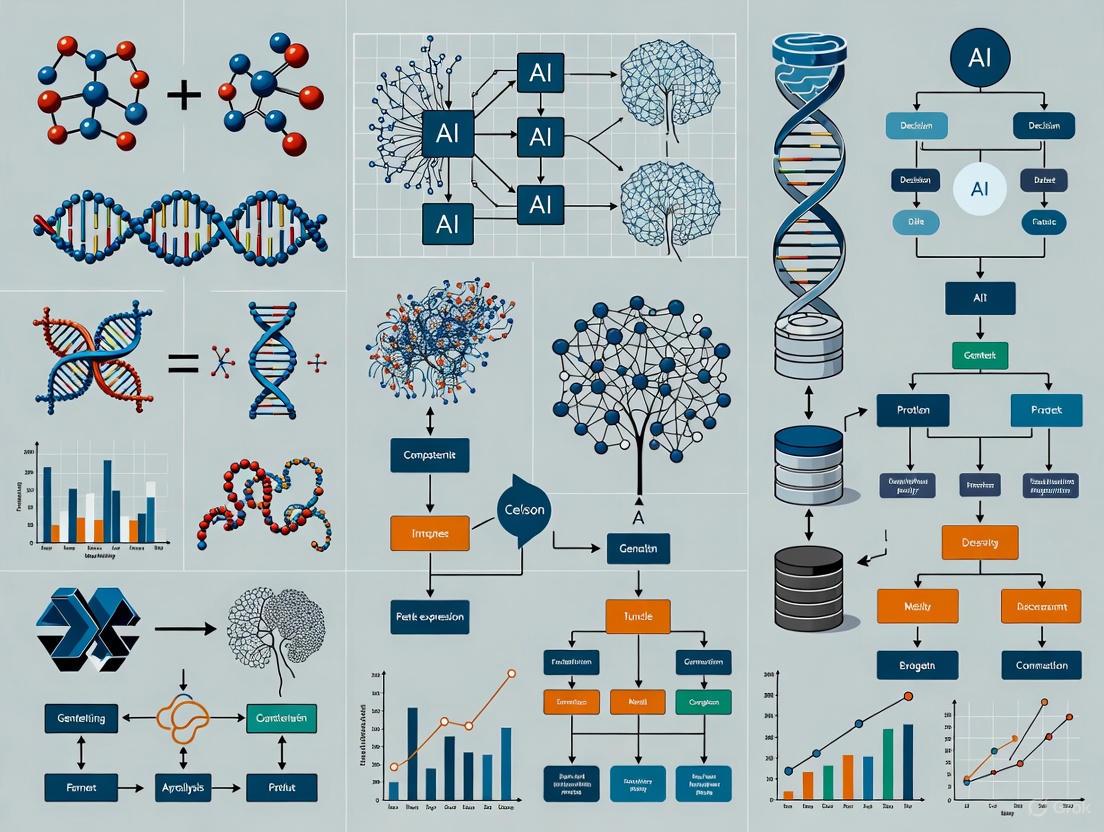
Artificial intelligence is fundamentally restructuring research paradigms across the biological sciences, enabling a shift from experience-driven to data-algorithm symbiosis.
AI in Biology: Revolutionizing Discovery from Proteins to Precision Medicine
Abstract
Artificial intelligence is fundamentally restructuring research paradigms across the biological sciences, enabling a shift from experience-driven to data-algorithm symbiosis. This article synthesizes the current state of AI applications in biology, from foundational models for protein design and genomic interpretation to practical advances in drug discovery and automated experimentation. Aimed at researchers, scientists, and drug development professionals, it explores core methodologies, tackles implementation challenges like data infrastructure and model transparency, and provides a comparative analysis of emerging tools and their validation. The review concludes by examining the trajectory towards self-driving labs and the critical ethical and governance frameworks needed to responsibly harness this triple exponential of data, compute, and models.
The New Language of Life: How AI Decodes Biological Complexity
The field of genomics has generated vast amounts of data through high-throughput sequencing technologies, creating an unprecedented challenge for analysis and interpretation [1]. Artificial intelligence (AI), particularly through foundation models, has emerged as a transformative solution to this challenge, enabling researchers to move from raw genetic sequences to functional understanding with remarkable speed and accuracy [2] [3]. This paradigm shift is revolutionizing biological research by providing tools that can decipher the complex relationships between genetic variation, cellular function, and disease phenotypes [4]. The integration of AI into genomics represents a fundamental change in research methodologies, moving beyond traditional reductionist approaches to a systems-level understanding of biology that can accelerate drug discovery and precision medicine [3].
Foundation models, trained on massive unlabeled datasets using self-supervised learning, have demonstrated exceptional capability in capturing the intricate patterns within biological sequences [4] [3]. These models leverage transformer architectures originally developed for natural language processing, treating DNA and protein sequences as biological "languages" to be deciphered [3]. The resulting AI systems can make predictions across diverse tasks—from variant effect prediction to protein structure determination—without task-specific training, making them uniquely powerful tools for modern biological research [4].
Foundation Models in Biology: Architectures and Capabilities
Core Architectures and Training Approaches
Foundation models in biology typically employ deep learning architectures, particularly transformers with self-attention mechanisms that can process sequential data in parallel [3]. These models are pre-trained on massive datasets through self-supervised learning objectives, such as masked language modeling, where portions of the input sequence are hidden and the model must predict them based on context [3]. This pre-training phase allows the model to develop a fundamental understanding of biological sequence syntax and semantics without requiring labeled data. After pre-training, models can be fine-tuned on specific downstream tasks with relatively small labeled datasets, leveraging transfer learning to achieve state-of-the-art performance across diverse applications [4].
The technological stack supporting these models includes specialized neural network architectures, transformer blocks with self-attention mechanisms, self-supervised learning methodologies, and substantial computational infrastructure often involving high-performance GPUs and distributed computing systems [3]. For example, training models like GPT-3 required 10,000 GPUs, highlighting the significant computational resources needed for developing foundation models [3].
Key Foundation Models for Genomic Analysis
Table 1: Foundation Models for Genomic Analysis and Their Applications
| Model Name | Domain | Training Data | Primary Applications | Key Features |
|---|---|---|---|---|
| DNABERT [4] | Genomics | DNA sequences | Predict regulatory regions, promoters, transcription factor binding sites | Adapted BERT architecture for DNA sequence context understanding |
| Geneformer [4] | Transcriptomics | 95M single-cell transcriptomes | Predict tissue-specific gene network dynamics | Context-aware model for settings with limited data |
| scGPT [4] | Transcriptomics | ~30M cells | Cell type annotation, gene network inference, multi-omic data integration | Generative AI for single-cell data analysis |
| Enformer [4] | Genomics | DNA sequences with epigenetic data | Predict effects of noncoding DNA on gene expression | Optimized for long-range interactions (up to 100kb) |
| AlphaFold [4] | Structural Biology | Amino acid sequences & known structures | Predict 3D protein structures from sequences | Near-experimental accuracy (Nobel Prize 2024) |
| DeepSEA [4] | Genomics | Noncoding genomic variants | Predict effects on chromatin and epigenetic regulation | Focus on functional noncoding regions |
These foundation models excel in capturing the contextual relationships within biological sequences. For instance, DNABERT leverages the bidirectional encoder representations from transformers architecture to understand DNA sequences contextually, enabling it to identify important regulatory regions like promoters and transcription factor binding sites with high accuracy [4]. Similarly, Enformer incorporates long-range genomic interactions—critical for understanding gene regulation—by considering genomic contexts up to 100 kilobases, significantly outperforming previous models that had limited receptive fields [4].
AI for Genomic Variant Interpretation and Functional Prediction
Variant Calling and Prioritization
AI systems have dramatically improved the accuracy and efficiency of identifying genetic variants from sequencing data. DeepVariant, a deep learning-based tool, exemplifies this advancement by using convolutional neural networks to identify true genetic variants from sequencing data with higher accuracy than traditional statistical methods [1]. The model treats variant calling as an image classification problem, transforming sequencing data into images that represent genomic evidence across multiple samples and then applying computer vision techniques to distinguish true variants from sequencing artifacts [1].
AlphaMissense represents another significant advancement, building upon the AlphaFold architecture to predict the pathogenicity of missense variants across the human genome [1]. This model leverages evolutionary information and structural constraints to classify variants as either benign or pathogenic, addressing a critical challenge in clinical genomics where the functional impact of most missense variants remains unknown [1]. By providing genome-wide pathogenicity predictions, AlphaMissense enables researchers to prioritize potentially disease-causing variants for further experimental validation.
Functional Interpretation of Non-Coding Variants
The interpretation of non-coding variants represents a particular challenge in genomics, as these variants often influence gene regulation through complex mechanisms that are difficult to predict. Foundation models like Enformer and DeepSEA address this challenge by learning the regulatory code of the genome from epigenomic data [4]. These models can predict how sequence alterations affect chromatin accessibility, transcription factor binding, and ultimately gene expression, enabling researchers to understand the functional consequences of non-coding variants associated with disease [4].
Table 2: AI Tools for Genomic Variant Interpretation
| Tool Name | Variant Type | Methodology | Key Performance Metrics | Applications in Research |
|---|---|---|---|---|
| DeepVariant [1] [2] | SNPs, Indels | Convolutional Neural Networks | Outperforms traditional tools on benchmark datasets | Germline and somatic variant detection |
| AlphaMissense [1] | Missense | Deep learning (AlphaFold-based) | 90% precision for pathogenic/benign classification | Rare disease gene discovery |
| DeepSEA [4] | Non-coding | Deep learning | Accurate EPI prediction from sequence alone | Regulatory variant interpretation |
| Enformer [4] | Non-coding | Deep learning with attention | Superior correlation with experimental measurements | Causal variant identification in GWAS |
Experimental Design and Validation Frameworks
AI-Guided Discovery Workflows
The integration of AI into genomic research has inspired new experimental frameworks that leverage computational predictions to guide laboratory validation. The AI co-scientist system developed by Google exemplifies this approach, using a multi-agent architecture built on Gemini 2.0 to generate novel research hypotheses and experimental protocols [5]. This system employs specialized agents for generation, reflection, ranking, evolution, proximity, and meta-review that work collaboratively to iteratively generate, evaluate, and refine hypotheses based on scientific literature and existing data [5].
Validation Case Studies
Drug Repurposing for Acute Myeloid Leukemia
In a validation study, the AI co-scientist was applied to identify drug repurposing opportunities for acute myeloid leukemia (AML) [5]. The system analyzed existing genomic and chemical data to propose novel therapeutic applications for approved drugs outside their original indications. Following computational prediction, researchers validated these proposals through in vitro experiments using multiple AML cell lines [5]. The experimental protocol involved treating cell lines with suggested drug candidates at clinically relevant concentrations and measuring tumor viability through standardized assays. Results confirmed that AI-proposed drugs effectively inhibited tumor viability, demonstrating the practical utility of AI-guided discovery approaches [5].
Target Discovery for Liver Fibrosis
In another case study, researchers employed the AI co-scientist to identify novel treatment targets for liver fibrosis [5]. The system generated and ranked hypotheses for potential targets, giving priority to those with supporting preclinical evidence and feasible experimental pathways. The validation process involved testing identified epigenetic targets in human hepatic organoids—3D multicellular tissue cultures designed to mimic human liver structure and function [5]. Researchers measured anti-fibrotic activity through specific biomarkers and functional assays, confirming significant activity for targets identified through the AI system. This approach demonstrated how AI can streamline the target discovery process, potentially reducing development time and costs [5].
Research Reagents and Computational Tools
Essential Research Reagents and Materials
Table 3: Essential Research Reagents for AI-Guided Genomic Validation
| Reagent/Material | Function in Validation | Example Application |
|---|---|---|
| AML Cell Lines [5] | In vitro models for testing therapeutic candidates | Validating drug repurposing predictions for leukemia |
| Human Hepatic Organoids [5] | 3D tissue models mimicking human liver physiology | Testing anti-fibrotic compounds in relevant human cellular context |
| Primary Cells from Patients [2] | Biologically relevant models with native genetic background | Assessing target engagement in disease-relevant systems |
| CRISPR-Cas9 Components [6] | Precise genome editing for functional validation | Establishing causal relationships between targets and phenotypes |
| Antibodies for Biomarkers [5] | Detection and quantification of protein targets | Measuring efficacy of interventions through established markers |
| Cell Viability Assays [5] | Quantitative measurement of therapeutic effects | Determining IC50 values for drug candidates |
Computational Infrastructure and Software
The implementation of AI in genomics requires substantial computational resources and specialized software tools. The market for AI in digital genomics is projected to grow from US$1.2 billion in 2024 to US$21.9 billion by 2034, reflecting increased adoption across research and clinical settings [7]. This growth is driven by pharmaceutical and biotechnology companies (key end-users) who are leveraging AI for drug discovery and development [7]. The machine learning segment dominates this market, as researchers utilize these algorithms to analyze massive genomic datasets efficiently [7].
Essential computational tools include deep learning frameworks like TensorFlow and PyTorch, specialized genomic analysis packages, and cloud computing platforms that provide scalable resources for training and deploying foundation models [3]. The computational demands are substantial—training foundation models may require thousands of GPUs and distributed computing approaches [3]. For applied research, platforms like Neptune.ai provide model visualization and tracking capabilities that are essential for interpreting complex AI systems and comparing model performance [8].
Future Directions and Ethical Considerations
The integration of AI and genomics continues to evolve rapidly, with several emerging trends shaping future research directions. Multi-omics integration represents a key frontier, as foundation models increasingly incorporate genomic, transcriptomic, proteomic, and epigenomic data to provide a more comprehensive understanding of biological systems [4] [2]. Models like Nicheformer and Novae are already bridging dissociated single-cell data with spatially resolved transcriptomics, enabling researchers to contextualize cellular data within tissue microenvironments [4].
Ethical considerations remain paramount in this field, particularly regarding data privacy, algorithmic bias, and equitable access [2]. Genomic data possesses inherent sensitivities and requires robust governance frameworks to protect individual privacy while enabling scientific progress [2]. Additionally, the underrepresentation of certain populations in genomic datasets can lead to biased AI models that perform poorly across diverse groups, potentially exacerbating health disparities [2]. Addressing these challenges requires collaborative efforts between researchers, clinicians, ethicists, and policymakers to develop responsible AI frameworks that maximize benefits while minimizing potential harms.
The convergence of CRISPR-based genome editing technologies with artificial intelligence represents another promising direction [6]. AI models are being used to optimize guide RNA design, predict off-target effects, and improve the efficiency of editing systems [6]. As these technologies mature, they will likely enable increasingly precise genetic interventions informed by comprehensive AI-driven genomic analysis, ultimately accelerating the development of novel therapeutics for genetic disorders [6] [2].
The prediction of a protein's three-dimensional structure from its amino acid sequence represents one of the most significant challenges in computational biology. For decades, this "protein folding problem" stood as a formidable barrier to understanding the molecular mechanisms of life. The advent of artificial intelligence, particularly deep learning, has catalyzed a revolutionary shift in this domain, culminating in the development of AlphaFold, an AI system that has fundamentally transformed structural biology. The 2024 Nobel Prize in Chemistry awarded for the development of AlphaFold underscores the monumental importance of this breakthrough [9]. This whitepaper examines the core architectural principles of AlphaFold, assesses its transformative impact on biological research and drug development, and explores the next frontier: moving beyond static structures to capture the dynamic conformational landscapes that underlie protein function.
The Core Architecture of AlphaFold
AlphaFold's architecture represents a sophisticated integration of deep learning techniques with evolutionary and structural biological principles. The system operates on an end-to-end deep learning model that processes amino acid sequences and their evolutionary information to generate atomic-level structural coordinates [10].
Input Representation and Feature Engineering
The model begins by constructing a comprehensive set of input features derived from the target amino acid sequence:
- Multiple Sequence Alignments (MSAs): The input sequence is searched against large protein sequence databases (e.g., UniRef, BFD, MGnify) to identify homologous sequences. These MSAs capture evolutionary constraints that provide crucial information about residue-residue contacts [11].
- Template Structures: When available, experimentally determined structures of related proteins from the Protein Data Bank (PDB) are incorporated as templates [10].
- Pairwise Representations: The system computes a pairwise distance matrix between residues, encoding potential spatial relationships [10].
This rich set of input features is transformed into a multidimensional representation that serves as the foundation for the structural prediction process.
Neural Network Architecture
At the heart of AlphaFold lies a novel transformer-like architecture called the Evoformer, which processes the input features through multiple layers of abstraction:
- Evoformer Stack: This module jointly embeds the MSA and pairwise representations, allowing the system to reason about evolutionary relationships and spatial constraints simultaneously. The Evoformer employs attention mechanisms to identify long-range dependencies between residues, which is critical for accurate folding prediction [9].
- Structural Module: The embedded representations are passed to a structural module that iteratively refines the predicted 3D coordinates. This module employs a rotationally equivariant architecture that ensures physical plausibility of the generated structures [9].
The entire system is trained end-to-end on experimentally determined structures from the PDB, learning to minimize the difference between predicted and experimental coordinates.
Table: Key Databases for Protein Structure Prediction
| Database Name | Content Type | Scale | Primary Application |
|---|---|---|---|
| Protein Data Bank (PDB) | Experimentally determined structures | ~200,000 structures | Training data for AI models; experimental reference [10] |
| AlphaFold Database | AI-predicted structures | >200 million entries | Broad structural coverage of known protein sequences [12] |
| UniProt | Protein sequences | ~200 million sequences | Source for sequence data and homology searching [10] |
| ATLAS | Molecular dynamics trajectories | 1,938 proteins; 5,841 trajectories | Protein dynamics analysis [13] |
| GPCRmd | MD data for GPCRs | 705 simulations; 2,115 trajectories | GPCR functionality and drug discovery [13] |
AlphaFold's Transformative Impact
Quantifiable Advances in Prediction Accuracy
The performance leap achieved by AlphaFold was quantitatively demonstrated during the 14th Critical Assessment of Protein Structure Prediction (CASP14), where it outperformed all other methods by a significant margin [12]. The system regularly achieves accuracy competitive with experimental methods, with predicted structures often falling within the margin of error of experimental techniques like X-ray crystallography [9].
This breakthrough has virtually closed the gap between the number of known protein sequences and available structures. While traditional experimental methods yielded approximately 200,000 structures over several decades, AlphaFold has generated over 200 million structure predictions, dramatically expanding the structural universe available to researchers [12] [9].
Applications in Drug Discovery and Development
The availability of high-accuracy protein structures has accelerated multiple stages of the drug development pipeline:
- Target Identification and Validation: Researchers can now rapidly obtain structural models of potential drug targets, even for proteins that have resisted experimental characterization [14].
- Molecular Modeling and Drug Design: AI-predicted structures enable virtual screening of compound libraries and rational drug design approaches, significantly reducing the time and cost associated with early-stage discovery [14]. For instance, Insilico Medicine utilized AI-driven platforms to design a novel drug candidate for idiopathic pulmonary fibrosis in just 18 months, dramatically accelerating the traditional discovery timeline [14].
- Drug Repurposing: AI models can predict the compatibility of existing drugs with new protein targets, identifying new therapeutic applications. BenevolentAI successfully repurposed Baricitinib, a rheumatoid arthritis treatment, as a COVID-19 therapy through such approaches [14].
The integration of AI in drug development has demonstrated substantial practical benefits, with the FDA reporting a significant increase in drug application submissions incorporating AI components over recent years [15].
Diagram: AlphaFold2's Core Architecture - This workflow illustrates the end-to-end deep learning process that transforms amino acid sequences into accurate 3D structural models.
Beyond Static Structures: The New Frontier
Limitations of Static Structure Prediction
Despite its groundbreaking achievements, AlphaFold primarily predicts static, ground-state structures, representing a significant limitation since protein function often depends on dynamic transitions between multiple conformational states [13]. Current AI approaches face inherent challenges in capturing the dynamic reality of proteins in their native biological environments [16].
Proteins exist as conformational ensembles, sampling multiple states under physiological conditions. These dynamics are particularly crucial for understanding:
- Allosteric Regulation: Many proteins transmit signals through conformational changes between functional states.
- Flexible Regions and Intrinsic Disorders: Approximately 30-50% of eukaryotic proteins contain intrinsically disordered regions that adopt multiple conformations [13].
- Ligand-Induced Conformational Changes: Binding partners often induce structural rearrangements essential for biological function.
The limitations of static prediction become especially apparent for complex biological assemblies. While AlphaFold has been extended to predict protein complexes (AlphaFold-Multimer), accurately modeling inter-chain interactions remains challenging [11]. For instance, in antibody-antigen complexes, traditional methods struggle to predict binding interfaces due to limited co-evolutionary signals between host and pathogen proteins [11].
Emerging Approaches for Dynamic Conformation Prediction
Several innovative computational strategies are emerging to address the challenge of protein dynamics:
- Enhanced Sampling with AlphaFold: Researchers are modifying AlphaFold's input parameters, including MSA masking, subsampling, and clustering, to generate diverse conformational states from the same sequence [13].
- Generative Models: Diffusion models and flow matching techniques are being applied to sample conformational landscapes, transforming structure prediction into a sequence-to-structure generation process through iterative denoising [13].
- Molecular Dynamics Simulations: Physics-based simulations provide insights into protein dynamics at atomic resolution, with specialized databases like ATLAS and GPCRmd collecting simulation trajectories for various protein families [13].
- Structure Complementarity Approaches: New methods like DeepSCFold leverage sequence-derived structural complementarity rather than relying solely on co-evolutionary signals, improving performance for complexes lacking clear evolutionary coupling [11].
Table: Performance Comparison of Protein Complex Prediction Methods
| Method | TM-Score Improvement | Key Innovation | Application Strength |
|---|---|---|---|
| DeepSCFold | 11.6% over AlphaFold-Multimer; 10.3% over AlphaFold3 | Sequence-derived structure complementarity | Protein complexes; antibody-antigen interfaces [11] |
| AlphaFold-Multimer | Baseline for comparison | Extension of AlphaFold2 for multimers | General protein complexes [11] |
| AlphaFold3 | Commercial implementation | Unified architecture for biomolecules | Multiple biomolecular systems [11] |
| DMFold-Multimer | Superior CASP15 performance | Extensive sampling strategies | Challenging multimer targets [11] |
Diagram: From Static to Dynamic Protein Modeling - This conceptual framework shows the evolution from static structure determination to dynamic ensemble prediction, enabling more sophisticated drug discovery applications.
The Scientist's Toolkit
Table: Essential Research Resources for AI-Driven Protein Structure Prediction
| Resource Category | Specific Tools/Databases | Function and Application |
|---|---|---|
| Structure Prediction Servers | AlphaFold Server, ColabFold, RoseTTAFold | Web-based platforms for generating protein structure predictions from sequence [9] |
| Structure Databases | AlphaFold Database, PDB, SWISS-MODEL Repository | Access to predicted and experimentally determined structures for analysis and comparison [12] |
| Specialized Dynamics Databases | ATLAS, GPCRmd, SARS-CoV-2 MD Database | Molecular dynamics trajectories for studying protein conformational changes [13] |
| Sequence Databases | UniProt, UniRef, MGnify | Source sequences for homology searching and multiple sequence alignment construction [10] |
| Analysis & Visualization | ChimeraX, PyMOL, SWISS-PDBViewer | Software for structural analysis, quality assessment, and visualization [10] |
| Specialized Prediction Tools | DeepSCFold, MULTICOM, DMFold-Multimer | Advanced tools for predicting protein complexes and interaction interfaces [11] |
The AlphaFold revolution has fundamentally transformed structural biology, providing researchers with an unprecedented view of the protein structural universe. Its ability to accurately predict static protein structures has accelerated research across virtually all domains of biology and drug discovery. However, the frontier is already shifting from static structures to dynamic conformational ensembles that more accurately represent protein function in living systems. The next generation of AI tools, building upon AlphaFold's legacy, aims to capture the intrinsic dynamics of proteins, enabling researchers to model functional mechanisms, allosteric regulation, and complex biomolecular interactions with increasing fidelity. This transition from structural determination to functional prediction represents the next chapter in AI-driven biological discovery, promising to deepen our understanding of life's molecular machinery and accelerate the development of novel therapeutics.
The convergence of artificial intelligence (AI) and biology is inaugurating a transformative era in biomedical research, fundamentally altering our approach to understanding cellular mechanisms. AI-powered virtual cell models represent a pioneering frontier, enabling researchers to simulate the intricate, dynamic processes within human cells with unprecedented fidelity. These computational models function as predictive digital twins of biological systems, allowing scientists to run millions of in silico experiments—computer simulations that mimic real biological processes—before ever setting foot in a wet lab. This approach is particularly valuable in drug development, where it helps researchers select preclinical experiments more intelligently, simulate experimental perturbations, inform biomarker selection, and gain deeper insight into the molecular mechanisms that drive experimental results [17]. By virtualizing biological experiments, these platforms address a critical bottleneck in traditional research, offering a scalable, reproducible, and highly efficient method for exploring cellular behavior and its implications for health and disease.
The drive toward virtual cell modeling stems from the profound complexity of biological systems, where traditional experimental methods often struggle with throughput, cost, and human variability. Companies like Turbine have spent the last decade developing foundational cell model simulation platforms that can rapidly run vast numbers of virtual experiments [17]. Similarly, Lila Sciences combines generative AI with a network of autonomous labs, creating a self-reinforcing loop where AI systems design, test, and refine scientific hypotheses in real-time [18]. These efforts aim to overcome the limitations of the human-centric scientific method by leveraging AI's ability to process enormous datasets and identify patterns invisible to human researchers. The resulting virtual cells provide a dynamic window into cellular processes, offering the potential to accelerate discovery across therapeutic areas from oncology to metabolic disease.
Core AI Technologies and Methodologies
The development of realistic virtual cell models relies on several interconnected AI technologies and methodologies that enable accurate simulation of cellular systems and dynamics.
Multi-Scale Modeling Architectures
Virtual cell platforms employ sophisticated multi-scale modeling architectures that integrate disparate biological data types into a unified simulation environment. These architectures typically incorporate mechanistic models based on established biological principles alongside data-driven models derived from experimental measurements. The Turbine platform, for example, utilizes machine learning to create virtual disease models that the company describes as "second only to the patient in predicting drug response" [17]. These models simulate how cells and tissues behave under treatment, helping pharmaceutical researchers identify promising therapeutic candidates more efficiently. The platform's capability to make accurate predictions on never-before-seen cell lines demonstrates its generalization capacity—a critical requirement for practical application in drug discovery [17].
AI-Driven Simulation Approaches
Several specialized AI approaches enable the simulation of specific cellular processes and systems:
Protein Structure and Interaction Prediction: Accurate modeling of protein interactions is fundamental to virtual cell simulations. While AlphaFold2-Multimer and AlphaFold3 have improved quaternary structure modeling, their accuracy for complexes hasn't reached the level achieved for single proteins. The MULTICOM4 system addresses this limitation by wrapping AlphaFold's models in an additional layer of ML-driven components that significantly enhances their performance for protein complexes [19]. This advancement is particularly valuable for simulating signaling pathways and drug-target interactions within virtual cells.
Small Molecule Binding Affinity Prediction: Molecular design often relies on all-atom co-folding models that can predict 3D structures of molecular interactions, but these models traditionally struggle with small molecules prevalent in pharmaceuticals. Boltz-2, an improved version of Boltz-1, addresses this challenge by providing unified structure and affinity prediction with GPU optimizations and integration of synthetic and molecular dynamics training data [19]. This technology offers FEP-level (Free Energy Perturbation) accuracy with speeds up to 1000 times faster than existing methods, making early-stage in silico screening practical for drug discovery applications.
Autonomous Experimentation Systems: Fully autonomous systems represent the cutting edge of AI-driven biology. BioMARS is an intelligent agent that fully automates biological experiments by combining large language models (LLMs), multimodal perception, and robotic control [19]. The system's architecture consists of three AI agents: a Planner agent that breaks down experimental goals into executable steps, an Actor agent that writes and executes code for robotic control, and an Evaluator agent that analyzes results and provides feedback. While still requiring human supervision for unusual experiments, such systems point toward a future of highly automated, reproducible biological research.
Data Integration and Knowledge Representation
Virtual cell models integrate diverse data types through unified knowledge representation schemes that enable coherent simulation of cellular processes. These systems typically incorporate structured knowledge bases (such as protein-protein interaction networks, metabolic pathways, and gene regulatory networks), experimental data (including transcriptomics, proteomics, and imaging data), and scientific literature (processed through natural language understanding systems). The integration of these heterogeneous data sources enables comprehensive simulation of cellular behavior across multiple temporal and spatial scales, from rapid molecular interactions to slow phenotypic changes.
Table 1: Key AI Technologies Powering Virtual Cell Simulations
| Technology | Function | Advantages | Limitations |
|---|---|---|---|
| MULTICOM4 Protein Prediction | Enhances AlphaFold's performance for protein complexes | Improved accuracy for large assemblies; handles complexes with poor MSAs | Challenging for non-globular complexes like antibodies [19] |
| Boltz-2 Affinity Prediction | Predicts small molecule binding affinity & structure | 1000x faster than FEP simulations; FEP-level accuracy | Requires further validation across diverse target classes [19] |
| BioMARS Autonomous Lab | Automates biological experiments via multi-agent AI | Integrates LLMs with robotic control; reduces human variability | Limited ability to handle unexpected deviations; research system only [19] |
| Recursion's MAP Platform | Maps human biology via automated microscopy & AI | High-throughput compound screening; identifies novel drug targets | Requires massive computational resources and data storage [18] |
Experimental Protocols and Validation
The development and validation of virtual cell models require rigorous experimental protocols to ensure biological relevance and predictive accuracy. This section outlines key methodological approaches and their real-world applications.
Model Training and Validation Protocol
Virtual cell models are typically developed and validated through a systematic protocol:
Data Curation and Integration: Collect and harmonize diverse datasets including transcriptomic, proteomic, metabolic, and imaging data from publicly available databases and proprietary sources. Turbine's platform, for example, has developed the capacity to "not only harmonize but generate purpose-built datasets for rapid cell model building and iteration" [17].
Model Architecture Selection: Choose appropriate neural network architectures (convolutional networks, graph neural networks, transformers) based on the specific cellular process being modeled. The three scaling laws identified by AI researchers guide this process: pre-training scaling (larger models with more data show predictable improvements), post-training scaling (specialization through fine-tuning), and test-time scaling (extended reasoning during inference) [18].
Cross-Validation: Implement rigorous cross-validation strategies using held-out experimental data to assess model performance. This includes temporal validation (testing on data from later time points than training data) and compositional validation (testing on different cell lines or conditions than those used in training).
Experimental Confirmation: Design wet-lab experiments to test key predictions generated by the virtual cell model. For instance, Turbine's model successfully predicted that SLFN11 gene knockout contributes to non-small cell lung cancer resistance to the payload SN38, which was subsequently validated experimentally [17].
Case Study: ADC Payload Selection
Antibody-drug conjugates (ADCs) represent a promising cancer therapy approach but present immense complexity due to the intricate interplay of antibody, linker, and cytotoxic payload. The potential permutations for an ADC stretch into the billions, creating a needle-in-a-haystack problem for traditional discovery approaches [17]. Turbine's Virtual Lab addresses this challenge through a specialized workflow:
Virtual Sample Generation: Create in silico representations of diverse cancer cell types with varying genetic backgrounds and phenotypic states.
Payload Response Simulation: Expose virtual cells to different ADC payloads and combinations, simulating cellular responses including target engagement, pathway modulation, and cell fate decisions.
Resistance Prediction: Identify potential resistance mechanisms by analyzing simulated signaling pathway adaptations following payload exposure.
Candidate Ranking: Prioritize payload candidates based on simulated efficacy, toxicity profiles, and potential resistance mechanisms.
This approach enables researchers to explore "payload-payload and payload-drug combinations across a wide variety of virtual samples," opening "a yet untouched search space" for ADC development [17]. The platform's Payload Selector module, released in 2025, represents one of the first commercial applications of virtual cell technology for ADC development.
Table 2: Quantitative Impact of AI in Drug Discovery and Development
| Parameter | Traditional Approach | AI-Accelerated Approach | Improvement | Source |
|---|---|---|---|---|
| Time to Preclinical Candidate | 4-5 years | 12-18 months | 40-70% reduction | [19] [20] |
| Cost to Preclinical Candidate | High (context-dependent) | ~30% reduction | ~30% reduction | [19] [20] |
| Clinical Trial Phase II Failure Rate | ~90% | Potential improvement | Under investigation | [17] [20] |
| Target Identification & Compound Design | Multiple years | 18 months (Rentosertib example) | Significant acceleration | [19] |
Statistical Validation Methods
Rigorous statistical validation is essential for establishing the predictive power of virtual cell models. The following methods are commonly employed:
T-test for Mean Comparison: Used to determine if differences between simulated and experimental results are statistically significant. The t-test formula:
t = (x̄₁ - x̄₂) / (s_p √(1/n₁ + 1/n₂))
where x̄₁ and x̄₂ are sample means, s_p is the pooled standard deviation, and n₁ and n₂ are sample sizes. A prerequisite for the t-test is checking homogeneity of variances using an F-test [21].
F-test for Variance Comparison: Determines whether the variances of two populations are equal before conducting a t-test. The F-test formula:
F = s₁² / s₂² (where s₁² ≥ s₂²)
This test helps ensure the appropriate version of the t-test is used (equal or unequal variances) [21].
Performance Metrics: Virtual cell models are evaluated using standard metrics including Area Under the Receiver Operating Characteristic Curve (AUC-ROC), precision-recall curves, and mean squared error for continuous predictions. These metrics provide quantitative assessment of model performance against experimental data.
The experimental validation of Turbine's platform demonstrated its ability to make accurate predictions on never-before-seen cell lines, a crucial test of generalizability. In one example, "without training on SN38 combination datasets, Turbine's model accurately identified that SLFN11 gene knockout contributes to non-small cell lung cancer resistance to the payload SN38" [17]. This finding was particularly significant as SLFN11 is already recognized as a biomarker for drug resistance, underscoring the platform's capability to recapitulate known biology while generating novel insights.
Implementation and Workflow
Implementing virtual cell technology requires careful consideration of computational infrastructure, data requirements, and integration with existing research workflows. This section outlines the practical aspects of deploying these systems in biomedical research environments.
System Architecture and Computational Requirements
Virtual cell platforms typically employ distributed computing architectures to handle the substantial computational demands of cellular simulations. The core components generally include:
- Data Integration Layer: Harmonizes diverse biological data from public repositories, proprietary databases, and experimental results.
- Simulation Engine: Executes virtual experiments using specialized algorithms for molecular interactions, pathway dynamics, and cellular processes.
- AI/ML Modeling Layer: Applies machine learning models to predict cellular behavior and analyze simulation results.
- Visualization and Interpretation Interface: Enables researchers to explore simulation results through interactive visualizations and analytical tools.
The computational infrastructure for virtual cell simulations often requires high-performance computing (HPC) resources or cloud-based computing platforms. The emergence of test-time scaling (also called "long thinking") allows AI systems to reason through complex biological problems during inference, a process that "might take minutes or even hours, requiring over 100 times the compute of traditional AI inference" but yields "a much more thorough exploration of potential solutions" [18].
Research Reagent Solutions and Essential Materials
Virtual cell modeling relies on both computational tools and physical research reagents for model training and validation. The table below outlines key components of the research environment for AI-driven cellular simulation.
Table 3: Essential Research Reagents and Computational Tools for Virtual Cell Modeling
| Category | Specific Examples | Function/Purpose | Validation Context |
|---|---|---|---|
| Cell Lines | Immortalized cell lines (HEK293, HeLa), Primary cells, Patient-derived cells | Provide experimental data for model training and validation | Essential for confirming in silico predictions in biological systems [17] |
| Assay Kits | Cell viability assays, Apoptosis detection kits, Pathway-specific reporter assays | Generate quantitative data on cellular responses to perturbations | Used to measure actual cellular responses compared to simulated predictions [17] |
| Molecular Biology Reagents | CRISPR-Cas9 components, siRNA libraries, Antibodies for protein detection | Enable experimental manipulation and measurement of specific cellular components | Critical for testing model predictions through targeted interventions [19] |
| Computational Tools | TensorFlow, PyTorch, AlphaFold, MULTICOM4, Boltz-2 | Provide infrastructure for building and running AI models and simulations | Open-source and commercial software enable implementation of virtual cell platforms [19] |
Integration with Drug Development Workflows
Virtual cell models are increasingly integrated into standardized drug development workflows, particularly in the following applications:
Target Identification and Validation: AI platforms like Insilico Medicine's have demonstrated the ability to nominate both disease-associated targets and therapeutic compounds, reducing the traditional target identification timeline significantly. Their TNIK inhibitor, Rentosertib, completed a Phase 2a trial, representing "the first reported case where an AI platform enabled the discovery of both a disease-associated target and a compound for its treatment" [19].
Lead Optimization: Virtual cell models simulate the effects of chemical modifications on compound efficacy, selectivity, and toxicity, enabling more efficient lead optimization cycles. Recursion Pharmaceuticals employs an AI-powered platform that integrates "automated biology, chemistry, and cloud-based computing to test thousands of compounds in parallel," aiming to overcome "Eroom's Law—the paradox that despite advances in technology, the cost and time required to bring new drugs to market have continued to rise" [18].
Clinical Trial Design: By simulating drug responses across virtual patient populations, these models can inform patient stratification strategies and biomarker selection. Turbine's Clinical Positioning Suite helps with "patient stratification and life cycle management" through simulations that predict how different patient subgroups may respond to treatments [17].
The following diagram illustrates a representative workflow for integrating virtual cell technology into drug discovery pipelines:
Challenges and Future Directions
Despite significant progress, virtual cell technology faces several substantial challenges that must be addressed to realize its full potential in biological research and drug development.
Technical and Validation Challenges
Current limitations of virtual cell technology include:
Model Generalizability: While platforms like Turbine's have demonstrated predictions on unseen cell lines, ensuring robust performance across diverse tissue types, disease states, and experimental conditions remains challenging. Models trained on limited cellular contexts may not extrapolate reliably to novel situations [17].
Multi-Scale Integration: Accurately connecting molecular-level events (e.g., protein-ligand interactions) to cellular phenotypes (e.g., proliferation, apoptosis) represents a significant modeling challenge. Current approaches often struggle to seamlessly bridge these spatial and temporal scales [22].
Data Quality and Availability: The performance of virtual cell models is heavily dependent on the quality, quantity, and diversity of training data. Gaps in biological knowledge and noisy experimental measurements can limit model accuracy and reliability [19].
Computational Complexity: High-fidelity simulations of cellular processes demand substantial computational resources, creating barriers to widespread adoption, particularly for academic laboratories and smaller biotech companies [18].
Black Box Limitations: Many AI models operate as "black boxes," creating challenges for regulatory approval of AI-designed drugs and devices. The lack of interpretability in model predictions can hinder biological insight and erode researcher trust [19].
Emerging Solutions and Future Developments
Several promising approaches are emerging to address these challenges:
Enhanced Explainability: New methods for model interpretation, including attention mechanisms and feature importance analysis, are being developed to make AI predictions more transparent and biologically interpretable.
Federated Learning: This approach enables model training across multiple institutions without sharing proprietary data, addressing data privacy concerns while expanding the diversity of training datasets.
Automated Experimental Validation: Systems like BioMARS point toward a future of highly automated, reproducible biological validation, where AI-generated hypotheses can be rapidly tested in the wet lab with minimal human intervention [19].
Integration with Emerging Technologies: The combination of virtual cell models with new modalities, including CRISPR-based screening and single-cell multi-omics, promises to enhance model accuracy and biological relevance.
The following diagram illustrates the future vision of an integrated, AI-driven research ecosystem:
As virtual cell technology matures, it is poised to become an increasingly central component of biological research and drug development. The ongoing development of more sophisticated AI algorithms, coupled with growing biological datasets and computational resources, suggests that these models will continue to improve in accuracy, scope, and practical utility. While significant challenges remain, the potential impact of virtual cell technology on our understanding of biology and our ability to develop effective therapies represents a compelling frontier at the intersection of AI and life sciences.
The burgeoning field of multi-omics represents a paradigm shift in biological research, moving from a siloed examination of molecular layers to a holistic, systems-level understanding. This approach integrates diverse data types—including genomics, proteomics, and metabolomics—to construct a comprehensive molecular portrait of health and disease [23] [24]. The primary challenge, however, lies in the sheer volume, complexity, and high-dimensional nature of these datasets. This is where Artificial Intelligence (AI) and Machine Learning (ML) become transformative. AI provides the computational framework necessary to detect subtle, non-linear patterns and interactions within and between these omics layers, patterns that are often imperceptible to traditional analytical methods [23] [25]. The integration of multi-omics data, supercharged by AI, is accelerating the transition from descriptive biology to a predictive and ultimately engineering science, with profound implications for precision medicine, drug discovery, and functional biology [26].
Within the broader thesis of AI's role in biology, multi-omics integration stands as a cornerstone application. Biological research is becoming increasingly 'multi-omic,' and AI is the essential tool for deciphering the connections between these data types, revealing previously hidden patterns and causal relationships [25] [26]. This synergy is not merely additive but multiplicative, enabling researchers to move from correlation to causation, to simulate biological systems in silico, and to design novel biological components [27]. As a library, NLM provides access to scientific literature. Inclusion in an NLM database does not imply endorsement of, or agreement with, the contents by NLM or the National Institutes of Health. Learn more: PMC Disclaimer | PMC Copyright Notice. This technical guide will delve into the core AI methodologies, experimental protocols, and practical tools that are defining this new frontier.
Core AI Methodologies for Multi-Omics Data
The successful integration of multi-omics data requires a diverse arsenal of AI and ML techniques, each suited to particular data structures and research objectives. These methods can be broadly categorized, and their selection is critical for generating robust, biologically interpretable results.
Table 1: Core AI and Machine Learning Methodologies in Multi-Omics Research
| Method Category | Key Examples | Primary Applications in Multi-Omics | Key Considerations |
|---|---|---|---|
| Supervised Learning | Random Forest (RF), Support Vector Machines (SVM) [23] | Disease diagnosis, prognosis risk prediction, drug response prediction [23] [28] | Requires high-quality labeled data; risk of overfitting; feature selection is critical [23] |
| Unsupervised Learning | k-means clustering, autoencoders [23] | Patient subtyping, novel biomarker discovery, identifying hidden structures in data [23] [28] | Output is unknown; ideal for exploratory analysis; avoids labelling bias [23] |
| Deep Learning (DL) | Deep Neural Networks, Transformers, Graph Neural Networks [23] [29] [25] | Predicting long-range interactions, single-cell analysis, perturbation prediction, filling gaps in incomplete datasets [29] [25] | Data-hungry; complex "black box" models; challenges in interpretability [23] [25] |
| Transfer Learning | Instance-based, parameter-based, and feature-based algorithms [23] | Mapping models across platforms or species, adapting models to new tasks with limited data [23] | Risk of "negative transfer" if source and target domains are too dissimilar [23] |
Traditional and Deep Learning Approaches
Supervised learning methods are employed when the outcome variable is known, such as disease status or treatment response. For instance, a researcher might use a Random Forest classifier trained on proteomic data from patients with myocardial infarction to predict the risk of poor prognosis [23]. This process involves feature labeling, classifier calibration, and rigorous performance validation to ensure reliability and robustness against overfitting [23]. In contrast, unsupervised learning methods like k-means clustering are used for discovery-oriented tasks, such as identifying novel disease subtypes or cellular subpopulations without pre-defined labels [23] [28].
Deep Learning (DL), a subset of ML, has recently shown remarkable success. DL models, such as transformers, leverage large-scale neural networks to learn representations from raw data in an end-to-end manner [23]. Their application in single-cell biology is particularly notable, where models like scGPT and scFoundation act as foundation models for diverse downstream tasks including cell-type annotation and perturbation prediction [25]. Furthermore, graph neural networks are powerful for integrating relational data, such as protein-protein interaction networks, with other omics layers to reveal dysregulated pathways [29].
Data Integration Strategies and Challenges
The strategy for integrating multiple omics datasets is as important as the choice of AI model. The main approaches are early integration (concatenating raw datasets), intermediate integration (learning joint representations), and late integration (combining results from separate analyses) [28]. Intermediate integration is often favored for its ability to learn a unified representation of the separate datasets, which can then be used for tasks like subtype identification [28].
Key computational challenges persist, including the "curse of dimensionality"—where the number of features vastly exceeds the number of samples—and data harmonization across different technological platforms [23] [29]. Additionally, the black-box nature of many complex AI models remains a significant hurdle for clinical adoption. This has spurred growth in the field of interpretable ML (IML), which aims to make model decisions transparent and provide biological insights, such as identifying which genomic variants and protein expressions were most influential in a prediction [25].
Experimental Protocols and Workflows
Implementing a robust AI-driven multi-omics study requires a meticulous workflow, from sample collection to model validation. The following protocol outlines the key stages for a typical study aiming to identify biomarkers for patient stratification.
The diagram below outlines the key stages in a typical AI-driven multi-omics analysis workflow.
Detailed Methodology
Sample Collection and Multi-Omics Profiling:
- Collect patient samples (e.g., tissue, blood) with appropriate ethical approval and informed consent. The cohort should be designed to reflect population diversity to mitigate bias and health disparities [24].
- Subject samples to high-throughput assays for each omics layer:
- Genomics/Epigenomics: Use next-generation sequencing (NGS) platforms (e.g., Illumina NovaSeq) for whole genome sequencing, exome sequencing, or ATAC-sequencing for chromatin accessibility [24].
- Transcriptomics: Perform RNA sequencing (bulk or single-cell) to quantify gene expression levels [23] [25].
- Proteomics: Utilize advanced platforms from companies like Olink or Somalogic, which can identify up to 5,000 analytes, to profile protein expression and modifications [23].
- Metabolomics: Employ mass spectrometry to quantify a wide range of cellular metabolites, including amino acids and fatty acids [23].
Data Preprocessing and Quality Control:
- Process raw data using platform-specific pipelines. For NGS data, this includes alignment (e.g., to a reference genome), variant calling, and generation of count matrices for expression data [24].
- Perform rigorous quality control (QC) for each dataset. This involves removing low-quality samples, normalizing for technical variation (e.g., sequencing depth), and batch effect correction. Tools like GATK and DeepVariant are often used for genomic variant calling [24].
Feature Selection and Dimensionality Reduction:
- Apply feature selection methods to reduce noise and computational load. This can include filtering low-variance features or using model-based importance scores (e.g., from Random Forest) [23].
- Use dimensionality reduction techniques like PCA or autoencoders to project high-dimensional data into a lower-dimensional space while preserving key biological signals, facilitating both visualization and downstream analysis [23].
AI/ML Model Integration and Analysis:
- Select an integration strategy and AI model based on the research objective (see Table 1).
- For patient subtyping, an unsupervised method like a clustering algorithm (e.g., k-means) or a deep learning autoencoder can be applied to the integrated data to identify distinct molecular subgroups [28].
- For outcome prediction, a supervised model like Random Forest or a deep neural network can be trained on the integrated features to predict a labeled endpoint, such as survival or drug response [23] [29].
- Split data into training and validation sets. Train the model on the training set and tune hyperparameters using cross-validation to avoid overfitting.
- Select an integration strategy and AI model based on the research objective (see Table 1).
Validation and Biological Interpretation:
- Validate model performance on a held-out test set or an independent cohort. Metrics depend on the task (e.g., accuracy, silhouette score, area under the ROC curve).
- Employ interpretable AI (IML) techniques to extract biological insight. This can involve calculating feature importance scores, using model-agnostic methods like SHAP, or performing enrichment analysis on model-derived features to identify dysregulated pathways (e.g., oxidative phosphorylation, synaptic transmission) [25] [30].
- Experimental validation of key findings (e.g., identified biomarkers) in cellular or animal models is crucial for translational impact [30].
The advancement of AI-driven multi-omics relies on access to large, high-quality datasets and specialized software tools.
Table 2: Key Public Data Resources for Multi-Omics Research
| Resource Name | Omics Content | Species | Primary Use Case |
|---|---|---|---|
| The Cancer Genome Atlas (TCGA) [28] | Genomics, epigenomics, transcriptomics, proteomics | Human | Cancer research, biomarker discovery, patient subtyping |
| Answer ALS [28] | Whole-genome sequencing, RNA transcriptomics, ATAC-sequencing, proteomics | Human | Neurodegenerative disease research, deep clinical data integration |
| jMorp [28] | Genomics, methylomics, transcriptomics, metabolomics | Human | Population-level variation across multiple omics layers |
| Genome Aggregation Database (gnomAD) [24] | Genomic sequencing data from large populations | Human | Reference for putatively benign genetic variants |
The Scientist's Toolkit: Essential Research Reagents and Platforms
A successful multi-omics experiment depends on a suite of wet-lab and computational reagents.
Table 3: Essential Research Reagent Solutions for Multi-Omics Studies
| Tool/Reagent | Function | Application Note |
|---|---|---|
| Illumina NovaSeq | High-throughput sequencing platform | Generates genomic, transcriptomic, and epigenomic data; capable of 20-52 billion reads per run [24]. |
| Olink & Somalogic Platforms | High-plex proteomics analysis | Identify and quantify up to 5,000 proteins, addressing the curse of dimensionality in proteomics [23]. |
| Mass Spectrometer | Metabolite identification and quantification | Profiles a wide range of cellular small molecules for metabolomics [23]. |
| AlphaFold / RoseTTAFold | AI-based protein structure prediction | Predicts 3D protein geometry and biomolecular interactions, crucial for understanding function [25]. |
| Random Forest (scikit-learn) | Supervised learning classifier | Robust for classification and regression tasks on multi-omics data; provides feature importance scores [23]. |
| Transformers (e.g., scGPT) | Deep learning architecture for sequences | Foundation models for single-cell biology; excel at tasks like cell-type annotation and perturbation prediction [25]. |
| GATK / DeepVariant | Genomic variant calling pipelines | Essential bioinformatics tools for processing raw sequencing data into analyzable genetic variants [24]. |
The integration of genomic, proteomic, and metabolomic data through advanced AI is fundamentally reshaping biological inquiry and therapeutic development. This synergy provides an unparalleled, systems-level view of physiology and disease pathogenesis, moving beyond correlation to uncover causal mechanisms and generate predictive models [27]. While challenges in data standardization, model interpretability, and equitable representation persist [25] [24], the trajectory is clear. The fusion of multi-omics and AI is pushing biology into a new era of prediction and engineering, paving the way for highly personalized diagnostics and therapeutics, and ultimately fulfilling the promise of precision medicine.
From Code to Cure: AI-Driven Applications Redesigning Biology
The exploration of biological design space has been fundamentally transformed by artificial intelligence (AI). Traditional methods in protein engineering, antibody discovery, and nanomaterial development have long been constrained by their reliance on existing biological templates and labor-intensive experimental processes. The integration of generative AI marks a paradigm shift from this incremental, template-dependent approach to a pioneering methodology capable of creating entirely novel biomolecules and nanostructures from first principles. This computational revolution is accelerating the discovery of functional proteins, epitope-specific antibodies, and optimized nanomaterials, thereby expanding the accessible frontiers of biotechnology and medicine beyond the constraints of natural evolution [31].
The core challenge in de novo design lies in the astronomical scale of the possible sequence-structure space. For a modest 100-residue protein, the number of possible amino acid arrangements (20^100) exceeds the number of atoms in the observable universe. Within this vastness, the subset of sequences that fold into stable, functional structures is vanishingly small [31]. Generative AI addresses this challenge by learning the complex mappings between sequence, structure, and function from vast biological datasets, enabling the computational design of biomolecules with customized properties that nature has never explored.
AI-Driven Protein Design
From Physics-Based to AI-Augmented Design
Historically, de novo protein design relied on physics-based modeling. Tools like Rosetta operated on the principle that a protein's amino acid sequence dictates its thermodynamically most stable three-dimensional structure. These methods used fragment assembly and force-field energy minimization to design novel proteins, such as the Top7 protein in 2003, which featured a fold not observed in nature [31]. However, these approaches faced significant limitations. The underlying force fields were approximations, and the computational expense of exhaustive conformational sampling was prohibitive, particularly for large or complex proteins.
Modern AI-augmented strategies complement and extend these physics-based methods. Machine learning (ML) models are trained on large-scale biological datasets to establish high-dimensional mappings learned directly from sequence-structure relationships [31]. This AI-driven paradigm leverages powerful generative architectures, including diffusion models and protein language models, to explore the protein functional universe systematically.
Key Methodologies and Experimental Workflows
The AI protein design pipeline typically involves a cycle of computational generation and experimental validation. Key methodologies include:
- Generative Models: Frameworks like RFdiffusion employ a diffusion process that iteratively denoises random protein structures to generate novel scaffolds targeting specific functional sites or epitopes [32].
- Sequence Design: Following structural generation, tools like ProteinMPNN design sequences that are predicted to fold into the generated structures [32].
- In Silico Validation: Fine-tuned structure prediction networks, such as a specialized RoseTTAFold2 (RF2), are used to validate designs by predicting the structure of the designed sequence and assessing its similarity to the intended design (self-consistency) and the quality of the intended interface [32].
The diagram below illustrates a typical workflow for the de novo design of a binding protein, from target specification to experimental characterization.
AI-Driven Protein Design Workflow
Research Reagent Solutions for Protein Design
Table 1: Essential Research Reagents for AI-Driven Protein Design and Validation
| Reagent/Material | Function in Experimental Workflow |
|---|---|
| Yeast Display Libraries | High-throughput screening of thousands of designed protein variants for binding to a fluorescently labeled target antigen [32]. |
| OrthoRep System | A platform for in vivo continuous evolution and affinity maturation of proteins, enabling the development of high-affinity binders without the need for iterative library construction [32]. |
| Cryo-Electron Microscopy (Cryo-EM) | High-resolution structural validation of designed protein-antigen complexes to confirm the atomic accuracy of the design [32]. |
| Surface Plasmon Resonance (SPR) | Label-free quantification of binding affinity (equilibrium dissociation constant, Kd) between designed proteins and their targets [32]. |
De Novo Antibody Design
The Challenge of Specific Binding
Antibodies are a dominant class of therapeutics, but their discovery has traditionally relied on animal immunization or screening of random libraries, processes that are laborious, time-consuming, and can fail to identify antibodies that interact with therapeutically relevant epitopes [32]. Computational de novo design of antibodies, particularly the hypervariable complementarity-determining regions (CDRs) that drive binding, has been a long-standing challenge. Unlike mini-binders that often use regular secondary structures, antibody CDRs are long, flexible loops that do not benefit directly from evolutionary information in the same way [33].
State-of-the-Art Architectures and Tools
Significant progress has been made by fine-tuning general protein design networks on antibody-specific data. A landmark demonstration used a fine-tuned RFdiffusion network to design antibody variable heavy chains (VHHs), single-chain variable fragments (scFvs), and full antibodies that bind user-specified epitopes [32]. The key innovation was conditioning the network on a fixed antibody framework structure while allowing it to design the CDR loops and the overall rigid-body orientation relative to the target. This enables the generation of novel antibodies that are specific to a chosen epitope. Experimental success was confirmed by cryo-electron microscopy (cryo-EM) structures that verified the atomic-level accuracy of the designed CDR loops [32].
The field is rapidly advancing, with several specialized tools emerging in 2024-2025:
Table 2: AI Models for De Novo Antibody Design in 2025
| AI Model | Core Architecture | Key Capabilities | Reported Experimental Success |
|---|---|---|---|
| RFantibody [32] [33] | Fine-tuned RFdiffusion | De novo design of VHHs, scFvs, and full antibodies to specified epitopes. | Cryo-EM validation of designed VHHs and scFvs; initial affinities in nanomolar range. |
| IgGM [33] | Comprehensive suite | De novo design, affinity maturation. | Third place in AIntibody competition; requires empirical testing. |
| Chai-2 [33] | Not specified | High-success-rate binder generation. | Claimed 50% success rate for creating binding antibodies, some with sub-nanomolar affinity. |
| Germinal [33] | Integrates IgLM, AF3 | Binder design with built-in filters. | Code recently released; performance still being evaluated. |
Experimental Protocol: Designing a VHH Binder
The following detailed protocol is adapted from recent successful campaigns for the de novo design of single-domain antibodies (VHHs) [32]:
Target and Framework Preparation:
- Obtain the high-resolution structure of the target antigen (e.g., from Protein Data Bank, PDB).
- Define the target epitope by selecting specific residue indices on the antigen surface.
- Select a stable, humanized VHH framework (e.g., h-NbBcII10FGLA) to serve as the structural scaffold for the designed CDR loops.
Computational Generation and Filtering:
- Structure Generation: Run the fine-tuned RFdiffusion network, providing the target structure, epitope residues as "hotspots," and the framework structure as a conditioning template. Generate thousands of candidate antibody structures with novel CDR conformations.
- Sequence Design: Use ProteinMPNN to design sequences for the generated CDR loops.
- In Silico Filtering: Use a fine-tuned RoseTTAFold2 network to re-predict the structure of each designed antibody-antigen complex. Filter for designs where the predicted structure closely matches the designed structure (high self-consistency) and exhibits low predicted binding energy (ddG). This step significantly enriches for experimental binders.
Experimental Screening and Validation:
- Library Construction: Synthesize DNA encoding the top hundreds to thousands of filtered designs and clone them into a yeast surface display vector.
- Selection: Perform fluorescence-activated cell sorting (FACS) to isolate yeast cells displaying designs that bind to the labeled target antigen.
- Affinity Maturation: For initial binders with modest affinity (e.g., tens to hundreds of nanomolar), use a continuous evolution system like OrthoRep to generate and screen mutant libraries in vivo, rapidly evolving single-digit nanomolar binders.
- Biophysical Characterization: Express and purify lead candidates. Measure binding affinity using surface plasmon resonance (SPR).
- Structural Validation: Determine the high-resolution structure of the designed antibody-antigen complex using cryo-EM or X-ray crystallography to confirm the binding pose and atomic-level accuracy of the design.
Generative AI for Nanostructures
Integrating AI with Nanomanufacturing
Generative AI is revolutionizing nanotechnology by predicting and optimizing material behavior at the nanoscale, drastically reducing the time and cost associated with traditional trial-and-error methods [34]. AI algorithms can design nanomaterials with specific properties, simulate their performance, and optimize synthesis parameters. This convergence is enabling breakthroughs across medicine, energy, and electronics.
The application of AI in nanotechnology spans two fundamental manufacturing approaches, as outlined in the diagram below.
AI in Top-Down and Bottom-Up Nanomanufacturing
Key Applications and Quantitative Impact
Table 3: AI-Driven Innovations in Nanotechnology Across Industries
| Field | Application | AI Impact & Quantitative Results |
|---|---|---|
| Healthcare | AI-designed lipid nanoparticles for targeted drug delivery in cancer therapy. | Increased targeted delivery efficiency by 95% in a University of Tokyo case study [34]. |
| Energy | AI-optimized nanostructures for lithium-ion battery electrodes. | Reduced trial-and-error experiments by 80%, identifying materials that significantly improved energy density and lifespan (Stanford University) [34]. |
| Electronics | AI-simulated nanostructures for microchips. | Reduced manufacturing defects by 50% and cut development cycles in half (IBM) [34]. |
| Environment | AI-designed nanoscale catalysts for water purification. | Created filters that remove heavy metals and microplastics more efficiently than conventional systems [34]. |
The integration of generative AI into biological and materials design represents a foundational shift in research methodology. The ability to computationally generate, validate, and optimize designs before synthesis is dramatically accelerating the pace of discovery. Key future directions include the development of multimodal generative AI that can fuse natural language with raw biological data to create more powerful and less biased predictive systems [35], and the continued expansion of context windows in genomic models like Evo 2, which can process up to one million nucleotides to understand long-range genetic interactions [36].
As these tools mature, they will transition from specialized research use to indispensable components of the scientific toolkit. However, this progress must be accompanied by rigorous experimental validation, responsible development to mitigate risks such as the generation of misinformation [35], and a commitment to open science to reduce friction in the adoption and improvement of these technologies [33]. The convergence of generative AI with biology and nanotechnology is not merely an incremental improvement but a fundamental transformation, opening a new era of engineering biology with atomic-level precision.
The Design-Build-Test-Learn (DBTL) cycle is the fundamental engine of biological research and metabolic engineering, enabling the iterative development of microbial strains for therapeutic and industrial applications. Traditional DBTL workflows are often hampered by combinatorial explosions of possible genetic designs and the immense time and cost required for experimental validation. The integration of Artificial Intelligence (AI) and Machine Learning (ML) is fundamentally reshaping this paradigm, transitioning the process from sequential, human-led experimentation to a semi-automated, computationally driven workflow. This transformation is accelerating the pace of discovery and enhancing the ability to identify optimal biological solutions in a vast design space. Framed within the broader thesis of AI's role in biology, this whitepaper details how AI injects intelligence and predictive power into each stage of the DBTL cycle, creating a more efficient and insightful engineering loop [37] [38].
The AI-Augmented DBTL Cycle: A Phase-by-Phase Technical Analysis
AI in the Design Phase
The Design phase involves planning which genetic modifications to make. AI's role here is to intelligently navigate the vast combinatorial space of potential designs, such as promoters, ribosomal binding sites (RBS), and coding sequences, to propose optimal genetic configurations.
- Generative AI for de novo Design: Tools like Evo 2, a generative AI model trained on the genomes of all known living species, can autocomplete gene sequences. Researchers can prompt it with the beginning of a gene sequence, and the model will generate novel completions, sometimes improving upon natural sequences or writing genes in entirely new ways. This capability allows scientists to steer mutations toward useful functions deliberately [36].
- Predicting Form and Function: Beyond sequence generation, models can predict the 3D structure and functional implications of these novel sequences, forecasting how they will behave in a living cell [36].
- Navigating Complex Interactions: AI excels at modeling non-intuitive, long-distance interactions between genes. For instance, a kinetic model-based framework demonstrated that perturbing one enzyme could have unexpected, non-linear effects on the flux of a downstream product. AI can learn these complex relationships from data to recommend synergistic genetic combinations that would be difficult to identify through rational design alone [37].
AI in the Build and Test Phases
The Build phase involves the physical construction of the designed genetic variants, while the Test phase involves characterizing these strains to measure key performance indicators (e.g., titer, yield, rate).
- Automation and Robotics: The Build phase is being accelerated by automation in biofoundries, where robotic systems perform high-throughput DNA synthesis and assembly. While not exclusively AI, these systems are often integrated with AI platforms for sample tracking and workflow optimization [38].
- High-Throughput Screening and Data Generation: In the Test phase, advanced analytical techniques like high-resolution mass spectrometry (HRMS) and flow-injection analysis (FIA) generate massive datasets on strain performance [38]. This data serves as the critical fuel for the AI models in the Learn phase.
- Virtual Cell and In Silico Models: AI is enabling the creation of "Virtual Cell" frameworks that simulate living cells across multiple scales. This allows researchers to run dozens of standard experiments with a virtual query in minutes or hours instead of years, drastically reducing the number of physical experiments needed. These simulations can model everything from fundamental cell division to complex batch bioreactor processes [37] [39].
AI in the Learn Phase
The Learn phase is where AI has the most profound impact. Here, data from the Test phase is analyzed to extract insights and generate new hypotheses for the next Design cycle.
- Machine Learning for Predictive Modeling: Supervised learning algorithms, such as gradient boosting and random forests, have been shown to be particularly effective in the low-data regime typical of early DBTL cycles. These models learn the complex relationships between genetic designs (inputs) and performance metrics (outputs) to predict the performance of untested designs [37].
- Recommendation Algorithms: Specialized algorithms use the predictions from ML models to recommend a new set of promising strains for the next DBTL cycle. These algorithms balance exploration (testing novel designs to improve the model) and exploitation (testing designs predicted to be high-performing) [37].
- Handling Noise and Bias: ML methods like gradient boosting have demonstrated robustness against experimental noise and biases that may be present in the training data, which is crucial for generating reliable recommendations from real-world experimental data [37].
Table 1: Impact of AI on Key Biopharmaceutical Development Metrics
| Development Metric | Traditional Approach | AI-Accelerated Approach | Quantitative Impact |
|---|---|---|---|
| Drug Discovery Timeline | 4-5 years | 12-18 months | Reduction by ~60-70% [20] |
| Cost to Preclinical Candidate | High | Significantly Lower | Savings of up to 30-40% [20] |
| Clinical Trial Success Rate | ~10% | Higher | Increased probability of success [20] |
| Context Window for Genetic Analysis | Short gene fragments | Up to 1 million nucleotides | Enables analysis of long-distance genetic interactions [36] |
Experimental Protocols and Workflows
A Framework for Simulating and Benchmarking AI-DBTL Cycles
Given the cost and time of real-world experiments, a mechanistic kinetic model-based framework has been proposed to consistently test and optimize ML methods over multiple DBTL cycles [37].
Methodology:
- Model Construction: A synthetic pathway is integrated into an established Escherichia coli core kinetic model. The pathway is embedded within a physiologically relevant cell model and a basic bioprocess model (e.g., a 1L batch reactor).
- In silico Perturbations: The enzyme concentrations (Vmax parameters) in the model are varied to simulate the effect of using different genetic parts (e.g., promoters, RBS) from a predefined DNA library. This creates a large in-silico dataset of designs and their corresponding product fluxes.
- ML Training and Validation: The simulated data is used to train and test various ML models (e.g., random forest, gradient boosting). The framework allows for testing the models' resilience to training set biases and experimental noise.
- Cycle Simulation: The entire DBTL workflow is simulated over multiple cycles. An initial set of designs is "built" and "tested" in the model, the data is used to "learn" with an ML model, and a recommendation algorithm proposes new designs for the next cycle. This allows for benchmarking different DBTL strategies (e.g., different numbers of strains per cycle) without physical experimentation.
Key Machine Learning Methods and Recommendation Algorithms
Proven ML Algorithms for DBTL:
- Gradient Boosting & Random Forest: These ensemble methods are currently top-performing for combinatorial pathway optimization, especially when training data is limited [37].
- Recommendation Algorithm Workflow:
- Train Model: An ML model is trained on all data collected from previous DBTL cycles.
- Predict and Score: The trained model predicts the performance (e.g., product flux) for all possible, untested designs in the library.
- Select Designs: A selection algorithm picks the set of strains for the next cycle. A common strategy is Expected Improvement, which identifies designs most likely to outperform the current best, balancing exploration and exploitation [37].
Table 2: Essential Research Reagent Solutions for AI-Driven DBTL Workflows
| Reagent / Tool Category | Specific Examples | Function in AI-DBTL Workflow |
|---|---|---|
| DNA Library Components | Promoter libraries, RBS libraries, codon-optimized CDS | Provides the modular genetic parts for combinatorial assembly; variation in these parts generates the training data for AI/ML models [37]. |
| Genome Engineering Tools | CRISPR-Cas, MAGE (Multiplex Automated Genome Engineering) | Enables high-throughput, precise "Build" phase by introducing designed genetic modifications into the host chassis [38]. |
| Analytical Techniques | HRMS (High-Resolution Mass Spectrometry), FIA, SWATH-MS | Constitutes the "Test" phase, generating high-dimensional, quantitative data on metabolite concentrations and reaction fluxes for ML model training [38]. |
| AI/ML Software Platforms | Gradient Boosting Libraries (e.g., XGBoost), SKiMpy | Provides the computational tools for the "Learn" phase, enabling predictive modeling and simulation of metabolic pathways [37]. |
Quantitative Impact and Key Trends
The integration of AI into the DBTL cycle is producing measurable returns and driving specific, impactful trends in the life sciences sector.
- Market Growth: The AI in pharma market is projected to grow from $1.94 billion in 2025 to $16.49 billion by 2034, reflecting a compound annual growth rate (CAGR) of 27% [20].
- Rise of AI-Designed Drugs: The field is moving from "AI-assisted" to "AI-designed" molecules, with the first generative-AI drug candidate, rentosertib, entering Phase 2 clinical trials in 2025 [40].
- Broader Adoption: It is estimated that 30% of new drugs will be discovered using AI by 2025, marking a significant shift in the drug discovery process [20].
Visualization of Workflows
The following diagram illustrates the integrated, AI-driven DBTL cycle, highlighting the key inputs, processes, and outputs at each stage.
The logical flow of a machine learning-driven recommendation algorithm within the Learn phase is critical for closing the DBTL loop.
The integration of AI into the DBTL cycle represents a paradigm shift in biological engineering. By providing powerful capabilities for de novo design, predictive modeling, and data-driven learning, AI is transforming a traditionally slow, iterative process into a rapid, intelligent, and predictive engineering loop. As foundational models for biology mature and automated experimental platforms become more widespread, the AI-augmented DBTL cycle will become the standard approach for developing next-generation bacterial cell factories and life-saving therapeutics, fundamentally accelerating the pace of innovation in the life sciences.
AI in Target Identification and Virtual Screening for Drug Discovery
The pharmaceutical industry faces significant challenges, including extended development timelines that often exceed 10 years and costs averaging $4 billion per approved drug [14]. Artificial intelligence (AI) has emerged as a transformative force in biomedical research, particularly in the initial phases of drug discovery such as target identification and virtual screening. By leveraging machine learning (ML), deep learning (DL), and natural language processing (NLP), AI technologies can analyze vast, multimodal datasets to identify druggable targets and screen compound libraries with unprecedented speed and accuracy [41]. This paradigm shift replaces traditional labor-intensive, trial-and-error methods with AI-powered discovery engines capable of compressing timelines and expanding chemical and biological search spaces [42]. The integration of AI in these early stages is crucial for reducing the overall drug development timeline and financial burden while improving the predictive capability of target-compound interactions [14].
AI Technologies and Methodologies
Core AI Technologies in Drug Discovery
Machine Learning (ML): Algorithms that learn patterns from data to make predictions about molecular properties and biological activities [14] [41]. Traditional ML techniques are utilized to model molecular activity and provide structural conformation of proteins [14].
Deep Learning (DL): Neural networks capable of handling large, complex datasets such as chemical structures, omics data, and histopathology images [14] [41]. Specific architectures include:
- Generative Adversarial Networks (GANs): Used for generating novel chemical structures with desired pharmacological properties [14].
- Convolutional Neural Networks (CNNs): Employed for predicting molecular interactions in platforms like Atomwise [14].
- Variational Autoencoders: Applied in de novo molecular design [41].
Natural Language Processing (NLP): Tools that extract knowledge from unstructured biomedical literature, clinical notes, and scientific databases to identify potential targets and compound relationships [14] [41].
Reinforcement Learning (RL): Methods that optimize decision-making processes in molecular design, particularly useful in de novo drug design [41].
AI models for target identification and virtual screening require diverse, high-quality data sources:
- Multi-omics data (genomics, transcriptomics, proteomics, metabolomics)
- Chemical libraries and compound databases
- Protein structure databases (e.g., AlphaFold-predicted structures)
- Biomedical literature and patent databases
- Clinical data from electronic health records (EHRs)
- High-throughput screening results [14] [41]
Table 1: Key AI Technologies and Their Applications in Target Identification and Virtual Screening
| AI Technology | Specific Methodologies | Primary Applications |
|---|---|---|
| Machine Learning | Random forests, support vector machines, regression models | Molecular property prediction, binding affinity estimation, toxicity screening |
| Deep Learning | CNNs, GANs, variational autoencoders, recurrent neural networks | Protein structure prediction, de novo molecular design, molecular interaction prediction |
| Natural Language Processing | Named entity recognition, relationship extraction, semantic analysis | Biomedical literature mining, target-disease association identification, knowledge graph construction |
| Reinforcement Learning | Q-learning, policy gradient methods | Multi-parameter optimization in molecular design, chemical space exploration |
AI in Target Identification
Methodological Approaches
Target identification represents the foundational step in drug discovery, involving the recognition of molecular entities that drive disease progression and can be modulated therapeutically. AI-enabled target identification employs several methodological frameworks:
Multi-omics Integration: ML algorithms integrate genomic, transcriptomic, proteomic, and metabolomic data to uncover hidden patterns and identify promising targets. For instance, ML can detect oncogenic drivers in large-scale cancer genome databases such as The Cancer Genome Atlas (TCGA) [41].
Network Biology Analysis: Deep learning models protein-protein interaction networks and signaling pathways to highlight novel therapeutic vulnerabilities. This approach can identify critical nodes in biological networks whose modulation would produce desired therapeutic effects [41].
Knowledge Graph Mining: NLP techniques extract relationships between biological entities from scientific literature, clinical trial reports, and databases to construct comprehensive knowledge graphs. These graphs enable the discovery of previously unknown connections between targets and diseases [14].
Genetic Feature Analysis: AI systems analyze genetic data to identify disease-associated genes, essential genes, and genes with expression patterns correlated with disease states [41].
Experimental Protocols for AI-Driven Target Identification
Protocol 1: Multi-omics Target Discovery Using Machine Learning
Data Collection and Preprocessing:
- Gather multi-omics data (genomics, transcriptomics, proteomics) from public repositories (TCGA, GEO) and internal databases.
- Perform quality control, normalization, and batch effect correction.
- Annotate data with clinical outcomes and disease phenotypes.
Feature Selection:
- Apply dimensionality reduction techniques (PCA, t-SNE) to identify relevant molecular features.
- Use random forest or gradient boosting algorithms to rank feature importance.
Model Training and Validation:
- Train supervised ML models (e.g., support vector machines, neural networks) using labeled data associating molecular features with disease states.
- Validate models using cross-validation and independent test sets.
- Employ explainable AI techniques (SHAP, LIME) to interpret model predictions.
Experimental Validation:
- Select top candidate targets based on model predictions and literature evidence.
- Perform in vitro validation using CRISPR/Cas9 screening or RNA interference.
- Conduct functional assays to confirm target-disease relationship [41].
Protocol 2: Knowledge Graph-Based Target Identification
Data Source Integration:
- Extract information from biomedical literature, clinical trial databases, and compound-target databases.
- Apply NLP techniques for named entity recognition and relationship extraction.
Graph Construction:
- Create nodes for biological entities (genes, proteins, compounds, diseases, pathways).
- Establish edges representing relationships (inhibits, activates, associates_with).
Graph Mining and Analysis:
- Apply graph algorithms (PageRank, community detection) to identify central nodes.
- Use graph neural networks to predict novel target-disease associations.
Hypothesis Generation and Testing:
- Generate target hypotheses based on network topology and similarity metrics.
- Design experimental studies to validate predicted associations [14].
Case Studies and Applications
BenevolentAI for Glioblastoma: Used its AI platform to predict novel targets in glioblastoma by integrating transcriptomic and clinical data, identifying promising leads for further validation [41].
AlphaFold for Protein Structure Prediction: DeepMind's AI system predicts protein structures with near-experimental accuracy, significantly impacting drug design by improving understanding of how drugs interact with their targets [14].
The following diagram illustrates the integrated workflow for AI-driven target identification:
AI in Virtual Screening
Technical Approaches
Virtual screening represents a computational approach to identify potential drug candidates from large compound libraries. AI-enhanced virtual screening employs several advanced techniques:
Structure-Based Virtual Screening: Uses DL algorithms to analyze molecular structures and predict binding affinities between compounds and target proteins. Techniques include molecular docking simulations enhanced with AI scoring functions [14].
Ligand-Based Virtual Screening: Applies ML models trained on known active and inactive compounds to identify novel molecules with similar properties. This includes quantitative structure-activity relationship (QSAR) modeling with advanced feature representation [14].
Generative Chemistry: Utilizes generative adversarial networks (GANs) and variational autoencoders to create novel chemical structures with optimized properties for specific targets [14] [41].
Multi-Parameter Optimization: Implements reinforcement learning to balance multiple drug properties simultaneously, including potency, selectivity, solubility, and metabolic stability [41].
Experimental Protocols for AI-Driven Virtual Screening
Protocol 1: Deep Learning-Based Structure Virtual Screening
Data Preparation:
- Collect 3D structures of target proteins (experimental or predicted).
- Gather compound libraries with diverse chemical structures.
- Generate positive and negative examples of binding interactions for training.
Feature Representation:
- Compute molecular descriptors for each compound.
- Extract protein structural features (binding site characteristics, surface properties).
- Generate interaction fingerprints for known complexes.
Model Development:
- Train deep neural networks to predict binding affinities.
- Use convolutional neural networks for spatial feature extraction from protein-compound complexes.
- Implement graph neural networks for structure-based prediction.
Screening and Evaluation:
- Apply trained models to screen large compound libraries (millions of compounds).
- Rank compounds based on predicted binding scores.
- Select top candidates for experimental validation [14].
Protocol 2: Generative AI for De Novo Compound Design
Target Product Profile Definition:
- Specify desired properties (potency, selectivity, ADME characteristics).
- Define chemical constraints (molecular weight, lipophilicity, structural alerts).
Model Training:
- Train generative models (GANs, variational autoencoders) on existing chemical libraries.
- Incorporate reinforcement learning to optimize for multiple parameters.
Compound Generation:
- Generate novel molecular structures satisfying target product profile.
- Apply filters for synthetic accessibility and drug-likeness.
Iterative Optimization:
Case Studies and Applications
Insilico Medicine: Developed a novel drug candidate for idiopathic pulmonary fibrosis in just 18 months using AI-based platforms that screen vast chemical libraries [14] [42].
Atomwise: Utilizes convolutional neural networks to predict molecular interactions, accelerating the development of drug candidates for diseases such as Ebola and multiple sclerosis. The platform identified two drug candidates for Ebola in less than a day [14].
Exscientia: Reports in silico design cycles approximately 70% faster and requiring 10× fewer synthesized compounds than industry norms through its AI-driven platform [42].
The following diagram illustrates the integrated workflow for AI-driven virtual screening:
Quantitative Performance Data
Table 2: Performance Metrics of AI Platforms in Drug Discovery (2024-2025)
| AI Platform/Company | Key Applications | Reported Efficiency Gains | Clinical Pipeline Status |
|---|---|---|---|
| Exscientia | Small-molecule design, lead optimization | Design cycles ~70% faster; 10× fewer synthesized compounds; Clinical candidate with only 136 compounds synthesized (vs. thousands typically) | 8 clinical compounds designed; CDK7 inhibitor in Phase I/II; LSD1 inhibitor Phase I initiated 2024 |
| Insilico Medicine | Target discovery, generative chemistry | Novel drug candidate for IPF in 18 months (vs. 3-6 years typically) | Pipeline expanded to 31 projects; 10 programs in clinical stages; IPF candidate advancing to potential key trials |
| Recursion Pharmaceuticals | Phenotypic screening, target identification | AI-driven analysis of biological data; Automated laboratory systems | Multiple candidates in clinical development; Merged with Exscientia in 2024 to enhance capabilities |
| BenevolentAI | Target identification, drug repurposing | Identified baricitinib for COVID-19 repurposing | Baricitinib granted emergency use for COVID-19; Multiple programs in development |
| Schrödinger | Physics-based simulations, molecular modeling | Platform for protein structure prediction and binding affinity calculation | Multiple partnered and internal programs advancing to clinical stages |
Table 3: AI-Driven Virtual Screening Performance Comparisons
| Screening Method | Throughput (Compounds/Screen) | Time Required | Accuracy Metrics | Key Advantages |
|---|---|---|---|---|
| Traditional HTS | 10^5 - 10^6 | Weeks to months | Moderate (high false positive rate) | Experimental data directly; Broad coverage |
| Structure-Based AI Screening | 10^7 - 10^8 | Days to weeks | High (depends on target structure quality) | Rapid; Cost-effective; No compound synthesis needed |
| Ligand-Based AI Screening | 10^6 - 10^7 | Hours to days | Moderate to high (depends on training data) | No target structure required; Leverages known actives |
| Generative AI Design | N/A (de novo design) | Hours for initial generation | Varies (requires experimental validation) | Novel chemical space exploration; Multi-parameter optimization |
Research Reagent Solutions
Table 4: Essential Research Reagents and Resources for AI-Driven Drug Discovery
| Reagent/Resource | Function/Application | Examples/Specifications |
|---|---|---|
| Multi-omics Datasets | Training AI models for target identification; Validation of predictions | TCGA (cancer genomics); GEO (gene expression); ProteomicsDB (protein expression) |
| Compound Libraries | Virtual screening; Training ligand-based models; Experimental validation | ZINC (commercially available compounds); ChEMBL (bioactive molecules); Enamine REAL (diverse synthetic compounds) |
| Protein Structure Databases | Structure-based screening; Binding site analysis | PDB (experimental structures); AlphaFold DB (predicted structures); ModelArchive (community models) |
| AI Software Platforms | Implementation of ML/DL models for drug discovery | Atomwise (CNN-based screening); Insilico Medicine (generative chemistry); Schrödinger (physics-based simulations) |
| High-Performance Computing | Running computationally intensive AI models | GPU clusters; Cloud computing resources (AWS, Azure); Quantum computing for molecular simulations |
| Experimental Validation Kits | Confirm AI predictions in biological systems | CRISPR screening kits; High-content screening systems; Target engagement assays |
AI has fundamentally transformed target identification and virtual screening in drug discovery, enabling unprecedented efficiencies in these critical early stages. The integration of machine learning, deep learning, and natural language processing has demonstrated remarkable capabilities in identifying novel therapeutic targets and optimizing lead compounds with significantly reduced timelines and costs [14] [42]. Platforms from companies such as Exscientia, Insilico Medicine, and Recursion Pharmaceuticals have validated the AI approach by advancing multiple candidates into clinical development stages [42].
While challenges remain in data quality, model interpretability, and regulatory acceptance, the continued evolution of AI technologies promises to further accelerate and enhance the drug discovery process [14] [41]. As these technologies mature and integrate more deeply with experimental workflows, AI-driven target identification and virtual screening will increasingly become the standard approach for modern drug discovery, potentially delivering more effective therapies to patients in significantly less time than traditional methods.
Artificial intelligence is fundamentally reshaping the landscape of biology research, creating a new paradigm in precision medicine. By integrating machine learning with large-scale biological and clinical datasets, AI enables the extraction of complex, multimodal signatures for diagnostics and therapy selection. This technical guide examines core AI methodologies in biomarker discovery and medical image analysis, detailing experimental protocols, key reagents, and quantitative performance metrics that demonstrate how these tools are accelerating biomedical discovery and enhancing clinical diagnostics.
AI in Biomarker Discovery
The identification of biomarkers—molecular, histological, or radiomic indicators of biological processes—is crucial for personalized treatment strategies. AI approaches are moving beyond traditional single-analyte methods to integrate multimodal data, revealing complex predictive signatures.
Machine Learning for Predictive Biomarker Identification
Machine learning (ML) models can identify biomarker signatures that predict treatment response, particularly in complex diseases like metastatic colorectal cancer (mCRC). One comprehensive study protocol outlines an ML framework for predicting chemotherapy response in mCRC patients [43].
- Objective: To develop and validate a predictive model using chromosomal instability, mutational status, and whole-transcriptome data to classify mCRC patients as responders or non-responders to therapy [43].
- Experimental Workflow: The study employs a multi-unit operational structure to process formalin-fixed paraffin-embedded (FFPE) tumor samples through a standardized pipeline from sample collection to computational analysis [43].
Diagram 1: Biomarker discovery workflow for therapy response prediction in mCRC.
- Key Algorithms: The methodology employs multiple ML algorithms, including random survival forest and neural networks, to develop a stable and accurate predictive model. Performance is evaluated using sensitivity, specificity, and area under the curve (AUC) metrics [43].
- Data Sources: The model is trained and validated using both public genomic datasets (The Cancer Genome Atlas and Gene Expression Omnibus) and a retrospective cohort of mCRC patients [43].
Essential Research Reagent Solutions for Biomarker Discovery
The following table details key reagents and platforms essential for executing the biomarker discovery workflow described above [43].
Table 1: Key Research Reagent Solutions for AI-Driven Biomarker Discovery
| Item | Function in Workflow |
|---|---|
| Formalin-Fixed Paraffin-Embedded (FFPE) Tumor Samples | Preserves primary or metastatic lesion tissue for longitudinal molecular analysis. |
| RNA/DNA Extraction & Purification Kits | Isolates high-quality nucleic acids from FFPE samples for downstream assays. |
| Targeted Sequencing Panels (e.g., 50-gene CRC panel) | Profiles mutational status of key cancer-related genes using platforms like Illumina MiSeq. |
| Whole-Transcriptome Arrays (e.g., Affymetrix HTA2.0) | Analyzes expression levels across the entire transcriptome, including long non-coding RNAs. |
| SNP Genotyping Arrays | Examines chromosomal instability and copy number variants for molecular karyotyping. |
AI in Medical Image Analysis
AI is revolutionizing medical image interpretation by automating quantitative analyses, enhancing diagnostic accuracy, and integrating imaging data with other modalities to create a more comprehensive diagnostic picture.
Interactive AI for Biomedical Image Segmentation
A primary challenge in image-based research is the manual annotation of regions of interest, a process known as segmentation. MIT researchers have developed MultiverSeg, an AI system designed to streamline this process for clinical research [44].
- Core Innovation: Unlike traditional models that require retraining for each new task, MultiverSeg uses a context set of previously segmented images. It requires minimal user input (clicks or scribbles) for new images, and this need decreases to zero as the context set grows [44].
- Protocol for Use:
- Initialization: A user uploads a new medical image and provides initial annotations via clicks, scribbles, or boxes.
- In-Context Prediction: The model uses its growing context set of user-verified images to predict the segmentation.
- Refinement: The user can provide additional interactions to refine incorrect predictions.
- Automation: After several images, the model achieves high accuracy without further user input [44].
- Performance Metrics: MultiverSeg reached 90% accuracy with approximately two-thirds the number of scribbles and three-quarters the number of clicks compared to previous systems. By the ninth image, it required only two user interactions to outperform a task-specific model [44].
AI-Generated Radiology Reporting
In clinical diagnostics, AI is proving to be a powerful tool for improving efficiency. A study on AI-assisted radiology reporting demonstrated significant gains in workflow [45].
- Methodology: The study evaluated an AI reporting system using 100 complex diagnostic images (MRI of knee/lumbar spine, CT of head/abdomen). Radiologists generated reports using both standard dictation and the AI tool, which was provided with positive findings to generate a narrative report [45].
- Quantitative Outcomes: The study reported a 45% reduction in average interpretation time with AI assistance (decreasing from 127.4 ± 8.5 seconds to 70.6 ± 5.3 seconds). This was coupled with an increase in diagnostic accuracy from 83.5% to 91.7% and an improvement in perceived report quality [45].
Table 2: Performance Metrics of AI-Assisted Radiology Reporting
| Metric | Traditional Dictation | AI-Assisted Reporting | Improvement |
|---|---|---|---|
| Average Interpretation Time (s) | 127.4 ± 8.5 | 70.6 ± 5.3 | ~45% reduction [45] |
| Diagnostic Accuracy (%) | 83.5 | 91.7 | +8.2 percentage points [45] |
| Report Quality Score (1-10 scale) | 7.82 ± 0.41 | 8.65 ± 0.29 | Significant improvement (p<0.05) [45] |
Synthetic Medical Imaging for AI Training
A major bottleneck in developing robust medical AI models is the scarcity of large, diverse, and privacy-compliant datasets. Synthetic data generation is an emerging solution [46].
- Principle: Algorithms create realistic, clinically relevant CT and MRI scans that mimic real patient data but are entirely artificial.
- Workflow and Value: These synthetic datasets are used to train and validate AI models for tasks like tumor detection and classification. This approach helps overcome data fragmentation and privacy concerns, allowing models to learn from a wider diversity of cases than might be available from real-world data alone [46]. Projects like Project SEARCH are working to establish validation frameworks to ensure the quality and clinical relevance of these synthetic images [46].
Diagram 2: Synthetic data workflow for enhancing medical AI training.
Integrated AI Frameworks and Future Directions
The future of AI in biology lies in moving beyond specialized tools to integrated, reasoning systems. The concept of "AI scientists" or biomedical AI agents represents this next frontier [47].
- Architecture: These systems use large language models (LLMs) as cores, enabling them to break down complex biological problems into subtasks, interact with specialized tools (e.g., search engines, ML models, experimental platforms), and engage in iterative reasoning [47].
- Capabilities: AI agents can proactively acquire information, interact with lab equipment, and refine hypotheses based on experimental feedback. This facilitates closed-loop discovery workflows, from hypothesis generation to experimental design and analysis [47].
The integration of AI into biomarker science and medical imaging is transforming biology from a descriptive to a predictive science. As these tools evolve into collaborative AI agents, they hold the potential to unlock novel biological insights and accelerate the delivery of precise, effective patient therapies.
The integration of artificial intelligence (AI) and robotics is fundamentally transforming biological research, shifting the scientific paradigm from manual, human-driven experimentation to automated, AI-guided discovery. This transition is embodied by the emergence of "self-driving labs" — platforms that autonomously execute iterative Design-Build-Test-Learn (DBTL) cycles. By closing the loop between AI-driven experimental design, robotic execution, and machine learning-based analysis, these systems are dramatically accelerating the pace of discovery in critical areas such as protein engineering, drug development, and synthetic biology, all while operating with a level of throughput and efficiency unattainable through traditional methods [48] [49] [50].
The Architecture of Autonomous Discovery Platforms
The core of a self-driving lab is a tightly integrated system where digital intelligence directs physical laboratory processes without the need for constant human intervention.
The Closed-Loop DBTL Cycle
The foundational workflow of autonomous experimentation is the DBTL cycle. In a self-driving platform, this process becomes a continuous, closed loop:
- Design: AI models, including large language models (LLMs) and protein language models, generate hypotheses and design experimental procedures. For instance, platforms can use pre-trained models like ESM-2 to design initial variant libraries based on evolutionary sequences, even without prior target-specific data [48].
- Build: Robotic automation systems, such as biofoundries (e.g., the Illinois Biological Foundry for Advanced Biomanufacturing, iBioFAB), handle the physical construction of experiments. This includes gene synthesis, cloning, and sample preparation with high-fidelity methods achieving ~95% accuracy, enabling a continuous workflow [48].
- Test: Automated instruments conduct the experiments and collect high-dimensional data. This often involves high-throughput assays and real-time monitoring systems that feed raw data directly into the platform's data lake [51] [52].
- Learn: Machine learning models analyze the results, update their internal models, and directly inform the next "Design" phase. This iterative learning allows the system to rapidly converge on optimal solutions [53] [48].
The following diagram illustrates the logical flow and feedback within this autonomous cycle.
Enabling Technologies and Data Infrastructure
The operational success of self-driving labs depends on several key technological components:
- AI and Machine Learning: A hierarchy of AI models is employed. Unsupervised models (e.g., ESM-2) design diverse initial libraries. As experimental data is generated, supervised "low-N" regression models take over, specializing in navigating the specific fitness landscape of the target [48]. Active learning (AL) strategies, such as the Cluster Margin approach, are critical for selecting the most informative and diverse experiments in each batch, maximizing learning efficiency [53].
- Robotic Automation: Fully automated workstations handle liquid handling, cloning, and assay execution, enabling round-the-clock experimentation [48] [50].
- Data Management: Modern platforms are built on an API-first architecture with a scientific data lakehouse foundation. This allows for the ingestion of raw, heterogeneous data (e.g., instrument files, structured records, metadata) in real-time, making it immediately available for query and AI analysis. This architecture prevents data silos and ensures full data portability, avoiding vendor lock-in [51].
Quantitative Performance of Autonomous Platforms
Recent peer-reviewed studies demonstrate the remarkable efficiency and success of these platforms in real-world biological optimization challenges. The table below summarizes key performance metrics from two landmark experiments.
Table 1: Performance Metrics of AI-Driven Autonomous Platforms in Protein Engineering
| Target Enzyme | Engineering Goal | Platform Output | Experimental Efficiency | Source/Reference |
|---|---|---|---|---|
| Arabidopsis thaliana halide methyltransferase (AtHMT) | Increase ethyltransferase activity; shift substrate preference | ~16-fold activity increase; ~90-fold shift in substrate preference | 4 weeks; 4 iterative cycles; <500 variants screened | [48] |
| Yersinia mollaretii phytase (YmPhytase) | Increase specific activity at neutral pH | ~26-fold higher specific activity | 4 weeks; 4 iterative cycles; <500 variants screened | [48] |
| Colicin M and E1 in E. coli & HeLa CFPS systems | Optimize cell-free protein synthesis yield | 2- to 9-fold increase in protein yield | 4 DBTL cycles | [53] |
The data shows a consistent pattern: autonomous platforms can achieve order-of-magnitude improvements in protein function with a fraction of the experimental effort typical of traditional methods, often completing projects in a matter of weeks.
Experimental Protocols for AI-Integrated Workflows
This section provides a detailed methodology for implementing an AI-integrated workflow, using the optimization of a Cell-Free Protein Synthesis (CFPS) system as a representative example [53].
Protocol: AI-Driven Optimization of CFPS Yield
Objective: To autonomously optimize the composition of a CFPS system to maximize the yield of a target protein (e.g., colicin M or E1) using a closed-loop DBTL pipeline.
Workflow Overview: The following diagram maps the fully automated, modular workflow from initial design to the selection of a new experimental batch.
Phase 1: Design
- Experimental Space Definition: Define the variables to be optimized (e.g., concentrations of magnesium glutamate, potassium glutamate, ammonium glutamate, DNA template).
- AI-Driven Design: Use scripts (potentially generated by LLMs like ChatGPT-4 from natural language prompts) to create an initial design of experiments (DoE). This first batch may be a space-filling design to gain broad coverage of the parameter space [53].
- Plate Layout Generation: The same scripts automatically generate the microplate layout for the liquid handler.
Phase 2: Build
- Automated Setup: A programmable liquid handler prepares the CFPS reactions in a microplate according to the generated layout. The CFPS system components (see The Scientist's Toolkit below) are dispensed into the wells with varying concentrations of the target components.
- Incubation: The plate is transferred to a controlled-temperature incubator to allow for protein synthesis.
Phase 3: Test
- Yield Quantification: A plate reader measures the output. For a fluorescent protein, this is direct fluorescence. For other proteins like colicins, a calibrated assay (e.g., a colorimetric activity assay) must be used to quantify yield.
- Data Structuring: Results are automatically processed and structured into a dataset linking the input conditions to the output yield.
Phase 4: Learn
- Active Learning: An Active Learning model employing a Cluster Margin (CM) strategy is applied to the results. The CM algorithm selects the next batch of experiments by balancing:
- Uncertainty: Choosing conditions where the model's prediction is most uncertain.
- Diversity: Ensuring the selected conditions are spread out across the parameter space to avoid redundancy [53].
- Iteration: The newly selected conditions are fed back into the "Design" phase, and the cycle repeats automatically for a predetermined number of iterations or until a performance threshold is met.
The Scientist's Toolkit: Key Reagents for CFPS Optimization
Table 2: Essential Research Reagents for a Cell-Free Protein Synthesis Experiment
| Reagent / Component | Function in the Experiment |
|---|---|
| Cell Extract (e.g., from E. coli or HeLa cells) | Provides the essential cellular machinery for transcription and translation (ribosomes, enzymes, tRNAs). |
| Energy Source (e.g., Phosphoenolpyruvate) | Fuels the biochemical reactions of protein synthesis by regenerating ATP. |
| Amino Acids | The fundamental building blocks for constructing the polypeptide chain of the target protein. |
| Nucleotides (ATP, GTP, CTP, UTP) | Serve as substrates for RNA synthesis during the transcription phase. |
| DNA Template | Encodes the genetic sequence for the target protein (e.g., colicin M or E1). |
| Buffer Salts (e.g., Magnesium/Potassium Glutamate) | Create and maintain the optimal ionic environment and pH for the CFPS reactions; these are often the target of optimization. |
The advent of self-driving platforms and AI-integrated workflows marks a pivotal shift in biological research. By unifying AI-driven design, robotic automation, and continuous machine learning into a seamless DBTL cycle, these systems are overcoming traditional bottlenecks of speed, scale, and human cognitive bias. As the underlying technologies of AI, data management, and robotics continue to mature, the autonomous lab is poised to become the new standard, dramatically accelerating the development of novel therapeutics, enzymes, and biosynthetic pathways.
Navigating the Hype: Solving Data, Model, and Workflow Challenges in AI Biology
The integration of artificial intelligence (AI) into biological research represents a paradigm shift, moving the field from descriptive observation to predictive science and engineering. AI, particularly machine learning (ML) and deep learning, demonstrates immense potential to revolutionize epidemiology, drug discovery, personalized medicine, and agriculture by extracting meaningful patterns from complex biological data [54]. However, the effectiveness of any AI system is fundamentally constrained by the quality, quantity, and accessibility of the data it consumes. The burgeoning field of generative biology—which uses AI to understand, predict, and design biological sequences and systems—is especially dependent on unified, well-annotated data [26]. A significant barrier stands in the way of this transformation: pervasive data silos.
Data silos are isolated pockets of information where biological data become trapped in disparate systems, formats, and institutional boundaries. In biomedical discovery, data from genomics, proteomics, imaging, and clinical sources are often heterogeneous and stored with incompatible standards, lacking the context needed for seamless integration and analysis [55] [56]. This fragmentation creates a critical bottleneck. As one analysis notes, AI is only as powerful as the data it consumes, and it works best with data that have the proper quality, detail, and context [57]. The absence of data interoperability—the ability of systems and applications to exchange and interpret shared data seamlessly—hinders collaboration, stifles innovation, and ultimately impedes the pace of scientific discovery. This whitepaper outlines strategic solutions to conquer data silos through unified metadata and interoperable systems, enabling researchers to fully leverage AI in biology.
Strategic Framework for Data Unification
Overcoming data silos requires a holistic strategy that addresses technology, standards, and governance. The following pillars form a foundational framework for achieving data interoperability in biological research.
Adopting the FAIR Principles and Unified Metadata
The FAIR Guiding Principles—which state that data and metadata should be Findable, Accessible, Interoperable, and Reusable—provide a critical framework for making data AI-ready [57]. For biological data, this translates to:
- Rich Metadata Annotation: Metadata—data about the primary data—is the cornerstone of interpretability. It provides essential context about experimental conditions, methods, and the nature of the data, which is crucial for both human researchers and ML algorithms [57] [58]. In digital health technologies, for instance, metadata can include the location of a sensor on the body or the specific task a subject was performing, which is vital for accurately interpreting sensor outputs [58].
- Unique Identifiers and Searchable Indexing: Each data point should have a unique identifier and its metadata should be registered in a searchable resource to ensure findability [57].
Table 1: Core Components of a Unified Metadata Schema for Biological Data
| Metadata Category | Description | AI/ML Utility |
|---|---|---|
| Provenance | Origin and history of the data, including sample source and processing steps. | Ensures data quality and traceability for model training. |
| Experimental Parameters | Detailed protocols, instruments, and conditions used in data generation. | Enables reproducible analysis and corrects for batch effects. |
| Biological Context | Information such as species, tissue type, cell line, and disease state. | Allows for context-aware model training and cross-study validation. |
| Data Structural Info | File formats, data schemas, and versioning information. | Facilitates automated data ingestion and preprocessing. |
Implementing Modern Data Architecture
Legacy data systems, designed for vertical departmental functions, are a primary cause of silos. Modernizing this architecture is essential.
- Cloud-Native and API-First Systems: Moving beyond traditional on-premises infrastructure to cloud-native applications provides the scalability, security, and computational power needed for modern labs [57]. An API-first architecture enables scalable connectivity between different systems, from Electronic Lab Notebooks (ELNs) to sample management systems, fostering a unified and accessible data platform [57] [59].
- Event-Driven Architecture: Instead of relying on manual exports or nightly batch updates, an event-driven architecture allows key operational events (e.g.,
new_sequencing_run,sample_processed) to be published instantly across all relevant systems. This ensures all stakeholders work from a single, real-time source of truth [59] [60]. - Flexible Data Modeling with Late Binding: Scientific inquiry is inherently unpredictable. A "late binding of schema" methodology captures data in a flexible structure, allowing its formal schema to be defined closer to the time of analysis. This preserves the data's full informational content and contextual richness, which is critical for the evolving questions posed by AI research [57].
Establishing Cross-Organizational Data Governance
Interoperability without governance multiplies chaos. Effective data management requires clear ownership and standards.
- Data Product Owners: Progressive organizations are adopting frameworks where Data Product Owners manage specific data domains (e.g., Guest, Reservation, Genomics), similar to how a department head manages operations [60]. This creates accountability for data quality and accessibility.
- Formalized Data Agreements: Implementing data contracts formalizes service-level agreements (SLAs) between systems, ensuring consistency and reliability in data exchange [60].
- Promoting Open Standards and Collaboration: A coordinated effort with allies and partners to develop and adopt open-source tools and common standards for data interoperability is crucial for building a cohesive global bioeconomy. This prevents duplication of effort and accelerates the development of AI-ready data assets [61].
Experimental Protocols for Interoperable Systems
Translating strategy into practice requires concrete methodologies. The following protocols provide a roadmap for implementing interoperable systems in a biological research context.
Protocol: Implementing a FAIR Data Pipeline for Multi-Omic Integration
Objective: To create an automated, reproducible pipeline for ingesting, validating, and integrating diverse omics data types (e.g., genomic, transcriptomic, proteomic) into a unified, AI-ready database.
Materials:
- Cloud Computing Platform: (e.g., AWS, Google Cloud, Azure) for scalable storage and compute.
- Metadata Repository: A version-controlled database (e.g., based on PostgreSQL) for storing unified metadata.
- Data Processing Orchestrator: A workflow management tool (e.g., Nextflow, Snakemake).
- API Gateway: To manage and secure data access endpoints.
Methodology:
- Data Ingestion & Validation:
- Configure automated data ingestion from source systems (e.g., sequencers, mass spectrometers) via secure cloud storage transfers.
- Upon upload, trigger a validation service that checks file integrity, format compliance, and the presence of required minimum metadata as defined by the data contract.
- Metadata Annotation & Curation:
- A metadata curation tool prompts the submitting scientist to complete any missing mandatory fields from the unified metadata schema (see Table 1).
- The tool validates the metadata against controlled vocabularies and ontologies (e.g., Gene Ontology, Cell Ontology).
- Validated metadata is then stored in the dedicated metadata repository and linked to the raw data file via a persistent, unique identifier.
- Data Processing & Standardization:
- The orchestrator triggers a standardized processing workflow (e.g., alignment for sequencing data, peak detection for proteomics) defined in a containerized environment (e.g., Docker) to ensure reproducibility.
- Outputs are converted to standardized, columnar file formats (e.g., Parquet) optimized for large-scale analytical querying.
- Indexing & API Exposure:
- Processed data and its associated metadata are registered in a searchable index.
- The API gateway is updated to expose new data endpoints, allowing authorized AI/ML tools to query and access the data programmatically.
The following workflow diagram visualizes this multi-stage FAIR data pipeline.
Protocol: Cross-Cohort Biobank Data Analysis
Objective: To perform an integrated analysis of genetic and clinical data from two distinct biobanks (e.g., the NIH's "All of Us" and the UK Biobank) to identify robust disease-associated biomarkers, demonstrating the power of interoperability.
Materials:
- Secure Research Environments: Trusted research platforms for each biobank, with approved data access.
- Interoperability Tooling: Software for schema mapping and data harmonization (e.g., CEDAR, SAIL).
- Collaborative Analysis Notebooks: Jupyter or RStudio environments within the secure platforms.
Methodology:
- Federated Data Exploration:
- Using the respective APIs of each biobank, researchers first perform exploratory analysis to understand the structure, available variables, and coding schemes for phenotypes and genotypes in each dataset. This is a critical step to identify semantic and structural differences.
- Schema Mapping & Harmonization:
- Researchers create a "cross-cohort data model," a common schema that defines how variables from each source will be mapped to a unified standard. For example, "BMI" in one database and "bodymassindex" in another are mapped to a common
body_mass_indexfield. - Categorical variables (e.g., smoking status) are harmonized into a common set of values.
- Researchers create a "cross-cohort data model," a common schema that defines how variables from each source will be mapped to a unified standard. For example, "BMI" in one database and "bodymassindex" in another are mapped to a common
- Federated Analysis Execution:
- To preserve privacy and comply with data use agreements, the analysis is often performed using a federated approach. The same analytical code (e.g., for a GWAS) is sent to each biobank's secure environment and executed against the local data.
- Meta-Analysis of Results:
- Summary statistics from the analysis in each biobank are exported (following security protocols) and aggregated via a meta-analysis. This pooled analysis increases the statistical power and validity of the findings.
The logical relationship and data flow in this cross-cohort analysis is shown below.
The Scientist's Toolkit: Essential Reagents for Interoperable Research
Building and working with interoperable systems requires a suite of conceptual and technical "reagents." The following table details key solutions and their functions in the context of AI-driven biology.
Table 2: Research Reagent Solutions for Data Interoperability
| Solution / Tool Category | Function | Example Use Case in Biology |
|---|---|---|
| Electronic Lab Notebook (ELN) | A central platform for data capture, analysis, and reporting; cloud-based versions integrate data from various sources [57]. | Serves as the primary digital record for experimental protocols, linking raw data files with sample metadata for traceability. |
| API Gateway | Manages, secures, and routes API calls between different software applications and data sources [59]. | Allows an AI model for protein structure prediction to programmatically pull curated protein sequences from multiple internal databases. |
| Data Fabric / Mesh | An architecture that provides a unified, integrated view of data across distributed sources without requiring physical centralization [59]. | Enables a researcher to query genomic, transcriptomic, and clinical data from different departments as if it were a single database. |
| Schema Registry | A centralized repository for storing and managing data schemas, ensuring consistency and compatibility across systems [60]. | Maintains the standard definitions for "cell_type" annotations across all single-cell RNA sequencing data generated by an institute. |
| Ontologies & Controlled Vocabularies | Structured, standardized sets of terms and definitions that describe a domain (e.g., Gene Ontology, Cell Ontology). | Provides the common language for metadata annotation, ensuring that all researchers describe a biological process (e.g., "apoptosis") consistently. |
The Future: AI and the Power of Connected Data
The full potential of AI in biology will only be realized when data flows freely and meaningfully across systems. As foundational models—large AI systems pre-trained on massive amounts of data—emerge in biology for single-cell analysis [25] and protein science [26], the demand for clean, connected, and context-rich data will intensify. These models are data-hungry and their performance is directly tied to the quality and scale of their training data [25].
Interoperability is the foundation that will allow the next generation of AI tools—from autonomous RFP responders to predictive maintenance engines for lab equipment—to thrive [60]. It will transform biology from a discipline of isolated discoveries to an engineered science where researchers can predict cellular responses to disease, design novel therapeutic proteins, and build predictive models of whole biological systems [26]. By conquering data silos today, the research community builds the essential infrastructure for the AI-driven discoveries of tomorrow.
The integration of artificial intelligence (AI) into biological research and drug discovery has revolutionized the field, enabling the analysis of complex datasets from single-cell RNA sequencing to genomic sequences. However, the superior predictive capabilities of these models often come at a cost: opacity. The "black box" problem—where models provide outputs without revealing their reasoning—poses a critical barrier in scientific discovery and clinical translation [62] [63]. In drug discovery, understanding why a model makes a particular prediction is as important as the prediction itself, especially when identifying novel drug targets or understanding disease mechanisms [63] [14]. This challenge is particularly acute as regulatory frameworks like the EU AI Act increasingly classify healthcare AI systems as "high-risk," mandating sufficient transparency for users to interpret outputs correctly [63]. The pursuit of interpretable AI (IAI) and explainable AI (XAI) in biology thus represents not merely a technical challenge but a fundamental requirement for building trust, ensuring accountability, and extracting scientifically meaningful insights from complex models.
Core Interpretable AI Approaches for Biological Research
Interpretable machine learning (IML) methods can be broadly categorized into two paradigms: post-hoc explanation techniques applied after model training, and interpretable-by-design architectures that incorporate biological knowledge directly into their structure [62].
Post-hoc Explanation Methods
Post-hoc methods are model-agnostic techniques applied to pre-trained models to explain their predictions. Key approaches include:
- Feature Importance Methods: These assign each input feature (e.g., a gene expression value or DNA sequence feature) an importance value based on its contribution to the model prediction. Gradient-based methods like Integrated Gradients and DeepLIFT use calculus to determine feature importance, while perturbation-based methods such as SHAP and LIME systematically alter inputs to observe output changes [62].
- Attention Mechanisms: In transformer-based models, attention weights indicate which parts of the input sequence the model "focuses on" when making predictions. For example, the Enformer model utilizes attention scores to identify potential enhancers regulating gene expression, while Geneformer inspects attention weights to probe how the model encodes gene regulatory network hierarchies [62].
Interpretable-by-Design Architectures
Instead of explaining black-box models post-hoc, interpretable-by-design architectures build transparency directly into the model:
- Biologically-Informed Neural Networks: These models encode domain knowledge directly into their architecture. DCell represents hierarchical cell subsystems capturing intracellular components and processes in its neural network design. P-NET leverages the organization of biological pathways, while KPNN integrates established biological networks like gene regulatory and protein signaling pathways into the network architecture [62].
- Pathway-Guided Interpretable Deep Learning Architectures (PGI-DLA): These approaches incorporate prior knowledge from databases like KEGG and Gene Ontology to constrain model structures, creating mappings between input features and biologically meaningful hidden nodes representing pathways or biological processes [64].
- Sparse Autoencoders (SAEs) for Biological Models: Recently, mechanistic interpretability techniques have been successfully applied to biological AI systems. SAEs decompose model activations into interpretable features representing biological concepts—from specific protein motifs to evolutionary relationships—as demonstrated in applications to protein language models like ESM-2 and genomic foundation models like Evo 2 [65].
Table 1: Evaluation Metrics for Interpretable AI Methods in Biological Applications
| Metric | Definition | Interpretation in Biological Context |
|---|---|---|
| Faithfulness (Fidelity) | Degree to which explanations reflect the ground truth mechanisms of the underlying ML model [62] | Measures if highlighted features (e.g., genes, pathways) correspond to known biological mechanisms through validation against experimental data. |
| Stability | Consistency of explanations for similar inputs [62] | Assesses whether slight variations in input data (e.g., different patient samples) yield consistent biological interpretations. |
| AUPR (Area Under the Precision-Recall Curve) | Model performance on prediction tasks, particularly with class imbalance [64] | Useful for evaluating biological classification tasks where positive cases are rare (e.g., predicting rare disease subtypes). |
| C-index (Concordance Index) | Measures predictive accuracy for survival data [64] | Appropriate for clinical outcome predictions like patient survival based on molecular features. |
Experimental Protocols for IAI in Biology
Developing an Interpretable Breast Cancer Survival Predictor
A recent study demonstrated a comprehensive protocol for developing an interpretable model predicting 5-year survival in breast cancer by integrating proteomic and clinical data [66]:
Step 1: Data Integration and Preprocessing
- Collected data from 773 breast cancer patients with median follow-up of 83.1 months
- Integrated multiple data types: clinical features (age, menopausal status, histology), proteomic profiles (protein expression levels), and RNA-seq data
- Established baseline performance using clinical features alone (AUC = 0.624) and proteomic data alone (AUC = 0.720)
Step 2: Feature Selection and Optimization
- Implemented a three-step feature selection strategy:
- Filter-based method reduced feature pool to 100 candidates
- Embedded approach narrowed features to 50
- Wrapper-based technique identified the 20 most informative variables
- Further refined using SHAP values to identify 13 top features (4 clinical, 9 proteins)
- The final 13-feature model achieved an AUC of 0.864, comparable to the 20-feature model (AUC = 0.877)
Step 3: Model Interpretation Using SHAP and KAN
- Employed SHAP to generate global feature importance rankings and local explanations for individual predictions
- Utilized Kolmogorov-Arnold Network (KAN) for enhanced transparency, quantifying functional relationships between features and outcomes
- Identified MPHOSPH10 (R² = 0.92) and Tumor size (R² = 0.95) as key linear contributors to predictions
Step 4: Clinical Translation and Validation
- Developed a web application using Streamlit Python framework for real-time predictions
- Validated key protein expressions via immunohistochemical staining using the HPA database
- Externally validated prognostic significance of protein markers using GEO database and Kaplan-Meier plotter [66]
Diagram 1: Interpretable Model Development Workflow
Mechanistic Interpretability for Protein Language Models
The application of sparse autoencoders (SAEs) to biological models represents a cutting-edge protocol for extracting interpretable features:
Step 1: Model Selection and SAE Configuration
- Selected protein language models (ESM-2 with 8M to 3B parameters) or genomic foundation models (Evo 2)
- Configured SAE architecture based on model scale: Standard L1 regularization for smaller models (8M), TopK SAEs for medium models (650M), Matryoshka hierarchical for large models (3B)
Step 2: Feature Extraction and Interpretation
- Trained SAEs to decompose model activations into sparse, interpretable features
- Manually inspected top-activating sequences for each feature to assign biological interpretations
- For example, in InterPLM, feature f/939 was identified as detecting a "Nudix box motif" based on its activation patterns
Step 3: Biological Validation
- Validated features against known biological annotations (Swiss-Prot, InterPro)
- Performed linear probing on downstream tasks to assess feature quality
- Investigated "false positive" activations that revealed missing database annotations rather than model errors [65]
Table 2: Sparse Autoencoder Applications Across Biological Models
| Method | Model Studied | SAE Architecture | Key Biological Finding | Validation Approach |
|---|---|---|---|---|
| InterPLM | ESM-2 (8M params) | Standard L1 (hidden dim: 10,420) | Identified missing Nudix box motif annotations in Swiss-Prot | Swiss-Prot annotations (433 concepts) |
| InterProt | ESM-2 (650M params) | TopK (hidden dims: up to 16,384) | Explained thermostability determinants, found nuclear localization signals | Linear probes on 4 tasks, manual inspection |
| Reticular | ESM-2 (3B params) / ESMFold | Matryoshka hierarchical (dict size: 10,240) | 8-32 active latents maintain structure prediction accuracy | Structure RMSD, Swiss-Prot annotations |
| Evo 2 | Evo 2 (7B params) | BatchTopK (dict size: 32,768) | Discovered prophage regions, CRISPR-phage associations | Genome-wide activations, cross-species validation |
The Scientist's Toolkit: Essential Research Reagents for IAI
Implementing interpretable AI in biological research requires both computational tools and experimental validation strategies. Below is a curated selection of essential "research reagents" for this emerging field.
Table 3: Essential Research Reagents for Interpretable AI in Biology
| Tool/Resource | Type | Function | Example Applications |
|---|---|---|---|
| SHAP (SHapley Additive exPlanations) | Software Library | Explains model predictions by computing feature importance based on cooperative game theory | Identifying key proteins in breast cancer survival prediction; revealing driver genes in disease [62] [66] |
| Sparse Autoencoders (SAEs) | Interpretability Method | Decomposes model activations into interpretable, sparse features representing biological concepts | Extracting motifs from protein language models; discovering evolutionary relationships in genomic models [65] |
| Pathway Databases (KEGG, GO) | Biological Knowledge Base | Provides structured biological knowledge for constraining model architectures or validating explanations | Creating pathway-guided neural networks; validating enriched pathways in model explanations [64] |
| Cell2Sentence-Scale | Biological Foundation Model | LLM for single-cell RNA data that "reads" and "writes" biological data at single-cell level | Identifying novel cancer therapy pathways; modeling cellular responses to treatments [67] |
| Evo 2 | Genomic Foundation Model | AI model trained on DNA of 100,000+ species across tree of life for genomic analysis and design | Predicting pathogenicity of BRCA1 variants; designing cell-type-specific genetic elements [68] |
| Attribution Graphs | Circuit Analysis Method | Maps computational graphs within models to reveal internal reasoning steps | Reverse-engineering planning in AI models; identifying internal reasoning steps [69] |
| KAN (Kolmogorov-Arnold Networks) | Interpretable Model Architecture | Provides transparent function mapping between inputs and outputs with quantifiable relationships | Modeling linear relationships in breast cancer predictors (e.g., MPHOSPH10, tumor size) [66] |
Signaling Pathways and Biological Workflows
The integration of biological knowledge into AI models often follows structured workflows that mirror established experimental paradigms. The pathway-guided interpretable deep learning approach demonstrates how prior knowledge can be formally incorporated into model architectures.
Diagram 2: Pathway-Guided Interpretable Architecture
The PGI-DLA framework demonstrates how biological knowledge can be systematically incorporated into AI model structures, creating mappings between input features and biologically meaningful hidden nodes representing pathways or biological processes [64]. This approach not only enhances interpretability but also constrains the hypothesis space to biologically plausible mechanisms.
The development of interpretable and transparent AI models represents a paradigm shift in biological research and drug discovery. By moving beyond black-box predictions to models that reveal their reasoning, researchers can transform AI from a pure prediction tool into a microscope for biological discovery—uncovering missing database annotations, revealing evolutionary relationships, and identifying novel therapeutic pathways [65] [66]. The integration of techniques like SHAP, sparse autoencoders, and pathway-guided architectures with experimental validation creates a virtuous cycle of hypothesis generation and testing. As biological AI models continue to advance in scale and capability, prioritizing interpretability will be essential for ensuring these powerful tools yield not just predictions, but profound and actionable biological insights that accelerate therapeutic development and deepen our understanding of life's mechanisms.
The convergence of artificial intelligence (AI) and biology is fundamentally reshaping the landscape of life science research and drug development. This fusion, powered by deep learning methodologies including convolutional neural networks (CNNs), recurrent neural networks (RNNs), and transformers, is enabling the precise interpretation of complex genomic and proteomic data [70]. Landmark breakthroughs, such as AlphaFold's accurate prediction of 3D protein structures—a feat recognized by the 2024 Nobel Prize in Chemistry—and DeepBind's identification of DNA regulatory elements, showcase the transformative potential of AI in biology [70] [39]. These technologies are accelerating the journey from genetic sequences to functional molecules, thereby streamlining drug discovery and paving the way for personalized medicine [70].
However, this rapid progress has precipitated a critical challenge: a significant talent gap. The demand for professionals who possess dual competencies in both biological sciences and computational AI is soaring. True innovation at this intersection does not merely involve biologists using AI tools or AI scientists processing biological data; it requires a deep, integrated understanding where each field informs and advances the other [71]. This whitepaper delineates the core competencies of this new interdisciplinary profile, analyzes the current gaps, and provides a detailed framework for cultivating the expertise necessary to lead the next wave of discovery in AI-driven biology.
Defining the Interdisciplinary AI-Biology Expert
The interdisciplinary AI-Biology expert is not simply a biologist who uses software or a computer scientist who works with biological data. This role embodies a deep integration of both domains, enabling the formulation of novel scientific questions and the development of new methodologies that are inaccessible to specialists working in isolation. The core skill set can be broken down into three foundational pillars:
Core Biological Knowledge: Expertise must span from molecular to systems levels. This includes a firm grasp of the central dogma, particularly the intricate link between genomic information and the resulting three-dimensional protein structures that determine biological function [70]. Furthermore, knowledge in emerging fields like single-cell proteomics, which characterizes protein expression at individual cell resolution, and the use of organoids as customizable model systems is crucial for modern, data-intensive research [39].
Core AI and Machine Learning Proficiency: Technical expertise must encompass the foundational architectures of deep learning. As highlighted in Table 1, this includes CNNs for image and pattern recognition within biological sequences, RNNs and LSTMs for analyzing time-series data, and transformers that are revolutionizing the analysis of biological language, from genetic codes to scientific literature [70]. Beyond model architecture, proficiency includes the statistical rigor of Design of Experiments (DOE) to efficiently explore multivariable experimental spaces and the critical ability to generate and manage structured, AI-ready data [72].
Interdisciplinary Integration Skills: The most critical pillar is the ability to synthesize knowledge from both fields. This involves translating biological questions into computational frameworks, interpreting AI model outputs within a biological context, and critically assessing the limitations and ethical implications of applying AI to biological systems [73] [74]. This skill ensures that AI is not a black box but a powerful tool for generating testable biological hypotheses.
Table 1: Essential Skill Matrix for the Interdisciplinary AI-Biology Researcher
| Skill Category | Specific Competencies | Key Tools & Technologies |
|---|---|---|
| Biological Sciences | Genomics & Proteomics, Protein Structure & Function, Single-cell Analysis, Molecular Biology Techniques | AlphaFold, DeepBind, Virtual Cell frameworks, Organoid models |
| AI & Machine Learning | Deep Learning (CNNs, RNNs, Transformers), Data Mining & Preprocessing, Design of Experiments (DOE), Statistical Analysis | Python (TensorFlow, PyTorch), Cloud computing platforms, Automated lab operating systems (e.g., Synthace) |
| Interdisciplinary Integration | Biological Problem Formulation for AI, Interpretation of Complex Model Outputs, Workflow Design, Ethical Reasoning & Biosafety | No-code workflow builders (e.g., Synthace's visual interface), Bioinformatics pipelines, AI-assisted literature analysis |
Mapping the Talent Gap: Key Challenges and Current Landscape
The shortage of truly interdisciplinary talent manifests in several critical challenges that hinder research progress and innovation. A primary issue is the reproducibility crisis in life science R&D. A survey published in Nature revealed that over 70% of researchers have failed to reproduce another scientist's experiments, and more than half have failed to reproduce their own [72]. This is often a direct result of manual, error-prone experimental processes and the generation of unstructured, context-poor data, which is ill-suited for robust AI and machine learning applications [72].
Furthermore, a cultural and communicative divide often exists between biologists and computer scientists. They frequently operate with different terminologies, priorities, and standards of evidence. Biologists may lack the fluency to articulate their needs in a way that facilitates algorithmic design, while AI experts may not fully grasp the biological nuances and constraints necessary to build effective and meaningful models [73]. This divide can lead to the development of technically impressive AI tools that fail to address pressing biological questions or generate actionable insights.
Finally, there is the challenge of democratization versus depth. As AI tools become more accessible—allowing designers and creatives to engage with molecular ideas without deep academic training—the risk of misinterpreting outputs and making design decisions detached from biological reality increases [73]. Bridging the talent gap is not about removing the need for deep expertise but about ensuring that a growing pool of professionals can wield these powerful tools with precision, responsibility, and a clear understanding of their limitations.
Frameworks for Cultivating Interdisciplinary Expertise
Addressing the talent gap requires a multi-pronged approach that integrates education, practical tooling, and cultural shifts within research organizations. The following frameworks provide a roadmap for developing and nurturing the necessary expertise.
Educational and Training Pathways
Traditional, siloed academic programs are insufficient. New, radically interdisciplinary educational models are required. The founding of institutions like the Machine Intelligence and Neural Discovery (MIND) Institute, which brings together AI experts, neuroanatomists, behavioral psychologists, cognitive neuroscientists, and philosophers, serves as a pioneering example [71]. Such environments foster collaboration on fundamental questions of intelligence, both artificial and natural, from multiple perspectives.
Furthermore, specialized training programs are emerging to provide practical, workflow-driven education. For instance, courses like "AI × Biodesign" are designed to provide creative practitioners with fluency in molecular design and AI-supported biological reasoning, focusing on how to use tools like AlphaFold responsibly within a design workflow, rather than on achieving a scientific credential [73]. At a grassroots level, initiatives like the Deep Learning Indaba summer school aim to strengthen machine learning capacity across Africa, empowering a new generation to apply these tools to local and global challenges [71].
The Experimental Workflow: From Hypothesis to Data
A core competency for the interdisciplinary researcher is the ability to navigate a modern, AI-integrated experimental workflow. This process is highly iterative and blends computational and wet-lab activities, as illustrated in the diagram below.
Diagram: The AI-Biology Research Cycle, illustrating the iterative integration of computational and experimental work.
The workflow begins with Biological Hypothesis & Question Formulation, where deep biological knowledge is essential. The researcher must define a question that is both biologically significant and amenable to AI-driven investigation.
Next, the In Silico Design & Simulation phase leverages digital tools. This involves using platforms like AlphaFold for protein structure prediction or Virtual Cell frameworks to simulate cell behavior [70] [39]. Crucially, for experimental planning, researchers can use AI-powered platforms like Synthace to create a "Digital Experiment Model." This model allows for the simulation of complex, multifactorial experiments using automated Design of Experiments (DOE) methodologies, catching errors and optimizing conditions before any wet-lab resources are consumed [72].
The Wet-Lab Execution with Automation phase is where the digital plan meets physical reality. The digital protocol from the previous stage is executed using device-agnostic lab automation, which translates the experimental design into instructions for robotic liquid handlers and other instruments. This automation is key to standardizing workflows and ensuring the reproducibility that is often missing from manual experiments [72].
Following execution, the Structured Data Capture & Curation phase is critical for enabling AI. Because the entire experiment was designed and executed digitally, all data and metadata—from reagent concentrations and timings to instrument outputs—are automatically captured in a structured, analysis-ready format. This solves the "garbage in, garbage out" problem that plagues many ML projects [72].
Finally, in the AI/ML Modeling & Analysis and Biological Insight & Model Validation phases, the structured data is used to train and refine models, generating predictions and insights. These insights, in turn, validate the AI models and lead to a refined biological hypothesis, thus closing the loop and initiating a new, more informed cycle of research.
Essential Tools and Research Reagents
The modern AI-Biology lab relies on a suite of interconnected computational and physical tools. The table below details key solutions that facilitate the interdisciplinary workflow.
Table 2: The Scientist's Toolkit: Key Research Reagent Solutions for AI-Driven Biology
| Tool/Reagent Category | Example | Function in AI-Biology Workflow |
|---|---|---|
| Protein Structure Prediction | AlphaFold [70] [75] | Accurately predicts 3D protein structures from amino acid sequences, revolutionizing structural biology and drug target identification. |
| Digital Experiment Platform | Synthace [72] | A cloud-based OS for biology that enables no-code design, device-agnostic automation, and automated capture of structured data for AI/ML. |
| Multi-Omics Integration | Graph Neural Networks (GNNs) [70] | AI architecture that integrates complex, relational data from genomics, proteomics, and other domains to uncover disease mechanisms. |
| Lab Automation & Robotics | Automated Liquid Handlers | Executes digitally designed protocols with high precision and reproducibility, generating consistent data for model training. |
| Living Material Proxies | Mycelium, Bacterial Cellulose [73] | Sustainable, engineerable biological materials used as model systems to test and translate molecular designs into functional properties. |
Implementation Strategies and Organizational Dynamics
Successfully embedding interdisciplinary expertise requires more than hiring talent; it demands intentional organizational design and a forward-looking stance on safety and ethics.
Building an Interdisciplinary AI-Biology Ecosystem
Creating a successful research environment involves strategic integration of diverse teams. A powerful model is to establish core interdisciplinary units or institutes that act as hubs for collaboration. As demonstrated by the MIND Institute, bringing together a critical mass of academics from AI, neuroscience, psychology, and philosophy encourages radical collaboration and the genesis of projects that challenge norms rather than merely applying existing technologies [71]. This structure should be supported by leadership that champions interdisciplinary work and allocates resources to high-risk, high-reward projects at the intersection of fields.
Furthermore, organizations must actively foster a culture of mutual learning. This can be achieved through shared seminars where biologists explain core concepts and AI experts explain model architectures, as well as through joint project ownership. The goal is to create a shared language and common ground, breaking down the traditional silos that impede innovation.
Safety, Ethics, and Responsible Innovation
As AI capabilities in biology advance, the imperative for robust safety and ethical frameworks intensifies. The dual-use nature of this technology—where the same tools that can design a novel therapeutic could potentially be misused to create a biological threat—requires proactive mitigation [74]. Organizations must integrate biosafety and biosecurity as core components of interdisciplinary training.
Key practices, as outlined by leading AI labs, include:
- Training models to refuse harmful requests and to provide high-level insights for dual-use queries without giving detailed, actionable steps that could enable novice misuse [74].
- Implementing rigorous red-teaming, where domain experts in biology and security work to bypass AI safeguards, identifying and strengthening vulnerabilities before deployment [74].
- Developing and enforcing clear usage policies that prohibit biological misuse, backed by monitoring systems and consequences for violations [74].
The interdisciplinary expert must therefore be not only a scientist and a technologist but also a responsible innovator, equipped to navigate the complex ethical landscape of AI-driven biology.
The journey to bridge the talent gap in interdisciplinary AI-Biology expertise is a critical undertaking for the future of life sciences. It requires a concerted shift from siloed specialization to integrated, collaborative learning. By reimagining educational pathways, embracing new toolchains that digitize and structure biological research, and fostering organizational cultures that prioritize both innovation and ethical responsibility, we can cultivate the necessary talent. The professionals emerging from this synthesis will not just be users of technology but will be the primary architects of a new era of scientific discovery, poised to solve some of humanity's most pressing health and environmental challenges.
The intersection of artificial intelligence and biology is poised to reverse Eroom's Law—the paradoxical observation that drug development becomes slower and more expensive despite technological advancements [76]. Breaking this law requires a fundamental shift from traditional research methods to an AI-native approach, which in turn demands a new class of computational infrastructure. This infrastructure must handle the extraordinary scale of biological data while providing the orchestration necessary to coordinate complex, multi-step AI workflows. The transition is already underway: by 2025, foundational AI models, specialized AI agents, and high-throughput discovery platforms are revolutionizing biological research and therapeutic development [76]. This technical guide examines the compute requirements and orchestration strategies essential for deploying biological AI at scale, providing researchers and drug development professionals with a framework for building the next generation of scientific discovery platforms.
Core Compute Requirements for Biological AI
The computational demands of biological AI workloads differ significantly from conventional enterprise AI applications. These workloads involve processing multi-omics data, simulating molecular interactions, and training foundation models on biological sequences, all of which require specialized hardware configurations and scaling strategies.
Specialized Hardware Components
Biological AI workloads leverage a heterogeneous mix of processing units, each optimized for specific tasks within the discovery pipeline. The table below summarizes the key hardware components and their primary applications in biological AI.
Table 1: Hardware Components for Biological AI Workloads
| Component Type | Primary Role in Biological AI | Key Examples | Typical Applications |
|---|---|---|---|
| Graphics Processing Units (GPUs) | Parallel processing of matrix operations inherent in neural networks [77]. | NVIDIA A100/A100, NVIDIA H100, AMD MI300X [78] [77]. | Training foundation models on genomic data [76], protein structure prediction (e.g., AlphaFold) [76] [78], molecular dynamics simulations. |
| Tensor Processing Units (TPUs) | Accelerated tensor operations for deep learning models [77]. | Google Cloud TPU v4, Edge TPUs [77]. | Large-scale training of biological sequence models, high-throughput inference for drug screening. |
| Neural Processing Units (NPUs) | Power-efficient inference for edge and real-time applications [77]. | Intel Loihi, Apple Neural Engine [77]. | On-device analysis for diagnostic tools, real-time processing in laboratory equipment. |
| High-Bandwidth Memory (HBM) | Fast data access for massive biological datasets [77]. | HBM2e, HBM3 [77]. | Prevents bottlenecks when training on large-scale genomic or image datasets (e.g., phenotypic screens) [76] [78]. |
| High-Performance Networking | Connecting compute nodes for distributed training [78] [77]. | InfiniBand, NVIDIA NVLink, ultra-fast Ethernet [78] [77]. | Synchronizing gradients across thousands of GPUs when training large language models for biology [77]. |
Quantitative Compute Demands
The scale of computational resources required for modern biological AI projects is often orders of magnitude greater than traditional research computing. The following table quantifies the requirements for different tiers of projects, from single-investigator studies to large-scale consortium efforts.
Table 2: Compute Requirements for Representative Biological AI Projects
| Project Scale | Representative Workload | Compute Resources | Data Volume | Storage & Networking |
|---|---|---|---|---|
| Large-Scale Foundation Model Training | Training a biology-specific LLM on multi-omics data [76]. | Thousands of GPUs (e.g., H100) running for months [77]. Cost: Tens of millions of USD [77]. | Petabytes of genomic, transcriptomic, and proteomic data [76] [77]. | Distributed storage (Lustre, HDFS) [77]; InfiniBand networking for low-latency synchronization [78] [77]. |
| Institution-Level Drug Screening | AI-driven high-throughput phenotypic screening [76]. | Cluster of 10s-100s of GPUs for model training and inference. | 100s of TBs to Petabytes of image and assay data [76] [78]. | High-throughput AI-optimized storage (e.g., VAST, WEKA) [78]; 100+ Gbps networking. |
| Single-Lab Research | Analyzing RNA-seq data with an AI agent [76] or predicting protein-ligand interactions. | Single multi-GPU server or small cloud instance. | Terabytes of sequencing or molecular data [78]. | NVMe SSDs for rapid data access [77]; 10+ Gbps networking. |
Orchestration Architectures for Integrated Workflows
AI orchestration provides the critical layer that coordinates multiple models, data pipelines, and computational resources into cohesive, automated workflows. For biological research, this moves beyond isolated AI pilots to integrated discovery engines.
The Role of AI Orchestration
AI orchestration is the coordination and integration of multiple AI models, data pipelines, and tools into unified workflows [79]. In a biological context, this means connecting disparate steps—such as target identification, molecule design, and safety prediction—into a seamless, automated process [79] [80]. This orchestration layer governs data flow, resource allocation, and decision points, ensuring that the entire system operates efficiently and robustly [79]. It is distinct from simpler ML orchestration (which focuses on model training and deployment) by encompassing broader workflows that include AI agents, business process integrations, and human-in-the-loop validation [79].
Diagram 1: AI Orchestration for Drug Discovery. This workflow shows how an orchestration layer manages data flow and decision-making between specialized AI components in a drug discovery pipeline.
Implementation Roadmap
Deploying a robust AI orchestration system requires a methodical approach. The following five-step roadmap provides a structured path from initial planning to enterprise-wide scaling.
- Define Scope and Value Map: Identify key research workflows (e.g., target discovery, clinical trial optimization) and map the existing "AI estate"—models, data pipelines, and tools. Identify disconnected workflows as orchestration opportunities and define value metrics (e.g., reduced discovery cycle time, increased candidate quality) [79].
- Select Orchestration Tooling: Evaluate platforms based on compatibility with existing cloud/on-prem environments, support for AI agents, data governance capabilities, and workflow orchestration features. Choose between commercial platforms (e.g., Databricks, Kubernetes-based solutions) and custom-built solutions depending on ecosystem complexity and in-house expertise [79].
- Design Orchestration Architecture: Define architectural layers: an integration layer (connecting models, data, APIs), an orchestration layer (managing workflows and dependencies), and a monitoring/management layer (governance, performance). Map how AI agents will be invoked and how decision points route to the correct model [79].
- Pilot and Iterate: Select a moderate-complexity use case (e.g., automated RNA-seq analysis [76]) for initial testing. Use the pilot to refine workflows, validate orchestration logic, and measure benefits against predefined metrics. This phase is crucial for identifying and mitigating challenges early [79].
- Scale and Evolve: After a successful pilot, expand orchestration to other workflows and departments. Use the orchestration layer to onboard new AI models and data sources systematically. Continuously monitor performance and governance, aiming to make orchestration the standard operating model for AI-driven research [79].
Deployment and Infrastructure Strategies
Selecting the right deployment model is critical for balancing performance, cost, compliance, and scalability in biological AI infrastructure.
Deployment Models Comparison
Biological data presents unique challenges, including large volumes, computational intensity, and significant regulatory constraints. The optimal deployment strategy must balance these factors across different research stages.
Table 3: AI Infrastructure Deployment Models for Biotech
| Deployment Model | Best For | Infrastructure Considerations | Compliance & Security |
|---|---|---|---|
| Cloud | Startups, projects requiring rapid scaling, variable workloads [78]. | On-demand access to high-end GPUs (e.g., AWS P4d, Azure NDv2) [77]. | Vet cloud provider certifications (HIPAA, GDPR). Data residency and encryption are critical [78]. |
| On-Premises | Established biotech/pharma, predictable high-volume workloads, sensitive IP [78]. | High-density racks with liquid cooling; justified by upfront capital vs. operational cloud costs [78]. | Full control over data governance and privacy. Easier to demonstrate control during audits [78]. |
| Hybrid | Balancing control with elasticity; clinical trials (sensitive data on-prem, analysis in cloud) [78]. | Unified management for on-prem and cloud; data synchronization. | Keep regulated patient data on-prem; burst non-sensitive compute to cloud [78]. |
The Scientist's Toolkit: Essential Research Reagents & Solutions
Building and operating a scalable biological AI platform requires both computational tools and data resources. The following table details key components of the modern AI-driven research stack.
Table 4: Research Reagent Solutions for Biological AI Infrastructure
| Tool / Solution Category | Example Platforms & Technologies | Function in Biological AI |
|---|---|---|
| AI-Optimized Compute & Storage | NVIDIA DGX/POD systems, VAST Data, WEKA [78]. | Provides the raw computational power and high-throughput storage needed for training large biological models and processing massive -omics datasets [78] [77]. |
| ORchestration & Pipeline Tools | Kubernetes, Apache Airflow, Dagster, Prefect [79] [81]. | Automates and coordinates complex, multi-step AI workflows, managing dependencies and resource allocation across the entire research pipeline [79]. |
| Data Management & Warehousing | Snowflake, Databricks Lakehouse, BigQuery, Apache Iceberg [81]. | Acts as a centralized, governed source of truth for diverse biological data, enabling cross-functional access and analysis while ensuring data quality and consistency [81]. |
| Biological Foundation Models | Bioptimus, Evo from Arc Institute, AlphaFold [76]. | Pre-trained on massive biological datasets to uncover fundamental patterns and principles, providing a starting point for specific discovery tasks like target identification and mechanism of action elucidation [76]. |
| Specialized AI Agents | BenchSci, Johnson & Johnson's synthesis agents [76]. | Automates and commoditizes lower-complexity bioinformatics tasks (e.g., RNA-seq analysis), lowering the barrier for scientists with limited coding expertise [76]. |
| High-Throughput Experimental Data | Recursion Pharmaceuticals' phenotypic datasets, NGS platforms [76]. | Provides the massive, diverse biological data required to train robust AI models, enabling the exploration of uncharted biological territories and novel candidate identification [76]. |
Experimental Protocols and Methodologies
Implementing and validating a scalable AI infrastructure requires rigorous methodology. The following protocol outlines a benchmark for assessing system performance for a foundational model training workload, a common high-demand task in biological AI.
Protocol: Benchmarking Infrastructure for Training a Biological Foundation Model
Objective: To quantitatively evaluate the performance, scalability, and cost-efficiency of a computational infrastructure cluster for training a large-scale foundation model on multi-omics data.
Primary Materials:
- Hardware: Cluster of GPU nodes (e.g., NVIDIA A100/H100) interconnected with high-bandwidth networking (InfiniBand or ultra-fast Ethernet) [78] [77].
- Software: Kubernetes cluster for orchestration [79] [77], containerized training environment (e.g., Docker, PyTorch), and monitoring tools (e.g., Prometheus, Grafana).
- Dataset: Curated multi-omics dataset (genomic, transcriptomic, proteomic) of ≥1 Petabyte, formatted in a columnar storage format (e.g., Apache Parquet) for efficient access [76] [81].
Methodology:
- Infrastructure Provisioning: Provision the compute cluster using infrastructure-as-code (e.g., Terraform). Configure the orchestration layer (Kubernetes) to manage GPU resources and schedule jobs. Enable distributed training strategies (data and model parallelism) across the GPU nodes [77].
- Data Pipeline Setup: Ingest the dataset into a high-performance, parallel file system (e.g., Lustre) or an AI-optimized storage platform (e.g., VAST) [78]. Implement a data loader to stream data efficiently to the GPU cluster, ensuring the data pipeline does not become a bottleneck.
- Benchmark Execution: Initiate the training of a predefined model architecture (e.g., a transformer-based network) on the dataset. The training should run for a fixed number of iterations or until a validation loss threshold is met.
- Metrics Collection and Monitoring: Throughout the training run, collect the following key metrics:
- GPU Utilization: Percentage of time GPUs are actively processing data (target >85%) [78].
- Training Throughput: Samples or sequences processed per second across the entire cluster.
- Time-to-Train: Total wall-clock time to complete the training run.
- Network I/O: Monitor for bottlenecks in the inter-node communication.
- Cost Efficiency: Calculate the total compute cost based on cloud resource costs or on-premises amortization.
Validation and Analysis:
- Scalability Analysis: Repeat the benchmark while varying the number of GPU nodes (e.g., 8, 16, 32) to measure the strong and weak scaling efficiency of the infrastructure.
- Bottleneck Identification: Use the collected metrics to identify system bottlenecks, which could be in compute, storage I/O, or network latency. The orchestration layer's monitoring tools are critical for this analysis [79].
- Comparative Report: Generate a report comparing the benchmark results against baseline requirements or alternative infrastructure configurations, providing a data-driven basis for infrastructure investment and optimization.
Diagram 2: Infrastructure Benchmarking Workflow. This protocol outlines the key phases for quantitatively evaluating the performance of an AI infrastructure cluster, from provisioning to analysis.
The integration of artificial intelligence (AI) into biological research has catalyzed a paradigm shift, compressing discovery timelines and expanding the frontiers of investigable science. From de novo molecular design to predicting complex physiological responses, in silico AI predictions are generating unprecedented opportunities across life sciences [82] [42]. However, this acceleration creates a critical bottleneck: the translational validation gap. Computational predictions, regardless of their sophistication, must ultimately be validated in biological systems to have relevance in therapeutic development or fundamental biology [83]. The path from in silico to in vivo is fraught with challenges stemming from the inherent complexity of living organisms, the limitations of training data, and the "black box" nature of many AI models [83] [84]. This technical guide examines the methodologies, frameworks, and experimental protocols essential for robustly validating AI-derived biological predictions, providing researchers with a structured approach to bridge this critical gap.
Fundamental Challenges in Validating AI Predictions
Data Quality and Biological Complexity
AI models in biology face fundamental limitations that necessitate empirical validation. Training data limitations remain a primary concern, as models are only as reliable as the data they learn from. Many biological databases suffer from publication bias favoring positive results, inconsistent assay standards, and incomplete metadata, which can misguide algorithms and reduce predictive reliability [83]. Furthermore, biological complexity presents a formidable challenge. Simple computational models cannot fully capture the multidimensional nature of physiological responses involving multi-organ interactions, metabolic networks, and off-target effects that characterize real drug responses [83]. This complexity gap is particularly evident in predicting systemic toxicity and efficacy, where in silico models often fall short.
Model Interpretability and Regulatory Hurdles
The "black box" problem persists in many AI implementations, particularly in deep learning systems, where the rationale behind predictions may not be transparent [83] [84]. This lack of explainability creates barriers for both scientific acceptance and regulatory approval, as understanding why an AI suggests a particular biological target or compound is crucial for assessing its validity [42]. Regulatory frameworks for AI-derived biological discoveries are still evolving, with agencies like the FDA and EMA working to establish pathways for evaluating these novel approaches [42]. The absence of standardized validation protocols requires researchers to implement particularly rigorous experimental designs to build confidence in AI-generated hypotheses.
Experimental Frameworks for Validation
Integrated Validation Workflows
A robust validation pipeline requires systematic progression through increasingly complex biological systems. The following workflow illustrates the recommended multi-stage approach for validating AI predictions:
The Role of Multi-Scale Models in Validation
Each validation stage addresses distinct aspects of biological complexity. In vitro systems provide controlled environments for initial hypothesis testing but lack physiological context. Ex vivo models, particularly patient-derived samples, offer valuable intermediate systems that preserve some human pathophysiological features [42]. For example, Exscientia's acquisition of Allcyte enabled high-content phenotypic screening of AI-designed compounds directly on patient tumor samples, providing human-relevant data before advancing to animal studies [42]. In vivo models remain essential for evaluating systemic effects, pharmacokinetics, and complex physiological responses that cannot be modeled in lower-complexity systems [83]. The zebrafish model has emerged as a particularly valuable platform for bridging in vitro and mammalian in vivo validation, offering whole-organism biology with scalability for medium-throughput compound screening [83].
Key Methodologies and Protocols
In Vitro to In Vivo Extrapolation (IVIVE) Frameworks
Advanced computational frameworks are emerging to enhance prediction of in vivo responses from in vitro data. The AIVIVE framework exemplifies this approach, using generative adversarial networks (GANs) with local optimizers to translate in vitro transcriptomic profiles into predicted in vivo responses [85]. The protocol involves:
- Data Curation: Collect paired in vitro and in vivo transcriptomic data from sources like Open TG-GATEs, containing compound treatments across multiple doses and time points
- Model Architecture: Implement a GAN-based translator with generator-discriminator pairs, incorporating cycle-consistency loss to maintain biological relevance
- Local Optimization: Apply specialized optimizers to refine predictions for toxicologically relevant gene modules that often show subtle expression changes
- Validation: Assess synthetic profiles using cosine similarity, RMSE, and MAPE against experimental data, followed by biological validation through pathway enrichment and adverse outcome pathway analysis [85]
This approach has demonstrated capability to recapitulate in vivo expression patterns for critical drug metabolism enzymes like Cytochrome P450 family members, which are often poorly modeled in conventional in vitro systems [85].
Zebrafish Validation Protocols
The zebrafish model offers a balanced approach for intermediate validation, combining physiological complexity with scalability. Key experimental protocols include:
- Embryo Handling: Maintain embryos at 28.5°C in E3 medium, staging according to hours post-fertilization (hpf) for developmental studies
- Compound Administration: Add compounds to swimming water at 5-6 hpf for developmental studies or to adult fish water for acute toxicity assessments
- Phenotypic Screening: Utilize automated imaging systems for high-throughput morphological assessment; common endpoints include organ development (heart, liver), behavioral responses, and mortality
- Molecular Analysis: Conduct whole-mount in situ hybridization, immunohistochemistry, or RNA sequencing from pooled embryos (typically 10-20) for transcriptomic profiling [83]
A case study from ZeCardio Therapeutics demonstrated the efficiency of this approach, where target discovery and validation using zebrafish models compressed a projected 3-year mammalian study into under 1 year at approximately 10% of the cost [83].
Research Reagent Solutions
Table 1: Essential Research Reagents for AI Validation Studies
| Reagent/Resource | Function in Validation | Key Applications |
|---|---|---|
| Open TG-GATEs Database | Provides curated transcriptomic data for model training and testing | IVIVE framework development; toxicity prediction models [85] |
| Zebrafish Embryos (<5 dpf) | Whole-organism screening model | Phenotypic drug screening; toxicity assessment; efficacy validation [83] |
| Patient-Derived Samples (e.g., tumor tissues) | Maintains human disease context ex vivo | Target validation; compound efficacy testing in human-relevant systems [42] |
| S1500+ Gene Set | Toxicity-focused gene panel for transcriptomic studies | Targeted RNA expression analysis; pathway-focused toxicogenomics [85] |
| Automated Imaging Systems | High-content phenotypic analysis | Zebrafish embryo screening; cellular morphology assessment [83] [42] |
Case Studies in Integrated Validation
Psychobiotic Discovery Framework
A comprehensive validation framework was demonstrated in the discovery of psychobiotic candidates, integrating computational prediction with experimental confirmation:
- In Silico Screening: Genomic analysis predicted bacterial strains capable of metabolizing prebiotics to produce neuroactive molecules
- In Vitro Validation: Bacterial supernatants were assessed for metabolic output and neurotransmitter production
- In Vivo Validation: Zebrafish larvae exposed to bacterial supernatants showed altered stress-related gene expression and behavioral phenotypes, confirming computational predictions in a living organism [83]
This multi-level approach provided strong evidence for the AI-generated hypotheses, progressing from computational target identification to whole-organism physiological responses.
AI-Driven Drug Discovery Platforms
Several leading AI drug discovery companies have established validation frameworks that have advanced candidates to clinical trials:
Table 2: AI Platform Validation Approaches and Outcomes
| Company/Platform | AI Approach | Validation Strategy | Clinical Progress |
|---|---|---|---|
| Exscientia (Centaur Chemist) | Generative AI for small molecule design | Patient-derived tissue screening; rodent efficacy models | Multiple Phase I/II candidates; CDK7 inhibitor advanced with only 136 synthesized compounds [42] |
| Insilico Medicine | Generative adversarial networks (GANs) | Traditional medicinal chemistry validation; animal disease models | Idiopathic pulmonary fibrosis candidate from target to Phase I in 18 months [42] [84] |
| Recursion | Phenotypic screening with computer vision | High-content cellular imaging; rodent disease models | Multiple clinical-stage assets; merged with Exscientia to combine AI design with phenotypic validation [42] |
| BenevolentAI | Knowledge graph-based target identification | Cell-based mechanistic studies; animal efficacy models | Identified baricitinib for COVID-19 repurposing; validated in clinical trials [84] |
Best Practices and Future Directions
Standards for Robust Validation
Based on successful implementations across the field, several best practices emerge for validating AI predictions in biological contexts:
- Implement Orthogonal Validation: Use multiple unrelated experimental methods to confirm AI predictions (e.g., binding assays, functional cellular assays, and phenotypic responses)
- Maintain Experimental Blindness: Ensure experimentalists are blinded to AI predictions and control groups during data collection to prevent confirmation bias
- Prioritize Explainability: Develop AI approaches that provide mechanistic insights rather than black-box predictions, facilitating hypothesis generation and experimental design [42]
- Embrace Negative Results: Systematically document and analyze false-positive predictions to refine AI models and improve future performance
Emerging Technologies and Future Framework
The future of AI validation in biology will be shaped by several advancing technologies. Human-on-a-chip and organoid systems are creating more physiologically relevant in vitro models for validation, potentially reducing the reliance on animal testing while providing human-specific data [85]. Multi-omics integration allows for comprehensive validation across molecular layers, with frameworks like AIVIVE expanding from transcriptomics to proteomics and metabolomics. The emerging regulatory frameworks from agencies like the FDA and EMA are establishing pathways for qualifying AI-based methodologies, though these remain works in progress [42].
As AI continues to transform biological research, the rigorous validation of computational predictions against robust experimental data remains the cornerstone of scientific credibility. By implementing the structured approaches, methodologies, and frameworks outlined in this guide, researchers can confidently advance AI-generated hypotheses from in silico predictions to validated biological insights with meaningful impact on human health and scientific understanding.
Benchmarking Success: Validating AI Tools and Comparing Real-World Impact
The integration of artificial intelligence into biology is fundamentally reshaping therapeutic development, with antibody design standing as a prime example. This case study examines the paradigm shift from traditional iterative methods to AI-driven approaches, focusing on InstaDeep's AbBFN2 model. The analysis demonstrates that AI-humanized antibody design collapses multi-step, month-long processes into a unified computational workflow completed in under 20 minutes while simultaneously optimizing multiple drug properties—achieving a 90% success rate with tractable starting candidates [86]. This transition represents a broader movement in biological research toward intelligent, precision-oriented approaches that leverage robust data-processing capabilities and efficient decision support systems [87].
Antibodies play an indispensable role in the adaptive immune response by selectively recognizing and binding to specific antigens such as viruses or bacteria, thereby neutralizing threats and providing essential immunity [88]. Their ability to target a wide range of molecules has made antibodies crucial to therapeutic development, fueling a market valued at $252.6 billion in 2024 with projections reaching $0.5 trillion by 2029 [88]. Therapeutic antibodies consistently constitute a major share of new clinical trials, with at least 12 antibody therapies entering the US or EU market annually since 2020 [88].
Despite their success, antibody development remains an intricate and resource-intensive process. The fundamental challenge stems from navigating an enormous sequence space—even considering only germline antibodies, the estimated number of possible sequences ranges between 10 billion and 100 billion [88]. Engineering a therapeutic antibody constitutes a multi-objective optimization process where candidates must bind precisely to targets while avoiding unintended interactions, and remain free of liabilities that could hinder clinical viability such as aggregation propensity, poor stability, or low expression levels [88].
Traditional Antibody Humanization Methods
Methodological Framework
Traditional antibody humanization follows a sequential, iterative pipeline that begins with identifying an initial binder—a sequence showing potential in attaching to a specific target [88]. This sequence rarely possesses ideal therapeutic properties initially and undergoes refinement through case-specific computational and laboratory-based approaches. The primary method for reducing immunogenicity involves complementarity-determining region (CDR) grafting, where murine CDRs are transplanted onto human framework regions, followed by back-mutations to preserve binding affinity [88].
Limitations and Trade-offs
The traditional framework suffers from several inherent limitations. Since methods traditionally operate in isolation and rely on different tools for each step, optimizing one property (such as humanization) often comes at the expense of another (such as stability), resulting in inefficiencies and trade-offs [88]. The process typically requires weeks to months per sequence in experimental settings [88], with no guarantee of success despite substantial resource investment. This sequential optimization creates development bottlenecks that delay therapeutic timelines and increase costs.
AI-Driven Approach: The AbBFN2 Framework
Architectural Foundation
AbBFN2 represents a fundamental reimagining of computational antibody design. Built on the Bayesian Flow Network (BFN) paradigm, AbBFN2 extends ProtBFN into a multimodal framework that jointly models sequence, genetic, and biophysical attributes within a unified generative framework [88] [89]. Through extensive training on diverse antibody sequences, the model captures 45 different biological modalities, enabling it to streamline multiple tasks simultaneously while maintaining high accuracy [88] [90].
Core Innovation: Unified Multi-Objective Optimization
Unlike conventional approaches that require retraining to accommodate new tasks, AbBFN2's key innovation lies in its steerable, flexible design. The model can adapt to user-defined tasks by conditionally generating any subset of attributes when given values for others, enabling a unified approach to antibody design [88]. This architecture collapses traditional multi-step pipelines into a single step, accelerating development timelines without sacrificing performance [90].
Diagram 1: Traditional vs. AI-driven antibody design workflows. AbBFN2 collapses sequential steps into unified optimization.
Experimental Framework & Performance Validation
Humanization Methodology
AbBFN2 performs sequence humanization by learning the likelihood that a given antibody will elicit an adverse immune reaction upon administration [88]. The model was validated using two distinct antibody sets:
- Humanness Estimation: 211 clinical-stage antibodies were assessed, establishing that sequences the model evaluated as more human were associated with fewer observed immunogenic responses [88].
- Therapeutic Optimization: 25 therapeutic antibodies with experimentally humanized variants were optimized using the humanness score as a guiding metric [88].
Multi-Objective Optimization Protocol
The experimental protocol extended beyond humanization to include developability optimization. For this evaluation, 91 non-human sequences were optimized for both human-likeness and developability attributes [88]. The model performed multi-round, multi-objective optimization through recycling iterations, efficiently reducing immunogenicity—often reaching a high probability of being human within a single iteration [88].
Conditional Library Generation
To test AbBFN2's ability to generate antibody libraries enriched for rare characteristics, researchers conditioned generation on multiple constraints simultaneously: partial sequence context, target HV gene, defined CDR-L3 loop length, specific light chain locus, and favorable developability attributes [88]. This stringent evaluation assessed the model's capacity to handle complex, real-world design challenges.
Quantitative Performance Comparison
Table 1: Direct performance comparison between traditional and AbBFN2 humanization methods
| Performance Metric | Traditional Methods | AbBFN2 AI Approach | Improvement Factor |
|---|---|---|---|
| Time per Sequence | Weeks to months [88] | Under 20 minutes [86] | ~1000x faster |
| Success Rate | Variable, case-dependent | 90% with tractable candidates [86] | Highly predictable |
| Multi-Objective Optimization | Sequential with trade-offs | Simultaneous optimization [88] | Eliminates trade-offs |
| Library Generation Efficiency | Low hit rates | 56,000x higher likelihood for rare attributes [88] | Orders of magnitude improvement |
| Mutations Introduced | Often extensive | Biologically plausible, minimal [88] | Preservation of structural integrity |
Table 2: AbBFN2 performance across validation benchmarks
| Validation Task | Dataset Size | Key Result | Experimental Validation |
|---|---|---|---|
| Sequence Annotation | Not specified | Matched existing tools, accurately predicted TAP flags [88] | Structural reasoning from sequence alone |
| Sequence Humanization | 25 therapeutic antibodies | Accurately selected human-compatible variants [88] | Mirrored experimental humanization |
| Multi-Objective Optimization | 91 non-human sequences | 63 sequences optimized within 2.5 hours [88] | Achieved both humanness and developability |
| Conditional Library Generation | 2,500 sequences | 1,715 met all complex requirements [88] | Natural-like behavior beyond conditioned features |
The Scientist's Toolkit: Essential Research Reagents
Table 3: Key computational tools and resources for AI-driven antibody design
| Tool/Resource | Type | Function in Workflow | Accessibility |
|---|---|---|---|
| DeepChain Platform | Web Platform | Hosts AbBFN2 for interactive antibody design [86] | Free demo available |
| ImmuneBuilder | Structure Prediction | Folds generated sequences to validate structural motifs [88] | Open source |
| Bayesian Flow Networks | AI Architecture | Unified modeling of diverse biological data types [88] | Research implementation |
| Therapeutic Antibody Profiler (TAP) | Analysis Tool | Identifies development liabilities from sequence [88] | Standard tool |
| OAS Database | Data Resource | Provides natural antibody sequences for training [88] | Research community |
Technical Implementation Workflow
Diagram 2: End-to-end workflow for AI-humanized antibody design with experimental validation.
Implications for Drug Development and Biosecurity
Accelerated Therapeutic Timelines
The integration of AI-driven antibody design significantly compresses development cycles. Traditional processes requiring months for humanization and optimization can be reduced to hours, enabling rapid iteration and candidate selection [88] [86]. This acceleration potentially shortens the overall timeline from target identification to clinical candidate by eliminating key bottlenecks in preclinical development.
Biosecurity Considerations
As AI models for biological design advance, biosecurity implications require careful consideration. Current expert assessment indicates that in 2025 and the near term, AI remains an assistive tool rather than an independent driver of biological design [91]. However, the risk landscape is expected to expand beyond 2027 as capabilities evolve [91]. Crucially, AI's effectiveness in biological design depends on the quality and quantity of training data, with data biases, gaps, and inconsistencies remaining significant barriers to accurately predicting complex biological functions [91].
The comparison between traditional methods and AbBFN2 demonstrates a fundamental transformation in therapeutic antibody engineering. The AI-driven approach transcends mere acceleration of existing processes—it enables a qualitatively different design paradigm where multiple objectives are optimized simultaneously rather than sequentially. By providing researchers with a unified framework for interacting with antibody sequence data, AbBFN2 represents the vanguard of AI's expanding role in biology, offering the potential to accelerate discovery timelines and improve overall efficiency in drug development [88]. As the field progresses, the integration of these tools with experimental validation creates a virtuous cycle of improvement, further refining AI models and strengthening their predictive power for therapeutic applications.
Comparative Analysis of Foundation Models for Genomics and Proteomics
The integration of artificial intelligence (AI) into biological sciences is revolutionizing our approach to decoding complex life processes. Foundation models, trained on vast datasets through self-supervised learning, represent a paradigm shift from task-specific models, offering unprecedented capabilities in understanding and predicting biological systems [92] [93]. This whitepaper provides a comparative analysis of foundation models across genomics and proteomics, two complementary fields that provide distinct yet interconnected views of biological machinery. For researchers and drug development professionals, understanding the capabilities, performance, and limitations of these models is crucial for driving innovation in personalized medicine, drug target discovery, and functional genomics [94] [95].
Foundation Models in Genomics
Genomic foundation models are trained on DNA sequence data to understand the regulatory grammar of the genome and predict functional elements. The landscape features diverse architectural approaches to handle the unique challenges of genomic sequences.
Model Architectures and Capabilities
- OmniReg-GPT: A generative foundation model utilizing a hybrid attention mechanism (12 local and 2 global blocks) to efficiently process long genomic sequences up to 20 kb. It reduces the quadratic complexity of attention to linear, enabling capture of regulatory elements from nucleotide to megabase scales. With 270 million parameters, it demonstrates exceptional performance in identifying cis-regulatory elements, predicting gene expression, and modeling 3D chromatin contacts [92].
- DNABERT-2: An attention-based model using Byte Pair Encoding (BPE) for tokenization and Attention with Linear Biases (ALiBi). Pre-trained on genomes from 135 species, it contains ~117 million parameters and generates embeddings of 768 dimensions. It shows consistent performance in human genome-related tasks but faces limitations with long-sequence contexts [96].
- Nucleotide Transformer (NT-v2): Employs a BERT architecture with rotary embeddings and 6-mer tokenization. The largest model (500 million parameters) is pre-trained on 850 species and handles sequences up to 12,000 nucleotides. It excels particularly in epigenetic modification detection tasks [96].
- HyenaDNA: Features a decoder-based architecture that replaces attention with Hyena operators, integrating long convolutions for efficient long-sequence processing. Pre-trained exclusively on the human genome, it can handle sequences up to one million nucleotides with only ~30 million parameters, offering exceptional runtime scalability [96].
Performance Benchmarking
A comprehensive evaluation of genomic foundation models across 57 datasets reveals their relative strengths in various genomic tasks [96].
Table 1: Performance Benchmarking of Genomic Foundation Models
| Model | Architecture | Pretraining Data | Max Sequence Length | Parameters | Strengths |
|---|---|---|---|---|---|
| OmniReg-GPT | Hybrid Attention Transformer | Human genome | 200 kb | 270M | Superior MCC in 9/13 regulatory tasks, long-range interactions [92] |
| DNABERT-2 | Transformer (ALiBi) | 135 species | Limited by memory | 117M | Most consistent performance on human genome tasks [96] |
| Nucleotide Transformer v2 | Transformer (Rotary) | 850 species | 12,000 nt | 500M | Excellence in epigenetic modification detection [96] |
| HyenaDNA | Hyena Operators | Human genome | 1M nt | 30M | Exceptional runtime scalability, long sequence handling [96] |
Experimental Protocols for Genomic Model Evaluation
To ensure unbiased comparison of genomic foundation models, the following methodology is recommended for benchmarking tasks such as regulatory element prediction and epigenetic modification detection [96]:
- Data Preparation: Collect diverse genomic datasets representing the target tasks (e.g., regulatory elements, histone modifications, promoter/enhancer classification). Ensure sequences are properly labeled and split into training, validation, and test sets.
- Embedding Generation: Extract zero-shot embeddings from the final hidden states of pre-trained models without fine-tuning to assess inherent model capabilities. Compare both sentence-level summary tokens and mean token embeddings, as the latter consistently improves AUC performance by 4.3-9.7% [96].
- Task-Specific Evaluation: Train efficient tree-based models (e.g., Random Forests) or linear classifiers on the frozen embeddings for specific classification tasks. This approach minimizes inductive biases from full model fine-tuning.
- Performance Metrics: Evaluate using Matthews Correlation Coefficient (MCC), Area Under Curve (AUC), F1 score, and recall across different sequence context lengths (e.g., 1kb, 2kb, 4kb) to assess context-dependence [92] [96].
- Computational Efficiency: Benchmark training throughput (sequences/second) and GPU memory usage across different sequence lengths to evaluate practical utility [92].
Figure 1: Genomic Foundation Model Workflow. Sequences are tokenized, processed through local and global attention blocks to generate comprehensive representations, then used for functional predictions.
Foundation Models in Proteomics
Proteomic foundation models address the complexity of protein analysis, focusing on mass spectrometry data interpretation and protein function prediction.
Model Architectures and Applications
- Casanovo Foundation: A transformer-based encoder pre-trained on 30 million high-quality tandem mass spectra for de novo peptide sequencing. It treats spectra as sequences of peaks, with each peak embedded using positional m/z and learned intensity embeddings. The model generates spectrum representations by mean-pooling peak embeddings, providing a strong foundation for downstream proteomic tasks including post-translational modification prediction and spectrum quality assessment [97].
- Spectrum Representation Models: Emerging approaches including GLEAMS and yHydra focus on learning low-dimensional spectrum representations optimized for clustering spectra from the same peptide or co-embedding peptides and spectra [97].
Performance and Applications
Proteomic foundation models demonstrate particular strength in several critical applications:
- Post-Translational Modification Prediction: Casanovo Foundation shows improved performance in predicting phosphorylation and glycosylation status compared to task-specific models, enabling better understanding of protein functional states [97].
- Spectrum Quality Assessment: Effectively distinguishes high-quality spectra generated from identifiable peptides from noise or contamination, improving downstream analysis reliability [97].
- Biomarker Discovery: AI-driven proteomic analysis identifies protein signatures for disease prediction, outperforming clinical assays and polygenic risk scores for 67 diseases. Integration with genomic data further enhances predictive power [94] [95].
Table 2: Performance Benchmarking of Proteomic Foundation Models
| Model | Architecture | Pretraining Data | Input Format | Key Applications |
|---|---|---|---|---|
| Casanovo Foundation | Transformer Encoder | 30M mass spectra | Peak sequences | De novo sequencing, PTM prediction, quality assessment [97] |
| GLEAMS | Representation Learning | Spectral libraries | Processed spectra | Spectrum clustering, peptide identification [97] |
| yHydra | Co-embedding Network | Peptide-spectrum pairs | Peptides & spectra | Spectrum-peptide matching [97] |
Experimental Protocols for Proteomic Model Evaluation
For benchmarking proteomic foundation models on tasks such as post-translational modification prediction or spectrum quality assessment [97]:
- Data Preparation: Curate high-confidence mass spectrometry datasets with appropriate labels (e.g., phosphorylation status, quality metrics). Perform standard preprocessing including peak filtering and normalization.
- Spectrum Representation: Generate spectrum embeddings using the frozen foundation model encoder. For Casanovo Foundation, this involves mean-pooling the individual peak embeddings from the transformer encoder output.
- Task-Specific Fine-Tuning: Train small task-specific predictor heads (e.g., multilayer perceptrons) on the frozen spectrum embeddings. Compare against baselines including gradient boosted decision trees on binned embeddings and end-to-end transformer training.
- Validation: Use independent test sets to evaluate performance metrics including accuracy, precision, recall, and AUC. Employ cross-validation where dataset size permits.
- Multi-Task Evaluation: Assess whether multi-task fine-tuning improves individual task performance through learned representations.
Figure 2: Proteomic Foundation Model Workflow. Mass spectrometry data is preprocessed, embedded, and encoded to create spectrum representations for various downstream predictive tasks.
Integrated Proteogenomic Approaches
The integration of genomic and proteomic data through proteogenomics provides more complete biological insights than either approach alone [98].
Methodological Frameworks
- Sequence-Centric Proteogenomics: Uses mass spectrometry data to improve genome annotation by identifying protein sequences through six-frame translation of genomic DNA and matching against experimental spectra. This approach has successfully refined gene models in multiple organisms [98].
- Personalized Protein Sequence Databases: Incorporate sample-specific genetic variants (single amino acid variants, insertions/deletions, alternative splice junctions) from genomic and transcriptomic sequencing into customized protein databases. This enables identification of variant peptides in mass spectrometry data, particularly valuable in cancer research for detecting tumor-specific somatic mutations [98].
- Multi-Omics Data Integration: Combines quantitative measurements from genomic and proteomic studies to uncover novel insights into gene expression regulation, cell signaling networks, and disease subtypes. AI techniques facilitate this integration by handling high-dimensional, heterogeneous data [98].
The Scientist's Toolkit: Essential Research Reagents and Materials
Table 3: Essential Research Reagents and Computational Tools
| Category | Tool/Reagent | Function | Application Context |
|---|---|---|---|
| Proteomics Reagents | SOMAmers (Slow Off-rate Modified Aptamers) | Protein binding reagents with high specificity and sensitivity for NGS-based proteomics | Broad capture proteomics in plasma/serum samples [95] |
| Computational Tools | customProDB | Pipeline for generating personalized protein sequence databases | Proteogenomic analysis incorporating genetic variants [98] |
| Mass Spectrometry Software | MaxQuant | Quantitative proteomics analysis with high sensitivity | Protein identification and quantification for biomarker discovery [94] |
| AI Frameworks | TensorFlow/PyTorch | Deep learning frameworks for building custom models | Developing domain-specific foundation models [94] |
| Bioinformatics Platforms | Bioconductor | R-based packages for high-throughput omics data analysis | Differential expression analysis, multi-omics integration [94] |
Critical Assessment and Limitations
Despite their promise, foundation models in biology face significant challenges and limitations that require careful consideration.
Performance Gaps and Simple Baselines
Recent critical benchmarking reveals that foundation models do not always outperform simple baselines:
- Perturbation Effect Prediction: In predicting transcriptome changes after genetic perturbations, five single-cell foundation models (including scGPT and scFoundation) failed to outperform deliberately simple additive models or linear baselines that predict the sum of individual logarithmic fold changes [99].
- Representation Learning Limitations: While models claim to learn generalizable cellular representations, linear models using embeddings from foundation models performed similarly to or only marginally better than models with random embeddings, suggesting limited transfer learning benefits [99].
- Embedding Methodology Impact: The choice of embedding method significantly impacts performance, with mean token embeddings consistently outperforming sentence-level summary tokens by 4.3-9.7% in genomic tasks, reducing performance differences between models [96].
Technical and Interpretability Challenges
- Computational Resources: Training and fine-tuning foundation models requires substantial GPU memory and processing power, creating barriers for resource-constrained environments [92] [93].
- Data Quality Dependence: Model performance is highly sensitive to data quality, with noisy or inconsistent datasets impairing predictions—particularly problematic in proteomics with inherent technical variability [94] [97].
- Black-Box Nature: The complexity of deep learning models hinders biological interpretation, creating challenges for deriving actionable insights from predictions. Explainable AI approaches are needed to bridge this gap [94] [93].
Future Directions
The field of biological foundation models is rapidly evolving with several promising research directions:
- Explainable AI: Developing interpretable models that provide biological insights beyond predictions will be crucial for clinical and research adoption [94].
- Multi-Modal Integration: Combining genomic, proteomic, epigenomic, and metabolomic data within unified foundation models will enable more comprehensive biological understanding [93] [100].
- Real-Time Analysis: AI-driven proteomics and genomics could enable real-time data analysis during experiments, enhancing experimental decision-making [94] [95].
- Federated Learning: Approaches that share model knowledge without transferring sensitive patient data will facilitate collaboration while preserving privacy [94].
- Clinical Translation: As proteogenomic technologies mature, foundation models will play an increasing role in clinical applications including early disease detection, personalized therapeutic strategies, and drug development [95] [100].
Foundation models for genomics and proteomics represent powerful new paradigms for biological discovery, each with distinct strengths and applications. Genomic models like OmniReg-GPT and DNABERT-2 excel at decoding regulatory elements and sequence-function relationships, while proteomic models like Casanovo Foundation enable deeper characterization of protein expression and modifications. Integrative proteogenomic approaches that combine these methodologies offer the most promising path toward comprehensive biological understanding. However, critical benchmarking remains essential, as simple baselines can sometimes outperform complex foundation models. For researchers and drug development professionals, selecting appropriate models requires careful consideration of specific biological questions, data resources, and performance requirements. As the field advances, foundation models are poised to become indispensable tools for unraveling biological complexity and advancing precision medicine.
Evaluating AI-Guided TCR Optimization in Preclinical Cancer Models
The therapeutic success of T-cell receptor (TCR)-engineered T cells (TCR-T) in treating cancers, including synovial sarcoma, melanoma, and ovarian cancer, demonstrates the potential of targeted cellular immunotherapy [101] [102]. However, the conventional process of discovering and optimizing TCRs with desired specificity and affinity remains slow, technically demanding, and limited by the natural human T-cell repertoire [103] [101]. Artificial intelligence (AI) is poised to overcome these bottlenecks by enabling the rational design of TCRs and their peptide targets. This paradigm shift aligns with the broader integration of AI into biological research, accelerating the development of precise and effective cancer therapies [87]. This guide evaluates the application of AI for TCR optimization within preclinical models, detailing the core technologies, experimental workflows, and key performance metrics that are reshaping the field.
AI Platforms and Approaches for TCR and Antigen Optimization
AI-guided strategies are being applied to multiple aspects of TCR-T therapy development, from designing novel targeting moieties to optimizing the TCRs themselves.
AI-Generated pMHC Minibinders for TCR Redirection
A groundbreaking study provides strong proof-of-concept that generative AI can design precise peptide-MHC (pMHC) binders to redirect T-cell responses [103]. This approach bypasses the need for a native T-cell repertoire.
- Platform and Output: Researchers used a generative AI platform to design "minibinders" for the cancer-testis antigen NY-ESO-1 presented by HLA-A*02:01. These minibinders were also successfully generated for a patient-specific melanoma neoantigen presented by HLA-A*01:01 [103].
- Therapeutic Application: These AI-designed minibinders can be incorporated into synthetic receptors, such as chimeric antigen receptors (CARs), enabling engineered T cells to engage target cells and trigger cytotoxic functions [103].
- Key Advantages:
- Speed: The platform generated functional binders within weeks, a significant acceleration compared to conventional methods [103].
- Specificity Screening: The AI integrates in silico specificity screening, which may help reduce the risk of off-target toxicity—a well-known hurdle in TCR and CAR engineering [103].
Table 1: Key Performance Metrics of AI-Guided pMHC Minibinder Design
| AI Application | Target Antigen | HLA Restriction | Reported Outcome | Timeline |
|---|---|---|---|---|
| Generative AI pMHC minibinder design [103] | NY-ESO-1 | HLA-A*02:01 | Successful design of functional minibinders for T-cell redirection | Within weeks |
| Generative AI pMHC minibinder design [103] | Patient-specific melanoma neoantigen | HLA-A*01:01 | Extended proof-of-concept for personalized targets | Within weeks |
Agentic AI for Automated Experimental Workflows
Beyond component design, agentic AI systems are being developed to automate entire gene-editing and experimental workflows. While demonstrated for CRISPR, this paradigm is directly applicable to TCR engineering.
CRISPR-GPT, a multi-agent AI system, automates the design, execution, and analysis of gene-editing experiments [104]. Its architecture, which can be adapted for TCR optimization, includes:
- Planner Agent: Breaks down user requests into logical workflows.
- Task Executor Agent: Automates experimental steps using state machines and external tools.
- User-Proxy Agent: Communicates with researchers in natural language.
- Tool Provider Agents: Access peer-reviewed literature and bioinformatic tools [104].
In validation studies, junior researchers with no prior CRISPR experience used CRISPR-GPT to successfully knock out four genes in A549 lung cancer cells with ~80% editing efficiency on the first attempt [104]. This demonstrates the potential of agentic AI to democratize and accelerate complex biological engineering, including TCR modification.
Experimental Protocols for Validating AI-Designed TCR Therapeutics
Rigorous preclinical validation is essential to confirm the function and safety of AI-optimized TCRs. The following protocols outline key experiments.
In Vitro Functional Cytotoxicity Assays
Objective: To quantify the ability of T cells engineered with AI-optimized TCRs (TCR-T cells) to specifically lyse antigen-positive target cells.
Methodology:
- Target Cell Preparation: Label antigen-presenting target cells (e.g., tumor cell lines) with a fluorescent dye (e.g., CFSE). The target cells should express the appropriate HLA allele and be pulsed with the cognate peptide or endogenously express the full antigen.
- Effector Cell Preparation: Isolate and engineer human T cells to express the AI-optimized TCR. Include control T cells (e.g., non-transduced or irrelevant TCR-transduced).
- Co-culture: Co-culture effector and target cells at varying Effector:Target (E:T) ratios (e.g., 40:1, 20:1, 10:1, 5:1) in a U-bottom 96-well plate. Include target-alone controls to measure spontaneous lysis.
- Measurement of Cytotoxicity: After a defined incubation period (e.g., 4-6 hours), measure specific lysis using a flow cytometry-based assay or by quantifying lactate dehydrogenase (LDH) release. The flow cytometry method is preferred for its precision.
- Data Analysis: Calculate specific lysis:
(1 - (% Target cells in experimental well / % Target cells in target-alone control)) × 100[101].
In Vivo Efficacy Testing in Xenograft Models
Objective: To evaluate the tumor-killing capacity and persistence of AI-optimized TCR-T cells in a living organism.
Methodology:
- Model Establishment: Immunodeficient mice (e.g., NSG) are engrafted with human tumor cells that present the target pMHC complex. This can be done via subcutaneous injection (for measurable solid tumors) or systemic injection (for metastatic models).
- Treatment: Once tumors are established, mice are randomized into treatment groups:
- Test Group: Receive intravenous injection of AI-optimized TCR-T cells.
- Control Groups: Receive non-transduced T cells, irrelevant TCR-T cells, or PBS.
- Monitoring:
- Tumor Volume: Measured regularly by calipers for subcutaneous models.
- Survival: Monitored over time.
- TCR-T Cell Persistence: Tracked in peripheral blood and organs via flow cytometry or bioluminescent imaging (if cells are engineered with a reporter gene).
- Endpoint Analysis: Tumors are harvested for immunohistochemical analysis of T-cell infiltration (CD3 staining) and tumor cell death (e.g., TUNEL assay) [101] [102].
Specificity and Off-Target Risk Assessment
Objective: To ensure that AI-optimized TCRs do not recognize unintended peptides or cause off-tumor toxicity.
Methodology:
- In Silico Screening: Use AI platforms to computationally screen the optimized TCR against databases of human peptides and pMHC structures to flag potential cross-reactive sequences [103].
- In Vitro Cross-Reactivity Testing:
- Organoid/Tissue-Specific Assay: Co-culture TCR-T cells with organoids or primary cell cultures from healthy human tissues (especially those expressing the HLA restriction element) to assess "on-target, off-tumor" toxicity [105].
Diagram 1: Preclinical TCR validation workflow.
Quantitative Data and Performance Metrics
The performance of AI-optimized TCRs is quantified against a set of critical benchmarks, as summarized in the table below.
Table 2: Key Quantitative Metrics for Evaluating AI-Optimized TCRs in Preclinical Models
| Evaluation Metric | Experimental Method | Benchmark for Success | AI-Specific Advantage |
|---|---|---|---|
| Binding Affinity (KD) | Surface Plasmon Resonance (SPR) | Low micromolar to nanomolar range (e.g., 1–100 µM for natural TCRs) [101] | AI can generate binders with optimized, potentially enhanced affinity. |
| Editing Efficiency | NGS, qPCR | High efficiency (e.g., ~80% as demonstrated in AI-guided workflows) [104] | Agentic AI improves first-attempt success rates for novices. |
| In Vitro Cytotoxicity | Flow-based killing assay, LDH release | Specific lysis >50% at low E:T ratios (e.g., 10:1) [101] | In silico screening may reduce off-target killing, improving specificity. |
| In Vivo Tumor Control | Xenograft tumor volume measurement | Significant tumor reduction or complete rejection compared to controls [101] | AI enables rapid iteration for targeting solid tumor antigens. |
| TCR-T Cell Persistence | Flow cytometry on peripheral blood | Detectable for >4 weeks post-infusion [101] | AI-designed constructs may incorporate features to reduce exhaustion. |
| Cytokine Release (IFN-γ, IL-2) | ELISA, Multiplex Luminex | Strong antigen-specific response | Predictable and tunable signaling based on design parameters. |
The Scientist's Toolkit: Essential Research Reagents
Successful development and testing of AI-guided TCR therapies rely on a core set of reagents and tools.
Table 3: Research Reagent Solutions for AI-Guided TCR Development
| Research Reagent / Tool | Function and Application |
|---|---|
| AI pMHC Minibinder Design Platform [103] | Generative AI system for designing synthetic peptide binders for specific pMHC complexes, used for T-cell redirection. |
| Agentic AI Co-pilot (e.g., CRISPR-GPT) [104] | Multi-agent AI system that automates the design, execution, and analysis of genetic engineering workflows, applicable to TCR insertion. |
| HLA-Matched Target Cell Lines | Essential for in vitro and in vivo assays to validate that TCR recognition is restricted to the correct human HLA allele [101]. |
| Peptide Libraries | Collections of peptides for pulsing antigen-presenting cells to test TCR specificity and screen for potential off-target cross-reactivity [103]. |
| qPCR & NGS Reagents | Used for quantifying editing efficiency after TCR gene insertion and for tracking clonal persistence of TCR-T cells in vivo [104]. |
| Flow Cytometry Antibody Panels | Antibodies against T-cell markers (CD3, CD8, CD4), activation markers (CD137, CD69), and memory markers to phenotype and track TCR-T cells [101]. |
| Cytokine Detection Assays | ELISA or multiplex Luminex kits to quantify cytokine release (e.g., IFN-γ, IL-2, TNF-α) upon antigen-specific T-cell activation [101]. |
Critical Analysis and Future Directions
While AI-guided TCR optimization holds immense promise, several challenges and future directions must be considered.
- Overcoming Current Limitations: AI platforms can address key limitations of conventional TCR discovery, which is "slow, technically demanding, limited by the human T-cell repertoire, and often limited by cross-reactivity" [103].
- Persisting Challenges and Risks:
- Incomplete Specificity: In silico screening cannot completely exclude off-target recognition, and caution is warranted regarding potential toxicities [103].
- Immunogenicity: AI-designed minibinders are fully synthetic proteins, and their immunogenicity in vivo is unknown and requires investigation [103].
- Clinical Translation: Future applications will still face the same hurdles as current personalised approaches, including regulation, manufacturing, logistics, and specialised administration requirements [103].
- The Road Ahead: The integration of AI is moving the field from static receptor engineering toward intelligent, adaptive immune treatments [101]. Future developments will likely involve closed-loop systems where AI designs TCRs, robotic platforms execute experiments, and data is fed back to the AI for iterative re-design and optimization, dramatically accelerating the entire discovery and development pipeline [104].
Diagram 2: TCR signaling cascade.
Assessing the Impact of AI on Drug Discovery Timelines and Success Rates
The integration of artificial intelligence (AI) into biological research represents a paradigm shift in pharmaceutical science, moving the industry from a traditional, labor-intensive process toward a data-driven, predictive discipline. Traditional drug discovery is characterized by lengthy timelines, often exceeding 10-15 years from concept to market, astronomical costs averaging $2.6 billion per approved drug, and dismally high failure rates with approximately 90% of candidates failing in clinical development [106]. These challenges have positioned the pharmaceutical industry as a prime candidate for AI-led disruption.
Within the context of a broader thesis on AI's role in biology research, this whitepaper examines how AI technologies are systematically de-risking and accelerating therapeutic development. AI is not merely an incremental improvement but a foundational transformation that touches every stage of the drug development lifecycle—from target identification and compound screening to clinical trial optimization and post-market surveillance [107] [108]. By leveraging machine learning (ML), deep learning (DL), and other advanced algorithms, researchers can now extract meaningful patterns from complex biological data at unprecedented scale and speed, fundamentally altering the economics and success probabilities of pharmaceutical R&D.
This technical assessment provides researchers, scientists, and drug development professionals with a comprehensive analysis of AI's quantifiable impact on development timelines and success rates, detailed methodologies for implementing AI-driven approaches, and a forward-looking perspective on how these technologies will continue to reshape precision medicine and therapeutic development.
Quantitative Impact of AI on Drug Discovery
Timeline Acceleration
The implementation of AI technologies has demonstrated substantial compression of traditional drug discovery timelines, particularly in the early preclinical stages where target identification and compound screening historically required several years of intensive laboratory work.
Table 1: Comparison of Traditional vs. AI-Accelerated Drug Discovery Timelines
| Development Stage | Traditional Timeline (Years) | AI-Accelerated Timeline (Years) | Key AI Technologies Applied |
|---|---|---|---|
| Target Identification & Validation | 2-4 | 0.5-1 | Natural Language Processing (NLP), Multi-omics Data Integration, Knowledge Graphs |
| Hit Identification & Lead Optimization | 3-5 | 1-2 | Virtual Screening, Generative AI, QSAR Modeling, Molecular Dynamics Simulations |
| Preclinical Candidate Selection | 1-2 | 0.3-0.7 | ADMET Prediction, Toxicity Forecasting, Synthetic Accessibility Assessment |
| Clinical Trial Phases | 6-8 | 4-6 | Patient Stratification, Trial Optimization, Predictive Biomarker Identification |
| Total Timeline | 12-15 | 6-10 | Integrated AI Platforms |
Substantial timeline reductions are evidenced by multiple industry case studies. AI-enabled workflows have demonstrated potential to reduce the time and cost of bringing a new molecule to the preclinical candidate stage by up to 40-50% compared to traditional methods [109] [20]. In a landmark demonstration, Insilico Medicine identified a novel target for idiopathic pulmonary fibrosis and advanced a drug candidate into preclinical trials in just 18 months—a process that traditionally takes 4-6 years [108]. Similarly, Exscientia developed DSP-1181, a serotonin receptor agonist for obsessive-compulsive disorder, in less than 12 months, marking the first AI-designed molecule to enter human clinical trials [108] [110].
These accelerated timelines are primarily achieved through AI's ability to rapidly analyze multidimensional datasets, generate novel molecular structures with desired properties, and predict compound behavior in silico before laboratory validation. The cumulative effect is a significant contraction of the preclinical phase, potentially reducing the overall drug development timeline from the traditional 10-15 years to approximately 6-10 years [109] [20].
Success Rate Improvements
Perhaps more impactful than timeline acceleration is AI's potential to improve the probability of technical success throughout the development pipeline. Traditional drug development suffers from catastrophic attrition rates, with only about 10% of candidates entering Phase I trials ultimately receiving regulatory approval [106].
Table 2: Probability of Success Across Drug Development Phases
| Development Phase | Traditional Success Rate | AI-Enhanced Success Rate | Primary AI Applications for Risk Reduction |
|---|---|---|---|
| Preclinical to Phase I | 52-70% | 65-80% | Improved toxicity prediction, better target validation |
| Phase I to Phase II | 29-40% | 45-60% | Enhanced PK/PD modeling, biomarker identification |
| Phase II to Phase III | 58-65% | 70-80% | Patient stratification, endpoint optimization |
| Phase III to Approval | ~91% | ~91% | Real-world evidence integration |
| Overall Likelihood of Approval | 7.9% | 15-20% (projected) | Comprehensive risk mitigation across pipeline |
AI-driven approaches address the main causes of clinical failure—particularly lack of efficacy (40-50% of failures) and unmanageable toxicity (30% of failures) [106]. By leveraging larger and more diverse training datasets, AI models can better predict a compound's efficacy and safety profile before it enters costly clinical trials. For example, AI-powered quantitative structure-activity relationship (QSAR) models and deep learning approaches have demonstrated superior predictivity for ADMET (absorption, distribution, metabolism, excretion, and toxicity) properties compared to traditional methods [107]. Furthermore, AI-enabled patient stratification using multi-omics data helps identify responsive subpopulations most likely to benefit from a therapeutic intervention, thereby increasing the probability of demonstrating efficacy in clinical trials [108] [110].
Industry projections suggest that by 2025, 30% of new drugs will be discovered using AI, and AI-driven methods could substantially increase the probability of clinical success beyond the traditional baseline of 10% [20]. This improvement in success rates has profound economic implications, as late-stage failures represent the largest source of value destruction in pharmaceutical R&D.
AI Methodologies and Experimental Protocols
Foundational AI Techniques in Drug Discovery
The transformative impact of AI on drug discovery timelines and success rates is enabled by specific methodological approaches tailored to pharmaceutical challenges:
Machine Learning Paradigms
- Supervised Learning: Utilizes labeled datasets to map molecular descriptors to biological activities through algorithms including support vector machines (SVMs), random forests, and deep neural networks. Applied extensively in QSAR modeling, toxicity prediction, and virtual screening [110].
- Unsupervised Learning: Identifies hidden patterns in unlabeled data using k-means clustering, hierarchical clustering, and principal component analysis (PCA). Particularly valuable for chemical clustering, diversity analysis, and scaffold-based grouping of compounds [110].
- Reinforcement Learning (RL): Employs an agent that learns sequential decision-making through environmental feedback. In de novo molecule generation, RL iteratively proposes molecular structures and receives rewards for generating drug-like, active, and synthetically accessible compounds [108] [110].
Deep Learning Architectures
- Convolutional Neural Networks (CNNs): Excel at image-based tasks and structure-activity relationship analysis through their hierarchical feature extraction capabilities [107].
- Recurrent Neural Networks (RNNs): Process sequential data with memory mechanisms, making them suitable for analyzing biological sequences and time-series data [107].
- Generative Models: Including variational autoencoders (VAEs) and generative adversarial networks (GANs), which learn compressed latent representations of molecular structures and generate novel compounds with specified pharmacological properties [110].
Figure 1: AI-Driven Drug Discovery Workflow. This diagram illustrates the integrated pipeline from diverse data sources through AI analysis to specific drug discovery applications and measurable impacts on development efficiency.
Protocol for AI-Enabled Target Identification and Validation
Objective: To systematically identify and prioritize novel therapeutic targets for specific disease indications using AI-driven analysis of multi-omics datasets.
Input Data Requirements:
- Genomic data (GWAS studies, sequencing data)
- Transcriptomic datasets (single-cell RNA-seq, bulk RNA-seq)
- Proteomic profiles (mass spectrometry data, protein-protein interactions)
- Clinical data (electronic health records, disease outcomes)
- Literature knowledge (structured and unstructured text from scientific publications)
Methodological Steps:
Data Preprocessing and Integration
- Normalize heterogeneous datasets to account for platform-specific biases and batch effects
- Implement feature selection algorithms to reduce dimensionality and highlight biologically relevant variables
- Apply natural language processing (NLP) to extract target-disease associations from scientific literature and patents [107] [25]
Network-Based Target Prioritization
- Construct disease-specific molecular interaction networks using protein-protein interaction databases and gene co-expression patterns
- Apply graph neural networks to identify critical nodes within biological networks that represent promising intervention points
- Calculate network centrality metrics (betweenness, degree, closeness) to rank targets based on their topological importance [25]
Genetic Evidence Integration
- Integrate human genetic data from genome-wide association studies (GWAS) and whole-exome sequencing to prioritize targets with human validation
- Apply Mendelian randomization approaches to establish causal relationships between target modulation and disease outcomes
- Utilize deep learning models to predict the functional impact of genetic variants on protein function and pathway activity [54] [110]
Druggability Assessment
- Employ convolutional neural networks to predict binding pocket characteristics and assess structural druggability
- Integrate chemical bioactivity data from public databases (ChEMBL, PubChem) to evaluate tractability
- Apply similarity-based methods to determine whether targets belong to known druggable protein families [107] [111]
Experimental Validation Triaging
- Prioritize targets for experimental validation based on integrated AI scores combining genetic evidence, druggability, and novelty
- Generate hypotheses regarding mechanism of action and potential safety concerns based on pathway analysis
- Design CRISPR screening experiments to functionally validate top-ranking targets in relevant cellular models [25] [110]
Validation Metrics:
- Precision and recall for known validated targets in benchmark datasets
- Enrichment of targets with subsequent clinical validation in independent test sets
- Experimental confirmation rates in functional assays compared to traditional approaches
Protocol for AI-Driven Compound Screening and Optimization
Objective: To identify and optimize lead compounds with desired efficacy, safety, and developability profiles using AI-powered virtual screening and molecular design.
Input Data Requirements:
- Chemical libraries (commercial and proprietary compounds with structural information)
- Bioactivity data (IC50, Ki, EC50 values from high-throughput screening)
- Structural data (protein crystal structures, cryo-EM maps, homology models)
- ADMET properties (experimental measurements for model training)
Methodological Steps:
Virtual Screening Pipeline
- Implement structure-based virtual screening using molecular docking algorithms accelerated by deep learning approaches such as DeepVS [107]
- Conduct ligand-based virtual screening using similarity searching, pharmacophore mapping, and QSAR models
- Apply fusion methods to combine multiple screening approaches and improve hit rates [107] [111]
De Novo Molecular Design
- Utilize generative models (VAEs, GANs) to create novel molecular structures with optimized properties for specific targets
- Implement reinforcement learning to guide molecular generation toward desired chemical space with enhanced binding affinity and reduced toxicity
- Apply transfer learning to leverage knowledge from related targets and accelerate learning for novel targets with limited data [111] [110]
Multi-parameter Optimization
- Develop predictive models for key compound properties including potency, selectivity, solubility, metabolic stability, and toxicity
- Implement multi-objective optimization algorithms to balance competing molecular properties and identify optimal compromise solutions
- Apply Bayesian optimization for efficient navigation of chemical space and prioritization of synthesis candidates [110]
Synthetic Accessibility Assessment
- Employ retrosynthesis prediction models to evaluate synthetic feasibility and route design for AI-generated molecules
- Integrate with available compound inventories and vendor catalogs to identify readily accessible starting materials
- Predict reaction yields and purification challenges to de-risk chemical synthesis [111]
In Vitro and In Vivo Validation
Validation Metrics:
- Hit rates in experimental validation compared to random screening
- Reduction in number of compounds synthesized to identify clinical candidates
- Accuracy of ADMET predictions in external test sets
- Synthetic success rates for AI-designed molecules
Visualization of Key AI Workflows
AI-Driven Clinical Trial Optimization
Clinical trial execution represents one of the most time-consuming and expensive phases of drug development, and AI methodologies are demonstrating significant potential to enhance efficiency and success rates in this critical stage.
Figure 2: AI-Driven Clinical Trial Optimization. This workflow demonstrates how AI applications across clinical trial design, recruitment, and monitoring contribute to enhanced performance outcomes including timeline compression and cost savings.
The Scientist's Toolkit: Key Research Reagent Solutions
Table 3: Essential Research Reagents and Computational Tools for AI-Driven Drug Discovery
| Tool Category | Specific Technologies | Function in AI-Driven Discovery | Implementation Considerations |
|---|---|---|---|
| AI Platforms | IBM Watson, Centaur Chemist, Chemistry42 | Target identification, de novo molecular design, reaction prediction | API integration, data standardization, model interpretability |
| Data Resources | ChEMBL, PubChem, DrugBank, ClinicalTrials.gov | Training data for AI models, benchmarking, validation | Data quality assessment, normalization, federated learning approaches |
| Simulation Software | AlphaFold, RoseTTAFold, Schrodinger Platform | Protein structure prediction, molecular docking, dynamics | Computational resource requirements, integration with experimental data |
| Laboratory Automation | High-throughput screening systems, automated synthesis | Generation of training data, validation of AI predictions | Integration with data management systems, reproducibility protocols |
| Multi-omics Platforms | Single-cell sequencers, mass spectrometers, imaging systems | Generation of multidimensional data for AI analysis | Data standardization, metadata capture, computational infrastructure |
Discussion and Future Perspectives
The integration of AI into drug discovery represents more than a collection of technological improvements—it constitutes a fundamental restructuring of the pharmaceutical research paradigm. The quantitative evidence compiled in this assessment demonstrates that AI methodologies are already producing measurable improvements in both development timelines and success probabilities, with the potential to generate $350-410 billion annually in value for the pharmaceutical sector [20]. These improvements stem from AI's ability to extract meaningful signals from complex biological data, generate novel therapeutic hypotheses, and de-risk development decisions through enhanced prediction.
Looking forward, several emerging trends promise to further amplify AI's impact on drug discovery. The development of foundation models specifically trained on biological data—analogous to large language models in natural language processing—will enable transfer learning across multiple therapeutic areas and target classes [25]. The integration of AI with quantum computing may overcome current computational limitations in simulating molecular interactions, particularly for complex biological systems with quantum effects [112]. Additionally, the growing emphasis on explainable AI (XAI) will address the "black box" problem that currently limits widespread adoption in critical decision-making contexts, particularly for regulatory applications [25].
The convergence of AI with emerging experimental technologies also presents compelling opportunities. The combination of AI-driven design with organ-on-a-chip systems and microphysiological models could create powerful feedback loops for optimizing compound properties while reducing reliance on animal models [110]. Similarly, the integration of AI with gene editing technologies enables systematic functional validation of novel targets at unprecedented scale. These advances, coupled with the growing availability of high-quality biological data and computational resources, suggest that AI's impact on drug discovery timelines and success rates will continue to accelerate in the coming years.
For researchers, scientists, and drug development professionals, the implications are profound. Success in this new paradigm requires both biological expertise and computational literacy—the ability to formulate biological questions in computationally tractable frameworks and interpret AI outputs in their biological context. Organizations that effectively bridge this cultural and technical divide, while addressing challenges related to data quality, model interpretability, and regulatory acceptance, will be best positioned to leverage AI's transformative potential for delivering innovative therapies to patients.
This assessment demonstrates that AI technologies are producing measurable, substantial improvements in drug discovery timelines and success rates. Through case studies and quantitative analysis, we have documented timeline reductions of 40-50% in early discovery stages and significant improvements in the probability of technical success across development phases. These gains are achieved through specific, replicable methodologies including AI-enabled target identification, virtual screening, de novo molecular design, and clinical trial optimization.
The integration of AI into biological research represents a fundamental shift in the drug discovery paradigm—from a predominantly empirical process to a predictive, data-driven science. This transformation is not without its challenges, including data quality issues, model interpretability limitations, and regulatory considerations. However, the evidence compiled in this assessment indicates that AI methodologies are already producing measurable value across the pharmaceutical R&D pipeline, with the potential for substantially greater impact as these technologies mature and evolve.
For the research community, embracing this transformation requires developing new interdisciplinary capabilities, fostering collaborations between biological and computational scientists, and maintaining a critical perspective on AI's capabilities and limitations. As AI technologies continue to advance and integrate more deeply with experimental biology, they hold the promise of not only accelerating drug discovery but fundamentally enhancing our understanding of disease biology and therapeutic intervention.
The integration of artificial intelligence (AI) into biology and biomedical research represents a paradigm shift, accelerating discoveries from drug development to personalized medicine. However, this powerful convergence also introduces significant dual-use dilemmas, where the same AI models capable of designing life-saving therapies could potentially be misused to engineer hazardous biological agents [113]. The biological research community now faces an urgent need to operationalize ethical AI frameworks that can harness immense benefits while mitigating catastrophic risks. This guide provides a technical comparison of emerging governance frameworks, detailed experimental protocols for risk assessment, and practical tools for researchers and drug development professionals to navigate this complex landscape.
Leading AI research labs have begun formalizing frontier safety frameworks—structured internal protocols for identifying, evaluating, and mitigating high-risk model behaviors before deployment. These frameworks attempt to answer one central question: when should development or release of an AI model pause or stop due to risk? [114] They differ in technical criteria and philosophical grounding but share the premise that certain capability thresholds require exceptional safety measures. For biologists using these tools, understanding these frameworks is essential for responsible research conduct.
Comparative Analysis of Major AI Governance Frameworks
Multiple prominent AI research organizations have developed distinct frameworks to govern frontier models. The table below provides a structured comparison of their key components, mechanisms, and relevance to biological research.
Table 1: Comparative Analysis of Frontier AI Safety Frameworks
| Framework & Developer | Core Mechanism | Risk Threshold Definition | Governance Process | Relevance to Biological Research |
|---|---|---|---|---|
| Responsible Scaling Policy (RSP) • Anthropic | AI Safety Levels (ASL) • Tiered system inspired by biosafety levels [114] | ASL-2: Current frontier models • ASL-3+: Stringent requirements when models show catastrophic misuse risk under testing [114] | Red-teaming by world-class experts required at ASL-3 • Self-limiting scaling: halts if safety capabilities lag [114] | Directly applies biosafety concepts familiar to biologists • Explicitly addresses biosecurity risks |
| Preparedness Framework • OpenAI | Tracked Risk Categories • Biological, Cybersecurity, Autonomous Replication, AI Self-Improvement [114] | High: Deployment requires safeguards • Critical: Development requires safeguards [114] | Safety Advisory Group (SAG) oversight • Scalable evaluations & adversarial testing • Public Safeguards and Capabilities Reports [114] | Specifically identifies biological risks as core category • Emphasizes transparent reporting |
| Frontier Safety Framework • Google DeepMind | Critical Capability Levels (CCLs) • Differentiates misuse vs. deceptive alignment risks [114] | CCL thresholds in specific domains (e.g., CBRN, cyber, AI acceleration) • Alert thresholds trigger formal response plans [114] | Internal safety councils and compliance boards • Early warning systems with external expertise [114] | Combines capability detection with procedural governance • Addresses long-term alignment risks |
| Outcomes-Led Framework • Meta | Threat Scenario Uplift • Focuses on whether model uniquely enables catastrophic outcomes [114] | Defined by uplift a model provides toward executing threat scenarios (e.g., automated cyberattacks, engineered pathogens) [114] | Development pause if model uniquely enables threat scenario • Continuous threat modeling with internal/external experts [114] | Emphasizes real-world impact over theoretical capabilities • Contextual scenario simulation for biological risks |
| IEEE AI Ethics Framework • Institute of Electrical and Electronics Engineers | Ethically Aligned Design • Ethics by Design integration into engineering [115] | Human rights protection • Well-being prioritization • Accountability assurance [115] | Interdisciplinary ethics review boards • Ethical risk modeling • Algorithmic audits and adversarial testing [115] | Provides foundational ethical principles • Emphasizes proactive rather than reactive governance |
These frameworks represent early but serious attempts at norm formation for AI safety, influencing industry behavior and shaping regulatory conversations [114]. For biology researchers, understanding these frameworks is crucial both when utilizing external AI tools and when developing custom models for research purposes.
Dual-Use Risk Assessment: Methodologies and Experimental Protocols
Defining the Biosecurity Threat Landscape
The dual-use dilemma in bio-AI is starkly illustrated by a core contradiction: the same biological model capable of designing a benign viral vector for gene therapy could be used to design a more pathogenic virus capable of evading vaccine-induced immunity [113]. Current models provide only "blurry images" of novel bacterial genomes and require substantial validation, but rapid progress suggests capabilities will accelerate significantly [113]. Researchers creating leading biological models explicitly recognize this dual-use danger, with developers of genomic-prediction models noting their technology "can also catalyze the development of harmful synthetic microorganisms" [113].
Standardized Evaluation Protocols for Dual-Use Risk
Effective governance requires standardized, replicable methodologies for assessing potentially dangerous capabilities in biological AI models. The following experimental protocol provides a framework for systematic evaluation.
Table 2: Core Experimental Protocol for Dual-Use Risk Assessment
| Protocol Phase | Key Activities | Data Collection Methods | Risk Indicators |
|---|---|---|---|
| 1. Capability Mapping | • Define model's functional capacities in biological design tasks • Catalog input types and output modalities • Benchmark against existing tools and human expertise | • Standardized capability checklist • Performance metrics on benchmark tasks • Expert elicitation on novel capabilities | • Ability to generate novel biological constructs beyond training distribution • Capacity to optimize for pathogen-relevant properties (e.g., stability, virulence) |
| 2. Adversarial Evaluation | • Red teaming by domain experts • Systematic prompt engineering to elicit concerning capabilities • Evaluation against known pathogen-associated sequences | • Success rate in generating functional biological components • Quality metrics on generated outputs • Expert assessment of potential functionality | • Success in designing components with potential dual-use application • Generation of plausible pathogenic constructs without safeguards |
| 3. Uplift Assessment | • Compare model performance against baseline methods • Evaluate accessibility reduction for non-experts • Assess scale of capability enhancement | • Task completion time with/without model • Success rates for non-experts with model access • Quality comparison of outputs against traditional methods | • Significant reduction in expertise required for dangerous applications • Substantial improvement in speed or quality of concerning outputs |
| 4. Mitigation Validation | • Test effectiveness of safety measures • Evaluate robustness against circumvention attempts • Assess performance preservation on beneficial tasks | • Success rates of bypass attempts • Performance metrics on benign vs. harmful tasks • Computational cost of implementing safeguards | • Easy circumvention of safety controls • Significant performance degradation on beneficial tasks when safeguards implemented |
Regulatory oversight should initially focus on models that meet specific criteria: (1) trained with very large computational resources (e.g., >10²⁶ integer or floating-point operations) on very large quantities of biological sequence and/or structure data, or (2) trained with at least lower computational resources on especially sensitive biological data not widely accessible (e.g., new data linking viral genotypes to phenotypes with pandemic potential) [113]. This targeted approach aims to address the highest risks without unduly hampering academic freedom.
Evaluation Workflow Visualization
The following diagram illustrates the standardized experimental workflow for dual-use risk assessment in biological AI systems:
Ethical Implementation in Biological Research Contexts
Foundational Ethical Principles Across Frameworks
While safety frameworks address catastrophic risks, comprehensive governance requires integration of broader ethical principles. Major AI ethics frameworks from IEEE, EU, and OECD converge on core principles while differing in emphasis and implementation [115]. The shared foundation includes:
- Transparency: Ensuring AI systems operate transparently, with clear documentation of capabilities and limitations [115]
- Fairness: Preventing bias in AI systems and ensuring equitable access and benefits [115]
- Accountability: Establishing clear responsibility for AI system behavior and outcomes [115]
- Privacy and Data Governance: Implementing robust data protection throughout the system lifecycle [115]
- Human Oversight: Maintaining meaningful human control and ability to override AI decisions [115]
For biological research, these principles translate to specific requirements: transparency about training data and model limitations in research publications; fairness in ensuring AI-driven tools don't perpetuate health disparities; accountability for research outcomes; protection of sensitive genetic and health data; and maintaining expert scientist oversight of AI-generated hypotheses and designs.
Specialized Research Reagents and Computational Tools
Implementing ethical AI governance in biological research requires both computational and wet-lab resources. The table below details essential research reagents and tools for conducting rigorous AI risk assessment in biological contexts.
Table 3: Essential Research Reagents and Tools for Bio-AI Risk Assessment
| Reagent/Tool Category | Specific Examples | Function in Risk Assessment | Implementation Considerations |
|---|---|---|---|
| Reference Biological Sequences | • BSL-1 viral genomes (e.g., bacteriophages) • Benign protein scaffolds • Synthetic gene fragments | • Positive controls for capability assessment • Baseline for uplift measurement • Proxy evaluation without dangerous materials | • Curate diverse representative set • Establish functionality benchmarks • Document provenance and validation |
| Specialized AI Models | • GET (General Expression Informer) [116] • DIIsco (Dynamic Intercellular Interaction) [116] • AlphaFold2 [117] | • Comparative performance benchmarking • Baseline for novel method evaluation • Understanding state-of-the-art capabilities | • Access restrictions for powerful models • Standardized installation and configuration • Version control and documentation |
| Validation Assays | • In vitro transcription/translation • Cell-free expression systems • Non-pathogenic cellular models | • Functional validation of AI-generated designs • Assessment of real-world functionality • Iterative refinement of predictive models | • Match assay sensitivity to risk threshold • Establish statistical confidence levels • Implement appropriate laboratory controls |
| Computational Infrastructure | • Secure computing environments • Version control systems • Automated testing pipelines | • Reproducible evaluation protocols • Tracking of model evolution • Containment of sensitive capabilities | • Balance security with research accessibility • Implement access logging and monitoring • Ensure computational reproducibility |
Implementation Pathway for Research Institutions
Integrated Risk Management Workflow
Successfully implementing AI governance in biological research requires a systematic approach that integrates existing laboratory safety protocols with computational risk management. The following diagram illustrates this integrated workflow:
Institutional Governance Components
Effective implementation requires establishing clear institutional structures with defined responsibilities:
- Interdisciplinary Review Boards: Combining expertise in biology, AI, ethics, and security to evaluate proposed research projects [115]
- Capability Tracking Systems: Documenting AI model capabilities and evolution over time to identify emerging risks
- Training Programs: Educating researchers on dual-use risks and ethical implementation practices
- Transparency Protocols: Establishing documentation standards for AI methods in biological research
- Collaboration Agreements: Defining roles and responsibilities in multi-institutional research projects
The integration of AI into biological research offers unprecedented potential to accelerate discoveries that improve human health and understanding of fundamental biological processes. However, realizing this potential requires diligent attention to dual-use risks and ethical implementation. The frameworks, protocols, and tools outlined in this guide provide a foundation for researchers and institutions to build robust governance practices.
As the field evolves, governance approaches must remain adaptive, balancing innovation with responsibility. By establishing strong norms and practices today, the biological research community can harness the power of AI while safeguarding against misuse, ensuring that these transformative technologies benefit society while minimizing potential harms. The future of biological research depends not only on what AI enables us to discover, but on how wisely we govern its application.
Conclusion
The convergence of AI and biology is accelerating the transition from descriptive observation to predictive, generative engineering of biological systems. Key takeaways reveal that success hinges on the integrated advancement of technology, ethics, and talent—the tripartite framework essential for sustainable progress. Foundational models are unlocking a new understanding of life's code, while methodological applications are delivering tangible breakthroughs in drug discovery and diagnostics. However, these advances are tempered by the imperative to solve critical challenges in data quality, model interpretability, and infrastructure. Looking forward, the field is poised for a paradigm shift towards highly automated, self-driving laboratories and digital twins, powered by the triple exponential growth of data, compute, and algorithms. For biomedical and clinical research, this promises a future of radically accelerated discovery timelines and highly personalized therapies. Responsible realization of this potential demands proactive, multi-stakeholder collaboration to establish robust governance, ensuring that the AI-driven transformation of biology maximizes benefit while diligently mitigating dual-use risks and ethical dilemmas.
References
- 1. Increasing use of artificial intelligence in genomic medicine ... [https://pmc.ncbi.nlm.nih.gov/articles/PMC11962076/]
- 2. The transformative role of Artificial Intelligence in genomics [https://www.sciencedirect.com/science/article/abs/pii/S2452014425001876]
- 3. What are Foundation Models in Biology and Healthcare? [https://www.biopharmatrend.com/artificial-intelligence/foundation-models-in-biology-198/]
- 4. Foundation Models for Biomedical Research [https://watershed.bio/resources/foundation-models-for-biomedical-research]
- 5. Accelerating scientific breakthroughs with an AI co-scientist [https://research.google/blog/accelerating-scientific-breakthroughs-with-an-ai-co-scientist/]
- 6. Harnessing artificial intelligence to advance CRISPR ... [https://www.nature.com/articles/s41576-025-00907-1]
- 7. AI in Digital Genome Market Research Report 2025 [https://www.insightaceanalytic.com/report/ai-in-digital-genome-market/3225]
- 8. How to Do Model Visualization in Machine Learning? [https://neptune.ai/blog/visualization-in-machine-learning]
- 9. When artificial intelligence meets protein research - PMC [https://pmc.ncbi.nlm.nih.gov/articles/PMC12413608/]
- 10. Protein structure prediction via deep learning: an in-depth ... [https://www.frontiersin.org/journals/pharmacology/articles/10.3389/fphar.2025.1498662/full]
- 11. High-accuracy protein complex structure modeling based ... [https://www.nature.com/articles/s41467-025-65090-7]
- 12. AlphaFold Protein Structure Database [https://alphafold.ebi.ac.uk/]
- 13. Beyond static structures: protein dynamic conformations ... [https://pmc.ncbi.nlm.nih.gov/articles/PMC12262120/]
- 14. Transformative Role of Artificial Intelligence in Drug ... [https://pmc.ncbi.nlm.nih.gov/articles/PMC12406033/]
- 15. Artificial Intelligence for Drug Development [https://www.fda.gov/about-fda/center-drug-evaluation-and-research-cder/artificial-intelligence-drug-development]
- 16. Critical assessment of AI-based protein structure prediction [https://www.sciencedirect.com/science/article/pii/S2950363925000353]
- 17. Exploring AI-powered cell simulations and the launch of ... [https://www.pharmaceutical-technology.com/sponsored/exploring-ai-powered-cell-simulations-and-the-launch-of-the-worlds-first-virtual-lab/]
- 18. AI Superintelligence Startup Promises New Drug Discoveries [https://www.forbes.com/sites/greglicholai/2025/03/12/ai-superintelligence-promises-drug-discovery-revolution/]
- 19. AI in Biotech: Trends, Discoveries, and Game-Changing... [https://www.linkedin.com/pulse/ai-biotech-2025-trends-discoveries-game-changing-technologies-1s3df]
- 20. AI in Pharma and Biotech: Market Trends and Beyond [https://www.coherentsolutions.com/insights/artificial-intelligence-in-pharmaceuticals-and-biotechnology-current-trends-and-innovations]
- 21. A Quick Comparison of Experimental Results [https://www.chemedx.org/blog/quick-comparison-experimental-results]
- 22. AI Technology Used to Build Detailed Virtual Models of ... [https://www.geneonline.com/ai-technology-used-to-build-detailed-virtual-models-of-human-cells-for-disease-research/]
- 23. Machine learning and multi-omics integration - PubMed Central [https://pmc.ncbi.nlm.nih.gov/articles/PMC11966820/]
- 24. Genomics and multiomics in the age of precision medicine [https://www.nature.com/articles/s41390-025-04021-0]
- 25. Embedding AI in biology | Nature Methods [https://www.nature.com/articles/s41592-024-02391-7]
- 26. AI and the future of generative biology [https://sangerinstitute.blog/2024/10/17/ai-and-the-future-of-generative-biology/]
- 27. AI-driven multi-omics integration for multi-scale predictive ... [https://www.sciencedirect.com/science/article/pii/S2001037024004513]
- 28. A guide to multi-omics data collection and integration for ... [https://pmc.ncbi.nlm.nih.gov/articles/PMC9747357/]
- 29. Artificial Intelligence and Multi-Omics in Pharmacogenomics [https://www.sciencedirect.com/science/article/pii/S2949761225000537]
- 30. AI-assisted multi-OMICS analysis reveals new markers for ... [https://pubmed.ncbi.nlm.nih.gov/40441366/]
- 31. The Role of AI-Driven De Novo Protein Design in the ... [https://pmc.ncbi.nlm.nih.gov/articles/PMC12467925/]
- 32. Atomically accurate de novo design of antibodies with ... [https://www.nature.com/articles/s41586-025-09721-5]
- 33. AI antibody design in 2025 - Boolean Biotech [https://blog.booleanbiotech.com/ai-antibody-design-2025]
- 34. How AI Is Revolutionizing Nanotechnology Across Industries [https://blog.bccresearch.com/how-ai-is-revolutionizing-nanotechnology-across-industries]
- 35. Q&A: How generative AI could help accelerate biomedical ... [https://www.broadinstitute.org/news/qa-how-generative-ai-could-help-accelerate-biomedical-research]
- 36. Generative AI tool marks a milestone in biology | Stanford Report [https://news.stanford.edu/stories/2025/02/generative-ai-tool-marks-a-milestone-in-biology-and-accelerates-the-future-of-life-sciences]
- 37. Simulated Design–Build–Test–Learn Cycles for Consistent ... [https://pmc.ncbi.nlm.nih.gov/articles/PMC10510747/]
- 38. Automating the design-build-test-learn cycle towards next- ... [https://www.sciencedirect.com/science/article/pii/S187167842300002X]
- 39. AI in life sciences helps us reimagine the future of health [https://www.weforum.org/stories/2025/10/life-sciences-generative-ai-future-human-health/]
- 40. The Future of AI in Drug Development: 10 Trends That Will ... [https://huspi.com/blog-open/the-future-of-ai-in-drug-development-10-trends-that-will-redefine-rd/]
- 41. Artificial Intelligence in Cancer Drug Discovery in 2025 [https://oncodaily.com/oncolibrary/artificial-intelligence-in-cancer-drug-discovery]
- 42. Leading AI-Driven Drug Discovery Platforms [https://www.sciencedirect.com/science/article/abs/pii/S0031699725075118]
- 43. Clinical Validation of a Machine Learning-Based ... [https://pmc.ncbi.nlm.nih.gov/articles/PMC11857289/]
- 44. New AI system could accelerate clinical research [https://news.mit.edu/2025/new-ai-system-could-accelerate-clinical-research-0925]
- 45. Evaluating the Accuracy and Efficiency of AI-Generated ... [https://www.sciencedirect.com/science/article/abs/pii/S1076633225008657]
- 46. Synthetic medical imaging: safer, smarter AI [https://www.philips.com/a-w/about/news/archive/standard/news/articles/2025/synthetic-medical-imaging-accelerating-ai-in-healthcare-while-protecting-privacy.html]
- 47. Empowering Biomedical Discovery with AI Agents [https://arxiv.org/html/2404.02831v1]
- 48. The Autonomous Lab: AI Platforms Redefining Enzyme ... [https://www.ailurus.bio/post/the-autonomous-lab-ai-platforms-redefining-enzyme-engineering]
- 49. The influence of automation and AI on biology [https://www.sciencedirect.com/science/article/pii/S1871678425000287]
- 50. Autonomous Discovery [https://www.anl.gov/autonomous-discovery]
- 51. The Laboratory Data Platform Built for ... [https://www.scispot.com/blog/the-laboratory-data-platform-built-for-2025s-data-driven-labs]
- 52. Revolutionizing the lab with AI in laboratory workflows [https://diagnostics.roche.com/global/en/article-listing/lab-leaders/article/machine-learning-ai-in-laboratory.html]
- 53. An AI-driven workflow for the accelerated optimization of ... [https://pmc.ncbi.nlm.nih.gov/articles/PMC12529354/]
- 54. Artificial Intelligence in Biological Sciences - PMC [https://pmc.ncbi.nlm.nih.gov/articles/PMC9505413/]
- 55. Addressing biomedical data challenges and opportunities ... [https://www.nature.com/articles/s41598-025-90453-x]
- 56. Data Management in Biobanking: Strategies, Challenges, and ... [https://pmc.ncbi.nlm.nih.gov/articles/PMC11417763/]
- 57. Untethered Data: Unifying and Contextualizing Drug ... [https://www.pharmtech.com/view/untethered-data-unifying-contextualizing-drug-discovery-data]
- 58. Metadata Concepts for Advancing the Use of Digital Health ... [https://pmc.ncbi.nlm.nih.gov/articles/PMC7046173/]
- 59. Data Interoperability vs. Data Silos: Why Integration ... [https://www.verbat.com/blog/data-interoperability-vs-data-silos-why-integration-architecture-wins-in-2025/]
- 60. Breaking Hotel Data Silos (2025): The Case for ... [https://thynk.cloud/blog/breaking-hotel-data-silos]
- 61. Biotech Matters: Great Data Competition and ... [https://www.cnas.org/publications/reports/biotech-matters-great-data-competition-and-interoperability-with-allies-and-partners]
- 62. Applying interpretable machine learning in computational ... [https://pmc.ncbi.nlm.nih.gov/articles/PMC11348280/]
- 63. Making sense of AI: bias, trust and transparency in pharma ... [https://www.drugtargetreview.com/article/183358/making-sense-of-ai-bias-trust-and-transparency-in-pharma-rd/]
- 64. Pathway-Guided Architectures for Interpretable AI in ... [https://www.sciencedirect.com/science/article/pii/S2001037025004659]
- 65. Circuits Updates - July 2025 [https://transformer-circuits.pub/2025/july-update/index.html]
- 66. An interpretable machine learning model for predicting 5‐ ... [https://www.eurekalert.org/news-releases/1106354]
- 67. Bridging Biology and AI: Yale and Google's Collaborative ... [https://medicine.yale.edu/news-article/bridging-biology-and-ai-yale-and-googles-collaborative-breakthrough-in-single-cell-analysis/]
- 68. AI can now model and design the genetic code for all ... [https://arcinstitute.org/news/evo2]
- 69. On the Biology of a Large Language Model [https://transformer-circuits.pub/2025/attribution-graphs/biology.html]
- 70. AI and Machine Learning in Biology: From Genes to Proteins [https://pmc.ncbi.nlm.nih.gov/articles/PMC12562255/]
- 71. Shaping an interdisciplinary AI ecosystem to drive local ... [https://www.nature.com/articles/s42003-025-09116-2]
- 72. Synthace: A Deep Dive into the AI-Powered OS for Biology [https://skywork.ai/skypage/en/Synthace-A-Deep-Dive-into-the-AI-Powered-OS-for-Biology/1976492952345309184]
- 73. AI & Biodesign: Molecular Workflows for Creative Innovators [https://www.biodesign.academy/p/ai-biodesign-a-practical-course-in-molecular-workflows-for-creatives]
- 74. Preparing for future AI capabilities in biology [https://openai.com/index/preparing-for-future-ai-capabilities-in-biology/]
- 75. Google New Color Palette [https://www.color-hex.com/color-palette/51381]
- 76. in 2025 Discovery: Predictions AI Drug [https://lizard.bio/knowledge-hub/2025-ai-in-drug-discovery-predictions]
- 77. Artificial Intelligence Computing: Infrastructure Guide for ... [https://www.flex.ai/blog/artificial-intelligence-computing]
- 78. Beginner's Guide to AI Infrastructure for Biotech [https://www.whitefiber.com/blog/beginners-guide-to-ai-infrastructure-for-biotech]
- 79. Unleashing AI Orchestration: What, Why, and How for 2025 [https://tdtl.world/blogs/unleashing-ai-orchestration-what-why-and-how-for-2025/]
- 80. Platform in the Real World: 5 Uses You'll... AI Drug Development [https://www.linkedin.com/pulse/ai-drug-development-platform-real-world-5-uses-youll-torye]
- 81. How To Set Up Your Data Infrastructure In 2025 – Part 1 [https://www.theseattledataguy.com/how-to-set-up-your-data-infrastructure-in-2025-part-1/]
- 82. The convergence of AI and synthetic biology: the looming deluge | npj Biomedical Innovations [https://www.nature.com/articles/s44385-025-00021-1]
- 83. AI-Driven Drug Discovery With Zebrafish In Vivo Data [https://www.zeclinics.com/blog/ai-driven-drug-discovery-zebrafish/]
- 84. Roles of Generative AI in Drug is Discovery : Advantages, Case ... [https://www.geeksforgeeks.org/artificial-intelligence/roles-of-generative-ai-in-drug-is-discovery-advantages-case-studies-and-examples/]
- 85. AIVIVE: a novel AI framework for enhanced in vitro to in ... [https://pmc.ncbi.nlm.nih.gov/articles/PMC12469192/]
- 86. AI Day 2025: Powering biology with a full-stack AI ecosystem [https://instadeep.com/2025/10/ai-day-2025-powering-biology-with-a-full-stack-ai-ecosystem/]
- 87. AI reshaping life sciences: intelligent transformation, ... [https://pubmed.ncbi.nlm.nih.gov/41064793/]
- 88. Flexible antibody design with AbBFN2 [https://instadeep.com/2025/05/flexible-antibody-design-with-abbfn2/]
- 89. AbBFN2: A flexible antibody foundation model based on ... [https://instadeep.com/research/paper/abbfn2-a-flexible-antibody-foundation-modelbased-on-bayesian-flow-networks/]
- 90. Karim Beguir posted on the topic - Introducing AbBFN2 [https://www.linkedin.com/posts/karim-beguir-2350161_introducing-abbfn2-our-latest-generative-activity-7325483354831687680-Fmp3]
- 91. When Should We Worry About AI Being Used to Design a ... [https://www.rand.org/pubs/research_briefs/RBA4087-1.html]
- 92. Omnireg-gpt: a high-efficiency foundation model for ... [https://www.nature.com/articles/s41467-025-65066-7]
- 93. AI applications in functional genomics - PMC - PubMed Central [https://pmc.ncbi.nlm.nih.gov/articles/PMC8566780/]
- 94. AI in Proteomics Data Analysis: Revolutionizing Protein ... [https://communities.springernature.com/posts/ai-in-proteomics-data-analysis-revolutionizing-protein-research]
- 95. The power of proteomics, and new methods to unlock it [https://www.nature.com/articles/d42473-025-00349-7]
- 96. Benchmarking DNA Foundation Models for Genomic ... [https://pmc.ncbi.nlm.nih.gov/articles/PMC11343214/]
- 97. Foundation model for mass spectrometry proteomics [https://arxiv.org/html/2505.10848v2]
- 98. Methods, Tools and Current Perspectives in Proteogenomics [https://pmc.ncbi.nlm.nih.gov/articles/PMC5461547/]
- 99. Deep-learning-based gene perturbation effect prediction ... [https://www.nature.com/articles/s41592-025-02772-6]
- 100. Genomics vs. proteomics: Two complementary ... [https://www.nautilus.bio/blog/genomics-vs-proteomics-two-complementary-perspectives-on-life/]
- 101. Engineering CAR and TCR T-Cells to Overcome ... [https://oncodailyjournal.com/10.69690/odmj-002-1119-6002/]
- 102. T-cell receptor therapy in ovarian cancer - PubMed Central [https://pmc.ncbi.nlm.nih.gov/articles/PMC12616972/]
- 103. Study presents an AI-guided approach to target cancer ... [https://dailyreporter.esmo.org/news/study-presents-an-ai-guided-approach-to-target-cancer-antigens]
- 104. CRISPR-GPT — The Future of Bioengineering [https://ersgenomics.com/crispr-gpt-the-future-of-bioengineering/]
- 105. CAR-T cell therapy for cancer: current challenges and ... [https://www.nature.com/articles/s41392-025-02269-w]
- 106. The Predictive Pipeline: Structuring Drug Development ... [https://www.drugpatentwatch.com/blog/the-predictive-pipeline-structuring-drug-development-timelines-with-ai-driven-patent-intelligence/?srsltid=AfmBOopE7vewMpPEKT-fiHGlqEWA8i0bajyKcUS6Lxa8MmMx2lbUYZun]
- 107. Artificial intelligence in drug discovery and development - PMC [https://pmc.ncbi.nlm.nih.gov/articles/PMC7577280/]
- 108. From Lab to Clinic: How Artificial Intelligence (AI) Is ... [https://pmc.ncbi.nlm.nih.gov/articles/PMC12298131/]
- 109. AI-Driven Drug Discovery 2025: How Pharma Giants Are ... [https://www.datamintelligence.com/blogs/ai-driven-drug-discovery-2025-how-pharma-giants-are-cutting-rd-timelines-by-50]
- 110. Integrating artificial intelligence into small molecule ... [https://www.nature.com/articles/s44386-025-00029-y]
- 111. Artificial intelligence revolution in drug discovery [https://www.sciencedirect.com/science/article/pii/S037851732500626X]
- 112. AI in Drug Discovery Market Size & Growth Forecast to 2029 [https://www.marketsandmarkets.com/Market-Reports/ai-in-drug-discovery-market-151193446.html]
- 113. AI and biosecurity: The need for governance [https://pmc.ncbi.nlm.nih.gov/articles/PMC12158449/]
- 114. Frontier Safety Frameworks — A Comprehensive Picture [https://www.enkryptai.com/blog/frontier-safety-frameworks-comprehensive-overview]
- 115. AI Ethics 101: Comparing IEEE, EU and OECD Guidelines [https://www.zendata.dev/post/ai-ethics-101]
- 116. How Artificial Intelligence Is Changing Biomedical Research [https://magazine.columbia.edu/article/how-artificial-intelligence-changing-biomedical-research]
- 117. Governance of AI in Bio: Harnessing the Benefits While ... [https://fas.org/publication/governance-of-ai-in-bio/]