Beyond Contigs: Advanced Strategies to Overcome Assembly Fragmentation in Large, Complex Genomes
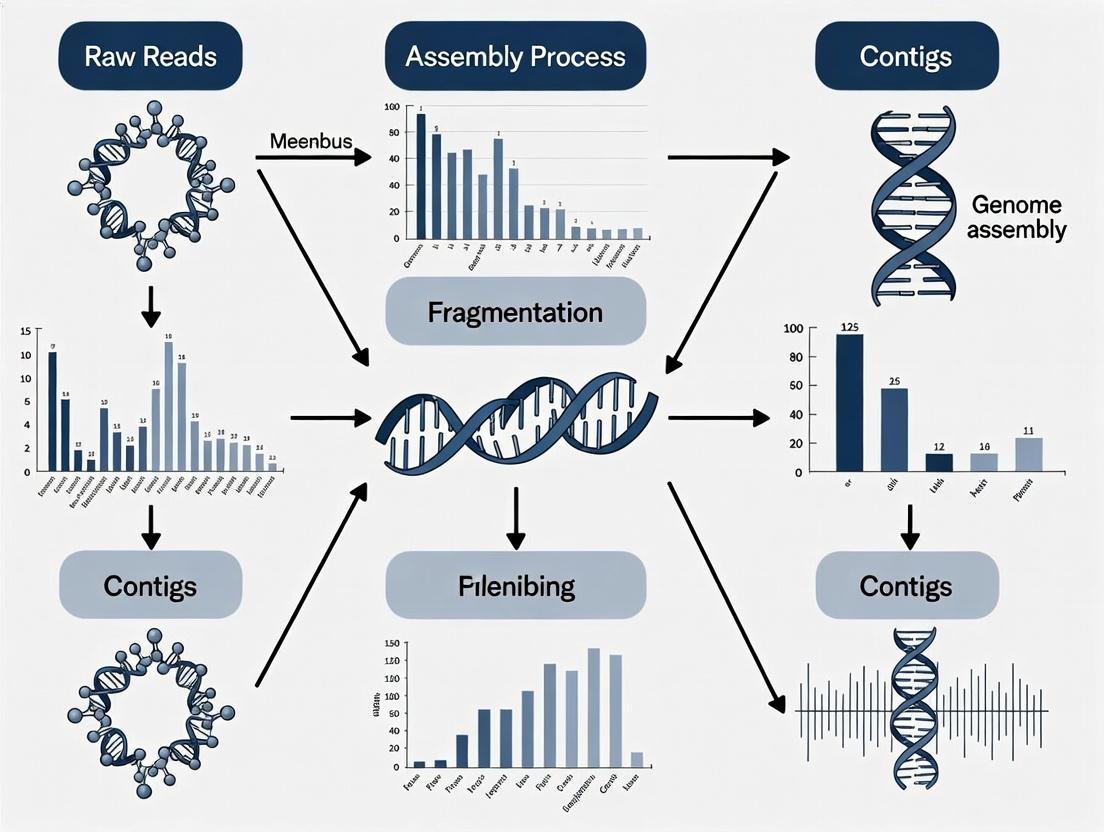
This article provides a comprehensive guide for researchers and biopharma professionals on tackling the persistent challenge of genome assembly fragmentation.
Beyond Contigs: Advanced Strategies to Overcome Assembly Fragmentation in Large, Complex Genomes
Abstract
This article provides a comprehensive guide for researchers and biopharma professionals on tackling the persistent challenge of genome assembly fragmentation. We explore the fundamental causes of fragmentation in large genomes, detail current state-of-the-art methodological solutions (including long-read sequencing, Hi-C, and Bionano technologies), offer practical troubleshooting frameworks for optimization, and present validation metrics and comparative analyses of leading tools. The goal is to empower scientists to produce more complete, contiguous, and biologically accurate genome assemblies for downstream applications in genomics, functional annotation, and drug target discovery.
Why Large Genomes Shatter: Understanding the Root Causes of Assembly Fragmentation
Welcome to the Technical Support Center for Genome Assembly Fragmentation Analysis. This resource is designed within the context of a broader research thesis aimed at mitigating assembly fragmentation in large, complex genomes to enhance downstream biological interpretation and drug target discovery.
Frequently Asked Questions (FAQs) & Troubleshooting
Q1: My assembly's N50 is high, but my colleagues say the assembly is still fragmented. What does this mean, and what should I check? A: A high N50 can be misleading if it's driven by a few very long contigs that do not accurately represent the genome. This often occurs in assemblies plagued with haplotypic duplication or uncollapsed repeats.
- Troubleshooting Steps:
- Calculate the NGA50 after aligning contigs to a trusted reference. NGA50 considers only aligned blocks, filtering out misassemblies.
- Check the L50 statistic. A very small L50 (e.g., <10) with a large genome size indicates over-reliance on a few scaffolds.
- Run a BUSCO analysis to assess gene space completeness. A low BUSCO score alongside a high N50 signals fragmentation in gene-rich regions.
- Protocol: Calculating NGA50
- Align your assembly contigs/scaffolds to a reference genome using a sensitive aligner (e.g.,
minimap2). - Process alignments with a tool like
paftools.js(from minimap2) orQUAST-LGto generate aligned block lengths, excluding breaks and misassemblies. - Sort the aligned block lengths in descending order.
- Sum the lengths until you reach 50% of the reference genome's total length. The length of the shortest block in this sum is the NGA50.
- Align your assembly contigs/scaffolds to a reference genome using a sensitive aligner (e.g.,
Q2: How do I interpret a large discrepancy between N50 and NGA50? What is the biological implication? A: A large gap between N50 and NGA50 indicates a high rate of structural misassemblies (e.g., inversions, translocations) or significant issues with repeat resolution.
- Biological Impact: This compromises the identification of syntenic regions, accurate gene model construction (especially for genes with long introns), and the study of regulatory elements distant from promoters. For drug development, incorrect genomic context can lead to misinterpretation of target gene neighborhoods.
- Action: Use long-read sequencing (PacBio HiFi, Oxford Nanopore) or Hi-C data to scaffold and correct the assembly. The NGA50 is the more reliable metric for assembly accuracy.
Q3: My L50 number is very high. What experimental parameters should I re-examine to improve it? A: A high L50 means you need many contigs to cover 50% of the genome, indicating widespread fragmentation.
- Primary Checks:
- DNA Source Quality: Assess DNA integrity via pulsed-field gel electrophoresis. Fragmented input DNA leads to fragmented assemblies.
- Sequencing Coverage & Read Length: Ensure you have sufficient coverage (typically >50x for Illumina, >20x for HiFi). Longer reads directly improve contiguity.
- Assembly Algorithm Parameters: For overlap-layout-consensus assemblers (e.g., Canu, Flye), adjust the
minOverlapLengthandgenomeSizeparameters. For de Bruijn graph assemblers (e.g., SPAdes), test differentk-mersizes.
Q4: Which metric—N50, L50, or NGA50—is most critical for functional genomics studies in drug discovery? A: NGA50 is the most critical for functional genomics. It directly measures the accuracy and contiguity of biologically relevant sequence. A reliable NGA50 ensures:
- Accurate gene annotation and variant calling.
- Confidence in identifying non-coding regulatory elements and their linkage to genes.
- Correct analysis of gene clusters (e.g., biosynthetic gene clusters, HLA clusters), which are vital in drug discovery.
| Metric | Definition | Calculation | Interpretation & Biological Impact |
|---|---|---|---|
| N50 | A continuity metric. The length of the shortest contig/scaffold at which 50% of the total assembly size is contained in contigs/scaffolds of that length or longer. | 1. Sort all contigs longest to shortest.2. Cumulatively sum the lengths.3. N50 is the length of the contig that pushes the sum over 50% of total length. | High N50: Suggests good overall continuity. Caution: Can be inflated by errors. Impact: Foundational for scaffold-level analysis but may mislead. |
| L50 | A count metric. The smallest number of contigs/scaffolds whose length sum makes up 50% of the total assembly size. | The count of contigs included in the cumulative sum to reach the N50 point (see above). | Low L50: Few large contigs cover the genome (desirable). High L50: Many small fragments (undesirable). Directly indicates fragmentation level. |
| NGA50 | An accuracy-aware continuity metric. The N50 statistic calculated after breaking assemblies at misassemblies and aligning contigs to a reference genome. | 1. Align assembly to reference.2. Break contigs at misassembly points.3. Calculate N50 using the resulting aligned block lengths. | High NGA50: High contiguity and accuracy. Gold Standard for assessing biologically reliable assembly structure. Essential for comparative genomics. |
The Scientist's Toolkit: Research Reagent Solutions
| Item | Function in Addressing Fragmentation |
|---|---|
| High-Molecular-Weight (HMW) DNA Extraction Kit | Provides intact, ultra-long DNA input crucial for long-read sequencing, the primary method for reducing fragmentation. |
| PacBio SMRTbell Prep Kit 3.0 | Prepares DNA for PacBio HiFi sequencing, generating highly accurate long reads (15-25 kb) for superb contiguity and variant detection. |
| Oxford Nanopore Ligation Sequencing Kit (SQK-LSK114) | Prepares DNA for nanopore sequencing, enabling ultra-long reads (>100 kb) to span complex repeats and improve scaffold N50. |
| Dovetail Omni-C Kit | Enables Hi-C library preparation to map chromatin contacts, allowing for accurate scaffolding of contigs into chromosome-scale assemblies. |
| BUSCO Suite (Benchmarking Universal Single-Copy Orthologs) | Software tool that uses evolutionary-informed gene sets to assess the completeness and fragmentation of gene content in an assembly. |
| Phase Genomics Hi-C Kit | Another proprietary reagent for proximity ligation, crucial for generating data to order, orient, and assign contigs to chromosomes. |
Experimental Protocols
Protocol 1: Comprehensive Assembly Quality Assessment Workflow Objective: Generate key fragmentation metrics and quality scores for any draft genome assembly.
- Assembly: Generate a draft assembly using your chosen assembler (e.g.,
Flyefor long reads,SPAdesfor hybrids). - Primary Metrics: Run
QUAST(quast.py assembly.fasta) to generate N50, L50, total size, and number of contigs. - Gene Completeness: Run
BUSCO(busco -i assembly.fasta -l eukaryota_odb10 -m genome) to assess fragmentation in conserved gene space. - Accuracy-aware Metrics: If a reference is available, run
QUASTwith the-r reference.fastaand--gageflags to compute NGA50 and identify misassemblies.
Protocol 2: Improving Contiguity Using Hi-C Data for Scaffolding Objective: Elevate an assembly from contig-level to chromosome-scale using proximity ligation data.
- Data Preparation: Generate Hi-C paired-end reads and a draft contig assembly.
- Read Mapping: Align Hi-C reads to the draft contigs using a sensitive aligner like
BWAorminimap2. - Scaffolding: Use a dedicated scaffolder like
Salmon,YaHS, or3D-DNA. For example, withYaHS:yahs -o output assembly.fasta hic_reads_1.fastq hic_reads_2.fastq. - Validation: Visualize the contact map using
Juiceboxto confirm correct scaffolding and identify potential errors.
Visualizations
Genome Assembly and Evaluation Workflow
Relationship Between Metrics, Factors, and Biological Impact
Technical Support Center: Troubleshooting Genome Assembly
Frequently Asked Questions (FAQs)
Q1: My assembly is highly fragmented with a very low N50. What are the primary genomic complexity factors I should investigate first? A: A fragmented assembly is often driven by the genomic landscape. The primary culprits, in order of investigation priority, are:
- High Repeat Content: Unresolved repetitive elements (e.g., LINEs, SINEs, telomeric repeats) cause the assembler to break.
- Recent Segmental Duplications: Large, nearly identical duplicated regions cannot be uniquely placed.
- High Heterozygosity: Allelic variations are incorrectly assembled as separate loci rather than phased haplotypes.
Immediate Action: Run
BUSCOandQUASTto assess completeness and fragmentation. Then, useRepeatMaskerandk-mer analysis(viaGenomeScope2) to quantify repeat content and heterozygosity.
Q2: How can I determine if high heterozygosity is the cause of my assembly's "bubbly" graph and duplication inflation? A: Use k-mer frequency spectrum analysis. A high heterozygosity genome shows a distinct bimodal distribution of k-mers, with one peak representing heterozygous sites and another representing homozygous regions.
Table 1: Key Metrics from k-mer Analysis (GenomeScope2 Output)
| Metric | Typical Value for Low Heteroz. (<0.5%) | Typical Value for High Heteroz. (>1.0%) | Indication for Assembly |
|---|---|---|---|
| Heterozygosity Estimate | 0.001 | 0.015 | Direct measure of allelic variation. |
| Haplotype Phasing Ratio | ~1.0 | >1.5 | Ratio of heterozygous to homozygous k-mers. |
| Genome Haploid Length | ~ True Size | Inflated (e.g., 150% of true size) | Assembler interprets alleles as separate loci. |
| Peak at 0.5x Coverage | Absent or small | Large, distinct peak | Clear signature of heterozygosity. |
Q3: My assembler collapses tandem repeats. How can I resolve and correctly represent these regions? A: Tandem repeats (e.g., satellite DNA, gene families) are challenging for short-read assemblers. Implement a hybrid approach:
- Experimental Protocol: Targeted Gap Filling with Long Reads
- Step 1: Extract assembly scaffolds containing gaps or low-complexity regions.
- Step 2: Map Oxford Nanopore or PacBio HiFi reads to these scaffolds using
minimap2. - Step 3: For each gap/collapsed region, perform a local de novo assembly of the spanning long reads using
flyeorhifiasmin repeat resolution mode. - Step 4: Integrate the corrected sequence back into the main assembly using a tool like
ragtag.
Q4: How do I distinguish between biological segmental duplications and assembly artifacts caused by poor haplotype resolution? A: This requires integrated evidence.
- Validate with Hi-C Data: True duplications will have cis-interaction signals (loops within a chromosome), while separate haplotypes (alleles) will have trans-interaction signals (between homologous chromosomes).
- Check Read Depth: True duplications should show approximately 2x the median coverage. Allelic regions in a collapsed assembly will show ~1.5x coverage.
- Use a Trio Binning Approach: If parental data is available,
hifiasmin trio-mode will definitively separate haplotypes, revealing true duplications present on both haplotypes.
Detailed Methodologies
Protocol 1: Quantifying Genomic Complexity Prior to Assembly
Objective: Generate a profile of repeats, heterozygosity, and genome size to inform assembler choice and parameters.
Materials:
- High-quality, PCR-free Illumina WGS reads (150bp PE, ≥30x coverage).
- Computing cluster with ≥64GB RAM.
Steps:
- K-mer Counting:
- Complexity Profiling with GenomeScope2:
- Upload the
*.histofile to the GenomeScope2 web server or run locally. - Set k-mer length (31) and read length (150). Analyze the model fit.
- Upload the
- Repeat Annotation with RepeatModeler2/Masker:
Protocol 2: Resolving Haplotypes with HiFi Reads and Hi-C Data
Objective: Produce a phased, chromosome-scale assembly of a complex, heterozygous genome.
Workflow:
- Phased De Novo Assembly:
This generates primary (
*p_ctg.fa) and alternate (*a_ctg.fa) contigs. - Hi-C Scaffolding and Phasing Validation:
- Manual Curation with JuiceBox: Load the
.hicand.assemblyfiles to identify and correct misjoins, ensuring haploid chromosome-scale scaffolds.
Visualizations
Title: Troubleshooting Path for Fragmented Genome Assemblies
Title: Integrated Workflow for Complex Genome Assembly
The Scientist's Toolkit: Research Reagent Solutions
Table 2: Essential Reagents & Tools for Tackling Genomic Complexity
| Item | Function & Rationale |
|---|---|
| PCR-free Illumina WGS Kit | Generates unbiased, short-read data essential for accurate k-mer analysis, heterozygosity estimation, and base-error correction of long reads. |
| PacBio HiFi (Circular Consensus Sequencing) Reagents | Produces long reads (10-25 kb) with >99.9% accuracy. Crucial for resolving repeats, phasing haplotypes, and detecting structural variants. |
| Oxford Nanopore Ultra-Long DNA Sequencing Kit (SQK-ULK114) | Enables generation of >100 kb reads. Ideal for spanning massive repeats, segmental duplications, and obtaining complete telomere-to-telomere coverage. |
| Dovetail or Arima Hi-C Kit | Captures chromatin proximity ligation data. Enables scaffolding of contigs into chromosome-scale pseudomolecules and validates haplotype separation. |
| High Molecular Weight (HMW) DNA Isolation Kit (e.g., Nanobind) | The foundational step. Yield and purity of HMW DNA (>50 kb) directly determine the success of long-read and Hi-C sequencing. |
| Trio Binning Parental Samples (Blood/Tissue) | Provides DNA from two parents. Allows for the most definitive separation of haplotypes during assembly, resolving allelic ambiguity. |
This technical support center addresses common experimental challenges arising from the fragmentation problem inherent in short-read sequencing, framed within a thesis on improving assembly contiguity for large genomes. The short length of reads (typically 50-300 bp) leads to fragmented assemblies, complicating the analysis of repetitive regions, structural variants, and complex haplotype phasing.
Troubleshooting Guides & FAQs
Q1: My genome assembly has an extremely high number of contigs (N50 < 10 kb) despite high coverage (>50x). What are the primary causes? A: This is a classic symptom of the short-read fragmentation problem. Primary causes are:
- High Repetitive Content: Short reads cannot span long repetitive elements (e.g., LINEs, SINEs, telomeric repeats), causing the assembler to break the sequence.
- Sequence Polymorphisms/Heterozygosity: In diploid genomes, allelic variations can be misinterpreted as separate contigs.
- PCR Duplicates & Amplification Bias: Can create uneven coverage, leading to gaps.
- Low-Quality Read Ends: Adapter contamination or poor base quality at read ends can prevent proper overlap during assembly.
Q2: I suspect my assembly gaps are in telomeric or centromeric regions. How can I confirm this with my short-read data? A: Direct confirmation is challenging with short reads alone, but you can perform these diagnostic steps:
- In silico Analysis: Align your contig ends against a database of known repetitive sequences (e.g., Repbase). A high density of matches suggests a repetitive region-induced break.
- Read-Pair Mapping: Map your paired-end reads back to the assembly. Look for read pairs where one mate aligns near a contig end and the other mate maps either into a gap or to a different contig. This signals a physical connection broken in the assembly.
- Sequence Coverage Check: Calculate coverage distribution. Gaps in complex repeats often show anomalously high or fluctuating coverage due to multi-mapping reads.
Q3: What wet-lab and bioinformatics strategies can I use to improve scaffold linkage when only short-read data is available? A: A multi-pronged approach is necessary:
- Wet-Lab: Generate multiple paired-end libraries with different insert sizes (e.g., 300 bp, 500 bp, 800 bp, 2 kb, 5 kb). Longer inserts provide long-range linkage information, though they are still limited.
- Bioinformatics:
- Use a scaffolder (e.g., SSPACE, OPERA-LG) that utilizes paired-end and mate-pair library information to order and orient contigs.
- Apply a gap-closing tool (e.g., GapFiller, Sealer) that uses the original read pairs to fill sequences in the scaffold gaps.
- Polishing: Use tools like Pilon or NextPolish to correct base errors and small indels using aligned read data.
Key Experimental Protocols
Protocol 1: Construction of a Mate-Pair Library for Scaffolding (3 kb Insert Size)
Principle: Generate long-insert paired-end libraries to bridge repetitive regions and link contigs.
- DNA Fragmentation: Fragment 5-10 µg of high-molecular-weight gDNA by gentle pipetting or limited nebulization to a target size of ~3 kb.
- Size Selection: Perform size selection using pulsed-field gel electrophoresis or SPRI beads to isolate fragments in a tight window (e.g., 2.8-3.2 kb).
- End Repair & Biotinylation: Repair fragment ends to make them blunt. Add an A-tail, then ligate a biotinylated junction adapter.
- Circularization: Dilute and perform intramolecular ligation to form circular molecules.
- Digestion & Pull-down: Digest circular DNA with a restriction enzyme that cuts inside the original fragment, leaving the biotinylated adapter intact. Capture biotinylated fragments using streptavidin beads.
- Library Amplification: Elute and PCR-amplify the mate-pair fragments using primers complementary to the adapter. Final library is sequenced as 150 bp paired-end.
Protocol 2:In silicoGap Closure Using Short-Read Data
Principle: Utilize aligned sequencing reads to computationally fill "N" stretches in scaffolds.
- Read Alignment: Map all quality-filtered paired-end reads back to the scaffolded assembly using a sensitive aligner (e.g., BWA-MEM).
- Gap Identification: Parse the assembly FASTA to extract the sequence flanking each side of a gap (e.g., 500 bp into each contig).
- Read Collection: Extract all read pairs where at least one mate aligns within the flanking regions.
- De novo Local Assembly: Perform a local assembly of the collected reads using a dedicated gap-closing assembler (GapFiller) or a standard assembler (SPAdes in --only-assembler mode) with the flanking sequences as trusted contigs.
- Gap Filling: Select the highest-confidence contig path that connects the two flanking sequences. Replace the "N"s with this sequence.
Data Presentation
Table 1: Comparison of Assembly Metrics for a Plant Genome (~1 Gb) Using Different Data Combinations
| Data Type(s) Used | Number of Contigs | Contig N50 (bp) | Number of Scaffolds | Scaffold N50 (bp) | % Genome in Scaffolds > 50 kb |
|---|---|---|---|---|---|
| 150 bp PE reads only | 250,400 | 8,150 | 250,400 | 8,150 | 12% |
| 150 bp PE + 3 kb Mate-Pair | 245,800 | 8,300 | 85,500 | 65,200 | 47% |
| 150 bp PE + 10x Genomics Linked Reads | 180,200 | 21,500 | 178,900 | 22,100 | 39% |
| Integrated (PE + MP + Linked Reads) | 179,500 | 21,800 | 15,200 | 385,000 | 78% |
Table 2: Common Repeat Families Causing Assembly Fragmentation in Human Chr1
| Repeat Class | Family | Average Length (bp) | Frequency in Chr1 | Problem for Short Reads |
|---|---|---|---|---|
| Non-LTR Retrotransposon | LINE1 (L1) | 1,000 - 6,000 | ~516,000 copies | Reads cannot span full element, causing collapse. |
| Tandem Repeat | Satellite (HSat3) | 100 - 5,000+ | Large blocks in centromere | Homogeneity prevents unique alignment. |
| Non-LTR Retrotransposon | Alu (SINE) | 280 | ~1,090,000 copies | High copy number creates ambiguous overlaps. |
| LTR Retrotransposon | ERV1 | 2,000 - 10,000 | ~142,000 copies | Long, repetitive sequences break contigs. |
Visualizations
Title: Mate-Pair Library Construction Workflow (3kb)
Title: How Repetitive Regions (REP) Cause Fragmented Assemblies
The Scientist's Toolkit: Research Reagent Solutions
| Item | Function in Addressing Fragmentation |
|---|---|
| SPRI (Solid Phase Reversible Immobilization) Beads | For precise size selection of DNA fragments during library prep (e.g., for mate-pair libraries). Critical for obtaining the correct insert size distribution. |
| Biotinylated Adapters | Key reagent in mate-pair library protocols. Allows selective capture of junction fragments after circularization and digestion, enriching for correctly formed mate-pair templates. |
| Pfu or Q5 High-Fidelity DNA Polymerase | Used for PCR amplification during library preparation. Their high fidelity minimizes errors introduced during amplification, which is crucial for accurate downstream assembly. |
| PacBio SMRTbell or Oxford Nanopore Ligation Sequencing Kits | Long-read sequencing kits. While this article focuses on short-read limitations, these are the primary solutions. They generate reads thousands to millions of bases long, directly spanning repetitive regions and resolving fragmentation. |
| 10x Genomics GemCode Gel Bead & Chromium Chip | Part of the linked-read technology system. Encodes short reads from long DNA molecules with a unique barcode, providing long-range phasing and scaffolding information from short-read data. |
| Dovetail Genomics Hi-C Kit | Enables proximity ligation sequencing. Captures chromatin interaction data, which is powerful for scaffolding contigs into chromosome-scale assemblies based on 3D genomic contacts. |
Troubleshooting Guides & FAQs
Q1: Our extracted DNA consistently fails to meet the desired HMW threshold (>50 kbp) for long-read sequencing. What are the most likely causes? A: The primary culprits are mechanical shearing and nuclease activity. Avoid vortexing or pipetting vigorously. Always use wide-bore tips. Ensure tissue is fresh or flash-frozen and processed quickly. Include a recommended nuclease inhibitor like EDTA in your lysis buffer and perform all steps on ice or at 4°C whenever possible.
Q2: How can we accurately assess the quality and size of our HMW DNA before expensive sequencing runs? A: Avoid standard gel electrophoresis. Use:
- Pulsed-Field Gel Electrophoresis (PFGE): The gold standard for visualizing molecules >50 kbp.
- Fragment Analyzer or TapeStation with Genomic DNA assays: Provides a quantitative size profile (DNA Integrity Number, DIN).
- Qubit Fluorometer: For accurate concentration without contamination from RNA/debris (use dsDNA BR assay).
- UV-Vis Spectrometry (A260/A280 & A260/A230): Check for protein/organic contaminant carryover.
Q3: We observe low sequencing yield and high adapter dimer formation on our Nanopore or PacBio runs. Could this be linked to DNA quality? A: Yes. Short DNA fragments (<10 kbp) compete for adapter binding, leading to wasted flow cell pores or SMRT cells. This manifests as low yield. Always perform a rigorous size-selection step (e.g., using the BluePippin or Short Read Eliminator kits) after extraction to remove short fragments before library prep.
Q4: Our genome assembly remains highly fragmented despite using long-read data. What DNA-related factors should we re-investigate? A: This directly relates to the thesis on assembly fragmentation. Beyond mean size, investigate:
- Shear Profile: A long mean but a wide distribution with many shorts will fragment assemblies.
- Purity: Co-purified polysaccharides or metabolites can inhibit library prep enzymes, causing uneven coverage.
- Structural Integrity: DNA damage (e.g., abasic sites, nicks) from harsh extraction can cause reads to terminate prematurely. Use a damage repair step (e.g., PreCR from NEB) during library prep.
Q5: For difficult plant or fungal samples with high polysaccharide/polyphenol content, what extraction modifications are critical? A: Standard CTAB protocols often fail. Key modifications include:
- Increased concentration of CTAB and beta-mercaptoethanol.
- Addition of polyvinylpyrrolidone (PVP) to bind polyphenols.
- Multiple chloroform:isoamyl alcohol clean-up steps.
- Use of high-salt precipitation buffers to selectively precipitate DNA away from carbohydrates.
- Consider specialized commercial kits like the Qiagen Genomic-tip or NucleoMag HMW kit.
Table 1: Impact of DNA Extraction Method on Key Quality Metrics
| Method | Avg. Fragment Size (kbp) | A260/A280 | A260/A230 | PFGE Result | Ideal For |
|---|---|---|---|---|---|
| Phenol-Chloroform (Standard) | 20-50 | ~1.8 | 1.8-2.2 | Moderate smear | Routine PCR, short-read |
| CTAB (Modified) | 50-150 | 1.8-2.0 | 1.5-2.0* | Sharp high-MW band | Plants, fungi |
| Magnetic Bead-Based Kit | 30-80 | 1.7-1.9 | 2.0-2.3 | Tight high-MW band | High-throughput, blood/cells |
| Agarose Plug (PFGE) | >200 | 1.8-2.0 | 2.0-2.3 | Majority in well | Gold Standard for HMW |
| Salting-Out | 20-40 | 1.6-1.8 | 1.0-1.5* | Low-MW smear | Quick, non-toxic prep |
*May require additional clean-up.
Table 2: Sequencing Platform HMW DNA Requirements & Outcomes
| Platform | Recommended DNA Size | Minimum Input | Effect of Short Fragments | Key Quality Metric for Assembly |
|---|---|---|---|---|
| Oxford Nanopore (ONT) | >30 kbp (aim >50 kbp) | 1-3 µg | Reduced N50, wasted pores | N50 Read Length directly correlates with input DNA N50. |
| PacBio HiFi | >15 kbp for 15kbp SMRTbell | 3-5 µg | Unproductive SMRT cell occupancy | Read Length Distribution impacts consensus accuracy in complex regions. |
| Illumina (Short-Read) | 100-500 bp | 50-500 ng | Does not apply | Library Concentration is primary concern. |
Experimental Protocols
Protocol 1: HMW DNA Extraction from Mammalian Cells using Agarose Plugs (for maximal size)
- Embed Cells: Wash 5x10^6 cells, resuspend in PBS. Mix with equal volume of 2% low-melt CleanCut Agarose. Pipette into plug mold. Solidify at 4°C for 30 min.
- Lysis in Plug: Transfer plugs to 5 mL of Lysis Buffer (1% Sarkosyl, 0.5M EDTA, 1 mg/mL Proteinase K, pH 8.0). Incubate at 50°C for 24-48 hrs with gentle agitation.
- Washing: Remove lysis buffer. Wash plugs 3x for 30 min each in 15 mL TE buffer (pH 8.0) at room temperature with gentle agitation.
- Storage/Use: Store plugs at 4°C in TE buffer. To use, melt plug slice at 68°C for 10 min, then treat with Beta-Agarase enzyme to recover liquid DNA.
Protocol 2: Solid-Phase Reversible Immobilization (SPRI) Bead-Based Size Selection This protocol follows a 0.4X:0.8X (left-side:right-side) dual SPRI bead cleanup to select fragments >10 kbp.
- Bring up to binding conditions: To your DNA in a low-EDTA TE buffer (e.g., 50 µL), add PEG/NaCl SPRI beads at a 0.4X volume ratio (e.g., add 20 µL beads to 50 µL DNA). Mix thoroughly by pipetting.
- Bind short fragments: Incubate at room temperature for 5-10 minutes. Place on magnet. Transfer the supernatant (containing your desired large fragments) to a new tube. Discard the bead pellet (which binds shorts).
- Precipitate large fragments: To the supernatant, add beads at a 0.8X volume ratio (relative to the original volume). Mix and incubate 5-10 minutes.
- Wash and elute: Place on magnet, discard supernatant. Wash beads twice with 80% ethanol. Dry briefly. Elute DNA in nuclease-free water or low-EDTA TE buffer (10-20 µL). Incubate at 37°C for 5 minutes before magnet separation.
Visualizations
HMW DNA Preparation & Sequencing Workflow
Causes of DNA Fragmentation & Their Effects
The Scientist's Toolkit: Research Reagent Solutions
| Item | Function & Rationale |
|---|---|
| Wide-Bore/Filtered Pipette Tips | Minimizes hydrodynamic shear stress during pipetting of viscous HMW DNA. |
| Low-Melt Point Agarose | Used to create protective plugs for in-situ cell lysis, preventing any mechanical handling of naked DNA. |
| Proteinase K | Broad-spectrum serine protease for efficient digestion of nucleases and cellular proteins during lysis. |
| CTAB (Cetyltrimethylammonium bromide) | Detergent effective for lysing plant cell walls and precipitating DNA while co-precipitating polysaccharides. |
| Beta-Mercaptoethanol/PVP | Reducing agent and polyphenol binder, respectively; critical for preventing oxidation in plant/fungal preps. |
| Solid-Phase Reversible Immobilization (SPRI) Beads | Magnetic beads with precise size-cutoff properties (via PEG/NaCl concentration) for clean size selection. |
| BluePippin or PippinHT System | Automated gel electrophoresis system for high-resolution, reproducible size selection of DNA (e.g., >20 kbp cut). |
| NEBNext Ultra II FS or SMRTbell Prep Kit | Library prep kits containing DNA damage repair enzymes crucial for converting nicked DNA to sequencer-ready form. |
| Qubit dsDNA BR Assay & Fluorometer | Fluorescence-based quantification specific for dsDNA, unaffected by RNA or contaminants common in HMW preps. |
Technical Support Center: Troubleshooting Guides and FAQs
FAQ 1: My genome assembly has a high N50 but low contiguity. What does this mean? Answer: A high scaffold N50 with low overall contiguity (e.g., high scaffold count) often indicates effective long-range scaffolding (e.g., with Hi-C) but poor underlying contig assembly. The fragmentation likely occurred during the initial assembly step. Focus on improving the read-to-contig step: increase long-read coverage (≥50x for PacBio HiFi/ONT ultra-long), use a hybrid approach with short reads for polishing, and verify DNA quality to minimize shearing.
FAQ 2: Why is my highly heterozygous plant genome assembling into separate haplotypes, causing duplication and fragmentation?
Answer: Standard assemblers collapse haplotypes, but high heterozygosity causes them to be assembled as separate, paralogous contigs. This inflates genome size and fragments the primary assembly. Solution: Use a haplotype-aware assembler (e.g., Hifiasm, Verkko) with trio-binning (if parental data is available) or the --primary flag to output a collapsed, haploid assembly. Post-assembly, purge haplotigs using tools like Purge_dups based on read depth.
FAQ 3: How do I distinguish true biological complexity (e.g., in cancer genomes) from assembly artifacts? Answer: Validate assembly structures with orthogonal data.
- Map raw reads back to the assembly: low coverage or split alignments indicate misassemblies.
- Use a different technology: Validate a long-read assembly with linked-reads (10x Genomics) or Hi-C contact maps. Discontinuities in contact maps suggest breakpoints.
- Compare to a known reference (if available, e.g., matched normal tissue). Use SV-callers (e.g., Manta) to identify high-confidence structural variants supported by both assembly and raw reads.
Experimental Protocol: Hi-C Scaffolding for a Fragmented Draft Assembly
Objective: Use chromatin conformation data to order and orient contigs into chromosomes. Materials: Dovetail Omni-C Kit, or equivalent Hi-C kit; DpnII restriction enzyme; DNA ligase; streptavidin beads; PCR reagents. Method:
- Crosslinking & Digestion: Fix chromatin in nuclei with formaldehyde. Lyse cells and digest DNA with DpnII.
- Marking & Ligation: Fill in the sticky ends with biotinylated nucleotides. Ligate under dilute conditions to favor intra-molecular ligation.
- DNA Purification & Shearing: Reverse crosslinks, purify DNA, and shear to ~350 bp fragments.
- Biotin Pull-down: Capture biotinylated ligation junctions with streptavidin beads for library prep and paired-end sequencing.
- Data Analysis: Use Juicer to process reads and generate a contact map. Feed the
.hicfile and draft assembly into a scaffolder (e.g., SALSA, YaHS) to produce chromosome-scale scaffolds.
Data Presentation
Table 1: Representative Assembly Metrics Across Domains
| Genome Type | Typical Size Range | Major Fragmentation Source | Key Metric (Current Best) | Common Solution |
|---|---|---|---|---|
| Plant (e.g., Maize) | 1-25 Gb | High heterozygosity, repeats (TEs) | Contig N50: 10-100 Mb (Hifiasm) | Haplotype-aware assembly; TE annotation & masking |
| Animal (e.g., Human) | 1-3 Gb | Segmental duplications, centromeres | Scaffold N50: >100 Mb (Hi-C) | Multi-platform integration (HiFi+Hi-C+Optical Map) |
| Cancer (Clonal Cell Line) | 3-3.5 Gb* | Somatic SVs, aneuploidy, complexity | Completeness (BUSCO): >95% | Deep coverage (≥100x); linked-reads for phasing |
Table 2: Troubleshooting Matrix for Common Fragmentation Issues
| Symptom | Probable Cause | Diagnostic Check | Recommended Action |
|---|---|---|---|
| Many small contigs | Insufficient coverage | Plot read depth distribution. | Increase sequencing depth (≥50x for long reads). |
| Chimeric contigs | Repeat collapse | Check for sudden depth drops. | Use a repeat-aware assembler (e.g., Flye). |
| Poor Hi-C scaffolding | Low contact frequency | Check valid interaction pair rate (>70%). | Increase Hi-C sequencing depth (≥30x genome coverage). |
| Inflated genome size | Un-purged haplotigs | Plot GC vs. Depth. | Run Purge_dups or similar haplotype purging tool. |
Mandatory Visualization
The Scientist's Toolkit: Research Reagent Solutions
Table 3: Essential Reagents & Kits for Genome Assembly Projects
| Item | Function | Example Product |
|---|---|---|
| High Molecular Weight (HMW) DNA Isolation Kit | Gently extract ultra-long DNA (>50 kb) crucial for long-read sequencing. | Circulomics Nanobind HMW DNA Kit, QIAGEN Genomic-tip. |
| Long-Read Sequencing Kit | Generate the long (PacBio HiFi) or ultra-long (ONT) reads needed to span repeats. | PacBio SMRTbell Prep Kit 3.0, Oxford Nanopore Ligation Sequencing Kit. |
| Hi-C/Long-Range Scaffolding Kit | Capture chromatin contacts to order scaffolds into chromosomes. | Dovetail Omni-C Kit, Arima Hi-C+ Kit. |
| Linked-Read Library Prep Kit | Barcode short reads from long DNA molecules for phasing and SV detection. | 10x Genomics Chromium Genome Kit. |
| Barcoded Adapters for Multiplexing | Allow pooling of multiple samples in one sequencing run to reduce cost. | PacBio Barcoded Overhang Adapters, Oxford Nanopore Native Barcoding Kit. |
The Modern Assembler's Toolkit: Long-Range Technologies and Hybrid Assembly Pipelines
Technical Support & Troubleshooting Center
Frequently Asked Questions (FAQs)
Q1: My HiFi read N50 is significantly lower than expected. What are the primary causes and solutions? A: Low HiFi read N50 often stems from DNA template degradation or suboptimal size selection. Ensure fresh, high molecular weight (HMW) DNA extraction (e.g., using MagAttract HMW DNA Kit). Check the size selection protocol; using a tighter BluePippin or Circulomics SRE window can improve results. Also, confirm that the SMRTcell sequencing polymerase is optimally bound.
Q2: I am observing a high rate of adapter dimer reads in my Nanopore sequencing run. How can I mitigate this? A: Adapter dimers indicate insufficient library purification. Increase the AMPure XP bead clean-up ratio (e.g., from 0.4x to 0.8x for short fragment removal) prior to adapter ligation. Always perform a QC step using a FEMTO Pulse or TapeStation to assess library fragment size distribution before loading the flow cell.
Q3: What are the main reasons for low yield on a PromethION flow cell, and how can I address them? A: Low yield can result from: 1) Poor library loading concentration: Re-quantify library with a Qubit and target 50-100fmol for a FLO-PRO002M. 2) Pore blockage: Incorporate more frequent wash steps (e.g., with Fuel Mix) during the run. 3) Library quality: Re-assess DNA integrity. Use the "Platform QC" run to check pore health before the sequencing experiment.
Q4: My genome assembly has high continuity but a elevated consensus error rate. Which polishing strategy should I prioritize? A: For HiFi-based assemblies, additional polishing is typically unnecessary. For Nanopore-only assemblies, use a hybrid approach: first polish with long reads (e.g., Medaka), then with short reads (e.g., NextPolish with Illumina data). For the highest accuracy, employ PacBio HiFi reads as the polishing input.
Troubleshooting Guides
Issue: High DNA Damage Leading to Early Run Termination (PacBio)
- Symptoms: Rapid drop in productive ZMWs, short read lengths.
- Diagnosis: Assess DNA quality via pulse-field gel electrophoresis. Check for signs of nicking or UV exposure.
- Resolution: Always use UV-free tubes and low-binding tips. Perform DNA extraction and library prep in a dedicated, clean environment. Consider using the SMRTerbell damage repair step if available.
Issue: High Pore Occupancy with Low Sequencing Output (Nanopore)
- Symptoms: Pore occupancy >80% but few bases called.
- Diagnosis: This suggests pores are occupied by non-processive molecules (e.g., contaminants, dead enzymes).
- Resolution: Re-purify the sequencing library with a stricter AMPure bead clean-up (1.0x ratio). Ensure the running buffer (SQB/LB) is freshly prepared and free of particulates.
Issue: Chimeric Contigs in Final Assembly Spanning Repeats
- Symptoms: Mis-assemblies validated by Hi-C data or genetic maps in repetitive regions.
- Diagnosis: Long reads themselves are chimeric or the assembler's overlap parameters are too lenient.
- Resolution: Use tools like
yakormerquryto validate reads against a trusted k-mer set. For assembly, try multiple tools (e.g., hifiasm, HiCanu, Flye) and compare results using D-GENIES. Apply thepurge_dupspipeline to haploid assemblies.
Table 1: Performance Comparison of Long-Read Sequencing Platforms for Repetitive Region Resolution
| Metric | PacBio Revio (HiFi) | Oxford Nanopore (Q20+ Kit) | Ideal for Repeat Resolution Because... |
|---|---|---|---|
| Read Length (N50) | 15-25 kb | 20-50+ kb | Nanopore provides ultra-long reads to span large repeats. |
| Single-Molecule Accuracy | >99.9% (Q30) | >99% (Q20) | HiFi accuracy enables precise repeat copy number assignment. |
| Output per Flow Cell / SMRT Cell | 120-180 Gb | 100-200 Gb (PromethION P48) | Sufficient coverage for large, complex genomes. |
| Common Repeat Resolution Capability | Tandem repeats up to ~15 kb, segmental duplications | Satellite arrays, large segmental duplications, full-length transposons | HiFi's accuracy resolves moderate repeats; Nanopore's length spans massive ones. |
| Typical Required Coverage for Assembly | 30-50x HiFi | 40-60x (ultra-long) | Provides multiple unique overlaps in repeat-flanking regions. |
Table 2: Common Assembly Metrics Before and After Long-Read Integration
| Assembly Metric | Illumina-Only Assembly (Contiguous) | After HiFi/Nanopore Integration (Phased) | Improvement Factor |
|---|---|---|---|
| Contig N50 | 50 - 500 kb | 10 - 50 Mb | 100x - 200x |
| Number of Contigs | 50,000 - 500,000 | 500 - 5,000 | ~100x reduction |
| Complete BUSCOs | 80% - 95% | 95% - 99% | Significant increase in gene space completeness |
| Assembly Size | Often fragmented, underestimates true size | Within 1% of expected genome size | Accurate genome sizing |
Experimental Protocols
Protocol 1: Generating Ultra-Long Reads (ULRs) with Oxford Nanopore for Repeat Spanning Objective: Produce DNA fragments >50 kb to span large repetitive elements. Materials: See "Scientist's Toolkit" below. Steps:
- HMW DNA Extraction: Use fresh tissue. Embed cells in low-melt agarose plugs. Lyse cells in situ with proteinase K. Perform electrophoresis in a CHEF mapper to size-select DNA >150 kb.
- DNA Repair and End-Prep: Use the NEBNext Ultra II End Repair/dA-Tailing Module. Incubate at 20°C for 15 minutes, then 65°C for 15 minutes.
- Adapter Ligation: Use the Ligation Sequencing Kit (SQK-LSK114). Dilute DNA to ~5 ng/µL to favor intermolecular ligation. Add blunt/TA ligase and adapter mix. Incubate at room temperature for 60 minutes.
- Magnetic Bead Clean-up: Use 0.4x AMPure XP beads to remove short fragments. Elute. Then, use 0.8x beads to recover the ULRs. Elute in Elution Buffer (EB).
- Priming & Loading: Load the library onto a primed and loaded FLO-PRO002M flow cell. Target 50-100fmol of library.
- Sequencing: Run for up to 72 hours, performing buffer exchanges/washes as needed to maintain pore activity.
Protocol 2: HiFi Library Preparation for Accurate Repeat Sequencing (PacBio) Objective: Generate highly accurate (>99.9%) long reads (10-25 kb) for precise repeat analysis. Materials: See "Scientist's Toolkit" below. Steps:
- HMW DNA Shearing: Use the Megaruptor 3 or g-TUBEs to shear DNA to a target size of 15-20 kb. Verify size on a FEMTO Pulse system.
- SMRTbell Library Construction: Use the SMRTbell Express Template Prep Kit 3.0. Perform DNA damage repair, end repair/A-tailing, and adapter ligation sequentially. Use a magnetic bead-binding step to purify the SMRTbell library.
- Size Selection: Perform a two-sided size selection using the BluePippin system (e.g., 8-20 kb cutoff) to narrow the insert distribution.
- Sequencing Primer Annealing & Polymerase Binding: Anneal the sequencing primer to the SMRTbell template. Bind the polymerase complex using the Sequel II Binding Kit 3.2.
- MagBead Loading & Sequencing: Purify the bound complexes with MagBeads. Load onto a SMRTcell 8M. Sequence on a Revio system using the appropriate sequencing plate and movie times.
Visualizations
Title: PacBio HiFi Library Prep and Assembly Workflow
Title: Logic of Long-Read Technologies in Solving Assembly Fragmentation
The Scientist's Toolkit: Research Reagent Solutions
Table 3: Essential Materials for Long-Read Repeat Spanning Experiments
| Item | Function | Recommended Product Examples |
|---|---|---|
| HMW DNA Extraction Kit | Preserve DNA molecule integrity >150 kb for ultra-long reads. | MagAttract HMW DNA Kit (Qiagen), Nanobind CBB (Circulomics). |
| Size Selection System | Isolate DNA fragments in a tight window for optimal library efficiency. | BluePippin (Sage Science), Short Read Eliminator XS (Circulomics). |
| Library Prep Kit (PacBio) | Convert HMW DNA into SMRTbell libraries for HiFi sequencing. | SMRTbell Express Template Prep Kit 3.0 (PacBio). |
| Library Prep Kit (Nanopore) | Prepare DNA for ligation-based sequencing, optimized for ULRs. | Ligation Sequencing Kit (SQK-LSK114) (ONT). |
| DNA Damage Repair Mix | Repair nicks and breaks common in HMW DNA to improve yield. | NEBNext Ultra II End Repair/dA-Tailing Module. |
| High-Sensitivity DNA Assay | Accurately quantify low-concentration, large-fragment libraries. | Qubit dsDNA HS Assay Kit, FEMTO Pulse System. |
| Magnetic Beads | Clean up and size-select libraries during preparation. | AMPure XP Beads (Beckman Coulter). |
| Assembly Software | Perform de novo assembly from long reads. | hifiasm (HiFi), HiCanu (HiFi/Nanopore), Flye (Nanopore). |
| Polishing Tools | Improve consensus accuracy of draft assemblies. | Medaka (Nanopore), NextPolish (Illumina-based). |
Troubleshooting Guides & FAQs
FAQ: General Principles & Setup
Q1: Within the thesis context of overcoming assembly fragmentation in large genomes, what is the core advantage of using Hi-C or HiFi-C scaffolding over traditional methods? A1: Traditional sequencing produces thousands of contigs. Hi-C and HiFi-C leverage the physical 3D proximity of chromatin within the nucleus to map these contigs to their correct chromosomal locations and order, dramatically reducing fragmentation and producing chromosome-scale scaffolds. This is critical for studying large, complex genomes with high repeat content.
Q2: When should I choose Hi-C versus HiFi-C for my project? A2: The choice depends on your starting material, budget, and desired resolution.
- Hi-C is well-established, cost-effective for generating contact maps for scaffolding, and optimal when you have high-quality, high-molecular-weight DNA.
- HiFi-C (also called Pore-C or HiFi-based Conformation Capture) is advantageous when DNA quality/quantity is limited, as it can work with lower inputs, and directly produces long, accurate reads that embed proximity information, simplifying analysis.
Troubleshooting: Common Experimental Issues
Q3: My Hi-C library yield is too low after the biotin pull-down. What could be the cause? A3: Low yield often stems from inefficient cross-linking or digestion.
- Check cross-linking: Ensure formaldehyde is fresh and quenched completely with glycine.
- Verify digestion efficiency: Run a gel check after restriction enzyme digest. Incomplete digestion leads to fewer ligatable ends. Consider using a frequent-cutter enzyme (e.g., DpnII, MboI) for mammalian genomes.
- Optimize ligation: Ensure the ligation reaction is performed on ice with high-concentration T4 DNA Ligase and sufficient ATP.
Q4: I observe high levels of unligated junctions (dangling ends) and self-ligation in my Hi-C data. How can I mitigate this? A4: This "noise" reduces useful long-range contacts.
- Fill in ends and mark with biotin: Carefully perform the fill-in reaction with biotin-labeled nucleotides before blunt-end ligation. This ensures only correctly digested ends are labeled and captured.
- Use a controlled fixation time: Over-crosslinking can trap random interactions. Optimize fixation time (typically 10-30 min for cell cultures).
- Increase proximity ligation dilution: Ensure the ligation is performed in a large volume to favor intra-molecular ligation (genomic proximity) over inter-molecular ligation (random collision).
Q5: My HiFi-C experiment resulted in very few chimeric reads containing multiple ligation junctions. What went wrong? A5: Low chimeric read count suggests poor cross-linking or fragmentation that is too harsh.
- Confirm cross-linking efficiency for your cell/tissue type.
- Optimize fragmentation: For HiFi-C, fragmentation is often by sonication. Over-sonication can destroy the long-range chimeric molecules. Titrate sonication intensity to achieve the desired fragment size (e.g., 15-20 kb) while preserving chimera formation.
- Library size selection: Use a larger size selection window (e.g., >10 kb) during library preparation to enrich for molecules containing multiple ligation events.
Troubleshooting: Data Analysis Issues
Q6: The Hi-C contact map shows poor compartmentalization and a weak diagonal. What does this indicate about my data quality? A6: This suggests a high fraction of non-informative contacts (noise) or insufficient sequencing depth.
- Calculate valid interaction pairs: Use tools like
HiC-ProorJuicerto assess the percentage of read pairs that are valid long-range contacts (>20 kb apart). A good library should have >50% valid pairs. - Check sequencing depth: Refer to Table 1 for recommended depths. Large genomes require deep sequencing.
- Inspect digestion and ligation efficiency metrics from your pipeline's output. High rates of dangling ends or trans contacts indicate the experimental issues in Q3/Q4.
Q7: The scaffolding software (e.g, SALSA, YaHS, HiRise) fails to place a large number of contigs, leaving many as unassigned "chunks". Why? A7: This is often due to:
- Low contiguity of the input assembly: Hi-C cannot reliably order and orient very short contigs (<50 kb). Improve the base assembly (e.g., using PacBio HiFi or ONT UL reads) first.
- Insufficient Hi-C read coverage on contigs: Small contigs or contigs from low-complexity/repetitive regions may not have enough unique Hi-C links.
- Contamination: The presence of non-target DNA (e.g., bacterial, fungal) can generate spurious links. Screen and remove contaminant contigs before scaffolding.
Table 1: Recommended Sequencing Depths for Chromosome-Level Scaffolding
| Genome Size | Hi-C Recommended Depth (Valid Pairs) | HiFi-C Recommended Read Count (for analysis) | Typical Scaffolding Result (N50) Goal |
|---|---|---|---|
| 100 Mb (e.g., Fungus) | 5-10 million | 2-3 million reads | > 90% of genome in chromosomes |
| 1 Gb (e.g., Plant) | 30-50 million | 5-10 million reads | Chromosome-scale scaffolds |
| 3 Gb (Mammalian) | 50-100 million | 15-25 million reads | Chromosome-scale scaffolds |
Table 2: Common Issues & Diagnostic Metrics from Analysis Pipelines
| Problematic Metric | Typical Value (Good Library) | Typical Value (Problem Library) | Likely Experimental Cause |
|---|---|---|---|
| Valid Pair Ratio | > 50% | < 30% | Poor ligation, over-fixation |
| Dangling Ends Ratio | < 15% | > 30% | Inefficient fill-in/biotin labeling, incomplete digestion |
| Trans (Inter-chromosomal) Ratio | ~10% | > 25% | Over-fragmentation, sample mixing, contamination |
| Long-Range Contact (>20kb) Fraction | High | Low | Under-sequencing, high PCR duplicates |
Experimental Protocols
Protocol 1: Standard In-Situ Hi-C for Mammalian Cells (Based on Rao et al., 2014)
Key Reagents: Formaldehyde (1%), Glycine (2.5 M), SDS (10%), Triton X-100 (10%), Restriction Enzyme (e.g., MboI, 50 U/µL), Biotin-14-dATP, T4 DNA Ligase (high-concentration), Streptavidin Beads.
Methodology:
- Cross-linking: Cross-link 1-2 million cells in culture with 1% formaldehyde for 10-30 min. Quench with glycine.
- Lysis & Digestion: Lyse cells, permeabilize with SDS/Triton. Digest chromatin with 100-200 units of MboI overnight.
- Marking & Ligation: Fill in sticky ends with biotin-14-dATP. Perform proximity ligation with T4 DNA Ligase in a large volume (> 1 mL) overnight.
- Reverse Cross-linking & DNA Cleanup: Reverse cross-links with Proteinase K, incubate at 65°C overnight. Precipitate DNA.
- Shearing & Size Selection: Shear DNA to ~300-500 bp via sonication. Size select using SPRI beads.
- Biotin Pull-down: Bind biotinylated DNA to Streptavidin beads. Perform end-repair, A-tailing, and adapter ligation on-bead.
- Library Amplification & Sequencing: Perform a limited-cycle PCR (6-8 cycles) to generate the final Illumina-compatible library. Sequence on HiSeq or NovaSeq (PE150).
Protocol 2: HiFi-C Workflow for Low-Input Samples (Adapted from Ulahannan et al.)
Key Reagents: Formaldehyde, Proteinase K, T4 DNA Ligase, AMPure PB Beads, SMRTbell Prep Kit, PacHiFi Polymerase.
Methodology:
- Cross-linking & Digestion: As in Steps 1-2 of Protocol 1.
- Proximity Ligation: Perform in-situ ligation as in Step 3.
- De-crosslinking & DNA Isolation: Reverse cross-links. Purify DNA using Phenol-Chloroform extraction and ethanol precipitation to obtain high-MW DNA.
- Minimal Fragmentation: Gently shear DNA by pipetting or mild sonication to target ~15-25 kb fragments. Assess on pulsed-field or long-fragment gel.
- HiFi Library Prep: Use the SMRTbell prep kit without a PCR step to construct circularized libraries from sheared, ligated DNA. Crucially, do not perform size selection that would discard chimeric molecules.
- Sequencing: Sequence on PacBio Revio or Sequel IIe system using the HiFi sequencing mode to generate long, accurate reads containing multiple ligation junctions.
Visualizations
Diagram 1: Hi-C vs HiFi-C Experimental Workflow Comparison
Diagram 2: Hi-C Data Processing & Scaffolding Logic
The Scientist's Toolkit: Key Research Reagent Solutions
| Item | Function in Hi-C/HiFi-C | Key Considerations |
|---|---|---|
| Formaldehyde (37%) | Cross-links proteins to DNA, capturing chromatin interactions. | Must be fresh; aliquot and store in dark. Quench completely. |
| Frequent-Cutter Restriction Enzyme (e.g., MboI, DpnII, HindIII) | Digests cross-linked DNA to create ligatable ends defining contact resolution. | Test activity on cross-linked DNA; choose based on genome sequence. |
| Biotin-14-dATP/dCTP | Labels the digested DNA ends during fill-in, enabling specific pull-down of ligation junctions. | Critical for reducing noise. Use in fill-in master mix. |
| Streptavidin-Coated Magnetic Beads (MyOne C1) | Captures biotinylated ligation junctions, enriching for informative chimeric molecules. | High binding capacity crucial for yield. |
| High-Concentration T4 DNA Ligase (2000 U/µL) | Performs proximity ligation of cross-linked ends under highly diluted conditions. | Dilution factor is critical for intra-molecular ligation. |
| AMPure PB Beads / SPRIselect Beads | Size selection and cleanup of long (HiFi-C) or short (Hi-C) DNA fragments. | Ratio adjustment is key for selecting the correct size range. |
| PacBio SMRTbell Prep Kit | Constructs circular, polymerase-ready templates from HiFi-C DNA without PCR bias. | Omit size selection steps that remove long chimeras. |
| Proteinase K | Reverses formaldehyde cross-links by digesting proteins, releasing DNA for purification. | Requires long incubation at high temperature (65°C, O/N). |
Troubleshooting Guides & FAQs
Q1: My sample preparation yields consistently low labeling density or poor label intensity. What are the primary causes and solutions?
A: Low labeling density (< 8 labels per 100 kbp) often stems from DNA damage or suboptimal reaction conditions.
- Cause 1: DNA shearing. Excessive pipetting or vortexing damages high-molecular-weight (HMW) DNA.
- Solution: Always use wide-bore tips. Handle DNA gently by slowly pipetting up and down. Use a resting period for viscous samples in pipette tips.
- Cause 2: Impure DNA or incorrect buffer conditions. Carryover of contaminants from extraction inhibits the labeling enzyme.
- Solution: Re-purify DNA using magnetic bead-based clean-up specific for HMW DNA. Ensure the DNA is in the exact elution buffer specified in the Bionano Prep kit. Verify pH and absence of chelating agents (e.g., EDTA).
- Cause 3: Expired or inactive fluorophores or enzymes.
- Solution: Check lot performance certificates. Aliquot fluorophores to avoid freeze-thaw cycles. Include the control DNA sample provided in the kit with every run.
Q2: I am experiencing high backbone breakage rates during imaging, leading to short effective molecule lengths. How can I mitigate this?
A: High breakage reduces map coverage and assembly continuity.
- Cause 1: Nuclease contamination.
- Solution: Use fresh, certified nuclease-free water and reagents. Decontaminate surfaces and equipment with UV or RNase Away solutions. Include nuclease inhibitors in storage buffers if recommended.
- Cause 2: Suboptimal staining or imaging conditions. Excessive laser power or prolonged exposure can photodamage DNA.
- Solution: Adhere strictly to the recommended staining concentrations. On the Saphyr system, optimize the Laser Power and Camera Exposure settings using the system's Performance Test chip. Typical values range from 5-10 mW and 0.5-1.5 seconds, respectively.
- Cause 3: Flow cell issues or old NanoChannel Arrays.
- Solution: Ensure proper priming and loading of the flow cell. Check the quality control metrics for the NanoChannel Array chip; use chips with a certified minimum effective length.
Q3: After assembly, my consensus genome map has low coverage or poor concordance with my sequence assembly. What steps should I take?
A: This points to issues in molecule alignment or assembly parameters.
- Cause 1: Insufficient data volume (molecule throughput).
- Solution: Target > 400X coverage in Gbp for de novo assembly. For human genomes, aim for > 750 Gbp of filtered data. Re-run samples if necessary.
- Cause 2: Incorrect molecule filtering thresholds during data analysis.
- Solution: In Bionano Solve, adjust the
Minimum Labels per MoleculeandMinimum Molecule Lengthfilters. For human genomes, typical values are 9 labels and 150 kbp. Overly stringent filters discard valuable data.
- Solution: In Bionano Solve, adjust the
- Cause 3: Poor reference or sequence assembly quality.
- Solution: For hybrid scaffolding, the input contigs must be of high quality (high N50, polished). Use the Bionano
Assembly QCreport to identify and remove chimeric or misassembled contigs before scaffolding.
- Solution: For hybrid scaffolding, the input contigs must be of high quality (high N50, polished). Use the Bionano
Q4: How do I interpret common error flags in the Bionano Solve pipeline output (e.g., LowCutRate, LowSNR)?
A: These flags indicate specific quality control failures.
| Error Flag | Meaning | Typical Threshold | Corrective Action |
|---|---|---|---|
LowCutRate |
DNA was not sufficiently linearized/nicked. | < 0.25 cuts/100kbp | Increase nicking enzyme incubation time; verify enzyme activity. |
LowSNR |
Signal-to-Noise ratio is poor, labels are faint. | < 3.5 | Increase fluorophore stain concentration; check laser alignment/focus. |
LowMOLX |
Effective molecules per field of view is low. | < 15 | Increase DNA loading concentration; check chip quality and fluidics. |
LowLabelDensity |
Few fluorescent labels per molecule. | < 8/100kbp | See Q1. Optimize labeling reaction. |
Essential Protocols
Protocol 1: HMW DNA Extraction & Quality Control for Plant Tissues (High Polysaccharides/Polyphenols)
This protocol is critical for thesis work on fragmented assemblies in complex genomes.
- Tissue Preparation: Flash-freeze 1g of young leaf tissue in liquid N₂. Grind to a fine powder under constant N₂ cooling.
- Lysis: Transfer powder to 15 mL of pre-warmed (65°C) CTAB buffer (2% CTAB, 1.4 M NaCl, 20 mM EDTA, 100 mM Tris-HCl pH 8.0, 1% PVP-40). Incubate at 65°C for 1 hour with gentle inversion every 15 minutes.
- Decontamination: Add an equal volume of Chloroform:Isoamyl Alcohol (24:1). Mix gently by inversion for 10 minutes. Centrifuge at 5,000 x g for 20 minutes at 4°C.
- Precipitation: Transfer aqueous phase to a new tube. Add 0.7 volumes of room-temperature isopropanol. Mix by gentle inversion until DNA threads form. Spool DNA using a sterile glass hook.
- Wash & Dissolution: Wash hook/spooled DNA in 70% ethanol. Air-dry briefly. Dissolve DNA in Elution Buffer (Bionano Prep) overnight at 4°C with gentle rocking.
- QC: Analyze 100 ng using the Genomic DNA 165kb assay on the FemtoPulse or Pulse Field Gel Electrophoresis. Acceptable samples have a peak > 250 kbp.
Protocol 2: Direct Labeling and Staining (DLE-1 Labeling Kit)
- Quantify: Precisely measure DNA concentration using Qubit dsDNA BR Assay.
- Labeling Reaction: Assemble in a LoBind tube:
- 750 ng HMW DNA (in Elution Buffer)
- 1 μL Direct Labeling Enzyme (Nt.BspQI)
- 2 μL Fluorescent-dUTP Nucleotides
- Nuclease-free water to 20 μL total.
- Incubate: Protect from light. Incubate at 37°C for 2 hours, then 16°C for 1 hour.
- Stain & Prepare: Add 2 μL of Proteinase K, incubate at 50°C for 30 minutes. Add 100 μL of 1X Stain Buffer and 2 μL of fluorescent stain (e.g., DNA Dye). Incubate in the dark at room temperature for ≥ 3 hours before loading on Saphyr.
Visualizations
The Scientist's Toolkit: Research Reagent Solutions
| Item | Function in Optical Mapping | Key Consideration for Thesis (Fragmentation) |
|---|---|---|
| Magnetic Bead HMW Kits (e.g., SP Blood & Cell, SRE Plant) | Gentle extraction of DNA > 250 kbp. | Essential for achieving long N50 molecules, the primary input for spanning repetitive regions that cause fragmentation. |
| Direct Labeling Enzyme (Nt.BspQI) | Sequence-specific nicking and fluorescent labeling. | Consistent labeling density is required to uniquely identify and align molecules across complex, repetitive genomes. |
| Fluorescent-dUTP Nucleotides | Incorporates fluorophores at nicks. | Photostability reduces backbone breakage, preserving molecule length for better coverage. |
| DNA Stain (e.g., DLE Stain) | Backbone counterstain for imaging. | Must not interfere with label fluorescence (different channel) and must be optimized to prevent quenching. |
| NanoChannel Array Chips | Linearizes DNA for imaging. | Chip quality (effective length) directly limits the maximum molecule length that can be analyzed. |
| Assembly Software (Bionano Solve/Access) | Constructs de novo maps and performs hybrid scaffolding. | Correct parameter tuning (label density, p-value thresholds) is critical to avoid false joins that compound assembly errors. |
Technical Support Center: Troubleshooting Guides & FAQs
Context: This support content is framed within a thesis focused on overcoming assembly fragmentation to achieve high-quality, contiguous assemblies of large and complex genomes.
Frequently Asked Questions (FAQs)
Q1: My linked-read data shows a significantly lower than expected "Reads per Molecule" count. What are the primary causes? A: A low reads-per-molecule value directly impacts phasing and scaffolding power. Common causes include:
- Input DNA Quality: Degraded or sheared DNA (< 50 kb in size) prevents effective partitioning into Gel Bead-in-EMulsions (GEMs). Always assess genomic DNA (gDNA) integrity using pulsed-field gel electrophoresis or FEMTO Pulse systems.
- Overloading/Underloading the Chip: Incorrect cell (DNA molecule) concentration calculations lead to suboptimal GEM formation. Use a fluorometric assay (e.g., Qubit) for accurate quantification.
- Incomplete PCR Amplification: Issues with PCR reagents or thermal cycler performance can lead to insufficient coverage of partitioned molecules.
Q2: During scaffolding, what does a high rate of "False Joins" indicate, and how can it be mitigated? A: False joins occur when scaffolds incorrectly connect distant genomic regions. This is often due to:
- Contamination: Even low levels of foreign DNA (e.g., bacterial, fungal) can create spurious links. Implement stringent clean-room protocols for DNA isolation.
- Chimeric Molecules in Library Prep: DNA molecules that are ligated together prior to partitioning generate false proximity information. Optimize DNA handling to minimize shearing and subsequent ligation of unrelated fragments.
- Algorithmic Parameters: Overly aggressive scaffolding parameters. Use stricter evidence thresholds (e.g., requiring more supporting linked-reads or barcodes for a join).
Q3: Why is my phased haplotype block size much smaller than the theoretical maximum (~100 kb)? A: Reduced phasing performance limits resolution of heterozygosity. Key factors are:
- Low Heterozygosity Rate: Inbred or highly homozygous genomes provide fewer variants for phasing. Consider integrating other data types (e.g., Hi-C).
- High Molecular Duplication Rate: This indicates multiple identical DNA molecules were tagged with the same barcode, confusing the phasing algorithm. Ensure thorough mixing and dilution of the DNA master mix to achieve Poissonian loading of GEMs.
- Sequencing Depth: Insufficient overall coverage reduces the number of informative heterozygous SNPs covered by multiple linked-reads.
Troubleshooting Guide: Common Experimental Issues
Issue: Low Yield from Linked-Read Library Prep
| Potential Cause | Diagnostic Step | Corrective Action |
|---|---|---|
| Gel Bead QC Failure | Check lot-specific QC data. | Use a new vial of Gel Beads. Ensure beads are fully resuspended. |
| Master Mix Incubation | Verify thermal cycler calibration. | Calibrate cycler. Ensure the "Master Mix Incubation" step is performed at precisely 32°C. |
| SPRIselect Bead Cleanup | Assess bead binding time and ethanol purity. | Use fresh 80% ethanol. Adhere exactly to incubation times on magnets. |
Issue: Poor Barcode Diversity in Sequencing Data
| Metric | Expected Range | Out-of-Range Implication |
|---|---|---|
| Valid Barcodes | > 90% | Low percentage suggests issues with sequencing adapter ligation or cluster generation. |
| Bases in Q30 | > 75% | Poor sequencing quality can prevent barcode correct calling. |
| Barcode Concentration in Pool | ~10-20% of total pool | If too low, barcoded reads will be insufficient for analysis. |
Detailed Protocol: Assessing Input DNA for Linked-Reads
Objective: To quantify and quality-check high molecular weight (HMW) gDNA prior to 10x Genomics library preparation.
Materials:
- FEMTO Pulse System (or equivalent PFGE)
- Genomic DNA 165 kb Size Standard
- Passively Cooled CE Plate
- High Sensitivity DNA Reagents
Methodology:
- Sample Preparation: Dilute 1-2 µL of gDNA sample in buffer to a total volume of 40 µL. Load 20 µL into the designated well.
- Standard Preparation: Prepare the 165 kb size standard according to manufacturer instructions.
- System Setup: Prime the FEMTO Pulse cartridge with buffer. Load the prepared plate.
- Run Method: Select the "Genomic DNA 165kb" method. Start the run. The system electrophoretically separates fragments and analyzes the pulse data.
- Data Analysis: Review the electrophoregram. The peak should be centered > 50 kb, with a tight distribution. Calculate the concentration from the integrated peak area. Do not proceed if the primary peak is below 50 kb or shows a significant smear of low-molecular-weight material.
The Scientist's Toolkit: Key Research Reagent Solutions
| Item | Function in Linked-Read Workflow |
|---|---|
| 10x Genomics Chromium Genome Chip | Microfluidic device that partitions individual long DNA molecules into GEMs with a unique barcode. |
| Chromium Genome Gel Bead | Contains barcoded oligonucleotides with the 16bp 10x Barcode, Read 1 sequencing primer, and a ligation adaptor. Released upon dissolution in the GEM. |
| Master Mix | Contains enzymes and reagents for within-GEM reactions: DNA end-repair, adaptor ligation, and PCR amplification. |
| SPRIselect Beads | Size-selective magnetic beads used for post-amplification cleanup and size selection to remove short fragments and reaction components. |
| High Sensitivity DNA Assay (e.g., Qubit, Bioanalyzer) | For accurate quantification and size profiling of input gDNA and final libraries, critical for loading optimization. |
Visualization: Linked-Read Scaffolding Workflow
Title: From DNA to Scaffolds: Linked-Read Analysis Flow
Visualization: Key Factors Impacting Assembly Contiguity
Title: Five Pillars of Successful Linked-Read Scaffolding
Technical Support Center: Troubleshooting Guides & FAQs
Q1: My genome assembly is highly fragmented despite using long-read sequencing (e.g., PacBio HiFi, ONT Ultra-Long). What are the primary causes? A: Fragmentation often stems from:
- DNA Quality: Degraded or sheared high-molecular-weight (HMW) DNA. Ensure extraction methods preserve ultra-long fragments (e.g., modified CTAB protocols, specific commercial kits for HMW DNA).
- Heterozygosity/Polymorphism: In diploid organisms, high heterozygosity can cause the assembler to separate haplotypes, creating duplicates and fragmentation. Consider using a primary haplotype-finding tool (e.g.,
purge_dups) or a haplotype-aware assembler (e.g., HiCanu, hifiasm). - Repeat Content: Unresolved long, identical repeats exceed the read length. Integration with long-range scaffolding data (Hi-C, Bionano) is essential.
- Coverage Depth: Insufficient or highly uneven coverage. Aim for a minimum of 50x coverage for long reads, but deeper coverage (70-100x) can improve continuity in complex regions.
Q2: After hybrid assembly with short and long reads, my contig N50 improved, but scaffold N50 remains poor. What steps should I take? A: This indicates a scaffolding problem. Follow this protocol:
- Validate Input Data: Check if your long-range data (Hi-C, Optical Mapping) has sufficient effective coverage and quality (e.g., Hi-C contact map should show a clear diagonal).
- Run Juicer & 3D-DNA for Hi-C Scaffolding:
- Manual Curation: Use Juicebox or PretextView to visually identify and correct misjoins, then break the assembly accordingly before re-scaffolding.
Q3: I encounter persistent "bubble" structures in my assembly graph (e.g., in Flye or Canu output). How do I resolve them? A: Bubbles often represent heterozygous sites or small haplotypic variations. Use the following table to choose a tool:
| Tool Name | Primary Function | Best For | Key Parameter |
|---|---|---|---|
| purge_dups | Identifies and removes haplotypic duplications | HiFi & ONT assemblies | -c |
| YaHS | Scaffolds with Hi-C data, can help merge haplotype-resolved contigs | Hybrid Hi-C integration | --coverage-threshold |
| IPA (PacBio) | Integrated primary assembly pipeline | Direct HiFi assembly | --duplicate-target-coverage |
Protocol for purge_dups:
Q4: My final chromosome-scale scaffolds have misorientations or misplacements when validated with a genetic or physical map. How can I debug this? A: Perform a conflict analysis between your assembly and an independent map.
- Generate a
*.bndfile by aligning marker sequences or map positions to the assembly using BLAST or minimap2. - Use
ALLMAPSto compute a concordance score and identify conflicting scaffolds: - Manually inspect and, if necessary, break the assembly at conflicted regions and re-scaffold using the most trusted data source.
Q5: What are the critical quality control checkpoints at each stage of the pipeline? A: Implement these QC steps:
| Pipeline Stage | Mandatory QC Metric | Target Value | Tool |
|---|---|---|---|
| Reads | Long Read N50 | >20 kb (ONT), >10 kb (HiFi) | NanoPlot, PacBio QC |
| Long Read Yield | >50x desired coverage | FastaQC |
|
| Assembly | Contig N50 | Maximize, but assess with BUSCO | QUAST |
| Completeness | >95% BUSCO (lineage-specific) | BUSCO |
|
| Consensus Accuracy (QV) | >Q40 (HiFi), >Q50 (polished) | Merqury, yak |
|
| Scaffolding | Scaffold N50 | Chromosome-scale (e.g., >100 Mb) | QUAST |
| Misjoin Detection | 0 Misassemblies in Hi-C map | Juicebox, Pretext |
|
| Final Assembly | Structural Accuracy | Concordance with independent maps | ALLMAPS, trubreak |
Experimental Protocols
Protocol 1: HMW DNA Extraction for Plant Tissue (Modified CTAB)
- Grind 1-2g of flash-frozen young leaf tissue in liquid N2.
- Add 10 ml of pre-warmed (65°C) 2X CTAB buffer (2% CTAB, 1.4M NaCl, 20mM EDTA, 100mM Tris-HCl pH 8.0, 1% PVP-40) and 2 µl RNase A (10 mg/ml). Incubate at 65°C for 30 min.
- Add an equal volume of Chloroform:Isoamyl Alcohol (24:1). Mix gently and centrifuge at 8,000g for 15 min.
- Transfer aqueous phase. Add 0.7 volumes of isopropanol to precipitate DNA. Use a wide-bore pipette to spool out DNA.
- Wash DNA pellet with 70% ethanol, air dry, and resuspend in low-EDTA TE buffer or nuclease-free water. Assess integrity via pulse-field gel electrophoresis.
Protocol 2: Hi-C Library Preparation & Data Processing for Scaffolding
- Cross-linking & Digestion: Fix ~300mg tissue or 1-5 million cells in culture with 2% formaldehyde. Quench with glycine. Lyse cells and digest chromatin with a 4-cutter restriction enzyme (e.g., MboI or DpnII).
- Marking & Proximity Ligation: Fill ends with biotinylated nucleotides and perform blunt-end ligation.
- DNA Purification & Shearing: Reverse cross-links, purify DNA, and shear to ~350 bp fragments.
- Pull-down & Sequencing: Capture biotin-labeled fragments with streptavidin beads, prepare Illumina libraries, and sequence on a HiSeq or NovaSeq (PE150).
- Data Processing with Juicer:
This produces a
merged_nodups.txtfile for 3D-DNA or SALSA scaffolding.
Visualizations
Diagram 1: Coherent Assembly Pipeline
Diagram 2: Fragmentation Causes & Resolution
The Scientist's Toolkit: Research Reagent Solutions
| Item | Function | Example Product/Kit |
|---|---|---|
| HMW DNA Isolation Kit | Preserves ultra-long DNA fragments crucial for long-read sequencing. | Circulomics Nanobind HMW DNA Kit, Qiagen Genomic-tip 100/G. |
| Methylation-Free Polymerase | For unbiased amplification in optical mapping library prep. | NEB BspQI or BssSI (Nt.BspQI, Nt.BssSI nicking enzymes). |
| Chromatin Crosslinker | Fixes in vivo chromatin interactions for Hi-C. | Formaldehyde (37% solution), DSG (Disuccinimidyl glutarate). |
| Biotinylated Nucleotide | Marks ligation junctions in Hi-C for pull-down. | Biotin-14-dATP (Thermo Fisher). |
| Streptavidin Beads | Enriches for proximity-ligated fragments in Hi-C. | Dynabeads MyOne Streptavidin C1. |
| Assembly Master Mix | Provides optimized chemistry for long-read assemblers. | PacBio SMRTbell prep kit 3.0, Oxford Nanopore LSK114. |
| High-Fidelity Polymerase | For accurate PCR during gap-filling or validation. | Q5 High-Fidelity DNA Polymerase (NEB), KAPA HiFi. |
| Size-Selective Beads | For precise selection of read or insert lengths. | AMPure XP beads (Beckman Coulter), BluePippin (Sage Science). |
Diagnosing and Repairing Fragmented Assemblies: A Practical Troubleshooting Guide
Technical Support Center: Troubleshooting Assembly Graph Analysis
Troubleshooting Guides
Issue 1: Unusually High Number of Graph Components
- Symptoms: Assembly graph contains thousands of small, disconnected components instead of a few large ones representing chromosomes.
- Probable Cause: Low sequencing coverage, high heterozygosity, or excessive sequence duplication leading to fragmented assembly.
- Solution: Verify raw data quality (N50, coverage depth). Consider using a haplotype-resolving assembler for heterozygous genomes or applying read correction tools. Increase k-mer size iteratively to reduce complexity.
Issue 2: Excessive Tangles and Bubbles in the Graph
- Symptoms: Complex regions with many alternate paths ("bubbles") or interweaving connections ("tangles").
- Probable Cause: Heterozygous sites (bubbles) or segmental duplications/tandem repeats (tangles).
- Solution: For bubbles, use a haplotype-aware tool (e.g.,
purge_dups,HaploMerger2) to collapse heterozygous regions. For tangles, inspect sequencing coverage and use long-read or linked-read data to disentangle repeats.
Issue 3: Misidentified Structural Variant Breakpoints
- Symptoms: Predicted breakpoints from the graph do not validate with PCR or independent sequencing data.
- Probable Cause: Graph traversal errors due to mis-assembled contigs or ambiguous short paths.
- Solution: Map long reads (PacBio, Oxford Nanopore) or paired-end reads back to the assembly graph. Look for read pairs that span suspicious graph nodes to confirm or correct connections.
Issue 4: Inability to Resolve Scaffold Paths
- Symptoms: Scaffolding tools fail to generate linear sequences from the graph.
- Probable Cause: Lack of long-range linking information (Hi-C, BioNano) or presence of unresolved misassemblies blocking pathing algorithms.
- Solution: Integrate Hi-C or optical mapping data to impose long-range constraints on the graph. Manually inspect conflicting regions in a graph viewer (e.g., Bandage).
Frequently Asked Questions (FAQs)
Q1: What is the primary difference between a breakpoint and a misassembly in an assembly graph context? A: A breakpoint is a genuine biological discontinuity, such as a true structural variant or a chromosome boundary. A misassembly is an artifact where non-adjacent genomic sequences are incorrectly joined into a single contig due to assembly errors (e.g., in repetitive regions). The graph analysis challenge is to distinguish between the two.
Q2: Which graph metrics are most indicative of a potential misassembly? A: Key metrics include: 1) Abnormally high or low coverage at a node/link compared to the genome average, 2) Dead ends (tips) in a coverage-rich region, 3) Conflicting link information where a node has multiple incoming/outgoing edges with similar support, and 4) Physical mapping conflicts (e.g., Hi-C links that jump a large genomic distance).
Q3: How can I validate a suspected misassembly without additional wet-lab experiments? A: Re-map the original sequencing reads (especially long reads or mate-pair reads) to the assembled contigs. Look for soft-clipped reads, split reads, or discordantly mapped read pairs that cluster at the same graph location, indicating a potential mis-join.
Q4: What are the limitations of using only k-mer based assembly graphs for breakpoint detection? A: K-mer graphs (de Bruijn graphs) can collapse true biological repeats and heterozygous variations, making it difficult to resolve complex regions accurately. They may also miss large-scale breakpoints if the variant is longer than the chosen k-mer size. Integrating multiple data types is crucial.
Q5: How does assembly fragmentation in large genomes specifically manifest in the assembly graph? A: In large, complex genomes (e.g., polyploid plants), fragmentation leads to: a disproportionate number of short linear chains (contigs), a low N50 reflected in the graph component size distribution, and a high frequency of complex subgraphs (bubbles, cycles) that assemblers cannot resolve, causing them to cut the graph into pieces.
Table 1: Common Assembly Graph Metrics and Their Interpretation
| Metric | Typical Range (Good Assembly) | Problematic Range | Indicates |
|---|---|---|---|
| Number of Components | Close to chromosome # | 10x - 1000x chromosome # | High fragmentation |
| Graph N50 | Comparable to contig N50 | Significantly lower than contig N50 | Internal graph complexity |
| Average Node Depth | Uniform, ~mean coverage | High variance, peaks/valleys >2x mean | Repeat collapse or expansion |
| Bubble Count | Species-dependent (low in inbreds) | >100,000 in large genome | High heterozygosity/repetitiveness |
| Dead-End Nodes (Tips) | <5% of total nodes | >20% of total nodes | Assembly incompleteness/errors |
Table 2: Tools for Misassembly Identification and Correction
| Tool Name | Primary Data Input | Key Output | Best For |
|---|---|---|---|
| Merqury | Assembly + Illumina Reads | QV score, k-mer spectrum plots | K-mer completeness & mis-assembly |
| Inspector | Assembly + Short/Long Reads | Misassembly coordinates, corrected assembly | Hybrid misassembly detection |
| yak | Trio/biparental sequencing | Mendelian conflict sites | Diploid misassembly detection |
| Tigmint | Assembly + Linked Reads | Breakpoint correction, scaffold trimming | Using long molecules for correction |
| purge_dups | Assembly + HiFi/LR reads | Haplotig-purged assembly | Removing heterozygous duplications |
Experimental Protocols
Protocol 1: In Silico Misassembly Detection Using Remapped Long Reads
- Align Reads: Map PacBio HiFi or Oxford Nanopore reads to the assembled contigs using
minimap2(-ax map-hifior-ax map-ont). - Extract Alignment Signals: Use
samtoolsto extract reads with supplementary alignments (split reads) or abnormally high insert sizes. - Cluster Signals: Cluster split-read alignment boundaries or discordant pair positions using a tool like
SURVIVORor custom scripts within a defined window (e.g., 1kb). - Overlap with Graph: Intersect cluster coordinates with assembly graph node positions (using a graph GFA file) to flag nodes/edges supported by breakpoint evidence.
Protocol 2: Hi-C Data Integration for Scaffolding and Misassembly Validation
- Process Hi-C Reads: Trim and map Hi-C read pairs to the assembly using
bwa memorbowtie2. Filter for valid interaction pairs usinghicuporJuicer. - Generate Contact Matrix: Use
Juicerorcoolerto create a normalized contact matrix at a resolution suitable for your genome size (e.g., 10kb). - Identify Violations: Visualize the contact matrix (e.g., with
HiCExplorer). Misassemblies often appear as dense off-diagonal contacts or sudden drops in diagonal coverage. - Inform Graph: Use tools like
YaHSor3D-DNAto scaffold the assembly graph, breaking/joining edges where Hi-C data strongly conflicts with or supports the existing graph connections.
Visualization Diagrams
Title: Workflow for Breakpoint and Misassembly Analysis
Title: Evidence Types Leading to Misassembly Identification
The Scientist's Toolkit: Research Reagent Solutions
Table 3: Essential Tools and Data Types for Assembly Graph Interpretation
| Item / Reagent | Category | Primary Function in Analysis |
|---|---|---|
| PacBio HiFi Reads | Sequencing Data | Provides long, accurate reads to validate graph paths and resolve repeats. |
| Oxford Nanopore Ultra-Long Reads | Sequencing Data | Offers extreme read length (N50 >100kb) to span complex repetitive regions. |
| Hi-C Library Kit | Proximity Ligation | Generates genome-wide contact maps for scaffolding and misassembly detection. |
| Linked-Reads (10x Genomics) | Sequencing Library | Barcodes short reads from long molecules, providing long-range haplotype and phasing information. |
| Bionano Optical Maps | Physical Map | Creates long, single-molecule restriction maps to validate contiguity and detect large SVs. |
| Bandage | Software | Visualizes assembly graphs (GFA files) for manual inspection and exploration. |
| Assembly Graph (GFA Format) | Data Structure | Standardized file format representing the assembly as a graph of nodes/edges. |
| Trio Sequencing Data | Sequencing Data | Enables detection of Mendelian conflicts to identify haplotype-switch errors. |
Troubleshooting Guides & FAQs
Q1: My assembler (e.g., Canu, Flye, SPAdes) runs for days but then fails with a memory error. What are the key parameters to adjust for a very large (>5 Gb) diploid genome? A: Memory exhaustion is common with large genomes. The primary parameters to tune are related to the correction and trimming steps, which scale with raw data volume.
- Key Parameters:
correctedErrorRate(Canu) /--read-error(Flye): Increase this value (e.g., from 0.045 to 0.065) to be more lenient during read correction, reducing computational load. Use higher rates for noisier data.genomeSize=: Provide the most accurate estimate possible. Overestimation increases memory use; underestimation can cause failures.minReadLength/minOverlapLength: Increase these values (e.g., to 5000-10000 for PacBio HiFi) to discard short reads/overlaps, dramatically reducing the overlap graph complexity.
- Protocol: To systematically optimize:
- Run a small subset (e.g., 10-20x coverage) of your data with varying
correctedErrorRateandminOverlapLength. - Monitor peak memory usage (
/usr/bin/time -vor job scheduler logs). - Proceed with the full dataset only when memory use for the subset is within 70% of your available RAM.
- Run a small subset (e.g., 10-20x coverage) of your data with varying
- Data Table: Recommended Starting Parameters for Large Genomes
Q2: How do I choose between -k mer sizes in a De Bruijn graph assembler (like SPAdes or MaSuRCA) for a complex, repeat-rich genome?
A: The choice of k-mer size is a critical trade-off between contiguity and accuracy. Larger k-mers bridge repeats but require higher coverage.
- Protocol: K-mer Spectrum Analysis & Selection:
- Run
Jellyfishto count k-mers:jellyfish count -C -m [k] -s 10G -t 10 reads.fastq. - Generate a histogram:
jellyfish histo mer_counts.jf. - Plot the histogram. The unique peak represents coverage. A high fraction of low-abundance (1-2 count) k-mers indicates sequencing errors.
- For repeat-rich genomes, use multiple, large odd k-mers (e.g.,
-k 77,99,127for high-coverage data). Start with a k-mer size close to the read length's logarithm for optimal graph complexity.
- Run
- Data Table: K-mer Size Strategy Based on Genome Features
Q3: For a highly heterozygous diploid genome, my assembly is highly fragmented due to haplotype duplication. What assembler parameters and post-assembly tools are essential? A: This requires assemblers with dedicated "haplotype mode" parameters and post-processing with purging tools.
- Key Parameters:
--isolate(SPAdes): Assumes a diploid, heterozygous genome and aims to separate haplotypes.-por--pacbio-hifi(Flye): For HiFi data, Flye automatically models haplotypes. Use--keep-haplotypesinitially.haplotype/purgeoptions (Canu): Run Canu in "haplotype" mode or use thepurge_dupspipeline afterwards.
- Protocol: Post-Assembly Haplotype Purging with
purge_dups:- Map assembly contigs back to themselves with
minimap2:minimap2 -xasm20 assembly.fasta assembly.fasta > self.paf. - Calculate contig depth from read alignments:
minimap2 -t 8 reads.fasta assembly.fasta \| samtools sort -o aligned.bam. - Run
purge_dups:purge_dups -2 -T [cutoff] -c [base_cov] self.paf aligned.bam > purgelist.txt. - Get purged assembly:
get_seqs -p assembly.fasta purgelist.txt.
- Map assembly contigs back to themselves with
- Data Table: Assembler Settings for Heterozygous Genomes
Diagrams
Title: Parameter Tuning Decision Workflow for Genome Assembly
Title: Multi-k-mer Graph Resolution of Repeats
The Scientist's Toolkit: Research Reagent Solutions
| Item/Category | Example Product/Technology | Function in Assembly Optimization |
|---|---|---|
| Long-Read Sequencing Kit | PacBio Revio SMRTbell Prep Kit 3.0; Oxford Nanopore Ligation Sequencing Kit (SQK-LSK114) | Generates long reads (HiFi or ONT) essential for spanning repeats and resolving complex haplotypes in large genomes. |
| High Molecular Weight DNA Extraction Kit | Circulomics Nanobind HMW DNA Kit; Qiagen Genomic-tip 100/G | Produces ultra-long, intact DNA fragments (>100 kb), which is the critical starting material for optimal long-read assembly. |
| Library Size Selection Beads | Pacific Biosciences SRE Kit; AMPure XP Beads | Enables precise selection of library insert sizes, removing short fragments that complicate assembly graphs. |
| Whole Genome Amplification Kit | Qiagen REPLI-g Single Cell Kit | For low-input or single-cell projects, provides sufficient DNA for sequencing, though may introduce bias. |
| Assembly Software Suite | Canu, Flye, SPAdes, MaSuRCA, HiCanu, hifiasm | Core algorithms for constructing the genome. Each has specialized parameters (genomeSize, -k, --isolate) for tuning. |
| Post-assembly Analysis Tool | purge_dups, BUSCO, Mercury, QUAST | Evaluates assembly completeness (BUSCO), removes haplotypic duplicates (purge_dups), and calculates contiguity metrics (QUAST). |
| K-mer Analysis Tool | Jellyfish, KAT, Meryl | Analyzes k-mer spectra from raw reads to estimate genome size, heterozygosity, and error rates, informing parameter choice. |
| Alignment/QC Tool | minimap2, samtools, FastQC | Maps reads to assemblies for coverage analysis (samtools depth) and performs initial read quality control (FastQC). |
Technical Support Center
Troubleshooting Guides & FAQs
Q1: Our assembly is highly fragmented after the initial long-read assembly. What are the first iterative steps we should take?
A: Begin with a manual curation step. Map the raw long reads back to the draft assembly using a sensitive aligner like minimap2. Visually inspect the alignment in a tool like IGV to identify large, unambiguous gaps. Use the read overlap information to manually join contigs where continuous read coverage exists. Follow this with a consensus polishing step using the same raw reads.
Q2: During the polishing phase, we observe a drop in consensus quality (QV) and an increase in indel errors. What could be the cause?
A: This is often caused by over-polishing. When using multiple rounds of consensus calling with the same dataset, stochastic errors can be reinforced. Refer to the Polishing Protocol table below. The solution is to:
- Use a different, independent dataset for the final polish (e.g., use Illumina reads if the main polish used PacBio HiFi).
- Limit the number of polishing rounds (typically 2-3 are sufficient).
- Use a tool like
Merquryto plot QV per round and stop when it plateaus or decreases.
Q3: Our contiguity metrics (N50) improve with scaffolding, but the BUSCO completeness score drops significantly. How should we resolve this?
A: This indicates that scaffolding may have created misassemblies, breaking conserved genes. You must run a misassembly detection step using transcriptomic data or mate-pair libraries. Tools like Inspector or BUSCO itself in genome mode can pinpoint problematic joins. Break the scaffold at these points and consider using a different type of linking data (e.g., optical maps vs. Hi-C) for those regions.
Q4: When using Hi-C data for scaffolding, how do we handle the "chimeric junction" problem where unrelated contigs are linked?
A: Chimeric junctions arise from spurious ligation events in Hi-C protocols. You must:
- Filter the Hi-C data aggressively using tools like
hicliborJuicerto remove dangling ends and low-quality interactions. - Apply a stringent minimum alignment threshold (e.g., >20 read pairs supporting a link) during scaffolding with
SALSA,3D-DNA, orYaHS. - Validate the final scaffolds against known karyotype or optical map data.
Experimental Protocols & Data
Table 1: Comparative Performance of Iterative Polishing Tools on a 3 Gbp Plant Genome
| Tool | Input Data Type | Avg. Consensus Quality (QV) Gain per Round | Computational Time (CPU-hrs per Round) | Primary Use Case |
|---|---|---|---|---|
| NextPolish2 | Short-Read (Illumina) | +3 to +5 QV | 120 | Cost-effective polish of long-read assemblies |
| POLCA (Flye-module) | Short-Read (Illumina) | +4 to +6 QV | 95 | Rapid correction of systematic errors |
| Medaka (ONT) | Long-Read (ONT raw) | +5 to +10 QV | 180 | Polishing Oxford Nanopore R10.4+ assemblies |
| DeepConsensus (Google) | Long-Read (PacBio CLR) | +10 to +15 QV | 220 | Major improvement for PacBio Continuous Long Reads |
Protocol: Two-Step Hybrid Polishing for HiFi Assemblies
- Step 1 - Primary Polish: Run
medaka_consensuson the draft assembly using the original PacBio HiFi reads (--hififlag). This corrects residual stochastic errors.- Command:
medaka_consensus -i reads.hifi.bam -d draft.fasta -o medaka_polish -m r1041_e82_400bps_hac_v4.2.0
- Command:
- Step 2 - Variant Polish: Use a variant caller like
clair3to identify heterozygous SNPs/indels from the same HiFi data, then apply them to create a haplotype-resolved polish.- Command:
clair3 -b aligned.hifi.bam -f polished_step1.fasta -t 32 --platform hifi --output clair3_output
- Command:
Protocol: Hi-C Scaffolding Integration with Manual Curation
- Map Hi-C Reads: Use
bwa memorchromapto map Hi-C read pairs to the polished assembly. - Scaffold: Run
YaHSto generate an initial set of chromosome-scale scaffolds. - Detect Misjoins: Run
Inspectorwith the Hi-C read alignments and theYaHSoutput to generate a.bedfile of misassembly breakpoints. - Break & Re-scaffold: Use
seqkitto break the scaffolds at the reported coordinates. Feed the broken assembly back intoYaHS, but increase the--thresholdparameter for more conservative joining.
The Scientist's Toolkit
Table 2: Key Research Reagent Solutions for Iterative Assembly
| Item | Function & Application | Example Product/Supplier |
|---|---|---|
| High-Molecular-Weight (HMW) DNA Kit | Isolation of intact DNA fragments >150 kbp, critical for long-read sequencing and optical mapping. | Circulomics Nanobind HMW DNA Kit |
| Linked-Read Library Prep Kit | Adds a common barcode to short reads derived from the same long DNA molecule, providing long-range information for scaffolding. | 10x Genomics Chromium Genome |
| Hi-C Library Prep Kit | Captures chromatin proximity ligation products, generating data for chromosome-scale scaffolding. | Arima Hi-C Kit v2 |
| Direct Labeling Enzyme for Optical Mapping | Nicking enzyme that fluorescently labels specific genomic motifs, creating a unique physical map for validation. | BioNano DLS (Direct Label and Stain) Enzyme |
| Ultra-Low DNA Ladder | Accurate sizing of HMW DNA on pulsed-field gels, essential for quality control before sequencing. | NEB Lambda-HindIII Digest |
Workflow & Relationship Diagrams
Title: Iterative Assembly and Polishing Decision Workflow
Title: Data Source to Polish Tool Relationship
Technical Support Center
Troubleshooting Guides & FAQs
General Process & Data Quality
- Q1: My draft genome assembly has thousands of gaps. What is the first step in prioritizing which ones to close?
- A: Prioritize gaps based on biological significance. First, map all gaps to known gene models, regulatory regions, or quantitative trait loci (QTLs) from related organisms. Use the following table to guide prioritization:
| Priority Tier | Gap Location Criterion | Suggested Action |
|---|---|---|
| Critical (Tier 1) | Within annotated exons of clinically/drug-relevant genes. | Immediate local assembly. Consider long-read sequencing. |
| High (Tier 2) | In promoter/enhancer regions of target genes; within conserved syntenic blocks. | Local assembly with high-depth (≥100x) short-read data. |
| Medium (Tier 3) | In introns or intergenic regions with unknown function. | Batch process using automated scripts if resources allow. |
| Low (Tier 4) | In repetitive regions (e.g., telomeres, centromeres). | Note for future but may require specialized techniques. |
- Q2: I have PacBio HiFi or Oxford Nanopore reads. Why are some gaps still unresolved after a primary long-read assembly?
- A: Even long-read assemblies can have gaps due to extreme GC-content regions, homopolymers, or complex structural variations. The solution is often targeted local reassembly. Use the original long reads, extract those that map near gap boundaries using
pbalignorminimap2, and perform a local de novo assembly with Flye or Canu specifically for that region. This focused approach often resolves recalcitrant gaps.
- A: Even long-read assemblies can have gaps due to extreme GC-content regions, homopolymers, or complex structural variations. The solution is often targeted local reassembly. Use the original long reads, extract those that map near gap boundaries using
Local Assembly Issues
- Q3: When performing local assembly with short reads, the assembly fails or produces contigs that do not span the gap. What are the key parameters to check?
- A: This typically indicates insufficient read coverage or problematic read pairs. Follow this protocol:
- Extract Reads: Use
samtools faidxon the draft assembly andbwa memto map your paired-end reads. Extract reads mapping within 2-3x insert size from the gap usingbedtools. - Check Metrics: Evaluate the extracted data.
Metric Optimal Value Troubleshooting Action Number of Read-Pairs >1000 If low, increase initial sequencing depth. Average Coverage ≥50x If low, enrichment PCR may be needed. Insert Size Deviation Within 15% of mean Filter anomalous pairs. GC Content of Region 30%-70% If outside range, use a polymerase optimized for high/low GC. - Assemble: Use a local assembler like SPAdes (
--isolatemode) or Unicycler with careful k-mer selection.
- Extract Reads: Use
- A: This typically indicates insufficient read coverage or problematic read pairs. Follow this protocol:
- Q4: After successful local assembly, how do I correctly integrate the new contig into the main scaffold?
- A: You must verify overlap and consistency.
Protocol: 1. Align: Use
nucmer(from MUMmer) to align the new contig to the flanking regions of the gap in the main assembly. 2. Inspect: View alignment inDotorAssemblyticsto confirm ≥100 bp perfect overlap on each flank. 3. Edit: Usebcftoolsto create a consensus, or manually edit the scaffold FASTA by replacing the gap ('N's) with the new sequence, ensuring no misassembly. 4. Validate: Remap all sequencing data to the closed assembly to check for discordant reads.
- A: You must verify overlap and consistency.
Protocol: 1. Align: Use
Sequence Data Integration
- Q5: I have complementary data (e.g., BioNano maps, Hi-C links). How do I use them specifically for gap closing?
- A: These data types are excellent for validating and scaffolding across gaps.
Methodology: For a specific gap between ScaffoldA and ScaffoldB:
- Identify BioNano molecules or Hi-C read pairs where one end maps to ScaffoldA and the other to ScaffoldB.
- If such links exist, it confirms physical proximity. The local assembly contig must be consistent with this link distance.
- Use the optical/map distance to estimate the gap size, which can guide the local assembly assessment. If your local contig is shorter than the estimated distance, a residual gap may remain.
- A: These data types are excellent for validating and scaffolding across gaps.
Methodology: For a specific gap between ScaffoldA and ScaffoldB:
Validation & Quality Control
- Q6: How do I conclusively verify that a gap has been correctly closed and no errors were introduced?
- A: Employ a multi-faceted validation workflow.
- PCR & Sanger Sequencing: Design primers in the newly closed region and sequence across the former gap junction.
- Read Remapping: Map all original data (short reads, long reads) back to the closed assembly. Look for even coverage and the absence of paired-read violations across the closed region.
- Consensus Quality: Calculate a Phred-scaled consensus quality score (QV) for the newly added sequence from the remapped data. A QV > 60 indicates high confidence.
- A: Employ a multi-faceted validation workflow.
Visualization: Gap Closing Experimental Workflow
The Scientist's Toolkit: Research Reagent Solutions
| Item | Function & Application in Gap Closing |
|---|---|
| High-Fidelity DNA Polymerase (e.g., Q5, Phusion) | Critical for gap-spanning PCR validation. Provides high accuracy for amplifying and sequencing across formerly gapped regions. |
| Long-Range PCR Kits | Designed to amplify large fragments (10-30 kb), useful for generating templates for sequencing across gaps or enriching specific regions for local assembly. |
| GC-Rich or AT-Rich Polymerase Additives | Essential for amplifying through regions with extreme GC content, a common cause of assembly gaps and failed PCR validation. |
| Magnetic Bead-Based Size Selection Kits | Enable selection of DNA fragments within a specific size range (e.g., 5-10 kb), useful for preparing mate-pair or long-read sequencing libraries from gap-flanking regions. |
| Fragmentase/Nicking Enzymes | Used in preparing mate-pair libraries (e.g., Nextera Mate Pair). Understanding the protocol helps troubleshoot data used for scaffolding across gaps. |
| Dideoxy (Sanger) Sequencing Reagents | The gold standard for validating the nucleotide sequence of a closed gap. Requires primer design within unique flanking sequences. |
| Direct Cell Lysis & HMW DNA Extraction Kits | The foundation for long-read sequencing. Obtaining high-molecular-weight (>50 kb), ultra-pure DNA is paramount for generating reads that span complex gaps. |
Technical Support Center
FAQs & Troubleshooting Guides
Q1: My genome assembly pipeline is running out of memory and crashing during the overlap or assembly step. What are my primary options to manage this? A: This is a common issue with large, complex genomes. Your primary strategies are:
- Data Reduction: Implement robust pre-assembly filtering. Use quality and adapter trimming tools (e.g.,
fastp,Trimmomatic), and remove suspected contaminant reads (e.g., withKraken2orBBduk). For long-read data, consider downsampling to a lower, sufficient coverage (e.g., 50-60x for PacBio HiFi) as a test. - Resource-Efficient Assemblers: Switch to or integrate a memory-efficient assembler for the initial overlap/assembly phase. For long reads,
minimap2/miniasmis extremely fast and lightweight but produces a fragmented "draft" assembly. This can be followed by polishing with more accurate but costly tools. - Job Partitioning: If using a cluster, break the assembly into smaller jobs. Some pipelines allow partitioning the dataset by read length or sub-sampling.
Q2: I have a high-quality but fragmented draft assembly. What are the most computationally cost-effective steps to improve continuity without a major re-assembly? A: Focus on scaffolding and gap-closing.
- Scaffolding with Cheap Data: Use low-cost, high-throughput data like Illumina paired-end or mate-pair reads, or Hi-C data, with a scaffolding tool (e.g.,
BESST,SALSA2, orYaHS). This dramatically improves contiguity (N50/L50) with relatively low computational overhead compared to de novo assembly. - Targeted Gap Closing: Instead of a whole-genome polishing round, use local gap-closing tools (e.g.,
GapFiller,Sealer) that use existing reads to fill specific gaps in scaffolds, which is less intensive.
Q3: How do I decide between using a more accurate but expensive assembler versus a faster, lighter one for my large-genome project? A: The decision should be based on project goals, genome characteristics, and available resources. Use the following framework:
| Factor | Favor Accurate/Expensive Assembler (e.g., CANU, Flye, Hifiasm) | Favor Fast/Light Assembler (e.g., miniasm, Raven) |
|---|---|---|
| Project Goal | Finished-grade reference, variant analysis, complete gene models. | Draft genome for marker discovery, comparative genomics, size estimation. |
| Genome Complexity | High repetition, polyploidy, heterozygosity. | Less complex, more diploid-like. |
| Resource Budget | High (weeks of CPU, >1TB RAM). | Low (days of CPU, <100GB RAM). |
| Strategy | Direct final assembly. | Generate quick draft, then scaffold/polish with other data. |
| Typical Cost | ~$500-$2000+ in cloud compute for mammalian-size. | ~$50-$200 in cloud compute for mammalian-size. |
Q4: What are the key metrics I should monitor to evaluate the cost-quality trade-off in my assemblies? A: Beyond standard assembly statistics, track these metrics relative to computational cost (CPU-hours, Memory-hours, $ cost).
| Metric | Definition | Target/Balance Point |
|---|---|---|
| N50 / L50 | Contiguity. Length and count of contigs/scaffolds covering 50% of the assembly. | Higher N50 & lower L50 is better. Balance against potential misassembly. |
| BUSCO Score | Completeness. % of conserved single-copy orthologs found complete. | >90% is excellent. Primary quality indicator post-scaffolding. |
| Total Cost | Sum of computational resources (cloud or cluster costs). | Must fit within project budget. Diminishing returns after a point. |
| QV (Quality Value) | Consensus accuracy. QV=40 equals 99.99% accuracy. | QV > 40 is good for most applications. Polishing increases cost. |
| CPU-Hours per Gb | Efficiency of assembler on your data type. | Useful for comparing assemblers or parameters on a test subset. |
Experimental Protocols
Protocol 1: Optimized Hybrid Assembly Workflow for Large, Fragmented Genomes Objective: Produce a contiguous and accurate assembly while managing computational cost.
- Data Preparation:
- Trim long reads (PacBio/Oxford Nanopore) using
FilteLong(read_filter.py) or quality trim withinCANU. - Trim Illumina paired-end reads with
fastpusing default parameters.
- Trim long reads (PacBio/Oxford Nanopore) using
- Lightweight Draft Assembly:
- Assemble long reads using
miniasm(withminimap2for overlap). Command:minimap2 -x ava-ont -t8 reads.fq reads.fq | gzip -1 > overlaps.paf.gzthenminiasm -f reads.fq overlaps.paf.gz > draft.gfa. - Convert GFA to FASTA:
awk '/^S/{print ">"$2"\n"$3}' draft.gfa | fold > draft.fa.
- Assemble long reads using
- Cost-Effective Polishing & Scaffolding:
- Polish the
miniasmdraft 2-3 times withRaconusing the same long reads. - Scaffold the polished assembly using Illumina paired-end or Hi-C data with
YaHS. For Hi-C: map reads withminimap2, sort, then runyahs polished.fa aligned_reads.bam.
- Polish the
- Final Quality Polish:
- Perform a final, targeted polish on the scaffolded assembly using
NextPolishwith the Illumina reads (1-2 rounds) to correct residual SNVs/indels.
- Perform a final, targeted polish on the scaffolded assembly using
Protocol 2: Benchmarking Assembler Cost-Quality Trade-off Objective: Systematically evaluate multiple assemblers on a representative subset of data.
- Subsampling:
- Use
Seqtkto subsample long reads to a standardized coverage (e.g., 30x):seqtk sample -s100 input.fq 0.1 > subsample_30x.fq.
- Use
- Parallelized Assembly Runs:
- Run 3-4 candidate assemblers (e.g.,
Flye,miniasm,Shasta,raven) on the identical subset using a cluster or cloud instance with controlled resources (e.g., limit to 8 cores, 64GB RAM).
- Run 3-4 candidate assemblers (e.g.,
- Data Collection & Analysis:
- Record peak memory usage, wall-clock time, and CPU time for each run.
- Assess each output assembly with
QUAST(for metrics) andBUSCO(for completeness). - Plot BUSCO score vs. CPU-hour cost to visualize the Pareto frontier (optimal trade-off).
Visualizations
Cost-Quality Decision Workflow for Genome Assembly
Addressing Assembly Fragmentation: Post-Assembly Strategies
The Scientist's Toolkit: Research Reagent Solutions
| Item | Function in Resource-Managed Assembly |
|---|---|
| PacBio HiFi Reads | High-accuracy long reads (~99.9%). Reduce need for costly polishing, enabling use of lighter assemblers. |
| Hi-C Sequencing Kit | Generates chromatin interaction data. Used for efficient, low-memory-cost scaffolding to bridge fragments. |
| Illumina DNA Prep Kit | Produces high-quality, high-coverage short reads. Essential for cost-effective polishing and error correction. |
| MGI DNBSEQ-G400 | High-throughput sequencer. Provides economical short-read data for polishing and validation at scale. |
| Oxford Nanopore Ligation Kit | Generates ultra-long reads. Critical for spanning complex repeats, reducing fragmentation origin. |
| Kraken2 Database | Pre-built database for contaminant screening. Removes non-target reads, reducing data load pre-assembly. |
| Benchmarking Software (QUAST, BUSCO) | Standardized metrics to objectively compare assembly quality against compute cost. |
| Cloud Compute Credits | Flexible resource (AWS, GCP, Azure). Allows for parallel benchmarking and scalable, on-demand assembly runs. |
Benchmarking Assembly Quality: Validation Metrics and Comparative Tool Analysis
Troubleshooting Guides & FAQs
Q1: My BUSCO score shows "Fragmented" for many single-copy orthologs. Does this mean my assembly is of poor quality? A: Not necessarily. A high fragmented percentage, especially in large genomes, often indicates assembly fragmentation rather than gene loss. The genes are present but split across multiple contigs. Check the "Missing" percentage. If "Missing" is low but "Fragmented" is high, the issue is likely fragmentation. Proceed with scaffolding or use the BUSCO output to identify breakpoints for targeted improvement.
Q2: Merqury reports a high QV score but a low k-mer completeness score. How should I interpret this conflict? A: This is a critical diagnostic. A high QV (e.g., >40) indicates low base-level errors. A low completeness (<95%) suggests the assembly is missing significant sequence present in the raw reads. This is a classic sign of a collapsed assembly, where repetitive regions (common in large genomes) are underrepresented. The assembly is accurate for what it contains but is missing substantial portions of the genome. Prioritize evaluating repeat representation.
Q3: After using long-reads, my contiguity (N50) improved dramatically, but my BUSCO "Complete" score dropped. Why?
A: Long reads can span repeats, creating fewer but longer contigs. However, they also have a higher random error rate. BUSCO uses gene models sensitive to in-frame stop codons caused by sequencing errors. This creates "Fragmented" calls. The solution is to polish the long-read assembly with high-accuracy short reads (e.g., Illumina) or use a tool like purge_dups to remove haplotypic duplication, which can also fragment BUSCO calls, before re-running BUSCO.
Q4: What is the difference between "genome completeness" (Merqury) and "assembly completeness" (BUSCO)? A:
| Metric | Measures | Basis | What it Tells You |
|---|---|---|---|
| Merqury Completeness | Proportion of all unique k-mers from reads found in the assembly. | Whole-genome k-mer spectrum. | Is the assembled sequence a comprehensive subset of the raw data? Misses repetitive k-mers. |
| BUSCO Completeness | Proportion of expected single-copy orthologous genes found intact in the assembly. | Evolutionarily conserved gene set. | Is the gene space fully and correctly assembled? Independent of read data. |
Q5: My assembly has high BUSCO completeness and high Merqury QV, but the assembly is very fragmented (low N50). What is my next step? A: You have a high-quality but fragmented "draft." Your priority is scaffolding, not polishing. Use:
- Hi-C or Chicago data for chromosome-scale scaffolding.
- Long-range linking info from linked reads or Bionano optical maps.
- Transcriptome alignment to scaffold and order contigs along genes. Re-run BUSCO after scaffolding to ensure the process did not break genes.
Experimental Protocols
Protocol 1: Running BUSCO for Genome Assessment
Objective: To assess the completeness and duplication of gene content in a genome assembly.
- Select Lineage Dataset: Choose the appropriate lineage (e.g.,
eukaryota_odb10,mammalia_odb10) from https://busco-data.ezlab.org. - Install BUSCO:
conda install -c bioconda busco - Run Analysis:
- Interpret Output: Key results are in
short_summary.[OUTPUT_NAME].txt. Focus onC:% [S:% D:%], F:%, M:%.
Protocol 2: Running Merqury for K-mer Based Validation
Objective: To compute assembly quality (QV) and completeness using a k-mer database from trusted read data.
- Prepare Inputs: You need the assembly (
asm.fasta) and high-quality Illumina reads from the same sample (read1.fastq.gz,read2.fastq.gz). - Generate K-mer Databases: Use
meryl(bundled with Merqury). - Run Merqury:
- Interpret Output: Check
[OUTPUT_PREFIX].completeness.statsand[OUTPUT_PREFIX].qv.
Visualization: Validation Workflow for Fragmented Genomes
Diagram Title: Genome Assembly Validation and Diagnosis Workflow
The Scientist's Toolkit: Research Reagent Solutions
| Item | Function in Validation |
|---|---|
| Illumina PCR-free WGS Library | Provides high-accuracy, short-read data for Merqury k-mer databases and for polishing long-read assemblies to improve BUSCO scores. |
| BUSCO Lineage Datasets | Curated sets of evolutionarily informed single-copy orthologs used as benchmarks to quantify gene content completeness. |
| Meryl / K-mer Toolkit | Software for building and manipulating k-mer databases from read sets, the core data structure for Merqury. |
| Hi-C or Chicago Library Kit | Enables chromosome-scale scaffolding to resolve fragmentation after BUSCO/Merqury confirm base-level quality. |
| Transcriptome RNA-seq Library | Provides independent evidence (expressed transcripts) to validate and scaffold gene models identified by BUSCO. |
Troubleshooting Guides & FAQs
Q1: My long-read assembly has high contiguity (e.g., N50 > 10 Mb) but the consensus accuracy is low (< Q30). What are the primary causes and how can I improve accuracy? A: This typically indicates insufficient polishing or systematic sequencing errors from the raw data.
- Troubleshooting Steps:
- Verify Raw Read Accuracy: Use
pycoQCto assess the base call quality of your PacBio HiFi or ONT duplex reads. For standard ONT, expect lower initial accuracy. - Iterative Polishing: Apply multiple rounds of polishing. For ONT assemblies, use
Medakafollowed bypolypolish(if short-read data is available). For PacBio, usegcpp(GenomicConsensus). - Evaluate Variants: Use
Merquryoryakto count consensus k-mers present in trusted read sets to identify systemic error regions.
- Verify Raw Read Accuracy: Use
- Experimental Protocol: Basic Polishing Workflow:
Q2: My assembly is highly accurate but fragmented. Which scaffolding techniques are most effective for large genomes without introducing misassemblies? A: Prioritize techniques that use long-range, high-fidelity information.
- Troubleshooting Steps:
- Assess Scaffolding Data: Check the N50/N90 of your Hi-C, BioNano, or optical maps. Low molecular weight or map quality limits joinability.
- Use Conservative Parameters: In tools like
SALSA2orYaHS(for Hi-C), increase the minimum alignment length and required supportive links to avoid false joins. - Validate Joins: Use
Juicer Boxto visually inspect Hi-C contact maps at junction points for off-diagonal signals indicating misjoins.
- Experimental Protocol: Hi-C Scaffolding with YaHS:
Q3: How do I quantitatively balance contiguity and accuracy metrics when presenting an assembly for publication? A: Use a standardized table presenting complementary metrics from multiple assessment tools.
- Solution: Generate the following table. A high-quality assembly should optimize both columns.
Table 1: Quantitative Assembly Assessment Metrics
| Metric Category | Tool | Metric | Target (Large Genome) | Interpretation |
|---|---|---|---|---|
| Contiguity | QUAST |
N50 / L50 | Maximize N50 | Larger N50 indicates fewer, longer scaffolds. |
QUAST |
Number of Scaffolds | Minimize | Closer to haploid chromosome count is ideal. | |
| Base Accuracy | Merqury |
QV (Quality Value) | QV > 40 | Q30 = 99.9% accuracy, Q40 = 99.99% accuracy. |
BUSCO |
% Complete BUSCOs | > 95% (lineage-specific) | Measures gene space completeness and accuracy. | |
| Structural Accuracy | QUAST |
# of Misassemblies | Minimize | Check via reference alignment (if available). |
Hi-C Map |
Scaffolding Error Rate | < 1% | Validated by Hi-C contact map continuity. |
Q4: When using hybrid approaches, my assembler is failing with memory errors. How can I optimize resource usage? A: This is common with large eukaryotic genomes. Pre-filter and correct reads to reduce complexity.
- Troubleshooting Steps:
- Correct & Trim Reads: Use
fastpfor Illumina andfiltlongfor long reads to remove low-quality sequences before assembly. - Limit Active k-mers: For
SPAdesorMaSuRCA, reduce the-kmer set or use the--carefulmode which consumes more memory but is more stable. - Use a Streaming Assembler: For pure long-read assembly, consider
minimap2&miniasmfor a rapid, low-memory draft, then polish.
- Correct & Trim Reads: Use
The Scientist's Toolkit: Research Reagent Solutions
Table 2: Essential Reagents & Tools for Genome Assembly
| Item | Function | Example Product/Kit |
|---|---|---|
| High Molecular Weight (HMW) DNA Isolation Kit | Extracts long, intact DNA strands crucial for long-read tech. | Circulomics Nanobind HMW DNA Kit, QIAGEN Genomic-tip. |
| Long-Range Sequencing Kit | Generates the long reads (>10 kb) needed for contiguity. | PacBio SMRTbell prep kit 3.0, ONT Ligation Sequencing Kit (SQK-LSK114). |
| Hi-C Library Preparation Kit | Captures chromatin proximity data for scaffolding to chromosomes. | Arima-HiC+ Kit, Dovetail Omni-C Kit. |
| DNA Size Selection Beads | Removes short fragments to increase read length N50. | SPRIselect Beads (Beckman Coulter), BluePippin (Sage Science). |
| PCR-Free Library Prep Kit | For Illumina polishing, avoids PCR bias and chimeras. | Illumina DNA Prep, (M) Tagmentation. |
| Benchmarking Universal Single-Copy Ortholog (BUSCO) Dataset | Assesses assembly completeness/accuracy against evolutionarily conserved genes. | lineage-specific datasets (e.g., eukaryota_odb10). |
Visualizations
Assembly & Evaluation Workflow
Contiguity vs Accuracy Decision Path
Technical Support Center
Troubleshooting Guides
Issue: HiCanu assembly failing with "Out of Memory" error.
- Cause: HiCanu requires substantial RAM, especially for large (>1Gb) or complex genomes. The default settings may be insufficient.
- Solution: Run HiCanu with the
genomeSize=parameter correctly specified. Use the-maxMemoryand-maxThreadsoptions to control resource usage. For very large genomes, consider using the-pacbio-hifior-nanoporeread type flags for optimized pipelines. Pre-assembly read correction can also reduce memory footprint.
Issue: hifiasm assembly produces highly fragmented contigs.
- Cause: This often indicates high heterozygosity in the sample, which hifiasm interprets as separate haplotypes, leading to fragmentation in the primary assembly.
- Solution: Use the
--primaryflag to output a primary/alternate assembly instead of the default haplotype-resolved assembly. Alternatively, the-l0(disabled trio) or-l1(enabled trio) options can be used with parental data to properly phase heterozygous regions and improve contiguity.
Issue: Supernova run reports low "Effective Coverage."
- Cause: Supernova is designed for 10x Genomics Linked-Reads. Low effective coverage results from an insufficient number of long molecules or barcode collisions.
- Solution: Ensure input is from the official 10x Chromium platform. Follow sample preparation protocols precisely to maximize molecule length. Use the
--maxreadsparameter to subset to the highest-quality barcodes. Check that the estimated genome size parameter is accurate.
Issue: Flye assembly has poor consensus accuracy despite high contiguity.
- Cause: Flye's repeat graph may collapse or misassemble complex repeat regions when using noisy long reads (e.g., older ONT R9.4.1 data).
- Solution: Perform multiple rounds of assembly polishing. Use
medaka(for ONT) orNextPolishwith high-quality short reads (Illumina) or HiFi reads to correct base-level errors. Increase the--iterationsparameter in Flye for more repeat resolution cycles.
Frequently Asked Questions (FAQs)
Q: Which assembler is best for a highly heterozygous diploid plant genome with HiFi data?
A: hifiasm is generally recommended due to its superior haplotype-resolving capability. Use the --primary output if you need a single merged assembly. HiCanu is also a strong candidate, especially when run in "haplotype-aware" mode (-haplotype).
Q: Can I use Flye for PacBio HiFi data?
A: Yes. Flye officially supports HiFi data. Use the --pacbio-hifi mode. For HiFi data, hifiasm and HiCanu often achieve higher contiguity and accuracy, but Flye remains a robust, single-tool option.
Q: What is the main difference between hifiasm and HiCanu's approach? A: Both use an overlap-layout-consensus (OLC) paradigm. HiCanu employs a rigorous, computationally heavy error-correction and trimming step (Canu) before assembly. hifiasm skips explicit pre-correction, directly using the high fidelity of HiFi reads within its assembly graph, making it faster and often more contiguous for HiFi data.
Q: Why is Supernova not suitable for PacBio or ONT data? A: Supernova's algorithm is specifically designed to leverage the unique barcoding system of 10x Genomics Linked-Reads, which are short Illumina reads linked by a common barcode. It cannot utilize the long, continuous reads produced by PacBio or ONT platforms.
Table 1: Comparative Overview of Assembler Characteristics
| Assembler | Read Type | Ploidy Handling | Key Strength | Typical Resource Demand |
|---|---|---|---|---|
| Flye | ONT, PacBio (CLR/HiFi) | Haploid | Robust repeat resolution, active development | Moderate |
| HiCanu | ONT, PacBio (CLR/HiFi) | Haploid/Diploid | High accuracy, proven track record | Very High (RAM) |
| hifiasm | PacBio HiFi | Diploid/Trio | Superior haplotype separation, speed for HiFi | High (RAM) |
| Supernova | 10x Linked-Reads | Diploid | Scaffolding from short reads | Moderate |
Table 2: Example Performance Metrics on Model Genomes (Theoretical)*
| Assembler | Human (HG002) Contig N50 (Mb) | Arabidopsis Contig N50 (Mb) | Consensus Accuracy (%) |
|---|---|---|---|
| Flye (HiFi) | 20-30 | 10-15 | >99.9 |
| HiCanu (HiFi) | 25-35 | 12-18 | >99.99 |
| hifiasm (HiFi) | 30-50 | 15-25 | >99.99 |
| Supernova | 0.05-0.1 (Scaffold N50: 20-30 Mb) | N/A | >99.9 |
Experimental Protocols
Protocol 1: Standard hifiasm Assembly for HiFi Data
- Data Input: Prepare PacBio HiFi reads in FASTA or FASTQ format.
- Quality Check: Run
seqkit statorMinimap2to verify read length and quality. - Assembly Command:
- Output Extraction: The primary assembly graph is in
output_prefix.bp.p_ctg.gfa. Convert to FASTA: - Evaluation: Assess contiguity with
QUASTand completeness withBUSCO.
Protocol 2: HiCanu Assembly with Resource Limitation
- Data Input: Gather HiFi or ONT reads.
- Genome Size Estimation: Provide a rough genome size (e.g.,
1gfor 1 Gbp). - Assembly Command with Constraints:
- Output: Find the final assembly in
canu_output/project.contigs.fasta.
Protocol 3: Flye Assembly and Polishing for ONT Data
- Assembly:
- Polishing with Medaka:
- Final Assembly: The polished assembly is
medaka_out/consensus.fasta.
Visualizations
Generalized OLC Assembly Workflow
Solving hifiasm Fragmentation
The Scientist's Toolkit: Research Reagent Solutions
| Item | Function in Assembly |
|---|---|
| PacBio HiFi Reads | Provide long read lengths (10-25 kb) with very high single-read accuracy (>99.9%), essential for resolving repeats and haplotype phasing. |
| Oxford Nanopore Ultra-Long Reads | Offer extremely long read lengths (N50 > 50 kb), crucial for spanning large, complex repeats and organizing scaffolds. |
| 10x Genomics Linked-Reads | Short reads tagged with long-range barcode information, enabling haplotype phasing and scaffolding where long reads are unavailable. |
| Illumina PCR-Free WGS | High-accuracy short reads used for polishing consensus sequences of long-read assemblies to correct residual errors. |
| Parental Illumina Data (Trio) | Used by hifiasm in trio mode to accurately assign heterozygous alleles to parental haplotypes, dramatically improving assembly continuity. |
| Dovetail Omni-C / Hi-C Kit | Generates genome-wide proximity ligation data used post-assembly for scaffolding contigs into chromosomes, validating haplotype separation, and detecting misjoins. |
Troubleshooting Guides and FAQs
Q1: Our vertebrate genome assembly has high fragmentation (scaffold N50 < 100 kb) despite using long-read sequencing. What are the primary culprits and solutions?
A: High fragmentation in long-read assemblies often stems from:
- Heterozygosity: High heterozygosity causes the assembler to create separate haplotigs, breaking contiguity.
- Solution: Use a haplotype-aware assembler (e.g., hifiasm, FALCON-Unzip) or sequence an inbred or haploid sample if possible.
- Repetitive Elements: Unresolved long tandem repeats (e.g., satellite DNA) or transposable elements collapse the assembly.
- Solution: Integrate ultra-long reads (ONT), Hi-C, or Bionano optical maps to span repeats.
- DNA Quality: Degraded or high-molecular-weight DNA with nicks produces shorter effective read lengths.
- Solution: Use fresh tissue, optimized extraction protocols (e.g., MagAttract HMW DNA Kit), and assess DNA integrity via pulse-field gel electrophoresis.
Q2: When benchmarking a plant genome assembly, which metrics are most critical beyond N50 for assessing completeness and accuracy?
A: A holistic benchmark requires multiple metrics, summarized below:
Table 1: Critical Genome Assembly Assessment Metrics
| Metric Category | Specific Metric | Ideal Target | Assessment Tool |
|---|---|---|---|
| Contiguity | Scaffold/Contig N50, L50 | Higher is better, context-dependent | QUAST, assemblathon_stats.pl |
| Completeness | BUSCO Score (Benchmarking Universal Single-Copy Orthologs) | >95% (for most lineages) | BUSCO |
| Gene Space Completeness (CEGMA) | >90% | CEGMA | |
| Accuracy | k-mer Completeness (QV) | QV > 40 | Mercury, yak |
| Structural Consistency (Hi-C) | High contact frequency within scaffolds | HiGlass, Juicebox | |
| Assembly Consistency (Illumina reads) | >99.9% mapping rate, low mismatches | BWA-MEM, Bowtie2 |
Q3: We assembled a non-model insect genome. How do we effectively identify and remove contaminant scaffolds from associated microbiome or symbionts?
A: Follow this detailed protocol:
- Taxonomic Screening: Use BlobTools2. Map reads (e.g., Illumina) to the assembly, compute coverage and GC%, then BLAST scaffolds against the nt database.
- Visual Inspection: Generate a blob plot (GC% vs. Coverage, colored by phylum). Identify outlier scaffolds with anomalous coverage/GC.
- Validation: Extract suspect scaffolds. Run BLASTn/BLASTx against specific databases (e.g., bacterial RefSeq). Also check for universal single-copy genes (BUSCO) from unexpected lineages.
- Curation: Physically remove confirmed contaminant scaffolds from the final assembly file. Document all removed scaffolds and justification.
Q4: Our de novo assembly of a marine mammal shows poor BUSCO scores (<80%) even with good N50. Does this indicate missing genes or assembly errors?
A: Likely indicates fragmentation and gene fragmentation. High N50 with low BUSCO suggests large scaffolds but fractured gene models.
- Diagnosis: Run BUSCO in "genome" mode and check the proportion of "Fragmented" vs. "Missing" orthologs. A high "Fragmented" count confirms gene breakage.
- Solution: Perform RNA-seq guided scaffolding (e.g., using PRNAscaffolder) or gene-structure-aware polishing (e.g., with BRAKER2 gene predictions) to merge scaffolds split within genes.
Experimental Protocols
Protocol 1: Hi-C Scaffolding for Chromosome-Level Assembly
Objective: Use chromatin conformation data to order and orient contigs into scaffolds representing chromosomes.
- Cross-linking & Digestion: Fix tissue with 2% formaldehyde. Quench with glycine. Lyse cells and digest chromatin with a 4-cutter restriction enzyme (e.g., DpnII, MboI).
- Proximity Ligation: Mark digested ends with biotinylated nucleotides and perform intra-molecular ligation under dilute conditions.
- Library Prep & Sequencing: Shear DNA, pull down biotinylated ligation junctions, and prepare Illumina paired-end library. Sequence to achieve ~50x physical coverage of the genome.
- Data Processing: Use Juicer to align reads, flag PCR duplicates, and create a
.hiccontact map file. - Scaffolding: Feed the
.hicfile and draft assembly into a scaffolder like 3D-DNA, SALSA2, or YaHS. Manually review and correct scaffolds in Juicebox.
Protocol 2: k-mer Based Assembly Quality (QV) Estimation
Objective: Quantify base-level accuracy without a reference genome.
- Generate k-mer Spectrum: Use Jellyfish to count k-mers (k=21) in high-quality Illumina reads:
jellyfish count -C -m 21 -s 10G -t 16 reads.fq. - Generate Histogram:
jellyfish histo mer_counts.jf > histo.txt. - Run Mercury: Feed the assembly and k-mer histogram into Mercury:
mercury -p mercury_profile -i assembly.fasta -k histo.txt. - Interpret Output: The primary output is the Quality Value (QV). QV > 40 indicates a high-quality assembly (< 1 error in 10,000 bases).
Visualizations
Title: Genome Assembly and Scaffolding Workflow
Title: Assembly Benchmarking and Validation Pathways
The Scientist's Toolkit: Research Reagent Solutions
Table 2: Essential Reagents and Kits for Genome Assembly Projects
| Item | Function | Example Product/Kit |
|---|---|---|
| HMW DNA Extraction Kit | Isolate ultra-long, intact genomic DNA crucial for long-read sequencing. | Qiagen MagAttract HMW DNA Kit, Circulomics Nanobind CBB Big DNA Kit |
| DNA Integrity Assessor | Precisely quantify DNA fragment length distribution (>50 kb). | Agilent Femto Pulse System, BluePippin Pulse Field Electrophoresis |
| Long-Range Library Prep Kit | Prepare sequencing libraries from HMW DNA for PacBio or ONT platforms. | PacBio SMRTbell Prep Kit 3.0, Oxford Nanopore Ligation Sequencing Kit (SQK-LSK114) |
| Hi-C Library Prep Kit | Generate chromatin contact maps for scaffolding. | Arima Hi-C Kit v2, Dovetail Omni-C Kit |
| Biotinylated Nucleotides | Label DNA ends during Hi-C protocol to pull down proximity ligation junctions. | Thermo Fisher Scientific Biotin-14-dCTP |
| BUSCO Lineage Dataset | Dataset of evolutionarily conserved single-copy orthologs to assess genome completeness. | Downloaded from busco.ezlab.org (e.g., mammaliaodb10, embryophytaodb10) |
| Assembly Software Suites | Integrated toolkits for assembly, polishing, and benchmarking. | GenomeArk pipeline, NCBI Eukaryotic Genome Annotation Pipeline |
Technical Support Center: Troubleshooting Fragmented Genome Assemblies
FAQs & Troubleshooting Guides
Q1: During scaffolding, my Hi-C contact map shows excessive noise and poor compartmentalization. What could be the cause and how can I fix it? A: Excessive noise in Hi-C data often stems from inadequate ligation efficiency or incomplete digestion. This leads to non-specific contacts that fragment topological domains. Ensure your protocol includes:
- Fixation Optimization: Titrate formaldehyde concentration (1-3%) and incubation time (5-30 min) on a small sample to balance cross-linking efficiency with chromatin accessibility.
- Digestion Control: Run a gel to confirm your restriction enzyme produces a smooth smear of fragments. Incomplete digestion creates large, unligatable fragments.
- Ligation Efficiency: Include a biotinylated oligonucleotide control in the ligation step to quantify efficiency via qPCR or gel shift. Aim for >70% efficiency.
- Protocol: In-situ Hi-C for Mammalian Tissue (from Rao et al., 2014, modified):
- Cross-link ~1-5 million cells with 2% formaldehyde for 10 min at room temp. Quench with 0.2M glycine.
- Lyse cells, digest chromatin with 100U MboI overnight at 37°C in NEBuffer 3.1.
- Fill ends with biotin-14-dATP and Klenow, then ligate with T4 DNA Ligase for 4 hours at 16°C.
- Reverse cross-links, purify DNA, and shear to ~300-500 bp. Pull down biotin-labeled fragments with streptavidin beads for library prep.
Q2: My BUSCO completeness score is high, but my assembly N50 is low. Does this indicate a problem, and what steps should I take? A: Yes, this discrepancy indicates a fragmented but gene-complete assembly. High BUSCO scores confirm gene space is captured, but low N50 suggests scaffolding has failed. Prioritize long-range scaffolding methods.
- Actionable Protocol: Chicago and Dovetail HiRise Scaffolding Workflow:
- Library Prep: Create a Chicago library per Dovetail Genomics kit: ligate sheared, size-selected genomic DNA (avg. ~350 bp) to a biotinylated HMS Beagle oligonucleotide adapter, then circularize.
- Proximity Ligation: Digest circles with a restriction enzyme (e.g., Msel), then perform a second ligation to create chimeric molecules from fragments originally ~10-100 kb apart.
- Sequencing & Analysis: Sequence on Illumina (2x150 bp). Use the HiRise pipeline to align reads to your draft assembly and create a likelihood model for joining contigs. Manually review joins in Juicebox.
Q3: When applying the FAIR principles, what are the minimal metadata standards I must report for a genome assembly to enable reuse? A: Adherence to community standards like those from the Genomic Standards Consortium (GStJ) is critical. Below are the minimal required descriptors.
Table 1: Minimal FAIR Metadata for a Genome Assembly Submission
| Metadata Category | Specific Field | Example / Standard | Purpose |
|---|---|---|---|
| General Descriptors | Assembly Name | Org_name_Strain_v1.0 |
Unique identifier |
| Target Sequencing Coverage | 60X (PacBio), 100X (Illumina) | Assess data sufficiency | |
| Assembly Software & Version | Canu v2.2, HiRise v2.3 |
Reproduce workflow | |
| Quality Metrics | Total Assembly Length | 3.2 Gb | Compare to expected size |
| Scaffold N50 / Contig N50 | 45 Mb / 1.2 Mb | Assess contiguity | |
| BUSCO Score (Lineage) | C:98.2%[S:96.5%,D:1.7%],F:0.8%,M:1.0% (mammalia_odb10) | Assess gene completeness | |
| Data Accessibility | Raw Data Repository & Accession | SRA: SRX1234567 | Find primary data |
| Assembly File Repository & Accession | GenBank: GCA_987654321.1 | Find final product | |
| License for Reuse | CC0 1.0 / CC-BY 4.0 | Clarify terms of use |
Q4: How do I choose between different long-read sequencing technologies (PacBio HiFi vs. ONT Ultra-Long) for reducing fragmentation in complex, repetitive genomes? A: The choice hinges on the trade-off between raw read length and base accuracy for resolving specific repeat types.
Table 2: Technology Comparison for Resolving Assembly Fragmentation
| Technology | Typical Read Length (Current) | Key Strength | Best for Resolving | Consideration for Fragmentation |
|---|---|---|---|---|
| PacBio HiFi | 15-25 kb | Very high accuracy (>Q20) | Homopolymer regions, moderate-length tandem repeats (<10 kb). | Excellent for polishing and collapsing haplotypes, but may not span the longest repeats. |
| ONT Ultra-Long | 50 kb - >100 kb | Extreme read length | Segmental duplications, large satellite arrays, ribosomal DNA clusters. | Length can directly span repeats, but higher error rate (~5%) can misassemble in low-complexity regions. |
| Hybrid Approach | N/A | Leverages both accuracy and length | All of the above. Use HiFi for accurate contigs, Ultra-Long or Hi-C for scaffolding. | Optimal but higher cost and computational complexity. |
The Scientist's Toolkit: Research Reagent Solutions for Genome Assembly
| Item | Function in Context of Reducing Fragmentation |
|---|---|
| MGI / Illumina Short-Reads | Provides high-accuracy, high-coverage data for error correction of long reads and initial contig assembly. |
| PacBio SMRTbell Libraries | Template for generating continuous long reads (CLR) or highly accurate circular consensus sequencing (HiFi) reads. |
| Oxford Nanopore Ligation Sequencing Kit (SQK-LSK114) | Prepares genomic DNA for sequencing to produce ultra-long reads critical for spanning large repeats. |
| Dovetail Omni-C Kit | Enables a more even and long-range contact map than traditional Hi-C, improving scaffold ordering and orientation. |
| Phase Genomics ProxiMeta Hi-C Kit | Specifically designed for metagenomic and complex population scaffolding, useful for host-symbiont genomes. |
| Bionano Genomics Saphyr System & DLS Kit | Generates ultra-long (>250 kbp) optical maps to validate and correct scaffold misassemblies. |
| BUSCO Software & Lineage Datasets | Provides quantitative assessment of assembly completeness and fragmentation at the gene level. |
| Juicebox Assembly Tools | Visualizer for Hi-C contact maps, allowing manual curation and validation of automated scaffolding. |
Workflow: From Fragmented Draft to FAIR Assembly
FAIR Data Principles Cycle
Conclusion
Addressing assembly fragmentation is no longer an insurmountable barrier but a manageable challenge through integrated technological and computational strategies. By understanding the foundational causes, deploying hybrid long-range methodologies, applying systematic troubleshooting, and rigorously validating outcomes, researchers can achieve near-complete, chromosome-scale genomes. These high-quality references are fundamental for advancing biomedical research, enabling accurate variant discovery, understanding genomic architecture in disease, and identifying novel therapeutic targets. The future lies in the seamless integration of emerging sequencing chemistries, scalable algorithms, and automated pipelines, ultimately making complete genome assembly a routine cornerstone of genomic science and precision medicine.