Beyond the Genome: The Ultimate Guide to Multi-Omics Data Integration in 2024
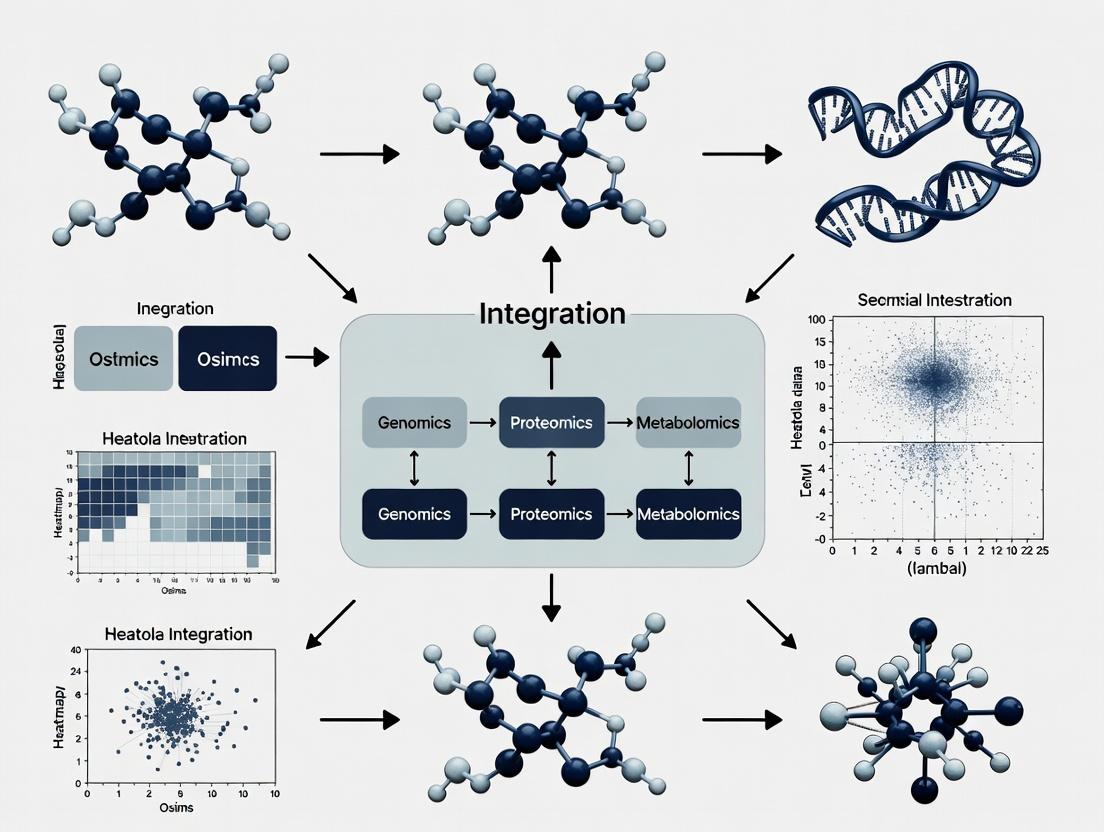
This comprehensive guide explains multi-omics data integration, the transformative approach combining genomics, transcriptomics, proteomics, and metabolomics data.
Beyond the Genome: The Ultimate Guide to Multi-Omics Data Integration in 2024
Abstract
This comprehensive guide explains multi-omics data integration, the transformative approach combining genomics, transcriptomics, proteomics, and metabolomics data. Aimed at researchers and drug development professionals, we demystify the foundational concepts, detail cutting-edge methodologies and bioinformatics tools, address common pitfalls and optimization strategies, and validate approaches through real-world applications in precision oncology and drug discovery. Learn how integrated analysis creates a holistic view of biological systems, moving beyond single-omics limitations to accelerate biomarker discovery and therapeutic development.
Decoding Complexity: What is Multi-Omics Integration and Why is it a Research Game-Changer?
1. Introduction Multi-omics data integration is the coordinated analysis of multiple, distinct biological data layers ("omes") to construct a comprehensive model of biological systems. This approach transcends the limitations of single-omics studies, enabling the discovery of novel mechanistic insights, robust biomarkers, and therapeutic targets by connecting molecular cause to functional effect.
2. The Omics Cascade: Layers of Biological Information The multi-omics universe is structured as a central dogma-informed cascade, where information flows from blueprint to function.
Diagram Title: The Central Omics Cascade
Table 1: Core Omics Layers and Their Quantitative Outputs
| Omics Layer | Molecular Entity | Key Technologies | Typical Output Scale | Temporal Dynamics |
|---|---|---|---|---|
| Genomics | DNA Sequence | WGS, WES, SNP Arrays | 3.2 billion bases (human) | Static (mostly) |
| Epigenomics | DNA/Chromatin Modifications | Bisulfite-seq, ChIP-seq, ATAC-seq | ~28M CpG sites (human) | Dynamic (hrs-days) |
| Transcriptomics | RNA Levels | RNA-seq, Single-cell RNA-seq | ~60,000 transcripts (human) | Dynamic (mins-hrs) |
| Proteomics | Protein Abundance & PTMs | LC-MS/MS, TMT/SILAC, RPPA | >20,000 proteins; >1M PTMs | Dynamic (hrs-days) |
| Metabolomics | Small Molecule Metabolites | LC/GC-MS, NMR | >20,000 predicted metabolites | Dynamic (secs-mins) |
| Microbiomics | Microbial Communities | 16S rRNA-seq, Shotgun Metagenomics | 100s-1000s of species | Dynamic (days-weeks) |
3. Core Methodologies for Multi-Omics Integration Integration strategies are categorized by their level of data fusion and analytical approach.
Diagram Title: Multi-Omics Integration Method Categories
Table 2: Quantitative Performance of Common Integration Tools
| Tool/Algorithm | Integration Type | Typical Use Case | Scalability (Features x Samples) | Key Statistical Metric |
|---|---|---|---|---|
| MOFA/MOFA+ | Intermediate (Factor) | Identifying latent sources of variation | High (100k x 10k) | Variance Explained (R²) |
| WGCNA | Late (Correlation) | Co-expression network construction | Medium (50k x 500) | Module Eigengene |
| mixOmics | Early/Intermediate | Multi-class discrimination, Dimensionality reduction | Medium (10k x 1k) | Cross-Validation Error |
| LION | Late (Knowledge) | Metabolomics-pathway integration | Knowledge-based | Enrichment Significance (p-value) |
| Multi-omics GRN | Intermediate (Bayesian) | Gene Regulatory Network inference | Computationally Intensive | Edge Confidence Score |
4. Detailed Experimental Protocol: A Representative Multi-Omics Workflow
Protocol: Integrated Transcriptomics-Proteomics-Metabolomics Profiling of Cell Line Response to Drug Treatment A. Sample Preparation (Triplicate)
- Treatment: Seed 1x10^6 cells per condition. Treat with compound vs. vehicle control for 24h.
- Harvest: Trypsinize, wash 2x with PBS. Aliquot into three equal pellets.
- Storage: Snap freeze pellets in liquid N₂. Store at -80°C for parallel omics extraction.
B. Parallel Omics Data Generation
- Transcriptomics (RNA-seq):
- Extraction: Use TRIzol reagent with DNase I treatment. QC via Bioanalyzer (RIN > 8.0).
- Library Prep: Poly-A selection, NEBNext Ultra II Directional RNA Library Prep.
- Sequencing: Illumina NovaSeq, 2x150 bp, 30M reads/sample.
Proteomics (LC-MS/MS with TMT Labeling):
- Lysis: Resuspend pellet in 8M Urea, 100mM TEAB, pH 8.5. Sonicate. Reduce/Alkylate.
- Digestion: Trypsin (1:50 w/w) overnight at 37°C. Desalt.
- Labeling: Label peptides from each sample with unique 16-plex TMTpro reagent.
- Fractionation: Pool labeled peptides, fractionate via basic pH reverse-phase HPLC.
- MS: Analyze fractions on Orbitrap Eclipse. MS1: 120k res; MS2: 50k res, HCD fragmentation.
Metabolomics (HILIC LC-MS, Untargeted):
- Extraction: Resuspend pellet in 80% ice-cold methanol. Vortex, sonicate, centrifuge (15k g, 10 min, 4°C).
- Analysis: Inject supernatant onto Acquity BEH Amide column. Elute with gradient (A: 95% ACN/20mM AmAcetate; B: 50% ACN).
- MS: Q-TOF in both positive/negative ESI mode. Data-dependent acquisition.
C. Data Processing & Integration
- Individual Omics Analysis:
- RNA-seq: Align to reference genome (STAR), quantify genes (featureCounts), Differential Expression (DESeq2, adj. p < 0.05).
- Proteomics: Database search (MaxQuant), TMT reporter ions quantification. Differential Abundance (Limma, adj. p < 0.05).
- Metabolomics: Peak picking, alignment (XCMS), annotation (METLIN). Differential Abundance (Limma).
- Integration: Use MOFA+:
- Input normalized matrices (log counts, log2 ratios, peak intensities).
- Train model to infer 5-10 latent factors.
- Interpret factors via loadings (genes/proteins/metabolites) and correlate with phenotype.
5. The Scientist's Toolkit: Key Research Reagent Solutions
| Item | Vendor Examples | Function in Multi-Omics |
|---|---|---|
| TMTpro 16-plex Kit | Thermo Fisher Scientific | Isobaric labeling for multiplexed quantitative proteomics of up to 16 samples simultaneously. |
| NEBNext Ultra II Kits | New England Biolabs | High-efficiency library preparation for next-generation sequencing (RNA/DNA). |
| Single-Cell Multiome ATAC + Gene Exp. | 10x Genomics | Simultaneous profiling of chromatin accessibility and transcriptome in single nuclei. |
| Cellular Metabolomics Extraction Kit | Biotium | Optimized solvent system for quenching metabolism and extracting polar/neutral metabolites. |
| Sera-Mag Oligo(dT) Magnetic Beads | Cytiva | Poly-A mRNA capture for transcriptomics, compatible with automation. |
| PhosSTOP/EDTA-free cOmplete | Roche/Sigma-Aldrich | Preserve phospho-proteome and prevent protein degradation during lysis. |
| PBS, Mass Spec Grade | Thermo Fisher Scientific | Ensure minimal background ion contamination for sensitive proteomics/metabolomics. |
6. Signaling Pathway Reconstruction via Multi-Omics Integration Integrated data enables mapping of active pathways from gene to metabolite.
Diagram Title: Multi-Omics Mapped Signaling Pathway
7. Conclusion and Future Directions Defining the multi-omics universe is an ongoing endeavor. Success in multi-omics integration research hinges on rigorous experimental design, standardized protocols, and sophisticated computational tools that can handle the scale, noise, and biological complexity of these interconnected data layers. The future lies in real-time integration, single-cell multi-omics, and the incorporation of spatial technologies, moving ever closer to a complete, predictive digital model of the cell.
1. Introduction: The Multi-Omics Imperative
Multi-omics data integration research is the systematic effort to combine, analyze, and interpret heterogeneous datasets from diverse molecular layers—such as genomics, transcriptomics, proteomics, metabolomics, and epigenomics. The core thesis posits that biological function emerges from the complex interactions between these layers, and therefore, a unified narrative cannot be derived from any single 'omics' modality in isolation. The central challenge lies in overcoming the technical, computational, and biological disparities between these data silos to construct a coherent, systems-level model of biological state and function.
2. The Data Silo Landscape: Sources and Disparities
The following table summarizes the core quantitative characteristics of major omics modalities, highlighting the sources of integration complexity.
Table 1: Comparative Overview of Major Omics Data Modalities
| Modality | Key Measurement | Typical Technology | Throughput | Dynamic Range | Temporal Resolution |
|---|---|---|---|---|---|
| Genomics | DNA Sequence & Variation | NGS (WGS, WES) | Very High (Billions of reads) | Static (Diploid) | Static/Low |
| Epigenomics | DNA Methylation, Chromatin Accessibility | Bisulfite-seq, ATAC-seq | High | ~3-4 orders of magnitude | Medium-High |
| Transcriptomics | RNA Abundance (Coding & Non-coding) | RNA-seq, scRNA-seq | Very High | ~5 orders of magnitude | High |
| Proteomics | Protein Abundance & Modification | LC-MS/MS, TMT | Medium | ~4-5 orders of magnitude | Medium |
| Metabolomics | Small-Molecule Metabolite Levels | LC/GC-MS, NMR | Low-Medium | ~3-6 orders of magnitude | Very High |
3. Foundational Methodologies for Data Integration
3.1. Early Integration (Data-Level) This approach merges raw or pre-processed data from multiple omics into a single composite dataset for joint analysis.
- Protocol: Concatenation-Based Integration for Multi-Omics Clustering.
- Data Preprocessing: Independently normalize each omics matrix (e.g., gene counts, protein intensities) using modality-specific methods (e.g., DESeq2 for RNA-seq, vsn for proteomics).
- Feature Selection: Perform variance-stabilizing selection (e.g., top 1000 most variable features) per modality to reduce dimensionality and noise.
- Scaling & Concatenation: Scale selected features from each matrix to have zero mean and unit variance (Z-score). Horizontally concatenate the scaled matrices into a unified sample-by-(omics features) matrix
M_combined. - Joint Analysis: Apply unsupervised learning algorithms (e.g., Similarity Network Fusion (SNF), multi-omics k-means) directly on
M_combinedto identify novel sample stratifications.
3.2. Intermediate Integration (Feature-Level) This method models relationships between latent variables inferred from each dataset.
- Protocol: Multi-Omics Factor Analysis (MOFA/MOFA+).
- Model Setup: Prepare omics datasets
{X_1, X_2, ..., X_M}forNshared samples. Specify likelihoods (e.g., Gaussian for continuous, Bernoulli for methylation). - Factorization: The model decomposes each data view as
X_m = Z W_m^T + ε_m, whereZis the shared matrix of latent factors across all omics,W_mare view-specific weights, andε_mis noise. - Training: Use variational inference to estimate parameters, automatically learning the number of active factors.
- Interpretation: Correlate latent factors (
Z) with sample metadata (e.g., clinical outcome) and examine top-weighted features (W_m) per factor and omics view to derive biological insights.
- Model Setup: Prepare omics datasets
3.3. Late Integration (Decision-Level) Analyses are performed separately, and results are integrated at the level of predictions or statistical inferences.
- Protocol: Bayesian Integrative Analysis for Biomarker Discovery.
- Independent Analysis: For each omics dataset, perform differential analysis (e.g., DESeq2 for RNA-seq, limma for proteomics) comparing experimental conditions.
- Result Harmonization: Extract p-values, effect sizes (e.g., log2 fold-change), and feature identifiers (e.g., gene symbols). Map all identifiers to a common namespace (e.g., official gene symbol).
- Bayesian Meta-Analysis: For each mapped gene, combine evidence across omics layers using a Bayesian framework. Model:
P(H|D) ∝ P(D_genomics|H) * P(D_transcriptomics|H) * P(D_proteomics|H) * P(H), whereHis the hypothesis of differential activity. - Decision Fusion: Rank genes by their posterior probability of being consistently altered across multiple omics levels, generating a robust multi-omics biomarker signature.
4. Visualizing the Integration Pathway
Diagram Title: Multi-Omics Data Integration Conceptual Workflow
5. A Case Study: Integrating Signaling Pathways
A unified narrative often requires mapping multi-omic perturbations onto known biological pathways. Below is a simplified signaling pathway diagram derived from integrated genomic (mutations), transcriptomic (gene expression), and phospho-proteomic data.
Diagram Title: Integrated Multi-Omics View of PI3K-AKT-mTOR Signaling
6. The Scientist's Toolkit: Key Research Reagent Solutions
Table 2: Essential Reagents and Tools for Multi-Omics Integration Studies
| Item | Category | Function in Multi-Omics Workflow |
|---|---|---|
| Single-Cell Multi-Omic Kits (e.g., 10x Genomics Multiome ATAC + Gene Exp.) | Wet-lab Reagent | Enables simultaneous assay of chromatin accessibility (epigenomics) and gene expression (transcriptomics) from the same single cell, providing intrinsically paired data. |
| Tandem Mass Tag (TMT) Reagents | Proteomics Reagent | Allows multiplexed quantitative analysis of up to 18 proteomes in a single LC-MS/MS run, reducing batch effects and enabling direct comparison across conditions for integration. |
| Cell Signaling Multiplex Panels (Luminex/LEGENDplex) | Immunoassay | Quantifies dozens of proteins (cytokines, phospho-proteins) from minute sample volumes, providing mid-throughput proteomic data linkable to transcriptomic reads. |
| Reference Databases (e.g., STRING, KEGG, Reactome) | Bioinformatics Resource | Provide prior knowledge networks of protein-protein interactions and pathway relationships, essential for interpreting and connecting features from disparate omics layers. |
| Integration Software Packages (e.g., MOFA+, mixOmics, MultiAssayExperiment in R) | Computational Tool | Provide standardized, statistically rigorous frameworks for implementing intermediate and late integration methods, ensuring reproducibility. |
| Synthetic Spike-In Standards (e.g., SIRVs for RNA-seq, UPS2 for proteomics) | Quality Control Reagent | Added to samples before processing to technically monitor and correct for platform-specific biases and detection limits across assays. |
7. Conclusion
Transitioning from data silos to a unified biological narrative is the defining challenge and opportunity of modern biology. Successful multi-omics data integration research requires a concerted cycle of experimental design that prioritizes matched samples, methodological selection appropriate to the biological question, and interpretation grounded in prior knowledge. By systematically applying the protocols, visualizations, and tools outlined herein, researchers can move beyond correlative lists to construct causative, mechanistic models that accelerate therapeutic discovery and precision medicine.
Multi-omics data integration research is the interdisciplinary field dedicated to developing and applying computational and statistical methods to combine diverse biological data sets (genomics, transcriptomics, proteomics, metabolomics, etc.) to construct comprehensive models of biological systems. This whitepaper delineates the two principal integration paradigms—vertical and horizontal—and situates them within the ultimate goal of achieving a predictive, systems-level understanding of biology, crucial for advancing biomarker discovery and therapeutic development.
Biological systems are inherently multi-layered. The central dogma (DNA → RNA → Protein) is an oversimplification of a dynamic, regulated network with extensive feedback and cross-talk. Multi-omics integration research seeks to move beyond single-data-type analysis to capture this complexity. The core challenge is methodological: how to effectively fuse heterogeneous, high-dimensional, and noisy data types measured across different scales and cohorts to yield biologically and clinically actionable insights.
Core Integration Paradigms
Two fundamental architectural strategies have emerged: Horizontal and Vertical Integration.
Horizontal Integration (Data-Level)
Horizontal integration, also called "late integration" or "concatenation-based integration," involves combining multiple omics datasets from the same set of biological samples. The data matrices (e.g., gene expression, protein abundance) are aligned by sample ID and often concatenated into a single, wide feature matrix for downstream analysis.
- Objective: To find coordinated patterns (clusters, dimensions) that span multiple molecular layers within a defined cohort.
- Typical Use Case: Stratifying patient tumors into distinct molecular subtypes using combined genomic, epigenomic, and proteomic profiles from the same biopsy.
- Key Methods: Multi-omics Factor Analysis (MOFA), Similarity Network Fusion (SNF), multiple kernel learning, and integrated clustering approaches.
Vertical Integration (Model-Level)
Vertical integration, or "early integration," focuses on modeling the flow of biological information across different omics layers for the same biological entity (e.g., a gene locus or a pathway). It prioritizes biological causality and regulatory mechanisms.
- Objective: To understand how variation at one level (e.g., genomic mutation) propagates to influence downstream layers (e.g., transcriptomic, proteomic, phenotypic outcomes).
- Typical Use Case: Identifying cis-regulatory mechanisms (eQTLs, pQTLs) or modeling the impact of a driver mutation on pathway activity and drug response.
- Key Methods: Bayesian networks, mechanistic modeling, multi-optic Quantitative Trait Locus (molQTL) mapping, and pathway-centric enrichment analyses.
Table 1: Horizontal vs. Vertical Integration: A Comparative Overview
| Feature | Horizontal Integration | Vertical Integration |
|---|---|---|
| Core Principle | Combine across omics by sample | Link omics layers by biological entity |
| Data Alignment | Samples (rows) aligned, features (columns) concatenated | Features (e.g., genes) aligned across layers for same sample/cohort |
| Primary Goal | Discovery of cross-omic patterns, subtypes, and biomarkers | Elucidation of mechanistic relationships and causal drivers |
| Temporal Aspect | Generally static/snapshot | Can incorporate directional or causal flow (e.g., genome → phenome) |
| Typical Output | Integrated patient clusters, multi-omics signatures | Regulatory networks, causal inference models, mechanistic hypotheses |
| Strengths | Holistic view of system state; powerful for stratification. | Provides biological interpretability and testable causal hypotheses. |
| Challenges | High dimensionality; difficult to separate correlation from causation. | Requires precise biological alignment; sensitive to missing data. |
Experimental Protocols for Key Integration Studies
Protocol for a Horizontal Integration Study: Multi-Omics Subtyping of Cancer
Objective: To identify novel molecular subtypes of breast cancer using matched DNA methylation, RNA-seq, and proteomics data from tumor biopsies.
- Sample Preparation: Extract high-quality DNA, RNA, and protein from the same tumor tissue core using a trizol-based or sequential extraction kit. Include matched normal adjacent tissue controls.
- Data Generation:
- DNA Methylation: Process using Illumina Infinium MethylationEPIC BeadChip. Perform normalization (ssNoob) and β-value calculation.
- RNA-seq: Prepare libraries with poly-A selection. Sequence on an Illumina platform (minimum 30M paired-end reads). Align to reference genome (STAR) and quantify gene expression (featureCounts).
- Proteomics: Perform data-independent acquisition (DIA) mass spectrometry on trypsin-digested peptides. Use a spectral library for identification and quantification (Spectronaut or DIA-NN).
- Preprocessing: For each dataset, remove low-variance features, perform batch correction (ComBat), and log-transform where appropriate (e.g., RNA-seq counts, proteomics intensities).
- Integration & Analysis: Apply Similarity Network Fusion (SNF):
- Construct patient similarity networks for each omics data type separately using a chosen metric (e.g., Euclidean distance).
- Fuse networks iteratively via a nonlinear message-passing process to create a single integrated network.
- Apply spectral clustering on the fused network to identify patient clusters (subtypes).
- Validation: Assess cluster robustness via silhouette width and survival analysis (Kaplan-Meier curves, log-rank test) using an independent validation cohort.
Protocol for a Vertical Integration Study: Mapping Proteomic Quantitative Trait Loci (pQTLs)
Objective: To identify genetic variants that influence plasma protein abundance levels, linking genomic variation to the functional proteome.
- Cohort & Genotyping: Utilize a population cohort with whole-genome sequencing (WGS) or dense genotyping array data. Perform standard QC: call rate >98%, Hardy-Weinberg equilibrium p > 1e-6, minor allele frequency (MAF) > 1%.
- Proteomic Profiling: Measure protein levels in plasma using a high-throughput aptamer-based platform (e.g., SomaScan) or multiplexed immunoassay (e.g., Olink). Normalize data using internal controls and correct for technical covariates.
- Covariate Adjustment: Regress out effects of age, sex, genetic principal components (PCs), and batch from the normalized protein abundances to obtain residuals.
- Statistical Mapping: Perform matrixQTL or PLINK analysis:
- For each protein (residuals as phenotype) and each genetic variant within a 1 Mb cis-window of the protein's encoding gene, fit a linear model:
Protein ~ Genotype + Covariates. - Apply Storey's q-value method for multiple testing correction to identify significant cis-pQTLs (FDR < 0.05).
- For each protein (residuals as phenotype) and each genetic variant within a 1 Mb cis-window of the protein's encoding gene, fit a linear model:
- Validation & Triangulation: Replicate findings in an independent cohort. Use Mendelian randomization or colocalization analysis (e.g., with COLOC) to assess shared causality with transcriptomic (eQTL) data or disease endpoints.
Visualizing the Pathways and Workflows
Diagram Title: Horizontal and Vertical Integration Workflows
Diagram Title: The Quest for Systems Biology: An Integrated Pipeline
The Scientist's Toolkit: Research Reagent Solutions
Table 2: Essential Reagents & Kits for Multi-Omics Sample Preparation
| Item | Function in Multi-Omics Research | Key Considerations |
|---|---|---|
| AllPrep DNA/RNA/Protein Kit (Qiagen) | Simultaneous purification of genomic DNA, total RNA, and protein from a single biological sample. | Preserves molecular integrity for all analytes; critical for ensuring perfect sample matching in vertical integration studies. |
| TRIzol/ TRI Reagent | Monophasic solution for sequential isolation of RNA, DNA, and proteins from cell/tissue lysates. | Cost-effective and widely validated, but requires careful phase separation and may involve more hands-on time. |
| Single-Cell Multiome ATAC + Gene Expression Kit (10x Genomics) | Enables concurrent profiling of chromatin accessibility (ATAC-seq) and gene expression (RNA-seq) from the same single cell. | Enables vertical integration at the single-cell level, linking regulatory landscape to transcriptional output. |
| SomaScan Plasma Protein Assay (SomaLogic) | Aptamer-based platform for measuring ~7,000 human protein analytes from small volumes of plasma or serum. | Provides the high-throughput proteomic data essential for population-scale pQTL studies (vertical integration). |
| Olink Target 96 or Explore Panels | Proximity Extension Assay (PEA) technology for high-specificity, multiplex quantification of proteins in biofluids. | Offers high sensitivity and specificity, suitable for low-abundance biomarker discovery in clinical cohorts. |
| Cell Signaling TotalSeq Antibodies (BioLegend) | Oligo-conjugated antibodies for measuring surface or intracellular proteins alongside transcriptome in single-cell RNA-seq (CITE-seq/REAP-seq). | Facilitates horizontal integration of protein and RNA data at single-cell resolution within the same experiment. |
Horizontal and vertical integration are not competing strategies but complementary approaches within multi-omics data integration research. Horizontal integration provides a panoramic, static view of system states, ideal for classification and biomarker discovery. Vertical integration drills down to establish mechanistic, often causal, links between molecular layers. The true quest for systems biology lies in the iterative cycling between these paradigms: using horizontal discovery to generate hypotheses about novel subtypes, which are then mechanistically deconstructed using vertical integration, ultimately feeding into predictive, multi-scale models of health and disease. This integrative loop is foundational to the future of precision medicine and rational drug development.
Within the transformative field of multi-omics data integration research, the shift from hypothesis-driven inquiry to unbiased, data-driven discovery represents a fundamental paradigm shift. This approach leverages high-throughput technologies and advanced computational methods to generate novel insights from complex biological systems without a priori assumptions, accelerating biomarker identification and therapeutic target discovery.
The Data-Driven Multi-Omics Integration Pipeline
Modern unbiased discovery relies on the systematic generation and integration of multiple omics layers. The quantitative scale of data involved is substantial.
Table 1: Scale and Sources in Contemporary Multi-Omics Studies
| Omics Layer | Typical Measurement Technology | Approx. Features per Sample | Key Output Measured |
|---|---|---|---|
| Genomics | Whole Genome Sequencing (WGS) | 3-5 million SNPs/Indels | Genetic variation, mutations |
| Transcriptomics | Bulk/Single-cell RNA-seq | 20,000-60,000 genes/transcripts | Gene expression levels |
| Proteomics | Mass Spectrometry (TMT/LFQ) | 3,000-10,000 proteins | Protein abundance, PTMs |
| Metabolomics | LC-MS/GC-MS NMR | 100-1,000 metabolites | Small molecule abundance |
| Epigenomics | ATAC-seq, ChIP-seq, Bisulfite-seq | 100,000s peaks/sites | Chromatin accessibility, methylation |
Core Experimental Protocols for Unbiased Discovery
Protocol 1: Cross-Omic Sample Preparation for Integrative Analysis
Objective: To generate matched genomic, transcriptomic, and proteomic data from a single biological specimen (e.g., tumor biopsy).
- Tissue Partitioning & Lysis: Snap-frozen tissue is cryo-pulverized. Powder is divided into aliquots in DNA/RNA Shield, RIPA buffer (with protease inhibitors), and metabolomics stabilization solution.
- Parallel Nucleic Acid & Protein Extraction:
- DNA/RNA: Use a dual-prep kit (e.g., AllPrep). Homogenize in RLT Plus buffer, pass through an AllPrep DNA column. Flow-through is mixed with ethanol for binding RNA to a separate column. DNA and RNA are eluted separately.
- Proteins: The remaining tissue powder in RIPA is sonicated (3x10s pulses, 30% amplitude). Lysate is centrifuged at 14,000g for 15 min at 4°C. Supernatant is quantified via BCA assay.
- Library Preparation & Sequencing:
- DNA: 100ng input for WGS library prep (enzymatic fragmentation, end-repair, A-tailing, adapter ligation, PCR amplification).
- RNA:
- For bulk: 500ng input for poly-A selection and stranded cDNA library prep.
- For single-cell: Generate single-cell suspensions, target 10,000 cells for 10x Genomics 3' v4 chemistry.
- Mass Spectrometry Proteomics:
- 50µg protein per sample is reduced (DTT), alkylated (IAA), and digested with trypsin (1:50 ratio) overnight at 37°C.
- Peptides are labeled with TMTpro 16plex reagent, pooled, and fractionated by high-pH reverse-phase HPLC into 24 fractions.
- LC-MS/MS analysis on an Orbitrap Eclipse with a 120min gradient.
Protocol 2: Single-Cell Multi-Omics (CITE-seq)
Objective: Simultaneously capture transcriptome and surface protein data from single cells.
- Cell Preparation: Generate a single-cell suspension from fresh tissue (dissociation enzyme cocktail, 37°C, 15-30 min). Pass through a 40µm strainer. Stain with 1-2µL of TotalSeq-B antibody cocktail (containing ~100 barcoded antibodies) per million cells for 30 min on ice.
- Washing & Loading: Wash cells 3x with PBS + 0.04% BSA. Count and assess viability (>90%). Load cells onto a 10x Genomics Chromium Chip B to target 10,000 cells.
- GEM Generation & Library Prep: Follow manufacturer's protocol. GEMs undergo RT, after which cDNA is purified and split for separate library constructions:
- Gene Expression Library: Amplify cDNA, fragment, and add sample index via PCR.
- Antibody-Derived Tag (ADT) Library: Amplify the antibody-derived tags from the cDNA pool using a separate primer set.
- Sequencing: Pool libraries and sequence on an Illumina NovaSeq (28/10/10/90 cycle configuration for ADT index/ADT read/GEX index/GEX read).
Visualizing the Data-Driven Workflow and Integration Logic
Workflow for Unbiased Multi-Omic Discovery
Multi-Omic Data Integration Method Pathways
The Scientist's Toolkit: Research Reagent Solutions
Table 2: Essential Reagents & Kits for Data-Driven Multi-Omic Studies
| Item | Function in Protocol | Example Product/Catalog |
|---|---|---|
| Dual DNA/RNA Purification Kit | Simultaneous extraction of high-quality genomic DNA and total RNA from a single sample, minimizing sample variability. | Qiagen AllPrep DNA/RNA/miRNA Universal Kit |
| Tandem Mass Tag (TMT) Reagents | Multiplexed isobaric labeling for quantitative proteomics, enabling comparison of up to 16 samples in a single MS run. | Thermo Fisher TMTpro 16plex Label Reagent Set |
| Single-Cell Antibody Cocktail (CITE-seq) | Oligo-tagged antibodies for measuring surface protein abundance alongside transcriptome in single cells. | BioLegend TotalSeq-B Human Universal Cocktail |
| Single-Cell 3' GEX Kit v4 | Generation of gel bead-in-emulsions (GEMs) and libraries for single-cell RNA-seq gene expression profiling. | 10x Genomics Chromium Next GEM Single Cell 3' Kit v3.1 |
| High-Throughput NGS Library Prep Kit | Fast, automated library construction for whole-genome sequencing from low-input DNA. | Illumina DNA Prep with Enrichment |
| SP3 Paramagnetic Beads | Efficient, detergent-free protein clean-up and digestion for proteomics, compatible with automated workflows. | Cytiva SpeedBeads Magnetic Carboxylate Modified Particles |
| Cell Dissociation Enzyme | Gentle tissue dissociation for generating viable single-cell suspensions from complex tissues. | Miltenyi Biotec GentleMACS Human Tumor Dissociation Kit |
| LC-MS Grade Solvents | Ultra-pure solvents for metabolomics and proteomics LC-MS to minimize background noise and ion suppression. | Honeywell LC-MS CHROMASOLV Water & Acetonitrile |
Abstract: The integration of multi-omics data—genomics, transcriptomics, proteomics, metabolomics—is revolutionizing the path from biomarker discovery to mechanistic disease understanding. This whitepaper provides a technical guide to the core methodologies, experimental protocols, and analytical frameworks driving this transformation, contextualized within the broader thesis of multi-omics integration research.
Multi-omics data integration research is predicated on the thesis that a holistic, systems-level view of biological systems, achieved by computationally and statistically combining diverse molecular data layers, yields insights unattainable through single-omics studies. This approach is essential for disentangling complex disease etiologies, identifying robust biomarkers, and uncovering novel therapeutic targets.
Core Integration Strategies & Quantitative Impact
The choice of integration strategy is dictated by the biological question and data types. The performance of these methods is quantitatively benchmarked using metrics such as accuracy in predicting clinical outcomes, number of novel disease subtypes identified, and validation rates of discovered biomarkers.
Table 1: Comparison of Primary Multi-Omics Integration Strategies
| Strategy | Description | Key Algorithms/Tools | Typical Use Case | Reported Performance Gain vs. Single-Omics |
|---|---|---|---|---|
| Early Integration | Raw or pre-processed data concatenated before analysis. | Standard ML (Random Forest, SVM), Deep Neural Networks. | Predictive modeling with abundant samples. | +15-25% in clinical outcome prediction accuracy. |
| Intermediate Integration | Separate analysis followed by fusion of lower-dimensional representations. | Multi-Omics Factor Analysis (MOFA), Similarity Network Fusion (SNF). | Discovery of coordinated molecular patterns and patient stratification. | Identifies 2-4 novel, clinically relevant disease subtypes. |
| Late Integration | Separate analyses with results combined at decision/interpretation level. | Bayesian frameworks, Ensemble methods, P-value aggregation. | Biomarker signature validation and causal inference. | Increases biomarker validation rate by ~30%. |
Experimental Protocol: A Longitudinal Multi-Omics Cohort Study
This protocol outlines a standard workflow for an integrated biomarker discovery study.
A. Study Design & Sample Collection:
- Cohort: Recruit a prospective cohort (e.g., N=500) of patients and matched healthy controls.
- Biospecimens: Collect primary tissue (e.g., tumor biopsies) and liquid biopsies (blood, plasma, serum) at diagnosis and key timepoints (e.g., post-treatment).
- Aliquoting: Immediately aliquot samples to minimize freeze-thaw cycles. Store at -80°C or in liquid nitrogen.
B. Multi-Omics Data Generation:
- Genomics (DNA from tissue/blood): Perform Whole Genome Sequencing (WGS) or Whole Exome Sequencing (WES) to identify somatic mutations, copy number variations (CNVs), and structural variants. Use Illumina NovaSeq platforms. Average coverage: 30x (WGS) / 100x (WES).
- Transcriptomics (RNA from tissue): Conduct bulk or single-cell RNA-Seq (scRNA-Seq). For bulk, use Illumina platforms targeting 50 million reads/sample. For scRNA-Seq, employ 10x Genomics Chromium system.
- Proteomics & Phosphoproteomics (Tissue/Plasma): Perform data-independent acquisition (DIA) mass spectrometry (e.g., on a Thermo Fisher Orbitrap Eclipse) for deep, quantitative profiling. Enrich phosphopeptides using TiO₂ or IMAC kits.
- Metabolomics (Plasma/Serum): Apply both targeted (LC-MS/MS with authentic standards) and untargeted (high-resolution LC-MS) platforms.
C. Data Preprocessing & Integration:
- Bioinformatic Processing: Use established pipelines (GATK for genomics, STAR/Kallisto for RNA-Seq, DIA-NN for proteomics, XCMS for metabolomics).
- Intermediate Integration via MOFA2:
- Input: Matrices of mutations (binary), gene expression (normalized counts), protein abundance (log2 intensities), metabolite levels (scaled).
- Run MOFA2 to decompose data into a set of latent factors that capture shared and specific sources of variation across omics layers.
- Correlate factors with clinical metadata to interpret biology.
Visualizing Integrated Workflows and Pathways
Title: Multi-Omics Integration Analysis Workflow
Title: Integrated Pathway Inference from Multi-Omics Data
The Scientist's Toolkit: Essential Research Reagent Solutions
Table 2: Key Reagents & Kits for Multi-Omics Studies
| Item | Function | Example Product/Kit |
|---|---|---|
| PAXgene Blood RNA Tube | Stabilizes intracellular RNA in blood samples for transcriptomic studies, preserving gene expression profiles. | BD PAXgene Blood RNA Tubes |
| Streptavidin Magnetic Beads | Critical for immunoprecipitation and pull-down assays in protein-protein interaction studies and target validation. | Dynabeads Streptavidin |
| Phosphopeptide Enrichment Kit | Selective enrichment of phosphorylated peptides from complex digests for deep phosphoproteomic profiling. | Thermo Fisher TiO₂ Mag Sepharose Kit |
| Single-Cell 3' Gel Bead Kit | Enables partitioning and barcoding of single cells for transcriptome analysis in droplet-based scRNA-Seq. | 10x Genomics Chromium Next GEM Kit |
| Plasma/Serum Metabolome Kit | Depletes proteins and extracts metabolites from biofluids with high recovery and reproducibility for metabolomics. | Biocrates AbsoluteIDQ p400 HR Kit |
| Multi-Omics Tissue Homogenizer | Provides rapid, uniform disruption of tough tissues while keeping RNA, DNA, and proteins intact for co-extraction. | Bertin Instruments Precellys Homogenizer |
The Integration Toolkit: A 2024 Guide to Methods, Workflows, and Practical Applications
Multi-omics data integration research aims to combine diverse biological data layers—genomics, transcriptomics, proteomics, metabolomics—to construct a comprehensive model of biological systems. This paradigm is essential for unraveling complex disease mechanisms and identifying robust therapeutic targets. The fundamental architectural decision in this workflow is the choice between Early (Data-Level) Integration and Late (Model-Level) Integration. This guide provides a technical framework for selecting the appropriate strategy based on experimental design and analytical goals.
Core Strategies: Definitions and Technical Foundations
Early Integration (Data-Level Fusion)
In early integration, heterogeneous omics datasets are combined into a single, unified data matrix before model building. This requires extensive preprocessing to normalize, scale, and transform disparate data types into a compatible format.
Late Integration (Model-Level Fusion)
Late integration involves building separate models or performing separate analyses on each omics dataset independently. The results (e.g., learned features, statistical scores, predicted labels) are then integrated at the decision or interpretation level.
Quantitative Comparison of Integration Strategies
The following table summarizes the key computational and practical characteristics of each approach, synthesized from current benchmarking studies.
Table 1: Strategic Comparison of Early vs. Late Integration
| Characteristic | Early Integration | Late Integration |
|---|---|---|
| Data Handling | Raw or preprocessed data matrices concatenated. | Each dataset processed independently; results combined. |
| Dimensionality | Very high, prone to the "curse of dimensionality." | Manages dimensionality within each modality separately. |
| Handling Heterogeneity | Challenging; requires sophisticated normalization. | Easier; modality-specific processing is applied. |
| Model Complexity | Single, often complex model (e.g., deep neural network). | Multiple simpler models or ensemble methods. |
| Interpretability | Can be low; difficult to disentangle modality-specific signals. | Higher; modality-specific contributions remain clearer. |
| Optimal Use Case | Strong inter-modal correlations; ample sample size. | Weak correlations between modalities; distinct data structures. |
| Key Challenge | Noise propagation across modalities. | Designing a robust framework for combining disparate results. |
Table 2: Performance Metrics from Benchmarking Studies (Hypothetical Data)
| Study Focus | Early Integration Method | Late Integration Method | Reported Accuracy | Key Limitation Noted |
|---|---|---|---|---|
| Cancer Subtype Classification | Concatenation + PCA + SVM | Kernel Fusion | 89.2% | Early: Sensitivity to batch effects |
| Drug Response Prediction | Stacked Autoencoders | Similarity Network Fusion | 82.5% | Late: Loss of direct feature interaction |
| Patient Survival Stratification | Partial Least Squares | Multi-Kernel Learning | 76.8% | Early: Lower performance on sparse data |
Detailed Experimental Protocols
Protocol 4.1: Implementing Early Integration via Concatenation & Dimensionality Reduction
Objective: To integrate transcriptomics (RNA-Seq) and proteomics (LC-MS) data for sample classification.
Materials: Normalized count matrix (RNA-Seq), Log2-transformed intensity matrix (LC-MS), Standardized computational environment (R/Python).
Procedure:
- Preprocessing: Perform quantile normalization on each dataset separately to adjust for technical variation.
- Feature Selection: Apply variance-stable selection (e.g., top 2000 variable features per modality).
- Scaling: Standardize each feature (mean=0, variance=1) across samples within each dataset.
- Concatenation: Horizontally merge the two scaled matrices by sample ID to create a unified matrix
[Sample x (Features_RNA + Features_Protein)]. - Dimensionality Reduction: Apply Principal Component Analysis (PCA) or non-linear methods (t-SNE, UMAP) to the unified matrix.
- Downstream Analysis: Use derived components for clustering (e.g., k-means) or classification (e.g., random forest).
Protocol 4.2: Implementing Late Integration via Similarity Network Fusion (SNF)
Objective: To integrate epigenetic (DNA methylation) and transcriptomic data for discovering disease subgroups.
Materials: Beta-value matrix (Methylation), Normalized expression matrix (RNA-Seq), SNFtool R package.
Procedure:
- Construct Modality-Specific Similarity Networks:
- For each data modality, calculate a patient-to-patient similarity matrix (e.g., using Euclidean distance).
- Convert each distance matrix into a normalized, sparse similarity graph (KNN-based), resulting in graphs
W_methylationandW_expression.
- Fuse Networks Iteratively:
- Use the SNF algorithm to iteratively update each graph so that it reflects information from the other graph.
- The fusion equation for two networks is:
W_fused = W_expression * S * W_methylation^T + W_methylation * S * W_expression^T, whereSis a normalization matrix. This is performed iteratively until convergence.
- Cluster the Fused Network:
- Apply spectral clustering on the final fused similarity matrix
W_fusedto obtain sample clusters.
- Apply spectral clustering on the final fused similarity matrix
- Validation: Evaluate cluster robustness and biological relevance using survival analysis or known clinical labels.
Visualizations
Diagram 1: Multi-Omics Integration Decision Flow
Diagram 2: Similarity Network Fusion (SNF) Workflow
The Scientist's Toolkit: Essential Research Reagents & Solutions
Table 3: Key Reagents and Computational Tools for Multi-Omics Integration
| Item / Solution | Function / Purpose | Example in Protocol |
|---|---|---|
| Quantile Normalization Script | Aligns statistical distributions across samples within a dataset, making them comparable. | Preprocessing step in Protocol 4.1 to remove technical bias. |
| Variance-Stabilizing Selection Algorithm | Identifies informative features (genes/proteins) with high biological variability, reducing noise. | Feature selection prior to concatenation in Protocol 4.1. |
| Z-Score Standardization Module | Scales features to a common mean and variance, preventing high-variance modalities from dominating the model. | Data scaling step within each modality. |
| Similarity Network Fusion (SNF) Toolbox | A computational package specifically designed to perform late integration via network fusion. | Core algorithm for Protocol 4.2 (e.g., SNFtool in R). |
| Spectral Clustering Library | Clustering algorithm effective for identifying community structures within graphs or similarity matrices. | Used to cluster the final fused network in Protocol 4.2. |
| Multi-Kernel Learning (MKL) Framework | A late integration method that optimally combines kernel matrices built from different data types for prediction. | Alternative to SNF for supervised tasks in Table 2. |
The choice between early and late integration is not universally optimal but is contingent upon the biological question, data quality, and sample size. Early integration is powerful for capturing direct interactions between molecular layers but demands rigorous preprocessing and large n. Late integration offers flexibility and preserves data structure integrity, making it robust for exploratory analysis of heterogeneous data. In practice, a hybrid or intermediate approach often emerges as the most pragmatic solution within the iterative scope of multi-omics research.
Multi-omics data integration research aims to holistically understand biological systems by combining diverse molecular data layers (genomics, transcriptomics, proteomics, metabolomics, etc.). This integration is pivotal for elucidating complex disease mechanisms, identifying robust biomarkers, and accelerating therapeutic discovery. However, the high dimensionality, heterogeneity, noise, and differing scales of omics datasets present formidable computational challenges. This whitepaper details three advanced computational methods—Multi-Kernel Learning (MKL), Graph Neural Networks (GNNs), and AI-driven fusion architectures—that are critical for effective multi-omics integration within a modern research thesis framework.
Core Methodologies & Protocols
Multi-Kernel Learning (MKL) for Heterogeneous Data Fusion
MKL provides a principled framework for integrating disparate data types by constructing a separate kernel (similarity matrix) for each omics view and then optimally combining them.
Experimental Protocol for MKL-Based Integration:
- Data Preprocessing: For each omics dataset (e.g., RNA-seq, methylation arrays, somatic mutations), perform platform-specific normalization, missing value imputation, and feature scaling.
- Kernel Construction: Define a kernel function ( K_m ) for each omics modality ( m ). Common choices include:
- Linear Kernel: ( K(xi, xj) = xi^T xj )
- Gaussian RBF Kernel: ( K(xi, xj) = \exp(-\gamma ||xi - xj||^2) )
- Polynomial Kernel: ( K(xi, xj) = (xi^T xj + c)^d )
- Kernel Combination: Learn an optimal weighted combination of the base kernels: ( K{combined} = \sum{m=1}^{M} \betam Km ), with ( \betam \geq 0 ) and often ( \sum \betam = 1 ). Optimization can use heuristic methods, multiple kernel learning with a regularizer (e.g., ( ||\beta||_p )), or supervised learning objectives.
- Model Training: Employ the combined kernel in a kernel-based machine learning algorithm (e.g., Support Vector Machine for classification, Kernel Ridge Regression for survival prediction).
- Validation: Use stratified cross-validation, ensuring patient samples are not split across training and test sets for different omics views.
Diagram Title: Multi-Kernel Learning Integration Workflow
Graph Neural Networks (GNNs) for Structured Biological Data
GNNs operate directly on graph structures, making them ideal for integrating omics data with prior biological knowledge networks (e.g., protein-protein interaction, gene regulatory pathways).
Experimental Protocol for GNN-Based Multi-Omics Analysis:
- Graph Construction:
- Nodes: Represent biological entities (e.g., genes, proteins, metabolites).
- Node Features: Encode multi-omics measurements as feature vectors for each node (e.g., mutation status, expression, methylation).
- Edges: Define based on known interactions from databases like STRING, KEGG, or Reactome.
- Model Architecture: Implement a GNN model (e.g., Graph Convolutional Network, Graph Attention Network).
- Message Passing: For each node, aggregate feature information from its neighbors. A simple update for node ( v ) at layer ( l ) is: ( hv^{(l)} = \sigma ( W^{(l)} \cdot \text{AGGREGATE}({ hu^{(l-1)}, \forall u \in \mathcal{N}(v) } ) ) ), where ( h_v ) is the node embedding, ( \mathcal{N} ) is the set of neighbors, and ( \sigma ) is a non-linear activation.
- Readout & Prediction: After ( L ) layers, use a pooling function (e.g., global mean) to generate a graph-level embedding for tasks like patient outcome prediction, or use node-level embeddings for tasks like gene prioritization.
- Training: Use task-specific loss (e.g., cross-entropy for classification) and train with backpropagation.
Diagram Title: GNN Message Passing Between Two Layers
AI-Driven Fusion Architectures
These are end-to-end deep learning models designed to learn joint representations from raw or processed multi-omics inputs.
Experimental Protocol for a Deep Fusion Autoencoder:
- Input: Aligned multi-omics vectors per sample (e.g., concatenated or as separate channels).
- Encoder: A neural network (often with omics-specific subnetworks) compresses the input into a low-dimensional latent representation ( z ). ( z = f\text{encoder}(x\text{geno}, x\text{trans}, x\text{prot}; \theta) ).
- Bottleneck: The latent space ( z ) is the integrated, compressed representation used for downstream tasks.
- Decoder: The network reconstructs the original input from ( z ). ( \hat{x} = f_\text{decoder}(z; \phi) ).
- Training: Minimize a composite loss: ( \mathcal{L} = \mathcal{L}\text{reconstruction} + \lambda \mathcal{L}\text{task} ), where the task loss (e.g., classification) is applied directly to ( z ), forcing it to be informative.
- Validation: Performance is evaluated on held-out test sets for both reconstruction fidelity and the primary predictive task.
Quantitative Performance Comparison
Recent benchmarks highlight the performance of these methods on common tasks like cancer subtype classification and survival prediction.
Table 1: Performance Comparison on TCGA Pan-Cancer Classification
| Method Category | Specific Model | Average Accuracy (%) | Average F1-Score | Key Strength |
|---|---|---|---|---|
| Single-Omics Baseline | SVM (RNA-seq only) | 71.2 | 0.69 | Simplicity, interpretability |
| Multi-Kernel Learning | SimpleMKL | 78.5 | 0.77 | Handles heterogeneity, no need for imputation |
| Graph Neural Network | MultiOmicsGCN (with PPI) | 82.1 | 0.81 | Incorporates prior biological knowledge |
| AI Fusion Model | DeepMF (Autoencoder) | 80.7 | 0.79 | Learns complex non-linear interactions |
Table 2: Computational Resource Requirements
| Method | Avg. Training Time (hrs) | GPU Memory Required (GB) | Scalability to >10k Features |
|---|---|---|---|
| Multi-Kernel Learning | 1.5 | < 2 (CPU-bound) | Moderate (kernel matrix size) |
| Graph Neural Network | 0.8 | 4 - 8 | High (sparse graph ops) |
| Deep Fusion Autoencoder | 2.3 | 6 - 12 | High (with regularization) |
The Scientist's Toolkit: Research Reagent Solutions
Table 3: Essential Computational Tools & Libraries
| Item/Category | Example Specific Tool (v2.0+) | Function in Multi-Omics Integration |
|---|---|---|
| Kernel Learning Library | SHOGUN Toolbox | Provides efficient implementations of MKL algorithms for combining diverse omics kernels. |
| GNN Framework | PyTorch Geometric (PyG) | A library for building and training GNNs on structured omics data and biological networks. |
| Deep Learning Platform | TensorFlow / Keras | Enables the design and training of custom deep fusion architectures (e.g., autoencoders). |
| Omics Data Preprocessor | scanpy (for scRNA-seq) / QIIME 2 (for microbiome) |
Handles modality-specific normalization, filtering, and batch effect correction. |
| Biological Network DB | NDEx (Network Data Exchange) | A repository for downloading and sharing pre-built biological interaction networks for GNNs. |
| Benchmarking Dataset | The Cancer Genome Atlas (TCGA) Pan-cancer atlas | A standard, multi-omics cohort for training and validating integration models. |
| Hyperparameter Optimization | Ray Tune | Facilitates scalable, distributed search for optimal model parameters across complex pipelines. |
| Visualization Suite | igraph / Gephi |
For visualizing and interpreting the learned graph structures and node embeddings from GNNs. |
Multi-omics data integration research is a cornerstone of modern systems biology, aiming to comprehensively model complex biological systems by jointly analyzing diverse molecular data layers (e.g., genomics, transcriptomics, proteomics, metabolomics). The core thesis is that the synergistic integration of these complementary data types can uncover emergent biological insights—such as novel disease subtypes, biomarkers, and mechanistic pathways—that are inaccessible through single-omics analysis. This technical guide reviews essential computational frameworks that enable this integration, each addressing distinct statistical and computational challenges inherent in handling high-dimensional, heterogeneous, and noisy multi-omics datasets.
Core Frameworks: Technical Review
MOFA+ (Multi-Omics Factor Analysis+)
MOFA+ is a Bayesian statistical framework for unsupervised integration of multi-omics data. It decomposes multiple data matrices into a set of common latent factors that capture the shared variance across omics layers, plus omics-specific residuals.
- Key Algorithm & Methodology: It uses variational inference to approximate the posterior distribution of the model parameters. The core model assumes the observed data is generated from a low-rank matrix factorization: For sample n, feature d in view m:
Y_m[n,d] = Σ_k Z[n,k] * W_m[d,k] + ε_m[n,d]whereZare the latent factors,W_mare the view-specific weights, andεis noise. - Experimental Protocol (Typical Workflow):
- Data Preprocessing: Per-omics normalization and logging as appropriate. Handle missing values explicitly (a MOFA+ strength).
- Model Training: Specify the number of factors (or use automatic relevance determination). Train until the evidence lower bound (ELBO) converges.
- Factor Interpretation: Correlate factors with sample covariates (e.g., clinical outcomes) for biological interpretation.
- Downstream Analysis: Use factor values for clustering, or weights (
W_m) for identifying driving features per factor.
mixOmics
mixOmics is an R toolkit offering a wide array of multivariate methods for the exploration and integration of multi-omics datasets, with a strong emphasis on discriminant analysis and supervised integration.
- Key Algorithm & Methodology: Its flagship method is DIABLO (Data Integration Analysis for Biomarker discovery using Latent variable approaches), a supervised multi-block Partial Least Squares Discriminant Analysis (PLS-DA) method. It seeks a common subspace where separation between pre-defined classes is maximized, while simultaneously integrating information from multiple omics blocks.
- Experimental Protocol (DIABLO Workflow):
- Design: Define the classification problem and the omics blocks (X1, X2,...).
- Tuning: Use repeated cross-validation to tune the number of components and the key
keepXparameter (number of selected features per block per component). - Model Training: Run the final DIABLO model with tuned parameters.
- Evaluation: Assess classification performance via cross-validation error rates. Visualize sample plots, correlation circos plots, and feature selection networks.
PyTorch Geometric (PyG) for Multi-Omics
PyTorch Geometric is a library built upon PyTorch for deep learning on graphs. In multi-omics, it is used to model biological systems as networks, where nodes can represent molecules (genes, proteins) and edges their interactions.
- Key Algorithm & Methodology: Graph Neural Networks (GNNs), such as Graph Convolutional Networks (GCNs) or Graph Attention Networks (GATs), operate by propagating and transforming node features across the graph structure. For multi-omics integration, nodes can be annotated with features from different omics layers (e.g., mutation status, expression level).
- Experimental Protocol (Graph-based Integration):
- Graph Construction: Build a biological network (e.g., a Protein-Protein Interaction network from STRING). Map multi-omics features to corresponding nodes.
- Model Architecture: Define a GNN with multiple convolutional layers, followed by readout and classification/regression heads.
- Training: Use backpropagation and gradient descent to minimize loss (e.g., cross-entropy for patient stratification).
- Interpretation: Apply explainability techniques (e.g., GNNExplainer) to identify important subgraphs and node features.
Comparative Analysis & Data Presentation
Table 1: Quantitative Comparison of Multi-Omics Integration Frameworks
| Feature | MOFA+ | mixOmics (DIABLO) | PyTorch Geometric (GNN) |
|---|---|---|---|
| Primary Paradigm | Unsupervised, Statistical | Supervised, Multivariate | Supervised/Unsupervised, Deep Learning |
| Core Methodology | Bayesian Factor Analysis | Multi-block PLS-DA (sPLS-DA) | Graph Neural Networks (GNNs) |
| Data Input | Matrices (samples x features) | Matrices (samples x features) | Graph (nodes/edges + node features) |
| Key Output | Latent Factors & Loadings | Discrimination Components, Selected Features | Node/Graph Embeddings, Predictions |
| Handles Missing Data | Yes (explicitly) | Limited (requires imputation) | Depends on model setup |
| Scalability | Medium (≈10k features) | Medium (≈10k features) | High (scales with graph size) |
| Interpretability | High (factor analysis) | High (feature selection) | Medium-Low (black-box, needs XAI) |
| Best For | Discovery of latent sources of variation | Biomarker discovery & classification | Modeling relational/network biology |
Table 2: Typical Performance Metrics on Benchmark Tasks (Synthetic Data)
| Framework | Task | Typical Metric | Reported Performance Range* |
|---|---|---|---|
| MOFA+ | Latent Factor Recovery | Correlation with true factors | 0.75 - 0.95 |
| mixOmics (DIABLO) | Sample Classification | Balanced Accuracy | 0.80 - 0.98 |
| PyTorch Geometric (GNN) | Node Classification | AUC-ROC | 0.85 - 0.99 |
*Performance is highly dependent on data quality, signal strength, and model tuning.
Visualization of Workflows and Relationships
MOFA+ Unsupervised Integration Analysis Pipeline
mixOmics DIABLO Supervised Biomarker Discovery
Graph Neural Network for Multi-Omics on Networks
The Scientist's Toolkit: Research Reagent Solutions
Table 3: Essential Computational "Reagents" for Multi-Omics Integration
| Item (Tool/Resource) | Function & Purpose | Key Application Context |
|---|---|---|
| Singularity/Apptainer Containers | Reproducible, portable software environments encapsulating complex tool dependencies. | Essential for deploying MOFA+, PyG, and other frameworks in HPC or cloud environments. |
| Conda/Bioconda Environments | Language-agnostic package and environment management, especially for R/Python mixes. | Setting up isolated environments for mixOmics (R) and associated Python pre-processing scripts. |
| UCSC Xena or cBioPortal | Public hubs for hosting, visualizing, and accessing large-scale multi-omics cancer datasets. | Primary source for real-world, clinically annotated data to validate integration methods. |
| STRING Database | A comprehensive database of known and predicted protein-protein interactions. | The primary resource for constructing prior biological networks used in graph-based (PyG) analyses. |
| OmicsSoft/NetworkAnalyst | Web-based platforms for post-integration functional enrichment and network analysis. | Interpreting lists of driving features from MOFA+ or DIABLO via pathway over-representation. |
| PyTorch Geometric (PyG) Datasets | Pre-processed benchmark graph datasets (e.g., from Planetoid, MoleculeNet). | Standardized datasets for developing and benchmarking new multi-omics GNN architectures. |
This whitepaper provides an in-depth technical guide to a canonical multi-omics data integration workflow for cancer subtyping, framed within the broader research thesis that integrated analysis of genomic, transcriptomic, epigenomic, and proteomic data yields clinically actionable biological insights superior to single-omics approaches. We present a step-by-step case study using a simulated but representative clear cell renal cell carcinoma (ccRCC) cohort to demonstrate a complete, reproducible pipeline.
Multi-omics data integration research seeks to combine multiple layers of biological information to construct a comprehensive model of cellular function and disease pathophysiology. In oncology, this approach is critical for moving beyond single-gene biomarkers towards network-based subtyping, which can stratify patients for prognosis and therapy.
Case Study Design & Dataset
Our simulated case study is designed to identify robust molecular subtypes in ccRCC. The cohort comprises 200 tumor samples with matched normal tissue.
Table 1: Simulated Multi-Omics Dataset Specifications
| Omics Layer | Platform/Assay | Key Variables Measured | Sample Count (Tumor/Normal) |
|---|---|---|---|
| Whole Genome Sequencing (WGS) | Illumina NovaSeq | Somatic SNVs, Indels, Copy Number Variations (CNVs) | 200/200 |
| RNA Sequencing (Transcriptomics) | Illumina NovaSeq | Gene Expression (TPM values) | 200/200 |
| DNA Methylation | Illumina EPIC Array | Methylation Beta-values (850k CpG sites) | 200/200 |
| Proteomics & Phosphoproteomics | LC-MS/MS | Protein & Phosphosite Abundance | 200/100 |
Step-by-Step Computational & Analytical Workflow
Step 1: Data Preprocessing & Quality Control
Each omics layer undergoes independent preprocessing.
Experimental Protocol 3.1.1: WGS Data Processing
- Alignment: Raw FASTQ files are aligned to the GRCh38 reference genome using
BWA-MEM. - Variant Calling: Somatic SNVs/Indels are called using
Mutect2(GATK). CNVs are inferred usingControl-FREEC. - Annotation: Variants are annotated for functional impact using
ANNOVARandVEP.
Experimental Protocol 3.1.2: RNA-seq Data Processing
- Pseudo-alignment & Quantification:
kallistoorSalmonis used for transcript-level quantification. - Normalization: Transcript-per-million (TPM) counts are aggregated to gene-level and variance-stabilizing transformation (VST) is applied via
DESeq2.
Table 2: QC Metrics and Post-Filtering Sample Count
| Omics Layer | Primary QC Metric | Threshold | Samples Remaining |
|---|---|---|---|
| WGS | Mean Coverage Depth | >30x | 198 |
| RNA-seq | Library Size | >10M reads | 199 |
| Methylation | Detection P-value | <0.01 | 200 |
| Proteomics | Protein IDs | >5000 | 195 |
Step 2: Univariate & Single-Omics Analysis
Prior to integration, each dataset is analyzed independently to identify layer-specific dysregulation.
Experimental Protocol 3.2.1: Differential Analysis
For each omics layer (e.g., RNA-seq), a linear model (e.g., limma-voom) is fitted comparing tumor vs. normal, adjusting for batch and patient age. Significance: FDR < 0.05 and |log2FC| > 1.
Table 3: Single-Omics Differential Features Summary
| Omics Layer | Total Features Tested | Significantly Altered Features (Tumor vs. Normal) | Top Dysregulated Gene/Region |
|---|---|---|---|
| Genomics (CNV) | 24,000 genes | 1,150 genes with amplifications/deletions | VHL (deletion, 85% of samples) |
| Transcriptomics | 20,000 genes | 4,320 DEGs | CA9 (upregulated) |
| Methylation | 850,000 CpG sites | 112,500 DMPs | Hypomethylation at VHL promoter |
| Proteomics | 8,500 proteins | 1,210 DEPs | HIF1A (upregulated) |
Step 3: Multi-Omics Data Integration for Subtyping
We employ an unsupervised integration method, Similarity Network Fusion (SNF), to cluster patients into molecular subtypes.
Experimental Protocol 3.3.1: Similarity Network Fusion (SNF)
- Input: Patient-by-feature matrices for mRNA, CNV, and methylation (top 5,000 most variable features each).
- Similarity Matrices: Construct patient similarity networks for each data type using Euclidean distance and a scaled exponential kernel.
- Fusion: Iteratively fuse the networks using SNF (R package
SNFtool) to propagate information across omics layers. - Clustering: Apply Spectral Clustering on the fused network to determine optimal number of clusters (k) via Eigen-gap method.
- Output: Patient assignment to Subtypes 1, 2, and 3.
Diagram: SNF Multi-Omics Integration Workflow
Step 4: Characterization of Subtypes
Subtypes are characterized by survival, clinical features, and pathway activity.
Table 4: Clinical and Molecular Characteristics of SNF-Derived Subtypes
| Characteristic | Subtype 1 (n=68) | Subtype 2 (n=75) | Subtype 3 (n=52) | P-value |
|---|---|---|---|---|
| 5-Year Overall Survival | 85% | 62% | 45% | <0.001 |
| Stage III/IV at Dx | 25% | 58% | 77% | <0.001 |
| VHL Mutation Rate | 92% | 81% | 65% | 0.003 |
| Mean Hypoxia Score | Low | Intermediate | High | <0.001 |
| Angiogenesis Pathway Enrichment | Low | High | Intermediate | <0.001 |
Experimental Protocol 3.4.1: Pathway Enrichment Analysis
- For each subtype vs. others, perform differential analysis per omics layer.
- Extract top 100 subtype-specific features per layer.
- Perform gene set enrichment analysis (GSEA) using MSigDB Hallmark collections.
- Integrate pathway scores using single-sample GSEA (ssGSEA) from
GSVAR package.
Step 5: Identification of Driver Pathways & Therapeutic Vulnerabilities
Multi-omics factor analysis (MOFA+) is used to deconvolute the integrated data into latent factors representing co-varying biological signals.
Experimental Protocol 3.5.1: MOFA+ Analysis
- Model Training: Input all four omics matrices into
MOFA2model, training 15 factors. - Factor Interpretation: Correlate factors with clinical traits and subtype labels. Annotate factors by loading heavily weighted features onto pathways (KEGG, Reactome).
- Validation: Assess factor stability via cross-validation.
Diagram: MOFA+ Reveals Driving Biological Factors
Key Signaling Pathways Identified
The integrated analysis highlighted the central role of the VHL-HIF pathway and its downstream cascades.
Diagram: Integrated VHL-HIF Pathway Dysregulation in ccRCC
The Scientist's Toolkit: Research Reagent & Resource Solutions
Table 5: Essential Reagents & Resources for Multi-Omics Cancer Subtyping
| Item / Resource | Function in Workflow | Example Vendor/Platform |
|---|---|---|
| High-Quality Nucleic Acid Kits | Extraction of DNA & RNA from FFPE/frozen tissue for WGS/RNA-seq. | Qiagen AllPrep, Thermo Fisher RecoverAll |
| Methylation EPIC BeadChip | Genome-wide DNA methylation profiling at >850,000 CpG sites. | Illumina Infinium MethylationEPIC |
| TMTpro 16plex | Multiplexed quantitative proteomics enabling parallel analysis of 16 samples. | Thermo Fisher Scientific |
| Single-Cell Multi-Omics Kits | For validation/scaling to single-cell resolution (e.g., CITE-seq, ATAC-seq). | 10x Genomics Chromium |
| Reference Genomes & Annotations | Essential for alignment, quantification, and annotation (e.g., GENCODE, GATK bundles). | GRCh38 from GENCODE, GATK Resource Bundle |
| Bioinformatics Pipelines | Containerized workflows for reproducible analysis (Nextflow, Snakemake). | nf-core/sarek (WGS), nf-core/rnaseq |
| Cloud Computing Credits/Platforms | Handling large-scale compute and storage for multi-omics data. | AWS, Google Cloud, DNAnexus |
This case study demonstrates that a systematic multi-omics integration workflow, from QC through SNF clustering to MOFA+ factor interpretation, can uncover coherent, clinically relevant cancer subtypes with distinct driver pathways. It validates the core thesis that integrated analysis provides a more powerful, systems-level understanding of oncogenesis than any single data layer alone, directly informing prognostic stratification and targeted therapeutic strategies.
This whitepaper details the application of integrated multi-omics data—spanning genomics, transcriptomics, proteomics, metabolomics, and epigenomics—to revolutionize three key pillars of modern therapeutics: precision medicine, novel target identification, and computational drug repurposing. The core thesis is that the vertical and horizontal integration of these disparate data layers, powered by advanced computational pipelines, creates a systems-level understanding of disease pathophysiology that is greater than the sum of its parts. This integrated view is essential for moving beyond correlative associations to causative models that can predict patient-specific disease trajectories and therapeutic responses.
Multi-Omics in Precision Medicine: Stratifying Patients and Predicting Outcomes
Precision medicine leverages multi-omics to move from population-based to individual-based healthcare. The integration of germline DNA variants, somatic tumor mutations, gene expression signatures, and metabolic profiles enables the identification of distinct molecular subtypes within clinically homogeneous diseases, leading to more accurate prognostication and therapy selection.
Key Experimental Protocol: Multi-Omics Patient Stratification Pipeline
- Sample Collection & Processing: Collect matched tissue (e.g., tumor biopsy) and biofluid (blood, urine) samples from a longitudinal patient cohort. Preserve samples for DNA, RNA, protein, and metabolite extraction using standardized protocols (e.g., PAXgene for RNA, methanol:water for metabolites).
- Multi-Layer Profiling:
- Genomics/Epigenomics: Perform Whole Genome Sequencing (WGS) or targeted panel sequencing. Conduct bisulfite sequencing or ChIP-seq for DNA methylation and histone modification profiles.
- Transcriptomics: Perform bulk or single-cell RNA-Seq. Use alignment tools (STAR, HISAT2) and quantify expression (featureCounts, Kallisto).
- Proteomics/Phosphoproteomics: Utilize liquid chromatography with tandem mass spectrometry (LC-MS/MS) in Data-Dependent Acquisition (DDA) or Data-Independent Acquisition (DIA/SWATH) mode.
- Metabolomics: Apply targeted (multiple reaction monitoring, MRM) and untargeted LC-MS or GC-MS platforms.
- Data Integration & Clustering: Employ multi-view clustering algorithms (e.g., Similarity Network Fusion (SNF), iClusterBayes, MOFA+). These methods take patient-matched omics matrices, reduce dimensionality for each layer, and fuse them to identify patient clusters (subtypes) that are consistent across all data types.
- Clinical Association & Validation: Statistically associate the derived molecular subtypes with clinical endpoints (overall survival, drug response). Validate the subtypes and their predictive power in an independent patient cohort.
Table 1: Key Quantitative Outcomes from a Multi-Omics Stratification Study in Breast Cancer (Hypothetical Data)
| Molecular Subtype | Prevalence | Defining Omics Features | 5-Year Survival | Recommended Therapy |
|---|---|---|---|---|
| Luminal-Metabolic | 35% | ESR1+, High lipid metabolism genes, Unique plasma acyl-carnitines | 92% | Endocrine therapy + Metformin |
| Basal-Inflammatory | 25% | TP53 mut, High immune infiltrate signal, IL-6 pathway proteins | 75% | Chemo + Anti-PD-L1 |
| Mesenchymal-Hypoxic | 20% | EMT signature, Hypermethylated CDH1 promoter, High lactate | 60% | Chemo + HIF inhibitor |
| HER2-Metabolic | 20% | ERBB2 amp, High glycolysis enzymes, Serum glutamate elevated | 85% | Anti-HER2 + HK2 inhibitor |
Title: Multi-Omics Precision Medicine Workflow
Target Identification: From Systems Networks to Causal Drivers
Integrated multi-omics shifts target discovery from single-gene, differential expression approaches to the identification of dysregulated networks and key causal hubs. By overlaying DNA variation with its functional consequences (RNA, protein, metabolites), researchers can prioritize master regulators with disease-driving potential.
Key Experimental Protocol: Causal Network Inference for Target Prioritization
- Multi-Omic Data Matrix Construction: Generate matrices for genetic variants (eQTLs/pQTLs), gene expression, protein abundance, and phospho-sites from disease vs. control tissues (Steps as in Section 2.2).
- Network Construction: Build co-expression networks (WGCNA) or Bayesian networks from transcriptomic data. Independently, build Protein-Protein Interaction (PPI) networks using curated databases (STRING, BioGRID).
- Multi-Layer Integration for Causal Inference:
- Use genetic variants (e.g., SNPs from GWAS) as instrumental variables in Mendelian Randomization (MR) analyses to infer causal relationships between molecular traits (gene expression -> protein -> metabolite) and clinical phenotypes.
- Apply tools like OmicsIntegrator or CausalPath to integrate PPI networks with multi-omics perturbation data, identifying paths from genomic alterations to downstream phenotypic changes.
- Hub & Driver Identification: Calculate network centrality measures (degree, betweenness) within the integrated causal network. Genes/proteins that are high-centrality hubs, modulated by upstream genomic events, and connected to disease-relevant pathways are high-priority candidate targets.
- Experimental Validation: Perform CRISPR-Cas9 knockout or siRNA knockdown of the top candidate hub genes in relevant cellular or animal models. Assess the impact on downstream network nodes (other omics layers) and the disease phenotype.
Table 2: Target Prioritization Scores from an Integrated Network Analysis in Alzheimer's Disease
| Candidate Gene | Network Degree | Mendelian Randomization p-value | Druggability (Pharos Score) | Multi-Omics Support |
|---|---|---|---|---|
| TYROBP | 42 | 2.1e-05 | High (0.92) | GWAS locus, Upregulated RNA & Protein, Core microglia network |
| PTK2B | 38 | 1.7e-04 | Medium (0.76) | GWAS locus, Phospho-site altered, Connects amyloid & tau pathways |
| CLU | 35 | 3.8e-03 | Low (0.45) | GWAS locus, Altered CSF protein, Apolipoprotein hub |
Title: Causal Target ID via Multi-Omics & Mendelian Randomization
Drug Repurposing: Leveraging Multi-Omic Disease Signatures
Computational drug repurposing uses multi-omics signatures to connect disease states to drugs that can reverse these signatures. By comparing disease-induced molecular perturbations to drug-induced perturbation databases, one can identify existing compounds with therapeutic potential for new indications.
Key Experimental Protocol: Signature-Based Drug Repurposing
- Define Disease & Drug Signatures:
- Disease Signature: Derive a multi-omics differential expression profile (e.g., upregulated/downregulated genes, proteins, metabolites) from case-control studies (as in Section 2).
- Drug Signature: Utilize publicly available perturbation databases such as LINCS L1000 (gene expression), CLUE CMap, or PRISM (proteomics) which catalog molecular profiles of cell lines treated with thousands of compounds.
- Signature Comparison & Scoring: Use connectivity-mapping algorithms. The core method involves calculating a connectivity score (e.g., normalized enrichment score) between the disease signature and each drug signature. A highly negative score indicates the drug reverses the disease signature (therapeutic potential).
- Multi-Omic Consensus Scoring: Perform connectivity mapping independently for the transcriptomic, proteomic, and phosphoproteomic layers of the disease. Rank drugs by their consensus score across multiple omics layers to increase robustness.
- Mechanistic Validation & Pathway Analysis: For top candidate drugs, perform pathway enrichment analysis (GSEA, Ingenuity Pathway Analysis) on the overlapping genes/proteins between the disease and reversed drug signature to hypothesize the mechanism of action.
- In Vitro/In Vivo Testing: Test top-ranked compounds in disease-relevant cellular or animal models to validate efficacy in reversing the phenotype, not just the molecular signature.
Table 3: Top Drug Repurposing Candidates for NASH from Multi-Omics Connectivity Mapping
| Drug (Original Use) | Transcriptome Score | Proteome Score | Consensus Rank | Predicted Mechanism |
|---|---|---|---|---|
| Tegaserod (IBS) | -98.7 | -95.2 | 1 | Serotonin receptor modulation, reduces inflammation & fibrosis |
| Panobinostat (Myeloma) | -92.4 | -88.9 | 2 | HDAC inhibition, reverses metabolic & inflammatory gene sets |
| Dipyridamole (Antiplatelet) | -89.1 | -82.5 | 3 | Adenosine reuptake inhibition, improves lipid metabolism |
Title: Signature-Based Drug Repurposing Workflow
The Scientist's Toolkit: Research Reagent Solutions
Table 4: Essential Reagents and Platforms for Multi-Omics Integration Research
| Category / Item | Example Product/Platform | Primary Function in Multi-Omics Workflow |
|---|---|---|
| Sample Prep & Stabilization | PAXgene Blood RNA Tubes, Streck Cell-Free DNA Tubes | Preserves specific molecular analytes (RNA, DNA) in biofluids at collection, minimizing ex vivo degradation. |
| Nucleic Acid Library Prep | Illumina DNA Prep, SMARTer Stranded RNA-Seq Kit | Prepares sequencing libraries from DNA or RNA with high efficiency and low bias for genomic/transcriptomic profiling. |
| Protein Digestion & Labeling | S-Trap Micro Columns, TMTpro 16plex Isobaric Label Kit | Efficient protein digestion and multiplexing of samples for high-throughput, quantitative proteomics via LC-MS/MS. |
| Metabolite Extraction | Methanol:Water:Chloroform, Biocrates AbsoluteIDQ p400 HR Kit | Broad-spectrum metabolite extraction or targeted quantification of hundreds of pre-defined metabolites. |
| Single-Cell Multi-Omics | 10x Genomics Chromium Single Cell Multiome ATAC + Gene Exp. | Simultaneously profiles chromatin accessibility (epigenomics) and gene expression (transcriptomics) from the same single cell. |
| Spatial Profiling | Nanostring GeoMx DSP, 10x Visium | Maps the location of RNA and/or protein expression within tissue architecture, adding a spatial dimension to omics data. |
| Data Integration Software | MOFA+ (R/Python), Cytoscape with Omics Integrator App | Statistical framework for multi-omics factor analysis and network-based integration of heterogeneous molecular data. |
Overcoming the Hurdles: Expert Solutions for Data Heterogeneity, Noise, and Interpretation
Multi-omics data integration research seeks to combine disparate biological data layers—genomics, transcriptomics, proteomics, metabolomics—to construct a comprehensive model of biological systems. A fundamental, yet formidable, obstacle in this endeavor is the presence of non-biological technical variation, or "batch effects." These artifacts arise from differences in sample processing dates, reagent lots, instrumentation, or personnel, and can severely confound biological signals, leading to spurious findings and failed validation. This guide details contemporary strategies to detect, correct, and normalize these effects, ensuring data robustness for downstream integration and analysis.
Quantifying the Batch Effect Problem
The pervasiveness and impact of batch effects are well-documented in recent literature. The following table summarizes key quantitative findings from recent studies (2022-2024).
Table 1: Impact of Batch Effects in Multi-Omics Studies (Recent Findings)
| Omics Layer | Study Type | Key Metric | Reported Impact | Primary Correction Challenge |
|---|---|---|---|---|
| Transcriptomics | Single-cell RNA-seq | % Variance (PC1) | Technical factors accounted for 20-70% of variance in uncorrected data. | Distinguishing batch from cell-type effects. |
| Proteomics | Mass Spectrometry (DIA) | CV of QC Samples | Median CV reduced from 25% pre-correction to 12% post-correction. | Non-linear drift across instrument runs. |
| Metabolomics | LC-MS | # Significant False Features | Batch-confounded analysis yielded up to 40% false positive biomarkers. | Handling missing values & non-detects. |
| Multi-Omics | TCGA/Cohort Integration | Concordance Index Drop | Batch misalignment reduced prognostic model accuracy by up to 35%. | Simultaneous correction across data types. |
Core Methodologies and Experimental Protocols
Pre-Correction: Experimental Design and QC
Protocol: Systematic Quality Control (QC) Sample Integration
- Objective: Monitor technical variation throughout data acquisition.
- Materials: Pooled biological QC samples (from study material), commercial reference standards, blank samples.
- Procedure:
- Sample Randomization: Randomize processing order of study samples across batches to avoid confounding batch with biological group.
- QC Injection Schedule: Intersperse pooled QC samples evenly throughout the acquisition batch (e.g., every 4-8 samples).
- Data Collection: Acquire data for all study samples, blanks, and QCs using identical instrumental methods.
- QC Metric Calculation: For each feature (gene, protein, metabolite), calculate the coefficient of variation (CV) across the QC samples within and between batches.
- Outcome: Features with high QC CV (>20-25%) are flagged as noisy. Stable QC features are used for normalization.
Standard Normalization & Batch Correction Algorithms: Protocols
Protocol 1: ComBat and its Derivatives (Empirical Bayes Framework)
- Objective: Remove batch effects while preserving biological variation.
- Input: A feature-by-sample matrix (e.g., gene expression counts).
- Procedure:
- Model Assumption: Models data as having both additive (location) and multiplicative (scale) batch effects.
- Standardization: Standardizes data within each batch to have similar means and variances.
- Empirical Bayes Estimation: Shrinks the batch effect parameters towards the overall mean, preventing over-correction, especially useful for small batch sizes.
- Adjustment: Applies the estimated parameters to adjust the data.
- Software:
svapackage in R,scanpy.pp.combatin Python.
Protocol 2: Mutual Nearest Neighbors (MNN) Correction
- Objective: Align datasets by identifying shared biological states across batches.
- Input: Log-transformed, scaled expression matrices from two or more batches.
- Procedure:
- Neighbor Identification: For each cell (or sample) in batch i, find the k nearest neighbors in batch j based on Euclidean distance in gene expression space.
- Mutual Pairing: Retain only "mutual nearest neighbors"—pairs of cells that are in each other's top k neighbors.
- Correction Vector Calculation: Compute the difference vector between each MNN pair. Smooth these vectors across cells.
- Data Adjustment: Apply the smoothed batch correction vector to the cells in one batch to align it with the other.
- Software:
batchelorpackage in R/Bioconductor,scanpy.external.pp.mnn_correctin Python.
Protocol 3: Functional Normalization (for Genomic Data)
- Objective: Use control probe information to correct for technical variation in microarray or sequencing-based genomic data.
- Input: Raw intensity data (e.g., from Illumina methylation arrays).
- Procedure:
- Control Probe Extraction: Isolate signal intensities from hundreds of built-in control probes that respond to technical artifacts (e.g., bisulfite conversion efficiency, staining intensity).
- PCA on Controls: Perform Principal Component Analysis (PCA) on the matrix of control probe intensities across all samples.
- Regression: Regress the biological probe intensities against the top n control PCs.
- Residual Extraction: Use the residuals from this regression as the normalized, batch-corrected data.
- Software:
minfipackage for methylation data in R.
Visualizing Workflows and Relationships
Diagram Title: Batch Effect Correction Decision Workflow
Diagram Title: Effect Types and Correction Method Mapping
The Scientist's Toolkit: Essential Research Reagents & Materials
Table 2: Key Reagent Solutions for Batch Effect Mitigation
| Item Name | Provider Examples | Function in Experiment | Role in Batch Correction |
|---|---|---|---|
| Universal Human Reference RNA (UHRR) | Agilent, BioChain | Pooled RNA from diverse cell lines. | Serves as an inter-batch normalization standard in transcriptomics to calibrate platform performance. |
| Mass Spectrometry Quality Control (MS QC) Standards | Waters (MassPREP), Biognosys (iRT Kit) | Pre-defined mixtures of stable peptides/proteins. | Enables retention time alignment, signal intensity normalization, and monitoring of instrument performance drift across runs in proteomics. |
| NIST SRM 1950 | National Institute of Standards & Technology | Standard Reference Material for metabolomics in human plasma. | Provides a benchmark for compound identification, quantification accuracy, and inter-laboratory data harmonization. |
| DNA Methylation Benchmark Probes | Illumina (EPIC Array Control Probes) | Engineered control spots on methylation arrays. | Directly measure technical parameters (staining, hybridization) for functional normalization algorithms. |
| Spike-In RNAs | External RNA Controls Consortium (ERCC) | Synthetic RNA sequences not found in biology. | Added in known quantities to samples to distinguish technical noise from biological variation and to correct for global scaling effects. |
| Pooled Biological QC Samples | Generated in-house from study aliquots | Representative pool of all study samples. | The most critical tool. Run repeatedly across batches to measure batch-specific technical variation for statistical modeling and correction. |
Multi-omics data integration research seeks to combine diverse biological data layers—genomics, transcriptomics, proteomics, metabolomics—to construct a comprehensive model of biological systems. The central challenge is the "dimensionality gap": each omics modality exists in a different feature space with varying scales, sparsity, and completeness. This technical guide addresses the core computational methods required to bridge these gaps, enabling robust integration for biomarker discovery, pathway analysis, and therapeutic target identification in drug development.
Core Challenges: Quantitative Characterization
The inherent properties of multi-omics datasets create significant integration hurdles. The following table summarizes the typical quantitative dimensions of these challenges.
Table 1: Quantitative Characterization of Dimensionality Gaps in Multi-Omics Data
| Omics Layer | Typical Feature Dimension (p) | Typical Sample Size (n) | Approximate Sparsity (% Non-zero) | Typical Missingness Rate (%) | Data Scale/Type |
|---|---|---|---|---|---|
| Genomics (WGS) | 3-5 million (SNVs) | 100s - 10,000s | ~0.1% (for rare variants) | <1% (low) | Discrete (0,1,2) |
| Transcriptomics (RNA-seq) | 20,000-60,000 (genes) | 10s - 100s | 30-70% (gene-dependent) | 5-15% (dropouts) | Continuous, count |
| Proteomics (LC-MS) | 5,000-15,000 (proteins) | 10s - 100s | 40-80% (detection limit) | 20-40% (common) | Continuous, intensity |
| Metabolomics (NMR/LC-MS) | 100-5,000 (metabolites) | 10s - 100s | 50-90% (compound-dependent) | 10-30% | Continuous, concentration |
| Integrated Dataset | ~10^4 - 10^7 combined p | n << p (Common) | Highly heterogeneous | Structured & random | Mixed scales & types |
The "n << p" problem is exacerbated, and missingness is often non-random (Missing Not At Random - MNAR), linked to biological or technical detection limits.
Methodological Framework for Gap Bridging
Handling High-Dimensionality and Sparsity
The curse of dimensionality necessitates dimensionality reduction or feature selection prior to integration.
Experimental Protocol 1: Stability-Driven Feature Selection for Sparse Omics Data
- Input: Raw count or intensity matrix ( X_{n x p} ) for a single omics layer.
- Pre-filtering: Remove features with >80% zero values across samples.
- Stability Selection: a. Perform ( B = 100 ) bootstrap subsamples (sampling 80% of samples with replacement). b. Apply a sparse regression model (e.g., Lasso) to each subsample, tuning the regularization parameter ( \lambda ) via 5-fold cross-validation. c. Record the selection frequency ( \pi_j ) for each feature ( j ) across all ( B ) runs.
- Thresholding: Retain features with ( \pij \geq \pi{thr} ), where ( \pi_{thr} ) is a predefined stability threshold (e.g., 0.6).
- Output: A stable, reduced feature set for the modality.
Table 2: Comparison of Dimensionality Reduction Techniques for Sparse Data
| Method | Key Principle | Handles Sparsity | Preserves Non-Linearity | Integration Ready Output | Computational Scalability |
|---|---|---|---|---|---|
| PCA | Linear projection to max variance | Poor (dense output) | No | Latent factors (dense) | High |
| Sparse PCA | Linear projection with sparsity constraint | Excellent | No | Latent factors (sparse) | Medium |
| UMAP | Manifold learning via fuzzy topology | Moderate | Yes | Low-dim embedding | Medium (sample size) |
| GLM-PCA | Generalized linear model framework | Excellent (count-aware) | No | Factors on natural parameter scale | Medium |
| Autoencoder (Denoising) | Neural network reconstruction | Good (with dropout) | Yes | Bottleneck layer representation | Low (requires tuning) |
Imputing Missing Data with Multi-Omics Context
Imputation must consider the MNAR nature of omics missingness.
Experimental Protocol 2: Multi-Omics Aware Imputation Using MOFA+
- Input: Matrices for ( M ) omics layers, each with missing entries.
- Model Specification: Use the MOFA+ (Multi-Omics Factor Analysis) framework, which models each data view ( m ) as: ( X^{(m)} = Z W^{(m)T} + \epsilon^{(m)} ) where ( Z ) is the shared latent factor matrix across omics, ( W^{(m)} ) are view-specific weights, and ( \epsilon^{(m)} ) is noise.
- Training: Employ variational inference to estimate the posterior distribution of ( Z ) and ( W^{(m)} ) while explicitly ignoring missing entries in the likelihood calculation.
- Imputation: For a missing value in view ( m ) for sample ( i ), feature ( j ), compute the expectation from the model: ( \hat{x}{ij}^{(m)} = \mathbb{E}[zi] \cdot \mathbb{E}[w_j^{(m)}] ).
- Validation: Perform a hold-out validation, masking random observed values to assess imputation accuracy (RMSE).
- Output: Completed data matrices for each omics layer.
Diagram Title: MOFA+ Framework for Multi-Omics Imputation and Integration
Integration Architectures After Gap Bridging
Once dimensionality and missingness are addressed, integration proceeds. The workflow below outlines the decision path.
Diagram Title: Decision Workflow for Multi-Omics Integration Method
The Scientist's Toolkit: Research Reagent Solutions
Table 3: Essential Computational Tools & Platforms for Multi-Omics Gap Bridging
| Item Name (Tool/Platform) | Primary Function | Key Application in Gap Bridging |
|---|---|---|
| MOFA+ (R/Python) | Probabilistic matrix factorization | Joint imputation and dimension reduction for missing, heterogeneous data. |
| Scikit-learn (Python) | Machine learning library | Implementation of sparse PCA, matrix completion, and validation frameworks. |
| Scanpy (Python) | Single-cell omics analysis | Specialized handling of extreme sparsity (dropouts) in transcriptomics. |
| MissForest (R) | Non-parametric imputation | Accurate imputation for mixed data types (continuous/categorical). |
| Phantom (Bioconductor) | Probabilistic modeling of MNAR | Explicitly models missingness mechanisms in proteomics/metabolomics. |
| Camelot (Platform) | Cloud-based multi-omics suite | Provides pre-built, scalable pipelines for normalization and integration. |
| MultiNMTF (R) | Non-negative matrix tri-factorization | Integrates omics data with prior knowledge networks (pathways). |
| Seurat (R) | Single-cell integration | Anchoring and CCA-based methods for aligning high-dimensional datasets. |
Multi-omics data integration is the systematic combination and computational analysis of diverse biological data types (genomics, transcriptomics, proteomics, metabolomics, etc.) to construct comprehensive models of biological systems. The core thesis of this field posits that true mechanistic understanding of health and disease emerges not from single data layers but from their interactions. The "Gold Standard Problem" represents the most critical bottleneck in this endeavor: the scarcity of datasets where multiple omics layers are measured from the same biological sample with meticulous experimental controls, deep clinical annotation, and demonstrable technical reproducibility. Without such gold-standard resources, integration algorithms produce unstable, unvalidated models of limited translational value in drug development.
Defining the Gold Standard: Quantitative Benchmarks
A gold-standard multi-omics dataset must satisfy a stringent set of criteria across pre-analytical, analytical, and post-analytical phases.
Table 1: Gold-Standard Criteria for Multi-Omics Datasets
| Criterion Category | Specific Metric | Minimum Benchmark |
|---|---|---|
| Sample Integrity & Annotation | Clinical/Phenotypic Data Fields | >50 fully populated fields per sample |
| Sample Collection SOP Adherence | 100% documented protocol compliance | |
| Biospecimen Quality (e.g., RIN for RNA) | RIN > 8.0 (RNA), Post-Mortem Interval < 6hr (tissue) | |
| Multi-Omic Coverage | Number of Omics Layers | ≥ 3 (e.g., Genome, Transcriptome, Proteome) |
| Technical Replication | ≥ 3 technical replicates per assay | |
| Data Quality | Genomic Coverage (WGS) | ≥ 30x mean depth |
| Transcriptomic Alignment Rate | ≥ 85% (RNA-Seq) | |
| Proteomic Missing Data | < 20% missing values per sample (LC-MS/MS) | |
| Metadata (FAIR Principles) | Metadata Completeness (MIAME, MIAPE) | 100% of required fields |
| Unique Persistent Identifier (e.g., DOI) | Mandatory | |
| Provenance & Reproducibility | Raw Data Availability (e.g., FASTQ, .raw) | Mandatory in public repository (SRA, PRIDE) |
| Computational Code Availability (e.g., GitHub) | Mandatory, with containerization (Docker/Singularity) |
Experimental Protocols for Gold-Standard Dataset Generation
The following protocol outlines an integrated workflow for generating a gold-standard dataset from a tissue biopsy, encompassing DNA, RNA, and protein.
Protocol: Parallel Multi-Omics Extraction from a Single Tissue Specimen
A. Pre-Analytical Phase: Tissue Processing
- Cryopreservation & Sectioning: Snap-freeze tissue in liquid nitrogen within 15 minutes of resection. Embed in Optimal Cutting Temperature (OCT) compound. Using a cryostat at -20°C, serially section the block.
- Sections 1-3 (10µm): For RNA extraction. Immediately place in RNAlater or lysis buffer.
- Sections 4-6 (10µm): For DNA extraction. Place in DNA/RNA shield buffer.
- Sections 7-10 (20µm): For protein extraction. Flash-freeze in liquid nitrogen and store at -80°C.
- Section 11 (5µm): H&E staining for pathological validation and tumor cellularity scoring.
B. Analytical Phase: Parallel Omics Profiling
- Genomics (Whole Genome Sequencing):
- Extraction: Use the AllPrep DNA/RNA/miRNA Universal Kit (Qiagen) on designated sections to co-isolate DNA and RNA. For DNA, perform RNase A treatment.
- Library Prep: Using 100ng of genomic DNA, prepare libraries with the Illumina DNA Prep Kit, aiming for 350bp insert size.
- Sequencing: Sequence on an Illumina NovaSeq X Plus platform to a minimum depth of 30x coverage using paired-end 150bp reads.
Transcriptomics (RNA-Seq):
- Extraction: Use the RNA eluate from the AllPrep kit. Perform DNase I digestion. Assess integrity with a Bioanalyzer (Agilent); only proceed if RIN > 8.0.
- Library Prep: Deplete ribosomal RNA using the NEBNext rRNA Depletion Kit. Construct libraries with the NEBNext Ultra II Directional RNA Library Prep Kit.
- Sequencing: Sequence on Illumina NovaSeq 6000 to a target of 40 million paired-end 100bp reads per sample.
Proteomics (LC-MS/MS with TMT Labeling):
- Extraction & Digestion: Homogenize frozen tissue sections in 8M urea lysis buffer. Reduce with 5mM DTT, alkylate with 15mM iodoacetamide, and digest with sequencing-grade trypsin (1:50 w/w) overnight at 37°C.
- Tandem Mass Tag (TMT) Labeling: Desalt peptides and label 50µg per sample with a unique 16-plex TMTpro channel. Pool all labeled samples.
- Fractionation & MS: Fractionate the pooled sample using basic pH reversed-phase HPLC into 24 fractions. Analyze each fraction on an Orbitrap Astral or Eclipse Tribrid mass spectrometer coupled to a nanoLC system (120min gradient).
- Analysis: Search data against the UniProt human database using Sequest HT in Proteome Discoverer 3.0, with reporter ions quantified for relative abundance.
Visualization of Workflows and Relationships
Diagram 1: Gold-Standard Multi-Omics Generation Pipeline
Diagram 2: Data Quality Dictates Integration Output
The Scientist's Toolkit: Essential Research Reagents & Materials
Table 2: Key Reagent Solutions for Gold-Standard Multi-Omics
| Item | Supplier/Example | Critical Function |
|---|---|---|
| AllPrep DNA/RNA/miRNA Universal Kit | Qiagen (Cat #80224) | Co-isolation of high-quality genomic DNA and total RNA from a single sample section, preserving molecular integrity for parallel assays. |
| RNAlater Stabilization Solution | Thermo Fisher (Cat #AM7020) | Immediate stabilization and protection of RNA in tissue sections, preventing degradation by RNases prior to extraction. |
| NEBNext rRNA Depletion Kit | New England Biolabs | Selective removal of abundant ribosomal RNA (>99%) from total RNA, enriching for mRNA and non-coding RNA for transcriptome sequencing. |
| Tandem Mass Tag (TMTpro) 16-plex | Thermo Fisher (Cat #A44520) | Isobaric chemical labels for multiplexed quantitative proteomics, allowing simultaneous quantification of up to 16 samples in a single LC-MS/MS run, reducing batch effects. |
| Sequencing-grade Modified Trypsin | Promega (Cat #V5111) | Highly purified protease for specific cleavage at lysine/arginine residues, generating reproducible peptides for mass spectrometric analysis. |
| Illumina DNA Prep Kit | Illumina (Cat #20018704) | Robust, automated library preparation for whole-genome sequencing, ensuring uniform coverage and high complexity libraries. |
| Bioanalyzer High Sensitivity RNA Kit | Agilent (Cat #5067-4626) | Microfluidics-based electrophoresis for precise assessment of RNA Integrity Number (RIN), a mandatory QC checkpoint. |
| Liquid Nitrogen Dewar & OCT Compound | Generic | Essential for immediate snap-freezing (halting degradation) and optimal cutting temperature embedding for precise serial sectioning. |
In multi-omics data integration research, the convergence of genomics, transcriptomics, proteomics, and metabolomics datasets presents unprecedented computational challenges. The sheer volume, velocity, and heterogeneity of data create significant bottlenecks that impede scalability and timely scientific insight. This whitepaper examines these computational constraints within the context of integrative multi-omics analysis and details modern solutions leveraging cloud infrastructure and algorithmic innovation to enable scalable, reproducible biomedical discovery.
Core Computational Bottlenecks in Multi-Omics Integration
Data Volume and Heterogeneity
Multi-omics studies routinely generate terabytes of data from diverse technologies (e.g., NGS, mass spectrometry, microarrays). Integrating these disparate structures—from sparse matrices (mutations) to dense tensors (imaging)—requires sophisticated, memory-intensive operations.
Computational Complexity of Integration Algorithms
Methods like Multi-Omic Factor Analysis (MOFA), canonical correlation analysis (CCA), and deep learning-based integration involve operations with polynomial or exponential time complexity relative to features and samples.
I/O and Data Transfer Latency
Moving large omics datasets between storage and compute resources, especially in on-premise environments, creates I/O bottlenecks, slowing iterative analysis.
Reproducibility and Workflow Management
Complex, multi-step pipelines combining software from different ecosystems (R, Python, specialized bioinformatics tools) create dependency conflicts and reproducibility challenges.
Quantitative Analysis of Bottlenecks
The following table summarizes common operations and their computational demands in a typical multi-omics integration study.
Table 1: Computational Demands of Key Multi-Omics Integration Tasks
| Integration Task | Typical Data Size | Memory Footprint | Compute Time (CPU Hours) | Primary Bottleneck |
|---|---|---|---|---|
| Pre-processing & QC (Alignment, Normalization) | 1-5 TB (Raw Sequencing) | 64-512 GB | 50-200 | I/O, Sequential Processing |
| Dimensionality Reduction (PCA on multi-omic matrix) | 100 GB (Processed Matrices) | 128-1024 GB | 10-50 | Matrix Operations (O(n³)) |
| Joint Matrix Factorization (e.g., MOFA) | 50 GB (Feature Matrices) | 256-512 GB | 20-100 | Iterative Optimization |
| Network Integration (e.g., Patient Similarity Networks) | 10-100 GB (Graph Edges) | 512 GB - 2 TB | 100-500 | Graph Traversal, Similarity Calc. |
| Deep Learning Integration (e.g., Autoencoders) | 50-200 GB | 32-64 GB (GPU) | 100-1000 (GPU hrs) | Model Training, Data Loading |
Cloud-Native Solutions for Scalability
Elastic Compute & Storage
Cloud platforms (AWS, GCP, Azure) provide on-demand, scalable virtual machines (VMs) and object storage (S3, GCS). For example, memory-optimized instances (e.g., AWS x1e.32xlarge with 4 TB RAM) can hold entire multi-omic datasets in memory, while high-throughput compute instances enable parallel preprocessing.
Managed Container Services
Services like AWS Batch, Google Cloud Life Sciences, and Azure Batch allow execution of containerized workflows (Docker/Singularity) at scale, abstracting cluster management.
Serverless Architectures
For event-driven tasks (e.g., triggering a workflow upon data upload), serverless functions (AWS Lambda) and managed workflow orchestration (Google Cloud Workflows, Nextflow/Tower on cloud) enhance agility.
Efficient Algorithms for Integration
Incremental and Online Learning
Algorithms like stochastic gradient descent (SGD) for matrix factorization or online PCA allow model training on data subsets, reducing memory overhead.
Approximate Computation
Using randomized SVD (rSVD) or sketching techniques accelerates dimensionality reduction from O(n³) to O(n² log(k)) with minimal accuracy loss.
Federated Learning
Enables model training across decentralized data sources (e.g., different hospitals) without transferring raw data, addressing privacy and transfer bottlenecks.
Experimental Protocol: Benchmarking Cloud vs. On-Premise Multi-Omics Integration
Objective: Compare the performance and cost of running a standard multi-omics integration pipeline in a cloud environment versus a traditional on-premise HPC cluster.
Methodology:
- Dataset: Use a publicly available benchmark dataset (e.g., TCGA BRCA cohort with RNA-seq, DNA methylation, and clinical data).
- Pipeline: Implement a Snakemake/Nextflow pipeline encompassing:
- Step 1 (Preprocessing): Quality control, normalization, and batch correction for each omics layer using tools like
FastQC,Salmon, andComBat. - Step 2 (Integration): Joint dimensionality reduction using MOFA+ (R/Python).
- Step 3 (Analysis): Survival analysis based on derived latent factors (Cox proportional hazards).
- Step 1 (Preprocessing): Quality control, normalization, and batch correction for each omics layer using tools like
- Environments:
- On-Premise: A typical university HPC cluster (Slurm scheduler, 1 TB shared memory node, 64 cores, Lustre parallel filesystem).
- Cloud: Google Cloud Platform using n2d-highmem-96 instances (96 vCPUs, 768 GB RAM) with persistent disks and Cloud Storage buckets.
- Metrics: Record total wall-clock time, total compute cost (cloud only), and maximum memory used for three sample sizes (n=100, n=500, n=full cohort).
Table 2: Key Research Reagent Solutions for Computational Multi-Omics
| Item / Tool | Category | Function in Workflow |
|---|---|---|
| Nextflow / Snakemake | Workflow Manager | Orchestrates multi-step, multi-language pipelines, ensuring reproducibility and portability across environments. |
| Docker / Singularity | Containerization | Packages software, libraries, and dependencies into isolated units, eliminating "works on my machine" conflicts. |
| MOFA+ | Integration Algorithm | Statistical framework for multi-omics data integration via Bayesian group factor analysis to infer latent factors. |
| Scanpy (Integrative) | Integration Toolkit | Python-based suite for single-cell multi-omics integration, including methods for CCA and joint embedding. |
| CWL / WDL | Workflow Language | Standardized languages for describing analysis workflows, enabling execution on diverse cloud & HPC platforms. |
| Pachyderm / DVC | Data Versioning | Tracks versions of large datasets and models alongside code, crucial for reproducible, iterative research. |
Visualizing Computational Workflows and Architectures
Multi-Omics Cloud Analysis Pipeline Architecture
Multi-Omics Data Integration Methodologies
Computational bottlenecks are fundamental challenges in multi-omics data integration research. Addressing them requires a dual strategy: adopting elastic, cloud-native architectures to solve scalability and infrastructure management problems, and innovating at the algorithmic level to reduce intrinsic computational complexity. The integration of efficient algorithms—such as incremental learning and approximate computations—within scalable cloud workflows represents the path forward for enabling rapid, reproducible, and large-scale multi-omics discoveries in translational medicine and drug development. This synergy between scalable compute and intelligent algorithms will be critical for realizing the promise of precision oncology and complex disease understanding.
Multi-omics data integration research seeks to combine diverse biological datasets—genomics, transcriptomics, proteomics, metabolomics, and epigenomics—to construct a comprehensive, systems-level understanding of biological processes and disease mechanisms. A central, persistent challenge in this field is the distinction between correlation and causation. High-throughput technologies generate vast correlative networks, but these associations alone are insufficient to elucidate mechanistic drivers of phenotype, identify therapeutic targets, or understand disease etiology. This guide details the technical frameworks and experimental protocols necessary to move from observed associations to established causal relationships, thereby ensuring the biological relevance of multi-omics findings.
Foundational Frameworks for Causal Inference
Causal inference provides a principled statistical framework for moving beyond correlation. Two primary paradigms are employed in biological research:
2.1 Potential Outcomes Framework (Rubin Causal Model): This model defines causality through the comparison of potential outcomes under treatment and control conditions for the same unit. In omics contexts, this often relies on carefully designed perturbation experiments.
2.2 Structural Causal Models (SCMs) and Directed Acyclic Graphs (DAGs): SCMs use graphical representations (DAGs) to encode causal assumptions and inform the identification of causal effects from observational data. They are instrumental in modeling multi-omics hierarchies.
Quantitative Landscape of Common Causal Methods:
| Method | Primary Use Case | Key Assumption | Typical Data Requirement |
|---|---|---|---|
| Mendelian Randomization | Inferring causal effect of exposure (e.g., protein level) on outcome using genetic variants as instruments. | Instrument relevance, independence, and exclusion restriction. | GWAS summary statistics for exposure & outcome; large sample sizes (N > 10k). |
| Causal Network Learning (e.g., Bayesian Networks) | Learning putative causal structures from high-dimensional observational data. | Causal Markov Condition, Faithfulness, Sufficient Variables. | Multi-omics profiles from hundreds of samples; continuous or discrete data. |
| Perturbation-Based Inference (e.g., CausalR) | Inferring upstream regulators from signed perturbation data (e.g., knockdowns). | Consistency of sign (up/down regulation) across experiments. | Multiple perturbation experiments with transcriptomic/epigenomic readouts. |
| Granger Causality / Dynamic Models | Inferring causal direction in time-series data. | Temporal precedence; system captures all confounding. | High-resolution longitudinal multi-omics data (many time points). |
Experimental Protocols for Establishing Causality
3.1 Protocol: Multi-Omic Profiling Following Genetic Perturbation (CRISPR-based)
This protocol establishes causality by perturbing a candidate gene and measuring downstream multi-omic effects.
A. Materials & Reagents:
- sgRNA/Cas9 Complex: CRISPR-Cas9 ribonucleoprotein (RNP) for precise gene knockout.
- Delivery Vehicle: Electroporation system (e.g., Neon) or viral vector (lentivirus) for stable cell line generation.
- Selection Agent: Puromycin or fluorescence-activated cell sorting (FACS) for isolating successfully transfected/transduced cells.
- Multi-Omics Extraction Kits: Simultaneous or sequential DNA/RNA/Protein extraction kit (e.g., AllPrep).
- Sequencing/Profiling Platforms: Next-generation sequencer for genomics (WGS) and transcriptomics (RNA-seq); Mass spectrometer for proteomics (LC-MS/MS) and metabolomics.
B. Methodology:
- Design & Synthesis: Design 3-5 sgRNAs targeting the gene of interest. Synthesize as high-purity, chemically modified sgRNAs.
- Cell Preparation & Transfection: Culture target cells (e.g., primary cells, cell lines). For RNP delivery, complex Cas9 protein with sgRNA and introduce via electroporation. Include non-targeting sgRNA controls.
- Validation of Knockout: 72 hours post-transfection, harvest cells. Isulate genomic DNA and perform T7 Endonuclease I assay or deep sequencing of the target locus to confirm editing efficiency.
- Clonal Isolation (Optional): For stable lines, single-cell sort transfected cells into 96-well plates. Expand clones and validate homozygous knockout via sequencing and Western blot.
- Multi-Omic Harvest: At the desired phenotypic timepoint (e.g., 7-10 days), harvest ≥1e6 cells. Use a multi-omics extraction kit to partition DNA, RNA, and protein from the same sample aliquot.
- Profiling:
- Genomics (WGS): Confirm on-target editing and assess genome-wide off-target effects.
- Transcriptomics (RNA-seq): Prepare libraries from total RNA (poly-A selection or ribosomal depletion). Sequence to a depth of 30-50 million paired-end reads.
- Proteomics (TMT-LC-MS/MS): Digest protein lysates, label with tandem mass tag (TMT) reagents, and perform LC-MS/MS on an Orbitrap mass spectrometer.
- Data Integration & Causal Analysis: Identify differentially expressed genes and proteins. Integrate data using causal network tools (see Section 4) to distinguish direct from indirect effects.
3.2 Protocol: Prospective Mendelian Randomization with Proteogenomic Data
This protocol uses human genetic data as natural experiments to infer causal relationships between molecular traits and disease.
A. Materials & Reagents:
- Genotype & Phenotype Data: Large-scale biobank data (e.g., UK Biobank, All of Us) with linked electronic health records.
- pQTL Data: Published or internally generated summary statistics for protein quantitative trait loci (pQTLs).
- GWAS Summary Statistics: Publicly available summary statistics for the disease outcome of interest.
- Statistical Software: MR-base platform, TwoSampleMR R package, or METAL for meta-analysis.
B. Methodology:
- Instrument Selection: From pQTL studies, identify genetic variants (SNPs) strongly associated (p < 5e-8) with the circulating level of the candidate protein. Ensure SNPs are independent (r² < 0.001).
- Data Harmonization: Extract the associations of the selected SNPs with the disease outcome from the relevant GWAS. Align alleles to the same reference strand and ensure effect estimates correspond to the same allele.
- MR Analysis: Perform primary analysis using an inverse-variance weighted (IVW) method with random effects. Conduct sensitivity analyses using MR-Egger (to assess pleiotropy), weighted median, and MR-PRESSO (to identify and remove outliers).
- Validation: Repeat analysis using pQTLs from an independent population or using cis-pQTLs only (stronger assumption of no pleiotropy).
- Colocalization Analysis: Perform Bayesian colocalization (e.g., with
colocR package) to assess whether the pQTL and GWAS signal share a single causal variant, strengthening the causal inference.
Integrative Causal Analysis Workflow
Title: Multi-Omics Causal Inference Workflow
Causal Signaling Pathway Analysis Example
Pathway: Inferred causal link from genomic alteration to transcriptomic change, culminating in a proteomic-driven phenotypic output.
Title: Genotype to Phenotype Causal Signaling Pathway
The Scientist's Toolkit: Key Research Reagent Solutions
| Item | Function in Causal Validation | Example/Supplier |
|---|---|---|
| CRISPR-Cas9 Ribonucleoprotein (RNP) | Enables rapid, precise, and transient gene knockout without genetic integration, minimizing confounding effects for perturbation studies. | Synthego, IDT, Thermo Fisher Scientific |
| Tandem Mass Tag (TMT) Reagents | Allows multiplexed quantitative proteomics (up to 18 samples simultaneously), enabling precise measurement of protein abundance changes post-perturbation across many conditions. | Thermo Fisher Scientific |
| Single-Cell Multi-Omics Kits | Enables causal inference at the single-cell level by linking genomic perturbation (e.g., CRISPR guide), transcriptomic response, and surface protein expression in the same cell. | 10x Genomics Multiome (ATAC + GEX), Cite-seq reagents |
| Mendelian Randomization Software | Statistical packages designed to perform MR analyses and sensitivity tests using GWAS and pQTL/eQTL summary statistics. | TwoSampleMR (R), MR-Base (web platform), MR-PRESSO |
| Inducible Expression Systems (dox-inducible) | Allows temporal control over gene expression (overexpression or knockdown), enabling time-series causal modeling and observation of direct early effects. | Tet-On 3G systems (Clontech), Shield-1 degradable tags. |
| Causal Network Inference Software | Implements algorithms to infer causal networks from observational and perturbation data. | bnlearn (R), CausalR (R/Bioconductor), DoWhy (Python) |
Measuring Success: How to Validate, Benchmark, and Choose the Best Integration Approach
Abstract Within the context of multi-omics data integration research—the synergistic combination of genomic, transcriptomic, proteomic, metabolomic, and other high-dimensional datasets to derive a comprehensive systems-level understanding of biology—the evaluation of analytical methods and results requires rigorous metrics. This technical guide details the core quantitative and qualitative metrics essential for assessing the robustness, reproducibility, and predictive power of multi-omics integration studies. We provide structured frameworks for evaluation, detailed experimental protocols for validation, and visualizations to elucidate key concepts.
The Three Pillars of Evaluation in Multi-Omics Integration
Multi-omics integration aims to translate complex data into actionable biological insights, often for biomarker discovery or therapeutic target identification. The validity of these findings rests on three pillars:
- Robustness: The stability of results to variations in input data, algorithmic parameters, or technical noise.
- Reproducibility: The ability for an independent team to obtain consistent results using the same data and methodology.
- Predictive Power: The capacity of a model derived from integrated data to accurately forecast a biological or clinical outcome in novel data.
Quantitative Metrics & Data Presentation
Evaluation requires specific, quantitative metrics for each pillar. The following tables summarize key metrics and their interpretations.
Table 1: Metrics for Robustness Assessment
| Metric | Calculation/Description | Ideal Value | Interpretation in Multi-Omics Context |
|---|---|---|---|
| Consensus in Clustering | Measured by Adjusted Rand Index (ARI) or Normalized Mutual Information (NMI) between cluster results from subsampled data. | ARI/NMI → 1.0 | High values indicate patient or sample stratification is stable despite data perturbations. |
| Feature Selection Stability | Jaccard Index or Kuncheva's Index for overlap of top-ranked features (e.g., genes, proteins) across multiple runs. | Index → 1.0 | Identifies robust biomarkers that are consistently selected, not artifacts of noise. |
| Dimensionality Reduction Consistency | Procrustes analysis correlation between embeddings (e.g., from t-SNE, UMAP) of original and perturbed data. | Correlation → 1.0 | Indicates the core low-dimensional structure of the integrated data is preserved. |
Table 2: Metrics for Predictive Power Assessment
| Metric | Calculation/Description | Use Case |
|---|---|---|
| Area Under the ROC Curve (AUC-ROC) | Plots True Positive Rate vs. False Positive Rate across classification thresholds. | Binary outcomes (e.g., disease vs. healthy). |
| Concordance Index (C-index) | Measures the proportion of concordant pairs among all comparable pairs in survival data. | Time-to-event outcomes (e.g., patient survival). |
| Mean Absolute Error (MAE) / Root Mean Square Error (RMSE) | Average magnitude of prediction errors for continuous variables. | Predicting continuous clinical scores or metabolite levels. |
| Cross-Validation Scheme | Nested (double) cross-validation: inner loop for model tuning, outer loop for performance estimation. | Prevents overfitting and provides realistic performance on held-out data. |
Experimental Protocols for Validation
Protocol 3.1: Computational Robustness Testing via Bootstrapping
- Objective: To assess the stability of features (e.g., key integrated genes/proteins) selected by a multi-omics integration algorithm.
- Methodology:
- Input: Integrated omics matrix (samples x features).
- Resampling: Generate B (e.g., 100) bootstrap datasets by sampling N samples with replacement.
- Feature Ranking: Apply the integration algorithm (e.g., MOFA+, or DIABLO) to each bootstrap dataset to obtain a ranked feature list.
- Stability Calculation: For the top k features (e.g., k=100), compute the pairwise Jaccard Index across all bootstrap runs: J(A,B) = |A ∩ B| / |A ∪ B|.
- Aggregation: Report the mean and standard deviation of the Jaccard Index across all pairs.
- Interpretation: A high mean Jaccard Index indicates robust feature selection.
Protocol 3.2: Wet-Lab Validation of Predictive Signatures
- Objective: Experimentally validate a in silico-derived multi-omics predictive signature for patient stratification.
- Methodology:
- Signature Refinement: From the integrated model, select a parsimonious set of biomarkers (e.g., 5-10 RNAs and 3-5 proteins) for a clinically feasible assay.
- Cohort Selection: Obtain an independent, clinically annotated patient cohort not used in the discovery phase.
- Assay Execution:
- Transcriptomics: Quantify RNA levels via RT-qPCR (for targeted genes) or a targeted RNA-seq panel.
- Proteomics: Quantify protein levels via multiplex immunoassay (e.g., Luminex) or targeted mass spectrometry (SRM/MRM).
- Blinded Prediction: Apply the pre-defined model (locked coefficients) to the new assay data to generate predictions (e.g., high-risk vs. low-risk).
- Outcome Comparison: Compare model predictions against actual clinical outcomes (e.g., survival, treatment response) using a Kaplan-Meier log-rank test (for survival) or AUC-ROC (for response).
Visualizations
Title: The Multi-Omics Validation Workflow (73 chars)
Title: Linking Computational Signatures to Clinical Validation (77 chars)
The Scientist's Toolkit: Research Reagent Solutions
Table 3: Essential Tools for Multi-Omics Integration & Validation
| Item | Category | Function in Validation |
|---|---|---|
| Targeted RNA-seq Panels (e.g., Illumina TruSeq Targeted RNA) | Reagent Kit | Enables cost-effective, reproducible quantification of specific signature genes from an integrated model in validation cohorts. |
| Multiplex Immunoassay Kits (e.g., Luminex xMAP, Olink) | Reagent Kit | Allows simultaneous, high-precision measurement of dozens of protein biomarkers from small sample volumes, validating proteomic components. |
| Reverse Phase Protein Array (RPPA) Platform | Platform/Service | Provides high-throughput, antibody-based quantification of protein expression and post-translational modifications across many samples. |
| Synthetic AQUA Peptides | Research Reagent | Absolute quantification standards for targeted mass spectrometry (SRM/MRM) to precisely validate peptide/protein levels from discovery proteomics. |
| CRISPR Screening Libraries (e.g., whole-genome KO) | Reagent Kit | Enables functional validation of key genes identified in multi-omics networks by assessing phenotypic impact upon perturbation. |
| Cell-Free DNA/RNA Collection Tubes | Biospecimen Collection | Standardizes pre-analytical variables for liquid biopsy validation studies, crucial for reproducibility of circulating omics markers. |
Multi-omics data integration research aims to holistically understand biological systems by combining diverse data types (genomics, transcriptomics, proteomics, metabolomics). The central challenge is extracting robust, biologically interpretable signals from high-dimensional, noisy, and heterogeneous datasets. The choice between classical statistics-based and modern machine learning (ML)-based methods is pivotal, impacting the validity, interpretability, and translational potential of findings in drug development and basic research.
Foundational Concepts and Comparative Framework
Core Philosophical and Methodological Differences
The distinction hinges on model specification, objective, and output.
- Statistics-Based Methods start with a data-generating model based on prior biological knowledge and probabilistic theory. Inference about model parameters (e.g., effect sizes, p-values) is the primary goal, yielding interpretable, causal-like insights under strict assumptions.
- Machine Learning-Based Methods are often model-agnostic, focusing on predictive accuracy. They learn complex, non-linear patterns from data with minimal prior assumptions, potentially at the cost of direct interpretability.
Decision Framework: Key Criteria for Method Selection
The choice is governed by project goals, data structure, and interpretability needs.
Table 1: Decision Matrix for Method Selection in Multi-Omics Studies
| Criterion | Favor Statistics-Based Methods | Favor Machine Learning-Based Methods |
|---|---|---|
| Primary Goal | Hypothesis testing, parameter estimation, mechanistic insight | Prediction, classification, pattern discovery in complex data |
| Data Volume | Low to moderate sample size (n) relative to features (p) | Large sample size (n) relative to features (p) |
| Interpretability | High (e.g., p-values, confidence intervals for specific variables) | Often lower ("black box"); requires post-hoc interpretation tools |
| Assumptions | Must be verified (e.g., normality, independence, homoscedasticity) | Fewer formal assumptions; relies on data-driven learning |
| Typical Use Case | Identifying differentially expressed genes, QTL mapping, cohort association studies | Patient subtype stratification, clinical outcome prediction, deep phenotyping |
Quantitative Performance Comparison
Table 2: Empirical Performance in Simulated Multi-Omics Tasks
| Task | Method (Example) | Key Performance Metric | Typical Result Range (Statistics vs. ML) | Interpretability Score (1-5) |
|---|---|---|---|---|
| Differential Abundance | Linear Models (LIMMA) vs. Random Forest | False Discovery Rate (FDR) Control | Stats: >95% control; ML: Variable control | Stats: 5; ML: 2 |
| Multi-Omics Integration | PCA/MoFA vs. Autoencoders | Variance Explained / Reconstruction Loss | Comparable, but ML excels in non-linear patterns | Stats: 4; ML: 2 |
| Survival Prediction | Cox PH Model vs. Survival SVM | Concordance Index (C-Index) | ML often gains +0.05 to +0.15 in C-index on complex data | Stats: 5; ML: 3 |
| Biomarker Discovery | Sparse PLS-DA vs. L1-Regularized Logistic Regression | AUC-ROC | Often comparable; choice depends on data structure | Stats: 4; ML: 4 |
Detailed Experimental Protocols
Protocol 1: Statistics-Based Multi-Omics Integration Using MOFA+
Objective: To identify latent factors that explain variance across multiple omics datasets in an unsupervised manner.
- Data Preprocessing: Per omics layer, perform quality control, normalization (e.g., variance stabilizing transformation for RNA-seq, quantile normalization for proteomics), and missing value imputation if necessary.
- Model Setup: Specify the multi-omics data matrices as inputs to the MOFA+ model. Standardize features (mean=0, variance=1) within each view.
- Model Training: Run the model to decompose the data into a set of latent factors and their corresponding weights (loadings) per view. Use default ELBO convergence criteria.
- Variance Decomposition: Analyze the percentage of variance explained (R²) per factor in each view to identify factors that are shared across omics or specific to one data type.
- Factor Interpretation: Correlate latent factors with sample covariates (e.g., clinical outcomes) and perform gene set enrichment analysis on the feature loadings to derive biological meaning.
Protocol 2: ML-Based Predictive Modeling with Stacked Generalization
Objective: To predict a clinical phenotype (e.g., drug response) from multi-omics data.
- Base Learner Training: Split data into training (70%) and hold-out test (30%) sets. On the training set, train diverse base ML models (e.g., Elastic Net, Random Forest, XGBoost, shallow neural net) on each omics data layer separately using 5-fold cross-validation.
- Meta-Feature Generation: Use the cross-validated predictions (not re-fit on the whole training set) from each base learner as new features (meta-features).
- Stacked Model Training: Train a final "meta-learner" (often a simple linear model or logistic regression) on the combined matrix of meta-features to predict the outcome.
- Evaluation: Predict on the held-out test set using the full stacked pipeline. Report AUC-ROC, precision-recall, and calibration metrics.
- Interpretation: Apply model-agnostic tools (e.g., SHAP values) to the stacked model to attribute predictive importance to original features across omics layers.
Visualizations
Title: Decision Workflow: Statistics vs ML in Multi-Omics
Title: Multi-Omics Integration Architectures Compared
The Scientist's Toolkit: Research Reagent & Software Solutions
Table 3: Essential Resources for Multi-Omics Method Implementation
| Category | Item/Solution | Function in Analysis | Example Vendor/Platform |
|---|---|---|---|
| Statistical Computing | R/Bioconductor | Core platform for statistics-based omics analysis (LIMMA, DESeq2, MOFA+). | R Project, Bioconductor |
| ML Framework | Python/scikit-learn, PyTorch | Core platform for implementing ML pipelines, neural networks, and interpretation tools. | Python Software Foundation |
| Multi-Omics Integration | MOFA+ (R), OmicsPLS (R) | Statistics-based tool for unsupervised factor analysis of multi-view data. | Bioconductor, CRAN |
| Multi-Omics Integration | mixOmics (R), Dragonet (Py) | ML-based tool for multivariate (sPLS, DIABLO) and network-based integration. | CRAN, GitHub |
| Survival Modeling | survival (R), scikit-survival (Py) | Implements both Cox models (stats) and survival forests/SVM (ML). | CRAN, GitHub |
| Interpretability | SHAP (SHapley Additive exPlanations) | Post-hoc ML interpretation to attribute prediction to input features. | GitHub (shap) |
| Benchmarking | Multi-omics Benchmark (MOB) Suite | Curated datasets and standards for comparing method performance. | Public repositories |
| Data Wrangling | tidyverse/Data.table (R), pandas (Py) | Essential packages for data cleaning, transformation, and annotation. | CRAN, PyPI |
Multi-omics data integration research aims to combine diverse biological data layers (genomics, transcriptomics, proteomics, epigenomics) to construct a comprehensive, systems-level understanding of biology and disease. This field moves beyond single-data-type analysis to uncover complex, interacting mechanisms. Benchmarking—the systematic comparison of analytical methods or results against reference standards—is fundamental to advancing this field. It establishes best practices, validates novel computational tools, and assesses the reproducibility and robustness of integrative models. Large-scale public repositories like The Cancer Genome Atlas (TCGA), the Genotype-Tissue Expression (GTEx) project, and the Human Cell Atlas (HCA) provide the essential, foundational datasets upon which meaningful benchmarks are built. This whitepaper outlines technical lessons learned from benchmarking studies using these resources.
| Repository | Primary Focus | Key Data Types | Sample Scale (Approx.) | Primary Use Case in Benchmarking |
|---|---|---|---|---|
| The Cancer Genome Atlas (TCGA) | Pan-cancer genomics | WGS, WES, RNA-Seq, miRNA, Methylation, Clinical | >20,000 samples across 33 cancer types | Benchmarking tools for tumor subtyping, survival prediction, driver gene identification, and multi-omics clustering in disease states. |
| Genotype-Tissue Expression (GTEx) | Normal tissue variation | WGS, RNA-Seq, eQTLs | ~17,000 samples from 54 normal tissues | Benchmarking normalization methods, eQTL discovery tools, and algorithms for removing technical/biological confounding (e.g., batch, tissue composition). |
| Human Cell Atlas (HCA) | Single-cell resolution | scRNA-Seq, scATAC-Seq, Spatial Transcriptomics | Millions of cells across tissues & organs | Benchmarking cell type deconvolution, trajectory inference, spatial mapping algorithms, and integration of multi-modal single-cell data. |
Core Benchmarking Methodologies & Protocols
Protocol for Benchmarking Multi-Omics Clustering Algorithms (e.g., on TCGA)
Objective: Compare the performance of integration tools (e.g., MOFA+, iClusterBayes, SNF) in identifying cancer subtypes.
- Data Retrieval: Download matched DNA methylation, gene expression, and miRNA data for a specific cancer (e.g., BRCA) from the GDC Data Portal using the
TCGAbiolinksR package. - Preprocessing & Subsetting: Apply repository-specific pipelines (e.g., GDC mRNA-seq pipeline). Filter to samples with complete data across all three platforms. Retain top 5,000 variable features per platform.
- Ground Truth Definition: Use clinically annotated molecular subtypes (e.g., PAM50 for BRCA) as the reference standard.
- Tool Execution: Run each integration algorithm with default parameters to generate cluster labels (k=
number of PAM50 subtypes). - Performance Evaluation:
- Calculate Adjusted Rand Index (ARI) and Normalized Mutual Information (NMI) between algorithm-derived clusters and PAM50 labels.
- Perform Kaplan-Meier survival analysis on derived clusters; compare log-rank p-values.
- Assess computational efficiency (CPU time, memory usage).
- Robustness Test: Repeat analysis on a held-out subset or a different cancer type from TCGA.
Protocol for Benchmarking Cell Type Deconvolution (e.g., using GTEx & HCA)
Objective: Evaluate tools (e.g., CIBERSORTx, MuSiC) that infer cell type proportions from bulk RNA-seq using single-cell references.
- Reference Data Curation: Download a well-annotated single-cell RNA-seq dataset for a tissue (e.g., lung) from the HCA Data Portal. Generate a robust signature matrix (cell type marker gene expression profile).
- Bulk Data Simulation: Use the
SPsimSeqR package to simulate bulk GTEx lung tissue expression profiles by linearly combining single-cell profiles with known proportions. Introduce noise and batch effects. - Synthetic Benchmark: Apply deconvolution tools to the simulated bulk data. Compare predicted proportions to known simulated proportions using Root Mean Square Error (RMSE) and Pearson correlation.
- Biological Benchmark: Apply tools to real GTEx bulk lung RNA-seq data. Validate predictions using independent methods (e.g., comparison to cell counts from histology, or consistency with cell-type-specific eQTLs).
Deconvolution Benchmarking Workflow
Key Lessons & Best Practices
- Lesson 1: The Criticality of Preprocessing Consistency. Benchmarks using TCGA/GTEx must explicitly document the data download version and preprocessing pipeline. Differences (e.g., RSEM vs. FPKM) drastically alter results.
- Lesson 2: Batch Effects are the Benchmark's Adversary. GTEx is invaluable for benchmarking batch correction tools (e.g., ComBat, Harmony) due to its multi-site design. A good benchmark must separate technical artifact removal from biological signal preservation.
- Lesson 3: Define Context-Specific "Ground Truth." In TCGA, "ground truth" can be clinical outcome, pathologist label, or a consensus molecular subtype. The choice determines the benchmark's conclusion.
- Lesson 4: Scalability is a Non-Negligible Metric. Methods benchmarked on HCA data must be evaluated for scalability to millions of cells. Time/memory efficiency is as critical as accuracy.
- Lesson 5: Reproducibility Requires Comprehensive Sharing. Effective benchmarks share not just code, but also the specific frozen data slices and software container versions used.
The Scientist's Toolkit: Research Reagent Solutions
| Item / Resource | Function in Benchmarking | Example / Source |
|---|---|---|
| Programmatic Access APIs | Automated, reproducible data retrieval from repositories. | GDC API, GTEx Portal API, HCA DCP CLI/APIs. |
| Data Harmonization Tools | Normalize disparate genomic data formats and annotations. | TCGAbiolinks (R), GENCODE annotations, Ensembl VEP. |
| Containerization Software | Ensure computational reproducibility of the benchmark. | Docker, Singularity containers for each tool tested. |
| Benchmarking Frameworks | Streamline the execution and scoring of multiple tools. | OpenProblems (for single-cell), mlr3benchmark (R). |
| High-Performance Computing (HPC) / Cloud Credits | Provide the necessary computational power for large-scale benchmarks. | AWS, Google Cloud, institutional HPC clusters. |
| Interactive Visualization Platforms | Explore results and generate shareable figures for publication. | UCSC Xena, Single Cell Portal, Broad's CellxGene. |
Benchmarking's Role in Multi-Omics Research
1. Introduction: Within the Multi-Omics Integration Thesis Multi-omics data integration research aims to construct a holistic, systems-level understanding of biological processes by combining genomic, transcriptomic, proteomic, metabolomic, and epigenomic datasets. The ultimate goal is to derive actionable insights, such as robust biomarkers or novel therapeutic targets. This process inherently generates a plethora of computational predictions and network models. The central dilemma then arises: what constitutes the definitive "gold standard" for validating these complex, data-driven hypotheses? This guide examines the complementary yet distinct roles of in silico (computational) and in vitro/vivo (empirical) validation strategies, framing them as iterative, non-mutually exclusive phases within the multi-omics research pipeline.
2. Strategy Comparison: Core Principles and Applications
| Aspect | In Silico Validation | In Vitro / Vivo Validation |
|---|---|---|
| Primary Objective | Assess computational robustness, statistical significance, and predictive performance within the data model. | Provide empirical, biological confirmation of function, mechanism, and physiological relevance. |
| Typical Methods | Cross-validation, bootstrapping, permutation testing, independent cohort analysis, network topology analysis. | Cell-based assays (primary/immortalized), recombinant protein studies, animal models, organoids. |
| Key Metrics | AUC-ROC, p-values, false discovery rate (FDR), correlation coefficients, stability scores. | IC50/EC50, proliferation/apoptosis rates, tumor volume, survival curves, histological scoring. |
| Throughput & Cost | High throughput, relatively low cost post-data generation. | Low to medium throughput, often high cost and time-intensive. |
| Biological Context | Context is provided by prior data and model assumptions; may lack physiological complexity. | Directly tests function within a biological system (simplified to complex). |
| Role in Multi-Omics | Internal Validation: Ensures findings are not artifacts of the computational pipeline. | External Validation: Confirms biological truth and translational potential. |
3. Detailed Experimental Protocols
3.1 In Silico Protocol: Independent Multi-Omics Cohort Validation
- Objective: To validate a prognostic gene signature derived from integrated transcriptomics and proteomics data.
- Methodology:
- Signature Derivation: Using a discovery cohort (e.g., TCGA), identify a panel of genes/proteins whose integrated expression pattern correlates with clinical outcome via Cox regression or machine learning.
- Data Sourcing: Access an independent validation cohort from a repository like GEO (GSE12345) or PRIDE. Ensure comparable disease staging and omics data types.
- Normalization & Application: Apply identical normalization (e.g., quantile) and scaling procedures used in the discovery phase to the validation dataset.
- Risk Scoring: Calculate a risk score for each patient in the validation cohort using the predefined signature formula (e.g., linear combination of expression values weighted by regression coefficients).
- Statistical Testing: Divide patients into high- and low-risk groups based on the median risk score. Perform Kaplan-Meier survival analysis and log-rank test to assess significance. Calculate the concordance index (C-index) to evaluate predictive accuracy.
3.2 In Vitro Protocol: CRISPR-Cas9 Knockout for Target Validation
- Objective: Empirically validate a candidate oncogene identified from integrated genomics (mutations) and transcriptomics (overexpression) data.
- Methodology:
- gRNA Design: Design 2-3 single-guide RNAs (sgRNAs) targeting early exons of the candidate gene using validated platforms (e.g., Broad Institute GPP Portal).
- Vector Delivery: Clone sgRNAs into a lentiviral Cas9/sgRNA expression vector (e.g., lentiCRISPRv2). Package into lentivirus in HEK293T cells.
- Cell Line Infection: Transduce relevant cancer cell lines with the lentivirus and select with puromycin for 72 hours.
- Validation of Knockout: Harvest genomic DNA for T7 Endonuclease I assay or Sanger sequencing (tracking of indels by decomposition, TIDE). Confirm loss of protein via western blot.
- Phenotypic Assay: Perform functional assays: MTT/CellTiter-Glo for proliferation, Annexin V/PI staining for apoptosis, and transwell assays for invasion/migration, comparing knockout to non-targeting sgRNA control cells.
4. Visualization of Strategies in Multi-Omics Workflow
Title: Multi-Omics Validation Strategy Workflow
Title: Hypothetical Signaling Pathway from Integrated Data
5. The Scientist's Toolkit: Essential Research Reagent Solutions
| Reagent / Material | Function in Validation | Example Vendor/Product |
|---|---|---|
| LentiCRISPRv2 Plasmid | All-in-one lentiviral vector for expressing Cas9 and sgRNA; enables stable genomic knockout in cell lines. | Addgene #52961 |
| CellTiter-Glo Luminescent Assay | Homogeneous method to determine the number of viable cells in culture by quantifying ATP, a marker of metabolism. | Promega, G7570 |
| Annexin V-FITC / PI Apoptosis Kit | Distinguishes between viable, early apoptotic, and late apoptotic/necrotic cells via flow cytometry. | BioLegend, 640914 |
| Recombinant Human Protein | Purified protein for in vitro binding studies (SPR, ITC) or to supplement cellular assays. | R&D Systems, various |
| Patient-Derived Organoid Media Kit | Specialized growth factors and matrices to culture 3D patient-derived tissue models for high-fidelity ex vivo testing. | STEMCELL Technologies, 100-0196 |
| Species-Specific IgG Control | Isotype-matched negative control antibody essential for validating specificity in flow cytometry or western blot. | Jackson ImmunoResearch, various |
Multi-omics data integration research aims to combine diverse biological data types—genomics, transcriptomics, proteomics, metabolomics, and epigenomics—to construct a comprehensive, systems-level view of biological processes. This whitepaper explores the critical trade-off between the analytical and experimental complexity inherent in such integration and the depth of biological insight ultimately achieved.
Quantitative Landscape of Multi-Omics Studies
A review of recent publications (2023-2024) reveals key metrics regarding the scale, cost, and output of integrated multi-omics studies.
Table 1: Comparative Analysis of Multi-Omics Study Parameters
| Omics Layer | Typical Data Volume per Sample | Approximate Cost per Sample (USD) | Primary Platform(s) | Key Informational Output |
|---|---|---|---|---|
| Whole Genome Seq | 90-150 GB | $800 - $1,500 | Illumina, PacBio, ONT | Genetic variants, structure |
| Transcriptomics | 10-30 GB (RNA-seq) | $300 - $800 | Illumina, PacBio | Gene expression, splicing |
| Proteomics | 1-5 GB (LC-MS/MS) | $500 - $2,000 | Thermo Fisher, Bruker | Protein identity & abundance |
| Metabolomics | 0.1-1 GB (GC/LC-MS) | $200 - $700 | Agilent, Sciex | Metabolite levels |
| Epigenomics | 20-50 GB (ChIP-seq, WGBS) | $600 - $1,200 | Illumina | Methylation, histone marks |
Table 2: Complexity vs. Insight Metrics in Integration Approaches
| Integration Method | Computational Complexity (Scale 1-10) | Biological Interpretability (Scale 1-10) | Typical Sample Size (n) | Key Software/Tools |
|---|---|---|---|---|
| Concatenation-based Early Fusion | 3 | 4 | 10-50 | MOFA, mixOmics |
| Model-based Integration | 8 | 8 | 50-500 | MultiNMF, Integration AE |
| Network/Graph-based | 9 | 9 | 100+ | MOGAMUN, deepGraph |
| Knowledge-guided Fusion | 7 | 10 | Variable | OmicsNet, PWEA |
Experimental Protocols for Key Validation Experiments
Protocol 1: Orthogonal Validation of Multi-Omics Findings via CRISPRi-Flow Cytometry
Objective: To functionally validate a candidate gene-regulator-metabolite axis identified via integrative analysis.
- Design: Design 3 sgRNAs targeting the promoter region of the candidate transcription factor (TF) gene using CHOPCHOP or CRISPick.
- Cell Line Preparation: Lentivirally transduce the target cell line (e.g., HEK293T or a pertinent cancer line) with a dCas9-KRAB repression construct. Select with puromycin (2 µg/mL) for 72 hours.
- CRISPRi Knockdown: Transduce stable dCas9 cells with sgRNA lentivirus. Include a non-targeting sgRNA control. Select with blasticidin (5 µg/mL).
- Multi-Omic Sampling: 96 hours post-selection, harvest cells for:
- RNA: TRIzol extraction, followed by RNA-seq library prep (Poly-A selection).
- Protein: RIPA lysis, tryptic digest, and TMT-labeled LC-MS/MS.
- Metabolites: Methanol:water extraction for intracellular metabolomics via HILIC-MS.
- Flow Cytometry Validation: Stain cells with a fluorescent antibody against a predicted downstream surface protein or using a fluorescent metabolic probe (e.g., CellROX for ROS). Analyze on a flow cytometer (e.g., BD Fortessa). Collect data for ≥10,000 events per sample.
- Data Integration: Compare the flow cytometry mean fluorescence intensity (MFI) with the proteomic and transcriptomic fold-changes for the target, using correlation analysis.
Protocol 2: Spatial Transcriptomics Correlated with Proteomic Imaging
Objective: To validate spatial co-localization patterns predicted by bulk multi-omics deconvolution.
- Tissue Sectioning: Flash-freeze tissue of interest in OCT. Cryosection at 10 µm thickness onto charged slides.
- Spatial Transcriptomics: Perform using the 10x Genomics Visium platform per manufacturer's protocol: H&E imaging, permeabilization optimization, cDNA synthesis, library construction, and sequencing (aim for 50,000 reads/spot).
- Multiplexed Immunofluorescence (mIF): On a consecutive tissue section, perform cyclic immunofluorescence (e.g., using COMET, CODEX, or Phenocycler) for 10-15 protein markers identified as key in the integrated analysis.
- Image Registration: Align the H&E image from Visium and the final mIF composite image using landmark-based registration in QuPath or HALO software.
- Integrated Analysis: Map transcriptomic clusters onto the high-resolution protein expression landscape. Perform spatially-aware correlation (e.g., using Squidpy or Giotto) to confirm or refute predicted multi-omic interactions within histological structures.
The Scientist's Toolkit: Key Research Reagent Solutions
Table 3: Essential Materials for Multi-Omics Integration Studies
| Item / Reagent | Supplier Examples | Function in Multi-Omics Workflow |
|---|---|---|
| PaxGene Tissue Stabilizer | Qiagen, BD Biosciences | Preserves RNA, DNA, and protein in situ for sequential extraction from a single specimen. |
| TMTpro 16plex Kit | Thermo Fisher Scientific | Enables multiplexed quantitative proteomics of up to 16 samples in one LC-MS run, reducing batch effects. |
| CELL-seq2 / HASHTag Oligos | BioLegend, Custom Synthesis | Allows multiplexing of single-cell RNA-seq samples, linking omics data to sample origin. |
| Dual-Luciferase Reporter Kit | Promega | Validates regulatory interactions between non-coding genomic variants and gene promoters. |
| Seahorse XFp Flux Kits | Agilent | Provides functional metabolic profiling (e.g., glycolysis, OXPHOS) to ground truth metabolomic data. |
| CITE-seq Antibody Panels | BioLegend | Enables simultaneous measurement of surface proteins and transcriptomes in single cells. |
Visualizing Workflows and Pathways
Diagram 1: Multi-omics Integration and Validation Workflow
Diagram 2: Example Integrated Pathway: mTOR Signaling Network
The integration of multi-omics data is a powerful but complex endeavor. The choice of integration strategy—from simpler, concatenative methods to complex, knowledge-guided networks—must be deliberately matched to the biological question and available resources. As summarized in the tables and protocols, a rigorous cost-benefit analysis that weighs data volume, computational load, experimental validation requirements, and ultimate mechanistic insight is essential for designing impactful and efficient multi-omics research programs in biomedicine and drug development.
Conclusion
Multi-omics data integration is no longer a niche bioinformatics challenge but a cornerstone of modern biomedical research, essential for unraveling the complexity of disease and therapeutic response. This guide has moved from foundational principles, through practical methodologies and troubleshooting, to rigorous validation, illustrating a complete framework. The future points toward real-time, single-cell multi-omics, deeper integration of electronic health records, and foundation models trained on vast biological datasets. For researchers and drug developers, mastering these integrative approaches is critical to transitioning from fragmented observations to actionable, systems-level insights that will define the next generation of precision medicine and transformative therapies.