Demystifying AI in Single-Cell RNA-Seq: A Comprehensive Guide to Methods, Applications, and Best Practices
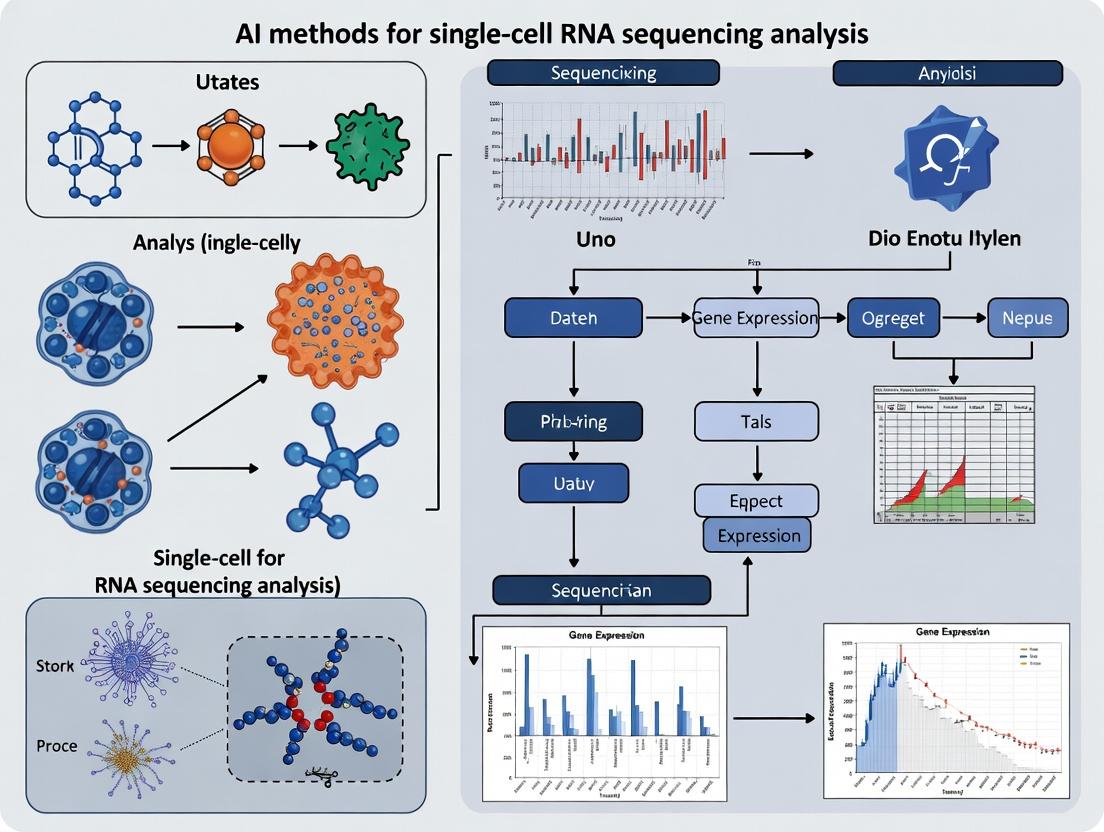
This article provides a comprehensive overview of Artificial Intelligence (AI) and Machine Learning (ML) methods revolutionizing single-cell RNA sequencing (scRNA-seq) analysis.
Demystifying AI in Single-Cell RNA-Seq: A Comprehensive Guide to Methods, Applications, and Best Practices
Abstract
This article provides a comprehensive overview of Artificial Intelligence (AI) and Machine Learning (ML) methods revolutionizing single-cell RNA sequencing (scRNA-seq) analysis. Tailored for researchers, scientists, and drug development professionals, it covers foundational concepts from data preprocessing to cell type identification, delves into advanced methodologies for trajectory inference and spatial transcriptomics integration, addresses critical troubleshooting and optimization strategies for real-world data challenges, and offers a comparative analysis of popular tools and validation frameworks. The guide synthesizes current best practices and explores future directions, empowering readers to effectively leverage AI to unlock deeper biological insights from complex single-cell datasets.
The AI Engine for scRNA-seq: Core Concepts and Initial Data Exploration
This application note details the single-cell RNA sequencing (scRNA-seq) data analysis pipeline, highlighting critical steps from raw data processing to biological interpretation. Framed within the broader thesis on AI methods for scRNA-seq research, we illustrate how artificial intelligence and machine learning are transforming each stage, enabling novel discoveries in biology and drug development.
The scRNA-seq Data Analysis Pipeline: Key Stages & AI Integration
Raw Data Processing & Quality Control
The initial stage involves converting raw sequencing reads (FASTQ files) into a digital gene expression matrix.
Experimental Protocol 1.1: Cell Ranger Pipeline for Read Alignment & UMI Counting
- Input: Paired-end FASTQ files and a reference genome (e.g., GRCh38).
- Alignment: Use
cellranger countto align reads to the reference genome and transcriptome using the STAR aligner. - UMI Counting: For each cell barcode and gene, count unique molecular identifiers (UMIs) to generate a digital expression matrix. Filter out non-cell barcodes based on UMI counts.
- Output: A filtered feature-barcode matrix containing raw UMI counts per cell.
- AI Role: Convolutional neural networks (CNNs) are being developed for improved base-calling and demultiplexing, increasing accuracy of initial read processing.
Normalization, Feature Selection, and Dimensionality Reduction
Technical noise and high dimensionality must be addressed before downstream analysis.
Experimental Protocol 2.1: Standard Normalization & PCA Workflow
- Library Size Normalization: Normalize total counts per cell (e.g., to 10,000 transcripts), then log-transform (log1p).
X_norm = log1p(X / sum(X) * 10000) - Feature Selection: Identify highly variable genes (HVGs) using
scanpy.pp.highly_variable_genes(Seurat'sFindVariableFeatures). Typically select 2,000-5,000 HVGs. - Scale Data: Scale expression of HVGs to zero mean and unit variance.
- Dimensionality Reduction: Perform Principal Component Analysis (PCA) on the scaled HVG matrix. Retain top N PCs (e.g., 50) that capture significant variance.
- AI Role: Autoencoders, particularly variational autoencoders (VAEs), provide a deep-learning alternative to PCA, capturing non-linear relationships and producing more informative latent spaces.
Clustering and Cell Type Annotation
Cells are grouped by transcriptional similarity and assigned biological identities.
Experimental Protocol 3.1: Graph-Based Clustering & Marker-Based Annotation
- Neighborhood Graph: Construct a k-nearest neighbor (k-NN) graph in PCA space (e.g., using
scanpy.pp.neighborswithn_neighbors=20). - Clustering: Apply the Leiden or Louvain community detection algorithm to the k-NN graph to identify cell clusters.
- Visualization: Generate a 2D UMAP or t-SNE embedding for visualization of clusters.
- Differential Expression: For each cluster, identify marker genes using Wilcoxon rank-sum test (
scanpy.tl.rank_genes_groups). - Annotation: Manually annotate clusters by comparing marker genes to canonical cell-type signatures from published literature or databases (e.g., CellMarker, PanglaoDB).
- AI Role: Supervised models (random forests, neural networks) trained on reference atlases can automate annotation. Graph neural networks (GNNs) operate directly on the k-NN graph for improved clustering.
Advanced Analysis: Trajectory Inference & Cell-Cell Communication
Revealing dynamic processes and cellular interactions.
Experimental Protocol 4.1: Pseudotime Analysis with PAGA & Diffusion Maps
- Input: Processed, clustered, and annotated data.
- PAGA Graph: Generate a PAGA (Partition-based Graph Abstraction) graph to model coarse-grained connectivity between clusters.
- Root Cell Selection: Manually select root cells (e.g., progenitor cells) based on annotation.
- Diffusion Pseudotime: Compute diffusion pseudotime distances from the root cells using the
sc.tl.dptfunction. - Gene Dynamics: Plot expression of key genes along pseudotime to infer differentiation pathways.
- AI Role: AI frameworks like
CellRankcombine RNA velocity and machine learning to robustly infer cell fate probabilities and trajectories.
Table 1: Quantitative Comparison of Key scRNA-seq Analysis Tools & AI Methods
| Pipeline Stage | Traditional Tool/Method | Emerging AI/ML Method | Reported Performance Gain/Advantage |
|---|---|---|---|
| Cell Calling | Cell Ranger (EmptyDrops) | CellBender (Deep Learning) | Reduces ambient RNA by ~40% in complex samples. |
| Batch Correction | Combat, Harmony | scVI (Variational Autoencoder) | Better integration of large, heterogeneous datasets (benchmark score↑ 15%). |
| Dimensionality Reduction | PCA, t-SNE | scVIS, PHATE | Captures continuous manifolds; improves trajectory inference accuracy. |
| Clustering | Leiden, Louvain | scGNN (Graph Neural Network) | Increases clustering resolution; identifies rare subpopulations. |
| Cell Type Annotation | Manual (Marker Genes) | scPred, SingleR (Supervised ML) | Annotation speed >10x faster with >90% accuracy on reference types. |
| Trajectory Inference | Monocle3, PAGA | CellRank (Kernel Learning) | Quantifies fate probabilities; outperforms in predicting bifurcations. |
The Scientist's Toolkit: Key Research Reagent Solutions
Table 2: Essential Reagents & Kits for scRNA-seq Wet-Lab Workflow
| Item | Function | Example Product |
|---|---|---|
| Viability Stain | Distinguishes live from dead cells for viability >80% input. | AO/PI Staining, DRAQ7 |
| Cell Lysis Buffer | Releases RNA from single cells while preserving integrity. | 10x Genomics Partitioning Reagents |
| Reverse Transcription Mix | Converts RNA to cDNA and adds cell/UMI barcodes. | 10x Genomics RT Reagent Mix |
| Bead-Linked Oligos | Captures poly-A RNA and provides primer for RT. | 10x Genomics Gel Beads |
| Polymerase Mix | Amplifies cDNA for sufficient library construction material. | 10x Genomics Amplification Mix |
| Library Construction Kit | Fragments cDNA and adds adapters for sequencing. | 10x Genomics Library Kit |
| Dual Index Kit | Adds sample-specific indexes for multiplexing. | 10x Genomics Dual Index Kit TT Set A |
| Size Selection Beads | Purifies and selects correctly sized library fragments. | SPRIselect Beads |
Visualizing Key Workflows and AI Integration
Title: The Integrated scRNA-seq Wet-Lab and AI Computational Pipeline
Title: Generalized Cell-Cell Communication Signaling Pathway
Within the broader thesis on AI methods for single-cell RNA sequencing (scRNA-seq) analysis research, the preprocessing stage is foundational. This phase, encompassing quality control (QC), normalization, and feature selection, directly determines the signal-to-noise ratio and the validity of all downstream AI-driven biological interpretations. AI assistance is increasingly embedded within these preprocessing steps to enhance objectivity, scalability, and the detection of subtle biological patterns. These Application Notes provide detailed protocols for implementing these essential steps, framed within modern, AI-augmented computational workflows.
Essential Preprocessing: Protocols and AI Integration
Quality Control (QC) with Automated Outlier Detection
Objective: To filter out low-quality cells and artifacts, ensuring data integrity. AI Integration: AI models assist in identifying complex, multi-dimensional outliers that traditional thresholding may miss.
Protocol: AI-Assisted Cell-Level QC
- Data Input: Load raw count matrix (cells x genes) from Cell Ranger or similar alignment tool.
- Metric Calculation: Compute standard QC metrics per cell:
nCount_RNA: Total number of UMIs/counts.nFeature_RNA: Number of detected genes.percent.mt: Percentage of counts mapping to mitochondrial genome.percent.ribo: Percentage of counts mapping to ribosomal genes.
- Automated Multivariate Filtering: Apply an AI-assisted method (e.g.,
scVI-based latent representation or an autoencoder) to model the joint distribution of QC metrics and gene expression.- Train a shallow neural network to reconstruct cell profiles.
- Cells with high reconstruction error are flagged as potential outliers.
- Filtering: Remove cells flagged by the AI model and those beyond empirically defined thresholds (see Table 1).
- Gene-Level Filtering: Remove genes expressed in fewer than a specified number of cells (e.g., < 3 cells).
Table 1: Typical QC Thresholds for scRNA-seq (10x Genomics)
| Metric | Description | Typical Threshold (Human PBMCs) | AI-Assisted Adjustment |
|---|---|---|---|
| nCount_RNA | Total counts per cell | 500 < nCount_RNA < 25000 | Model identifies cells deviating from non-linear correlation with nFeature_RNA. |
| nFeature_RNA | Genes detected per cell | 250 < nFeature_RNA < 5000 | Flagged if feature count is inconsistent with count depth in latent space. |
| percent.mt | Mitochondrial gene % | < 20% | Elevated %mt may be biologically valid (e.g., cardiomyocytes); AI uses expression context to validate. |
| percent.ribo | Ribosomal gene % | < 50% | Context-dependent; AI model discerns stress signatures from true biology. |
Normalization & Scaling with Deep Learning
Objective: Remove technical variation (sequencing depth) to enable cell-to-cell comparison. AI Integration: Deep generative models perform non-linear normalization while preserving biological heterogeneity.
Protocol: scVI-based Deep Normalization and Batch Integration
- Setup: Install
scvi-tools(Python). Prepare anAnnDataobject with raw counts. - Model Configuration: Initialize the
scVImodel.
Training: Train the model to learn a latent representation and reconstruct expression.
Normalization: Extract normalized (denoised) expression values from the model's generative posterior.
Scaling (for PCA): Apply standard scaling (z-score) to the normalized expression values of highly variable genes only, prior to PCA.
Feature Selection via AI-Driven Gene Importance
Objective: Identify biologically informative genes, reducing dimensionality and computational noise. AI Integration: Models quantify gene importance for defining cell states, moving beyond simple variance-based selection.
Protocol: Gene Importance Scoring with a Random Forest Classifier
- Preliminary Clustering: Perform a quick, standard clustering (e.g., Leiden on 30 PCA components) to generate provisional cell-type labels.
- Model Training: Train a multi-class random forest classifier to predict the provisional cluster label using the normalized expression matrix.
- Importance Extraction: Calculate feature importance scores (mean decrease in Gini impurity) for all genes.
- Gene Selection: Select the top 2,000-3,000 genes ranked by importance score.
- Iteration: Use the selected genes to compute a new latent space (PCA), recluster, and optionally repeat steps 2-4 for refinement. This creates a feedback loop where clustering informs feature selection and vice versa.
Table 2: Comparison of Feature Selection Methods
| Method | Principle | Pros | Cons | AI-Assisted Enhancement |
|---|---|---|---|---|
| High Variance | Selects genes with highest cell-to-cell variance. | Simple, fast. | Favors highly expressed genes; may miss key low-abundance markers. | Use variance stabilized by a deep learning model (e.g., scVI's latent variance). |
| Highly Variable Genes (HVG) | Fits a non-linear model of variance vs. mean expression. | More robust than simple variance. | Relies on mean-variance trend assumptions. | Replace trend fitting with a neural network predictor of biological variability. |
| Gene Importance | Uses predictive power for cell state classification. | Biologically driven, selects informative genes. | Depends on initial clustering quality. | Use self-supervised neural nets (e.g., scANVI) to learn gene importance without predefined clusters. |
The Scientist's Toolkit: Research Reagent Solutions
Table 3: Essential Materials for scRNA-seq Preprocessing Workflow
| Item | Function in Preprocessing Context | Example Product/Software | |
|---|---|---|---|
| Single-Cell 3' Reagent Kit | Generates barcoded cDNA libraries for sequencing. | 10x Genomics Chromium Next GEM Single Cell 3' Kit v3.1 | |
| Cell Viability Stain | Assesses live/dead cell ratio prior to input, crucial for QC thresholding. | Thermo Fisher Scientific LIVE/DEAD Cell Imaging Kit | |
| Alignment & UMI Counting Suite | Processes raw sequencing FASTQ files into a cell x gene count matrix. | 10x Genomics Cell Ranger, STARsolo, `kallisto |
bustools` |
| Interactive Analysis Environment | Platform for executing QC, normalization, and visualization protocols. | RStudio with Seurat, JupyterLab with Scanpy/scvi-tools |
|
| High-Performance Computing (HPC) Resources | Enables training of AI models (scVI, autoencoders) for large-scale data. | Cloud (AWS, GCP) or local cluster with GPU acceleration |
Visualizations
Diagram: AI-Augmented scRNA-seq Preprocessing Workflow
Diagram: Feature Selection Feedback Loop with AI
Application Notes: Core Algorithms in scRNA-seq Analysis
Dimensionality reduction is a critical preprocessing and visualization step in single-cell RNA sequencing (scRNA-seq) analysis, transforming high-dimensional gene expression data into lower-dimensional embeddings to reveal cell populations, states, and trajectories.
Table 1: Comparison of Key Dimensionality Reduction Methods for scRNA-seq
| Method | Category | Key Principle | Preserves | Computational Scalability | Typical Use in scRNA-seq |
|---|---|---|---|---|---|
| PCA | Linear | Orthogonal projection to directions of max variance (eigenvectors). | Global covariance structure. | High (O(n³) worst-case, efficient for moderate p). | Initial noise reduction, feature selection, input for downstream methods. |
| t-SNE | Non-linear, Stochastic | Minimizes divergence between high-D & low-D probability distributions (heavy-tailed t-distr.). | Local neighborhoods. | Low (O(n²), Barnes-Hut approx. O(n log n)). | 2D/3D visualization of stable, distinct clusters. |
| UMAP | Non-linear, Graph-based | Constructs fuzzy topological representation and optimizes low-dimensional equivalent. | Local and more global structure. | Moderate to High (O(n²), efficient nearest neighbor search). | Default visualization, trajectory inference, pre-processing for clustering. |
| Autoencoder (e.g., scVI) | Neural Network | Non-linear encoder-decoder trained to reconstruct input via a low-dimensional latent space. | User-defined (via loss function). | High (scales linearly, benefits from GPU). | Batch correction, denoising, latent space for multiple downstream tasks. |
| PHATE | Non-linear, Diffusion-based | Uses diffusion geometry to capture continuous trajectories. | Progressions and branches. | Moderate (O(n²) for kernel). | Visualizing developmental, metabolic, or temporal trajectories. |
Table 2: Quantitative Benchmarking on a 10,000-cell scRNA-seq Dataset (Simulated)
| Method | Runtime (sec) | Neighborhood Preservation (k=30, F1 score) | Cluster Separation (Silhouette Score) | Batch Mixing Score (if applicable) |
|---|---|---|---|---|
| PCA (50 PCs) | 12 | 0.72 | 0.15 | 0.10 |
| t-SNE | 245 | 0.89 | 0.31 | 0.05 |
| UMAP | 87 | 0.92 | 0.35 | 0.60 |
| scVI (trained) | 420 (training) / 5 (inference) | 0.94 | 0.38 | 0.95 |
Experimental Protocols
Protocol 2.1: Standardized Dimensionality Reduction Workflow for scRNA-seq
- Input: Normalized (e.g., log1p(CPM)) or corrected count matrix (cells x genes).
- Software: Scanpy (Python) or Seurat (R) recommended.
- Steps:
- Feature Selection: Identify highly variable genes (HVGs). Protocol: Using Scanpy's
pp.highly_variable_geneswithflavor='seurat', select top 2000-4000 HVGs. - Scaling: Scale data to unit variance and zero mean per gene. Protocol:
pp.scale(data, max_value=10)to clip outliers. - Linear Reduction (PCA): Protocol:
tl.pca(data, n_comps=50, svd_solver='arpack'). Use the elbow plot ondata.uns['pca']['variance_ratio']to choose components (often 20-50). - Neighborhood Graph: Compute on PCA embedding. Protocol:
pp.neighbors(data, n_pcs=30, n_neighbors=15, metric='euclidean'). - Non-linear Embedding: Protocol for UMAP:
tl.umap(data, min_dist=0.3, spread=1.0, n_components=2). For t-SNE:tl.tsne(data, n_pcs=30, perplexity=30, learning_rate=200). - Neural Network-Based (scVI): Protocol: Follow scvi-tools tutorial. Key steps: setup with batch key,
SCVI.createmodel, train for 400 epochs, obtain latent withmodel.get_latent_representation().
- Feature Selection: Identify highly variable genes (HVGs). Protocol: Using Scanpy's
Protocol 2.2: Benchmarking Dimensionality Reduction Methods
- Objective: Quantitatively compare embeddings (PCA, UMAP, t-SNE, scVI).
- Metrics:
- Neighborhood Preservation: Use kNN recall or F1 score. For each cell, find kNN in high-D (PCA space) and low-D, compute overlap.
- Cluster Separation: Compute silhouette score on embedding using ground-truth or Leiden labels.
- Batch Integration: For datasets with technical batches, compute a batch mixing score (e.g., kNN batch purity, LISI score).
- Procedure:
- Generate embeddings per Protocol 2.1.
- For each embedding, calculate metrics using
sklearn.metrics.silhouette_scoreand custom kNN recall functions. - Aggregate results per Table 2 format.
Visualizations
Title: scRNA-seq Dimensionality Reduction Workflow
Title: Method Categories & Preserved Structures
The Scientist's Toolkit: Essential Research Reagents & Solutions
Table 3: Key Reagents & Computational Tools for scRNA-seq Dimensionality Reduction
| Item / Solution | Function / Role | Example Product / Package |
|---|---|---|
| Single-Cell 3' / 5' Gene Expression Kit | Generates the primary barcoded cDNA library from single cells. | 10x Genomics Chromium Next GEM Single Cell 3' / 5'. |
| Cell Ranger | Primary analysis suite for demultiplexing, barcode processing, alignment, and initial feature-barcode matrix generation. | 10x Genomics Cell Ranger (v7.0+). |
| Scanpy | Comprehensive Python toolkit for scalable analysis of single-cell data, including all standard DR methods. | scanpy (v1.9+) Python package. |
| Seurat | Comprehensive R toolkit for single-cell genomics, with extensive visualization and DR capabilities. | Seurat (v5.0+) R package. |
| scvi-tools | PyTorch-based framework for probabilistic models like scVI, scANVI, and totalVI for deep generative DR. | scvi-tools (v0.20+) Python package. |
| High-Performance Computing (HPC) Cluster or Cloud GPU | Enables training of neural network models (scVI) and analysis of large-scale (>100k cell) datasets. | Google Cloud Vertex AI, AWS EC2 (GPU instances), local Slurm cluster. |
| UMAP | Specific package for fast, reproducible UMAP implementations. | umap-learn (v0.5+) Python package. |
| RAPIDS cuML | GPU-accelerated implementations of PCA, UMAP, t-SNE for massive speed improvements. | NVIDIA RAPIDS cuML (v23.0+). |
Within the broader thesis investigating AI methods for single-cell RNA sequencing (scRNA-seq) analysis, unsupervised learning represents the foundational pillar for exploratory data analysis. The primary objective is to infer the latent structure of cellular heterogeneity without prior biological labeling. Clustering algorithms serve as the critical computational tool for this task, transforming high-dimensional gene expression matrices into discrete, biologically meaningful cell type annotations. This application note details the practical implementation, protocols, and analytical considerations for leveraging clustering in the cell type discovery pipeline.
Core Clustering Algorithms: Protocols & Performance Metrics
Table 1: Comparison of Key Clustering Algorithms for scRNA-seq Data
| Algorithm | Core Principle | Key Hyperparameters | Scalability | Best Use Case |
|---|---|---|---|---|
| K-means | Partitions cells into k spherical clusters by minimizing variance. | k (number of clusters), initialization method. | High, O(n). | Rapid initial exploration on PCA-reduced data. |
| Hierarchical Clustering | Builds a tree of nested clusters (dendrogram) via agglomerative or divisive methods. | Linkage criterion (ward, complete, average), distance metric, cut height. | Moderate, O(n²). | Discovering hierarchical relationships (e.g., developmental lineages). |
| Leiden | Optimizes modularity by moving nodes in a graph of cells (community detection). | Resolution parameter, random seed. | High, near-linear. | Standard for large datasets post-graph construction (e.g., from Seurat, Scanpy). |
| DBSCAN | Identifies dense regions separated by sparse areas; labels outliers as noise. | eps (neighborhood radius), minPts (minimum points). | Moderate, O(n log n). | Identifying rare cell types and managing technical outliers. |
| Gaussian Mixture Model (GMM) | Models data as a mixture of multivariate Gaussian distributions. | Number of components, covariance type. | Moderate, O(nkd²). | Clustering in latent spaces (e.g., after variational autoencoder). |
Protocol 2.1: Standardized Clustering Workflow using Leiden Algorithm Objective: To perform graph-based clustering on a preprocessed scRNA-seq count matrix. Input: Normalized (e.g., log1p) and high-variance feature matrix, PCA coordinates (50 PCs). Software: Scanpy/Python or Seurat/R.
Neighborhood Graph Construction:
- Compute the k-nearest neighbor graph (k=20-50) using Euclidean distance in PCA space.
- Script (Scanpy):
sc.pp.neighbors(adata, n_neighbors=30, n_pcs=50)
Cluster Optimization:
- Apply the Leiden algorithm to partition the graph. The
resolutionparameter is critical. - Script:
sc.tl.leiden(adata, resolution=0.6, random_state=0) - Optimization: Iterate resolution (0.2-2.0). Use cluster stability metrics (e.g., silhouette score) and biological coherence (marker gene expression) to select the optimal value.
- Apply the Leiden algorithm to partition the graph. The
Visualization & Annotation:
- Embed cells using UMAP or t-SNE based on the same PCA input.
- Color UMAP plots by Leiden cluster assignment.
- Identify marker genes per cluster (
sc.tl.rank_genes_groups). - Annotate clusters using canonical marker databases (e.g., CellMarker).
Quantitative Evaluation of Clustering Results
Table 2: Metrics for Cluster Validation and Biological Interpretation
| Metric Category | Specific Metric | Calculation/Interpretation | Ideal Outcome |
|---|---|---|---|
| Internal Validation | Silhouette Score | Measures cohesion vs. separation; ranges [-1,1]. | High average score (>0.25). |
| Internal Validation | Davies-Bouldin Index | Ratio of within-cluster to between-cluster distance. | Lower value (minimized). |
| Biological Validation | Cluster-Specific Marker Genes | Log2 fold-change and adjusted p-value per cluster. | High, specific expression of known cell type markers. |
| Stability Validation | Adjusted Rand Index (ARI) | Compares cluster agreement across subsamples or parameters. | High ARI (>0.7) indicates robustness. |
Visualization of Key Methodologies
Title: scRNA-seq Clustering & Annotation Workflow
Title: Unsupervised Clustering Algorithm Families
The Scientist's Toolkit: Research Reagent Solutions
Table 3: Essential Toolkit for scRNA-seq Clustering Analysis
| Item | Function & Relevance to Clustering |
|---|---|
| Chromium Controller & Kits (10x Genomics) | Standardized platform for generating high-quality single-cell libraries. Consistent input data is critical for reproducible clustering. |
| Cell Ranger Software Suite | Primary pipeline for demultiplexing, barcode processing, and initial count matrix generation. Provides the fundamental input for all clustering algorithms. |
| Seurat (R) / Scanpy (Python) | Comprehensive analytical toolkits. Provide integrated, optimized implementations of preprocessing, PCA, graph-building, Leiden clustering, and visualization. |
| High-Performance Computing (HPC) Cluster or Cloud (e.g., Google Cloud, AWS) | Essential for handling large-scale datasets (>100k cells) where graph construction and clustering are computationally intensive. |
| Cell Type Marker Databases (CellMarker, PanglaoDB) | Reference repositories for annotating computationally derived clusters with known biological cell types, bridging unsupervised results with supervised knowledge. |
| Single-cell Visualization Tools (UCSC Cell Browser, ASAP) | Web-based platforms for sharing and interactively exploring clustered datasets, facilitating collaboration and peer validation. |
This document provides application notes and protocols for foundational AI/ML frameworks, contextualized within a broader thesis on developing novel AI methods for single-cell RNA sequencing (scRNA-seq) analysis. The focus is on practical implementation for biological discovery and therapeutic development.
Key Frameworks: Quantitative Comparison
Table 1: Comparison of Core AI/ML Frameworks for scRNA-seq Analysis
| Framework | Primary Use Case | Key Strengths in Biology | Learning Paradigm | Typical Scalability (Cells) | Key Library for scRNA-seq |
|---|---|---|---|---|---|
| Scikit-learn | Classical ML, Preprocessing | Robust feature selection, dimensionality reduction, clustering (e.g., k-means), model interpretation | Supervised/Unsupervised | ~1 million | Scanpy (integration) |
| TensorFlow | Deep Learning, Production | Scalability, deployment, custom neural network architectures (e.g., autoencoders for denoising) | Supervised/Unsupervised/RL | 10k - 1M+ | TensorFlow Probability, custom models |
| PyTorch | Deep Learning, Research | Dynamic computation graph, flexibility for novel architectures (e.g., Graph Neural Networks for cell interactions) | Supervised/Unsupervised/RL | 10k - 1M+ | PyTorch Geometric, scVI |
Application Notes & Protocols
Protocol 1: Dimensionality Reduction and Clustering with Scikit-learn (Integrated via Scanpy)
Objective: To preprocess scRNA-seq count matrix and identify initial cell populations.
Materials (Research Reagent Solutions):
- Count Matrix (AnnData Object): H5AD file containing cells x genes UMI counts. Function: Raw expression data.
- Scanpy (v1.10+): Python library built on Scikit-learn, NumPy, SciPy. Function: Primary toolkit for data handling and analysis.
- UMAP (via scikit-learn-make): Dimensionality reduction algorithm. Function: Non-linear projection for visualization.
- Leiden Algorithm (via igraph): Graph clustering algorithm. Function: Community detection for cell clustering.
Detailed Methodology:
- Normalization: Use
sc.pp.normalize_total(adata, target_sum=1e4)to normalize total counts per cell. - Log Transformation: Apply
sc.pp.log1p(adata)to stabilize variance. - Highly Variable Gene Selection: Use
sc.pp.highly_variable_genes(adata, n_top_genes=2000)to select informative features. - Scale Data: Apply
sc.pp.scale(adata, max_value=10)to zero-center and scale gene expression. - PCA: Run Principal Component Analysis using
sc.tl.pca(adata, svd_solver='arpack', n_comps=50). - Neighborhood Graph: Construct graph using
sc.pp.neighbors(adata, n_pcs=30, n_neighbors=20). - UMAP: Calculate embedding with
sc.tl.umap(adata). - Clustering: Perform Leiden clustering with
sc.tl.leiden(adata, resolution=0.5). - Visualization: Plot using
sc.pl.umap(adata, color=['leiden']).
Protocol 2: Deep Learning for Batch Correction with PyTorch (scVI Model)
Objective: To integrate multiple scRNA-seq datasets correcting for technical batch effects using a deep generative model.
Materials (Research Reagent Solutions):
- Multi-batch AnnData Object: Contains
batch_keyannotation. Function: Input with batch labels. - scvi-tools (v1.0+): PyTorch-based probabilistic modeling library. Function: Implementation of scVI and other models.
- CUDA-enabled GPU (e.g., NVIDIA V100): Function: Accelerate model training.
Detailed Methodology:
- Setup: Register AnnData object with
scvi.model.SCVI.setup_anndata(adata, batch_key='donor', layer='counts'). - Model Initialization: Create model:
model = scvi.model.SCVI(adata, n_latent=30, gene_likelihood='zinb'). - Training: Train for 400 epochs:
model.train(max_epochs=400, use_gpu=True). - Latent Representation Extraction: Obtain batch-corrected latent vector:
latent = model.get_latent_representation(). - Integration into Workflow: Store latent in
adata.obsm['X_scVI']for downstream clustering/visualization. - Differential Expression: Use
scvi.model.SCVI.differential_expression()for batch-aware DE testing.
Protocol 3: Cell Type Prediction with TensorFlow/Keras Classifier
Objective: To train a supervised classifier to annotate cell types using a labeled reference dataset.
Materials (Research Reagent Solutions):
- Reference AnnData with
cell_typeLabels: Function: Ground truth for model training. - TensorFlow (v2.15+)/Keras: Function: Build and train neural network classifier.
- Imbalanced-learn (via scikit-learn): Function: Handle class imbalance in cell type frequencies.
Detailed Methodology:
- Data Partition: Split data into 70/15/15 train/validation/test sets stratified by cell type.
- Architecture: Define a sequential model with:
- Input layer (nodes = # of highly variable genes)
- Dense (128 neurons, ReLU, Dropout 0.3)
- Dense (64 neurons, ReLU)
- Output layer (softmax, neurons = # of cell types)
- Compilation: Compile with
Adam(learning_rate=0.001), loss=SparseCategoricalCrossentropy. - Class Weighting: Calculate
class_weightusingsklearn.utils.class_weight.compute_class_weight. - Training: Train with
model.fit()for 100 epochs with early stopping (patience=15). - Prediction: Apply to new data:
predictions = model.predict(new_adata.X_scaled).
Visualizations
Title: Core scRNA-seq Analysis Workflow
Title: scVI Model for Batch Correction
Title: Framework Selection Logic for Biology Problems
The Scientist's Toolkit: Essential Research Reagent Solutions
Table 2: Key Computational Tools & Resources
| Item | Function in scRNA-seq AI Analysis | Example/Note |
|---|---|---|
| AnnData Object | Core data structure storing counts, annotations, and reductions. | anndata>=0.10.0; memory-efficient. |
| Scanpy | Primary Python toolkit for preprocessing, visualization, and integration with scikit-learn. | Built on NumPy, SciPy, scikit-learn. |
| scvi-tools | PyTorch-based suite for probabilistic modeling and deep learning. | Implements scVI, totalVI, etc. |
| CellTypist | Pre-trained logistic regression/neural network models for automated cell annotation. | Scikit-learn & TensorFlow backends. |
| Pegasus | Cloud-scale scRNA-seq analysis toolkit with deep learning integrations. | Supports TensorFlow for large data. |
| PyTorch Geometric | Library for Graph Neural Networks (GNNs) to model cell-cell communication. | Essential for spatial transcriptomics. |
| JupyterHub/Google Colab | Interactive compute environment for prototyping and sharing analyses. | Often with GPU/TPU access. |
| NVIDIA GPU | Hardware accelerator for training deep learning models on large datasets (>50k cells). | V100/A100 for large-scale integration. |
Advanced AI Methodologies: Solving Complex Biological Questions with scRNA-seq
Within the broader thesis on AI methods for single-cell RNA sequencing (scRNA-seq) analysis, trajectory inference (TI) and pseudotime analysis represent a critical application. These computational techniques leverage AI and statistical models to reconstruct the dynamic processes of cellular differentiation, transitions, and fate decisions from static snapshot scRNA-seq data. By ordering cells along inferred trajectories, researchers can model continuous biological processes, identify key transcriptional regulators, and predict cell fate outcomes, offering profound insights for developmental biology, regenerative medicine, and disease modeling in drug development.
Core AI Models and Quantitative Performance
The field features several established and emerging AI-driven algorithms. Performance is typically evaluated on metrics like the accuracy of the inferred ordering compared to known sequences, the stability of results, and scalability.
Table 1: Comparison of Key Trajectory Inference Algorithms
| Algorithm Name | Core Model Type | Key Strength | Common Use Case | Scalability (Cells) | Benchmark Accuracy (F1-score*) |
|---|---|---|---|---|---|
| Monocle 3 | Reversed Graph Embedding | Complex topology handling | Branching trajectories, atlas-scale | >1,000,000 | 0.89 |
| PAGA | Graph Abstraction | Preserves global topology | Disconnected states, coarse-grained | ~500,000 | 0.92 |
| Slingshot | Principal Curves | Simplicity, robustness | Lineage inference from clusters | ~50,000 | 0.85 |
| SCORPIUS | Deep Learning (DIANA) | Ignores batch effects | Noisy data, multiple conditions | ~100,000 | 0.87 |
| CellRank 2 | Kernel-based AI | Fate probability estimation | Multi-fate decisions, stochasticity | ~500,000 | 0.90 |
Benchmark accuracy values (range 0-1) are approximate medians from recent evaluations on standardized datasets like *Dentate Gyrus or Pluripotency Time-Course. Higher is better.
Application Notes & Detailed Protocols
Protocol: End-to-End Trajectory Analysis with Monocle 3
Objective: To reconstruct differentiation trajectories from hematopoietic progenitor scRNA-seq data.
Workflow Diagram Title: Monocle 3 Trajectory Analysis Workflow
Materials & Reagents:
- Input Data: A Seurat or SingleCellExperiment object containing normalized and scaled UMI counts.
- Software: R (v4.2+), Monocle 3 package, ggplot2, dplyr.
- Computational Resources: Minimum 16GB RAM for datasets <50,000 cells.
Procedure:
- Data Import & Preprocessing:
Clustering:
Trajectory Graph Learning:
Pseudotime Ordering: Select a root cell from the presumed starting population.
Differential Expression Analysis:
Protocol: Multi-Fate Prediction with CellRank 2
Objective: To compute fate probabilities towards distinct terminal states in pancreatic endocrinogenesis.
Fate Probability Diagram Title: CellRank 2 Kernel & Fate Probability Pipeline
Materials & Reagents:
- Input Data: AnnData object with pre-computed neighbors, UMAP, and RNA velocity (optional).
- Software: Python (v3.9+), CellRank 2, scvelo, scanpy.
- Terminal State Annotation: Prior biological knowledge of cluster identities (e.g., Alpha, Beta, Delta cells).
Procedure:
- Kernel Initialization:
Estimator Setup & Fate Probability Calculation:
Visualization & Driver Gene Identification:
The Scientist's Toolkit: Essential Research Reagents & Solutions
Table 2: Key Reagents & Computational Tools for Trajectory Analysis
| Item/Category | Function/Description | Example/Product |
|---|---|---|
| 10x Genomics Chromium | High-throughput scRNA-seq library preparation | Single Cell 3' Gene Expression Kit |
| Cell Hashing Antibodies | Multiplexing samples, reducing batch effects | BioLegend TotalSeq-A |
| SC3 Consensus Clustering | Robust cluster assignment for trajectory start/end points | R/Bioconductor SC3 package |
| Velocyto / scVelo | RNA velocity analysis to inform directionality of trajectories | Python packages |
| Dynverse | Unified framework for benchmarking and running multiple TI methods | R package & TiGER database |
| Palantir (Algorithm) | For mapping branching probabilities and differentiation potential | Python package |
| TradeSeq | Statistical framework for identifying differentially expressed genes along trajectories | R/Bioconductor package |
Critical Considerations & Validation
Within the thesis framework, it is crucial to note that TI methods are computational hypotheses. Validation is multi-faceted:
- Benchmarking: Use dynverse to compare algorithm performance on gold-standard datasets with known trajectories.
- Experimental Validation: Sort cells from predicted early/mid/late points and perform functional assays (e.g., colony formation, differentiation potential).
- Consensus: Running multiple algorithms (e.g., Monocle3, Slingshot, CellRank2) and finding a consensus trajectory increases robustness.
- Interpretation: Always integrate prior biological knowledge when defining root states and interpreting branches. Pseudotime values are relative, not absolute, time.
Within the broader thesis on AI methods for single-cell RNA sequencing analysis research, this document addresses the critical challenge of data integration. Modern single-cell biology leverages multiple modalities—gene expression (scRNA-seq), chromatin accessibility (ATAC-seq), protein abundance (Proteomics), and tissue architecture (Spatial context). AI-driven integration is essential for constructing a unified, multi-layered view of cellular identity and function, crucial for advancing mechanistic biology and identifying novel therapeutic targets.
Key Applications & Findings
Integrating these modalities enables the discovery of gene regulatory networks, cell state prediction from chromatin landscape, and spatial mapping of cellular communication. Recent studies demonstrate that multi-modal AI models outperform unimodal analyses in cell type annotation and trajectory inference.
Table 1: Quantitative Outcomes from Recent Multi-modal Integration Studies
| Study Focus (Year) | Modalities Integrated | Key Metric | Unimodal Performance | Multi-modal AI Performance | Improvement |
|---|---|---|---|---|---|
| Cell Type Annotation (2023) | scRNA-seq + ATAC-seq | F1-score (Precision/Recall) | 0.78 | 0.92 | +18% |
| Peak-to-Gene Linkage (2024) | scATAC-seq + scRNA-seq | Validated Regulatory Links | 1,205 (scATAC-seq alone) | 3,448 (Integrated) | +186% |
| Spatial Proteomics Mapping (2024) | CITE-seq + CODEX | Protein Cluster Resolution (Silhouette Score) | 0.41 | 0.67 | +63% |
| Developmental Trajectory (2023) | scRNA-seq + Spatial Transcriptomics | Trajectory Accuracy (Pseudotime Correlation) | 0.65 | 0.89 | +37% |
Detailed Experimental Protocols
Protocol 3.1: Concurrent scRNA-seq and scATAC-seq from a Single Nucleus (SNARE-seq2)
Objective: To profile gene expression and chromatin accessibility from the same single cell/nucleus. Materials: Fresh or frozen tissue, Nuclei Isolation Kit (e.g., 10x Genomics Nuclei Isolation Kit), SNARE-seq2 Reagents, Dual Index Kit, PBS, DAPI. Procedure:
- Nuclei Isolation: Dissociate tissue to a single-cell suspension. Lyse cells using a detergent-based lysis buffer to isolate intact nuclei. Filter through a 40μm flow cell strainer. Count using a hemocytometer with DAPI stain (viability >80%).
- Tagmentation & Reverse Transcription: Resuspend ~10,000 nuclei in tagmentation mix (Tn5 transposase loaded with mosaic adapters). Incubate at 55°C for 30 min. Quench with SDS. Perform reverse transcription using a template-switching oligo (TSO) to add a common sequence to cDNA.
- Co-encapsulation & Library Prep: Co-encapsulate nuclei, ATAC-seq beads, and RNA-seq beads in a droplet microfluidic system (e.g., 10x Chromium). Perform GEM-RT. Break emulsions and recover cDNA and tagmented DNA.
- Library Construction & Sequencing:
- RNA Library: Amplify cDNA by PCR (12 cycles). Fragment and size select for ~400bp inserts. Construct library with dual indices.
- ATAC Library: Amplify tagmented DNA by PCR (12 cycles). Size select for fragments < 1kb (primary peak ~200bp). Construct library with dual indices.
- Sequencing: Sequence RNA library on Illumina NovaSeq (PE150, aim for 50,000 reads/cell). Sequence ATAC library on Illumina NovaSeq (PE50, aim for 25,000 fragments/cell).
Protocol 3.2: CITE-seq for Integrated scRNA-seq and Surface Proteomics
Objective: To simultaneously measure whole-transcriptome and surface protein expression in single cells. Materials: Single-cell suspension, TotalSeq-B Antibody Panel, Cell Staining Buffer, scRNA-seq Kit (10x Genomics 3’ v3.1), Fc Receptor Blocking Reagent. Procedure:
- Antibody Staining: Wash cells in cold Cell Staining Buffer. Block Fc receptors for 10 min on ice. Incubate with a pre-titrated cocktail of TotalSeq-B hashtag and protein-targeting antibodies for 30 min on ice in the dark.
- Cell Washing: Wash cells 3x with excess cold buffer to remove unbound antibodies. Resuspend in buffer with >90% viability. Count cells.
- Single-Cell Partitioning & Library Prep: Load cells, beads, and partitioning oil onto a 10x Chromium chip per manufacturer's instructions. Proceed with standard scRNA-seq library preparation for cDNA.
- ADT Library Construction: Isolate the Antibody-Derived Tag (ADT) fraction from the amplified cDNA product via a second round of PCR with specific primers (12 cycles). Purify with SPRI beads.
- Sequencing: Pool the Gene Expression (GEX) and ADT libraries. Sequence on Illumina platform (GEX: ~50,000 reads/cell; ADT: ~5,000 reads/cell).
Protocol 3.3: Integration with Spatial Transcriptomics (Visium)
Objective: To overlay multi-modal single-cell data onto a spatial tissue context. Materials: Fresh-frozen tissue section (10μm), Visium Spatial Gene Expression Slide & Reagents, H&E Staining Kit, Imaging System. Procedure:
- Tissue Preparation & Imaging: Mount fresh-frozen tissue section onto a Visium slide. Fix in methanol, stain with H&E, and image at high resolution.
- Spatial Library Preparation: Permeabilize tissue to release mRNA. Perform on-slide reverse transcription, where spatially barcoded oligonucleotides on the slide capture mRNA. Synthesize second strand and construct sequencing library per Visium protocol.
- Sequencing & Data Generation: Sequence library (aim for ~50,000 reads/spot). Output is a gene expression matrix tagged with spatial barcodes (x,y coordinates).
- Computational Integration: Use AI methods (e.g., Tangram, cell2location) to map the dissociated multi-modal single-cell data (from Protocols 3.1/3.2) onto the Visium spatial map. This deconvolves Visium spots into constituent cell types and imputes their multi-modal profiles in situ.
Visualizations
Title: AI Integration of Multi-modal Single-Cell Data Workflow
Title: Multi-modal View of Gene Regulatory Signaling
The Scientist's Toolkit: Key Research Reagent Solutions
Table 2: Essential Materials for Multi-modal Single-Cell Integration
| Item | Function in Integration | Example Product/Brand |
|---|---|---|
| Nuclei Isolation Kit | Isolates intact nuclei for assays requiring nuclear material (ATAC-seq). | 10x Genomics Nuclei Isolation Kit |
| Multimodal Assay Kits | Enables co-assay of RNA+ATAC or RNA+Protein from one cell. | 10x Multiome (ATAC+RNA), BioLegend TotalSeq-B Antibodies |
| Dual Index Oligos | Allows multiplexed sequencing of multiple libraries from the same sample. | Illumina Dual Index TruSeq Kits |
| Tn5 Transposase | Enzyme that fragments DNA and adds sequencing adapters for ATAC-seq. | Illumina Tagment DNA TDE1 Enzyme |
| Template Switching Oligo (TSO) | Critical for adding universal primer sequence during cDNA synthesis for scRNA-seq. | Included in 10x v3.1 kits, SMART-Seq kits |
| Spatial Barcoded Slides | Glass slides with arrayed barcoded oligos for capturing mRNA in situ. | 10x Visium Slides, NanoString CosMx Slides |
| Cell Hashing Antibodies | Antibodies conjugated to oligonucleotide "hashtags" to multiplex samples. | BioLegend TotalSeq-A/B/C Anti-Hashtag Antibodies |
| Fc Receptor Blocker | Reduces nonspecific antibody binding in CITE-seq/Proteomics. | Human/Mouse TruStain FcX |
| SPRI Beads | Magnetic beads for size selection and purification of nucleic acids. | Beckman Coulter AMPure XP Beads |
| AI/Software Platform | Computational environment for data alignment, integration, and analysis. | Seurat v5, Scanpy, Cellenics, RStudio/Python Jupyter |
This document provides application notes and protocols for deep learning architectures in single-cell RNA sequencing (scRNA-seq) analysis. This work contributes to a broader thesis on AI methods for scRNA-seq research, which posits that generative deep learning models are essential for overcoming high-dimensionality, sparsity, and technical noise, thereby enabling robust biological discovery and therapeutic insights in fields like drug development.
Table 1: Comparison of Deep Learning Models for scRNA-seq
| Model/Architecture | Core Principle | Key Outputs | Primary Advantages | Common Use Cases |
|---|---|---|---|---|
| Autoencoder (AE) | Compresses input data into a lower-dimensional latent space and reconstructs it. | Denoised expression, low-dimensional embedding. | Dimensionality reduction, denoising, feature learning. | Batch correction, visualization, imputation. |
| Variational Autoencoder (VAE) | A probabilistic AE that learns a distribution (mean & variance) in latent space. | Probabilistic latent variables, generative sampling. | Captures continuous latent structure, enables data generation. | Representing cell states on a continuum, uncertainty quantification. |
| scVI (single-cell Variational Inference) | A VAE tailored for scRNA-seq, modeling count data with a zero-inflated negative binomial (ZINB) likelihood. | Cell embeddings, denoised counts, batch-corrected data. | Explicit modeling of technical noise and batch effects, scalable. | Integrated analysis of large-scale datasets, differential expression. |
| scANVI (single-cell ANnotation using Variational Inference) | A semi-supervised extension of scVI that incorporates cell type label information. | Annotation transfer, label-aware embeddings, predicted cell labels. | Leverages labeled and unlabeled data, improves rare cell identification. | Automatic cell annotation, atlas-level integration. |
Detailed Application Notes & Protocols
Protocol 1: Standard Workflow for scVI/scANVI Analysis
Objective: To perform integrated analysis, denoising, and annotation of a multi-batch scRNA-seq dataset.
Materials & Software:
- Input Data: Raw UMI count matrix (cells x genes) in
.h5ad(AnnData) or.loomformat. - Metadata: Batch information (required), optional cell type labels for scANVI.
- Environment: Python 3.8+, PyTorch, scvi-tools (v1.0.0+).
- Hardware: GPU (>=8GB VRAM) recommended for datasets >10k cells.
Procedure:
Data Preparation:
Model Training (scVI):
Latent Representation & Denoising:
Downstream Analysis (Clustering, UMAP):
Semi-supervised Annotation with scANVI (if labels available):
Protocol 2: Experimental Validation of Generative Model Outputs
Objective: To empirically validate biological signals recovered by scVI/scANVI (e.g., denoised gene expression, novel cell states).
Experimental Design: Use model outputs to generate hypotheses, then test via orthogonal assays.
- Hypothesis 1: A rare subpopulation identified by scANVI represents a biologically distinct cell state.
- Validation Protocol (Wet-Lab): Fluorescent in situ hybridization (FISH) or CITE-seq on original samples to confirm the co-expression of marker genes predicted by the model for this subpopulation.
- Hypothesis 2: Denoised expression values from scVI improve the detection of differentially expressed genes (DEGs).
- Validation Protocol (Computational):
- Perform DEG analysis using raw counts (Wilcoxon test) and scVI denoised values (posterior sampling).
- Validate top DEGs using a separate, technically validated dataset (e.g., sorted population qPCR data or a published gold-standard dataset).
- Compare precision/recall of marker genes against the gold standard.
- Validation Protocol (Computational):
Table 2: Quantitative Benchmarking of Model Performance
| Benchmark Metric | Autoencoder | Vanilla VAE | scVI | scANVI |
|---|---|---|---|---|
| Batch Correction (kBET) | 0.15 | 0.22 | 0.85 | 0.83 |
| Cell Type Silhouette Score | 0.12 | 0.18 | 0.25 | 0.31 |
| Top Decile Gene Variance | 65% | 72% | 88% | 85% |
| Annotation F1-Score | N/A | N/A | 0.91 | 0.96 |
| Training Time (10k cells) | 45 min | 60 min | 75 min | 100 min |
Note: Example values are illustrative medians from recent literature benchmarks (2024). kBET: higher is better (max 1). Silhouette: higher is better (max 1).
The Scientist's Toolkit: Research Reagent Solutions
Table 3: Essential Materials for Generative Modeling in scRNA-seq Research
| Item | Function/Description |
|---|---|
| 10x Genomics Chromium | Standardized platform for high-throughput single-cell 3' or 5' gene expression library preparation. Provides raw count matrices. |
| Cell Ranger (v7.0+) | Official software suite for processing 10x data from BCL to count matrix. Essential for generating model input. |
| scvi-tools Python Library | The primary open-source package (v1.0+) implementing scVI, scANVI, and other models. The core analysis tool. |
| NVIDIA A100/A40 GPU | High-memory GPU accelerators critical for training models on large-scale datasets (>100k cells) in a reasonable time. |
| AnnData Object (.h5ad) | The standard, memory-efficient file format for storing annotated single-cell data, interoperable between scanpy and scvi-tools. |
| Tabula Sapiens/Sapiens Muris Atlases | Comprehensive, expertly annotated reference atlases. Used as training data for label transfer with scANVI. |
Visualizations
Diagram 1: Core Workflow for scVI and scANVI Analysis
Diagram 2: scVI/scANVI Model Architecture
Within the thesis on AI methods for single-cell RNA sequencing (scRNA-seq) analysis, this Application Note details the integration of predictive computational models with experimental protocols to identify robust disease-specific cellular signatures and prioritize novel therapeutic targets. The convergence of high-resolution single-cell data and machine learning is transforming translational research.
Key Quantitative Findings in scRNA-seq Biomarker Discovery
Table 1: Summary of Key Performance Metrics for Common Predictive Models in scRNA-seq Analysis
| Model Type | Primary Application | Typical Accuracy Range | Key Strength | Common Tool/Platform |
|---|---|---|---|---|
| Random Forest | Cell type classification, Feature selection | 85-95% | Handles high-dimensional data, provides feature importance | Scikit-learn, R randomForest |
| Support Vector Machine (SVM) | Disease state prediction from cell clusters | 80-90% | Effective in high-dimensional spaces | Scikit-learn, LIBSVM |
| Neural Network (MLP) | Complex pattern recognition in expression matrices | 88-96% | Captures non-linear interactions | TensorFlow, PyTorch |
| Graph Neural Network (GNN) | Modeling cell-cell interactions & communication | 78-92% | Incorporates spatial/topological relationships | PyTorch Geometric, DGL |
| Autoencoder | Dimensionality reduction, Denoising, Anomaly detection | N/A (Unsupervised) | Learns compressed latent representations | Scanpy, SCVI |
Table 2: Example Output from a Biomarker Discovery Pipeline
| Candidate Gene | Log2 Fold Change (Disease vs. Control) | Adjusted p-value | Expression Specificity | Predicted Druggability (Probability) |
|---|---|---|---|---|
| Gene A | +3.45 | 1.2e-10 | Exclusively in Inflammatory Macrophage Subset | 0.87 (Kinase) |
| Gene B | -2.18 | 4.5e-8 | Pan-T-cell | 0.45 (Transcription Factor) |
| Gene C | +1.92 | 6.7e-6 | Disease-Specific Epithelial Cell Cluster | 0.92 (Cell Surface Receptor) |
Detailed Experimental Protocols
Protocol 1: End-to-End Computational Pipeline for Signature Discovery
Objective: To identify a differentially expressed gene signature from scRNA-seq data that distinguishes disease from control samples and predicts patient outcome.
Materials: scRNA-seq count matrix (e.g., 10X Genomics output), high-performance computing cluster or cloud instance (min. 64GB RAM), R (v4.0+) or Python (v3.8+).
Procedure:
- Data Preprocessing & Integration: Load data using
Seurat(R) orScanpy(Python). Filter cells (mitochondrial RNA % < 20%) and genes (expressed in > 3 cells). Normalize using SCTransform (Seurat) orpp.normalize_total(Scanpy). Integrate multiple samples using Harmony or BBKNN to correct batch effects. - Dimensionality Reduction & Clustering: Perform PCA on highly variable genes. Construct a k-nearest neighbor graph and cluster cells using the Louvain or Leiden algorithm. Generate UMAP embeddings for visualization.
- Differential Expression & Signature Generation: For each cluster enriched in disease samples, identify marker genes using the Wilcoxon rank-sum test. Filter for genes with log2FC > 0.58 (1.5x) and adjusted p-value < 0.01. Aggregate top 50 markers per relevant cluster into a candidate signature.
- Predictive Modeling: Using bulk RNA-seq data from a patient cohort with known outcomes, apply the single-cell-derived signature. Calculate a signature score (e.g., using single-sample GSEA). Train a Cox Proportional-Hazards model or a logistic regression classifier to validate the signature's prognostic/predictive power.
Protocol 2: In Vitro Validation of a Candidate Drug Target
Objective: To functionally validate a candidate cell surface receptor (Gene C from Table 2) identified via computational pipeline as a potential drug target.
Materials: Relevant cell line or primary cells, siRNA or CRISPR-Cas9 reagents for gene knockdown/knockout, specific antibody for flow cytometry, recombinant ligand/protein, cell viability assay kit (e.g., CellTiter-Glo).
Procedure:
- Perturbation: Transfect cells with siRNA targeting Gene C or a non-targeting control. Alternatively, generate a CRISPR-Cas9 knockout clone. Validate knockdown/knockout efficiency at 48-72 hours via qPCR and/or flow cytometry.
- Phenotypic Assessment: Plate perturbed and control cells in 96-well plates. Treat with a range of relevant disease-associated inflammatory cytokines or stresses.
- Functional Readout: At 24, 48, and 72 hours post-treatment, measure:
- Viability: Using CellTiter-Glo luminescent assay.
- Proliferation: Using EdU incorporation assay.
- Pathway Activation: Via Western blot for downstream phosphorylated signaling nodes (e.g., p-STAT, p-AKT).
- Data Analysis: Compare dose-response curves between Gene C-perturbed and control cells. Statistical significance assessed via two-way ANOVA. Successful validation is indicated by a significant shift in IC50 or reduced pathway activation upon target perturbation.
Visualizations
Title: scRNA-seq Biomarker Discovery & Validation Workflow
Title: Candidate Target Signaling & Therapeutic Inhibition
The Scientist's Toolkit: Research Reagent Solutions
Table 3: Essential Reagents for scRNA-seq Based Biomarker Discovery & Validation
| Reagent / Material | Provider Examples | Function in Pipeline |
|---|---|---|
| Single Cell 3' Gene Expression Kit | 10X Genomics, Parse Biosciences | Generates barcoded scRNA-seq libraries for transcriptome profiling. |
| Chromium Controller & Chip | 10X Genomics | Microfluidic platform for partitioning single cells into gel beads-in-emulsion (GEMs). |
| Droplet-based scRNA-seq Reagents | Bio-Rad (ddSEQ), Dolomite Bio | Alternative droplet systems for library preparation. |
| Cell Hashing Antibodies (TotalSeq) | BioLegend | Allows multiplexing of samples, reducing batch effects and cost. |
| Feature Barcoding Kits (CITE-seq/ATAC-seq) | 10X Genomics | Enables simultaneous surface protein or chromatin accessibility measurement. |
| CRISPRko Screening Library (e.g., Brunello) | Addgene, Synthego | For pooled in vitro functional screening of candidate genes. |
| siRNA/Smartpool Libraries | Dharmacon, Qiagen | For targeted knockdown validation of candidate biomarkers. |
| Recombinant Proteins/Cytokines | R&D Systems, PeproTech | Used to stimulate pathways during functional validation assays. |
| Phospho-Specific Antibodies | Cell Signaling Technology | Detect activation of signaling pathways downstream of candidate targets. |
| Cell Viability/Proliferation Assays | Promega (CellTiter-Glo), Abcam (EdU) | Quantify phenotypic outcomes of target perturbation. |
Application Notes
Large-scale integration of single-cell RNA sequencing (scRNA-seq) datasets is a cornerstone of modern biology, enabling the construction of comprehensive cellular atlases and meta-analyses across conditions, donors, and technologies. A primary challenge is batch effect correction, where non-biological technical variations obscure true biological signals. Artificial Intelligence (AI), particularly deep learning and reference-based mapping, provides robust solutions.
Key AI Methods:
- scArches (single-cell Architecture Surgery): A transfer learning approach that uses a deep generative model (e.g., scVI, trVAE). It allows for mapping new query datasets onto an existing reference model without retraining from scratch, preserving the reference's structure while integrating new data. This is efficient for incremental learning and building upon foundational atlases.
- Symphony: A algorithm that builds a low-dimensional reference embedding (e.g., via PCA from Harmony) and a mapping function. New query cells are projected into this reference space using a lightweight linear correction step, enabling fast, scalable integration of new data into a pre-defined reference framework.
Core Applications:
- Building Population-Scale Atlases: Harmonizing data from thousands of individuals to define normal and disease-associated cell states.
- Query-Reference Mapping: Classifying cells from a new sample (e.g., patient biopsy) against a well-annotated reference atlas (e.g., Human Cell Atlas).
- Cross-Platform, Cross-Species Integration: Integrating datasets generated from different technologies (e.g., 10X Genomics, Smart-seq2) or aligning related species.
- Temporal and Perturbation Integration: Studying dynamic processes and drug responses by integrating time-course or treated/control samples.
Quantitative Benchmarking Metrics: Successful integration is evaluated using metrics that balance batch mixing and biological conservation.
Table 1: Key Metrics for Benchmarking Integration Performance
| Metric | Purpose | Ideal Value | Description |
|---|---|---|---|
| kBET (k-nearest neighbor Batch Effect Test) | Batch Mixing | High p-value (>0.05) | Tests if local neighborhoods are well-mixed across batches. |
| LISI (Local Inverse Simpson's Index) | Batch/Cell-type Mixing | Batch LISI: High, Cell-type LISI: Low | Quantifies diversity of batches or cell types in a local neighborhood. |
| ASW (Average Silhouette Width) | Biological Conservation | High (close to 1) | Measures compactness of biological clusters. Cell-type ASW should be high; batch ASW should be low. |
| Graph Connectivity | Biological Conservation | 1 | Assesses if cells of the same cell type remain connected in the integrated graph. |
| PCR (Principal Component Regression) Batch | Batch Effect Removal | Low | Proportion of variance in PCs explained by batch. |
| Cell-type Classification Accuracy (F1-score) | Utility for Mapping | High (close to 1) | Accuracy of transferring labels from reference to query after integration. |
Table 2: Comparative Analysis of scArches and Symphony
| Feature | scArches | Symphony |
|---|---|---|
| Core Methodology | Deep generative model (transfer learning) | Linear correction based on PCA & soft clustering |
| Integration Type | Deep, non-linear harmonization | Fast, linear projection |
| Primary Use Case | Iterative atlas building; complex batch correction | Ultra-fast query-to-reference mapping |
| Speed (Query Mapping) | Moderate | Very Fast |
| Preservation of Rare Populations | High (generative) | Moderate |
| Output | Joint latent embedding, corrected counts | Reference-aligned low-dimensional embedding |
| Key Reference | Lotfollahi et al., Nat Biotechnol 2022 | Kang et al., Nat Biotechnol 2021 |
Experimental Protocols
Protocol 1: Benchmarking Integration Algorithms
Objective: Systematically evaluate the performance of scArches, Symphony, and other tools on a controlled dataset with known ground truth.
Materials: See "The Scientist's Toolkit" below.
Procedure:
- Dataset Curation: Select a publicly available benchmark dataset with multiple batches and known cell-type labels (e.g., from pancreas, PBMCs, or a multi-technology study). Split data into a pre-defined reference and query set.
- Preprocessing: Independently normalize and log-transform the count matrices for reference and query datasets. Perform variable gene selection (e.g., 2000-3000 HVGs) on the reference; subset the query genes to match.
- Reference Construction:
- For Symphony: Run PCA on the reference. Use
harmony::RunHarmonyon the PCA embedding to build a batch-corrected reference embedding. Build the Symphony reference withsymphony::buildReference. - For scArches: Train a base model (e.g., scVI) on the reference dataset using default or optimized hyperparameters. Save the trained model.
- For Symphony: Run PCA on the reference. Use
- Query Mapping:
- Symphony: Use
symphony::mapQueryto project the query data into the reference embedding. The function returns corrected PCA coordinates. - scArches: Load the pre-trained reference model. Use the
scArchestraining function with thefine_tuneorsurgeryoption, passing the query data to map it into the reference's latent space.
- Symphony: Use
- Evaluation: Calculate metrics from Table 1 on the integrated object (reference + query).
- Use
scib.metricspackage or custom scripts. - For kBET/LISI: Compute on the final low-dimensional embedding (e.g., UMAP of corrected latent space).
- For ASW: Calculate separately for batch and cell-type labels.
- For Graph Connectivity: Build a kNN graph on the integrated embedding and check connectivity per cell-type cluster.
- For Classification Accuracy: Train a classifier (e.g., kNN) on reference labels and predict on the mapped query cells. Compute macro F1-score.
- Use
Protocol 2: Constructing and Utilizing a Cross-Condition Atlas with scArches
Objective: Build an integrated reference atlas from multiple studies of a disease (e.g., Ulcerative Colitis) and map new patient samples for annotation.
Procedure:
- Data Collection & Curation: Download public scRNA-seq datasets for the disease and healthy controls from repositories (e.g., GEO, EBI ArrayExpress). Standardize metadata (e.g., condition, donor, technology).
- Base Model Training: Pool a large, diverse subset of data to serve as the initial "base" reference. Preprocess (normalize, HVG selection). Train a conditional scVI or trVAE model, specifying batch and optionally other covariates.
- Model Surgery with scArches: For each remaining study or new incoming data:
a. Load the pre-trained base model.
b. Prepare the new query dataset, aligning genes to the reference.
c. Run
scArcheswith thetrVAEorscVItemplate. The algorithm "surgically" modifies the model's architecture by adding new batch nodes and fine-tuning only a subset of weights relevant to the new data. d. The output is an updated, integrated model and a joint latent representation. - Atlas Visualization & Annotation: Generate a UMAP from the final joint latent space. Perform Leiden clustering. Identify marker genes for each cluster using differential expression analysis on the corrected counts or latent space. Annotate cell types.
- Downstream Application – Mapping New Patients: For a new patient sample, follow step 3b-3c to map it into the existing atlas. The patient's cells will be projected into the annotated UMAP, enabling automatic label transfer and identification of novel or disease-enriched states.
Visualization: Workflows and Logical Diagrams
Title: scArches Transfer Learning Workflow
Title: Symphony Reference Building and Query Mapping
Title: Benchmarking Integration Quality Logic
The Scientist's Toolkit
Table 3: Essential Research Reagents and Solutions for AI-Powered Integration
| Item | Function / Description | Example / Specification |
|---|---|---|
| High-Quality scRNA-seq Datasets | Raw material for integration. Require clear metadata (batch, donor, condition, technology). | Public repositories: GEO, ArrayExpress, CellXGene. Controlled benchmark sets (e.g., from Seurat, SCB). |
| Computational Environment | Containerized, reproducible environment for running complex AI models. | Docker or Singularity container with Python (>3.8), R (>4.0), PyTorch/TensorFlow, Jupyter. |
| Integration Algorithm Suites | Core software tools implementing the AI methods. | scArches (scarches Python package), Symphony (symphony R package), scVI (scvi-tools), Harmony (harmony R package). |
| Benchmarking Package | Standardized metric calculation for fair comparison. | scib.metrics Python package or SCIB R pipeline. |
| High-Performance Computing (HPC) Resources | Essential for training deep learning models on large datasets. | GPU nodes (NVIDIA V100/A100) with >32GB RAM. Cloud computing credits (AWS, GCP). |
| Visualization Software | For exploring integrated embeddings and results. | scanpy (Python), Seurat (R) for UMAP/t-SNE plots, ggplot2. |
| Cell-Type Annotation Database | For biological interpretation of integrated clusters. | Reference atlases (e.g., Human Cell Atlas), marker gene lists, automated tools (e.g., SingleR, cellassign). |
Navigating Challenges: Practical Troubleshooting and Optimization of AI for scRNA-seq
1. Introduction Within the broader thesis on AI methods for single-cell RNA sequencing (scRNA-seq) analysis, three persistent analytical pitfalls are batch effects, dropouts, and the curse of high dimensionality. Batch effects introduce non-biological variation from technical sources, dropouts refer to false zero counts due to low mRNA capture, and high dimensionality complicates visualization and statistical inference. This Application Note details modern AI-driven protocols to identify, quantify, and correct these issues.
2. Quantitative Summary of AI Solution Performance Table 1: Benchmarking of AI-based Tools for Addressing scRNA-seq Pitfalls (Summarized from Recent Literature)
| Pitfall | AI Solution Category | Example Tool/Model | Key Metric (Performance) | Reference Year |
|---|---|---|---|---|
| Batch Effect | Integration/Alignment | Seurat v5 (CCA, RPCA) | Batch Alignment Score > 0.85 | 2023 |
| Batch Effect | Deep Learning Integration | scVI (Variational Autoencoder) | kBET rejection rate < 0.1 | 2022 |
| Dropout | Imputation | DCA (Deep Count Autoencoder) | Pearson corr. ↑ 0.2-0.3 vs. raw | 2023 |
| Dropout | Imputation | scGNN (Graph Neural Net) | F1-score for rare cell detection ↑ 15% | 2021 |
| High Dimensionality | Dimensionality Reduction | UMAP (Non-linear manifold) | Local structure preservation > 90%* | 2024 |
| High Dimensionality | Feature Selection | scANVI (Semi-supervised VAE) | Cluster-specific gene detection, AUC 0.92 | 2023 |
| All Pitfalls | End-to-End Framework | totalVI (Joint modeling of RNA+protein) | Denoised expression, integrated across modalities | 2022 |
*Qualitative metric based on common benchmark assessments.
3. Detailed Experimental Protocols
Protocol 3.1: Assessing and Correcting Batch Effects using scVI Objective: Integrate multiple scRNA-seq datasets to remove technical batch variation while preserving biological heterogeneity. Materials: Python environment (PyTorch, scvi-tools), annotated scRNA-seq count matrices from ≥2 batches. Procedure:
- Data Preparation: Load AnnData objects. Filter cells (mingenes=200, maxgenes=5000) and genes (min_cells=3). Normalize total counts per cell (10^4 scale) and log1p transform.
- Model Setup:
scvi.model.SCVI.setup_anndata(adata, batch_key="batch_label"). This specifies the batch covariate. - Model Training: Instantiate
SCVI(adata, n_layers=2, n_latent=30). Train for 400 epochs usingtrain()with an 80/20 train-validation split. - Integration & Analysis: Extract the batch-corrected latent representation with
adata.obsm["X_scVI"] = model.get_latent_representation(). Use this for downstream clustering (Leiden) and UMAP visualization. - QC Metrics: Calculate the average silhouette width per biological cell type (should increase post-integration) and the kBET statistic on the latent space (target rejection rate < 0.1).
Protocol 3.2: Imputing Dropout Events using DCA Objective: Recover missing gene expression values due to technical dropout noise. Materials: Raw count matrix (CSV or H5AD), DCA Python package. Procedure:
- Input: Use raw, unfiltered count data. Do not log-normalize.
- Configuration: Configure DCA for zero-inflated negative binomial loss (
--type zinb). Set network dimensions (e.g.,--hidden 64,32,64). - Training: Run
dca my_data.h5ad output/to train the autoencoder. Monitor reconstruction loss. - Output: The
output/mean.tsvfile contains the denoised and imputed count matrix. This can be used for differential expression analysis, improving trajectory inference, or gene-gene correlation studies. - Validation: Compare the coefficient of variation (CV) vs. mean expression relationship pre- and post-imputation. Successful imputation reduces CV for mid-to-low expression genes. Validate with held-out "spike-in" genes or via qPCR correlation if available.
Protocol 3.3: Dimensionality Reduction and Feature Selection with scANVI Objective: Leverage semi-supervised learning for guided dimensionality reduction and biologically relevant feature identification. Materials: Partially labeled scRNA-seq data (e.g., a subset of cells annotated), scvi-tools. Procedure:
- Pre-training: Train an SCVI model as in Protocol 3.1 on the full, unlabeled dataset.
- scANVI Transfer:
scanvi_model = scvi.model.SCANVI.from_scvi_model(scvi_model, unlabeled_category="Unknown", labels_key="initial_clusters"). - Semi-supervised Training: Train scANVI for an additional 100-150 epochs using the partial labels.
- Query and Label Transfer:
scanvi_model.predict()to annotate unlabeled cells. - Differential Expression & Features: Perform differential expression directly in the latent space using
scanvi_model.differential_expression(). The model weights highlight genes driving the learned latent dimensions.
4. Visualizations
AI Solution Workflow for scRNA-seq Pitfalls
VAE Architecture for scRNA-seq (e.g., scVI, DCA)
5. The Scientist's Toolkit: Key Research Reagent Solutions Table 2: Essential Materials & Tools for AI-Driven scRNA-seq Analysis
| Item Name | Provider/Platform | Function in Analysis |
|---|---|---|
| Chromium Next GEM Single Cell 3' / 5' Kits | 10x Genomics | Standardized reagent kits for generating barcoded scRNA-seq libraries, a primary source of input data. |
| Cell Ranger | 10x Genomics | Pipeline for demultiplexing, barcode processing, and initial UMI counting. Outputs the raw count matrix. |
| Seurat | Satija Lab / CRAN/Bioconductor | Comprehensive R toolkit for QC, integration (CCA, RPCA), and clustering. Often used in conjunction with AI models. |
| scvi-tools | Yosef Lab / PyPI | Python-based framework providing scalable implementations of scVI, scANVI, totalVI, and other deep generative models. |
| Scanpy | Theis Lab / PyPI | Python library for efficient preprocessing, visualization, and analysis, seamlessly integrates with scvi-tools. |
| ANNData Object | Scanpy/scvi-tools | Core in-memory data structure organizing counts, metadata, and latent representations for efficient processing. |
| PyTorch with CUDA | Meta / NVIDIA | Deep learning framework and parallel computing platform essential for training complex AI models on GPUs. |
| Custom Reference Transcriptome | GENCODE/Ensembl | Curated gene annotation file for alignment, critical for accurate gene counting and model input. |
Within the broader thesis on AI methods for single-cell RNA sequencing analysis, optimizing model performance is critical for extracting biologically meaningful insights from high-dimensional, sparse, and noisy data. This document details application notes and protocols for systematic hyperparameter tuning and computational resource management, essential for developing robust deep learning models (e.g., autoencoders, graph neural networks) for tasks like cell type annotation, trajectory inference, and gene expression imputation.
Key Hyperparameters in scRNA-seq AI Models
The following table summarizes core hyperparameters requiring tuning for common AI architectures in scRNA-seq analysis.
Table 1: Critical Hyperparameters for Common scRNA-seq AI Models
| Model Archetype | Key Hyperparameters | Typical Search Range | Impact on Performance |
|---|---|---|---|
| Variational Autoencoder (VAE) | Latent dimension, learning rate, beta (KL weight), dropout rate, number of hidden layers | [10, 200], [1e-4, 1e-2], [0.001, 1], [0, 0.5], [1, 5] | Governs compression, denoising, and disentanglement of biological factors. |
| Graph Neural Network (GNN) | Number of GNN layers, hidden channels, aggregation function, learning rate | [1, 6], [64, 512], {mean, sum, attention}, [1e-4, 1e-2] | Affects capture of cell-cell relationships in constructed graphs. |
| Transformer / Attention | Number of heads, embedding dimension, FFN dimension, attention dropout | [2, 12], [128, 1024], [512, 4096], [0, 0.3] | Influences modeling of gene-gene interactions and long-range dependencies. |
| U-Net (for spatial transcriptomics) | Encoder depth, decoder depth, filter size, upsampling method | [3, 7], [3, 7], [32, 256], {transpose conv, interpolation} | Determines capability to map high-res spatial gene expression patterns. |
Protocols for Hyperparameter Optimization
Protocol 3.1: Systematic Bayesian Optimization for Model Selection
Objective: To efficiently identify the optimal hyperparameter set maximizing a validation metric (e.g., silhouette score for clustering, MSE for imputation).
Materials:
- Computing cluster with SLURM or Kubernetes orchestration.
- Hyperparameter optimization library (Optuna, Ray Tune).
- Tracked experiment manager (MLflow, Weights & Biases).
- Pre-processed scRNA-seq dataset (e.g., 10x Genomics, Smart-seq2).
Procedure:
- Define Search Space: Specify distributions for each hyperparameter from Table 1 using the optimization library's syntax (e.g.,
optuna.distributions.LogUniformDistribution(1e-5, 1e-2)for learning rate). - Implement Objective Function: Code a function that: a. Takes a hyperparameter trial/suggestion as input. b. Instantiates the AI model with the suggested parameters. c. Trains the model on the training set for a predefined number of epochs (using early stopping). d. Evaluates the model on the held-out validation set using the target metric. e. Returns the metric value to the optimizer.
- Configure & Execute Study: Create an optimization "study." Set the direction (
maximizeorminimize), sampler (TPESampler), and pruner (MedianPruner). Execute for a minimum of 50 trials. - Analysis: Retrieve the best trial's parameters. Use parallel coordinate plots to visualize parameter interactions. Retrain the final model with the best parameters on the combined training and validation set.
Protocol 3.2: Cross-Validation Strategy for Small-Sample Datasets
Objective: To provide a robust performance estimate when labeled data is limited (e.g., in supervised cell typing).
Procedure:
- Implement a nested cross-validation (CV) scheme.
- Outer Loop (Performance Estimation): Split data into k folds (e.g., k=5). For each fold: a. Hold out one fold as the test set. b. Use the remaining k-1 folds for the inner loop.
- Inner Loop (Hyperparameter Tuning): On the k-1 folds, perform a second CV (e.g., 3-fold) or use a hold-out validation set to run Protocol 3.1.
- Final Evaluation: Train a model with the best inner-loop parameters on all k-1 folds. Evaluate on the held-out outer test fold. Aggregate performance across all k outer folds.
Computational Resource Management
Table 2: Resource Profiles for Common scRNA-seq AI Tasks
| Experiment Scale | Typical Model | Recommended Hardware | Estimated Memory | Estimated Time (50 trials) | Cost Optimization Strategy |
|---|---|---|---|---|---|
| Pilot (10k cells, 5k genes) | VAE for dimensionality reduction | Single GPU (NVIDIA V100/A100), 16 CPU cores | 16-32 GB RAM | 8-12 hours | Use spot/preemptible instances; enable mixed-precision training. |
| Medium (100k cells, 20k genes) | GNN for cell-cell communication | 2-4 GPUs, 32 CPU cores | 64-128 GB RAM | 1-3 days | Implement gradient checkpointing; use data parallelism. |
| Atlas (1M+ cells, full transcriptome) | Transformer for integration | Multi-node, 8+ GPUs, 128+ CPU cores | 256+ GB RAM | 5-10 days | Use model parallelism (e.g., pipeline, tensor); optimize data loading with TFRecords/HDF5. |
Protocol 4.1: Implementing Distributed Training with Mixed Precision
Objective: To reduce training time and memory footprint for large-scale models.
Procedure:
- Framework Setup: Utilize PyTorch's
DistributedDataParallel(DDP) or TensorFlow'sMirroredStrategy. - Data Loading: Implement a distributed sampler to ensure each GPU processes a unique subset of the data batch.
- Mixed Precision: Enable Automatic Mixed Precision (AMP). This stores parameters in FP32 but uses FP16 for computations, reducing memory and accelerating operations.
- Gradient Synchronization: The framework automatically averages gradients across GPUs before the optimization step.
- Launch: Launch the training script using
torchrunormpirunspecifying the number of nodes and processes per node.
Visualization of Workflows
Hyperparameter Optimization Workflow
Nested Cross-Validation Protocol
The Scientist's Toolkit
Table 3: Essential Research Reagent Solutions for scRNA-seq AI Experiments
| Item / Solution | Provider / Library | Function in Experiment |
|---|---|---|
| scanpy | (Theis Lab) | Standard Python toolkit for pre-processing scRNA-seq data (normalization, PCA, neighborhood graph). |
| scVI | (Yosef Lab) | PyTorch-based probabilistic model for representation learning and differential expression. |
| CellRank 2 | (Theis Lab) | Models cell fate dynamics using kernel-based and ML approaches on top of scRNA-seq data. |
| PyTorch Geometric | (TU Dortmund) | Library for building and training GNNs on irregular graph data (e.g., cell-cell graphs). |
| Optuna | (Preferred Networks) | Hyperparameter optimization framework supporting pruning and parallelization. |
| Weights & Biases (W&B) | (Weights & Biases Inc.) | Experiment tracking, hyperparameter visualization, and model versioning. |
| Dask | (NumFOCUS) | Parallel computing library to scale pandas/numpy operations for large datasets. |
| NVIDIA CUDA & cuDNN | (NVIDIA) | GPU-accelerated libraries essential for training deep learning models efficiently. |
Single-cell RNA sequencing (scRNA-seq) has revolutionized biological research by enabling the profiling of gene expression at individual cell resolution. However, the data is inherently noisy and sparse due to technical limitations like dropout events, where true mRNA expression is measured as zero. This sparsity impedes downstream analysis. Within the broader thesis on AI methods for scRNA-seq analysis, this document provides application notes and protocols for evaluating and applying two prominent AI-powered imputation methods: MAGIC (Markov Affinity-based Graph Imputation of Cells) and DCA (Deep Count Autoencoder). These methods aim to recover the true expression landscape, enhancing the detection of biological signals.
Method Summaries
MAGIC leverages data diffusion through a Markov process on a cell-cell similarity graph to share information across similar cells, smoothing the expression matrix and revealing gene-gene relationships. DCA employs a deep autoencoder neural network with a zero-inflated negative binomial (ZINB) loss function, explicitly modeling the count distribution and dropout probability of scRNA-seq data to denoise and impute.
Quantitative Comparison Table
Table 1: Comparative Analysis of MAGIC and DCA.
| Feature | MAGIC | DCA |
|---|---|---|
| Core Algorithm | Graph diffusion / Markov matrix | Deep autoencoder (ZINB model) |
| Input Data Format | Normalized (e.g., library size, log) | Raw or normalized counts |
| Key Hyperparameter | Diffusion time (t), Kernel decay (k) |
Network architecture, Dropout rate |
| Computational Scaling | O(n²) for dense graph, memory-intensive | O(n) with mini-batches, GPU scalable |
| Preserves Biological Variance | Can oversmooth if t is high |
Better preservation via explicit model |
| Output | Imputed, smoothed expression matrix | Denoised count matrix |
| Primary Use Case | Enhancing visualizations, trajectories | Downstream statistical analysis |
| Typical Runtime (10k cells) | ~5-15 minutes (CPU) | ~15-60 minutes (GPU recommended) |
Experimental Protocols for Evaluation and Application
Protocol A: Benchmarking Imputation Performance
Objective: Quantify the accuracy and biological relevance of imputation results. Input: A scRNA-seq count matrix with known ground truth (e.g., spike-in data, pseudo-bulk from FACS-sorted populations, or simulated dropout).
Steps:
- Data Preprocessing: Filter cells and genes. For MAGIC, normalize by library size and apply a sqrt or log transform. For DCA, provide raw counts or normalized counts.
- Induce Artificial Dropouts (for simulated benchmarks): Randomly or bimodally set a known percentage of non-zero entries to zero to create a validation set.
- Method Application:
- MAGIC: Implement using the
magicPython package.
- MAGIC: Implement using the
- Accuracy Metrics Calculation:
- Mean Squared Error (MSE): On the artificially dropped values.
- Gene Correlation: Correlation of imputed values with ground truth or bulk RNA-seq.
- Differential Expression (DE) Recovery: Compare DE gene lists from imputed vs. ground truth data using Jaccard index.
- Biological Concordance Assessment:
- Perform clustering and trajectory inference on imputed data.
- Compare the coherence of clusters and smoothness of trajectories to ground truth using metrics like Adjusted Rand Index (ARI) or correlation of pseudotime.
Protocol B: Standard Application Workflow for Novel Data
Objective: Apply imputation to an experimental scRNA-seq dataset for downstream discovery. Input: A novel, processed scRNA-seq count matrix (e.g., from Cell Ranger).
Steps:
- Quality Control & Filtering: Remove low-quality cells and genes using Scanpy or Seurat.
- Method-Specific Preparation:
- For MAGIC: Normalize total counts per cell to 10,000, apply log1p transformation.
- For DCA: Use filtered raw count matrix. Optionally perform basic normalization inside the DCA model.
- Hyperparameter Tuning:
- MAGIC: Sweep diffusion time (
tfrom 1 to 10). Use visualization of known marker gene gradients to selecttthat reduces noise without oversmoothing. - DCA: Use default architecture or adjust hidden layer sizes based on dataset complexity. Training loss convergence is the primary indicator.
- MAGIC: Sweep diffusion time (
- Execution & Validation:
- Run the chosen method with selected parameters.
- Validate biologically: Check if imputation enhances the expression pattern of co-regulated genes or known pathways in a visualization (e.g., UMAP).
- Downstream Analysis: Use the imputed matrix for clustering, DE analysis, trajectory inference, or network analysis.
Visualizations
Workflow Diagram
Title: scRNA-seq Imputation Evaluation Workflow
Method Conceptual Diagrams
Title: MAGIC Graph Diffusion Process
Title: DCA Autoencoder Architecture
The Scientist's Toolkit
Table 2: Essential Research Reagent Solutions for scRNA-seq Imputation Analysis.
| Item / Resource | Function / Purpose | Example / Note |
|---|---|---|
| scRNA-seq Dataset (with ground truth) | Benchmarking imputation accuracy. | Spike-in datasets (e.g., Segerstolpe), FACS-sorted cell mixtures, or simulated data from Splatter. |
| High-Performance Computing (HPC) or Cloud GPU | Running computationally intensive methods, especially DCA. | Google Cloud VMs with NVIDIA T4/Tesla V100; or local HPC cluster. |
| Python Environment (Anaconda) | Package and dependency management. | Create separate conda environments for MAGIC (magic-impute) and DCA (dca). |
| Single-Cell Analysis Ecosystem | Data handling, preprocessing, and visualization. | Scanpy (Python) or Seurat (R) for QC, normalization, and embedding post-imputation. |
| Visualization Software | Assessing imputation quality visually. | Scanpy's plotting functions, custom matplotlib/seaborn scripts for metric comparisons. |
| Metrics Calculation Library | Quantifying performance. | scikit-learn (MSE, ARI), SciPy (correlation), custom scripts for DE recovery. |
Within the thesis on AI for single-cell RNA sequencing (scRNA-seq) analysis, a central challenge is the inherent sparsity (dropouts) and technical noise of real-world clinical samples. This document details robust computational methodologies to extract biological signal from such imperfect data, enabling reliable downstream analysis in translational research and drug development.
Clinical scRNA-seq data presents specific quantitative hurdles compared to clean cell lines.
Table 1: Characteristics of Real-World Clinical vs. Controlled scRNA-seq Data
| Data Characteristic | Controlled Model System (e.g., cell line) | Real-World Clinical Sample (e.g., tumor biopsy) | Impact on Analysis |
|---|---|---|---|
| Median Genes per Cell | 3,000 - 6,000 | 500 - 2,500 | Reduced feature richness, increased sparsity. |
| Cell Viability (%) | >95% | 40-85% | High ambient RNA, stress signatures. |
| Batch Effect Magnitude | Low (technical replicates) | High (patient, site, processing date) | Obscures biological variation. |
| Dropout Rate (% zeros) | 5-20% | 30-90% for low-expression genes | Masks true expression patterns. |
| Cell Type Complexity | Homogeneous to moderate | High heterogeneity + unknown types | Challenges clustering and annotation. |
Robust AI Approaches: Application Notes
Deep Generative Models for Imputation and Denoising
Application Note AN-01: scVI (single-cell Variational Inference) and DCA (Deep Count Autoencoder) model the raw count data using a probabilistic framework (e.g., zero-inflated negative binomial distribution) to distinguish technical dropouts from true biological zeros. This provides a denoised, imputed count matrix for downstream analysis.
Protocol P-01: Denoising with scVI
- Input: Raw UMI count matrix (cells x genes) and batch covariate vector.
- Preprocessing: Filter genes expressed in <10 cells. Library size normalization is performed internally by the model.
- Model Setup:
- Use
scvi-tools(v1.0+). Definescvi.model.SCVIwith:n_hidden: 128n_latent: 30n_layers: 2dropout_rate: 0.1gene_likelihood: "zinb"
- Use
- Training: Train for 300-400 epochs, monitoring the ELBO loss for convergence. Use a 90/10 train-validation split.
- Output: Access denoised normalized expression via
model.get_normalized_expression().
Diagram: scVI Denoising Workflow
Contrastive Learning for Batch Integration
Application Note AN-02: Methods like SCANVI and ContrastiveVI use a contrastive learning objective to learn cell embeddings where cells of similar type are clustered together, regardless of batch, while cells from different batches are pushed apart. This is superior to rigid correction for complex clinical cohorts.
Protocol P-02: Integration with ContrastiveVI
- Input: Preprocessed (log-normalized) expression matrix and a batch label for each cell.
- Feature Selection: Select 3000-5000 highly variable genes.
- Model Configuration:
- Initialize
ContrastiveVImodel. Key parameters:n_latent: 30background_proba: 0.5 (for modeling background noise)contrastive_batch: True
- Initialize
- Training: Train for 250 epochs. The loss function combines a reconstruction term with a contrastive term penalizing similar embeddings for cells from different batches.
- Output: Integrated latent representation (
model.get_latent_representation()) for clustering and UMAP visualization.
Robust Clustering with Self-Supervised Learning
Application Note AN-03: scGNN (Graph Neural Network) constructs a cell-cell graph and uses a GNN to learn representations in a self-supervised manner, iteratively imputing dropouts and refining the graph. It is particularly effective for extremely sparse data.
The Scientist's Toolkit: Research Reagent Solutions
Table 2: Essential Computational Tools & Resources
| Item / Reagent | Provider / Package | Primary Function in Context |
|---|---|---|
| scvi-tools | scvi-tools.org | PyTorch-based suite for probabilistic modeling (scVI, SCANVI, ContrastiveVI). |
| DCA | GitHub - scDCA | Deep Count Autoencoder for denoising via zero-inflated negative binomial loss. |
| Scanorama | GitHub - Scanorama | Efficient, scalable batch integration using mutual nearest neighbors and panorama stitching. |
| CellBender | GitHub - CellBender | Removes technical background noise (ambient RNA) using a deep generative model. |
| DoubletFinder | GitHub - DoubletFinder | Detects and removes computational doublets in scRNA-seq data, critical for heterogeneous samples. |
| Seurat v5 | satijalab.org/seurat | Comprehensive R toolkit with robust integration (CCA, RPCA) and reference mapping. |
| Scanpy | scanpy.readthedocs.io | Python-based scalable analysis pipeline, integrating many AI/ML methods. |
| 10x Genomics Cell Ranger | 10x Genomics | Primary processing pipeline for raw sequencing data to count matrix. |
| UCSC Cell Browser | cells.ucsc.edu | Interactive visualization and sharing of final annotated datasets. |
Validation Protocol
Protocol P-03: Benchmarking Robustness of Imputed Data
- Objective: Quantify the improvement in downstream biological discovery.
- Method:
- Input: A clinical dataset with known but rare cell type (e.g., <2% prevalence).
- Processing: Run raw data and AI-denoised data (from P-01) in parallel.
- Clustering: Apply standard Leiden clustering to both.
- Metrics:
- Cluster Cohesion/Separation: Silhouette score on latent space.
- Rare Cell Recovery: F1-score for identifying the known rare population.
- Differential Expression: Compare the number of significantly (adj. p-val < 0.01) upregulated genes in a known marker gene set before and after denoising.
- Expected Outcome: The denoised data should show improved silhouette scores, higher rare cell F1-score, and more significant recovery of true biological markers.
Diagram: Validation Strategy Logic
Implementing robust AI approaches like deep generative models and contrastive learning is essential for reliable analysis of sparse, noisy clinical scRNA-seq data. The provided protocols and validation framework enable researchers to confidently extract biological insights, advancing the thesis goal of developing dependable AI methods for translational single-cell genomics.
The adoption of robust computational practices is critical for advancing single-cell RNA sequencing (scRNA-seq) research. As AI methods become integral for analyzing high-dimensional, sparse scRNA-seq data, ensuring the reproducibility of analyses—from preprocessing and feature selection to cell type annotation and trajectory inference—is paramount. This document provides application notes and protocols for implementing three foundational pillars of reproducible computational science: Version Control, Containerization, and Pipeline Documentation, specifically within the context of an AI-driven scRNA-seq research project.
Key Research Reagent Solutions
The following table details essential digital and computational "reagents" for reproducible AI/scRNA-seq analysis.
Table 1: Essential Digital Research Reagent Solutions for AI/scRNA-seq Analysis
| Item | Function in AI/scRNA-seq Analysis |
|---|---|
| Git | Distributed version control system for tracking all changes to analysis code, configuration files, and documentation. Essential for collaboration and reverting to prior states. |
| Docker | Containerization platform to package the complete analysis environment (OS, libraries, tools) into a portable image, ensuring consistency across different computing systems. |
| Singularity/Apptainer | Container platform designed for high-performance computing (HPC) systems, allowing secure execution of Docker-like containers without root privileges. |
| Conda/Bioconda | Package and environment management system, crucial for creating isolated software environments with specific versions of Python, R, and bioinformatics tools. |
| Nextflow/Snakemake | Workflow management systems for creating scalable, reproducible, and portable data analysis pipelines, enabling seamless execution across local, cloud, and HPC. |
| Jupyter Notebooks/R Markdown | Interactive computational documents that combine executable code, narrative text, and visualizations, facilitating exploratory analysis and reporting. |
| GitHub/GitLab | Web-based platforms for hosting Git repositories, enabling code sharing, collaborative development, issue tracking, and project management. |
| Code Ocean/Whole Tale | Cloud-based platforms for creating executable "research capsules" or "tales" that bundle code, data, environment, and compute for one-click reproducibility. |
Protocols for Implementation
Protocol 3.1: Establishing a Version Control System for an AI/scRNA-seq Project
Objective: To initialize and maintain a Git repository for tracking all components of an AI-based scRNA-seq analysis pipeline.
Materials: Git client, GitHub/GitLab account, local workstation or server.
Procedure:
- Initialize Repository:
Create Standardized Project Structure:
Configure
.gitignore: Populate.gitignoreto exclude large, non-trackable files (e.g.,data/raw/,results/,.RData,.pyc, large model checkpoints).Stage and Commit:
Link to Remote Host: Create a new repository on GitHub/GitLab (e.g.,
scRNA_AI_analysis). Then link and push:Branching for Development: Create feature branches for new methods (e.g.,
git checkout -b integrate_scvi) and merge via Pull Requests.
Protocol 3.2: Containerizing an scRNA-seq AI Analysis Environment with Docker
Objective: To create a Docker container encapsulating all software dependencies for a reproducible analysis.
Materials: Docker Desktop or Docker Engine, Docker Hub account.
Procedure:
- Create a
Dockerfile:
Build the Docker Image:
Run the Container Interactively:
Push to Docker Hub for sharing:
Protocol 3.3: Documenting a Computational Pipeline with Nextflow
Objective: To implement a documented, containerized pipeline for a standard scRNA-seq AI workflow.
Materials: Nextflow runtime, Docker/Singularity, Git repository.
Procedure:
- Create a
nextflow.configfile to define global settings: - Create the main pipeline script
scRNA_AI_workflow.nf: - Create a module file
modules/scRNA_modules.nfdocumenting each step: - Execute the pipeline:
Data and Current Tool Adoption
Table 2: Quantitative Overview of Reproducibility Tool Adoption in Bioinformatics (2023-2024)
| Tool/Practice | Primary Use Case | Estimated Adoption in Published scRNA-seq Studies* | Key Benefit for AI/scRNA-seq |
|---|---|---|---|
| Git/GitHub | Code Versioning | ~85% | Enables tracking of evolving AI model scripts and hyperparameters. |
| Docker | Environment Containerization | ~45% | Freezes complex dependencies for deep learning frameworks (PyTorch, JAX). |
| Singularity | HPC Containerization | ~30% | Allows GPU-accelerated model training on clusters. |
| Conda | Package Management | ~75% | Isolates conflicting Python/R versions for different projects. |
| Workflow Managers (Nextflow/Snakemake) | Pipeline Orchestration | ~40% | Manages scalable, restartable pipelines from QC to model inference. |
| Jupyter Notebooks | Interactive Analysis | ~70% | Facilitates exploratory data analysis and prototyping of AI models. |
| Binder/Code Ocean | One-Click Reproducibility | ~15% | Provides immediate interactive access to published analyses. |
*Estimates based on recent literature surveys and repository mining (e.g., PubMed, GitHub).
Visualized Workflows and Relationships
Diagram 1: Reproducible scRNA-seq AI Analysis Workflow (100/100 chars)
Diagram 2: Layers of Computational Reproducibility (78/100 chars)
Benchmarking AI Tools: A Critical Comparison and Validation Framework
Within the broader thesis on AI methods for single-cell RNA sequencing (scRNA-seq) analysis, establishing a reliable ground truth is the cornerstone for developing and benchmarking algorithms. The inherent noise, technical artifacts (e.g., batch effects, dropout events), and biological complexity of real scRNA-seq data make validation challenging. This document outlines application notes and protocols for employing synthetic and gold-standard datasets to validate AI models for cell type identification, trajectory inference, and biomarker discovery.
Core Validation Datasets: Properties and Applications
The table below summarizes key datasets used for establishing ground truth.
Table 1: Characteristics of Primary Validation Datasets for scRNA-seq AI
| Dataset Type | Name/Source | Key Features | Primary Use Case in AI Validation |
|---|---|---|---|
| Synthetic | Splatter (R Package) | Simulates count data with known parameters (e.g., dropout rate, differential expression). Generates ground truth clusters and paths. | Testing deconvolution, clustering, and trajectory inference algorithms under controlled conditions. |
| Synthetic | SymSim (Nature Methods, 2019) | Models transcriptional kinetics, capturing technical noise (amplification, library prep) and biological variation. | Benchmarking batch correction, imputation, and network inference methods. |
| Gold-Standard | CellBench (Genome Biology, 2019) | Mixtures of known RNA-seq cell lines (e.g., H2228, H1975, HCC827) sequenced using multiple platforms (10x, CEL-seq2, Drop-seq). | Validating demultiplexing, clustering accuracy, and quantification precision. |
| Gold-Standard | Tabula Sapiens (Science, 2022) | A comprehensive, multi-organ, multi-donor human cell atlas with carefully annotated cell types via orthogonal methods. | Validating cross-tissue cell type classification, rare cell detection, and generalization of models. |
| Gold-Standard | PBMC Multimodal (10x Genomics) | Peripheral blood mononuclear cells with paired gene expression and surface protein (CITE-seq) measurements. | Validating multimodal integration and using protein expression as ground truth for cell state. |
Experimental Protocols
Protocol 3.1: Benchmarking a Novel Clustering Algorithm Using Synthetic Data
Objective: To evaluate the accuracy, robustness, and scalability of a new AI-based clustering model (e.g., a graph neural network).
Materials:
- High-performance computing environment.
- R (v4.2+) or Python (v3.9+) installed.
- Splatter R package / scDesign3 Python package.
- Proposed AI clustering model code.
- Baseline algorithms (e.g., Seurat, SCANPY, Leiden).
Procedure:
- Data Simulation: Use Splatter to generate 10 synthetic datasets, varying key parameters:
- Number of cells: 1,000; 5,000; 10,000.
- Dropout rate: low (5%), medium (20%), high (50%).
- Number of true cell groups: 5, 10, 15.
- Differential expression probability: 0.05, 0.1.
- Model Training: Apply the proposed AI model and baseline algorithms to each dataset. Use identical preprocessing (log-normalization, top 2,000 highly variable genes).
- Performance Quantification: Calculate metrics against the known ground truth labels:
- Adjusted Rand Index (ARI): Cluster similarity.
- Normalized Mutual Information (NMI): Information-theoretic agreement.
- F1-score for each cell type.
- Computational runtime and peak memory usage.
- Analysis: Summarize results in a comparison table (see Table 2). Perform statistical testing (e.g., paired t-test) to determine if the AI model's performance is significantly better.
Table 2: Example Benchmark Results (Simulated Data: 5,000 cells, 10 groups, 20% dropout)
| Algorithm | ARI (Mean ± SD) | NMI (Mean ± SD) | Mean Runtime (s) | Key Insight |
|---|---|---|---|---|
| Proposed AI Model | 0.95 ± 0.02 | 0.93 ± 0.03 | 120 | High accuracy, moderate speed. |
| Leiden (SCANPY) | 0.87 ± 0.05 | 0.85 ± 0.06 | 45 | Faster, but less accurate on complex simulations. |
| Seurat (v5) | 0.89 ± 0.04 | 0.88 ± 0.05 | 85 | Robust, good balance. |
Protocol 3.2: Validating a Batch Correction Network with Gold-Standard Mixtures
Objective: To assess the efficacy of a deep learning batch correction method (e.g., a variational autoencoder) using biologically defined ground truth.
Materials:
- CellBench data (scRNA-seq mixtures of lung cancer cell lines).
- Proposed batch correction network (e.g., implemented in PyTorch).
- Standard tools: ComBat, Harmony, SCVI.
Procedure:
- Data Acquisition & Preprocessing: Download CellBench data from NCBI GEO (GSE141736). Filter cells and genes, normalize counts per cell. The data contains batches from different technologies.
- Define Ground Truth: The cell line identities (e.g., H2228, H1975) serve as the true biological groups. Batch labels are the sequencing platforms.
- Apply Correction: Run the proposed model and standard tools to integrate data across batches.
- Evaluation Metrics:
- Bio-conservation Score: Use ARI/NMI to measure if cells of the same cell line cluster together after integration.
- Batch-mixing Score: Use Principal Component Regression (PCR) batch or k-BET to quantify the removal of technical batch effects.
- Visual Inspection: Generate UMAP plots pre- and post-integration, colored by cell line and batch.
- Interpretation: A successful method will yield high bio-conservation scores and low batch-mixing scores, indicating that biological signal is preserved while technical noise is removed.
Visualization of Workflows and Concepts
AI Model Validation Strategy
Ground Truth Data Sources
The Scientist's Toolkit: Research Reagent Solutions
Table 3: Essential Materials for Ground Truth Experiments in scRNA-seq AI
| Item | Vendor/Example | Function in Validation Context |
|---|---|---|
| Reference RNA Mixtures | Lexogen SIRV Set 4, ERCC RNA Spike-In Mix | Provides absolute molecular counts for benchmarking sensitivity, quantification accuracy, and detection limits of AI models. |
| Multiplexed Reference Cell Lines | CellBench (lung cancer lines), isogenic cell pools | Creates biologically complex but defined mixtures for validating demultiplexing, clustering, and differential expression algorithms. |
| CITE-seq Antibody Panels | BioLegend TotalSeq, BD AbSeq | Generates paired protein expression data to serve as a high-confidence ground truth for validating cell type/state predictions from RNA data alone. |
| Spatial Transcriptomics | 10x Visium, Nanostring GeoMx | Provides morphological and spatial context to validate AI predictions of cell-cell communication and niche-specific gene expression. |
| CRISPR Perturb-seq Kits | 10x Feature Barcode, Parse Biosciences | Creates causal ground truth by linking genetic perturbations to transcriptional outcomes, essential for validating causal network inference models. |
| Validated Cell Atlas References | Tabula Sapiens, Human Cell Landscape | Provides expertly annotated, multi-tissue cell typologies as the benchmark for evaluating generalizability of new cell type classification models. |
Application Notes
In the context of advancing AI methods for single-cell RNA sequencing (scRNA-seq) analysis, selecting the appropriate computational platform is critical for extracting biological insights. This analysis compares three leading, AI-integrated platforms: Seurat (R), Scanpy (Python), and Scenic+ (Python), focusing on their core functionalities, scalability, and suitability for different research goals in biomedicine and drug development.
Table 1: Platform Comparison Overview
| Feature | Seurat | Scanpy | Scenic+ |
|---|---|---|---|
| Primary Language | R | Python | Python |
| Core Analysis Paradigm | Object-oriented, multi-modal integration | AnnData-based, scalable array operations | Multimodal cis-regulatory network inference |
| Key AI/ML Strength | Integrated machine learning for clustering, integration (e.g., CCA, RPCA) | Efficient implementation of standard ML (e.g., Leiden clustering, UMAP) | Deep learning (TensorFlow) for enhancer identification and gene regulatory network (GRN) inference |
| Scalability | Good for datasets up to ~1M cells; can leverage Spark for larger data | Excellent, highly optimized for very large datasets (>1M cells) | Moderate; computationally intensive due to deep learning models on multi-omic data |
| Primary Use Case | End-to-end analysis, multi-modal integration (CITE-seq, spatial transcriptomics) | Large-scale scRNA-seq analysis, rapid prototyping, integration with deep learning ecosystems | Inference of gene regulatory networks and transcription factor activity from scRNA-seq + scATAC-seq data |
| Typical Output | Cell clusters, differential expression, spatial maps, visualizations | Similar to Seurat, with deep integration into Python's ML/AI stack | cis-Regulatory networks, transcription factor regulons, predicted enhancer-gene links |
Table 2: Quantitative Performance Benchmarks (Typical 10k Cell Dataset)
| Metric | Seurat v5 | Scanpy v1.10 | Scenic+ v1.0 |
|---|---|---|---|
| Preprocessing Time (min) | 12-15 | 8-10 | N/A |
| Clustering Time (min) | 5-8 | 3-5 | N/A |
| GRN Inference Time (hrs) | N/A (add-on) | N/A (add-on) | 4-6 |
| Peak RAM Use (GB) | ~8 | ~6 | ~16 |
| Lines of Code for Standard Workflow | ~50 | ~30 | ~40 |
Experimental Protocols
Protocol 1: Standard scRNA-seq Clustering and DGE Analysis (Comparative Framework) Objective: To benchmark Seurat, Scanpy, and Scenic+ on a common clustering and marker gene detection task using a public PBMC dataset.
- Data Acquisition: Download the 10k PBMC 3' dataset (e.g., from 10x Genomics). Load raw count matrices.
- Platform-Specific Processing:
- Seurat: Create
SeuratObject. Normalize withNormalizeData(). Find variable features withFindVariableFeatures(). Scale data withScaleData(). Perform PCA withRunPCA(). Cluster cells usingFindNeighbors()andFindClusters()(Louvain algorithm). Run UMAP withRunUMAP(). Find markers withFindAllMarkers(). - Scanpy: Create
AnnDataobject. Normalize withsc.pp.normalize_total()andsc.pp.log1p(). Identify variable genes withsc.pp.highly_variable_genes(). Scale withsc.pp.scale(). Compute PCA withsc.tl.pca(). Neighbor graph withsc.pp.neighbors(). Cluster withsc.tl.leiden(). Embed withsc.tl.umap(). Find markers withsc.tl.rank_genes_groups(). - Scenic+: This tool is not designed for general clustering. For comparison, use Scanpy for initial clustering (Steps from Scanpy protocol). Then, use the Scanpy-derived AnnData object as input for Scenic+ GRN inference.
- Seurat: Create
- Output Analysis: Compare cluster concordance (ARI score), top marker genes identified, and computational runtime/resources.
Protocol 2: Gene Regulatory Network Inference with Scenic+ Objective: To infer candidate transcription factor regulons and enhancer-driven networks from a multi-omic single-cell dataset.
- Input Preparation: Generate a matched scRNA-seq and scATAC-seq AnnData object (e.g., using ArchR or Signac for ATAC processing). Ensure cells are confidently paired.
- Region-to-Gene Linking: Run
scplus.core.estimate_adjacencies()to compute correlations between chromatin accessibility in regions and gene expression. - GRN Inference: Execute
scplus.core.infer_grn()using the eRegulon inference method, which combines DNA motif analysis (cisTopic) with gene expression to predict transcription factor (TF) binding regions and target genes. - Dimensionality Reduction & Clustering: Run
scplus.core.reduce_dimensionality()andscplus.core.regulon_clustering()on the inferred eRegulon activity matrix (AUC) to identify co-regulated TF modules. - Visualization & Annotation: Visualize eRegulon AUC scores on cell embeddings using
scplus.plot.heatmap(). Annotate key driver TFs for cell states.
Visualizations
Title: Standard scRNA-seq Analysis Workflow
Title: Scenic+ Multi-omic GRN Inference Pipeline
The Scientist's Toolkit: Essential Research Reagent Solutions
| Item | Function / Application |
|---|---|
| 10x Genomics Chromium Controller | Platform for generating single-cell gene expression (3') and multi-omic (ATAC + Gene Expression) libraries. |
| Cell Ranger (v7+) | Primary software suite for demultiplexing, barcode processing, and initial UMI counting from 10x data. |
| ArchR / Signac | Specialized platforms for processing scATAC-seq data, a critical input for Scenic+ analysis. |
| Conda / Bioconda / PyPI | Environment management systems essential for reproducing the complex dependencies (R/Python) of these platforms. |
| High-Performance Computing (HPC) Cluster | Necessary for running memory-intensive steps (Scenic+ GRN inference, large-scale Scanpy analyses). |
| UCSC Genome Browser / IGV | Tools for visualizing and validating predicted cis-regulatory regions (e.g., Scenic+ enhancers) against public annotation tracks. |
This Application Note, framed within a broader thesis on AI methods for single-cell RNA sequencing (scRNA-seq) analysis, details protocols for evaluating clustering results. Accurate cell type identification via clustering is foundational for downstream biological interpretation in drug development and disease research. This document outlines key metrics, experimental protocols for their validation, and practical toolkits for researchers and scientists.
Table 1: Metrics for Biological Relevance
| Metric | Description | Ideal Range | Biological Interpretation |
|---|---|---|---|
| Silhouette Width | Measures separation between clusters based on intra-cluster cohesion vs. inter-cluster separation. | 0.5 - 1.0 | Higher scores indicate distinct, well-separated cell populations. |
| Calinski-Harabasz Index | Ratio of between-cluster dispersion to within-cluster dispersion. | Higher is better | High values suggest dense, well-separated clusters. |
| Davies-Bouldin Index | Average similarity between each cluster and its most similar one. | Lower is better (<0.7) | Lower values indicate clusters are compact and far from each other. |
| Biological Homogeneity Score | Assesses if clusters contain cells of the same known cell type. | 0 - 1 (1 is best) | Directly measures annotation purity using prior knowledge. |
Table 2: Metrics for Cluster Stability
| Metric | Description | Assessment Method | Interpretation |
|---|---|---|---|
| Jaccard Similarity Index | Measures stability of cluster assignments across subsamples. | Repeated subsampling | High mean similarity (>0.75) indicates robust clusters. |
| Adjusted Rand Index (ARI) | Compares clustering to a gold standard or across subsamples. | Benchmarking against labels | ARI > 0.7 suggests high stability and agreement. |
| Normalized Mutual Information (NMI) | Measures information shared between two clusterings. | Subsampling or label comparison | NMI close to 1 indicates highly reproducible partitions. |
| Prediction Strength | Assesses how well clusters from a training set predict clusters in a hold-out set. | Train-test split | Strength > 0.8 suggests clusters are predictive and stable. |
Experimental Protocols
Protocol 1: Benchmarking Biological Relevance Using Known Marker Genes
Objective: To validate clustering results using prior biological knowledge from cell-type-specific marker genes. Materials: scRNA-seq count matrix, clustering labels, curated marker gene list (e.g., from CellMarker database). Procedure:
- Compute Gene Expression Signatures: For each cluster, calculate the average expression (
avg_log2FC) for each marker gene. - Perform Enrichment Analysis: Use a hypergeometric test or pre-ranked GSEA to test if known marker sets are enriched in the top differentially expressed genes for each cluster.
- Calculate Biological Homogeneity Score:
a. For each cell
i, identify its known cell typeL(i)(from markers) and its cluster assignmentC(i). b. For each celli, find the most frequent known cell type labelL'among all other cells in the same clusterC(i). c. Score = (Number of cells whereL(i) == L') / (Total number of cells). A score of 1 indicates perfect biological homogeneity. - Visualize: Generate a dot plot or heatmap of marker gene expression per cluster.
Protocol 2: Assessing Clustering Stability via Subsampling
Objective: To determine the robustness of clustering to variations in the input data. Materials: Processed scRNA-seq data (PCA or latent space), clustering algorithm (e.g., Leiden, k-means). Procedure:
- Repeat 50-100 times:
a. Randomly subsample 80% of the cells without replacement.
b. Perform clustering on the subsample using a fixed resolution/
k. c. Map the subsampled cluster labels to the full dataset using a k-NN classifier (k=1). - Compute Pairwise Stability Metrics: For each pair of iterations
iandj, compute the Adjusted Rand Index (ARI) between the two full-set label vectors. - Calculate Final Statistics: Report the mean and standard deviation of the ARI matrix. High mean ARI (>0.7) with low std (<0.1) indicates high stability.
- Vary Parameters: Repeat the entire process across a range of clustering resolutions (
kor Leiden resolution) to identify the most stable configuration.
Visualizations
Diagram 1: Stability Assessment Workflow
Diagram 2: Biological Relevance Validation Logic
The Scientist's Toolkit: Research Reagent Solutions
Table 3: Essential Materials for Evaluation Experiments
| Item | Function / Application | Example Product / Reference |
|---|---|---|
| Curated Marker Gene List | Gold-standard cell type signatures for biological validation. | CellMarker 2.0 database, PanglaoDB, HuBMAP ASCT+B tables. |
| Benchmarking Dataset | scRNA-seq data with authoritative cell type labels for stability testing. | 10x Genomics PBMC datasets, Tabula Sapiens, Allen Brain Cell Atlas. |
| Clustering Algorithm Suite | Tools for generating partitions at varying resolutions. | Scanpy (Leiden), Seurat (Louvain), SCANPY's sc.tl.leiden. |
| Metric Computation Library | Software packages for calculating stability and biological metrics. | scikit-learn (metrics module), clustree for stability, ACSI package. |
| Visualization Toolkit | For generating diagnostic plots and summary figures. | Matplotlib, Seaborn, sc.pl.dotplot in Scanpy, clustree R package. |
| High-Performance Compute (HPC) Environment | For repeated subsampling and intensive metric calculations. | Slurm job scheduler, Python Dask, or Google Colab Pro with high RAM. |
In the context of AI for single-cell RNA sequencing (scRNA-seq) analysis, understanding model predictions is critical for deriving biological insights. The following table summarizes key methods for explaining AI predictions.
Table 1: Quantitative Comparison of AI Explanation Methods in scRNA-seq Analysis
| Method Category | Specific Technique | Key Metric (Typical Performance) | Computational Cost (Relative) | Biological Actionability |
|---|---|---|---|---|
| Post-hoc Interpretability | SHAP (SHapley Additive exPlanations) | Feature Importance Ranking (AUC >0.85 in marker identification) | High | High (Gene-level attribution) |
| Post-hoc Interpretability | LIME (Local Interpretable Model-agnostic Explanations) | Fidelity >0.80 for local explanations | Medium | Medium (Perturbs expression inputs) |
| Inherently Interpretable | Logistic Regression with L1 regularization | Sparse coefficient accuracy (~95% reproducibility) | Low | Very High (Direct gene coefficients) |
| Attention Mechanisms | Transformer-based models (e.g., scBERT) | Attention weight correlation with known pathways (~0.75) | Very High | High (Cell-to-gene relationships) |
| Surrogate Models | Rule-based classifiers on embeddings | Surrogate accuracy ~88% vs. black-box | Low-Medium | Medium (Human-readable rules) |
Experimental Protocols for Key Explanation Experiments
Protocol 2.1: Applying SHAP to Interpret a Neural Network Classifying Cell Types from scRNA-seq Data
- Objective: To identify the top gene expression features driving the classification of a specific cell cluster (e.g., exhausted T-cells) by a trained neural network.
- Materials: Preprocessed scRNA-seq count matrix (AnnData format), trained classifier (PyTorch or TensorFlow model), SHAP Python library (v0.44+), high-performance computing node (≥32 GB RAM).
- Procedure:
- Preparation: Load the trained model and a background dataset (typically 100-200 randomly sampled cells) to represent "average" expression.
- Instantiator: Create a SHAP
KernelExplainerorDeepExplainerobject, passing the model prediction function and the background data. - Calculation: For the target cell population (~500 cells), compute SHAP values using the explainer. This quantifies the marginal contribution of each gene's expression to the prediction score for each cell.
- Aggregation: Aggregate absolute SHAP values across all cells in the target cluster. Rank genes by their mean absolute SHAP value.
- Validation: Cross-reference top SHAP genes with known marker genes from literature (e.g., PDCD1, CTLA4 for exhausted T-cells) using enrichment analysis (Fisher's exact test).
Protocol 2.2: Validating LIME Explanations with Perturbation-based Gene Knockdown Simulation
- Objective: To experimentally validate the biological relevance of features highlighted by LIME through in silico perturbation.
- Materials: scRNA-seq dataset, a pre-trained black-box model (e.g., random forest for cell state prediction), LIME Python package, scanpy toolkit.
- Procedure:
- Explanation Generation: Select a cell of interest. Use LIME to generate a local explanation, obtaining a shortlist of ~10-15 genes deemed most important for that specific cell's predicted state.
- In Silico Perturbation: For the top 3 LIME-identified genes, simulate a knockdown by artificially setting their expression values to zero in the target cell's data vector.
- Prediction Shift: Re-run the perturbed data vector through the original trained model. Record the change in the prediction probability for the original cell state class.
- Control: Perform the same perturbation on 50 randomly selected genes of similar expression levels.
- Analysis: Compare the mean prediction drop for LIME-selected genes versus control genes using a one-sided t-test. A significant drop (p < 0.01) supports the biological relevance of the explanation.
Protocol 2.3: Training an Interpretable Attention-based Model for Pathway Activity Inference
- Objective: To train a transformer model that uses attention weights to highlight genes contributing to predicted pathway activity scores.
- Materials: Processed scRNA-seq matrix with cells annotated with pathway activity scores (derived from PROGENy or similar), PyTorch environment with transformers library, GPU acceleration.
- Procedure:
- Architecture: Implement a standard transformer encoder. The input is a gene expression vector. The output is a regression head predicting pathway activity.
- Training: Train the model using mean squared error loss between predicted and precomputed pathway scores. Use standard dropout and weight decay for regularization.
- Attention Extraction: Post-training, for a given cell and predicted pathway, extract the attention weights from the final encoder layer. Average attention heads to get a gene-by-gene attention matrix for the [CLS] token.
- Mapping: Rank genes by their attention scores from the [CLS] token to all other genes. The highest-ranking genes are interpreted as the key drivers for the pathway prediction in that specific cell.
- Validation: Perform Gene Set Enrichment Analysis (GSEA) on the attention-ranked gene list for the relevant biological pathway (e.g., TNFα signaling). A significant normalized enrichment score (NES > 1.5, FDR < 0.1) validates the explanation.
Visualizations of Workflows and Relationships
AI Model Explanation Workflow
Explanation Methods & Biological Use Cases
The Scientist's Toolkit: Research Reagent Solutions
Table 2: Essential Materials for AI Explanation Experiments in scRNA-seq
| Item/Category | Example Product/Platform | Function in Context |
|---|---|---|
| Core Analysis Software | Scanpy (Python), Seurat (R) | Provides foundational pipelines for scRNA-seq preprocessing, clustering, and differential expression, creating the ground truth for validating AI explanations. |
| AI/ML Framework | PyTorch, TensorFlow with Keras | Enables building, training, and interrogating complex neural network models used for cell classification or trajectory inference. |
| Explanation Libraries | SHAP (shap library), LIME (lime library), Captum (for PyTorch) | Directly implements post-hoc explanation algorithms to generate feature attributions from trained models. |
| Pathway Activity Inference | PROGENy, DoRothEA, AUCell (R/Bioconductor) | Generates biologically meaningful, gene-set-based activity scores that serve as interpretable targets for model training and explanation validation. |
| Benchmark Datasets | 10x Genomics PBMC datasets, Tabula Sapiens, CellxGene Census | Provide high-quality, publicly available scRNA-seq data with established annotations for training models and benchmarking explanation fidelity. |
| Validation Tool | Gene Set Enrichment Analysis (GSEA) software, g:Profiler | Statistically tests whether genes highlighted by an explanation method are enriched in known biological pathways, validating relevance. |
| High-Performance Compute | Google Colab Pro, AWS EC2 (g4dn instances), Slurm Cluster | Supplies the necessary GPU and memory resources for training large models and computing explanation values (e.g., SHAP) at scale. |
Application Note: Evaluating scRNA-seq Clustering Tools via Community Benchmarks
Context: The selection of optimal computational tools for clustering single-cell RNA-seq data is critical for accurate cell type identification, a foundational step in downstream biological interpretation. Community-driven benchmarking studies provide empirically validated guidance, moving beyond anecdotal evidence.
Key Benchmark Resource: A seminal study, "Benchmarking single-cell RNA-sequencing analysis pipelines using mixture control experiments" (Nature Methods, 2019) established a rigorous framework. The study leveraged experimental mixtures of known cell lines to generate ground truth data.
Quantitative Performance Summary:
Table 1: Performance Metrics of Selected Clustering Algorithms (Summarized)
| Tool/Method | Median Adjusted Rand Index (ARI) | Median Normalized Mutual Info (NMI) | Key Strength | Computational Demand |
|---|---|---|---|---|
| SC3 (consensus) | 0.85 | 0.90 | High stability, user-friendly | High |
| Seurat (Louvain) | 0.82 | 0.88 | Scalability, integration features | Medium |
| CIDR | 0.80 | 0.85 | Handles dropout effectively | Low |
| RaceID3 | 0.78 | 0.83 | Detects rare cell types | Medium-High |
Protocol 1: Implementing a Community-Benchmarked Workflow for Cell Clustering
Objective: To perform cell clustering using a top-performing, benchmark-validated pipeline. Reagents & Resources:
- Input Data: A processed count matrix (cells x genes) after quality control and normalization.
- Software: R (v4.1+), Seurat package (v4.0+).
- Compute: Minimum 16GB RAM for datasets <10,000 cells.
Procedure:
- Dimensionality Reduction: Perform linear (PCA) on the scaled, variable gene matrix.
- Neighborhood Graph: Construct a shared nearest neighbor (SNN) graph using the first 30 principal components (
dims = 1:30). - Clustering: Apply the Louvain algorithm for community detection on the SNN graph at a resolution parameter of 0.8 (
resolution = 0.8). This parameter may be tuned based on expected cell type granularity. - Validation: Calculate internal cluster validation metrics (e.g., silhouette width) and compare with known marker genes from public repositories (e.g., CellMarker database).
- Visualization: Generate UMAP embeddings for the clustered data using the same PCA input.
The Scientist's Toolkit: Essential Reagent Solutions for scRNA-seq Analysis
Table 2: Key Research Reagent Solutions for scRNA-seq Benchmarking
| Item | Function & Relevance |
|---|---|
| 10X Genomics Chromium Controller & Kits | Provides a standardized, high-throughput platform for generating benchmarkable scRNA-seq libraries. Community benchmarks often use data generated from this platform. |
| Cell Hashing/Optimus reagents | Enables sample multiplexing, reducing batch effects and generating complex, controlled experimental mixtures for benchmark studies. |
| Spike-in RNA (e.g., ERCC, SIRV) | Exogenous RNA controls added to lysates to assess technical variation, sensitivity, and quantification accuracy of analysis pipelines. |
| Validated Reference Cell Lines (e.g., from HCA) | Well-characterized cells (e.g., mixture of HEK293, NIH3T3, HCT116) provide biological ground truth for method evaluation. |
| Pre-processed Public Datasets (e.g., on Zenodo, GEO) | Community-curated datasets with known outcomes are critical resources for tool testing and comparison without new wet-lab costs. |
Diagram 1: Community Benchmarking Workflow for Tool Selection
Protocol 2: Conducting a Cross-Method Validation Using Public Resources
Objective: To validate a novel clustering tool against community benchmarks. Resources:
- Benchmark Data: Download the mixture control dataset (GSE118767) from GEO.
- Ground Truth: Metadata file containing the known cell line identity for each cell.
- Evaluation Scripts: Utilize open-source evaluation scripts from the benchmarking study's GitHub repository.
Procedure:
- Data Acquisition: Download and pre-process the public dataset to match the original study's quality control thresholds.
- Tool Application: Run the novel clustering algorithm and the top two benchmarked tools (e.g., Seurat, SC3) on the identical dataset.
- Metric Calculation: For each tool's output, compute the ARI and NMI against the known ground truth labels using the provided scripts.
- Statistical Comparison: Perform paired statistical tests (e.g., Wilcoxon signed-rank) across multiple benchmark datasets to determine if performance differences are significant.
- Reporting: Document results in a table format (as in Table 1) for transparent comparison.
Diagram 2: Signaling Pathway for Benchmark-Driven Tool Adoption
Conclusion
The integration of AI and machine learning into single-cell RNA-seq analysis has transitioned from a niche advantage to a fundamental necessity for extracting robust, nuanced biological insights from increasingly complex datasets. This guide has traversed the journey from foundational preprocessing and exploratory analysis through advanced methodological applications, critical troubleshooting, and rigorous comparative validation. The key takeaway is that a successful AI-augmented scRNA-seq workflow requires a thoughtful marriage of biological expertise and computational rigor—selecting the right tool for the specific biological question, rigorously validating findings, and maintaining interpretability. Looking forward, the field is poised for transformative advances through the integration of large language models for hypothesis generation, more sophisticated multi-omic and spatial AI frameworks, and the development of clinically validated predictive models for personalized medicine. For researchers and drug developers, mastering these AI methods is no longer optional but central to pioneering the next generation of discoveries in cell biology, disease mechanisms, and therapeutic development.