Machine Learning vs Statistical Models in Drug Discovery: A Practical Guide for Researchers
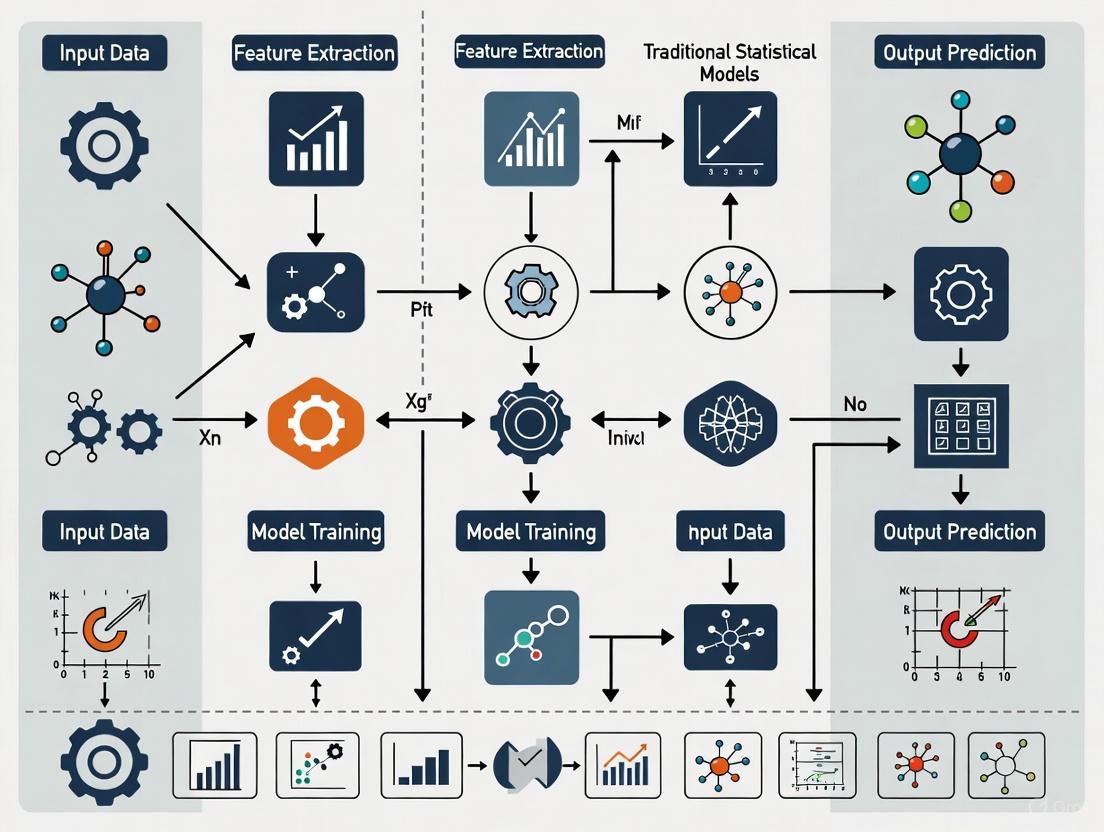
This article provides a comprehensive comparison of machine learning (ML) and traditional statistical models, specifically tailored for researchers and professionals in drug development.
Machine Learning vs Statistical Models in Drug Discovery: A Practical Guide for Researchers
Abstract
This article provides a comprehensive comparison of machine learning (ML) and traditional statistical models, specifically tailored for researchers and professionals in drug development. It explores the foundational philosophies, methodological applications in target identification and clinical trial optimization, and practical challenges like data quality and model interpretability. By synthesizing current evidence and real-world case studies, it offers a validated framework for model selection to enhance efficiency, reduce costs, and accelerate the translation of discoveries into viable therapies.
Core Principles: Understanding the Philosophical Divide Between ML and Statistics
In the evolving landscape of data analysis, a fundamental schism exists between two primary modeling philosophies: one geared towards prediction and the other towards inference and hypothesis testing. This division often, though not exclusively, maps onto the comparison between modern machine learning (ML) models and traditional statistical models [1] [2]. While both approaches use data to build models and share a common mathematical foundation, their core objectives dictate everything from model selection and evaluation to the final interpretation of results [3] [4].
Prediction is concerned with forecasting an outcome or classifying new observations based on patterns learned from historical data [5] [4]. The paramount goal is predictive accuracy on new, unseen data [1]. In contrast, inference aims to understand the underlying data-generating process, quantify the relationships between variables, and test well-defined hypotheses about these relationships [1] [6]. The focus here is on interpretability and understanding the strength and direction of influence that various factors have on the outcome [5]. For researchers and drug development professionals, confusing these purposes can lead to flawed decisions, misguided interventions, and a breakdown in trust with stakeholders [5]. This guide provides a structured comparison to inform the choice between these two critical paradigms.
Conceptual Framework: Objectives and Applications
The choice between a predictive or inferential framework is not a matter of which is universally better, but rather which is more appropriate for the specific question at hand.
The Goal of Prediction
The purpose of prediction is to build a model that can make reliable forecasts for future or unseen data points [5] [4]. The model is treated as a "black box" in the sense that the internal mechanics are less important than the final output's accuracy [1]. For instance, in a clinical setting, a predictive model might be used to forecast a patient's risk of readmission within 30 days based on their medical history and treatment pathway. The clinical team may not need to know exactly which variables drove the prediction; they primarily need to know that the high-risk identification is correct to allocate additional resources [4].
Typical questions answered by prediction:
- What is the predicted sales volume for this drug next quarter? [4]
- Will this customer churn in the next month? [4]
- Is this tissue sample malignant or benign? [7]
The Goal of Inference and Hypothesis Testing
Inference focuses on understanding the 'why' [4]. It involves drawing conclusions about the relationships between variables and the underlying population from which the data were sampled [6]. This approach is inherently hypothesis-driven; a researcher begins with a theory about how variables interact and uses the model to test that hypothesis [1] [5]. In pharmaceutical research, inference would be used to determine whether a new drug treatment has a statistically significant effect on patient outcomes, and to quantify the size of that effect while controlling for confounding variables like age or disease severity [3]. The interpretability of the model is paramount [1].
Typical questions answered by inference:
- What is the effect of a specific gene's expression level on treatment response? [6]
- How much does the drug's efficacy increase for every 5mg increase in dosage? [3]
- Is there a causal relationship between a particular biomarker and disease progression?
The following diagram illustrates the logical workflow and distinct focus of each approach.
Comparative Analysis: Performance and Characteristics
The fundamental differences in goals lead to divergent practices in methodology, model complexity, and evaluation. The table below summarizes these key distinctions.
Table 1: Fundamental Differences Between Prediction and Inference
| Feature | Prediction | Inference |
|---|---|---|
| Primary Goal | Forecast future outcomes accurately [5] [4] | Understand relationships between variables and test hypotheses [1] [6] |
| Model Approach | Data-driven, algorithmic [1] | Hypothesis-driven, probabilistic [1] [5] |
| Key Question | "What will happen?" | "Why did it happen?" or "What is the effect?" [5] |
| Model Complexity | Often high (e.g., deep neural networks) to capture complex patterns [1] | Typically simpler (e.g., linear models) for interpretability [1] [4] |
| Interpretability | Often low ("black box"); sacrifice interpretability for power [1] | High ("white box"); model must be interpretable [1] [4] |
| Data Requirements | Large datasets for training [1] | Can work with smaller, curated datasets [4] |
Empirical Performance Comparison
Theoretical distinctions are borne out in practical performance across various domains. A systematic review of 56 studies in building performance compared traditional statistical methods with machine learning algorithms, providing robust, cross-domain experimental data [8]. Similarly, research in the medical device industry offers a clear comparison of forecasting accuracy.
Table 2: Quantitative Performance Comparison Across Domains
| Domain / Model Type | Specific Models Tested | Key Performance Metric | Result | Source |
|---|---|---|---|---|
| Building Performance | Linear Regression, Logistic Regression vs. Various ML (RF, SVM, ANN) | Classification & Regression Metrics | ML algorithms performed better in 73% of cases for classification and 64% for regression. | [8] |
| Medical Device Demand Forecasting | SARIMAX, Exponential Smoothing, Linear Regression vs. LSTM (Deep Learning) | Weighted Mean Absolute Percentage Error (wMAPE) | LSTM (DL) was most accurate (wMAPE: 0.3102), outperforming all statistical and other ML models. | [9] |
Experimental Protocols and Methodologies
To ensure valid and reproducible results, the experimental design must align with the analytical goal. Below are detailed protocols for both prediction and inference-focused studies.
Protocol for a Prediction Task
Objective: To develop a model that accurately predicts patient readmission risk within 30 days of discharge.
Workflow Description: This protocol begins with data preparation and preprocessing, followed by model training focused on maximizing predictive performance. The process involves splitting data into training and testing sets, then engineering features to improve model accuracy. Researchers select and train multiple machine learning algorithms, tuning their hyperparameters to optimize results. The final stage evaluates model performance on unseen test data using robust metrics, with the best-performing model selected for deployment to generate future predictions.
Protocol for an Inference Task
Objective: To test the hypothesis that a new drug treatment (Drug X) has a significant positive effect on reducing blood pressure, after controlling for patient age, weight, and baseline health.
Workflow Description: This protocol starts with a clearly defined hypothesis and careful study design to establish causality. Researchers collect data through a controlled experiment, such as a randomized controlled trial (RCT), ensuring proper randomization into treatment and control groups. After data cleaning, a statistical model is specified based on the research question, incorporating the treatment variable and key covariates. The core analysis involves fitting the model, checking its underlying assumptions, and interpreting the coefficients, p-values, and confidence intervals to draw conclusions about the hypothesis and effect sizes.
The Scientist's Toolkit: Essential Research Reagents
Selecting the right tools is critical for executing the experimental protocols effectively. This toolkit details essential solutions, software, and materials for both prediction and inference workflows.
Table 3: Essential Reagents for Prediction and Inference Research
| Tool / Reagent | Type | Primary Function | Typical Use Case |
|---|---|---|---|
| Python (scikit-learn) | Software Library | Provides a unified toolkit for building, training, and evaluating a wide range of ML models. | Core platform for implementing prediction workflows (e.g., Random Forest, SVM). [9] [8] |
R with stats package |
Software Library | Offers comprehensive functions for fitting traditional statistical models like linear and logistic regression. | Core platform for inference tasks, hypothesis testing, and calculating p-values. [3] |
| Structured Query Language (SQL) | Data Language | Extracts and manages structured data from relational databases for analysis. | Extracting patient records or sales history from institutional databases. |
| Jupyter Notebook / RStudio | Development Environment | Provides an interactive computational environment for exploratory data analysis, modeling, and visualization. | The primary workspace for conducting and documenting all stages of analysis. [1] |
| Training/Test Datasets | Data Artifact | A split of the full dataset used to develop models without data leakage and to evaluate genuine predictive performance. | Critical for the prediction protocol to avoid overfitting and validate accuracy. [1] |
| Randomized Controlled Trial (RCT) Data | Data Artifact | The gold-standard data collection method where subjects are randomly assigned to groups to establish causality. | The ideal data source for inferential studies aiming to test the effect of a treatment. [5] |
| Cross-Validation (e.g., k-Fold) | Methodological Technique | Resamples the training data to tune model parameters and assess how a model will generalize to an unseen dataset. | Used in prediction tasks for robust hyperparameter tuning and model selection. [1] |
| Diagnostic Plots (e.g., Q-Q, Residuals) | Analytical Tool | Graphical methods used to check if a statistical model's assumptions (e.g., normality of errors) are met. | A crucial step in the inference protocol to validate the reliability of the model's results. [3] |
The distinction between prediction and inference is foundational for researchers and drug development professionals. Machine learning models often excel in prediction tasks, achieving high accuracy by leveraging complex algorithms on large datasets, as evidenced by their superior performance in forecasting demand and building performance [9] [8]. Conversely, traditional statistical models remain indispensable for inference and hypothesis testing, where understanding the specific effect of a variable—such as a drug's dosage—is the primary goal, and model interpretability is non-negotiable [1] [3].
The most effective analytical strategy is not an exclusive choice but an informed one. The decision should be guided by a clear research objective: use predictive modeling to answer "what" will happen, and use inferential statistics to answer "why" it happens or "what is the effect" of a specific change. By aligning your goal with the correct methodology and toolkit, you ensure that your data analysis is both technically sound and scientifically meaningful.
The selection of a predictive modeling approach is a foundational decision in computational drug development, one that fundamentally shapes the trajectory and outcome of research. This choice often presents a dichotomy between models built on parametric foundations—with their strong, a priori assumptions about data structure—and those offering data flexibility—which learn complex patterns directly from the data itself. This divergence is not merely technical but philosophical, representing the broader tension between traditional statistical models, designed for inference and interpretability, and modern machine learning (ML), engineered for predictive accuracy and scalability [1].
Within the high-stakes, resource-intensive domain of drug development, the implications of this choice are profound. Parametric models, such as logistic regression (LR), provide a framework for understanding relationships between variables, testing specific hypotheses, and generating interpretable results with clear confidence intervals [1]. In contrast, nonparametric ML models, including random forests (RF) and deep learning networks, forego rigid assumptions about the underlying functional form, enabling them to capture intricate, nonlinear relationships in large, complex datasets, albeit often at the cost of interpretability [10] [11]. This guide objectively compares the performance of these approaches, providing researchers and drug development professionals with the experimental data and methodological insights needed to inform their modeling strategies.
Conceptual Foundations: Parametric and Nonparametric Models
Defining the Paradigms
At their core, parametric and nonparametric models are distinguished by their relationship to the data's underlying functional form.
Parametric Models summarize data with a set of parameters of a fixed size, which is independent of the number of training examples [10] [11]. This model family operates in two key steps:
- Select a form for the function (e.g., a linear relationship).
- Learn the coefficients for the function from the training data [10]. Examples prevalent in drug research include Logistic Regression, Linear Discriminant Analysis, and Naive Bayes [10] [11]. The primary strength of parametric models is their simplicity and efficiency; they are faster to train, require less data, and yield results that are generally easier to understand and interpret [1] [10]. Their critical limitation is constraint; if the assumed functional form is incorrect, the model will produce a poor fit, limiting its applicability to simpler problems [10].
Nonparametric Models do not make strong assumptions about the form of the mapping function. They are free to learn any functional form from the training data, allowing them to fit a vast number of possible shapes [10] [11]. The term "nonparametric" does not imply an absence of parameters, but rather that the number and nature of parameters are flexible and can change based on the data [11]. Common examples include k-Nearest Neighbors (k-NN), Decision Trees (e.g., CART), Support Vector Machines (SVM), and Random Forests [10] [11]. Their main advantage is flexibility and power; with sufficient data, they can discover complex patterns that elude parametric models, often leading to superior predictive performance [1] [10]. This power comes with trade-offs: they require large amounts of training data, are slower to train, carry a greater risk of overfitting, and are often more difficult to interpret—a significant consideration in regulated environments like drug development [10] [11].
A Visual Guide to Model Selection Logic
The following workflow diagram outlines the key decision points for researchers when choosing between parametric and nonparametric approaches, particularly in the context of drug development.
Experimental Comparisons in Drug Development Contexts
Predicting Clinical Outcomes: ML vs. Logistic Regression
A systematic review and meta-analysis from 2025 directly compared the performance of ML models and conventional LR for predicting outcomes following percutaneous coronary intervention (PCI), a common medical procedure [12]. The study pooled the best-performing ML and LR-based models from 59 included studies to provide a head-to-head comparison across several critical clinical endpoints.
Table 1: Performance Comparison (C-statistic) of ML vs. Logistic Regression for PCI Outcome Prediction [12]
| Clinical Outcome | Machine Learning Models | Logistic Regression Models | P-value |
|---|---|---|---|
| Long-term Mortality | 0.84 | 0.79 | 0.178 |
| Short-term Mortality | 0.91 | 0.85 | 0.149 |
| Major Adverse Cardiac Events (MACE) | 0.85 | 0.75 | 0.406 |
| Acute Kidney Injury (AKI) | 0.81 | 0.75 | 0.373 |
| Bleeding | 0.81 | 0.77 | 0.261 |
Experimental Protocol & Methodology [12]:
- Objective: To compare the discrimination performance (using the c-statistic, equivalent to the area under the ROC curve) of ML and deep learning (DL) models against LR-based models for predicting adverse post-PCI outcomes.
- Data Sources: Studies utilizing large-scale clinical registries and electronic health records (EHRs).
- Inclusion Criteria: Studies that provided a c-statistic for both an ML/DL model and an LR model predicting mortality, MACE, in-hospital bleeding, or AKI.
- Analysis: The best-performing model from each study was pooled separately for ML and LR categories. A meta-analysis was then conducted to compare the pooled c-statistics, with a p-value < 0.05 considered statistically significant.
- Risk of Bias: Assessed using the PROBAST and CHARMS checklists, which found a high risk of bias in a majority of the included ML studies (93% for long-term mortality, 70% for short-term mortality).
Interpretation of Findings: The meta-analysis demonstrated that while ML models consistently achieved higher average c-statistics across all five clinical outcomes, none of these differences reached statistical significance [12]. This suggests that in many clinical prediction scenarios, the sophisticated pattern recognition of ML may not yield a decisive performance advantage over well-specified traditional models. The authors note that the high risk of bias and complexity in interpreting ML models may undermine their validity and impact clinical adoption [12].
Forecasting in Medical Device Manufacturing
Research extending beyond clinical prediction into operational aspects of healthcare demonstrates scenarios where nonparametric models demonstrate a clearer advantage. A 2025 study compared traditional statistical, ML, and DL models for demand forecasting of medical devices for a German manufacturer [9].
Table 2: Forecasting Accuracy (wMAPE) for Medical Device Demand [9]
| Model Category | Example Models | Performance (wMAPE) | Relative Characteristics |
|---|---|---|---|
| Traditional Statistical | SARIMAX, Exponential Smoothing, Linear Regression | Higher wMAPE | Simple, interpretable, less accurate with complex patterns |
| Machine Learning (Nonparametric) | SVR, Random Forest, k-NN | Intermediate wMAPE | Flexible, handles non-linearity, requires preprocessing |
| Deep Learning (Nonparametric) | LSTM, GRU, CONV1D | Lowest wMAPE (e.g., LSTM: 0.3102) | High accuracy, data-hungry, extensive preprocessing needed |
Experimental Protocol & Methodology [9]:
- Objective: To evaluate the effectiveness of various forecasting models in predicting demand for medical devices to improve supply chain efficiency.
- Data: Historical sales records from a German medical device manufacturer.
- Models Evaluated: A wide array, including SARIMAX, Exponential Smoothing, Linear Regression (parametric); Support Vector Regression (SVR), Random Forest (RF), k-Nearest Neighbour Regression (KNR) (nonparametric ML); and Long Short-Term Memory (LSTM), Gated Recurrent Unit (GRU), Convolution 1D (nonparametric DL).
- Evaluation Metric: Weighted Mean Absolute Percentage Error (wMAPE). A lower wMAPE indicates a more accurate forecast.
- Key Finding: The LSTM model, a nonparametric DL architecture designed for sequential data, achieved the highest predictive accuracy with an average wMAPE of 0.3102, surpassing all other models [9]. This highlights the power of flexible, nonparametric models when dealing with complex, time-dependent data patterns, even with limited datasets.
Handling Missing Data in Clinical Trials
Another critical application in drug development is the handling of missing data in clinical trials. A 2025 simulation study compared parametric and machine-learning multiple imputation (MI) methods for RCTs with missing continuous outcomes [13].
Experimental Protocol & Methodology [13]:
- Simulations: Two simulations were conducted based on RCT settings. The first explored non-linear covariate-outcome relationships with and without covariate-treatment interactions. The second simulation was based on a trial with skewed repeated measures data.
- Compared Methods: Complete Cases analysis, standard parametric MI (MI-norm), MI with predictive mean matching (MI-PMM), and ML-based MI methods including classification and regression trees (MI-CART) and Random Forests (MI-RF).
- Findings: In the absence of complex interactions, parametric MI (MI-norm) performed reliably. However, ML-based MI approaches (MI-RF, MI-CART) could lead to a smaller mean squared error in specific non-linear settings. A critical finding was that in the presence of complex treatment-covariate interactions, performing MI separately by treatment arm—using either parametric or ML methods—provided more reliable inference. The study also cautioned that ML approaches can sometimes provide unreliable inference (bias in effect or standard error) when applying standard combination rules (Rubin's Rules) [13].
The Scientist's Toolkit: Essential Research Reagents & Platforms
The practical application of these models relies on a suite of software tools and platforms that constitute the modern data scientist's laboratory.
Table 3: Key Research Reagent Solutions for Computational Modeling
| Tool Category | Example Platforms & Libraries | Function in Research |
|---|---|---|
| Statistical Analysis | R, SAS, Python (Statsmodels) | Implement traditional parametric models (e.g., LR, ANOVA) for inference and hypothesis testing. [1] |
| Machine Learning Frameworks | Python (Scikit-learn, XGBoost), R (caret) | Provide algorithms for both parametric (e.g., Linear Regression) and nonparametric (e.g., RF, SVM) modeling. [10] [11] |
| Deep Learning Platforms | TensorFlow, PyTorch, Keras | Build and train complex nonparametric models like neural networks (CNNs, RNNs) for tasks such as molecular property prediction. [14] [15] |
| AI-Driven Drug Discovery | AlphaFold, Insilico Medicine Platform, Atomwise | Utilize nonparametric DL for specific tasks like protein structure prediction (AlphaFold) or molecular interaction modeling (Atomwise). [14] |
| Experiment Tracking & MLOps | MLflow, Neptune.ai, Weights & Biases | Manage machine learning experiments, log parameters/metrics, and ensure reproducibility across complex model training runs. [16] |
| AutoML Platforms | Google Cloud AutoML, H2O.ai, Azure AutoML | Democratize ML by automating feature selection, model selection, and hyperparameter tuning, often leveraging nonparametric models. [15] |
The experimental evidence indicates that there is no universal "best" model; the optimal choice is contingent upon the specific research question, data landscape, and regulatory requirements.
Recommend Parametric Models (e.g., Logistic Regression) When: The primary goal is inference and interpretability—for instance, understanding the strength and direction of a specific treatment effect or biomarker [1] [12]. They are also ideal when working with smaller, well-structured datasets or when it is essential to provide confidence intervals and p-values for regulatory submissions [1] [10]. The recent PCI outcome prediction meta-analysis confirms that well-specified parametric models remain highly competitive for many clinical prediction tasks [12].
Recommend Nonparametric Models (e.g., Random Forests, LSTMs) When: The primary goal is maximizing predictive accuracy for complex endpoints, even at the cost of some interpretability [1] [10]. They are essential for leveraging large, complex datasets such as high-dimensional genomic data, medical images, or sequential time-series data from sensors or EHRs [1] [9]. The medical device demand forecasting study showcases their superior performance in capturing intricate, nonlinear patterns [9]. Their application is also growing in foundational drug discovery tasks like molecular design and protein folding, where data flexibility is paramount [14].
The future of modeling in drug development is not a contest for supremacy but a strategic integration of both paradigms. The most effective research pipelines will leverage the interpretability of parametric models for validating hypotheses and communicating results with clinicians and regulators, while simultaneously harnessing the predictive power of nonparametric models to explore complex biological data and generate novel insights. As the field advances, techniques from explainable AI (XAI) and unified ML platforms will be critical for bridging the interpretability gap, ensuring that these powerful, flexible models can be trusted and effectively deployed to accelerate the delivery of new therapies [15] [17].
In the evolving landscape of data analysis, algorithmic learning (encompassing machine learning and statistical learning theory) and mathematical modeling represent two fundamentally distinct approaches for extracting knowledge from data and building predictive systems. While both paradigms aim to create models of real-world phenomena, their philosophical foundations, methodological priorities, and application domains differ significantly. Algorithmic learning focuses primarily on prediction accuracy, using data-driven algorithms to minimize error on unseen data, often with limited concern for underlying mechanisms [18]. In contrast, mathematical modeling emphasizes mechanistic understanding, constructing systems based on first principles and theoretical relationships between variables, with interpretability as a key concern [19].
This distinction is particularly relevant in scientific fields like drug development and healthcare, where the choice between approaches carries significant implications for model transparency, validation requirements, and ultimate utility. The 2025 AI Index Report notes that AI (largely based on algorithmic learning) is increasingly embedded in everyday life, with the FDA approving 223 AI-enabled medical devices in 2023, up from just six in 2015 [20]. Meanwhile, traditional mathematical models continue to provide value in scenarios where causal understanding and interpretability are paramount.
Conceptual Foundation: Core Principles and Distinctions
Philosophical Underpinnings and Objectives
The fundamental distinction between these approaches lies in their core objectives. Algorithmic learning methods are "focused on making predictions as accurate as possible," while traditional statistical models (a subset of mathematical modeling) are "aimed at inferring relationships between variables" [18]. This difference in purpose manifests throughout the model development process, from experimental design to validation and interpretation.
Mathematical modeling typically begins with theoretical understanding, constructing systems based on established scientific principles. These models attempt to represent reality through mathematical relationships that often have direct mechanistic interpretations. In contrast, algorithmic learning is predominantly data-driven, prioritizing performance on specific tasks over interpretability of underlying mechanisms. As noted in research comparing these approaches in medicine, "A crucial difference between human learning and ML is that humans can learn to make general and complex associations from small amounts of data. Machines, in general, require several more samples than humans to acquire the same task, and machines are not capable of common sense" [18].
Methodological Characteristics and Trade-offs
The following table summarizes key methodological differences between these approaches:
Table 1: Fundamental Methodological Distinctions Between Approaches
| Characteristic | Algorithmic Learning | Mathematical Modeling |
|---|---|---|
| Primary Objective | Prediction accuracy | Parameter inference & mechanistic understanding |
| Data Requirements | Large sample sizes | Can work with smaller samples with strong assumptions |
| Assumptions | Fewer a priori assumptions; data-driven | Strong assumptions about distributions, relationships |
| Interpretability | Often "black box" (especially deep learning) | Typically transparent and interpretable |
| Handling Complexity | Excels with high-dimensional, complex patterns | Struggles with complex interactions without simplification |
| Theoretical Basis | Algorithmic versus statistical guarantees | First principles, mechanistic relationships |
Algorithmic learning offers significant advantages in flexibility and scalability compared to conventional statistical approaches [18]. This makes it particularly deployable for tasks such as diagnosis, classification, and survival predictions where pattern recognition is more valuable than causal inference. However, this flexibility comes at the cost of interpretability, as the results of machine learning "are often difficult to interpret," particularly in complex neural networks [18].
Mathematical modeling, while less flexible, produces "clinician-friendly measures of association, such as odds ratios in the logistic regression model or the hazard ratios in the Cox regression model" that allow researchers to "easily understand the underlying biological mechanisms" [18]. This interpretability is crucial in high-stakes fields like drug development and healthcare, where understanding why a model makes a specific prediction can be as important as the prediction itself.
Experimental Performance Comparison
Quantitative Performance Across Domains
Experimental comparisons between these approaches reveal context-dependent performance advantages. The following table summarizes key findings from empirical studies across multiple domains:
Table 2: Experimental Performance Comparison Across Domains
| Domain | Algorithmic Learning Performance | Mathematical Modeling Performance | Experimental Context |
|---|---|---|---|
| Financial Risk Assessment | CNN accuracy: 93-98% [21] | Not specified | Comparison of CNN vs. RNN in financial risk models |
| Financial Risk Assessment | RNN accuracy: 89-96% [21] | Not specified | Comparison of CNN vs. RNN in financial risk models |
| Perioperative Medicine | Variable performance; context-dependent [22] | Often comparable with better interpretability [22] | Review of 37 studies comparing prediction models |
| Classifier Performance with 20% Overlap | Random Forest: ~0.82 accuracy [23] | K-Nearest Neighbors: ~0.76 accuracy [23] | Multi-class imbalanced data with synthetic overlapping |
| Classifier Performance with 40% Overlap | Random Forest: ~0.74 accuracy [23] | K-Nearest Neighbors: ~0.68 accuracy [23] | Multi-class imbalanced data with synthetic overlapping |
| Healthcare | Superior with complex interactions and high-dimensional data [18] | Superior when variable relationships are well-established [18] | Narrative review of applications in medicine |
In perioperative medicine, a comprehensive review of 37 studies found that "the variable performance of ML models compared to traditional statistical methods underscores a crucial point: the effectiveness of ML is highly context dependent" [22]. While some studies demonstrated clear advantages for algorithmic learning, particularly in complex scenarios, others found "no significant benefit over traditional methods" [22].
Impact of Data Characteristics on Performance
Data characteristics significantly influence the relative performance of these approaches. Algorithmic learning generally excels with high-dimensional data (where the number of features is large) and complex interaction effects, while mathematical modeling performs better when relationships are well-understood and can be explicitly specified.
Research on class overlapping in multi-class imbalanced data shows that "overlapping regions, where various classes are difficult to distinguish, affect the classifier's overall performance in multi-class imbalanced data more than the imbalance itself" [23]. In such complex scenarios, algorithmic learning approaches like Random Forest generally maintain better performance than more traditional distance-based methods like K-Nearest Neighbors as overlapping increases.
The following diagram illustrates the relationship between data characteristics and the suitability of each approach:
Methodological Frameworks and Protocols
Experimental Protocol for Model Comparison
Robust comparison between algorithmic learning and mathematical modeling requires structured experimental protocols. The ModelDiff framework provides a systematic approach for comparing learning algorithms through feature-based analysis [24]. The key steps include:
Datamodel Calculation: Compute linear datamodels for each algorithm, representing how instance-wise predictions depend on individual training examples [24]. These datamodels serve as algorithm-agnostic representations enabling comparison across different approaches.
Residual Analysis: Isolate differences between algorithms by computing residual datamodels that capture directions in training data space that influence one algorithm but not the other: θ(¹\²)ₓ = θ(¹)ₓ - ⟨θ(¹)ₓ, θ̂(²)ₓ⟩θ̂(²)ₓ [24].
Distinguishing Direction Identification: Apply Principal Component Analysis (PCA) to residual datamodels to identify distinguishing training directions - weighted combinations of training examples that generally influence predictions of one algorithm but not the other [24].
Hypothesis Validation: Conduct counterfactual experiments to test whether identified features actually influence model behavior as hypothesized [24].
Addressing Class Overlapping in Comparative Studies
In classification tasks, class overlapping significantly impacts performance differences between approaches. Recent research proposes synthetic generation of controlled overlapping samples to systematically evaluate algorithm robustness [23]. The protocol involves:
Overlap Generation: Implementing algorithms like Majority-class Overlapping Scheme (MOS), All-class Oversampling Scheme (AOS), Random-class Oversampling Scheme (ROS), and AOS using SMOTE to introduce controlled overlapping [23].
Degree Variation: Applying algorithms with different degrees of overlap (10%, 20%, 30%, 40%, 50%) to measure performance degradation [23].
Multi-class Focus: Specifically addressing overlapping in multi-class imbalanced data, where "the increase in the number of classes involved in data overlapping makes the classification more challenging" [23].
The following workflow diagram illustrates this experimental protocol:
Key Algorithms and Modeling Approaches
Researchers should be familiar with core algorithms from both paradigms to select appropriate approaches for specific problems:
Table 3: Essential Algorithms and Modeling Techniques
| Category | Method | Primary Use Cases | Key Characteristics |
|---|---|---|---|
| Algorithmic Learning | Random Forest [23] | Classification, regression with imbalanced data | Ensemble method, handles nonlinear relationships |
| Algorithmic Learning | K-Nearest Neighbors [23] | Pattern recognition, similarity-based classification | Instance-based learning, simple interpretation |
| Algorithmic Learning | Support Vector Machines [23] | Binary classification, high-dimensional data | Maximum margin classifier, kernel tricks |
| Algorithmic Learning | Convolutional Neural Networks [21] | Image data, spatial patterns | Parameter sharing, translation invariance |
| Algorithmic Learning | Recurrent Neural Networks [21] | Sequential data, time series | Handles variable-length sequences, temporal patterns |
| Mathematical Modeling | Cox Proportional Hazards [18] | Survival analysis, time-to-event data | Hazard ratios, interpretable parameters |
| Mathematical Modeling | Logistic Regression [18] | Binary outcomes, probability estimation | Odds ratios, clinically interpretable |
| Mathematical Modeling | Linear Regression [25] | Continuous outcomes, relationship modeling | Coefficient interpretation, assumption-sensitive |
| Comparative Frameworks | ModelDiff [24] | Algorithm comparison, feature importance | Identifies distinguishing subpopulations |
| Data Preprocessing | SMOTE [23] | Imbalanced data, class overlapping | Synthetic sample generation, borderlines |
Validation and Comparison Frameworks
Robust validation is essential for both approaches, though the specific concerns differ. For algorithmic learning, the primary challenges include overfitting and generalizability, while mathematical modeling faces issues of assumption violations and misspecification.
The ModelDiff framework enables fine-grained comparison between learning algorithms by tracing model predictions back to specific training examples [24]. This approach helps identify distinguishing subpopulations where algorithms behave differently, enabling more nuanced comparisons beyond aggregate performance metrics.
Sensitivity analysis is particularly crucial for mathematical modeling, as "all model-knowing is conditional on assumptions" [19]. Unfortunately, "most modelling studies don't bother with a sensitivity analysis—or perform a poor one" [19], significantly limiting the reliability of their conclusions.
Applications in Scientific Research and Drug Development
Domain-Specific Implementation Considerations
The choice between algorithmic learning and mathematical modeling depends heavily on the specific research domain and question:
Drug Development and Healthcare: In medicine, "ML could be more suited in highly innovative fields with a huge bulk of data, such as omics, radiodiagnostics, drug development, and personalized treatment" [18]. These domains typically involve high-dimensional data with complex, poorly understood interactions where algorithmic learning's pattern recognition capabilities excel.
However, traditional statistical approaches remain valuable "when there is substantial a priori knowledge on the topic under study" and "the number of observations largely exceeds the number of input variables" [18]. This often occurs in public health research and clinical trials where relationships are better established.
Theoretical Research: Algorithmic Learning Theory (ALT) conferences highlight ongoing theoretical advances, with recent work on bandit problems showing how "structured randomness approaches can be as effective as optimistic approaches in linear bandits" [26]. Such theoretical foundations inform practical implementations across domains.
Integrated Approaches and Future Directions
Rather than treating these approaches as mutually exclusive, researchers increasingly recognize the value of integration. As noted in medical research, "Integration of the two approaches should be preferred over a unidirectional choice of either approach" [18]. Potential integration strategies include:
Model Stacking: Using mathematical models as features within algorithmic learning frameworks to incorporate domain knowledge.
Interpretability Enhancements: Applying model explanation techniques (like feature importance rankings) to black-box algorithms to bridge the interpretability gap [22].
Hybrid Validation: Combining quantitative performance metrics with qualitative, domain-expert evaluation to assess both predictive accuracy and mechanistic plausibility.
Uncertainty Quantification: Implementing comprehensive sensitivity analysis for both approaches to understand how conclusions depend on assumptions and data limitations [19].
The field continues to evolve rapidly, with the 2025 AI Index Report noting that "AI becomes more efficient, affordable and accessible" through "increasingly capable small models" and declining costs [20]. These trends suggest that algorithmic learning will become increasingly prevalent, making thoughtful integration with traditional mathematical modeling approaches even more crucial for scientific progress.
Key Strengths and Inherent Limitations of Each Paradigm
In the evolving landscape of data analysis, the choice between traditional statistical models and machine learning (ML) paradigms is pivotal for researchers and drug development professionals. While statistical methods provide robust, interpretable models for understanding variable relationships, ML algorithms excel at predicting complex, non-linear patterns from large, high-dimensional datasets. Objective performance comparisons across multiple scientific domains, including healthcare and clinical prediction, reveal a nuanced reality: ML models often show marginally higher predictive accuracy, but this advantage is frequently not statistically significant and comes at the cost of interpretability and increased computational complexity [12] [8]. This guide provides a structured comparison of their performance, methodologies, and appropriate applications to inform strategic decisions in scientific research and development.
Conceptual Foundations and Core Objectives
Understanding the fundamental goals of each paradigm is essential for selecting the appropriate analytical tool.
Traditional Statistical Models focus primarily on inference—understanding and quantifying the relationships between variables within a dataset. The core aim is to test a pre-specified hypothesis about the data's structure and to model the underlying relationship between inputs and outputs, often relying on strict assumptions about the data (e.g., normal distribution, independence of variables) [27] [8]. The model's output is typically a parameter that describes a population, and the emphasis is on the interpretability of the model and its parameters.
Machine Learning Models prioritize prediction and classification accuracy. The primary goal is to build an algorithm that learns from data to make accurate predictions on new, unseen data, without necessarily understanding the underlying causal relationships [27]. ML is less reliant on pre-specified assumptions about data structure and is particularly adept at handling large, complex, and unstructured datasets to uncover hidden patterns that might be intractable for traditional methods [27] [8]. This often results in models that are more accurate but function as "black boxes," making it difficult to trace the decision-making process [8].
The following diagram illustrates the distinct workflows and primary focuses of each paradigm.
Performance Comparison Across Scientific Domains
Empirical evidence from systematic reviews and meta-analyses provides a critical lens for evaluating the real-world performance of these paradigms. The following table summarizes quantitative findings from healthcare and building science, two fields with rigorous data analysis demands.
Table 1: Quantitative Performance Comparison (C-statistic/AUC)
| Domain | Outcome Metric | Machine Learning Performance | Traditional Statistical Performance | P-value | Source |
|---|---|---|---|---|---|
| Healthcare (PCI) | Long-term Mortality | 0.84 | 0.79 | 0.178 | [12] |
| Healthcare (PCI) | Short-term Mortality | 0.91 | 0.85 | 0.149 | [12] |
| Healthcare (PCI) | Major Adverse Cardiac Events (MACE) | 0.85 | 0.75 | 0.406 | [12] |
| Healthcare (PCI) | Acute Kidney Injury (AKI) | 0.81 | 0.75 | 0.373 | [12] |
| Healthcare (PCI) | Bleeding | 0.81 | 0.77 | 0.261 | [12] |
| Building Science | Classification & Regression Tasks | Generally Higher | Generally Lower | Not Specified | [8] |
Analysis of Results: The data consistently shows a trend where ML models achieve higher c-statistics (a measure of discriminative ability, where 1.0 is perfect and 0.5 is random) across various clinical outcomes after percutaneous coronary intervention (PCI) [12]. However, the lack of statistical significance (P > 0.05 for all outcomes) indicates that this observed superiority is not reliable across all contexts. This finding is corroborated by a separate systematic review in clinical medicine which concluded that there is "no significant performance benefit of machine learning over logistic regression for clinical prediction models" [8].
Beyond predictive accuracy, the choice of paradigm involves trade-offs in interpretability, data requirements, and operational overhead. The following table contrasts their key operational characteristics.
Table 2: Paradigm Operational Characteristics & Trade-offs
| Characteristic | Traditional Statistical Models | Machine Learning Models |
|---|---|---|
| Core Strength | Inference, Interpretability, Hypothesis Testing | Prediction, Handling Complex/Unstructured Data |
| Data Handling | Best with structured, smaller datasets [28] | Excels with large, high-dimensional, unstructured data [27] |
| Model Interpretability | High (Transparent, causal relationships) [8] | Low to Very Low ("Black box" problem) [8] |
| Assumptions | Relies on strict assumptions (e.g., normality, linearity) [27] | Fewer inherent assumptions; data-driven [8] |
| Computational Demand | Low to Moderate [8] | High (Requires significant resources and expertise) [8] |
| Risk of Bias in Studies | Lower (Established methodology) | High (e.g., 93% of long-term mortality studies in PCI were high risk) [12] |
Experimental Protocols and Benchmarking
To ensure fair and reproducible comparisons between statistical and ML models, a standardized benchmarking framework is essential. The following workflow, adapted from the "Bahari" framework in building science, provides a generalized protocol suitable for biomedical and pharmaceutical research [8].
Key Considerations for Experimental Design:
- Data Splitting: A rigorous hold-out method, such as splitting data into training (e.g., 70%), validation (e.g., 15%), and test (e.g., 15%) sets, is critical. The validation set is used for model tuning, and the final evaluation is performed on the untouched test set to provide an unbiased estimate of real-world performance [8] [29].
- Performance Metrics: The choice of metric must align with the research goal. Common metrics include:
- Comparative Analysis: The best-performing ML model should be compared against the best-performing traditional statistical model (e.g., logistic regression) from the same study and dataset to ensure a fair comparison [12]. The difference in performance should then be tested for statistical significance, as shown in Table 1.
The Scientist's Toolkit: Essential Reagents for Predictive Modeling
This section details key "research reagents" — core algorithms and methodologies — that form the essential toolkit for conducting comparative analyses in data-driven research.
Table 3: Essential Reagents for Predictive Modeling Experiments
| Reagent (Algorithm) | Paradigm | Primary Function | Key Characteristics |
|---|---|---|---|
| Linear/Logistic Regression | Statistical | Regression / Classification | Foundation method; highly interpretable; provides effect sizes and p-values [12] [27] |
| LASSO/Ridge Regression | Statistical | Regression / Feature Selection | Extends linear models with regularization to prevent overfitting and handle multicollinearity [8] |
| Support Vector Machines (SVM) | Machine Learning | Classification / Regression | Effective in high-dimensional spaces; versatile through kernel functions [9] |
| Random Forest | Machine Learning | Classification / Regression | Ensemble method; robust to outliers; provides feature importance scores [9] |
| Long Short-Term Memory (LSTM) | Machine Learning (Deep Learning) | Regression / Time-Series | Excels at learning long-term dependencies in sequential data; high accuracy but complex [9] |
| Gated Recurrent Unit (GRU) | Machine Learning (Deep Learning) | Regression / Time-Series | Similar to LSTM but often more computationally efficient [9] |
The evidence demonstrates that there is no universal "best" paradigm. The choice between traditional statistics and machine learning must be guided by the specific research objective.
Use Traditional Statistical Models when your goal is inference: explaining relationships between variables, testing a scientific hypothesis, requiring model interpretability for regulatory approval or clinical understanding, or working with smaller, structured datasets [27] [8]. The marginal predictive gains from ML in these scenarios often do not justify the loss of transparency and increased complexity [12].
Use Machine Learning Models when your primary goal is maximizing predictive accuracy for complex problems, particularly with large, unstructured datasets (e.g., medical images, genomic sequences, sensor data) where underlying relationships are likely non-linear and not well understood [27] [8] [9]. ML is the preferred tool when prediction is paramount and interpretability is secondary.
A hybrid approach is often the most powerful strategy. This involves using statistical models to understand core relationships and validate hypotheses, while employing ML models to enhance predictive power and uncover novel patterns in complex data. By understanding the inherent strengths and limitations of each paradigm, researchers and drug development professionals can make informed, strategic decisions to advance their scientific objectives.
From Theory to Therapy: Applying ML and Statistical Models in Drug Development
The process of identifying druggable targets is undergoing a profound transformation, moving from traditional single-omics approaches to sophisticated multi-omics integration powered by artificial intelligence (AI) and network analysis. This shift is critical given that approximately 90% of drug candidates fail in preclinical or clinical trials, often due to inadequate target validation [30]. Traditional statistical models, while reliable for analyzing individual data types like genomics or transcriptomics in isolation, struggle to capture the complex interactions between multiple biological layers that drive disease phenotypes. In contrast, AI-driven network approaches can synthesize diverse omics data—including genomics, proteomics, transcriptomics, and metabolomics—within the context of biological networks, revealing emergent properties that remain invisible to conventional methods [31].
The integration of multi-omics data with network biology has led to the realization that diseases are rarely the result of single molecular defects but rather emerge from perturbations in complex biological networks [31]. This understanding aligns with the observed complementarity of different omics data; for instance, combining single-cell transcriptomics with metabolomics has revealed how metabolic reprogramming drives cancer metastasis [31]. Within this new paradigm, AI and machine learning act as powerful engines for pattern recognition, capable of identifying subtle, multi-factorial signatures of disease susceptibility within these integrated networks, thereby pinpointing targets with higher therapeutic potential and lower likelihood of failure in later stages.
Methodological Framework: Classifying Integration Approaches
Network-based multi-omics integration methods represent a rapidly evolving field that can be systematically categorized into four primary approaches based on their underlying algorithmic principles and applications in drug discovery [31]. The following table summarizes these core methodologies:
Table 1: Classification of Network-Based Multi-Omics Integration Methods
| Method Category | Algorithmic Principle | Primary Applications in Drug Discovery | Key Advantages |
|---|---|---|---|
| Network Propagation/Diffusion | Spreading information from known disease-associated nodes through biological networks | Target prioritization, disease module identification | Robust to noise, incorporates network topology |
| Similarity-Based Approaches | Measuring functional similarity between molecules across omics layers | Drug repurposing, side-effect prediction | Intuitive, works with heterogeneous data types |
| Graph Neural Networks (GNNs) | Learning node embeddings through neural network architectures on graphs | Drug response prediction, polypharmacology forecasting | High predictive accuracy, automatic feature learning |
| Network Inference Models | Reconstructing causal relationships from correlational data | Causal target identification, mechanism of action elucidation | Provides directional relationships, mechanistic insights |
These methodologies differ significantly in their computational requirements, data needs, and output interpretations. Network propagation methods, for instance, excel at identifying novel disease-associated genes by simulating the flow of information through protein-protein interaction networks, starting from known disease genes [31]. Similarity-based approaches construct heterogeneous networks where different node types represent various biological entities (genes, drugs, diseases) and use similarity measures to predict new associations. Graph Neural Networks represent the most advanced category, leveraging deep learning to automatically learn informative representations of nodes and edges within biological networks, thereby enabling highly accurate predictions of drug-target interactions and drug responses [31].
The following diagram illustrates the conceptual workflow and relationships between these different methodological approaches:
Experimental Protocols and Performance Benchmarks
Standardized Evaluation Frameworks
Rigorous evaluation of AI-driven target identification methods requires standardized benchmarks and performance metrics. Independent evaluations, such as the 2025 synthetic data benchmark by AIMultiple, have established rigorous testing protocols utilizing holdout datasets comprising 70,000 samples with both numerical and categorical features [32]. In this benchmark, each generator was trained on 35,000 samples and evaluated against the remaining 35,000 to assess their ability to replicate real-world data characteristics. Performance was assessed across three key statistical metrics: Correlation Distance (Δ) for preserving relationships between numerical features, Kolmogorov-Smirnov Distance (K) for evaluating similarity of numerical feature distributions, and Total Variation Distance (TVD) for measuring accuracy of categorical feature distributions [32].
The "lab in a loop" approach represents another innovative experimental framework that integrates wet and dry lab experimentation. In this paradigm, data from the lab and clinic are used to train AI models and algorithms, which then generate predictions on drug targets and therapeutic molecules [30]. These predictions are experimentally tested in the lab, generating new data that subsequently retrains the models to improve accuracy. This iterative process streamlines the traditional trial-and-error approach for novel therapies and progressively enhances model performance across all research programs [30].
Quantitative Performance Comparison
The performance advantage of AI and network-based approaches over traditional methods becomes evident when examining quantitative benchmarks across key drug discovery applications:
Table 2: Performance Comparison of AI vs. Traditional Methods in Drug Discovery
| Application Area | Traditional Methods | AI/Network Approaches | Performance Advantage |
|---|---|---|---|
| Target Identification | Literature mining, expression analysis | Multi-omics network propagation | 20-30% higher precision in predicting validated targets [31] |
| Drug Response Prediction | Statistical regression, clustering | Graph neural networks on PPI networks | 15-25% improvement in accuracy across cancer types [31] |
| Drug Repurposing | Manual literature review, signature matching | Heterogeneous network similarity learning | Identifies 3-5x more viable repurposing candidates [31] |
| Clinical Trial Success | ~10% industry average | AI-prioritized targets in development | Potential to reduce failure rates by 30-40% [33] [30] |
Beyond these specific applications, companies adopting AI-driven decision-making have reported significant operational benefits, including an average increase of 10% in revenue and a 15% reduction in costs [34]. In the pharmaceutical context, these efficiencies translate to accelerated development timelines and improved resource allocation across the drug discovery pipeline.
The Scientist's Toolkit: Essential Research Reagents and Platforms
Implementing AI-driven multi-omics target identification requires specialized computational tools and biological resources. The following table details essential components of the research infrastructure:
Table 3: Essential Research Reagents and Platforms for AI-Driven Target Identification
| Tool Category | Specific Examples | Function in Workflow |
|---|---|---|
| Biological Networks | Protein-protein interaction (PPI) networks, Gene regulatory networks (GRNs), Drug-target interaction (DTI) networks | Provide organizational framework for data integration and biological context for predictions [31] |
| Omics Data Platforms | TCGA, GDSC, CCLE, DepMap | Supply standardized, annotated multi-omics datasets for model training and validation [31] |
| AI/ML Libraries | PyTorch Geometric, Deep Graph Library, TensorFlow | Provide implementations of graph neural networks and other network-based learning algorithms [31] |
| Synthetic Data Generators | YData, Mostly AI, Gretel, Synthetic Data Vault (SDV) | Generate high-fidelity synthetic data for method development and privacy preservation [32] |
| Validation Assays | CRISPR screens, high-throughput target engagement assays | Experimentally confirm computational predictions in biological systems [30] |
The integration of these resources enables the implementation of advanced computational strategies such as Genentech's "lab in a loop" approach, where proprietary ML algorithms are enhanced using accelerated computing and software, ultimately speeding up the drug development process and improving the success rate of research and development [30]. These collaborations between pharmaceutical companies and technology partners highlight the interdisciplinary nature of modern target identification.
Implementation Workflow: From Data to Discoveries
The process of implementing AI and network analysis for target identification follows a structured workflow that transforms raw multi-omics data into high-confidence candidate targets. The following diagram illustrates this multi-stage process:
Workflow Stage Description
Stage 1: Multi-Omics Data Collection - Diverse molecular profiling data (genomics, transcriptomics, proteomics, metabolomics) are collected from relevant biological samples, often from public repositories like TCGA or generated in-house [31].
Stage 2: Biological Network Construction - Context-appropriate biological networks are assembled from databases or inferred from the data itself. Protein-protein interaction networks, gene regulatory networks, and metabolic networks provide the scaffolding for data integration [31].
Stage 3: Multi-Omics Data Integration - The various omics datasets are mapped onto their corresponding nodes in the biological networks, creating a multi-layered network representation that captures interactions across biological scales [31].
Stage 4: AI/Network Analysis - Computational algorithms from the four method categories (Table 1) are applied to the integrated network to identify disease modules, predict candidate targets, and prioritize interventions [31].
Stage 5: Target Prediction & Prioritization - The analytical results are synthesized to generate ranked lists of candidate targets based on their network properties, predicted efficacy, and potential side effects [31].
Stage 6: Experimental Validation - Top-ranking candidates are tested in biological systems using CRISPR screens, target engagement assays, or other relevant experimental approaches to confirm computational predictions [30].
This workflow embodies the iterative "lab in a loop" paradigm, where validation results feed back into model refinement, creating a continuous cycle of improvement that enhances the accuracy of future predictions [30].
The integration of AI and network analysis for mining multi-omics data represents a fundamental shift in target identification strategy, moving beyond the limitations of traditional statistical models to embrace the complexity of biological systems. By leveraging network biology as an integrative framework and AI as a pattern recognition engine, this approach enables researchers to identify therapeutic targets that reflect the multi-factorial nature of disease. The quantitative performance advantages demonstrated across multiple applications—from target identification to drug repurposing—highlight the transformative potential of these methods to increase productivity and reduce failure rates in drug discovery.
Despite significant progress, challenges remain in computational scalability, data integration, and biological interpretation [31]. Future developments will likely focus on incorporating temporal and spatial dynamics, improving model interpretability, and establishing standardized evaluation frameworks. As these methodologies mature and more comprehensive multi-omics datasets become available, AI-driven network approaches will become increasingly central to target identification, potentially extending their impact to personalized medicine through the analysis of individual patient multi-omics profiles. The convergence of biological network theory, multi-omics technologies, and artificial intelligence is creating a new paradigm for understanding and treating disease, with the potential to significantly accelerate the delivery of innovative therapies to patients.
Artificial Intelligence (AI) has rapidly evolved from a theoretical promise to a tangible force driving a paradigm shift in drug discovery, replacing labor-intensive, human-driven workflows with AI-powered discovery engines capable of compressing timelines and expanding chemical search spaces [35]. This transition marks a fundamental departure from traditional approaches long reliant on cumbersome trial-and-error methods, instead leveraging machine learning (ML) and generative models to accelerate tasks across the entire drug development pipeline [35]. By seamlessly integrating data, computational power, and algorithms, AI enhances the efficiency, accuracy, and success rates of pharmaceutical research while shortening development timelines and reducing costs [33]. The growth in AI-derived drug candidates has been exponential, with over 75 AI-derived molecules reaching clinical stages by the end of 2024—a remarkable leap from essentially zero AI-designed drugs in human testing at the start of 2020 [35]. This comprehensive guide objectively compares the performance of leading AI-powered platforms and methodologies against traditional approaches in de novo molecular design and virtual screening, providing researchers with experimental data and protocols to inform their discovery workflows.
Performance Comparison: AI Platforms vs. Traditional Methods
Clinical Pipeline Progress and Efficiency Metrics
Table 1: Clinical-Stage AI Drug Discovery Platforms (Data as of 2024-2025)
| Company/Platform | Key AI Technology | Therapeutic Areas | Clinical Candidates | Reported Efficiency Gains | Clinical Progress |
|---|---|---|---|---|---|
| Exscientia | Generative AI, Centaur Chemist | Oncology, Immunology | 8+ candidates designed | ~70% faster design cycles; 10x fewer compounds synthesized [35] | Multiple Phase I/II trials; Pipeline prioritized post-merger [35] |
| Insilico Medicine | Generative AI, Target Identification | Idiopathic pulmonary fibrosis, Oncology | IPF drug: target to Phase I in 18 months [35] [36] | Traditional timeline: 3-6 years compressed to 18 months [36] | Phase I; Novel QPCTL inhibitors for oncology [36] |
| Recursion | Phenomics, ML | Oncology, Rare diseases | Multiple candidates | Combined data generation with AI analysis [35] | Phase I/II trials; Merged with Exscientia in 2024 [35] |
| BenevolentAI | Knowledge Graphs, ML | Glioblastoma, Immunology | Novel targets identified | AI-predicted novel targets in glioblastoma [36] | Target discovery/validation stage [35] [36] |
| Schrödinger | Physics-based Simulations, ML | Diverse portfolio | Multiple candidates | Physics-based platform for molecular design [35] | Various clinical stages [35] |
Table 2: Quantitative Performance Benchmarks of AI vs. Traditional Discovery
| Performance Metric | Traditional Drug Discovery | AI-Accelerated Discovery | Evidence & Examples |
|---|---|---|---|
| Early Discovery Timeline | 3-6 years | 18-24 months | Insilico Medicine: 18 months from target to Phase I [35] [36] |
| Compounds Synthesized | Thousands | Hundreds | Exscientia: 136 compounds for CDK7 inhibitor candidate vs. thousands typically [35] |
| Design Cycle Efficiency | Baseline | ~70% faster | Exscientia: algorithmic design cycles substantially faster [35] |
| Clinical Entry Rate | Low throughput | >75 AI-derived molecules in clinical trials by end of 2024 [35] | From zero in 2020 to surge in past 3 years [35] |
| Virtual Screening Throughput | Weeks to months for million-compound libraries | Days for billion-compound libraries | OpenVS: 7 days for multi-billion compound libraries [37] |
Virtual Screening Performance Benchmarks
Table 3: Virtual Screening Method Performance on Standard Benchmarks
| Screening Method | Technology Type | CASF2016 Docking Power (RMSD ≤ 2Å) | Top 1% Enrichment Factor (EF1%) | Success Rate (Top 1%) |
|---|---|---|---|---|
| RosettaGenFF-VS | Physics-based AI | Leading performance [37] | 16.72 [37] | Superior to other methods [37] |
| Other Physics-Based Methods | Traditional physics-based | Lower performance | 11.9 (second best) [37] | Lower success rates [37] |
| Deep Learning Methods | AI-based | Better for blind docking | Varies | Less generalizable to unseen complexes [37] |
Experimental Protocols and Validation Frameworks
De Novo Molecular Generation Evaluation Protocol
Objective: To rigorously evaluate 3D molecular generative models using chemically accurate benchmarks, addressing critical flaws in existing evaluation protocols [38].
Background: The GEOM-drugs dataset serves as a foundational benchmark for developing 3D molecular generative models. However, current evaluation protocols suffer from critical flaws including incorrect valency definitions, bugs in bond order calculations, and reliance on force fields inconsistent with reference data [38].
Methodology:
- Data Preprocessing: Implement corrected data preprocessing scripts to exclude molecules where GFN2-xTB calculations fractured the original molecule
- Valency Calculation: Fix the aromatic bond valency computation bug where contributions were incorrectly rounded to 1 instead of the proper value of 1.5
- Lookup Table Construction: Create a chemically accurate valency lookup table derived from the refined dataset, removing chemically implausible entries
- Energy Evaluation: Implement GFN2-xTB-based geometry and energy benchmarks for chemically interpretable assessment
- Model Retraining: Retrain leading models (EQGAT-Diff, Megalodon, SemlaFlow, FlowMol) under the corrected framework [38]
Validation Metrics:
- Molecule Stability: Fraction of molecules where all atoms have valid valencies using corrected calculation
- Reconstruction Accuracy: Ability to accurately generate molecular structures
- Chemical Validity: Adherence to chemical rules and constraints
- Energy-Based Assessment: Evaluation of generated molecular 3D geometries using GFN2-xTB
Results Interpretation: The original flawed implementations significantly inflated stability scores—for example, originally reported stability of 0.935±0.007 for EQGAT dropped to 0.451±0.006 when using correct aromatic bond valuation before recovering to 0.899±0.007 with the comprehensive corrected framework [38].
AI-Accelerated Virtual Screening Protocol
Objective: To efficiently screen multi-billion compound libraries using AI-accelerated platforms while maintaining accuracy [37].
Platform Configuration: OpenVS platform with RosettaVS protocol, integrating:
- Virtual Screening Express (VSX): Rapid initial screening mode
- Virtual Screening High-Precision (VSH): Accurate method for final ranking with full receptor flexibility
- Active Learning: Target-specific neural network trained during docking computations to triage promising compounds [37]
Experimental Workflow:
- Target Preparation: Protein structure preparation and binding site definition
- Library Curation: Multi-billion compound library preprocessing and filtering
- Active Learning Phase: Iterative compound selection based on predicted binding affinity
- VSX Screening: High-speed docking of selected compounds
- VSH Refinement: High-precision docking of top hits from VSX
- Hit Validation: Experimental validation through binding assays and X-ray crystallography
Performance Validation: Using the DUD dataset (40 pharmaceutical-relevant targets with over 100,000 small molecules), evaluate using:
- Area Under Curve (AUC) of receiver operating characteristic (ROC)
- ROC Enrichment: Early recognition capability
- Experimental Confirmation: X-ray crystallographic validation of predicted docking poses [37]
Case Study Results: For targets KLHDC2 and NaV1.7, screening of multi-billion compound libraries completed in less than seven days using 3000 CPUs and one GPU per target, discovering hit compounds with 14% and 44% hit rates respectively, all with single-digit micromolar binding affinities [37].
Visualization of AI-Accelerated Drug Discovery Workflows
AI vs Traditional Drug Discovery Timeline
AI-Accelerated Virtual Screening Platform
The Scientist's Toolkit: Essential Research Reagents and Solutions
Table 4: Key Research Reagents and Computational Tools for AI-Driven Drug Discovery
| Tool/Reagent | Type | Function | Example Applications |
|---|---|---|---|
| GEOM-drugs Dataset | Benchmark Dataset | Large-scale high-accuracy molecular conformations for training and evaluation [38] | 3D molecular generative model benchmarking |
| GFN2-xTB | Computational Method | Fast quantum chemical calculation for geometry and energy evaluation [38] | Energy-based assessment of generated molecules |
| RosettaGenFF-VS | Force Field | Physics-based scoring for binding pose and affinity prediction [37] | Virtual screening with receptor flexibility |
| RDKit | Cheminformatics Library | Chemical structure curation, manipulation, and analysis [38] | Molecular preprocessing and valency calculation |
| OpenVS Platform | Screening Infrastructure | Open-source AI-accelerated virtual screening with active learning [37] | Billion-compound library screening |
| DUD Dataset | Benchmark Dataset | 40 pharmaceutical targets with >100,000 small molecules for validation [37] | Virtual screening performance assessment |
| CASF2016 Benchmark | Evaluation Framework | 285 diverse protein-ligand complexes for scoring function assessment [37] | Docking power and screening power tests |
Critical Analysis: Machine Learning vs. Traditional Models in Practice
The Data Quality Imperative
A profound challenge in applying machine learning to drug discovery lies in what Eric Ma of Moderna identifies as the "hidden crisis in historical data" [39]. Much historical assay data rests on shaky foundations due to experimental drift—changes in operators, machines, and software over time—without proper metadata tracking. This creates a fundamental limitation for ML models trained on such data, as they're built on statistically unstable ground [39]. The solution requires "statistical discipline in statistical systems"—a systemic approach to tracking all experimental parameters and workflow orchestration, not just individual statistical expertise [39].
The Economic Paradox of ML Implementation
The economics of machine learning present a catch-22 scenario: supervised ML models require substantial data for accuracy, but if assays are expensive, generating sufficient data is prohibitive. Conversely, if assays are cheap enough to generate massive datasets, the need for predictive models diminishes as brute-force screening becomes feasible [39]. This leaves a narrow sweet spot where ML provides genuine value: expensive assays with available historical data, or scenarios requiring sophisticated uncertainty quantification with small datasets [39].
Performance Validation Beyond Benchmarks
While AI platforms demonstrate impressive benchmark performance, the ultimate validation requires clinical success. Notably, despite accelerated progress into clinical stages, no AI-discovered drug has received full regulatory approval yet, with most programs remaining in early-stage trials [35]. This raises the critical question of whether AI is truly delivering better success rates or just faster failures [35]. Companies like Exscientia have undergone strategic pipeline prioritization, narrowing focus to lead programs while discontinuing others, indicating the ongoing refinement of AI-driven discovery approaches [35].
Hybrid Approaches: Integrating Physics and AI
The most promising developments emerge from integrating physics-based methods with AI. RosettaVS combines physics-based force fields with active learning for billion-compound screening [37], while companies like Schrödinger leverage physics-based simulations enhanced by ML [35]. This hybrid approach addresses limitations of pure deep learning methods, which, though faster, are less generalizable to unseen complexes and often better suited for blind docking scenarios where binding sites are unknown [37].
The integration of AI into molecular design and virtual screening represents a fundamental transformation in pharmaceutical research, demonstrating measurable advantages in speed and efficiency over traditional methods. The experimental data and protocols presented in this comparison guide provide researchers with validated frameworks for implementing these technologies, from chemically accurate generative model evaluation to AI-accelerated screening of ultra-large libraries. As the field progresses beyond accelerated compound identification to demonstrating improved clinical success rates, the fusion of biological expertise with computational power—coupled with rigorous validation and standardized benchmarking—will determine the full realization of AI's potential to deliver safer, more effective therapeutics to patients.
The biopharmaceutical industry faces unprecedented challenges in clinical trial delivery, with recruitment delays affecting 80% of studies and cumulative expenditure on Alzheimer's disease research alone estimated at $42.5 billion since 1995 [40]. Traditional statistical methods, while reliable and interpretable, often struggle to capture the complex, nonlinear relationships in large-scale healthcare data [22] [41]. Machine learning (ML) emerges as a transformative approach, offering the potential to enhance predictive accuracy and operational efficiency throughout the clinical trial lifecycle. This comparison guide objectively examines the performance of ML methodologies against traditional statistical models specifically for patient recruitment and stratification—two critical domains that significantly impact trial success, costs, and timelines.
Performance Comparison: ML vs. Traditional Methods
Quantitative Performance Metrics
Table 1: Overall Performance Metrics of ML in Clinical Trials
| Performance Area | Metric | ML Performance | Traditional Method Benchmark |
|---|---|---|---|
| Patient Recruitment | Enrollment Rate Improvement | 65% improvement [42] | Baseline (Not specified) |
| Trial Efficiency | Timeline Acceleration | 30-50% acceleration [42] | Baseline (Not specified) |
| Cost Management | Cost Reduction | Up to 40% reduction [42] | Baseline (Not specified) |
| Outcome Prediction | Accuracy in Forecasting | 85% accuracy [42] | Varies by context |
| Risk Stratification | Concordance Index (C-index) | 0.878 (Random Survival Forests for Alzheimer's progression) [43] | Lower than ML (Context-dependent) |
Patient Recruitment and Enrollment
AI-powered recruitment tools have demonstrated a 65% improvement in enrollment rates [42]. These systems leverage natural language processing (NLP) and data mining to analyze diverse sources such as electronic health records (EHRs) and medical literature, significantly improving patient-trial matching [44]. For instance, tools like the Clinical Trial Knowledge Base use scalable methods to summarize and standardize free-text eligibility criteria from over 350,000 trials registered in ClinicalTrials.gov [44]. A scoping review of 51 studies confirmed that applying AI to recruitment generates positive outcomes including increased efficiency, cost savings, improved accuracy, and enhanced patient satisfaction [44].
Patient Stratification and Outcome Prediction
ML models demonstrate superior performance in stratifying patients and predicting outcomes, a critical capability for precision medicine. In a direct comparison of survival models for predicting Alzheimer's disease progression, Random Survival Forests (RSF) achieved a C-index of 0.878 (95% CI: 0.877–0.879), significantly outperforming traditional Cox proportional hazards (CoxPH) and other models [43]. Similarly, a novel AI-based method for stratifying cancer patients demonstrated superior prediction of treatment responses and survival times compared to standard methods, successfully grouping patients with similar baseline characteristics and post-treatment outcomes [45].
In cardiovascular research, a meta-analysis of studies predicting major adverse cardiovascular and cerebrovascular events (MACCEs) found that ML-based models achieved an area under the receiver operating characteristic curve (AUC) of 0.88 (95% CI 0.86–0.90), outperforming conventional risk scores like GRACE and TIMI, which had an AUC of 0.79 (95% CI 0.75–0.84) [41].
Experimental Protocols and Methodologies
Protocol 1: AI-Guided Stratification in a Failed Alzheimer's Trial
Background: The AMARANTH trial of lanabecestat, a BACE1 inhibitor for Alzheimer's disease, was terminated early due to futility despite the drug reducing β-amyloid [40].
Objective: To determine if AI-guided stratification could identify patient subgroups with significant treatment response.
ML Methodology: Researchers employed a Predictive Prognostic Model (PPM) using Generalized Metric Learning Vector Quantization (GMLVQ) [40].
- Training Data: Alzheimer's Disease Neuroimaging Initiative (ADNI) dataset (n=256)
- Features: β-Amyloid, APOE4 status, medial temporal lobe gray matter density
- Validation: Independent test on AMARANTH trial data
- Outcome Measure: Cognitive decline measured by CDR-SOB
Results: The PPM re-stratified patients into "slow progressive" and "rapid progressive" subgroups. The slow progressive group showed 46% slowing of cognitive decline with lanabecestat 50 mg compared to placebo, demonstrating a significant treatment effect that was obscured in the unstratified population [40].
Protocol 2: Cancer Patient Stratification for Outcome Prediction
Background: Predicting which cancer patients will respond best to specific treatments remains a significant challenge in oncology trials [45].
Objective: To develop a platform that sorts patients with the same disease receiving the same treatment into groups sharing similar baseline characteristics and treatment outcomes.
ML Methodology: A machine learning platform was trained on deidentified health records of 3,225 lung cancer patients [45].
- Variables: 104 different clinical variables including blood tests, prescriptions, medical history, and tumor stage
- Grouping: Patients sorted into three distinct prognostic groups
- Validation: Applied to a new dataset of 1,441 patients with non-small-cell lung cancer
Results: The platform identified a subgroup with significantly longer mean overall survival time (predominantly female, lower rates of comorbidities) and another with less than half the mean survival time (predominantly male, higher rates of metastases and abnormal blood tests). The method's performance at predicting survival times, measured by the concordance index, was superior to standard statistical and machine learning methods [45].
Technological Implementation and Workflow
End-to-End ML Integration in Clinical Trials
The implementation of ML in clinical trials follows a structured workflow that integrates with existing clinical operations while introducing AI-driven decision points, as illustrated below:
The Scientist's Toolkit: Research Reagent Solutions
Table 2: Essential ML Tools and Platforms for Clinical Trial Innovation
| Tool Category | Representative Solutions | Primary Function | Application Context |
|---|---|---|---|
| Patient-Trial Matching | Watson for Clinical Trial Matching (WCTM), Mendel.ai [44] | Analyzes medical data sources to identify eligible patients | Oncology, Alzheimer's disease, diversified trials |
| Stratification Platforms | Predictive Prognostic Model (PPM) [40], Random Survival Forests [43] | Patient subgroup identification based on progression risk | Neurodegenerative diseases, oncology |
| Data Processing Engines | Clinical Trial Knowledge Base [44] | Standardizes eligibility criteria from clinicaltrials.gov | Cross-therapeutic trial design |
| Analytical Frameworks | Generalized Metric Learning Vector Quantization [40] | Provides interpretable AI with feature importance ranking | Biomarker analysis and interaction effects |
| Validation Tools | TRIPOD+AI [41], PROBAST [41] | Ensures reporting quality and risk of bias assessment | Model development and clinical application |
Discussion and Future Directions
Performance Interpretation and Clinical Relevance
While ML models demonstrate superior performance metrics, their clinical utility depends on multiple factors. A narrative review of perioperative medicine found that ML's enhanced predictive performance is context-dependent and not universal [22] [46]. The interpretability challenge remains significant; traditional statistical models offer greater transparency, while complex ML algorithms like deep learning may function as "black boxes" [22]. However, methods such as SHAP (SHapley Additive exPlanations) values and Partial Dependence Plots are increasingly applied to elucidate ML model decisions, enhancing their trustworthiness for clinical application [43].
Implementation Challenges and Ethical Considerations
The integration of ML in clinical trials faces several implementation barriers. Algorithmic bias remains a concern, as models trained on incomplete or non-representative data may perpetuate healthcare disparities [44] [42]. Data interoperability challenges, regulatory uncertainty, and limited stakeholder trust also present significant hurdles [42]. Ethical issues including privacy concerns, data security, transparency requirements, and potential discrimination must be addressed through comprehensive frameworks and collaborative efforts between technology developers, clinical researchers, and regulatory agencies [44] [42].
The Path Forward
Future clinical trial ecosystems will likely feature more diverse and widespread sites, expanding beyond academic centers to include community hospitals and local clinics [47]. ML-enabled adaptive trial designs will become more prevalent, using approaches such as adaptive randomization to implement prespecified changes based on emerging data [47]. The vision for 2035 anticipates trials that are twice as fast and serve twice as many patients, with better experiences and outcomes at lower costs [47]. Realizing this potential will require addressing technical infrastructure limitations, developing explainable AI systems, and establishing comprehensive regulatory frameworks [42].
The rising complexity and cost of clinical research are driving a paradigm shift in trial design and forecasting. At the heart of this shift is a critical examination of machine learning (ML) and traditional statistical methods for predictive modeling. While often perceived as competing fields, they are increasingly recognized as complementary disciplines, intertwined in their underlying statistical concepts and shared goal of developing robust prediction models [48].
This guide objectively compares the performance of ML and traditional statistical techniques, with a specific focus on their application in creating synthetic control arms (SCAs). SCAs are patient groups generated for comparison purposes in a clinical trial but not directly enrolled in the study itself. Instead, they are constructed using statistical models and real-world data (RWD), offering a powerful alternative when recruiting traditional placebo control groups is difficult, unethical, or impractical [49]. For researchers and drug development professionals, understanding the strengths and limitations of each approach is essential for designing efficient, ethical, and successful clinical trials.
Comparative Analysis: ML vs. Traditional Statistical Models
The choice between ML and traditional statistics is not about finding a universally superior option, but rather identifying the right tool for a specific predictive task. The following table summarizes their core characteristics and typical use cases.
Table 1: Core Characteristics of ML and Traditional Statistical Models for Predictive Modeling
| Feature | Machine Learning (ML) Models | Traditional Statistical Models |
|---|---|---|
| Technical Approach | Algorithmic, data-driven pattern recognition; often "black-box" (e.g., Neural Networks, Random Forests) [22] | Model-based, reliant on prespecified linear predictors (e.g., linear, logistic, Cox regression) [48] |
| Data Requirements | Thrives on large, complex datasets ("big data"); can handle many predictors [22] | Effective with smaller sample sizes; requires careful management of predictor count to avoid overfitting [48] |
| Interpretability | Lower; though methods for ranking feature importance are improving (e.g., for gradient boosting machines) [22] | High; model parameters (coefficients) have clear statistical interpretations [22] |
| Primary Strength | Predicting complex, non-linear relationships in high-dimensional data [22] | Explaining the relationship between predictors and an outcome with high transparency |
| Common Trial Applications | - Digital Twin generators for SCAs [50]- Forecasting individual patient outcomes [50]- Automated image analysis for biomarkers [51] | - Developing established risk scores (e.g., Kidney Failure Risk Equation) [48]- Covariate adjustment in trial analysis (e.g., PROCOVA method) [50] |
Performance comparisons between these two approaches reveal a nuanced picture. A 2025 narrative review in perioperative medicine found that the performance of ML models is highly context-dependent. While some studies demonstrated clear advantages for ML, particularly in complex scenarios like long-term outcome prediction, others found no significant benefit over simpler regression models [22]. In many cases, the perceived superiority of ML diminished when compared against well-specified traditional models that included non-linear terms or interaction effects [22]. This underscores that a well-applied traditional model can often be highly competitive.
Synthetic Control Arms: A Practical Application
Synthetic control arms are a transformative application of predictive modeling that directly addresses key challenges in clinical development.
Concept and Workflow
An SCA is a virtual cohort constructed from historical clinical trial data or longitudinal real-world data (RWD) from sources like electronic health records and patient registries [52] [49]. The core concept is to use statistical matching or modeling to create a control group that is highly comparable to the treatment group in the current trial, instead of randomizing patients to a concurrent placebo arm.
The following diagram illustrates the general workflow for creating and deploying a synthetic control arm.
Comparative Case Study: IPF Trial with SCA
A concrete example of this approach in action comes from a Phase IIa trial (AIR) of buloxibutid in Idiopathic Pulmonary Fibrosis (IPF). The trial used a synthetic control arm to demonstrate efficacy.
Table 2: Performance Results from the AIR Phase IIa Trial Using an SCA
| Metric | Buloxibutid Treatment Group (N=48) | Synthetic Control Arm (408 SCAs) |
|---|---|---|
| Mean Change in FVC at 36 Weeks | +23.2 ml | -114.8 ml |
| Data Source | Prospectively enrolled patients in the AIR trial | 20,000 control arms generated via Monte Carlo Cross-Validation from real-world data on the Qureight platform [53] |
| Statistical Outcome | A statistical difference was demonstrated between the treatment group and the SCAs, reinforcing the efficacy signal [53]. |
This case highlights a primary advantage of SCAs: the ability to generate a large, well-matched control cohort from real-world data, which can be particularly valuable in rare diseases like IPF where patient recruitment is challenging [53] [49].
Experimental Protocols and Methodologies
The reliability of predictive models, whether for general forecasting or constructing SCAs, depends on rigorous development and validation. Below is a detailed methodology for a key experiment in this field: creating and validating a digital twin model for a synthetic control arm.
Detailed Protocol: Building a Digital Twin Generator for an SCA
This protocol is based on methodologies described by companies like Unlearn.ai and Qureight, which specialize in AI-driven clinical trial solutions [50] [49].
1. Objective: To train a disease-specific machine learning model (Digital Twin Generator, or DTG) that can generate patient-specific forecasts of longitudinal clinical outcomes for use as a synthetic control in a clinical trial.
2. Data Curation and Preprocessing:
- Data Sources: Acquire large, longitudinal clinical datasets from previous clinical trials and/or de-identified real-world data sources (e.g., electronic health records, curated registries) [50] [49].
- Key Variables: Extract baseline characteristics (e.g., demographics, medical history, genetic markers) and longitudinal outcome data (e.g., disease-specific measures like forced vital capacity (FVC) for IPF, tumor size for oncology) [49].
- Data Cleaning: Implement rigorous curation to remove low-quality or incomplete data. Harmonize data from different sources to ensure consistency in measurement units, timing, and clinical definitions [49]. This is an intensive but critical one-time process.
3. Model Training (Digital Twin Generator):
- Algorithm Selection: Employ a proprietary neural network architecture or other ML algorithm (e.g., gradient boosting) purpose-built for clinical prediction [50].
- Training Task: Train the model to predict an individual's trajectory of future outcomes based solely on their baseline characteristics. The model learns the complex relationships between baseline data and disease progression from the historical dataset [50].
- Output: The trained DTG can then take the baseline data of a new patient in a trial and generate a comprehensive forecast (a "digital twin") of how that patient would have progressed under the control condition.
4. Validation and Matching:
- Internal Validation: Use internal validation techniques like bootstrapping or cross-validation to estimate and correct for overfitting and assess model performance (calibration and discrimination) [48] [50].
- Matching: For each patient in the active treatment arm of the new trial, use the DTG to create their digital twin. Then, use statistical matching algorithms to create a synthetic control cohort from a pool of real-world patients or simulated twins that closely mirror the treatment group's baseline attributes [49]. In the AIR trial, this resulted in 408 matched controls from a pool of 20,000 generated candidates [53].
5. Analysis:
- Integrate the synthetic control cohort into the final trial analysis. The treatment effect is estimated by comparing the actual outcomes of the treatment group to the predicted outcomes of their digital twins or the observed outcomes of the matched synthetic cohort [50]. Methods like the PROCOVA approach, which uses covariate adjustment with the predicted control outcome, have received regulatory qualification from the EMA [50].
The Scientist's Toolkit: Essential Research Reagents & Solutions
Successfully implementing predictive models and SCAs requires a suite of technological and data solutions. The following table details key components of the modern clinical trial toolkit.
Table 3: Essential Research Reagent Solutions for Advanced Trial Design
| Tool Category | Specific Examples & Functions |
|---|---|
| AI/ML Modeling Platforms | - Digital Twin Generators (DTGs): Proprietary neural networks (e.g., from Unlearn) for forecasting individual patient outcomes [50].- Natural Language Processing (NLP): Algorithms to scan unstructured physician notes in EHRs to identify eligible trial patients [54] [51]. |
| Real-World Data (RWD) Aggregators | - Curated Data Platforms: Solutions like the Qureight platform, which host large, longitudinal, disease-specific datasets (e.g., the largest IPF biorepository) that are pre-cleaned and benchmarked for building SCAs [49]. |
| Data Integration & Analytics Suites | - Cloud Computing Platforms: Scalable infrastructure (e.g., Oracle Cloud, AWS) to handle massive data processing and complex AI model training [54] [51].- Federated Learning Systems: Enable AI models to be trained on data across multiple hospitals without the raw data ever leaving its secure source, addressing privacy concerns [54]. |
| Regulatory-Compliant Methodologies | - PROCOVA: A specific, pre-validated covariate adjustment method qualified by the EMA for integrating digital twin forecasts into trial analysis to reduce control arm size [50]. |
The integration of predictive modeling into clinical trial design represents a fundamental advance in drug development. The choice between machine learning and traditional statistics is not a binary one; rather, the optimal strategy often involves leveraging their complementary strengths. ML models, such as digital twin generators, offer unparalleled power for forecasting in complex, data-rich environments and are central to innovative designs like synthetic control arms. Traditional statistical models provide high interpretability and reliability, remaining the gold standard for many explanatory and risk-prediction tasks.
As the field evolves, the convergence of these methodologies—guided by robust validation, transparent reporting, and early regulatory engagement—will continue to accelerate the delivery of new therapies to patients by making clinical trials more efficient, ethical, and informative.
Navigating Practical Hurdles: Data, Interpretability, and Compliance
In the competitive landscape of drug development and medical research, the choice between machine learning (ML) and traditional statistical models is pivotal. This decision is intrinsically linked to a more fundamental challenge: the hurdle of data. The "More is More" (MIMO) philosophy of amassing vast datasets often conflicts with the "Less is More" (LIMO) approach of aggressive data curation. Research reveals that small, meticulously curated datasets can, under certain conditions, outperform models trained on orders of magnitude more raw data [55]. This guide objectively compares the performance of these modeling paradigms across healthcare applications, providing researchers with evidence-based strategies to conquer their data challenges.
Machine Learning vs. Statistical Models: A Performance Benchmark
The following comparisons highlight how machine learning and traditional statistical models perform across different medical prediction tasks, based on recent meta-analyses and studies.
Table 1: Performance Comparison for PCI Outcome Prediction (Meta-Analysis of 59 Studies)
| Outcome | Best-Performing ML Model C-Statistic | Logistic Regression C-Statistic | P-Value |
|---|---|---|---|
| Short-Term Mortality | 0.91 | 0.85 | 0.149 [12] |
| Long-Term Mortality | 0.84 | 0.79 | 0.178 [12] |
| Major Adverse Cardiac Events (MACE) | 0.85 | 0.75 | 0.406 [12] |
| Acute Kidney Injury (AKI) | 0.81 | 0.75 | 0.373 [12] |
| Bleeding | 0.81 | 0.77 | 0.261 [12] |
Table 2: Performance in Predicting MCI to Alzheimer's Disease Progression
| Model Type | Specific Model | C-Index | Integrated Brier Score (IBS) |
|---|---|---|---|
| Machine Learning | Random Survival Forests (RSF) | 0.878 (95% CI: 0.877–0.879) | 0.115 (95% CI: 0.114–0.116) [56] |
| Machine Learning | Gradient Boosting Survival Analysis | Not Reported | Not Reported [56] |
| Traditional Statistical | Cox Proportional Hazards (CoxPH) | Not Reported | Not Reported [56] |
| Traditional Statistical | Weibull Regression | Not Reported | Not Reported [56] |
| Traditional Statistical | Elastic Net Cox (CoxEN) | Not Reported | Not Reported [56] |
Experimental Protocols: How the Comparisons Were Conducted
To critically assess the data presented, an understanding of the underlying experimental methodologies is essential. The following protocols are synthesized from the cited research.
Protocol 1: Meta-Analysis of PCI Outcome Models
- Objective: To systematically compare the predictive performance of machine learning models versus conventional logistic regression (LR) for various outcomes after Percutaneous Coronary Intervention (PCI) [12].
- Data Source & Eligibility: The analysis included 59 studies that used ML or deep learning models to predict mortality, MACE, in-hospital bleeding, or acute kidney injury. Studies were excluded if they did not report a c-statistic, used ML solely for feature selection, or used only logistic/LASSO regression models [12].
- Analysis Method: For each study, the best-performing ML model and the best LR-based model (either a standard LR model or a conventional risk score) were identified. The performance metrics (c-statistics) of these two groups were then pooled separately in a meta-analysis for a direct comparison. The risk of bias was assessed using the PROBAST and CHARMS checklists [12].
Protocol 2: Survival Analysis for Alzheimer's Disease Progression
- Objective: To conduct a comprehensive comparison of traditional survival models and machine learning techniques for predicting the time-to-event of Mild Cognitive Impairment (MCI) progressing to Alzheimer's Disease (AD) [56].
- Data Source & Cohort: The study utilized 902 MCI individuals from the Alzheimer's Disease Neuroimaging Initiative (ADNI) dataset, which included 61 baseline features from demographic, clinical, cognitive, and neuroimaging data [56].
- Data Preprocessing & Feature Selection:
- Exclusion: 27 features with >25% missing values were removed.
- Imputation: The non-parametric
missForestmethod (based on Random Forest predictions) was used to impute missing values in the remaining 34 features. - Selection: A Lasso Cox model was applied to shrink coefficients, eliminating features with little explanatory power and retaining 14 key predictors [56].
- Model Training & Evaluation: The following models were trained and compared: Cox Proportional Hazards (CoxPH), Weibull regression, Elastic Net Cox (CoxEN), Gradient Boosting Survival Analysis (GBSA), and Random Survival Forests (RSF). Model performance was evaluated using the Concordance Index (C-index) and the Integrated Brier Score (IBS) [56].
The Data Curation Workflow: From Raw Data to Refined Model
The quality of input data is a decisive factor in the performance of any model. The following workflow, derived from real-world experiments, outlines a strategic approach to data curation.
Case Study: The "Less is More" Effect in Practice
A recent study on scaling speech enhancement systems provides a powerful validation of the LIMO principle. Researchers found that low-quality samples in a large 2,500-hour training dataset were detrimental to model performance. By applying non-intrusive quality metrics (e.g., DNSMOS, SigMOS) to filter the data, they created smaller, curated subsets.
The results were striking: models trained on a top-quality 700-hour subset consistently outperformed models trained on the entire 2,500-hour dataset across multiple evaluation metrics [57]. This experiment demonstrates that prioritizing data quality over sheer quantity can yield superior results with lower computational cost.
The Researcher's Toolkit: Essential Solutions for Data and Modeling
Table 3: Key Research Reagent Solutions for Predictive Modeling
| Tool Category | Specific Tool / Solution | Function & Application |
|---|---|---|
| Data Curation & Management | missForest [56] |
A non-parametric imputation method using Random Forests to handle missing data, particularly effective in biomedical datasets. |
| AI-Powered Quality Filtering [57] | Uses non-intrusive metrics (e.g., DNSMOS) to automatically identify and select high-quality data samples from large, noisy pools. | |
| Traditional Statistical Modeling | Cox Proportional Hazards (CoxPH) [56] | The semi-parametric benchmark for survival analysis, valuing interpretability for time-to-event data. |
| Logistic Regression (LR) [12] | The standard benchmark for binary outcome prediction, prized for its simplicity and explainability. | |
| Weibull Regression [56] | A parametric survival model that assumes a specific distribution for survival times, often more precise when its assumptions hold. | |
| Machine Learning Modeling | Random Survival Forests (RSF) [56] | An ensemble ML method adapted for survival data, capable of modeling complex, non-linear relationships without strict assumptions. |
| Gradient Boosting Survival Analysis [56] | An ensemble method that iteratively builds decision trees to minimize prediction error on censored survival data. | |
| Model Interpretation | SHAP (SHapley Additive exPlanations) [56] | A unified framework to explain the output of any ML model, providing global and local feature importance rankings. |
| Performance Validation | PROBAST & CHARMS Checklists [12] | Structured tools to assess the risk of bias and applicability in predictive model studies. |
| Decision Curve Analysis (DCA) [56] | A method to evaluate the clinical utility of a prediction model by quantifying net benefit across different risk thresholds. |
The evidence indicates that machine learning models, particularly ensemble methods like Random Survival Forests, can achieve superior predictive performance for complex tasks such as forecasting Alzheimer's disease progression [56]. However, in many clinical scenarios, the performance advantage over well-specified traditional models is often marginal and not statistically significant [12]. The critical differentiator is not merely the algorithm but the data that fuels it. A strategic, quality-first approach to data curation—the "Less is More" philosophy—can enable a carefully curated subset of data to outperform a massive but noisy dataset [55] [57]. Researchers should therefore prioritize investments in robust data curation pipelines and interpretability frameworks, as these elements, combined with a nuanced understanding of the strengths of both ML and statistical models, will ultimately conquer the data hurdle.
The rapid proliferation of artificial intelligence (AI) systems across diverse sectors has emphasized a critical need for transparency and explainability. In complex models, particularly those classified as "black box" AI, the decision-making processes remain largely opaque, creating significant challenges for deployment in high-stakes domains like healthcare and drug development [58] [59]. The term "black box" refers to systems where users can observe inputs and outputs but cannot easily ascertain the internal reasoning behind decisions—a common characteristic of sophisticated machine learning (ML) and deep learning models [60].
This opacity creates a fundamental tension in AI development: the trade-off between predictive performance and model interpretability. As models become more complex to achieve higher accuracy, they often become less interpretable, creating what researchers term the "accuracy vs. explainability" dilemma [60]. This challenge is particularly acute in healthcare applications, where understanding the rationale behind a model's prediction is as crucial as the prediction itself [61]. The growing regulatory landscape, including the European Union's AI Act, now explicitly requires explainable AI as part of comprehensive regulatory approaches, making interpretability no longer optional but mandatory for responsible AI deployment [58].
Within this context, this article provides a comparative analysis of interpretation techniques for complex ML models, focusing specifically on applications relevant to researchers, scientists, and drug development professionals. By examining experimental data and methodologies across multiple approaches, we aim to provide actionable insights for selecting appropriate interpretability techniques based on specific research needs and application contexts.
Comparative Framework: ML vs. Statistical Models
The fundamental distinction between machine learning and traditional statistical models forms the essential context for understanding the black box problem. Traditional statistical models, such as linear regression or ARIMA time series models, are inherently interpretable due to their transparent parametric structure and reliance on predefined equations [62] [9]. These models prioritize explainability through their simplified representations of reality, making them suitable for applications where understanding relationships between variables is crucial.
In contrast, machine learning models, particularly deep learning architectures, embrace complexity to capture intricate patterns in large, high-dimensional datasets. This capability comes at the cost of interpretability, as these models learn representations through complex, non-linear transformations across multiple layers [59] [60]. The neural networks used in deep learning can contain millions of parameters that interact in both linear and non-linear ways, creating inherent opacity that even their developers struggle to fully decipher [60].
The comparative performance between these approaches varies by application domain. In demand forecasting studies, ML methods like Random Forests and Multilayer Perceptrons have demonstrated superior performance in complex scenarios with nonlinear patterns, while statistical models like exponential smoothing remain competitive for simpler, linear relationships [63] [62]. Similarly, in medical device demand forecasting, deep learning models like LSTM and GRU have shown outstanding performance, achieving lower prediction errors compared to traditional statistical models, though they require more data preprocessing and computational resources [9].
Table 1: Fundamental Characteristics of Modeling Approaches
| Characteristic | Traditional Statistical Models | Machine Learning Models |
|---|---|---|
| Interpretability | High (transparent parameters) | Low (black box nature) |
| Complexity Handling | Limited (predefined equations) | High (learns representations) |
| Data Requirements | Lower (works with smaller datasets) | Higher (requires large datasets) |
| Performance | Competitive in linear, low-noise scenarios | Superior in complex, nonlinear scenarios |
| Examples | ARIMA, Exponential Smoothing, Croston's Method | Random Forest, LSTM, D-MPNN |
Techniques for Interpreting Black Box Models
Post-hoc Explanation Methods
Post-hoc explanation methods provide interpretability after a model has made predictions, offering insights into which features influenced specific outcomes without revealing the model's internal mechanics. Techniques like SHapley Additive exPlanations (SHAP) and LIME are among the most widely used approaches [59]. These methods operate by perturbing inputs and observing changes in outputs, then constructing simplified, interpretable approximations of the complex model's behavior for specific predictions [59].
The primary advantage of post-hoc methods is their model-agnostic nature, allowing them to be applied to any black box model without requiring internal knowledge. However, these techniques provide approximations rather than truly revealing the model's internal reasoning, potentially missing crucial aspects of the decision process [64]. In practice, they highlight correlation between inputs and outputs rather than causal mechanisms, which can limit their utility for scientific discovery where understanding underlying mechanisms is paramount [64].
Mechanistic Interpretability
Mechanistic interpretability represents a more fundamental approach that seeks to fully reverse-engineer the internal workings of neural networks rather than just explaining their outputs [65] [64]. This emerging field moves beyond feature attributions to develop a causal understanding of how models compute their predictions through detailed analysis of individual neurons, circuits, and representations [65].
Recent research has introduced innovative techniques like Binary Autoencoders (BAE) for mechanistic interpretability of LLMs, which minimize the entropy of hidden activations to encourage feature independence and global sparsity, producing more interpretable features than standard sparse autoencoders [65]. Other approaches incorporate temporal causal representation learning that models both time-delayed and instantaneous relations among latent concepts, broadening the scope of mechanistic interpretability beyond static feature extraction [65].
While mechanistic interpretability provides deeper insights, it faces significant scalability challenges with modern large models and requires substantial computational resources. The field is working toward developing frameworks for assessing when mechanistic insights discovered in one model might generalize to others, proposing axes of correspondence including functional, developmental, positional, relational, and configurational consistency [65].
inherently Interpretable Models
Another approach to the black box problem involves designing inherently interpretable models that maintain transparency while achieving competitive performance. These models incorporate interpretability directly into their architecture rather than relying on post-hoc explanations [66]. Examples include logistic regression with L1 regularization and rule-based systems that provide clear decision pathways [61] [66].
The InterPred approach for antibiotic discovery demonstrates this paradigm, using simple ring structures and functional groups as interpretable binary features to predict bioactivity while maintaining full transparency into the decision process [66]. Similarly, Structural Reward Models (SRM) in reinforcement learning add side-branch models to capture different quality dimensions, providing multi-dimensional reward signals that improve interpretability compared to scalar reward models [65].
Table 2: Categories of Interpretability Techniques
| Technique Category | Key Examples | Advantages | Limitations |
|---|---|---|---|
| Post-hoc Explanation | SHAP, LIME, GRADCAM | Model-agnostic, easy to implement | Approximate, correlation not causation |
| Mechanistic Interpretability | Binary Autoencoders, Circuit Analysis | Causal understanding, reverse-engineering | Computationally intensive, lacks scalability |
| Inherently Interpretable Models | InterPred, Structural Reward Models | Built-in transparency, no approximation | May sacrifice some performance |
Experimental Comparison: Performance and Interpretability Trade-offs
Drug-Induced Long QT Syndrome Prediction
A direct comparison between interpretable and black-box approaches was conducted for predicting drug-induced long QT syndrome (diLQTS), a serious cardiac condition [61]. Researchers developed two models: an interpretable cluster-based model (K=4 clusters) that allowed medication- and subpopulation-specific risk evaluation, and a deep learning model (6-layer neural network) with previously identified superior predictive accuracy but limited interpretability [61].
The experimental protocol utilized EHR data from 35,639 inpatients treated with at least one of 39 medications associated with QT prolongation risk. Predictors included over 22,000 diagnoses and medications present at the time of medication administration, with diLQTS cases defined as corrected QT interval over 500ms after treatment with a culprit medication. The dataset was split into training (80%), validation, and testing sets, with rigorous predictor filtering using maximum information coefficient analysis [61].
Results demonstrated a clear accuracy-interpretability trade-off: the deep learning model achieved significantly higher accuracy (AUROC: 0.78) compared to the interpretable cluster-based approach (AUROC: 0.65), with comparable calibration between both models [61]. However, the interpretable model provided clinically actionable insights, revealing that class III antiarrhythmic medications were associated with increased risk across all clusters, and that in non-critically ill patients without cardiovascular disease, propofol was associated with increased risk while ondansetron was associated with decreased risk [61].
Antibiotic Mechanism of Action Identification
In antibiotic discovery research, the InterPred model was developed as an interpretable technique for predicting bioactivity of small molecules and their mechanism of action [66]. The experimental methodology involved extracting all unique simple ring structures and functional groups as binary features, then training either logistic regression or extra trees classifiers with balanced scoring and L1 regularization on these features [66].
The study utilized two datasets: an FDA-approved drug library with 2335 unique compounds tested against E. coli, and the CO-ADD dataset containing bioactivity data from 4,803 molecules against seven bacterial and fungal pathogens. The experimental protocol employed k-fold validation and Monte Carlo simulation to enhance robustness, with performance evaluated using AUC metrics [66].
Notably, InterPred achieved nearly identical accuracy (AUC: 0.87) compared to the state-of-the-art black box approach (AUC: 0.88) while providing full interpretability [66]. The model successfully identified known relationships between chemical moieties and mechanisms of action, including β-lactam rings associated with cell wall inhibition and 4-quinolone structures linked to DNA gyrase inhibition [66]. This demonstrates that carefully designed interpretable models can potentially match black-box performance while providing crucial mechanistic insights for drug development.
Table 3: Experimental Results Comparison Across Domains
| Study Domain | Interpretable Model | Black Box Model | Performance Metric | Interpretable Model | Black Box Model |
|---|---|---|---|---|---|
| Drug-Induced QT Prediction [61] | Cluster Analysis (K=4) | Deep Neural Network (6-layer) | AUROC | 0.65 | 0.78 |
| Antibiotic Discovery [66] | InterPred (Logistic Regression) | D-MPNN Neural Network | AUC | 0.87 | 0.88 |
| Demand Forecasting [63] | Exponential Smoothing | XGBOOST | RMSE | Superior | Inferior |
| Speech Emotion Recognition [65] | LoRA-adapted Whisper (Analyzed) | Standard Whisper | Task Accuracy | Comparable | Comparable |
The Scientist's Toolkit: Essential Research Reagents
Implementing interpretability techniques requires specific methodological tools and frameworks. Below are essential "research reagents" for interpretable ML research in scientific domains:
Table 4: Essential Research Tools for Interpretable ML
| Tool/Technique | Function | Application Context |
|---|---|---|
| SHAP (SHapley Additive exPlanations) [59] | Explains individual predictions by computing feature importance based on cooperative game theory | Model-agnostic explanations for any black-box model |
| LIME (Local Interpretable Model-agnostic Explanations) [59] | Creates local surrogate models to approximate predictions around specific instances | Explaining individual predictions in high-stakes domains |
| TDHook [65] | Lightweight interpretability library for complex multi-modal pipelines with flexible intervention API | Production interpretability workflows for PyTorch models |
| Binary Autoencoders (BAE) [65] | Disentangles features via entropy minimization and activation discretization | Mechanistic interpretability of LLMs |
| GRADCAM [58] | Visual explanation technique highlighting influential image regions | Computer vision applications, medical imaging |
| InterPred Framework [66] | Interpretable bioactivity prediction using chemical moieties as features | Drug discovery, antibiotic mechanism identification |
| Cluster Analysis [61] | Groups similar patients/subjects for stratified risk analysis | Clinical risk prediction, patient stratification |
The interpretation of complex ML models requires careful consideration of the trade-offs between performance and explainability. Post-hoc explanation methods offer practical solutions for already-deployed models but provide approximations rather than true mechanistic understanding. Mechanistic interpretability aims for fundamental understanding but currently faces scalability challenges. Inherently interpretable models provide built-in transparency but may require performance compromises in highly complex domains.
For drug development professionals and researchers, the selection of interpretability techniques should be guided by the specific application context and regulatory requirements. In discovery-phase research where mechanistic insights are paramount, approaches like InterPred that maintain interpretability without significantly compromising performance offer distinct advantages [66]. In clinical validation contexts where accuracy is primary, hybrid approaches combining high-performance black-box models with rigorous explanation methods may be preferable [61].
The evolving regulatory landscape and increasing emphasis on trustworthy AI will likely drive continued innovation in interpretability techniques. Future directions include standardized evaluation metrics for explanations, improved scalability of mechanistic methods, and frameworks for assessing the generalizability of interpretability findings across model architectures [65] [58]. As these techniques mature, they will enhance our ability to leverage complex ML models while maintaining the transparency necessary for scientific validation and clinical adoption.
In the ongoing research between machine learning (ML) and traditional statistical models, a central challenge is building predictive models that not only perform well on training data but, crucially, generalize to new, unseen data. This challenge, known as overfitting, is a critical benchmark for comparing these methodologies. This guide objectively compares how modern ML techniques and traditional models address overfitting, with a focus on applications relevant to researchers and drug development professionals.
Defining the Challenge: Overfitting in Model Development
Overfitting occurs when a model learns the training data too well, capturing not only the underlying patterns but also the noise and random fluctuations specific to that dataset [67] [68]. While an overfitted model may achieve near-perfect performance on its training data, its predictive power significantly drops on new data, as it has effectively "memorized" the training set rather than learning to generalize [68].
The opposite problem, underfitting, happens when a model is too simple to capture the underlying patterns in the data, leading to poor performance on both training and test sets [68]. The core of modern machine learning is navigating the bias-variance tradeoff to find a balance between these two extremes [67] [68].
Experimental Comparison: ML vs. Traditional Models in Clinical Prediction
A 2025 systematic review and meta-analysis directly compared the performance of machine learning models and traditional logistic regression (LR) for predicting outcomes after percutaneous coronary intervention (PCI) [12]. The study synthesized data from 59 studies, offering a robust, quantitative comparison highly relevant to clinical and drug development research.
The table below summarizes the key performance metrics from this meta-analysis, which used the c-statistic (equivalent to the area under the ROC curve) to measure predictive accuracy.
Table: Performance Comparison (c-statistic) of ML vs. Logistic Regression for PCI Outcome Prediction
| Predicted Outcome | Machine Learning Models | Logistic Regression (LR) | P-value |
|---|---|---|---|
| Short-term Mortality | 0.91 | 0.85 | 0.149 |
| Long-term Mortality | 0.84 | 0.79 | 0.178 |
| Major Adverse Cardiac Events (MACE) | 0.85 | 0.75 | 0.406 |
| Acute Kidney Injury (AKI) | 0.81 | 0.75 | 0.373 |
| Bleeding | 0.81 | 0.77 | 0.261 |
Source: Adapted from [12]
Experimental Protocol and Interpretation
- Methodology: The meta-analysis pooled the best-performing ML and LR-based models from the same studies for a direct, head-to-head comparison. Models were evaluated on their ability to predict five critical clinical outcomes. Risk of bias was assessed using PROBAST and CHARMS checklists [12].
- Result Interpretation: While ML models consistently showed higher mean c-statistics across all outcomes, the differences were not statistically significant. The authors noted a high risk of bias in many of the included ML studies and highlighted the complexity of interpreting ML models, which can hinder their adoption in clinical practice [12]. This underscores that raw performance is only one factor; interpretability and methodological rigor are equally critical in scientific and clinical settings.
Methodologies for Mitigating Overfitting
Both ML and traditional statistics offer strategies to prevent overfitting, though they are often implemented differently. The following workflow diagram synthesizes the core strategies used across methodologies.
Diagram: A Unified Workflow for Mitigating Overfitting
Detailed Experimental Protocols
Cross-Validation (k-Fold): The dataset is randomly partitioned into k equal-sized subsets (folds). A model is trained k times, each time using k-1 folds for training and the remaining single fold for validation. The performance is averaged over the k trials to produce a more robust estimate of generalization error [67] [69]. This prevents the model from being overly tuned to a single train-test split.
Regularization (L1/Lasso and L2/Ridge): These techniques modify the model's loss function to penalize complexity.
- L2 Regularization (Ridge): Adds a penalty equal to the square of the magnitude of coefficients. This forces weights to be small but rarely zero [67] [68].
- L1 Regularization (Lasso): Adds a penalty equal to the absolute value of the magnitude of coefficients. This can shrink some coefficients to exactly zero, effectively performing feature selection [67] [68].
Ensemble Methods (e.g., Random Forest): This method builds multiple decision trees, each trained on a different random subset of the data and/or features. The final prediction is an average (for regression) or a vote (for classification) of all trees. This approach reduces overfitting by ensuring that the model does not rely too heavily on any single tree or specific noise in the training data [67].
The Researcher's Toolkit: Essential Solutions for Robust Modeling
Table: Key Tools and Techniques for Mitigating Overfitting
| Tool / Solution | Function in Mitigating Overfitting | Typical Context |
|---|---|---|
| L1 & L2 Regularization | Penalizes complex models by adding a penalty term to the loss function. | Core component in regression models, neural networks. |
| k-Fold Cross-Validation | Provides a robust estimate of model performance on unseen data by rotating validation sets. | Standard practice for model selection and evaluation. |
| Train-Validation-Test Split | Reserves a portion of data exclusively for final model evaluation, ensuring an unbiased performance estimate. | Foundational step in any supervised learning project. |
| Dropout | Randomly "drops" a fraction of neurons during neural network training, preventing over-reliance on any single node [67]. | Primarily used in training deep learning models. |
| Tree Pruning | Removes branches from a decision tree that have little power in predicting the target variable, simplifying the model [68]. | Used with decision tree-based algorithms. |
| Automated Machine Learning (AutoML) | Automates hyperparameter tuning and model selection, often incorporating cross-validation and regularization by default to prevent overfitting [69]. | Platforms like Azure Automated ML. |
| Tabular Foundation Models (TabPFN) | A transformer-based model pre-trained on millions of synthetic datasets. It performs in-context learning, making predictions on a new dataset in a single forward pass, which can reduce overfitting on small datasets [70]. | Emerging technique for small-to-medium tabular datasets. |
The comparison between machine learning and traditional statistical models for mitigating overfitting does not yield a single winner. Evidence from clinical research shows that while ML models can achieve higher predictive accuracy, the gain is not always statistically significant and can come at the cost of interpretability and increased methodological risk [12].
The choice of strategy should be guided by the problem context:
- For highly complex, non-linear relationships and large datasets, machine learning models with robust mitigation techniques (like ensemble methods and dropout) may offer superior performance.
- For smaller datasets, traditional methods with regularization or emerging approaches like tabular foundation models (TabPFN) [70] may be more robust.
- In regulated environments like drug development, where model interpretability is paramount, traditional statistical models may be preferred, even if their raw accuracy is slightly lower.
Ultimately, ensuring model generalization requires a disciplined approach centered on rigorous validation, careful management of model complexity, and a clear understanding of the tradeoffs between performance and practicality.
Addressing Regulatory and Ethical Challenges in AI-Driven Drug Development
The pharmaceutical industry stands at a pivotal moment, grappling with a productivity crisis known as "Eroom's Law"—the paradoxical trend of declining R&D efficiency despite technological advances [71]. With the average cost to develop a new drug exceeding $2.23 billion over 10-15 years and only one compound succeeding for every 20,000-30,000 initially screened, the traditional drug development model has become economically unsustainable [71]. Artificial intelligence (AI) and machine learning (ML) promise to reverse this trend by fundamentally rewiring the R&D engine, shifting from a process reliant on serendipity and brute-force screening to one that is data-driven, predictive, and intelligent [71].
The integration of AI into drug development represents more than just incremental improvement; it constitutes a paradigm shift from traditional statistical models to sophisticated learning algorithms capable of identifying complex, non-obvious patterns in biological and chemical data [71]. This transition from primarily in vitro to in silico methods enables a "predict-then-make" paradigm, where hypotheses are generated and validated computationally at massive scale before committing precious laboratory resources [71]. By mid-2025, over 75 AI-derived molecules had reached clinical stages, a remarkable leap from essentially zero in 2020 [35]. AI-driven platforms now claim to compress traditional 5-year discovery timelines to as little as 18 months while reducing synthesized compounds by 10-fold [35].
However, this accelerated innovation presents complex regulatory and ethical challenges that must be addressed to ensure patient safety, data privacy, and algorithmic fairness while maintaining the economic viability of pharmaceutical innovation [72] [73]. This article examines these challenges within the broader context of machine learning versus traditional statistical models, providing researchers and drug development professionals with a comprehensive framework for navigating this evolving landscape.
Regulatory Frameworks for AI in Drug Development
Evolving Global Regulatory Landscapes
Regulatory bodies worldwide are developing frameworks to balance AI innovation in drug development with necessary safeguards for patient safety and product efficacy. These evolving approaches reflect different philosophical and practical considerations while converging on common principles of transparency, validation, and risk management.
Table: Comparative Analysis of Global Regulatory Approaches to AI in Drug Development
| Regulatory Body | Key Guidance/Document | Core Approach | Unique Features | Status |
|---|---|---|---|---|
| U.S. FDA | "Considerations for the Use of AI to Support Regulatory Decision-Making for Drug and Biological Products" (Draft, 2025) [72] | Risk-based credibility assessment framework [72] | Seven-step credibility assessment for specific "contexts of use" (COUs) [72] | Draft guidance under development |
| European Medicines Agency (EMA) | "AI in Medicinal Product Lifecycle Reflection Paper" (2024) [72] [35] | Structured, cautious with rigorous upfront validation [72] | First qualification opinion on AI methodology issued March 2025 [72] | Reflection paper active |
| UK MHRA | "Software as a Medical Device" (SaMD) and "AI as a Medical Device" (AIaMD) principles [72] | Principles-based regulation [72] | "AI Airlock" regulatory sandbox to foster innovation [72] | Guidance in effect |
| Japan PMDA | Post-Approval Change Management Protocol (PACMP) for AI-SaMD (2023) [72] | "Incubation function" to accelerate access [72] | Formalized protocol for predefined, risk-mitigated post-approval algorithm changes [72] | Guidance in effect |
The FDA's Framework and Credibility Assessment
The U.S. Food and Drug Administration (FDA) has established a evolving framework through discussion papers and draft guidance documents. The FDA's 2025 draft guidance outlines a risk-based credibility assessment framework with seven steps for evaluating AI model reliability for specific contexts of use (COUs) [72]. The FDA explicitly clarifies that it does not endorse particular AI methodologies but broadly addresses AI models, with noted emphasis on ML as a prevalent AI subset in drug development [72].
The guidance excludes AI applications in drug discovery that don't directly impact patient safety, product quality, or study integrity, focusing instead on AI tools generating data for regulatory submissions [72]. The FDA acknowledges AI's transformative potential while highlighting significant challenges, including data variability, transparency issues, uncertainty quantification difficulties, and model drift [72]. This framework represents a pragmatic approach to regulating rapidly evolving technology while maintaining regulatory standards for safety and efficacy.
Regulatory Challenges and Compliance Strategies
Navigating the regulatory landscape for AI in drug development presents several complex challenges. Regulatory agencies protect confidential information, intellectual property, and patient privacy under frameworks like 21 CFR Parts 20/21 and the Trade Secrets Act, creating legal barriers to data sharing essential for AI training [74]. Additionally, the "black box" nature of certain complex AI algorithms creates transparency challenges for regulatory review [72] [74].
Successful compliance strategies include:
- Sponsor-led data initiatives: Companies legally sharing their own deidentified clinical trial data through platforms like TransCelerate BioPharma's Data Sharing Collaboration and Vivli Center for Global Clinical Research Data [74]
- Federated learning systems: Enabling collective analysis while data remains with sponsors, addressing legal and privacy concerns [74]
- Prospective COU definition: Clearly delineating AI model functions and scope for specific regulatory questions [72]
- Rigorous documentation practices: Maintaining comprehensive records of data provenance, model parameters, and validation results [39]
The diagram below illustrates the key regulatory pathway for AI/ML-based drug development tools:
Ethical Challenges in AI-Driven Drug Development
Core Ethical Principles and Implementation Framework
The ethical challenges in AI-driven drug development extend beyond technical compliance to fundamental questions of fairness, autonomy, and beneficence. An effective ethical framework for AI in drug development centers on four core principles: autonomy (respect for individual self-determination), justice (avoiding bias and ensuring fairness), non-maleficence (avoiding harm), and beneficence (promoting well-being) [73].
These principles translate into practical requirements across the drug development lifecycle through three evaluation dimensions:
- Informed consent in data mining: Requiring explicit statements about genetic data collection purposes [73]
- Dual-track verification in preclinical research: Combining AI virtual model predictions with traditional animal studies [73]
- Transparency in patient recruitment: Detecting algorithmic bias to ensure fair clinical trial enrollment [73]
Table: Ethical Risk Matrix for AI in Drug Development
| Development Phase | Key Ethical Risks | Potential Harm | Mitigation Strategies |
|---|---|---|---|
| Data Sourcing & Mining | Privacy leakage of genetic data; Ambiguous informed consent [73] | Reidentification of participants; Violation of autonomy [73] [74] | Dynamic consent platforms; Differential privacy techniques; Federated learning [73] [74] |
| Preclinical Research | Undetected intergenerational toxicity; Over-reliance on AI predictions [73] | Failure to identify long-term safety issues (e.g., thalidomide-type incidents) [73] | Dual-track verification (AI + traditional methods); Rigorous model validation; Historical data quality assessment [73] [39] |
| Clinical Trials | Algorithmic bias in patient selection; Geographical bias in recruitment [73] | Underrepresentation of specific demographics; Perpetuation of health disparities [73] [74] | Bias detection algorithms; Diverse training datasets; Independent oversight committees [73] [74] |
| Post-Market Surveillance | Model drift; Error propagation in adverse event detection [72] [74] | Delayed identification of safety issues; Public health risks [72] | Continuous monitoring; Change management protocols (e.g., Japan's PACMP) [72] |
Data Privacy and Informed Consent Challenges
Data privacy represents one of the most significant ethical challenges in AI-driven drug development. The integration of AI requires vast datasets, often containing sensitive genetic and health information protected by regulations like HIPAA in the U.S. and GDPR in the European Union [74]. The critical challenge lies in deidentifying data sufficiently to meet privacy requirements while retaining enough utility for AI/ML analysis [74].
The informed consent process faces particular strain in this context. Traditional consent forms often cannot adequately anticipate future AI applications, creating ethical concerns when data is repurposed for unstated AI-driven research [73] [74]. This problem is exemplified by the ethical controversy surrounding DeepMind's NHS data sharing, where consent forms were ambiguous about data usage [73]. In contrast, companies like Insitro have demonstrated better practice by explicitly informing subjects of data collection purposes involving group genetic data [73].
Potential solutions include:
- Dynamic consent platforms: Enabling granular control over data usage with mechanisms for periodic review and modification [74]
- Prospective consent language: Clearly articulating how patient data may be used in future AI-driven analysis [74]
- Federated learning: Analyzing data across decentralized locations without centralizing sensitive information [74]
- Differential privacy: Introducing calibrated noise to datasets to prevent reidentification while preserving analytical utility [74]
Algorithmic Bias and Fairness Concerns
Algorithmic bias presents a fundamental challenge to the justice principle in AI-driven drug development. AI models trained on historical clinical trial data may perpetuate and amplify existing biases if those datasets overrepresent certain demographic groups [73] [74]. This creates a "chain of historical data bias → algorithm amplification → clinical injustice" that can exacerbate health disparities [73].
For example, if training data primarily comes from trials conducted in specific geographical regions or with homogeneous populations, the resulting AI models may perform poorly when applied to more diverse populations [74]. This could lead to unfair enrollment practices in clinical trials or suboptimal drug performance across different patient subgroups.
Mitigation strategies include:
- Bias detection protocols: Implementing systematic testing for algorithmic bias across demographic variables [73]
- Diverse dataset curation: Intentionally including diverse populations in training data [74]
- Algorithmic transparency: Developing explainable AI (XAI) techniques to make model decisions more interpretable [74]
- Independent oversight: Establishing ethics review boards with AI expertise to evaluate algorithms for potential biases [74]
The following diagram illustrates the ethical risk mapping throughout the AI drug development lifecycle:
Comparative Analysis: AI vs. Traditional Statistical Models
Fundamental Differences in Approach and Capability
Understanding the distinction between AI/machine learning and traditional statistical models is essential for evaluating their respective roles in drug development. While both approaches leverage data for insight generation, they differ fundamentally in philosophy, methodology, and application.
Traditional statistical methods in drug development typically involve analyzing past data to identify trends, patterns, and correlations using techniques like regression analysis and time series analysis [34] [75]. These methods have proven reliable in contexts where historical data is abundant and patterns are well-established, but they struggle with complex, multidimensional relationships and novel pattern recognition [34] [75].
In contrast, AI and machine learning employ algorithms that parse data, learn from it, and make determinations or predictions without being explicitly programmed for specific tasks [71]. This capability to identify complex, non-obvious patterns enables AI to address problems that traditional statistics cannot effectively solve [71].
Table: Comparative Analysis: AI/ML vs. Traditional Statistical Models in Drug Development
| Characteristic | AI/Machine Learning Models | Traditional Statistical Models |
|---|---|---|
| Data Handling | Multivariate analysis; Handles unstructured data (text, images) [71] [75] | Primarily univariate or limited multivariate; Requires structured data [34] [75] |
| Pattern Recognition | Discovers complex, non-linear relationships without predefined hypotheses [71] | Identifies predefined relationships and linear patterns [34] [75] |
| Adaptability | Automatically retrains with new data; Improves over time [75] | Requires manual adjustment and recalibration [75] |
| Transparency | "Black box" challenge - often limited explainability [72] [74] | Highly interpretable and explainable [34] |
| Primary Applications in Drug Development | Target discovery, generative molecular design, predictive toxicology, patient stratification [35] [71] | Regression analysis, clinical trial power calculations, epidemiological studies, quality control [34] |
| Computational Requirements | High computational resources for training and inference [71] | Moderate computational requirements [34] |
Practical Implications for Drug Development Workflows
The choice between AI and traditional statistical approaches has profound implications for drug development workflows and outcomes. AI's ability to analyze vast chemical, genomic, and proteomic datasets enables virtual screening that can replace resource-intensive laboratory operations [73]. For example, AI-driven platforms from companies like Exscientia and Insilico Medicine have demonstrated the ability to design and optimize drug candidates in a fraction of the time required by traditional methods [35].
However, this enhanced capability comes with significant data quality requirements. As Eric Ma, Senior Principal Data Scientist at Moderna, notes: "We're given a database of just the summarized value; not the underlying measurement values; not the values of the controls measured in the same experiment" [39]. This lack of experimental metadata and traceability creates fundamental challenges for building reliable AI models on historical data [39].
The economic considerations also differ substantially between approaches. Supervised machine learning models require substantial data to become accurate, creating a paradox: "If your assay is expensive to run, you cannot generate enough data to train a good model. Conversely, if your assay is cheap enough that you can generate lots of data points, why would you need a machine learning model at all?" [39]. This reality creates a narrow sweet spot where ML provides genuine value in drug development - specifically for expensive assays where historical data exists, or situations requiring sophisticated uncertainty quantification with small datasets [39].
Experimental Protocols and Validation Frameworks
AI Model Validation Protocol
Validating AI models for regulatory submission requires rigorous assessment protocols that address the unique challenges of algorithmic decision-making. The FDA's proposed risk-based credibility assessment framework provides a structured approach with seven key steps [72]:
- Define Context of Use (COU): Precisely specify the AI model's function and scope in addressing a regulatory question or decision [72]
- Define Model Requirements: Establish performance criteria based on the COU, including accuracy, precision, and reliability thresholds [72]
- Select Model Design and Development Approach: Choose appropriate algorithms and architectures with justification for their suitability [72]
- Assess Model Trustworthiness: Evaluate training data quality, potential biases, and representativeness [72]
- Verify Model Implementation: Ensure computational implementation accurately reflects model design [72]
- Perform Model Validation: Test model performance against predefined requirements using independent datasets [72]
- Define Model Lifecycle Management Plan: Establish protocols for monitoring, updating, and maintaining models post-deployment [72]
This framework emphasizes credibility as the measure of trust in an AI model's performance for a given COU, substantiated by evidence [72]. The focus remains on fitness for purpose rather than universal performance standards.
Dual-Track Verification Methodology
A critical ethical protocol for AI in drug development is the dual-track verification mechanism for preclinical research [73]. This approach requires that AI virtual model predictions be synchronously combined with actual animal experiments to avoid omissions of long-term toxicity due to compressed R&D cycles [73].
The methodology includes:
- Parallel Pathway Design: Conducting in silico AI simulations alongside traditional in vivo studies throughout preclinical development [73]
- Comparative Analysis: Systematically comparing AI predictions with experimental results across multiple parameters, including efficacy, pharmacokinetics, and toxicity [73]
- Discrepancy Investigation: Establishing protocols for investigating and resolving significant differences between AI predictions and experimental results [73]
- Iterative Refinement: Using comparative findings to refine AI models while maintaining traditional validation as a benchmark [73]
This approach directly addresses the ethical principle of non-maleficence by providing safeguards against potential limitations of AI models, reminiscent of historical failures like the thalidomide incident where traditional animal models also had limitations [73].
Bias Detection and Mitigation Protocol
Ensuring algorithmic fairness requires systematic bias detection and mitigation protocols throughout the AI development lifecycle:
- Dataset Auditing: Analyzing training data for representation across demographic variables, disease subtypes, and genetic diversity [73] [74]
- Performance Disaggregation: Evaluating model performance metrics separately across different demographic groups and patient populations [74]
- Bias Metric Implementation: Applying quantitative fairness metrics such as demographic parity, equality of opportunity, and predictive rate parity [74]
- Adversarial Testing: Intentionally testing models with edge cases and underrepresented scenarios to identify failure modes [74]
- Continuous Monitoring: Establishing ongoing surveillance for performance drift or emerging biases in deployed models [72]
These protocols implement the ethical principle of justice by actively working to identify and eliminate algorithmic biases that could perpetuate health disparities [73].
The Scientist's Toolkit: Essential Research Reagent Solutions
Table: Key Research Reagent Solutions for AI-Driven Drug Development
| Tool/Category | Specific Examples | Primary Function | Application in AI/ML Workflows |
|---|---|---|---|
| AI-Driven Discovery Platforms | Exscientia ENDEX, Insilico Medicine PandaOmics, Recursion OS [35] | Target identification, generative molecular design, compound optimization [35] | Provides AI-generated candidate molecules; Integrates design-make-test-analyze cycles [35] |
| Data Analytics & ML Frameworks | DeepChem, PyTorch, TensorFlow, Scikit-learn [73] [39] | Molecular machine learning, deep learning, predictive modeling [73] | Build custom ML models; Molecular property prediction; Toxicity assessment [73] |
| Bioinformatics Databases | BRENDA Database, ChEMBL, PubChem, UniProt [73] | Enzyme activity data, compound bioactivity, protein information [73] | Training data for predictive models; Feature generation for AI algorithms [73] |
| Clinical Trial Data Sharing Platforms | Vivli Center, TransCelerate BioPharma Inc [74] | Secure data sharing, collaborative research, independent data access [74] | Federated learning; Model validation across diverse datasets; Addressing data bias [74] |
| Federated Learning Infrastructure | NVIDIA Clara, OpenFL, IBM Federated Learning [74] | Distributed model training without data centralization [74] | Privacy-preserving AI; Multi-institutional collaboration; Regulatory compliance [74] |
| Explainable AI (XAI) Tools | SHAP, LIME, Captum, Anchor [74] | Model interpretability, decision explanation, bias detection [74] | Regulatory compliance; Model debugging; Bias identification; Building stakeholder trust [74] |
The integration of AI into drug development represents a fundamental paradigm shift with the potential to reverse decades of declining R&D productivity while delivering innovative therapies to patients faster [71]. However, realizing this potential requires carefully navigating complex regulatory and ethical challenges that accompany these powerful technologies [72] [73].
The regulatory landscape is rapidly evolving, with agencies like the FDA, EMA, and PMDA developing frameworks that balance innovation with patient safety [72]. Successful navigation of this landscape requires proactive engagement with emerging guidelines, rigorous validation protocols, and transparent documentation practices [72] [74]. Meanwhile, ethical implementation demands attention to data privacy, algorithmic fairness, and appropriate human oversight throughout the development lifecycle [73] [74].
The distinction between AI/machine learning and traditional statistical models is particularly relevant in this context [75]. While AI offers unprecedented capabilities for pattern recognition and predictive modeling, it also introduces novel challenges around interpretability, data quality, and validation [72] [39]. Traditional statistical methods remain valuable for many applications and provide a benchmark for evaluating AI performance [34] [75].
As the field advances, the most successful organizations will be those that integrate AI as part of a comprehensive strategy that includes robust regulatory compliance, ethical governance, and appropriate integration with traditional methods where they remain fit-for-purpose [76]. This balanced approach will enable the pharmaceutical industry to harness AI's transformative potential while maintaining the safety, efficacy, and ethical standards that patients and regulators rightfully expect [73] [74]. Through responsible innovation, AI can indeed help make "science run at the speed of thought" while ensuring that progress benefits all patients [39].
Evidence and Decision-Making: Benchmarking Performance for Informed Model Selection
In the evolving landscape of data science, the competition between machine learning (ML) and traditional statistical models for predictive accuracy is a central focus of modern research. Designing robust validation studies is crucial to ensure that performance comparisons are reliable, reproducible, and scientifically sound. Such frameworks provide the methodological rigor needed to determine whether advanced ML algorithms genuinely outperform their statistical counterparts or if their complexity merely leads to overfitting. This guide examines the core components of these validation frameworks, supported by experimental data and practical protocols, to empower researchers in making informed analytical choices.
Performance Comparison: Quantitative Evidence from Multiple Domains
Empirical studies across diverse sectors consistently reveal context-dependent performance between machine learning and statistical models. The following table summarizes key findings from peer-reviewed research, providing a benchmark for expected outcomes.
Table 1: Comparative Model Performance Across Industries
| Domain | Top-Performing Models | Performance Metric | Key Finding |
|---|---|---|---|
| Medical Device Forecasting [9] | LSTM (DL), GRU (DL), SARIMAX (Statistical) | Weighted MAPE (Lower is better) | LSTM achieved lowest average wMAPE (0.3102), demonstrating DL superiority for this sales dataset. |
| Building Performance [8] | Various ML vs. Statistical Models | Classification & Regression Metrics | ML algorithms generally outperformed traditional statistical methods in both accuracy and predictive power. |
| Restaurant Demand (Bangladesh) [63] | Multilayer Perceptron (ML), Random Forest (ML), Exponential Smoothing (Statistical) | Root Mean Squared Error (Lower is better) | ML models (MLP, RF) occupied top positions, but statistical models (e.g., Croston's) outperformed some ML models like XGBOOST. |
Core Components of a Robust Validation Framework
A robust validation framework ensures that comparative findings are trustworthy and generalizable. The following workflow outlines the critical stages, from experimental design to implementation.
Detailed Experimental Protocols
To replicate and build upon comparative studies, researchers require precise methodological descriptions. Below are detailed protocols for key phases of the validation workflow.
Data Preparation and Feature Engineering
- Data Sourcing and Integrity Checks: Begin by acquiring historical datasets relevant to the domain. Before analysis, implement a Rule-based Validation Framework (RVF) to check data integrity. This includes verifying acceptable value ranges, profiling missing data, and ensuring relational integrity, which is especially critical for large datasets exceeding 10 million rows [77].
- Handling Data Scarcity with Synthetic Data: When real-world data is insufficient, expensive, or raises privacy concerns, generate synthetic data. Use advanced techniques like Generative Adversarial Networks (GANs) or Variational Auto-encoders (VAEs) to create artificial datasets that mimic real data characteristics. This approach is invaluable in healthcare for creating clinically realistic yet privacy-compliant data [78].
- Data Splitting: Partition data into training, validation, and testing sets. A common practice in supervised learning is an 80/20 split for training and testing, respectively [79]. Use k-fold cross-validation to enhance the robustness of performance evaluations, particularly with limited data [63].
Model Training and Evaluation Protocol
- Model Selection: Choose a diverse set of models from both statistical and ML paradigms. A typical comparative study might include:
- Statistical Models: Simple Exponential Smoothing, Croston's method (for intermittent demand), SARIMAX, and Linear Regression [9] [63].
- Machine Learning Models: Random Forest (RF), Support Vector Regression (SVR), XGBOOST, and Multilayer Perceptron (MLP) [9] [63].
- Deep Learning (DL) Models: Long Short-Term Memory (LSTM), Gated Recurrent Unit (GRU), and Convolutional 1D networks [9].
- Validation of Experimental Conditions: In studies involving experimental groups, use ML models as a supplementary tool to validate the success of participant randomization. Supervised models like logistic regression and SVM can classify group assignments, where high accuracy may indicate underlying bias, thus checking the validity of the experimental design itself [79].
- Performance Calculation: Train each model on the training set and calculate predefined performance metrics on the held-out test set. For forecasting tasks, common metrics include Root Mean Squared Error (RMSE) and Mean Absolute Percentage Error (MAPE) or its weighted variant (wMAPE) [9] [63].
Benchmarking and Robustness Analysis
- Systematic Benchmarking: Utilize frameworks like the open-source "Bahari" framework, which provides a standardized, Python-based method for systematically testing ML algorithms and comparing their performance against traditional statistical methods on multiple case studies [8].
- Robustness Checks: Perform sensitivity analysis and hypothesis testing to determine if observed performance differences are statistically significant. This step is crucial for moving beyond simple performance rankings to understanding the reliability of the results [8].
Implementing a robust validation study requires a suite of methodological tools and computational resources. The table below catalogs key solutions referenced in the literature.
Table 2: Key Research Reagent Solutions for Validation Studies
| Tool / Solution | Function | Domain Application | Key Feature |
|---|---|---|---|
| Synthetic Data Generators (GANs, VAEs) [78] | Generates artificial data to overcome data scarcity and privacy issues. | Healthcare, Finance, Autonomous Systems | Creates privacy-compliant, realistic datasets for training and testing. |
| Rule-based Validation Framework (RVF) [77] | Automates data integrity checks for large, complex datasets pre- and post-transformation. | Healthcare Data Management | Scalable data validation using PySpark and Spark SQL for consistency checks. |
| Bahari Benchmarking Framework [8] | Provides a standardized, repeatable method for comparing statistical and ML model performance. | Building Science, General Data Science | Open-source Python framework with a user-friendly Excel interface. |
| k-Fold Cross-Validation [63] | Robust model evaluation technique, especially for small datasets. | General Machine Learning | Reduces variance in performance estimation by rotating training/test folds. |
| Monte Carlo Simulation [63] | Uses repeated random sampling to understand the impact of risk and uncertainty in model predictions. | Forecasting, Computational Statistics | Assesses model stability and performance reliability. |
The design of robust validation frameworks is not merely an academic exercise but a practical necessity for advancing predictive analytics. Evidence suggests that while machine learning models, particularly deep learning, often achieve superior accuracy, their performance is not universal. Traditional statistical models remain competitive, especially with limited data or less complex relationships. A rigorous, systematic approach to validation—incorporating clear experimental design, comprehensive benchmarking, and stringent robustness checks—enables researchers and drug development professionals to select the right tool for their specific context, ensuring that critical decisions are based on reliable, validated evidence.
The choice between machine learning (ML) and traditional statistical models represents a critical crossroads in data-driven research. While both approaches aim to extract meaningful patterns from data, their underlying philosophies, performance characteristics, and computational demands differ substantially [80] [27]. This guide provides an objective comparison of these methodologies, focusing on empirical evaluations of their predictive accuracy, precision, and computational efficiency across diverse scientific domains.
Statistical models primarily focus on understanding relationships between variables and testing hypotheses about underlying population parameters [80] [27]. They operate within well-defined mathematical frameworks that require specific assumptions about data distributions and relationships. In contrast, machine learning models prioritize predictive accuracy and pattern recognition, often functioning as "black box" systems that learn complex relationships directly from data with minimal pre-specified assumptions [80] [8]. This fundamental distinction drives their differing performance characteristics across various applications.
Performance Metrics Comparison
Analytical Framework for Model Evaluation
Evaluating model performance requires multiple metrics to capture different aspects of predictive capability:
- Accuracy Metrics: Assess how close predictions are to actual values (e.g., R², C-index, RMSE, MAE)
- Precision Metrics: Evaluate consistency and reliability of predictions (e.g., confidence intervals, variance)
- Computational Efficiency: Measures resource requirements (e.g., training time, memory usage, scalability)
Comparative Performance Across Domains
Table 1: Performance comparison of ML vs. statistical models across research domains
| Research Domain | Best Performing Model | Key Performance Metrics | Comparative Performance | Dataset Characteristics |
|---|---|---|---|---|
| Clinical Prognostics (MCI to Alzheimer's progression) | Random Survival Forest (ML) [56] | C-index: 0.878 (95% CI: 0.877-0.879), IBS: 0.115 [56] | RSF significantly outperformed CoxPH, Weibull, and CoxEN (p<0.001) [56] | 902 patients, 61 baseline features, 16-year follow-up [56] |
| Building Performance (Energy consumption & occupant comfort) | Machine Learning Algorithms [8] | Superior in both classification and regression metrics [8] | ML performed better in 65% of building energy cases and 73% of occupant comfort cases [8] | Systematic review of 56 articles across multiple building types [8] |
| Climate Science (Temperature prediction) | Random Forest (ML) [81] | R²: >90% for T2M, T2MDEW, T2MWET; RMSE: 0.2182 for T2M [81] | RF outperformed SVR, GBM, XGBoost, and Prophet [81] | 15,888 daily time series (1981-2024) from NASA POWER [81] |
| Logistics Forecasting (Time series) | Random Forests (ML) [62] | Superior in complex scenarios with differentiated series training [62] | ML excelled in complex scenarios; time series models competitive in low-noise settings [62] | Simulated linear/nonlinear time series reflecting logistics scenarios [62] |
Table 2: Computational efficiency and interpretability trade-offs
| Model Characteristic | Statistical Models | Machine Learning Models |
|---|---|---|
| Handling Large Datasets | May struggle with scalability; typically used with smaller datasets [80] | Well-suited to large-scale data; adapts to high-dimensional environments [80] |
| Computational Resources | Generally require less computational power [8] | Often computationally expensive to develop [8] |
| Interpretability | High interpretability; clear relationship understanding [80] [8] | Often function as "black boxes"; limited insight into drivers [8] |
| Assumption Requirements | Rely on specific assumptions (linearity, normality, independence) [80] [27] | More flexible; often non-parametric without distributional assumptions [80] |
Experimental Protocols and Methodologies
Clinical Prognostics Study Protocol
The Alzheimer's disease progression study implemented a rigorous methodology for comparing survival models [56]:
Dataset Preparation:
- Source: Alzheimer's Disease Neuroimaging Initiative (ADNI) database
- Cohort: 902 individuals with Mild Cognitive Impairment (MCI) and at least one follow-up visit
- Features: 61 baseline features including demographic, biomarker, clinical, and neuroimaging measures
- Preprocessing: Excluded features with >25% missing values; used missForest imputation for remaining missing data
Feature Selection:
- Implemented Lasso Cox model with cross-validated tuning parameter (λ)
- Retained 14 key features with non-zero coefficients after shrinkage
Model Training and Evaluation:
- Traditional Models: Cox Proportional Hazards (CoxPH), Weibull regression, Elastic Net Cox (CoxEN)
- Machine Learning Models: Gradient Boosting Survival Analysis (GBSA), Random Survival Forests (RSF)
- Evaluation Metrics: Concordance index (C-index) and Integrated Brier Score (IBS) with 95% confidence intervals
- Statistical Significance: Assessed using p-values from performance comparisons
Building Performance Analysis Protocol
The systematic review of building performance studies employed comprehensive methodology [8]:
Study Selection:
- Databases: Elsevier Scopus and Web of Science
- Screening: Identified studies comparing both ML and statistical methods on same datasets
- Inclusion: 56 journal articles published between 2007-2022
Qualitative and Quantitative Assessment:
- Performance Classification: Categorized outcomes as ML superior, statistical superior, or comparable
- Domain Analysis: Separate assessment for energy-related vs. occupant comfort applications
- Metric Collection: Extracted reported accuracy, precision, and computational efficiency measures
Benchmarking Framework Development:
- Created "Bahari" framework (Python-based with Excel interface)
- Enabled standardized comparison of ML algorithms against traditional methods
Climate Forecasting Experimental Design
The climate variables study implemented detailed modeling protocol [81]:
Data Acquisition and Preparation:
- Source: NASA Prediction of Worldwide Energy Resources (POWER)
- Variables: T2M, T2MDEW, T2MWET, QV2M, RH2M, PRECIP
- Period: 1 January 1981 to 30 June 2024 (15,888 daily records)
- Location: Johor Bahru, Malaysia (lat: 1.4927, long: 103.7511)
Model Implementation:
- ML Models: SVR, RF, GBM, XGBoost, Prophet
- Evaluation Framework: R², RMSE, MAE, Nash-Sutcliffe Efficiency (NSE), Kling-Gupta Efficiency (KGE)
- Validation: Separate training and testing phases with temporal cross-validation
Model Selection Framework
The following decision pathway illustrates the systematic process for selecting between machine learning and statistical modeling approaches based on research objectives, data characteristics, and resource constraints:
Table 3: Essential resources for implementing and comparing modeling approaches
| Tool/Resource | Category | Primary Function | Implementation Examples |
|---|---|---|---|
| Random Survival Forests | Machine Learning Algorithm | Handles censored survival data without proportional hazards assumption [56] | Python scikit-survival, R randomForestSRC [56] |
| Cox Proportional Hazards | Statistical Model | Semiparametric survival analysis with hazard ratio interpretation [56] | R survival, Python lifelines [56] |
| NASA POWER Dataset | Data Resource | Provides validated climate data for environmental modeling [81] | Publicly available at https://power.larc.nasa.gov/ [81] |
| ADNI Database | Clinical Data Resource | Longitudinal multimodal data for Alzheimer's disease research [56] | Available at https://adni.loni.usc.edu/ [56] |
| Bahari Framework | Benchmarking Tool | Python-based standardized comparison of ML vs statistical methods [8] | Open-source at https://github.com/binharounali/bahari [8] |
| SHAP Analysis | Interpretability Tool | Explains ML model outputs using game theoretic approach [56] | Python shap library for feature importance [56] |
The empirical evidence across multiple domains demonstrates that machine learning models, particularly ensemble methods like Random Forests, frequently achieve superior predictive accuracy for complex, high-dimensional problems [56] [81] [62]. However, this advantage often comes with substantial computational costs and reduced interpretability [8]. Statistical models remain competitive in scenarios with simpler data structures, low noise environments, and when interpretability is paramount [62].
The choice between methodologies should be guided by research objectives: ML for maximum predictive accuracy in complex domains, and statistical models for inference, explanation, and resource-constrained environments [80] [27]. Future methodological development should focus on hybrid approaches that leverage the strengths of both paradigms while addressing their respective limitations through improved interpretability frameworks and computational optimization.
The selection of an appropriate analytical model is a critical determinant of success in research and development. This guide provides an objective comparison between traditional statistical models and modern machine learning (ML) approaches for predicting two key outcomes: firm-level innovation and bioactive peptide efficacy. Within the broader thesis of machine learning versus traditional statistical models, we evaluate these methodologies based on predictive performance, computational efficiency, and practical applicability, providing supporting experimental data from recent studies.
Machine learning is often ideal for predictive accuracy with large datasets, while statistics is typically better for understanding relationships and drawing clear conclusions from data [1]. This case study empirically tests this premise through two distinct research scenarios, providing quantitative comparisons to guide researchers, scientists, and drug development professionals in selecting the optimal approach for their specific context.
Comparative Performance Analysis
Performance in Innovation Prediction
A 2025 study compared multiple machine learning and statistical models for predicting firm-level innovation outcomes using data from the Community Innovation Survey (CIS) in Croatia [82]. The research implemented diverse algorithms with hyperparameters optimized through Bayesian search routines and evaluated performance using corrected cross-validation techniques to ensure reliable comparisons [82].
Table 1: Performance Comparison of Models for Innovation Prediction [82]
| Model Category | Specific Model | Accuracy | Precision | Recall | F1-Score | ROC-AUC | Computational Efficiency |
|---|---|---|---|---|---|---|---|
| Ensemble ML | Tree-based Boosting | Highest | Highest | High | Highest | Highest | Medium |
| Kernel-based | Support Vector Machine | High | High | Highest | High | High | Low |
| Single-model ML | Neural Networks | Medium | Medium | Medium | Medium | Medium | Low |
| Traditional Statistical | Logistic Regression | Low | Low | Low | Low | Low | Highest |
The results demonstrated that tree-based boosting algorithms consistently outperformed other models across most metrics including accuracy, precision, F1-score, and ROC-AUC [82]. Notably, the kernel-based approach (Support Vector Machine) excelled specifically in recall, while logistic regression proved to be the most computationally efficient despite its weaker predictive power [82]. This performance advantage of ensemble methods aligns with hypothesis H2 from the study, which posited that ensemble learning methods would yield superior predictive performance compared to individual models [82].
Performance in Biomedical Outcome Prediction
A systematic review and meta-analysis published in 2025 compared machine learning models with conventional statistical methods for predicting outcomes of percutaneous coronary intervention (PCI) [12]. The analysis synthesized results from 59 studies evaluating predictions of mortality, major adverse cardiac events (MACE), in-hospital bleeding, and acute kidney injury (AKI).
Table 2: Performance Comparison for PCI Outcome Prediction (C-statistic) [12]
| Outcome Measure | ML Models | Logistic Regression | P-value |
|---|---|---|---|
| Long-term Mortality | 0.84 | 0.79 | 0.178 |
| Short-term Mortality | 0.91 | 0.85 | 0.149 |
| Major Adverse Cardiac Events | 0.85 | 0.75 | 0.406 |
| Acute Kidney Injury | 0.81 | 0.75 | 0.373 |
| Bleeding | 0.81 | 0.77 | 0.261 |
The meta-analysis revealed that machine learning models consistently demonstrated higher c-statistics across all outcome measures, though the differences did not reach statistical significance in this analysis [12]. Importantly, the review identified a high risk of bias in many ML studies (93% of long-term mortality studies and 89% of bleeding studies), highlighting methodological concerns in the existing literature [12].
Experimental Protocols
Innovation Prediction Methodology
The innovation prediction study implemented a comprehensive experimental protocol [82]:
- Data Source: Community Innovation Survey (CIS) data from Croatian companies [82]
- Data Preprocessing: Handling of categorical variables, missing data, and feature engineering
- Model Selection: Multiple machine learning models including Random Forest, XGBoost, CatBoost, LightGBM, Support Vector Machines, Neural Networks, and Logistic Regression [82]
- Hyperparameter Optimization: Bayesian search routines for parameter tuning [82]
- Validation Method: Corrected cross-validation techniques to account for overlapping data splits and reduce bias [82]
- Performance Metrics: Evaluation based on accuracy, precision, recall, F1-score, ROC-AUC, and computational efficiency [82]
The study emphasized that the choice of an appropriate cross-validation protocol and accounting for overlapping data splits were crucial to reduce bias and ensure reliable comparisons between models [82].
Bioactive Peptide Discovery Protocol
In the domain of bioactive peptide discovery, AI-driven approaches employ distinct methodologies [83]:
- Data Collection: Compilation of diverse datasets including genetic, proteomic, metabolomic, and phenotypic data [83]
- Feature Engineering: Sequence-based feature extraction and representation learning
- Model Architecture: Implementation of advanced deep learning models including CNNs, LSTMs, and Transformers [83]
- Generative Approaches: Use of generative AI for de novo design and optimization of bioactive sequences [83]
- Validation Framework: Integration of molecular dynamics, network pharmacology, and reinforcement learning for advanced peptide engineering [83]
- Experimental Verification: In vitro and in vivo testing to bridge the gap between in silico predictions and biological activity [83]
These methodologies demonstrate how AI streamlines the discovery process, as exemplified by Insilico Medicine, which used AI to discover a lead compound for fibrosis in less than 18 months rather than the typical years required with conventional techniques [84].
Visualization of Workflows
Innovation Prediction Workflow
Bioactive Peptide Discovery Workflow
The Scientist's Toolkit
Table 3: Essential Research Reagent Solutions for Predictive Modeling
| Tool/Category | Specific Examples | Function/Purpose |
|---|---|---|
| Programming Languages | Python, R | Core programming environments for implementing statistical and ML models [1] |
| Development Environments | Jupyter Notebooks, RStudio | Interactive coding, model experimentation, and data visualization [1] |
| ML Frameworks | XGBoost, CatBoost, LightGBM | Implementation of ensemble and boosting algorithms [82] |
| Deep Learning Libraries | CNNs, LSTMs, Transformers | Advanced neural network architectures for complex pattern recognition [83] |
| Data Processing Tools | Apache Spark | Large-scale data processing for big data analytics [1] |
| AutoML Platforms | Various AutoML solutions | Automation of data preparation, feature engineering, and model selection [85] |
| Generative AI Tools | GPT models, Stable Diffusion | Content generation, data augmentation, and model assistance [86] |
| Specialized Hardware | GPUs | Accelerated model training and computationally intensive operations [85] |
This comparative analysis demonstrates that the choice between machine learning and traditional statistical models depends significantly on the specific research context, data characteristics, and performance objectives. For innovation prediction, ensemble machine learning methods, particularly tree-based boosting algorithms, deliver superior predictive performance, while logistic regression maintains advantages in computational efficiency [82]. In biomedical applications, machine learning models show consistently higher discriminatory power for outcomes like mortality and adverse events, though concerns about interpretability and methodological bias remain [12].
The emerging trend involves leveraging the strengths of both approaches, using traditional statistical models for interpretability and hypothesis testing, while employing machine learning for complex pattern recognition and prediction tasks [1]. Furthermore, the integration of generative AI with traditional machine learning workflows offers promising avenues for enhancing data preparation, model development, and synthetic data generation [86].
For researchers and drug development professionals, these findings suggest a pragmatic approach: consider traditional statistical methods when interpretability and causal inference are prioritized, and leverage machine learning approaches when dealing with complex, high-dimensional data where predictive accuracy is the primary objective. As both methodologies continue to evolve, their strategic combination will likely yield the most powerful frameworks for predicting innovation and bioactivity outcomes.
Selecting the appropriate analytical model is a critical step in research, particularly in fields like drug development where resources are precious and outcomes impact patient health. The choice between traditional statistical models and machine learning (ML) is not a matter of which is universally better, but which is more suitable for your specific research question, data, and goals. This guide provides an objective comparison to help researchers and scientists navigate this decision.
The fundamental difference between traditional statistical models and machine learning often lies in their primary objective. Statistical models are primarily designed to test hypotheses, understand relationships between variables, and provide interpretable insights into the data-generating process [3]. In contrast, machine learning models are often geared towards maximizing predictive accuracy on new, unseen data, even if the model's internal workings become a "black box" [8] [3].
A 2024 systematic review in building performance analysis, which shares similarities with biomedical research in dealing with complex, multi-factor systems, found that ML algorithms generally achieved better predictive performance for both classification and regression tasks. However, the same review emphasized that statistical methods like linear and logistic regression often provide sufficient accuracy and are easier to interpret, making them a robust choice for many scenarios [8].
Model Comparison: Performance and Characteristics
The table below summarizes quantitative findings and key characteristics from comparative studies to guide your initial assessment.
| Aspect | Traditional Statistical Models | Machine Learning Models |
|---|---|---|
| Primary Focus | Hypothesis testing, understanding variable relationships, inference [3] [87] | Predictive accuracy, pattern recognition [3] |
| Typical Predictive Performance | Good for simpler, linear relationships; can be outperformed by ML on complex, non-linear problems [8] | Often higher accuracy for complex, non-linear data structures [8] [88] |
| Interpretability | High; model parameters are transparent and explainable (e.g., regression coefficients) [8] [3] | Variable (Often Low); can be a "black box," though methods like SHAP improve interpretability [8] [88] |
| Data Assumptions | Strong; often relies on assumptions about data distribution, linearity, and independence [8] [3] | Flexible; typically makes fewer assumptions, can handle complex patterns [8] [3] |
| Computational Demand | Lower [8] | Higher, often requiring significant resources [8] |
| Handling of High-Dimensional Data | Struggles without variable selection; best for low-dimensional data [3] [87] | Well-suited; can use techniques like dimensionality reduction [3] |
| Ideal Data Scenario | Smaller, cleaner datasets with known predictors [87] | Large-scale, complex datasets [3] [86] |
The Decision Matrix: Selecting Your Model
Use the following decision diagram to map your research context to a recommended modeling approach. The path is determined by your primary goal and the nature of your data.
Experimental Protocols for Model Evaluation
To ensure a fair and robust comparison between models, follow these established methodological protocols.
Variable Selection Method Comparison
This protocol is based on a 2025 simulation study comparing variable selection methods in low-dimensional data [87].
- Objective: To compare the prediction accuracy and model complexity of classical versus penalized variable selection methods.
- Methods Compared:
- Classical: Best subset selection (BSS), Backward elimination (BE), Forward selection (FS).
- Penalized: Lasso, Adaptive Lasso (ALASSO), Nonnegative Garrote (NNG), Relaxed Lasso (RLASSO).
- Model Tuning: Tuning parameters are selected using cross-validation (CV), Akaike Information Criterion (AIC), and Bayesian Information Criterion (BIC).
- Data Simulation: Data is generated under different scenarios varying sample size, correlation between covariates, and signal-to-noise ratio (SNR).
- Performance Measures:
- Prediction Accuracy: Measured via Mean Squared Error (MSE) on a hold-out test set.
- Model Complexity: The number of variables selected by the final model.
Benchmarking Framework for Predictive Modeling
This protocol aligns with the "Bahari" framework proposed for building science and is adaptable to drug discovery [8].
- Objective: To provide a standardized, repeatable method for testing ML algorithms and comparing their performance against traditional statistical methods.
- Data Splitting: Divide the dataset into training (e.g., 70%), validation (e.g., 15%), and test (e.g., 15%) sets. The test set is held back until the final model evaluation.
- Model Training:
- Train multiple candidate models (both statistical and ML) on the training set.
- Perform hyperparameter tuning using the validation set or cross-validation.
- Model Evaluation:
- For Regression Models: Use metrics like R-squared (R²) and Mean Squared Error (MSE) on the test set. For example, an XGBoost model might achieve an R² of 0.91, reducing MSE by 15% compared to a baseline model [88].
- For Classification Models: Use metrics like Accuracy, Area Under the ROC Curve (AUC-ROC), and the F1 score [89].
- Interpretability Analysis: For the best-performing ML models, apply Explainable AI (XAI) techniques like SHAP (Shapley Additive exPlanations) to analyze feature importance and ensure the model's outputs are trustworthy [88].
The Scientist's Toolkit: Key Research Reagents and Solutions
The table below lists essential computational tools and their functions for implementing the experimental protocols.
| Tool / Reagent | Function in Analysis |
|---|---|
| Python / R | Core programming languages for statistical computing and machine learning. |
| Scikit-learn | A comprehensive open-source ML library for Python, offering simple and efficient tools for data mining and analysis. Includes various classification, regression, and clustering algorithms [90]. |
| TensorFlow / PyTorch | Open-source libraries for numerical computation and deep learning, enabling the creation and training of complex neural network architectures [90]. |
| XGBoost | An optimized distributed gradient boosting library designed to be highly efficient and flexible. Often a top performer in tabular data competitions [88]. |
| SHAP (SHapley Additive exPlanations) | A game theory-based method to explain the output of any machine learning model, crucial for interpreting "black box" models in a research context [88]. |
| Cross-Validation | A resampling procedure used to evaluate a model on a limited data sample. Essential for robust performance estimation and tuning parameter selection [89] [87]. |
| Synthetic Data | Artificially generated data that mimics the statistical properties of real-world data. Useful for augmenting small datasets or testing models when real data is scarce or sensitive [86]. |
The dichotomy between traditional statistics and machine learning is increasingly becoming a collaboration. In practice, the ideal approach is often a hybrid one. For instance, generative AI can now be used to turbocharge the traditional ML workflow by helping to clean structured data, generate synthetic data to augment small datasets, or even help design ML models [86].
The key is to let your specific research question be your guide. For explaining relationships and testing hypotheses with well-understood variables, traditional statistical models remain a powerful and interpretable choice. For tackling complex prediction problems with large, high-dimensional datasets, machine learning offers unparalleled power, provided you invest the effort to validate and interpret its results. By applying the structured decision matrix and experimental protocols outlined in this guide, researchers can make informed, evidence-based choices that enhance the rigor and impact of their work.
Conclusion
The choice between machine learning and traditional statistical models is not about declaring a universal winner, but about strategic selection based on the problem context. ML excels with complex, high-dimensional data for predictive tasks in target discovery and trial optimization, while statistical models offer clarity and rigor for inference with smaller, well-structured datasets. The future of drug development lies in a hybrid, 'engineered intelligence' approach that leverages the predictive power of ML while embedding regulatory and ethical constraints directly into the learning process. Success will depend on robust data governance, overcoming interpretability challenges, and fostering cross-disciplinary collaboration to fully harness these technologies for accelerating therapeutic breakthroughs.
References
- 1. Machine Learning vs. Statistics: What's the Best Approach? [https://und.edu/blog/machine-learning-vs-statistics.html]
- 2. Statistical Models vs. Machine Learning: Understanding ... [https://medium.com/predict/statistical-models-vs-machine-learning-understanding-the-fundamental-differences-93033e6ac2c6]
- 3. Machine Learning Models vs. Statistical Models [https://infomineo.com/blog/machine-learning-models-vs-statistical-models/]
- 4. Machine Learning Inference vs Prediction [https://www.timeplus.com/post/machine-learning-inference-vs-prediction]
- 5. Prediction vs. Inference [https://www.linkedin.com/pulse/prediction-vs-inference-sports-science-harjiv-singh-phd-dgjac]
- 6. What is the difference between prediction and inference? [https://stats.stackexchange.com/questions/244017/what-is-the-difference-between-prediction-and-inference]
- 7. Machine Learning vs. Statistics: What's the Difference? [https://www.coursera.org/articles/machine-learning-vs-statistics]
- 8. A comparative analysis of machine learning and statistical ... [https://www.sciencedirect.com/science/article/abs/pii/S0360132324001100]
- 9. Comparative Analysis of Statistical and Machine Learning ... [https://www.sciencedirect.com/science/article/pii/S2212827125005931]
- 10. Parametric and Nonparametric Machine Learning Algorithms [https://www.machinelearningmastery.com/parametric-and-nonparametric-machine-learning-algorithms/]
- 11. Parametric and Non-parametric Models In Machine Learning [https://medium.com/analytics-vidhya/parametric-and-nonparametric-models-in-machine-learning-a9f63999e233]
- 12. Comparison of machine learning models with conventional ... [https://pubmed.ncbi.nlm.nih.gov/40269704/]
- 13. Comparison of Parametric versus Machine-learning ... [https://arxiv.org/abs/2510.03512]
- 14. Transformative Role of Artificial Intelligence in Drug ... [https://pmc.ncbi.nlm.nih.gov/articles/PMC12406033/]
- 15. Top Machine Learning Technology Trends to Watch in 2025 [https://medium.com/@smith.emily2584/top-machine-learning-technology-trends-to-watch-in-2025-6f592879a746]
- 16. Best Tools for ML Experiment Tracking and Management in ... [https://neptune.ai/blog/best-ml-experiment-tracking-tools]
- 17. Artificial Intelligence for Drug Development [https://www.fda.gov/about-fda/center-drug-evaluation-and-research-cder/artificial-intelligence-drug-development]
- 18. Comparison of Conventional Statistical Methods with ... [https://pmc.ncbi.nlm.nih.gov/articles/PMC7560135/]
- 19. A short comment on statistical versus mathematical modelling [https://www.nature.com/articles/s41467-019-11865-8]
- 20. The 2025 AI Index Report | Stanford HAI [https://hai.stanford.edu/ai-index/2025-ai-index-report]
- 21. The Application of Neural Network Algorithm in Computer ... [https://www.sciencedirect.com/science/article/pii/S1877050925011093]
- 22. Machine learning or traditional statistical methods for ... [https://www.sciencedirect.com/science/article/abs/pii/S095281802500042X]
- 23. Algorithmic and mathematical modeling for synthetically ... [https://www.nature.com/articles/s41598-025-87992-8]
- 24. ModelDiff: A Framework for Comparing Learning Algorithms [https://gradientscience.org/modeldiff/]
- 25. How to Compare Machine Learning Models and Algorithms [https://neptune.ai/blog/how-to-compare-machine-learning-models-and-algorithms]
- 26. Our Experience at ALT 2025. A Journey into Algorithmic ... [https://medium.com/criteo-engineering/our-experience-at-alt-2025-32370e0ed9f4]
- 27. Statistical Learning vs. Machine Learning: What's the ... [https://www.coursera.org/articles/statistical-learning-vs-machine-learning]
- 28. AI vs Traditional Methods: A Comparison of Predictive ... [https://superagi.com/ai-vs-traditional-methods-a-comparison-of-predictive-analytics-tools-for-optimal-business-growth-in-2025/]
- 29. Common statistical concepts in the supervised Machine ... [https://pmc.ncbi.nlm.nih.gov/articles/PMC9949554/]
- 30. AI and machine learning: Revolutionising drug discovery ... [https://www.roche.com/stories/ai-revolutionising-drug-discovery-and-transforming-patient-care]
- 31. Network-based multi-omics integrative analysis methods in ... [https://biodatamining.biomedcentral.com/articles/10.1186/s13040-025-00442-z]
- 32. YData Achieves Top Ranking in AIMultiple's 2025 ... [https://ydata.ai/resources/synthetic-data-benchmarks-aimultiple.html]
- 33. The future of pharmaceuticals: Artificial intelligence in drug ... [https://www.sciencedirect.com/science/article/pii/S2095177925000656]
- 34. AI vs Traditional Methods: A Comparative Analysis of Data ... [https://superagi.com/ai-vs-traditional-methods-a-comparative-analysis-of-data-driven-decision-making-in-2025/]
- 35. Leading AI-Driven Drug Discovery Platforms [https://www.sciencedirect.com/science/article/abs/pii/S0031699725075118]
- 36. Artificial Intelligence in Cancer Drug Discovery in 2025 [https://oncodaily.com/oncolibrary/artificial-intelligence-in-cancer-drug-discovery]
- 37. An artificial intelligence accelerated virtual screening ... [https://www.nature.com/articles/s41467-024-52061-7]
- 38. GEOM-drugs revisited: toward more chemically accurate ... [https://pubs.rsc.org/en/content/articlehtml/2025/dd/d5dd00206k]
- 39. Making science run at the speed of thought: the reality of AI ... [https://www.drugtargetreview.com/article/190632/making-science-run-at-the-speed-of-thought-the-reality-of-ai-in-drug-discovery-part-1/]
- 40. AI-guided patient stratification improves outcomes and ... [https://www.nature.com/articles/s41467-025-61355-3]
- 41. Comparing the Performance of Machine Learning Models ... [https://www.jmir.org/2025/1/e76215]
- 42. Artificial intelligence in clinical trials: A comprehensive ... [https://www.sciencedirect.com/science/article/pii/S1386505625003582]
- 43. Assessing the accuracy of survival machine learning and ... [https://bmcmedresmethodol.biomedcentral.com/articles/10.1186/s12874-025-02689-w]
- 44. Artificial intelligence for optimizing recruitment and retention in ... [https://pmc.ncbi.nlm.nih.gov/articles/PMC11491624/]
- 45. AI Tool Accurately Sorts Cancer Patients by their Likely ... [https://news.weill.cornell.edu/news/2025/05/ai-tool-accurately-sorts-cancer-patients-by-their-likely-outcomes]
- 46. Machine learning or traditional statistical methods for ... [https://pubmed.ncbi.nlm.nih.gov/39977974/]
- 47. Best-in-class clinical trial designs: The road to 2035 [https://www.mckinsey.com/industries/life-sciences/our-insights/achieving-best-in-class-clinical-trial-delivery-the-road-to-2035]
- 48. why machine learning and conventional statistics ... [https://pmc.ncbi.nlm.nih.gov/articles/PMC12019231/]
- 49. When placebos aren't an option: synthetic control arms in ... [https://www.drugdiscoverynews.com/when-placebos-aren-t-an-option-synthetic-control-arms-in-rare-and-severe-diseases-16496]
- 50. The AI model that is changing clinical trial design [https://www.drugtargetreview.com/article/168128/the-ai-model-that-is-changing-clinical-trial-design/]
- 51. Machine Learning and AI in Clinical Trials: Use Cases [2025] [https://www.coherentsolutions.com/insights/role-of-ml-and-ai-in-clinical-trials-design-use-cases-benefits]
- 52. 2025 Trends: Leveraging Real-World Data for Synthetic ... [https://www.appliedclinicaltrialsonline.com/view/2025-trends-leveraging-real-world-data-synthetic-control-arms]
- 53. Benefits of synthetic control arms reinforced by buloxibutid ... [https://www.clinicaltrialsarena.com/analyst-comment/ers-2025-synthetic-control-arms-buloxibutid/]
- 54. Clinical trial data analytics: Revolution in 2025 [https://lifebit.ai/blog/clinical-trial-data-analytics/]
- 55. Why Less is More (Sometimes): A Theory of Data Curation [https://openreview.net/forum?id=8KcjEygedc]
- 56. Assessing the accuracy of survival machine learning and ... [https://pmc.ncbi.nlm.nih.gov/articles/PMC12587511/]
- 57. Data Curation Matters in Scaling Speech Enhancement [https://arxiv.org/html/2506.23859v1]
- 58. Decoding Black Box AI: The Global Push for Explainability ... [https://trendsresearch.org/insight/decoding-black-box-ai-the-global-push-for-explainability-and-transparency/?srsltid=AfmBOoorQDFw_E3OowMWywfcng8O9tc7BsP_CmYKro29HonglNoPBNgm]
- 59. Interpreting Black-Box Models: A Review on Explainable ... [https://link.springer.com/article/10.1007/s12559-023-10179-8]
- 60. Understanding Black Box AI: Challenges and Solutions [https://www.ewsolutions.com/understanding-black-box-ai/]
- 61. Interpretable Machine Learning Prediction of Drug-Induced ... [https://pmc.ncbi.nlm.nih.gov/articles/PMC9756119/]
- 62. Comparing Statistical and Machine Learning Methods for ... [https://www.mdpi.com/1099-4300/27/1/25]
- 63. A comparative study of various statistical and machine ... [https://journals.plos.org/plosone/article?id=10.1371/journal.pone.0325449]
- 64. Mechanistic Interpretability: When Black Boxes Aren't Enough [https://medium.com/@johnmunn/mechanistic-interpretability-when-black-boxes-arent-enough-678cc02d9d6d]
- 65. Decoding the Black Box: Top AI Interpretability Research ... [https://www.aryaxai.com/article/decoding-the-black-box-top-ai-interpretability-research-papers-from-september25]
- 66. An interpretable machine learning approach to identify ... [https://www.nature.com/articles/s41598-022-14229-3]
- 67. How to Avoid Overfitting in Machine Learning? [https://www.geeksforgeeks.org/machine-learning/how-to-avoid-overfitting-in-machine-learning/]
- 68. Underfitting vs. Overfitting in Machine Learning [https://www.ayadata.ai/a-guide-to-overfitting-and-underfitting-in-machine-learning/]
- 69. Prevent overfitting and imbalanced data with Automated ML [https://learn.microsoft.com/en-us/azure/machine-learning/concept-manage-ml-pitfalls?view=azureml-api-2]
- 70. Accurate predictions on small data with a tabular ... [https://www.nature.com/articles/s41586-024-08328-6]
- 71. How Machine Learning is Recoding the Future of Drug ... [https://www.drugpatentwatch.com/blog/the-application-of-machine-learning-in-drug-discovery-revolutionizing-pharmaceutical-research/?srsltid=AfmBOoqNP37xvlbnSJJSYkb5WvhK6q0NwoWx5ejwGgpah6aI6Tc2S0Tq]
- 72. Regulating the Use of AI in Drug Development: Legal ... [https://www.fdli.org/2025/07/regulating-the-use-of-ai-in-drug-development-legal-challenges-and-compliance-strategies/]
- 73. Exploring the ethical issues posed by AI and big data ... [https://pmc.ncbi.nlm.nih.gov/articles/PMC12581208/]
- 74. Artificial Intelligence and Regulatory Realities in Drug ... [https://globalforum.diaglobal.org/issue/april-2025/artificial-intelligence-and-regulatory-realities-in-drug-development-a-pragmatic-view/]
- 75. AI vs Predictive Analytics: Key Differences & Use Cases ... [https://julius.ai/articles/ai-vs-predictive-analytics]
- 76. The State of AI: Global Survey 2025 [https://www.mckinsey.com/capabilities/quantumblack/our-insights/the-state-of-ai]
- 77. Building a Rule-based Validation Framework (RVF) for ... [https://medium.com/aetion-technology/building-a-rule-based-validation-framework-rvf-for-real-world-healthcare-data-3dc05d661382]
- 78. Building Better ML Models: What Synthetic Data Actually ... [https://medium.com/@ehmadanalyst/building-better-ml-models-what-synthetic-data-actually-delivers-in-2025-118f1cef22fe]
- 79. ML-based validation of experimental randomization in ... [https://www.frontiersin.org/journals/artificial-intelligence/articles/10.3389/frai.2025.1541087/full]
- 80. Machine Learning Models vs. Statistical Models [https://infomineo.com/data-analytics/machine-learning-models-vs-statistical-models/]
- 81. Comparison of machine learning model performance for ... [https://www.nature.com/articles/s41598-025-08033-y]
- 82. Comparative Analysis of Machine Learning Models for ... [https://www.mdpi.com/2076-3417/15/7/3636]
- 83. AI-driven bioactive peptide discovery of next-generation ... [https://www.sciencedirect.com/science/article/pii/S2772502225005967]
- 84. Tech, ML and AI: Industry predictions for 2025 [https://www.ddw-online.com/tech-ml-and-ai-industry-predictions-for-2025-33318-202501/]
- 85. Top 13 Machine Learning Trends CTOs Need to Know in ... [https://mobidev.biz/blog/future-machine-learning-trends-impact-business]
- 86. Machine learning and generative AI: What are they good ... [https://mitsloan.mit.edu/ideas-made-to-matter/machine-learning-and-generative-ai-what-are-they-good-for]
- 87. Evaluating Prediction Performance: A Simulation Study ... [https://www.mdpi.com/2076-3417/15/13/7443]
- 88. Machine learning models for academic performance ... [https://www.frontiersin.org/journals/education/articles/10.3389/feduc.2025.1632315/full]
- 89. 12 Important Model Evaluation Metrics for Machine ... [https://www.analyticsvidhya.com/blog/2019/08/11-important-model-evaluation-error-metrics/]
- 90. Applications of machine learning in drug discovery and ... [https://pmc.ncbi.nlm.nih.gov/articles/PMC6552674/]