Multi-Omics in Translation: 4 Key Objectives to Bridge the Gap Between Bench and Bedside
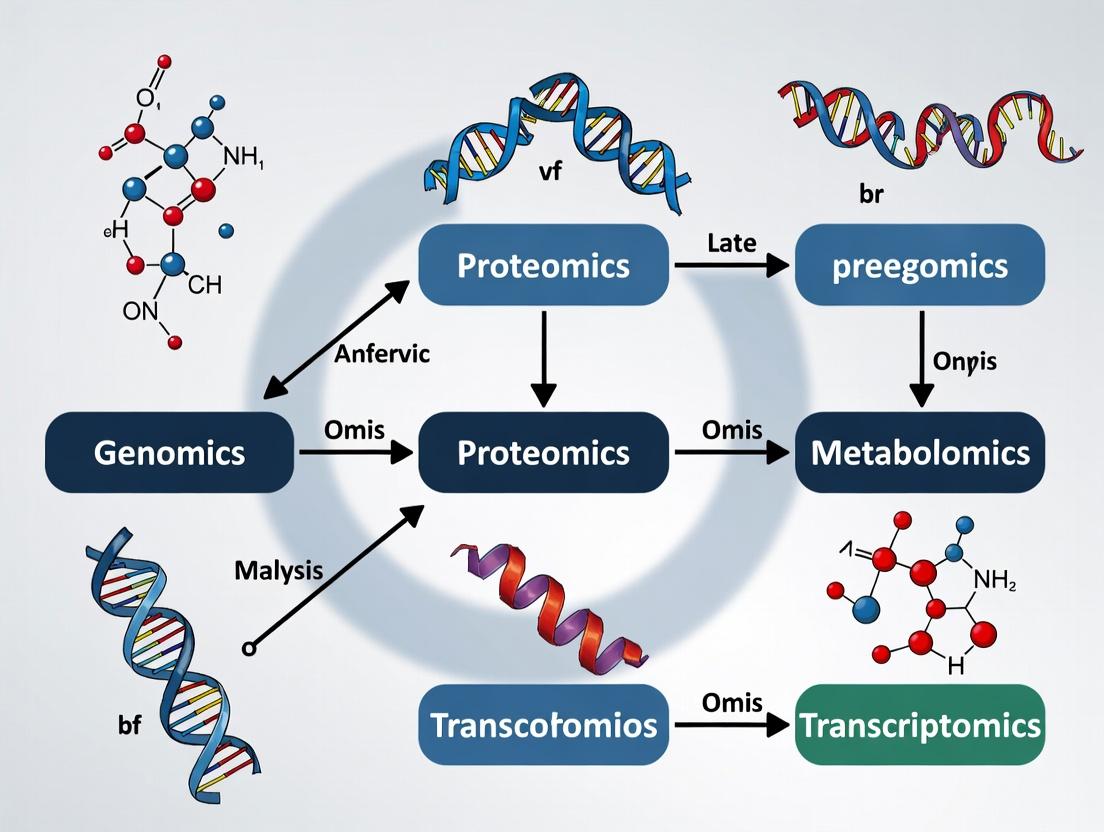
This article provides a comprehensive roadmap for researchers, scientists, and drug development professionals on the strategic objectives of multi-omics studies in translational medicine.
Multi-Omics in Translation: 4 Key Objectives to Bridge the Gap Between Bench and Bedside
Abstract
This article provides a comprehensive roadmap for researchers, scientists, and drug development professionals on the strategic objectives of multi-omics studies in translational medicine. We move beyond technical descriptions to detail the core intents driving integration of genomics, transcriptomics, proteomics, and metabolomics. The scope covers foundational discovery of molecular mechanisms, methodological frameworks for application in patient stratification and biomarker identification, critical troubleshooting for data integration and biological interpretation, and essential validation strategies for clinical utility. The synthesis offers a clear guide for designing and executing robust multi-omics studies that directly impact diagnostics, therapeutic development, and personalized patient care.
From Molecules to Mechanisms: Foundational Multi-Omics for Disease Deconstruction
Defining the Multi-Omics Mandate in Translational Research
The mandate for multi-omics in translational research is unequivocal: to systematically integrate diverse molecular data layers—genomics, transcriptomics, proteomics, metabolomics—to bridge the chasm between bench-side discovery and patient bedside application. This whitepaper posits that the core objective of multi-omics in translational medicine is not merely data generation but the construction of causal, predictive models of disease that can identify novel therapeutic targets, stratify patient populations, and monitor intervention efficacy with unprecedented precision.
The Translational Imperative: From Silos to Integration
Traditional single-omics approaches have provided foundational insights but often fail to capture the complex, dynamic interactions within biological systems. Translational research demands a holistic view. The multi-omics mandate addresses this by mandating the concurrent analysis of multiple molecular tiers to map the flow of information from genotype to phenotype, thereby revealing actionable mechanisms in human disease.
Foundational Omics Layers & Technologies
A core suite of technologies enables this mandate. The table below summarizes quantitative outputs and key platforms for each layer.
Table 1: Core Omics Layers in Translational Research
| Omics Layer | Molecular Target | Key Quantitative Outputs | Primary High-Throughput Technologies |
|---|---|---|---|
| Genomics | DNA Sequence & Variation | Single Nucleotide Polymorphisms (SNPs), Copy Number Variations (CNVs), Mutational Burden | Whole Genome/Exome Sequencing (WGS/WES), SNP Arrays |
| Transcriptomics | RNA Expression & Splicing | Gene Expression Levels (FPKM/TPM), Isoform Usage, Fusion Genes | RNA-Sequencing (RNA-Seq), Single-Cell RNA-Seq (scRNA-Seq) |
| Proteomics | Protein Abundance & Modification | Protein Abundance, Post-Translational Modifications (PTMs), Protein-Protein Interactions | Mass Spectrometry (LC-MS/MS), Reverse Phase Protein Arrays (RPPA) |
| Metabolomics | Small-Molecule Metabolites | Metabolite Concentrations, Pathway Flux | Mass Spectrometry (GC-MS, LC-MS), Nuclear Magnetic Resonance (NMR) |
Experimental & Computational Workflow
Executing a multi-omics study requires a stringent, coordinated pipeline from sample to insight.
Core Protocol: Integrated Multi-Omics Cohort Study
- Sample Collection & Biobanking: Collect matched tissue (e.g., tumor biopsy) and biofluid (blood, urine) samples from a well-phenotyped clinical cohort. Aliquot and store at appropriate conditions (-80°C for tissue/plasma, liquid N₂ for single-cell preparations).
- Parallel Multi-Omics Profiling:
- DNA/Genomics: Extract genomic DNA; perform WGS or targeted panel sequencing. Align to reference genome (GRCh38) using BWA-MEM; call variants with GATK.
- RNA/Transcriptomics: Extract total RNA; assess quality (RIN > 7). Prepare stranded libraries for bulk RNA-Seq or utilize 10x Genomics platform for scRNA-Seq. Align with STAR; quantify with featureCounts.
- Proteomics: Perform tissue lysis and protein digestion. Analyze peptides via data-dependent acquisition (DDA) LC-MS/MS on a Q-Exactive HF instrument. Identify and quantify proteins using MaxQuant or Spectronaut.
- Metabolomics: Deproteinize plasma samples with cold methanol. Analyze supernatants via hydrophilic interaction liquid chromatography (HILIC) coupled to a high-resolution mass spectrometer. Process with XCMS or Compound Discoverer.
- Data Integration & Modeling: Employ computational frameworks:
- Concatenation-Based: Merge features from all omics layers into a single matrix for multivariate analysis (e.g., PCA, PLS-DA).
- Model-Based: Use multi-omics factor analysis (MOFA) or Similarity Network Fusion (SNF) to identify latent factors driving variation across data types.
- Network-Based: Construct causal networks using tools like CausalPath or integrate with prior knowledge (e.g., KEGG, Reactome) to infer signaling pathways.
Diagram Title: Integrated Multi-Omics Translational Workflow
Pathway & Network Visualization
Multi-omics integration reveals perturbed signaling axes. Below is a generalized pathway diagram highlighting how different omics layers inform a consolidated disease mechanism.
Diagram Title: Multi-Omics Informed Signaling Pathway
The Scientist's Toolkit: Essential Research Reagents & Platforms
Successful execution depends on high-quality, reproducible reagents and tools.
Table 2: Key Research Reagent Solutions for Multi-Omics
| Category | Item/Kit | Primary Function in Workflow |
|---|---|---|
| Nucleic Acid Isolation | Qiagen AllPrep DNA/RNA/miRNA Universal Kit | Simultaneous purification of genomic DNA and total RNA from a single tissue sample, preserving molecular integrity for parallel sequencing. |
| Single-Cell Profiling | 10x Genomics Chromium Next GEM Single Cell 5' Kit | Enables high-throughput barcoding of transcripts from thousands of individual cells for scRNA-Seq, critical for tumor heterogeneity studies. |
| Mass Spec Sample Prep | Thermo Fisher Pierce High pH Reversed-Phase Peptide Fractionation Kit | Fractionates complex peptide digests to reduce complexity and increase proteome coverage in LC-MS/MS analysis. |
| Metabolite Standards | Biocrates AbsoluteIDQ p400 HR Kit | Provides a standardized mass spectrometry kit for the targeted quantification of up to 400 metabolites, ensuring inter-study comparability. |
| Data Integration Software | Altanalyze / Jupyter Notebooks with MOFA2 | Open-source bioinformatics platforms for the normalization, integration, and joint visualization of multi-omics data sets. |
The multi-omics mandate is a predictive framework. Its fulfillment in translational research lies in moving beyond correlation to establish causality, thereby delivering on the core objectives of translational medicine: de-risking drug development through mechanistic understanding, enabling precision patient stratification, and accelerating the delivery of effective therapies.
The advent of high-throughput technologies has enabled the comprehensive measurement of biological molecules at multiple levels. In translational medicine research, the primary objective of multi-omics studies is to integrate data from these distinct yet interconnected molecular layers to construct a holistic, systems-level understanding of disease mechanisms. This integrated approach aims to discover robust biomarkers for early diagnosis, stratify patient populations, identify novel therapeutic targets, and predict treatment responses, thereby accelerating the development of personalized medical interventions. This guide details the four core omics layers foundational to this paradigm.
Genomics
Genomics is the study of an organism's complete set of DNA, including all genes and their intergenic regions. It provides the static blueprint, detailing the sequence variants, structural variations, and epigenetic modifications that may predispose an individual to disease or influence drug metabolism.
Key Objectives in Translational Medicine:
- Identification of germline and somatic mutations driving disease.
- Pharmacogenomics: Understanding genetic variants affecting drug efficacy and toxicity.
- Epigenomic profiling (e.g., DNA methylation, chromatin accessibility) for regulatory insights.
Experimental Protocol: Whole Genome Sequencing (WGS)
- Sample Prep & Library Construction: Isolate genomic DNA, fragment via sonration or enzymatic digestion. Repair ends, add 'A' overhangs, and ligate platform-specific adapters.
- Library Amplification: Perform PCR to amplify adapter-ligated fragments.
- Sequencing: Load library onto platforms (e.g., Illumina NovaSeq). Bridge amplification on a flow cell creates clusters, followed by sequencing-by-synthesis with fluorescently-labeled nucleotides.
- Data Analysis: Demultiplex reads, align to a reference genome (e.g., using BWA-MEM), call variants (GATK best practices), and annotate functional impact (SnpEff, VEP).
WGS Experimental Workflow
Transcriptomics
Transcriptomics profiles the complete set of RNA transcripts (mRNA, non-coding RNA) in a cell or tissue at a given time point. It reflects the dynamic expression of the genome and responds to environmental and disease states.
Key Objectives in Translational Medicine:
- Uncover disease-associated gene expression signatures and pathways.
- Identify alternative splicing events and fusion genes.
- Characterize non-coding RNA roles in regulation.
Experimental Protocol: Bulk RNA-Sequencing
- RNA Extraction & QC: Isolate total RNA (e.g., TRIzol, column kits). Assess integrity (RIN > 7 via Bioanalyzer).
- Library Prep: Deplete rRNA or enrich poly-A mRNA. Fragment RNA, synthesize cDNA, ligate adapters, and amplify.
- Sequencing & Analysis: Sequence on Illumina platform. Align reads (STAR, HISAT2), quantify gene/isoform expression (featureCounts, Salmon), perform differential expression analysis (DESeq2, edgeR).
Central Dogma with Transcriptomics
Proteomics
Proteomics characterizes the full complement of proteins, including their abundances, post-translational modifications (PTMs), interactions, and structures. It directly reflects functional cellular machinery and drug target landscapes.
Key Objectives in Translational Medicine:
- Discover diagnostic serum or tissue protein biomarkers.
- Map protein-signaling networks dysregulated in disease.
- Assess drug-target engagement and mechanism of action.
Experimental Protocol: Liquid Chromatography-Tandem Mass Spectrometry (LC-MS/MS)
- Sample Lysis & Digestion: Lyse cells/tissue in appropriate buffer. Reduce, alkylate, and digest proteins with trypsin.
- LC Separation: Desalt and separate peptides via reversed-phase nanoLC.
- MS Analysis: Ionize peptides (ESI) and analyze in mass spectrometer (e.g., Q-Exactive). Full MS scan followed by data-dependent MS/MS fragmentation of top ions.
- Data Processing: Database search (MaxQuant, Proteome Discoverer) against a proteome database. Quantify via label-free (LFQ) or isobaric labeling (TMT, iTRAQ) methods.
Metabolomics
Metabolomics identifies and quantifies small-molecule metabolites (<1.5 kDa) within a biological system. It represents the ultimate downstream readout of cellular processes and is highly sensitive to phenotypic changes.
Key Objectives in Translational Medicine:
- Reveal metabolic pathway perturbations in disease (e.g., Warburg effect in cancer).
- Identify metabolic biomarkers for rapid diagnostics.
- Understand drug metabolism and pharmacometabolomics.
Experimental Protocol: Untargeted Metabolomics by LC-MS
- Metabolite Extraction: Use cold methanol/water/chloroform to quench metabolism and extract metabolites.
- Chromatography: Separate metabolites on HILIC (polar) or C18 (non-polar) columns.
- MS Analysis: Analyze using high-resolution MS (e.g., Q-TOF) in both positive and negative ionization modes.
- Data Analysis: Process raw data (XCMS, MS-DIAL) for peak picking, alignment, and annotation against spectral libraries (HMDB, METLIN).
Comparative Analysis of Core Omics Layers
Table 1: Core Omics Layers - A Comparative Summary
| Layer | Molecule Class | Key Technology | Temporal Dynamics | Primary Translational Output |
|---|---|---|---|---|
| Genomics | DNA (Variants, Modifications) | NGS (WGS, WES) | Static (Lifetime Somatic Changes) | Risk prediction, Pharmacogenomics, Target ID |
| Transcriptomics | RNA (mRNA, ncRNA) | RNA-Seq, Microarrays | Fast (Minutes-Hours) | Pathway Activity, Expression Signatures, Subtyping |
| Proteomics | Proteins & PTMs | LC-MS/MS, Arrays | Medium (Hours-Days) | Functional Effectors, Biomarkers, Drug Targets |
| Metabolomics | Metabolites | LC/GC-MS, NMR | Very Fast (Seconds-Minutes) | Functional Phenotype, Diagnostic Biomarkers |
Table 2: Multi-Omics Integration Objectives in Translational Research
| Integration Type | Thesis Objective | Example Application |
|---|---|---|
| Genome + Transcriptome | Identify functional regulatory variants (eQTLs) | Linking a SNP to altered oncogene expression in cancer. |
| Transcriptome + Proteome | Assess post-transcriptional regulation & correlation | Discordant mRNA-protein levels revealing translational control. |
| Proteome + Metabolome | Map active enzymatic pathways | Elevated kinase + downstream metabolites signaling pathway activation. |
| All Layers | Construct predictive models of disease phenotype | Molecular subtyping of patients for targeted therapy selection. |
The Scientist's Toolkit: Key Research Reagent Solutions
Table 3: Essential Reagents for Core Omics Workflows
| Reagent / Kit | Function | Primary Omics Application |
|---|---|---|
| TRIzol/ Qiazol | Monophasic solution for simultaneous RNA/DNA/protein extraction from a single sample. | Multi-omics sample splitting for Transcriptomics, Genomics, Proteomics. |
| Poly(A) Magnetic Beads | Enrichment of messenger RNA via poly-A tail binding for RNA-Seq library prep. | Transcriptomics (RNA-Seq). |
| Nextera / TruSeq DNA Library Prep Kit | Enzymatic fragmentation and adapter ligation for next-generation sequencing libraries. | Genomics (WGS, WES). |
| Trypsin (Sequencing Grade) | Proteolytic enzyme cleaves proteins at lysine/arginine for bottom-up proteomics. | Proteomics (sample digestion for LC-MS/MS). |
| TMTpro 16plex Isobaric Labels | Chemical tags for multiplexed quantitative comparison of up to 16 samples in one MS run. | Proteomics (high-throughput quantification). |
| Methanol (LC-MS Grade) | Used for metabolite extraction; quenches enzymatic activity to preserve metabolic profile. | Metabolomics (sample preparation). |
| C18 Solid-Phase Extraction Columns | Purification and desalting of peptides or metabolites prior to LC-MS analysis. | Proteomics & Metabolomics. |
| ERCC RNA Spike-In Mix | Synthetic RNA controls added to samples for normalization and quality control. | Transcriptomics (QC for RNA-Seq). |
Within the overarching thesis on multi-omics in translational medicine, this objective addresses the fundamental challenge of moving beyond descriptive disease classifications. It posits that integrating genome, epigenome, transcriptome, proteome, and metabolome data is essential to deconvolute the multifactorial origins and diverse clinical manifestations of complex diseases (e.g., cancer, neurodegenerative, metabolic, and autoimmune disorders). This guide details the technical frameworks for achieving this objective.
Core Conceptual Framework and Current Data Landscape
Complex diseases arise from dynamic interactions between genetic predisposition, environmental exposures, and lifestyle factors, leading to significant molecular and clinical heterogeneity. The following table summarizes key quantitative insights from recent multi-omics studies.
Table 1: Quantitative Insights from Recent Multi-Omics Studies in Complex Diseases
| Disease Area | Sample Size (Typical Study) | Key Heterogeneity Metric Identified | Estimated # of Molecular Subtypes | Primary Omics Layers Integrated |
|---|---|---|---|---|
| Colorectal Cancer | 500-1000 patients | Consensus Molecular Subtypes (CMS) | 4 | Genomics, Transcriptomics, Epigenomics |
| Alzheimer's Disease | 300-800 post-mortem brains | Tauopathy and Neuroinflammation scores | 3-5 distinct trajectories | Transcriptomics, Proteomics, Metabolomics |
| Type 2 Diabetes | 1000-5000 cohort | Insulin secretion vs. resistance clusters | 5+ endotypes | Genomics, Metabolomics, Proteomics |
| Rheumatoid Arthritis | 200-500 synovial biopsies | Myeloid vs. lymphoid-rich pathotypes | 3-4 | Single-cell Transcriptomics, Proteomics, Cytometry |
| Major Depressive Disorder | 500-1000 patients | Inflammation-associated metabolic profiles | 2-3 biotypes | Metabolomics, Transcriptomics, Genomics |
Detailed Experimental Methodologies
Protocol 1: Integrated Multi-Omics Cohort Profiling Workflow
This protocol outlines a standard pipeline for generating and integrating data from a patient cohort.
- Sample Collection & Biobanking: Collect matched primary tissue (e.g., tumor biopsy, blood, saliva), plasma/serum, and peripheral blood mononuclear cells (PBMCs). Aliquot and store at -80°C or in liquid nitrogen.
- DNA Extraction & Whole Genome Sequencing (WGS): Use a kit-based method (e.g., Qiagen DNeasy) for genomic DNA. Perform WGS (30-40x coverage) to identify single nucleotide variants (SNVs), copy number variations (CNVs), and structural variants (SVs).
- DNA Methylation Profiling: Treat extracted DNA with bisulfite conversion (e.g., using the EZ DNA Methylation Kit). Hybridize to an Illumina EPIC array or perform whole-genome bisulfite sequencing (WGBS).
- RNA Extraction & Sequencing: Extract total RNA (e.g., using TRIzol reagent). Perform poly-A selection and strand-specific library prep. Sequence (RNA-seq) to a depth of 50-100 million paired-end reads.
- Proteomics (LC-MS/MS): Homogenize tissue or lyse cells. Digest proteins with trypsin. Desalt peptides and analyze via liquid chromatography-tandem mass spectrometry (LC-MS/MS) on a high-resolution instrument (e.g., Orbitrap). Use isobaric labeling (TMT) for multiplexed quantification.
- Metabolomics (NMR & LC-MS): Extract metabolites from plasma/tissue using methanol/water/chloroform. Analyze via: a) Nuclear Magnetic Resonance (NMR) for broad quantification, and b) targeted LC-MS for specific pathways.
Protocol 2: Single-Cell Multi-Omics for Cellular Heterogeneity
This protocol details the use of droplet-based single-cell RNA sequencing (scRNA-seq) with surface protein detection (CITE-seq).
- Tissue Dissociation: Prepare a single-cell suspension from fresh tissue using a validated enzymatic dissociation kit (e.g., Miltenyi Biotec GentleMACS).
- Cell Viability & Counting: Stain with Trypan Blue or Acridine Orange/Propidium Iodide. Use an automated cell counter. Aim for >90% viability.
- CITE-seq Antibody Staining: Conjugate antibodies against surface proteins (CD45, CD3, CD19, etc.) with unique oligonucleotide barcodes. Incubate live cells with antibody cocktail for 30 mins on ice. Wash thoroughly.
- Library Preparation (10x Genomics Platform): Load cells, conjugated antibodies, and gel beads into a Chromium chip. Generate Gel Beads-in-emulsion (GEMs). Perform reverse transcription, cDNA amplification, and library construction per manufacturer's protocol.
- Sequencing & Data Processing: Pool libraries and sequence on an Illumina NovaSeq. Use Cell Ranger (10x Genomics) for demultiplexing, alignment, and UMI counting. Use Seurat (R package) for downstream integration of RNA and ADT (antibody-derived tag) data, clustering, and differential expression.
Protocol 3: Spatial Transcriptomics for Contextual Heterogeneity
Protocol for the 10x Genomics Visium platform.
- Fresh Frozen Tissue Sectioning: Embed tissue in Optimal Cutting Temperature (OCT) compound. Cryosection at 10µm thickness onto Visium slides. Store at -80°C.
- Fixation, Staining & Imaging: Fix sections with methanol. Stain with H&E and image at 20x resolution.
- Permeabilization Optimization: Perform a tissue optimization test to determine optimal permeabilization time for mRNA release.
- On-Slide Reverse Transcription: Permeabilize tissue to release mRNA, which binds to spatially barcoded primers on the slide. Synthesize cDNA.
- cDNA Harvesting & Library Prep: Denature and collect cDNA. Construct sequencing libraries via amplification and index addition.
- Data Alignment & Integration: Use Space Ranger for alignment to a reference genome and assignment of transcripts to spatial barcodes. Integrate with H&E image using Loupe Browser.
Visualizing the Analytical Workflow and Pathways
Diagram 1: Multi-Omics Integrative Analysis Pipeline
Diagram 2: Core Signaling Pathway in Cancer Heterogeneity
The Scientist's Toolkit: Essential Research Reagents & Solutions
Table 2: Key Reagents for Multi-Omics Studies in Disease Heterogeneity
| Reagent / Solution | Vendor Examples | Primary Function in Protocol |
|---|---|---|
| QIAGEN DNeasy Blood & Tissue Kit | QIAGEN | High-quality genomic DNA extraction from diverse sample types for WGS and methylation studies. |
| Illumina TruSeq DNA PCR-Free Library Prep Kit | Illumina | Preparation of high-complexity, unbiased genomic libraries for whole-genome sequencing. |
| EZ-96 DNA Methylation-Gold Kit | Zymo Research | Reliable bisulfite conversion of DNA for downstream methylation array or sequencing analysis. |
| TRIzol Reagent | Thermo Fisher Scientific | Simultaneous extraction of total RNA, DNA, and proteins from a single sample. |
| 10x Genomics Chromium Next GEM Single Cell 3' Kit v3.1 | 10x Genomics | Droplet-based partitioning and barcoding for single-cell RNA-seq library construction. |
| Bio-Plex Pro Human Cytokine Screening Panel | Bio-Rad | Multiplex immunoassay for quantifying up to 48 cytokines/chemokines in serum/lysates (proteomic phenotyping). |
| TMTpro 16plex Label Reagent Set | Thermo Fisher Scientific | Isobaric labeling for multiplexed quantitative proteomics using LC-MS/MS. |
| C18 Solid Phase Extraction (SPE) Plates | Waters Corporation | Clean-up and concentration of metabolites prior to LC-MS analysis in metabolomics workflows. |
| CellTrace Violet Cell Proliferation Kit | Thermo Fisher Scientific | Fluorescent dye to track cell division and proliferation in functional assays of heterogeneous populations. |
| Recombinant Human TGF-β1 Protein | R&D Systems | Key cytokine for in vitro stimulation experiments to model tumor microenvironment signaling. |
Within the multi-omics thesis framework, this objective is the translational engine. It leverages integrated genomic, transcriptomic, proteomic, and metabolomic data to move from correlative observations to causative biological insights. The goal is to identify measurable indicators (biomarkers) of disease state, progression, or treatment response, and to pinpoint molecular entities (targets) whose modulation is expected to have therapeutic benefit. This bridges the gap between descriptive omics and clinical application.
Foundational Strategies and Quantitative Landscape
The discovery pipeline employs both hypothesis-driven and unbiased screening approaches. Key strategies include differential expression analysis, network biology, and machine learning-based pattern recognition.
Table 1: Core Multi-Omics Strategies for Biomarker/Target Discovery
| Strategy | Primary Omics Layer | Key Output | Typical Validation Rate* |
|---|---|---|---|
| Genome-Wide Association Study (GWAS) | Genomics | Susceptibility loci, SNP associations | < 5% (to functional target) |
| Differential Expression (Bulk/Single-Cell) | Transcriptomics/Proteomics | Up/Down-regulated genes/proteins | 10-20% |
| Phosphoproteomic Profiling | Proteomics | Dysregulated signaling kinases & pathways | 15-25% |
| Metabolomic Phenotyping | Metabolomics | Disease-associated metabolic fluxes & biomarkers | 10-15% |
| Multi-Omics Data Integration | All layers | Prioritized, context-specific candidate networks | 20-30% (higher confidence) |
*Validation rate refers to the approximate percentage of initial candidates that are subsequently confirmed in independent cohorts or functional models.
Table 2: Current High-Throughput Platforms Enabling Discovery
| Platform Technology | Throughput Scale | Primary Application in Discovery |
|---|---|---|
| Next-Generation Sequencing (NGS) | 1-1000s of genomes/transcriptomes | Mutation calling, expression QTLs, novel isoforms |
| Mass Spectrometry (LC-MS/MS) | 1000s of proteins/100s of samples | Quantitative proteomics, post-translational modifications |
| High-Resolution Metabolomics (HRM) | 100s-1000s of metabolites | Mapping metabolic pathway dysregulation |
| Multiplex Immunoassays (e.g., Olink) | 10s-1000s of proteins in µL samples | Validation of proteomic candidates in large cohorts |
| Spatial Transcriptomics/Proteomics | Single-cell resolution in tissue context | Identifying biomarker localization and tumor microenvironments |
Detailed Experimental Protocols
Protocol 2.1: Integrated Proteogenomic Analysis for Target Identification
This protocol outlines the steps to identify novel therapeutic targets by correlating genomic alterations with proteomic/phosphoproteomic changes.
1. Sample Preparation:
- Tissue/Cell Lysate: Snap-frozen tissue or cell pellets are homogenized in lysis buffer (8M Urea, 75mM NaCl, 50mM Tris pH 8.2, protease/phosphatase inhibitors). Protein concentration is determined by BCA assay.
- Genomic DNA/RNA Extraction: Parallel aliquots are used for DNA (for WES/WGS) and RNA (for RNA-seq) extraction using silica-column based kits.
2. Multi-Omics Data Generation:
- Whole Exome Sequencing (WES): Libraries prepared using hybrid capture (e.g., Illumina TruSeq). Sequence on NovaSeq, aiming for >100x mean coverage.
- RNA Sequencing: Poly-A selected libraries sequenced on Illumina platform for >50 million paired-end reads per sample.
- Proteomics: 100µg protein per sample is reduced, alkylated, and digested with trypsin. Peptides are labeled with TMTpro 16-plex, fractionated by basic pH reversed-phase HPLC. LC-MS/MS is performed on an Orbitrap Eclipse Tribrid MS with a 180min gradient. Phosphopeptides are enriched using Fe-NTA magnetic beads prior to labeling.
3. Data Integration & Analysis:
- Genomic Analysis: Mutations (SNVs/Indels) called using GATK. Copy number variations (CNVs) derived from WES using tools like FACETS.
- Transcriptomic Analysis: Differential expression (DE) analysis using DESeq2. Fusion genes detected with STAR-Fusion.
- Proteomic Analysis: Protein/phosphosite identification and quantitation using Sequest-HT in Proteome Discoverer 3.0. Normalize to median protein abundance.
- Integration: Use tools like cBioPortal or custom R scripts (ggplot2, pheatmap) to:
- Overlay mutations/CNVs on protein abundance/phosphorylation.
- Identify cis- (genomic alteration correlates with protein change in same gene) and trans- (e.g., kinase mutation correlates with phosphosite changes in downstream substrates) effects.
- Perform pathway enrichment (Reactome, KEGG) on concordantly altered genes/proteins.
Protocol 2.2: Serum Biomarker Discovery using Untargeted Metabolomics
This protocol details the process for discovering circulating metabolic biomarkers.
1. Serum Sample Collection and Pre-processing:
- Collect blood in serum separator tubes, allow to clot for 30min, centrifuge at 2000xg for 10min. Aliquot and store at -80°C.
- Thaw samples on ice. Precipitate proteins by adding 300µL cold methanol to 100µL serum. Vortex, incubate at -20°C for 1h, centrifuge at 15,000xg for 15min at 4°C.
- Transfer supernatant to a fresh vial, dry in a speed vacuum concentrator.
2. LC-HRMS Analysis:
- Reconstitution: Reconstitute dried extract in 100µL 50:50 water:acetonitrile.
- Chromatography: Use a HILIC column (e.g., Waters BEH Amide, 2.1x150mm, 1.7µm). Mobile phase A: 10mM ammonium acetate in 95:5 water:acetonitrile (pH 9.0). B: 10mM ammonium acetate in 95:5 acetonitrile:water. Gradient: 0-2min 100% B, 2-17min to 70% B, 17-20min 70% B.
- Mass Spectrometry: Analyze on a Q-TOF MS (e.g., Agilent 6546) in both positive and negative ESI modes. Data acquired in full scan mode (m/z 50-1200).
3. Data Processing and Statistical Analysis:
- Convert raw files to mzML using MSConvert (ProteoWizard).
- Perform peak picking, alignment, and annotation using XCMS and CAMERA in R.
- Annotate metabolites by matching accurate mass (within 5 ppm) and MS/MS spectra (if available) against databases (HMDB, METLIN).
- Use multivariate statistics (PLS-DA via mixOmics package) to identify discriminatory features. Apply univariate tests (Wilcoxon) with FDR correction (Benjamini-Hochberg). Calculate AUC for top candidates.
Visualizing the Discovery Pipeline
Discovery & Validation Workflow
Mechanism to Biomarker & Target
The Scientist's Toolkit: Key Research Reagent Solutions
Table 3: Essential Reagents for Biomarker and Target Discovery Experiments
| Reagent/Material | Supplier Examples | Function in Discovery Pipeline |
|---|---|---|
| TMTpro 16-plex Label Reagents | Thermo Fisher Scientific | Isobaric tags for multiplexed, quantitative comparison of up to 16 proteomic samples in a single MS run, reducing batch effects. |
| Fe-NTA Magnetic Beads | Thermo Fisher, Qiagen | High-affinity enrichment of phosphopeptides from complex digests for phosphoproteomic studies. |
| SMARTer Single-Cell RNA-seq Kits | Takara Bio | Enable full-length transcriptome amplification from single cells for discovering cell-type specific biomarkers. |
| Olink Target 96/384 Panels | Olink Proteomics | Validate protein biomarker candidates using highly specific, multiplexed immunoassays requiring minimal sample volume. |
| Crispr-Cas9 Knockout Libraries | Horizon Discovery | Perform genome-wide or pathway-focused loss-of-function screens to validate essentiality of candidate therapeutic targets. |
| Phenotypic Screening Assay Kits (e.g., CellTiter-Glo) | Promega | Measure cell viability/proliferation in high-throughput format during functional validation of targets. |
| Patient-Derived Xenograft (PDX) Models | Jackson Laboratory, Champions Oncology | In vivo validation of biomarkers and therapeutic targets in a clinically relevant human tissue microenvironment. |
| Stable Isotope Labeled Metabolites (e.g., 13C-Glucose) | Cambridge Isotope Labs | Enable flux analysis to map dynamic metabolic pathway activity and identify druggable metabolic dependencies. |
Integrative Data as a Hypothesis-Generating Engine
In the context of translational medicine, the primary objective of multi-omics studies is to bridge the gap between molecular discoveries and clinical application, thereby accelerating the development of diagnostics, prognostics, and therapeutics. Integrative data analysis serves as the critical engine for generating actionable biological hypotheses from these complex datasets, moving beyond single-layer descriptions to uncover the multi-scale mechanisms of disease.
The Hypothesis-Generation Framework in Translational Multi-Omics
The traditional hypothesis-driven research model is increasingly complemented by data-driven discovery in translational medicine. Integrative analysis of genomics, transcriptomics, proteomics, metabolomics, and epigenomics data generates novel hypotheses about disease drivers, therapeutic targets, and biomarker signatures. This process typically follows a structured workflow:
- Data Generation & Curation: Acquisition of multiple omics data types from well-phenotyped clinical cohorts.
- Pre-processing & Quality Control: Normalization, batch correction, and imputation for each data layer.
- Multi-Omics Integration: Application of statistical and machine learning models to fuse datasets.
- Pattern & Network Discovery: Identification of cross-omic modules, pathways, and interaction networks associated with phenotypes.
- Prioritization & Hypothesis Formulation: Ranking of candidate drivers, biomarkers, or mechanisms for experimental validation.
Core Methodologies for Integrative Analysis
Similarity-Based Integration
Methods like Multiple Kernel Learning (MKL) combine different omics data types by constructing separate similarity matrices (kernels) for each modality and then fusing them to predict a clinical outcome.
Protocol: Multiple Kernel Learning for Patient Stratification
- Input: Matrices for mRNA expression, DNA methylation, and protein abundance from tumor samples (n=200) with associated progression-free survival (PFS) data.
- Kernel Construction: Generate Gaussian kernels for each omics data type, optimizing the bandwidth parameter via cross-validation.
- Kernel Fusion: Employ a weighted linear combination (e.g.,
K_combined = w1*K_mRNA + w2*K_methyl + w3*K_protein). Weights can be fixed or optimized. - Model Training: Use the combined kernel with a kernel-based algorithm (e.g., Support Vector Regression for continuous outcomes, Cox regression for survival) to predict PFS.
- Output: A predictive model and the contribution weights of each omics layer, highlighting which data type is most informative for the phenotype. Patients can be clustered based on the fused kernel similarity to identify novel subtypes.
Matrix Factorization-Based Integration
Methods such as Multi-Omics Factor Analysis (MOFA) decompose multiple data matrices into a set of common latent factors that capture the shared variance across omics types.
Protocol: MOFA for Identifying Latent Biological Processes
- Input: Centered and scaled matrices for gene expression, chromatin accessibility (ATAC-seq), and metabolite levels from a cohort of rheumatoid arthritis synovial tissue biopsies (n=150).
- Model Setup: Specify the number of factors (e.g., 10-15). Use default sparsity priors to promote factor-specific loading on features.
- Training: Run the model using stochastic variational inference until the evidence lower bound (ELBO) converges.
- Interpretation: Correlate factors with clinical metadata (e.g., disease activity score). Visualize factor loadings to identify which genes, genomic regions, and metabolites define each latent process (e.g., "Factor 1: Inflammatory Response").
- Hypothesis Output: Formulate a hypothesis such as: "Latent Factor 3, characterized by high loadings on GLUT1 expression and lactate abundance, represents a hypoxic metabolic program that correlates with severe radiographic progression."
Network-Based Integration
This approach builds molecular interaction networks (e.g., protein-protein interaction) and overlays multi-omics differential data to identify dysregulated subnetworks or communities.
Protocol: Prize-Collecting Steiner Forest for Driver Subnetwork Discovery
- Input: 1) A comprehensive protein-protein interaction (PPI) network. 2) Differential expression p-values for genes (from RNA-seq) and differential phosphorylation scores for proteins (from phospho-proteomics) between drug-resistant vs. sensitive cancer cell lines.
- Node Prize Assignment: Convert p-values/scores to "prizes" for each molecular entity (e.g.,
prize = -log10(p-value)). - Network Construction: Use the PPI network as the underlying graph, with edge costs typically based on confidence scores.
- Algorithm Execution: Run the Prize-Collecting Steiner Forest algorithm to find a connected subnetwork that maximizes the total collected prizes (highly dysregulated nodes) while minimizing the cost of included edges.
- Output: A dense subnetwork of interacting genes and proteins hypothesized to be coordinately involved in driving drug resistance. Central hubs within this subnetwork become high-priority candidates for functional validation.
Table 1: Comparison of Key Multi-Omics Integration Methods
| Method | Category | Primary Use Case | Key Output | Example Tool/Package |
|---|---|---|---|---|
| Multiple Kernel Learning (MKL) | Similarity-based | Supervised prediction, patient stratification | Outcome prediction model, kernel weights | Pykernels, mixKernel |
| Multi-Omics Factor Analysis (MOFA) | Factorization | Unsupervised discovery of latent factors | Latent factors & loadings, data imputation | MOFA2 (R/Python) |
| Similarity Network Fusion (SNF) | Network-based | Patient clustering using multiple data types | Fused patient similarity network | SNFtool (R) |
| Integrative NMF (iNMF) | Factorization | Joint clustering across omics, biomarker ID | Consensus clusters, feature weights | LIGER (R) |
| Multi-omics Master Regulator Analysis | Network-based | Identifying upstream causal regulators | Master regulator protein activity | MARINa / VIPER |
Table 2: Quantitative Outcomes from Recent Integrative Multi-Omics Studies in Translational Medicine
| Disease Area | Omics Layers Integrated | Cohort Size (n) | Key Hypothesis Generated | Validation Outcome |
|---|---|---|---|---|
| Alzheimer's Disease | GWAS, Transcriptomics, Proteomics, Methylomics | Post-mortem brains: 1,200 | The SPI1 transcription factor orchestrates a microglial network influencing TREM2 expression and amyloid phagocytosis. | Confirmed in iPSC-derived microglial models; SPI1 reduction ameliorated pathology in vitro. |
| Triple-Negative Breast Cancer | WGS, RNA-seq, Methylomics, Histopathology | Patients: 465 | Recurrent RASAL2 silencing (methylation) activates a MAPK/MEK signaling circuit independent of KRAS mutations. | In vivo xenograft model showed sensitivity to MEK inhibitors in RASAL2-silenced tumors. |
| Severe COVID-19 | Single-cell RNA-seq, Proteomics (plasma), CyTOF | Blood samples: 128 | Monocyte inflammasome activation and cytosolic DNA sensing pathways converge to drive IL-1β/IL-18 release. | Blocking the AIM2 inflammasome axis reduced cytokine release in ex vivo whole-blood assays. |
The Scientist's Toolkit: Research Reagent Solutions
Table 3: Essential Research Reagents for Multi-Omics Hypothesis Validation
| Item | Function in Validation | Example Vendor/Catalog | Key Consideration |
|---|---|---|---|
| CRISPR-Cas9 Knockout Kits | Functional validation of candidate driver genes identified from integrative networks. | Synthego (sgRNA kits), Horizon Discovery | Ensure high editing efficiency in your cell model; include multiple sgRNAs per target. |
| Phospho-Specific Antibodies | Confirm predicted activity states of signaling pathways (e.g., p-ERK, p-AKT). | Cell Signaling Technology, Abcam | Validate antibody specificity for the modified epitope via peptide competition or genetic knockout. |
| Recombinant Cytokines/Growth Factors | Perturb systems to test predicted network responses (e.g., add TNF-α to test NF-κB module). | PeproTech, R&D Systems | Use carrier-free versions at biologically relevant concentrations (pg/mL to ng/mL). |
| Activity-Based Protein Profiling (ABPP) Probes | Directly measure enzymatic activity changes predicted from metabolomic-proteomic integration. | ActivX, Merck | Requires specialized mass spectrometry readouts; use with appropriate vehicle controls. |
| LC-MS Grade Solvents & Columns | Essential for reproducible metabolomics and proteomics validation experiments. | Fisher Chemical, Waters Corp | Bulk solvents should be from a single lot; column chemistry must match the analyte class. |
| Stable Isotope Tracers (e.g., 13C-Glucose) | Trace metabolic fluxes through pathways highlighted by integrative analysis (e.g., glycolysis, TCA cycle). | Cambridge Isotope Laboratories | Purity (>99% 13C) is critical. Design time-course experiments to capture flux dynamics. |
Visualizing the Workflow and Pathways
Multi-omics Hypothesis Generation Workflow
Hypothetical Integrated Pathway from Multi-Omics
Blueprint for Integration: Methodologies and Direct Clinical Applications
Strategic Frameworks for Multi-Omics Study Design
The primary objective of multi-omics studies in translational medicine is to bridge the gap between molecular discoveries and clinical applications. This involves integrating disparate molecular data layers—genomics, transcriptomics, proteomics, metabolomics—to construct comprehensive biological networks that elucidate disease mechanisms, identify novel therapeutic targets, and discover predictive biomarkers for patient stratification.
Core Strategic Frameworks
Based on current literature, three predominant strategic frameworks guide multi-omics study design in translational research.
Table 1: Comparison of Primary Multi-Omics Study Frameworks
| Framework | Primary Objective | Key Advantage | Major Challenge | Typical Use Case in Translational Medicine |
|---|---|---|---|---|
| Horizontal Integration | Analyze multiple omics layers from the same set of biological samples. | Captures a simultaneous, systems-level snapshot of biological state. | High cost; complex data integration. | Biomarker discovery for disease classification. |
| Vertical Integration | Trace the flow of biological information from one molecular layer to the next (e.g., genome → transcriptome → proteome). | Elucidates causal mechanisms and regulatory relationships. | Requires sophisticated longitudinal or perturbation study designs. | Understanding drug mechanism of action or resistance. |
| Temporal/Dynamic Integration | Profile omics layers across multiple time points or in response to a perturbation. | Reveals dynamic, causal relationships and pathway activation states. | Extremely resource-intensive; requires advanced computational modeling. | Monitoring treatment response or disease progression. |
Experimental Design Methodologies
Protocol for a Horizontal Integration Study (Biomarker Discovery)
Aim: To identify a multi-omics signature distinguishing responders from non-responders to a cancer immunotherapy.
- Cohort Selection: Recruit 50 matched pairs of responders and non-responders (N=100). Obtain pre-treatment tumor biopsy (FFPE or fresh-frozen) and plasma.
- Sample Processing:
- DNA Sequencing (WES): Extract tumor and germline DNA. Perform Whole Exome Sequencing (Illumina NovaSeq) to identify somatic mutations and neoantigen load.
- RNA Sequencing (Bulk): Extract total RNA. Perform poly-A selected RNA-seq (Illumina) for gene expression and immune cell deconvolution (using CIBERSORTx).
- Proteomics (Mass Spectrometry): From adjacent tissue, perform liquid chromatography-tandem mass spectrometry (LC-MS/MS) with TMT labeling for quantitative proteomics.
- Metabolomics (LC-MS): From plasma, perform untargeted LC-MS to profile global metabolites.
- Data Integration: Use multi-omics factor analysis (MOFA+) to identify latent factors that explain variance across all data types and correlate with clinical response.
Protocol for a Vertical Integration Study (Mechanistic Elucidation)
Aim: To determine the functional impact of a genetic risk variant on a disease phenotype.
- Cohort with Genotype: Recruit carriers and non-carriers of the variant (N=30 each). Obtain primary cells (e.g., fibroblasts) or establish iPSC-derived cell lines.
- Perturbation: Use CRISPR/Cas9 to isogenically correct the variant in carrier-derived cells, creating a matched control.
- Multi-Omics Profiling: For both wild-type and corrected lines:
- ATAC-seq: Profile chromatin accessibility.
- RNA-seq: Profile gene expression.
- Phospho-proteomics: Enrich for phosphorylated peptides followed by LC-MS/MS to profile signaling pathway activity.
- Integration: Construct a regulatory network linking the variant locus (via ATAC-seq peaks) to differentially expressed genes (RNA-seq) and altered signaling pathways (phospho-proteomics).
Visualizing Workflows and Pathways
Diagram 1: Horizontal multi-omics workflow for biomarker discovery.
Diagram 2: Vertical integration strategy to establish mechanism.
The Scientist's Toolkit: Key Reagent Solutions
Table 2: Essential Research Reagents for a Core Multi-Omics Study
| Category | Specific Reagent/Solution | Function in Multi-Omics Workflow |
|---|---|---|
| Nucleic Acid Isolation | AllPrep DNA/RNA/miRNA Universal Kit (Qiagen) | Simultaneous co-extraction of high-quality genomic DNA and total RNA from a single tissue sample, preserving sample integrity for parallel sequencing. |
| Protein Digestion & Labeling | TMTpro 16plex Label Reagent Set (Thermo Fisher) | Isobaric chemical tags for multiplexed quantitative proteomics, enabling simultaneous LC-MS/MS analysis of up to 16 samples, improving throughput and reducing run-to-run variation. |
| Metabolite Extraction | Methanol:Acetonitrile:Water (2:2:1, v/v) Solvent System | A common, standardized solvent for global metabolite extraction from plasma or tissues, ensuring broad coverage of polar and semi-polar metabolites for LC-MS. |
| Chromatin Profiling | Illumina Tagmentase (Tn5) Enzyme | Engineered transposase used in ATAC-seq to simultaneously fragment DNA and add sequencing adapters, mapping open chromatin regions from low cell inputs. |
| Single-Cell Partitioning | 10x Genomics Chromium Single Cell Multiome ATAC + Gene Expression Kit | Enables coupled profiling of chromatin accessibility and gene expression from the same single nucleus, crucial for vertical integration at single-cell resolution. |
| Data Integration Software | MOFA+ (R/Python Package) | A statistical framework for multi-omics integration that decomplicates data into a set of latent factors, identifying shared and specific sources of variation across omics layers. |
In the pursuit of translational medicine, multi-omics studies aim to create a holistic, systems-level understanding of disease biology by integrating data from genomics, transcriptomics, proteomics, and metabolomics. The fidelity and depth of this integration are fundamentally dependent on the robustness, scalability, and standardization of the underlying data generation pipelines. This guide provides a technical deep dive into the core pipelines for Next-Generation Sequencing (NGS) and Mass Spectrometry (MS), the two pillars of modern omics, while framing their objectives within the translational research thesis.
Next-Generation Sequencing (NGS) Pipelines
NGS pipelines generate data for genome, exome, and transcriptome sequencing, enabling the discovery of genetic variants, gene expression profiles, and epigenetic modifications.
Key Experimental Protocol: Illumina Short-Read Whole Genome Sequencing
- Library Preparation: Genomic DNA is fragmented (e.g., via sonication or enzymatic digestion) to ~350 bp. Fragments are end-repaired, A-tailed, and ligated to platform-specific adapters containing unique dual indices (UDIs) for sample multiplexing and sequencing primers.
- Size Selection & Purification: Libraries are size-selected using SPRI beads to ensure uniform fragment length.
- Library QC: Quantification is performed via qPCR (e.g., KAPA Library Quant Kit) and fragment size distribution is analyzed on a Bioanalyzer or TapeStation.
- Cluster Amplification: Libraries are loaded onto a flow cell. In a bridge amplification process on the Illumina platform, each fragment is isothermally amplified into a clonal cluster.
- Sequencing-by-Synthesis (SBS): Fluorescently labeled, reversibly terminated nucleotides are added sequentially. After each incorporation, a laser excites the fluorophore, and an optical system captures the emitted wavelength to identify the base. The terminator is then cleaved for the next cycle. Paired-end sequencing (e.g., 2x150 cycles) is standard.
- Primary Data Analysis (On-instrument): The sequencer's software performs base calling and demultiplexing, converting raw images into sequence reads (FASTQ files) assigned to individual samples.
Table 1: Core NGS Applications in Translational Omics
| Modality | Typical Coverage/Depth | Key Output | Primary Translational Application |
|---|---|---|---|
| Whole Genome Seq (WGS) | 30x - 100x | Germline & somatic SNVs, Indels, CNVs, SVs | Genetic disease diagnosis, cancer biomarker discovery, pharmacogenomics. |
| Whole Exome Seq (WES) | 100x - 200x | Coding region variants (SNVs, Indels) | Mendelian disorder gene identification, tumor driver mutation profiling. |
| RNA Sequencing | 20-50 million reads/sample | Gene/isoform expression counts, fusion genes | Molecular subtyping, pathway activity inference, biomarker discovery. |
| Chip-Seq / ATAC-Seq | 20-50 million reads/sample | Peaks (genomic regions of protein binding/open chromatin) | Understanding regulatory mechanisms and epigenetic drivers of disease. |
Mass Spectrometry-Based Proteomics & Metabolomics Pipelines
MS pipelines characterize and quantify proteins and metabolites, providing direct functional readouts of cellular state.
Key Experimental Protocol: Data-Dependent Acquisition (DDA) Liquid Chromatography-Tandem MS (LC-MS/MS) for Proteomics
- Sample Preparation: Proteins are extracted from tissue or biofluids, reduced, alkylated, and digested with trypsin into peptides. Peptides may be fractionated (e.g., via high-pH reverse-phase) or labeled (TMT, SILAC) for multiplexing.
- Liquid Chromatography (LC): Peptides are loaded onto a reverse-phase C18 column (nanoflow scale) and separated via a gradient of increasing organic solvent (acetonitrile) over 60-120 minutes.
- Ionization: Eluting peptides are ionized via electrospray ionization (ESI) and introduced into the mass spectrometer.
- Mass Spectrometry Analysis (DDA Cycle):
- MS1 Survey Scan: The orbitrap or TOF mass analyzer measures the m/z and intensity of all intact peptide ions.
- Peptide Selection: The most intense ions (e.g., top 20) from the MS1 scan are selected for fragmentation.
- Fragmentation: Selected precursor ions are fragmented via Collision-Induced Dissociation (CID) or Higher-Energy C-trap Dissociation (HCD).
- MS2 Scan: The fragment ions (product spectra) are analyzed to determine the peptide sequence.
- Data Processing: Raw files are processed using search engines (MaxQuant, FragPipe, DIA-NN) against a protein sequence database for identification and quantification.
Table 2: Core Mass Spectrometry Modalities in Translational Omics
| Modality | Typical Throughput | Key Output | Primary Translational Application |
|---|---|---|---|
| DDA Proteomics | 10-100s of samples/run | Protein identification & label-free/TMT quantification | Biomarker discovery, signaling pathway analysis, target engagement. |
| Data-Independent Acquisition (DIA/SWATH) | 10-100s of samples/run | Highly reproducible quantification of 1000s of proteins | Large-scale cohort studies requiring high reproducibility. |
| Targeted Proteomics (PRM/SRM) | 100s of samples/run | Highly sensitive, precise quantification of pre-defined proteins | Validation of biomarker panels, clinical assay development. |
| Untargeted Metabolomics | 10-100s of samples/run | Relative abundance of 1000s of metabolite features | Discovery of metabolic dysregulation, mechanistic toxicology. |
| Targeted Metabolomics | 100s-1000s of samples/run | Absolute concentration of defined metabolite panels | Validation of metabolic biomarkers, clinical chemistry applications. |
The Scientist's Toolkit: Research Reagent Solutions
Table 3: Essential Materials for NGS and MS Pipelines
| Item | Function | Example Product/Category |
|---|---|---|
| NGS Library Prep Kit | Fragments, repairs, and adapts DNA/RNA for sequencing. | Illumina DNA Prep, KAPA HyperPrep, NEBNext Ultra II. |
| Unique Dual Indexes (UDIs) | Allows multiplexing of many samples without index hopping cross-talk. | Illumina IDT for Illumina UDIs, Twist Unique Dual Indexes. |
| SPRI Beads | Magnetic beads for DNA/RNA size selection and purification. | Beckman Coulter AMPure XP, KAPA Pure Beads. |
| Trypsin, MS-Grade | Protease for specific digestion of proteins into peptides for LC-MS/MS. | Promega Trypsin Gold, Roche Trypsin, Sequencing Grade. |
| Tandem Mass Tags (TMT) | Isobaric labels for multiplexed quantitative proteomics (up to 18 samples). | Thermo Scientific TMTpro 18plex. |
| C18 LC Column | Nanoflow column for separation of peptides prior to MS injection. | Waters nanoEase M/Z HSS C18, PepSep ReproSil C18. |
| Internal Standards (Metabolomics) | Stable isotope-labeled compounds for normalization & quantification in MS. | Cambridge Isotope Laboratories MRM standards, Avanti SPLASH LipidoMix. |
| QC Reference Material | Standardized sample (e.g., HeLa digest, NIST plasma) for monitoring pipeline performance. | Pierce HeLa Protein Digest Standard, NIST SRM 1950 Plasma. |
Visualizing Core Workflows and Relationships
NGS Data Generation and Analysis Pipeline
DDA LC-MS/MS Proteomics Workflow
Omics Pipelines Feed Translational Objectives
Within the broader thesis on the objectives of multi-omics studies in translational medicine, Objective 3 focuses on moving beyond broad disease classifications to identify discrete, mechanistically defined patient subgroups. This precision stratification, or endotyping, is foundational for developing targeted therapies and allocating them to patients most likely to respond, thereby improving clinical trial success rates and patient outcomes.
Core Multi-Omics Data Types for Stratification
Endotyping requires the integration of multiple layers of molecular data to capture the full complexity of disease pathophysiology.
Table 1: Core Omics Modalities for Patient Stratification
| Omics Layer | Measured Entities | Key Technology Platforms | Primary Insight for Stratification |
|---|---|---|---|
| Genomics | DNA sequence variants (SNPs, indels, CNVs), structural variations | Whole-genome sequencing, SNP arrays, MLPA | Inherited risk, germline mutations, pharmacogenomic markers. |
| Transcriptomics | RNA expression levels (coding, non-coding), splicing variants | RNA-Seq, single-cell RNA-Seq, microarrays | Active biological pathways, cellular states, immune infiltration signatures. |
| Epigenomics | DNA methylation, histone modifications, chromatin accessibility | Bisulfite sequencing, ChIP-Seq, ATAC-Seq | Regulatory landscape, gene silencing/activation, environmental influences. |
| Proteomics | Protein abundance, post-translational modifications, protein complexes | Mass spectrometry (LC-MS/MS), multiplex immunoassays, RPPA | Functional effectors, signaling pathway activity, drug targets. |
| Metabolomics | Small-molecule metabolites (lipids, sugars, amino acids) | LC-MS, GC-MS, NMR | Metabolic pathway activity, real-time physiological state, biomarkers. |
Experimental Protocols for Multi-Omics Endotyping
Integrated Multi-Omics Cohort Profiling Protocol
This protocol outlines a standard workflow for generating data for stratification studies.
A. Patient Cohort & Biospecimen Collection:
- Cohort Design: Recruit a well-characterized patient cohort (n≥500) with deep phenotypic data (clinical history, imaging, lab values, outcomes). Include healthy controls.
- Sample Types: Collect matched primary tissue (e.g., tumor biopsy, synovial fluid), blood (for plasma/serum, PBMCs), and, if possible, stool for microbiome.
- Processing: Immediately flash-freeze tissue in liquid nitrogen. Separate blood components via density gradient centrifugation. Store all samples at -80°C.
B. Parallel Multi-Omics Assaying:
- DNA/Genomics: Extract genomic DNA from tissue or blood. Perform Whole Genome Sequencing (WGS, 30x coverage) using Illumina NovaSeq. Align to GRCh38 reference genome. Call variants using GATK Best Practices pipeline.
- RNA/Transcriptomics: Extract total RNA (RIN > 7). Prepare poly-A selected libraries and sequence on Illumina platform (minimum 50M paired-end reads per sample). Align with STAR, quantify with featureCounts.
- DNA Methylation/Epigenomics: Perform bisulfite conversion on 500ng DNA. Hybridize to Infinium MethylationEPIC v2.0 BeadChip or use whole-genome bisulfite sequencing.
- Proteomics: For discovery, perform tissue lysis, tryptic digestion, TMT labeling, and LC-MS/MS on an Orbitrap Eclipse. For validation, use Olink Target 96 or 384 plex panels.
C. Data Integration & Analysis:
- Preprocessing: Normalize each dataset separately (e.g., DESeq2 for RNA-Seq, ssNoob for methylation, limma for proteomics).
- Dimensionality Reduction: Apply unsupervised clustering (e.g., k-means, hierarchical) and visualization (t-SNE, UMAP) to each data layer.
- Integrative Clustering: Use multi-view or consensus clustering algorithms (e.g., MOFA+, iClusterBayes) to identify patient subgroups robust across omics layers.
- Validation: Confirm clusters in an independent validation cohort using a minimal classifier (e.g., Random Forest on top 50 features).
Diagram Title: Multi-Omics Endotyping Workflow
Single-Cell RNA-Seq for Cellular Subtyping Protocol
Critical for resolving cellular heterogeneity within tissues.
A. Single-Cell Suspension Preparation:
- Mechanically dissociate and enzymatically digest fresh tissue (e.g., with collagenase IV/DNase I) to create a single-cell suspension. For frozen tissue, use a dedicated nuclei isolation protocol.
- Pass cells through a 40μm flow cytometry strainer. Perform live/dead staining with DAPI or propidium iodide. Use FACS or magnetic-activated cell sorting (MACS) to positively select live, singlet cells.
B. Library Preparation & Sequencing:
- Load cells onto the 10x Genomics Chromium Controller to generate single-cell Gel Beads-in-Emulsion (GEMs).
- Perform reverse transcription, cDNA amplification, and library construction per the Chromium Next GEM Single Cell 3' Kit v3.1 protocol.
- Pool libraries and sequence on an Illumina NovaSeq 6000 aiming for ≥20,000 reads per cell.
C. Bioinformatic Analysis for Stratification:
- Process raw data using Cell Ranger to generate a feature-barcode matrix.
- Use Seurat (R) or Scanpy (Python) for downstream analysis: QC filtering, normalization, highly variable gene selection, PCA, graph-based clustering, and UMAP visualization.
- Assign cell type identity using reference atlases (e.g., Azimuth) or marker genes.
- Perform differential expression between patients or conditions within each cell type to identify patient-specific dysregulation patterns.
Diagram Title: Single-Cell RNA-Seq Stratification Pipeline
The Scientist's Toolkit: Key Research Reagent Solutions
Table 2: Essential Reagents & Kits for Multi-Omics Stratification Studies
| Item Name | Supplier Examples | Function in Endotyping Studies |
|---|---|---|
| PAXgene Blood RNA Tube | Qiagen, BD | Stabilizes intracellular RNA in whole blood for consistent transcriptomic profiles from patient blood draws. |
| AllPrep DNA/RNA/miRNA Universal Kit | Qiagen | Simultaneously isolates high-quality DNA, total RNA, and miRNA from a single tissue sample, preserving multi-omic linkage. |
| TruSeq Stranded Total RNA Library Prep Kit | Illumina | Prepares RNA-Seq libraries for bulk transcriptomics, preserving strand information for accurate expression quantification. |
| Chromium Next GEM Single Cell 3' Kit v3.1 | 10x Genomics | Enables high-throughput single-cell transcriptomic profiling for dissecting cellular heterogeneity within patient samples. |
| Infinium MethylationEPIC BeadChip Kit | Illumina | Provides comprehensive, cost-effective profiling of >935,000 methylation sites across the genome for epigenomic stratification. |
| TMTpro 16plex Label Reagent Set | Thermo Fisher | Allows multiplexed quantitative proteomic analysis of up to 16 samples in one LC-MS/MS run, enhancing throughput and reducing batch effects. |
| Olink Target 96 or 384 Panels | Olink | Enables high-specificity, high-sensitivity multiplex immunoassay profiling of 92-384 proteins in minute sample volumes for validation. |
| CellHash Tagging Antibodies | BioLegend | Allows multiplexing of samples in single-cell experiments by labeling cells from different patients with unique barcoded antibodies prior to pooling. |
Data Integration & Analytical Pathways
The core challenge is the integrative analysis of heterogeneous, high-dimensional datasets.
Table 3: Multi-Omics Integration Methods for Patient Stratification
| Method Category | Example Algorithm | Key Principle | Output for Stratification |
|---|---|---|---|
| Early Integration | Concatenation + PCA | Datasets are merged at the feature level prior to analysis. | Combined latent variables for clustering. |
| Intermediate Integration | MOFA+ (Multi-Omics Factor Analysis) | Learns a set of common (and unique) latent factors that explain variance across all omics datasets. | Factor values per patient used as features for clustering and endotype characterization. |
| Late Integration | Consensus Clustering | Clustering is performed on each dataset independently, and results are combined to find a consensus partition. | A robust consensus patient cluster assignment. |
| Network-Based Integration | mixOmics (DIABLO) | Models relationships between features from different omics types to identify multi-omics biomarker panels. | A weighted multi-omics signature that discriminates endotypes. |
Diagram Title: Multi-Omics Data Integration Pathways
Precision patient stratification and endotyping, as enabled by integrated multi-omics, represents a paradigm shift from symptom-based to mechanism-based disease classification. The technical workflows, reagents, and computational methods outlined here provide a roadmap for researchers to deconvolve patient heterogeneity. Successful implementation directly feeds into the subsequent translational objectives: identifying novel drug targets (Objective 4), discovering predictive biomarkers (Objective 5), and fundamentally understanding therapeutic resistance (Objective 6), thereby closing the loop from bench to bedside and back.
Within the multi-objective framework of translational medicine, multi-omics studies serve distinct, synergistic goals: Objective 1 defines disease endotypes, Objective 2 identifies predictive biomarkers, and Objective 3 maps therapeutic targets. Objective 4: Accelerating Drug Discovery and Pharmaco-omics is the translational engine that integrates these insights to de-risk and accelerate therapeutic development. It specifically applies pharmacogenomics, pharmacotranscriptomics, pharmacoproteomics, and pharmacometabolomics (collectively, pharmaco-omics) to elucidate mechanisms of drug action, predict variable drug response, and identify novel repurposing opportunities. This guide details the technical execution of Objective 4.
Core Pharmaco-omics Methodologies
Protocol: Multi-omic Profiling for Drug Response Prediction
This protocol integrates baseline omics data with post-treatment phenotypic response to build predictive models.
- Cohort & Treatment: Enroll patient cohort (n≥150) in a Phase II clinical trial or well-controlled observational study. Administer the drug of interest at a standardized dose.
- Biospecimen Collection: Collect pre-treatment tissue (e.g., tumor biopsy, peripheral blood mononuclear cells) and plasma/serum. Collect matched post-treatment samples at a defined early time point (e.g., 24-72 hours).
- Multi-omics Data Generation:
- Genomics: Perform whole-exome or targeted sequencing on pre-treatment DNA to identify germline and somatic variants.
- Transcriptomics: Conduct RNA-Seq on pre- and post-treatment tissue.
- Proteomics & Phosphoproteomics: Utilize liquid chromatography-tandem mass spectrometry (LC-MS/MS) on pre- and post-treatment tissue and plasma.
- Metabolomics: Apply LC-MS/MS-based untargeted metabolomics on pre- and post-treatment plasma.
- Phenotypic Anchoring: Quantify primary clinical response endpoint (e.g., % tumor shrinkage, change in disease activity score, drug clearance rate).
- Data Integration & Modeling: Use multi-omics factor analysis (MOFA) or similar to derive latent factors. Train machine learning models (e.g., random forest, elastic net) using pre-treatment omics features to predict continuous or categorical response.
Protocol: Mechanistic Deconvolution of Drug Action via Perturbation Omics
This in vitro protocol delineates the direct signaling and regulatory impacts of a compound.
- Cell Model: Use a physiologically relevant cell line (primary if possible). Establish vehicle and treatment groups in triplicate.
- Perturbation: Treat cells with the drug at multiple concentrations (IC10, IC50, IC90) and time points (15min, 1h, 6h, 24h). Include a known inhibitor of the target as a positive control.
- Multi-layer Profiling: Harvest cells for concurrent omics analyses:
- Transcriptomics: Bulk or single-cell RNA-Seq.
- Epigenomics: ATAC-Seq or ChIP-Seq for relevant histone marks.
- Proteomics: Global and phosphoproteomics via LC-MS/MS.
- Causal Network Inference: Integrate temporal data using tools like CausalPath or DoRothEA to reconstruct drug-induced signaling cascades and transcriptional regulatory networks. Validate key edges via siRNA knockdown.
Data Synthesis and Tables
Table 1: Representative Quantitative Outcomes from Pharmaco-omics Studies
| Omics Layer | Application Example | Key Metric | Typical Result Range | Impact on Drug Discovery |
|---|---|---|---|---|
| Pharmacogenomics | Warfarin dosing algorithm | Prediction accuracy (R²) of stable dose | R² = 0.55-0.65 | Reduces time to stable INR by ~30%. |
| Pharmacotranscriptomics | PD-1 inhibitor response in melanoma | AUC of baseline gene signature | AUC = 0.70-0.85 | Identifies non-responders, sparing toxicity. |
| Pharmacoproteomics | PARP inhibitor sensitivity in BRCA1/2-wt tumors | Phosphosite change (Log2 FC) post-treatment | FC of pH2AX > 2.0 indicates sensitivity | Expands patient population for targeted therapy. |
| Pharmacometabolomics | Statin-induced myopathy risk | Serum metabolite odds ratio (OR) | OR for carnitine precursors > 3.0 | Enables pre-emptive mitigation of adverse events. |
Table 2: Essential Research Reagent Solutions for Pharmaco-omics
| Reagent / Solution | Function in Pharmaco-omics | Critical Specification |
|---|---|---|
| Stable Isotope-Labeled Amino Acids (SILAC) | Enables quantitative tracking of de novo protein synthesis and degradation rates post-drug treatment. | >98% isotopic enrichment; lysine and arginine variants. |
| Isobaric Mass Tags (e.g., TMTpro 18-plex) | Multiplexed, high-throughput quantitative proteomics across multiple drug doses/time points in a single MS run. | Batch-to-batch consistency in labeling efficiency. |
| Single-Cell Barcoding Kits (e.g., 10x Genomics) | Profiles drug response heterogeneity and identifies rare resistant subpopulations at transcriptome level. | High cell viability input; controlled partition efficiency. |
| Magnetic Bead-based Metabolite Extraction Kits | Rapid, reproducible purification of polar/ non-polar metabolites from plasma/tissue for LC-MS. | Broad metabolite coverage; low protein carryover. |
| Phosphatase/ Protease Inhibitor Cocktails | Preserves the in vivo phosphoproteome and proteome state at moment of cell lysis post-perturbation. | Broad-spectrum, compatible with MS analysis. |
Visualized Workflows and Pathways
Diagram Title: Pharmaco-omics Data Integration Workflow
Diagram Title: Drug-Induced mTOR Signaling & Omics Output
Within the overarching thesis on "Objectives of multi-omics studies in translational medicine research," this technical guide presents three detailed case studies. The core objective of multi-omics in translational contexts is to deconvolve disease heterogeneity, identify predictive biomarkers, and discover actionable therapeutic targets by integrating genomic, transcriptomic, proteomic, metabolomic, and other data layers. This approach moves beyond single-omics analyses to construct a systems-level understanding of pathophysiology, directly informing diagnostic development and therapeutic intervention strategies.
Case Study 1: Oncology - Breast Cancer Subtyping and Treatment Resistance
Context: A primary objective in translational oncology is to stratify patients based on molecular drivers and to understand mechanisms of therapy resistance. This case study details an integrative analysis of triple-negative breast cancer (TNBC) to identify resistance pathways to immune checkpoint inhibitors (ICI).
Experimental Protocol: Longitudinal Multi-Omics Profiling
- Cohort: Pre- and post-treatment (anti-PD-1) tumor biopsies and matched plasma from 50 TNBC patients (responders vs. non-responders).
- DNA Sequencing (WES): Performed on tumor and germline DNA using the Illumina NovaSeq 6000 platform (150bp paired-end). Somatic variants were called using GATK Mutect2 and annotated for driver status.
- RNA Sequencing (bulk): Total RNA from tumor tissue was sequenced (Illumina). Transcript quantification (RSEM) and pathway analysis (GSEA) were conducted.
- Proteomics & Phosphoproteomics: Liquid chromatography-tandem mass spectrometry (LC-MS/MS) on tissue lysates using TMT labeling. Phosphopeptides were enriched using TiO2 beads.
- Data Integration: Somatic mutations, differentially expressed genes/proteins, and activated phospho-pathways were integrated using multi-omics factor analysis (MOFA) to derive latent factors associated with resistance.
Table 1: Key Multi-Omics Features Associated with ICI Resistance in TNBC
| Omics Layer | Analytical Method | Feature Associated with Resistance | Frequency in Non-Responders | p-value |
|---|---|---|---|---|
| Genomics | Whole Exome Sequencing | Mutational Signature SBS42 (platin-like) | 65% | 0.007 |
| Transcriptomics | RNA-Seq | Upregulation of VEGFA gene | 4.2-fold increase | 1.5e-5 |
| Proteomics | LC-MS/MS (TMT) | Downregulation of MHC-I complex proteins | 70% of cases | 0.003 |
| Phosphoproteomics | LC-MS/MS (TiO2) | Hyperphosphorylation of STAT3 (Tyr705) | 3.8-fold increase | 4.2e-4 |
| Integrative | MOFA Factor | Factor 1 (Driven by VEGFA, p-STAT3) | 82% variance explained | < 0.001 |
Multi-omics workflow for uncovering ICI resistance in TNBC.
Research Reagent Solutions (Oncology)
| Reagent/Material | Supplier Example | Function in Protocol |
|---|---|---|
| Illumina DNA Prep Kit | Illumina | Library preparation for WES. |
| TMTpro 16plex Label Reagent Set | Thermo Fisher | Isobaric labeling for multiplexed quantitative proteomics. |
| TiO2 Phosphopeptide Enrichment Kit | GL Sciences | Enrichment of phosphorylated peptides for MS analysis. |
| MOFA2 R/Bioconductor Package | GitHub (bioFAM) | Statistical tool for multi-omics data integration. |
| anti-pSTAT3 (Tyr705) Antibody | Cell Signaling Tech | Validation of phosphoproteomic findings via IHC/WB. |
Case Study 2: Neurology - Biomarker Discovery in Alzheimer's Disease
Context: A key translational objective in neurology is to identify robust, early diagnostic and prognostic biomarkers for complex diseases like Alzheimer's Disease (AD). This case integrates cerebrospinal fluid (CSF) proteomics with brain imaging and cognitive data.
Experimental Protocol: CSF Proteomics with Validation
- Cohort: CSF samples from 200 participants: Cognitively Normal (CN), Mild Cognitive Impairment (MCI), and AD dementia.
- Discovery Proteomics: CSF proteins were quantified using the Olink Explore 1536 platform (targeting inflammatory and neurology panels). Data was normalized and log2-transformed.
- Validation: Top candidate proteins were validated using an orthogonal method: LC-MS/MS with parallel reaction monitoring (PRM) in an independent cohort (n=100).
- Integration with Clinical Phenotypes: Protein levels were correlated with:
- Neuroimaging: Amyloid-PET SUVR and Tau-PET SUVR values.
- Cognition: Longitudinal change in Preclinical Alzheimer Cognitive Composite (PACC) scores over 36 months.
- Modeling: A multi-omics (protein + imaging) Cox proportional hazards model was built to predict progression from MCI to AD.
Table 2: CSF Proteomic Biomarkers for AD Progression
| Protein Biomarker | Olink Panel | Fold Change (AD vs CN) | Correlation with Tau-PET (r) | Hazard Ratio for Progression (95% CI) |
|---|---|---|---|---|
| GFAP | Neurology | 2.1 | 0.72 | 2.5 (1.8-3.4) |
| NEFL | Neurology | 1.8 | 0.65 | 2.1 (1.5-2.9) |
| YKL-40 (CHI3L1) | Inflammation | 1.6 | 0.58 | 1.8 (1.3-2.5) |
| sTREM2 | Inflammation | 1.4 | 0.41 | 1.5 (1.1-2.0) |
| Multi-Protein Panel | Combined | - | - | 3.2 (2.2-4.6) |
Multi-modal biomarker discovery workflow for Alzheimer's Disease.
Research Reagent Solutions (Neurology)
| Reagent/Material | Supplier Example | Function in Protocol |
|---|---|---|
| Olink Explore 1536 | Olink Proteomics | High-plex, high-sensitivity proximity extension assay for protein quantification. |
| PRM Calibration Kit (Hi3) | Waters Corporation | Provides heavy labeled peptide standards for absolute quantification in PRM-MS. |
| CSF Abeta42/Aβ40, p-Tau181 Immunoassay | Fujirebio (Lumipulse) | Core AD CSF biomarkers for cohort stratification. |
| Amyloid-PET Tracer ([18F]Flutemetamol) | GE Healthcare | In vivo imaging of amyloid plaque burden. |
Case Study 3: Immunology - Mapping the Immune Response in Rheumatoid Arthritis
Context: The translational objective is to delineate cell-type-specific molecular networks driving pathogenesis in autoimmune disease to enable targeted therapy. This study employs single-cell multi-omics on synovial tissue.
Experimental Protocol: Single-Cell Multi-Omics (CITE-seq)
- Sample Processing: Synovial tissue from 10 Rheumatoid Arthritis (RA) and 5 osteoarthritis (OA, control) patients was digested to a single-cell suspension.
- CITE-seq: Cells were processed using the 10x Genomics Chromium Next GEM Single Cell 5' Kit v2 with Feature Barcoding. A panel of 50 antibodies against surface proteins (TotalSeq-B) was included.
- Sequencing & Primary Analysis: Libraries were sequenced on NovaSeq. Cell Ranger was used for alignment, demultiplexing, and feature counting.
- Bioinformatics: Seurat R package was used for:
- Clustering: Based on integrated RNA + ADT (antibody-derived tag) data.
- Differential Analysis: Identifying marker genes and proteins for RA-expanded cell populations.
- Cell-Cell Communication: Inferring ligand-receptor interactions using NicheNet.
- Validation: Flow cytometry sorted fibroblast subsets were cultured for functional assays (cytokine release upon stimulation).
Table 3: Single-Cell Characterization of RA Synovial Tissue
| Cell Cluster (Subset) | % of Cells (RA vs OA) | Key Transcriptomic Marker | Key Surface Protein (ADT) | Putative Pathogenic Role |
|---|---|---|---|---|
| PDGFRA+ FAPα+ Fibroblasts | 22% vs 5% | MMP3, IL6 | FAPα (high) | Tissue invasion, inflammation |
| HLA-DRhi CD86+ Macro | 18% vs 8% | TNF, CXCL10 | CD86 (high) | Antigen presentation, T cell activation |
| CD4+ Tph Cells | 12% vs 2% | CXCL13, PDCD1 | ICOS (high) | B cell help, ectopic lymphoneogenesis |
| Plasmablasts | 8% vs 1% | XBP1, JCHAIN | CD138 (high) | Autoantibody production |
Single-cell multi-omics workflow for dissecting RA synovial pathology.
Research Reagent Solutions (Immunology)
| Reagent/Material | Supplier Example | Function in Protocol |
|---|---|---|
| Chromium Next GEM Single Cell 5' Kit v2 | 10x Genomics | Enables simultaneous capture of single-cell transcriptome and surface protein data. |
| TotalSeq-B Antibody Cocktail | BioLegend | Oligo-tagged antibodies for CITE-seq surface protein detection. |
| Seurat R Toolkit | Satija Lab / CRAN | Comprehensive package for single-cell RNA-seq data analysis and integration with ADT data. |
| NicheNet R Package | GitHub | Predicts ligand-receptor interactions and downstream signaling from scRNA-seq data. |
| Anti-human FAPα Antibody (Sorting) | R&D Systems | Fluorescence-activated cell sorting (FACS) of pathogenic fibroblast subset for functional validation. |
These case studies exemplify the core objectives of multi-omics in translational medicine: to achieve deep molecular stratification (Oncology), to discover mechanism-informed biomarkers (Neurology), and to resolve cellular drivers and interactions (Immunology). The integration of disparate data types through structured workflows and advanced computational models generates actionable biological insights, accelerating the path from bench-scale discovery to bedside application in diagnostics and therapeutics.
Navigating the Complexity: Troubleshooting Data Integration and Biological Meaning
Common Pitfalls in Multi-Omics Experimental Design and Cohort Selection
The central thesis of multi-omics in translational medicine is to generate a comprehensive, systems-level understanding of disease mechanisms to discover biomarkers, identify therapeutic targets, and enable precision medicine. This objective hinges entirely on the integrity of the initial experimental design and the biological/technical relevance of the selected cohort. Flaws at this foundational stage are often irrecoverable and lead to non-reproducible or non-actionable findings.
Core Pitfalls and Methodological Solutions
Cohort Selection & Clinical Annotation
Pitfall: Inadequate sample size, poor matching of controls, and incomplete or inconsistent clinical annotation. This leads to underpowered studies, confounding by covariates (e.g., age, sex, batch), and an inability to correlate molecular signatures with clinical phenotypes.
Detailed Protocol for Cohort Definition & Annotation:
- Power Analysis: Pre-calculate sample size using effect sizes from pilot data or prior literature for the primary omics readout (e.g., differentially expressed genes from RNA-seq). For multi-omics integration, power should be estimated for the most demanding analysis.
- Tool:
pwrpackage in R or G*Power. - Input: Desired statistical power (typically 0.8), significance level (adjusted for multiple testing, e.g., 0.05/FDR), and expected effect size (e.g., fold change).
- Tool:
- Prospective Clinical Data Standardization:
- Design a Case Report Form (CRF) capturing all relevant metadata: diagnosis, treatment history, comorbidities, medications, demographics, biospecimen collection details (time, method, preservative).
- Use controlled vocabularies (e.g., SNOMED CT, LOINC) for consistency.
- For longitudinal studies, define fixed timepoints for sample collection (e.g., pre-treatment, on-treatment, progression).
- Control Group Matching:
- Implement propensity score matching or stratified randomization to ensure controls are matched for key confounders (age, sex, BMI, smoking status).
Quantitative Data Summary: Impact of Cohort Size & Design
Table 1: Statistical Power in Multi-Omics Cohort Design
| Omics Layer | Typical Targets Measured | Recommended Minimum Cohort Size (Discovery) | Key Covariates to Annotate & Match |
|---|---|---|---|
| Genomics (WGS/WES) | Single Nucleotide Variants (SNVs) | 500-1000+ cases/controls | Population ancestry, sequencing batch, DNA quality (DV200) |
| Transcriptomics (RNA-seq) | 20,000+ genes | 15-20 per group (for differential expression) | RIN score, ischemia time, library prep batch, fasting status |
| Proteomics (LC-MS/MS) | 5,000+ proteins | 50-100 per group | Sample collection protocol (plasma vs. serum), protease inhibitors, depletion batch |
| Metabolomics (LC-MS/NMR) | 500-1000+ metabolites | 50-100 per group | Time of collection, fasting status, sample storage duration, aliquot freeze-thaw cycles |
Sample Preparation & Batch Effects
Pitfall: Inconsistent biospecimen collection, processing, and storage protocols across samples, leading to technical variation (batch effects) that overwhelms biological signal.
Detailed Protocol for Unified Biospecimen Processing:
- Standard Operating Procedure (SOP): Establish a single, detailed SOP for each sample type.
- Blood Plasma: Collect in EDTA tubes, process (centrifuge at 2000g for 10min at 4°C) within 30 minutes, aliquot, and snap-freeze in liquid nitrogen before -80°C storage.
- Tissue: For RNA/DNA, use RNAlater stabilization or flash-freeze in liquid N₂ within 10 minutes of resection. For FFPE, standardize fixation time (e.g., 24h in neutral buffered formalin).
- Batch Design: Process all samples for a single omics assay in randomized blocks within the same laboratory, using the same reagent lots and equipment, within the shortest feasible timeframe.
- Quality Control (QC) Samples: Include:
- Technical Replicates: A pooled sample from all subjects, split and processed alongside experimental samples to monitor technical variance.
- Reference Standards: Commercially available reference RNA, plasma, or tissue extracts (e.g., Stratagene QPCR Human Reference Total RNA, NIST SRM 1950 plasma).
Multi-Omics Integration & Experimental Timing
Pitfall: Assaying different omics layers from samples collected at different times or from different tissue aliquots, leading to biological disconnects between data layers.
Detailed Protocol for Coordinated Multi-Omics Sampling:
- Aliquot Synchronization: From each primary biospecimen (e.g., tumor biopsy, blood draw), generate matched, adjacent aliquots specifically dedicated to each omics platform at the time of initial processing.
- Workflow Coordination: Plan the experimental timeline so all omics data from the same subject are generated in parallel. Avoid analyzing genomics first, then transcriptomics years later on degraded or different samples.
Diagram Title: Synchronized Sampling for Multi-Omics Integration
The Scientist's Toolkit: Key Research Reagent Solutions
Table 2: Essential Reagents & Kits for Robust Multi-Omics Studies
| Item | Function | Key Considerations |
|---|---|---|
| PAXgene Blood RNA Tubes | Stabilizes intracellular RNA in whole blood immediately upon draw, preserving transcriptome profiles. | Critical for longitudinal blood transcriptomics; eliminates ex vivo gene induction. |
| RNeasy/AllPrep Kits (Qiagen) | Simultaneous purification of high-quality RNA, DNA, and protein from a single tissue or cell sample. | Ensures molecular integrity and perfect pairing between omics layers from the same sample. |
| S-Trap/Filter-Aided Sample Prep (FASP) Kits | Efficient, detergent-compatible protein digestion for mass spectrometry-based proteomics. | Handles challenging samples (e.g., formalin-fixed) and improves peptide recovery. |
| MTBE or Chloroform/Methanol | Solvent systems for comprehensive lipid and metabolite extraction from tissues or biofluids. | Choice affects coverage; MTBE is less toxic and offers good phase separation. |
| Unique Molecular Identifiers (UMIs) | Short random barcodes ligated to each cDNA molecule before PCR amplification in RNA-seq. | Enables accurate digital counting and removal of PCR duplicate bias. |
| SPR/Bond-Break Lysis Buffer | Lysis buffer compatible with proteomics and subsequent nucleic acid purification. | Enables true multi-omics from a single aliquot. |
| Stable Isotope Labeled Standards (SIL, SILAC, 13C) | Internal standards for mass spectrometry-based proteomics and metabolomics. | Enables absolute quantification and corrects for instrument variability. |
Pathway Visualization: Impact of Design Flaws on Data Integration
Diagram Title: Experimental Design Impact on Multi-Omics Outcomes
Averting the pitfalls in cohort selection and experimental design is non-negotiable for achieving the translational objectives of multi-omics. Investment in meticulous, prospective design, powered cohort calculation, standardized SOPs, and synchronized sample processing is exponentially more valuable than advanced computational correction applied to flawed data. The ultimate goal of delivering clinically actionable insights depends on this foundational rigor.
Within the broader thesis on the Objectives of multi-omics studies in translational medicine research, the ultimate goal is to derive clinically actionable insights from integrated molecular data. This quest is fundamentally obstructed by three pervasive computational challenges: batch effects, normalization, and scale. Effective management of these challenges is not merely a technical step but a prerequisite for generating biologically valid and reproducible findings that can inform diagnostics and therapeutics.
The Triad of Technical Challenges
Batch Effects: Non-Biological Variance
Batch effects are systematic technical variations introduced during experimental processing (different days, technicians, reagent lots, or sequencing instruments). They confound biological signals and are arguably the single greatest threat to the validity of integrated multi-omics analyses.
Experimental Protocol for Batch Effect Assessment (ComBat-Seq):
- Data Input: Prepare a raw count matrix (e.g., RNA-seq) with genes as rows and samples as columns. Define a batch variable (e.g., Batch1, Batch2) and a model matrix for biological conditions of interest.
- Parameter Estimation: Using the
svaR package, the ComBat-Seq algorithm models the data with a negative binomial distribution.- It estimates mean and dispersion parameters for each gene within each batch.
- It regresses out the batch effect by estimating additive (shift in location) and multiplicative (scale) parameters.
- Adjustment: The algorithm adjusts the count data by subtracting the additive batch effect and dividing by the multiplicative batch effect, conditional on the overall gene expression strength.
- Output: Returns a batch-corrected count matrix suitable for downstream differential expression or integration analysis. Note: This method preserves integer counts.
Normalization: Enabling Fair Comparison
Normalization adjusts data to remove technical artifacts (e.g., sequencing depth, library preparation efficiency) so that measurements are comparable across samples and, critically, across different omics platforms.
Experimental Protocol for Cross-Modal Normalization (CSS for Microbiome/Metagenomics):
- Data Input: Obtain a feature (e.g., taxonomic OTU, gene family) count table from metagenomic sequencing.
- Cumulative Sum Scaling (CSS):
- Sort features in each sample by count abundance (increasing order).
- Calculate cumulative sums up to a percentile determined via a data-driven approach (often the median of the percentile where cumulative distributions cross a reference).
- Divide the cumulative sum up to this "reference quantile" for each sample, effectively scaling samples to a common effective sequencing depth.
- Output: Produces normalized counts that are comparable across samples with vastly different sequencing depths, mitigating false positives in differential abundance analysis.
Scale: Dimensionality and Heterogeneity
Scale refers to the challenges posed by the high-dimensionality (thousands of features per sample) and heterogeneity (disparate data types, ranges, and distributions) of multi-omics data. Integration requires reducing noise and aligning data structures.
Experimental Protocol for Dimensionality Reduction (Multi-Omics Factor Analysis - MOFA+):
- Data Preparation: Prepare multiple matched omics data matrices (e.g., mRNA, methylation, protein) for the same set of samples. Handle missing values appropriately.
- Model Training: Using the MOFA2 R/Python package, specify the model to factorize the multi-view data into a set of latent factors.
- The model assumes each data matrix is a linear combination of these shared (and view-specific) factors.
- It uses variational inference to learn the weights (loadings) for features on each factor and the factor values for each sample.
- Variance Decomposition: The model outputs the proportion of variance in each omics dataset explained by each latent factor.
- Interpretation: Factors can be interpreted by correlating them with sample covariates (e.g., clinical outcome) and examining the top-weighted features (genes, CpG sites) per factor.
Table 1: Impact of Batch Effect Correction on Differential Expression Analysis
| Metric | Before ComBat Correction | After ComBat Correction |
|---|---|---|
| PCA: % Variance Explained by Batch | 45% | 6% |
| PCA: % Variance Explained by Condition | 12% | 38% |
| Number of Significant DEGs (p<0.01) | 1,250 | 3,015 |
| False Discovery Rate (FDR) Estimate | 0.35 | 0.08 |
Table 2: Comparison of Common Normalization Methods for RNA-Seq Data
| Method | Principle | Best For | Key Output |
|---|---|---|---|
| DESeq2's Median of Ratios | Models count data with a negative binomial distribution; estimates size factors from the geometric mean of ratios. | Differential expression with biological replicates. | Normalized counts for DE testing. |
| EdgeR's TMM | Trims the mean of M-values (log fold changes) against a reference sample to estimate scaling factors. | Differential expression, especially when population composition is assumed unchanged. | Effective library sizes for linear modeling. |
| Upper Quartile (UQ) | Scales counts based on the 75th percentile of counts, ignoring zeros. | Simple, fast scaling; datasets with stable transcriptome composition. | Scaled counts per million (CPM). |
Visualization of Core Concepts
Integration Workflow & Core Challenges
Multi-Omics Factor Analysis (MOFA) Workflow
The Scientist's Toolkit: Research Reagent Solutions
Table 3: Essential Materials for Robust Multi-Omic Integration Studies
| Item / Reagent | Function in Addressing Integration Challenges |
|---|---|
| Reference Standard Materials (e.g., SEQC/MAQC samples) | Provides biologically consistent controls across different batches, labs, and platforms to quantify and benchmark batch effects. |
| Unique Molecular Identifiers (UMIs) | Attached to each mRNA molecule during library prep, enabling absolute molecule counting and mitigating PCR amplification bias during normalization. |
| Multiplexing Barcodes (e.g., Hashtag Oligos) | Allows pooling of multiple samples in a single experimental batch, reducing technical variation and cost, while enabling demultiplexing for batch correction. |
| Spike-in Controls (e.g., ERCC RNA) | Known quantities of exogenous RNAs added to samples to assess technical sensitivity, accuracy, and to aid in global normalization across runs. |
Integrated Analysis Software (R/Bioconductor: sva, MOFA2) |
Provides standardized, peer-reviewed computational protocols specifically designed for batch correction, normalization, and multi-omics integration. |
A primary objective of multi-omics studies in translational medicine is to derive clinically actionable insights from complex biological systems. The integration of genomics, transcriptomics, proteomics, and metabolomics data holds immense promise for identifying diagnostic biomarkers, therapeutic targets, and mechanisms of disease. However, the advanced machine learning (ML) models that enable this integration often function as "black boxes," obscuring the biological pathways and causal relationships they uncover. This lack of interpretability is a critical barrier to translation, as clinicians and regulators require understandable, evidence-based rationale for proposed interventions. This guide details methodologies for interpreting complex models and conducting rigorous pathway analysis to illuminate the biological mechanisms driving model predictions, thereby bridging the gap between computational discovery and clinical application.
Core Methodologies for Model Interpretation
Post-Hoc Interpretability Techniques
These methods analyze a trained model to approximate its behavior.
SHAP (SHapley Additive exPlanations): A game-theoretic approach that assigns each feature an importance value for a specific prediction.
- Experimental Protocol:
- Train a predictive model (e.g., XGBoost, neural network) on your multi-omics dataset (features = molecular entities, label = clinical outcome).
- For the sample of interest, select a background dataset (typically 100-500 random samples or k-means centroids).
- Compute SHAP values using an appropriate explainer (e.g.,
TreeExplainerfor tree-based models,KernelExplainerorDeepExplainerfor others). - The absolute mean SHAP value across all samples provides global feature importance.
- Local explanations are visualized using force or waterfall plots for individual predictions.
LIME (Local Interpretable Model-agnostic Explanations): Approximates the complex model locally with an interpretable model (like linear regression).
- Experimental Protocol:
- For a single prediction instance, perturb the input data (e.g., turn random features on/off for tabular data).
- Use the black-box model to generate predictions for these perturbed samples.
- Weight the new samples by their proximity to the original instance.
- Fit a simple, interpretable model (like Lasso regression) on this weighted dataset.
- The coefficients of this local model explain the prediction.
Intrinsically Interpretable Models & Pathway-Centric Approaches
Instead of interpreting a black box post-hoc, these methods build interpretability into the analysis framework.
Pathway-Level Analysis: Aggregates omics data into known biological pathways (e.g., from KEGG, Reactome, Gene Ontology) before modeling.
- Methodology: Use gene set enrichment analysis (GSEA) or over-representation analysis (ORA) on features ranked by model importance or differential expression. Tools like
fgsea(R) orGSEApy(Python) are standard.
Knowledge-Guided Neural Networks: Architectures like pathway-based or graph neural networks that use prior biological knowledge as a constraint.
- Methodology: Model structure mirrors known pathway databases. Nodes represent genes/proteins, and edges represent interactions. Layers can correspond to pathway hierarchies.
The following table summarizes key characteristics and performance metrics of prominent interpretability methods as reported in recent benchmarking studies.
Table 1: Comparison of Model Interpretation Methods for Multi-Omics Data
| Method | Type | Model Agnostic | Provides Global Explanations | Provides Local Explanations | Computational Cost | Key Strength | Primary Limitation |
|---|---|---|---|---|---|---|---|
| SHAP | Post-hoc | Yes | Yes (mean |SHAP|) | Yes | Medium-High | Strong theoretical guarantees, consistent explanations | Can be slow for large datasets/backgrounds |
| LIME | Post-hoc | Yes | No (requires aggregation) | Yes | Low-Medium | Fast, intuitive local explanations | Instability; explanations can vary with perturbations |
| Integrated Gradients | Post-hoc | No (requires gradients) | Yes (can aggregate) | Yes | Low | Applicable to deep networks, satisfies implementation invariance | Sensitive to baseline choice |
| Attention Weights | Intrinsic | No (model-specific) | Often yes | Yes | Low | Naturally part of model (e.g., Transformers) | Poor correlation with feature importance is common |
| GSEA | Pathway-centric | Yes | Yes | No | Low | Biologically contextualized, standard in field | Limited to predefined gene/pathway sets |
Detailed Experimental Protocol: An Integrated Interpretability Workflow
This protocol outlines a step-by-step process for interpreting a black-box model trained on a multi-omics dataset to predict drug response, culminating in pathway analysis.
Objective: To identify key biomarkers and biological pathways that explain predictions of therapeutic sensitivity in cancer cell lines.
Input: Multi-omics data (mutation, copy number, RNA expression, protein abundance) for 500 cancer cell lines, paired with IC50 values for a target drug.
Workflow:
Data Preprocessing & Integration:
- Omics Processing: Normalize each omics layer separately (e.g., TPM for RNA-seq, log2 transformation for proteomics). Impute missing values using appropriate methods (e.g., k-nearest neighbors).
- Data Integration: Concatenate processed features into a single matrix (samples x features). Apply dimensionality reduction (e.g., Principal Component Analysis on each layer) or use multi-view learning techniques if feature space is too large.
Predictive Model Training:
- Split data into training (70%) and hold-out test (30%) sets.
- Train an ensemble model (e.g., XGBoost Regressor) to predict continuous IC50 values from the integrated features. Optimize hyperparameters via cross-validation on the training set.
- Validate final model performance on the test set using R^2 and Root Mean Square Error (RMSE).
Global Feature Interpretation with SHAP:
- Compute SHAP values for all samples in the training set using the
shap.TreeExplainer. - Generate a bar plot of mean absolute SHAP values to rank the top 50 most important molecular features across the model.
- Output: A list of high-impact genes, proteins, or mutations.
- Compute SHAP values for all samples in the training set using the
Local Explanation for Specific Predictions:
- Select cell lines where the model predicted extreme sensitivity or resistance.
- For each selected cell line, generate a SHAP waterfall plot to illustrate how each top feature contributed to shifting the prediction from the baseline (average) model output.
Pathway Enrichment Analysis:
- Use the global SHAP feature rankings as an ordered list.
- Perform pre-ranked GSEA using the Molecular Signatures Database (MSigDB) Hallmark and C2 (curated pathway) gene sets.
- Run 1000 gene set permutations. Pathways with a False Discovery Rate (FDR) < 0.25 are typically considered significant.
- Validation: Cross-reference enriched pathways with independent knowledge from drug mechanism-of-action literature.
Causal Network Inference (Optional):
- Input the top significant genes from SHAP into a causal network tool (e.g., CausalR, KeyPathwayMiner) alongside a protein-protein interaction network (e.g., STRING, OmniPath).
- Extract a subnetwork connecting key model-derived features to identify potential upstream regulators and downstream effectors.
Visualization of Key Workflows and Relationships
Title: From Multi-Omics Data to Actionable Insight Workflow
Title: Example PI3K-AKT-mTOR Pathway with Model-Derived Insights
The Scientist's Toolkit: Key Research Reagents & Solutions
Table 2: Essential Reagents and Tools for Multi-Omics Interpretability Research
| Item / Solution | Category | Function & Application in Interpretability |
|---|---|---|
| MSigDB (Molecular Signatures Database) | Bioinformatics Database | Provides curated gene sets (pathways, ontologies, signatures) essential for performing GSEA to contextualize model-derived gene lists biologically. |
| OmniPath | Bioinformatics Database | A comprehensive repository of molecular signaling interactions. Used to build prior-knowledge networks for causal inference and knowledge-guided modeling. |
| shap / lime Python Libraries | Software Library | Core computational tools for calculating SHAP values and LIME explanations, respectively. Integral for post-hoc interpretation of any ML model. |
| Cytoscape | Visualization & Analysis Software | Used to visualize complex biological networks inferred from interpretability analysis (e.g., subnetworks of important features and their interactions). |
| PANTHER Classification System | Bioinformatics Tool | Used for gene list functional classification and over-representation analysis, a complementary method to GSEA for pathway analysis. |
| CRISPR Screening Libraries (e.g., Brunello) | Wet-lab Reagent | Enables functional validation of genes identified as important by interpretability methods. Knockout/activation screens test causal roles in phenotype. |
| Phospho-Specific Antibodies | Wet-lab Reagent | Validate predicted activity states of signaling pathways (e.g., high p-AKT). Critical for translational confirmation of computational insights. |
| Multi-Omics Reference Standards (e.g., from NIST) | Reference Material | Provides ground-truth datasets with known properties to benchmark the accuracy and reliability of both predictive models and their interpretations. |
Optimizing Workflows for Robustness, Reproducibility, and Scalability
In translational medicine research, multi-omics studies aim to integrate genomic, transcriptomic, proteomic, and metabolomic data to bridge the gap between laboratory discoveries and clinical applications. The primary objectives are to identify novel biomarkers, understand disease mechanisms, and develop targeted therapies. Achieving these objectives, however, is contingent upon workflows that are robust to variability, reproducible across laboratories, and scalable to large, complex datasets. This technical guide details methodologies and frameworks essential for establishing such workflows.
Core Principles and Quantitative Benchmarks
A robust, reproducible, and scalable workflow is built on defined pillars. The following table summarizes key quantitative benchmarks identified from current literature and practices.
Table 1: Quantitative Benchmarks for Optimized Workflows
| Principle | Key Metric | Target Benchmark / Tool Example | Impact on Multi-omics Objective |
|---|---|---|---|
| Robustness | Coefficient of Variation (CV) | Intra-assay CV < 15%; Inter-assay CV < 20% | Ensures biomarker reliability across biological replicates. |
| Reproducibility | Algorithm/Protocol Success Rate | >95% successful re-execution with independent data/lab | Enables validation of therapeutic targets across studies. |
| Scalability | Data Processing Throughput | Ability to process >1000 samples per week with standardized pipelines (e.g., Nextflow, Snakemake) | Facilitates large cohort analyses for biomarker discovery. |
| Version Control | Repository Activity | Mandatory use of Git for all code, with CI/CD integration (e.g., GitHub Actions) | Tracks evolution of analytical methods in longitudinal studies. |
| Containerization | Image Availability | Use of Docker/Singularity containers for all software (e.g., Biocontainers) | Eliminates "works on my machine" issues in collaborative networks. |
| Metadata Standard | FAIR Compliance Score | Adherence to standards like ISA-Tab, MIAME, MIAPE | Makes data reusable for integrative meta-analysis. |
Detailed Experimental Protocols
Protocol 1: Robust Bulk RNA-Seq Analysis Pipeline
This protocol ensures robust differential expression analysis from raw reads.
- Quality Control: Use
FastQC(v0.12.1) on all raw FASTQ files. Aggregate reports withMultiQC(v1.14). - Adapter Trimming & Filtering: Employ
Trim Galore!(v0.6.10) with parameters--quality 20 --length 20 --stringency 1. - Alignment: Align to reference genome (e.g., GRCh38.p13) using
STAR(v2.7.10a) with--twopassMode Basicand--outFilterMultimapNmax 20. - Quantification: Generate gene-level counts using
featureCountsfrom Subread package (v2.0.6) with parameters-T 8 -s 2 -p. - Differential Expression: Perform analysis in R using
DESeq2(v1.40.0). Key steps:DESeqDataSetFromMatrix,DESeq,results(alpha=0.05, LFC threshold=0.5). - Containerization: Entire pipeline executed from a Docker image:
quay.io/biocontainers/rnaseq-gene:v1.0.
Protocol 2: Reproducible LC-MS/MS Proteomics Preprocessing
This protocol details reproducible raw mass spectrometry data processing.
- Raw Data Conversion: Convert
.rawfiles to.mzMLformat usingMSConvert(ProteoWizard v3.0) with filters:peakPicking vendor msLevel=1-2. - Database Search: Search against Swiss-Prot human database using
MS-GF+(v2023.10.15) inSearchGUI(v5.0.0). Parameters: Precursor mass tolerance 10 ppm, Fragment mass tolerance 0.05 Da, Fixed modification: Carbamidomethyl (C), Variable modification: Oxidation (M). - Post-Processing: Utilize
PeptideShaker(v2.0.0) for PSM, peptide, and protein inference. Export protein list at 1% FDR. - Quantification (Label-Free): Integrate precursor areas with
Dinosaur(v1.2.1) and aggregate to protein level usingMSqRob(v0.8.3) in R. - Workflow Management: Encode protocol as a
Nextflowpipeline, with each step defined as a separate process.
Workflow Visualization Diagrams
Diagram 1: Workflow Optimization Drives Translational Outcomes
Diagram 2: Scalable & Reproducible RNA-Seq Pipeline
The Scientist's Toolkit: Research Reagent Solutions
Table 2: Essential Reagents and Materials for Multi-omics Workflows
| Item/Category | Example Product/Solution | Function in Workflow |
|---|---|---|
| Nucleic Acid Isolation Kits | Qiagen AllPrep DNA/RNA/miRNA Kit | Simultaneous co-isolation of genomic DNA and total RNA from a single sample, preserving biomolecule integrity for parallel omics. |
| Protein Lysis Buffers | RIPA Lysis Buffer with Protease Inhibitors | Efficient and consistent protein extraction from complex tissues for downstream proteomics and phosphoproteomics. |
| Mass Spec Grade Enzymes | Trypsin, Sequencing Grade (Promega) | Highly specific, reproducible digestion of protein samples into peptides for LC-MS/MS analysis, minimizing miscleavages. |
| Barcoded Library Prep Kits | Illumina Stranded mRNA Prep | High-throughput, multiplexed library construction for RNA-Seq, enabling scalability and sample pooling. |
| Internal Standard Spikes | Thermo Pierce Retention Time Calibration Kit | Added to samples pre-MS run for robust alignment and calibration across large batches, enhancing reproducibility. |
| Reference Standards | NIST SRM 1950 (Metabolites in Human Plasma) | Provides a benchmark for system performance and data normalization across labs, critical for robustness. |
| Automated Liquid Handlers | Beckman Coulter Biomek i7 | Enables high-throughput, precise reagent dispensing for sample preparation, reducing human error and increasing scalability. |
Best Practices for Managing High-Dimensional, Multi-Modal Data
The primary objective of multi-omics studies in translational medicine is to integrate diverse molecular data layers (genomics, transcriptomics, proteomics, metabolomics) to derive a comprehensive, systems-level understanding of disease mechanisms, identify robust biomarkers, and discover novel therapeutic targets. The central challenge lies in the effective management and analysis of high-dimensional, multi-modal data, where dimensionality arises from thousands of measured features per sample, and modality refers to the distinct types of data generated.
Core Challenges in High-Dimensional Multi-Omics Data Management
Table 1: Key Challenges and Their Implications
| Challenge | Dimension | Implication for Translational Research |
|---|---|---|
| Volume & Velocity | Terabytes per study; rapid generation. | Requires scalable computational infrastructure. |
| Variety (Modality) | Genome, epigenome, transcriptome, proteome, metabolome. | Necessitates integration tools for disparate data types. |
| Veracity | Technical noise, batch effects, missing values. | Can obscure true biological signal, leading to false discoveries. |
| High Dimensionality | Features (p) >> Samples (n). | High risk of model overfitting; requires specialized statistical methods. |
Foundational Data Management Framework
Experimental Design & Metadata Annotation
A robust, predefined sample and data tracking system is critical. Use controlled vocabularies (e.g., from NCBI BioSample) for sample metadata including phenotype, treatment, and batch information.
Preprocessing & Quality Control (QC) Protocols
Each data type requires specific, standardized QC pipelines before integration.
Protocol 1: Bulk RNA-Seq QC & Preprocessing
- Raw Read QC: Use FastQC to assess per-base sequence quality, adapter contamination, and GC content.
- Trimming & Filtering: Employ Trimmomatic or Cutadapt to remove adapters and low-quality bases (Phred score <20).
- Alignment: Map reads to a reference genome (e.g., GRCh38) using a splice-aware aligner like STAR.
- Quantification: Generate gene-level counts using featureCounts or HTSeq.
- Post-Alignment QC: Assess alignment metrics (e.g., using Qualimap) and sample-level metrics like library complexity.
Table 2: Essential QC Metrics by Data Type
| Data Type | Key QC Metric | Acceptable Threshold | Tool |
|---|---|---|---|
| WGS/WES | Mean coverage depth | >30x for WES, >15x for WGS | Mosdepth |
| RNA-Seq | % of reads aligned to exons | >60% | Qualimap |
| Proteomics (MS) | Protein identification FDR | <1% | MaxQuant |
| Metabolomics (LC-MS) | Peak intensity RSD in QCs | <20-30% | XCMS |
Batch Effect Correction Methodology
Protocol 2: Combat-Based Batch Integration
- Identify Batches: Define batch variable (e.g., sequencing run, processing date).
- Model Specification: Use a linear model (e.g.,
~batch + condition) whereconditionis the biological group of interest. - Apply Correction: Use the
ComBatfunction (fromsvaR package) orharmony(Py) to adjust feature values (e.g., gene expression) for batch effects, preserving biological variance. - Validation: Perform PCA pre- and post-correction; batch clusters should merge while condition clusters remain distinct.
Multi-Omics Data Integration: Core Methodologies
Workflow Diagram: Multi-Omics Integration Pathways
Title: Multi-omics data integration strategy workflow
Detailed Integration Approaches
Early Integration: Direct concatenation of feature matrices after scaling. Intermediate Integration: Methods like Multi-Omics Factor Analysis (MOFA+) or Similarity Network Fusion (SNF) find shared latent factors or fused networks across modalities. Late Integration: Separate models are built per modality and their predictions are combined (stacking).
Key Analytical & Computational Tools
Table 3: Software & Platforms for Multi-Omics Management
| Tool/Package | Primary Function | Use Case in Translational Medicine |
|---|---|---|
| Snakemake/Nextflow | Workflow Management | Reproducible pipeline orchestration across omics. |
| MultiQC | Aggregated QC Reporting | Unified view of QC results from multiple tools and omics layers. |
| MOFA+ | Unsupervised Integration | Identify latent factors driving variance across omics datasets. |
| CausalPath | Pathway Analysis | Infer signaling pathways from proteogenomic data. |
| Cloud Platforms (e.g., Terra, Seven Bridges) | Scalable Analysis | Collaborative, secure analysis of large-scale multi-omics data. |
Pathway Visualization: Integrated Multi-Omics Inference
Title: Multi-omics inference of signaling pathway activity
The Scientist's Toolkit: Essential Research Reagent Solutions
Table 4: Key Reagents & Kits for Multi-Omics Workflows
| Item | Vendor Examples | Function in Multi-Omics Pipeline |
|---|---|---|
| PAXgene Blood RNA Tube | Qiagen, PreAnalytiX | Stabilizes intracellular RNA in whole blood for transcriptomic studies. |
| TMTpro 16plex | Thermo Fisher Scientific | Multiplexed isobaric labeling for high-throughput quantitative proteomics. |
| KAPA HyperPrep Kit | Roche | Library preparation for next-generation sequencing across genomics/transcriptomics. |
| Cell Lysis Buffer (RIPA) | MilliporeSigma, Cytiva | Efficient extraction of total protein for downstream proteomic and phosphoproteomic analysis. |
| NucleoSpin DNA/RNA/Protein Kit | Macherey-Nagel | Simultaneous co-extraction of multiple molecular types from a single sample. |
| Seahorse XFp FluxPak | Agilent Technologies | Measures real-time metabolic (glycolysis, OXPHOS) phenotypes, linking to metabolomics. |
Effective management of high-dimensional, multi-modal data is the cornerstone of successful multi-omics research in translational medicine. Adherence to rigorous preprocessing and QC protocols, strategic application of batch correction, and careful selection of integration methodologies are imperative. This structured approach enables the robust biological inference necessary to identify clinically actionable insights, thereby fulfilling the core objective of advancing precision diagnostics and therapeutics.
Proving Clinical Utility: Validation, Comparison, and Road to Adoption
Within translational multi-omics research, a robust validation hierarchy is the critical scaffold upon which credible biomarkers and therapeutic targets are built. This framework ensures that findings from high-throughput discovery platforms evolve into reliable tools for clinical decision-making. The journey from analytical signal to clinical utility proceeds through three sequential, interdependent pillars: Technical, Biological, and Clinical Validation.
The Three Pillars of Validation
Technical Validation establishes that the measurement tool itself is accurate, precise, and reproducible. It answers: Does the assay reliably measure what it is supposed to measure? Biological Validation confirms that the observed signal has genuine biological meaning and relevance to the disease mechanism. It answers: Is the measured analyte causally linked to the phenotype? Clinical Validation evaluates the performance of the biomarker or target in a clinical population for its intended use. It answers: Does the measurement predict, diagnose, or stratify patients effectively?
Table 1: Key Performance Metrics Across Validation Tiers
| Validation Tier | Core Metrics | Typical Acceptance Criteria | Common Multi-Omics Platforms |
|---|---|---|---|
| Technical | Accuracy, Precision (Repeatability & Reproducibility), Sensitivity (LoD), Specificity, Dynamic Range, Robustness | CV < 15-20%; R² > 0.95 for standards; High inter-lab concordance | NGS platforms, LC-MS/MS, Proteomic arrays, NMR Spectrometers |
| Biological | Effect size (e.g., Fold-Change), Statistical significance (p-value, FDR), Pathway enrichment (FDR q-value), Knock-out/down phenotypic correlation | p < 0.05; FDR < 0.1; Fold-change > 2; Successful independent replication in distinct model | CRISPR-Cas9 libraries, siRNA screens, Animal disease models, Organoids |
| Clinical | Sensitivity, Specificity, PPV, NPV, AUC-ROC, Hazard Ratio (HR), Odds Ratio (OR) | AUC > 0.75 (good) > 0.9 (excellent); HR with p < 0.05; CI not crossing 1.0 | Clinical-grade PCR, IHC, ELISA, IVD assays, Clinical Trial Data |
Detailed Experimental Protocols
Protocol 1: Technical Validation for a Targeted Proteomic Panel (LC-MS/MS)
Objective: To establish precision, accuracy, and limit of quantification for a novel 50-protein panel in human serum.
- Sample Preparation: Spike isotopically labeled peptide standards (SIS) at known concentrations into pooled human serum. Perform protein digestion with trypsin (18h, 37°C) followed by desalting with C18 solid-phase extraction columns.
- LC-MS/MS Analysis: Inject 2µL of digest onto a reversed-phase nanoLC column (C18, 75µm x 25cm). Use a 90-min gradient from 2% to 35% acetonitrile in 0.1% formic acid. Analyze eluting peptides on a Q-Exactive-class mass spectrometer in scheduled parallel reaction monitoring (PRM) mode.
- Data Processing: Quantify peptides by integrating the peak areas of native vs. SIS peptides. Generate an 8-point calibration curve (1-1000 fmol/µL) for each analyte.
- Statistical Analysis: Calculate intra-day (n=10) and inter-day (n=5 days) Coefficient of Variation (CV%). Determine accuracy via spike-recovery experiments (80-120% recovery acceptable). Establish Limit of Quantification (LOQ) where CV < 20% and signal-to-noise >10.
Protocol 2: Biological Validation via CRISPR-Cas9 Functional Screen
Objective: To validate putative oncogenic genes from a multi-omics screen in a relevant cancer cell line.
- Library Transduction: Transduce target cells (e.g., A549 lung adenocarcinoma) with a lentiviral genome-wide CRISPR-Cas9 knockout library (e.g., Brunello) at an MOI of ~0.3 to ensure single guide RNA (sgRNA) integration. Select with puromycin (2 µg/mL) for 7 days.
- Phenotypic Selection: Passage cells for 14-21 population doublings. Harvest genomic DNA at baseline (T0) and endpoint (Tfinal) using a maxi-prep kit.
- Amplification & Sequencing: Amplify integrated sgRNA sequences via PCR with barcoded primers. Pool and sequence on an Illumina NextSeq platform (75bp single-end).
- Analysis: Map reads to the reference library. Use the MAGeCK algorithm to compare sgRNA abundance between T0 and Tfinal. Essential genes (validated hits) will show significant depletion of targeting sgRNAs (FDR < 5%).
Protocol 3: Clinical Validation for a Prognostic Transcriptomic Signature
Objective: To validate a 10-gene RNA signature for predicting overall survival in Stage II colorectal cancer.
- Cohort & Assay: Using a retrospective, formalin-fixed paraffin-embedded (FFPE) cohort (N=500 with annotated outcomes). Perform RNA extraction, quantify, and run on a clinically validated qRT-PCR platform (e.g., NanoString nCounter).
- Scoring Algorithm: Apply a pre-defined, locked-down algorithm (developed in the discovery cohort) to calculate a risk score for each patient.
- Statistical Evaluation: Divide the cohort into high- and low-risk groups based on the median risk score. Perform Kaplan-Meier survival analysis and log-rank test. Calculate the Hazard Ratio (HR) using a Cox proportional hazards model, adjusting for key clinical covariates (age, microsatellite status). Evaluate diagnostic performance via Receiver Operating Characteristic (ROC) curve analysis at 5-year survival.
Visualizing the Validation Workflow and a Key Pathway
Multi-Omics Validation Hierarchy Workflow
PI3K-AKT-mTOR Signaling Pathway
The Scientist's Toolkit: Key Research Reagent Solutions
Table 2: Essential Reagents for Multi-Omics Validation Experiments
| Item | Function in Validation | Example Product Types |
|---|---|---|
| Isotopic Labeled Standards (SIS/SILAC) | Enables absolute quantification and controls for technical variability in mass spectrometry. | Stable Isotope Standard (SIS) peptides, SILAC-labeled cell lines. |
| CRISPR-Cas9 Knockout Libraries | Enables genome-wide or targeted functional screening for biological validation of gene targets. | Lentiviral pooled libraries (e.g., Brunello, GeCKO). |
| Validated Antibodies (IHC/IF/WB) | Critical for orthogonal confirmation of protein expression, localization, and modification. | Phospho-specific antibodies, monoclonal antibodies for IHC. |
| Clinically Certified Assay Kits | Bridges discovery assays to clinical validation; ensures reproducibility in patient samples. | IVD/CE-marked qPCR or ELISA kits for biomarker quantification. |
| High-Quality Biobanked Samples | Well-annotated patient cohorts with linked outcome data are indispensable for clinical validation. | FFPE tissue sections, prospectively collected plasma/serum. |
| Disease-Relevant Cell Models | Provides a biologically relevant system for functional studies (e.g., organoids, PDX-derived cells). | Patient-derived organoids, induced pluripotent stem cell (iPSC) lines. |
In translational medicine research, the core objective is to bridge the gap between laboratory discoveries and clinical applications, facilitating the development of novel diagnostics, therapeutics, and personalized treatment strategies. Single-omics approaches—genomics, transcriptomics, proteomics, or metabolomics alone—provide a valuable but inherently limited view of biological systems. Multi-omics, the integrative analysis of two or more omics data layers, becomes superior when the research objective requires a causal, mechanistic, or systems-level understanding of a phenotype. This guide delineates the specific scenarios in translational research where multi-omics is not just beneficial but essential.
Scenarios Demanding a Multi-Omics Approach
Multi-omics proves superior in the following key translational contexts:
- Elucidating Complex Disease Mechanisms: For polygenic, multifactorial diseases (e.g., Alzheimer's, cancer, metabolic syndrome), single-omics cannot capture the cascade from genetic predisposition to altered molecular function. Multi-omics integrates genomic variants with their functional consequences (transcript, protein, metabolite), revealing actionable pathways.
- Identifying Robust Biomarkers: A biomarker defined at multiple molecular levels (e.g., a SNP + its differentially expressed protein + a related metabolite) has higher diagnostic specificity, prognostic power, and clinical validation potential than a single-layer marker.
- Understanding Drug Response & Resistance: Single-omics fails to explain why patients with similar genetic profiles respond differently to therapy. Integrative proteomics and metabolomics can reveal post-translational drug metabolism, activation of bypass signaling pathways, and microenvironmental adaptations.
- Deconvoluting Cellular Heterogeneity: Bulk single-omics masks cell-type-specific contributions in tissues. Integrated single-cell multi-omics (scRNA-seq + scATAC-seq) is superior for mapping cell states, regulatory networks, and rare cell populations critical in immunology and oncology.
- Validating Causal Relationships: Genomics alone identifies associations, not causality. Integrating expression Quantitative Trait Loci (eQTL) data with proteomics (pQTL) and phenomics can prioritize causal genes and drug targets through Mendelian Randomization frameworks.
Quantitative Data Comparison: Single- vs. Multi-Omics Studies
Table 1: Comparison of Outputs from Representative Studies in Cancer Research
| Metric | Single-Omics (Genomics only) | Single-Omics (Proteomics only) | Multi-Omics (Genome + Transcriptome + Proteome) |
|---|---|---|---|
| Primary Output | Catalogue of somatic mutations (SNVs, CNVs) | Differentially expressed/abundant proteins | Molecular subtypes with causal pathways |
| Biomarker Yield | High quantity, low functional validation | Moderate quantity, higher functional relevance | Lower quantity, but high-confidence, functionally validated candidates |
| Mechanistic Insight | Identifies potential driver genes | Shows functional endpoints | Connects drivers to effectors and downstream pathways |
| Clinical Actionability | Identifies targeted therapy opportunities for known drivers | May suggest drug targets and indicate drug metabolism enzymes | Identifies combined therapy targets and predicts resistance mechanisms |
| Study Example | TCGA Pan-Cancer Atlas (Genomic characterization) | Clinical Proteomic Tumor Analysis Consortium (CPTAC) | CPTAC Integrative Analyses (e.g., Colorectal Cancer in Cell 2019) |
Table 2: Statistical Power and Validation Rates
| Analysis Type | Typical Candidate List Size | Validation Rate in Independent Cohorts | Cost per Sample (Relative) |
|---|---|---|---|
| Genome-Wide Association Study (GWAS) | 50-500 genetic loci | Low (<5% translate to function) | 1x |
| Transcriptomics (Bulk RNA-seq) | 1000s of DEGs | Moderate (10-30%) | 1.5x |
| Proteomics (LC-MS/MS) | 100s-1000s of DEPs | High (30-50%) | 3x |
| Integrated Multi-Omics | 10s-100s of master regulators | Very High (50-70%) | 5x - 10x |
Detailed Experimental Protocols for Key Multi-Omics Workflows
Protocol 1: Longitudinal Multi-Omics for Drug Response Monitoring
Objective: To track the temporal molecular response and adaptive resistance to a targeted kinase inhibitor in cancer cell lines.
Methodology:
- Cell Culture & Treatment: Plate cancer cell lines (e.g., PC9 for EGFR). Treat with inhibitor (e.g., Erlotinib) and vehicle (DMSO). Harvest cells at T=0, 2h, 24h, 72h, and 1 week.
- Sample Processing for Multi-Omics:
- Genomics (WES): Extract genomic DNA (DNeasy kit) at T=0 to establish baseline mutations.
- Transcriptomics: Extract total RNA (RNeasy kit) at all time points. Perform mRNA-seq library prep (Poly-A selection) and sequence on Illumina NovaSeq.
- Proteomics & Phosphoproteomics: Lyse cells in urea buffer. Digest with trypsin. For phosphoproteomics, enrich phosphopeptides using TiO2 or Fe-IMAC beads. Analyze peptides via LC-MS/MS on a Q-Exactive HF-X.
- Data Integration: Perform differential expression/abundance analysis per time point. Use multi-omics factor analysis (MOFA) to identify latent factors that covary across data types over time. Link temporal proteomic/phosphoproteomic shifts to early transcriptional changes.
Protocol 2: Single-Cell Multi-Omics for Tumor Microenvironment (TME) Deconvolution
Objective: To simultaneously profile gene expression and cell surface protein abundance in the tumor immune infiltrate.
Methodology:
- Sample Prep: Generate single-cell suspension from fresh tumor tissue (human/mouse) using a gentleMACS dissociator and enzymatic digestion.
- CITE-seq (Cellular Indexing of Transcriptomes and Epitopes by Sequencing):
- Antibody Staining: Label cells with a cocktail of ~100 DNA-barcoded antibodies against surface proteins (TotalSeq-B from BioLegend).
- Single-Cell Partitioning: Load stained cells onto a 10x Genomics Chromium Controller to generate Gel Bead-In-Emulsions (GEMs).
- Library Construction: Generate separate cDNA libraries for poly-adenylated mRNA and for the antibody-derived tags (ADTs) following the 10x 5' gene expression protocol.
- Sequencing & Analysis: Sequence libraries on Illumina platforms. Align mRNA reads to a reference genome and ADT reads to the barcode reference. Use Seurat or Scanpy to create a unified cell x (gene + protein) matrix. Cluster cells based on integrated data for refined immune cell classification.
Visualization of Multi-Omics Workflows and Pathways
Title: Multi-Omics Translational Research Workflow
Title: Causal Pathway from Gene Variant to Clinical Phenotype
The Scientist's Toolkit: Key Research Reagent Solutions
Table 3: Essential Reagents for Multi-Omics Experiments
| Reagent/Material | Vendor Examples | Function in Multi-Omics |
|---|---|---|
| DNA/RNA/Protein Co-isolation Kits | Qiagen (AllPrep), Norgen Biotek | Enables extraction of all three molecular layers from a single, limited specimen (e.g., tumor biopsy), preserving integrity and reducing sample-to-sample variability. |
| DNA-Barcoded Antibodies (TotalSeq) | BioLegend, Bio-Rad | Allows simultaneous quantification of surface protein abundance (via sequencing) and transcriptome in single cells, as in CITE-seq. |
| Tandem Mass Tag (TMT) Reagents | Thermo Fisher Scientific | Allows multiplexing (e.g., 16-plex) of proteomic samples in a single MS run, enabling high-throughput, quantitative comparison across conditions with high precision. |
| Single-Cell Multi-Omics Kits | 10x Genomics (Multiome ATAC + Gene Exp.), Parse Biosciences | Enables simultaneous profiling of chromatin accessibility (ATAC-seq) and gene expression from the same single nucleus, linking regulatory regions to gene output. |
| Phosphopeptide Enrichment Kits (TiO2/IMAC) | Thermo Fisher Scientific, MilliporeSigma | Selective enrichment of phosphorylated peptides from complex digests for phosphoproteomics, critical for signaling pathway analysis in drug response studies. |
| Stable Isotope Labeling Reagents (SILAC) | Cambridge Isotope Labs | Metabolic labeling of proteins for absolute quantitative proteomics, providing a gold-standard for comparing proteomes across cell lines or conditions. |
Benchmarking Integrative Tools and Analytical Platforms
Within the broader thesis on the objectives of multi-omics studies in translational medicine, the benchmarking of integrative tools and platforms is a critical, pragmatic step. The primary thesis posits that the effective translation of multi-omics data into clinical insights hinges on robust, reproducible, and biologically coherent integration. This guide addresses the core objective of evaluating and selecting analytical methodologies that can unify genomic, transcriptomic, proteomic, and metabolomic data to identify validated biomarkers, elucidate mechanistic pathways, and predict therapeutic responses, thereby bridging the gap between high-dimensional data and actionable clinical decisions.
Current Landscape & Quantitative Benchmarking Data
Benchmarking studies typically evaluate platforms across dimensions such as computational efficiency, accuracy of feature selection, robustness to noise, biological interpretability, and usability. The following table summarizes key quantitative findings from recent (2023-2024) evaluations.
Table 1: Benchmarking Metrics for Popular Multi-Omics Integration Platforms
| Platform/Tool | Core Algorithm/Method | Scalability (Max Features) | Reported AUC Range (Benchmark Data) | Typical Run Time (10k features) | Key Strength | Primary Limitation |
|---|---|---|---|---|---|---|
| MOFA+ (v1.8) | Factor Analysis (Bayesian) | ~50,000 | 0.75 - 0.92 | 30 mins - 2 hrs (CPU) | Handles missing data natively; strong interpretability | Computationally intensive for very large n |
| mixOmics (v6.24) | Projection (sPLS-DA, DIABLO) | ~20,000 | 0.70 - 0.89 | 5 - 15 mins (CPU) | Excellent for classification & biomarker selection; user-friendly | Assumes complete data; less suited for >5 omics layers |
| Integrative NMF (iNMF) | Non-negative Matrix Factorization | ~100,000 | 0.68 - 0.90 | 1 - 4 hrs (CPU) | Scalable; identifies cohort-specific signals | Sensitive to initialization; complex parameter tuning |
| LRAcluster (v1.0) | Low-Rank Approximation | ~1,000,000 | N/A (Clustering) | 10 - 30 mins (CPU) | Extremely scalable for clustering large datasets | Provides only cluster labels, not latent factors |
| Omics Notebook (Cloud) | Various (Containerized) | Limited by cloud instance | Variable | Variable | Reproducible, pipeline-driven; no install required | Cost for large analyses; less flexible algorithm modification |
Table 2: Benchmark Dataset Characteristics (Commonly Used for Validation)
| Dataset Name | Omics Layers | Sample Size (n) | Primary Disease Context | Public Accession |
|---|---|---|---|---|
| TCGA Pan-Cancer (e.g., BRCA) | mRNA, miRNA, DNA Methylation, RPPA | ~1,000 | Breast Cancer | GDC Data Portal |
| Multi-Omics Hub (MO Hub) | Transcriptomics, Proteomics, Metabolomics | 150 - 500 | Colorectal Cancer, Alzheimer's | Synapse (syn2580853) |
| PRIME | Genomics, Epigenomics, Transcriptomics | ~300 | Prostate Cancer | EGA (EGAS0000100453) |
Experimental Protocols for Benchmarking Studies
A rigorous benchmarking experiment follows a standardized workflow to ensure fair comparison.
Protocol 1: Framework for Benchmarking Integrative Performance
Objective: To evaluate the predictive accuracy and stability of integration tools on a held-out test set.
Materials: A curated multi-omics dataset with known clinical outcomes (e.g., survival status, tumor subtype). Hardware: High-performance computing cluster or server (≥ 32 GB RAM, multi-core CPU).
Procedure:
- Data Preprocessing: Independently preprocess each omics layer. Perform quality control, normalization (e.g., variance stabilizing transformation for RNA-seq, quantile normalization for arrays), and batch correction (e.g., using ComBat). Log-transform if appropriate. Scale features to mean zero and unit variance.
- Data Partitioning: Randomly split the dataset into a training set (70%) and a held-out test set (30%). Ensure stratification to maintain class proportions.
- Tool Execution: Apply each integration tool (Pᵢ) to the training set only.
- For factor models (MOFA+, iNMF): Train the model. Use the factor loadings to predict the test set data via the trained model, obtaining test set factors.
- For supervised methods (mixOmics/DIABLO): Train the model using the known outcome. Apply the trained model to the test set omics data to generate predictions.
- Predictive Modeling: Using the derived integrated features (factors or components) from the training set, train a simple classifier (e.g., Lasso-regularized logistic regression or Random Forest) on the training set's integrated features and outcome.
- Evaluation: Apply the trained classifier to the test set's integrated features. Calculate performance metrics: Area Under the ROC Curve (AUC), Accuracy, Precision, Recall, and F1-score. Perform 10-20 different random train/test splits to obtain distributions of AUC.
- Stability Analysis: On the full dataset, perform bootstrapping (e.g., 100 iterations). Each iteration, resample subjects with replacement, run the integration tool, and record the top N selected features (e.g., genes, proteins). Calculate the Jaccard index overlap between bootstrap runs to assess feature selection stability.
Protocol 2: Assessing Biological Concordance
Objective: To evaluate whether an integrated model recovers known biological pathways more effectively than single-omics analysis.
Materials: Multi-omics dataset; prior knowledge databases (e.g., KEGG, Reactome, MSigDB).
Procedure:
- Feature Extraction: From the integrated model, extract the features (e.g., genes, proteins) most strongly associated with the first k latent factors or components.
- Gene Set Enrichment Analysis (GSEA): For each factor/component, perform pre-ranked GSEA using the feature weights (loadings) as the ranking metric.
- Benchmarking: For a given biological process (e.g., "Oxidative Phosphorylation"), compare the normalized enrichment score (NES) and false discovery rate (FDR) obtained from the multi-omics integration to the best NES/FDR obtained from single-omics analyses (run separately on each layer).
- Quantification: Define a "concordance gain" as the improvement in NES or the reduction in FDR for pathway recovery in the integrated model versus the best single-omics model. Aggregate across a set of gold-standard disease-relevant pathways.
Diagram 1: Benchmarking Predictive Performance Workflow
Diagram 2: Assessing Biological Concordance Protocol
The Scientist's Toolkit: Research Reagent Solutions
Table 3: Essential Reagents and Materials for Multi-Omics Wet-Lab Benchwork
| Item | Function in Multi-Omics Workflow | Example Product/Catalog | Critical Note |
|---|---|---|---|
| PAXgene Blood ccfDNA Tube | Stabilizes blood samples for concurrent isolation of cellular RNA and cell-free DNA (cfDNA), enabling genomic & transcriptomic profiles from a single draw. | PreAnalytiX PAXgene Blood ccfDNA Tube | Essential for liquid biopsy-based integrative studies. |
| AllPrep DNA/RNA/miRNA Universal Kit | Simultaneous purification of genomic DNA, total RNA, and microRNA from a single tissue or cell sample, minimizing input material bias. | Qiagen AllPrep Universal Kit | Maximizes molecular yield from rare clinical specimens. |
| Tandem Mass Tag (TMT) Pro 16-plex | Isobaric chemical labels for multiplexed quantitative proteomics, allowing 16 samples to be pooled and analyzed in a single LC-MS/MS run. | Thermo Fisher Scientific TMTpro 16-plex | Dramatically reduces technical variance in proteomic layer. |
| CETSA (CETSA) HT Screening Kit | Assesses target engagement of drug candidates in intact cells by measuring thermal protein stability shifts, linking proteomic data to pharmacologic activity. | Proteintech CETSA HT Kit | Functional proteomics for translational validation. |
| Human Metabolome Microarray | High-throughput profiling of metabolites from serum/plasma, providing the metabolomic data layer for integration. | Biotrend Metabolon HD4 | Coverage of >1,000 named metabolites. |
| Multi-Omic Reference Standard | Commercially available, well-characterized control sample (e.g., from defined cell line) with expected values across platforms, for technical batch correction. | Seracare Multi-Mix 3 | Critical for inter-laboratory reproducibility in benchmarking. |
Visualization of a Core Multi-Omics Integration Signaling Pathway
A common outcome of integration is the identification of a coherent, cross-omics signaling axis driving disease.
Diagram 3: Integrated Multi-Omics Oncogenic Signaling Axis
Translating Findings into Actionable Diagnostics (Dx) and Therapies (Rx)
Translational medicine aims to bridge the gap between laboratory discoveries and clinical applications. The primary objective of multi-omics studies within this field is to generate an integrated, systems-level understanding of disease biology by combining data from genomics, transcriptomics, proteomics, metabolomics, and other modalities. This holistic view is crucial for identifying robust biomarkers for diagnostics (Dx) and uncovering novel, druggable pathways for therapies (Rx). This whitepaper serves as a technical guide for converting multi-omics findings into actionable clinical tools.
Phase 1: From Multi-Omics Data to Candidate Biomarkers & Targets
The initial phase involves rigorous computational and experimental validation to distinguish true signals from noise.
Computational Prioritization and Pathway Analysis
Following differential expression or abundance analysis, candidate biomarkers and targets are prioritized using enrichment and network analysis.
- Key Methodology: Gene Set Enrichment Analysis (GSEA)
- Objective: Determine whether a predefined set of genes (e.g., pathways, GO terms) shows statistically significant concordant differences between two biological states.
- Protocol: 1) Rank all genes from a transcriptomics dataset based on correlation with a phenotype (e.g., disease vs. healthy). 2) Calculate an Enrichment Score (ES) that reflects the over-representation of a gene set at the extremes of this ranked list. 3) Assess significance by permuting phenotype labels to generate a null distribution of ES. 4) Correct for multiple hypothesis testing (FDR < 0.25 is often used as a cutoff).
Diagram Title: GSEA Computational Workflow
- Quantitative Output Example:
| Pathway Name | Size | NES | NOM p-val | FDR q-val | Leading Edge Genes |
|---|---|---|---|---|---|
| Inflammatory Response | 200 | 2.45 | 0.000 | 0.012 | IL6, TNF, NLRP3 |
| Hypoxia | 150 | 1.98 | 0.002 | 0.045 | VEGFA, HK2 |
| Fatty Acid Metabolism | 180 | -1.85 | 0.005 | 0.068 | CPT1A, ACADM |
Experimental Validation of Candidates
Top candidates require wet-lab validation across orthogonal platforms.
- Key Methodology: Droplet Digital PCR (ddPCR) for Biomarker Verification
- Objective: Absolute quantification of nucleic acid targets (e.g., miRNA, mRNA from multi-omics candidates) with high precision and sensitivity.
- Protocol: 1) Partitioning: A 20µL PCR reaction mix (cDNA, primers/probe, Bio-Rad ddPCR Supermix) is partitioned into ~20,000 nanoliter-sized droplets. 2) Amplification: Thermal cycling is performed on the droplet emulsion. 3) Reading: Droplets are streamed through a reader; positive (fluorescent) and negative droplets are counted using Poisson statistics to determine the absolute concentration (copies/µL) in the original sample.
Phase 2: Developing Actionable Diagnostics (Dx)
Validated biomarkers are engineered into clinical-grade assays.
Development of a Prototype Lateral Flow Assay (LFA)
For rapid, point-of-care diagnostics.
- Assay Principle: A protein biomarker (e.g., from proteomics) is detected in serum using antibody-conjugated gold nanoparticles.
- Experimental Protocol: 1) Conjugate 40nm gold nanoparticles with a monoclonal detection antibody. 2) Strip Preparation: Dispense a capture antibody (test line) and anti-species IgG (control line) on a nitrocellulose membrane. 3) Assay: Apply 100µL serum sample to the sample pad. The sample migrates, dissolves the conjugated particles, forms immunocomplexes, and is captured at the test line, producing a visible red band. 4) Readout: Use a handheld reader for quantitative analysis or visual qualitative assessment.
Diagram Title: Lateral Flow Assay Component Layout
Analytical Performance Validation
Critical parameters for any diagnostic prototype.
| Performance Parameter | Method | Target Specification |
|---|---|---|
| Analytical Sensitivity (LoD) | Probit Analysis | ≤ 1 ng/mL |
| Dynamic Range | 8-Point Dilution Series | 1 - 500 ng/mL |
| Inter-Assay Precision (%CV) | 20 Replicates, 3 Days | < 15% |
| Specificity (Cross-Reactivity) | Test vs. Homologs | < 5% Signal |
Phase 3: Developing Actionable Therapies (Rx)
Validated therapeutic targets move into drug discovery pipelines.
High-Throughput Screening (HTS) Assay Development
To identify small molecule modulators of a target pathway.
- Protocol Example: Cell-Based Viability/Pathway Reporter Assay
- Cell Line: Isogenic cancer cell line engineered with a CRISPR-activation (CRISPRa) system to overexpress the target gene (identified from genomics).
- Reporter: Lentiviral transduction to stably express a luciferase gene under the control of a pathway-specific response element (e.g., NF-κB-RE).
- Screening: Seed cells in 1536-well plates. Using an automated liquid handler, add a 10,000-compound library (1 µM final concentration). Incubate for 48h. 1) Measure viability via CellTiter-Glo luminescence. 2) Measure pathway activity via Nano-Glo luciferase assay. 3) Calculate Z'-factor for quality control (target >0.5).
Diagram Title: High-Throughput Screening (HTS) Pipeline
In Vivo Target Engagement Validation
Confirming that a therapeutic candidate modulates the intended target in vivo.
- Protocol: Pharmacodynamic (PD) Assay in a Xenograft Model 1) Model Establishment: Implant tumor cells (subcutaneous) into immunodeficient mice. 2) Dosing: When tumors reach ~200 mm³, randomize mice into vehicle and treatment groups. Adminish therapeutic (e.g., small molecule inhibitor) daily via oral gavage. 3) Tissue Collection: Euthanize cohorts at predetermined timepoints (e.g., 2h, 24h post-dose). Harvest tumors and snap-freeze. 4) Target Engagement Analysis: Perform nanoscale Western Blot (Jess/Wes) on tumor lysates using target-specific antibodies to quantify phosphorylation status (a marker of pathway inhibition) relative to total protein.
The Scientist's Toolkit: Key Research Reagent Solutions
| Reagent / Material | Vendor Examples | Function in Translational Workflow |
|---|---|---|
| Isobaric Tags (TMTpro) | Thermo Fisher | Multiplexed quantitative proteomics enabling comparison of up to 18 samples simultaneously. |
| Single-Cell RNA-seq Kits (Chromium) | 10x Genomics | Profiling gene expression in individual cells to deconvolute tumor heterogeneity. |
| ddPCR Supermix for Probes | Bio-Rad | Enables absolute quantification of nucleic acid biomarkers with unmatched precision. |
| CRISPRa/dCas9-VPR System | Addgene, Sigma | For targeted gene overexpression to validate oncogene function. |
| Recombinant Human Proteins | R&D Systems, Sino Biological | Positive controls for assay development and standardization of Dx assays. |
| PathHunter eXpress Assays | Eurofins DiscoverX | Cell-based, β-gal fragment complementation assays for high-throughput target engagement screening. |
| In Vivo Formulation Vehicle (Phosal) | Lipoid GmbH | Enables safe and effective oral or IP delivery of lipophilic compounds in animal studies. |
| Magnetic Bead-Based ELISA Kits (Meso Scale Discovery) | Meso Scale Discovery | High-sensitivity, multiplexed quantification of phospho-proteins for PD biomarker analysis. |
Translating multi-omics findings into actionable Dx and Rx is a multi-phase, iterative process demanding tight integration of bioinformatics, experimental biology, and clinical assay development. By following structured validation protocols—from computational prioritization and in vitro verification to in vivo target engagement and analytical performance testing—researchers can significantly de-risk the pipeline and advance precision medicine initiatives. The continuous refinement of tools and reagents, as highlighted, is essential for accelerating this translation.
Assessing Cost-Benefit and Workflow Integration for Clinical Labs
In the pursuit of translational medicine's ultimate goal—to bridge foundational biological discoveries into effective clinical applications—multi-omics studies have become indispensable. For the clinical laboratory, this shift necessitates a critical assessment of the cost-benefit and workflow integration challenges posed by high-throughput genomic, transcriptomic, proteomic, and metabolomic platforms. This technical guide evaluates these factors within the broader thesis that the primary objective of multi-omics in translational research is to construct a comprehensive, systems-level understanding of disease mechanisms to identify novel biomarkers and therapeutic targets with greater predictive validity.
The Cost-Benefit Analysis of Multi-Omics Implementation
Integrating multi-omics workflows into a clinical lab environment involves significant capital, operational, and personnel expenditures. A rigorous cost-benefit analysis must extend beyond simple per-sample costing to encompass the long-term value of generating integrated data layers for drug development and personalized therapeutic strategies.
Quantitative Cost Breakdown
The following table summarizes key cost components for establishing core multi-omics capabilities, based on current market data.
Table 1: Estimated Cost Structure for Clinical Lab Multi-Omics Integration
| Cost Category | Specific Item/Platform | Estimated Range (USD) | Notes & Recurrence |
|---|---|---|---|
| Capital Equipment | Next-Generation Sequencing (NGS) System | $150,000 - $1,000,000 | High-throughput systems at upper range. One-time capital outlay. |
| High-Resolution Mass Spectrometer | $500,000 - $1,500,000 | For proteomics/metabolomics. One-time capital outlay. | |
| High-Performance Computing Cluster | $100,000 - $300,000 | Essential for data analysis. One-time capital outlay. | |
| Per-Sample Reagents & Kits | Whole Genome Sequencing (WGS) | $600 - $1,200 | Cost varies by coverage and kit vendor. Recurring. |
| RNA-Seq Library Prep | $80 - $250 | Cost varies by multiplexing level. Recurring. | |
| Quantitative Proteomics (TMT 16-plex) | $2,000 - $4,000 | Per multiplex experiment. Recurring. | |
| Personnel | Bioinformatician/Data Scientist | $120,000 - $180,000 | Annual salary. Critical recurring cost. |
| Lab Manager/Senior Technician | $90,000 - $140,000 | Annual salary. Recurring. | |
| Data Storage & Management | Secure Cloud Storage & Analysis | $0.02 - $0.10 per GB/month | Ongoing operational cost, scales with data volume. |
Benefit Quantification
Tangible benefits must be measured against the objectives of translational medicine:
- Increased Diagnostic Yield: Integrating genomics with transcriptomics can increase diagnostic yield in rare diseases by 10-15% over single-omics approaches, potentially avoiding costly diagnostic odysseys.
- Therapeutic Target Identification: Multi-omics deconvolution of patient strata can improve the probability of technical success for new drug programs, potentially worth billions in development savings.
- Operational Efficiency: An integrated laboratory information management system (LIMS) for multi-omics can reduce sample handling errors and turnaround time by an estimated 20-30%.
Workflow Integration: From Sample to Integrated Insight
Seamless workflow integration is the linchpin for realizing the cost-benefit advantage. The process must be robust, reproducible, and traceable.
Integrated Multi-Omics Experimental Protocol
Protocol Title: Integrated Multi-Omics Analysis of Patient-Derived Biospecimens for Biomarker Discovery
I. Sample Preparation & QC
- Biospecimen: Collect patient tissue (e.g., tumor biopsy) or blood. For blood, separate into plasma (for proteomics/metabolomics) and PBMCs (for genomics/transcriptomics).
- Nucleic Acid Extraction: Use a column-based or magnetic bead kit to co-extract high-quality DNA and RNA. Assess purity (A260/280 ~1.8-2.0) and integrity (RNA Integrity Number, RIN > 7.0; DNA fragment size > 20 kb).
- Protein/Lipid Extraction: Homogenize tissue or aliquot plasma. For proteomics, perform protein extraction in RIPA buffer followed by reduction, alkylation, and digestion (e.g., with trypsin). For metabolomics, use methanol/water or methyl-tert-butyl ether (MTBE) for metabolite/lipid extraction.
II. Omics Data Generation
- Genomics (DNA-seq): Perform library construction using a PCR-free kit for WGS or a targeted panel. Sequence on an NGS platform (e.g., Illumina NovaSeq) to a minimum coverage of 30x for WGS.
- Transcriptomics (RNA-seq): Deplete ribosomal RNA or enrich poly-A mRNA. Construct stranded cDNA libraries. Sequence to a depth of 20-50 million paired-end reads per sample.
- Proteomics (LC-MS/MS): Label peptides using Tandem Mass Tag (TMT) reagents or use label-free quantification. Fractionate peptides by high-pH reverse-phase chromatography. Analyze by nanoLC coupled to a high-resolution tandem mass spectrometer (e.g., Orbitrap Eclipse) using data-dependent acquisition (DDA) or data-independent acquisition (DIA).
- Metabolomics (LC-MS): Derivatize if necessary. Separate metabolites by hydrophilic interaction liquid chromatography (HILIC) or reverse-phase LC. Analyze using a high-resolution mass spectrometer in both positive and negative ionization modes.
III. Data Integration & Analysis
- Primary Analysis: Align DNA/RNA-seq reads to a reference genome (e.g., GRCh38). Call genetic variants (SNVs, indels). Quantify gene expression (TPM, FPKM). For MS data, identify and quantify peptides/proteins or metabolites using software (e.g., MaxQuant, Proteome Discoverer, Compound Discoverer).
- Multi-Omics Integration: Use statistical and machine learning frameworks (e.g., MOFA+, mixOmics) to identify latent factors that covary across omics layers. Perform pathway enrichment analysis (e.g., via KEGG, Reactome) on integrated feature sets.
- Biomarker Signature Development: Apply regularization models (e.g., LASSO) to select a minimal multi-omics feature panel predictive of clinical outcome. Validate in an independent cohort.
Visualizing the Integrated Workflow
Diagram 1: Clinical lab multi-omics workflow from sample to insight.
Visualizing a Multi-Omics-Informed Signaling Pathway
Diagram 2: Multi-omics data reveals oncogenic PI3K-AKT-mTOR pathway activation.
The Scientist's Toolkit: Essential Research Reagent Solutions
Table 2: Key Reagents & Kits for Multi-Omics Workflows
| Item Name | Vendor Examples | Function in Multi-Omics Workflow |
|---|---|---|
| AllPrep DNA/RNA/miRNA Universal Kit | Qiagen | Simultaneous purification of genomic DNA and total RNA (including small RNAs) from a single tissue sample, preserving sample integrity for parallel analyses. |
| Tandem Mass Tag (TMT) 16-plex / 18-plex | Thermo Fisher Scientific | Isobaric chemical labels for multiplexed quantitative proteomics, allowing comparison of up to 18 samples in a single LC-MS/MS run, improving throughput and reducing quantitative variance. |
| TruSeq Stranded Total RNA Library Prep Kit | Illumina | Prepares sequencing libraries from total RNA, including ribosomal RNA depletion, for comprehensive transcriptome profiling via RNA-seq. |
| KAPA HyperPrep Kit (PCR-free) | Roche | Enables PCR-free library construction for whole-genome sequencing, reducing duplication rates and bias for optimal variant detection. |
| MATQ (Methanol:Acetonitrile:Tris-HCl:Water) Solution | Custom/Sigma | A standardized metabolite extraction solvent for untargeted metabolomics, ensuring broad metabolite coverage and reproducibility across samples. |
| Phosphatase/Protease Inhibitor Cocktails | Cell Signaling Technology, Roche | Added to protein extraction buffers to preserve the native post-translational modification (PTM) state, critical for functional proteomics. |
| MOFA+ (R/Python Package) | GitHub / Bioconductor | A statistical framework for multi-omics data integration that discovers the principal sources of variation across different molecular layers. |
Conclusion
The strategic application of multi-omics in translational medicine is governed by four interconnected objectives: deconstructing disease complexity, developing applied methodologies, rigorously troubleshooting integration, and validating clinical utility. Success requires moving from mere data generation to biological insight and actionable clinical endpoints. Future directions hinge on improved computational frameworks for causal inference, standardized protocols for clinical-grade omics, and fostering deeper collaboration between bioinformaticians, clinicians, and regulatory scientists. By focusing on these core intents, the field can systematically overcome current bottlenecks, ensuring multi-omics fulfills its promise to deliver precise, mechanism-based healthcare solutions, transforming patient outcomes through a truly integrated molecular understanding of health and disease.