Phylogenetic Tree Construction Methods: A Comprehensive Guide for Biomedical Research and Drug Discovery
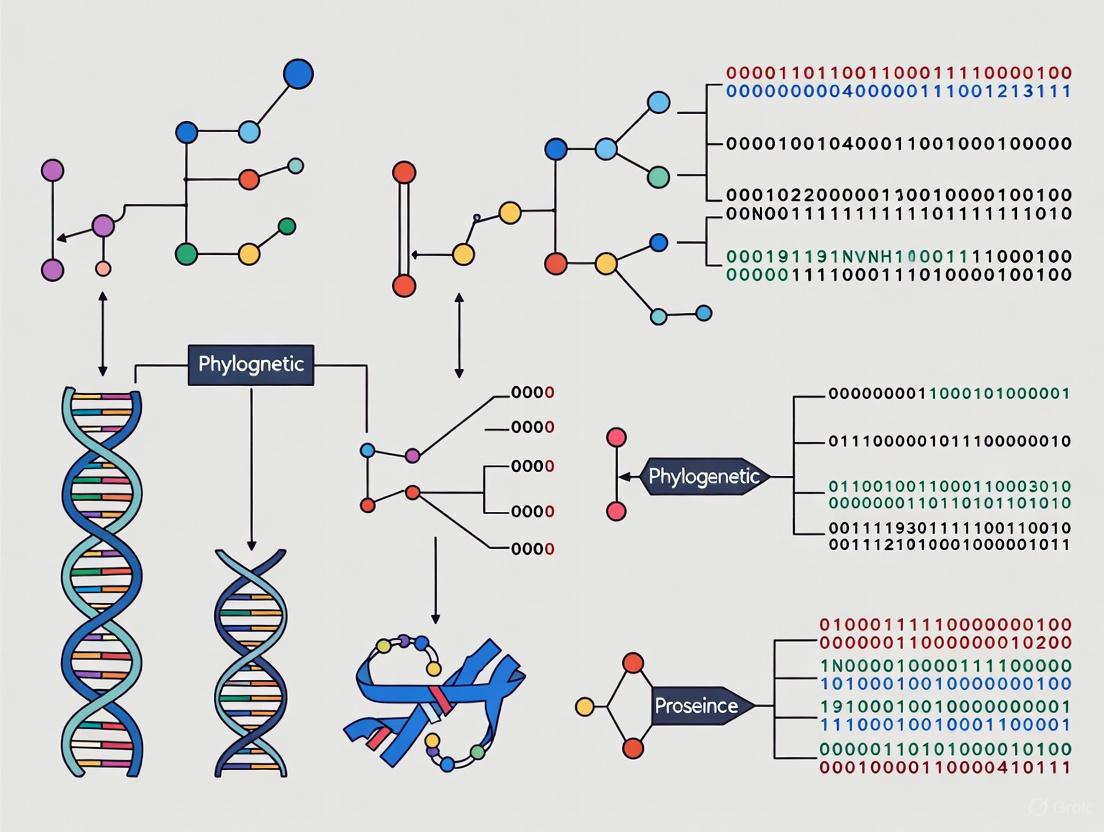
This article provides a comprehensive overview of modern phylogenetic tree construction methods, tailored for researchers, scientists, and drug development professionals.
Phylogenetic Tree Construction Methods: A Comprehensive Guide for Biomedical Research and Drug Discovery
Abstract
This article provides a comprehensive overview of modern phylogenetic tree construction methods, tailored for researchers, scientists, and drug development professionals. It covers foundational principles, from tree components to the essential steps of sequence alignment and model selection. The guide delves into the mechanics, pros, and cons of major methodologies—distance-based, maximum parsimony, maximum likelihood, and Bayesian inference—with a focus on their specific applications in biomedical research, including drug target identification and pathogen evolution tracking. Furthermore, it addresses critical challenges like compositional heterogeneity and long-branch attraction, and outlines best practices for tree validation and method selection to ensure robust, reproducible results in scientific and clinical contexts.
The Blueprint of Life: Understanding Phylogenetic Trees and Core Concepts
What is a Phylogenetic Tree? Defining Nodes, Branches, and Clades
A phylogenetic tree, also known as a phylogeny or evolutionary tree, is a branching diagram that represents the evolutionary history and relationships between a set of species, genes, or other taxonomic entities [1]. These trees illustrate how biological entities have diverged from common ancestors over time, forming a foundational element of modern evolutionary biology, systematics, and comparative genomics [2] [1]. The core principle underlying phylogenetic trees is that all life on Earth shares common ancestry, and thus can theoretically be represented within a single, comprehensive tree of life [1].
Phylogenetic trees serve as critical tools across multiple biological disciplines. In evolutionary biology, they help examine speciation processes; in epidemiology, they classify virus families; in host-pathogen studies, they demonstrate co-speciation patterns; and in cancer research, they explore genetic changes during disease progression [3]. The ability to correctly interpret and construct phylogenetic trees has become essential for researchers studying molecular evolution, population genetics, and drug development, where understanding evolutionary relationships can inform target identification and therapeutic design [2] [4].
Core Components of a Phylogenetic Tree
Understanding the terminology and components of phylogenetic trees is essential for their proper interpretation and construction. The table below defines the fundamental elements.
Table 1: Core Components of a Phylogenetic Tree
| Component | Description | Biological Significance |
|---|---|---|
| Nodes | Points where branches diverge, representing taxonomic units [2] [1]. | Indicate evolutionary events such as speciation or gene duplication. |
| Root Node | The most recent common ancestor of all entities in the tree [1]. | Provides directionality to evolution and establishes the starting point of the divergence process. |
| Internal Nodes | Hypothetical taxonomic units (HTUs) representing inferred ancestors [2] [1]. | Represent unsampled or extinct ancestral populations or species. |
| External Nodes (Tips/Leaves) | Operational taxonomic units (OTUs) representing the sampled species, sequences, or individuals [2]. | Correspond to real biological entities from which data were collected. |
| Branches | Lines connecting nodes, representing evolutionary lineages [2] [1]. | Depict the evolutionary path between ancestral and descendant nodes. |
| Branch Lengths | Often proportional to the amount of evolutionary change or time [1] [5]. | Provide a timescale for evolutionary divergence when calibrated. |
| Clades | Groups consisting of a node and all lineages descending from it [2]. | Represent monophyletic groups—all descendants of a common ancestor. |
Tree Types and Representations
Phylogenetic trees can be categorized based on their structural properties and the information they convey:
- Rooted vs. Unrooted Trees: Rooted trees contain a root node representing the most recent common ancestor, providing evolutionary directionality [1]. Unrooted trees only illustrate relatedness among leaf nodes without specifying ancestry [1]. Unrooted trees can be converted to rooted trees by including an outgroup or applying the molecular clock hypothesis [1].
- Bifurcating vs. Multifurcating Trees: Bifurcating trees have exactly two descendants at each internal node, forming binary trees [1]. Multifurcating trees may have more than two children at some nodes, representing unresolved evolutionary relationships [1].
- Labeled vs. Unlabeled Trees: Labeled trees have specific values assigned to their leaves, while unlabeled trees define topology only [1].
Table 2: Common Phylogenetic Tree Types and Their Characteristics
| Tree Type | Branch Lengths | Representation | Common Use Cases |
|---|---|---|---|
| Cladogram | Not proportional to evolutionary change; only represents branching pattern [1] [5]. | Topology without scale | Hypothesis of relationships without evolutionary rate information. |
| Phylogram | Proportional to amount of character change [1] [5]. | Scaled branches show evolutionary change | Comparing relative rates of evolution across lineages. |
| Chronogram | Proportional to time [1]. | Scaled branches show temporal divergence | Dating evolutionary events when fossil calibrations available. |
| Dendrogram | General term for any tree-like diagram [1]. | Varies | Cluster analysis results in various biological fields. |
Phylogenetic Tree Construction Methods
The construction of phylogenetic trees typically follows a multi-step process beginning with sequence collection and progressing through alignment, model selection, tree inference, and evaluation [2]. The general workflow and relationships between different construction methods are visualized below.
Phylogenetic Tree Construction Workflow
Distance-Based Methods
Distance-based methods represent the simplest approach to tree construction, transforming molecular feature matrices into distance matrices that represent evolutionary distances between species [2]. The Neighbor-Joining (NJ) algorithm is the most prominent example, created by Saitou and Nei in 1987 [2]. NJ is an agglomerative clustering method that constructs trees by successively merging pairs of operational taxonomic units (OTUs) that minimize the total tree length [2]. The algorithm begins with a star-like tree and iteratively finds the pair of nodes that minimizes the total branch length, updating the distance matrix after each merge until a fully resolved tree is obtained [2].
Protocol: Neighbor-Joining Tree Construction
- Calculate Distance Matrix: Compute pairwise distances between all sequences using an appropriate evolutionary model (e.g., Jukes-Cantor, Kimura 2-parameter) [2].
- Initialize Star Tree: Begin with a star-like phylogeny connecting all sequences to a central node [2].
- Identify Neighbor Pair: Calculate the Q-matrix and identify the pair of taxa (i, j) that minimizes the branch length.
- Create New Node: Create a new internal node X that connects the selected pair.
- Update Distance Matrix: Calculate distances from the new node X to all other taxa.
- Iterate: Repeat steps 3-5 until all nodes are connected, resulting in a fully resolved tree.
- Calculate Branch Lengths: Compute final branch lengths based on the estimated distances.
The NJ method offers computational efficiency and statistical consistency under the Balanced Minimum Evolution (BME) model [2]. Its stepwise construction approach avoids exhaustive searches through tree space, making it particularly suitable for analyzing large datasets where the number of possible trees grows exponentially with taxon number [2]. However, converting sequence data to distances necessarily reduces information content, potentially limiting accuracy when sequence divergence is substantial [2].
Character-Based Methods
Character-based methods utilize the complete sequence alignment rather than reducing data to pairwise distances, potentially preserving more phylogenetic information [2]. These methods generate numerous hypothetical trees and select optimal trees according to specific criteria [2].
Maximum Parsimony (MP)
Maximum Parsimony operates on the principle of Occam's razor, seeking the tree that requires the fewest evolutionary changes to explain the observed data [2]. The method was developed by Farris and Fitch in the early 1970s and focuses on informative sites—positions in the alignment with at least two different character states, each present in at least two sequences [2].
Protocol: Maximum Parsimony Analysis
- Identify Informative Sites: Scan the aligned sequences to locate parsimony-informative sites [2].
- Generate Tree Space: Create all possible tree topologies for the dataset [2].
- Map Characters: For each topology, map character state changes across the tree [2].
- Calculate Tree Length: Count the total number of character state changes required [2].
- Select Optimal Tree(s): Identify the tree(s) with the minimum number of changes [2].
- Build Consensus Tree: If multiple equally parsimonious trees exist, create a consensus tree [2].
For datasets with many taxa, exact solutions become computationally infeasible due to the exponential growth of tree space. Heuristic search methods like Subtree Pruning and Regrafting (SPR) and Nearest Neighbor Interchange (NNI) are employed to efficiently explore tree space [2]. While MP has the advantage of not requiring explicit evolutionary models, it can produce multiple equally parsimonious trees and may perform poorly when evolutionary rates vary significantly across lineages [2].
Maximum Likelihood (ML) and Bayesian Inference (BI)
Maximum Likelihood methods, introduced by Felsenstein in the 1980s, evaluate trees based on their probability of producing the observed data under an explicit evolutionary model [2]. ML searches for the tree topology and branch lengths that maximize the likelihood function, which calculates the probability of the sequence data given the tree and model of evolution [2].
Bayesian Inference extends the likelihood framework using Bayes' theorem to estimate the posterior probability of trees, incorporating prior knowledge about parameters [2]. BI uses Markov Chain Monte Carlo (MCMC) sampling to approximate the posterior distribution of trees, providing direct probabilistic support for phylogenetic hypotheses [2].
Protocol: Maximum Likelihood Analysis
- Select Evolutionary Model: Choose an appropriate nucleotide or amino acid substitution model (e.g., GTR, JTT) using model-testing procedures [2].
- Generate Initial Tree: Create a starting tree, often using a fast method like NJ [2].
- Optimize Branch Lengths: Calculate branch lengths that maximize the likelihood for the current topology [2].
- Evaluate Topologies: Propose topological changes and assess their impact on likelihood [2].
- Iterate: Continue proposing and evaluating topological changes until likelihood converges [2].
- Assess Support: Perform bootstrap analysis to evaluate clade confidence [2].
Table 3: Comparison of Phylogenetic Tree Construction Methods
| Method | Principle | Optimality Criterion | Advantages | Limitations |
|---|---|---|---|---|
| Neighbor-Joining | Minimal evolution | Branch length estimation | Fast computation; suitable for large datasets [2]. | Information loss from distance calculation [2]. |
| Maximum Parsimony | Minimize evolutionary steps | Fewest character state changes [2]. | No explicit model required; intuitive principle [2]. | Can be inconsistent with rate variation; multiple optimal trees [2]. |
| Maximum Likelihood | Maximize probability of data | Highest likelihood score [2]. | Statistical framework; model-based; handles complex models [2]. | Computationally intensive; model misspecification risk [2]. |
| Bayesian Inference | Bayes' theorem | Highest posterior probability [2]. | Incorporates prior knowledge; provides clade probabilities [2]. | Computationally intensive; prior specification affects results [2]. |
Visualization and Annotation of Phylogenetic Trees
Effective visualization is essential for interpreting phylogenetic trees, particularly as trees grow in size and complexity [6] [5]. The ggtree package in R has emerged as a powerful tool for phylogenetic tree visualization and annotation, implementing a grammar of graphics approach to tree plotting [6] [7].
Tree Layouts and Visualizations
Phylogenetic trees can be visualized using multiple layouts, each with distinct advantages for highlighting particular aspects of evolutionary relationships:
- Rectangular Layout: The standard tree visualization with horizontal branches and vertical divisions [6] [7].
- Circular Layout: Uses space efficiently to display larger trees with the root at the center [6] [7].
- Slanted Layout: Similar to rectangular but with slanted connecting branches [6] [7].
- Unrooted Layout: Displays relationships without assuming ancestry using equal-angle or daylight algorithms [6] [7].
- Fan Layout: Circular layout with adjustable opening angle [6] [7].
Tree Visualization and Annotation Process
Annotation Protocols
ggtree enables layered annotation of phylogenetic trees, allowing researchers to integrate diverse data types including evolutionary rates, ancestral sequences, geographic information, and statistical analyses [6] [7]. The package supports numerous geometric layers for annotation:
geom_tiplab(): Adds taxon labels at tree tips [6] [7].geom_nodepoint()andgeom_tippoint(): Adds symbols to internal nodes and tips [6] [7].geom_hilight(): Highlights selected clades with colored rectangles [6] [7].geom_cladelab(): Annotates clades with bar and text labels [6] [7].geom_treescale(): Adds scale bars for branch length interpretation [6] [7].
Protocol: Basic Tree Visualization with ggtree
- Import Tree Data: Parse tree files (Newick, NEXUS, etc.) into R using treeio [6] [7].
- Create Base Tree Plot: Generate the initial tree visualization using
ggtree(tree_object)[6] [7]. - Customize Appearance: Modify tree aesthetics (color, size, linetype) using ggplot2 syntax [6] [7].
- Add Annotation Layers: Incorporate relevant data using
+ geom_layer()syntax [6] [7]. - Adjust Layout: Select appropriate layout (rectangular, circular, etc.) for the research question [6] [7].
- Export Visualization: Save the final tree figure in appropriate formats for publication.
Advanced annotation techniques include mapping tree covariates to visual properties (coloring branches by evolutionary rate), collapsing or rotating clades for emphasis, and integrating associated data from diverse sources [7]. The compatibility of ggtree with various phylogenetic data objects (phylo4, obkData, phyloseq) facilitates reproducible analysis pipelines combining tree construction, analysis, and visualization [6] [7].
Table 4: Research Reagent Solutions for Phylogenetic Analysis
| Tool/Category | Specific Examples | Function/Application |
|---|---|---|
| Tree Visualization Software | ggtree [6] [7], FigTree, iTOL [6] | Visualize, annotate, and export publication-quality trees. |
| Tree Construction Packages | ape, phangorn, phytools [6] | Implement distance-based and character-based tree inference methods. |
| Sequence Alignment Tools | ClustalW, MAFFT, MUSCLE | Generate multiple sequence alignments from raw molecular data. |
| Evolutionary Models | JC69, K80, HKY85, GTR [2] | Model nucleotide substitution patterns for likelihood methods. |
| File Formats | Newick, NEXUS, phyloXML [5] [3] | Standardized formats for storing and exchanging tree data. |
| Data Integration Tools | treedata.table [8], treeio [6] [7] | Match and sync phylogenetic trees with associated data. |
Future Directions and Emerging Approaches
The field of phylogenetic tree construction continues to evolve with computational advances and new biological applications. Machine learning and deep learning approaches are emerging as promising alternatives or enhancements to traditional phylogenetic methods across the entire analysis pipeline [9]. These approaches show potential for multiple sequence alignment, model selection, and direct tree inference, sometimes bypassing traditional alignment steps entirely through embedding techniques or end-to-end learning [9].
As sequencing technologies advance and datasets grow, scalable phylogenetic methods become increasingly important [4]. Microbiome research exemplifies this challenge, where tools for constructing phylogenetic trees from 16S rRNA data are well-established, but robust methods for metagenomic and whole-genome shotgun sequencing data remain less developed [4]. This represents a significant opportunity for methodological innovation to make phylogenetic analysis more accessible to researchers integrating trees into statistical models or machine learning pipelines [4].
Interactive tree visualization represents another frontier, with tools like PhyloPen exploring novel pen and touch interfaces for more intuitive tree navigation and annotation [3]. Such interfaces allow direct manipulation of tree layouts, clade rotation, and real-time annotation, potentially transforming how researchers interact with and interpret phylogenetic hypotheses [3]. As biological datasets continue to expand in both size and complexity, the development of efficient, user-friendly phylogenetic tools will remain essential for advancing evolutionary research and its applications across biological disciplines.
Phylogenetic trees are diagrammatic representations that model the evolutionary relationships and history among biological entities such as species, populations, or genes. These relationships are inferred from various data sources, including genetic sequences, physical characteristics, or biochemical pathways [10] [11]. The tree structure consists of operational taxonomic units (OTUs) representing the sampled data at the tips (leaves), connected by branches to hypothetical taxonomic units (HTUs) at internal nodes, which represent inferred common ancestors [11]. The branching patterns illustrate the paths of evolutionary descent, and the entire structure is underpinned by the fundamental assumption that all life shares a common origin, diverging through evolutionary time [10].
A critical distinction in this field is between rooted and unrooted trees. A rooted tree possesses a single, unique root node that signifies the most recent common ancestor of all entities represented in the tree. This root establishes a direction for evolution and provides a timeline for evolutionary events, allowing for the interpretation of ancestral and derived states [12] [10]. In contrast, an unrooted tree illustrates the relational branching structure but lacks a defined root. It shows the relatedness of the taxa without specifying the direction of evolution or the location of the common ancestor [12] [11]. This Application Note explores the conceptual, methodological, and interpretive differences between these two tree types, providing practical guidance for their application in biomedical and evolutionary research.
Conceptual and Quantitative Distinctions
Fundamental Differences and Implications
The choice between a rooted and unrooted tree has profound implications for biological interpretation. In a rooted tree, each node with descendants represents the inferred most recent common ancestor, and the lengths of the branches can often be interpreted as time estimates or measures of evolutionary change from one node to the next [12]. This makes rooted trees essential for studies of evolutionary chronology, ancestral state reconstruction, and understanding the sequence of trait evolution. The root provides a definitive point of reference from which all evolutionary pathways diverge.
Conversely, an unrooted tree depicts only the topological relationships and relative divergence among the taxa. It does not define the evolutionary path or pinpoint the origin [12]. Unrooted trees are often an intermediate step in phylogenetic analysis, as they represent the direct relationships inferred from the data before a root is designated. They are particularly useful for visualizing relationships when no reliable outgroup is available to determine the root position, or when the assumption of a universal common ancestor is not central to the research question.
Table 1: Core Conceptual Differences Between Rooted and Unrooted Trees
| Feature | Rooted Tree | Unrooted Tree |
|---|---|---|
| Root Node | Has a defined root (most recent common ancestor) [11] | No defined root [11] |
| Evolutionary Direction | Explicitly indicates evolutionary pathways and directionality [10] | Only specifies relationships, not evolutionary paths [10] |
| Interpretation of Nodes | Internal nodes represent inferred common ancestors [12] | Internal nodes represent points of divergence without ancestral inference |
| Branch Length Meaning | Can represent time or genetic change from an ancestor [12] | Represents amount of change between nodes |
| Common Use Cases | Studying evolutionary timelines, trait evolution, ancestry | Exploring pure topological relationships, initial data exploration |
Quantitative Complexity of Tree Spaces
The number of possible tree topologies increases super-exponentially with the number of taxa (n). This combinatorial explosion has significant consequences for computational phylogenetics, as searching for the optimal tree among all possibilities becomes intractable for even moderately sized datasets [10]. The number of unrooted trees for n taxa is given by the formula: (2n-5)! / [2n-3 * (n-3)!]. Meanwhile, the number of rooted trees is correspondingly larger, expressed as: (2n-3)! / [2n-2 * (n-2)!] [13]. Notably, the number of unrooted trees for n sequences is equal to the number of rooted trees for n-1 sequences [13].
Table 2: Number of Possible Rooted and Unrooted Trees for n Taxa
| Number of Taxa (n) | Number of Unrooted Trees | Number of Rooted Trees |
|---|---|---|
| 3 | 1 | 3 |
| 4 | 3 | 15 |
| 5 | 15 | 105 |
| 6 | 105 | 945 |
| 8 | 10,395 | 135,135 |
| 10 | 2,027,025 | 34,459,425 |
| 20 | 2.22 x 10²⁰ | 8.20 x 10²¹ |
| 50 | 2.84 x 1074 | 2.75 x 1076 |
This vast tree space necessitates the use of sophisticated heuristic search algorithms in methods like maximum likelihood and Bayesian inference, as an exhaustive search is only feasible for datasets with very few taxa [10] [11].
Experimental Protocols for Tree Construction
General Workflow for Phylogenetic Inference
Constructing a reliable phylogenetic tree, whether rooted or unrooted, follows a systematic workflow. The process begins with sequence collection, where homologous DNA, RNA, or protein sequences are gathered from public databases or experimental data. This is followed by multiple sequence alignment using tools like MAFFT or ClustalW to identify corresponding positions across sequences [11]. The aligned sequences must then be trimmed to remove poorly aligned or gapped regions that could introduce noise; this step requires a careful balance to avoid removing genuine phylogenetic signal [11]. Subsequently, a substitution model is selected based on the characteristics of the sequence data, using model-testing programs like jModelTest2 to find the best-fit evolutionary model [14] [11]. Finally, a tree-building algorithm is applied to infer the phylogenetic tree, followed by tree evaluation using statistical measures such as bootstrapping to assess confidence in the inferred nodes [11].
Diagram 1: Phylogenetic Tree Construction Workflow
Protocol 1: Constructing Trees with Distance-Based Methods
Distance-based methods involve a two-step process: first, calculating a matrix of pairwise evolutionary distances from the sequence alignment; second, using a clustering algorithm to build a tree from this matrix [11]. Two common algorithms are UPGMA and Neighbor-Joining.
A. UPGMA (Unweighted Pair Group Method with Arithmetic Averages) UPGMA operates under the molecular clock assumption, positing a constant rate of evolution across all lineages [10]. The algorithm works as follows:
- Assign each sequence to its own cluster; define a leaf node for each at height zero.
- Calculate all pairwise distances between clusters, where the distance between two clusters is the average distance between all pairs of elements from each cluster.
- Identify the two clusters (i and j) with the smallest distance.
- Merge these two clusters into a new cluster, k.
- Define a new node k with children i and j, and place it at a height of ½ × d(i,j).
- Update the distance matrix by computing distances between the new cluster k and all other clusters using the formula: d(k,l) = [|i| × d(i,l) + |j| × d(j,l)] / (|i| + |j|), where |i| and |j| are the sizes of the original clusters.
- Repeat steps 2-6 until only one cluster remains [10]. UPGMA produces an ultrametric, rooted tree where the distances from the root to all tips are equal. However, its accuracy depends heavily on the validity of the molecular clock assumption, which is often violated in real biological data [10].
B. Neighbor-Joining (NJ) Neighbor-Joining is a minimum-evolution method that does not assume a molecular clock and produces unrooted trees [10] [11]. The algorithm proceeds as follows:
- Begin with a star-like unrooted tree.
- For each tip i, calculate its net divergence (ui) from all other tips: ui = Σ d(i,j) / (N-2), where N is the current number of nodes.
- For all pairs i, j, compute the biased distance score: D(i,j) = d(i,j) - (ui + uj).
- Select the pair (i, j) with the smallest D(i,j) value.
- Create a new node k connecting i and j. Calculate the branch lengths from k to i and k to j:
- d(k,i) = ½ [d(i,j) + (ui - uj)]
- d(k,j) = d(i,j) - d(k,i)
- Update the distance matrix by calculating the distance from the new node k to every other node m: d(k,m) = ½ [d(i,m) + d(j,m) - d(i,j)].
- Repeat steps 2-6 until only two nodes remain, then connect them with a branch of the specified distance [10]. The NJ method is fast and efficient, making it suitable for analyzing large datasets. The resulting unrooted tree can be rooted post-hoc using an outgroup or other criteria to produce a rooted tree for evolutionary interpretation [11].
Protocol 2: Rooting an Unrooted Tree
An unrooted tree obtained from algorithms like NJ requires additional steps to establish a root. The most common and reliable method is the outgroup method:
- Outgroup Selection: Identify one or more taxa known to have diverged before the most recent common ancestor of all other taxa (the ingroup) based on independent biological evidence.
- Tree Rerooting: Apply an algorithm that places the root on the branch connecting the outgroup to the rest of the tree. This positions the outgroup as the most distantly related taxon, making the ingroup monophyletic.
- Root Validation: Assess the biological reasonableness of the rooted tree. The resulting phylogeny should be consistent with established knowledge about the evolutionary relationships.
Alternative methods for rooting include the midpoint rooting, which assumes a molecular clock and places the root at the midpoint of the longest path between two taxa, and molecular clock rooting using Bayesian or likelihood methods that incorporate rate models. However, the outgroup method is generally preferred when a suitable outgroup is available.
Visualization and Interpretation
Tree Layouts and Their Applications
Effective visualization is crucial for interpreting and communicating phylogenetic results. The ggtree package in R provides a versatile platform for visualizing and annotating phylogenetic trees with diverse associated data [7] [6]. It supports multiple tree layouts, each suited to different analytical and presentation needs.
Table 3: Phylogenetic Tree Layouts and Their Applications in ggtree
| Tree Layout | Description | Best Use Cases |
|---|---|---|
| Rectangular | Classic rectangular layout with root on left and tips on right [6] | Standard publications, easy interpretation of rooted trees |
| Circular | Rooted tree displayed in a circular format [7] [6] | Visualizing large trees, aesthetic presentations |
| Fan | Similar to circular but with adjustable opening angle [7] [6] | Balancing space usage and visibility for large trees |
| Unrooted (Equal Angle) | Radial diagram with angles proportional to tip count [7] [6] | Displaying unrooted topology, can cluster tips |
| Unrooted (Daylight) | Improved unrooted layout optimizing space usage [7] [6] | Efficient space utilization for complex unrooted trees |
| Slanted | Rectangular layout with slanted edges [6] | Cladograms, emphasizing branching pattern over branch lengths |
| Time-Scaled | Axis represents real time with most recent sampling date [7] | Time-measured phylogenies, evolutionary timeline studies |
Diagram 2: Tree Layouts for Rooted vs. Unrooted Visualization
Interpreting Evolutionary Direction in Rooted Trees
In a properly rooted tree, several key evolutionary inferences become possible. The root node represents the most recent common ancestor of all taxa in the tree. The branching order indicates the sequence of divergence events, showing which lineages split off earlier or later from common ancestors. Branch lengths, when scaled, can represent the amount of genetic change or evolutionary time. Sister taxa are pairs of taxa that share an immediate common ancestor, representing each other's closest relatives. Monophyletic groups (clades) include an ancestral node and all of its descendants, representing complete evolutionary units. Directional evolutionary processes such as adaptation, convergence, and divergence can be hypothesized based on the distribution of traits across the rooted topology.
The Scientist's Toolkit
Research Reagent Solutions
Table 4: Essential Software and Packages for Phylogenetic Analysis
| Tool/Package | Primary Function | Application Context |
|---|---|---|
| ggtree [7] [6] | Advanced visualization and annotation of phylogenetic trees | Creating publication-quality figures; integrating tree data with associated annotations |
| ape [14] [6] | Fundamental phylogenetic analysis and evolution in R | Reading, writing, and manipulating tree structures; basic comparative analyses |
| IQ-TREE [14] [11] | Efficient phylogenomic inference by maximum likelihood | Building large-scale phylogenies with model selection and ultrafast bootstrapping |
| BEAST2 [14] | Bayesian evolutionary analysis sampling trees | Dating evolutionary events; reconstructing ancestral states using Bayesian MCMC |
| MEGA [14] [11] | Molecular Evolutionary Genetics Analysis desktop software | User-friendly interface for multiple methods; model testing and tree inference |
| PhyML [14] | Fast and accurate maximum likelihood estimation | Rapid ML tree building with smart algorithm for hill-climbing |
| Geneious [15] | Integrated molecular biology and sequence analysis platform | End-to-end workflow from sequence alignment to tree building and visualization |
Practical Guidance for Method Selection
Choosing between rooting approaches and tree-building methods depends on the research question and data characteristics. For studies of evolutionary timelines, ancestral state reconstruction, or trait evolution, a rooted tree is essential, and methods like Bayesian dating or outgroup rooting should be employed. When analyzing large datasets with hundreds or thousands of taxa where computational efficiency is paramount, fast distance-based methods like Neighbor-Joining are advantageous, producing an unrooted tree that can be rooted subsequently. If the molecular clock assumption is reasonable for the dataset (e.g., closely related viruses), UPGMA can provide a rooted tree directly, though its assumptions should be verified. For maximum accuracy with smaller datasets where computational intensity is manageable, model-based approaches like Maximum Likelihood or Bayesian Inference are preferred, though they typically produce unrooted trees requiring post-processing rooting.
When directionality and ancestry are not the primary focus—for instance, when simply exploring evolutionary relationships or testing network hypotheses—an unrooted tree may be sufficient. Each method carries specific data requirements and assumptions; NJ requires a distance matrix, ML requires an evolutionary model, and Bayesian methods require prior distributions. Researchers should match their choice to their data type and analytical goals, using multiple methods where possible to assess robustness. Tools like ggtree are then invaluable for visualizing, comparing, and annotating the resulting phylogenetic hypotheses, enabling researchers to extract meaningful biological insights from the complex patterns of evolutionary history [7] [6].
In modern biological research, the graphical representation of evolutionary relationships is indispensable for understanding the history and relatedness of species or genes. Phylogenetic trees provide a powerful framework for visualizing these relationships, playing a critical role in fields ranging from epidemiology to drug development [11]. Among these representations, cladograms, phylograms, and chronograms serve distinct purposes and convey different types of information. Cladograms represent hypothetical relationships based on patterns of ancestral and derived traits, while phylograms incorporate branch lengths proportional to evolutionary change, and chronograms display branches proportional to time with all tips equidistant from the root [16] [17]. Understanding the differences between these tree types, their appropriate construction methods, and their specific applications is essential for researchers analyzing evolutionary pathways, tracing disease origins, or identifying new therapeutic targets. This article provides a comprehensive overview of these fundamental phylogenetic tools within the context of advanced research applications.
Tree Types: Definitions, Features, and Applications
Core Characteristics and Comparative Analysis
The three primary types of phylogenetic trees—cladograms, phylograms, and chronograms—differ in the biological information they convey through their branch lengths and overall structure. Cladograms are the simplest form, depicting only the branching order and hierarchical pattern of relationships based on shared derived characteristics (synapomorphies) [17] [18]. Their branch lengths are arbitrary and carry no phylogenetic meaning, serving only to connect nodes [16] [18]. Phylograms provide more information by scaling branch lengths to represent the amount of evolutionary change, often measured by the number of substitutions per site in sequence alignments [16] [17]. Chronograms are scaled to time, with branch lengths proportional to real time (e.g., millions of years) and all tips equidistant from the root, making them ultrametric [16] [17].
Table 1: Comparative Features of Cladograms, Phylograms, and Chronograms
| Feature | Cladogram | Phylogram | Chronogram |
|---|---|---|---|
| Branch Length Significance | Arbitrary; no meaning [18] | Proportional to amount of evolutionary change (e.g., substitutions per site) [16] [17] | Proportional to time (e.g., millions of years) [16] [17] |
| Primary Application | Hypothesis of relationships based on shared derived traits [17] | Inferring evolutionary relationships with measure of genetic divergence [17] | Dating evolutionary events and comparing node ages across lineages [17] |
| Temporal Information | None [18] | Indirect (rates vary); does not directly represent time [17] | Direct; includes explicit time scale [16] |
| Tip Alignment | Tips line up neatly in a row or column [18] | Tips are often uneven due to varying branch lengths [16] | Tips are aligned as all are equidistant from the root [17] |
| Node Representation | Change in character state (synapomorphy) [17] | Point of lineage divergence from a common ancestor [17] | Time of lineage divergence from a common ancestor [17] |
Research Applications and Selection Guidelines
Each tree type serves specific purposes in biological research. Cladograms are foundational tools for generating initial hypotheses about relationships, particularly in morphological analyses or when molecular data is limited [18]. In drug development, they can help identify groups of related organisms that may share similar biochemical pathways. Phylograms are the most common trees in molecular phylogenetics and genomics [17]. Their ability to show degrees of genetic divergence is crucial for identifying rapidly evolving regions in pathogens, understanding gene family evolution, and selecting appropriate targets for intervention. Chronograms are essential for evolutionary studies that require a time frame, such as molecular clock analyses, correlating speciation events with geological history, and studying the origin and spread of emerging infectious diseases [17].
Table 2: Research Context and Tree Selection
| Research Objective | Recommended Tree Type | Rationale |
|---|---|---|
| Proposing initial evolutionary hypotheses based on traits | Cladogram | Simplifies relationships to pure branching pattern, focusing on shared derived characteristics [17] [18] |
| Quantifying genetic divergence between taxa | Phylogram | Branch lengths represent the amount of molecular evolutionary change [16] [17] |
| Correlating divergence events with geological time or fossil records | Chronogram | Provides a direct timeline of evolutionary history [16] [17] |
| Studying rates of evolution across lineages | Phylogram or Chronogram | Phylograms show variation in substitution rates; Chronograms allow rate calibration against time [17] |
| Analyzing recent outbreaks or transmission dynamics | Chronogram | Enables precise dating of emergence and spread events [17] |
Experimental Protocols for Tree Construction
General Workflow for Phylogenetic Analysis
The process of constructing a robust phylogenetic tree, regardless of the final type, follows a systematic workflow. The initial step involves sequence collection, where homologous DNA, RNA, or protein sequences are gathered from public databases like GenBank, EMBL, or DDBJ, or from experimental data [11]. This is followed by multiple sequence alignment using tools such as Clustal Omega, MAFFT, or MUSCLE to identify corresponding positions across sequences [16] [18]. Accurate alignment is critical, as errors here propagate through the entire analysis. The aligned sequences are then trimmed to remove unreliable regions that might introduce noise [11]. The next step is evolutionary model selection, where statistical criteria (e.g., AIC, BIC) are used to choose the best-fit nucleotide or amino acid substitution model (e.g., Jukes-Cantor, Kimura, HKY85, GTR) for the data [11]. Finally, tree inference is performed using specific algorithms, followed by tree evaluation using statistical methods like bootstrapping to assess branch support [16] [11].
Diagram 1: Phylogenetic Tree Construction Workflow (Max Width: 760px)
Method-Specific Protocols
Distance-Based Methods (e.g., Neighbor-Joining)
Distance-based methods begin by calculating a distance matrix from the multiple sequence alignment. This matrix contains pairwise estimates of evolutionary distance between all sequences, often corrected by a model like Jukes-Cantor or Kimura's two-parameter model to account for multiple substitutions [11]. The Neighbor-Joining (NJ) algorithm then starts with a star-like unrooted tree and iteratively finds the pair of taxa (or nodes) that minimizes the total branch length. These taxa are connected to a new internal node, and the distance matrix is recalculated with the new node replacing the paired taxa. This process repeats until a fully resolved tree is obtained [16] [11]. NJ is computationally efficient and suitable for large datasets, but it only produces a single tree and may lose information by reducing sequence data to pairwise distances [16].
Character-Based Methods (Maximum Parsimony and Maximum Likelihood)
Maximum Parsimony (MP) seeks the tree that requires the smallest number of evolutionary changes to explain the observed sequences. The protocol involves identifying informative sites in the alignment—positions with at least two different character states, each present in at least two sequences [11]. For each possible tree topology (searched via exhaustive, branch-and-bound, or heuristic methods like SPR and NNI), the minimum number of changes required is calculated. The tree(s) with the fewest changes are selected as the most parsimonious [11]. MP is model-free but can be misled by homoplasy and becomes computationally intense with many taxa.
Maximum Likelihood (ML) finds the tree topology, branch lengths, and model parameters that maximize the probability of observing the aligned sequences given the evolutionary model. The protocol requires selecting a specific nucleotide or amino acid substitution model (e.g., GTR for DNA) [11]. A heuristic search of tree space is conducted, and for each candidate topology, branch lengths and substitution parameters are optimized using numerical methods. The tree with the highest likelihood score is chosen. ML is statistically rigorous and accounts for various evolutionary processes but is computationally intensive [16] [11].
Constructing a Chronogram
Constructing a chronogram involves additional steps to convert evolutionary change into time. First, a standard phylogram is often estimated using a method like ML. Then, calibration is performed using known historical dates, such as fossil evidence, biogeographic events, or historically sampled sequences (e.g., for viruses) [17]. These calibration points are used with a molecular clock model (strict or relaxed) to convert branch lengths from substitutions per site to time. The result is an ultrametric tree where all tips are aligned, representing the present day, and branch lengths are proportional to time, allowing direct comparison of node ages across lineages [17].
Successful phylogenetic analysis relies on a suite of computational tools, software packages, and data resources. The following table details key solutions used in the field.
Table 3: Research Reagent Solutions for Phylogenetic Analysis
| Reagent/Resource | Function | Application Context |
|---|---|---|
| Geneious Prime | Integrated bioinformatics software platform | Multiple sequence alignment, tree building with NJ/UPGMA, and tree visualization [16] |
| Clustal Omega | Multiple sequence alignment tool | Aligning DNA, RNA, or protein sequences prior to phylogenetic analysis [18] |
| R Phylogenetic Packages (e.g., ape, phangorn) | Statistical environment and packages for phylogenetics | Conducting ML, BI, and distance-based analyses; tree manipulation and visualization [11] |
| "chronogram" R package | Data annotation and management for temporal series | Annotating clinical and laboratory data in time-based studies, such as infection and vaccination timelines [19] |
| Calibration Points (Fossils, Historical Samples) | Reference points with known dates | Converting phylograms into chronograms by anchoring the molecular clock to real time [17] |
| Bootstrap/Jaccknife Resampling | Statistical technique for assessing tree robustness | Evaluating confidence in tree branches by sampling alignment sites with replacement [16] |
Cladograms, phylograms, and chronograms each offer unique insights into evolutionary relationships, serving as fundamental tools for researchers and drug development professionals. The selection of an appropriate tree type and construction method must be guided by the specific research question, with cladograms providing basic hypotheses of relationship, phylograms quantifying genetic divergence, and chronograms placing evolutionary events in a temporal context. As phylogenetic applications continue to expand into areas like vaccine development and pathogen surveillance, the rigorous application of these protocols and a deep understanding of the underlying assumptions of each tree type become increasingly critical for generating reliable, actionable biological insights.
A phylogenetic tree is a graphical representation that illustrates the evolutionary relationships between biological taxa, such as species or gene families, based on their physical or genetic characteristics [11]. Comprising nodes and branches, these trees use nodes to represent taxonomic units and branches to depict the evolutionary relationships and estimated time between these units [11]. Phylogenetic trees can be categorized into rooted trees, which have a root node indicating the most recent common ancestor and suggesting an evolutionary direction, and unrooted trees, which lack a root node and only illustrate relationships without evolutionary direction [11].
In modern biological research, phylogenetic trees play a critical role. They visually present evolutionary history and phylogenetic relationships, helping researchers understand the causes of morphological diversity and evolutionary patterns [11]. Furthermore, they help reveal population genetics patterns such as genetic structure, gene flow, and genetic drift, providing essential insights for evolutionary biology, epidemiology, drug development, and conservation genetics [11] [20].
Constructing a reliable phylogenetic tree involves a multi-stage process that transforms raw sequence data into an evolutionary hypothesis. The general workflow, applicable to most phylogenetic studies, begins with sequence collection and progresses through alignment, model selection, tree inference, and finally, tree evaluation and visualization [11] [20]. The following diagram summarizes this essential workflow and the key choices at each stage.
Detailed Experimental Protocols
Protocol 1: Sequence Alignment and Curation
Objective: To produce a high-quality multiple sequence alignment (MSA) from raw molecular sequences, which forms the foundation for reliable phylogenetic inference.
- Software Options: Multiple alignment tools are available, each with specific strengths. Common choices include MAFFT, MUSCLE, and Clustal Omega [20] [21]. For instance, MUSCLE is suitable for medium-sized datasets and is often used with default parameters, while MAFFT offers advanced options for complex alignments [21].
- Procedure:
- Sequence Input: Upload or input your multi-sequence file in FASTA format. Ensure sequence names do not contain special characters (only numbers, letters, and underscores are allowed) [20].
- Tool Selection: Choose an alignment algorithm based on your data characteristics. For general purposes, MAFFT is a robust default choice [20].
- Parameter Configuration: While default parameters are recommended for most datasets, adjustments may be necessary for specialized cases [20]:
- For high-complexity datasets, increase the
Max-Iteratevalue to optimize alignment iterations. - Select a pairwise alignment method:
6merfor shorter sequences,localpairfor sequences with local similarities/indels, orgenafpair/globalpairfor longer sequences requiring a global alignment [20].
- For high-complexity datasets, increase the
- Execution and Output: Run the alignment and download the resulting alignment file (typically in FASTA or PHYLIP format).
- Alignment Trimming: After alignment, inspect and trim the MSA to remove unreliably aligned regions that can introduce noise and mislead tree inference [11]. Tools like GUIDANCE2 can be used to score alignment confidence and automatically remove columns with low scores [20].
Protocol 2: Bayesian Phylogenetic Inference
Objective: To estimate a phylogenetic tree and posterior probability of its nodes using Bayesian inference, which incorporates prior knowledge and provides a robust probabilistic framework for assessing uncertainty [20].
- Software: This protocol utilizes an integrated workflow with GUIDANCE2, ProtTest/MrModeltest, and MrBayes [20].
- Procedure:
- Robust Sequence Alignment: Perform sequence alignment using GUIDANCE2 with MAFFT as the core aligner to account for alignment uncertainty [20].
- Format Conversion: Convert the resulting alignment into NEXUS format, required by MrBayes, using tools like MEGA X and PAUP* [20].
- Evolutionary Model Selection: Identify the optimal model of sequence evolution using statistical criteria like AIC or BIC.
- Bayesian Inference in MrBayes:
- Prepare a NEXUS file containing the aligned sequences and a
mrbayesblock specifying the analysis parameters (the model selected in step 3, Markov chain Monte Carlo (MCMC) settings, etc.) [20]. - Execute the analysis in MrBayes. The software will run MCMC chains to sample trees and parameters from their posterior distribution.
- Monitor MCMC diagnostics to ensure convergence. After discarding an appropriate number of samples as "burn-in," summarize the remaining trees to produce a consensus tree with posterior probabilities clade support [20].
- Prepare a NEXUS file containing the aligned sequences and a
Protocol 3: Alignment-Free Phylogeny with Maximum Likelihood
Objective: To construct a phylogenetic tree directly from raw sequencing reads or unassembled genomes, bypassing the computationally intensive and potentially error-prone steps of genome assembly and multiple sequence alignment [22] [23]. This is particularly useful for large datasets, low-coverage sequencing, or data with complex genomic rearrangements.
- Software: Read2Tree or Peafowl [22] [23].
- Procedure using Read2Tree:
- Read Mapping: Align raw sequencing reads (from Illumina, PacBio, or ONT) to a reference set of orthologous genes [22].
- Sequence Reconstruction: For each orthologous group, reconstruct a consensus sequence from the aligned reads [22].
- Sequence Selection: Retain the best reference-guided reconstructed sequence based on criteria like the number of reconstructed nucleotide bases [22].
- Alignment and Tree Inference: Add the selected consensus sequences to the multiple sequence alignment for each orthologous group and proceed with conventional tree inference methods (e.g., IQ-TREE) [22].
- Procedure using Peafowl:
- k-mer Generation: Process input DNA sequences to generate all possible subsequences of length k (k-mers), typically using canonical counting which treats a k-mer and its reverse complement as identical [23].
- Binary Matrix Construction: Build a binary matrix where rows represent k-mers, columns represent species, and entries indicate the presence (1) or absence (0) of that k-mer in the species' genome [23].
- k-mer Length Selection: Choose an appropriate k-mer length by selecting the value of k that maximizes the entropy of the binary matrix, thereby capturing the most informative phylogenetic signal [23].
- Tree Inference: Apply a maximum likelihood approach to the binary matrix to estimate the phylogenetic tree that best explains the observed k-mer presence/absence patterns [23].
The Scientist's Toolkit: Essential Research Reagents & Materials
Table 1: Key Software and Analytical Tools for Phylogenetics
| Tool Name | Function / Application | Key Features / Notes |
|---|---|---|
| MAFFT [20] [21] | Multiple sequence alignment | Offers multiple strategies (e.g., FFT-NS-2, G-INS-i) for different alignment problems. |
| MUSCLE [21] | Multiple sequence alignment | Fast and accurate for medium-sized datasets; often used with default parameters. |
| GUIDANCE2 [20] | Alignment confidence assessment & trimming | Scores column reliability and removes unreliable regions; improves alignment quality. |
| IQ-TREE [11] [22] | Maximum likelihood tree inference | Efficient for large datasets; implements ModelFinder for model selection and ultrafast bootstrapping. |
| MrBayes [20] | Bayesian tree inference | Uses MCMC algorithms to estimate posterior probabilities of trees and parameters. |
| ProtTest [20] | Model selection (protein sequences) | Finds best-fit model of protein evolution using AIC/BIC criteria. |
| MrModeltest [20] | Model selection (DNA sequences) | Finds best-fit nucleotide substitution model using AIC/BIC criteria. |
| Read2Tree [22] | Alignment-free tree inference | Directly processes raw reads into orthologous gene alignments, bypassing assembly. |
| treeio & ggtree [24] | Tree data management & visualization | R packages for parsing, manipulating, and annotating phylogenetic trees with complex data. |
Data Presentation and Analysis
Comparative Analysis of Tree-Building Methods
Table 2: Characteristics of Common Phylogenetic Tree Construction Methods
| Method | Category | Basic Principle | Advantages | Limitations |
|---|---|---|---|---|
| Neighbor-Joining (NJ) [11] | Distance-based | Uses a distance matrix and clustering to build a tree by sequentially merging the closest nodes. | Fast computation; suitable for large datasets; allows different branch lengths. | Converts sequences to distances, potentially losing information; accuracy depends on distance metric. |
| Maximum Parsimony (MP) [11] | Character-based | Finds the tree that requires the smallest number of evolutionary changes. | Straightforward principle; no explicit model assumptions. | Can be inaccurate if evolutionary rates are high; often produces multiple equally optimal trees. |
| Maximum Likelihood (ML) [11] | Character-based | Finds the tree and model parameters that maximize the probability of observing the sequence data. | Uses explicit evolutionary models; generally robust and accurate; lower probability of systematic errors. | Computationally intensive; heuristic searches may not find the globally optimal tree. |
| Bayesian Inference (BI) [20] | Character-based | Estimates the posterior probability of trees and parameters by combining the likelihood with prior distributions. | Incorporates prior knowledge; quantifies uncertainty (e.g., with posterior probabilities). | Computationally very intensive; results can be sensitive to prior choice and require MCMC diagnostics. |
Advanced Visualization and Interpretation
Effective visualization is critical for interpreting and communicating phylogenetic results. The R packages treeio and ggtree provide a powerful and flexible platform for visualizing phylogenetic trees and associated data [24]. These tools allow researchers to:
- Parse and Integrate Data: Import trees, phylogenetic placement data (e.g., from jplace files), and associated metadata into the R environment [24].
- Annotate Trees: Map various data types (e.g., trait data, divergence times, support values) onto the tree structure using different colors, shapes, and sizes [24].
- Explore Uncertainty: Visualize placement uncertainty, for example, by coloring branches based on likelihood weight ratios (LWRs) or posterior probabilities, providing a clearer representation of confidence in specific placements [24].
- Handle Large Trees: Employ techniques such as collapsing or extracting subtrees to focus on specific clades of interest, enhancing the clarity of visualizations for large datasets [24].
In phylogenetic analysis, the accuracy of the final evolutionary tree is fundamentally dependent on the quality of the multiple sequence alignment (MSA) from which it is derived [25] [11]. MSA is a foundational technique in bioinformatics that compares and aligns multiple biological sequences to reveal similarities and differences, providing insights into sequence homology and evolutionary relationships [25]. However, MSAs often contain regions of low confidence and high noise, which can mislead phylogenetic inference [26]. Consequently, alignment trimming has become a critical step in phylogenomic pipelines to remove doubtfully aligned or highly saturated parts of the alignment before phylogenetic analysis [26]. This Application Note details the core principles, tools, and protocols for ensuring alignment accuracy, framed within the context of robust phylogenetic tree construction.
The Critical Link Between Alignment Quality and Phylogenetic Inference
The reliability of MSA results directly determines the credibility of downstream biological conclusions, including phylogenetic trees [25]. MSA is inherently an NP-hard problem, making it theoretically impossible to guarantee a globally optimal solution with current heuristic algorithms [25]. These challenges are compounded by the explosive growth of sequencing data, sequence variability, and potential experimental errors [25].
Inaccurate alignments can introduce systematic errors and produce misleading phylogenetic signals. Regions of an alignment with inaccurate homology assessment or high levels of saturation are expected to degrade or mislead phylogenetic inference [26]. Even when saturated change does not confuse assessments of site homology, it may still degrade the analytical outcome. Therefore, applying trimming algorithms to delete unreliable alignment regions is essential for producing robust phylogenetic hypotheses.
Core Principles of Effective Trimming
Effective trimming strategies are based on the principle that phylogenetic noise is not detectable in a single site (a single character or column in the alignment) but is instead signaled by discord among characters [26]. Methods that examine base frequencies at individual sites without comparing character patterns for discord are not designed to assess true phylogenetic noise [26]. The ideal trimming approach identifies and removes regions where a large proportion of sites have conflicting phylogenetic signal—sites that cannot agree on any possible evolutionary tree [26].
Quantitative Comparison of Alignment and Trimming Methods
Multiple Sequence Alignment Post-Processing Methods
Table 1: Classification and characteristics of MSA post-processing methods.
| Method Category | Representative Tool | Core Principle | Advantages | Limitations |
|---|---|---|---|---|
| Meta-Alignment | M-Coffee [25] | Integrates multiple initial MSAs into a consensus alignment using a consistency library. | Integrates strengths of different aligners; produces more consistent alignments. | Final accuracy depends on input alignment quality; rarely surpasses the best input. |
| Meta-Alignment | AQUA [25] | Automatically runs multiple aligners (MUSCLE3, MAFFT) and RASCAL realigner; selects best output using NorMD score. | Encapsulated workflow; automated selection of the best alignment. | Limited user customization; constrained candidate alignment range. |
| Meta-Alignment | TPMA [25] | Integrates nucleic acid MSAs by sequentially merging alignment blocks with higher Sum-of-Pairs scores. | High efficiency on large datasets; low computational and memory requirements. | Performance highly dependent on input alignment quality. |
| Realigner (Horizontal Partitioning) | ReAligner [25] | Iteratively realigns sequences (single-type partitioning) or sequence groups (double-type, tree-dependent partitioning). | Directly improves local alignment accuracy; maintains computational efficiency. | High computational demand for some strategies. |
Alignment Trimming Tools and Their Performance
Table 2: Overview and application guidance for phylogenetic trimming tools.
| Tool | Underlying Principle | Data Type | Key Metric | Impact on Phylogeny |
|---|---|---|---|---|
| PhyIN [26] | Phylogenetic incompatibility among neighboring sites. | DNA/Protein (UCE data tested). | Conflict between adjacent sites. | Preserves discord between gene trees and species trees; works on single loci. |
| trimAl [26] | Comparison of character signals to a bulk-data phylogeny or distance matrix. | DNA/Protein. | Automated reliability score. | Improves signal-to-noise ratio; model can be heuristic. |
| Gblocks [26] | Individual site conservation based on state frequencies. | DNA/Protein. | Base frequency per column. | May remove true phylogenetic signal; not targeted at phylogenetic noise. |
| ClipKIT [26] | Retention of parsimony-informative sites. | DNA/Protein. | Base frequency per column. | May retain highly homoplasious and misleading sites. |
Experimental Protocols for Alignment and Trimming
Protocol 1: MSA Construction and Refinement Using Meta-Alignment
Purpose: To generate a high-confidence Multiple Sequence Alignment by leveraging multiple alignment tools and achieving consensus.
Materials:
- Software: M-Coffee [25], T-Coffee [25], MUSCLE [25], MAFFT [25] [27].
- Input Data: File containing unaligned sequences (FASTA format).
Procedure:
- Generate Initial Alignments: Use at least two different aligners (e.g., MUSCLE and MAFFT) with default parameters to produce independent MSAs from the same unaligned sequence dataset [25].
- Construct Consistency Library: Input the initial alignments into M-Coffee. The tool will match all pairs of characters (bases or amino acids) across the different alignments [25].
- Weight Character Pairs: M-Coffee assigns weights to character pairs based on their consistency across the initial alignments, strengthening signals supported by a consensus [25].
- Generate Final MSA: The weighted library is processed by the T-Coffee algorithm to produce a global MSA that maximally reflects the consensus among the input alignments [25].
Protocol 2: Alignment Trimming Using PhyIN Based on Phylogenetic Incompatibility
Purpose: To trim unreliable regions from an MSA by identifying and removing sites with high local phylogenetic conflict, without inferring a tree.
Materials:
- Software: PhyIN [26].
- Input Data: A single multiple sequence alignment (FASTA or other common alignment format).
Procedure:
- Prepare Input Alignment: Load your MSA file into PhyIN.
- Assess Neighboring Site Compatibility: The algorithm scans the alignment and assesses pairs of adjacent sites (characters) for phylogenetic compatibility [26].
- Identify Incompatible Sites: Two sites are deemed incompatible if no tree exists on which both could have evolved without homoplasy (convergence or reversal). For example, for binary characters, if all four state combination patterns (0-0, 0-1, 1-0, 1-1) are present, the sites are incompatible [26].
- Trim Chaotic Regions: PhyIN deletes regions of the alignment where a high proportion of neighboring characters are in phylogenetic conflict with one another [26].
- Output Trimmed Alignment: The result is a new, shorter alignment file with chaotic regions removed, preserving areas of strong, consistent phylogenetic signal [26].
Protocol 3: Windowed MSA for Chimeric Protein Structure Prediction
Purpose: To improve the prediction accuracy of chimeric protein structures by independently aligning constituent domains.
Materials:
- Software: MMseqs2 (via ColabFold API), AlphaFold-2 or AlphaFold-3 [28].
- Input Data: Sequences of the scaffold protein and the peptide tag(s) to be fused.
Procedure:
- Generate Independent MSAs: Use MMseqs2 to search UniRef30 and generate separate MSAs for the scaffold protein and the peptide tag. The scaffold sub-alignment should include the linker region [28].
- Merge Sub-alignments: Programmatically merge the two MSAs by concatenating them. Insert gap characters ('-') in the peptide-derived sequences across the scaffold region, and vice-versa, to preserve original alignment lengths and prevent spurious residue pairing [28].
- Predict Structure: Use the merged, windowed MSA as direct input to AlphaFold-2 or AlphaFold-3 for structure prediction [28].
- Validate: Compare the Root Mean Square Deviation (RMSD) of the predicted structure against an experimentally determined reference structure, if available. This approach has been shown to yield lower (better) RMSD values in 65% of test cases [28].
Workflow Visualization and Reagent Solutions
Phylogenetic Analysis Workflow from Sequences to Trees
The Scientist's Toolkit: Essential Research Reagents and Software
Table 3: Key reagents, software, and materials for phylogenetic analysis.
| Item / Solution | Function / Application | Specification Notes |
|---|---|---|
| MAFFT [25] [29] [27] | Software for generating the initial Multiple Sequence Alignment. | Critical for creating the foundational alignment; often used as one input for meta-aligners [25]. |
| MUSCLE [25] [27] | Alternative software for generating the initial Multiple Sequence Alignment. | Provides a different heuristic approach; used to create diversity in meta-alignment inputs [25]. |
| M-Coffee [25] | Meta-alignment tool that combines results from multiple aligners. | Integrates alignments from tools like MUSCLE and MAFFT to produce a consensus MSA [25]. |
| PhyIN [26] | Alignment trimming tool based on phylogenetic incompatibility. | Used to remove noisy regions from an MSA before tree building, improving signal [26]. |
| Consistent DNA Polymerase & Kits | For PCR amplification of target loci during sequence data generation. | Using the same supplier and kit batch minimizes technical variation in upstream data [11] [30]. |
| Standardized Buffers | For reaction consistency in sequencing library preparation. | Ensures reproducibility across sample preparation and sequencing runs [30]. |
| AlphaFold-3 [28] | Protein structure prediction software. | Used for validating alignment strategies on chimeric proteins via Windowed MSA protocol [28]. |
| High-Fidelity Sequencing Kit | For generating accurate raw sequence data. | High-fidelity reduces base-calling errors, improving initial alignment quality [25]. |
A Deep Dive into Tree-Building Algorithms and Their Real-World Applications
Distance-based methods represent a foundational approach in computational phylogenetics, enabling researchers to infer evolutionary relationships from molecular data. These methods transform sequence alignments into pairwise distance matrices, which subsequently guide the construction of phylogenetic trees. Within this domain, the Neighbor-Joining (NJ) and Unweighted Pair Group Method with Arithmetic Mean (UPGMA) algorithms stand as two widely utilized techniques, each with distinct philosophical underpinnings and operational characteristics. This application note provides a detailed examination of both methods, offering structured protocols, performance comparisons, and practical implementation guidance tailored for researchers and bioinformatics professionals engaged in evolutionary analysis, comparative genomics, and drug discovery workflows.
Table 1: Core Characteristics of NJ and UPGMA Methods
| Feature | Neighbor-Joining (NJ) | Unweighted Pair Group Method with Arithmetic Mean (UPGMA) |
|---|---|---|
| Core Principle | Minimum evolution; iterative selection of pairs minimizing total tree length [31] | Hierarchical clustering; sequential amalgamation of most similar clusters [32] |
| Tree Type | Unrooted (can be rooted with an outgroup) | Rooted (assumes ultrametricity) [33] |
| Molecular Clock Assumption | Does not assume a constant rate [31] | Assumes a constant rate (molecular clock) [33] |
| Computational Complexity | O(n³) for the canonical algorithm [34] | O(n³) for the canonical algorithm [35] |
| Primary Output | Branch lengths and topology [36] | Dendrogram with equal root-to-tip distances [32] |
Methodological Foundations
The Neighbor-Joining Algorithm
The Neighbor-Joining method, introduced by Saitou and Nei in 1987, is a bottom-up clustering algorithm designed to recover phylogenetic trees from evolutionary distance data [36]. Its objective is to find pairs of operational taxonomic units (OTUs) that minimize the total branch length at each stage of clustering, ultimately producing a parsimonious tree [36]. The algorithm proceeds iteratively, starting with a star-like tree and progressively identifying neighbor pairs to join until a fully resolved tree is obtained.
The mathematical core of NJ relies on the calculation of a Q-matrix, which guides the selection of nodes to join at each iteration. For a pair of distinct taxa i and j, the Q-value is calculated as [31]:
Q(i,j) = (r - 2) d(i,j) - R(i) - R(j) (1)
where:
- d(i,j) is the distance between taxa i and j
- r is the current number of nodes in the distance matrix
- R(i) and R(j) are the sums of distances from taxon i and j to all other taxa, respectively
The pair with the minimum Q-value is selected for joining. This criterion effectively identifies pairs that minimize the total tree length when connected through a new internal node.
Upon joining taxa i and j into a new composite node u, the branch lengths from i and j to u are calculated as follows [31]:
δ(i,u) = ½ d(i,j) + [R(i) - R(j)] / [2(r - 2)] (2)
δ(j,u) = d(i,j) - δ(i,u) (3)
The distance matrix is then updated with distances between the new node u and each remaining taxon k using the formula [31]:
d(u,k) = ½ [d(i,k) + d(j,k) - d(i,j)] (4)
This process repeats until only three nodes remain, at which point the final branch lengths are calculated.
The UPGMA Algorithm
The Unweighted Pair Group Method with Arithmetic Mean is a simpler agglomerative hierarchical clustering method that constructs rooted trees (dendrograms) under the assumption of a constant molecular clock [32]. This assumption implies that evolutionary rates are constant across all lineages, resulting in an ultrametric tree where the distance from the root to every leaf is equal [33].
At each step, UPGMA identifies the two clusters (initially single taxa) with the smallest distance in the current matrix and merges them into a new, higher-level cluster. The distance between any two clusters A and B is defined as the arithmetic mean of all pairwise distances between members of A and members of B [32]:
d(AB) = (1/|A||B|) Σ d(x,y) for x in A, y in B (5)
When clusters A and B are merged to form a new cluster (AB), the distance between (AB) and any other cluster X is calculated as a weighted average [33]:
d((AB),X) = (|A|/(|A|+|B|)) · d(A,X) + (|B|/(|A|+|B|)) · d(B,X) (6)
This averaging process gives equal weight to all original taxa in the clusters, ensuring that the resulting tree is ultrametric. The algorithm continues until all taxa have been merged into a single cluster.
Experimental Protocols
Protocol 1: Constructing a Neighbor-Joining Tree
This protocol provides a step-by-step procedure for implementing the Neighbor-Joining algorithm using a distance matrix as input.
Input Requirements: A symmetric distance matrix where elements represent evolutionary distances (e.g., p-distances, Jukes-Cantor distances, Kimura 2-parameter distances) between all pairs of taxa.
Table 2: Workflow for Manual NJ Tree Construction
| Step | Procedure | Key Calculations |
|---|---|---|
| 1. Initialization | Begin with a star tree of n taxa and the corresponding n×n distance matrix, D. | Set the current number of clusters r = n. |
| 2. Q-matrix Calculation | For the current r×r matrix, compute the Q-matrix. | For all i,j: Q(i,j) = (r-2)×d(i,j) - R(i) - R(j), where R(i) = Σ d(i,k) for k=1 to r. |
| 3. Pair Selection | Identify the pair i,j with the minimum Q(i,j). | If multiple pairs share the same minimum value, selection can be arbitrary. |
| 4. Branch Length Estimation | Calculate branch lengths from i and j to their new parent node u. | δ(i,u) = ½ d(i,j) + [R(i)-R(j)]/[2(r-2)]δ(j,u) = d(i,j) - δ(i,u) |
| 5. Matrix Update | Create a new distance matrix with i and j replaced by u. | For each remaining taxon k: d(u,k) = ½ [d(i,k) + d(j,k) - d(i,j)] |
| 6. Iteration | Repeat steps 2-5 until r = 2. | With each iteration, r decreases by 1. |
| 7. Termination | Connect the final two nodes with a branch of length d(i,j). | The tree is now complete. |
Example Implementation: Consider a distance matrix for five taxa (a-e) with the following values [31]:
- First Q-calculation identifies a and b as neighbors (Q(a,b) = -50).
- Branch lengths: δ(a,u) = 2, δ(b,u) = 3.
- New node u replaces a and b in the updated matrix with d(u,c) = 7, d(u,d) = 7, d(u,e) = 6.
- The process continues until all nodes are joined.
Protocol 2: Constructing a UPGMA Tree
This protocol details the steps for constructing a phylogenetic tree using the UPGMA method.
Input Requirements: A symmetric distance matrix representing dissimilarities between taxa. The method assumes a molecular clock.
Table 3: Workflow for Manual UPGMA Tree Construction
| Step | Procedure | Key Calculations |
|---|---|---|
| 1. Initialization | Begin with n clusters, each containing one taxon. Initialize the distance matrix D. | Set the current number of clusters r = n. |
| 2. Pair Selection | Find the two clusters A and B with the smallest distance in the current matrix. | For the initial step, this is simply the smallest d(i,j). |
| 3. Branch Length Estimation | Create a new node U parent to A and B. | δ(A,U) = δ(B,U) = d(A,B)/2 |
| 4. Cluster Merging | Merge clusters A and B to form a new cluster (AB). | The size of the new cluster: |AB| = |A| + |B| |
| 5. Matrix Update | Update the distance matrix by removing A and B, and adding (AB). | For any other cluster X: d((AB),X) = (|A|·d(A,X) + |B|·d(B,X)) / (|A|+|B|) |
| 6. Iteration | Repeat steps 2-5 until only one cluster remains. | With each iteration, r decreases by 1. |
Example Implementation: Using the 5S ribosomal RNA sequence alignment of five bacteria [32]:
- Smallest distance: d(a,b) = 17. Merge a and b to form cluster (ab).
- Branch lengths: δ(a,u) = δ(b,u) = 8.5.
- Calculate new distances: d((ab),c) = (21+30)/2 = 25.5, d((ab),d) = (31+34)/2 = 32.5, d((ab),e) = (23+21)/2 = 22.
- Continue until all clusters are merged.
Visualization of Method Workflows
Figure 1: Comparative Workflow of NJ and UPGMA Algorithms. NJ (red path) iteratively minimizes total tree length via Q-matrix calculations, producing unrooted trees. UPGMA (green path) sequentially merges the closest clusters using arithmetic averaging, producing rooted ultrametric trees under a molecular clock assumption.
Performance Analysis and Optimization
Computational Considerations
The canonical implementations of both NJ and UPGMA algorithms exhibit O(n³) time complexity, which becomes a significant constraint with large datasets [34] [35]. However, optimized implementations can achieve O(n²) performance in practice [34].
Table 4: Performance Comparison and Optimization Strategies
| Aspect | Neighbor-Joining | UPGMA |
|---|---|---|
| Theoretical Complexity | O(n³) for canonical algorithm [34] | O(n³) for canonical algorithm [35] |
| Optimized Complexity | O(n²) with quad-tree structures [34] | O(n²) with optimal implementations [35] |
| Memory Requirements | O(n²) for distance matrix [34] | O(n²) for distance matrix [35] |
| Parallelization Approaches | GPU implementation achieves 26× speedup [35] | Multi-GPU implementation achieves 3-7× speedup [35] |
| Scalability | Suitable for medium to large datasets (100-10,000 taxa) | Suitable for small to medium datasets (<1000 taxa) |
Empirical evaluations on protein sequence alignments from the Pfam database demonstrate that optimized NJ implementations (e.g., QuickJoin) can achieve significant speedups compared to canonical implementations (e.g., QuickTree), with performance evolving as Θ(n²) rather than Θ(n³) on empirical data [34].
Method Selection Guidelines
The choice between NJ and UPGMA depends on research objectives, data characteristics, and computational resources:
Use Neighbor-Joining when:
Use UPGMA when:
Table 5: Key Computational Tools and Resources for Distance-Based Phylogenetics
| Resource | Type | Function | Implementation |
|---|---|---|---|
| QuickJoin | Software Tool | Optimized NJ implementation with quad-tree structures for faster tree reconstruction [34] | Standalone application |
| GPU-UPGMA | Software Tool | Parallel UPGMA implementation leveraging GPU architecture for large datasets [35] | CUDA-based implementation |
| Distance Matrix | Data Structure | Stores pairwise evolutionary distances between all taxa; foundational input for both methods [31] | Typically symmetric n×n matrix |
| Q-Matrix | Data Structure | Guides neighbor selection in NJ by combining direct distances and net divergence [31] | Calculated iteratively from distance matrix |
| Multiple Sequence Alignment | Data Preparation | Generates input for distance calculation; critical preliminary step for accurate tree inference | Tools: ClustalW, MAFFT, MUSCLE |
Advanced Applications and Current Research
Distance-based methods continue to evolve, with recent research focusing on performance optimization and addressing methodological limitations. Parallel computing approaches, particularly GPU implementations, have demonstrated substantial improvements in processing time for large datasets. MGUPGMA, a novel parallel UPGMA implementation on multiple GPUs, achieves 3-7× speedup over implementations on modern CPUs and single GPUs [35].
Recent studies have also highlighted the importance of accounting for phylogenetic relationships in predictive analyses across biological sciences. Phylogenetically informed predictions have been shown to outperform standard predictive equations, demonstrating 2-3× improvement in performance metrics [37]. This has significant implications for applications in drug discovery, where accurate evolutionary models can inform target selection and understand resistance mechanisms.
A practical consideration in NJ analysis is the potential for non-unique tree solutions. Approximately 13% of published analyses using NJ may generate non-unique phylogenetic trees when distance matrices contain ties, potentially leading to biased conclusions and reproducibility issues [38]. Researchers should be aware of this possibility and employ appropriate validation techniques when working with microsatellite data or other datasets prone to distance ties.
Neighbor-Joining and UPGMA represent distinct philosophical approaches to phylogenetic tree construction, each with specific strengths and limitations. NJ offers robustness to rate variation without assuming a molecular clock, while UPGMA provides a computationally efficient method appropriate when evolutionary rates are relatively constant. Modern implementations leveraging parallel computing architectures have significantly enhanced the scalability of both methods, making them applicable to increasingly large genomic datasets. As phylogenetic inference continues to play a central role in evolutionary biology, comparative genomics, and drug development, understanding the practical implementation and relative merits of these foundational methods remains essential for researchers across biological disciplines.
Within the broader context of phylogenetic tree construction methods, character-based approaches represent a cornerstone of evolutionary inference, with Maximum Parsimony (MP) standing as one of the most intuitive and historically significant principles [39]. Unlike distance-based methods that reduce entire sequences to a matrix of pairwise distances, character-based methods—including Maximum Parsimony, Maximum Likelihood, and Bayesian Inference—analyze discrete, aligned character states (e.g., nucleotides, amino acids, or morphological traits) directly to evaluate phylogenetic hypotheses [2] [16]. The fundamental goal of Maximum Parsimony is to select the phylogenetic tree that requires the smallest number of evolutionary changes to explain the observed character data across the taxa under study [40] [41]. This principle of simplicity, often attributed to Occam's razor, posits that the tree with the minimal amount of homoplasy (convergent evolution, parallel evolution, and evolutionary reversals) provides the best explanation for evolutionary relationships [40] [42]. This application note details the core principles, protocols, and practical applications of the Maximum Parsimony method, providing researchers and drug development professionals with a framework for its implementation and critical assessment.
Theoretical Foundation of Maximum Parsimony
The Maximum Parsimony criterion operates on the premise that evolutionary change is rare, and therefore, the most likely tree is the one that minimizes the total number of character-state changes, a quantity known as the tree length [40] [43]. The method was formally developed in the early 1970s through the works of James S. Farris and Walter M. Fitch [40] [2].
Core Principles and Optimality Criterion
Under the Maximum Parsimony criterion, an optimal tree is identified by evaluating all possible trees or a subset thereof and selecting the one with the shortest tree length [40]. This process minimizes the amount of ad hoc explanations for character similarities not due to common descent. An alternative interpretation of parsimony is that it maximizes the explanatory power of a phylogenetic hypothesis by minimizing the number of observed similarities that cannot be explained by inheritance from a common ancestor [40].
Algorithmic Foundations: The Fitch Algorithm
For a given tree topology, the minimum number of substitutions is calculated using specific algorithms. The most common for nucleotide or amino acid data is the Fitch algorithm, which applies two simple rules at each node in a post-order traversal of the tree (from leaves to root) [43]:
- Rule 1: If the sets of character states (e.g., nucleotides) of the two descendant nodes have one or more states in common, assign the set of common states to the ancestral node. This step does not incur a substitution cost.
- Rule 2: If the sets of character states of the two descendant nodes have no states in common, assign the union of the two sets to the ancestral node. This step incurs a cost of one substitution.
The following diagram illustrates the workflow of the Fitch algorithm for a single character site.
Tree Space and Search Strategies
The number of possible unrooted trees grows factorially with the number of taxa (e.g., for just 10 taxa, over two million possible trees exist), making an exhaustive search impractical for larger datasets [40] [39]. Therefore, different search strategies are employed, as summarized in the table below.
Table 1: Search Strategies for Maximum Parsimony Trees
| Search Method | Principle | Guarantees Optimal Tree? | Typical Scope of Application |
|---|---|---|---|
| Exhaustive Search [40] [39] | Every possible tree topology is scored. | Yes | Fewer than 9-12 taxa. |
| Branch-and-Bound [40] [39] | Eliminates paths of tree space that cannot yield a score better than the current best. | Yes | Approximately 9 to 20 taxa. |
| Heuristic Search (e.g., Subtree Pruning and Regrafting (SPR), Tree Bisection and Reconnection (TBR)) [40] [2] [43] | Starts with an initial tree (e.g., via stepwise addition) and explores tree space by swapping branches. | No, but finds a good approximation. | More than 20 taxa. |
Application Notes and Protocols
This section provides a detailed, step-by-step protocol for conducting a Maximum Parsimony analysis using molecular sequence data, from data preparation to tree evaluation.
Step-by-Step Protocol for Maximum Parsimony Analysis
Step 1: Sequence Acquisition and Alignment
- Objective: Collect and align homologous sequences.
- Procedure:
- Obtain Sequences: Retrieve homologous DNA, RNA, or protein sequences for your taxa of interest from public databases (e.g., GenBank, EMBL, DDBJ) using tools like BLAST [44].
- Select Sequences: Choose a set of 20-30 sequences, ensuring a good spread of evolutionary distances, including outgroup taxa (<90% identity) to root the tree [44].
- Perform Multiple Sequence Alignment (MSA): Use alignment software (e.g., MUSCLE, MAFFT, ClustalW) integrated into platforms like MEGA11 to generate a high-quality alignment [44]. The accuracy of the alignment is critical, as it forms the basis for all subsequent character analysis.
- Trim Alignment (Optional): Manually inspect and trim the alignment to remove unreliably aligned regions that may introduce noise [2].
Step 2: Define Analysis Parameters in Software
- Objective: Configure the Maximum Parsimony analysis.
- Procedure:
- Load Data: Import the aligned sequence file (e.g., in MEGA or FASTA format) into phylogenetic software such as MEGA11 [43] [44], PAUP* [39], or similar.
- Select Method: Choose "Construct/Test Maximum Parsimony" or equivalent.
- Set Parameters:
- Substitution Model: For standard parsimony, all changes are weighted equally. Alternatively, select weighted parsimony (e.g., Transversion Parsimony) which only counts more rare transversions (purine pyrimidine changes) [43].
- Gap Treatment: Decide how to treat insertion/deletion gaps (e.g., as a fifth character state or as missing data) [39].
- Search Strategy: Select the appropriate search algorithm (see Table 1) based on the number of taxa in your dataset [43].
Step 3: Execute Tree Search and Identify MP Trees
- Objective: Find the tree(s) with the shortest tree length.
- Procedure:
- Run Analysis: Initiate the tree search. For datasets with many taxa, this may require a heuristic search with multiple replicates to avoid local optima.
- Review Output: The software will return one or more Maximum Parsimony trees—the tree topologies with the minimum total number of evolutionary steps required to explain the data [43]. If multiple equally parsimonious trees are found, a consensus tree (e.g., a strict or majority-rule consensus) is typically built to represent the common relationships [2].
Step 4: Assess Tree Reliability
- Objective: Evaluate the statistical support for the inferred clades.
- Procedure:
- Perform Bootstrapping: Conduct a bootstrap analysis with a sufficient number of replicates (typically 500-1000 for publication) [16] [44]. This process involves:
- Resampling columns from the original alignment with replacement to create many pseudo-replicate datasets.
- Reconstructing an MP tree for each replicate.
- Building a consensus tree where each branch is assigned a bootstrap support value—the percentage of replicate trees that contain that particular branch [16].
- Interpret Support: Bootstrap values of 70% or higher are generally considered to indicate strong support for a clade, though this is a rule of thumb and not a strict statistical threshold [16] [39].
- Perform Bootstrapping: Conduct a bootstrap analysis with a sufficient number of replicates (typically 500-1000 for publication) [16] [44]. This process involves:
The Scientist's Toolkit: Essential Reagents and Materials
Table 2: Key Research Reagent Solutions for Maximum Parsimony Analysis
| Item | Function/Description | Example Tools/Software |
|---|---|---|
| Sequence Databases | Repositories for retrieving homologous nucleotide or protein sequences for analysis. | GenBank, EMBL, DDBJ [2] [44] |
| Multiple Sequence Alignment Software | Algorithms to align sequences by identifying homologous positions, a critical pre-processing step. | MUSCLE, MAFFT, ClustalW [44] |
| Phylogenetic Software with MP Implementation | Programs that implement the Fitch/Sankoff algorithms and various tree search strategies for MP inference. | MEGA11 [43] [44], PAUP* [39], TNT |
| High-Performance Computing (HPC) Resources | Computational clusters or workstations; essential for heuristic searches and bootstrapping with large datasets. | University HPC clusters, cloud computing services |
Data Analysis and Interpretation
Indices for Measuring Fit
The goodness-of-fit between the character data and the chosen MP tree can be quantified using specific indices:
- Consistency Index (CI): Measures the amount of homoplasy in the data. It is calculated as the ratio of the minimum possible tree length (given the data) to the actual observed tree length. A CI of 1.0 indicates no homoplasy [39].
- Retention Index (RI): Measures the amount of synapomorphy (shared derived characters) retained on the tree. Higher RI values indicate better fit [39].
Visualization and Reporting
Once a final tree is selected, it should be visualized and annotated for publication. Key steps include:
- Rooting the Tree: MP trees are intrinsically unrooted. Use a pre-defined outgroup to root the tree, providing directionality to the evolutionary relationships [43].
- Annotating Support Values: Display bootstrap values (or other support measures) on the corresponding branches of the tree [44].
- Adjusting Layout: Modify branch lengths (which may be proportional to the number of changes) and the overall tree width for clarity and visual appeal [44].
The following workflow diagram summarizes the complete experimental protocol from sequence collection to final tree visualization.
Critical Evaluation and Comparison to Other Methods
Advantages and Limitations of Maximum Parsimony
Advantages:
- Intuitive and Simple: The principle is easy to understand and communicate [40] [41].
- Model-Free: It does not require an explicit model of sequence evolution, making it suitable for data types where designing such models is difficult (e.g., morphological data or genomic rearrangements) [2].
- Computational Speed: Generally faster than model-based methods like Maximum Likelihood for comparable datasets and searches [16].
Limitations and Challenges:
- Statistical Inconsistency: Under certain conditions, particularly when evolutionary rates vary highly among lineages (leading to long-branch attraction), MP is not statistically consistent. This means it may not converge on the true tree even with infinite amounts of data [40].
- Underestimation of Change: By minimizing change, the MP tree often underestimates the actual amount of evolutionary change that occurred, especially over long periods [40].
- Computational Intensity: Although faster than some methods, finding the optimal MP tree for large datasets remains computationally challenging due to the vast tree space [41].
- Sensitivity to Homoplasy: High levels of homoplasy (convergent evolution) can mislead the method, causing it to group taxa based on independently derived similarities rather than shared ancestry [41].
Integration with Other Methods in Modern Phylogenetics
In contemporary research, Maximum Parsimony is rarely used in isolation. Its strengths are often leveraged in combination with other, more statistically robust methods:
- Maximum Parsimony vs. Maximum Likelihood (ML) & Bayesian Inference (BI): ML and BI explicitly model sequence evolution and are generally considered more accurate and less susceptible to long-branch attraction [2] [39]. They are, however, more computationally intensive. MP is often used for initial, exploratory analysis or to validate results obtained from model-based methods [41].
- Synergistic Approach: A common practice is to use MP to generate initial tree topologies that can then be evaluated under a likelihood framework, or to use MP results as starting points for more rigorous ML or Bayesian searches [41].
Advanced Applications and Future Directions
The principle of parsimony continues to be extended to more complex evolutionary scenarios. A significant area of development is its application to phylogenetic networks, which generalize trees to model events like hybridization, horizontal gene transfer, and recombination [45]. In this context, the parsimony score can be defined as the sum of substitutions along all edges of the network, inherently penalizing overly complex networks with excessive reticulations [45]. Algorithms like Sankoff and Fitch have been extended to calculate scores on networks, providing heuristics for finding the most parsimonious network that describes a collection of sequences [45].
Model-based approaches represent the gold standard in modern phylogenetic inference, providing a statistical framework for reconstructing evolutionary relationships. Unlike distance-based or maximum parsimony methods, model-based approaches explicitly incorporate stochastic models of sequence evolution, enabling researchers to account for the probabilistic nature of molecular evolution over time. The maximum likelihood (ML) method, first introduced by Felsenstein in the early 1980s, has become one of the most widely used and statistically rigorous approaches for phylogenetic tree construction [2] [46]. ML methods evaluate the probability of observing the actual sequence data under a specific evolutionary model and tree topology, searching for the combination that maximizes this likelihood [30]. This methodology offers several advantages, including the ability to accommodate complex evolutionary scenarios, quantify uncertainty in parameter estimates, and compare alternative hypotheses statistically. For phylogenetic studies spanning diverse timescales—from hundreds of millions of years involving orthologous proteins to mere days relating single cells within an organism—ML provides a robust analytical foundation [47]. The method's consistency and efficiency properties, derived from statistical theory, make it particularly valuable for researchers and drug development professionals seeking to unravel evolutionary relationships with high confidence [46].
Theoretical Foundations of Maximum Likelihood
Core Principles and Mathematical Framework
The fundamental principle of maximum likelihood estimation is conceptually straightforward: it seeks to find the parameter values that make the observed data most probable under a specified model. In phylogenetic contexts, this involves identifying the tree topology, branch lengths, and model parameters that maximize the probability of observing the given molecular sequences [46]. The likelihood function for a phylogenetic tree can be represented as the product of probabilities of observing the sequence data at each site, given the tree and evolutionary model. For a tree with alignment sites L, the likelihood is expressed as:
[ L(Tree, Model | Data) = \prod{i=1}^{L} P(Datai | Tree, Model) ]
In practice, the log-likelihood is typically used instead, transforming the product into a sum:
[ \ln L(Tree, Model | Data) = \sum{i=1}^{L} \ln P(Datai | Tree, Model) ]
The probability calculations rely on Felsenstein's pruning algorithm, which efficiently computes the likelihood by marginalizing over unobserved ancestral states [47]. This algorithm operates recursively from the tips to the root of the tree, calculating conditional likelihoods for each node given the data and model. A critical strength of ML estimation lies in its desirable statistical properties; under fairly general regularity conditions, ML estimators are consistent (converging to the true parameter values with more data) and efficient (achieving the lowest possible variance among consistent estimators) [46].
Evolutionary Models for Sequence Evolution
The accuracy of ML inference depends critically on selecting an appropriate evolutionary model that adequately describes the substitution process. These models vary in complexity from simple to highly parameterized versions that account for biological realities.
Table 1: Common Evolutionary Models for Nucleotide Sequences
| Model | Parameters | Key Features | Appropriate Use Cases |
|---|---|---|---|
| JC69 [2] | Equal base frequencies, equal substitution rates | Simplest model; single rate parameter | Preliminary analyses; closely related sequences with minimal compositional bias |
| K80 [2] | Distinguishes between transitions and transversions | More realistic than JC69; two substitution rate parameters | General analyses with moderate evolutionary distances |
| HKY85 [2] | Different base frequencies, different transition/transversion rates | Accommodates unequal base frequencies; more biologically realistic | Analyses where compositional bias is suspected |
| TN93 [2] | Different base frequencies, different transition rates | Allows for different rates for two types of transitions | Analyses where transition bias varies between types |
| GTR | Different base frequencies, six substitution rate categories | Most general time-reversible model; highly parameterized | Complex datasets with sufficient data to estimate multiple parameters |
For protein sequences, models such as LG (Le and Gascuel) describe substitutions between amino acids [47] [30]. These models can be extended to incorporate among-site rate variation using discrete gamma distributions, invariable sites, or mixture models that account for heterogeneity in evolutionary pressures across alignment sites [47]. The principle of model-based phylogenetics extends beyond conventional sequence data to include specialized models for co-evolution, with applications such as estimating 400×400 rate matrices for residue-residue coevolution at contact sites in 3D protein structures [47].
Computational Implementation and Protocols
Standard Maximum Likelihood Workflow
The conventional maximum likelihood pipeline follows a systematic workflow from data preparation to tree evaluation. The diagram below illustrates this standard approach:
Protocol 1: Standard Maximum Likelihood Analysis
Sequence Collection and Alignment
- Collect homologous DNA or protein sequences through experiments or public databases (e.g., GenBank, EMBL, DDBJ) [2].
- Perform multiple sequence alignment using tools such as MAFFT, MUSCLE, or ClustalW.
- Precisely trim aligned sequences to remove unreliable regions while preserving genuine phylogenetic signals [2].
Evolutionary Model Selection
- Compare alternative models using statistical criteria such as AIC, BIC, or likelihood ratio tests.
- Implement models using software like ModelTest (for nucleotides) or ProtTest (for amino acids).
- Select the model that best fits the data without overparameterization.
Tree Inference
- Initialize with a starting tree (often generated via neighbor-joining or parsimony methods).
- Employ heuristic search algorithms (e.g., hill-climbing, genetic algorithms) to explore tree space.
- Optimize branch lengths and model parameters for each candidate topology.
- Retain the tree with the highest log-likelihood score.
Tree Evaluation
- Assess branch support using bootstrap resampling (typically with 100-1000 replicates) or approximate likelihood ratio tests.
- Visualize and annotate the final tree using tools such as FigTree, EvolView, or Phylo.io [48].
Advanced Computational Approaches
Recent methodological advances have addressed the computational challenges inherent in traditional ML estimation. CherryML represents one such innovation, achieving several orders of magnitude speedup by using a quantized composite likelihood over cherries (pairs of leaves separated by exactly one internal node) in the trees [47]. The method employs two key innovations: (1) composite likelihood over cherries instead of the full likelihood, and (2) time quantization that approximates transition times by finitely many geometrically spaced values [47]. This approach dramatically reduces computational complexity from Ω(gmnls²+s³) for traditional methods to Θ(mnllogb+gbs³) for CherryML, where g represents optimizer iterations, m the number of alignments, n sequences per alignment, l sequence length, s state space size, and b quantization points [47].
Protocol 2: High-Performance Phylogenetics with CherryML
Data Preparation
- Input: A set of multiple sequence alignments and associated phylogenetic trees.
- For each tree, select all cherry pairs (leaf pairs separated by one internal node).
Time Quantization
- Define geometrically spaced time points τ₁<τ₂<⋯<τb covering the operational range of transition times.
- Typically, b≈100 quantization points suffice to maintain negligible quantization error [47].
Count Matrix Computation
- For each quantized time τk, compute the frequency matrix Ck for transitions between states.
- Utilize efficient distributed-memory implementation (e.g., MPI-based C++ code) for large datasets.
Optimization
- Maximize the composite log-likelihood function: ∑k=1b Ck·log(exp(Qτk))
- Employ first-order optimizers in modern numerical libraries (e.g., PyTorch) [47].
- Iterate until convergence of the rate matrix Q parameters.
The massive speedup offered by CherryML enables researchers to consider more complex and biologically realistic models than previously possible, including general 400×400 rate matrices for coevolutionary analysis [47].
Applications and Case Studies
Protein Evolution and the LG Model
The application of maximum likelihood methods to protein sequence evolution has yielded fundamental insights into molecular evolutionary processes. The LG (Le and Gascuel) model represents a landmark achievement in this domain, providing a 20×20 amino acid substitution matrix that has become a standard in the field [47]. In a recent reassessment using CherryML, researchers reproduced and extended the original LG estimation procedure, demonstrating comparable results to expectation-maximization approaches but with an order-of-magnitude reduction in computational runtime (0.1 CPU hours versus 12.25 CPU hours for the optimization step) [47]. This application highlights how advanced ML implementations can make large-scale phylogenetic analyses more accessible without sacrificing accuracy.
Table 2: Performance Comparison of Phylogenetic Methods
| Method | Computational Speed | Statistical Properties | Best Use Cases | Limitations |
|---|---|---|---|---|
| Neighbor-Joining [2] [30] | Fast | Consistent under specific models | Large datasets; preliminary analysis | Less accurate for complex models |
| Maximum Parsimony [2] [30] | Moderate | No explicit model assumptions | Sequences with high similarity; morphological data | Not statistically consistent; long-branch attraction |
| Maximum Likelihood [2] [30] | Slow | Consistent and efficient | Distantly related sequences; model-based inference | Computationally intensive |
| Bayesian Inference [2] [30] | Very slow | Quantifies uncertainty through posterior probabilities | Complex models; uncertainty assessment | Computationally demanding; requires priors |
| CherryML [47] | Very fast (100->100,000× speedup) | Consistent under weak conditions | Large-scale analyses; complex models | Composite likelihood approximation |
Structural Phylogenetics
Recent advances in artificial-intelligence-based protein structure prediction have created new opportunities for phylogenetic inference. Structure-based phylogenetics leverages the observation that protein structure evolves more slowly than sequence, potentially enabling the reconstruction of evolutionary relationships over longer timescales [49]. The FoldTree approach, which combines sequence and structural alignment based on a statistically corrected Fident distance, has demonstrated superior performance in resolving difficult phylogenies, particularly for fast-evolving protein families [49]. In benchmark evaluations using the Taxonomic Congruence Score (TCS), structure-informed methods outperformed sequence-only approaches, especially for highly divergent datasets [49].
Protocol 3: Structure-Based Phylogenetics with FoldTree
Structure Collection
- Obtain protein structures through experimental methods or AI-based prediction tools (e.g., AlphaFold).
- Filter structures based on prediction confidence (pLDDT) when using predicted models.
Structural Alignment
- Perform all-versus-all structural comparisons using Foldseek with a structural alphabet.
- Generate distance matrices based on local superposition-free comparison (LDDT), rigid-body alignment (TM-score), or structural alphabet-based sequence similarity (Fident).
Tree Building
- Apply neighbor-joining or maximum likelihood methods to the structural distance matrix.
- For maximum likelihood approaches, use partitioned structure and sequence likelihood methods.
Tree Evaluation
- Assess topological congruence with known taxonomy using TCS.
- Test adherence to molecular clock assumptions where appropriate.
This approach has proven particularly valuable for elucidating the evolutionary history of challenging protein families such as the RRNPPA quorum-sensing receptors in gram-positive bacteria, where traditional sequence-based methods struggle due to frequent mutations [49].
Alignment-Free Phylogenetics
Alignment-free methods represent an emerging approach in phylogenetics, particularly beneficial for genome-wide data involving long sequences and complex evolutionary events such as rearrangements. Peafowl (Phylogeny Estimation through Alignment Free Optimization With Likelihood) implements a novel alignment-free method that utilizes maximum likelihood estimation based on k-mer presence/absence data [23]. The method encodes the presence or absence of k-mers in genome sequences in a binary matrix, then estimates phylogenetic trees using a maximum likelihood approach for binary traits [23].
Protocol 4: Alignment-Free Phylogenetics with Peafowl
k-mer Generation
- Generate k-mers from input DNA sequences for odd values of k (typically ranging from 9 to 31).
- Implement canonical counting (treating k-mers and their reverse complements as identical) for assembled sequences.
Binary Matrix Construction
- Construct a binary matrix where rows represent k-mers, columns represent species, and entries indicate presence (1) or absence (0).
- Use hashing for efficient matrix construction.
k-mer Length Selection
- Calculate cumulative entropy for binary matrices across different k values.
- Select the k value that maximizes entropy, indicating optimal information content.
Tree Inference
- Apply maximum likelihood estimation to the binary matrix using models for binary character evolution.
- Implement heuristic tree searches to identify the topology with maximum likelihood.
This alignment-free approach demonstrates competitive performance with existing alignment-free tools while leveraging the statistical advantages of likelihood-based inference [23].
The Scientist's Toolkit
Table 3: Essential Research Reagent Solutions for Phylogenetic Analysis
| Tool/Category | Specific Examples | Function/Application | Key Features |
|---|---|---|---|
| Sequence Alignment | MAFFT, MUSCLE, ClustalW | Multiple sequence alignment from homologous sequences | Algorithm accuracy, speed, handling of large datasets |
| Model Selection | ModelTest, ProtTest, PartitionFinder | Statistical comparison of evolutionary models | AIC/BIC scores, mixture models, rate variation |
| ML Tree Inference | RAxML, IQ-TREE, PhyML, FastTree | Maximum likelihood tree search and optimization | Heuristic algorithms, parallelization, branch support |
| Bayesian Inference | MrBayes, BEAST, RevBayes | Bayesian phylogenetic analysis with MCMC | Posterior probabilities, divergence time estimation |
| Tree Visualization | FigTree, EvolView, Phylo.io [48] | Visualization, annotation, and comparison of trees | Support for large trees, comparison features, export formats |
| High-Performance Computing | CherryML [47] | Scalable maximum likelihood estimation | Composite likelihood, time quantization, distributed computing |
| Structural Phylogenetics | Foldseek, FoldTree [49] | Structure-based phylogenetic inference | Structural alphabet, local superposition-free comparison |
| Alignment-Free Methods | Peafowl [23] | Alignment-free phylogeny estimation | k-mer based, binary matrix, entropy optimization |
Model-based approaches, particularly maximum likelihood methods, provide a powerful statistical framework for phylogenetic inference with strong theoretical foundations and diverse applications. The continuous development of computationally efficient implementations such as CherryML, along with innovative applications in structural phylogenetics and alignment-free methods, continues to expand the boundaries of phylogenetic analysis. For researchers and drug development professionals, these advanced methodologies enable more accurate reconstruction of evolutionary relationships, identification of functional constraints, and elucidation of evolutionary mechanisms—all critical for understanding disease evolution, drug target identification, and evolutionary medicine. As computational resources grow and algorithms become more sophisticated, model-based phylogenetics will undoubtedly continue to yield deeper insights into the evolutionary history of life.
Bayesian inference provides a powerful probabilistic framework for statistical analysis, revolutionizing fields from phylogenetics to drug development. Its core strength lies in systematically incorporating prior knowledge and quantifying uncertainty, making it particularly valuable for complex biological problems like phylogenetic tree construction. This framework uses Bayes' theorem to update prior beliefs about unknown parameters with observed data, yielding posterior distributions that fully characterize parameter uncertainty [50]. In molecular phylogenetics, this enables researchers to estimate evolutionary relationships, divergence times, and evolutionary processes while explicitly accounting for multiple sources of uncertainty [51] [52].
The adoption of Bayesian methods in phylogenetics has grown substantially since the 1990s, accelerated by the release of user-friendly software like MrBayes in 2001 and recent advances in BEAST X [51] [53]. These tools allow researchers to implement sophisticated evolutionary models and integrate diverse data types, from genomic sequences to morphological characters and geographical information [52] [53]. For drug development professionals, these capabilities are crucial for tracing pathogen evolution, understanding drug resistance mechanisms, and reconstructing disease transmission histories.
Theoretical Foundation
Bayes' Theorem and Components
Bayesian inference operates through the continuous application of Bayes' theorem, which mathematically expresses how prior beliefs update with new evidence:
P(θ|D) = [P(D|θ) × P(θ)] / P(D)
Where:
- P(θ|D) = Posterior probability of parameters θ given data D
- P(D|θ) = Likelihood of data D given parameters θ
- P(θ) = Prior probability of parameters θ
- P(D) = Marginal probability of data D (normalizing constant) [50]
In phylogenetic contexts, parameters θ typically include tree topology, branch lengths, substitution model parameters, and molecular clock rates [52]. The prior P(θ) encodes existing knowledge about these parameters before data collection, while the likelihood P(D|θ) quantifies how well the evolutionary model explains the observed sequence data. The posterior distribution P(θ|D) represents the complete updated state of knowledge, combining prior information with evidence from the data [52] [54].
Key Concepts for Phylogenetic Analysis
Prior Probability (P(θ)): Priors can range from uninformative/vague (expressing minimal knowledge) to informative (incorporating substantial pre-existing knowledge). In molecular phylogenetics, informed priors might come from fossil calibration points for divergence times or previously estimated substitution rates [55] [52].
Likelihood Function (P(D|θ)): The likelihood evaluates how well the phylogenetic model and parameters explain the observed sequence alignment. Complex substitution models (e.g., GTR+Γ) account for different patterns of molecular evolution across sites and lineages [52].
Posterior Probability (P(θ|D)): The posterior distribution enables direct probabilistic statements about trees and parameters, such as "the probability that this clade is correct is 0.95" [52]. This contrasts with frequentist methods like maximum likelihood bootstrap that cannot make such direct probability statements [52].
Computational Implementation
Markov Chain Monte Carlo (MCMC) Methods
Since analytical solutions for posterior distributions are intractable for complex phylogenetic models, Bayesian phylogenetics relies on Markov Chain Monte Carlo (MCMC) methods to approximate posterior distributions [51] [52]. MCMC algorithms generate samples from the posterior distribution through a random walk through parameter space.
The fundamental Metropolis-Hastings algorithm operates as follows [51]:
- Start with an initial tree Ti
- Propose a new tree Tj from a proposal distribution
- Calculate acceptance ratio R = [f(Tj) × q(Ti|Tj)] / [f(Ti) × q(Tj|Ti)] where f() is the posterior density and q() is the proposal density
- Accept Tj with probability min(1, R); otherwise retain Ti
- Repeat for millions of iterations
Several enhanced MCMC variants address specific challenges:
- Metropolis-Coupled MCMC (MC³): Runs multiple parallel chains at different temperatures to improve exploration of complex tree spaces with multiple peaks [51]
- LOCAL Algorithm: Efficiently proposes new trees by modifying internal branches [51]
- Hamiltonian Monte Carlo (HMC): Uses gradient information for more efficient exploration of high-dimensional parameter spaces, implemented in BEAST X for complex models [53]
Assessing MCMC Convergence
Proper MCMC diagnostics are essential for reliable inference. Key practices include [52]:
- Running multiple independent chains from different starting points
- Monitoring Effective Sample Size (ESS) >200 for all parameters
- Examining trace plots for stationarity and good mixing
- Calculating potential scale reduction factors (PSRF) ≈1.0
Table 1: Essential Software Tools for Bayesian Phylogenetic Analysis
| Software | Primary Application | Key Features | Citation |
|---|---|---|---|
| BEAST X | Phylogenetic, phylogeographic & phylodynamic inference | Integrated platform for sequence evolution, trait evolution, divergence dating; Implements HMC for scalability | [53] |
| MrBayes | Phylogenetic tree estimation | Implements numerous models for nucleotide, amino acid, morphological data; estimates species trees & divergence times | [52] |
| BPP | Species tree estimation & delimitation | Implements multi-species coalescent model using multi-locus genomic data | [52] |
| RevBayes | Complex hierarchical Bayesian models | Flexible programming language for custom model specification | [52] |
| Tracer | MCMC diagnostics & summary | Analyzes output from BEAST & other programs; calculates ESS, parameter estimates | [52] |
Application Notes for Phylogenetic Analysis
Protocol: Bayesian Phylogenetic Reconstruction
Objective: Reconstruct phylogenetic relationships from molecular sequence data with quantification of uncertainty.
Materials:
- Molecular sequence alignment (DNA, RNA, or amino acids)
- Computational resources (workstation or cluster)
- Bayesian phylogenetic software (e.g., BEAST X, MrBayes)
Procedure:
Data Preparation
- Align homologous sequences using appropriate alignment software
- Assess data quality and identify potential contaminants or errors
- Partition data if evolutionary patterns differ across genes/codons
Substitution Model Selection
- Use model selection tools (e.g., jModelTest, PartitionFinder) to identify best-fitting nucleotide substitution model [52]
- Consider model complexity: under-parameterization risks bias, while over-parameterization reduces power [52]
- For deep phylogenies, complex models (GTR+Γ) are generally preferred [52]
Prior Specification
- Select appropriate priors for parameters based on biological knowledge:
- Tree prior: Coalescent (population data) vs. Birth-Death (species-level)
- Clock model: Strict vs. Relaxed (uncorrelated lognormal, random local)
- Substitution parameters: Gamma distributions for rates, Dirichlet for equilibrium frequencies
- Calibrate divergence time priors using fossil evidence or known historical events
- Select appropriate priors for parameters based on biological knowledge:
MCMC Configuration
- Run 2-4 independent chains with random starting trees
- Set chain length sufficient to achieve ESS >200 (often 10⁷-10⁸ generations)
- Specify sampling frequency to store 1000-10,000 samples per chain
- Set appropriate tuning parameters for proposal mechanisms
Diagnostic Assessment
- Examine trace plots for stationarity and mixing
- Verify ESS >200 for all parameters of interest
- Check PSRF ≈1.0 for all parameters across multiple runs
- Assess effective sample size of tree topologies using AWTY or similar tools [52]
Posterior Summarization
- Generate maximum clade credibility tree from posterior tree sample
- Calculate posterior probabilities for clades
- Extract parameter estimates (mean, median, 95% credible intervals)
Troubleshooting:
- Poor mixing: Adjust proposal mechanisms or use MC³
- Failure to converge: Increase chain length or simplify model
- Computational bottlenecks: Utilize BEAGLE library for likelihood calculations [53]
Protocol: Incorporating Biological Prior Knowledge
Objective: Construct informative priors from existing biological knowledge to improve inference, particularly with limited data.
Materials:
- Prior knowledge sources (pathway databases, literature, expert opinion)
- Computational framework for prior construction
Procedure:
Knowledge Extraction
- Identify relevant biological pathways or network relationships
- Formalize knowledge as probabilistic constraints (e.g., "Gene A activates Gene B with probability 0.8")
- Resolve potential inconsistencies in knowledge sources
Prior Construction using Maximal Knowledge-Driven Information Priors (MKDIP)
- Frame constraints as conditional probability statements
- Solve optimization problem to derive prior distribution that satisfies constraints while maximizing entropy [56]
- Incorporate slackness variables to handle potential inconsistencies in knowledge
Integration with Phylogenetic Analysis
- Encode informed priors for specific evolutionary parameters
- Use hierarchical models to share information across genes or lineages
- Validate prior influence through sensitivity analysis
Sensitivity Assessment
- Compare results under different prior specifications
- Evaluate prior impact using Bayes factors or posterior predictive checks
- Ensure data dominate posterior when sample size is adequate
Diagram 1: Knowledge Integration Workflow for Bayesian Phylogenetics
Advanced Applications in Biomedical Research
Phylogeographic and Phylodynamic Analysis
Bayesian phylogeographic methods reconstruct spatial spread patterns of pathogens, providing crucial insights for outbreak response and prevention. BEAST X implements novel approaches to address sampling bias in discrete-trait phylogeography and incorporates heterogeneous prior sampling probabilities informed by external data [53]. For continuous traits, relaxed random walk models can trace migration patterns, with recent advances efficiently handling branch-specific rate multipliers through HMC sampling [53].
Protocol: Pathogen Phylogeographic Reconstruction
- Data Collection: Compile pathogen genomes with associated collection dates and locations
- Model Specification: Implement discrete trait analysis with Bayesian stochastic search variable selection to identify significant migration predictors
- Sampling Bias Correction: Incorporate sampling effort models using geographic or epidemiological covariates
- Inference: Run MCMC with augmented model structure to jointly estimate phylogeny, divergence times, and migration history
- Visualization: Animate spatial-temporal spread using posterior tree distribution
Table 2: Bayesian Models for Advanced Evolutionary Analysis
| Model Type | Application | Key Parameters | Software Implementation |
|---|---|---|---|
| Relaxed Clock Models | Account for rate variation across lineages | Branch-specific rate multipliers; Clock rate priors | BEAST X, MrBayes [53] |
| Coalescent Demographic Models | Infer population size changes through time | Population size trajectories; Growth rates | BEAST X (Skygrid) [53] |
| Multi-species Coalescent | Estimate species trees from multiple genes | Species divergence times; Population sizes | BPP [52] |
| Phylogeographic Models | Reconstruct spatial spread | Location transition rates; Random walk diffusion | BEAST X [53] |
| Trait Evolution Models | Model phenotypic character evolution | Evolutionary rates; Selection parameters | BEAST X, MrBayes [53] |
Uncertainty Quantification in Drug Target Identification
Bayesian methods provide natural uncertainty quantification for identifying evolving sites in pathogen genomes that may represent drug targets. By calculating posterior probabilities of positive selection at specific codons, researchers can prioritize targets while understanding statistical confidence.
Diagram 2: Bayesian Pipeline for Drug Target Identification
Research Reagent Solutions
Table 3: Essential Research Reagents and Computational Tools
| Reagent/Tool | Function | Application Notes |
|---|---|---|
| BEAST X Software Package | Integrated platform for Bayesian evolutionary analysis | Latest version implements HMC for improved scalability; Supports complex trait evolution models [53] |
| BEAGLE Library | High-performance likelihood computation | Accelerates phylogenetic likelihood calculations; Essential for large datasets [53] |
| jModelTest/PartitionFinder | Substitution model selection | Identifies best-fitting evolutionary models; Reduces risk of model misspecification [52] |
| Tracer | MCMC diagnostics and summary | Visualizes parameter traces; Calculates ESS and convergence statistics [52] |
| Curated Sequence Alignments | High-quality input data | Orthologous sequences critical for species tree estimation; Alignment accuracy paramount [52] |
| Fossil Calibration Databases | Divergence time priors | Provides minimum age constraints for tree calibration; Paleobiological Database common source [52] |
| Pathway Databases (KEGG, Reactome) | Prior knowledge sources | Informs prior construction for gene evolution models; Context for selection analyses [56] |
Technical Considerations
Model Specification and Identifiability
Careful model specification is crucial for reliable Bayesian phylogenetic inference. Key considerations include:
Substitution Model Selection: For nucleotide data, models range from simple (JC69) to complex (GTR+Γ). The GTR+Γ model often provides sufficient flexibility for most analyses, while more parameter-rich models like covarion or Markov-modulated models capture site- and branch-specific heterogeneity [52] [53].
Identifiability Issues: Models with non-identifiable parameters pose significant challenges. For example, molecular distance d = rt (rate × time) depends on both substitution rate and divergence time, which cannot be separately estimated without additional information such as fossil calibrations [52].
Partitioning Strategies: Partitioning data by gene or codon position allows different evolutionary processes across segments of the alignment. Bayesian model selection can automatically determine optimal partitioning schemes.
Computational Optimization
Modern Bayesian phylogenetic analysis faces computational challenges, particularly with large genomic datasets:
Scalable Algorithms: BEAST X implements linear-time gradient algorithms that enable Hamiltonian Monte Carlo (HMC) sampling for high-dimensional problems, significantly improving efficiency for complex models [53].
Parallelization Strategies: Metropolis-coupled MCMC (MC³) runs multiple chains in parallel, while BEAGLE library utilization enables GPU acceleration for likelihood calculations [51] [53].
Approximate Methods: For very large datasets, variational inference methods provide faster but approximate alternatives to MCMC, though with less rigorous uncertainty quantification.
Diagram 3: MCMC Diagnostic and Troubleshooting Framework
Bayesian inference provides a coherent framework for phylogenetic analysis that naturally incorporates prior knowledge and quantifies uncertainty. The integration of sophisticated evolutionary models with efficient computational algorithms, as implemented in tools like BEAST X and MrBayes, enables researchers to address complex biological questions about evolutionary history, pathogen spread, and molecular adaptation.
For drug development professionals, these methods offer powerful approaches to track pathogen evolution, identify potential drug targets under selection pressure, and understand disease transmission dynamics. The systematic quantification of uncertainty through posterior probabilities ensures that conclusions reflect the inherent limitations of the data, supporting more informed decision-making in both basic research and applied biomedical contexts.
As Bayesian methods continue to evolve, emerging techniques in prior construction, model specification, and computational scalability will further enhance their utility for phylogenetic inference and broader biological applications.
Phylogenetic analysis has become an indispensable tool in modern drug discovery, providing critical insights into the evolutionary conservation of drug targets and the molecular evolution of pathogens. By reconstructing evolutionary relationships among biological entities, researchers can identify functionally crucial regions in proteins that remain conserved across species, informing the selection of targets with a higher likelihood of therapeutic success [57]. Concurrently, tracking pathogen evolution through phylogenetic methods enables the development of treatments that anticipate and counter resistance mechanisms, ensuring longer-lasting drug efficacy [58] [57]. This application note details standardized protocols for employing phylogenetic tree construction methods in these two key areas, providing researchers with practical frameworks for identifying conserved drug targets and understanding pathogen evolution to advance therapeutic development.
Identifying Conserved Drug Targets
Theoretical Basis and Significance
Evolutionarily conserved genes often encode proteins that perform fundamental biological functions, making them attractive candidates for therapeutic intervention. Drug target genes demonstrate significantly higher evolutionary conservation compared to non-target genes, characterized by lower evolutionary rates (dN/dS), higher conservation scores, and higher percentages of orthologous genes across multiple species [59]. This conservation indicates that these targets occupy critical positions in cellular networks and are under strong selective constraint, suggesting that drugs developed against these targets may have broader applicability across patient populations and potentially fewer off-target effects.
The protein-protein interaction networks of drug target genes exhibit distinct topological properties, including higher degrees, higher betweenness centrality, higher clustering coefficients, and lower average shortest path lengths compared to non-target genes [59]. These network characteristics indicate that drug targets tend to occupy central positions in cellular networks, functioning as hubs that connect multiple signaling pathways. This central positioning may explain why their sequences are more constrained through evolution and why modulating their activity produces significant therapeutic effects.
Quantitative Analysis of Evolutionary Conservation
Table 1: Evolutionary Conservation Metrics for Drug Target vs. Non-Target Genes
| Metric | Drug Target Genes | Non-Target Genes | Statistical Significance |
|---|---|---|---|
| Median evolutionary rate (dN/dS) | 0.1104 (amel) - 0.1735 (nleu) | 0.1280 (amel) - 0.2235 (nleu) | P = 6.41E-05 |
| Median conservation score | 838.0 (amel) - 859.0 (cfam) | 613.0 (amel) - 622.0 (cfam) | P = 6.40E-05 |
| Degree (network connectivity) | Higher | Lower | Significant |
| Betweenness centrality | Higher | Lower | Significant |
| Clustering coefficient | Higher | Lower | Significant |
| Average shortest path length | Lower | Higher | Significant |
Note: Species abbreviations include amel (Apis mellifera), btau (Bos taurus), cfam (Canis familiaris), nleu (Nomascus leucogenys). Data compiled from [59].
Experimental Protocol: Identifying Conserved Drug Targets
Protocol 1: Phylogenetic Profiling for Target Identification
Objective: Identify evolutionarily conserved proteins as potential drug targets through comparative genomic analysis.
Materials and Reagents:
- Protein sequences of interest from public databases (UniProt, RefSeq)
- Orthologous sequences from multiple species (Ensembl, OrthoDB)
- Multiple sequence alignment software (Clustal Omega, MAFFT)
- Phylogenetic reconstruction software (IQ-TREE, PhyML, MEGA)
- Conservation scoring tools (ScoreCons, AL2CO)
- Protein-protein interaction network databases (STRING, BioGRID)
Procedure:
- Sequence Collection: Compile protein sequences for the gene family of interest from human and at least 20 diverse representative species to ensure adequate phylogenetic coverage [59].
- Multiple Sequence Alignment: Perform multiple sequence alignment using Clustal Omega or MAFFT with default parameters. Visually inspect and manually refine alignments if necessary.
- Phylogenetic Tree Construction: Reconstruct phylogenetic trees using maximum likelihood method in IQ-TREE with model selection based on Bayesian Information Criterion. Assess branch support with 1000 bootstrap replicates.
- Evolutionary Rate Calculation: Calculate non-synonymous (dN) and synonymous (dS) substitution rates using the CodeML module in PAML. Compute dN/dS ratio (ω) for each branch and specific sites [59].
- Conservation Score Calculation: Calculate conservation scores for each amino acid position using ScoreCons or similar tools based on the multiple sequence alignment.
- Network Analysis: Extract protein-protein interaction data from STRING database. Calculate network topological properties (degree, betweenness centrality, clustering coefficient, shortest path length) using Cytoscape with NetworkAnalyzer plugin [59].
- Target Prioritization: Prioritize targets exhibiting dN/dS < 0.2, conservation scores > 600, high network centrality, and presence in conserved functional domains or binding pockets.
Expected Outcomes: Identification of evolutionarily constrained proteins with central network positions as high-value candidate drug targets.
Workflow for Identifying Conserved Drug Targets
Understanding Pathogen Evolution
Theoretical Framework
Pathogen evolution presents significant challenges for drug and vaccine development, particularly through the emergence of drug-resistant variants. Phylogenetic analysis enables researchers to track the evolutionary trajectories of pathogens, identify mutations conferring resistance, and understand transmission dynamics in populations [57]. The epidemiological context significantly influences pathogen evolution, with factors such as transmission intensity, host mobility, and population bottlenecks affecting the ability of pathogens to cross fitness valleys and acquire advantageous traits such as drug resistance [58].
Genomic epidemiological models that combine phylogenetic data with epidemiological parameters have revealed that low-transmission environments surprisingly facilitate the evolution of novel genotypes through reduced competitive interference, while high-transmission environments favor the survival of strains that have already reached new fitness peaks [58]. This understanding is crucial for designing treatment strategies that minimize the emergence of resistance.
Quantitative Analysis of Evolutionary Dynamics
Table 2: Factors Influencing Pathogen Evolution Across Fitness Valleys
| Epidemiological Factor | Effect on Evolution | Mechanism | Research Implications |
|---|---|---|---|
| High Transmission | Inhibits crossing of fitness valleys | Increased competition and clonal interference | Dense transmission networks favor selection of existing variants |
| Low Transmission | Facilitates crossing of fitness valleys | Reduced competition allows mutant persistence | Sparse transmission enables emergence of novel genotypes |
| Host Mobility | Enhances evolution across valleys | Decoupling of selective pressures | Mobile populations accelerate geographic spread of variants |
| Population Bottlenecks | Facilitates stochastic tunneling | Founder effects and genetic drift | Bottlenecks can promote fixation of deleterious mutations |
| Complex Life Cycles | Enhances evolution across valleys | Compartmentalized selection pressures | Stage-specific selection enables adaptive optimization |
Note: Data compiled from [58] on determinants of evolution across fitness valleys.
Experimental Protocol: Tracking Pathogen Evolution
Protocol 2: Phylogenetic Analysis of Pathogen Evolution and Drug Resistance
Objective: Reconstruct evolutionary history of pathogen strains to identify resistance mutations and transmission patterns.
Materials and Reagents:
- Pathogen genomic sequences from clinical isolates (NCBI Virus, GISAID)
- Sample metadata (collection date, geographic location, clinical outcomes)
- Sequence alignment tools (Nextclade, MAFFT)
- Phylogenetic software (IQ-TREE, BEAST2)
- Phylogenetic visualization tools (FigTree, ITOL)
- Genomic epidemiology platforms (Nextstrain [60])
Procedure:
- Data Collection and Curation: Obtain pathogen genome sequences with associated metadata. For SARS-CoV-2, use Nextclade for initial quality control and alignment [60].
- Variant Calling: Identify single nucleotide polymorphisms (SNPs) and insertions/deletions relative to reference genome using tools like bcftools. Annotate mutations with known functional consequences.
- Time-Scaled Phylogeny: Reconstruct time-resolved phylogenetic trees using BEAST2 with uncorrelated relaxed clock model and appropriate demographic models (e.g., Bayesian Skyline). Include sampling dates for molecular clock calibration.
- Phylogeographic Analysis: Trace spatial spread using discrete phylogeographic models in BEAST2. Integrate geographic metadata to visualize transmission pathways.
- Selection Pressure Analysis: Detect sites under positive selection using mixed effects model of evolution (MEME) or fast unconstrained Bayesian approximation (FUBAR) in Datamonkey.
- Resistance Mutation Tracking: Identify known resistance-conferring mutations by cross-referencing with databases like Stanford HIV Drug Resistance Database or similar pathogen-specific resources.
- Visualization and Interpretation: Use Nextstrain platform to create interactive visualizations of phylogenetic trees with associated metadata [60]. Correlate emergent lineages with clinical outcomes and treatment failures.
Expected Outcomes: Reconstruction of pathogen transmission networks, identification of emerging resistant variants, and insights into evolutionary dynamics guiding drug design and treatment protocols.
Workflow for Tracking Pathogen Evolution
The Scientist's Toolkit
Table 3: Essential Research Reagent Solutions for Phylogenetic Analysis in Drug Discovery
| Reagent/Tool | Function | Application Context |
|---|---|---|
| IQ-TREE | Maximum likelihood phylogenetic inference with model selection | General purpose tree building for both target and pathogen analysis [57] |
| BEAST2 | Bayesian phylogenetic analysis with molecular clock modeling | Time-scaled phylogeny for evolutionary rate estimation and phylodynamics [57] |
| Nextstrain | Real-time tracking of pathogen evolution with visualization | Genomic epidemiology of outbreaks (e.g., SARS-CoV-2, influenza) [60] |
| PAML | Phylogenetic analysis by maximum likelihood for selection pressure | Detection of positive selection in drug targets or pathogen proteins [59] |
| MAFFT | Multiple sequence alignment for divergent sequences | Preparation of sequences for phylogenetic analysis [57] |
| Cytoscape | Network analysis and visualization | Protein-protein interaction network analysis for target prioritization [59] |
| OPQUA | Genomic epidemiological modeling framework | Simulation of pathogen evolution under different intervention scenarios [58] |
Molecular phylogenetics has revolutionized modern biological research, providing powerful tools for tracking the spread of infectious diseases and understanding the evolution of antibiotic resistance [61]. This field plays a pivotal role in comparative genomics with significant impacts on science, industry, government, and public health [61]. The analysis of evolutionary relationships among species or gene families through phylogenetic trees informs diverse fields including evolutionary biology, epidemiology, and conservation genetics [20] [11].
In the context of antimicrobial resistance (AMR), a growing global health crisis, phylogenetic methods offer unique insights into the transmission dynamics of resistant bacterial strains. With more than 28 million antibiotic-resistant infections occurring in the US each year and E. coli identified as the top contributor for deaths attributable to bacterial AMR, understanding these transmission pathways is critical for public health intervention [62]. The One-Health paradigm recognizes that humans, animals, and the environment act as overlapping pillars of AMR transmission, necessitating sophisticated analytical approaches to elucidate complex transmission networks [62].
Theoretical Background: Phylogenetic Tree Construction
Fundamental Concepts and Terminology
A phylogenetic tree is a graphical representation resembling a tree that illustrates evolutionary and phylogenetic relationships between biological taxa based on physical or genetic characteristics [11]. These trees comprise nodes and branches, where nodes represent taxonomic units and branches depict estimated temporal relationships [11].
- Root Node: The topmost internal node symbolizing the most recent common ancestor of all leaf nodes [11]
- Internal Nodes: Hypothetical taxonomic units (HTUs) representing ancestral forms [11]
- External Nodes (Leaf Nodes): Operational taxonomic units (OTUs) typically indicating species, including extinct lineages or fossil endpoints [11]
- Evolutionary Clade: Encompasses a node and all lineages stemming from it [11]
Phylogenetic trees can be categorized into rooted trees (with a root node indicating evolutionary direction) and unrooted trees (lacking a root node and only illustrating relationships between nodes) [11].
Common Phylogenetic Methods
Table 1: Comparison of Major Phylogenetic Tree Construction Methods
| Method | Key Principle | Advantages | Limitations | Common Applications |
|---|---|---|---|---|
| Distance-Based (Neighbor-Joining, UPGMA) | Transforms molecular feature matrix into distance matrix and uses clustering algorithms [11] | Fast computation speed; suitable for large datasets; fewer assumptions [11] | Conversion of sequence differences may reduce sequence information [11] | Preliminary analysis; large-scale phylogenetic screening [11] |
| Maximum Parsimony (MP) | Minimizes number of evolutionary steps required to explain dataset (Occam's razor) [11] | Straightforward mathematical approach; no specific model required [11] | Generates numerous potential rooted trees with large datasets [11] | Analysis of rare genomic rearrangements or unique morphological traits [11] |
| Maximum Likelihood (ML) | Selects topology with highest likelihood value under specific evolutionary model [11] | Clear model assumptions; lower probability of systematic errors [11] | Computationally intensive; heuristic searches needed for large taxa numbers [11] | Detailed evolutionary analysis with well-characterized sequence data [11] |
| Bayesian Inference (BI) | Estimates phylogenetic trees through probabilistic framework incorporating uncertainty and prior knowledge [20] | Robust probabilistic framework; incorporates prior knowledge; estimates uncertainty [20] | Computationally intensive; complex model specification [20] | Divergence time estimation; complex evolutionary model testing [20] |
Application Note: Tracking Antibiotic-ResistantE. coliTransmission
A recent study utilized genomic sequencing and phylogenetics to characterize the burden and transmission dynamics of antibiotic-resistant Escherichia coli (ABR-Ec) between human and canine feces present on urban sidewalks in San Francisco, California [62]. This research provides an excellent model for understanding how phylogenetic methods can elucidate AMR transmission pathways in urban environments.
The study collected fifty-nine ABR-Ec isolates from human (n=12) and canine (n=47) fecal samples from the Tenderloin and South of Market (SoMa) neighborhoods of San Francisco [62]. Researchers then analyzed phenotypic and genotypic antibiotic resistance of the isolates, along with clonal relationships based on cgMLST and single nucleotide polymorphisms (SNPs) of the core genomes [62].
Key Findings and Quantitative Results
Table 2: Antibiotic Resistance Profile ofE. coliIsolates from Human and Canine Feces
| Parameter | Human Isolates (n=12) | Canine Isolates (n=47) | Overall (n=59) |
|---|---|---|---|
| Similar ABR Gene Profiles | Found comparable amounts and profiles of ABR genes [62] | Found comparable amounts and profiles of ABR genes [62] | Human and canine samples carried similar amounts and profiles [62] |
| Transmission Events | Evidence of acquisition from canine sources [62] | Evidence of transmission to human hosts [62] | Multiple transmission events between humans and canines [62] |
| Notable Transmission Instance | One instance of likely transmission from canines to humans [62] | Source for human infection in identified instance [62] | Additional local outbreak cluster with one canine and one human sample [62] |
| Public Health Implications | Canine feces act as important reservoir of clinically relevant ABR-Ec [62] | Canine feces act as important reservoir of clinically relevant ABR-Ec [62] | Supports emphasis on proper canine feces disposal and urban sanitation [62] |
The application of Bayesian inference to reconstruct transmission dynamics between humans and canines from multiple local outbreak clusters using the marginal structured coalescent approximation (MASCOT) provided evidence for multiple transmission events of ABR-Ec between humans and canines [62]. Specifically, researchers found one instance of likely transmission from canines to humans as well as an additional local outbreak cluster consisting of one canine and one human sample [62].
Experimental Protocol: Bayesian Phylogenetic Analysis
Complete Workflow for Phylogenetic Analysis
The following protocol presents an integrated workflow for Bayesian phylogenetic analysis, leveraging advanced tools for sequence alignment, model selection, and phylogenetic inference [20]. This systematic approach enhances reliability and reproducibility while minimizing manual intervention and potential errors.
Detailed Procedural Steps
Sequence Alignment Using GUIDANCE2 with MAFFT
Perform sequence alignment using GUIDANCE2, selecting MAFFT as the alignment tool [20]:
- Access the GUIDANCE2 Server and upload your multi-sequence FASTA file. Ensure the file format is correct (header line starting with ">" followed by sequence lines) and that sequence names do not contain special characters [20].
- Select the alignment tool: In the alignment tool options, choose MAFFT as the alignment method [20].
- Configure alignment parameters: Default MAFFT parameters are recommended for most datasets. For specialized cases:
- For datasets with high complexity, consider using the Max-Iterate option to optimize alignment iterations [20].
- Select appropriate pairwise alignment method: 6mer for shorter sequences, localpair for sequences with local similarities, genafpair for longer sequences requiring global alignment, or globalpair for global alignments of similar-length sequences [20].
- Run alignment and download the alignment result file in FASTA format [20].
- Evaluate alignment results and remove unreliable alignment columns using GUIDANCE2's built-in functionality [20].
Sequence Format Conversion
Convert sequence formats for downstream compatibility using MEGA and PAUP* [20]:
- The NEXUS format is a common data format for phylogenetic analysis, facilitating greater cooperation in the analysis and visualization of data [20].
- PAUP* reads data in NEXUS file format, and all NEXUS files must begin with the declaration "#NEXUS" [20].
- Use MEGA for initial format conversions and PAUP* for format refinement, ensuring seamless data handoffs between tools and preventing pipeline failures from format mismatches [20].
Evolutionary Model Selection
Select optimal evolutionary models via ProtTest (for proteins) or MrModeltest (for nucleotides) guided by statistical criteria (AIC/BIC) [20]:
- For nucleotide sequences: Use MrModeltest2, which is platform-dependent on PAUP* [20]. Copy the MrModelblock file from MrModelTest to your working directory, execute it in PAUP* via File > Execute, and use the generated mrmodel.scores file for subsequent analyses [20].
- For protein sequences: Use ProtTest, which is dependent on JAVA [20]. Download the latest ProtTest version from its GitHub page, ensure Java is already installed, and extract the files to a directory with only English characters and no spaces [20].
Bayesian Inference with MrBayes
Execute Bayesian inference in MrBayes under the selected model parameters, including MCMC diagnostics [20]:
- Install MrBayes: Download MrBayes from its GitHub page and extract it to a directory with only English characters and no spaces. Rename the appropriate executable file to mb.exe [20].
- Prepare NEXUS files: Place your NEXUS files in the same directory as the mb.exe executable [20].
- Launch MrBayes: Open a command line terminal in the directory and type
mbthen press Enter to launch MrBayes [20]. - Execute analysis: Follow MrBayes commands to execute the Bayesian inference using the selected evolutionary model [20].
- Monitor MCMC diagnostics: Assess convergence using appropriate diagnostic statistics within MrBayes [20].
Validation and Visualization
Validate and visualize phylogenetic outputs using appropriate software tools [20]:
- Assess convergence of MCMC runs using diagnostic tools within MrBayes or complementary software [20].
- Visualize phylogenetic trees using tree visualization software that supports Newick format, which is widely used for representing phylogenetic trees and supported by many phylogenetic analysis tools [20].
- Generate consensus trees and calculate posterior probabilities for clade support [20].
Phylodynamics for Transmission Analysis
For transmission dynamics analysis, the protocol can be enhanced with phylodynamic methods:
- Structured Coalescent Approximation: Use approaches like the marginal structured coalescent approximation (MASCOT) to reconstruct transmission dynamics between different populations or hosts [62].
- Bayesian Inference: Reconstruct transmission dynamics between populations using Bayesian inference frameworks that incorporate host metadata [62].
Essential Research Reagents and Computational Tools
The Scientist's Toolkit
Table 3: Essential Research Reagent Solutions for Phylogenetic Analysis
| Tool/Reagent | Function | Application Context | Key Features |
|---|---|---|---|
| GUIDANCE2 | Assesses alignment reliability and removes unreliable regions [20] | Sequence alignment quality control | Accounts for alignment uncertainty and evolutionary events [20] |
| MAFFT | Multiple sequence alignment [20] | Core alignment generation | Handles complex evolutionary events; multiple algorithm options [20] |
| MrModeltest2 | Selects optimal nucleotide substitution model [20] | Evolutionary model selection | Uses statistical criteria (AIC/BIC); automated model selection [20] |
| ProtTest | Selects optimal protein evolution model [20] | Evolutionary model selection | Uses statistical criteria (AIC/BIC); automated model selection [20] |
| MrBayes | Bayesian phylogenetic inference [20] | Tree estimation | Markov Chain Monte Carlo (MCMC) algorithms; probabilistic framework [20] |
| PAUP* | Phylogenetic analysis using parsimony and other methods [20] | Comprehensive phylogenetic analysis | Versatile analysis options; supports NEXUS format [20] |
| MEGA X | Molecular evolutionary genetics analysis [20] | Sequence format conversion and preliminary analyses | User-friendly interface; comprehensive analysis toolkit [20] |
System Requirements and Implementation
To enhance the reproducibility and accessibility of phylogenetic analysis, the following hardware specifications are recommended as minimal requirements for computational implementation [20]:
- Processor: A single-core central processing unit (CPU) with a base clock speed ≥2.0 GHz
- Memory: 2 GB of random access memory (RAM)
- Storage: 15 GB available disk space for software installations, intermediate files, and output storage
- Graphics: No graphical processing unit (GPU) acceleration required
While these specifications suffice for basic analyses, multi-core processors (>4 cores) and expanded RAM (≥8 GB) are strongly recommended for improving computational efficiency during Bayesian inference with large datasets [20].
Advanced Methodological Considerations
Addressing Model Misspecification and Confirmation Bias
Current phylogenetic protocols may lack critical steps for assessing model fit, potentially allowing model misspecification and confirmation bias to unduly influence phylogenetic estimates [61]. To address these limitations:
- Implement Model Fit Assessment: Incorporate procedures for assessment of phylogenetic assumptions and tests of goodness of fit [61].
- Reduce Confirmation Bias: Adopt protocols that systematically evaluate alternative models and hypotheses rather than confirming pre-existing assumptions [61].
- Validate with Multiple Methods: Where feasible, compare results across different phylogenetic methods (e.g., maximum likelihood and Bayesian inference) to assess robustness of findings [11].
Phylodynamic Applications in Public Health
The application of phylodynamics—using genetic data to infer epidemiological dynamics—provides a powerful statistical framework for understanding transmission pathways of antimicrobial resistance [62]. This approach:
- Enables reconstruction of transmission directionality between different host species [62]
- Identifies reservoirs of antimicrobial resistance in urban environments [62] [63]
- Informs public health interventions and sanitation practices [62]
This application note demonstrates the powerful utility of phylogenetic methods, particularly Bayesian approaches with phylodynamic modeling, for tracking the transmission of antibiotic-resistant pathogens at the human-animal-environment interface. The integrated protocol presented here—encompassing robust sequence alignment, rigorous model selection, and Bayesian inference—provides a reproducible framework for elucidating complex transmission networks of antimicrobial resistance.
The case study of ABR-Ec transmission in San Francisco illustrates how these methods can provide concrete evidence for cross-species transmission events and identify environmental reservoirs of clinically relevant antibiotic-resistant bacteria [62]. Such insights are critical for designing targeted interventions to reduce the community prevalence of antibiotic resistance, including public health measures emphasizing proper canine feces disposal practices, access to public toilets, and sidewalk and street cleaning [62].
As phylogenetic methods continue to evolve, incorporating more sophisticated models and computational approaches, their application to tracking viral outbreaks and antimicrobial resistance will become increasingly precise and informative, ultimately contributing to more effective public health responses to these pressing global health challenges.
Navigating Pitfalls and Enhancing Accuracy in Phylogenetic Analysis
Compositional heterogeneity and long-branch attraction (LBA) represent two pervasive systematic errors in phylogenetic inference that can produce strongly supported yet incorrect evolutionary trees [64] [65]. Compositional heterogeneity occurs when the proportions of nucleotides or amino acids are not similar across the dataset, violating the stationarity assumption of most phylogenetic models [65]. LBA describes the phenomenon whereby distantly related lineages with elevated evolutionary rates are incorrectly inferred as closely related, because numerous convergent changes along long branches are misinterpreted as shared derived characters [66] [67]. These artifacts persist as significant challenges in modern phylogenomics, particularly at deep evolutionary timescales where branch length heterogeneity and compositional biases are most pronounced [68] [69]. This application note provides experimental protocols and analytical frameworks for detecting and mitigating these confounding effects, enabling more reliable phylogenetic inference for evolutionary research and comparative genomics in drug discovery.
Quantitative Assessment of Data Challenges
Metrics for Quantifying Compositional Heterogeneity
Table 1: Metrics for Quantifying Compositional Heterogeneity in Phylogenetic Datasets
| Metric | Calculation | Interpretation | Advantages/Limitations |
|---|---|---|---|
| RCFV (Relative Composition Frequency Variability) | Σ|μᵢⱼ - μ̄ⱼ|/n across taxa (i) and character states (j) [65] | Higher values indicate greater heterogeneity; identifies problematic taxa/partitions | Simple calculation; but biased by sequence length and taxon number [65] |
| nRCFV (normalized RCFV) | RCFV with normalization constants for taxon number and sequence length [65] | Dataset-size-independent measure of compositional heterogeneity | Enables comparison across datasets of different sizes; more reliable for large phylogenomic datasets [65] |
| Character-specific RCFV (csRCFV) | Σ|μᵢⱼ - μ̄ⱼ|/n for specific character states [65] | Quantifies contribution of specific nucleotides/amino acids to total heterogeneity | Guides decisions on character recoding or masking [65] |
| Taxon-specific RCFV (tsRCFV) | Σ|μᵢⱼ - μ̄ⱼ|/n for specific taxa [65] | Identifies compositionally divergent taxa | Informs taxon exclusion strategies; highlights taxa potentially causing LBA [65] |
Performance Comparison of Evolutionary Models
Table 2: Model Performance in Addressing Compositional Heterogeneity and LBA
| Model/ Method | Compositional Heterogeneity Handling | LBA Robustness | Computational Demand | Typical Applications |
|---|---|---|---|---|
| Site-Homogeneous (e.g., WAG, LG) | Assumes uniform process across sites; poor performance with heterogeneous data [64] | Low; highly susceptible to LBA artefacts [66] [64] | Low to moderate | Shallow phylogenies with minimal compositional variation |
| Finite Mixture (e.g., C20, C40, C60) | Accounts for limited categories of site evolution [69] | Moderate improvement over homogeneous models [69] | Moderate | Medium-scale phylogenomic datasets |
| CAT Infinite Mixture | Dirichlet process clusters sites into biochemically specific categories [64] [69] | High; significantly reduces LBA by modeling site-specific preferences [64] [69] | High | Deep phylogenies with substantial compositional heterogeneity |
| Maximum Parsimony | No explicit model of sequence evolution | Highly susceptible to LBA; inconsistent under long-branch conditions [66] [67] | Low to high (depending on taxon sampling) | Morphological data; cases with minimal homoplasy |
Experimental Protocols
Protocol 1: Detection and Diagnosis of Compositional Heterogeneity
Principle: Compositional heterogeneity violates the stationarity assumption of most phylogenetic models and can lead to systematic errors, including LBA [65]. Early detection allows for appropriate model selection or data filtering.
Materials:
- Multiple sequence alignment (nucleotide or amino acid)
- Computing resources with R environment installed
- nRCFVReader software (https://github.com/JFFleming/RCFVReader)
Procedure:
- Data Preparation: Prepare your multiple sequence alignment in FASTA or PHYLIP format. Ensure proper alignment trimming to remove unreliable regions [11].
- nRCFV Calculation: Run nRCFV_Reader on your alignment to compute normalized Relative Composition Frequency Variation values:
- Execute for entire dataset to obtain total nRCFV
- Calculate taxon-specific (ntsRCFV) values to identify compositionally divergent taxa
- Calculate character-specific (ncsRCFV) values to identify nucleotides or amino acids contributing most to heterogeneity
- Interpretation: Compare nRCFV values across genes or partitions. Taxa or partitions with nRCFV values >2 standard deviations from the mean warrant further investigation or exclusion [65].
- Validation: Conduct posterior predictive analysis using Bayesian frameworks to assess model adequacy for modeling site-specific amino acid preferences [69].
Troubleshooting:
- High ntsRCFV values may indicate problematic taxa that should be considered for exclusion or additional sampling of related taxa
- High ncsRCFV values may suggest specific amino acids or nucleotides that could benefit from recoding strategies
- Missing data typically does not appreciably affect RCFV values, allowing analysis of gappy alignments [65]
Protocol 2: Mitigating Long-Branch Attraction Artefacts
Principle: LBA occurs when convergent evolution in fast-evolving lineages is misinterpreted as shared ancestry [67]. Mitigation strategies include improved taxon sampling, site-heterogeneous modeling, and data filtering.
Materials:
- Phylogenomic-scale dataset (concatenated alignments or gene trees)
- Software: PhyloBayes (CAT model), IQ-TREE (site-heterogeneous models), Seq-gen for simulation tests [67]
- Computing cluster (for Bayesian analyses with CAT model)
Procedure:
- Taxon Sampling Improvement:
- Model Selection:
- Compare site-homogeneous (e.g., WAG, LG) and site-heterogeneous (e.g., CAT, C20-C60) models using cross-validation [69]
- Calculate leave-one-out cross-validation (LOO-CV) or widely applicable information criterion (wAIC) scores to quantify model fit [69]
- Select model with best statistical fit for final inference
- Data Filtering and Saturation Assessment:
- LBA Diagnosis:
Troubleshooting:
- If CAT model fails to converge, use CAT-PMSF (Posterior Mean Site Frequencies) as a computationally efficient alternative [68]
- If computational resources are limited, use fast site-heterogeneous models (e.g., C20) in IQ-TREE rather than full CAT model
- For persistent LBA, consider character recoding or using more conservative gene regions [67]
Workflow Visualization
Figure 1: Comprehensive workflow for detecting and mitigating compositional heterogeneity and long-branch attraction artefacts in phylogenetic analyses.
The Scientist's Toolkit
Table 3: Essential Research Reagents and Computational Tools
| Tool/Reagent | Function | Application Notes |
|---|---|---|
| nRCFV_Reader | Calculates normalized composition heterogeneity metrics | Identifies compositionally problematic taxa and partitions prior to phylogenetic analysis [65] |
| PhyloBayes | Bayesian phylogenetic inference with CAT mixture model | Implements site-heterogeneous model that significantly reduces LBA artefacts; requires substantial computational resources [64] [69] |
| IQ-TREE | Maximum likelihood phylogenetics with site-heterogeneous models | Faster alternative to PhyloBayes with C20, C40, C60 empirical profile mixture models [69] |
| Seq-gen | Simulates sequence evolution along specified trees | Generates test datasets for evaluating LBA susceptibility and method performance [67] |
| Model-testing pipelines | Cross-validation for model comparison (LOO-CV, wAIC) | Identifies best-fitting model to reduce systematic error from model misspecification [69] |
| Posterior predictive checks | Assesses model adequacy for site-specific patterns | Evaluates whether evolutionary model adequately captures sequence saturation and site heterogeneity [64] [69] |
Compositional heterogeneity and long-branch attraction present persistent challenges for phylogenetic accuracy, particularly in deep evolutionary studies relevant to drug target identification and comparative genomics. The integration of quantitative diagnostic metrics like nRCFV with site-heterogeneous models such as CAT provides a robust framework for overcoming these systematic errors. The experimental protocols outlined herein enable researchers to diagnose compositional bias, select appropriate evolutionary models, and implement effective LBA mitigation strategies. As phylogenomic datasets continue to grow in both size and taxonomic scope, these approaches will become increasingly essential for producing reliable phylogenetic inferences that accurately reflect evolutionary history.
The construction of phylogenetic trees to elucidate evolutionary relationships is a cornerstone of modern biological research, but the scale of contemporary genomic datasets presents significant computational hurdles [2]. As the number of taxonomic units and sequence length increase, the number of potential tree topologies grows exponentially, creating a computational bottleneck that prevents comprehensive analysis using traditional methods [2]. This challenge is particularly acute for researchers in drug development who require high-resolution phylogenetic analyses of pathogens or protein families to inform target identification and understand resistance mechanisms.
The fundamental challenge stems from both combinatorial explosion and memory constraints. For even modestly sized datasets, evaluating all possible tree topologies becomes computationally infeasible, forcing researchers to employ heuristic strategies that sacrifice guaranteed optimality for practical computation times [2]. Simultaneously, the memory required to store and manipulate massive sequence alignments and the intermediate data structures used in tree construction can exceed the capacity of standard computational infrastructure. This application note outlines structured strategies and detailed protocols to overcome these limitations, enabling robust phylogenetic analysis of large datasets within the context of phylogenetic tree construction methods research.
Computational Scaling of Phylogenetic Methods
Quantitative Comparison of Methodological Requirements
Different phylogenetic tree construction methods exhibit markedly different computational profiles, making method selection crucial for large-scale analyses. The table below summarizes the computational characteristics, strengths, and limitations of major approaches:
Table 1: Computational Characteristics of Phylogenetic Tree Construction Methods
| Method | Computational Complexity | Memory Scaling | Strengths | Limitations |
|---|---|---|---|---|
| Neighbor-Joining (NJ) [2] | O(n³) for n taxa | O(n²) for distance matrix | Fast computation; stepwise construction avoids topology search [2] | Sensitive to distance metric; converts sequence information to distances, potentially losing information [2] |
| Maximum Parsimony (MP) [2] | NP-hard; heuristic searches required for large n | Depends on search algorithm | Straightforward mathematical approach; no explicit evolutionary model required [2] | Generates numerous potential trees with large datasets; comprehensive comparisons become infeasible [2] |
| Maximum Likelihood (ML) [2] [71] | Computationally intensive; complexity depends on model and search strategy | High for large sequence datasets | Robust and widely used; incorporates explicit evolutionary models [2] [71] | Computationally intensive for large datasets or complex models [2] [71] |
| Bayesian Inference [2] [71] | Computationally intensive; requires MCMC convergence | High for chain states and large datasets | Handles complex models and large datasets; provides probability measures [2] [71] | Computationally intensive; convergence assessment required [2] [71] |
Strategic Approaches to Computational Challenges
Several strategic approaches can mitigate these computational limitations:
Algorithmic Optimization: Using stepwise approaches like Neighbor-Joining that avoid exhaustive topology searches [2]. For character-based methods, employing heuristic search algorithms such as Subtree Pruning and Regrafting (SPR) and Nearest Neighbor Interchange (NNI) significantly reduces the search space [2].
Data Reduction Techniques: Employing sequence trimming to remove unreliable alignment regions while balancing the removal of noise against preserving genuine phylogenetic signal [2]. Identifying and utilizing only informative sites (for Maximum Parsimony) reduces the computational burden [2].
Parallelization and High-Performance Computing: Leveraging cluster computing and parallelization strategies for the most computationally intensive steps, particularly likelihood calculations and Bayesian MCMC runs [2].
Approximation Methods: Utilizing distance-based methods as initial trees for more computationally intensive refinement using ML or Bayesian methods [2].
Experimental Protocols for Large-Scale Phylogenetic Analysis
Protocol 1: Scalable Phylogenetic Reconstruction Using Neighbor-Joining
Application: Initial rapid phylogenetic assessment of large datasets (1000+ sequences) for drug development research, particularly useful for screening analyses or establishing preliminary trees for more refined analysis.
Materials and Reagents:
- Homologous DNA or protein sequences from public databases (GenBank, EMBL, DDBJ) or sequencing experiments [2]
- Multiple sequence alignment software (e.g., MAFFT, Clustal Omega)
- Computational environment with R programming language and phylogenetic packages [2]
Procedure:
- Sequence Collection and Alignment
Distance Matrix Calculation
- Select appropriate distance metric (e.g., Jukes-Cantor, Kimura 2-parameter) based on sequence characteristics [2]
- Compute pairwise distance matrix between all sequences
- Verify matrix for internal consistency and appropriate evolutionary distances
Tree Construction
Tree Evaluation
- Assess tree topology using bootstrap resampling (minimum 100 replicates)
- Calculate branch lengths representing evolutionary distances
- Visualize final tree using appropriate software
Computational Considerations: This protocol requires O(n³) time complexity for n sequences and O(n²) memory for storing the distance matrix. For extremely large datasets (>10,000 sequences), consider memory-efficient implementations or divide-and-conquer strategies.
Protocol 2: Divide-and-Conquer Strategy for Maximum Likelihood Analysis
Application: High-confidence phylogenetic analysis of large gene families or pathogen genomes for drug target identification and evolutionary studies.
Materials and Reagents:
- Aligned sequence dataset partitioned by evolutionary rate or functional domains
- High-performance computing cluster with MPI support
- Maximum likelihood software (e.g., RAxML, IQ-TREE)
Procedure:
- Data Partitioning
- Divide large sequence alignment into biologically meaningful subsets (e.g., by gene, codon position, or evolutionary rate)
- Ensure adequate taxonomic overlap between partitions to enable recombination
- Validate partitions using model testing algorithms
Parallel Tree Inference
- Distribute partitions across multiple computing nodes
- Run simultaneous ML tree searches on each partition using appropriate evolutionary models
- Use rapid bootstrapping for each partition to assess support values
Tree Reconciliation
- Apply supertree or supermatrix approach to combine partition trees [2]
- Use consensus methods to resolve conflicts between partition trees
- Perform final optimization on combined tree using full dataset
Topological Refinement
- Apply heuristic search algorithms (SPR or NNI) to improve tree score [2]
- Assess convergence using multiple random addition sequences
- Calculate final support values using appropriate statistical measures
Computational Considerations: This approach reduces the computational complexity from O(f(n)) to O(f(n/k)) for k partitions, enabling analysis of datasets that would be prohibitive for standard ML analysis. Memory requirements scale with the largest partition rather than the full dataset.
Workflow Visualization
The following diagram illustrates the logical relationship and workflow between the two primary strategies for handling computational limitations in large-scale phylogenetic analysis:
Figure 1: Decision workflow for computational strategies in large-scale phylogenetic analysis.
Table 2: Essential Research Reagents and Computational Solutions for Large-Scale Phylogenetic Analysis
| Item | Function/Application | Implementation Notes |
|---|---|---|
| Sequence Alignment Tools (MAFFT, Clustal Omega) | Align homologous DNA/protein sequences for phylogenetic analysis [2] | Critical first step; accuracy impacts all downstream analysis; select algorithm based on dataset size and characteristics |
| Distance-Based Algorithms (Neighbor-Joining) | Rapid phylogenetic reconstruction from distance matrices [2] | Preferred for large datasets or initial exploratory analysis; efficient O(n³) time complexity |
| Likelihood-Based Software (RAxML, IQ-TREE) | Maximum likelihood phylogenetic inference with evolutionary models [2] [71] | Computationally intensive but provides high-confidence trees; essential for publication-quality results |
| Bayesian Inference Platforms (MrBayes, BEAST) | Bayesian phylogenetic analysis with MCMC sampling [2] [71] | Provides probability measures on tree parameters; useful for dating analysis and complex evolutionary models |
| High-Performance Computing Cluster | Parallel processing for computationally intensive phylogenetic methods | Essential for large-scale ML and Bayesian analyses; enables divide-and-conquer strategies |
| R Phylogenetic Packages (ape, phangorn) | Comprehensive phylogenetic analysis within R programming environment [2] | Provides implementation of various methods including NJ, MP, ML, and BI; enables custom analytical pipelines [2] |
The Impact of Taxon and Gene Sampling on Phylogenetic Inference
Phylogenetic inference, the process of estimating evolutionary relationships among species or genes, is a cornerstone of modern biological research, with applications ranging from drug discovery to conservation biology [72]. The accuracy and robustness of the resulting phylogenetic trees are highly dependent on two critical experimental design factors: taxon sampling (the number and diversity of operational taxonomic units, or OTUs) and gene sampling (the number and evolutionary rate of molecular markers used for the analysis) [11]. Despite advancements in computational methods, phylogenetic reconstruction remains an NP-hard problem, sensitive to the quality and quantity of input data [29]. This protocol examines the impact of these sampling strategies and provides detailed methodologies for designing phylogenomic studies that minimize bias and maximize topological accuracy.
Theoretical Foundations: How Sampling Influences Inference
The Taxon Sampling Problem
The selection of taxa for phylogenetic analysis is not a trivial task. Inadequate or biased taxon sampling can lead to long-branch attraction (LBA), a phenomenon where taxa with high rates of change are erroneously grouped together, resulting in an incorrect tree topology [72]. Dense taxon sampling, particularly the inclusion of taxa that "break" long branches, has been demonstrated to mitigate this effect. Furthermore, the number of OTUs directly impacts computational complexity; the number of possible rooted trees grows super-exponentially with the addition of each new taxon, making exhaustive searches impractical for large datasets [29] [11].
The Gene Sampling Problem
Similarly, the selection of genetic loci is crucial. Phylogenetic inference can be confounded by gene tree-species tree discordance, which arises from biological processes such as incomplete lineage sorting, horizontal gene transfer, and gene duplication [72]. Relying on a single gene often fails to capture the species' true evolutionary history. Multi-locus or phylogenomic approaches are therefore preferred, as they aggregate signals across the genome. The evolutionary rate of selected genes must also be appropriate for the phylogenetic depth of the question; deep divergences require slowly evolving genes, while recent divergences require more rapidly evolving loci to resolve [11].
Table 1: Impact of Suboptimal Taxon and Gene Sampling on Phylogenetic Inference
| Sampling Type | Common Issue | Effect on Phylogenetic Tree | Potential Solution |
|---|---|---|---|
| Sparse Taxon Sampling | Long-Branch Attraction (LBA) | Incorrect grouping of fast-evolving taxa; inaccurate topology [72]. | Add taxa to subdivide long branches [11]. |
| Biased Taxon Sampling | Over/Under-representation of clades | Poor resolution of relationships within the underrepresented group [11]. | Strategic sampling to fill taxonomic gaps. |
| Single Gene Sampling | Gene Tree-Species Tree Discordance | Tree reflects gene history rather than species history [72]. | Use multi-locus or genome-scale data (phylogenomics). |
| Inappropriate Gene Rate | Saturation or Lack of Signal | Inability to resolve deep or shallow nodes; loss of phylogenetic signal [11]. | Match gene evolutionary rate to phylogenetic timescale. |
Protocols for Assessing Sampling Impact
Protocol 1: Taxon Sampling Sufficiency Analysis
This protocol evaluates whether the number of OTUs in an analysis is sufficient for stable and accurate topological inference.
I. Experimental Procedures
- Dataset Curation: Begin with a full, densely sampled sequence alignment for a clade of interest.
- Subsampling Matrix: Create a series of reduced datasets by randomly omitting 10%, 20%, 30%, and 50% of the taxa. Generate at least 10 replicate datasets for each omission level to account for stochastic effects.
- Tree Inference: Reconstruct phylogenetic trees for both the full dataset and all reduced datasets using a consistent, robust method (e.g., Maximum Likelihood with RAxML or Bayesian Inference with MrBayes).
- Topological Comparison: Calculate the normalized Robinson-Foulds (RF) distance between each reduced tree and the tree from the full dataset. The RF distance quantifies the topological disagreement by counting the bipartitions that differ between the two trees [29].
- Statistical Analysis: Plot the average RF distance against the proportion of taxa omitted. A plateau in RF distance with increasing taxon number suggests sampling is sufficient. A sharp increase with taxon omission indicates sensitivity to sampling.
II. Technical Notes
- Computational constraints may necessitate the use of heuristic tree search methods for large datasets, as identifying the single best tree is NP-hard [29].
- As demonstrated in PhyloTune experiments, for smaller datasets (n=20-40 taxa), subtree reconstruction can produce identical topologies to the complete tree, but minor discrepancies emerge with increasing sequence counts (e.g., RF=0.046 for n=80) [29].
Protocol 2: Gene Sampling Strategy for Phylogenomic Datasets
This protocol provides a framework for selecting and evaluating the contribution of individual genes to a phylogenomic dataset.
I. Experimental Procedures
- Data Collection & Alignment: Compile a phylogenomic dataset comprising hundreds to thousands of genes. Obtain homologous sequences for all taxa and align each gene independently using tools like MAFFT or MUSCLE [72] [11].
- Gene Tree Inference: Infer individual gene trees for all loci using a method such as Maximum Likelihood.
- Concordance Analysis: Use software such as ASTRAL to estimate the species tree from the collection of gene trees and calculate gene concordance factors (gCF). The gCF for a branch represents the percentage of informative genes that support that particular branch in the species tree.
- Gene Contribution Evaluation: Identify genes with anomalously low gCF values. These genes may be subject to factors like high levels of homoplasy or incomplete lineage sorting, and their influence on the overall analysis can be assessed via sensitivity analyses (e.g., re-inferring the species tree after their removal).
- Model Selection: For each gene alignment, use model-fitting software (e.g., ModelFinder or jModelTest) to determine the best-fitting nucleotide substitution model. Using under-parameterized models can lead to systematic errors [72].
II. Technical Notes
- The maximum parsimony method can be useful for identifying informative sites within a gene, which are sites with at least two different character states, each present in at least two sequences [11].
- For large datasets, neighbor-joining (NJ) is a computationally efficient distance-based method that uses a stepwise construction approach instead of searching the entire tree space, though it may reduce sequence information when divergence is high [11].
Visualizing Experimental Workflows and Relationships
The following diagrams, generated with Graphviz, illustrate the logical relationships and core workflows described in these protocols.
Diagram 1: Overall Phylogenetic Inference Workflow. This flowchart outlines the major steps in a standard phylogenetic analysis, highlighting the initial critical decisions regarding taxon and gene sampling.
Diagram 2: Taxon Sampling Trade-offs. This diagram contrasts the primary advantages and disadvantages of dense versus sparse taxon sampling strategies.
The Scientist's Toolkit: Essential Research Reagents & Materials
Table 2: Key Bioinformatics Tools and Resources for Phylogenetic Sampling and Analysis
| Tool/Resource Name | Primary Function | Relevance to Sampling |
|---|---|---|
| GenBank / EMBL / DDBJ | Public nucleotide sequence databases [11]. | Source for acquiring sequence data for additional taxa and genes to improve sampling. |
| MAFFT / MUSCLE | Multiple sequence alignment software [11]. | Creates accurate alignments of newly sampled sequences, which is the foundation for reliable tree inference. |
| PhyloTune | AI-assisted method for accelerating phylogenetic updates [29]. | Uses a pre-trained DNA language model to identify the taxonomic unit of a new sequence and extract high-attention regions, optimizing targeted sampling. |
| ModelFinder / jModelTest | Evolutionary model selection programs [72]. | Identifies the best-fit nucleotide substitution model for each gene, critical for accurate analysis of sampled data. |
| RAxML-NG / IQ-TREE | Maximum Likelihood tree inference software [29] [72]. | Efficiently constructs trees from large, densely sampled datasets using heuristic search algorithms. |
| ASTRAL | Species tree estimation from gene trees [72]. | Quantifies gene tree concordance and discordance, directly evaluating the impact of gene sampling on the species tree. |
| FigTree / iTOL | Phylogenetic tree visualization tools [72]. | Allows for clear visualization and interpretation of complex trees resulting from dense taxon and gene sampling. |
In phylogenetic analysis, the accurate reconstruction of evolutionary relationships is fundamentally dependent on selecting an appropriate evolutionary model. This model describes the patterns of nucleotide or amino acid substitutions along a phylogenetic tree and serves as the foundation for subsequent inference using methods like Maximum Likelihood or Bayesian analysis. An incorrect or poorly chosen model can lead to systematic errors and misleading topological arrangements, ultimately compromising the biological conclusions drawn from the analysis. This application note provides a structured framework for evolutionary model selection, detailing core principles, practical evaluation protocols, and advanced computational approaches relevant to researchers constructing phylogenetic trees in evolutionary biology and drug discovery contexts.
Core Principles of Evolutionary Models
Evolutionary models for molecular sequences are mathematical frameworks that describe the rates at which one character state (e.g., nucleotide, amino acid) changes to another over evolutionary time. These models incorporate various parameters to capture different aspects of sequence evolution, allowing researchers to account for the complex nature of biological data. The core principles governing these models include the consideration of substitution rates, site heterogeneity, and overall model complexity.
Table 1: Common Parameters in Evolutionary Models
| Parameter | Biological Interpretation | Model Examples |
|---|---|---|
| Nucleotide Frequencies | Equilibrium probabilities of A, C, G, T | All models |
| Transition/Transversion Ratio | Accounts for different rates between substitutions (AG, CT) and other changes | HKY85, TN93 |
| Rate Heterogeneity Across Sites | Models variation in substitution rates across different sequence positions (e.g., due to functional constraints) | Gamma (Γ), Invariant Sites (I) |
| Substitution Rate Matrix | Defines the relative rates between all possible pairs of nucleotides | GTR, Jukes-Cantor (JC69) |
The principle of model complexity is a critical trade-off. Oversimplified models with too few parameters may fail to capture essential features of the evolutionary process, leading to biased results. Conversely, overly complex models with excessive parameters can overfit the data, reducing the statistical power to discriminate among alternative tree topologies and increasing computational burden [73]. The goal of model selection is to navigate this trade-off, identifying the model that best explains the data without unnecessary complexity.
Model Selection Protocols
A robust model selection strategy involves a multi-step process, from initial data assessment to final model application. The protocol below outlines a generalized workflow suitable for most phylogenetic datasets.
Workflow for Evolutionary Model Selection
Detailed Methodological Steps
Step 1: Data Assessment and Partitioning
- Input: A high-quality multiple sequence alignment (MSA).
- Procedure: Conduct exploratory data analysis to inform model selection. Calculate summary statistics such as base frequencies, nucleotide diversity, and the observed transition/transversion ratio. Test for stationarity of base composition across taxa. Identify distinct data partitions (e.g., by gene, codon position, or functional domain) that may evolve under different processes.
- Tools: Preliminary analyses can be performed using software like IQ-TREE (
-sppoption for partition analysis) or ModelTest-NG.
Step 2: Candidate Model Selection
- Procedure: Define a set of biologically plausible candidate models for evaluation. This set should range from simple (e.g., JC69) to complex (e.g., GTR+Γ+I). The choice of candidates can be guided by the data assessment in Step 1.
- Common Candidate Models:
- Jukes-Cantor (JC69): Assumes equal base frequencies and equal substitution rates.
- HKY85: Allows for different transition and transversion rates and unequal base frequencies.
- General Time Reversible (GTR): The most general time-reversible model, with a separate parameter for each type of substitution and unequal base frequencies.
- +Γ and +I: Add parameters for rate heterogeneity across sites (+Γ) and a proportion of invariable sites (+I). These are often added to the base models above.
Step 3: Model Fitness Evaluation This step involves quantitatively comparing the candidate models. The two primary statistical frameworks are:
Likelihood Ratio Test (LRT): Used for comparing nested models (where a simpler model is a special case of a more complex one).
- Calculate the maximum likelihood score for each model.
- Compute the test statistic: ( 2 \times ( \ln L{\text{complex}} - \ln L{\text{simple}} ) ), where ( \ln L ) is the log-likelihood.
- Compare the test statistic to a χ² distribution with degrees of freedom equal to the difference in the number of parameters. A significant p-value (e.g., < 0.05) suggests the complex model provides a significantly better fit.
Information-Theoretic Criteria (AIC/BIC): Used for comparing both nested and non-nested models. They balance model fit with complexity, penalizing extra parameters.
- Akaike Information Criterion (AIC): ( \text{AIC} = 2k - 2 \ln(L) ), where ( k ) is the number of parameters.
- Bayesian Information Criterion (BIC): ( \text{BIC} = k \ln(n) - 2 \ln(L) ), where ( n ) is the sample size (often the alignment length).
- The model with the lowest AIC or BIC score is preferred.
Step 4: Model Selection Decision and Application
- Procedure: Select the best-fit model based on the evaluation in Step 3. Use this model and its estimated parameters for the final phylogenetic inference (e.g., in MrBayes, RAxML, or BEAST).
- Validation: Assess the robustness of your phylogenetic conclusions by conducting a sensitivity analysis. Compare the tree topology and key branch supports inferred under the best model with those from the second-best model or a much simpler model.
Advanced and Emerging Methodologies
As datasets grow in size and complexity, traditional model selection methods face challenges. Advanced computational frameworks and machine learning (ML) approaches are being developed to address these limitations.
Approximate Bayesian Computation for Complex Models
For complex evolutionary scenarios where traditional likelihood calculations are infeasible, Approximate Bayesian Computation (ABC) provides a powerful alternative [73]. ABC is a simulation-based method for model selection and parameter estimation.
ABC-DEP Protocol (for Protein Interaction Network Evolution):
- Step 1: Define a set of candidate evolutionary models (e.g., Duplication-Attachment, Scale-Free) and prior distributions for their parameters [73].
- Step 2: For each model, simulate a large number of networks by randomly sampling parameters from the priors.
- Step 3: Calculate summary statistics (e.g., graph spectra from the network's adjacency matrix) for both simulated and observed networks [73].
- Step 4: Accept simulated particles (model-parameter pairs) where the distance between simulated and observed summary statistics is below a preset threshold, ε [73].
- Step 5: The accepted particles form an approximation of the posterior distribution, identifying the model that best describes the observed data [73].
Machine Learning in Phylogenetics
Machine learning is reshaping phylogenetic inference, including model selection [9]. Deep learning models, particularly those based on the Transformer architecture, show significant promise.
PhyloTune Protocol for Targeted Model Application:
- Concept: This method uses a pre-trained DNA language model (e.g., DNABERT) to accelerate phylogenetic updates, which implicitly involves identifying regions of sequence data that are most informative for evolutionary inference [29].
- Step 1: Fine-tuning. Fine-tune the DNA language model on the taxonomic hierarchy of a known reference phylogenetic tree [29].
- Step 2: Taxonomic Unit Identification. For a new sequence, use the fine-tuned model to identify the smallest taxonomic unit (e.g., genus) it belongs to. This determines which part of the existing tree needs updating [29].
- Step 3: High-Attention Region Extraction. Use the model's self-attention mechanism to identify sequence regions with the highest attention scores, which are considered potentially most valuable for tree construction [29].
- Step 4: Targeted Subtree Construction. Perform sequence alignment and model-based phylogenetic inference (e.g., using RAxML) only on the identified high-attention regions for the specific subtree, rather than the entire dataset and tree [29]. This approach allows for the application of more appropriate, complex models to specific data partitions in a computationally efficient manner.
Table 2: Comparison of Model Selection Method Performance
| Method | Key Metric | Reported Advantage/Outcome | Reference/Context |
|---|---|---|---|
| ABC-DEP | Model posterior probability | Significant improvement in differentiating similar models and estimating parameters compared to previous ABC-SMC methods. | [73] |
| Information-Theoretic (AIC/BIC) | AIC/BIC Score | Balances model fit and complexity; applicable to both nested and non-nested models. | Standard Practice |
| PhyloTune (ML) | Computational Time & RF Distance* | Reduces computational time for tree updates by 14.3% to 30.3% with only a modest trade-off in accuracy. | [29] |
| Likelihood Ratio Test (LRT) | P-value | Statistically rigorous for comparing nested models. | Standard Practice |
*RF Distance: Robinson-Foulds distance, a measure of topological difference between phylogenetic trees.
The Scientist's Toolkit: Research Reagent Solutions
Table 3: Essential Software and Data Resources for Evolutionary Model Selection
| Item Name | Function/Application | Access/Reference |
|---|---|---|
| ModelTest-NG | A widely used tool for automatically selecting the best-fit evolutionary model for nucleotide or protein alignments using Maximum Likelihood and information-theoretic criteria (AIC, BIC). | Open-source software |
| IQ-TREE | An integrated phylogenetic inference tool that performs model selection (e.g., with -m MFP), partition analysis, and tree reconstruction simultaneously. |
Open-source software |
| PartitionFinder2 | Identifies optimal partitioning schemes and best-fit models for each partition in a concatenated alignment. | Open-source software |
| RAxML-NG | A phylogenetic tree inference tool that supports a wide range of models and includes comprehensive model testing capabilities. | Open-source software |
| MrBayes | A program for Bayesian inference of phylogeny that allows for sophisticated mixed-model analyses across data partitions. | Open-source software |
| DNABERT Model | A pre-trained DNA language model that can be fine-tuned for tasks like taxonomic classification and identification of phylogenetically informative regions. | [29] |
| Benchmark Datasets (Simulated) | Datasets with known true phylogenies, crucial for validating and comparing the performance of different model selection methods and evolutionary models. | e.g., [29] |
Effective model selection is not a mere preliminary step but a critical component of rigorous phylogenetic analysis. The protocols outlined—from foundational statistical tests to advanced machine learning and Bayesian methods—provide a comprehensive framework for researchers to make informed decisions. As the field progresses, the integration of machine learning and simulation-based techniques like ABC promises to enhance our ability to select models that more accurately capture the complexity of evolutionary processes, thereby leading to more reliable phylogenetic inferences. This is particularly vital in applied fields like drug development, where understanding evolutionary relationships can inform target identification and assess potential off-target effects.
In phylogenetic tree construction, a fundamental problem is the vast number of possible tree topologies that could connect taxa. For instance, with only 10 taxa, there are already more than 34 million possible rooted phylogenies [74]. Markov Chain Monte Carlo (MCMC) serves as a powerful computational technique to approximate the posterior distribution of parameters in complex Bayesian phylogenetic models, enabling researchers to navigate this immense parameter space and avoid becoming trapped in local optima [74].
Unlike maximum likelihood methods that seek a single optimal solution, Bayesian inference with MCMC estimates a distribution of plausible parameters, integrating both the likelihood of the data and prior knowledge [74]. This approach is particularly valuable in phylogenetics due to its ability to quantify uncertainty and explore complex models that more accurately reflect evolutionary processes.
Table 1: Key Challenges in Phylogenetic Tree Construction and MCMC Solutions
| Challenge | Impact on Tree Inference | MCMC Solution |
|---|---|---|
| Vast tree topology space | Computationally intractable to evaluate all trees | Samples tree space efficiently through guided stochastic search |
| Complex evolutionary models | Multiple parameters create rugged likelihood surfaces | Explores parameter combinations while marginalizing over uncertainty |
| Local optima | Convergence to sub-optimal tree topologies | Probabilistic acceptance criteria allows escaping local peaks |
| Multi-modal posteriors | Single optimal solutions miss alternative hypotheses | Characterizes multiple plausible evolutionary scenarios |
Theoretical Foundation of MCMC Methods
Core Principles
MCMC algorithms generate samples from probability distributions by constructing a Markov chain that has the desired distribution as its equilibrium distribution [75]. The most frequently employed MCMC algorithm in phylogenetic studies is the Metropolis-Hastings algorithm, which operates through a propose-evaluate-accept/reject cycle [74].
The mathematical foundation relies on the concept of detailed balance condition, which ensures the Markov chain converges to the correct stationary distribution. For a target distribution π and transition probabilities P, this condition requires that π(i)Pij = π(j)Pji for all states i and j [75]. This balancing condition means the flow from state i to j equals the reverse flow from j to i, guaranteeing correct convergence.
Extensions for Phylogenetic Applications
In phylogenetic contexts, standard Metropolis-Hastings faces challenges with the complex discrete-continuous parameter spaces (tree topologies alongside continuous parameters). Extended Metropolis algorithms adapt the approach for these mixed parameter spaces, enabling efficient sampling of tree topologies alongside model parameters [76]. Specialized tree proposal mechanisms allow the algorithm to explore different tree structures while maintaining convergence properties.
MCMC Implementation for Phylogenetic Inference
Workflow and Integration
The integration of MCMC within Bayesian phylogenetic inference follows a structured workflow that connects data preparation, model specification, and sampling procedures. This workflow ensures proper exploration of tree space while maintaining computational efficiency.
Research Reagent Solutions
Table 2: Essential Research Components for MCMC Phylogenetic Analysis
| Component | Function | Implementation Examples |
|---|---|---|
| Evolutionary Models | Describe sequence evolution process | Jukes-Cantor, Kimura 2-parameter, GTR [74] |
| Clock Models | Govern rate evolution across tree | Strict clock, Relaxed clock [74] |
| Tree Proposals | Enable topology exploration | SPR (Subtree Pruning and Regrafting), NNI (Nearest Neighbor Interchange) [77] |
| MCMC Software | Implement sampling algorithms | BEAST2, MrBayes [74] |
| Convergence Diagnostics | Assess sampling adequacy | ESS (Effective Sample Size), trace plots [74] |
Experimental Protocol: Bayesian Tree Inference with MCMC
Pre-processing and Alignment
Step 1: Sequence Acquisition and Alignment
- Obtain gene sequences through experimental methods in natural conditions or download from genomic databases such as GeneBank and GISAID [77].
- Ensure sequence data diversity in terms of collection time, location, and source to provide sufficient variation for analysis.
- Perform multiple sequence alignment using appropriate tools (e.g., MAFFT, MUSCLE) [78]. For protein-coding DNA, align at the amino acid level then map to nucleotides to maintain codon structure.
- Identify and remove outlier sequences or contaminants using BLAST-based comparison tools to ensure orthology [78].
Step 2: Evolutionary Model Selection
- Select substitution models based on the characteristics of your sequence data. The General Time-Reversible (GTR) model is commonly used for DNA sequences [74].
- Consider model complexity balanced against computational cost. Use model testing tools (e.g., ModelTest) for objective selection when possible.
- Specify clock models based on biological assumptions about rate variation across lineages.
MCMC Configuration and Execution
Step 3: Prior Specification and Initialization
- Define prior distributions for all model parameters based on previous knowledge or use diffuse priors for exploratory analysis.
- Initialize chains with random trees or using fast tree inference methods (e.g., neighbor-joining) as starting points.
Step 4: MCMC Sampling Procedure
- Configure Markov chain parameters including chain length, sampling frequency, and proposal mechanisms.
- Implement tree proposal mechanisms including both SPR and NNI to efficiently explore tree space [77].
- Use the Metropolis-Hastings algorithm to evaluate proposed states:
- From current state (tree topology and model parameters), propose new state through specified proposal mechanisms
- Calculate acceptance ratio α using the formula: α = min(1, (π(y)P(y|x))/(π(x)P(x|y))) where π is the posterior probability and P is the proposal probability [75]
- Accept or reject the proposed state based on this ratio
- Run multiple independent chains to improve exploration of tree space and facilitate convergence assessment.
Convergence Assessment and Interpretation
Step 5: Diagnosing MCMC Performance
- Calculate Effective Sample Size (ESS) for all parameters to ensure sufficient independent samples (ESS > 200 generally recommended) [74].
- Examine trace plots to assess stationarity and mixing of chains.
- Compare multiple independent runs using metrics such as potential scale reduction factor (PSRF) to verify convergence.
Step 6: Summarizing Posterior Distributions
- Discard initial burn-in samples (typically 10-25% of chain) to ensure samples are drawn from stationary distribution.
- Generate maximum clade credibility trees from the posterior distribution to summarize topological consensus.
- Calculate posterior probabilities for clades and highest posterior density intervals for continuous parameters.
Technical Considerations and Optimization Strategies
Efficient Tree Space Exploration
Navigating tree topology space presents unique challenges due to its high dimensionality and complex structure. Effective strategies include:
Proposal Mechanism Tuning The efficiency of MCMC sampling critically depends on proposal mechanisms that navigate both continuous parameters and discrete tree space. Combining SPR (Subtree Pruning and Regrafting) with NNI (Nearest Neighbor Interchange) creates a complementary approach where SPR enables larger topological jumps while NNI performs local refinements [77]. This dual strategy helps prevent chains from becoming trapped in local topological optima while maintaining efficient exploration of promising regions.
Adaptive Proposals Advanced implementations employ adaptation mechanisms that automatically tune proposal distributions during the run. These methods adjust step sizes or proposal frequencies based on acceptance rates, optimizing the trade-off between exploration and efficiency.
Table 3: MCMC Proposal Mechanisms for Phylogenetic Inference
| Proposal Type | Scope of Change | Acceptance Rate Target | Escape Capability |
|---|---|---|---|
| NNI (Nearest Neighbor Interchange) | Local topology adjustment | 10-40% | Low: Fine-tuning within islands |
| SPR (Subtree Pruning and Regrafting) | Intermediate topological moves | 5-20% | Medium: Between nearby islands |
| Tree Bisection & Reconnection | Major topological rearrangement | 1-10% | High: Between distant islands |
| Branch Scale | Continuous parameter adjustment | 20-50% | N/A: Parameter optimization |
Troubleshooting Common MCMC Issues
MCMC analyses in phylogenetics frequently encounter several challenges that require diagnostic skills and intervention:
Poor Mixing and Convergence
- Symptoms: Low ESS values, divergent traces between runs, poor agreement in topologies
- Solutions: Adjust proposal distributions to improve acceptance rates; increase chain length; use heated chains in Metropolis-coupled MCMC (MC³) to facilitate movement between modes
Local Optima Entrapment
- Symptoms: Chains consistently settling on suboptimal likelihood values; inability to find known relationships
- Solutions: Implement model jumping across substitution models; utilize multi-canonical sampling; apply locally weighted MCMC methods that focus sampling on promising regions [76]
Computational Bottlenecks
- Symptoms: Extremely slow likelihood calculations; memory limitations with large datasets
- Solutions: Use BEAGLE library for likelihood calculation acceleration; implement approximate likelihood methods; apply data partitioning strategies
Applications in Evolutionary Research and Drug Development
Viral Evolution and Outbreak Investigation
MCMC-based phylogenetic methods have proven particularly valuable in tracking viral evolution and understanding outbreak dynamics:
Pathogen Transmission Mapping
- Estimate rates of evolutionary change and population dynamics using coalescent models
- Reconstruct transmission chains from genetic sequences during outbreaks
- Identify spatiotemporal patterns of spread and superspreading events
Antigenic Evolution Prediction
- Model selection pressures driving antigenic drift in viruses like influenza
- Predict emerging variants of concern for vaccine strain selection
- Identify sites under positive selection in viral genomes
Drug Target Identification and Validation
In pharmaceutical development, MCMC phylogenetics supports target discovery through:
Gene Family Evolution Analysis
- Detect patterns of adaptive evolution in gene families associated with disease
- Identify conserved functional domains through evolutionary rate analysis
- Predict gene function through phylogenetic profiling across species
Resistance Mutation Tracking
- Model evolutionary pathways to drug resistance in pathogens and cancers
- Identify compensatory mutations that maintain protein function despite resistance mutations
- Forecast resistance development to guide combination therapy design
Advanced Methodological Extensions
Integrating Fossil Information
The fossilized birth-death (FBD) model represents a significant extension of MCMC phylogenetic methods, incorporating fossil occurrences directly as data rather than as point calibrations [74]. This approach:
- Models speciation, extinction, and fossilization processes simultaneously
- Estimates divergence times without requiring arbitrary prior distributions
- Naturally accommodates uncertainty in fossil identification and dating
Model Averaging and Uncertainty Integration
Advanced MCMC implementations enable Bayesian model averaging across:
- Different substitution models with Bayesian stepping-stone sampling
- Variable clock models across tree partitions
- Alternative tree priors (Yule, birth-death) This approach marginalizes over model uncertainty, providing more robust inference compared to methods that condition on a single model.
MCMC sampling has revolutionized Bayesian phylogenetic inference by providing a powerful framework for exploring complex tree spaces and avoiding local optima. Through careful implementation of the protocols outlined here—including proper model specification, proposal mechanism tuning, and rigorous convergence assessment—researchers can obtain robust evolutionary hypotheses with appropriate uncertainty quantification. As phylogenetic methods continue to integrate increasingly complex models of evolutionary processes, MCMC remains an essential approach for hypothesis testing and uncertainty characterization in evolutionary biology and pharmaceutical development.
Evaluating and Comparing Methods for Robust, Reproducible Results
In modern phylogenetic analysis, statistical validation of inferred evolutionary relationships is as crucial as the tree-building process itself. Resampling methods, primarily bootstrapping and jackknifing, provide robust, data-driven approaches to quantify branch support and assess the reliability of phylogenetic trees. These methods are particularly valuable in the context of molecular phylogenetics, where researchers increasingly deal with large genomic datasets and complex evolutionary models. Within the broader scope of phylogenetic tree construction methods, understanding and applying these validation techniques enables researchers to distinguish well-supported evolutionary relationships from those potentially arising from random noise or methodological artifacts, thereby producing more reliable phylogenetic hypotheses for downstream applications in drug target identification, evolutionary biology, and comparative genomics.
Theoretical Foundation
The Jackknife Resampling Method
The jackknife technique, introduced by Quenouille in 1949 and later named by Tukey in 1958, is a cross-validation method that systematically assesses estimator stability by creating multiple subsets of the original data [79] [80]. The core principle involves leave-one-out resampling, where each replicate is created by omitting a different observation from the original dataset. For a dataset with n observations, the jackknife generates exactly n resampled datasets, each containing n-1 observations [81]. This approach is particularly valuable for bias reduction and variance estimation of phylogenetic estimators, especially when theoretical variance formulas are complex or unavailable.
The jackknife procedure follows a systematic algorithm: (1) compute the parameter of interest using the full dataset (denoted as θ̂), (2) for each i = 1 to n, remove the i-th observation and compute the estimate θ̂₍ᵢ₎ on the remaining n-1 observations, (3) calculate the average of these jackknife replicates (θ̂jack), and (4) estimate the bias as (n-1)(θ̂jack - θ̂) [81] [80]. For phylogenetic applications, the parameter of interest is typically tree topology or branch length, and the jackknife provides a computationally efficient alternative to bootstrapping for assessing stability of these estimates.
The Bootstrap Resampling Method
Bootstrapping, developed by Efron in 1979, is a more general resampling approach that uses random sampling with replacement to estimate the sampling distribution of a statistic [80] [82]. Unlike the deterministic jackknife approach, bootstrapping generates a large number (typically 100-1000) of pseudo-datasets by randomly selecting observations from the original dataset with replacement, with each bootstrap sample having the same size as the original dataset [82]. This process effectively mimics the original sampling process, allowing researchers to assess how much a phylogenetic estimate would vary if different samples were drawn from the same underlying population.
In phylogenetic contexts, bootstrap resampling is applied to sequence alignment sites, creating artificial sequences by randomly sampling columns from the original multiple sequence alignment with replacement [82]. This produces datasets with the same sequence length as the original but with some sites duplicated and others omitted. For each bootstrap replicate, a new phylogenetic tree is inferred, and the bootstrap support value for a particular branch is calculated as the percentage of replicates in which that branch appears [82]. Higher bootstrap values indicate greater reliability, with values above 95% considered strongly supported, while values below 50% are generally considered unreliable [82].
Table 1: Comparative Analysis of Resampling Methods for Phylogenetic Branch Support
| Characteristic | Jackknife Resampling | Bootstrap Resampling |
|---|---|---|
| Resampling Scheme | Leave-one-out (deterministic) | Random sampling with replacement (stochastic) |
| Number of Replicates | Exactly n (sample size) | Typically 100-1000 |
| Primary Applications | Bias reduction, variance estimation | Confidence assessment, reliability estimation |
| Computational Demand | Lower (linear in n) | Higher (proportional to number of replicates) |
| Phylogenetic Interpretation | Proportion of replicates supporting a clade when subsets are omitted | Proportion of replicates supporting a clade across resampled datasets |
| Implementation in Software | Less commonly implemented | Widely implemented in most phylogenetic packages |
Application Notes
Workflow Integration in Phylogenetic Analysis
Both bootstrapping and jackknifing are typically implemented as integral components of comprehensive phylogenetic analysis pipelines rather than as standalone procedures. The standard workflow begins with multiple sequence alignment of homologous DNA, RNA, or protein sequences, followed by the application of model selection algorithms to identify the most appropriate evolutionary model for the data [11]. Once the model is selected, the actual tree inference is performed simultaneously with resampling validation. For bootstrap analysis, the most common approach involves generating multiple alignments with the same dimensions as the original through site resampling, reconstructing trees from each alignment, and building a consensus tree (often using majority-rule) that summarizes the topological agreement across replicates [82].
For phylogenetic jackknife analysis, the standard implementation involves creating alignments with a proportion of sites removed (typically 37%, analogous to the delete-d jackknife) rather than strict leave-one-out resampling, which would be computationally prohibitive for large sequence alignments [81]. The resulting jackknife support values represent the frequency with which a particular clade is recovered when subsets of the data are omitted. These values are interpreted similarly to bootstrap supports, though with different theoretical foundations. Both methods can be computationally intensive, particularly for large datasets analyzed with complex models like maximum likelihood or Bayesian inference, though recent advances in parallel computing have made these approaches more feasible for genome-scale phylogenetics.
Interpretation of Support Values
The interpretation of bootstrap and jackknife values requires careful consideration of biological and methodological contexts. While general guidelines exist (e.g., bootstrap values ≥70% indicate moderate support and ≥95% indicate strong support), these thresholds should not be applied rigidly [82]. Several factors influence support values, including sequence length, evolutionary rate heterogeneity, taxon sampling density, and the appropriateness of the evolutionary model. Importantly, high support values do not necessarily guarantee phylogenetic accuracy, as systematic errors (e.g., long-branch attraction) can produce strongly supported but incorrect topologies [11].
For drug development applications, where phylogenetic trees might inform target selection or understand resistance mechanisms, support values should be interpreted conservatively. Branches with moderate to high support (≥80%) provide confidence for downstream analyses, while poorly supported branches (≤50%) should be treated with caution and potentially excluded from conclusive interpretations [82]. When presenting phylogenetic results, support values should always be clearly labeled to distinguish between bootstrap and jackknife values, as their interpretations differ slightly due to their distinct resampling philosophies.
Experimental Protocols
Standard Bootstrap Protocol for Phylogenetic Analysis
Principle: This protocol describes the standard procedure for assessing branch support in phylogenetic trees using nonparametric bootstrapping, which involves creating multiple pseudoreplicate datasets by sampling alignment sites with replacement and building trees from each replicate.
Materials:
- Multiple sequence alignment in FASTA, NEXUS, or PHYLIP format
- Phylogenetic software package (e.g., RAxML, IQ-TREE, MrBayes)
- High-performance computing resources for large datasets
Procedure:
- Prepare Alignment: Begin with a high-quality multiple sequence alignment. Visually inspect and manually refine if necessary to ensure alignment accuracy, particularly in regions with indels or ambiguous homology.
- Select Evolutionary Model: Use model selection tools (e.g., ModelTest, ProtTest) to identify the best-fitting substitution model for your data. Document the selected model and its parameters.
- Configure Bootstrap Analysis: In your phylogenetic software, specify the number of bootstrap replicates. For preliminary analyses, 100 replicates may suffice; for publication-quality results, 1000 replicates are standard.
- Execute Bootstrap: Run the analysis, which will generate:
- One tree from the original alignment (the "best" tree)
- Multiple trees (one per bootstrap replicate)
- Build Consensus Tree: Construct a majority-rule consensus tree from all bootstrap trees. This tree will have bootstrap support values displayed at each node.
- Interpret Results: Map bootstrap values onto the best tree or use the consensus tree directly. Values ≥70% are generally considered moderate support, while ≥95% indicate strong support.
Troubleshooting Tips:
- If bootstrap values are universally low (<50%), reconsider your alignment quality or evolutionary model
- For computationally intensive analyses, use rapid bootstrap approximations (e.g., RAxML rapid bootstrap) followed by a thorough ML search
- Ensure adequate run times for Bayesian bootstrap analyses to achieve convergence
Jackknife Resampling Protocol for Phylogenetic Stability
Principle: This protocol assesses the stability of phylogenetic inferences using jackknife resampling, which systematically omits portions of the data to evaluate how robustly tree topologies are supported across subsets of the full dataset.
Materials:
- Multiple sequence alignment
- Phylogenetic software with jackknife implementation (e.g., TNT, PAUP*)
- Computing resources appropriate for dataset size
Procedure:
- Data Preparation: Prepare your multiple sequence alignment as for standard phylogenetic analysis. Ensure proper formatting for your chosen software.
- Resampling Proportion: Set the deletion proportion for jackknife replicates. The standard is 37% deletion, which approximates leave-one-out resampling for large datasets.
- Replicate Specification: Determine the number of jackknife replicates. For comprehensive analysis, 1000 replicates are recommended, though computational constraints may necessitate fewer.
- Tree Inference: For each jackknife replicate, perform tree inference using your selected method (parsimony, likelihood, or Bayesian approaches).
- Support Calculation: Calculate jackknife frequencies for each clade as the percentage of replicates in which the clade appears.
- Consensus Construction: Build a consensus tree (usually majority-rule) that summarizes the topological agreement across jackknife replicates.
Troubleshooting Tips:
- If jackknife values show unexpected patterns, verify the resampling proportion and implementation
- Compare jackknife results with bootstrap results to identify potential methodological inconsistencies
- For large datasets, consider using faster tree search algorithms (e.g., parsimony ratchet) to make jackknife feasible
Table 2: Key Parameters for Resampling Methods in Phylogenetics
| Parameter | Recommended Setting | Alternative Options | Impact on Analysis |
|---|---|---|---|
| Number of Bootstrap Replicates | 1000 | 100 (exploratory), 10000 (high-precision) | More replicates increase precision but computational time |
| Jackknife Deletion Proportion | 37% | 50%, 20%, leave-one-out | Affects the stringency of the test and variance of estimates |
| Consensus Tree Method | Majority-rule extended | Strict consensus, Adams consensus | Affects how conflicting signals are represented in final tree |
| Branch Support Threshold | ≥70% (moderate), ≥95% (strong) | Study-dependent customization | Influences interpretation of phylogenetic conclusions |
| Tree Search Algorithm per Replicate | Fast but thorough (e.g., SPR) | Exhaustive, NNI | Balances computational efficiency with search thoroughness |
Visualization and Workflows
Resampling Method Workflows
Bootstrap Value Interpretation Guide
Research Reagent Solutions
Table 3: Essential Software and Computational Resources for Phylogenetic Resampling
| Resource Category | Specific Tools/Packages | Primary Function | Implementation Notes |
|---|---|---|---|
| Comprehensive Phylogenetic Software | RAxML, IQ-TREE, MrBayes, PAUP* | Integrated tree building and resampling support | RAxML offers rapid bootstrapping; MrBayes provides Bayesian bootstrapping |
| Specialized Resampling Implementation | PhyloNet, TNT, CONSEL | Advanced resampling and support value calculation | TNT specializes in parsimony jackknifing; CONSEL for likelihood-based tests |
| Sequence Alignment Tools | MAFFT, MUSCLE, Clustal Omega | Multiple sequence alignment preparation | Quality of alignment critically impacts resampling results |
| Model Selection Packages | ModelTest-NG, ProtTest, jModelTest | Evolutionary model selection | Appropriate model reduces systematic error in resampling |
| High-Performance Computing | MPI parallelization, OpenMP, GPU acceleration | Handling computational demands of resampling | Essential for large datasets with 1000+ replicates |
| Visualization and Analysis | FigTree, iTOL, Dendroscope | Visualization of trees with support values | Critical for interpretation and presentation of results |
Bootstrapping and jackknifing represent cornerstone methodologies for statistical validation in phylogenetic inference, providing essential metrics for assessing the reliability of evolutionary hypotheses. While bootstrapping remains the gold standard for branch support assessment in most phylogenetic studies, jackknife resampling offers valuable complementary insights, particularly for bias estimation and stability assessment. The implementation of these methods requires careful consideration of computational resources, appropriate evolutionary models, and biologically informed interpretation of support values. For drug development professionals and researchers relying on phylogenetic trees to inform experimental direction or understand evolutionary relationships of target proteins, these resampling methods provide critical confidence measures for decision-making. As phylogenetic datasets continue to grow in size and complexity, ongoing methodological developments in resampling techniques will further enhance their efficiency and applicability across diverse biological research contexts.
Phylogenetic trees are branching diagrams that represent the evolutionary relationships among a set of organisms or genes. They are fundamental to modern biological research, enabling scientists to trace the origins of genetic diversity, understand the emergence of new species, and even track the spread of infectious diseases [2] [29]. Composed of nodes (representing taxonomic units) and branches (representing evolutionary paths), these trees can be either rooted, indicating a known common ancestor and evolutionary direction, or unrooted, showing only relationships without an evolutionary starting point [2]. The construction of an accurate phylogenetic tree typically follows a workflow that begins with sequence collection and alignment, proceeds through model selection, and culminates in tree inference and evaluation [2]. This guide provides a practical framework for selecting the most appropriate tree construction method for specific research contexts.
Phylogenetic tree construction methods are broadly categorized into two groups: distance-based methods and character-based methods [2]. Distance-based methods, such as Neighbor-Joining (NJ), first calculate pairwise genetic distances between sequences to form a matrix, then use clustering algorithms to build a tree [30] [2]. In contrast, character-based methods—including Maximum Parsimony (MP), Maximum Likelihood (ML), and Bayesian Inference (BI)—evaluate individual sequence characters (e.g., nucleotides or amino acids) across all possible tree topologies to select an optimal tree based on specific statistical criteria [30] [2]. The choice between these methods involves balancing multiple factors, including computational demand, statistical robustness, dataset size, and the biological question being addressed.
Comparative Analysis of Methods
Table 1: Core characteristics, advantages, and limitations of major phylogenetic methods.
| Method | Principle | Assumptions / Model | Optimal Tree Selection Criteria | Key Advantages | Key Limitations |
|---|---|---|---|---|---|
| Neighbor-Joining (NJ) [2] | Minimal evolution; minimizes total branch length. | BME model for statistical consistency [2]. Agglomerative clustering. | Produces a single tree. | Fast computation, suitable for large datasets [30] [2]. Few assumptions about evolutionary rates [30]. | Less accurate for complex evolutionary models; information loss when converting sequences to distances [30] [2]. |
| Maximum Parsimony (MP) [30] [2] | Minimizes the number of evolutionary steps (character state changes). | No explicit evolutionary model required [2]. | Tree with the fewest character substitutions (most parsimonious) [2]. | Conceptually simple; useful for data with high similarity or without a clear evolutionary model [30] [2]. | Not statistically consistent; can be misled by convergent evolution (homoplasy); computationally intensive for many taxa [30] [2]. |
| Maximum Likelihood (ML) [30] [2] | Maximizes the probability of observing the data given a tree topology and explicit evolutionary model. | Sites evolve independently; branches can have different rates [2]. Uses models (e.g., JC69, K80) [2]. | Tree with the highest likelihood value. | Statistically robust and powerful; considers all sequence information; widely used in research [30]. | Computationally intensive, especially for large datasets; potential bias from sequence input order [30]. |
| Bayesian Inference (BI) [30] [2] | Applies Bayes' theorem to estimate the posterior probability of a tree given the data, a model, and prior distributions. | Uses Markov substitution models; incorporates prior knowledge [2]. | The tree with the highest posterior probability, sampled via MCMC [30] [2]. | Quantifies uncertainty (e.g., with posterior probabilities); supports complex models [30]. | Computationally very heavy; requires setting priors and convergence assessment [30]. |
Decision Table for Method Selection
Table 2: A practical guide for selecting a phylogenetic method based on research parameters.
| Research Scenario / Parameter | Recommended Method(s) | Rationale |
|---|---|---|
| Initial exploration or very large datasets (>100 sequences) | Neighbor-Joining (NJ) | Speed and scalability make it feasible for large-scale analyses [2]. |
| Small datasets with high sequence similarity | Maximum Parsimony (MP) | Effective when evolutionary changes are rare and a model is difficult to define [2]. |
| Standard, robust inference for publication | Maximum Likelihood (ML) | High statistical robustness and widespread acceptance in the scientific community [30]. |
| Complex models and quantifying uncertainty | Bayesian Inference (BI) | Provides posterior probabilities for tree branches and can incorporate prior knowledge [30]. |
| Limited computational resources | Neighbor-Joining (NJ) or Maximum Parsimony (MP) for very small datasets | Lower computational demands compared to ML and BI [30]. |
| Short sequences with small evolutionary distances | Neighbor-Joining (NJ) [2] | Performs well when the amount of evolutionary information is limited. |
| Distantly related sequences (small number) | Maximum Likelihood (ML) [2] | ML models can better handle multiple substitutions at the same site over long distances. |
Experimental Protocols
General Workflow for Phylogenetic Analysis
The following diagram outlines the universal steps involved in constructing a phylogenetic tree, from sequence acquisition to final tree evaluation.
Protocol 1: Tree Construction using the Neighbor-Joining Method
Principle: This distance-based algorithm uses a matrix of genetic distances to build a tree by sequentially merging the pair of taxa that minimizes the total length of the tree [2].
Procedure:
- Sequence Alignment and Distance Matrix Calculation:
- Tree Construction:
- Begin with a star-like unrooted tree.
- Iteration: a. Based on the current distance matrix, identify the pair of nodes (taxa or clusters) for which the merging minimizes the total branch length of the tree. b. Create a new internal node connecting this pair. c. Calculate the branch lengths from the new node to the two joined nodes. d. Update the distance matrix by calculating distances between the new node and all other nodes in the tree.
- Repeat the iteration until all nodes are connected, and only one cluster remains [2].
- Output: The result is an unrooted phylogenetic tree. The root can be placed post-hoc using an outgroup, if known.
Protocol 2: Tree Construction using Maximum Likelihood
Principle: This method evaluates tree topologies and branch lengths under an explicit model of sequence evolution to find the tree that has the highest probability (likelihood) of producing the observed sequence data [30] [2].
Procedure:
- Sequence Alignment and Model Selection:
- Perform a high-quality MSA.
- Critical Step: Select a nucleotide (or amino acid) substitution model that best fits your data (e.g., JC69, HKY85, GTR). This can be done using model-testing programs like ModelTest or ProtTest, which compare models based on statistical criteria like AIC or BIC [2].
- Heuristic Tree Search:
- Due to the immense number of possible trees, a heuristic search is used.
- The search often starts with a preliminary tree (e.g., obtained by NJ).
- Tree Space Exploration: The algorithm explores tree space by proposing new topologies through branch rearrangements (e.g., Nearest-Neighbor Interchange - NNI).
- For each proposed tree, the likelihood is calculated by considering each site in the alignment independently under the chosen model [2].
- Consensus and Evaluation:
- To avoid bias from sequence input order, the analysis is often run multiple times with randomized input sequences, and a consensus tree (e.g., a majority-rule consensus tree) is built from the resulting trees [30].
- Assess branch support using bootstrapping (typically with 100-1000 replicates) to estimate the confidence in the inferred groupings.
Protocol 3: Phylogenetic Updates with PhyloTune
Principle: PhyloTune is a modern approach that uses a pre-trained DNA language model (e.g., DNABERT) to efficiently integrate a new sequence into an existing phylogenetic tree by identifying its smallest taxonomic unit and extracting high-attention regions for targeted subtree reconstruction [29].
Procedure:
- Taxonomic Unit Identification:
- A pre-trained DNA large language model is fine-tuned using the taxonomic hierarchy of the reference phylogenetic tree.
- For a new query sequence, the model performs novelty detection to determine the lowest taxonomic rank (e.g., genus, family) at which it belongs to a known group.
- It then performs taxonomic classification to assign the sequence to a specific taxon at that rank [29].
- High-Attention Region Extraction:
- The sequence is divided into K equal regions.
- The attention weights from the final layer of the transformer model are used to score these regions, identifying nucleotides most critical for the classification task.
- Using a voting method, the top M regions with the highest scores are selected as the "high-attention regions" for phylogenetic inference [29].
- Targeted Subtree Update:
- Only the sequences within the identified taxonomic unit are used.
- These sequences are trimmed to the high-attention regions, reducing alignment and tree-building time.
- Standard tools (e.g., MAFFT, RAxML) are used to reconstruct the subtree with the shortened sequences.
- This new subtree replaces the old one in the main reference tree, completing the update without reconstructing the entire tree from scratch [29].
The Scientist's Toolkit
Table 3: Essential software, tools, and reagents for phylogenetic analysis.
| Category | Item / Software | Primary Function / Description |
|---|---|---|
| Sequence Alignment | Clustal [83], MAFFT [29] | Perform multiple sequence alignment (MSA) of DNA or protein sequences. |
| Tree Construction (General) | PAUP* [83], Phylip [83], MEGA [29] | Software suites implementing parsimony, distance, and likelihood methods. |
| Maximum Likelihood | RAxML/RAxML-NG [2] [29], FastTree [29] | Specialized and optimized software for ML tree inference. |
| Bayesian Inference | MrBayes [30] [83], BEAST [30] [83], PhyloBayes [29] | Software for Bayesian phylogenetic analysis, often used with clock models. |
| Divergence Time Estimation | BEAST [83], r8s [83] | Estimate chronograms (branch lengths proportional to time) using molecular clock models. |
| R Packages | GEIGER, OUCH, diversitree, ape [83] | Perform comparative phylogenetic analyses, model testing, and trait evolution modeling. |
| Laboratory Reagents | DNA Extraction Kits, Sequencing Enzymes, Buffers, Sample Prep Kits [30] | Generate high-quality, consistent molecular data for input sequences. Reproducibility depends on consistent reagent quality [30]. |
| Novel Algorithm | PhyloTune [29] | A method using DNA language models to accelerate phylogenetic updates. |
Phylogenetic trees are fundamental tools in evolutionary biology, representing hypothesized relationships between taxonomic units based on their physical or genetic characteristics [11]. In modern biological research, particularly in drug development and comparative genomics, it is rare for a single analysis to produce one definitive tree. Instead, researchers typically generate multiple trees—whether through bootstrapping, Bayesian analysis, or different gene trees—creating a distribution of possible evolutionary scenarios [84]. Support values and consensus trees provide essential frameworks for quantifying the robustness of inferred phylogenetic relationships and summarizing what these multiple trees have in common.
Support values, typically expressed as percentages or posterior probabilities, indicate how consistently a particular branch (split) appears across multiple phylogenetic trees reconstructed from the same data [85] [86]. These metrics help researchers distinguish between well-supported evolutionary relationships and those that may be artifacts of analytical methods or limited data. Consensus trees provide a summary of the common topological features across multiple phylogenetic trees, offering a consolidated view of evolutionary relationships while acknowledging uncertainties and conflicts in the data [84].
The interpretation of these metrics is crucial for making informed biological conclusions, especially in fields like drug development where understanding evolutionary relationships can inform target selection and assess potential off-target effects. This protocol details the methodologies for calculating, visualizing, and interpreting support values and consensus trees, providing researchers with practical frameworks for robust phylogenetic analysis.
Theoretical Foundation and Key Concepts
Types of Support Values
Table 1: Types of Phylogenetic Support Values
| Support Type | Calculation Method | Interpretation | Typical Thresholds |
|---|---|---|---|
| Bootstrap Percentage | Proportion of replicate trees (from resampled data) containing a specific split [85] | Measures consistency when repeating analysis on perturbed data | >70%: Moderate; >90%: Strong |
| Posterior Probability | Probability of a clade given the data and model, from Bayesian inference [85] | Degree of belief in a clade under the model assumptions | >0.95: Significant |
| Consensus Support | Proportion of input trees (e.g., from multiple genes) containing a split [84] [86] | Agreement across different phylogenetic estimates | Varies by consensus method |
Consensus Tree Methods
Consensus trees represent agreements between multiple phylogenetic trees, with different methods offering varying degrees of strictness:
- Strict Consensus: Contains only splits (branches) present in all input trees [84]. This conservative approach often produces poorly resolved trees with many polytomies (unresolved nodes).
- Majority-Rule Consensus: Includes all splits present in more than half of the input trees [84] [86]. This is the most commonly used consensus method, providing a balance between resolution and reliability.
- Greedy Consensus: Obtained by greedily determining a set of compatible splits to maximize the total support of the splits, where support is the number of input trees containing each split [84].
The development of these methods addresses a fundamental challenge in phylogenetics: how to summarize the common signal from multiple trees while acknowledging their differences. As Bapteste et al. (2002) and Gruenstaeudl (2019) have demonstrated, different genes or analytical methods can produce conflicting phylogenetic signals, making consensus approaches essential for extracting robust evolutionary patterns from contradictory data [84].
Computational Protocols and Implementation
Calculating Bootstrap Support and Building Consensus Trees
This protocol describes how to calculate bootstrap support values and construct a majority-rule consensus tree from a set of phylogenetic trees, such as those generated through bootstrap resampling or Bayesian analysis.
Protocol 1: Bootstrap Support Calculation in R
Generate bootstrap replicate trees using phylogenetic software such as RAxML, PHYML, or PAUP* [85]:
- For RAxML: Use the "Rapid bootstrapping and search for best-scoring ML tree" algorithm [85]
- This produces two files: one containing all bootstrap trees, and another containing the best-scoring maximum likelihood tree
Calculate bootstrap proportions in R using the
apepackage [87]:Alternative approach using the
boot.phylofunction for more flexibility:
Building Consensus Trees with SumTrees
For summarizing non-parametric bootstrap or Bayesian posterior probability support, SumTrees (part of the DendroPy library) provides robust functionality [86]:
Protocol 2: Consensus Tree with SumTrees
Install SumTrees as part of the DendroPy package:
Create a majority-rule consensus tree with support values from multiple tree files:
Key options:
--min-clade-freq: Minimum frequency for clade inclusion (e.g., 0.5 for majority-rule, 0.95 for 95% consensus)--burnin: Number of initial trees to discard from each file as burn-in--output-tree-filepath: Output file for the consensus tree--support-as-labels: Map support values as node labels
For Bayesian analyses, posterior probabilities are automatically calculated as the proportion of trees containing each split [86].
Advanced Methods: Consensus Networks and Outlines
When trees contain significant conflicts, traditional consensus trees may be insufficient. In such cases, consensus networks and phylogenetic consensus outlines provide valuable alternatives [84]:
Protocol 3: Handling Incompatible Trees
Consensus networks display competing phylogenetic scenarios by visualizing incompatible splits:
- Collect all splits present in at least proportion p of input trees
- Construct a split network representing those splits
- Challenge: Selecting appropriate p values requires balancing completeness and interpretability
Phylogenetic consensus outlines provide planar visualizations of incompatibilities:
- Use PQ-tree algorithm to maintain compatible linear orderings
- Represent circular splits as outer-labeled planar graphs
- Advantage: More efficient than consensus networks (O(n²) vs. exponential complexity)
Implementation of consensus outlines:
- Setup an empty PQ-tree structure
- Choose a fixed taxon as reference
- Extract splits from input trees, sorted by decreasing support
- Define clusters associated with each split (excluding fixed taxon)
- Retain splits accepted by PQ-tree, discard others
Visualization and Interpretation Guidelines
Visualizing Support on Phylogenetic Trees
Table 2: Support Value Visualization Methods
| Method | Implementation | Advantages | Software/Tools |
|---|---|---|---|
| Node Labels | Support values displayed next to nodes | Direct numerical representation | FigTree, Geneious, R [85] |
| Branch Labels | Support values displayed in middle of branches | Clear association with specific branches | Geneious [85] |
| Colored Branches | Color gradients indicate support levels | Quick visual assessment of tree robustness | ColorTree, ETE Toolkit [88] [89] |
| Branch Thickness | Thicker branches indicate higher support | Intuitive representation of confidence | ColorTree [88] |
Effective visualization enhances interpretation of support values. Most tree visualization tools allow displaying support values as node labels, branch labels, or through visual properties like color and thickness [85] [88]. For example, in Geneious, users can select "Show Branch Labels" and set "Display" to "Consensus support (%)" to visualize bootstrap values [85].
Batch Customization with ColorTree
For large-scale phylogenetic analyses involving hundreds of trees, ColorTree enables efficient batch customization through pattern matching [88]:
Protocol 4: Batch Tree Customization with ColorTree
Create a configuration file with tab-delimited columns specifying:
- Search method (prefix, suffix, complete, contain)
- Keyword to search in branch labels
- Foreground color for branches and labels
- Background color for node labels
- Line width for branches
Run ColorTree from the command line:
View customized trees in Dendroscope, which preserves bootstrap scores and applies consistent coloring schemes across large tree sets [88].
Interpretation Framework for Support Values
Proper interpretation of support values requires understanding their statistical and biological significance:
Threshold Considerations:
- Bootstrap values >70% generally indicate moderate support
- Values >90% indicate strong support
- Bayesian posterior probabilities >0.95 are typically considered significant
Contextual Factors:
- Support values are relative measures, not absolute probabilities
- Values can be influenced by model misspecification, data quality, and taxonomic sampling
- Consistency across different analysis methods strengthens confidence
Biological Interpretation:
- Well-supported conflicts between gene trees may indicate biological processes like incomplete lineage sorting or horizontal gene transfer
- Consistently low support may indicate rapid radiation or inadequate phylogenetic signal
The Scientist's Toolkit: Essential Research Reagents
Table 3: Research Reagent Solutions for Consensus Analysis
| Tool/Software | Function | Application Context | Implementation |
|---|---|---|---|
| APE Package (R) | Statistical computing for phylogenetics | Bootstrap support calculation, consensus trees | R programming environment [87] |
| SumTrees | Phylogenetic tree summarization and annotation | Mapping support values, consensus tree construction | Python/DendroPy [86] |
| ColorTree | Batch customization of phylogenetic trees | Visual highlighting of supported clades | Perl/BioPerl [88] |
| ETE Toolkit | Phylogenetic tree exploration and analysis | Tree comparison, visualization, taxonomy integration | Python API and standalone tools [89] |
| Dendroscope | Interactive tree visualization and editing | Viewing and editing ColorTree output | Graphical user interface [88] |
| RAxML | Maximum likelihood phylogenetic inference | Bootstrap tree generation | Command-line tool [85] |
Advanced Applications and Future Directions
Integrative Analysis Across Multiple Genes
Phylogenetic analyses increasingly involve multiple genes, requiring sophisticated approaches to reconcile conflicting signals. The consensus outline method introduced by Bagci et al. (2021) offers a promising solution by providing planar visualizations of incompatibilities with significantly reduced complexity compared to traditional consensus networks [84]. For example, in a study of 78 gene trees across 17 aquatic taxa, the consensus network contained 358 nodes and 843 edges, while the consensus outline represented the same information with only 106 nodes and 106 edges [84].
Emerging Computational Approaches
Recent advances in computational phylogenetics include deep learning approaches like PhyloTune, which uses pretrained DNA language models to accelerate phylogenetic updates [29]. While these methods primarily focus on tree construction rather than consensus building, they represent the evolving computational landscape that will inevitably influence how we assess and interpret phylogenetic support.
The ETE toolkit provides comprehensive solutions for comparing trees using multiple distance measures (Robinson-Foulds distance, branch congruence, TreeKO speciation distance) even when trees vary in size or contain duplication events [89]. These tools enable researchers to quantitatively assess the differences between consensus trees built using different methods or parameters.
As phylogenetic data continues to grow in scale and complexity, the development of more sophisticated consensus methods and support metrics will be essential for extracting robust evolutionary signals from conflicting phylogenetic evidence. The integration of these approaches with emerging computational techniques will further enhance our ability to reconstruct and interpret the tree of life.
Phylogenetic trees are branching diagrams that represent the evolutionary relationships among a set of organisms or genes, illustrating patterns of common ancestry derived from their genetic or physical characteristics [2] [16]. These trees are fundamental pillars in modern biological research, with applications ranging from understanding evolutionary history and classifying species to tracking disease evolution and guiding vaccine development [16]. The process of constructing a phylogenetic tree typically begins with the collection of molecular sequences (DNA, RNA, or protein), followed by multiple sequence alignment, model selection, tree inference, and finally, tree evaluation [2]. The methods for inferring phylogenetic trees fall into two primary categories: distance-based methods, which use pairwise genetic distances to build trees through clustering algorithms, and character-based methods, which evaluate alternative tree topologies by analyzing individual character states (e.g., nucleotides) across all sequences simultaneously [2] [16] [30]. This application note provides a structured comparison of these major methods, detailed experimental protocols, and essential reagent solutions to guide researchers in selecting and implementing the most appropriate phylogenetic analysis for their research.
Comparative Analysis of Major Methods
The selection of a tree-building method involves balancing computational efficiency, statistical rigor, and the biological question at hand. The table below provides a comprehensive comparison of the primary phylogenetic inference methods.
Table 1: Comparative Overview of Major Phylogenetic Tree Construction Methods
| Method | Principle | Advantages | Disadvantages | Ideal Application Scope |
|---|---|---|---|---|
| Distance-Based (e.g., Neighbor-Joining) | Clusters sequences based on a matrix of pairwise evolutionary distances [2] [16]. | Quicker and less computationally intensive [16] [30]. Suitable for large datasets and exploratory analysis [2] [16]. Simple to implement [30]. | Less accurate for complex evolutionary models; treats all genetic changes equally [16] [30]. Only one tree is proposed, with no evaluation of alternatives [16]. | Short sequences with small evolutionary distance and few informative sites [2]. Large datasets where computational speed is a priority [16]. |
| Maximum Parsimony | Selects the tree that requires the smallest number of evolutionary changes [2] [30]. | Conceptually simple; minimal evolutionary changes [30]. No explicit model of evolution required [2]. | Not statistically consistent; may miss the true tree [30]. Can be misleading with large datasets or when homoplasy is present [2] [30]. | Sequences with high similarity or for which designing appropriate evolutionary models is difficult [2]. |
| Maximum Likelihood | Finds the tree topology and parameters that maximize the probability of observing the sequence data under a specific evolutionary model [2] [16]. | Statistically robust and powerful; widely used in research [30]. Incorporates explicit evolutionary models [16]. | Computationally intensive [16] [30]. Risk of bias with sequence order in large analyses [30]. | Distantly related and a small number of sequences [2]. When a more statistically rigorous method is required [16]. |
| Bayesian Inference | Uses Bayesian statistics to estimate the posterior probability of tree topologies, integrating prior knowledge with the likelihood of the data [30]. | Accounts for uncertainty and provides posterior probabilities for trees and parameters [30]. Supports complex evolutionary models [30]. | Computationally heavy [2] [30]. Requires setting priors and specialized software [30]. | A small number of sequences where quantifying uncertainty is key [2] [30]. |
Recent advancements are addressing the limitations of traditional methods. Deep learning approaches, such as the PhyloTune method, leverage pre-trained DNA language models to rapidly identify the taxonomic unit of a new sequence and update existing trees, offering a promising balance between speed and accuracy for phylogenetic updates [29].
Workflow Visualization
The following diagram illustrates the general decision-making workflow for selecting and applying a phylogenetic tree construction method, from data preparation to the final tree assessment.
Figure 1: A generalized workflow for phylogenetic tree construction, outlining key decision points for method selection.
Experimental Protocol for Phylogenetic Analysis
Protocol: Standard Workflow for Phylogenetic Tree Construction
This protocol provides a generalized step-by-step guide for constructing a phylogenetic tree using molecular sequence data, adaptable to various software implementations.
I. Sequence Acquisition and Alignment
- Collect Homologous Sequences: Obtain DNA, RNA, or protein sequences of interest from public databases such as GenBank, EMBL, or DDBJ [2].
- Perform Multiple Sequence Alignment (MSA): Use alignment software (e.g., MAFFT, ClustalW, MUSCLE) to generate a positional homology map of the sequences. Accurate alignment is critical, as it forms the basis for all downstream analysis [2] [16].
- Trim the Alignment: Manually or automatically trim the aligned sequences to remove poorly aligned or gapped regions that may introduce noise. The goal is to balance the removal of unreliable regions with the retention of genuine phylogenetic signals [2].
II. Evolutionary Model Selection
- For Model-Based Methods (ML/BI): Use model selection tools (e.g., jModelTest, PartitionFinder) to identify the best-fitting nucleotide or amino acid substitution model for your dataset. The model describes the relative rates of different types of substitutions [2].
III. Tree Inference
- Select and Configure the Tree-Building Method: Choose a method based on your dataset size and research goals (see Table 1). Configure the software with the aligned data and, if applicable, the selected evolutionary model.
- Distance-based (NJ): The algorithm will calculate a distance matrix and build an unrooted tree by sequentially joining the nearest neighbors [2] [16].
- Maximum Parsimony: The software will search through possible tree topologies and select the one(s) with the fewest required character changes [2] [30].
- Maximum Likelihood/Bayesian Inference: The software will perform a heuristic search (often starting with a fast distance-based tree) to find the tree topology and parameters that maximize the likelihood or posterior probability [2] [16] [30].
- Run the Analysis: Execute the analysis. Computation time can range from minutes for NJ with small datasets to days or weeks for BI with large datasets.
IV. Tree Assessment and Visualization
- Evaluate Branch Support: Assess the confidence in the tree topology using statistical methods.
- Bootstrapping: A resampling technique where sites in the alignment are randomly sampled with replacement to create many pseudo-replicate datasets. Trees are built from each, and a consensus tree is generated. Bootstrap support values represent the percentage of pseudo-replicate trees that contain a particular branch [16].
- Posterior Probabilities: In Bayesian inference, the posterior probability of a clade directly represents the statistical support for that branch [30].
- Visualize the Tree: Use tree visualization software (e.g., Geneious Prime, FigTree, iTOL) to inspect and annotate the final tree.
The Scientist's Toolkit: Essential Research Reagents & Materials
Successful phylogenetic analysis relies on high-quality data, which in turn depends on consistent and reliable laboratory materials. The following table details key reagents and their functions in the sample preparation workflow that precedes computational analysis.
Table 2: Essential Research Reagents and Materials for Phylogenetic Studies
| Reagent / Material | Function in Workflow |
|---|---|
| DNA Extraction Kits | To isolate high-quality, pure genomic DNA from biological samples (tissue, cells, or microbes) for subsequent sequencing. Consistent kits prevent introduction of bias. |
| PCR Reagents | To amplify target gene regions or prepare sequencing libraries. This includes buffers, DNA polymerase, dNTPs, and primers specific to the genomic region of interest. |
| Sequencing Kits/Reagents | For generating the raw sequence data. The choice depends on the technology (e.g., Sanger sequencing or Next-Generation Sequencing platforms). |
| Enzymes (Restriction, Ligase) | Used in various library preparation protocols for NGS data, which is increasingly common in phylogenomic studies. |
| Buffers & Consumables | To ensure consistent reaction conditions across all sample preparations. This includes high-purity water, salts, and plasticware to avoid contamination. |
Reproducibility is a cornerstone of the scientific method, serving as the critical foundation for verifying results, building upon existing research, and maintaining scientific integrity. Within the specialized field of phylogenetic tree construction, which elucidates evolutionary relationships between species or genes, reproducibility ensures that the evolutionary histories inferred are reliable and robust [90]. Phylogenetic trees are indispensable tools in modern biological research, with applications ranging from conservation biology and epidemiology to drug discovery and comparative genomics [72].
However, the phylogenetic research workflow—spanning from wet-lab procedures to complex computational analyses—is particularly susceptible to irreproducibility. A recent investigation highlighted this vulnerability, finding that a significant proportion of maximum likelihood gene trees (9-18%) are topologically irreproducible even when using identical data and software settings [90]. This irreproducibility can stem from various sources, including inconsistencies in lab supplies, inadequate documentation of analytical parameters, and the inherent complexity of evolutionary data and models [72] [30] [90]. Adopting standardized best practices across the entire research pipeline is therefore not merely beneficial but essential for producing phylogenies that are both accurate and reproducible.
Experimental Protocols and Workflows
General Phylogenetic Analysis Workflow
The process of constructing a phylogenetic tree involves a series of methodical steps, each of which must be carefully executed and documented to ensure reproducibility. The following diagram outlines the standard workflow, integrating both laboratory and computational phases.
Diagram 1: End-to-End Phylogenetic Workflow. This diagram illustrates the integrated pipeline from biological sample collection to the deposition of final results, highlighting the critical handoff between laboratory and computational phases.
Detailed Protocol: DNA Extraction and Sequencing for Phylogenetics
Objective: To obtain high-quality, contaminant-free DNA sequences suitable for phylogenetic inference.
Materials:
- Biological sample (e.g., tissue, cell culture, environmental sample).
- DNA extraction kit (e.g., DNeasy Blood & Tissue Kit, Qiagen). Consistency in kit selection and lot numbers across a study is crucial for reproducibility [30].
- PCR reagents: Primers, DNA polymerase, dNTPs, buffer.
- Agarose gel electrophoresis equipment.
- Sequencing platform (e.g., Illumina, PacBio, or Oxford Nanopore).
Methodology:
- Sample Lysis: Lyse the biological sample using the appropriate method (e.g., mechanical, enzymatic, or chemical disruption) as specified by the DNA extraction kit protocol.
- Nucleic Acid Purification: Bind DNA to the provided column matrix, wash away contaminants and proteins, and elute the purified DNA in a low-EDTA buffer or nuclease-free water.
- Quality Control: Quantify DNA concentration using a fluorometer and assess purity via spectrophotometry (A260/A280 ratio ~1.8). Verify DNA integrity by running an aliquot on an agarose gel.
- PCR Amplification: Amplify target gene regions (e.g., 16S rRNA, COI, rbcl) using locus-specific primers. Include negative controls (no template) to detect contamination.
- PCR Product Purification: Clean amplified products to remove excess primers and dNTPs using enzymatic or column-based methods.
- Sequencing: Submit purified PCR products for Sanger sequencing or prepare libraries for high-throughput sequencing according to the platform's guidelines.
- Data Export: Obtain raw sequence data (e.g., .ab1 files for Sanger, FASTQ files for HTS) and store with sample identifiers that link back to the source specimen.
Detailed Protocol: Computational Phylogenetic Inference
Objective: To infer a robust phylogenetic tree from molecular sequences using a reproducible computational pipeline.
Materials (Software):
- Sequence Alignment Tools: MAFFT, ClustalW, or MUSCLE.
- Alignment Trimming Tools: TrimAl or Gblocks.
- Model Selection Tools: ModelFinder or jModelTest.
- Tree Inference Software: RAxML-NG, IQ-TREE, MrBayes, or PAUP*.
- Tree Visualization Software: FigTree or iTOL.
Methodology:
- Sequence Curation: Gather homologous nucleotide or amino acid sequences from public databases (e.g., GenBank, EMBL). Document accession numbers and version dates.
- Multiple Sequence Alignment (MSA): Align sequences using a recommended algorithm (e.g., MAFFT). Manually inspect the alignment for obvious errors.
- Alignment Trimming: Trim unreliably aligned regions from the MSA using an automated tool. The balance between removing noise and retaining phylogenetic signal is critical; document the trimming parameters used [2].
- Evolutionary Model Selection: Use a model selection tool to identify the best-fit model of sequence evolution (e.g., GTR+I+G for DNA) based on statistical criteria like AIC or BIC. This step is vital for likelihood-based methods, as an incorrect model can bias the results [72] [2].
- Tree Inference:
- Execute the chosen tree-building method (see Table 1 for choices).
- For Maximum Likelihood, perform multiple independent tree searches (e.g., 20-100) to increase the chance of finding the global optimum [90].
- For Bayesian Inference, run multiple Markov Chain Monte Carlo (MCMC) chains and confirm convergence using effective sample size (ESS) diagnostics.
- Branch Support Assessment: Estimate statistical support for tree nodes. For ML, use bootstrap resampling (≥1000 replicates) or analogous measures. For BI, use Bayesian posterior probabilities.
- Tree Annotation and Visualization: Generate a final, annotated tree figure, clearly labeling all taxa, branch lengths, and support values.
The Scientist's Toolkit: Research Reagent Solutions
This section details the essential materials, reagents, and software required for reproducible phylogenetic research.
Table 1: Essential Materials and Software for Phylogenetic Analysis
| Item Name | Category | Function/Brief Explanation |
|---|---|---|
| DNeasy Blood & Tissue Kit | Laboratory Reagent | Consistent, high-yield genomic DNA extraction from various biological sources. |
| Proofreading DNA Polymerase | Laboratory Reagent | High-fidelity PCR amplification to minimize sequencing errors in target genes. |
| Sanger Sequencing Reagents | Laboratory Reagent | Generate accurate sequence data for individual gene regions. |
| Illumina DNA Prep Kit | Laboratory Reagent | Prepare sequencing libraries for high-throughput, short-read platforms. |
| MAFFT | Software | Perform accurate and rapid multiple sequence alignment. |
| TrimAl | Software | Automatically trim unreliable regions from a multiple sequence alignment to reduce noise. |
| IQ-TREE | Software | User-friendly software for maximum likelihood phylogenetics, incorporating model selection and fast bootstrap. |
| RAxML-NG | Software | A robust and scalable tool for inferring large maximum likelihood phylogenies. |
| MrBayes | Software | Perform Bayesian phylogenetic inference to estimate posterior probabilities of tree topologies. |
| FigTree | Software | Visualize, annotate, and export publication-ready phylogenetic trees. |
Method Selection and Logical Framework
Choosing an appropriate tree construction method is a critical decision point that significantly impacts the result. The methods can be broadly categorized, each with distinct strengths, weaknesses, and underlying principles.
Diagram 2: Phylogenetic Method Selection Logic. A decision flow illustrating the main categories of tree-building methods and their key characteristics to guide researcher selection.
Table 2: Comparison of Common Phylogenetic Tree Construction Methods
| Algorithm | Principle | Criteria for Final Tree | Pros | Cons | Scope of Application |
|---|---|---|---|---|---|
| Neighbor-Joining (NJ) | Minimizes the total branch length of the tree [2]. | The single tree constructed by the algorithm. | Fast, scalable, simple to implement [30]. | Less accurate for complex evolutionary models; information loss from converting sequences to distances [30] [2]. | Short sequences with small evolutionary distance [2]. |
| Maximum Parsimony (MP) | Minimizes the number of evolutionary changes (substitutions) required [2]. | The tree with the smallest number of evolutionary steps. | Conceptually simple; no explicit model of evolution required [30] [2]. | Not statistically consistent; may infer the wrong tree with high probability if evolutionary rates are high [30]. | Sequences with high similarity; traits where designing evolutionary models is difficult [2]. |
| Maximum Likelihood (ML) | Finds the tree topology and branch lengths that maximize the probability of observing the data given a specific evolutionary model [2]. | The tree with the highest likelihood value. | Statistically robust and widely used; models sequence evolution explicitly [30]. | Computationally intensive; risk of bias with sequence order; heuristic searches may not find the global optimum [30] [90]. | Distantly related sequences; most general application [2]. |
| Bayesian Inference (BI) | Uses Bayes' theorem to compute the posterior probability of a tree given the data and a model [2]. | The tree with the highest posterior probability (or a consensus of sampled trees). | Accounts for uncertainty naturally; supports complex evolutionary models [30]. | Computationally heavy; requires setting prior distributions and specialized software [30]. | A small number of sequences; complex model scenarios [2]. |
Advanced and Emerging Reproducible Methods
The field of phylogenetics is continuously evolving, with new computational approaches aiming to address challenges of scalability and accuracy while maintaining reproducibility.
Deep Learning in Phylogenetics
Novel deep learning frameworks, such as NeuralNJ, are being developed to improve both the accuracy and efficiency of phylogenetic inference. These methods employ an end-to-end trainable architecture that directly constructs phylogenetic trees from multiple sequence alignments. A key innovation is a "learnable neighbor joining" mechanism, which iteratively joins subtrees guided by priority scores learned from data, potentially offering advantages in stability and accuracy [91]. Because these models are trained in an end-to-end manner, the training loss is propagated back through all modules, optimizing the entire inference process and reducing errors that can arise from disjointed analysis stages [91].
Efficient Tree Updates with Language Models
For the growing challenge of updating large phylogenies with new data, methods like PhyloTune leverage pretrained DNA language models (e.g., DNABERT) to accelerate the process. This approach identifies the smallest taxonomic unit for a new sequence and extracts "high-attention" regions from the sequences—genomic areas the model deems most informative for phylogenetic inference. By reconstructing only the relevant subtree using these targeted regions, computational time is significantly reduced with only a modest trade-off in topological accuracy, providing a more scalable and interpretable update strategy [29].
Quantitative Data and Reproducibility Metrics
Empirical evidence underscores the reproducibility challenge in phylogenetics. A landmark study investigating irreproducibility in maximum likelihood inference found that when running two identical replicates on the same gene alignment data, a considerable fraction of trees (9.34% in RAxML-NG and 18.11% in IQ-TREE) had different topologies [90]. This highlights that providing the alignment and software name is insufficient for full reproducibility.
The following metrics are essential for reporting and assessing reproducibility:
- Normalized Robinson-Foulds (RF) Distance: Measures the topological difference between two trees. A value of 0 indicates identical topologies, while 1 indicates completely different trees. The aforementioned study found average nRFDs of 0.28-0.34 between irreproducible replicate trees [90].
- Branch Score Distance (KF Distance): Quantifies the difference in branch lengths between two trees, considering both topology and branch length [90].
- Bootstrap Proportions / Posterior Probabilities: Node support values indicating the confidence or probability of a specific clade. Low support values (e.g., bootstrap < 70%) are often associated with irreproducible relationships [90].
- Approximately Unbiased (AU) Test P-value: A statistical test used to evaluate whether different tree topologies can equally explain the sequence data. A low P-value (e.g., ≤ 0.05) indicates that the topologies are significantly different [90].
Table 3: Key Parameters Affecting Computational Reproducibility
| Parameter Category | Specific Parameter | Impact on Reproducibility | Best Practice Recommendation |
|---|---|---|---|
| Software Configuration | Random Starting Seed | Critical; different seeds can lead to different heuristic search paths and final trees [90]. | Always report the seed number used for analysis. |
| Number of Threads (CPUs) | Can affect reproducibility in a program-specific manner due to floating-point operation non-determinism [90]. | Use the same number of threads for replicate runs and report this number. | |
| Tree Search Settings | Number of Independent Tree Searches | More searches increase the probability of finding the optimal tree and improve reproducibility [90]. | Use a sufficiently high number (e.g., 20-100) for ML analyses, not just the default. |
| Stopping Rule (log-likelihood epsilon) | A stricter epsilon value requires a more thorough search, reducing the chance of premature termination. | Use a stringent epsilon value (e.g., 0.0001) for more reproducible results [90]. | |
| Data Quality | Percentage of Parsimony-Informative Sites | Alignments with a low percentage of informative sites are more prone to irreproducible inference [90]. | Assess and report alignment characteristics. Be cautious when interpreting trees from low-information data. |
Conclusion
Phylogenetic tree construction is a powerful, multifaceted toolset essential for modern biological research, particularly in drug discovery and understanding disease evolution. The choice of method—from the fast, scalable distance-based approaches to the statistically rigorous Bayesian inference—depends critically on the research question, data characteristics, and computational resources. As the field advances, the integration of phylogenetics with machine learning, improved multi-omic data interoperability, and more sophisticated computational models promises to further enhance its power. For biomedical researchers, mastering these methods is no longer a niche skill but a fundamental competency for identifying novel drug targets, tracking pathogen evolution, and ultimately translating evolutionary insights into clinical breakthroughs.
References
- 1. Phylogenetic tree [https://en.wikipedia.org/wiki/Phylogenetic_tree]
- 2. Common Methods for Phylogenetic Tree Construction and ... [https://pmc.ncbi.nlm.nih.gov/articles/PMC11117635/]
- 3. PhyloPen: Phylogenetic Tree Browsing Using a Pen and ... [http://currents.plos.org/treeoflife/article/phylopen-phylogenetic-tree-browsing-using-a-pen-and-touch-interface/]
- 4. Constructing phylogenetic trees for microbiome data analysis [https://www.sciencedirect.com/science/article/pii/S2001037024003532]
- 5. A reference guide for tree analysis and visualization - PMC [https://pmc.ncbi.nlm.nih.gov/articles/PMC2844399/]
- 6. Chapter 4 Phylogenetic Tree Visualization [https://yulab-smu.top/treedata-book/chapter4.html]
- 7. 4 Visualization and annotation of phylogenetic trees: ggtree [https://guangchuangyu.github.io/ggtree-book/chapter-ggtree.html]
- 8. The treedata.table Package [https://ropensci.org/blog/2020/09/22/treedata.table/]
- 9. Survey on phylogenetic tree construction using machine ... [https://pubmed.ncbi.nlm.nih.gov/41172604/]
- 10. Phylogenetic Trees [https://pages.cs.wisc.edu/~aasmith/biolec/trees.html]
- 11. Common Methods for Phylogenetic Tree Construction and ... [https://www.mdpi.com/2306-5354/11/5/480]
- 12. Rooted vs Unrooted Trees in Data Structure [https://www.tutorialspoint.com/rooted-vs-unrooted-trees-in-data-structure]
- 13. Rooted vs Unrooted Trees [https://carrot.mcb.uconn.edu/mcb396_41/tree_number.html]
- 14. List of phylogenetics software [https://en.wikipedia.org/wiki/List_of_phylogenetics_software]
- 15. Phylogenetic Tree Analysis Software [https://www.geneious.com/features/phylogenetic-tree-building]
- 16. Understanding Phylogenetics [https://www.geneious.com/guides/understanding-phylogenetics]
- 17. Introduction to tree diagrams [https://sequence-gazing.co.uk/introduction-to-the-different-types-of-tree-diagrams/]
- 18. Cladogram: Definition, Features & Examples in ... [https://microbenotes.com/cladogram/]
- 19. FrancisCrickInstitute/chronogram: cast and annotate ... [https://github.com/FrancisCrickInstitute/chronogram]
- 20. A Comprehensive Protocol for Bayesian Phylogenetic ... [https://pmc.ncbi.nlm.nih.gov/articles/PMC12021591/]
- 21. Build Phylogenetic Trees [https://www.geneious.com/tutorials/phylogenetic-trees]
- 22. Inference of phylogenetic trees directly from raw ... [https://www.nature.com/articles/s41587-023-01753-4]
- 23. An alignment-free method for phylogeny estimation using ... [https://bmcbioinformatics.biomedcentral.com/articles/10.1186/s12859-025-06080-w]
- 24. Scalable method for exploring phylogenetic placement ... - PMC [https://pmc.ncbi.nlm.nih.gov/articles/PMC11865327/]
- 25. Advances in post-processing methods for multiple ... [https://www.frontiersin.org/journals/genetics/articles/10.3389/fgene.2025.1722317/full]
- 26. PhyIN: trimming alignments by phylogenetic ... [https://peerj.com/articles/18504/]
- 27. X-Mapper: fast and accurate sequence alignment via gapped ... [https://genomebiology.biomedcentral.com/articles/10.1186/s13059-024-03473-7]
- 28. Improving prediction accuracy in chimeric proteins with ... [https://pmc.ncbi.nlm.nih.gov/articles/PMC12328686/]
- 29. PhyloTune: An efficient method to accelerate phylogenetic ... [https://www.nature.com/articles/s41467-025-61684-3]
- 30. Phylogenetic Tree Construction Methods | Guide to ... [https://go.zageno.com/blog/guide-to-the-different-methods-of-phylogenetic-tree-construction]
- 31. Neighbor joining [https://en.wikipedia.org/wiki/Neighbor_joining]
- 32. UPGMA [https://en.wikipedia.org/wiki/UPGMA]
- 33. UPGMA - an overview | ScienceDirect Topics [https://www.sciencedirect.com/topics/agricultural-and-biological-sciences/upgma]
- 34. Recrafting the neighbor-joining method - BMC Bioinformatics [https://bmcbioinformatics.biomedcentral.com/articles/10.1186/1471-2105-7-29]
- 35. MGUPGMA: A Fast UPGMA Algorithm With Multiple ... [https://pmc.ncbi.nlm.nih.gov/articles/PMC5637958/]
- 36. a new method for reconstructing phylogenetic trees [https://pubmed.ncbi.nlm.nih.gov/3447015/]
- 37. Phylogenetically informed predictions outperform ... [https://www.nature.com/articles/s41467-025-61036-1]
- 38. A practical study of the proportion of non-unique neighbor ... [https://www.sciencedirect.com/science/article/pii/S295036392400022X]
- 39. Character-based methods | Bioinformatics Class Notes [https://fiveable.me/bioinformatics/unit-6/character-based-methods/study-guide/wr4FO5HwHXPEyZjJ]
- 40. Maximum parsimony [https://en.wikipedia.org/wiki/Maximum_parsimony]
- 41. Maximum parsimony - (General Biology I) [https://fiveable.me/key-terms/college-bio/maximum-parsimony]
- 42. Character Based Methods: Parsimony [https://link.springer.com/chapter/10.1007/978-3-319-11403-3_15]
- 43. Maximum Parsimony (Construct Phylogeny) [https://www.megasoftware.net/web_help_12/Maximum_Parsimony_Construct_Phylogeny.htm]
- 44. Phylogenetic Tree Construction - James White Laboratory [https://sites.rutgers.edu/james-white-laboratory/phylogenetic-tree-construction/]
- 45. Maximum Parsimony on Phylogenetic networks [https://almob.biomedcentral.com/articles/10.1186/1748-7188-7-9]
- 46. Maximum Likelihood Method - an overview [https://www.sciencedirect.com/topics/nursing-and-health-professions/maximum-likelihood-method]
- 47. CherryML: Scalable Maximum Likelihood Estimation of ... [https://pmc.ncbi.nlm.nih.gov/articles/PMC10644697/]
- 48. Phylo.io: Interactive Viewing and Comparison of Large ... [https://pmc.ncbi.nlm.nih.gov/articles/PMC4948708/]
- 49. Structural phylogenetics unravels the evolutionary ... [https://www.nature.com/articles/s41594-025-01649-8]
- 50. Bayesian inference [https://en.wikipedia.org/wiki/Bayesian_inference]
- 51. Bayesian inference in phylogeny [https://en.wikipedia.org/wiki/Bayesian_inference_in_phylogeny]
- 52. A biologist's guide to Bayesian phylogenetic analysis - PMC [https://pmc.ncbi.nlm.nih.gov/articles/PMC5624502/]
- 53. BEAST X for Bayesian phylogenetic, phylogeographic and ... [https://www.nature.com/articles/s41592-025-02751-x]
- 54. Bayesian models: the structure of the world, uncertainty ... [https://pmc.ncbi.nlm.nih.gov/articles/PMC3079291/]
- 55. Bayesian Data Analysis: Incorporating Prior Knowledge for ... [https://falconediting.com/en/blog/bayesian-data-analysis-incorporating-prior-knowledge-for-robust-insights/]
- 56. Incorporating biological prior knowledge for Bayesian learning ... [https://bmcbioinformatics.biomedcentral.com/articles/10.1186/s12859-017-1893-4]
- 57. What are the applications of phylogeny analysis in drug ... [https://synapse.patsnap.com/article/what-are-the-applications-of-phylogeny-analysis-in-drug-discovery]
- 58. Genomic epidemiological models describe pathogen ... - PMC [https://pmc.ncbi.nlm.nih.gov/articles/PMC9278859/]
- 59. The drug target genes show higher evolutionary conservation ... [https://pmc.ncbi.nlm.nih.gov/articles/PMC4826257/]
- 60. Nextstrain [https://nextstrain.org/]
- 61. A new phylogenetic protocol: dealing with model ... [https://pmc.ncbi.nlm.nih.gov/articles/PMC7671319/]
- 62. Phylodynamics Uncovers the Transmission of Antibiotic ... [https://pmc.ncbi.nlm.nih.gov/articles/PMC10312604/]
- 63. Application of phylodynamics to identify spread ... [https://www.sciencedirect.com/science/article/pii/S0048969724002730]
- 64. Suppression of long-branch attraction artefacts in the animal ... [https://bmcecolevol.biomedcentral.com/articles/10.1186/1471-2148-7-S1-S4]
- 65. nRCFV: a new, dataset-size-independent metric to quantify ... [https://bmcbioinformatics.biomedcentral.com/articles/10.1186/s12859-023-05270-8]
- 66. Heterotachy and long-branch attraction in phylogenetics - PMC [https://pmc.ncbi.nlm.nih.gov/articles/PMC1274308/]
- 67. Long branch attraction [https://en.wikipedia.org/wiki/Long_branch_attraction]
- 68. Compositionally Constrained Sites Drive Long-Branch ... [https://pubmed.ncbi.nlm.nih.gov/36946562/]
- 69. Ant backbone phylogeny resolved by modelling ... [https://www.nature.com/articles/s42003-024-05793-7]
- 70. Long Branch Attraction - an overview [https://www.sciencedirect.com/topics/immunology-and-microbiology/long-branch-attraction]
- 71. Unlocking Evolutionary Secrets [https://www.numberanalytics.com/blog/phylogenetic-analysis-population-genetics]
- 72. Phylogenetic Analysis in Bioinformatics: Best Practices ... [https://clinilaunchresearch.in/phylogenetic-analysis-bioinformatics-tools/]
- 73. Evolutionary model selection and parameter estimation for ... [https://pmc.ncbi.nlm.nih.gov/articles/PMC4719153/]
- 74. Practical guidelines for Bayesian phylogenetic inference using ... [https://pmc.ncbi.nlm.nih.gov/articles/PMC10933576/]
- 75. MCMC方法小记转载 [https://blog.csdn.net/yinshuwei/article/details/79852889]
- 76. 基于局部采样MCMC方法的时移探地雷达反演 [http://www.geophy.cn/article/doi/10.6038/cjg2022P0201]
- 77. 基于双爬行并行的基因序列系统的发育树构建方法及装置 [https://patents.google.com/patent/CN112242178A/zh]
- 78. "Phylogenetic tree building in the genomic age"——文献解读 [http://www.mselab.cn/detail/55/]
- 79. Jackknife resampling [https://en.wikipedia.org/wiki/Jackknife_resampling]
- 80. Resampling, the jackknife, and pseudo-observations [https://statisticelle.com/resampling-the-jackknife-and-pseudo-observations/]
- 81. Jackknife Resampling [https://www.geeksforgeeks.org/data-science/jackknife-resampling/]
- 82. Bootstrapping - an overview [https://www.sciencedirect.com/topics/medicine-and-dentistry/bootstrapping]
- 83. Evolutionary (phylogenetic) methods – PROMETHEUS [https://prometheusprotocols.net/experimental-design-and-analysis/statistics/evolutionary-phylogenetic-methods/]
- 84. Visualizing incompatibilities in phylogenetic trees using ... [https://www.frontiersin.org/journals/bioinformatics/articles/10.3389/fbinf.2023.1155286/full]
- 85. How to display bootstrap percentages on a phylogenetic tree [https://help.geneious.com/hc/en-us/articles/360047357031-How-to-display-bootstrap-percentages-on-a-phylogenetic-tree]
- 86. SumTrees: Phylogenetic Tree Summarization and Annotation [https://jeetsukumaran.github.io/DendroPy/programs/sumtrees.html]
- 87. plot and show support in values from n nj euclidean... consensus tree [https://www.biostars.org/p/358572/]
- 88. ColorTree: a batch customization tool for phylogenic trees [https://bmcresnotes.biomedcentral.com/articles/10.1186/1756-0500-2-155]
- 89. ETE 3: Reconstruction, Analysis, and Visualization of ... [https://pmc.ncbi.nlm.nih.gov/articles/PMC4868116/]
- 90. An investigation of irreproducibility in maximum likelihood ... [https://www.nature.com/articles/s41467-020-20005-6]
- 91. Accurate and Efficient Phylogenetic Inference through End-To ... [https://pmc.ncbi.nlm.nih.gov/articles/PMC12622301/]