The Complete RNA-seq Data Analysis Workflow: From Raw Reads to Biological Insights for Researchers
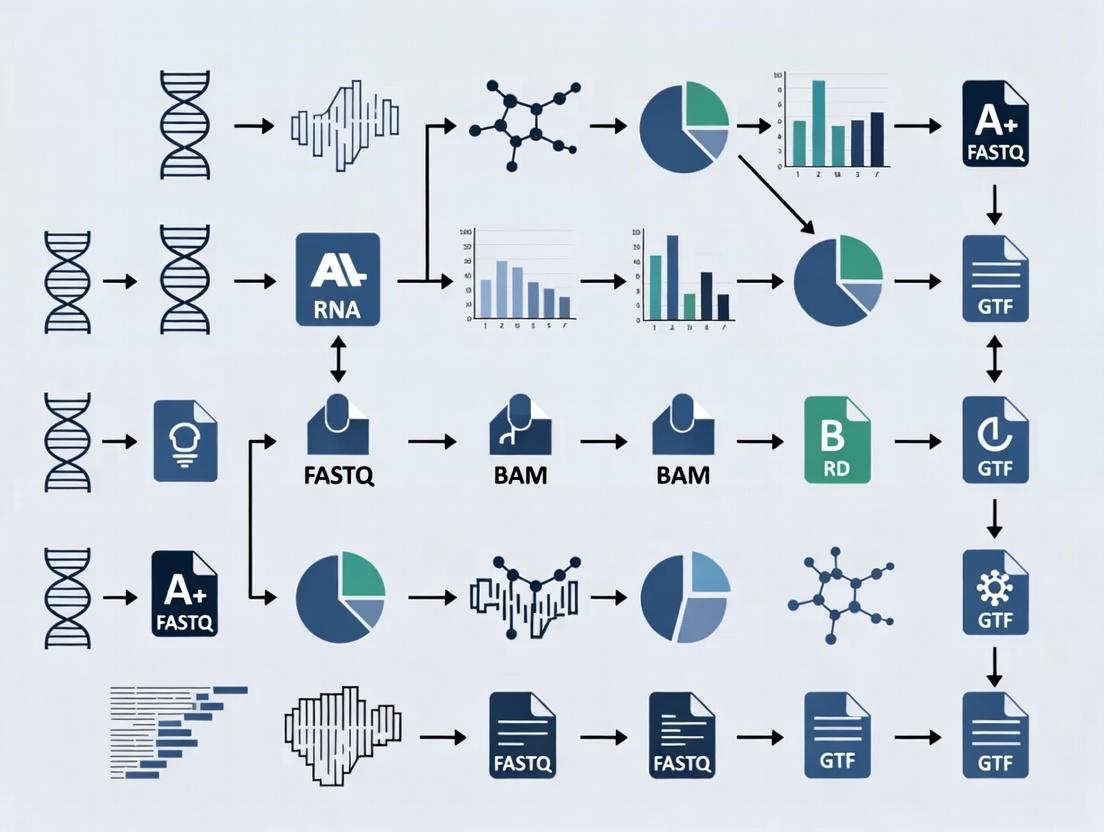
This comprehensive tutorial provides a modern, end-to-end guide to RNA-seq data analysis, tailored for researchers, scientists, and drug development professionals.
The Complete RNA-seq Data Analysis Workflow: From Raw Reads to Biological Insights for Researchers
Abstract
This comprehensive tutorial provides a modern, end-to-end guide to RNA-seq data analysis, tailored for researchers, scientists, and drug development professionals. It begins by establishing the foundational concepts and applications of RNA-seq, from experimental design to quality control. The core of the article details the step-by-step methodological workflow, covering alignment, quantification, differential expression analysis, and functional enrichment. It then addresses critical troubleshooting, quality metrics, and optimization strategies for robust results. Finally, it explores validation techniques, comparative analysis with other platforms like qPCR and single-cell RNA-seq, and discusses best practices for reproducibility. This guide synthesizes current tools and best practices to empower users to confidently interpret transcriptomic data for hypothesis-driven biomedical research.
RNA-seq Fundamentals: Understanding Transcriptomics and Designing Your Experiment
What is RNA-seq? Core Principles and Key Applications in Biomedical Research
Core Principles
RNA Sequencing (RNA-seq) is a high-throughput sequencing technology that uses next-generation sequencing (NGS) to reveal the presence, quantity, and sequence of RNA in a biological sample at a given moment. It provides a comprehensive, quantitative snapshot of the transcriptome, capturing all RNA molecules, including messenger RNA (mRNA), non-coding RNA, and various isoforms.
The core workflow involves: 1) Isolation of total RNA from cells or tissue, 2) Enrichment for desired RNA types (e.g., poly-A selection for mRNA), 3) Conversion to complementary DNA (cDNA) via reverse transcription, 4) Library preparation with adaptor ligation and amplification, 5) High-throughput sequencing, and 6) Computational data analysis for alignment, quantification, and differential expression.
Key Applications in Biomedical Research
RNA-seq has become indispensable for understanding gene expression dynamics in health and disease. Its key applications include:
- Differential Gene Expression (DGE) Analysis: Identifying genes that are upregulated or downregulated between conditions (e.g., tumor vs. normal tissue).
- Variant Detection and Fusion Gene Discovery: Identifying single nucleotide variants (SNVs), insertions/deletions (indels), and chromosomal rearrangements (e.g., gene fusions in cancer).
- Characterization of Alternative Splicing: Quantifying different transcript isoforms produced from a single gene.
- Novel Transcript Discovery: Annotating previously uncharacterized transcripts, non-coding RNAs, and untranslated regions (UTRs).
- Single-Cell RNA Sequencing (scRNA-seq): Profiling gene expression at the resolution of individual cells, revealing cellular heterogeneity and trajectories.
Table 1: Key Quantitative Outputs from a Standard RNA-seq Experiment
| Metric | Typical Range / Value | Description | ||
|---|---|---|---|---|
| Sequencing Depth | 20-50 million reads per sample (bulk) | Total number of sequenced reads; impacts detection sensitivity. | ||
| Read Length | 75-150 bp (single-end or paired-end) | Longer reads improve alignment and isoform resolution. | ||
| Alignment Rate | 70-90% | Percentage of reads that map to the reference genome. | ||
| Genes Detected | 10,000-15,000 (in human samples) | Number of genes with non-zero expression counts. | ||
| Differential Expression | p-value < 0.05, | log2(Fold Change) | > 1 | Common thresholds for identifying significant changes. |
Detailed Application Notes and Protocols
These notes are framed within a broader thesis research project: "A Comprehensive Tutorial Workflow for Robust RNA-seq Data Analysis." The protocols below represent critical experimental steps that generate data for downstream bioinformatic analysis.
Protocol 1: Total RNA Isolation and Quality Control for RNA-seq Library Preparation
Objective: To obtain high-integrity, contaminant-free total RNA from mammalian cell cultures.
Materials:
- Cell culture (e.g., treated vs. control)
- TRIzol Reagent or equivalent phenol-guanidine isothiocyanate solution
- Chloroform
- Isopropyl alcohol
- Nuclease-free 75% ethanol
- Nuclease-free water
- Bioanalyzer or TapeStation system (Agilent)
Methodology:
- Lysis: Lyse cells directly in culture dish by adding 1 mL TRIzol per 5-10 x 10^6 cells. Pipette to homogenize.
- Phase Separation: Add 0.2 mL chloroform per 1 mL TRIzol. Shake vigorously for 15 seconds. Incubate at room temperature (RT) for 2-3 minutes. Centrifuge at 12,000 x g for 15 minutes at 4°C. The mixture separates into a red organic phase, interphase, and colorless aqueous top phase containing RNA.
- RNA Precipitation: Transfer the aqueous phase to a new tube. Add 0.5 mL isopropyl alcohol per 1 mL TRIzol used. Incubate at RT for 10 minutes. Centrifuge at 12,000 x g for 10 minutes at 4°C. The RNA forms a gel-like pellet.
- Wash: Remove supernatant. Wash pellet with 1 mL 75% ethanol. Vortex briefly. Centrifuge at 7,500 x g for 5 minutes at 4°C. Air-dry pellet for 5-10 minutes.
- Resuspension: Dissolve RNA pellet in 30-50 µL nuclease-free water.
- Quality Control: Quantify RNA using a spectrophotometer (Nanodrop). Assess integrity using an Agilent Bioanalyzer. Acceptance Criteria: RNA Integrity Number (RIN) ≥ 8.0, 260/280 ratio ~2.0, 260/230 ratio > 2.0.
Protocol 2: Stranded mRNA-Seq Library Preparation using Poly-A Selection
Objective: To convert high-quality total RNA into a strand-specific sequencing library enriched for polyadenylated mRNA.
Materials:
- High-quality total RNA (1 µg, RIN ≥ 8)
- Poly(A) mRNA Magnetic Isolation Module (e.g., NEBNext)
- Stranded mRNA Library Prep Kit (e.g., NEBNext Ultra II)
- AMPure XP beads
- PCR thermal cycler
- Magnetic rack
Methodology:
- mRNA Enrichment: Bind RNA to oligo(dT) magnetic beads. Wash away rRNA, tRNA, and non-polyadenylated RNA. Elute purified mRNA.
- Fragmentation and Priming: Eluted mRNA is fragmented by divalent cation hydrolysis at elevated temperature (e.g., 94°C for 15 min) to produce ~200 bp fragments. First-strand cDNA synthesis is primed using random hexamers.
- Second-Strand Synthesis: Incorporate dUTP in place of dTTP during second-strand synthesis. This marks the second strand for later degradation, preserving strand orientation.
- End Repair & Adapter Ligation: Blunt ends are generated, followed by 5' phosphorylation and 3' dA-tailing. Ligation of platform-specific adapters with unique dual indexes (UDIs) for sample multiplexing.
- Uracil Digestion and PCR Enrichment: The dUTP-containing second strand is enzymatically degraded. The remaining first-strand library is PCR-amplified (typically 12-15 cycles) to add full adapter sequences and enrich for properly ligated fragments.
- Library QC: Purify final library with AMPure XP beads. Quantify by qPCR (for molarity) and analyze size distribution on a Bioanalyzer (peak ~350 bp).
Table 2: Research Reagent Solutions for Stranded mRNA-seq
| Item | Function / Role in Protocol |
|---|---|
| Oligo(dT) Magnetic Beads | Selectively binds poly-A tail of mRNA for enrichment and removal of other RNA species. |
| Fragmentation Buffer | Contains divalent cations (Mg2+, Zn2+) to hydrolyze RNA into optimal sizes for sequencing. |
| dUTP Nucleotide Mix | Incorporated during second-strand synthesis to allow strand-specificity via enzymatic degradation. |
| Universal/Indexed Adapters | Contain sequences required for cluster generation on the flow cell and unique sample barcodes for multiplexing. |
| AMPure XP Beads | Solid-phase reversible immobilization (SPRI) beads for size selection and purification of cDNA/library fragments. |
| High-Fidelity PCR Master Mix | Amplifies the final library with minimal bias and errors for accurate representation. |
Visualizations
Application Notes
This document provides a structured framework for designing an RNA sequencing experiment within the broader context of an RNA-seq data analysis workflow tutorial thesis. Success hinges on coherent integration of initial objectives with downstream bioinformatic analysis. A flawed experimental design is the most frequent source of irreproducible or uninterpretable results.
Defining Clear Research Objectives
The experimental objective dictates every subsequent choice. Well-defined, answerable biological questions are paramount.
| Objective Category | Typical Question | Key Design Implications |
|---|---|---|
| Differential Gene Expression | Which genes are upregulated in treated vs. control cells? | Replicates are critical; focus on high precision. |
| Transcriptome Discovery | What are the full splice isoforms present in a novel cell type? | Deep sequencing, long-read or strand-specific protocols. |
| Viral/Pathogen Detection | Is viral RNA present in the host tissue? | rRNA depletion to capture non-polyadenylated viral RNA. |
| Single-Cell Profiling | What are the heterogeneous cell populations in a tumor? | Single-cell specific kits, UMIs, high replicate number. |
Choosing Library Preparation Methodology
The choice between poly-A selection and rRNA depletion fundamentally determines which RNA species are captured and quantified.
| Library Prep Method | Target RNA | Best For | Limitations | Typical Input |
|---|---|---|---|---|
| Poly-A Selection | Eukaryotic mRNA with poly-A tails. | Differential expression in eukaryotes; cleanest signal. | Misses non-polyA RNA; biased for 3' end. | 10 ng – 1 μg total RNA, high quality (RIN >8). |
| Ribosomal RNA (rRNA) Depletion | Both polyA+ and polyA- RNA (e.g., lncRNA, pre-mRNA, bacterial RNA). | Total transcriptome, prokaryotes, degraded/FFPE samples, non-polyA viral RNA. | Higher background, more complex data. | 100 ng – 1 μg total RNA. |
| Prokaryotic rRNA Depletion | Bacterial mRNA, non-coding RNA. | Bacterial transcriptomics. | Species-specific probes may be needed. | 100 ng – 1 μg bacterial total RNA. |
Recent benchmarking studies (2023-2024) indicate that for standard eukaryotic differential expression, poly-A selection remains the gold standard, offering the highest mapping rates and lowest duplicate rates. For complex objectives like studying whole transcriptomes or archived samples, rRNA depletion kits have shown improved efficiency and lower bias compared to earlier versions.
Determining Replicate Number and Sequencing Depth
Statistical power is contingent on biological replication, not technical sequencing depth. The following table synthesizes current consensus recommendations.
| Experiment Type | Minimum Biological Replicates | Recommended Sequencing Depth | Rationale |
|---|---|---|---|
| Standard Differential Expression (Bulk) | 4-6 per condition | 20-40 million reads per sample | Enables detection of 2-fold changes for most mid-abundance genes with >80% power. |
| Single-Cell RNA-seq (scRNA-seq) | 3-5 replicates (multiple batches) | 20,000-50,000 reads per cell | Focus on cell number (>10,000 cells) over depth for population discovery. |
| Transcript Isoform Analysis | 3-5 per condition | 40-60 million stranded, paired-end reads | Depth required to resolve splice junctions. |
| Low-Input/FFPE Samples | 4-6 per condition | 30-50 million reads | Compensate for lower data quality and higher noise. |
Power analysis tools (e.g., PROPER, powsimR, Scotty) are strongly recommended prior to experimentation to formalize these estimates based on expected effect size and variance.
Protocols
Protocol 1: Poly-A Selected mRNA Library Prep (Illumina Platform)
This protocol is adapted for the Illumina Stranded mRNA Prep kit, suitable for high-quality total RNA from eukaryotic samples.
Key Research Reagent Solutions:
| Item | Function |
|---|---|
| Illumina Stranded mRNA Prep Kit | Contains all enzymes and buffers for cDNA synthesis, adapter ligation, and library amplification. |
| RNAClean XP Beads | Solid-phase reversible immobilization (SPRI) beads for size selection and cleanup. |
| Dual Index Barcodes (Illumina) | Unique dual indexes for sample multiplexing and reducing index hopping artifacts. |
| High Sensitivity D1000 ScreenTape (Agilent) | For quality control and quantification of final library size distribution. |
| Qubit dsDNA HS Assay Kit | Accurate quantification of library concentration prior to pooling. |
Detailed Methodology:
- RNA QC: Verify RNA Integrity Number (RIN) > 8.0 using Agilent Bioanalyzer RNA Nano Chip.
- mRNA Enrichment: Incubate 100-500 ng total RNA with magnetic oligo-dT beads. Purify and fragment the eluted mRNA using divalent cations at 94°C for specified time.
- cDNA Synthesis: Perform first-strand synthesis using random primers and reverse transcriptase, followed by second-strand synthesis with dUTP incorporation for strand marking.
- End Repair, A-tailing, and Ligation: Convert cDNA ends to blunt ends, add a single 'A' nucleotide, and ligate indexed sequencing adapters.
- SPRI Cleanup: Perform two rounds of bead-based cleanup (0.9X and 0.8X ratios) to select for adapter-ligated fragments of ~300-400 bp.
- Library Amplification: Perform PCR amplification (8-12 cycles) using primers that incorporate full P5/P7 flow cell sequences. The dUTP-marked second strand is not amplified, preserving strand information.
- Final QC and Quantification: Assess library fragment size on Agilent D1000 ScreenTape. Quantify using Qubit dsDNA HS Assay. Pool libraries equimolarly for sequencing.
Protocol 2: rRNA Depletion for Total RNA (Illumina Ribo-Zero Plus)
This protocol uses Illumina Ribo-Zero Plus rRNA Depletion Kit, designed to remove cytoplasmic and mitochondrial rRNA from human, mouse, rat, or bacterial total RNA.
Key Research Reagent Solutions:
| Item | Function |
|---|---|
| Ribo-Zero Plus rRNA Depletion Kit | Contains biotinylated rRNA-targeting probes and magnetic streptavidin beads for rRNA removal. |
| Illumina Stranded Total RNA Prep Kit | Follows rRNA depletion for library construction, maintaining strand specificity. |
| RNAClean XP Beads | For post-depletion and post-ligation cleanup steps. |
| Ethanol (100%, Molecular Biology Grade) | Used in bead-based wash steps. |
| Thermal Cycler with 96-well block | For controlled incubation steps during depletion and library prep. |
Detailed Methodology:
- RNA QC and Denaturation: Dilute 100-1000 ng total RNA. Denature at 70°C for 2 minutes to remove secondary structure.
- rRNA Hybridization: Incubate denatured RNA with sequence-specific Ribo-Zero Plus probes (for cytoplasmic and mitochondrial rRNA) at 68°C for 10 minutes.
- rRNA Removal: Add magnetic streptavidin beads to bind biotinylated probe:rRNA hybrids. Capture beads on a magnet and transfer the supernatant containing depleted RNA.
- Post-Depletion Cleanup: Purify the rRNA-depleted RNA using RNAClean XP Beads (1.8X ratio). Elute in a small volume.
- Library Construction: Follow the Illumina Stranded Total RNA Prep protocol from the fragmentation step (similar to Protocol 1, Step 2 onward), using the depleted RNA as input. The protocol incorporates dUTP for strand marking.
- Amplification and Final QC: Amplify library (12-15 cycles) and perform final cleanup (0.9X SPRI). Validate as in Protocol 1, Step 7.
Diagrams
Title: RNA-seq Experimental Design Decision Workflow
Title: Library Prep Method Comparison
Title: Power Through Biological Replication
Within a comprehensive RNA-seq data analysis workflow, the FASTQ file is the fundamental raw data input. It is the output of high-throughput sequencing platforms (e.g., Illumina, PacBio, Oxford Nanopore) and contains both the nucleotide sequence data and the associated per-base quality scores for each read. Understanding its structure is critical for subsequent quality control, alignment, and differential expression analysis, which are core to research and drug development applications like biomarker discovery and therapeutic target validation.
Structure and Components of a FASTQ File
A FASTQ file is a text-based format where each sequencing read is represented by four consecutive lines.
Table 1: The Four-Line Structure of a FASTQ Record
| Line Number | Description | Example |
|---|---|---|
| 1 (Header) | Begins with ‘@’, followed by a sequence identifier and optional metadata (instrument, run ID, flowcell, tile, coordinates, barcode). | @K00187:100:HWTN3BBXX:2:1101:24567:1364 1:N:0:AGGCGAAG |
| 2 (Sequence) | The raw nucleotide sequence calls (A, T, C, G, N). Length defines the read length. | NTGACTAGTACGATCGACTACGATCGATCGATCGATCGTAGCTAGCTACGATCGACTAGCTAGC |
| 3 (Separator) | Begins with a ‘+’ character. The header/sequence identifier may optionally be repeated after it. | + |
| 4 (Quality) | Encodes the per-base Phred-scaled quality score for each base in Line 2. Length must equal length of Line 2. | FFEEFFEFFEEFEFFFEFFFFFFFFFFFFFFFFFFFFFFFFFFFFFFFFFFFFFFFFFFFFFFFFF |
Quality Scores (Line 4): Each character represents an integer Phred quality score (Q). The most common encoding scheme is Sanger/Illumina 1.8+ (Phred+33), where the ASCII character = chr(Q + 33). Q scores predict the probability of a base call error.
Table 2: Phred Quality Score Interpretation
| Phred Quality Score (Q) | Probability of Incorrect Base Call | Base Call Accuracy | Typical ASCII (Phred+33) |
|---|---|---|---|
| 10 | 1 in 10 (10%) | 90% | + |
| 20 | 1 in 100 (1%) | 99% | 5 |
| 30 | 1 in 1000 (0.1%) | 99.9% | ? |
| 40 | 1 in 10,000 (0.01%) | 99.99% | I |
Sequencing Read Formats and Experiment Design
The configuration of FASTQ files depends on the library preparation and sequencing strategy.
Table 3: Common RNA-seq Read Formats
| Format | Description | Typical File Output | Primary Application in RNA-seq |
|---|---|---|---|
| Single-End (SE) | Sequencing is performed from one end of the cDNA fragment only. | One FASTQ file per sample. | Gene expression quantification, simple differential expression. |
| Paired-End (PE) | Sequencing is performed from both ends of the cDNA fragment (Read 1 and Read 2). | Two FASTQ files per sample (R1 & R2). | Improved alignment, isoform detection, splice junction analysis. |
| Stranded | Library prep preserves the original orientation of the RNA transcript. Information is encoded in the read pairing or barcode. | Usually paired-end files with specific rules. | Determining which DNA strand is the template strand, crucial for antisense transcript analysis. |
| Single-Cell | Includes a unique cellular barcode (CB) and a unique molecular identifier (UMI) in the read header or sequence. | Modified FASTQ or BAM file. | Transcriptomics at single-cell resolution. |
Protocol: Initial Quality Assessment of FASTQ Files
Objective: To assess the quality of raw sequencing data prior to alignment in an RNA-seq workflow. Principle: Uses FastQC to generate a comprehensive HTML report summarizing key metrics.
Materials & Reagents:
- Raw Sequencing Data: FASTQ files from the sequencer.
- Software: FastQC (v0.12.1), MultiQC (v1.20).
- Computing Environment: Unix/Linux command line or Windows Subsystem for Linux (WSL). Minimum 8GB RAM recommended for large files.
Procedure:
- Software Installation:
Run FastQC on a Single FASTQ File:
-o: Specifies the output directory for reports.-t 4: Uses 4 threads for faster processing.- Accepts both
.fastqand.fastq.gzcompressed files.
Run FastQC on Multiple Files (Paired-End Example):
Aggregate Reports with MultiQC: (After running FastQC on all samples)
This creates a single aggregated HTML report (
multiqc_report.html) for easy cross-sample comparison.Interpret Key FastQC Modules:
- Per Base Sequence Quality: Check that quality scores are mostly above Q28-30 across all cycles.
- Per Base Sequence Content: For RNA-seq, expect non-uniform composition, but the lines for all bases should run parallel after the first ~10 nucleotides (adapter region).
- Adapter Content: Determine if adapter trimming is required. A significant presence (>1%) indicates the need for trimming.
- Overrepresented Sequences: Identify potential contaminants (e.g., rRNA, spikes).
Visualization: RNA-seq Workflow with FASTQ Input
Diagram 1: RNA-seq workflow from FASTQ to count matrix.
Diagram 2: FASTQ four-line structure and components.
The Scientist's Toolkit: Essential Research Reagents & Solutions
Table 4: Key Reagents for RNA-seq Library Prep & Sequencing
| Reagent / Material | Function in Workflow |
|---|---|
| Poly(A) Selection Beads | Enriches for messenger RNA (mRNA) by capturing the polyadenylated tail, crucial for standard mRNA-seq. |
| Ribo-depletion Kits | Removes abundant ribosomal RNA (rRNA) from total RNA, enabling transcriptome analysis of non-polyadenylated RNAs. |
| Fragmentation Buffer/Enzymes | Randomly fragments purified RNA or cDNA to an optimal size for sequencing library construction. |
| Reverse Transcriptase | Synthesizes first-strand complementary DNA (cDNA) from RNA templates. |
| DNA Ligase & Adaptors | Attaches platform-specific sequencing adaptors (with barcodes) to cDNA fragments for multiplexing and sequencing. |
| PCR Master Mix with Index Primers | Amplifies the final library and adds sample-specific index sequences for multiplexing. |
| Size Selection Beads (SPRI) | Performs clean-up and selects for a specific fragment size range, ensuring library uniformity. |
| Sequencing Flow Cell | The glass surface coated with oligonucleotides where bridge amplification and sequencing-by-synthesis occur. |
| Sequencing Kits (SBS Reagents) | Contains enzymes, fluorescently labelled nucleotides, and buffers for the cyclic sequencing chemistry. |
This document, framed within a broader thesis on RNA-seq data analysis workflow tutorials, provides a comprehensive overview of the end-to-end RNA-seq analysis pipeline. It is designed for researchers, scientists, and drug development professionals seeking to implement or understand the standard and emerging practices in transcriptomics.
The RNA-seq Workflow: A Bird's-Eye View
The standard RNA-seq analysis pipeline comprises sequential stages from experimental design to biological interpretation. The following diagram illustrates this logical workflow.
Table 1: Key Performance Metrics at Major Pipeline Stages
| Stage | Key Metric | Typical Target/Value | Common Tool for Assessment |
|---|---|---|---|
| Library QC | RNA Integrity Number (RIN) | ≥ 8.0 for most applications | Bioanalyzer/TapeStation |
| Sequencing | Total Reads per Sample | 20-50 million (bulk), 10k-50k (single-cell) | Sequencer Output |
| Raw Data QC | Q30 Score (%) | ≥ 80% of bases | FastQC, MultiQC |
| Alignment | Overall Alignment Rate (%) | ≥ 70-90% (species/genome dependent) | STAR, HISAT2 logs |
| Quantification | Assigned Reads (%) | ≥ 70-80% of aligned reads | featureCounts, Salmon logs |
| DE Analysis | FDR (Adjusted p-value) | < 0.05 | DESeq2, edgeR |
Table 2: Popular Bioinformatics Tools by Pipeline Stage
| Pipeline Stage | Standard Tools | Emerging/Alternative Tools |
|---|---|---|
| Quality Control | FastQC, MultiQC | Fastp, RSeQC |
| Pre-processing | Trimmomatic, Cutadapt | fastp, BBduk |
| Alignment | STAR, HISAT2 | Spliced Transcripts Alignment to a Reference (STAR) is industry standard. |
| Quantification | featureCounts, HTSeq | Salmon, kallisto (pseudoalignment) |
| Differential Expression | DESeq2, edgeR, limma-voom | sleuth (for pseudoalignment), NOISeq |
| Functional Analysis | clusterProfiler, GSEA, DAVID | Enrichr, WebGestalt, g:Profiler |
Detailed Experimental Protocols
Protocol 4.1: Library Preparation and Sequencing (Illumina Platform)
Objective: To convert purified RNA into a library of cDNA fragments suitable for high-throughput sequencing on an Illumina platform.
Materials: See "The Scientist's Toolkit" below. Procedure:
- RNA QC: Verify RNA integrity using an Agilent Bioanalyzer. Use only samples with RIN > 8.0.
- Poly-A Selection: Use oligo(dT) magnetic beads to enrich for messenger RNA (mRNA). For total RNA depletion protocols, use rRNA removal kits.
- Fragmentation: Using divalent cations under elevated temperature, fragment the purified mRNA into 200-500 bp pieces.
- First-Strand cDNA Synthesis: Reverse transcribe the fragmented RNA using random hexamer primers and reverse transcriptase.
- Second-Strand cDNA Synthesis: Synthesize the second strand using DNA Polymerase I and RNase H.
- End Repair & A-Tailing: Convert the overhangs into phosphorylated blunt ends, then add an 'A' base to the 3' end to facilitate adapter ligation.
- Adapter Ligation: Ligate indexed Illumina adapters to the fragments.
- PCR Enrichment: Amplify the adapter-ligated DNA with 10-15 cycles of PCR.
- Library QC: Validate the library using a High Sensitivity D1000 ScreenTape. Quantify via qPCR.
- Normalization & Pooling: Normalize libraries to 4 nM and pool equimolarly.
- Sequencing: Denature and dilute the pool for loading onto the flow cell. Perform paired-end sequencing (e.g., 2x150 bp) on an Illumina NovaSeq 6000.
Protocol 4.2: Differential Expression Analysis with DESeq2
Objective: To identify genes that are differentially expressed between two or more experimental conditions with statistical rigor.
Materials: R environment (v4.0+), DESeq2 package, a count matrix (genes x samples), and a sample information data frame (colData). Procedure:
- Data Import: Load the count matrix and sample metadata into R.
- Create DESeqDataSet Object:
dds <- DESeqDataSetFromMatrix(countData = countData, colData = colData, design = ~ condition) - Pre-filtering: Remove genes with very low counts (e.g.,
rowSums(counts(dds)) >= 10). - Factor Level Reference: Set the reference level for the condition factor (e.g.,
dds$condition <- relevel(dds$condition, ref = "control")). - Run DESeq2: Perform differential expression analysis:
dds <- DESeq(dds). This step executes estimation of size factors, dispersion estimation, and negative binomial GLM fitting. - Extract Results: Retrieve the results table:
res <- results(dds, contrast=c("condition", "treated", "control")). - Shrinkage (for ranking/viz): Apply the apeglm or ashr shrinkage estimator to log2 fold changes:
resLFC <- lfcShrink(dds, coef="condition_treated_vs_control", type="apeglm"). - Filter Significant Genes: Filter results based on an adjusted p-value (FDR) threshold (e.g.,
padj < 0.05) and optional absolute log2 fold change (e.g.,|log2FC| > 1). - Visualization: Generate diagnostic plots (MA-plot, PCA, heatmap of significant genes) for quality assessment.
Signaling Pathway Analysis Workflow
Following differential expression, key pathways are often investigated. The analysis follows a standard logical path.
The Scientist's Toolkit: Research Reagent Solutions
Table 3: Essential Materials for RNA-seq Experiments
| Item/Category | Example Product/Kit | Primary Function in Pipeline |
|---|---|---|
| RNA Isolation | QIAGEN RNeasy Mini Kit, TRIzol Reagent | High-quality total RNA extraction from cells/tissues. |
| RNA QC | Agilent RNA 6000 Nano Kit (Bioanalyzer) | Assess RNA integrity (RIN) and quantity prior to library prep. |
| Poly-A Selection | NEBNext Poly(A) mRNA Magnetic Isolation Module | Enrich for eukaryotic mRNA by binding poly-A tails. |
| rRNA Depletion | Illumina Ribo-Zero Plus Kit | Remove ribosomal RNA from total RNA (for bacterial or degraded samples). |
| Library Prep Kit | Illumina Stranded mRNA Prep, NEBNext Ultra II Directional RNA Library Prep Kit | All-in-one kit for constructing sequencing-ready libraries from mRNA. |
| Library QC | Agilent High Sensitivity D1000 ScreenTape | Accurately size and quantify final cDNA libraries. |
| Sequencing Kit | Illumina NovaSeq 6000 S-Prime Reagent Kit (300 cycles) | Provides chemistry for cluster generation and sequencing-by-synthesis. |
| Bioinformatics | FastQC, STAR, DESeq2 (Open Source) | Software for quality control, alignment, and statistical analysis. |
This document serves as a critical Application Note for a comprehensive thesis on RNA-seq data analysis workflow tutorials. It details the essential public repositories for data deposition and retrieval, and the foundational pre-processing requirements necessary for robust downstream analysis. Mastery of these resources and steps is fundamental for researchers, scientists, and drug development professionals aiming to conduct reproducible transcriptomic studies.
Key Public Repositories
Gene Expression Omnibus (GEO) at NCBI
The GEO database is a public functional genomics data repository supporting MIAME-compliant data submissions. It archives array- and sequence-based data. Records are structured as Series (study), Samples (individual specimens), and Platforms (technology used).
Sequence Read Archive (SRA) at NCBI
The SRA stores raw sequencing data from high-throughput sequencing platforms, including RNA-seq. It is the primary repository for raw sequence reads associated with GEO and other NCBI resources.
Table 1: Key Characteristics of Major Public Repositories for RNA-seq Data (as of 2024).
| Repository | Primary Data Type | Data Structure | Common Accession Prefix | Typical Submission Format |
|---|---|---|---|---|
| GEO | Processed data, matrices, metadata | Series (GSE), Samples (GSM), Platforms (GPL) | GSE, GSM, GPL | SOFT format, MINiML, raw data files |
| SRA | Raw sequencing reads | Experiment (SRX), Run (SRR), Sample (SRS), Study (SRP) | SRR, SRX, SRP | FASTQ, BAM, submission via prefetch/fasterq-dump |
| ENA | Raw & assembled sequences | Study, Sample, Experiment, Run | ERR, SRR, DRR | FASTQ, submission via Webin CLI |
| ArrayExpress | Functional genomics data | Experiment, Array, Sample | E-MTAB-, E-GEOD- | MAGE-TAB, raw & processed data |
Note: ENA (European Nucleotide Archive) and ArrayExpress (at EBI) are major international partners to SRA and GEO, respectively.
Pre-Processing Requirements & Protocols
Experimental Protocol: Data Retrieval from SRA
Objective: Download raw RNA-seq FASTQ files from an SRA Run accession (e.g., SRR1234567).
Materials & Software:
- Computing environment with internet access and adequate storage.
- SRA Toolkit (version 3.0.0 or higher) installed.
- Optional:
parallelfor faster batch downloads.
Methodology:
- Identify Accession: Obtain the SRA Run accession(s) from a publication or GEO Series page.
- Prefetch Data: Use the
prefetchcommand to download the SRA archive file. - Extract FASTQ: Convert the
.srafile to FASTQ format usingfasterq-dump(orfastq-dump).- Use
--split-filesfor paired-end reads. - For GZIP compression, add
--gzip.
- Use
- Batch Download: For multiple runs, create a text file (
accession_list.txt) and run: - Quality Check: Verify download integrity with MD5 checksums if provided.
Experimental Protocol: Basic RNA-seq Pre-Processing Workflow
Objective: Process raw FASTQ files to generate a gene count matrix ready for differential expression analysis.
Materials & Software:
- High-performance computing cluster or server.
- Trimming tool:
fastporTrimmomatic. - Alignment tool:
HISAT2orSTAR. - Quantification tool:
featureCounts(from Subread package) orHTSeq-count. - Reference genome and annotation (GTF/GFF file) for organism of interest.
Methodology:
- Quality Control & Trimming:
- Removes adapters, low-quality bases, and poly-G tails.
- Alignment to Reference Genome:
- Generates a sorted BAM file and a preliminary read count file.
- Quantification (if not done by aligner):
- Counts reads mapping to each gene feature.
- Compile Count Matrix: Combine outputs from
featureCountsorSTARfor all samples into a single count matrix (rows=genes, columns=samples) using R or Python scripts.
The Scientist's Toolkit
Table 2: Essential Research Reagent Solutions for RNA-seq Pre-Processing.
| Item | Function/Description | Example/Note |
|---|---|---|
| Reference Genome FASTA | The DNA sequence of the target organism for read alignment. | Human: GRCh38 (hg38); Mouse: GRCm39 (mm39) |
| Annotation File (GTF/GFF) | Contains genomic coordinates of gene features (exons, transcripts) for quantification. | ENSEMBL or GENCODE annotations are standard. |
| Quality Control Tool | Assesses raw read quality for adapter contamination, base quality, GC content. | FastQC for reporting; fastp for integrated trimming. |
| Adapter Sequences | Short nucleotide sequences used in library prep that must be removed computationally. | TruSeq (Illumina); Nextera. Often auto-detected. |
| Alignment Index Files | Pre-processed reference genome for fast and memory-efficient alignment by splice-aware aligners. | Built by STAR or HISAT2 prior to alignment. |
| High-Performance Computing (HPC) Resources | Essential for memory- and CPU-intensive alignment and quantification steps. | Access to a cluster with >32GB RAM and multiple cores per sample is typical. |
Visualizations
Title: RNA-seq Data Pre-Processing Workflow Diagram
Title: Data Flow Between Key Public Repositories
Step-by-Step RNA-seq Analysis Pipeline: Tools, Code, and Interpretation
Application Notes
Initiating an RNA-seq analysis with rigorous quality control (QC) and read trimming is a non-negotiable prerequisite. This step directly impacts the accuracy of all downstream results, from alignment and quantification to differential expression and pathway analysis. Within the context of a comprehensive thesis on RNA-seq workflows, this initial phase serves as the foundational quality gate, ensuring data integrity and mitigating artifacts introduced during sample preparation and sequencing.
Raw sequencing data, particularly from complex RNA samples, can contain several issues: adapter contamination from library preparation, low-quality bases at read ends, overrepresented sequences (e.g., ribosomal RNA), and general sequence quality decay. Failure to address these issues leads to wasted computational resources, alignment errors, and biased quantitation.
- FastQC provides a per-sample diagnostic report, highlighting potential problems across 12 key metrics.
- MultiQC aggregates these reports across all samples in a project, enabling rapid, comparative assessment—a critical function for cohort studies.
- Trimmomatic (for Illumina data) and cutadapt (a more general, adapter-focused tool) perform the corrective surgery: removing adapters, trimming low-quality bases, and filtering out poor-quality reads.
Quantitative benchmarks from recent literature (2023-2024) underscore the importance of this step. As shown in Table 1, systematic trimming typically retains the majority of high-quality data while removing technical noise.
Table 1: Typical Impact of QC & Trimming on RNA-seq Data
| Metric | Raw Data (Pre-Trim) | Processed Data (Post-Trim) | Notes |
|---|---|---|---|
| Total Reads | 100% (Reference) | 85-95% | 5-15% loss of low-quality or adapter-only reads. |
| Avg. Read Length | Platform dependent (e.g., 150bp) | Reduced by 5-20bp | Trimming of low-quality ends. |
| % Bases ≥ Q30 | 80-92% (varies by kit/run) | 90-95%+ | Significant improvement in usable sequence quality. |
| Adapter Content | Often 1-10% at read ends | <0.1% | Effective adapter removal is critical. |
| Alignment Rate (Post-process) | ~85-90% | 90-97% | Higher specificity from cleaner reads. |
Experimental Protocols
Protocol 1: Quality Assessment with FastQC and MultiQC
Materials: Raw FASTQ files from RNA-seq experiment, computing environment (Linux/Unix).
Procedure:
- FastQC Analysis:
a. For each sample's FASTQ file (both R1 and R2 for paired-end), run:
fastqc sample_R1.fastq.gz sample_R2.fastq.gz -o ./fastqc_results/ -t <number_of_threads>b. This generates HTML reports (sample_R1_fastqc.html) and ZIP files containing raw data.
MultiQC Aggregation: a. Navigate to the directory containing all FastQC output. b. Run MultiQC:
multiqc .c. MultiQC will scan for analysis logs and generate a single consolidated reportmultiqc_report.html.Report Interpretation: Key modules to scrutinize in the MultiQC report:
- Per base sequence quality: Confirm quality scores (Phred) are mostly >30 across all cycles.
- Adapter Content: Determine the level and type of adapter contamination.
- Per sequence quality scores: Identify if a subset of reads has universally poor quality.
- Overrepresented sequences: Flag potential contamination (e.g., rRNA, phiX).
Protocol 2: Read Trimming with Trimmomatic (Paired-end Example)
Materials: FASTQ files, adapter sequence file (e.g., TruSeq3-PE-2.fa for Illumina), Trimmomatic JAR file.
Procedure:
- Command Execution: Run the following Java command, adjusting parameters as needed.
java -jar trimmomatic-0.39.jar PE -phred33 \sample_R1.fastq.gz sample_R2.fastq.gz \sample_R1_paired.fq.gz sample_R1_unpaired.fq.gz \sample_R2_paired.fq.gz sample_R2_unpaired.fq.gz \ILLUMINACLIP:TruSeq3-PE-2.fa:2:30:10:2:keepBothReads \LEADING:3 TRAILING:3 \SLIDINGWINDOW:4:15 \MINLEN:36
Parameter Explanation:
ILLUMINACLIP: Removes adapter sequences. Parameters specify mismatch tolerance, palindrome clip threshold, etc.LEADING/TRAILING: Remove bases below quality 3 from start/end.SLIDINGWINDOW: Scans read with a 4-base window, trimming if average quality drops below 15.MINLEN: Discards reads shorter than 36 bp after trimming.
Output: Use the
*_paired.fq.gzfiles for all downstream analysis.
Protocol 3: Adapter Trimming with cutadapt
Materials: FASTQ files, known adapter sequence (e.g., AGATCGGAAGAGC for Illumina).
Procedure:
- Basic Command for Single-end:
cutadapt -a ADAPTER_SEQ -q 20 --minimum-length 25 -o trimmed.fq.gz input.fq.gz - For Paired-end (ensuring mate synchronization):
cutadapt -a ADAPT1 -A ADAPT2 -q 20 --minimum-length 25 \-o out_R1.fq.gz -p out_R2.fq.gz in_R1.fq.gz in_R2.fq.gz - Parameters:
-a/-A: Adapter sequence for R1/R2.-q: Trim low-quality bases from ends.--minimum-length: Discard reads shorter than this.
Visualizations
Title: RNA-seq Initial QC and Trimming Workflow
Title: Sequential Trimmomatic Processing Steps
The Scientist's Toolkit: Research Reagent Solutions
Table 2: Essential Materials for RNA-seq QC & Trimming
| Item | Function in Workflow | Notes / Example |
|---|---|---|
| RNA Library Prep Kit | Generates adapter-ligated cDNA libraries for sequencing. Defines adapter sequences. | Illumina TruSeq Stranded mRNA, NEBNext Ultra II. Adapter sequence is required for trimming. |
| FASTQ Files | The raw sequence data output from the sequencer. The primary input for this step. | Contains sequence reads and per-base quality scores (Phred scores). |
| Adapter Sequence File | A FASTA file containing the exact adapter oligonucleotide sequences used during library prep. | Crucial for precise adapter removal. Must match the kit used (e.g., TruSeq3-PE.fa). |
| QC Software (FastQC) | Diagnostic tool that evaluates raw data across multiple quality metrics. | Identifies issues like adapter contamination, low quality, sequence bias. |
| Aggregation Software (MultiQC) | Summarizes results from multiple tools and samples into a single interactive report. | Essential for projects with many samples to assess overall cohort quality. |
| Trimming Software (Trimmomatic/cutadapt) | Performs the actual filtering: removes adapters, trims low-quality bases, filters reads. | Trimmomatic is robust for Illumina; cutadapt is more flexible for other adapters/sequences. |
| Computing Resources | Sufficient CPU, memory, and storage to process large sequencing files. | Multi-core systems significantly speed up trimming. |
| QC Report | The final MultiQC HTML report. | The key deliverable for this step, informing the decision to proceed. |
Application Notes
Within a comprehensive RNA-seq data analysis workflow, read alignment is the critical step where sequenced reads (FASTQ files) are mapped to a reference genome. This process quantifies gene expression and identifies splice variants. Two dominant aligners are STAR (Spliced Transcripts Alignment to a Reference) and HISAT2 (Hierarchical Indexing for Spliced Alignment of Transcripts 2). The choice between them depends on the experimental goals, available computational resources, and the specific organism's genome.
- STAR excels in speed and sensitivity for detecting canonical and non-canonical splice junctions, making it ideal for novel isoform discovery in complex eukaryotic genomes. It uses an uncompressed suffix array index, which requires significant RAM (≈32GB for human genome) but enables extremely fast mapping.
- HISAT2 utilizes a hierarchical, compressed graph FM-index, making it far more memory-efficient (≈4.4GB for human genome) while maintaining high accuracy. It is particularly suited for rapid alignment on standard workstations and is effective for standard differential expression analysis.
Table 1: Comparative Overview of STAR and HISAT2
| Feature | STAR | HISAT2 |
|---|---|---|
| Core Algorithm | Sequential Maximal Mappable Seed / Suffix Array | Hierarchical Graph FM-index |
| Typical RAM Usage (Human Genome) | 32 GB | 4.4 GB |
| Speed | Very High | High |
| Splice Junction Detection | Excellent, includes non-canonical | Excellent for known/annotated |
| Primary Use Case | Novel isoform discovery, full RNA-seq workflow | Standard differential expression, limited-resource environments |
| Key Citation | Dobin et al., 2013 & 2016 | Kim et al., 2015 & 2019 |
Detailed Experimental Protocols
Protocol 2.1: Generating a Genome Index with STAR
This is a one-time prerequisite step for alignment.
- Gather Input Files: Download the reference genome FASTA file and corresponding annotation file (GTF/GFF) for your organism from sources like ENSEMBL or NCBI.
- Create Output Directory:
mkdir STAR_Genome_Index - Execute STAR Indexing Command:
--runThreadN: Number of CPU threads.--sjdbOverhang: Should be read length minus 1. Critical for junction detection.
Protocol 2.2: Performing Alignment with STAR
- Navigate to Directory: Ensure your FASTQ files are accessible.
- Run Alignment:
- Output: The key output is
sampleX_Aligned.sortedByCoord.out.bam, ready for quantification.
Protocol 2.3: Generating a Genome Index with HISAT2
- Gather Input Files: Same genome FASTA and GTF files as for STAR.
- Build Index: First, extract splice sites and exons.
- Execute HISAT2 Indexing:
Protocol 2.4: Performing Alignment with HISAT2
- Navigate to Directory: Locate your FASTQ files.
- Run Alignment:
- Convert SAM to BAM:
Visualizations
(Short Title: RNA-seq Alignment Workflow)
(Short Title: Aligner Input Requirements)
The Scientist's Toolkit
Table 2: Essential Research Reagent Solutions for Read Alignment
| Item | Function in Protocol | Example/Notes |
|---|---|---|
| Reference Genome (FASTA) | The nucleotide sequence to which reads are mapped. | Human GRCh38 (ENSEMBL), Mouse GRCm39. Must match annotation source. |
| Genome Annotation (GTF/GFF) | Provides coordinates of known genes, transcripts, and splice junctions. Guides spliced alignment. | ENSEMBL/GENCODE annotations are recommended for completeness. |
| High-Performance Compute (HPC) Node | Execution environment for memory- and CPU-intensive alignment tasks. | For human genome: ≥32GB RAM for STAR; ≥8GB for HISAT2. Multiple CPU cores. |
| Alignment Software | Core tool executing the mapping algorithm. | STAR v2.7.11a, HISAT2 v2.2.1. Installed via Conda (bioconda channel). |
| SAM/BAM Tools | Utilities for processing and quality-checking alignment files. | samtools, picard. Used for sorting, indexing, and marking duplicates. |
| FastQC/MultiQC | Quality control before and after alignment. | Assess mapping rates, ribosomal RNA content, and coverage uniformity. |
Within the RNA-seq data analysis workflow, quantification is the critical step that transforms aligned sequencing reads into numerical estimates of gene or transcript abundance. Two principal strategies exist: alignment-based read counting (e.g., FeatureCounts) and alignment-free transcript quantification (e.g., Salmon, Kallisto). The choice depends on experimental goals, reference genome quality, and computational resources.
FeatureCounts is a highly efficient and accurate read summarization program that assigns aligned reads (typically in BAM format) to genomic features such as genes or exons. It operates directly on the alignment coordinates, making it fast and memory-efficient. It is best suited for quantifying gene-level expression when a high-quality genome and annotation are available.
Salmon and Kallisto employ a pseudoalignment or lightweight alignment approach. They bypass traditional full nucleotide-level alignment by rapidly determining the set of transcripts from which each read could originate, using the read's k-mer content. This method is extremely fast, computationally efficient, and provides direct transcript-level abundance estimates in units like TPM (Transcripts Per Million), which are useful for isoform-level analysis.
Table 1: Comparison of Quantification Tools
| Feature | FeatureCounts | Salmon | Kallisto |
|---|---|---|---|
| Core Method | Alignment-based counting | Pseudoalignment & EM optimization | Pseudoalignment via k-mer hashing |
| Primary Input | Aligned reads (BAM/SAM) | Raw reads (FASTQ) or aligned reads | Raw reads (FASTQ) |
| Quantification Level | Primarily gene-level | Transcript-level | Transcript-level |
| Key Output Metric | Read counts | TPM, Estimated counts | TPM, Estimated counts |
| Speed | Very Fast | Fast | Very Fast |
| Memory Usage | Low | Moderate | Low |
| Bias Correction | Requires separate tools (e.g., --fracOverlap for multimappers) |
Built-in (GC, sequence, positional) | Built-in (sequence bias) |
| Best For | Gene-level differential expression with a stable genome | Accurate transcript-level quantification, including bias-aware mode | Ultra-fast transcript-level quantification, ideal for large-scale screening |
Detailed Experimental Protocols
Protocol 3.1: Gene-Level Quantification with FeatureCounts
Objective: To generate a count matrix of reads assigned to genes from aligned BAM files.
Materials:
- Aligned RNA-seq reads in BAM format (from Step 2: Alignment).
- High-quality genome annotation file (GTF/GFF3 format).
- FeatureCounts software (part of the Subread package).
- Multi-core Linux server or high-performance computing cluster.
Method:
- Prepare Annotation File: Ensure the GTF file is compatible with the reference genome used for alignment.
- Run FeatureCounts: Execute the following command in a terminal. This example counts reads at the gene level, using "gene_id" as the feature identifier, and treats paired-end reads as fragments.
- Generate Count Matrix: The primary output
output_gene_counts.txtcontains a summary table. The auxiliary fileoutput_gene_counts.txt.summaryprovides counting statistics. Extract the count matrix (columns 7 onward) for downstream differential expression analysis.
Diagram 1: FeatureCounts Workflow
Protocol 3.2: Transcript-Level Quantification with Salmon
Objective: To estimate transcript abundance in TPM and estimated counts from raw FASTQ files.
Materials:
- Raw or trimmed RNA-seq reads (FASTQ files).
- Transcriptome reference (FASTA file of cDNA sequences).
- Salmon software.
- Computational environment with sufficient RAM.
Method:
- Build Salmon Index: Create a decoy-aware transcriptome index for quantification.
- Quantify Samples: Run Salmon in quasi-mapping mode for each sample.
- Collate Output: The primary output is the
quant.sffile within each sample's output directory. Use tools liketximport(in R/Bioconductor) to aggregate these files into a gene-level count matrix for differential expression, preserving transcript-level information.
Diagram 2: Salmon Quantification Workflow
The Scientist's Toolkit: Research Reagent Solutions
Table 2: Essential Materials for Quantification
| Item | Function in Quantification |
|---|---|
| High-Quality Genome Annotation (GTF/GFF3) | Provides the coordinates and relationships of genomic features (genes, exons, transcripts) for alignment-based counting. |
| Transcriptome Reference (FASTA) | A curated collection of all known cDNA sequences for a species, required for alignment-free tools like Salmon and Kallisto. |
| Decoy Sequences | A set of non-transcript sequences (e.g., genome) used during Salmon indexing to "capture" reads that pseudo-map ambiguously, improving quantification accuracy. |
| Alignment Files (BAM) | The sorted, binary output of read alignment/mapping, serving as the direct input for FeatureCounts. Must be coordinate-sorted. |
| Bioinformatics Pipelines (Nextflow/Snakemake) | Workflow management systems to automate and reproducibly execute quantification steps across many samples. |
| Tximport / tximeta (R/Bioconductor) | Software packages to import and summarize transcript-level abundance estimates (from Salmon/Kallisto) into gene-level counts or offset matrices for downstream DE analysis. |
1. Introduction Within the broader thesis on the RNA-seq data analysis workflow, differential expression (DE) analysis represents the critical step for identifying genes with statistically significant abundance changes between experimental conditions (e.g., treated vs. control). This protocol details three established and powerful computational workflows: DESeq2, edgeR, and limma-voom. The choice among them depends on experimental design, sample size, and specific biological questions.
2. Core Algorithms and Comparative Summary
Table 1: Comparison of DESeq2, edgeR, and limma-voom Workflows
| Feature | DESeq2 | edgeR | limma-voom |
|---|---|---|---|
| Core Model | Negative binomial GLM with shrinkage estimation. | Negative binomial GLM with empirical Bayes moderation. | Linear modeling of log-CPM with precision weights (voom transformation). |
| Recommended Use Case | Ideal for experiments with low replicate numbers (n=3-5). Robust to varying library sizes and composition. | Flexible for complex designs, including batch effects. Strong performance for both bulk and single-cell (quasi-likelihood). | Excellent for complex designs with many factors or when integrating with microarray analysis pipelines. High sensitivity with many replicates. |
| Dispersion Estimation | Gene-wise estimates shrunk towards a fitted trend. | Empirical Bayes shrinkage across genes, with common, trended, and tagwise dispersion. | Precision weights calculated from the mean-variance trend (after voom). |
| Primary Output | Log2 fold change (LFC) with apeglm or ashr shrinkage. | Log2 fold change. | Log2 fold change (typically unshrunk). |
| Key Strength | Conservative, robust LFC shrinkage. Excellent false positive control. | Speed and flexibility. Offers both likelihood ratio test and quasi-likelihood F-test. | Leverages linear model efficiency; superior for large sample sizes (>10 per group). |
| Typical P-value Adjustment | Benjamini-Hochberg (BH) for False Discovery Rate (FDR). | Benjamini-Hochberg (BH) for FDR. | Benjamini-Hochberg (BH) for FDR. |
3. Detailed Experimental Protocols
Protocol 3.1: DESeq2 Workflow Objective: To identify differentially expressed genes from raw read counts using DESeq2's median-of-ratios normalization and negative binomial generalized linear model.
- Data Input: Prepare a numeric matrix of raw, un-normalized read counts (rows=genes, columns=samples) and a sample information table (colData) describing the experimental design.
- Create DESeqDataSet: Use the
DESeqDataSetFromMatrix()function, specifying the count matrix, colData, and design formula (e.g.,~ condition). - Pre-filtering (Optional): Remove genes with very low counts (e.g., <10 reads total across all samples) to reduce computational load.
- Normalization & Modeling: Run the core analysis with
DESeq(). This function performs:- Estimation of size factors (median-of-ratios normalization).
- Estimation of gene-wise dispersion.
- Shrinkage of dispersion estimates towards a trend.
- Fitting of the negative binomial GLM and Wald testing.
- Extract Results: Use
results()to generate a table of DE results, including base mean, log2 fold change, standard error, test statistic, p-value, and adjusted p-value. Apply independent filtering automatically to increase detection power. - Log Fold Change Shrinkage (Recommended): Apply
lfcShrink()with theapeglmmethod to obtain more accurate and interpretable LFC estimates, particularly for low-count genes. - Interpretation: Filter results by adjusted p-value (e.g., FDR < 0.05) and absolute log2FC threshold (e.g., >1) for downstream analysis.
Protocol 3.2: edgeR Workflow Objective: To identify differentially expressed genes using edgeR's robust normalization and empirical Bayes methods for dispersion estimation.
- Data Input & DGEList: Create a
DGEListobject containing the raw count matrix and sample grouping information. - Normalization: Calculate scaling factors using the trimmed mean of M-values (TMM) method with
calcNormFactors(). - Filtering: Remove lowly expressed genes with
filterByExpr(), which keeps genes with a minimum number of counts in a minimum number of samples relative to group size. - Dispersion Estimation: Estimate common, trended, and tagwise dispersion using
estimateDisp(). This models the mean-variance relationship. - Model Fitting & Testing:
- Quasi-likelihood F-test (Recommended for bulk RNA-seq): Fit a GLM with
glmQLFit()and test usingglmQLFTest(). This accounts for gene-specific variability and is more robust. - Likelihood Ratio Test: Alternatively, fit with
glmFit()and test withglmLRT().
- Quasi-likelihood F-test (Recommended for bulk RNA-seq): Fit a GLM with
- Extract Results: Use
topTags()to extract the top DE genes, ranked by p-value or FDR, including log2CPM, log2FC, p-value, and FDR. - Interpretation: Proceed with genes passing a defined FDR threshold (e.g., < 0.05).
Protocol 3.3: limma-voom Workflow Objective: To apply limma's established linear modeling framework to RNA-seq data via the voom transformation, which accounts for the mean-variance relationship.
- Data Input & Normalization: Start with a
DGEListand apply TMM normalization usingcalcNormFactors()from edgeR. - Filtering: Apply
filterByExpr()to remove low-count genes. - Voom Transformation: Apply the
voom()function to the normalized DGEList. This:- Transforms count data to log2-counts-per-million (log-CPM).
- Estimates the mean-variance relationship.
- Generates precision weights for each observation to be used in the linear model.
- Linear Model Fitting: Fit a weighted linear model to the voom-transformed data using
lmFit(). - Empirical Bayes Moderation: Apply empirical Bayes moderation to the standard errors with
eBayes(). This borrows information across genes to stabilize inferences. - Extract Results: Use
topTable()to obtain a ranked list of DE genes, including average expression, log2FC, t-statistic, p-value, and adjusted p-value (FDR). - Interpretation: Select genes based on a cutoff for the adjusted p-value.
4. Visualization of Workflow Decision Logic
Title: Decision Guide for Selecting a DE Analysis Workflow
5. The Scientist's Toolkit: Essential Research Reagent Solutions
Table 2: Key Computational Tools and Resources for DE Analysis
| Item (Software/Package) | Function in DE Analysis |
|---|---|
| R Programming Language | The foundational statistical computing environment in which all three workflows (DESeq2, edgeR, limma) are implemented. |
| Bioconductor Project | A repository for bioinformatics R packages, providing the infrastructure for installing and managing analysis tools. |
| DESeq2 (v1.44+) / edgeR (v4.2+) / limma (v3.60+) | Core statistical packages implementing the respective algorithms for model fitting, testing, and result extraction. |
| tximport / tximeta | Used in a prior workflow step to summarize transcript-level abundance to the gene level, generating count matrices compatible with these DE tools. |
| org.Hs.eg.db (or species-specific) | Annotation database for mapping gene identifiers (e.g., Ensembl ID to gene symbol) and retrieving functional information. |
| fgsea / clusterProfiler | Downstream analysis packages for interpreting DE gene lists via Gene Set Enrichment Analysis (GSEA) or over-representation analysis (ORA). |
| EnhancedVolcano / ggplot2 | Visualization packages for creating publication-quality volcano plots and other diagnostic figures from DE results. |
| High-Performance Computing (HPC) Cluster | Essential for processing large RNA-seq datasets, as DE analysis of whole genomes can be memory and computationally intensive. |
Application Notes
Following differential expression analysis in an RNA-seq workflow, Functional Enrichment Analysis is the critical step that translates gene lists into biological understanding. It identifies over-represented biological themes—such as pathways, processes, or molecular functions—within a set of differentially expressed genes (DEGs). This step moves the analysis from a statistical exercise to a hypothesis-generating phase, crucial for researchers and drug development professionals aiming to discern the mechanistic underpinnings of a phenotype, identify potential drug targets, or understand off-target effects.
Three complementary methods are standard: Gene Ontology (GO) Enrichment, which categorizes genes into Biological Processes (BP), Molecular Functions (MF), and Cellular Components (CC); Kyoto Encyclopedia of Genes and Genomes (KEGG) Pathway Enrichment, which maps genes to established metabolic and signaling pathways; and Gene Set Enrichment Analysis (GSEA), which considers all genes from an experiment ranked by expression change to identify subtle but coordinated shifts in predefined gene sets. GSEA is particularly powerful when DEGs are numerous or show modest but consistent changes.
Quantitative results from these analyses are best summarized in structured tables (Tables 1-3) and visualized via bar charts, dot plots, enrichment maps, and pathway diagrams. The integration of these findings provides a robust, multi-faceted biological narrative for a thesis on RNA-seq data analysis.
Table 1: Representative Top GO Enrichment Results (Biological Process)
| GO Term ID | Description | Gene Count | Background Count | P-value | Adjusted P-value |
|---|---|---|---|---|---|
| GO:0045944 | Positive regulation of transcription by RNA polymerase II | 45 | 1200 | 3.2e-08 | 1.1e-05 |
| GO:0006955 | Immune response | 38 | 950 | 7.5e-07 | 1.4e-04 |
| GO:0006281 | DNA repair | 28 | 610 | 2.1e-05 | 2.8e-03 |
Table 2: Representative Top KEGG Pathway Enrichment Results
| Pathway ID | Pathway Name | Gene Count | Background Count | P-value | Adjusted P-value |
|---|---|---|---|---|---|
| hsa04110 | Cell cycle | 32 | 124 | 4.5e-10 | 6.2e-08 |
| hsa04010 | MAPK signaling pathway | 28 | 268 | 1.1e-04 | 5.7e-03 |
| hsa04630 | JAK-STAT signaling pathway | 18 | 155 | 3.3e-04 | 9.8e-03 |
Table 3: Representative GSEA Results (Top Positively Enriched Gene Sets)
| Gene Set Name | NES | NOM p-val | FDR q-val | Leading Edge Genes |
|---|---|---|---|---|
| HALLMARKINFLAMMATORYRESPONSE | 2.45 | 0.000 | 0.012 | 15 |
| HALLMARKOXIDATIVEPHOSPHORYLATION | -2.38 | 0.000 | 0.015 | 22 |
| KEGG_APOPTOSIS | 2.15 | 0.002 | 0.032 | 18 |
Experimental Protocols
Protocol 2.1: GO and KEGG Enrichment Analysis using clusterProfiler
This protocol uses the R package clusterProfiler for over-representation analysis (ORA).
- Input Preparation: Prepare a vector of Entrez Gene IDs for significantly differentially expressed genes (e.g., adj.P.Val < 0.05 & |logFC| > 1).
- Install and Load Packages:
install.packages("BiocManager"); BiocManager::install("clusterProfiler"); BiocManager::install("org.Hs.eg.db"). Load libraries. - Perform GO Enrichment:
- Perform KEGG Enrichment:
- Visualization: Use
barplot(ego),dotplot(kk),cnetplot(ego)to visualize results.
Protocol 2.2: Gene Set Enrichment Analysis (GSEA) using clusterProfiler
This protocol performs GSEA using a pre-ranked gene list.
- Input Preparation: Create a ranked gene list. Typically, sort all genes from the RNA-seq experiment by their log2 fold change or a signed statistic (e.g., -log10(p-value)*sign(logFC)). The list should be a named numeric vector (names = Entrez ID).
- Load Gene Set: Load a gene set collection (e.g., MSigDB's HALLMARK or KEGG collections in
.gmtformat) usingclusterProfiler::read.gmt(). - Run GSEA:
- Interpretation: Examine the Normalized Enrichment Score (NES), FDR, and leading-edge subset. Visualize using
gseaplot2(gsea_result, geneSetID = 1).
Protocol 2.3: Visualization of Enriched KEGG Pathway
This protocol details generating a custom KEGG pathway diagram highlighting input genes.
- Identify Target Pathway: From KEGG results, select a pathway of interest (e.g., hsa04110 Cell cycle).
- Generate Pathway Map:
- Output: A
.pngfile is created where input genes are overlaid on the native KEGG map, colored by their expression change.
Visualization Diagrams
Diagram: RNA-seq Functional Enrichment Analysis Workflow
Diagram: Core JAK-STAT Signaling Pathway
The Scientist's Toolkit
Table 4: Key Research Reagent Solutions for Functional Enrichment Analysis
| Item | Primary Function & Explanation |
|---|---|
R/Bioconductor (clusterProfiler) |
Core software package for performing GO, KEGG, and GSEA in R. Provides unified functions and visualization tools for enrichment analysis. |
Annotation Database (e.g., org.Hs.eg.db) |
Species-specific R package mapping gene identifiers (Ensembl, Symbol) to functional annotations (GO terms, KEGG pathways) required for over-representation tests. |
| Gene Set Collections (MSigDB .gmt files) | Curated lists of genes representing biological pathways/processes. Essential input for GSEA. HALLMARK collections are widely used for their robustness. |
KEGG REST API / KEGGREST Package |
Programmatic interface to the KEGG database. Allows fetching latest pathway maps and gene annotations, ensuring analysis uses up-to-date information. |
Pathway Visualization Tool (pathview) |
R package that integrates pathway and gene data to generate publication-quality KEGG pathway diagrams with expression data overlaid. |
| Stringent P-value Adjustment Method (BH/FDR) | Statistical method (e.g., Benjamini-Hochberg) to control false discovery rates in multiple hypothesis testing inherent to enrichment analysis. Crucial for result reliability. |
Troubleshooting RNA-seq: Solving Common Problems and Optimizing Your Analysis
Within a comprehensive RNA-seq data analysis workflow, the initial quality assessment of raw sequencing reads is a critical gatekeeping step. The quality of downstream analyses—including alignment, quantification, and differential expression—is intrinsically dependent on the integrity of this primary data. FastQC is the ubiquitous tool for this initial diagnostic phase. This protocol details the systematic interpretation of FastQC reports and outlines evidence-based corrective actions for common issues, ensuring robust input for subsequent workflow stages.
Key FastQC Modules: Interpretation and Quantitative Thresholds
The FastQC report comprises multiple modules, each evaluating a specific aspect of read quality. The following table summarizes key modules, their ideal outcomes, warning/peril thresholds, and implications for RNA-seq data.
Table 1: Interpretation Guide for Core FastQC Modules in RNA-Seq
| FastQC Module | Ideal Result for RNA-Seq | Warning/Problem Indicators | Potential Impact on RNA-Seq Analysis |
|---|---|---|---|
| Per Base Sequence Quality | Quality scores (Phred) ≥ 30 across all bases. | Any base with median score < 25 (Warning), < 20 (Failure). | Increased erroneous base calls leading to misalignment and false variant calls. |
| Per Sequence Quality Scores | Sharp peak in the high-quality region (≥30). | Broad distribution or peak below Q27. | A subset of reads with uniformly poor quality contaminating the dataset. |
| Per Base Sequence Content | Nearly flat lines for A, T, G, C across cycles. | Deviations > 10% between bases, especially at read start (pos. 1-12). | Indicates sequence-specific bias (e.g., random hexamer priming bias in RNA-seq), complicating quantification. |
| Overrepresented Sequences | No single sequence > 0.1% of total. | Any sequence > 0.1% of library. | Contamination from adapters, primers, or ribosomal RNA, wasting sequencing capacity. |
| Adapter Content | Adapter sequences detected at 0%. | Any increasing adapter presence along read length. | Read-through into adapter sequence, causing poor alignment and requiring trimming. |
| K-mer Content | No significantly overrepresented k-mers. | Peaks of enriched k-mers at specific positions. | Suggests specific, localized sequence bias or contamination. |
Experimental Protocols for Corrective Actions
Protocol 3.1: Adapter and Quality Trimming using Cutadapt
Purpose: To remove adapter sequences and low-quality bases from read termini. Reagents/Software: Cutadapt (v4.0+), FastQC, raw FASTQ files.
- Identify Adapter Sequences: From the Overrepresented Sequences and Adapter Content FastQC modules, note the exact adapter sequences (e.g.,
AGATCGGAAGAGCfor Illumina). - Run Cutadapt:
-aand-A: Specify adapter sequences for R1 and R2.-q 20: Trim bases with quality <20 from 3' end.--minimum-length 25: Discard reads shorter than 25bp post-trimming.
- Quality Control: Re-run FastQC on the trimmed FASTQ files to confirm resolution of adapter content and improved per-base quality.
Protocol 3.2: Ribosomal RNA Depletion using SortMeRNA
Purpose: To computationally filter out reads originating from ribosomal RNA, a common overrepresented sequence in total RNA-seq.
Reagents/Software: SortMeRNA (v4.0+), ribosomal RNA databases (e.g., silva-bac-16s-id90.fasta).
- Download rRNA Databases: Obtain appropriate rRNA reference databases.
- Run SortMeRNA Filtering:
--ref: Path to rRNA database.--reads: Input FASTQ file.--other: Output file for non-rRNA (clean) reads.
- Output: The
clean_reads.fastqfile is used for downstream alignment. The percentage of reads removed provides a metric for initial RNA sample quality.
Protocol 3.3: GC Content Normalization Awareness
Purpose: To acknowledge and account for expected GC content bias in RNA-seq libraries. Action: Unusual Per Sequence GC Content profiles (deviating from a normal distribution centered on the transcriptome's GC%) may indicate technical artifacts or contamination. This is noted as a potential confounder for differential expression tools sensitive to GC content. Direct correction is often applied later via statistical models (e.g., in DESeq2, edgeR) rather than by pre-processing.
Visualization of the Quality Control Decision Workflow
Quality Control Decision Workflow for RNA-seq Data
The Scientist's Toolkit: Research Reagent & Software Solutions
Table 2: Essential Tools for RNA-seq QC and Remediation
| Item | Function in QC Process | Example/Version |
|---|---|---|
| FastQC | Primary diagnostic tool generating visual HTML reports on read quality metrics. | v0.12.0+ |
| Cutadapt | Precise trimming of adapter sequences and removal of low-quality bases. | v4.0+ |
| Trimmomatic | Alternative flexible read trimming tool for Illumina data. | v0.39+ |
| SortMeRNA | Filtering of ribosomal RNA reads from sequencing data. | v4.0+ |
| FastQ Screen | Checks for contamination from multiple genomic sources (e.g., host, pathogen). | v0.15.0+ |
| MultiQC | Aggregates results from FastQC and other tools into a single summary report. | v1.15+ |
| High-Quality Total RNA | Input material with RIN (RNA Integrity Number) > 8, minimizing degradation bias. | Bioanalyzer assessed |
| Ribosomal Depletion Kit | Wet-lab reagent to physically remove rRNA before sequencing (e.g., Ribo-Zero). | Illumina, Thermo Fisher |
| Stranded Library Prep Kit | Ensures correct strand orientation information, critical for interpretation. | Illumina TruSeq Stranded |
Within the broader thesis on RNA-seq data analysis workflow optimization, achieving high alignment rates is a critical, non-negotiable first step. Low alignment rates directly compromise downstream analyses such as differential expression, isoform discovery, and variant calling. This application note details the primary technical causes of low alignment—sample contamination and reference genome issues—and provides validated protocols for diagnosis and remediation.
Core Causes & Diagnostic Data
Low alignment rates typically manifest when less than 70-80% of reads map uniquely to the reference genome. Quantitative summaries of common causes are presented below.
Table 1: Common Causes and Impact on Alignment Rates
| Cause Category | Specific Issue | Typical Alignment Rate Impact | Key Diagnostic Signature |
|---|---|---|---|
| Contamination | Ribosomal RNA (rRNA) | 10-50% reduction | High % of reads mapping to rRNA loci. |
| Foreign Organism (e.g., bacteria, fungus) | 15-80% reduction | Reads map to non-target genomes. | |
| Adapter/Vector Sequence | 5-30% reduction | High % of reads with adapter content. | |
| Reference Issues | Incomplete/Incorrect Annotation | 5-25% reduction | Reads map to "intergenic" regions that are actually genic. |
| Genetic Divergence (Strain/Variant) | 20-60% reduction | High multi-mapping or low unique alignment. | |
| Poor Quality Reference Assembly | 10-40% reduction | Fragmented alignment, many short segments. |
Experimental Protocols
Objective: Identify the biological source of non-aligning reads. Materials: FastQ files from RNA-seq, high-performance computing cluster, contamination screening tools. Procedure:
- Extract Unmapped Reads: Use SAMtools to extract reads that did not align to the primary reference.
- Screen Against Contaminant Databases: Use Kraken2 or FastQ Screen with curated databases (rRNA, phiX, common lab contaminants, microbial genomes).
- Quantify Adapter Content: Use FastQC or Trim Galore! to assess adapter overrepresentation.
- Interpretation: A significant match to a contaminant database indicates the source. rRNA over 5-10% of total reads suggests inadequate depletion/enrichment.
Protocol 2: Resolving Reference Genome Issues
Objective: Optimize the alignment reference to maximize mappability. Materials: Species-specific genomic DNA/RNA-seq data, reference genome FASTA and GTF files, computing resources. Procedure:
- Assemble a Strain-Specific Reference (if needed):
- Sequence genomic DNA from the same strain used for RNA-seq.
- Align to the standard reference using BWA-MEM.
- Call variants (SNPs, indels) using GATK HaplotypeCaller.
- Integrate variants into the reference genome using
bcftools consensusto create a personalized reference.
- Enhance Annotation:
- Utilize long-read RNA-seq (Iso-seq) or public datasets (SRA) to identify novel transcripts.
- Merge novel transcripts with standard annotations (e.g., using StringTie or TACO) to create an enhanced GTF file.
- Validate Improved Reference:
- Re-align a subset of RNA-seq data to the new reference using STAR with identical parameters.
- Compare alignment rates and the distribution of reads across feature types (exonic, intronic, intergenic) using Qualimap.
Visualizing the Diagnostic Workflow
Diagnostic Path for Low RNA-seq Alignment
The Scientist's Toolkit
Table 2: Essential Research Reagent Solutions for Alignment Optimization
| Item | Function/Benefit | Example Product/Kit |
|---|---|---|
| Ribosomal RNA Depletion Kits | Selectively removes abundant rRNA, increasing informational RNA sequencing depth. | Illumina Ribo-Zero Plus, QIAseq FastSelect. |
| Duplex-Specific Nuclease (DSN) | Normalizes cDNA by degrading abundant transcripts, can reduce dominant contaminants. | Thermo Fisher DSN Enzyme. |
| High-Fidelity DNA/RNA Cleanup Beads | For stringent size selection and cleanup post-enrichment/trimming to remove adapter dimers. | AMPure XP/RNAClean XP Beads. |
| Spike-in Control RNAs | Exogenous RNA controls to monitor technical performance, including alignment efficiency. | ERCC RNA Spike-In Mix. |
| Strain-Verified Genomic DNA | From the exact experimental organism, for constructing a personalized reference genome. | (Extracted in-lab or from ATCC). |
| Curated Contaminant Databases | Reference sequences for common lab contaminants (e.g., phiX, E. coli, Mycoplasma) for screening. | Kraken2 standard DB, NCBI UniVec. |
| Integrated Alignment/QC Software | Provides a unified view of alignment metrics and feature distribution for diagnosis. | Qualimap, MultiQC. |
Batch Effect Detection and Correction Using PCA and ComBat
1. Introduction & Thesis Context Within the broader RNA-seq data analysis workflow tutorial research, batch effects represent a critical, non-biological source of variation arising from technical differences (e.g., sequencing run date, lane, or personnel). This protocol details systematic methods for detecting such effects via Principal Component Analysis (PCA) and correcting them using the ComBat algorithm. Effective application is essential for downstream differential expression analysis and biomarker discovery in drug development.
2. Research Reagent Solutions (The Scientist's Toolkit)
| Reagent / Tool | Function in Workflow |
|---|---|
| R/Bioconductor | Primary computational environment for statistical analysis and package management. |
| sva package | Contains the ComBat function for empirical Bayes batch correction. |
| ggplot2 / pheatmap | Packages for generating diagnostic plots (PCA, boxplots) pre- and post-correction. |
| DESeq2 / edgeR | Standard packages for normalized count matrix generation, used as input for ComBat. |
| Normalized Count Matrix | Input data; typically variance-stabilized or log-transformed counts from RNA-seq. |
| Batch Metadata File | Tab-delimited file detailing the batch identifier (e.g., Date) and biological covariates (e.g., Treatment Group) for each sample. |
3. Experimental Protocols
3.1. Protocol: PCA for Batch Effect Detection
Objective: Visually assess the presence of batch-associated clustering in the data.
Input: Normalized, log-transformed expression matrix (genes x samples).
Procedure:
1. Center the data by subtracting the mean expression of each gene.
2. Perform PCA on the centered matrix using the prcomp() function in R.
3. Extract the variance explained by each principal component (PC).
4. Plot the samples in the space of the first 2-3 PCs, coloring points by batch and by biological condition.
Interpretation: Strong clustering of samples by batch (rather than condition) in PC1 or PC2 indicates a dominant batch effect. Quantitative variance attribution is shown in Table 1.
3.2. Protocol: Batch Correction Using ComBat
Objective: Remove batch variation while preserving biological signal.
Input: Normalized expression matrix and batch metadata.
Procedure:
1. Prepare Model Matrices: Define a model matrix for biological covariates of interest (e.g., model.matrix(~condition)). For no adjustment, use model.matrix(~1, data=metadata).
2. Execute ComBat: Run the ComBat function: combat_adj <- ComBat(dat=log_data, batch=batch_vector, mod=mod_matrix, par.prior=TRUE, prior.plots=FALSE).
3. Validate Correction: Repeat PCA (Protocol 3.1) on the ComBat-adjusted matrix. Visually inspect plots for reduced batch clustering.
4. Proceed with Analysis: Use the adjusted matrix for downstream differential expression.
4. Data Presentation
Table 1: Variance Explained by Principal Components Before and After ComBat
| Principal Component | % Variance (Pre-Correction) | % Variance (Post-Correction) |
|---|---|---|
| PC1 | 45% (Batch-associated) | 28% (Condition-associated) |
| PC2 | 20% (Condition-associated) | 25% (Condition-associated) |
| PC3 | 8% (Unknown) | 10% (Unknown) |
Note: Example data from a simulated study with two batches and two treatment groups. Post-correction, biological signal (condition) becomes the leading source of variation.
5. Mandatory Visualizations
Title: RNA-seq Batch Effect Assessment and Correction Workflow
Title: Conceptual Outcome of PCA Before and After ComBat
Within the RNA-seq data analysis workflow, two fundamental experimental design parameters directly govern statistical power and cost: the number of biological replicates and the sequencing depth. This protocol provides a structured framework for making informed, project-specific decisions to optimize resource allocation and ensure robust, reproducible results for researchers, scientists, and drug development professionals.
Key Concepts and Data-Driven Guidance
The Replicate vs. Depth Trade-off
For a fixed budget, investing in more biological replicates typically yields greater statistical power for detecting differentially expressed genes (DEGs) than investing in greater sequencing depth per sample, especially for large-effect sizes and abundant transcripts.
Quantitative Recommendations
The following tables summarize current, evidence-based recommendations derived from simulation studies and empirical validations.
Table 1: General Guideline for Biological Replicates
| Experimental Goal | Minimum Recommended Biological Replicates | Rationale |
|---|---|---|
| Pilot Study / Discovery | 3 per condition | Establishes baseline variance, informs power calculations. |
| Differential Expression (In vivo, high variability) | 6-12 per condition | Compensates for high biological variability common in whole-tissue, clinical, or animal studies. |
| Differential Expression (In vitro, low variability) | 4-6 per condition | Sufficient for controlled cell line models with lower biological noise. |
| Time-course or Multi-condition Experiments | 3-4 per time point/condition | Leverages shared variance across conditions; power depends on overall design. |
| Regulatory Submission / Biomarker Validation | ≥ 12 per cohort | Provides high confidence and meets stringent reproducibility standards for clinical applications. |
Table 2: Recommended Sequencing Depth
| Primary Analysis Objective | Recommended Reads per Sample (Millions) | Key Considerations |
|---|---|---|
| Gene-level Differential Expression (Standard) | 20-30 M | Saturated detection for medium-to-high abundance mRNAs. |
| Detection of Low-Abundance Transcripts / Splicing Variants | 50-100 M | Required for robust quantification of rare transcripts, isoforms, or allele-specific expression. |
| De Novo Transcriptome Assembly | 50-100 M (paired-end) | High depth and paired-end reads are crucial for accurate assembly and annotation. |
| Single-Cell RNA-seq (per cell) | 0.2-1 M | Focus is on cellular coverage; depth per cell is lower, but total sequenced cells (replicates) is high. |
| Small RNA / miRNA Profiling | 5-20 M | Smaller transcriptome size allows for lower depth while maintaining coverage. |
Experimental Protocol: A Stepwise Power Analysis for RNA-seq
This protocol describes a computational and statistical approach to determine optimal replicate number and sequencing depth prior to conducting a definitive RNA-seq experiment.
Protocol 3.1: Pilot Study-Driven Power Calculation
Objective: To use preliminary data from a small-scale pilot study to estimate required replicates and depth for a definitive study.
Materials & Reagents:
- RNA Extraction Kit (e.g., Qiagen RNeasy, Zymo Research): For high-quality, DNase-treated total RNA.
- RNA Integrity Number (RIN) Analyzer (e.g., Agilent Bioanalyzer/TapeStation): Assess RNA quality (aim for RIN > 8).
- Library Preparation Kit (e.g., Illumina Stranded mRNA Prep): For directional, poly-A-selected libraries.
- Sequencing Platform (e.g., Illumina NovaSeq 6000, NextSeq 2000): For high-throughput sequencing.
- Computational Resources: Workstation with R/Bioconductor and power analysis software (e.g.,
RnaSeqSampleSize,PROPER,powsimR).
Procedure:
Conduct Pilot Experiment: a. Isolate RNA from at least 2-3 biological replicates per condition of interest using the RNA Extraction Kit. b. Quantify and quality-check RNA using the Bioanalyzer. c. Prepare sequencing libraries following the manufacturer's protocol (Library Preparation Kit). d. Sequence pilot libraries to a moderate depth (e.g., 15-25 million reads per sample) on the chosen Sequencing Platform.
Data Processing (Part of the Broader RNA-seq Workflow): a. Process raw reads (
fastq) through a standardized pipeline: quality control (FastQC), alignment (STAR/Hisat2), and gene-level quantification (featureCounts). b. Generate a count matrix (genes x samples).Power Analysis Execution in R: a. Install and load the
RnaSeqSampleSizepackage. b. Input the pilot data count matrix to estimate key parameters: dispersion (gene-wise variance) and average read count. c. Define your target effect size (fold change). A common starting point is a 1.5- or 2-fold change. d. Set the desired statistical power (e.g., 80% or 0.8) and significance level (e.g., alpha = 0.05). e. Run the power calculation to solve for either: i. Required replicates (given a fixed depth, e.g., 30M reads). ii. Required depth (given a fixed number of replicates, e.g., n=6).
Protocol 3.2: Empirical Resource Re-allocation Simulation
Objective: To simulate how re-allocating a fixed budget between replicates and depth affects detectable DEGs.
Procedure:
- Using the pilot data from Protocol 3.1, employ simulation tools like
powsimR. - Define a total budget in terms of total sequencable millions of reads (e.g., 600M reads).
- Simulate multiple design scenarios (e.g., 4 reps at 150M depth vs. 10 reps at 60M depth vs. 12 reps at 50M depth).
- For each scenario, the tool simulates differential expression and estimates the number of DEGs detected at your specified power and FDR.
- Plot the results (simulated DEGs vs. replicate number) to identify the point of diminishing returns. Typically, the curve flattens as replicates increase, indicating the optimal balance.
The Scientist's Toolkit: Essential Research Reagent Solutions
Table 3: Key Reagents and Materials for RNA-seq Experimental Design
| Item | Function & Importance |
|---|---|
| High-Fidelity Reverse Transcriptase (e.g., SuperScript IV) | Generves cDNA with minimal bias and high yield, critical for accurate representation of transcript abundance. |
| Dual Index UMI Adapter Kits (e.g., Illumina Unique Dual Indexes) | Enables sample multiplexing and incorporates Unique Molecular Identifiers (UMIs) to correct for PCR duplication bias, improving quantitative accuracy. |
| RNase Inhibitors | Protects RNA templates during library preparation, preventing degradation that can skew quantification, especially for low-input samples. |
| SPRIselect Beads (e.g., Beckman Coulter) | For precise size selection and cleanup of cDNA libraries, removing adapter dimers and optimizing library fragment size distribution. |
| ERCC RNA Spike-In Mix | A set of synthetic RNAs at known concentrations used as an external standard to assess technical sensitivity, accuracy, and dynamic range of the assay. |
| Qubit dsDNA HS Assay Kit | Fluorometric quantification of library concentration superior to UV spectrometry for assessing usable library yield prior to sequencing. |
Visualizations
Title: RNA-seq Experimental Design Power Analysis Workflow
Title: Replicate vs Depth Impact on Statistical Power
1. Introduction Within the RNA-seq data analysis workflow, the post-sequencing steps of alignment and quantification are foundational. This application note, framed within a broader thesis on RNA-seq tutorial development, provides a comparative overview of modern aligners and quantification methods. It includes detailed protocols and resource tables to guide researchers, scientists, and drug development professionals in selecting and implementing appropriate tools for their specific experimental aims, such as differential gene expression, isoform-level analysis, or novel transcript discovery.
2. Comparative Analysis of Aligners and Quantification Methods The choice of alignment strategy directly influences quantification accuracy and downstream interpretation. The primary divergence lies in alignment-based versus alignment-free methods.
Table 1: Comparison of Key RNA-seq Alignment Tools
| Tool Name | Core Algorithm/Type | Best For | Key Strength | Key Limitation | Speed (Relative) |
|---|---|---|---|---|---|
| STAR | Spliced Transcripts Alignment | Standard mRNA-seq, splice-aware | Ultra-fast, accurate junction mapping | High memory usage (~30GB genome) | Fast |
| HISAT2 | Hierarchical Graph FM-index | Standard mRNA-seq, splice-aware | Lower memory footprint than STAR | Slightly less sensitive for novel junctions | Very Fast |
| Salmon (Align-mode) | Quasi-mapping + EM algorithm | Transcript-level quantification | Extremely fast, accurate quantification | Not a traditional aligner; outputs mapped reads | Very Fast |
| Kallisto | Pseudoalignment | Transcript-level quantification | Lightning-fast, low resource usage | No traditional BAM output; direct quantification | Extremely Fast |
Table 2: Comparison of Quantification Approaches
| Method Category | Example Tools | Input | Output | Advantages | Disadvantages |
|---|---|---|---|---|---|
| Alignment-Based | featureCounts, HTSeq-count | BAM/SAM + GTF | Gene/Transcript counts | Simple, intuitive, works with existing alignments | Quantification depends on alignment accuracy; ignores multi-mapping ambiguity. |
| Alignment-Free | Salmon, Kallisto | Raw reads (FASTQ) + Transcriptome | Transcript abundances (TPM) | Very fast, models read assignment ambiguity, more accurate for isoforms. | Requires a trusted transcriptome; does not produce genomic alignments for visualization. |
| Hybrid | RSEM, StringTie | BAM or FASTQ | Transcript abundances | Can use alignments or run its own; often bundled with aligners (e.g., STAR+RSEM). | Can be computationally heavier than pure alignment-free methods. |
3. Detailed Protocol: A Standard Alignment & Quantification Workflow
Protocol 1: Spliced Alignment with STAR and Gene-level Quantification with featureCounts
Objective: To generate gene-level count matrices from paired-end RNA-seq data for differential expression analysis.
Research Reagent Solutions (In Silico Toolkit):
- STAR Aligner: Performs fast, accurate splice-aware alignment of RNA-seq reads to the reference genome.
- featureCounts: Counts aligned reads overlapping genomic features (genes) defined in a GTF annotation file.
- Reference Genome FASTA: The DNA sequence of the target organism (e.g., GRCh38 for human).
- Annotation GTF File: Gene model annotations specifying coordinates of exons, transcripts, and genes.
- High-Performance Computing (HPC) Cluster or Cloud Instance: Recommended for memory-intensive alignment jobs.
Procedure: A. Genome Indexing (One-time setup):
B. Read Alignment (Per sample):
Output:sample_X_Aligned.sortedByCoord.out.bam
C. Gene-level Quantification with featureCounts (Multi-sample):
Output:gene_counts.txt is a matrix suitable for input to DESeq2 or edgeR.
Protocol 2: Transcript-level Quantification using Salmon (Alignment-Free Mode)
Objective: To obtain transcript-level abundance estimates (in TPM) directly from raw reads.
Research Reagent Solutions (In Silico Toolkit):
- Salmon: A tool for wicked-fast transcript quantification from RNA-seq data using a lightweight-alignment or quasi-mapping model.
- Transcriptome FASTA: A file containing the sequences of all known transcripts (cDNA). Often derived from the reference genome and GTF.
- Decoy-aware Transcriptome: An augmented transcriptome including decoy sequences to improve quantification accuracy by "soaking up" ambiguous reads.
Procedure: A. Transcriptome Indexing (One-time setup):
B. Quantification (Per sample):
Output:quant.sf (abundance estimates) within the output directory.
4. Visualization of Workflows
Diagram 1: Two primary pathways for RNA-seq analysis.
Diagram 2: STAR and featureCounts workflow steps.
Validating RNA-seq Results and Comparative Genomics Approaches
In RNA-seq data analysis workflows, the identification of differentially expressed genes (DEGs) is a primary outcome. However, the inherent technical and biological variability of next-generation sequencing necessitates independent validation of key targets. Quantitative PCR (qPCR) remains the gold standard for this confirmation due to its superior sensitivity, specificity, and quantitative accuracy. This protocol details the systematic integration of qPCR validation into an RNA-seq workflow, ensuring robust and reproducible biological conclusions for downstream applications in drug discovery and development.
The qPCR Validation Workflow
The following diagram illustrates the logical workflow for integrating qPCR validation after RNA-seq analysis.
Diagram Title: qPCR Validation Workflow Post RNA-seq Analysis
Key Research Reagent Solutions
The following table details essential materials for successful qPCR validation.
| Reagent / Material | Function & Importance |
|---|---|
| High-Capacity cDNA Reverse Transcription Kit | Converts RNA template from the original RNA-seq sample into stable cDNA. Using the same biological sample is critical for valid comparison. |
| Sequence-Specific TaqMan Probes & Primers | Provides high specificity and accuracy for target amplification. Assays should be designed to span exon-exon junctions to avoid genomic DNA amplification. |
| Validated Endogenous Control Genes | Stable reference genes (e.g., GAPDH, ACTB, HPRT1, PPIA) for normalization. Stability must be confirmed across all experimental conditions. |
| TaqMan Universal PCR Master Mix or SYBR Green Master Mix | Optimized buffer, enzymes, and dNTPs for robust and efficient amplification. Probe-based chemistry is preferred for specificity in validation. |
| Nuclease-Free Water | Solvent for diluting primers, cDNA, and controls to prevent RNase/DNase degradation. |
| Calibrator Sample (Control Group cDNA Pool) | A consistent reference sample across all plates for the ΔΔCq calculation, enabling cross-run comparisons. |
Protocol 1: Selection of Targets and Reference Genes
Objective: To rationally select candidate DEGs from RNA-seq for qPCR validation and identify stable reference genes.
- From the RNA-seq DEG list, prioritize genes based on:
- Statistical significance (e.g., adjusted p-value < 0.05).
- Fold-change magnitude.
- Biological relevance to the study hypothesis or drug target pathway.
- Select 3-5 key upregulated and 3-5 key downregulated targets.
- Reference Gene Validation:
- Test a panel of at least 3 candidate reference genes using all experimental conditions (e.g., via NormFinder or geNorm algorithms).
- Select the most stable gene or a geometric mean of two genes for normalization.
Protocol 2: qPCR Assay Setup and Data Acquisition
Objective: To perform optimized qPCR reactions for accurate quantification.
- cDNA Synthesis: Synthesize cDNA from 500 ng – 1 µg of the same total RNA used for RNA-seq, using a High-Capacity cDNA kit. Include a no-reverse transcriptase (-RT) control.
- Reaction Plate Setup:
- Dilute cDNA 1:5 to 1:10 in nuclease-free water.
- Prepare a master mix for each target/reference gene assay containing: 10 µL 2X Master Mix, 1 µL 20X Assay (primers/probe), 7 µL Nuclease-free water, and 2 µL diluted cDNA per 20 µL reaction.
- Load each sample in technical triplicates.
- Include a no-template control (NTC) for each assay.
- qPCR Run Parameters:
- Stage 1 (Enzyme Activation): 95°C for 2 min.
- Stage 2 (40-45 Cycles): 95°C for 3 sec (denaturation), 60°C for 30 sec (annealing/extension).
- Use the instrument's default settings for fluorescence data collection.
Data Analysis: The ΔΔCq Method
Objective: To calculate the relative fold-change in gene expression normalized to a reference gene and a calibrator sample.
- Calculate the mean Cq for each target/reference gene from the technical replicates.
- Normalize the target gene Cq to the reference gene Cq: ΔCq = Cq(target) – Cq(reference).
- Normalize the ΔCq of each sample to the mean ΔCq of the calibrator control group: ΔΔCq = ΔCq(sample) – mean ΔCq(calibrator).
- Calculate the relative expression (fold-change): 2^(-ΔΔCq).
- Perform appropriate statistical testing (e.g., t-test) on the ΔΔCq values.
Table 1: Example qPCR Validation Results from a Hypothetical RNA-seq Experiment
| Gene ID | RNA-seq Log₂FC | RNA-seq p-value | qPCR Log₂FC (2^(-ΔΔCq)) | qPCR p-value | Validation Outcome |
|---|---|---|---|---|---|
| TGFB1 | +3.2 | 1.5E-08 | +2.9 | 3.2E-05 | Confirmed |
| IL6 | +4.1 | 5.0E-10 | +3.8 | 1.1E-06 | Confirmed |
| MYC | -2.5 | 7.3E-06 | -2.1 | 0.004 | Confirmed |
| GeneX | -1.8 | 0.02 | -0.9 | 0.21 | Not Confirmed |
FC: Fold-Change. Log₂FC values are shown for direct comparison.
Pathway Diagram: Integration Point in the Broader Thesis Workflow
The following diagram situates the qPCR validation step within the comprehensive RNA-seq data analysis thesis workflow.
Diagram Title: qPCR Validation in the RNA-seq Thesis Workflow
The integration of qPCR validation is a non-negotiable step in a rigorous RNA-seq workflow. It moves discoveries from computationally derived lists to biologically verified facts, providing the confidence required for hypothesis-driven research and investment in downstream drug development. The protocols outlined here ensure that this critical step is performed with the same precision and care as the initial sequencing experiment.
This application note, framed within a broader thesis on RNA-seq data analysis workflow tutorials, provides a contemporary comparison of three principal transcriptomic profiling technologies: RNA sequencing (RNA-seq), microarrays, and the Nanostring nCounter system. The evaluation focuses on technical parameters, experimental workflows, and application-specific suitability for researchers and drug development professionals.
Quantitative Platform Comparison
Table 1: Core Technical Specifications and Performance Metrics
| Parameter | RNA-seq | Microarrays | Nanostring nCounter |
|---|---|---|---|
| Principle | High-throughput sequencing of cDNA | Hybridization to predefined probes | Digital color-coded barcode hybridization & direct counting |
| Throughput | Very High (Entire transcriptome) | High (Pre-designed content) | Medium (Up to ~800 targets per panel) |
| Dynamic Range | >10^5 | 10^3 - 10^4 | ~10^3 - 10^4 |
| Sensitivity (Limit of Detection) | High (Can detect low-abundance transcripts) | Moderate | High (Excellent for low-input and degraded RNA) |
| Quantitative Accuracy | High (Digital counts) | Moderate (Fluorescence saturation at high end) | High (Digital counts) |
| Ability for Novel Discovery | Yes (De novo splicing, fusion, novel transcripts) | No (Requires prior sequence knowledge) | No (Requires prior sequence knowledge) |
| Sample Input Requirement | Moderate-High (10ng-1µg total RNA) | Moderate (50-500ng) | Very Low (10-300ng; works with FFPE) |
| Typical Hands-on Time | High (Library prep complex) | Low-Moderate | Low (Minimal sample prep, no amplification) |
| Time to Data | Days to weeks (incl. sequencing) | 1-3 days | 1-2 days |
| Cost per Sample | $$$ | $ | $$ |
| Best For | Discovery, novel isoforms, allele-specific expression, no prior knowledge | Profiling known transcripts in large cohorts, cost-effective screening | Targeted validation, clinical diagnostics, low-quality/input RNA, high reproducibility |
Table 2: Application Suitability in Drug Development
| Application | Recommended Platform | Rationale |
|---|---|---|
| Biomarker Discovery (Unbiased) | RNA-seq | Unparalleled for discovering novel transcripts, splicing variants, and pathways. |
| Large Cohort Screening (e.g., Phase III) | Microarrays | Cost-effective for profiling thousands of samples against known targets. |
| Clinical Biomarker Validation | Nanostring nCounter | High reproducibility, FFPE compatibility, and simple workflow ideal for CLIA/CAP environments. |
| Pharmacodynamics / Mechanism of Action | RNA-seq or Targeted Panels | RNA-seq for broad MoA; Nanostring for focused, longitudinal studies on key pathways. |
| Toxicogenomics | Microarrays or RNA-seq | Microarrays for standardized toxicology panels; RNA-seq for novel toxicity signature discovery. |
| Single-Cell Transcriptomics | RNA-seq (scRNA-seq) | Only platform capable of transcriptome-wide profiling at single-cell resolution. |
Detailed Experimental Protocols
Protocol 1: Standard Bulk RNA-seq Workflow for Cross-Platform Comparison Studies
Objective: To generate high-quality RNA-seq libraries from total RNA for downstream comparative analysis with microarray and Nanostring data.
Materials:
- Purified total RNA (RIN > 8.0, 100ng - 1µg)
- Poly(A) Magnetic Bead Kit or rRNA Depletion Kit
- Strand-specific RNA-seq Library Prep Kit (e.g., Illumina TruSeq Stranded mRNA)
- Agencourt AMPure XP beads
- Qubit fluorometer and Bioanalyzer/Tapestation
- Appropriate Illumina sequencing primers and flow cell
Procedure:
- RNA QC: Quantify RNA using Qubit RNA HS Assay. Assess integrity via Bioanalyzer RNA Nano Chip.
- Poly(A) Selection/Ribodepletion: Isolate mRNA using poly(A) magnetic beads or remove ribosomal RNA using probe-based depletion.
- Fragmentation & First-Strand Synthesis: Fragment purified mRNA using divalent cations at elevated temperature (e.g., 94°C for specific time). Synthesize first-strand cDNA using reverse transcriptase and random primers.
- Second-Strand Synthesis: Synthesize second strand incorporating dUTP to achieve strand specificity, creating double-stranded cDNA.
- End Repair, A-tailing, and Adapter Ligation: Repair cDNA ends to blunt, add a single 'A' nucleotide, and ligate indexed sequencing adapters.
- Library Amplification: Perform PCR (12-15 cycles) to enrich adapter-ligated fragments. Use uracil-specific excision enzyme (USER) to digest the second strand (dUTP-containing) to preserve strand orientation.
- Library Clean-up & QC: Purify PCR product with AMPure XP beads. Assess library size distribution (~300bp insert) on Bioanalyzer High Sensitivity DNA chip and quantify via qPCR.
- Pooling & Sequencing: Normalize and pool indexed libraries. Sequence on Illumina platform (e.g., NovaSeq) to a minimum depth of 25-30 million paired-end reads per sample for mammalian transcriptomes.
Protocol 2: Gene Expression Profiling Using Nanostring nCounter Platform
Objective: To quantify expression of a targeted gene panel (up to 800 genes) from total RNA, including from FFPE samples, with minimal hands-on time.
Materials:
- nCounter XT or Flex Gene Expression Assay Kit
- Custom or pre-designed nCounter Gene Expression CodeSet ( Reporter and Capture Probes)
- Total RNA (10-300ng)
- nCounter Prep Station
- nCounter Digital Analyzer
Procedure:
- Sample Preparation: Dilute total RNA to required volume (5µL containing 10-300ng). Avoid excessive dilution.
- Hybridization: Combine diluted RNA with the Gene Expression CodeSet and hybridization buffer in a strip tube or plate. Seal and mix.
- Incubate: Place in a thermal cycler for hybridization: 20 hours at 65°C or a shorter protocol (e.g., 2 hours at 67°C for FFPE RNA).
- Post-Hybridization Processing: Transfer reactions to the nCounter Prep Station. The automated process removes excess probes, aligns target-probe complexes on the cartridge, and immobilizes them.
- Data Collection: Insert the processed cartridge into the nCounter Digital Analyzer. The system performs a high-resolution scan of the cartridge surface, counting individual fluorescent barcodes (target molecules) in all 6 fields of view.
- Data Extraction: Use nSolver software for initial QC, normalization (using built-in positive controls and housekeeping genes), and data export.
Visualizations
Diagram Title: Bulk RNA-seq Experimental Workflow
Diagram Title: Platform Selection Decision Logic
The Scientist's Toolkit: Essential Research Reagents & Materials
Table 3: Key Reagent Solutions for Transcriptomic Studies
| Item | Supplier Examples | Function in Context |
|---|---|---|
| RNase Inhibitors (e.g., RNaseOUT, SUPERase•In) | Thermo Fisher, Promega | Critical for preserving RNA integrity during all stages of sample prep, especially for low-input workflows. |
| Solid Phase Reversible Immobilization (SPRI) Beads (e.g., AMPure XP) | Beckman Coulter, Sigma | Universal magnetic beads for size-selective cleanup and purification of nucleic acids in RNA-seq library prep. |
| Dual-Indexed UMI Adapter Kits (e.g., IDT for Illumina) | Illumina, IDT | For RNA-seq, enables multiplexing and unique molecular identifier (UMI) incorporation to correct for PCR duplicates. |
| nCounter XT or Flex Assay Kits | Nanostring | All-in-one kits containing hybridization buffer, capture plates, and all necessary reagents for nCounter assay setup. |
| Pre-designed Panels (Pan-Cancer, Immunology, etc.) | Nanostring, Thermo Fisher (TaqMan) | Curated, optimized gene sets for specific biological pathways or disease states, accelerating targeted studies. |
| External RNA Controls Consortium (ERCC) Spike-in Mix | Thermo Fisher | Synthetic RNA standards added to samples for absolute quantification and cross-platform normalization assessment. |
| RiboErase (rRNA Depletion Kits) | Kapa Biosystems, Illumina | Efficiently removes ribosomal RNA to increase sequencing coverage of mRNA and non-coding RNA in RNA-seq. |
| Fragmentation Buffers (e.g., NEBNext Magnesium RNA Fragmentation Module) | NEB | Provides controlled, reproducible fragmentation of RNA, a key step in RNA-seq library construction. |
| Qubit RNA HS Assay & Bioanalyzer RNA Nano Chips | Thermo Fisher, Agilent | Gold-standard combination for accurate RNA quantification and integrity assessment prior to any platform. |
| Universal Human Reference RNA (UHRR) | Agilent, Stratagene | Standard reference material used for inter-platform calibration, batch correction, and assay performance validation. |
Leveraging Single-Cell RNA-seq (scRNA-seq) to Contextualize Bulk Findings
Within a comprehensive RNA-seq data analysis workflow, bulk RNA-seq provides population-averaged gene expression profiles but obscures cellular heterogeneity. This application note details how scRNA-seq is employed to deconvolute and contextualize findings from bulk sequencing experiments, resolving cell-type-specific drivers of observed phenotypes in disease research and drug development.
Table 1: Core Applications in Drug Development Context
| Application | Bulk RNA-seq Limitation Addressed | Key scRNA-seq Insight | Typical Resolution Gain |
|---|---|---|---|
| Biomarker Refinement | Average expression masks cell-type-specific markers. | Identifies marker genes exclusive to rare pathogenic cell subsets. | Discovers 3-5 novel subset-specific markers per disease model. |
| Therapy Mechanism of Action | Cannot determine which cell type responds to treatment. | Pinpoints responsive and resistant cellular subpopulations post-treatment. | Differentiates response in 2-3 major cell types within a tissue. |
| Resistance Mechanism Elucidation | Fails to capture minority resistant clones. | Identifies pre-existing or emergent transcriptional states linked to drug tolerance. | Detects rare subpopulations (<5% abundance) driving resistance. |
| Developmental/ Disease Trajectories | Provides a snapshot lacking temporal dynamics. | Enables inference of pseudotemporal ordering and transitional states. | Reconstructs trajectories with 10-15 ordered cell states. |
Table 2: Comparative Metrics: Bulk vs. Single-Cell RNA-seq
| Parameter | Bulk RNA-seq | Single-Cell RNA-seq (3' / 5' Kit) | Single-Cell RNA-seq (Full-Length) |
|---|---|---|---|
| Cells per sample | N/A (Population) | 500 - 10,000 | 100 - 2,000 |
| Mean Genes per Cell | N/A | 1,000 - 5,000 | 5,000 - 10,000 |
| Detection of Rare Cell Types (<1%) | Not possible | Possible (with sufficient sequencing depth) | Possible |
| Cost per Sample (USD) | $500 - $2,000 | $2,000 - $10,000+ | $5,000 - $15,000+ |
| Primary Output | Average expression matrix | Sparse cell-by-gene UMI matrix | Cell-by-gene count matrix |
Detailed Protocol: Integrated Bulk and scRNA-seq Analysis
Protocol 1: Experimental Design & Sample Preparation
Objective: Generate matched bulk and single-cell RNA-seq libraries from the same tissue sample. Materials: See "The Scientist's Toolkit" below. Procedure:
- Tissue Dissociation: Minces fresh tissue (e.g., tumor biopsy) in cold, enzymatic dissociation cocktail (e.g., Miltenyi Multi Tissue Dissociation Kit). Incubate at 37°C for 15-30 min with gentle agitation.
- Cell Suspension Processing: a. Filter suspension through a 40µm flow cytometry strainer. b. Centrifuge at 300 x g for 5 min at 4°C. Resuspend in PBS + 0.04% BSA. c. Perform live/dead staining (e.g., Trypan Blue) and count cells.
- Sample Splitting: a. Bulk Aliquots: Isolate total RNA from an aliquot (≥1x10^5 cells) using a silica-membrane column kit (e.g., Qiagen RNeasy). Assess RNA integrity (RIN > 8). b. Single-Cell Aliquots: Dilute a separate aliquot to a target concentration of 700-1,200 cells/µL in PBS + 0.04% BSA. Target cell viability >90%.
- Library Preparation: a. Bulk: Construct sequencing libraries using a stranded mRNA-seq kit (e.g., Illumina Stranded mRNA Prep). b. Single-Cell: Load cells onto a microfluidic device (e.g., 10X Genomics Chromium Controller) using a 3’ Gene Expression v3.1/v4 kit. Follow manufacturer's protocol for GEM generation, reverse transcription, and cDNA amplification.
Protocol 2: Computational Deconvolution of Bulk Signal
Objective: Estimate cellular composition from bulk RNA-seq data using a scRNA-seq-derived reference. Software: R (Seurat, MuSiC, Bisque), Python (scampy). Procedure:
- Generate Reference Profile:
a. Process scRNA-seq data from a representative sample set (filtering, normalization, clustering, annotation) to define
ppure cell-type signatures. b. Create a reference matrixRof size (g x p), where g is genes and p is cell types. Entries are average normalized expression (e.g., log(CPM+1)) for each gene per cell type. - Deconvolution Execution:
a. Using bulk expression vector
B(g x 1) for a sample, solve the linear model:B ≈ R * C, whereC(p x 1) is the estimated cell-type proportion vector. b. Employ a deconvolution algorithm (e.g., MuSiC) that accounts for cross-subject and cross-cell-type expression variation. c. Validate proportions using orthogonal methods (e.g., flow cytometry) if possible. - Contextualize Differential Expression (DE): a. For genes identified as DE in bulk analysis, test if their expression in the scRNA-seq reference is specific to one cell type. b. Correlate shifts in bulk DE magnitude with estimated changes in cell-type proportions.
Visualizations
Title: Integrated Bulk and Single-Cell RNA-seq Analysis Workflow
Title: Contextualizing Bulk DE Genes with scRNA-seq Cell Atlas
The Scientist's Toolkit
Table 3: Essential Research Reagent Solutions
| Item | Supplier Examples | Function in Protocol |
|---|---|---|
| Single-Cell 3' GEM Kit | 10X Genomics Chromium Next GEM | Microfluidic partitioning, barcoding, and RT reagent suite for 3' gene expression libraries. |
| Cell Dissociation Kit | Miltenyi Biotec, STEMCELL Technologies | Enzymatic cocktail for gentle tissue dissociation into viable single-cell suspensions. |
| Live/Dead Cell Stain | Thermo Fisher (Acridine Orange/PI), Bio-Rad (TC20) | Rapid assessment of cell viability prior to single-cell loading. |
| Dual Index Kit TT Set A | 10X Genomics Dual Index Kit | Provides unique dual indices for multiplexed sequencing of single-cell libraries. |
| RNA Cleanup Beads | SPRIselect (Beckman Coulter) | Size selection and purification of cDNA and final sequencing libraries. |
| High Sensitivity DNA Chip | Agilent Bioanalyzer | Quality control of cDNA and final library fragment size distribution. |
| Cell Culture Reagents | Gibco, Sigma-Aldrich | Media and supplements for maintaining cell lines prior to analysis. |
| DNase/Rnase-free Tubes | Eppendorf, USA Scientific | Prevention of sample degradation during RNA handling. |
This protocol establishes a reproducible computational framework for RNA-seq data analysis, an essential component of modern genomics within drug development and basic research. The core challenge is ensuring that analytical results—from raw FASTQ files to differential expression lists—can be precisely recreated months or years later, on different computing systems, and by other researchers. This is addressed through a triad of practices: version control for code and documentation, containerization for encapsulating software environments, and workflow managers for orchestrating analyses. When implemented together, they create an audit trail, eliminate "it works on my machine" problems, and automate complex, multi-step processes.
Version Control Protocol (Git & GitHub/GitLab)
Objective: To track all changes to analysis scripts, documentation, and configuration files, enabling collaboration and historical recovery. Materials: Git client, GitHub/GitLab account, project repository. Protocol:
- Repository Initialization: On your local machine, navigate to your project directory and run
git init. Connect it to a remote host:git remote add origin <repository_URL>. - Structuring: Create a standard directory structure within the repository:
code/(for analysis scripts in R/Python)config/(for YAML/JSON configuration files)docs/(for experimental protocols and notes)data/(NOTE: Only store small, essential metadata here. Raw data should be stored in a dedicated data repository with a DOI. Use a.gitignorefile to exclude large, binary, or sensitive files).
- Daily Workflow:
- Stage Changes:
git add <file>orgit add .for all modified files. - Commit:
git commit -m "Descriptive message of changes made". - Branch for New Features:
git checkout -b feature/quality-control-plotsto isolate development. - Merge and Push: Merge completed branches (
git merge feature/...) and push to the remote server:git push origin main.
- Stage Changes:
- Best Practice: Commit messages should be imperative and descriptive (e.g., "Add STAR alignment script," "Fix sample metadata table error").
Containerization Protocol (Docker/Singularity)
Objective: To package the entire software environment (OS, libraries, tools, versions) into a portable image that guarantees identical execution across platforms. Materials: Docker Desktop (for local development/build) or Singularity (for HPC/cluster use). Protocol for Creating a Docker Image for RNA-seq:
- Create a Dockerfile: In your project root, create a file named
Dockerfile. - Define Base Image: Start from a minimal, trusted image. E.g.,
FROM rocker/r-ver:4.3.1. - Install System Dependencies: Use the package manager (e.g.,
apt-get) to install tools likewget,zlib1g-dev. - Install Bioinformatics Tools: Use
RUNcommands to install tools via Conda or from source. Document all versions. - Install R/Python Packages: Copy requirement files and install.
- Build the Image: Run
docker build -t rna-seq-pipeline:1.0 .This creates a local image tagged "1.0". - Run Interactively: Test with
docker run -it -v /host/data:/container/data rna-seq-pipeline:1.0 /bin/bash. - For HPC (Singularity): Convert Docker image:
singularity pull docker://<username>/rna-seq-pipeline:1.0.
Table 1: Comparison of Containerization Platforms
| Feature | Docker | Singularity |
|---|---|---|
| Primary Use Case | Development, Microservices | High-Performance Computing (HPC) |
| Root Privileges | Requires root for build/run (daemon) | No root required for execution |
| File System Access | Explicit volume mounting (-v) |
Seamless integration with host home/shared |
| Portability | Excellent via Docker Hub | Excellent via Singularity Hub/ Docker URIs |
| Key Advantage | Rich ecosystem, easy development | Security/compatibility on shared clusters |
Workflow Manager Protocol (Snakemake)
Objective: To define, automate, and parallelize a multi-step RNA-seq workflow in a reproducible manner, managing dependencies and resources.
Materials: Snakemake installed (preferably within the container), a configured Snakefile.
Protocol for a Basic RNA-seq Snakefile:
- Define Configuration: Store sample names and paths in a separate
config.yamlfile. Load it in the Snakefile:configfile: "config/config.yaml". - Define Rule All: The first rule specifies the final target files.
- Create Rules for Each Step: Each rule has
input,output,params, athreadsresource, and ashellorscriptcommand. - Execute the Workflow: Run locally with
snakemake --cores 4. For cluster execution, use a profile (e.g.,--profile slurm).
Visualization of the Integrated Reproducibility Workflow
Title: Integrated Reproducibility Workflow for RNA-seq
The Scientist's Computational Toolkit
Table 2: Essential Research Reagent Solutions for Reproducible RNA-seq Analysis
| Item | Function in the "Experiment" | Example/Note |
|---|---|---|
| Git / GitHub | Version control system for tracking all code, notes, and configuration file changes. Enables collaboration and rollback. | Commit hash (e.g., a1b2c3d) serves as a unique identifier for a specific analytical state. |
| Dockerfile | Recipe file to build a container image. Specifies the exact OS, software, libraries, and their versions. | The definitive source for the software environment. Equivalent to a detailed "Materials" section. |
| Singularity Image (.sif) | Executable container file used on HPC systems to run the analysis in the isolated, defined environment. | Portable and secure; can be shared and run on any system with Singularity installed. |
| Snakemake / Nextflow | Workflow management engine. Automates the execution of interdependent analysis steps, handles job parallelization. | The Snakefile is a declarative blueprint of the entire computational protocol. |
| Conda / Bioconda | Package manager used within the container to install specific versions of bioinformatics tools (e.g., STAR, DESeq2). | Provides access to a vast, curated repository of bioinformatics software. |
| Configuration File (.yaml) | Centralized file storing all project variables: sample IDs, file paths, reference genome paths, parameters. | Separates data/parameters from logic, making the workflow easily adaptable to new projects. |
| DOI for Raw Data | Persistent identifier from a data repository (e.g., GEO, SRA, Zenodo). Links analysis code unambiguously to its input data. | Essential for true long-term reproducibility. The README.md must cite this DOI. |
| RMarkdown / Jupyter Notebook | Dynamic document format for weaving code, results, and narrative. Ensures figures/tables are generated directly from data. | Serves as the reproducible "lab notebook" for the computational analysis. |
Within the comprehensive RNA-seq data analysis workflow, identifying differentially expressed genes (DEGs) is a pivotal, yet intermediate, step. This document provides application notes and detailed protocols for the subsequent critical translational phase: converting a static gene list into validated biomarkers and actionable therapeutic hypotheses. The process integrates bioinformatics, experimental validation, and clinical correlation to bridge computational discovery with applied biomedical research.
Core Analytical Workflow: From List to Insight
The transition involves a multi-tiered analytical strategy, moving from broad gene sets to high-priority candidates.
Table 1: Tiered Down-Selection Strategy for DEG Lists
| Tier | Analysis Goal | Key Tools/Methods | Output |
|---|---|---|---|
| Tier 1: Functional Enrichment | Understand biological themes. | GO, KEGG, Reactome pathway analysis (e.g., clusterProfiler, Enrichr). | List of enriched pathways/biological processes. |
| Tier 2: Network & Interaction Analysis | Identify hub genes and key pathways. | Protein-protein interaction networks (STRING, BioGRID), analysis with Cytoscape. | Prioritized sub-network of high-connectivity genes. |
| Tier 3: Clinical/Biomarker Correlation | Assess translational relevance. | Correlation with clinical outcomes using TCGA, GEO datasets; survival analysis (Kaplan-Meier). | Genes linked to prognosis, grade, or stage. |
| Tier 4: Druggability Assessment | Evaluate therapeutic potential. | Drug-gene interaction databases (DGIdb), known ligand databases (ChEMBL). | List of candidate genes with known drugs or druggable domains. |
Diagram Title: Multi-Tier Down-Selection Workflow for DEGs
Detailed Experimental Protocols
Protocol 3.1: In Silico Validation via Public Data Mining
Objective: Correlate candidate gene expression with patient survival using TCGA data.
Materials: R/Bioconductor environment, TCGAbiolinks & survival R packages.
Steps:
- Data Download: Use
TCGAbiolinksto query and download RNA-seq expression data and corresponding clinical metadata for your cancer of interest (e.g., TCGA-BRCA). - Data Preparation: Normalize expression counts (e.g., log2(TPM+1)). Extract expression values for your candidate gene(s).
- Cohort Division: Dichotomize patients into "High" and "Low" expression groups based on the median expression of each candidate gene.
- Survival Analysis: Perform Kaplan-Meier analysis using the
survivalandsurvminerpackages. Compare overall survival (OS) or progression-free interval (PFI) between groups with a log-rank test. - Output: Generate Kaplan-Meier survival plots with hazard ratios (HR) and p-values.
Protocol 3.2: In Vitro Functional Validation via siRNA Knockdown Objective: Assess the dependency of cell viability on a prioritized gene target. Materials: Cancer cell line, siRNA targeting candidate gene, non-targeting siRNA control, transfection reagent, cell viability assay kit (e.g., CellTiter-Glo). Steps:
- Reverse Transfection: Seed cells in a 96-well plate. Complex siRNA (e.g., 10 nM final concentration) with transfection reagent in serum-free medium and add to cells.
- Incubation: Incubate for 72-96 hours to allow for gene knockdown.
- Viability Assay: Equilibrate plate and CellTiter-Glo reagent to room temperature. Add equal volume of reagent to each well, mix, and incubate for 10 minutes. Record luminescence.
- Analysis: Normalize luminescence of treatment wells to non-targeting siRNA controls. Perform statistical testing (t-test) to determine significance. A significant decrease in viability indicates a potential therapeutic dependency.
Key Signaling Pathway Visualization
A common pathway emerging from DEG analysis in oncology is the PI3K/AKT/mTOR axis, a frequent therapeutic target.
Diagram Title: PI3K/AKT/mTOR Pathway from DEG Analysis
The Scientist's Toolkit: Research Reagent Solutions
Table 2: Essential Reagents for Translational Validation Experiments
| Reagent/Material | Function & Application | Example Vendor/Catalog |
|---|---|---|
| Validated siRNA or shRNA Libraries | For targeted knockdown of candidate genes in in vitro and in vivo functional assays. | Dharmacon ON-TARGETplus, Sigma MISSION shRNA |
| CRISPR-Cas9 Knockout Kits | For complete and permanent gene knockout to study essentiality and function. | Synthego CRISPR kits, Santa Cruz Biotechnology CRISPR/Cas9 |
| Pathway-Specific Small Molecule Inhibitors | To pharmacologically validate target dependency (e.g., AKT inhibitor MK-2206). | Selleckchem, MedChemExpress |
| High-Specificity Antibodies for IHC/WB | For protein-level validation of gene expression changes in cell/tissue samples. | Cell Signaling Technology, Abcam |
| Multiplex Immunoassay Panels | To quantify secreted biomarkers (cytokines, chemokines) from conditioned media. | R&D Systems Luminex, MSD Multi-Array |
| Next-Gen Sequencing Kits for RNA | To validate RNA-seq findings via orthogonal method (e.g., NanoString nCounter). | Illumina RNA Prep with Enrichment, NanoString PanCancer Pathways |
| Patient-Derived Xenograft (PDX) Models | For in vivo validation of therapeutic efficacy in a clinically relevant model. | The Jackson Laboratory, Champions Oncology |
Conclusion
This tutorial has guided you through the full lifecycle of an RNA-seq analysis, from foundational concepts and rigorous experimental design to a detailed computational workflow, troubleshooting common pitfalls, and validating findings. Mastering this integrated process—encompassing quality control, differential expression, functional analysis, and reproducibility practices—is crucial for generating robust, biologically meaningful data. As transcriptomics evolves, integrating with multi-omics approaches (proteomics, epigenomics) and adopting emerging technologies like long-read and spatial transcriptomics will be key future directions. For researchers and drug developers, a rigorous RNA-seq workflow is an indispensable tool for uncovering disease mechanisms, identifying novel biomarkers, and accelerating therapeutic discovery. By applying the principles outlined here, you can transform raw sequencing data into credible, actionable biological insights.