The Digital Eye: How AI is Decoding the Heart's Microscopic Building Blocks
Teaching Computers to See the Patterns of Life and Disease
Imagine trying to understand a complex city by looking at a single, blurry, black-and-white photo of one street corner. For years, this has been the challenge for scientists studying heart disease using lab-grown human heart cells. These cells, known as cardiomyocytes, are the powerhouses of our heartbeat. Their internal structure—a highly organized arrangement of proteins—is critical for their function. When this structure is disorganized, the heart weakens. But quantifying this "cellular architecture" has been painstakingly slow, reliant on the human eye and subjective scoring. Now, a powerful new tool named SarcGraph is changing the game. By combining advanced microscopy with deep learning—a form of artificial intelligence (AI)—scientists are for the first time able to rapidly and precisely measure the structure of thousands of heart cells, accelerating the search for new treatments and safer medicines.
The Blueprint of a Heartbeat
To appreciate why SarcGraph is a breakthrough, we first need to understand what it's looking at.
Key Concept: Sarcomeres
The fundamental contracting unit of a heart muscle cell is the sarcomere. Think of them as millions of microscopic engines, lined up in orderly rows. These rows are built from proteins like actin and myosin, which slide past each other to create a contraction. This precise, repeating pattern is what gives heart tissue its characteristic striated, or striped, appearance under a microscope.
The Rise of HiPSC-CMs
A revolutionary technology allows scientists to take a simple skin cell or blood cell from any person and reprogram it into a stem cell, which can then be turned into a beating human heart cell. These are called Human Induced Pluripotent Stem Cell-Derived Cardiomyocytes (HiPSC-CMs).
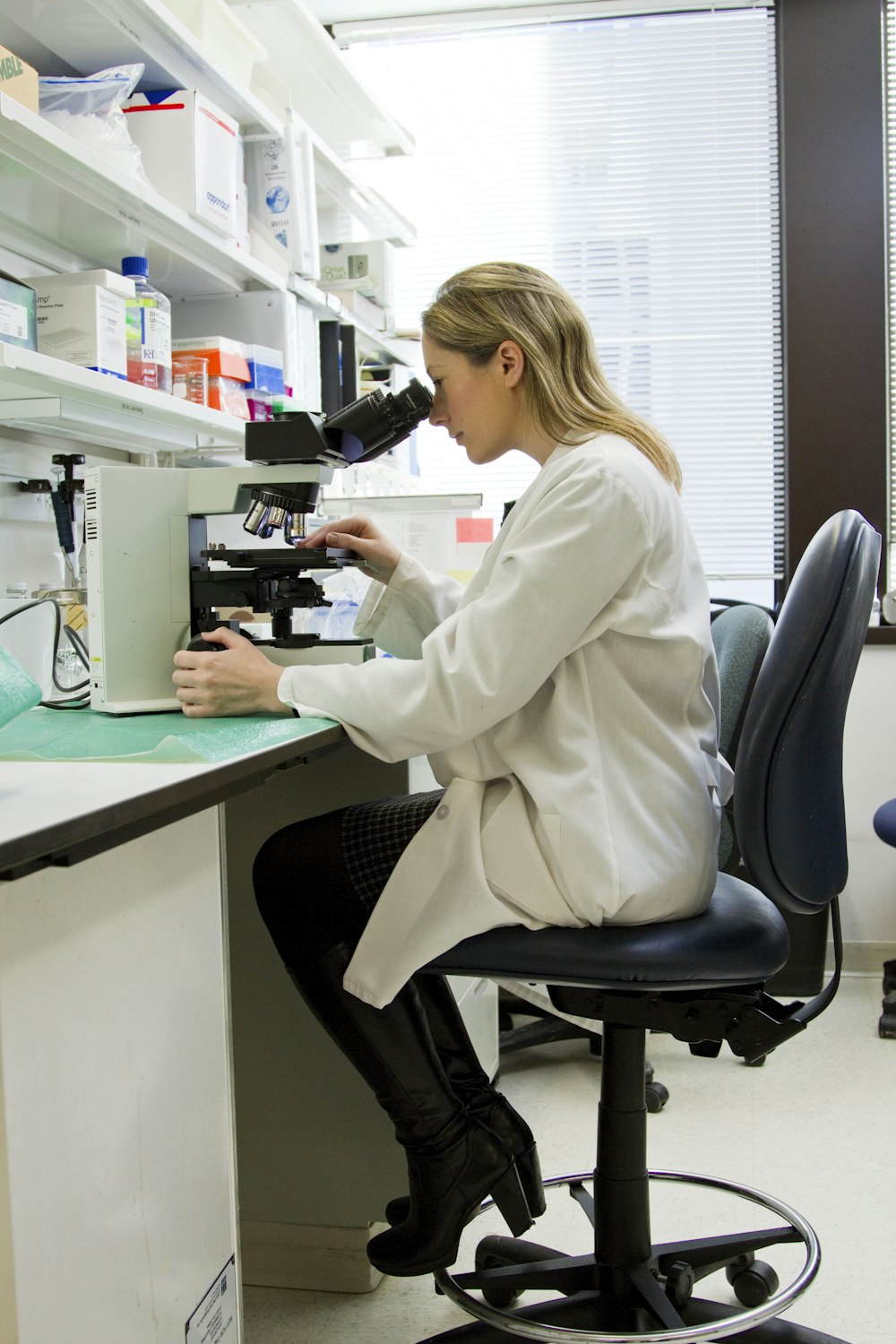
A revolutionary technology allows scientists to take a simple skin cell or blood cell from any person and reprogram it into a stem cell, which can then be turned into a beating human heart cell. These are called Human Induced Pluripotent Stem Cell-Derived Cardiomyocytes (HiPSC-CMs). They are a game-changer because:
- They can be created from patients with specific genetic heart diseases.
- They allow for testing drugs on human heart cells without any risk to a person.
The Bottleneck: Structural Analysis
While we can easily grow these cells, accurately measuring their sarcomere organization has been a major hurdle. Are the sarcomeres neatly aligned like train tracks, or are they chaotic and misaligned? This level of organization directly correlates with how well the cell can contract. Traditional analysis methods are slow, low-throughput, and can introduce human bias.
SarcGraph: The AI-Powered Cartographer for Cells
SarcGraph tackles this problem head-on by acting as an automated, ultra-precise cartographer for the cell's interior. It doesn't just see an image; it interprets it, maps its key features, and delivers rich, quantitative data.
AI Segmentation
Identifies Z-lines in heart cells with precision beyond human capability
Graph Generation
Creates mathematical models of cellular architecture for analysis
Quantitative Analysis
Extracts precise metrics on sarcomere density, alignment, and more
An In-Depth Look at a Key Experiment
Let's walk through a typical experiment where researchers used SarcGraph to compare healthy heart cells to those from a patient with a genetic heart disease.
Methodology: A Step-by-Step Process
1 Cell Preparation & Imaging
Researchers grew two sets of HiPSC-CMs on glass slides. One set was derived from a healthy donor, the other from a patient with Dilated Cardiomyopathy (DCM), a condition where the heart muscle becomes enlarged and weak. They then used a high-resolution microscope to take hundreds of detailed images of the cells, specifically staining the sarcomeres to make them glow.
2 AI Segmentation - Finding the "Z-Lines"
The images were fed into SarcGraph. Its first deep learning model automatically identified the most prominent feature of the sarcomere: the Z-line (the boundaries of each sarcomere). It didn't see them as simple lines, but as complex patterns, accurately outlining them even in noisy or faint images.
3 Graph Generation - Creating a Cellular Map
This is the clever part. SarcGraph then converted the detected Z-lines into a mathematical network, or a "graph." In this graph, each point (or "node") represents the midpoint of a small Z-line segment, and the lines (or "edges") connect adjacent nodes. This transforms the visual image of the cell into a structured data model—a map of its internal architecture.
4 Quantitative Analysis - Crunching the Numbers
Finally, SarcGraph's algorithms analyzed this graph to extract key metrics about the cell's structure, such as sarcomere density, orientation, and alignment.
Results and Analysis
The results were striking and immediately clear. The healthy cells showed a highly ordered graph network, with sarcomeres densely packed and aligned in parallel. The DCM patient's cells, however, showed a sparse and disorganized network.
The power of SarcGraph is that it moves beyond a simple visual assessment to provide hard numbers. The tables below show a sample of the quantitative data it generated from analyzing 500 cells from each group.
| Metric | Healthy | DCM Patient |
|---|---|---|
| Sarcomere Density | 0.45 units/µm² | 0.28 units/µm² |
| Sarcomere Alignment | 92% | 65% |
| Avg. Sarcomere Length | 1.85 µm | 2.15 µm |
| Method | Throughput | Objectivity |
|---|---|---|
| Manual Analysis | 10-20 cells/day | Low |
| SarcGraph (AI) | 1000s of cells/hour | High |
Drug Safety Screening
Test if a new drug candidate causes sarcomere disorganization (a sign of cardiotoxicity).
Disease Modeling
Precisely quantify how a specific genetic mutation disrupts heart cell structure.
Therapy Development
Monitor if a potential gene therapy or drug can "rescue" and improve sarcomere structure in diseased cells.
The Scientist's Toolkit: Research Reagent Solutions
To conduct these experiments, researchers rely on a suite of specialized tools. Here are the essentials used in the SarcGraph workflow:
HiPSC Lines
The starting material. These are the master stem cells, which can be engineered with disease-causing mutations or derived from patient samples.
Cardiomyocyte Differentiation Kit
A cocktail of growth factors and chemicals that "instruct" the HiPSCs to reliably turn into beating heart cells (HiPSC-CMs).
Alpha-Actinin Antibody
A key reagent. This antibody is designed to bind specifically to the alpha-actinin protein in the Z-line. It is attached to a fluorescent dye, causing the sarcomeres to "glow" under the microscope.
High-Content Microscope
An automated microscope that can rapidly take high-resolution, fluorescent images of hundreds of cell samples in a single run.
SarcGraph Software
The AI engine. It takes the images as input, performs the segmentation and graph analysis, and outputs the quantitative data tables.
Conclusion: A Clearer Vision for the Future of Cardiology
SarcGraph represents a paradigm shift in how we study the heart's microscopic machinery. By providing a digital, unbiased, and scalable way to measure cellular structure, it is transforming a once-tedious art into a robust, data-driven science. This enhanced vision allows researchers to not only understand heart diseases with greater precision but also to screen for new drugs with higher efficiency and safety. As this technology continues to evolve, it brings us closer to a future where personalized medicine for heart conditions is the norm, and where dangerous side effects from new drugs are identified long before they reach patients. The intricate patterns of the heart are finally being decoded, not just by the human eye, but by the powerful, discerning lens of artificial intelligence.
Key Takeaway
SarcGraph's AI-powered analysis of heart cell structure represents a transformative approach in cardiology research, enabling precise, high-throughput quantification that was previously impossible with manual methods.