Unlocking Cancer's Proteome: A Complete Guide to CPTAC Data for Researchers
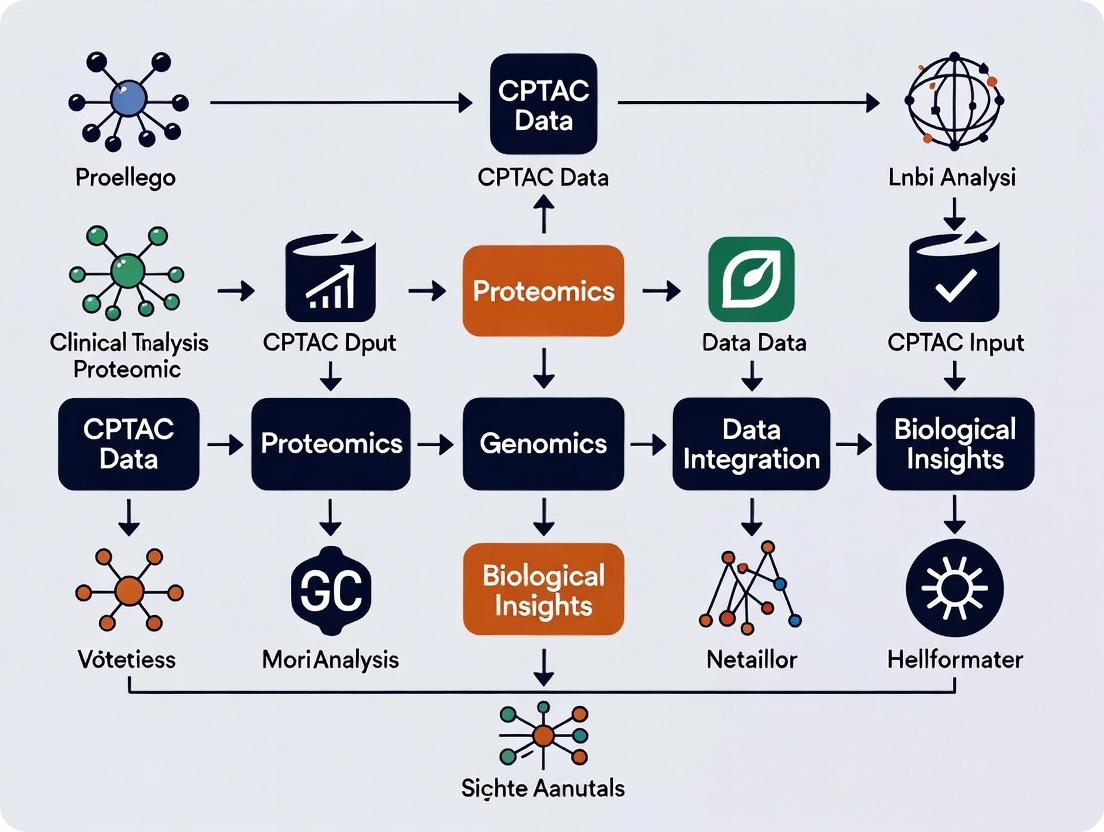
This comprehensive guide for biomedical researchers explores the Clinical Proteomic Tumor Analysis Consortium (CPTAC) resource, a cornerstone of integrated cancer proteogenomics.
Unlocking Cancer's Proteome: A Complete Guide to CPTAC Data for Researchers
Abstract
This comprehensive guide for biomedical researchers explores the Clinical Proteomic Tumor Analysis Consortium (CPTAC) resource, a cornerstone of integrated cancer proteogenomics. We detail its foundational role in defining cancer proteomes, provide methodologies for accessing and analyzing its multi-omics datasets, discuss common analytical challenges and solutions, and validate its impact through key discoveries. Learn how CPTAC data drives biomarker identification, therapeutic target discovery, and advances precision oncology.
What is CPTAC? Defining the Cornerstone of Cancer Proteogenomics
The Clinical Proteomic Tumor Analysis Consortium (CPTAC) represents a transformative initiative in cancer research, established to systematically integrate comprehensive proteomic and genomic analyses of tumors. This whitepaper frames CPTAC's mission within the broader thesis that multi-omics integration is non-negotiable for achieving translational discovery. While genomics identifies potential molecular drivers, proteomics reveals the functional, post-translational, and dynamic protein networks that execute cellular programs. CPTAC bridges this gap by generating deep, high-quality, and publicly accessible proteogenomic datasets, thereby enabling the research community to move beyond correlation to mechanistic understanding and the identification of novel therapeutic vulnerabilities.
Foundational CPTAC Data and Key Quantitative Findings
CPTAC has characterized over 10,000 tumors across more than 10 cancer types, generating petabytes of data encompassing whole genome sequencing, transcriptomics, global proteomics, phosphoproteomics, and acetylproteomics. The quantitative integration of these layers has yielded critical insights.
Table 1: Summary of Key CPTAC Quantitative Findings (Select Cancer Types)
| Cancer Type | Samples Analyzed | Key Proteogenomic Insight | Translational Implication |
|---|---|---|---|
| Colorectal Cancer | ~ 1,000 | 5 proteomic subtypes identified, distinct from genomic consensus subtypes; Glycolytic enrichment in microsatellite unstable (MSI) tumors. | Suggests re-stratification for therapy; proposes metabolic targets in MSI cancers. |
| Breast Cancer | ~ 1,200 | Phosphoproteomics revealed novel kinase-substrate networks driving HER2-low tumors; identified immune-hot vs. -cold proteomic signatures. | Expands potential for targeted therapy beyond HER2-positive; informs immunotherapy approaches. |
| Pancreatic Ductal Adenocarcinoma (PDAC) | ~ 800 | Two major proteomic subtypes: "Basal-like" and "Classical"; Basal-like linked to worse survival and immune exclusion. | Provides prognostic biomarker; highlights need for subtype-specific treatment. |
| Glioblastoma | ~ 200 | Proteogenomic mapping identified convergent oncogenic pathways (e.g., RTK-PI3K) despite genomic heterogeneity. | Rationale for combination therapies targeting downstream convergent nodes. |
| Lung Adenocarcinoma | ~ 1,000 | Phosphotyrosine profiling identified activated kinase pathways in tumors lacking known driver mutations. | Reveals druggable targets in "pan-negative" tumors. |
Detailed Experimental Protocols for Core CPTAC Workflows
The reproducibility and depth of CPTAC data stem from standardized, rigorous protocols.
Protocol 1: Tissue Processing and Global Proteomic/Phosphoproteomic Profiling
- Tissue Acquisition & Lysis: Frozen tumor and matched normal adjacent tissue (NAT) sections are pulverized in liquid nitrogen and lysed in 8M Urea buffer.
- Protein Digestion: Proteins are reduced, alkylated, and digested with Lys-C followed by trypsin.
- Peptide Fractionation for Phosphoproteomics: Peptides are subjected to high-pH reversed-phase fractionation. A separate aliquot is enriched for phosphopeptides using Fe³⁺-IMAC (Immobilized Metal Affinity Chromatography) or TiO₂ beads.
- LC-MS/MS Analysis: Fractions are analyzed on high-resolution, tandem mass spectrometers (e.g., Orbitrap Eclipse) coupled to nanoflow liquid chromatography.
- Data Processing: Raw files are processed through the CPTAC Common Data Analysis Pipeline (CDAP), using tools like MSFragger for peptide identification and Philosopher for protein inference. Phosphosite localization is determined by tools like Ascore or PTM-Shepherd.
Protocol 2: Proteogenomic Data Integration
- Custom Database Construction: Patient-specific protein databases are created using six-frame translation of whole genome and transcriptome (RNA-seq) data.
- Spectrum-Search: Mass spectrometry data is searched against this custom database to identify novel peptides (e.g., splice variants, mutations, non-coding translations).
- Multi-Omic Alignment: Genomic variants, transcript abundance, protein abundance, and phosphosite abundance are aligned by sample using bioinformatics pipelines (e.g, linkedOmics).
- Network and Pathway Analysis: Integrated data is subjected to systems biology tools (e.g, PARADIGM, PSMN) to build functional models of perturbed pathways.
Visualization of Core Concepts
Title: CPTAC Proteogenomic Integration Workflow
Title: Genomic Events Converge on Proteomic Pathways
The Scientist's Toolkit: Key Research Reagent Solutions
Table 2: Essential Reagents and Materials for CPTAC-Inspired Proteogenomics
| Item / Reagent | Function in Experiment | Critical Note |
|---|---|---|
| High-pH Reversed-Phase Fractionation Kit | Offline peptide fractionation to reduce sample complexity prior to LC-MS/MS. | Essential for achieving deep proteome and phosphoproteome coverage. |
| Fe³⁺-IMAC or TiO₂ Magnetic Beads | Selective enrichment of phosphopeptides from complex peptide digests. | Choice depends on protocol; TiO₂ often favored for global phospho-enrichment. |
| TMTpro 16/18plex Isobaric Labels | Multiplexed quantitation of up to 18 samples in a single MS run, minimizing variability. | CPTAC Phase 3 standard; requires high-resolution MS3 for accurate quantification. |
| Lys-C/Trypsin, MS Grade | Sequential enzymatic digestion for high-efficiency, specific protein cleavage. | Superior to trypsin alone for complex tissue digests. |
| LC Column: C18, 75μm x 25cm, 1.6μm beads | Nanoflow chromatography column for high-resolution peptide separation. | Key for optimal peak capacity and sensitivity. |
| Internal Reference Standard (e.g., Common Affinity Reference) | A labeled phosphopeptide standard spiked into all samples for cross-run normalization. | Crucial for large-scale cohort study data integrity. |
| CPTAC Common Data Analysis Pipeline (CDAP) Software | Standardized, containerized computational workflow for raw MS data processing. | Ensures reproducibility and uniformity across datasets generated by different centers. |
This technical guide explores the core multi-omics data types within the context of the Clinical Proteomic Tumor Analysis Consortium (CPTAC). CPTAC is a national effort to accelerate the understanding of the molecular basis of cancer through the application of large-scale proteome and genome analysis. The integration of proteomic, genomic, transcriptomic, and clinical data provides an unprecedented, multi-dimensional view of tumor biology, enabling researchers and drug development professionals to discover new therapeutic targets and biomarkers.
Genomic Data
Genomic data refers to the complete set of DNA within an organism's cells, including genes and non-coding sequences. In CPTAC studies, this encompasses somatic mutations (single nucleotide variants, insertions/deletions), copy number variations (CNV), and structural variants.
Key Experimental Protocol: Whole Genome Sequencing (WGS)
- DNA Extraction: High-molecular-weight DNA is isolated from tumor and matched normal (e.g., blood) samples using column-based or magnetic bead kits.
- Library Preparation: DNA is sheared, end-repaired, A-tailed, and ligated with sequencing adapters. Libraries are size-selected and PCR-amplified.
- Sequencing: Libraries are loaded onto platforms like Illumina NovaSeq for paired-end sequencing (e.g., 150bp reads) to achieve high coverage (e.g., 30x for normal, 60x for tumor).
- Analysis: Reads are aligned to a reference genome (GRCh38). Somatic variants are called using tools like MuTect2 (for SNVs) and Strelka2 (for indels). CNVs are identified using tools like Control-FREEC.
Transcriptomic Data
Transcriptomic data measures the quantity and sequences of RNA molecules, providing a snapshot of gene expression. CPTAC primarily uses RNA-Seq to profile the transcriptome.
Key Experimental Protocol: RNA Sequencing (RNA-Seq)
- RNA Extraction: Total RNA is extracted, typically with a focus on preserving mRNA integrity (RIN > 7).
- Library Preparation: Poly-A selection enriches for mRNA. Stranded cDNA libraries are prepared via fragmentation, reverse transcription, and adapter ligation.
- Sequencing: Libraries are sequenced on platforms like Illumina HiSeq to a depth of ~100 million paired-end reads.
- Analysis: Reads are aligned (STAR aligner), quantified (featureCounts), and normalized (TPM, FPKM). Differential expression analysis is performed with tools like DESeq2.
Proteomic and Phosphoproteomic Data
Proteomic data identifies and quantifies the full set of proteins in a sample. Phosphoproteomics specifically analyzes protein phosphorylation, a key post-translational modification regulating signaling pathways. CPTAC utilizes high-resolution mass spectrometry (MS).
Key Experimental Protocol: Global Proteome & Phosphoproteome Profiling via TMT-LC/LC-MS/MS
- Sample Preparation: Proteins are extracted from tissue lysates, reduced, alkylated, and digested with trypsin.
- Tandem Mass Tag (TMT) Labeling: Peptides from multiple samples are labeled with isobaric TMT reagents (e.g., 11-plex) for multiplexed quantification.
- Fractionation: Labeled peptides are fractionated by basic pH reversed-phase HPLC to reduce complexity.
- LC-MS/MS Analysis: Fractions are analyzed by online 2D-LC (typically basic pH RP followed by acidic pH RP) coupled to a high-resolution tribrid mass spectrometer (e.g., Orbitrap Eclipse).
- Phosphopeptide Enrichment: For phosphoproteomics, a separate aliquot of peptides is enriched using immobilized metal affinity chromatography (Fe-IMAC) or TiO2 beads prior to LC-MS/MS.
- Data Processing: MS data are searched against a protein sequence database (e.g., UniProt) using tools like MSFragger. Quantification is derived from TMT reporter ion intensities. Phosphorylation sites are localized with tools like AScore or PTMProphet.
Clinical Data
Clinical data provides the phenotypic context for molecular data, including patient demographics, diagnosis, treatment history, pathology reports, survival outcomes, and response to therapy.
Integrated Data Analysis in CPTAC
The power of CPTAC research lies in the integrated analysis of these datasets. Common analyses include:
- Correlating genomic alterations with proteomic/phosphoproteomic changes to identify functional drivers.
- Identifying proteogenomic subtypes that refine transcriptomic-based classifications.
- Mapping dysregulated signaling pathways by integrating phosphoproteomics with mutations.
- Associating multi-omics features with clinical outcomes to discover predictive biomarkers.
Table 1: Typical Data Scale and Yield from a CPTAC Cohort Study (e.g., 100-200 Tumors)
| Data Type | Assay | Typical Sample Depth/Coverage | Key Metrics/Outputs |
|---|---|---|---|
| Genomic | Whole Exome/Genome Sequencing | Tumor: 60-100x; Normal: 30-40x | SNVs, Indels, CNVs, Tumor Mutational Burden (TMB) |
| Transcriptomic | RNA-Seq | 100-150M paired-end reads | Gene Expression (TPM), Fusion Genes, Alternative Splicing |
| Proteomic | TMT LC-MS/MS | ~15,000 proteins quantified | Protein Abundance (log2 TMT ratio), Pathway Enrichment |
| Phosphoproteomic | TMT LC-MS/MS post-enrichment | ~40,000 phosphosites quantified | Phosphosite Abundance (log2 ratio), Kinase Activity Inference |
Table 2: Common Research Reagent Solutions for CPTAC-style Multi-Omics
| Reagent/Material | Function | Example Product/Kit |
|---|---|---|
| DNA Extraction Kit | Isolates high-quality genomic DNA from tissue or blood. | Qiagen DNeasy Blood & Tissue Kit |
| RNA Stabilization Reagent | Preserves RNA integrity immediately upon tissue collection. | RNAlater |
| Poly(A) mRNA Magnetic Beads | Enriches for eukaryotic mRNA during RNA-Seq library prep. | NEBNext Poly(A) mRNA Magnetic Isolation Module |
| Tandem Mass Tags (TMT) | Isobaric labels for multiplexed quantitative proteomics. | Thermo Scientific TMTpro 16-plex |
| Trypsin, Sequencing Grade | Protease for specific digestion of proteins into peptides for MS. | Promega Trypsin, Modified |
| Fe-IMAC or TiO2 Magnetic Beads | Enriches for phosphopeptides from complex peptide mixtures. | MagReSyn Ti-IMAC |
| Liquid Chromatography Columns | Separates peptides by hydrophobicity for MS analysis. | C18 reversed-phase columns (e.g., Aurora, 25cm) |
| Cell Line Derived Xenograft (CLDX) Standard | Universal reference sample for proteomics batch correction. | Common CPTAC reference across all studies |
Visualizing Data Generation and Integration
CPTAC Multi-Omics Data Generation & Integration Workflow
Multi-Omics Inference of Signaling Pathways
The Clinical Proteomic Tumor Analysis Consortium (CPTAC), a flagship program of the National Cancer Institute (NCI), is a comprehensive and coordinated effort to accelerate the understanding of the molecular basis of cancer through proteogenomic analysis. By systematically characterizing proteins, proteolytic products, post-translational modifications (PTMs), and integrating this data with genomic and transcriptomic information, CPTAC provides an unprecedented multi-omic view of human tumors. This guide details the spectrum of cancer types within the CPTAC portfolio, from prevalent malignancies to rare tumors, providing researchers with the context, data, and methodological frameworks necessary to leverage this resource for therapeutic discovery and biomarker development.
The CPTAC portfolio has evolved through distinct phases, each expanding the depth and breadth of cancer types analyzed. The table below summarizes the core cancer cohorts available for study.
Table 1: CPTAC Cancer Cohort Summary
| Cancer Type | Phase(s) | Approx. Tumor Samples | Key Proteogenomic Findings | Primary Data Types |
|---|---|---|---|---|
| Colorectal Adenocarcinoma | Phase 3 | 110+ | Proteomic stratification reveals immune-hot and -cold subtypes; phosphoproteomics identifies convergent kinase pathways. | WGS, RNA-seq, Global Proteomics, Phosphoproteomics, Acetylproteomics |
| High-Grade Serous Ovarian Cancer | Phase 2 | 174 | Identification of four prognostic proteomic subtypes; acetylation-driven metabolic dysregulation. | WGS, RNA-seq, Global Proteomics, Phosphoproteomics |
| Clear Cell Renal Cell Carcinoma | Phase 3 | 103 | Proteomic clusters linked to tumor microenvironment and metabolic heterogeneity; immune evasion signatures. | WGS, RNA-seq, Global Proteomics, Phosphoproteomics, Acetylproteomics |
| Glioblastoma Multiforme | Phase 2/3 | 99+ | Proteogenomic reclassification; PTM signatures of receptor tyrosine kinase (RTK) convergence. | WGS, RNA-seq, Global Proteomics, Phosphoproteomics |
| Lung Adenocarcinoma | Phase 3 | 110 | Integration reveals immune subtypes and drug-gable kinase activities distinct from genomic drivers. | WGS, RNA-seq, Global Proteomics, Phosphoproteomics, Acetylproteomics |
| Breast Cancer (Luminal, HER2+, Triple-Negative) | Phase 2 | 122 | Phosphoproteomics uncovers signaling networks driving subtypes; basal-like immune-cold signature. | WGS, RNA-seq, Global Proteomics, Phosphoproteomics |
| Pancreatic Ductal Adenocarcinoma | Phase 3 | 140 | Identification of neoantigen quality, not quantity, correlates with T-cell infiltration; metabolic subtypes. | WGS, RNA-seq, Global Proteomics, Phosphoproteomics |
| Head and Neck Squamous Cell Carcinoma | Phase 3 | 108+ | Proteomic subtypes associated with HPV status and immune response; kinase activity mapping. | WGS, RNA-seq, Global Proteomics, Phosphoproteomics |
| Pediatric Brain Tumors: Craniopharyngioma | Phase 3 (Rare Tumor) | 35+ | Identification of MAPK/ERK pathway activation via phosphoproteomics in adamantinomatous subtype. | WGS, RNA-seq, Global Proteomics, Phosphoproteomics |
| Cholangiocarcinoma | Phase 3 (Rare Tumor) | 35+ | Proteomic classification into inflammatory, stromal, and metabolic subtypes with therapeutic implications. | WGS, RNA-seq, Global Proteomics, Phosphoproteomics |
Experimental Protocols for CPTAC-Style Proteogenomic Analysis
Protocol 1: Tumor Tissue Processing and Multi-Omic Data Generation
Objective: To generate high-quality, coordinated genomic, transcriptomic, and proteomic datasets from clinically annotated tumor specimens.
- Sample Acquisition & Annotation: Frozen tumor specimens are obtained from biorepositories (e.g., Cooperative Human Tissue Network). A matched normal sample (blood or adjacent tissue) is acquired. Pathologists perform macro-dissection to ensure >80% tumor cellularity and annotate with clinical data (stage, grade, treatment history).
- Nucleic Acid Extraction: DNA and RNA are co-extracted from a portion of pulverized tissue using a dual-purpose kit (e.g., AllPrep DNA/RNA/miRNA Universal Kit). DNA is used for Whole Genome Sequencing (WGS). RNA integrity (RIN > 7) is verified via Bioanalyzer before RNA-seq library preparation.
- Protein Extraction and Digestion for Proteomics: A separate aliquot of pulverized tissue is lysed in a urea-based buffer (8M urea, 75mM NaCl, 50mM Tris pH 8.2) with protease and phosphatase inhibitors. Proteins are reduced, alkylated, and digested with Lys-C followed by trypsin. Peptides are desalted via C18 solid-phase extraction.
- Phosphopeptide Enrichment: A fraction of the digested peptides is subjected to immobilized metal affinity chromatography (IMAC) using Fe³⁺-loaded magnetic beads to enrich for phosphopeptides.
- Mass Spectrometry Analysis:
- Global Proteomics: Peptides are separated on a 30-cm C18 column using a nano-flow liquid chromatography system coupled online to a high-resolution tandem mass spectrometer (e.g., Orbitrap Eclipse). Data is acquired in data-dependent acquisition (DDA) mode.
- Phosphoproteomics: Enriched phosphopeptides are analyzed similarly, with MS/MS spectra searched against a human protein database using tools like MSFragger. Phosphosite localization is determined with algorithms like Philosopher.
Protocol 2: Integrative Proteogenomic Data Analysis
Objective: To integrate genomic variants, gene expression, protein abundance, and phosphorylation levels to derive biological insights.
- Data Processing & Normalization: Somatic variants are called from WGS (tumor vs. normal). RNA-seq reads are aligned and quantified (e.g., STAR/RSEM). Mass spectrometry raw files are processed through the CPTAC Common Data Analysis Pipeline (CDAP), which includes spectral library searching, quality control, and normalization (e.g., using housekeeping protein signals or median centering).
- Proteogenomic Concatenation: A sample-specific proteogenomic database is created by incorporating variant-derived novel peptide sequences, splice junction peptides from RNA-seq, and non-canonical open reading frames into the reference protein database.
- Multi-Omic Clustering: Unsupervised clustering (e.g., non-negative matrix factorization - NMF) is performed on combined protein and phosphoprotein abundance matrices to identify molecular subtypes.
- Pathway & Network Analysis: Differentially expressed/phosphorylated proteins between clusters are subjected to pathway over-representation analysis (Ingenuity Pathway Analysis, GSEA). Kinase-substrate enrichment analysis (KSEA) is used to infer kinase activity from phosphoproteomic data.
- Clinical Correlation: Molecular subtypes and signature abundances (e.g., immune, stromal, metabolic) are correlated with patient survival (Kaplan-Meier analysis, Cox proportional hazards models) and pathological features.
Visualizing Core Proteogenomic Concepts and Pathways
Title: CPTAC Proteogenomic Analysis Core Workflow
Title: Multi-Omic Data Integration in Tumor Phenotyping
The Scientist's Toolkit: Essential Research Reagents & Materials
Table 2: Key Reagent Solutions for CPTAC-Inspired Research
| Item | Function in Protocol | Example/Notes |
|---|---|---|
| AllPrep DNA/RNA/miRNA Universal Kit (Qiagen) | Co-isolation of genomic DNA and total RNA from a single tissue sample. Maintains integrity of both nucleic acid types for WGS and RNA-seq. | Critical for ensuring genomic and transcriptomic data are derived from the same tumor aliquot. |
| Urea Lysis Buffer (8M Urea, 50mM Tris, 75mM NaCl) | Efficient denaturation and solubilization of proteins from complex tissue matrices. Inactivates proteases/phosphatases. | Preferred over SDS for compatibility with subsequent digestion and LC-MS/MS. |
| Sequencing Grade Modified Trypsin | Specific proteolytic cleavage at lysine and arginine residues to generate peptides suitable for MS analysis. | Often used in combination with Lys-C for more complete digestion. |
| Fe³⁺-IMAC Magnetic Beads | Enrichment of phosphopeptides via affinity of phosphate groups for immobilized iron ions. Essential for deep phosphoproteome coverage. | Alternatives include TiO₂ beads; IMAC offers complementary selectivity. |
| C18 Solid-Phase Extraction (SPE) Tips/Cartridges | Desalting and concentration of peptide mixtures prior to LC-MS/MS, removing interfering salts and buffers. | Standard step for clean-up post-digestion and post-enrichment. |
| High-pH Reversed-Phase Fractionation Kit | Offline peptide fractionation to reduce sample complexity, increasing proteome coverage. | Often used prior to LC-MS/MS for deep global proteomic profiling. |
| Internal Reference Peptide Standards (e.g., iRT Kit) | Spiked-in synthetic peptides used to normalize retention times and monitor LC-MS performance across runs. | Enables consistent quantitation in large-scale studies. |
| Phosphatase/Protease Inhibitor Cocktails | Added to lysis buffers to preserve the in vivo phosphorylation state and prevent protein degradation during extraction. | Mandatory for phosphoproteomic and functional proteomic studies. |
The Clinical Proteomic Tumor Analysis Consortium (CPTAC) is a comprehensive national effort to accelerate the understanding of cancer molecular bases through large-scale proteogenomic analysis. At its core lies a standardized, high-throughput data generation pipeline integrating mass spectrometry (MS)-based proteomics, phosphoproteomics, and acetylomics. This pipeline enables the systematic profiling of protein expression, signaling pathways (via phosphorylation), and metabolic/epigenetic regulation (via acetylation) across tumor cohorts, directly linking genomic alterations to functional proteomic consequences.
Mass Spectrometry Platform Core
Liquid Chromatography-Tandem Mass Spectrometry (LC-MS/MS) Workflow
The foundational platform for all CPTAC global proteome analyses is nanoflow LC-MS/MS. The workflow is optimized for deep, quantitative profiling of complex tissue lysates.
Detailed Experimental Protocol:
- Sample Preparation (CPTAC Standardized):
- Proteins extracted from frozen tissue sections (typically 100 µg) are reduced with dithiothreitol (DTT), alkylated with iodoacetamide (IAA), and digested with sequencing-grade trypsin (Promega) at a 1:50 (w/w) enzyme-to-protein ratio for 16 hours at 37°C.
- Peptides are desalted using C18 solid-phase extraction (SPE) cartridges (Waters), vacuum-centrifuged to dryness, and reconstituted in 0.1% formic acid.
- LC Separation:
- Peptides are loaded onto a fused-silica capillary pre-column (150 µm i.d., 2 cm length, packed with ReproSil-Pur C18-AQ 5 µm resin).
- Analytical separation is performed on a reverse-phase nano-capillary column (75 µm i.d., 25 cm length, packed with ReproSil-Pur C18-AQ 3 µm resin) using a nanoflow UHPLC system (e.g., Thermo Easy-nLC 1200).
- Gradient: 120 minutes from 3% to 28% mobile phase B (0.1% formic acid in acetonitrile) at 300 nL/min.
- MS Data Acquisition (Data-Dependent Acquisition - DDA):
- Eluting peptides are ionized via a nano-electrospray source and analyzed on a high-resolution tandem mass spectrometer (e.g., Thermo Orbitrap Eclipse Tribrid, or Q Exactive HF-X).
- Full MS1 scans are acquired in the Orbitrap at 120,000 resolution (at 200 m/z) with an AGC target of 1e6 and max injection time of 50 ms.
- The most intense precursor ions (charge states 2-6) are selected for fragmentation by higher-energy collisional dissociation (HCD) at a normalized collision energy of 28-30%.
- MS2 scans are acquired in the Orbitrap at 15,000 resolution with an AGC target of 5e4 and max injection time of 22 ms. A dynamic exclusion of 30 seconds is applied.
Table 1: Representative CPTAC Global Proteome MS Instrument Parameters
| Parameter | Setting |
|---|---|
| MS Instrument | Thermo Orbitrap Eclipse Tribrid |
| LC Gradient | 120 min |
| MS1 Resolution | 120,000 |
| MS1 Scan Range | 375-1500 m/z |
| MS2 Resolution | 15,000 |
| HCD NCE | 28% |
| Dynamic Exclusion | 30 s |
| Total Run Time | ~2.5 hours/sample |
Phosphoproteomics Platform
Enrichment and Analysis of Phosphopeptides
This platform specifically targets post-translational modifications (PTMs) on serine, threonine, and tyrosine residues, crucial for understanding kinase signaling networks dysregulated in cancer.
Detailed Experimental Protocol (TiO2-based Enrichment):
- Global Digest Preparation: Follow the standard CPTAC sample preparation protocol up to and including tryptic digestion (Section 2.1).
- Phosphopeptide Enrichment:
- Desalted peptides are reconstituted in a loading buffer (80% acetonitrile, 5% trifluoroacetic acid, 1 M glycolic acid).
- The peptide mixture is incubated with titanium dioxide (TiO2) beads (GL Sciences) for 30 minutes with end-over-end rotation.
- The bead slurry is loaded onto a StageTip, washed sequentially with loading buffer and a wash buffer (80% acetonitrile, 1% TFA).
- Bound phosphopeptides are eluted with two washes of 1% ammonium hydroxide, followed by 5% pyrrolidine. Eluates are immediately acidified with formic acid.
- LC-MS/MS Analysis:
- Enriched phosphopeptides are analyzed via the same LC-MS/MS platform as the global proteome.
- MS2 acquisition often employs a multistage activation (MSA) or stepped higher-energy collisional dissociation (stepped HCD) method to improve phosphate-neutral loss and sequence ion generation.
Table 2: CPTAC Phosphoproteomics Quantitative Summary (Example Cohort)
| Metric | Value |
|---|---|
| Typical Starting Protein | 5-10 mg |
| Enrichment Method | Titanium Dioxide (TiO2) |
| Average Phosphopeptides ID/Sample | 30,000 - 45,000 |
| Phosphorylation Sites (pS/pT/pY) ID/Sample | 20,000 - 30,000 |
| Approx. pS:pT:pY Ratio | 90:9:1 |
| Primary MS Fragmentation | Stepped HCD (20,28,34% NCE) |
Acetylomics Platform
Enrichment of Lysine-acetylated Peptides
This platform maps protein acetylation, a key regulator of metabolism, gene expression, and protein function, providing insights into epigenetic and metabolic reprogramming in tumors.
Detailed Experimental Protocol (Immunoaffinity Enrichment):
- Global Digest Preparation: Follow the standard CPTAC sample preparation protocol up to and including tryptic digestion.
- Acetyllysine Peptide Immunoaffinity Purification (IAP):
- Desalted peptides are reconstituted in IAP buffer (50 mM MOPS/NaOH pH 7.2, 10 mM Na2HPO4, 50 mM NaCl).
- Acetylated peptides are enriched using an anti-acetyllysine antibody (e.g., PTMScan Acetyl-Lysine Motif Kit, Cell Signaling Technology) conjugated to protein A agarose beads.
- The peptide-antibody-bead mixture is incubated for 2 hours at 4°C with gentle rotation.
- Beads are washed three times with IAP buffer and twice with deionized water.
- Acetylated peptides are eluted twice with 0.1% trifluoroacetic acid. Eluates are combined and desalted using C18 StageTips.
- LC-MS/MS Analysis:
- Enriched acetylpeptides are analyzed via nanoflow LC-MS/MS as described, with instrument parameters optimized for the specific peptide properties.
Table 3: CPTAC Acetylomics Quantitative Summary (Example Cohort)
| Metric | Value |
|---|---|
| Typical Starting Protein | 5-10 mg |
| Enrichment Method | Anti-Acetyllysine Immunoaffinity |
| Average Acetylpeptides ID/Sample | 8,000 - 15,000 |
| Acetylation Sites (K-ac) ID/Sample | 6,000 - 10,000 |
| Primary MS Fragmentation | HCD (28-30% NCE) |
Integrated Proteogenomic Data Pipeline
The power of CPTAC data stems from the integration of these three MS platforms with genomic and transcriptomic data.
The Scientist's Toolkit: Key Research Reagent Solutions
Table 4: Essential Materials for CPTAC-style MS Pipelines
| Item | Function | Example Product/Brand |
|---|---|---|
| Sequencing-Grade Trypsin | Protease for specific digestion at lysine/arginine residues. Critical for reproducible peptide generation. | Promega Trypsin, MS Grade |
| C18 Solid-Phase Extraction Tips | Desalting and cleanup of peptide mixtures prior to LC-MS/MS. | Thermo Scientific StageTips, Empore C18 Disks |
| Nanoflow LC Columns | High-resolution separation of complex peptide mixtures. | Aurora Series (Ion Opticks), packed with C18 resin (1.6 µm) |
| Titanium Dioxide (TiO2) Beads | Selective enrichment of phosphopeptides from complex digests. | GL Sciences Titansphere TiO2, 5 µm |
| Anti-Acetyllysine Antibody Beads | Immunoaffinity enrichment of lysine-acetylated peptides. | PTMScan Acetyl-Lysine Motif Kit (Cell Signaling Tech.) |
| Tandem Mass Tag (TMT) Reagents | Isobaric labeling for multiplexed quantitative analysis of up to 16 samples simultaneously. | Thermo Scientific TMTpro 16plex |
| High-pH Reversed-Phase Fractionation Kit | Pre-fractionation of complex peptide samples to increase proteome depth. | Pierce High pH Reversed-Phase Peptide Fractionation Kit |
| LC-MS Grade Solvents | Ultrapure water, acetonitrile, and formic acid to minimize chemical noise and ion suppression. | Fisher Chemical Optima LC/MS Grade |
This technical guide details the architecture and utility of the CPTAC Data Coordinating Center (DCC) as the central hub for accessing multi-omic cancer proteogenomic data. Within the broader thesis of CPTAC data research, this portal is indispensable for transforming raw molecular data into actionable biological insights for translational research and drug development.
The CPTAC DCC is the primary repository and distribution center for all data generated by the CPTAC program, a National Cancer Institute (NCI) initiative. It serves as the central hub where proteomic, genomic, transcriptomic, and imaging data from tumor atlases are standardized, integrated, and disseminated to the research community.
Table 1: Key Quantitative Metrics of CPTAC DCC Data Holdings (as of Q4 2023)
| Data Type | Number of Tumor Samples | Number of Cancer Types | Primary Data Volume |
|---|---|---|---|
| Whole Genome Sequencing (WGS) | > 2,500 | 10+ | ~800 TB |
| Transcriptomics (RNA-Seq) | > 2,500 | 10+ | ~150 TB |
| Global Proteomics (TMT/MS) | > 2,000 | 10+ | ~120 TB |
| Phosphoproteomics (TMT/MS) | > 1,800 | 10+ | ~100 TB |
| Acetylproteomics | > 500 | 5+ | ~30 TB |
| Digital Pathology Images | > 25,000 Slides | 10+ | ~50 TB |
The CPTAC ecosystem is not a single database but a federated network of resources coordinated by the DCC.
Table 2: Core Components of the CPTAC Data Ecosystem
| Resource Name | Primary Function | URL/Portal | Key Data Type |
|---|---|---|---|
| CPTAC Data Portal (DCC) | Primary data download, cohort selection, clinical metadata | https://proteomic.datacommons.cancer.gov/pdc/ | Raw & Processed MS, Omics |
| Genomic Data Commons (GDC) | Hosts genomic and transcriptomic data from CPTAC | https://portal.gdc.cancer.gov/ | WGS, RNA-Seq |
| Proteomic Data Commons (PDC) | Hosts and explores proteomic data | https://pdc.cancer.gov/ | Proteomics, Metadata |
| Cancer Research Data Commons (CRDC) | Cloud-based analysis platform with CPTAC data | https://datacommons.cancer.gov/ | All, in cloud workspaces |
| CPTAC Assay Portal | Protocols, SOPs, and reagent information | https://assays.cancer.gov/ | Experimental Methods |
Experimental Protocols for Data Generation
The value of DCC data stems from rigorously standardized experimental pipelines.
CPTAC Global Proteomics and Phosphoproteomics Workflow
Methodology:
- Tissue Lysis and Protein Digestion: Frozen tumor tissue is pulverized and lysed. Proteins are reduced, alkylated, and digested with trypsin/Lys-C.
- Tandem Mass Tag (TMT) Labeling: Peptides from individual samples are labeled with isobaric TMT reagents (e.g., 11-plex or 16-plex). A reference pool is created and labeled for cross-run normalization.
- High-pH Reversed-Phase Fractionation: Labeled peptides are pooled and fractionated via high-pH HPLC to reduce complexity.
- Phosphopeptide Enrichment (for phosphoproteomics): A separate aliquot is subjected to immobilized metal affinity chromatography (Fe-IMAC or TiO2) to enrich phosphopeptides.
- LC-MS/MS Analysis: Fractions are analyzed on a high-resolution Orbitrap mass spectrometer coupled to nanoflow liquid chromatography. Data-Dependent Acquisition (DDA) is used.
- Data Processing: Raw files are processed through the CPTAC Common Data Analysis Pipeline (CDAP), which uses tools like MSFragger for peptide identification and Specter for quantification. Phosphosite localization is determined by tools like Ascore or Philosopher.
Diagram Title: CPTAC Proteomics & Phosphoproteomics Experimental Workflow
Proteogenomic Data Integration and Analysis Pathway
Methodology:
- Data Alignment: Somatic mutations (WGS) and proteomic/phosphoproteomic data are aligned using the sample-specific CPTAC aliquot identifier and harmonized clinical metadata.
- Proteogenomic Concordance Analysis: mRNA-protein correlations are calculated (Spearman's ρ) across the cohort to identify post-transcriptionally regulated genes.
- Pathway Activation Analysis: Phosphoproteomic data is analyzed using kinase-substrate enrichment analysis (KSEA) or network tools (e.g., PARADIGM) to infer pathway activity.
- Proteogenomic Subtyping: Integrated omics data (RNA, protein, phospho) are clustered (e.g., NMF, consensus clustering) to define novel molecular subtypes beyond genomic classification.
- Driver Identification: Statistical tests (e.g., ANOVAs, linear models) are applied to identify proteins/phosphosites differentially expressed across subtypes or associated with genomic alterations (e.g., mutations, copy number).
Diagram Title: Proteogenomic Data Integration and Analysis Pipeline
The Scientist's Toolkit: Research Reagent Solutions
Table 3: Essential Reagents and Materials for CPTAC-Style Proteomics
| Reagent/Material | Function in Protocol | Example Product/Catalog |
|---|---|---|
| Tandem Mass Tags (TMT) | Isobaric chemical labels for multiplexed quantification of peptides across samples. | Thermo Scientific TMTpro 16-plex / TMT11-plex |
| Trypsin/Lys-C Mix | Protease for specific digestion of proteins into peptides for MS analysis. | Promega Trypsin/Lys-C Mix, Mass Spec Grade |
| Tris(2-carboxyethyl)phosphine (TCEP) | Reducing agent to break protein disulfide bonds. | Pierce TCEP-HCl |
| Iodoacetamide (IAM) | Alkylating agent to cap reduced cysteine residues. | Sigma-Aldrich Iodoacetamide |
| Fe-IMAC or TiO2 Magnetic Beads | For enrichment of phosphopeptides from complex peptide mixtures. | MagReSyn Ti-IMAC or TiO2 beads |
| C18 Solid-Phase Extraction (SPE) Tips/Columns | Desalting and concentration of peptide samples prior to MS. | Empore C18 Disks, StageTips |
| High-pH Reversed-Phase Column | Peptide fractionation to reduce sample complexity. | Waters XBridge BEH C18 Column |
| Mass Spectrometry Grade Solvents | LC-MS buffers and mobile phases (water, acetonitrile, formic acid). | Fisher Chemical Optima LC/MS Grade |
| Internal Reference Peptide Standard | Calibration and quality control across MS runs. | Pierce Retention Time Calibration Mixture |
Cancer is a disease of dysregulated cellular machinery, where genomic alterations manifest their consequences through the functional units of the cell: proteins and their post-translational modifications (PTMs). The traditional siloed approaches of genomics, transcriptomics, and proteomics provide incomplete portraits. The proteogenomic philosophy posits that only through the systematic, multi-scale integration of these data layers can we achieve a mechanistic understanding of cancer biology, identify actionable targets, and discover robust biomarkers. This whitepaper, framed within the context of the National Cancer Institute's Clinical Proteomic Tumor Analysis Consortium (CPTAC) program, outlines the technical rationale, methodologies, and translational impact of this integrative paradigm.
The CPTAC Framework as a Proteogenomic Blueprint
CPTAC has pioneered large-scale, comprehensive molecular characterization of genomically annotated tumor cohorts. Its foundational workflow exemplifies the proteogenomic integration philosophy.
Title: CPTAC Proteogenomic Integrative Analysis Workflow
Quantitative Data: The Power of Integration Revealed by CPTAC
Proteogenomic integration resolves ambiguities and uncovers novel biology not apparent from single-omic analyses. Key findings from recent CPTAC pan-cancer and cohort-specific studies are summarized below.
Table 1: Key Insights from CPTAC Integrative Analyses
| Omic Layer | Limitation Alone | Insight Gained via Proteogenomic Integration | Example from CPTAC Studies |
|---|---|---|---|
| Genomics | Variants of Unknown Significance (VUS); unknown functional impact. | Proteomic/phospho-proteomic signatures define functional consequences of mutations. | ESR1 mutations in breast cancer drive distinct phospho-signaling networks, identifying therapeutic vulnerabilities. |
| Transcriptomics | Poor correlation with protein abundance (median r ~0.4-0.5). | Identifies instances of translational control, protein degradation, and isoform-specific expression. | Global discordance in immune-related protein-mRNA pairs; tumor-specific protein isoforms discovered in glioblastoma. |
| Proteomics | Lack of genomic context for observed pathway activation. | Links activated pathways to driver genomic events (e.g., amplification, mutation). | Hyper-phosphorylation of mTORC1/2 substrates in PIK3CA-mutant tumors, independent of mRNA levels. |
| Phosphoproteomics | Challenging to infer upstream kinase activity. | Integrative modeling nominates candidate driver kinases from genomic and proteomic data. | Identification of CDK12-associated phosphorylation signatures in ovarian cancer. |
Table 2: Correlation Between Molecular Layers Across CPTAC Pan-Cancer Analyses
| Data Layer Comparison | Median Correlation (Range) | Biological Implication |
|---|---|---|
| mRNA vs. Protein Abundance | 0.41 (0.17 - 0.62 across tumor types) | Transcript levels are a moderate predictor of protein abundance, heavily influenced by post-transcriptional regulation. |
| Somatic CNV vs. Protein Abundance | 0.69 (Higher than mRNA-CNV correlation) | Protein abundance is strongly driven by gene copy number, more so than mRNA levels. |
| Phosphosite vs. Corresponding Protein Abundance | 0.36 | Phosphorylation status is largely independent of parent protein abundance, indicating specific regulatory control. |
Experimental Protocols: Core Methodologies for Proteogenomic Integration
Comprehensive Mass Spectrometry-Based Proteomics & Phosphoproteomics
- Sample Preparation: 100µg of tumor peptide digest is labeled with TMTpro 16-plex or 18-plex reagents. Channels are pooled, fractionated via basic pH reversed-phase HPLC into 96 fractions, concatenated to 24, and dried.
- LC-MS/MS Analysis: Fractions are analyzed on a Orbitrap Eclipse Tribrid or Astral mass spectrometer coupled to a nanoflow UPLC. Full MS scans are acquired at 120,000 resolution. Data-Dependent Acquisition (DDA) or Data-Independent Acquisition (DIA) modes are used.
- Phosphopeptide Enrichment: Parallel aliquots are subjected to Fe-IMAC or TiO2 magnetic bead enrichment to isolate phosphopeptides prior to LC-MS/MS.
- Data Processing: Raw files are processed using a pipeline like FragPipe. For DDA: MSFragger for database searching, Philosopher for validation, and TMT-Integrator for reporter ion quantification. For DIA: Spectronaut or DIA-NN. A sample-specific protein sequence database is used, created from RNA-Seq data using tools like GalaxyP or custom pipelines.
Proteogenomic Data Integration & Analysis
- Multi-Omic Data Alignment: Data are aligned using sample identifiers and gene/site identifiers. Normalization is performed per-omics dataset (e.g., cyclic loess for proteomics, VST for RNA-Seq).
- Integrative Clustering: Multi-omic clustering via methods like Multi-Omic Factor Analysis (MOFA+) or iCluster is applied to identify molecular subtypes that span data layers.
- Pathway & Network Analysis: Phosphoproteomic data is analyzed with Kinase-Substrate Enrichment Analysis (KSEA). Integrated networks are built using tools like CausalPath to infer biologically plausible connections between genomic drivers and proteomic/phosphoproteomic readouts.
- Survival Analysis: Multi-omic signatures are tested for association with clinical outcomes (e.g., overall survival) using Cox Proportional Hazards models, adjusting for relevant covariates.
Signaling Pathway Visualization: From Genomic Alteration to Phenotype
Proteogenomics elucidates the functional axis from mutated gene to cellular phenotype, as shown in the PI3K-AKT-mTOR pathway example below.
Title: Proteogenomic Mapping of PI3K-AKT-mTOR Signaling
The Scientist's Toolkit: Key Research Reagent Solutions
Table 3: Essential Reagents & Platforms for Proteogenomic Research
| Item | Function in Proteogenomics |
|---|---|
| TMTpro 16/18-plex Isobaric Labels | Enable multiplexed, high-throughput quantitative comparison of up to 18 samples simultaneously in a single MS run, reducing batch effects. |
| Fe-IMAC or TiO2 Magnetic Beads | For high-efficiency enrichment of phosphopeptides from complex peptide digests, enabling deep phosphoproteome coverage. |
| Lys-C/Trypsin Protease | Provides specific digestion for reproducible peptide generation. Lys-C often used first for improved digestion efficiency. |
| High-pH Reversed-Phase Fractionation Kit | For offline fractionation of complex peptide mixtures to increase proteome coverage. |
| Reference Protein Standard (e.g., Yeast, HeLa digest) | Spiked into samples for quality control and normalization assessment across MS runs. |
| FragPipe Software Suite | Integrated computational pipeline (MSFragger, Philosopher) for sensitive database searching and post-processing of DDA MS data. |
| CPTAC Assembler 3 Custom Database Pipeline | Tool for generating sample-specific protein sequence databases from RNA-Seq data, crucial for novel peptide identification. |
| CausalPath Software | Analyzes proteomic and phosphoproteomic data in the context of prior pathway knowledge to infer causal relationships from correlations. |
From Data to Discovery: A Step-by-Step Guide to Analyzing CPTAC Resources
The Clinical Proteomic Tumor Analysis Consortium (CPTAC) represents a flagship program generating comprehensive, publicly available proteogenomic datasets to advance cancer research. The core thesis of CPTAC is that integrated analyses of genomic, transcriptomic, proteomic, and post-translational modification data can reveal molecular mechanisms of cancer beyond genomics alone, leading to novel biomarkers and therapeutic targets. Accessing this data is the critical first step. The National Cancer Institute (NCI) hosts this data on two distinct but linked platforms: the Proteomic Data Commons (PDC) for proteomic data and the Genomic Data Commons (GDC) for genomic and transcriptomic data. This guide provides a technical roadmap for researchers to programmatically discover and download data from both repositories.
The PDC and GDC are built on different underlying data models and APIs, tailored to their respective data types. The table below summarizes their key characteristics.
Table 1: Core Comparison of PDC and GDC Platforms
| Feature | Proteomic Data Commons (PDC) | Genomic Data Commons (GDC) |
|---|---|---|
| Primary Data Types | Mass spectrometry raw (.raw, .d), processed (.mzML, .mzIdentML), protein/peptide matrices, phosphoproteomics, ubiquitinomics. |
Genomic sequencing raw (.bam, .fastq), processed (.vcf, .maf), gene expression (.htseq.counts, .FPKM.txt), DNA methylation. |
| Data Model | Study > Case (Subject) > Sample > Aliquot > Data File. Emphasis on biospecimen provenance. | Project > Case > Sample > Portion > Analyte > Aliquot > Data File. Complex, detailed hierarchy. |
| Query API | GraphQL API endpoint (https://pdc.cancer.gov/graphql). |
REST API endpoint (https://api.gdc.cancer.gov). |
| Primary Access Method | PDC UI, GraphQL queries, pdc-client Python package. |
GDC Data Portal UI, REST API, GDC Data Transfer Tool, gdc-client. |
| Authentication | Generally not required for public data download. | Required for controlled-access data; uses NIH eRA Commons credentials. |
| Typical File Size | Large: Single raw MS run: 1-4 GB. Processed datasets: 100 MB - 1 GB. | Very Large: Whole genome BAM: 50-150 GB. Gene expression file: ~10-50 MB. |
Experimental Protocols for Data Generation
Understanding the source experimental protocols is essential for appropriate downstream analysis.
Protocol 3.1: CPTAC Retrospective Proteogenomic Characterization
- Biospecimen Selection: Formalin-fixed paraffin-embedded (FFPE) tumor and matched normal adjacent tissue (NAT) blocks are obtained from biorepositories.
- Nucleic Acid Extraction: DNA and RNA are co-extracted from macro-dissected tissue sections.
- Genomic/Transcriptomic Sequencing (GDC Data):
- Whole Exome Sequencing (WES): DNA libraries are captured using exome baits and sequenced on Illumina platforms (e.g., HiSeq 4000). Data formats: FASTQ (raw), BAM (aligned), VCF (mutations).
- RNA Sequencing (RNA-Seq): Poly-A enriched RNA libraries are prepared and sequenced. Data formats: FASTQ, BAM, gene expression counts.
- Proteomic Analysis (PDC Data):
- Protein Extraction & Digestion: Proteins are extracted from adjacent tissue sections, reduced, alkylated, and digested with trypsin.
- Liquid Chromatography-Tandem Mass Spectrometry (LC-MS/MS): Peptides are fractionated, then analyzed on high-resolution mass spectrometers (e.g., Thermo Fisher Orbitrap Eclipse).
- Data Processing: Raw spectral files (
.raw) are converted to.mzML. Peptide identification is performed using search engines (e.g., MS-GF+) against a sample-specific database informed by RNA-Seq. Quantification is performed via label-free or tandem mass tag (TMT) approaches.
- Data Integration: Proteomic, genomic, and transcriptomic data are co-analyzed to identify proteogenomic correlations, novel peptides, and pathway alterations.
Data Access Workflows: A Technical Guide
Protocol 4.1: Programmatic Download from PDC using the pdc-client
- Environment Setup:
pip install pdc-client - Query for Data Files: Use the client to query based on filters (e.g., study name, data type).
Generate Manifest: Create a download manifest file listing selected file UUIDs and URLs.
Download Files: Use the manifest with the client's download function or a standard download accelerator.
Protocol 4.2: Programmatic Download from GDC using the API and Transfer Tool
- Query Files via GDC API: Use the
filesendpoint with filters to obtain file UUIDs.
Create and Download Manifest:
Download with GDC Data Transfer Tool:
Visualization of Data Access and Integration Pathways
Title: PDC and GDC Data Download and Integration Workflow
Title: CPTAC Proteogenomic Data Generation Pipeline
The Scientist's Toolkit: Research Reagent Solutions
Table 2: Essential Materials for CPTAC-Style Proteogenomic Analysis
| Item | Function in Protocol | Example Vendor/Product | |
|---|---|---|---|
| High-purity Trypsin | Proteolytic enzyme for specific digestion of proteins into peptides for MS analysis. | Promega, Sequencing Grade Modified Trypsin | |
| Tandem Mass Tags (TMT) | Isobaric chemical labels for multiplexed quantitative proteomics across multiple samples. | Thermo Fisher Scientific, TMTpro 16/18plex | |
| Formic Acid (LC-MS Grade) | Mobile phase additive for LC-MS to improve peptide separation and ionization. | Fisher Chemical, Optima LC/MS Grade | |
| C18 Solid-Phase Extraction Tips/Columns | Desalting and purification of peptide mixtures prior to LC-MS injection. | Waters, OASIS HLB | Agilent, Bond Elut |
| High-pH Reversed-Phase Fractionation Kit | Offline fractionation of complex peptide samples to increase proteome coverage. | Thermo Fisher, Pierce High pH Reversed-Phase Peptide Fractionation Kit | |
| DNA/RNA Co-Extraction Kit | Simultaneous purification of high-quality genomic DNA and total RNA from FFPE. | Qiagen, AllPrep DNA/RNA FFPE Kit | |
| Exome Capture Kit | Enrichment of exonic regions from genomic DNA libraries for WES. | IDT, xGen Exome Research Panel | |
| Poly(A) mRNA Magnetic Beads | Isolation of polyadenylated mRNA from total RNA for RNA-Seq library prep. | NEBNext, Poly(A) mRNA Magnetic Isolation Module |
The Clinical Proteomic Tumor Analysis Consortium (CPTAC) is a comprehensive national effort to accelerate the understanding of the molecular basis of cancer through the application of large-scale proteome and genome analysis. The consortium organizes its vast and complex datasets into a multi-tiered data level system, ranging from raw instrument outputs to highly integrated, analyzed biological findings. Selecting the appropriate starting point (Level 1-4) is a critical strategic decision that dictates the required computational resources, analytical expertise, and potential research outcomes. This guide provides an in-depth technical framework for researchers navigating this ecosystem.
Defining CPTAC Data Levels
CPTAC data levels are defined by the degree of processing and analysis applied to the original mass spectrometry and genomic data.
Table 1: Summary of CPTAC Data Levels
| Data Level | Description | Primary Content | Key Formats | Typical Starting Point For |
|---|---|---|---|---|
| Level 1 | Raw Data | Unprocessed output from mass spectrometers or sequencers. | .raw (Thermo), .d (Bruker), .wiff (Sciex), .fastq | Developing novel spectral identification algorithms, reprocessing with custom pipelines, deep quality assessment. |
| Level 2 | Processed Data | Peptide/spectrum matches, identified and quantified peptides with basic filtering. | mzTab, mzIdentML, .tsv files | Researchers performing custom protein quantification, post-processing, or integrating with novel external datasets. |
| Level 3 | Curated & Summarized Data | Collated and normalized protein/gene expression matrices, with clinical annotations. | .txt, .csv matrix files (genes x samples) | Most analytical studies: differential expression, clustering, supervised classification, and multi-omic integration. |
| Level 4 | Integrated & Interpreted Data | Results of advanced analyses: pathways activated, post-translational modification networks, survival correlations. | Network files (Cytoscape), pathway maps, analysis reports | Hypothesis generation, validation in models, contextualizing experimental results within prior consortium findings. |
Experimental Protocols for Key Data Generation
The transition between levels relies on rigorous, standardized experimental and computational protocols.
Protocol 1: From Level 1 to Level 2 (Proteomic Data Processing) This protocol describes the standard CPTAC pipeline for converting raw mass spectrometry files into peptide identifications.
- File Conversion: Use
msConvert(ProteoWizard) to translate vendor-specific.rawfiles to open.mzMLformat. - Database Search: Process
.mzMLfiles with a search engine (e.g.,MS-GF+,Comet,MaxQuant) against a curated protein sequence database (e.g., RefSeq) concatenated with decoy sequences. Key parameters: precursor mass tolerance (20 ppm), fragment ion tolerance (0.05 Da), fixed modification (carbamidomethylation of C), variable modifications (oxidation of M, acetylation of protein N-term). - False Discovery Rate (FDR) Control: Apply target-decoy strategy at the peptide-spectrum-match (PSM) level to filter identifications to ≤1% FDR using tools like
Percolator. - Output: Generate standardized
mzIdentMLfiles containing all PSMs and peptide-level evidence.
Protocol 2: From Level 2 to Level 3 (Protein Quantification & Normalization) This protocol summarizes the process for aggregating peptide data into normalized protein-level abundance matrices.
- Abundance Extraction: For labeled (e.g., TMT) studies, extract reporter ion intensities from the Level 2 identifications. For label-free studies, extract chromatographic peak areas.
- Protein Roll-up: Use an algorithm (e.g.,
MSstatsTMT,IsobarQuant) to collapse peptide-level measurements into protein abundances, handling missing data and outlier peptides. - Batch & Sample Normalization: Apply within-batch median normalization and cross-batch bridging normalization (using common reference samples) to remove technical variation. Correct for loading bias.
- Matrix Assembly: Create a final tab-delimited matrix where rows are proteins (identified by UniProt ID), columns are sample identifiers (e.g., CPTAC barcodes), and values are log₂-transformed normalized abundance ratios or intensities.
Visualization of Workflows and Relationships
Diagram 1: CPTAC Data Level Progression Workflow
Diagram 2: Multi-Omic Data Integration Logic
The Scientist's Toolkit: Essential Research Reagents & Materials
Table 2: Key Research Reagent Solutions for CPTAC-Style Proteogenomics
| Item/Reagent | Function in CPTAC Research | Example Product/Catalog |
|---|---|---|
| Tandem Mass Tag (TMT) Reagents | Multiplexed isobaric labeling of peptides from up to 18 samples, enabling high-throughput, accurate relative quantification in a single MS run. | Thermo Fisher Scientific, TMTpro 18plex Kit |
| Trypsin, Sequencing Grade | Proteolytic enzyme for digesting proteins into peptides for mass spectrometry analysis. Standardized digestion is critical for reproducibility. | Promega, Trypsin Gold, Mass Spectrometry Grade |
| Phosphopeptide Enrichment Beads | Enrichment of phosphorylated peptides from complex digests prior to LC-MS/MS, essential for phosphoproteomic (a key CPTAC assay) data generation. | Thermo Fisher, High-Select Fe-NTA Phosphopeptide Enrichment Kit |
| Liquid Chromatography Columns | High-resolution separation of complex peptide mixtures by hydrophobicity (reverse-phase) prior to ionization and MS detection. | Waters, ACQUITY UPLC M-Class BEH C18 Column |
| Reference Protein Databases | Curated, organism-specific protein sequence databases for searching MS/MS spectra. CPTAC commonly uses RefSeq or GENCODE. | NCBI RefSeq, CPTAC Assay Portal Custom Databases |
| Quality Control Standard (UPS2) | A mixture of 48 recombinant human proteins at known, varying concentrations, spiked into samples to monitor LC-MS/MS system performance and quantitative accuracy. | Sigma-Aldrich, UPS2 Proteomics Dynamic Range Standard Set |
The Clinical Proteomic Tumor Analysis Consortium (CPTAC) generates comprehensive, multidimensional molecular maps of tumors, integrating genomic, transcriptomic, proteomic, and phosphoproteomic data. For researchers and drug development professionals, navigating this rich, multi-omics landscape requires efficient, specialized tools for initial data exploration and hypothesis generation. This guide details the use of three pivotal, publicly accessible platforms—cBioPortal, UALCAN, and LinkedOmics—as the essential first step in mining CPTAC and complementary data repositories for actionable biological insights.
cBioPortal for Cancer Genomics
Overview: cBioPortal is an open-access resource for interactive exploration of multidimensional cancer genomics data sets. It allows researchers to query genetic alterations across genes of interest and visualize their co-occurrence, clinical correlations, and mutual exclusivity.
Key Functionalities & Experimental Protocol:
- Querying Genetic Alterations: Perform an "Onco Query" by selecting a study (e.g., "CPTAC" studies) and entering a list of genes (e.g., TP53, PIK3CA, EGFR). The tool returns a summary of alteration frequencies (mutations, copy number alterations, mRNA expression changes).
- Survival Analysis: After a query, use the "Clinical Data" tab to compare survival (Overall/Progression-Free) between altered and unaltered groups using Kaplan-Meier estimators and log-rank test p-values.
- Co-expression Analysis: Utilize the "Co-expression" tab to generate scatter plots and calculate Pearson correlation coefficients for mRNA expression between two genes across all samples in the selected cohort.
Quantitative Data Summary: Table 1: Example cBioPortal Query Output for CPTAC Clear Cell Renal Cell Carcinoma Cohort (CPTAC-CCRCC)
| Gene | Mutation Frequency (%) | Amplification Frequency (%) | Deletion Frequency (%) | mRNA Up-regulation (%) |
|---|---|---|---|---|
| VHL | 49 | < 1 | < 1 | 2 |
| PBRM1 | 41 | < 1 | 2 | 5 |
| SETD2 | 12 | < 1 | < 1 | 3 |
Key Research Reagent Solutions:
- TCGA & CPTAC Datasets: The primary source material, comprising sequenced tumor/normal pairs.
- cBioPortal's OncoPrinter: A visualization tool for generating compact graphical representations of genomic alterations.
- cBioPortal's MutationMapper: Renders lollipop diagrams of mutations on protein domains, aiding in identifying hotspots.
UALCAN for Transcriptomics and Proteomics
Overview: UALCAN provides in-depth analyses of TCGA and CPTAC RNA-seq and proteomics data. It enables easy comparison of gene/protein expression across tumor vs. normal, tumor subtypes, and clinical/Pathologic stages.
Key Functionalities & Experimental Protocol:
- Expression Analysis: Enter a gene symbol (e.g., MSH2). Select a dataset (e.g., "CPTAC" -> "Colorectal Cancer"). View box plots comparing protein or transcript expression in "Normal" vs. "Primary Tumor" tissues. Statistical significance is calculated using a Student's t-test.
- Correlation Analysis: Use the "Protein-Correlation" module to input two gene symbols. The tool generates a scatter plot of protein abundance levels across samples, calculates the Pearson correlation coefficient (r), and provides a p-value.
- Survival Analysis: The "Survival" module allows assessment of the impact of gene expression (transcript or protein) on patient survival, plotting Kaplan-Meier curves with a log-rank p-value.
Quantitative Data Summary: Table 2: Example UALCAN CPTAC Proteomic Analysis for PAX8 in Ovarian Cancer
| Sample Type | Mean Protein Expression (Z-score) | Standard Deviation | p-value (vs. Normal) |
|---|---|---|---|
| Normal (N=84) | -0.241 | 0.879 | Reference |
| Primary Tumor (N=83) | 0.284 | 1.112 | 1.62E-04 |
Key Research Reagent Solutions:
- CPTAC Antibody-based Proteomics Data: The core data input, generated via mass spectrometry with stable isotope-labeled internal standards.
- UALCAN's Interactive Box Plot Generator: The primary analytical engine for comparative expression.
- GraphPad Prism / R: For downstream statistical validation and figure refinement of results exported from UALCAN.
LinkedOmics for Multi-Omics Integrative Analysis
Overview: LinkedOmics is a web-based platform for analyzing and comparing multi-omics data from TCGA, CPTAC, and other cohorts. Its flagship "LinkFinder" and "LinkInterpreter" modules allow for association analyses and functional enrichment.
Key Functionalities & Experimental Protocol:
- LinkFinder Analysis:
- Select a cancer cohort (e.g., CPTAC Ovarian Cancer).
- Choose a "Search Dataset" (e.g., Proteomics) and a "Target Dataset" (e.g., Phosphoproteomics).
- Input a gene of interest as the "seed". The tool performs a Pearson correlation test between the seed gene's expression and all molecules in the target dataset.
- Results are ranked and displayed as a volcano plot or heatmap.
- LinkInterpreter Analysis:
- Using the ranked list from LinkFinder, perform Gene Set Enrichment Analysis (GSEA).
- Choose enrichment categories (e.g., KEGG pathways, GO biological processes, kinase-substrate networks).
- The tool identifies positively and negatively correlated gene/protein sets, providing normalized enrichment scores (NES) and false discovery rates (FDR).
Quantitative Data Summary: Table 3: Example LinkedOmics GSEA Output for EGFR Proteomic Correlates in CPTAC GBM
| Enriched Gene Set (KEGG Pathway) | Normalized Enrichment Score (NES) | FDR q-value |
|---|---|---|
| Focal adhesion | 2.45 | 0.001 |
| MAPK signaling pathway | 2.32 | 0.003 |
| Regulation of actin cytoskeleton | 2.18 | 0.005 |
Key Research Reagent Solutions:
- CPTAC Multi-omics Matrices: The integrated data input (proteomic, phosphoproteomic, acetylomic, etc.).
- MSigDB (Molecular Signatures Database): The underlying repository of gene sets used for enrichment analysis in LinkInterpreter.
- Cytoscape: For network visualization of correlated molecules and enriched pathways exported from LinkedOmics.
Visualization of a Core Analytical Workflow
Title: CPTAC Multi-Omics Exploration Workflow
Pathway Diagram of a Commonly Enriched Signaling Network
Title: PI3K-AKT & MAPK-ERK Pathways in Cancer
The integrated use of cBioPortal, UALCAN, and LinkedOmics provides a powerful, no-code framework for the initial exploration of CPTAC data. This sequential workflow enables the transition from genetic alteration discovery (cBioPortal) to expression validation and correlation (UALCAN), and finally to systems-level functional insight (LinkedOmics). For researchers in oncology and drug development, mastering these tools is foundational for generating robust, data-driven hypotheses that can be pursued with deeper, targeted experimental and bioinformatic analyses.
Integrating multi-omics data is central to modern precision oncology. This technical guide focuses on the downstream bioinformatic analysis of proteogenomic data from the Clinical Proteomic Tumor Analysis Consortium (CPTAC). CPTAC datasets provide deep, co-assayed genomic, transcriptomic, proteomic, and phosphoproteomic profiles from clinically annotated tumor samples, creating unparalleled opportunities to connect molecular alterations to functional phenotypes. The core thesis of this field posits that the integrative analysis of CPTAC data, moving beyond single-omics views, is essential for: 1) identifying driver signaling pathways obscured at the genomic level, 2) defining functional protein-based tumor subtypes with clinical relevance, and 3. discovering novel therapeutic targets and predictive biomarkers. This whitepaper details the methodologies for conducting such integrative analyses using R and Python.
Data Acquisition and Preprocessing
CPTAC data is publicly available via repositories like the Proteomic Data Commons (PDC) and Genomic Data Commons (GDC). Using R/Bioconductor packages streamlines access and harmonization.
Protocol 2.1: Data Retrieval with TCGAbiolinks and cptacR
Protocol 2.2: Data Integration and Matching
Samples must be matched across omics layers. A common key is the Patient_ID or Sample_ID.
Core Analytical Workflow: Differential Expression & Integration
A foundational analysis compares tumor vs. normal or between molecular subtypes.
Protocol 3.1: Differential Analysis with limma (Proteomics/Log-Transformed Data)
Table 1: Summary of Differential Analysis Results (Hypothetical LUAD Dataset)
| Molecular Layer | Total Features | Upregulated (FDR<0.05) | Downregulated (FDR<0.05) | Top Dysregulated Pathway (KEGG) |
|---|---|---|---|---|
| mRNA (RNA-seq) | 20,000 | 1,850 | 1,920 | ECM-receptor interaction |
| Protein (Global Proteome) | 10,000 | 610 | 740 | Metabolic pathways |
| Phosphoprotein (Phosphoproteome) | 25,000 | 1,220 | 980 | Focal adhesion |
Protocol 3.2: Integrative Correlation Analysis (mRNA-Protein Concordance)
Pathway and Network Analysis
Visualizing impacted pathways is crucial for hypothesis generation.
Diagram 1: Integrative Multi-Omics Analysis Workflow
Diagram 2: Key Signaling Pathway Altered in CPTAC LUAD (PI3K-Akt-mTOR)
The Scientist's Toolkit: Research Reagent Solutions
Table 2: Essential Resources for CPTAC Data Analysis
| Item/Category | Specific Example/Name | Function in Analysis |
|---|---|---|
| R/Bioconductor Packages | TCGAbiolinks, cptacR |
Unified data access and download from GDC/PDC and curated CPTAC datasets. |
| Differential Analysis Tools | limma, DESeq2 |
Statistical modeling for identifying differentially expressed genes/proteins. |
| Pathway Analysis Software | clusterProfiler, fgsea |
Functional enrichment analysis (GO, KEGG, Hallmark) of gene/protein lists. |
| Protein Interaction Databases | STRING, BioGRID, PhosphoSitePlus | Providing context for network analysis and phosphosite annotation. |
| Integrated Development Environment (IDE) | RStudio, Jupyter Notebook | Reproducible scripting environment for R/Python code. |
| Visualization Libraries | ggplot2, pheatmap, ComplexHeatmap |
Generation of publication-quality plots and heatmaps. |
| Containerization Platform | Docker, Singularity | Ensures computational reproducibility and environment stability. |
Advanced Integrative Clustering for Subtyping
Protocol 6.1: Multi-Omics Clustering with MoCluster (from MOVICS package)
The integrative analysis of CPTAC data using R and Python, as detailed in this guide, provides a robust framework for translating multi-omics measurements into biological insights and clinical hypotheses. By leveraging tools like TCGAbiolinks for data acquisition, limma for differential analysis, and specialized packages for clustering and pathway mapping, researchers can rigorously test the central thesis that proteogenomic integration reveals the functional drivers of cancer. This approach is indispensable for the next generation of biomarker and target discovery in oncology drug development.
The Clinical Proteomic Tumor Analysis Consortium (CPTAC) represents a seminal initiative by the National Cancer Institute to systematically profile the proteomes and phosphoproteomes of cancer cohorts previously characterized by The Cancer Genome Atlas (TCGA). This deep integration of genomic and proteomic data provides an unprecedented resource for moving beyond mere correlation to establishing causative drivers of oncogenesis. Within this framework, the application use-case of identifying candidate biomarkers and therapeutic targets transitions from a singular 'omics' approach to a multi-dimensional discovery engine. Proteogenomic integration reveals post-transcriptional regulation, functional protein pathways, and pharmacologically actionable networks, offering a direct line of sight to viable targets for therapy and companion diagnostics.
CPTAC data analysis for target identification relies on integrating multiple layers of quantitative molecular data. The following table summarizes the core data types and their utility.
Table 1: Core CPTAC Data Types for Biomarker and Target Discovery
| Data Type | Primary Measurement | Key Analytical Platform | Utility in Target Discovery |
|---|---|---|---|
| Global Proteomics | Protein abundance | Liquid Chromatography-Tandem Mass Spectrometry (LC-MS/MS) with TMT or DIA | Identifies differentially expressed proteins driving tumor biology. |
| Phosphoproteomics | Site-specific phosphorylation | LC-MS/MS with immobilized metal affinity chromatography (IMAC) enrichment | Maps activated signaling pathways and kinase-substrate relationships. |
| Transcriptomics | mRNA abundance | RNA-Seq | Enables proteogenomic integration to identify translational control. |
| Whole Genome Sequencing | Somatic mutations, copy number variations | Next-Generation Sequencing | Distinguishes driver from passenger mutations; identifies neoantigens. |
| Clinical Data | Survival, stage, grade, treatment response | - | Correlates molecular features with patient outcomes for biomarker validation. |
Experimental Protocols for Key Analyses
Protocol 3.1: Integrated Proteogenomic Analysis for Driver Identification
- Data Alignment: Map proteomic and phosphoproteomic data (e.g., from CPTAC LUAD cohort) to matched sample genomic data (mutations, CNV from WGS/WES).
- Correlation Analysis: Perform Spearman correlation between protein/phosphosite abundance and mRNA expression across the cohort. Identify genes with poor correlation, suggesting post-transcriptional regulation.
- Outlier Analysis: Use the
z-scoremethod to identify samples with extreme protein expression or phosphorylation for a given gene, independent of its mRNA level or copy number. - Pathway Enrichment: Subject outlier proteins/phosphosites to pathway analysis (e.g., Reactome, KEGG via clusterProfiler R package) to pinpoint dysregulated biological processes.
- Survival Analysis: Perform Kaplan-Meier and Cox Proportional-Hazards regression using matched clinical data to associate candidate driver proteins/phosphosites with patient overall or disease-free survival.
Protocol 3.2: Phosphoproteomics-Based Kinase-Substrate Network Reconstruction
- Phosphopeptide Enrichment: Digest tumor tissue lysates with trypsin. Enrich phosphorylated peptides using Fe-IMAC or TiO2 magnetic beads.
- LC-MS/MS Acquisition: Analyze enriched peptides on a high-resolution mass spectrometer using a Data-Independent Acquisition (DIA) method for reproducibility.
- Bioinformatics Processing: Process raw files using Spectronaut or DIA-NN. Normalize phosphosite intensities (log2, median-centered).
- Kinase Activity Inference: Utilize tools like
KSEA(Kinase-Substrate Enrichment Analysis) orPhosphopathto infer kinase activity from the enrichment of known substrate phosphorylation patterns in differential expression data. - Network Visualization: Build a regulatory network connecting activated kinases to their upregulated phosphosubstrates and downstream effectors using Cytoscape.
Protocol 3.3: Therapeutic Target Prioritization Framework
- Druggability Assessment: Annotate candidate proteins (from Protocols 3.1/3.2) using databases like Drug-Gene Interaction Database (DGIdb), ChEMBL, or CanSAR.
- Essentiality Scoring: Integrate CRISPR or RNAi gene essentiality scores (from DepMap portal) for the candidate gene across cancer cell lines.
- Selectivity Analysis: Evaluate RNA/protein expression of the target in normal human tissues (using GTEx or Human Protein Atlas) to assess potential on-target toxicity.
- Biomarker Potential: Assess correlation between target abundance/activity and drug sensitivity in pre-clinical models (e.g., GDSC or CTRP databases).
- Final Prioritization: Rank candidates using a composite score incorporating survival significance, druggability, essentiality, and selectivity.
Visualizations of Key Workflows & Pathways
Diagram Title: CPTAC Data Analysis Workflow for Target Discovery
Diagram Title: Example Targetable Pathway from Phosphoproteomics
The Scientist's Toolkit: Research Reagent Solutions
Table 2: Essential Reagents for CPTAC-Style Proteomic Target Discovery
| Reagent / Material | Function | Example Vendor/Catalog |
|---|---|---|
| TMTpro 16plex Isobaric Label Reagent | Multiplexes 16 samples for relative protein quantification by MS, enabling high-throughput cohort analysis. | Thermo Fisher Scientific, A44520 |
| Fe-IMAC Magnetic Beads | Enriches phosphorylated peptides from complex digests for phosphoproteomics. | MilliporeSigma, GE17-6002-42 |
| Trypsin, MS-Grade | Specific protease for digesting proteins into peptides for LC-MS/MS analysis. | Promega, V5280 |
| Pierce Quantitative Colorimetric Peptide Assay | Accurately measures peptide concentration post-digestion and cleanup prior to LC-MS loading. | Thermo Fisher Scientific, 23275 |
| C18 StageTips or Spin Columns | Desalts and concentrates peptide samples for robust MS injection. | Thermo Fisher Scientific, 84850 |
| HeLa Protein Digest Standard | Provides a well-characterized quality control sample for monitoring LC-MS/MS system performance. | Promega, V6951 |
| Phospho-Motif Antibody Sampler Kit | Validates key phospho-signaling events (e.g., AKT, MAPK substrates) identified by MS via Western blot. | Cell Signaling Technology, 9911 |
| CRISPR/Cas9 Knockout Pool Libraries | Functional validation of candidate target genes by assessing essentiality in cell models. | Horizon Discovery, Various |
The Clinical Proteomic Tumor Analysis Consortium (CPTAC) is a flagship National Cancer Institute program that comprehensively characterizes cohorts of tumor samples using multiple omics technologies. The consortium's core thesis is that integrating proteomic, phosphoproteomic, transcriptomic, and genomic data will reveal molecular drivers of cancer, elucidate therapeutic resistance mechanisms, and identify robust biomarkers for patient stratification. Building prognostic models from these multi-dimensional signatures represents a critical application, moving beyond single-omics correlates to develop clinically actionable tools that predict patient survival, recurrence, and treatment response. This guide details the technical workflow for constructing such models using CPTAC data resources.
Foundational Data and Quantitative Landscape
CPTAC data provides a multi-omics foundation for model building. The following table summarizes key quantitative data from recent CPTAC Phase 3 cohorts, which are essential for powering prognostic analyses.
Table 1: Representative CPTAC Phase 3 Cohort Multi-omics Data Scale
| Cancer Type | Tumor Samples | Proteomics (Proteins) | Phosphoproteomics (Phosphosites) | Transcriptomics (mRNA) | Genomics (Mutations) | Clinical Endpoints |
|---|---|---|---|---|---|---|
| Lung Adenocarcinoma (LUAD) | 110 | ~12,000 | ~45,000 | ~60,000 | ~10,000 SNVs/Indels | Overall Survival, Progression-Free |
| Colorectal Cancer (CRC) | 100 | ~14,000 | ~52,000 | ~60,000 | ~8,000 SNVs/Indels | Overall Survival, Recurrence |
| Clear Cell Renal Cell Carcinoma (ccRCC) | 103 | ~11,000 | ~38,000 | ~60,000 | ~7,000 SNVs/Indels | Overall Survival, Disease-Specific Survival |
| Pediatric Brain Cancer (HGG, DIPG) | 100 | ~10,000 | ~35,000 | ~60,000 | ~5,000 SNVs/Indels | Overall Survival |
Data source: NCI CPTAC Data Portal and associated flagship papers. Numbers are approximate and represent typical identifications per cohort.
Core Experimental and Computational Methodology
Data Acquisition and Preprocessing Protocol
- Data Download: Access level 3 (segmented) and level 4 (integrated) data from the CPTAC Data Portal (https://cptac-data-portal.georgetown.edu) or via Genomic Data Commons (GDC).
- Normalization: Apply platform-specific normalization.
- Proteomics: Median centering of log2-intensity values, with missing value imputation using k-nearest neighbors (k=10) or a tailored censored imputation method (e.g., MinProb).
- Transcriptomics: Convert RSEM counts to log2(CPM+1) or use variance stabilizing transformation.
- Phosphoproteomics: Normalize to corresponding total protein abundance (proteome-guided normalization).
- Batch Correction: Apply ComBat or similar algorithm to remove technical batch effects, using sample preparation batch as a covariate.
- Clinical Data Integration: Merge omics matrices with curated clinical data (survival time, event status, stage, grade).
Feature Selection and Signature Derivation Protocol
- Univariate Screening: For each omics layer, perform Cox proportional hazards regression on individual features. Retain features with FDR-adjusted p-value < 0.05.
- Multi-omics Integration: Employ one of the following integration strategies:
- Early Integration: Concatenate selected features from all omics layers into a single matrix. Standardize (z-score) features prior to concatenation.
- Intermediate Integration: Use multi-view learning methods (e.g., Multi-Omics Factor Analysis, MOFA) to derive latent factors that represent shared and specific variations across omics types. Use these factors as input features.
- Late Integration: Build separate models (e.g., Cox models) for each omics layer and combine predictions via ensemble averaging or stacking.
- Dimensionality Reduction: For high-dimensional concatenated data, apply regularized Cox regression (Lasso or Elastic Net) with 10-fold cross-validation to select a parsimonious signature. The optimal lambda (λ) is determined by the minimum cross-validated partial likelihood deviance.
Model Training and Validation Protocol
- Model Formulation: Implement a multi-omics Cox proportional hazards model:
h(t|X) = h0(t) * exp(β_proteome * X_p + β_phospho * X_ph + β_transcriptome * X_t + β_genome * X_g). - Training/Test Split: Split cohort data 70%/30% at the patient level, ensuring stratification by critical clinical variables (e.g., cancer stage).
- Performance Assessment:
- Calculate the Concordance Index (C-index) on the held-out test set to evaluate discriminative ability.
- Generate Kaplan-Meier survival curves by stratifying test patients into high-risk and low-risk groups based on median model risk score. Log-rank test p-value < 0.05 indicates significant stratification.
- Perform time-dependent ROC analysis at clinically relevant time points (e.g., 3-year survival).
- Independent Validation: Apply the finalized model (with fixed coefficients) to an independent, external cohort (e.g., another CPTAC cohort or public repository like TCGA) to assess generalizability.
Visualizing the Multi-omics Prognostic Modeling Workflow
Multi-omics Prognostic Model Workflow
Multi-omics Data Integration Strategies
The Scientist's Toolkit: Research Reagent Solutions
Table 2: Essential Toolkit for Multi-omics Prognostic Modeling with CPTAC Data
| Item | Function in Workflow | Example/Note |
|---|---|---|
| CPTAC Data Portal / GDC | Primary source for downloadable, harmonized multi-omics and clinical data. | https://cptac-data-portal.georgetown.edu |
| R / Python Environment | Statistical computing and machine learning platform for analysis. | R with survival, glmnet, MOFA2 packages. Python with scikit-survival, pandas. |
| Normalization & Imputation Tools | Correct technical bias and handle missing data, common in proteomics. | R: limma (normalizeQuantiles), impute (knn). Python: scikit-learn SimpleImputer. |
| Batch Effect Correction Software | Remove non-biological variation from different processing batches. | R: sva (ComBat). |
| Multi-omics Integration Framework | Algorithm to jointly analyze data from different molecular layers. | R: MOFA2, iClusterPlus. Python: mofapy2. |
| Regularized Regression Package | Perform feature selection and build models with high-dimensional data. | R: glmnet (Lasso/Elastic Net Cox). Python: scikit-survival CoxnetSurvivalAnalysis. |
| Survival Analysis Library | Core functions for time-to-event data modeling and validation. | R: survival (Cox model, Kaplan-Meier), timeROC. Python: lifelines. |
| Visualization Suite | Generate publication-quality survival curves, ROC plots, and heatmaps. | R: survminer, ggplot2, pheatmap. Python: matplotlib, seaborn. |
| High-Performance Computing (HPC) / Cloud | Resource for computationally intensive steps (MOFA, cross-validation). | AWS, Google Cloud, or local cluster with SLURM scheduler. |
Elucidating signaling pathways and the mechanisms underlying drug resistance is a primary objective of translational oncology research. The Clinical Proteomic Tumor Analysis Consortium (CPTAC) provides a foundational multi-omics resource for this endeavor. By integrating comprehensive proteomic, phosphoproteomic, genomic, and transcriptomic data from clinically annotated tumor samples, CPTAC enables a systems-biology approach to deconvolute the functional signaling architecture of cancers. This guide details a technical framework for leveraging CPTAC data to map pathway activity, identify key regulatory nodes, and uncover mechanisms that drive therapeutic resistance, directly contributing to the broader CPTAC thesis of transforming molecular understanding into clinical insights for precision medicine.
Core Methodological Framework
Data Acquisition and Preprocessing
- CPTAC Data Source: Primary data is retrieved from the CPTAC Data Portal and linked repositories such as the Proteomic Data Commons (PDC). The most relevant datasets for signaling studies are the global proteomics, phosphoproteomics (enriched via immobilized metal affinity chromatography, IMAC), and reverse-phase protein array (RPPA) data.
- Preprocessing Steps: Data is log2-transformed, normalized (typically using median centering), and batch-corrected using ComBat or similar algorithms. Phosphopeptide data is collapsed to site-level (e.g., using psite abundance) for subsequent analysis.
Key Experimental & Computational Protocols
Protocol 1: Phosphoproteomic Pathway Enrichment and Kinase-Substrate Analysis
- Differential Expression: Identify differentially expressed proteins (DEPs) and differentially phosphorylated sites (DPSs) between conditions (e.g., resistant vs. sensitive tumors) using linear models (limma) or mixed-effects models, with FDR correction.
- Pathway Enrichment: Submit significant phosphosites (with fold-change) to tools like PhosphoSitePlus, Kinase-Substrate Enrichment Analysis (KSEA), or Integrated Pathway Analysis (IPA) to identify over-represented signaling pathways and predicted upstream kinase activity.
- Network Construction: Build kinase-substrate interaction networks using databases like Signor and OmniPath. Visualize networks in Cytoscape, coloring nodes by activity (z-score) and edges by substrate effect (activation/inhibition).
Protocol 2: Integrative Multi-Omics Module Discovery for Resistance Mechanisms
- Data Integration: Perform integrative clustering (iCluster, MOFA) on matched mRNA, protein, and phosphoprotein data to identify molecular subtypes associated with resistance.
- Correlation Analysis: Calculate pairwise Spearman correlations between phosphosite abundances and key drug-target protein levels or activity metrics across the cohort.
- Causal Reasoning: Use causal network inference tools (CausalPath, PHONEMeS) that incorporate prior knowledge (Pathway Commons) to generate testable hypotheses about signaling flows leading to resistance.
Protocol 3: Functional Validation of Candidate Mechanisms (Wet-Lab Follow-Up)
- Cell Line Modeling: Generate isogenic drug-resistant cell lines via chronic, low-dose exposure.
- Perturbation & Readout: Perform siRNA/shRNA knockdown or pharmacological inhibition of candidate kinases/nodes identified in Protocol 1/2. Assess viability (CellTiter-Glo) and pathway activity via immunoblotting for key phospho-targets (e.g., p-ERK, p-AKT, p-S6).
- Mass Spectrometry Validation: Conduct targeted phosphoproteomics (PRM/SRM) on perturbed samples to confirm site-specific regulation.
Data Presentation
Table 1: Example Output from KSEA on CPTAC Clear Cell Renal Cell Carcinoma (CCRCC) Cohort (Resistant vs. Sensitive)
| Upstream Kinase | Enrichment Score (p-value) | Substrates in Dataset (n) | Predicted Activity | Known Role in Resistance |
|---|---|---|---|---|
| mTOR | 3.2e-08 | 15 | Increased | Angiogenesis, survival |
| AKT1 | 1.5e-05 | 22 | Increased | Pro-survival, metabolic reprogramming |
| MAPK1 | 7.3e-04 | 18 | Increased | Proliferation, bypass signaling |
| PRKCA | 0.012 | 9 | Increased | Anti-apoptotic, EMT |
Table 2: Essential Research Reagent Solutions Toolkit
| Reagent / Material | Function / Application in Pathway & Resistance Research |
|---|---|
| IMAC (Fe³⁺ or Ti⁴⁺) Beads | Enrichment of phosphopeptides from complex tryptic digests for mass spectrometry. |
| TMT/Isobaric Labeling Kits | Multiplexed quantitative proteomics, enabling comparison of up to 18 samples in one LC-MS/MS run. |
| Phospho-Specific Antibodies (e.g., p-EGFR, p-ERK) | Validation of phosphoproteomic findings via Western blot or RPPA. |
| Kinase Inhibitor Libraries (e.g., Selleckchem) | Functional screening to test dependency on kinases identified as hyperactive in resistant states. |
| CPTAC-Supported Cell Lines | Genomically characterized models (e.g., NCI-60 derivatives) with available proteomic baselines. |
| CausalPath Software | Algorithm to interpret phosphoproteomic data in the context of prior pathway knowledge. |
Mandatory Visualizations
Overcoming Challenges: Best Practices for Working with CPTAC Data
The integration of proteomic data from multiple studies, such as those generated by the Clinical Proteomic Tumor Analysis Consortium (CPTAC), is a cornerstone of robust biomarker discovery and validation. However, the comparability of data is critically undermined by technical variability—batch effects—introduced by differing sample preparation protocols, mass spectrometer platforms, laboratory conditions, and analysis software. This whitepaper, framed within CPTAC data research, details the nature of this pitfall and provides technical guidance for its mitigation.
Batch effects are systematic non-biological differences between groups of samples processed or analyzed in different batches. In multi-study CPTAC analyses, these effects can be pronounced.
Table 1: Common Sources of Technical Variability in Multi-Study Proteomics
| Source Category | Specific Examples | Impact on Data |
|---|---|---|
| Sample Preparation | Lysis buffer composition, digestion enzyme (trypsin) lot, reduction/alkylation protocol, desalting columns. | Peptide recovery, missed cleavage rates, chemical modification artifacts. |
| LC-MS/MS Platform | Column chemistry/gradient, electrospray ionization source condition, mass spectrometer type (Q-TOF, Orbitrap, TimsTOF). | Retention time shifts, ionization efficiency, dynamic range, resolution. |
| Data Acquisition | DDA vs. DIA methods, isolation window, collision energy, cycle time. | Peptide identification depth, quantification accuracy and precision. |
| Data Processing | Search engine (MaxQuant, Spectronaut, DIA-NN), protein inference algorithms, FDR thresholds. | Protein group lists, quantitative values, missing data patterns. |
Core Methodologies for Batch Effect Correction and Normalization
Effective integration requires a multi-step approach combining experimental design, normalization, and post-hoc statistical correction.
Experimental Design & Pre-Processing
- Internal Reference Standards: Distribute a common pooled reference sample (e.g., a "Master Mix" of all samples or a commercial standard like HeLa digest) across all batches/studies. This enables later bridging normalization.
- Randomization: Process samples from different biological groups randomly within each batch to avoid confounding.
Normalization Techniques
Normalization aims to remove systematic biases within a single batch or study.
- Median or Mean Centering: Adjusts the central tendency of protein abundances across samples.
- Quantile Normalization: Forces the distribution of abundances to be identical across samples. Powerful but can remove mild biological signals.
- Variance Stabilizing Normalization (VSN): Accounts for the mean-variance relationship in MS data, stabilizing variance across the dynamic range.
Post-Hoc Batch Effect Correction
Applied to normalized, combined datasets from multiple batches/studies.
- ComBat (Empirical Bayes): A widely used method that models batch effects, shrinking the estimates for smaller batches toward the overall mean. It can be run in parametric or non-parametric mode.
- Remove Unwanted Variation (RUV): Uses control proteins (e.g., housekeeping proteins or identified via negative controls) to estimate and remove unwanted factors.
- Harmonization Algorithms (e.g., limma): Uses linear models to adjust for batch as a covariate.
Experimental Protocol: Implementing a ComBat-based Correction Pipeline
- Input Data Preparation: Start with a merged protein intensity matrix (proteins x samples) from all studies/batches. Log2-transform the data.
- Missing Value Imputation: Impute missing values using a method appropriate for your data structure (e.g., minimum value imputation, k-nearest neighbors). Document the method.
- Initial Normalization: Perform median normalization within each batch to align sample medians.
- Batch Annotation: Create a vector defining the batch (study ID, MS run day) for each sample.
ComBat Execution: Use the
svaR package. Model batch only (preserving biological conditions of interest).Validation: Use Principal Component Analysis (PCA) to visualize data before and after correction. Batch clusters should dissipate, while biological condition clusters should persist.
Data Presentation: Impact of Correction
Table 2: Quantitative Impact of Batch Correction on a Simulated CPTAC-Style Dataset
| Metric | Before Correction | After Median Norm. | After ComBat | Notes |
|---|---|---|---|---|
| % Variance from Batch (PC1) | 45% | 30% | 8% | PCA on pooled dataset. |
| Median CV Within Biological Group | 28% | 22% | 15% | Coefficient of Variation (CV) measures precision. |
| Differentially Expressed Proteins (FDR<0.05) | 1,250 | 1,100 | 950 | Reduction in false positives driven by batch. |
| Overlap with Spike-in True Positives | 65% | 78% | 92% | Performance on known true signals. |
Visualization of Workflows and Relationships
Figure 1: Core batch effect correction workflow for proteomic data integration.
Figure 2: Observed data is a mixture of true biological signal and technical noise.
The Scientist's Toolkit: Research Reagent Solutions
Table 3: Essential Tools for Managing Batch Effects
| Item | Function in Batch Management |
|---|---|
| Common Reference Standard (e.g., pooled sample, commercial HeLa digest) | Spiked into each batch/study to provide a technical anchor for cross-batch normalization. |
| Stable Isotope-Labeled Standard (SIS) Peptides | Used in targeted proteomics (SRM/PRM) as internal controls for absolute quantification, correcting for LC-MS variability. |
| Tandem Mass Tag (TMT) / Isobaric Tags | Enables multiplexing (e.g., 11-plex) to process samples from different conditions/batches in a single MS run, eliminating inter-run batch effects. |
| Quality Control (QC) Samples | Replicate injections of a standard digest throughout the run sequence to monitor instrument performance and drift. |
| Retention Time Index (RTI) Standards | Hydrophobic peptides spiked into samples to calibrate and align retention times across runs, critical for DIA and label-free studies. |
| Benchmark Datasets (e.g., CPTAC Benchmark 4) | Publicly available datasets with known ground truth, used to validate and tune batch correction pipelines. |
The Clinical Proteomic Tumor Analysis Consortium (CPTAC) represents a paradigm shift in cancer systems biology, generating comprehensive, high-throughput proteomic and phosphoproteomic datasets for tumors previously characterized genomically by The Cancer Genome Atlas (TCGA). The core thesis of CPTAC is that integration of these multi-omic layers provides a more complete, functional understanding of oncogenic mechanisms than genomics alone. However, the path from parallel data generation to unified biological insight is fraught with technical and analytical hurdles. This guide details the specific challenges and methodologies for aligning genomic driver events with their proteomic and phosphoproteomic consequences, a central endeavor in CPTAC research.
Core Data Integration Challenges
| Challenge Category | Specific Hurdle | Impact on Alignment |
|---|---|---|
| Temporal & Spatial Discordance | Genomic alterations are static and clonal; proteomic states are dynamic and cell-type specific. | A mutation may not manifest in bulk tumor proteomics if the protein is lowly expressed, post-translationally regulated, or specific to a small subclone. |
| Data Scale & Dimensionality | ~20,000 genes, >200,000 phosphosites, ~10,000 core proteins. Genomic data is sparse (few mutations/sample); proteomic data is dense. | Statistical correlation is challenging; risk of false-positive associations due to multiple testing. |
| Technical Noise & Platform Bias | Different samples used for WGS/WES and proteomics (adjacent sections). LC-MS/MS depth variation, phosphosite localization probabilities. | Reduces power to detect direct genotype-phenotype correlations, especially for low-abundance signaling proteins. |
| Bioinformatic Complexity | Non-linear signaling pathways, feedback loops, and protein complex formation obscure direct mapping. | A kinase mutation may affect phosphorylation of non-obvious downstream substrates via network rewiring. |
Methodological Framework for Alignment
Core Experimental & Computational Workflow
Title: CPTAC Multi-Omic Integration Workflow
Detailed Protocol: Identifying Phosphoproteomic Signatures of Somatic Copy Number Alterations (SCNAs)
Objective: To systematically link regional genomic amplifications/deletions to changes in global phospho-signaling.
Input Data:
- SCNA Data: Log2 copy number ratios (e.g., from GISTIC2.0) for each gene and sample.
- Phosphoproteomic Data: Normalized, batch-corrected log2 phosphorylation intensity values for all quantified phosphosites (p-sites) and samples.
Step-by-Step Methodology:
Sample Matching & Filtering: Retain only samples with paired CNA and phosphoproteomic data. Filter p-sites present in ≥70% of samples in at least one experimental group.
Association Testing: For each genomic region of interest (e.g., amplified region on 8q, deleted region on 17p) or individual gene, perform the following:
- Group Definition: Define sample groups based on CNA status (e.g., Amplified vs. Diploid; Deep Deletion vs. Diploid). Exclude samples with heterozygous/gain-only deletions to increase contrast.
- Statistical Test: Apply a linear model (e.g., LIMMA package in R) for each p-site, with CNA group as the primary predictor. Include relevant covariates (e.g., batch, tumor purity).
- Output: Generate a list of p-sites with significant differential phosphorylation (adjusted p-value < 0.05, |log2 fold change| > 0.5).
Kinase-Substrate Enrichment Analysis (KSEA):
- Map significant p-sites to known kinase-substrate databases (PhosphoSitePlus, PhosphoNET).
- Use Kinase-Substrate Enrichment Analysis (KSEA) to identify kinases whose substrate phosphosites are statistically enriched among the up- or down-phosphorylated sites.
- Calculate normalized enrichment scores (NES) and empirical p-values via permutation testing.
Downstream Integration: Integrate results with total protein abundance data to distinguish phosphorylation changes driven by: a) altered substrate abundance, or b) true changes in phosphorylation stoichiometry.
Pathway Diagram: EGFR Mutation-Driven Signaling Network
Title: EGFR Mutation Signaling to Proteome
| Category | Item / Reagent | Function in Alignment Studies |
|---|---|---|
| Sample Preparation | TMTpro 16/18plex Isobaric Tags | Enables multiplexed quantitative analysis of up to 18 samples in a single LC-MS/MS run, reducing batch effects for cohort comparisons. |
| Phosphopeptide Enrichment Beads (TiO2, IMAC, SMOAC) | Selective enrichment of phosphorylated peptides from complex digests prior to MS, crucial for deep phosphoproteome coverage. | |
| Mass Spectrometry | High-Resolution Mass Spectrometer (e.g., Orbitrap Eclipse, timsTOF) | Provides the sensitivity, speed, and resolution needed for quantifying thousands of proteins and phosphosites. |
| Liquid Chromatography System (nanoflow UPLC) | High-resolution peptide separation to reduce sample complexity prior to MS injection. | |
| Bioinformatics | CPTAC Data Portal & Proteomics Data Commons | Primary source for standardized, publicly available CPTAC proteogenomic datasets and analysis pipelines. |
| cBioPortal for Cancer Genomics | Integrated visualization and analysis tool for exploring genomic and clinical data alongside CPTAC protein/phospho data. | |
| PhosphoSitePlus Database | Curated knowledge base of experimentally observed post-translational modifications, essential for kinase-substrate mapping. | |
| Functional Validation | Phospho-Specific Antibodies | For Western blot validation of specific phosphosite changes identified by MS in cell lines or xenografts. |
| Kinase Inhibitor Library | Small molecule probes to functionally test predicted kinase dependency resulting from a genomic alteration. | |
| CRISPR-Cas9 Knockout/Knockin Systems | To isogenically introduce or correct a genomic alteration in model systems and assess resultant proteomic changes. |
Key Quantitative Findings from CPTAC Studies
The table below summarizes recurrent patterns of genomic-proteomic alignment uncovered by CPTAC analyses across multiple cancer types.
| Genomic Alteration | Cancer Type | Proteomic/Phosphoproteomic Impact | Functional Consequence |
|---|---|---|---|
| EGFR Amplification/Mutation | Glioblastoma, Lung | Strong cis-activation of EGFR protein & pY1068; Rewired MAPK & mTOR phospho-signaling. | Enhanced proliferation & survival; Altered therapeutic vulnerability. |
| CDKN2A Deletion | Pancreatic, Glioma | Loss of p16 protein; No change in phospho-RB levels; Increased CDK4/6 activity inferred. | Cell cycle dysregulation primarily at the protein abundance level, not phospho-signaling. |
| TP53 Mutation | Multiple (e.g., Breast, OV) | Complex, heterogeneous downstream effects on apoptosis, DNA repair, and metabolism proteins. | Loss of tumor suppressor function manifests diversely in the proteome, not as a single signature. |
| MYC Amplification | Breast, OV | Increased MYC protein; Global upregulation of ribosome biogenesis & metabolic enzyme proteins. | Reprogramming of translational machinery and central metabolism. |
| PIK3CA Mutation | Endometrial, Breast | Moderate increase in PI3K pathway phosphosignaling (pAKT, pS6); Often co-occurring with other drivers. | Context-dependent pathway activation; may require co-operating events for full manifestation. |
In Clinical Proteomic Tumor Analysis Consortium (CPTAC) data research, the accurate statistical handling of missing values in proteomic data matrices is a critical pre-processing step. These missing values arise from technical and biological complexities, such as limits of detection, stochastic precursor selection in mass spectrometry, and the low abundance of many proteins in complex biological samples. The choice of imputation method directly influences downstream analyses, including biomarker discovery, pathway analysis, and patient stratification, impacting the translational relevance of findings for drug development.
Missing data in proteomic experiments are broadly categorized by their mechanism, which dictates the appropriate statistical approach.
| Mechanism | Acronym | Description | Typical Cause in Proteomics |
|---|---|---|---|
| Missing Completely at Random | MCAR | Missingness is unrelated to observed or unobserved data. | Technical artifacts, random pipetting errors. |
| Missing at Random | MAR | Missingness depends on observed data but not on unobserved data. | Low intensity in one run leading to missingness in another. |
| Missing Not at Random | MNAR | Missingness depends on the unobserved value itself. | Protein abundance below instrument detection limit. |
Quantitatively, in CPTAC-like deep profiling studies, missingness can be extensive:
| Data Type | Typical Missing Rate | Primary Mechanism |
|---|---|---|
| Label-Free Quantification (LFQ) | 20-40% | Predominantly MNAR |
| Tandem Mass Tag (TMT) | 10-30% | Mix of MAR and MNAR |
| Data-Independent Acquisition (DIA) | 5-20% | Primarily MAR |
Experimental Protocols for Evaluating Imputation
Protocol 1: Spike-In Controlled Benchmarking Experiment
This protocol evaluates imputation accuracy using datasets with known, artificially introduced missing values.
- Sample Preparation: Use a well-characterized proteomic standard (e.g., UPS2 standard from Sigma-Aldrich) spiked at known, varying concentrations into a constant background matrix (e.g., yeast lysate).
- LC-MS/MS Analysis: Perform triplicate runs using a high-resolution tandem mass spectrometer (e.g., Q Exactive HF) with a 120-min gradient.
- Data Processing: Process raw files using MaxQuant or DIA-NN. Retain only proteins identified with ≥2 unique peptides.
- Generation of Missing Values: From the complete, quantifiable matrix, randomly remove values to simulate MCAR (e.g., 10-30%). For MNAR simulation, remove values below a defined intensity threshold, mimicking a limit of detection.
- Imputation & Evaluation: Apply candidate imputation methods to the corrupted matrix. Calculate the Root Mean Square Error (RMSE) and Pearson correlation between the imputed values and the held-out true values. Repeat across multiple missing rates.
Protocol 2: Biological Variance Preservation Test
This protocol assesses an imputation method's ability to preserve real biological signal.
- Dataset Selection: Select a CPTAC dataset with clear biological groups (e.g., tumor vs. normal adjacent tissue from CPTAC-LUAD).
- Create a Gold Standard: From the full dataset, subset only proteins with <5% missingness across all samples to form a "complete" ground truth matrix.
- Introduce Missingness: Artificially introduce MNAR-style missingness into the gold standard matrix based on a intensity-dependent probability.
- Imputation: Apply imputation methods to the altered matrix.
- Downstream Analysis: Perform a differential expression analysis (e.g., using Limma) on both the gold standard and the imputed matrices.
- Evaluation: Compare the lists of significant proteins (e.g., p<0.01, fold-change >2) using statistical measures like precision, recall, and the Jaccard similarity index.
Comparison of Imputation Methods
Performance varies by missingness mechanism and data structure.
| Method | Underlying Principle | Best For | Key Advantages | Key Limitations |
|---|---|---|---|---|
| k-Nearest Neighbors (kNN) | Imputes based on average from 'k' most similar proteins. | MAR, MCAR | Simple, preserves data structure. | Computationally slow for large datasets; poor for MNAR. |
| MissForest | Non-parametric, uses Random Forest to predict missing values. | MAR, Complex patterns | Handles complex interactions, makes no normality assumption. | Very computationally intensive. |
| MinProb | MNAR-tailored; replaces missing with a value drawn from a distribution near the detection limit. | MNAR (LFQ) | Biologically intuitive for detection limit-censored data. | Requires tuning of the downshift parameter (q). |
| Adaptive Bayesian PCA (BPCA) | Uses a Bayesian principal component model to estimate missing values. | MAR, MCAR | Robust, incorporates uncertainty estimation. | Can over-shrink variance; moderate computational cost. |
| Gaussian Mixture Models (GMM) | Models data as a mixture of Gaussian distributions to predict missing values. | Mixed mechanisms | Flexible, can model sub-populations in data. | Sensitive to initialization and model selection. |
Table: Summary of common imputation methods for proteomic data.
The Scientist's Toolkit: Research Reagent Solutions
| Item | Function in Imputation Evaluation |
|---|---|
| UPS2 Protein Standard (Sigma-Aldrich) | Defined mix of 48 human proteins at known ratios; creates ground truth for benchmark experiments. |
| Yeast Cell Lysate (e.g., Thermo Fisher) | Provides a complex, consistent background matrix for spike-in experiments, mimicking real samples. |
| TMTpro 16plex Kit (Thermo Fisher) | Enables multiplexed sample labeling for TMT experiments, where missing value patterns differ from LFQ. |
| Peptide Retention Time Calibration Mixture (Biognosys) | Improves LC-MS consistency, reducing technical missingness and allowing clearer study of biological missingness. |
| Standardized Lysis Buffer (e.g., 8M Urea, 100mM TEAB) | Ensures reproducible protein extraction, minimizing pre-analytical variability that can confound missing data patterns. |
Recommended Workflow for CPTAC Data
Workflow for Addressing Missing Values in Proteomics
Advanced Considerations and Future Directions
Emerging approaches include deep learning models (e.g., autoencoders) for imputation and the development of "missingness-aware" statistical models for differential expression that incorporate the uncertainty of imputation directly. For CPTAC consortium analyses, which often involve integrating proteomic data with genomic and clinical variables, robust multiple imputation chained equations (MICE) may be considered to handle missingness across heterogeneous data types while preserving their joint distributions. The fundamental rule remains: the imputation strategy must be explicitly documented, biologically justified, and its impact on final conclusions rigorously tested.
Abstract This technical guide provides a framework for efficient data retrieval within large-scale biomedical datasets, using the Clinical Proteomic Tumor Analysis Consortium (CPTAC) as a primary context. Effective search and filtering are critical for translating multi-omic data into biological insights and therapeutic hypotheses.
1. Introduction to CPTAC Data Complexity CPTAC generates comprehensive, integrated proteogenomic datasets to map molecular drivers of cancer. A single study can encompass thousands of tumor samples, each with data layers from genome, transcriptome, proteome, and phosphoproteome. The scale and dimensionality present a significant search and query optimization challenge.
2. Core Data Structure & Search Indexing Optimal querying begins with understanding the core data architecture. CPTAC data is typically organized in a hierarchical, sample-centric manner.
Table 1: Representative Scale of a CPTAC Cohort (e.g., CPTAC-3 Clear Cell Renal Cell Carcinoma)
| Data Layer | Assay Type | Approx. Samples | Key Measured Entities | Typical File Size per Sample |
|---|---|---|---|---|
| Genomics | Whole Exome Seq. | 100-200 | Somatic Mutations, CNVs | 50-100 GB (raw) |
| Transcriptomics | RNA-Seq | 100-200 | Gene Expression (mRNA) | 5-10 GB (raw) |
| Proteomics | LC-MS/MS (TMT) | 100-200 | Protein Abundance | 1-2 GB (processed) |
| Phosphoproteomics | LC-MS/MS | 100-200 | Phosphosite Abundance | 500 MB - 1 GB (processed) |
Experimental Protocol 1: Typical CPTAC Proteomic Data Generation Workflow
- Sample Preparation: Tumor tissues are lysed, proteins digested with trypsin, and peptides labeled with Tandem Mass Tag (TMT) reagents for multiplexed analysis.
- Liquid Chromatography: Peptides are fractionated via high-pH reversed-phase LC to reduce complexity.
- Mass Spectrometry: Fractions are analyzed on a high-resolution MS/MS platform (e.g., Orbitrap Eclipse).
- Database Search: RAW files are processed using tools like MSFragger or Sequest against a human protein sequence database.
- Post-Processing: Results are filtered for a 1% false discovery rate (FDR) at the peptide and protein levels. Abundance values are normalized across TMT channels.
- Data Deposition: Final normalized matrices and RAW files are deposited in public repositories like the Proteomic Data Commons (PDC).
Diagram Title: CPTAC Proteomics Data Generation Pipeline
3. Strategic Filtering for Hypothesis-Driven Querying Effective search requires pre-query filters to reduce dimensionality. Key strategies include:
- Biological Filtering: By cancer type, histological subtype, or TP53 mutation status.
- Data Quality Filtering: Include only proteins quantified with ≥2 unique peptides.
- Variance Filtering: Filter to top N most variable proteins across the cohort to focus on dysregulated entities.
- Abundance Filtering: Query for proteins with log2(fold-change) > 2 in Tumor vs. Normal.
Table 2: Impact of Sequential Filtering on Dataset Size
| Filter Step | Remaining Entities | Purpose |
|---|---|---|
| Unfiltered Proteome | ~14,000 proteins | Starting dataset |
| Filter: Quantified in ≥70% of Tumor Samples | ~10,000 proteins | Remove sparse, low-quality measurements |
| Filter: ≥2 Unique Peptides | ~9,500 proteins | Increase identification confidence |
| Filter: CV < 40% across cohort | ~8,000 proteins | Focus on reproducibly measured proteins |
| Filter: Differential Expression (p.adj < 0.01) | ~500 proteins | Isolate statistically significant targets |
4. Optimized Query Patterns for Multi-Omic Integration The most powerful queries integrate across data layers. An example experimental question: "Identify all significantly upregulated proteins in CPTAC-3 Lung Squamous Cell Carcinoma samples that also have genomic amplification of their corresponding gene and are known drug targets."
Experimental Protocol 2: Multi-Omic Query for Target Identification
- Proteomic Query: From the PDC, download the protein abundance matrix for CPTAC-LUAD. Filter for proteins with significant increase (t-test, p.adj < 0.01, log2FC > 1) in tumor vs. normal.
- Genomic Integration: Download the corresponding copy number variation (CNV) segment data. Map amplified genomic segments (log2 ratio > 0.5) to genes using genomic coordinates (e.g., from Ensembl).
- Join Operations: Perform an inner join between the list of upregulated proteins and the list of genes in amplified regions using the gene symbol as the key.
- Pharmacological Annotation: Query the resulting gene list against drug-target databases (e.g., DrugBank, GDSC) via API to append known drug interactions.
- Validation Prioritization: Prioritize candidates with complementary phosphoproteomic data showing activated signaling nodes.
Diagram Title: Multi-Omic Query for Target Discovery
5. The Scientist's Toolkit: Research Reagent Solutions Key reagents and materials essential for the experimental workflows cited in CPTAC-style research.
Table 3: Essential Research Reagents & Materials
| Item | Function in Protocol | Example Product |
|---|---|---|
| Tandem Mass Tag (TMT) Reagents | Multiplexed labeling of peptides from up to 16 samples for relative quantification. | Thermo Fisher TMTpro 16plex |
| Trypsin, Sequencing Grade | Proteolytic enzyme for specific digestion of proteins into peptides for MS analysis. | Promega Trypsin |
| High-pH Reversed-Phase Spin Columns | Fractionation of complex peptide mixtures to increase proteome coverage. | Pierce High pH Reversed-Phase Peptide Fractionation Kit |
| LC-MS Grade Solvents | Acetonitrile and water with ultra-low contaminants to prevent MS signal interference. | Fisher Chemical Optima LC/MS |
| Stable Isotope Labeled Standards | Synthetic, heavy isotope-labeled peptides for absolute quantification (AQUA). | JPT SpikeTides TQL |
| Phosphatase/Protease Inhibitors | Preserve the post-translational modification state during tissue lysis. | Roche cOmplete, PhosSTOP |
Within Clinical Proteomic Tumor Analysis Consortium (CPTAC) data research, a central challenge is the functional interpretation of multi-omic alterations. Distinguishing molecular "drivers" of oncogenesis from functionally neutral "passenger" events is critical for identifying actionable therapeutic targets. This guide provides a technical framework for this discrimination, integrating genomic, transcriptomic, and proteomic data.
CPTAC initiatives generate comprehensive proteogenomic datasets, linking genomic alterations to their functional consequences at the protein and phosphoprotein level. A single tumor sample may harbor hundreds of genomic variants and dysregulated proteins; most are background passengers. The core analytical task is to sift this data to pinpoint the causative drivers.
Definitive Hallmarks of Driver Events
Driver events confer a selective growth advantage. In proteogenomic data, they manifest through specific, measurable signatures.
Table 1: Discriminatory Features of Driver vs. Passenger Events
| Feature | Driver Event | Passenger Event |
|---|---|---|
| Genomic Recurrence | Recurrent across patient cohorts (e.g., hotspot mutations). | Rare or non-recurrent. |
| Functional Impact (CADD, SIFT) | High predicted deleteriousness. | Low predicted deleteriousness. |
| Pathway Convergence | Alters nodes in known cancer pathways (e.g., PI3K, MAPK, p53). | Scattered across non-oncogenic pathways. |
| CNA-Protein Correlation | Strong positive correlation between copy number alteration (CNA) and protein abundance. | Weak or no CNA-protein correlation. |
| Phospho-Signaling Output | Creates dysregulated phospho-signaling networks, evidenced by coordinated phosphorylation changes in downstream substrates. | No coordinated downstream phosphoproteomic impact. |
| Consistency Across Omics | Evidence from ≥2 data types (e.g., mutation + elevated protein + pathway phospho-activation). | Evidence confined to one data type. |
| Essentiality (DepMap Correlation) | Gene/protein expression correlates with CRISPR knockout essentiality scores in relevant lineage. | No correlation with cellular essentiality. |
Integrated Multi-Omic Analysis Workflow
A stepwise, integrated protocol is required to filter passengers and highlight drivers.
Protocol: Genomic Variant Triaging
- Input: Somatic variants (VCF files) from CPTAC WGS/WXS.
- Filter for Recurrence: Retain variants in genes mutated in >2% of cohort or same pathway altered in >5%.
- Filter for Functional Impact: Use tools like
Ensembl VEPannotated with CADD (≥20) or SIFT (deleterious). - Output: A high-confidence variant list for proteomic integration.
Protocol: Proteogenomic Concordance Analysis
- Input: High-confidence variants & global proteomics (LFQ/iTRAQ/TMT).
- Correlate CNA and Protein: For each gene, calculate Spearman's ρ between log2(CNA ratio) and log2(protein abundance) across samples.
- Identify cis-acting Events: Genes with ρ > 0.3 and p-value < 0.01 are considered under direct genomic control. Strong drivers (e.g., MYC amp) often show ρ > 0.6.
- Identify trans-acting Events: For transcription factors/kinases, correlate their abundance/activity with downstream protein/phosphoprotein clusters.
Protocol: Phosphoproteomic Pathway Activation Mapping
- Input: Global phosphoproteomics data (TiO2/IMAC enriched).
- Kinase-Substrate Enrichment Analysis (KSEA): Use tools like
PhosphoSitePlus&KSEAapp. Calculate enrichment of known kinase substrates in differentially phosphorylated proteins. - Pathway Topology Analysis: Use
PhosphoPathorINfORMto evaluate if phosphorylation changes are consistent with activation/inhibition of specific pathways (e.g., increased Akt-S473 and downstream target phosphorylation).
Diagram 1: Integrated Multi-Omic Driver Identification Workflow (97 chars)
Case Study: Discriminating a PI3Kα Driver Mutation in CPTAC BRCA
Scenario: A PIK3CA H1047R missense mutation is identified in a breast tumor sample.
Passenger Hypothesis Test:
- Genomic: PIK3CA is a known hotspot (recurrent driver).
- Proteogenomic: Check p110α (PIK3CA) protein abundance. Driver expectation: No major change (activating mutation).
- Phosphoproteomic: Critical Test. Perform KSEA for Akt/mTOR substrates. Driver signature: Significant enrichment (FDR < 0.01) of Akt substrates with increased phosphorylation (e.g., PRAS40, TSC2).
- Downstream Protein Correlation: Check for inverse correlation between Akt substrate phosphorylation and protein abundance of downstream effectors (e.g., increased p-4EBP1 may correlate with total 4EBP1).
Conclusion: Coordinated phospho-activation of the PI3K-Akt-mTOR axis, despite unchanged p110α protein, confirms PIK3CA H1047R as a functional driver.
Diagram 2: PI3Kα Driver Mutation Signaling Impact (85 chars)
Table 2: Key Reagent Solutions for Proteogenomic Driver Validation
| Item / Resource | Function in Driver Validation | Example / Catalog Consideration |
|---|---|---|
| Phospho-Specific Antibodies | Immunoblot/IF validation of pathway activation predicted by phosphoproteomics. | CST/Abbexa antibodies for p-Akt (S473), p-ERK (T202/Y204). |
| Kinase Inhibitors (Tool Compounds) | Functional validation via perturbation; driver pathways show hypersensitivity. | Alpelisib (PI3Kα), Trametinib (MEK), Sapanisertib (mTOR). |
| CPTAC Data Portal (cptac-data.org) | Primary source for harmonized, downloadable proteogenomic datasets. | "CPTAC BRCA" or "CPTAC LUAD" cohort data. |
| cBioPortal for Cancer Genomics | Rapid query of genomic recurrence and co-alteration patterns across TCGA/CPTAC. | www.cbioportal.org |
| DepMap Portal (depmap.org) | Correlate gene/protein expression with CRISPR knockout essentiality scores. | CERES scores for lineage-specific essentiality. |
| PhosphoSitePlus | Curated database of phosphorylation sites and kinase-substrate relationships for KSEA. | www.phosphosite.org |
| STRING Database | Protein-protein interaction network analysis to identify dysregulated complexes. | string-db.org |
| MS-Compatible Lysis Buffer | For functional validation experiments prior to MS. | 8M Urea, 100mM Tris-HCl, pH 8.0, with phosphatase/protease inhibitors. |
| TMTpro 16/18plex | Multiplexed proteomic quantification for validating cohorts in vitro. | Thermo Fisher Scientific, CAT# A44520. |
| CRISPR-Cas9 Knockout Libraries | In vitro validation of gene essentiality in relevant cell models. | Broad Institute Brunello library (whole-genome). |
The Clinical Proteomic Tumor Analysis Consortium (CPTAC) generates comprehensive, multi-omic datasets to characterize cancer molecular profiles. Analyzing this data presents significant computational challenges due to the volume and complexity of raw data files. A single CPTAC whole-genome sequencing (WGS) run can produce over 1 terabyte (TB) of raw FASTQ files, while mass spectrometry-based proteomics for hundreds of samples can generate hundreds of gigabytes of raw spectral data. Researchers must navigate these resource limitations to extract biological insights.
Table 1: Typical CPTAC Data File Sizes and Computational Requirements
| Data Type | Per Sample Raw Size | Common Cohort Size | Total Raw Data Volume | Recommended Compute |
|---|---|---|---|---|
| Whole Genome Sequencing (WGS) | 100-150 GB (FASTQ) | 100-1000 samples | 10-150 TB | 64+ cores, 256+ GB RAM |
| Whole Exome Sequencing (WES) | 10-15 GB (FASTQ) | 100-1000 samples | 1-15 TB | 32+ cores, 128+ GB RAM |
| RNA-Seq (Transcriptome) | 5-10 GB (FASTQ) | 100-1000 samples | 0.5-10 TB | 16+ cores, 64+ GB RAM |
| LC-MS/MS Proteomics (raw) | 2-5 GB (.raw/.d) | 100-500 samples | 200-2500 GB | 8+ cores, 32+ GB RAM |
| TMT-based Proteomics | 3-6 GB (.raw/.d) | 100-300 samples | 300-1800 GB | 16+ cores, 64+ GB RAM |
Core Strategies for Large Raw Data Files
Efficient Data Transfer and Storage
Experimental Protocol 3.1.1: Optimized Data Transfer from CPTAC Repositories
- Identify Data: Use the Genomic Data Commons (GDC) or Proteomic Data Commons (PDC) data portals to select CPTAC datasets via manifest files.
- Utilize Command-Line Tools: For GDC, use the
gdc-clientwith a manifest file:gdc-client download -m manifest.txt -d /target/directory. - Enable Parallel Transfers: For large batches, use
xargsor GNUparallelto run multiplegdc-clientinstances. Example:cat manifest.txt | xargs -n 1 -P 8 gdc-client download. - Validate Transfers: Verify file integrity using MD5 checksums provided by the repository:
md5sum -c manifest.md5. - Initial Compression: For long-term storage, compress FASTQ files using
pigz(parallel gzip):pigz -p 16 -k input.fastq.
Cloud-Native Processing Pipelines
Leveraging cloud platforms (AWS, GCP, Azure) is essential for scalable CPTAC analysis. The core strategy involves using portable containerized workflows.
Experimental Protocol 3.2.1: Executing a CPTAC Proteomics Pipeline on Cloud Compute
- Workflow Selection: Identify a community-standard workflow, such as the FragPipe suite for DIA/Spectral Library analysis or MaxQuant for label-free quantification.
- Containerization: Use Docker or Singularity images (e.g., from BioContainers or DockerHub) to encapsulate the software environment.
- Orchestration: Use a workflow manager (Nextflow, Snakemake, Cromwell) configured for your cloud environment.
- Example Nextflow command for AWS Batch:
nextflow run nf-core/proteomicslfq -profile awsbatch --input samplesheet.csv --raw_dir s3://mybucket/raw_data/.
- Example Nextflow command for AWS Batch:
- Data Management: Store raw
.rawor.dfiles in cloud object storage (S3, GCS). Mount this storage to the compute instances. - Batch Processing: Configure the workflow to process samples in parallel batches to optimize instance utilization and minimize cost.
Diagram Title: Cloud-Native Processing Workflow for CPTAC Data
Computational Cost Optimization
Table 2: Cost-Benefit Analysis of Cloud Compute Instances for CPTAC Workloads
| Instance Type (AWS Example) | vCPUs | Memory (GB) | Hourly Cost ($) | Ideal CPTAC Workload | Estimated Time for 100 WES samples |
|---|---|---|---|---|---|
| c6i.8xlarge (Compute Optimized) | 32 | 64 | ~1.70 | Read Alignment (BWA) | ~12 hours |
| r6i.16xlarge (Memory Optimized) | 64 | 512 | ~4.03 | Variant Calling (GATK) | ~8 hours |
| m6i.24xlarge (Balanced) | 96 | 384 | ~4.60 | Proteomics Search (MaxQuant) | ~20 hours |
| Spot Instance (r6i.16xlarge) | 64 | 512 | ~1.21 (70% off) | Fault-tolerant batch jobs | Varies |
Strategy: Use a mix of On-Demand (for critical path) and Spot Instances (for interruptible batch tasks) managed by AWS Batch or Kubernetes cluster autoscaler.
Detailed Experimental Protocol: Multi-Omic Integration from Raw Data
This protocol outlines a key integrative analysis common in CPTAC studies: correlating somatic mutations with phosphoproteomic changes.
Experimental Protocol 4.1: From Raw Files to Mutation-Phosphosite Correlation
- Objective: Identify phosphosites differentially regulated in samples with a specific mutation (e.g., TP53).
- Input: Raw WES FASTQ files and raw LC-MS/MS phosphoproteomic
.rawfiles for the same CPTAC cohort.
Part A: Genomic Variant Extraction from Raw WES
- Quality Control: Use FastQC (multi-threaded) on FASTQs:
fastqc -t 8 sample_1.fastq.gz sample_2.fastq.gz. - Alignment: Map reads to GRCh38 using BWA-MEM, leveraging all cores:
bwa mem -t 32 -p reference.fa sample.fastq.gz | samtools sort -@ 4 -o sample.bam. - Variant Calling: Follow GATK Best Practices for somatic calling. Use Mutect2 in a scatter-gather pattern across genomic intervals for parallelization.
- Annotation: Annotate VCF with Ensembl VEP, storing results in a Parquet format for efficient querying.
Part B: Phosphopeptide Quantification from Raw MS Data
- Spectral Processing: Use MSConvert (ProteoWizard) in cloud batch to convert
.rawto.mzML. - Database Search: Use a parallelized search engine (e.g., MSFragger via FragPipe) against a CPTAC-curated protein database. Use 16+ CPU threads.
- Localization & Quantification: Process with Philosopher and IonQuant for label-free quantification. Output a matrix of phosphosite intensities (samples x sites).
Part C: Integrative Analysis
- Data Joining: Load mutation matrix and phosphosite matrix into R/Python (using
data.tableorpandas). Filter for samples with both data types. - Statistical Test: For each phosphosite, perform a Wilcoxon rank-sum test between
TP53-mutantandTP53-wildtypegroups. Adjust p-values using Benjamini-Hochberg FDR. - Pathway Analysis: Input significant phosphosites (FDR < 0.1) into a tool like g:Profiler to identify enriched signaling pathways.
Diagram Title: Multi-Omic Integration Workflow from Raw Files
The Scientist's Toolkit: Research Reagent Solutions
Table 3: Essential Computational Tools & Resources for CPTAC Data Analysis
| Tool/Resource Name | Category | Primary Function | Key Consideration for Large Data |
|---|---|---|---|
| gdc-client / PDC CLI | Data Transfer | Efficient, secure download from CPTAC repositories. | Supports resumption of interrupted transfers. |
| Pigz / pbzip2 | Compression | Parallel file compression/decompression. | Dramatically speeds up I/O-bound steps. |
| Docker / Singularity | Containerization | Creates reproducible, portable software environments. | Eliminates "works on my machine" issues in shared cloud/cluster environments. |
| Nextflow / Snakemake | Workflow Management | Orchestrates complex pipelines across distributed compute. | Built-in support for cloud executors and spot instance handling. |
| Terra.bio / Seven Bridges | Cloud Platform | Managed platform for biomedical data analysis (hosts CPTAC data). | Pre-configured with CPTAC data, workflows, and compliant workspaces. |
| Parquet/Feather Format | Data Serialization | Columnar storage format for intermediate results. | Enables rapid reading/writing of large tables (e.g., expression matrices) vs. CSV. |
| Metaflow (Netflix) | ML Pipeline Framework | Manages machine learning workflows from prototype to production. | Useful for building scalable predictive models from CPTAC multi-omic data. |
| Elasticsearch | Search & Index | Indexes and enables fast querying of large-scale results (e.g., all variant calls). | Allows rapid cohort selection based on complex genomic/proteomic criteria. |
Overcoming resource limitations in CPTAC research requires a strategic shift towards cloud-native, highly parallelized workflows and efficient data management practices. By adopting containerized pipelines, leveraging spot markets, and using optimized file formats, researchers can feasibly process terabytes of raw omics data to uncover the molecular insights crucial for advancing cancer biology and therapeutic development. The future of CPTAC analysis lies in the seamless integration of these scalable computational strategies with the evolving landscape of high-throughput proteomic and genomic technologies.
Impact and Integration: Validating CPTAC Findings and Comparing with Other Resources
This whitepaper synthesizes the landmark biological discoveries generated by the Clinical Proteomic Tumor Analysis Consortium (CPTAC). CPTAC employs comprehensive, integrated multi-omics analyses (proteomics, phosphoproteomics, genomics, transcriptomics) to map the molecular architecture of cancer, providing a foundational resource for understanding tumor biology and identifying novel therapeutic targets. The consortium's data, spanning numerous cancer types, offer validated insights that bridge the gap between genomic alterations and functional protein-level consequences.
Key Validated Insights by Cancer Type
The following table summarizes quantitative findings from landmark CPTAC pan-cancer and cancer-type-specific studies.
| Cancer Type | Key Discovery | Data Source (Assay) | Sample Size (Tumors) | Key Quantitative Finding |
|---|---|---|---|---|
| Colorectal Cancer | Proteomic stratification identifies a poor-prognosis subtype driven by metabolic reprogramming. | LC-MS/MS (TMT, global proteome & phosphoproteome) | 110 | 5 proteomic subtypes identified. Subtype 4 (S4) showed elevated glycolysis (median glycolytic protein score +2.1 SD) and worst survival (HR=3.2, p<0.001). |
| Pan-Cancer (10 types) | Phosphorylation dysregulation frequently uncoupled from mRNA/protein abundance, revealing new signaling hubs. | LC-MS/MS (TMT, global proteome & phosphoproteome) | >1,000 | 76% of phosphosites showed poor correlation (r<0.3) with cognate protein abundance. 225 kinase-substrate associations were pan-cancer dysregulated. |
| Clear Cell Renal Cell Carcinoma (ccRCC) | Metabolic shift correlated with immune cell infiltration and clinical outcome. | LC-MS/MS (label-free, global proteome) | 103 | Tumors with high oxidative phosphorylation (OXPHOS) protein signature had 3.5-fold lower CD8+ T-cell infiltration (p=0.008) and better prognosis. |
| Glioblastoma (GBM) | Proteogenomics redefines classic transcriptomic subtypes and highlights actionable RTK pathways. | LC-MS/MS (iTRAQ/TMT, global proteome & phosphoproteome) | 99 | 62% of tumors reclassified upon proteomic analysis. Combined EGFR/EGFRvIII and PDGFRA pathway activation observed in 34% of mesenchymal tumors. |
| Breast Cancer | Phosphoproteomics identifies drivers of intrinsic subtypes and potential resistance mechanisms. | LC-MS/MS (TMT, phosphoproteome) | 125 | Luminal B tumors exhibited hyperphosphorylation of DNA repair proteins (e.g., BRCA1 S114, 2.8-fold increase). HER2+ tumors showed diverse MAPK/ERK pathway activation beyond HER2 itself. |
| Lung Adenocarcinoma (LUAD) | Proteogenomic integration maps immune evasion mechanisms and identifies STK11-driven subtypes. | LC-MS/MS (TMT, global proteome) | 110 | STK11-mutant tumors lacked an inflamed T-cell signature (median cytotoxicity score -1.8 SD) and showed high LAG3 protein expression (4.1-fold vs. WT). |
| Pan-Cancer (Proteogenomic) | Chromosome 20q amplicon encodes proteins with widespread functional impact across cancers. | LC-MS/MS (global proteome) & WGS | ~800 | 20q13.2 amplification (12% of all tumors) converged on elevated expression of 6 core proteins (e.g., TPX2, AURKA), correlating with high proliferation (median Ki-67 +2.5 SD). |
Detailed Experimental Protocols
CPTAC Standardized Proteogenomic Workflow for Tumor Tissue Analysis
This protocol underpins most consortium discovery studies.
Sample Preparation:
- Tissue Procurement & Lysis: Frozen tumor and matched normal adjacent tissue (NAT) sections are pulverized in liquid nitrogen. Powder is lysed in a chaotropic buffer (8M urea, 75mM NaCl, 50mM Tris, pH 8.0) with protease and phosphatase inhibitors.
- Protein Digestion & Peptide Cleanup: Proteins are reduced (dithiothreitol), alkylated (iodoacetamide), and digested with Lys-C followed by trypsin. Peptides are desalted via C18 solid-phase extraction (SPE).
- Peptide Labeling (for TMT/iTRAQ): Desalted peptides are labeled with isobaric tandem mass tags (TMT, e.g., 11-plex or 16-plex) according to manufacturer protocol. Labeled channels are pooled, fractionated by basic pH reversed-phase HPLC into 96 fractions, which are consolidated into 24-48 for analysis.
Mass Spectrometry Analysis:
- LC-MS/MS: Fractions are analyzed on a nano-flow HPLC system coupled to a high-resolution tandem mass spectrometer (e.g., Orbitrap Eclipse, Exploris 480).
- Data-Dependent Acquisition (DDA): Full MS scans (resolution 120,000) are followed by MS2 scans (resolution 50,000) of the most intense precursors with a 3s dynamic exclusion window. Synchronous Precursor Selection (SPS) MS3 is used for TMT quantification to reduce ratio compression.
- Phosphopeptide Enrichment: For phosphoproteomics, a separate peptide aliquot is enriched using Fe-IMAC or TiO2 beads prior to LC-MS/MS.
Data Processing & Integration:
- Proteomic Identification/Quantification: Raw files are processed through the CPTAC Common Data Analysis Pipeline (CDAP), using tools like MSFragger for database searching against a sample-specific genomic/transcriptomic-informed database. TMT reporter ion intensities are extracted for quantification.
- Multi-Omics Integration: Proteomic and phosphoproteomic data are integrated with WGS, RNA-seq, and clinical data using custom R/Bioconductor packages. Co-regression, cluster-of-clusters, and pathway enrichment analyses are performed.
Protocol for Kinase-Substrate Network Inference
Used to identify dysregulated signaling from phosphoproteomic data.
- Phosphosite Alignment & Scoring: Phosphosites are mapped to human reference sequences. Differential phosphorylation (tumor vs. NAT) is calculated using linear models (e.g., limma).
- Kinase Activity Inference: Overrepresentation of known kinase motifs (from databases like PhosphoSitePlus) among up/down-regulated phosphosites is assessed using kinase-substrate enrichment analysis (KSEA).
- Network Construction: A bipartite network is constructed connecting kinases to their predicted activated/inactivated substrates. Significance is determined by permutation testing (FDR < 0.05).
Visualizations
CPTAC Proteogenomic Discovery Workflow
Multi-Omics Relationships in Pan-Cancer Analysis
CPTAC ccRCC Metabolic-Immune Axis
The Scientist's Toolkit: Essential Research Reagents & Materials
| Item | Function in CPTAC-style Research |
|---|---|
| Isobaric Tandem Mass Tags (TMTpro 16-plex) | Enables multiplexed quantitative comparison of proteomes from up to 16 samples simultaneously in a single MS run, maximizing throughput and minimizing technical variance. |
| Fe(III)-NTA Immobilized Metal Affinity Chromatography (IMAC) Beads | Selective enrichment of phosphopeptides from complex peptide digests prior to LC-MS/MS, crucial for deep phosphoproteome coverage. |
| High-pH Reversed-Phase Peptide Fractionation Kit | Reduces sample complexity by separating peptides based on hydrophobicity at high pH, enabling deeper proteome coverage across multiple LC-MS runs. |
| Lys-C/Trypsin, Mass Spectrometry Grade | Provides specific, efficient, and complete protein digestion to generate peptides suitable for MS analysis. Lys-C improves digestion efficiency in denaturing buffers. |
| Universal Proteomics Standard (UPS2) or spike-in Protein Standard | A defined mixture of exogenous proteins used to monitor system performance, align quantitative runs, and assess technical variability across batches. |
| Phosphatase/Protease Inhibitor Cocktails | Added to lysis buffers to preserve the native phosphorylation state and prevent protein degradation during tissue homogenization. |
| C18 Solid Phase Extraction (SPE) Tips/Cartridges | Desalting and cleanup of peptide samples after digestion or labeling, removing salts and detergents incompatible with LC-MS. |
| Reference Database Search Software (e.g., MSFragger, MaxQuant) | Algorithms for matching MS/MS spectra to peptide sequences in a database, enabling protein identification and quantification. |
| Multi-Omics Integration Platform (e.g., R/Bioconductor, Python/pandas) | Computational environment for statistically integrating proteomic data with genomic variants, gene expression, and clinical metadata. |
Within the broader thesis on Clinical Proteomic Tumor Analysis Consortium (CPTAC) data research, a critical evaluation of data quality relative to other major public repositories is essential. This whitepaper provides an in-depth, technical comparison of data quality attributes, experimental protocols, and resources available from CPTAC versus repositories such as PRIDE and ProteomeXchange (PX). The focus is on enabling researchers, scientists, and drug development professionals to make informed decisions for their translational cancer research.
Data Quality Metrics: A Comparative Framework
Data quality in proteomics is multi-faceted. Below are the key metrics used for benchmarking.
Table 1: Core Data Quality Metrics Comparison
| Metric | CPTAC (via Proteomic Data Commons) | PRIDE / ProteomeXchange Consortium Repositories | Notes on Benchmarking |
|---|---|---|---|
| Standardization | Highly standardized SOPs for sample prep, LC-MS/MS, data processing. | Variable; community standards (MIAPE) encouraged but adherence varies. | CPTAC mandates harmonized protocols across all study sites. |
| Metadata Completeness | Extensive, structured clinical and technical metadata using controlled vocabularies. | Often minimal required metadata; dependent on submitter's diligence. | Measured by required fields per submission guide. |
| File Format Consistency | Primarily mzML, mzIdentML, plus processed analysis files (e.g., TSV). | Raw (RAW, .d), peak lists (.mgf), identification files (.xml) – diverse. | Consistency aids in reproducible re-analysis. |
| False Discovery Rate (FDR) Control | Strict protein-, peptide-, and PSM-level FDR ≤ 0.01 (1%) applied uniformly. | FDR thresholds set by submitter; often 0.01 but not guaranteed. | Review of manuscript methods or submitted files required. |
| Missing Value Profile | Systematically characterized; values arise from stochasticity or biological absence. | Rarely characterized; patterns can be technical artifacts. | Assessed via intensity-based distribution plots per dataset. |
| Proteome Coverage Depth | Deep: Median >10,000 proteins per tumor sample (label-free/TMT). | Broad range: from 1,000 to >10,000 proteins, study-dependent. | Compared using median proteins quantified in comparable samples. |
| Public Data Curation Level | Expert, manual curation with harmonized reprocessing pipelines. | Automated validation plus optional peer-review during submission. | CPTAC data undergoes multiple quality control checkpoints post-submission. |
| Long-term Stability & Versioning | Versioned data releases with detailed change logs. | Original submission is static; reprocessed datasets may be new submissions. |
Detailed Methodologies for Key Quality Assessment Experiments
The following protocols are central to establishing the metrics in Table 1.
Protocol for Assessing Quantitative Reproducibility
Aim: To measure coefficient of variation (CV) across technical replicates within a repository's dataset.
- Data Selection: Identify a dataset with a minimum of 5 technical replicates of the same reference sample (e.g., a pooled cell line digest).
- Protein Quantification Extraction: Use provided processed data or reprocess raw files through a standardized pipeline (e.g., MaxQuant, Proteome Discoverer, or FragPipe). Use repository-specific search parameters if available.
- Data Filtering: Retain only proteins quantified in 100% of replicates. Log2-transform intensity values.
- CV Calculation: For each protein, calculate the percentage CV across the replicate intensity values.
- Repository Comparison: Plot the distribution of protein CVs (kernel density estimate) for matched experiments from CPTAC and other repositories.
Protocol for Metadata Completeness Audit
Aim: To score the findability, accessibility, interoperability, and reusability (FAIRness) of metadata.
- Checklist Definition: Create a checklist based on the MIAPE (Minimal Information About a Proteomics Experiment) standard and repository-specific submission requirements.
- Dataset Sampling: Randomly select n datasets from each repository (e.g., n=30 from CPTAC-PDC, n=30 from PRIDE).
- Manual Audit: For each dataset, score each checklist item (e.g., "Sample type stated", "Digestion enzyme specified", "Mass spectrometer model listed") as 1 (present) or 0 (absent/mambiguous).
- Score Calculation: Compute a total completeness score for each dataset (sum of items). Perform statistical comparison (e.g., Mann-Whitney U test) between repositories.
Visualizing Data Generation and Quality Control Workflows
Title: CPTAC Standardized Data Generation and QC Pipeline
Title: PRIDE/ProteomeXchange Data Submission Flow
The Scientist's Toolkit: Research Reagent Solutions
Critical reagents and materials for performing benchmark experiments or utilizing these repositories effectively.
Table 2: Essential Research Reagents and Tools
| Item | Function/Description | Example Use Case in Benchmarking |
|---|---|---|
| Reference Proteome Digest | A well-characterized, complex protein standard (e.g., HeLa cell digest). | Serves as a technical replicate control across different laboratory protocols to assess inter-lab reproducibility. |
| TMT or iTRAQ Reagent Kits | Isobaric chemical tags for multiplexed quantitative proteomics. | Central to many CPTAC studies; understanding tag efficiency and ratio compression is key for data interpretation. |
| Trypsin/Lys-C | High-precision, mass spec-grade proteolytic enzymes. | Essential for reproducible sample preparation; differences in enzyme quality can affect peptide yield and missed cleavages. |
| LC-MS Grade Solvents | Ultra-pure acetonitrile, water, and formic acid. | Critical for minimizing background noise and ion suppression, directly impacting sensitivity and quantitative accuracy. |
| Standardized Data Processing Pipeline | Software suite with fixed parameters (e.g., CPTAC's Common Data Analysis Pipeline). | Enables fair, apples-to-apples re-analysis of raw data from different repositories to compare identification rates and precision. |
| Quality Control Metrics Software | Tools like PTXQC or RawTools for automated QC report generation. |
Used to audit the technical quality of mass spectrometry runs from any public dataset before committing to deep analysis. |
| Controlled Vocabulary Ontologies | Standards like NCIt, UBERON, MS ontology. | Annotating metadata in submissions to improve interoperability and searchability across repositories like PX and PDC. |
The Clinical Proteomic Tumor Analysis Consortium (CPTAC) and The Cancer Genome Atlas (TCGA) represent two pillars of modern cancer systems biology. TCGA, a foundational genomics project, cataloged genomic, epigenomic, and transcriptomic alterations across 33 cancer types from over 20,000 patients. CPTAC builds upon this by adding deep, quantitative proteomic, phosphoproteomic, and acetylomic profiles to genomically characterized tumors, creating integrated proteogenomic datasets. The core thesis is that CPTAC data does not replace TCGA but rather provides a multidimensional layer of functional validation and discovery that is essential for translating genomic blueprints into mechanistic understanding and actionable therapeutic hypotheses.
Core Resource Comparison: TCGA vs. CPTAC
Table 1: Comparative Overview of TCGA and CPTAC Core Data Types and Scale
| Feature | The Cancer Genome Atlas (TCGA) | Clinical Proteomic Tumor Analysis Consortium (CPTAC) |
|---|---|---|
| Primary Focus | Comprehensive Genomics & Transcriptomics | Integrative Proteomics & Proteogenomics |
| Core Data Types | WES/WGS, RNA-Seq, miRNA-Seq, SNP Array, Methylation Array | TMT-based Global Proteomics, Phosphoproteomics, Acetylomics, Glycoproteomics |
| Tumor Types | 33 primary cancer types (>20,000 cases) | 10+ cancer types (e.g., BRCA, LUAD, COAD, CCRCC) (~2,000 cases to date) |
| Sample Type | Primarily frozen tumors, blood normals | Often paired tumor-adjacent normal, with detailed fractionation |
| Clinical Data | Treatment-naive, outcome data (OS, DFS) | Deeper clinical annotation, therapy response where applicable |
| Key Output | Molecular subtypes, driver mutations, copy number landscapes | Protein pathway activation, signaling networks, drug target validation |
Table 2: Quantitative Data Output Comparison for a Representative Study (e.g., Lung Adenocarcinoma)
| Metric | TCGA LUAD (Nat 2014) | CPTAC LUAD (Cell 2020) |
|---|---|---|
| Patient Cases | 230 | 110 (paired tumor-normal) |
| Proteins Quantified | ~20,000 (inferred from RNA) | >9,000 direct protein measurements |
| Phosphosites Quantified | N/A | >30,000 |
| Significant Genomic Alterations | Driver mutations in EGFR, KRAS, TP53, etc. | Proteomic signatures distinguishing KRAS/STK11/KEAP1 subtypes |
| Therapeutic Insights | Identified targetable mutations | Identified activated pathways independent of genomic alteration |
Methodological Synergy: From TCGA Discovery to CPTAC Validation
A critical workflow involves using TCGA as a discovery engine and CPTAC for functional validation.
Experimental Protocol 1: Proteogenomic Validation of a Genomic Subtype
TCGA Data Mining:
- Input: TCGA RNA-Seq (RSEM normalized counts) and somatic mutation data (MAF files) for a cohort (e.g., Colorectal Cancer).
- Analysis: Perform non-negative matrix factorization (NMF) consensus clustering on RNA-Seq data to identify transcriptomic subtypes. Associate subtypes with mutational signatures (e.g., APC, TP53, KRAS).
- Output: Hypothesis that a specific subtype defined by a transcriptomic signature (e.g., "MSI Immune") has a distinct proteomic phenotype.
CPTAC Data Interrogation:
- Input: CPTAC global proteomics data (log2 TMT ratios) for the matched cancer type.
- Analysis: Map the TCGA-derived transcriptional classifier onto the CPTAC cohort using batch-corrected gene/protein expression. Perform differential expression analysis (limma package) comparing the subtype of interest to others at the protein level.
- Validation: Test if the protein-level pathway activity (e.g., immune checkpoint proteins, metabolism enzymes) confirms the transcriptomic hypothesis. Phosphoproteomic data can further reveal kinase activity not evident in RNA.
Experimental Protocol 2: Identifying Therapeutic Vulnerabilities from Proteogenomic Discordance
Identify Discordant Targets:
- Input: Paired RNA and protein expression matrices from a CPTAC study.
- Analysis: Calculate Spearman correlation for each gene-protein pair across all samples. Filter for genes with low RNA-protein correlation (e.g., ρ < 0.3).
- Prioritization: Overlap low-correlation genes with known drug targets from databases like DrugBank or DGIdb.
Functional Validation Workflow:
- In Vitro Model: Select cell lines representing the cancer type with genomic background from COSMIC/CCLE.
- Perturbation: Treat cells with siRNA (for RNA-high/protein-low targets) or a small-molecule inhibitor (for protein-high/RNA-low targets).
- Readout: Perform reverse-phase protein array (RPPA) or western blot to measure downstream pathway suppression. Assess viability via CellTiter-Glo assay.
Diagram 1: Synergistic TCGA-CPTAC Analysis Workflow (100 chars)
Key Signaling Pathways Elucidated by Proteogenomics
The integration of phosphoproteomics (CPTAC) with kinase mutations (TCGA) reveals direct signaling consequences.
Example Pathway: PI3K/AKT/mTOR Signaling Genomic data (TCGA) identifies frequent mutations in PIK3CA, PTEN loss, and AKT amplifications. CPTAC phosphoproteomics quantifies the functional output: phosphorylation levels of AKT (S473, T308), mTOR (S2448), and downstream effectors like 4E-BP1 and S6K, regardless of the genomic alteration status. It can also identify trans-activation of the pathway via receptor tyrosine kinases (RTKs).
Diagram 2: PI3K/AKT Pathway: TCGA Alterations & CPTAC Readouts (99 chars)
The Scientist's Toolkit: Essential Research Reagent Solutions
Table 3: Key Reagents for Proteogenomic Validation Experiments
| Reagent / Material | Function in Protocol | Vendor Examples (Illustrative) |
|---|---|---|
| TMTpro 16-plex | Isobaric mass tag for multiplexed quantitative proteomics of up to 16 samples simultaneously. | Thermo Fisher Scientific |
| Fe-NTA or TiO2 Magnetic Beads | Enrichment of phosphopeptides from complex digested lysates prior to LC-MS/MS. | MilliporeSigma, Thermo Fisher |
| Phospho-Specific Antibody Panels (for RPPA/WB) | Validation of phosphosite abundance changes identified in CPTAC data. | Cell Signaling Technology, CST |
| siRNA Libraries (Kinase/Target focused) | Knockdown of genes identified from RNA-protein discordance analysis. | Dharmacon, Qiagen |
| Cell Titer-Glo 2.0 / 3D | Luminescent assay for measuring cell viability after drug or genetic perturbation. | Promega |
| Patient-Derived Xenograft (PDX) Models | In vivo validation of targets in a clinically relevant model with genomic and proteomic data. | Jackson Laboratory, Champions Oncology |
| CPTAC/TCGA Data Portal APIs | Programmatic access to download and integrate multi-omics data for analysis. | GDC API, Proteomic Data Commons API |
The Clinical Proteomic Tumor Analysis Consortium (CPTAC) represents a paradigm shift in cancer research, moving beyond genomics to integrate comprehensive proteomic, phosphoproteomic, and glycoproteomic data with genomic and clinical information. The core thesis of this whitepaper is that CPTAC’s deep, multi-omic profiling of tumor cohorts provides an unparalleled public resource for hypothesis generation, target discovery, and, most critically, the translational validation of biological mechanisms and biomarkers across the preclinical-to-clinical continuum. True translational validation requires closing the loop: using clinical tumor data to design focused preclinical experiments, and then leveraging preclinical models to deconvolute mechanisms that inform patient stratification and therapeutic response in the clinic. This guide presents case studies exemplifying this iterative process.
CPTAC data releases are structured around specific cancer types, each providing analysis of over 100 tumors. Key quantitative outputs are standardized per cohort.
Table 1: Core Data Types and Scales in a Typical CPTAC Cohort (e.g., CPTAC-3 Clear Cell Renal Cell Carcinoma)
| Data Layer | Measurement Technology | Typical Scale per Tumor | Primary Application in Translation |
|---|---|---|---|
| Whole Genome Sequencing | Illumina NovaSeq | ~40X coverage | Somatic variants, copy number alterations |
| Transcriptomics | RNA-Seq | ~50M reads | Gene expression subtypes, fusion genes |
| Global Proteomics | TMT-based LC-MS/MS | ~10,000 proteins | Protein abundance signatures, pathway activity |
| Phosphoproteomics | Enrichment + TMT LC-MS/MS | ~40,000 phosphosites | Kinase network and signaling pathway activation |
| Glycoproteomics | Enrichment + LC-MS/MS | ~10,000 glycopeptides | Tumor microenvironment, immune evasion |
| Clinical Data | Curated Pathology | >500 data fields | Survival analysis, treatment history, staging |
Table 2: Case Study Summary: CPTAC-Informed Translational Findings
| Cancer Type | Key CPTAC-Derived Insight | Preclinical Validation Approach | Clinical Translation Outcome | Reference |
|---|---|---|---|---|
| Colorectal Cancer | CMS4 subtype enriched in stromal, immune-suppressive proteins; MET signaling highlighted. | MET inhibition in patient-derived organoids (PDOs) and xenografts (PDXs) of CMS4 models. | Biomarker-stratified Phase I/II trials of METi + immunotherapy. | CPTAC-2/3, Gao et al., Cell 2019 |
| Ovarian Cancer | Identification of four proteomic subtypes; Myc-associated subtype with poor survival. | In vivo CRISPR screens in HGSC models to identify synthetic lethal partners with Myc. | Development of a proteomic classifier for trial stratification. | CPTAC-2, Zhang et al., Cancer Cell 2016 |
| Glioblastoma | Proteogenomic integration revealed functional EGFR variants driving specific pathway activation. | Isogenic glioma stem cell models expressing EGFR variants; tested variant-specific drug sensitivity. | Informs design of variant-specific EGFR inhibitors and associated phospho-signatures as PD biomarkers. | CPTAC-2, Wang et al., Cancer Cell 2021 |
Detailed Experimental Protocols for Translational Validation
The following protocols are central to the featured case studies.
Protocol 1: Target Validation Using CPTAC-Informed Patient-Derived Organoids (PDOs)
- Objective: To functionally validate a candidate target (e.g., Receptor Tyrosine Kinase MET) identified from differential proteomic/phosphoproteomic analysis in a specific CPTAC subtype.
- Materials: See Scientist's Toolkit below.
- Methods:
- PDO Establishment: Obtain tumor tissue from patient biopsies or PDX models representative of the CPTAC subtype of interest. Mechanically dissociate and enzymatically digest tissue. Embed cells in Matrigel dome and culture with subtype-specific medium (e.g., Wnt3A/R-spondin for colorectal).
- Molecular Characterization: Perform RNA-Seq and reverse-phase protein array (RPPA) on PDO lysates to confirm alignment with the parent tumor's CPTAC profile.
- Drug Sensitivity Assay: Dissociate PDOs to single cells. Seed 5,000 cells/well in Matrigel-coated 96-well plates. After 72h, treat with a dose-response matrix of a MET inhibitor (e.g., Capmatinib) alone and in combination with standard-of-care agents. Culture for 5-7 days.
- Viability Readout: Add CellTiter-Glo 3D reagent, lyse, and measure luminescence. Calculate IC50/IC75 values.
- Downstream Signaling Analysis: Lyse parallel-treated PDOs in urea lysis buffer. Perform Western blot for p-MET (Y1234/1235), downstream p-ERK, p-AKT, and apoptosis markers (cleaved PARP).
- Validation In Vivo: Implant matched PDO cells subcutaneously or orthotopically into immunodeficient mice. Randomize mice to vehicle vs. MET inhibitor treatment arms once tumors reach 100 mm³. Monitor tumor growth and harvest for IHC analysis.
Protocol 2: Phosphoproteomic Deconvolution of Kinase Activity in Isogenic Cell Models
- Objective: To define signaling mechanisms of a genomic alteration (e.g., EGFR variant) identified through CPTAC proteogenomic integration.
- Methods:
- Model Generation: Use CRISPR-Cas9/Lentiviral overexpression to create isogenic pairs of glioma stem cells (GSCs) expressing EGFRvIII, extracellular domain mutants (identified by CPTAC), or wild-type EGFR.
- Stimulation and Lysis: Serum-starve cells for 4h. Stimulate with EGF (100 ng/mL) for 0, 5, 15, and 60 minutes. Rapidly lyse cells on ice with a urea-based lysis buffer supplemented with phosphatase and protease inhibitors.
- Phosphopeptide Enrichment: Digest lysate with trypsin. Desalt peptides. Enrich phosphopeptides using Fe-IMAC or TiO2 magnetic beads.
- TMT Labeling and LC-MS/MS: Label peptides from each time point/condition with a unique TMT 11-plex isobaric tag. Pool samples and fractionate by high-pH reverse-phase HPLC. Analyze fractions on a Q Exactive HF or Orbitrap Eclipse mass spectrometer with a 180-min gradient.
- Data Analysis: Process raw files using MaxQuant or FragPipe. Normalize data. Use kinase-substrate enrichment analysis (KSEA) and network tools (PhosphoSitePlus) to infer kinase activity changes specific to each EGFR variant.
Visualizing Signaling Pathways and Workflows
Title: Iterative Translational Validation Workflow Informed by CPTAC Data
Title: Experimental Pipeline for Phosphoproteomic Mechanistic Deconvolution
The Scientist's Toolkit: Key Research Reagent Solutions
Table 3: Essential Materials for CPTAC-Informed Translational Experiments
| Item | Function in Protocol | Example Product/Catalog | Critical Notes |
|---|---|---|---|
| Tumor Dissociation Kit | Gentle enzymatic dissociation of patient tissue for PDO/PDX generation. | Miltenyi Biotec, Human Tumor Dissociation Kit | Optimize enzyme cocktail and time per tumor type. |
| Basement Membrane Matrix | 3D scaffold for PDO growth, mimicking extracellular matrix. | Corning, Matrigel Growth Factor Reduced | Keep on ice; polymerization is temperature-sensitive. |
| Organoid Culture Medium | Chemically defined medium supporting stem/progenitor cells. | STEMCELL Tech, IntestiCult; or custom formulation. | Often requires Wnt3A, R-spondin, Noggin for GI cancers. |
| Isobaric TMT Reagents | Multiplexed quantitative labeling of peptides for LC-MS/MS. | Thermo Fisher, TMTpro 16-plex Kit | Enables pooling of up to 16 conditions in one MS run. |
| Phosphopeptide Enrichment Beads | Selective isolation of phosphorylated peptides from complex digests. | Thermo Fisher, Pierce Fe-IMAC Magnetic Beads; TiO2 Mag Sepharose | Fe-IMAC for global, TiO2 for acidic phosphopeptides. |
| Phospho-Specific Antibodies | Validation of phosphoproteomic findings via Western blot/IHC. | Cell Signaling Technology, p-MET (Y1234/1235) #3077 | Always validate antibody specificity in your model system. |
| Kinase Inhibitor (Tool Compound) | Pharmacological validation of a kinase target in vitro and in vivo. | Selleckchem, Capmatinib (METi); AZD3759 (EGFRi) | Use alongside inactive analog as negative control if available. |
| CRISPR-Cas9 System | Genetic engineering of isogenic cell models. | Addgene, lentiCRISPRv2 vector; sgRNA libraries. | Sequence confirm edits and monitor for off-target effects. |
The Clinical Proteomic Tumor Analysis Consortium (CPTAC) is a flagship National Cancer Institute program that comprehensively profiles the proteogenomic landscapes of human tumors. By integrating genomics, transcriptomics, proteomics, and post-translational modifications (e.g., phosphoproteomics), CPTAC generates unprecedented, high-dimensional datasets. These discoveries—linking specific protein pathways to cancer subtypes, outcomes, and therapeutic vulnerabilities—are transformative. However, their ultimate translational impact hinges on independent validation. Re-analysis and experimental validation by external groups are not merely confirmatory; they are a critical scientific process that tests robustness, refines biological interpretations, and fortifies findings for clinical application.
The Validation Imperative: Case Studies and Quantitative Outcomes
Independent studies frequently re-analyze public CPTAC data with novel computational pipelines or validate top hits in distinct patient cohorts and experimental models. The table below summarizes key outcomes from recent validation efforts.
Table 1: Outcomes of Independent Validation Studies on CPTAC Findings
| Original CPTAC Finding (Cancer Type) | Validation Approach | Key Validated Outcome | New Insight/Refinement |
|---|---|---|---|
| Proteomic Subtype (e.g., Colorectal Cancer) | Re-analysis with multi-omics integration on independent cohort (in-house or public). | Confirmation of 3-5 distinct proteomic subtypes correlated with survival. | Identification of a novel, rare subtype driven by a specific metabolic pathway. |
| Phosphoprotein as Therapeutic Target (e.g., Breast Cancer) | In vitro/vivo functional assays (knockdown/overexpression, drug inhibition). | Verification that target phosphorylation is essential for cell proliferation/migration. | Discovery of a co-dependency with a parallel kinase, suggesting combination therapy. |
| Biomarker Candidate (e.g., Clear Cell Renal Cell Carcinoma) | Immunohistochemistry (IHC) or targeted MS (MRM/PRM) on retrospective tissue bank. | Confirmation of protein overexpression association with poor prognosis (HR: 1.5-3.0). | Definition of a clinically actionable protein expression cutoff value. |
| Resistance Mechanism (e.g., Lung Adenocarcinoma) | Generation of isogenic resistant cell lines & proteomic profiling. | Validation of proposed phospho-signaling rewiring upon drug treatment. | Identification of an upstream regulator not detected in the original tumor-centric analysis. |
Experimental Protocols for Key Validation Methodologies
Targeted Proteomic Validation (PRM/MRM)
- Objective: To absolutely quantify a shortlist of candidate protein biomarkers from the CPTAC discovery study in an independent sample set.
- Protocol:
- Peptide Selection: Based on CPTAC data, select 3-5 proteotypic peptides per target protein. Synthesize stable isotope-labeled (SIL) versions as internal standards.
- Sample Preparation: Extract protein from fresh-frozen or FFPE tissues. Digest with trypsin. Spike in known amounts of SIL peptides.
- LC-MS/MS Analysis: Use a triple quadrupole or high-resolution mass spectrometer.
- Method Setup: In the first quadrupole (Q1), select the precursor ion (m/z) of the native and SIL peptide. In Q2, fragment via collision-induced dissociation. In Q3, monitor 3-4 specific fragment ions (m/z).
- Quantification: Integrate chromatographic peaks for fragment ions. Calculate the ratio of light (native) to heavy (SIL) peptide. Derive absolute amount from the standard curve.
Functional Validation of a Phospho-Signaling Node
- Objective: To test the functional importance of a kinase-substrate relationship identified in CPTAC phosphoproteomics.
- Protocol:
- Model Systems: Use relevant cancer cell lines (CRISPR-engineered or RNAi-mediated).
- Condition 1: Knockout/knockdown of the kinase.
- Condition 2: Overexpression of the wild-type substrate.
- Condition 3: Overexpression of a substrate mutant (phospho-dead, e.g., Serine→Alanine).
- Phenotypic Assays: Measure proliferation (CellTiter-Glo), apoptosis (Annexin V flow cytometry), and invasion (Matrigel transwell) over 72-96 hours.
- Mechanistic Confirmation: Perform Western blotting on cell lysates with phospho-specific antibodies against the substrate site to confirm loss of phosphorylation in Condition 1.
- In Vivo Validation: Implant isogenic cell lines (Control vs. Kinase KO) into immunodeficient mice (n=8/group). Monitor tumor growth for 4-6 weeks.
- Model Systems: Use relevant cancer cell lines (CRISPR-engineered or RNAi-mediated).
Visualizing the Validation Workflow and Signaling Pathways
Title: The Cycle of Discovery and Validation
Title: Validated Kinase-Substrate Signaling Pathway
The Scientist's Toolkit: Essential Research Reagent Solutions
Table 2: Key Reagents for Validation Studies
| Reagent/Material | Function in Validation | Example/Note |
|---|---|---|
| Stable Isotope-Labeled (SIL) Peptides | Internal standards for precise, absolute quantification in targeted mass spectrometry (PRM). | Synthetic peptides with [13C6,15N2]-Lys or [13C6,15N4]-Arg. |
| Phospho-Specific Antibodies | Detect and validate specific phosphorylation events identified by phosphoproteomics. | Validate via parallel reaction monitoring (PRM) where possible. |
| CRISPR-Cas9 Gene Editing Systems | Generate isogenic cell line knockouts of candidate genes for functional studies. | Use lentiviral delivery of gRNA/Cas9 for stable lines. |
| Patient-Derived Xenograft (PDX) Models | In vivo validation in a model that retains tumor histology and heterogeneity. | Crucial for pre-clinical therapeutic testing. |
| Reverse Phase Protein Array (RPPA) | High-throughput validation of protein/phospho-protein levels across hundreds of samples. | Independent antibody-based platform for cohort validation. |
| Validated Cell Line Panels | Screen findings across genetically diverse models to assess generalizability. | e.g., NCI-60 or Cancer Cell Line Encyclopedia (CCLE) derivatives. |
The Clinical Proteomic Tumor Analysis Consortium (CPTAC) generates comprehensive, proteogenomic characterization of cancer cohorts. Its true power is unlocked through integration with complementary public resources like the Human Protein Atlas (HPA) and the Cancer Dependency Map (DepMap). This whitepaper provides a technical guide for researchers to perform these integrations, enabling multidimensional validation, hypothesis generation, and target discovery.
CPTAC datasets provide mass spectrometry-based proteomics, phosphoproteomics, acetylomics, and ubiquitinomics, paired with whole-genome sequencing and RNA-seq. These are not isolated; they form a nexus connecting descriptive protein localization (HPA) and functional gene dependency (DepMap). This triad creates a closed-loop framework for oncogenic research: from expression and localization (HPA) to molecular phenotype and regulation (CPTAC) to functional essentiality (DepMap).
The table below summarizes the core quantitative attributes of each resource, highlighting complementary data types.
Table 1: Core Resource Comparison for Integrated Analysis
| Resource | Primary Data Types | Key Metrics (as of 2024) | Primary Utility in Integration |
|---|---|---|---|
| CPTAC | Global Proteomics, Phosphoproteomics, Acetylomics, Whole-Genome Sequencing, RNA-seq | >10,000 tumor samples across 10+ cancer types; ~14,000 proteins quantified per sample; ~45,000 phosphosites mapped. | Defines tumor-specific protein abundance, PTM states, and proteogenomic correlations. |
| Human Protein Atlas (HPA) | Immunohistochemistry (IHC), Tissue Microarray (TMA), Single-cell RNA-seq, Subcellular localization images. | Protein expression data for ~15,000 genes across 44 normal tissues, 20 cancer types, 64 cell lines. | Validates and contextualizes CPTAC protein expression with spatial and single-cell resolution. |
| DepMap (Broad & Sanger) | CRISPR-Cas9 and RNAi gene essentiality screens, RNA-seq, mutation data, drug sensitivity. | Essentiality profiles for ~18,000 genes across ~1,400 cancer cell lines (Broad 22Q4 Public). | Tests functional consequence of CPTAC-identified dysregulated proteins/genes. |
Detailed Methodologies for Integrated Analysis
Protocol: Cross-Validating CPTAC Protein Targets with HPA IHC
Objective: Confirm the tissue and subcellular localization of a protein of interest (POI) identified as dysregulated in CPTAC data.
- CPTAC Data Extraction:
- Access the CPTAC Data Portal or LinkedOmics. Query the POI (e.g.,
PKM) for your cancer type. - Download normalized protein expression (log2 ratio) data. Calculate fold-change (tumor vs. normal) and statistical significance (p-value from Limma test).
- Access the CPTAC Data Portal or LinkedOmics. Query the POI (e.g.,
- HPA Data Retrieval:
- Navigate to the HPA website (
www.proteinatlas.org). Search for the POI gene. - Under the "Tissue" section, review the "Tissue expression" summary and the "Pathology" data for cancer.
- Under the "Cell" section, examine the "Subcellular location" immunofluorescence-confirmed images.
- Navigate to the HPA website (
- Integration & Validation:
- Correlate CPTAC-derived protein abundance levels with HPA's IHC staining intensity scores (Not detected, Low, Medium, High) in comparable tissues.
- Use HPA's single-cell RNA-seq data to deconvolute whether CPTAC protein expression originates from tumor, stromal, or immune cells.
- Key Reagent: HPA-derived monoclonal antibodies (RBD ID provided for each). Validate using siRNA knockdown in a relevant cell line followed by western blot to confirm antibody specificity before novel IHC studies.
Protocol: Linking CPTAC Dysregulation to Functional Dependency via DepMap
Objective: Determine if proteins with altered expression/phosphorylation in CPTAC tumors represent genetic dependencies.
- Prioritize Candidates from CPTAC:
- Identify top significantly upregulated proteins or hyperphosphorylated kinases in your CPTAC cohort analysis.
- Perform pathway enrichment (e.g., Reactome, KEGG) to prioritize oncogenic pathways.
- Query DepMap Portal:
- Access the DepMap Portal (
depmap.org). Use the "Gene Essentials" tool. - Input your gene list. Extract the Chronos dependency scores (preferred metric for CRISPR screens). A score <-1 indicates strong essentiality.
- Use the "Gene Expression" tool to filter for cell lines with molecular backgrounds (e.g., specific mutations) matching your CPTAC cohort.
- Access the DepMap Portal (
- Integrative Analysis:
- Perform correlation analysis: Compare gene/protein expression from CPTAC with dependency scores across DepMap cell lines. Negative correlation suggests overexpression correlates with dependency ("oncogene addiction").
- Validation Workflow: If PKMYT1 shows hyperphosphorylation in CPTAC breast tumors and is a dependency in DepMap cell lines with similar genomic alterations, initiate a cell-line based validation using a selective inhibitor (e.g., RP-6306).
Integrated Pathway and Workflow Visualization
Diagram 1: Core Data Integration Workflow for Target Discovery
Diagram 2: Example Integrative Analysis: LYN Kinase in Cancer
Table 2: Key Reagent Solutions for Integrated Validation Studies
| Item / Resource | Function in Integrated Workflow | Example & Source |
|---|---|---|
| Validated Antibodies (IHC) | Confirm protein expression and localization from HPA/CPTAC findings in novel samples. | HPA catalog (e.g., CAB####); CST antibodies validated for IHC. |
| Phospho-Specific Antibodies | Validate CPTAC-identified phosphosites via western blot or immunofluorescence. | PhosphoSitePlus-curated antibodies from CST or R&D Systems. |
| CRISPR/Cas9 Knockout Kits | Functionally validate DepMap-identified gene dependencies in relevant cell models. | Synthego or Horizon Discovery gene knockout kits. |
| Selective Small Molecule Inhibitors | Test therapeutic hypothesis based on dysregulated kinase (CPTAC) and dependency (DepMap). | Selleckchem or MedChemExpress inhibitor libraries. |
| Cell Line Panels | Models representing specific cancer subtypes aligned with CPTAC cohorts for functional studies. | ATCC or DSMZ; DepMap-characterized lines (e.g., NCI-60, CCLE). |
| Proteomics Standards | For MS experiment calibration and quantification when extending CPTAC findings. | Pierce TMT or Label-Free Quantification kits (Thermo Fisher). |
Conclusion
The CPTAC consortium has fundamentally transformed the landscape of cancer research by providing deeply characterized, high-quality proteogenomic datasets. As outlined, its foundational resources enable exploratory discovery, its standardized methodologies empower rigorous analysis, its documented challenges guide robust research, and its validated findings build a credible knowledge base for the community. Moving forward, the integration of CPTAC data with emerging single-cell proteomics, spatial omics, and clinical trial data will be crucial. For researchers and drug developers, mastering CPTAC data is no longer optional but essential for uncovering the functional drivers of cancer, identifying next-generation biomarkers, and accelerating the development of targeted therapies in the era of precision oncology.